Paella and the Palace

Breakfast was an undeniably Spanish affair. There were potato omelettes, sausages the size of grapes, large fans of hams and cheeses as well as a broad assortment of condiments in small glass jars: sesame seeds, cashew nuts, dates and some things I didn’t even recognise. There were fruit and vegetable smoothies in slim shot glasses as well as long plates filled with pineapple, kiwi, orange, grapefruit and pizza slices of watermelon. There was also cake, and when the opportunity arose to eat cake at breakfast I took it without hesitation. In addition to maple pastries, croissants, mini muffins and wafer-thin slices of marble cake, there was Tarta de Santiago; a delicious almond cake dusted in icing sugar and cut into narrow wedges.

After all that, I was definitely fuelled to start the day. I began by walking west to my second plaza of the week: Plaza de la Villa. Although a fraction of the size of Plaza Mayor, this quaint little square was just as pretty. The architecture was 17th century Madrid style baroque: a picturesque combination of stone, brick and the same wrought-iron balconies I’ve seen on many other buildings in Madrid so far. The statue in the centre of the square was Don Álvaro de Bazán – a famous Spanish admiral who was never defeated in battle. The Madrid City Council chose to commemorate his memory by constructing the monument on the three hundredth anniversary of his death in 1888. The statue is surrounded by a richly coloured flower garden.

Next I paid El Palacio Real a visit. Although still used for state ceremonies, the palace is not the king’s official residence. He and his family live in the smaller Palacio de la Zarzuela just outside the city. I’d toyed with the idea of going into the palace, but when I saw the queues waiting in the baking sun I decided against it. After all, the line for those with tickets was nearly as long as the line for those without. I could still admire the palace through the gates, though.

Opposite was La Catedral de Nuestra Señora de la Almudena: a Madrid landmark that could easily rival other cities’ grand cathedrals. In many churches in the city there was a strong religious presence among those who attended. There were no touristy parts to these buildings – while they were all intricately decorated the style was very subdued. The few I visited were full of praying madrileños and I often saw nuns strolling down the corridors. Although I didn’t feel unwelcome, I didn’t stay long out of respect for those using the cathedral for worship. Visitors should never go to cathedrals in Spain during mass, but even between these times it seemed that tourists were tolerated more than welcomed, and I respected that.

Soon I turned my attention to finding a shady spot to rest. The Jardines de Sabatini were just what I needed. Take away the denim-clad tourists and it wasn’t difficult to imagine ladies in Elizabethan dress wafting fans as they strolled past pruned hedges and thick-limbed trees with bunches of waxy leaves hanging from their boughs. The area was established as a garden in the 1930s as a replacement of the royal stables that were once found there. Now, instead of braying horses, all that could be heard was the crunch of gravel, the chirrup of birds and the lilt of an accordion.

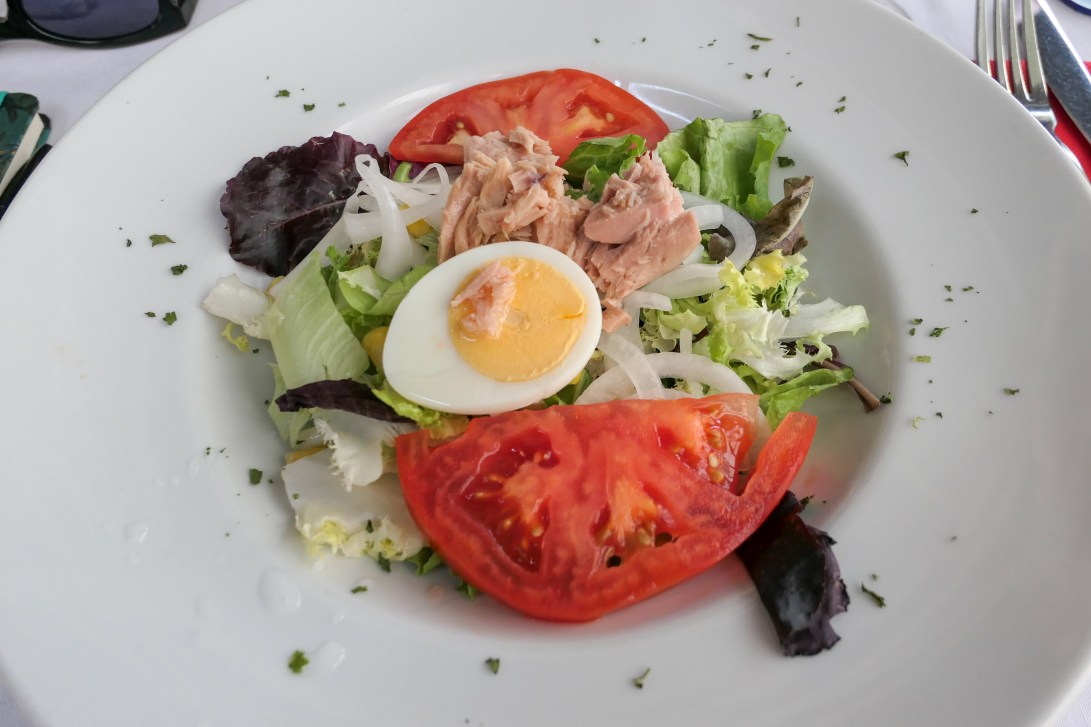
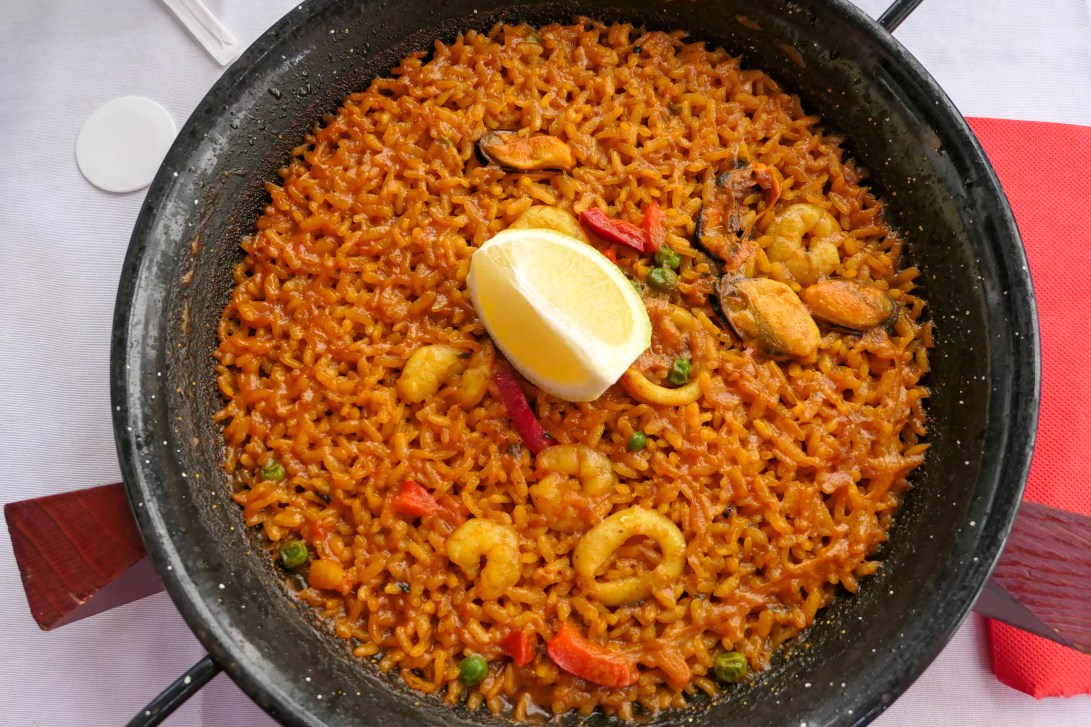
I had lunch at Toro Tapas and ordered a cuttlefish paella. The word “paella” derives from the Latin patella for pan, so the infamous dish is actually named for the black, handled pan that it is served in. When in Spain, you should always eat paella and this one was delicious, popping with juicy prawns, mussels and squid. To drink I chose granizado de limón, which is the Spanish answer to a slush puppy. It was wonderful after the heat of the afternoon and just as refreshing as it sounds.
On my way back from the palace I dropped into La Chocolatería de San Gines, which I’d been told was the place to go for churros – a timeless unravelled doughnut that has planted itself firmly into British culture as well as Spanish. I couldn’t wait to sample what I hoped would be the best and most authentic churros I’d had, but sadly I came away disappointed. The churros were hard and dry, as if they’d already gone stale. I’m not sure if adding cinnamon sugar was a British twist, but I really missed that extra sweetness here. Perhaps I’d been unlucky with a bad batch, but I’d had far nicer churros back home!

I cheered myself up by visiting a few librerias (bookshops) and found some lovely items. In “Desperate Literature” in Calle de Campomanes there was a copy of “Alicia y El País de las Maravillas”, although this classic by Lewis Carroll is confusing enough in English let alone Spanish.

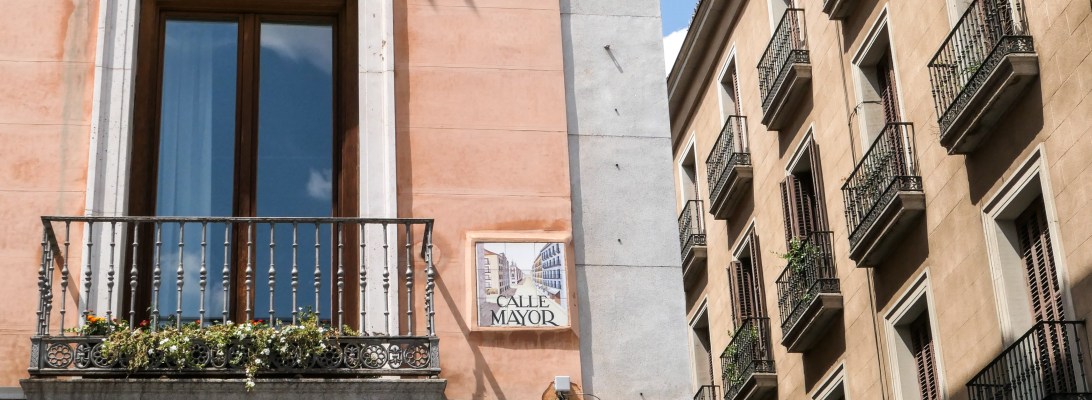
In pride of place on busy Calle Mayor was a shop named La Librería, which had every book on Madrid you could ever want. I bought “Madrid en 55 Dibujos”, which was a gorgeous little hardback full of paintings of Madrid scenes, a lot of which I’d already seen.

By then I was truly exhausted, so I retreated back to the far more tolerable temperature of my hotel room and wrote for a while before heading out for dinner. I sampled the broad range of tapas available at El Mercado de San Miguel, one of Madrid’s oldest and most popular food markets. I forced myself to browse before choosing anything, and I eventually plumped for two crab tapas. In one, the crabmeat was sandwiched between a neon pink burger that had a similar consistency and appearance to a macaroon but was doughier and less crumbly. The other was a miniature pot of crab, which was a slight disillusion as underneath the first inch the pot was filled the rest of the way with straw fries, but the crab itself was delicious. I was also very happy to find a stall laden with sweet treats, so I bought the largest marshmallow pastry I’ve ever seen.

After a good night’s sleep, I planned to explore a part of Madrid that I’d been excited about for weeks: a park stretching across 350 acres that I could just see myself getting wonderfully lost in.

Arriving in Madrid

I thought I was reasonably calm about staying in Madrid by myself, but on the train to Gatwick I felt sick to my stomach. After the stressful ordeal of flying to Florida I thought this would be a doddle, but then again I always panic when I travel. I lost count of how times I checked my camera, purse and passport were still in my bag. I knew I wouldn’t be truly relaxed until I checked into the hotel.

I wanted to make this trip the best it could be. Initially I had designed an elaborate agenda for each of the four full days I was in Madrid, pretty much hour by hour, but on reflection I decided just to list a few things in each district that I wanted to see and keep the rest of the time free for happy accidents. Ultimately it was supposed to be a holiday and if I dashed around cramming everything in I would come back needing to book another. There was also the heat. It was over 30°C all week, day and night, and the last thing I wanted to be doing was frogmarching around Madrid ticking off my wish list. I was embracing a little spontaneous.

The flight was delayed by nearly an hour. While we were sat in our seats, the pilot announced that another plane had been parked in their spot and Gatwick’s announcements had been “a mess”. It was nice to hear he was frustrated too. At least I didn’t have a connecting flight, but it meant I had to gaze outside at muggy drizzle for a while longer.

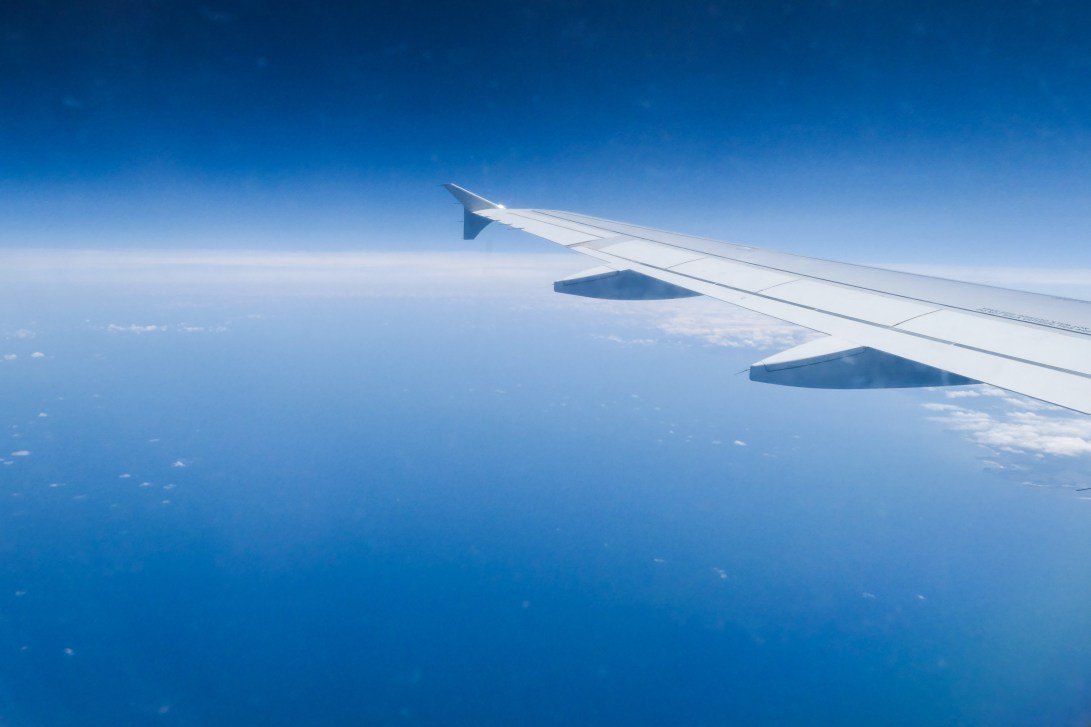
Eventually we took off and it soon became too bright to look out the window. When the clouds parted, the landscape stretched out in a never-ending blanket of blue; ocean blended seamlessly into sky with the horizon nowhere to be seen. A plane passed us, which was a bizarre sight that I’d never experienced before. It looked minuscule and quite surreal as it zoomed back the way we’d come, soon disappearing out of sight. It seemed as small as a bird flying alongside a car.

P1000116

Soon we left the ocean behind and land took its place: a spectrum of browns and pinks swirled in patterns like a gigantic marbled ink painting. Pockets of civilisation sat amongst a jumbled jigsaw of fields, their winding roads linking them in a complex web.

We sank lower and my ears popped. The sandy browns transformed into the greens of a vast expanse of forest, split into dead straight and uniform blocks by white boundary lines. All the while, bulging cumulus clouds slid slowly by. At times they covered the ground completely, puffing up like a worldwide bath full of soapy suds, their dark shadows blooming below them.

After so much open countryside, Madrid sprang up unexpectedly. Large tower blocks loomed over car parks and long bustling streets. I only managed to snatch a quick glimpse before the plane reached the runway and touched down. Once we’d disembarked, we crossed the bridge into the entirety of Madrid–Barajas Airport. Departures and Arrivals were all combined into one chaotic space. Passengers were amassing by the passport check kiosks so I followed, but when it was my turn my passport wasn’t recognised. I was sent to another queue, this one about two hundred-strong. By then I was getting anxious about my case arriving without me, not to mention my poor taxi driver who’d already suffered as a result of my flight’s delay.

The queue inched forwards. A woman in uniform asked to see my passport and told me I needed the other queue. I explained I’d already been rejected there, despite another attendant saying it was for European passports. The woman took me out of the queue and bumped me right to the front. Apparently I’d been in the right place but the machine didn’t recognise a passport if you pressed it down on the sensor, despite the natural instinct to do so.

Eventually I was through and hurried to Baggage Reclaim where I was quite alarmed to see that I shared a luggage belt with two other flights. Luckily my case appeared after only a minute’s wait so I dashed off to meet my driver Santiago, who was all smiles when I spotted him. He took my case, gave me a bottle of water and once we’d reached his car, pointed out the best shopping and tapas on a map. I was pleased to find out that I’d read about most of them during my research, so it was reassuring that a man born in the city recommended the same places.

We left the stress of the airport behind and I finally began to relax. Santiago showed me several landmarks on the way. There was the Wanda Metropolitano Stadium where Madrid-based football team Atlético Madrid play, and the Cuatro Torres Business Area – a business district with the tallest skyscrapers in Spain.

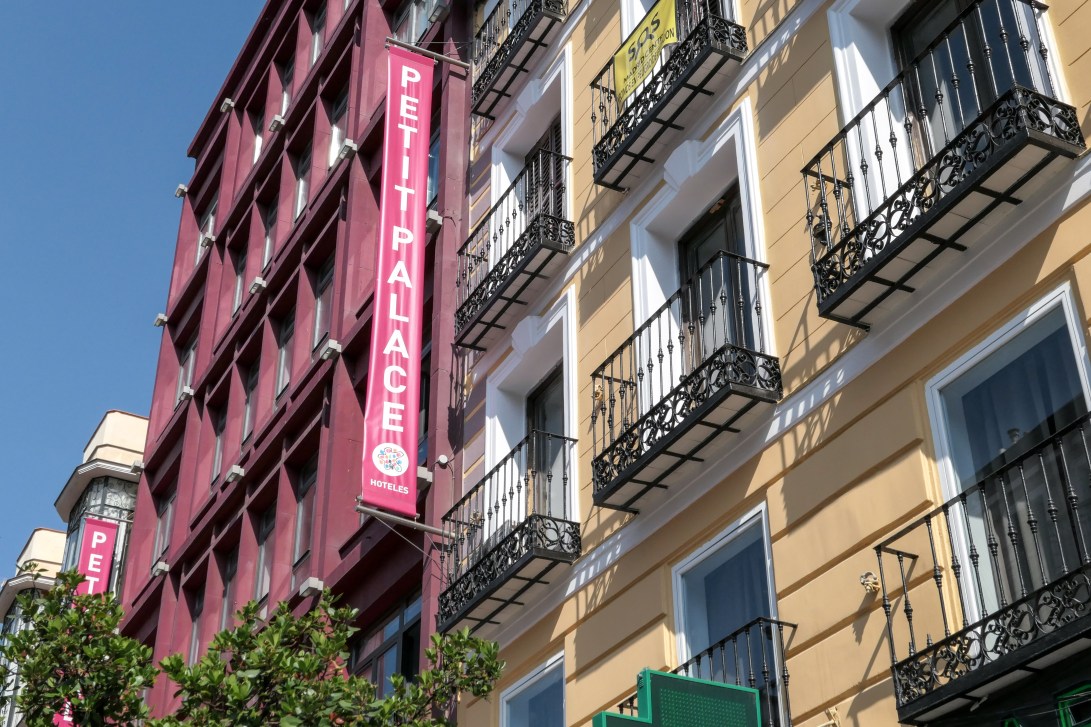
As we drove further into Madrid, the buildings closed in and soon the city had a similar feel to bustling London. I glimpsed zapaterias (shoe shops), panaderias (bakeries) and lots of tapas bars. We dipped down into an underground tunnel and Santiago told me that we were right beneath Plaza Mayor, arguably the heart of Madrid and where I would be staying. When we emerged back into daylight, the architecture changed drastically. In place of the drab, sombre buildings I’d seen on the approach were quaint apartment blocks in pastel shades with tiny wrought-iron balconies and pinstriped awnings. We had suddenly arrived at my hotel: the Petit Palace Plaza Mayor, one of a chain of Petit Palaces found in six other cities across Spain: Barcelona, Bilbao, Valencia, Mallorca, Málaga and Seville.

P1000156

In stark contrast to the bright and gracefully aged Plaza Mayor, the boutique-style hotel’s interior was subdued in colour with a significantly futuristic feel. I told the receptionist in Spanish that I had a reservation in the name of Rebecca Gibson and he proceeded to reply solely in English, which was a shame. One of the main reasons I had chosen Madrid for my destination was to brush up on my rusty Spanish. I knew a lot of tourists weren’t too keen to attempt the language, but I was very eager to talk in Spanish and I hoped that the locals would give me that chance.

P1000125

My first trip out was to Plaza Mayor itself, which was only a minute’s walk from the hotel. There were numerous people milling around but the square was spacious and tranquil in the early evening. The plaza was built in the sixteenth century when Madrid became Spain’s capital. It was used for state occasions including executions and bullfights, where the spectators would be crammed into the square and royalty would watch from the balconies. Luckily, the plaza is now filled with restaurants and cafes instead, and hosts a stamp and coin market on Sunday mornings.

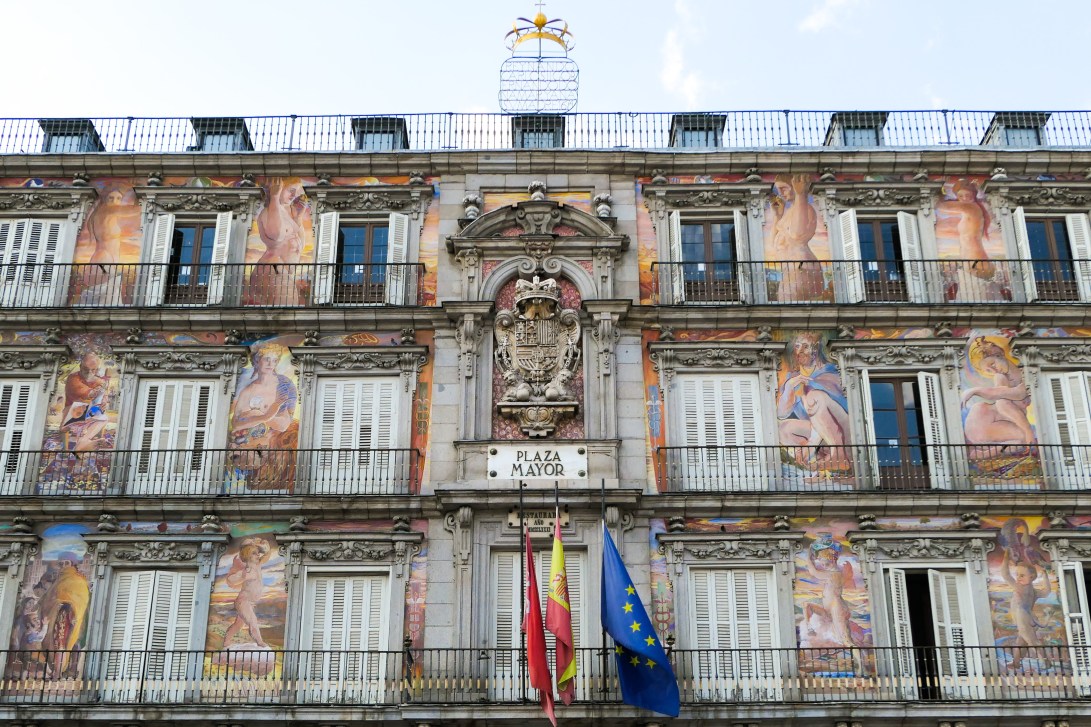
On three sides the buildings were terracotta in colour with prim white balconies and shutters. On the fourth side – a building called La Casa de la Panadería (Bakery House) – the bricks were covered with intensely detailed frescoes dating back to only 1988, when the Madrid City Council launched a competition for the design covering the wall. The winner was Carlos Franco, whose artwork incorporating mythological characters was completed in 1992. Each part of the fresco was rich in colour with shocks of marigold yellow, rose pink and dusky orange.

P1000120

Standing pride of place in the centre of the plaza was King Felipe III on horseback – the subject of hundreds of photos found in Madrid guidebooks. I’d seen him at most angles before I even arrived, but I couldn’t resist taking my own version.

P1000122

It really was as hot in Madrid as I’d been told. At nearly 8pm, the temperature easily reached the most blistering of summer days in England. I perched on a stone seat to write and had to move to the shady side almost immediately to avoid burnt thighs. I vowed to definitely look into using the metro during my stay, as it was far too hot to walk any considerable distance.

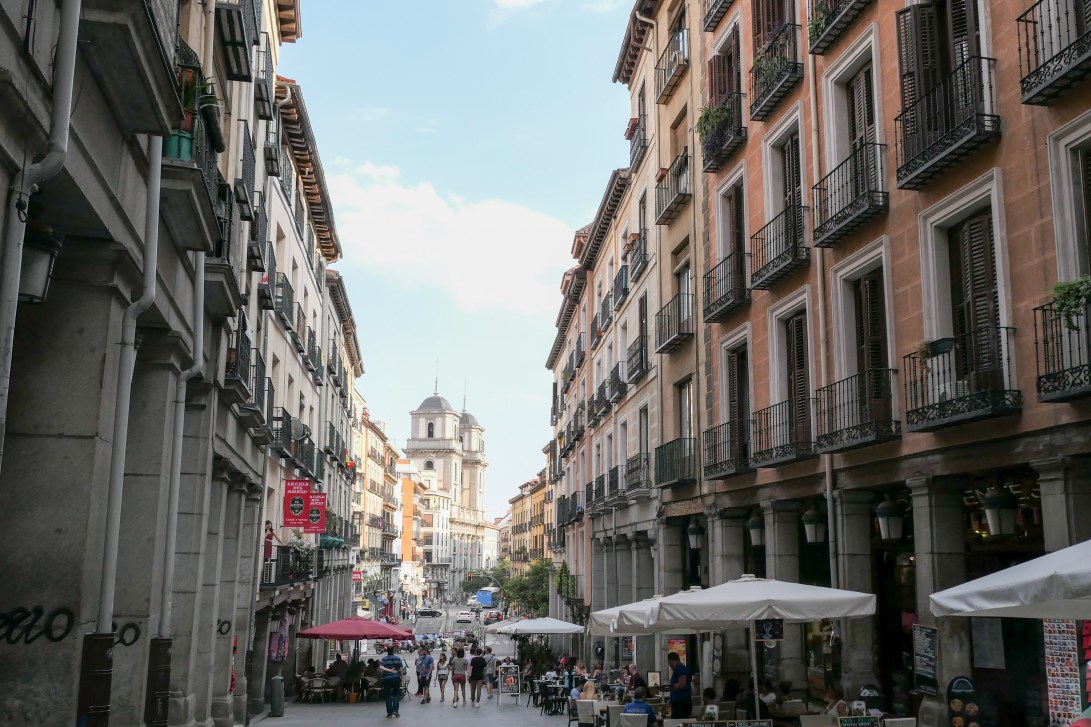
Along with the glamorous architecture were splashes of kitsch, as with any city location that tourists have access to. Headless mannequins donning flamenco dresses stood in lines while people peered from behind them in Madrid’s answer to the Brighton beach scenes you could stick your face through. Mickey Mouse and Pikachu stood idly for no obvious reason, and several traders ambled around selling light-up toys and novelty whistles. All that aside, Plaza Mayor had undeniable charm. Restaurants and cafes lined the entire square’s border, but I’d been warned against their extortionate prices. I’d read that if I ventured only a few streets further afield I would find high-quality and authentic tapas at a fraction of the price.

I unintentionally threw myself in at the deep end by going to Casa Revuelta for dinner. It had come highly recommended for its bacalao (cod) tapas, but I soon realised it wasn’t your typical restaurant. There weren’t any menus – a waiter came over and you told him what you wanted. Every bit of food vocabulary flew out of my head and all I could utter was pescado (fish). Luckily, I was brought some of the bacalao, which really was delicious. With no bones, the meat was beautifully smooth and with only a thin covering of batter. I ordered something I saw on my neighbour’s table, which turned out to be bite-sized pieces of pork crackling, which I wasn’t a fan of. It was my fault for not brushing up on my vocab beforehand, but by happy accident (the first of many I hoped!) I had tried my first Spanish delicacy in the bacalao.

After settling up at Casa Revuelta, which was already swelling with hungry customers including many native Spanish speakers – I strolled back through Plaza Mayor. Street entertainers were in full swing and Pikachu now had a throng of children around him. I passed El Restaurante Sobrino de Botín, the oldest restaurant in the world, which already had a queue out the door. The dramatic soundtrack of a flamenco show drifted out of a dimly lit doorway.

P1000129

I wandered further on and found myself in Puerta del Sol, which was buzzing with activity. One of the busiest places in Madrid, Puerta del Sol (Gate of the Sun) is home to the clock that chimes during the traditional eating of the twelve grapes and signals the start of the New Year. At the far end was a fun little statue that many people had flocked to for photographs: El Oso y el Madroño (the Bear and the Strawberry Tree). Although reasonably small in size, this intriguing bronze statue weighs twenty tonnes and replicates the similar emblem shown on the Madrid coat of arms. The determined bear stretching for the fruit symbolises the resilience and tenacity of madrileños (people from Madrid). Bears used to be found in many of Madrid’s forests, as well as trees bearing fruit that closely resembled strawberries. Madrid was thought to have once been named Ursa, Latin for bear. You wouldn’t find many foraging bears in Madrid nowadays, but Antonio Navarro Santafé’s sculpture in Puerta del Sol was lively enough.

P1000137

I decided to get an early night after a long day of travelling so as most madrileños were heading out for the night, I made my way back to the hotel. Casa Revuelta was a bit of a shaky start, but as time went on I knew I would start to find my feet.

The Dreaded Block

Although it may not look like it on this blog, a lot has happened over the past few weeks. It’s high time I put out an update, as I was very conscious of the gap between posts getting longer and longer. I’ve been suffering from a crippling case of writer’s block pretty much since my last post from the Grant Arms Wildlife Book Festival in April and it’s been driving me crazy, as The Block has a habit of doing.

Recently my optician told me I have both blepharitis (dry eyes) and Posterior Vitreous Detachment (PVD), which is the reason behind my numerous floaters and flashing episodes. Luckily, neither condition is sinister in my case, but I’ve now become very conscious of straining my eyes from too much screen time. However, as a writer who prefers to type (it’s the only way my hands can keep up with my brain), it’s meant that I’m now reluctant to gaze at my mac screen for hours on end. So, I’ve been considering going full-on retro and getting a typewriter, which honestly is something I’ve dreamed of owning for years. As well as being loads of fun, it would be a screen-free alternative to typing that would give my eyes a rest.

Elsewhere during my long absence, in an attempt to meet new people and also learn new skills, I’ve joined my local writers group and started singing lessons. Verulam Writers has already pushed me out of my comfort zone. I’ve read out several of my pieces during manuscript evenings and got new perspectives on description in a recent workshop. It’s so refreshing to hear how others write because although it’s not always a genre I write in myself, it’s still so useful to hear how different writers approach tackling synopses or developing characters. Although I’m still trying to fight my way out of writer’s block, being around fellow writers has been very reassuring and it’s the right environment for me to get back into it again.

As for singing, I’m having an amazing time. I got back in contact with my piano teacher after a three-year break – it’s hard to believe that the last time I saw her was before the whole whirlwind of university – and asked her about taking up singing lessons, which was one of the best decisions I’ve made. She is an absolute tonic and helps me forget my uneasiness about The Block (and honestly my whole future) for a short time. I love singing; I find it incredibly relaxing and often quite uplifting. To now be able to improve my technique and feel my voice getting stronger is so incredible. After only three lessons I’m already hearing a difference in high notes, which is something I’ve always struggled with.

In addition to singing lessons, I’ve got something else exciting to look forward to: next month I’m going to Madrid! I was determined to make the most of a block of holiday off work and I’ve wanted to go back to Spain and practise the language for ages, so I seized the day and booked myself five nights in Plaza Mayor – bang in the centre of the city. I’ve been shredding through Lonely Planet guides and have assembled a list of landmarks, events and, perhaps most importantly, restaurants that I need to visit. Now I have to schedule a plan of action to see as much as possible without burning myself out. Either way, I’ve indulged in a beautiful new Panasonic compact camera to tuck into my bum bag and capture some of Madrid’s charm.

So, although writing has been agonisingly slow this month, I’m hoping that my new extra-curricular timetable will really help me get inspired. Writer’s block is an inevitable evil that you can try and push through, but I think sometimes it’s best to step back and approach new things that take your mind off it, which can actually help more in the long run. All I can say is bring on Madrid!

Checking in

I arrived in Grantown-on-Spey at night, so couldn’t see much of the Cairngorms wilderness that pressed heavily on both sides of the winding road. I glimpsed darting rabbits and the elegant form of a pair of deer, but there must have been dozens of other creatures concealed by the dense evergreens.

My accommodation, the Grant Arms Hotel, was beautiful; a formidable building of stone and wide sash windows that could easily be the set for an elaborate period drama. Also called the Wildlife Hotel, the Grant Arms provides guests with easy access to a range of reserves of all different habitats. When I checked in, a large notice board stood pride of place in the foyer, full of lists of upcoming events, guidance on watching wildlife – including the magnificent capercaillie – and sign-up sheets for the week’s guided walks and field trips. An impressive puzzle adorned with a picturesque nature scene lay finished nearby. On the walls were images of puffins, ospreys, black grouse and, in my room, a beautiful fieldfare. I’d never seen so much wildlife-related decor and I absolutely loved it.

As I unpacked, I felt a thrill of eager anticipation for the week to come. I’d never stopped in the Cairngorms before but only passed through, so I couldn’t wait to sample some of the incredible wildlife. I had my sights set in particular on the pine marten – an elusive and nocturnal member of the mustelid family. If I was going to fulfil my New Year’s Resolution and see one in 2019, the Grant Arms Wildlife Book Festival was my best chance.

The Wildlife Hotel

On The Wing has been quiet recently, not for lack of inspiration but for lack of time. Over the past few months I’ve been busy with a few different projects. I’m close to finishing an annual report for SEZARC, outlining the highlights of their work in 2018. I’ve also moved part-time into the library where I’m filling notebooks with scribblings about Siberia, Russian megafauna, native tribes and the mysteries of shamanism. All this is for my book idea and the more I read, the more I need to read. It’s a constant cycle of finding a book, reading something fascinating and looking up similar books to find out more. I’d love to eventually start the actual writing process, but so far I’m waist-deep in other people’s books and loving every minute.

All of this work has meant that I’ve neglected my camera and seen most of my local wildlife from behind glass recently. However, this week brought the perfect opportunity to get back outside and into nature. It’s the Wildlife Book Festival at the Grant Arms in the Cairngorms. Also called the Wildlife Hotel, the Grant Arms is a beautiful Victorian building within easy reach of dense pine forests, boulder-studded rivers and sweeping mountain valleys. In other words, the perfect place to celebrate British wildlife.

It feels fantastic to be back out there with binoculars around my neck and a crumpled notebook in my hand. It also helps to be in such a stunning location. St Albans is nice, but when you’re woken to the sound of squealing oystercatchers and only need to walk for five minutes before hitting a thousand acre wood (check mate Winnie the Pooh), there is simply no contest.

It’s so easy for me to get caught up in work. I get so engrossed that I forget to ever switch off, which makes this week a very important break. It’s a little telling that I need to travel five hundred miles from home to take that break, but when the scenery is this pretty, I’ve figured it’s alright.

Burghead: Day Three

On our last day, we drove out of Burghead into Hopeman, a nearby seaside village. Once again, the sun was shining and the sky was almost cloudless, coating the sand in a shimmering golden glow. Jas couldn’t contain herself, and pulled eagerly on the lead to get down to the seafront.

IMG_5764

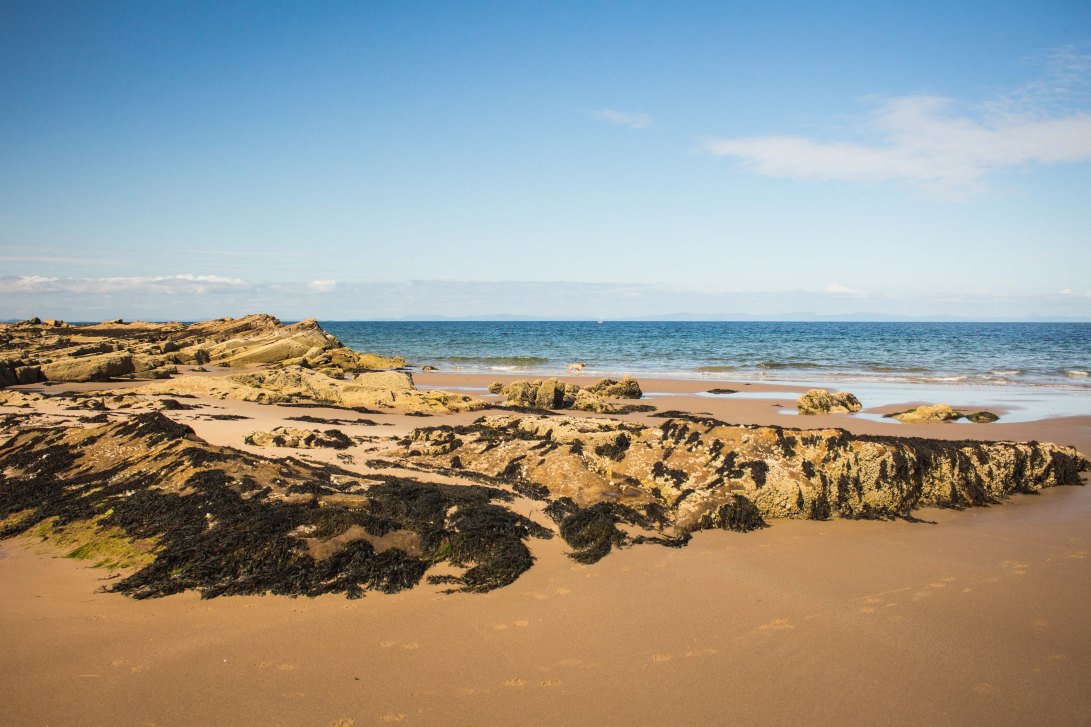
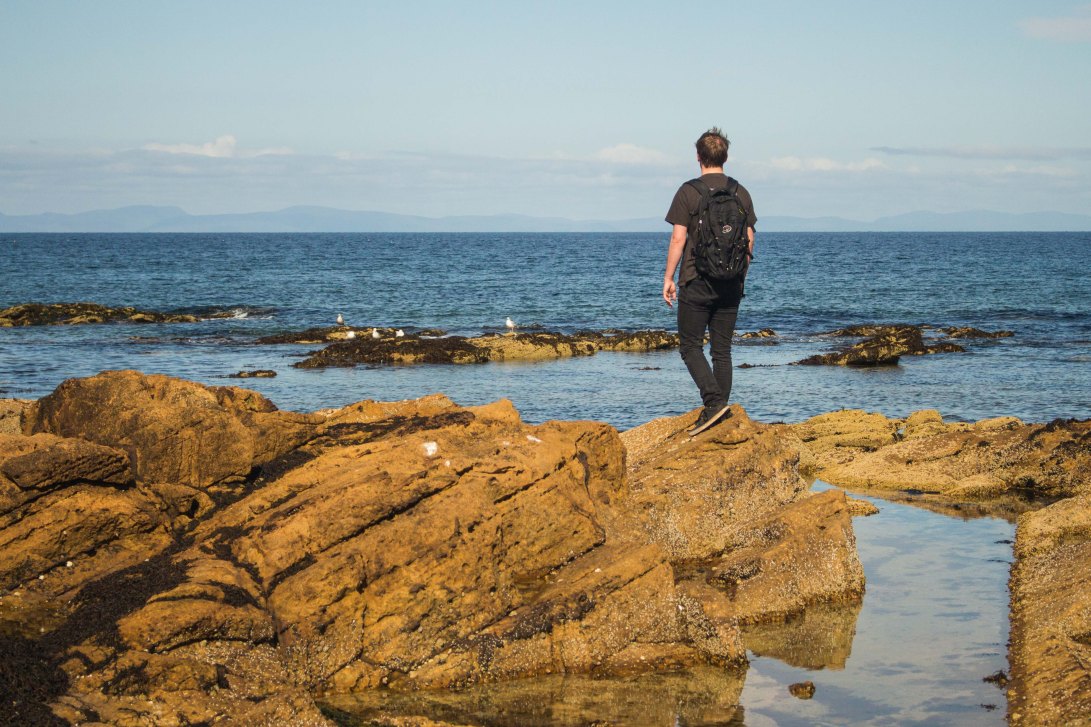
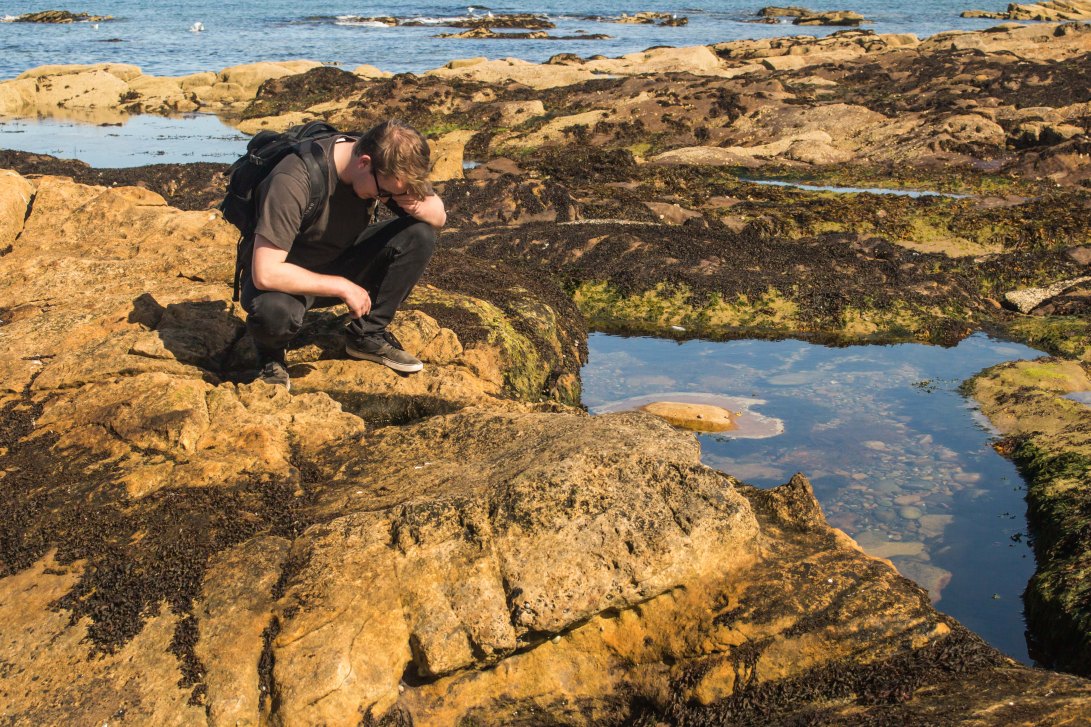
I began snapping immediately. The beach was a patchwork of fine, flat sand and weed-coated rocks where puddles of seawater were trapped from returning to the ocean until the tide swelled again. Kerr and I began to wander – rock pooling is one of those timeless summer activities that nobody is ever too old for. We stepped slowly from one rock to the next. A combination of slick seaweed and soft moss made me take extra care; although it was a beautifully warm day, I feared a dip in this water would still be a chilly one.

IMG_5757

Another reason to watch your feet was the abundance of common limpets (Patella vulgata) clamped firmly to the rocks. We kept an eye out for any crabs lurking in the shadows, but perhaps the day was too hot for them. However, there were plenty of hollowed-out crab shells and discarded legs; remains of somebody’s breakfast no doubt.

IMG_5746-2

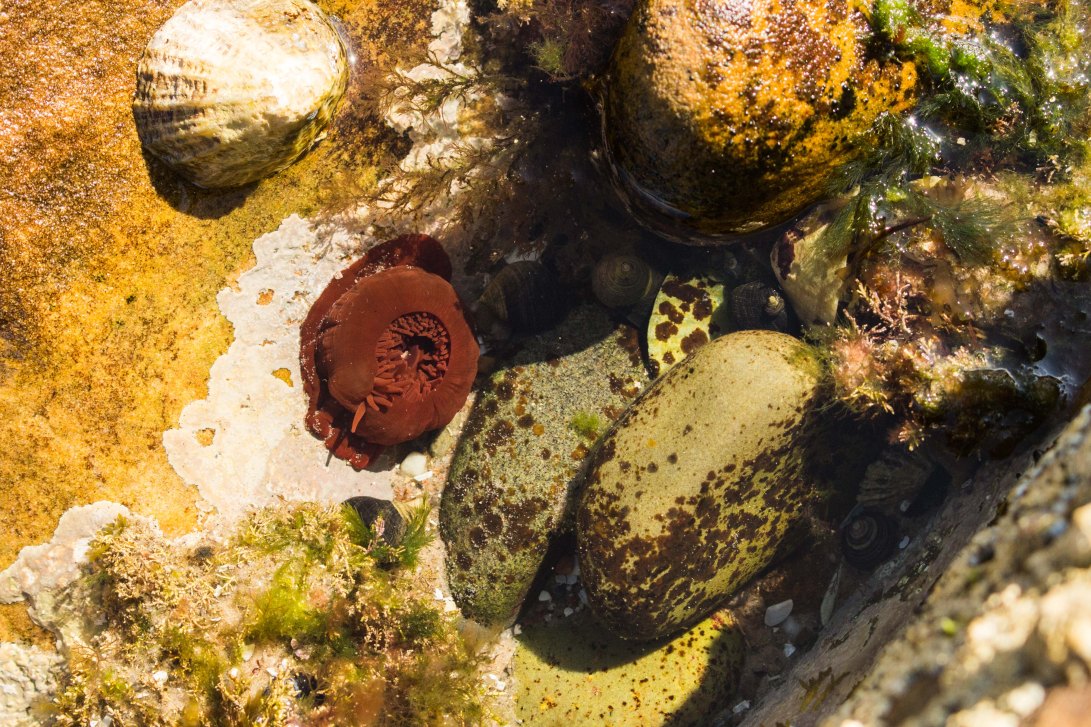
There were also several rusty red spherical bodies with tiny tentacles tucked up tight. After a little research I discovered that they were beadlet anemones (Actinia equina), an extremely territorial anemone that nudges and attacks rivals with stinging cells that act like harpoons, injecting the unfortunate neighbour with venom to clear them off their patch. Baby beadlet anemones are kept in the parents’ body cavity – which conveniently serves as both mouth and anus – and when they are ready to be born, the parents eject them through the water, where they find a rock to make their home.

IMG_5752

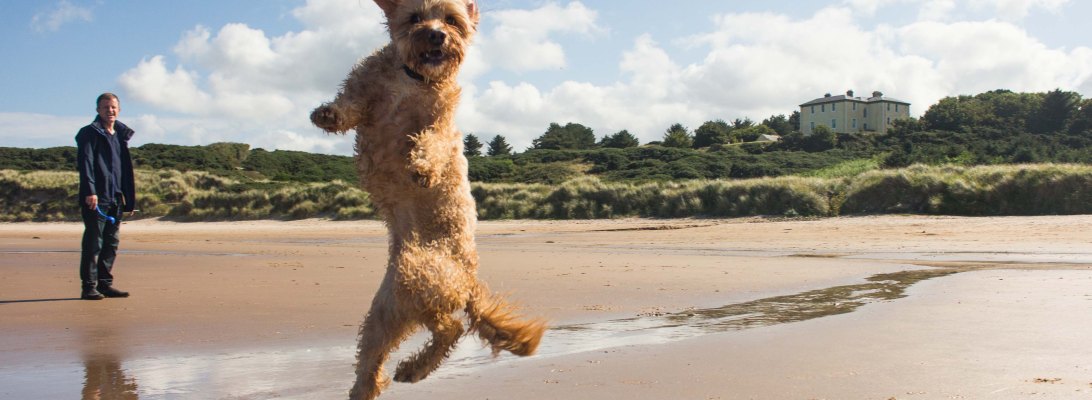
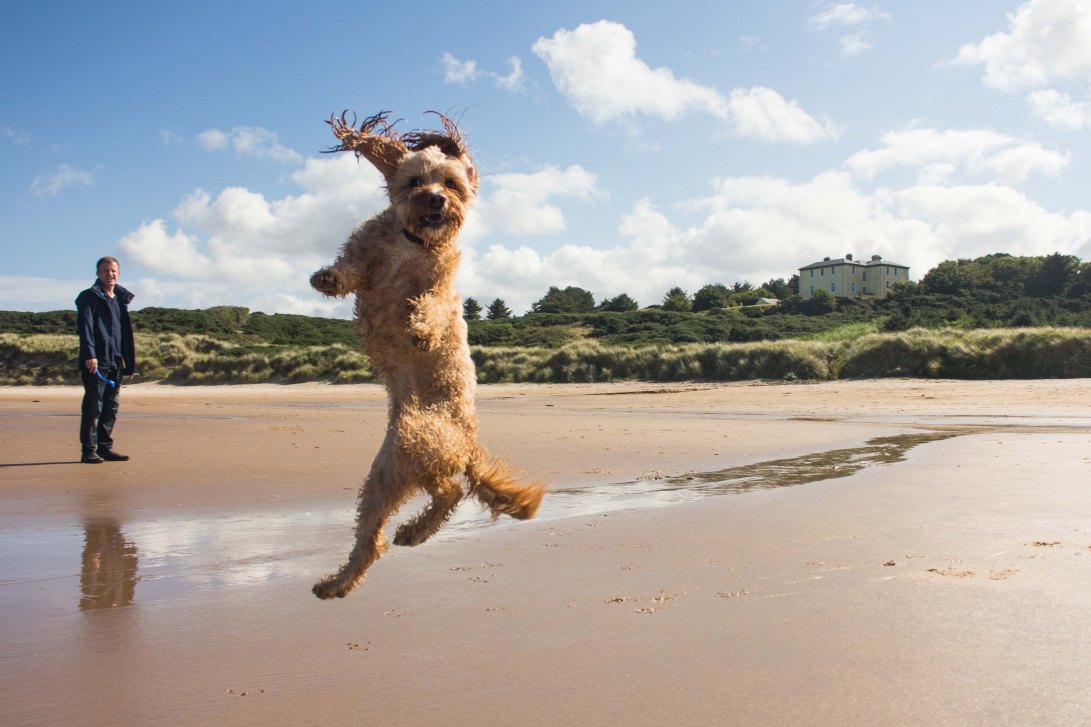
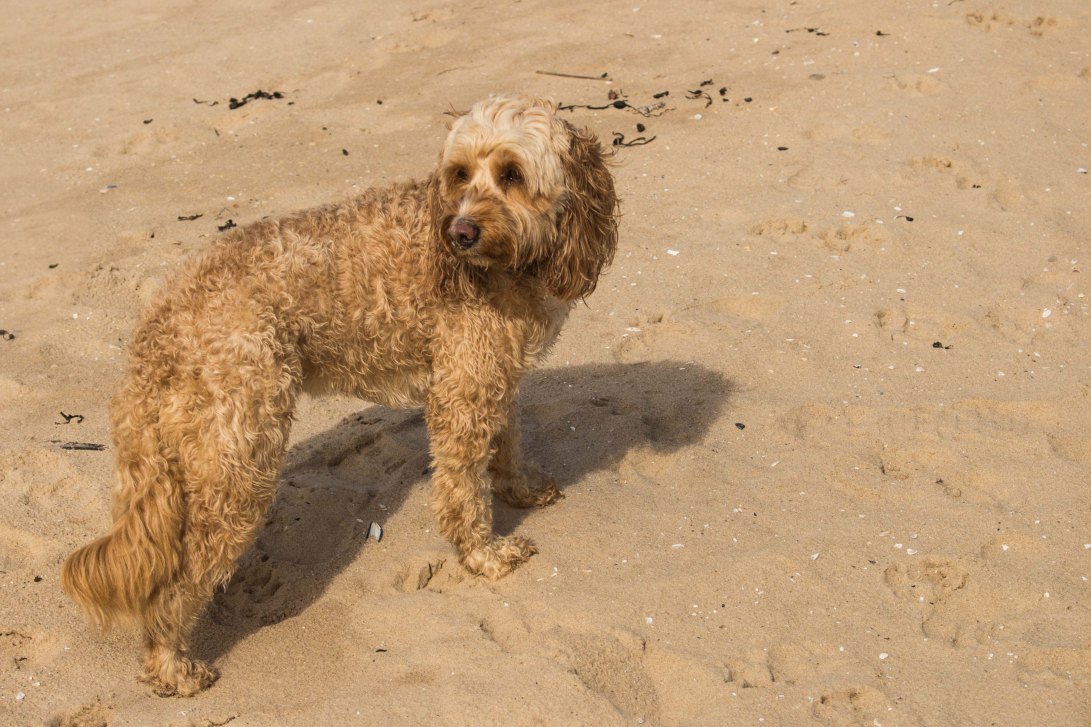
After a long time spent gazing into the pools and wondering what else could be lurking just out of sight, we joined the frantic game of fetch that was in full swing back on the beach. I couldn’t resist an opportunity to test my reflexes and see if I could photograph the fluffy torpedo in any mighty poses. I captured some absolute corkers but this was by far the best. Never has a dog loved the beach more than at this moment.

IMG_5773-3

Burghead: Day Two

It was looking like another gorgeous day. As we walked along the harbour yesterday, I couldn’t help noticing how inviting the forest running alongside the beach looked. Stretching for over seven hundred hectares, Roseisle Forest was a stunningly beautiful pinewood. As we made our way up the slope between the first row of trees, sand dunes transformed to mounds of fallen pine needles and the sound of the ocean soon faded into silence.

IMG_5588

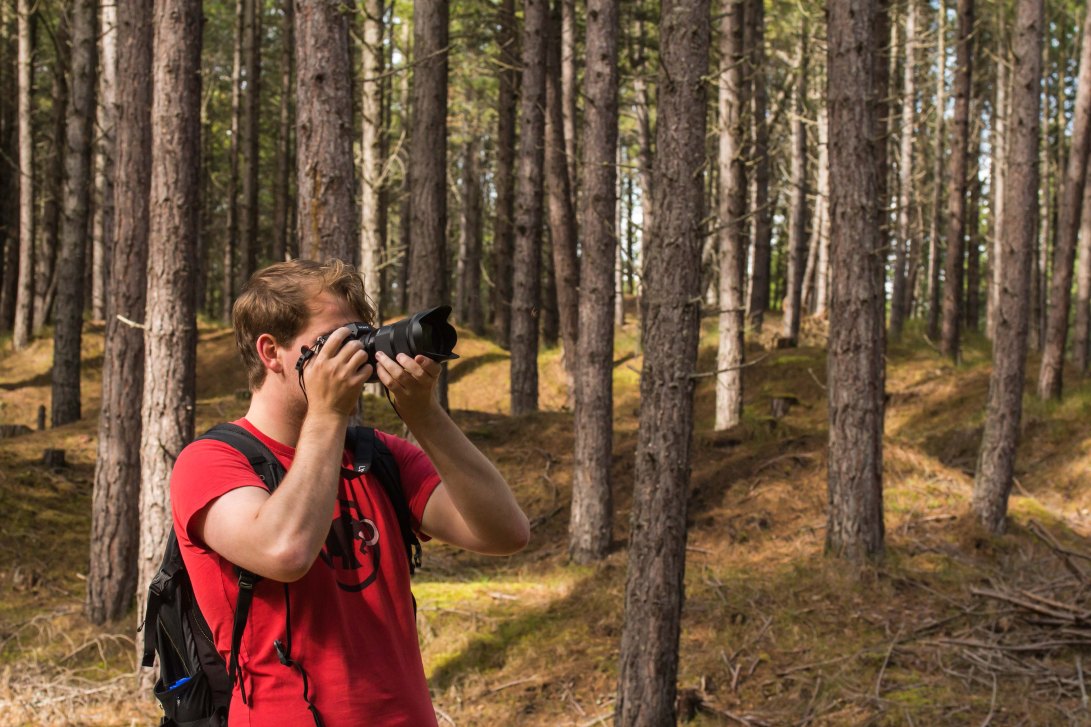
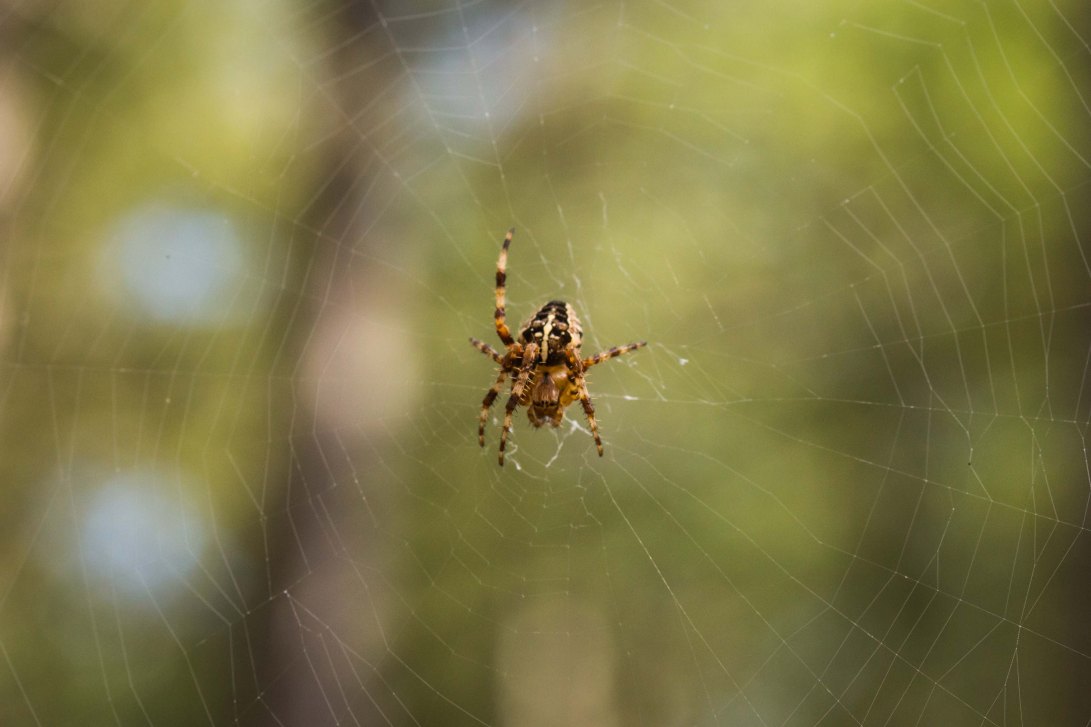
A wide trodden path snaked between the trees. I was on the lookout for fungi, so we headed off-road and ventured up the hills, giving us a great vantage point over the forest below. Before long, a sudden sparkle caught my eye, and I was amazed to discover that a spider had strung its web between two trees several metres apart. Luckily the sunlight had caught the web; otherwise we may have walked straight through it. We spent the next twenty minutes photographing our spider – it was a real challenge trying to get him in focus as the web swayed to and fro in the breeze, which must have felt like a gale to the spider. If you zoom in on the photo of Kerr, you can see a brown dot a few inches in front of his camera, showing just how tiny the little hunter was.

IMG_5614-2IMG_5632


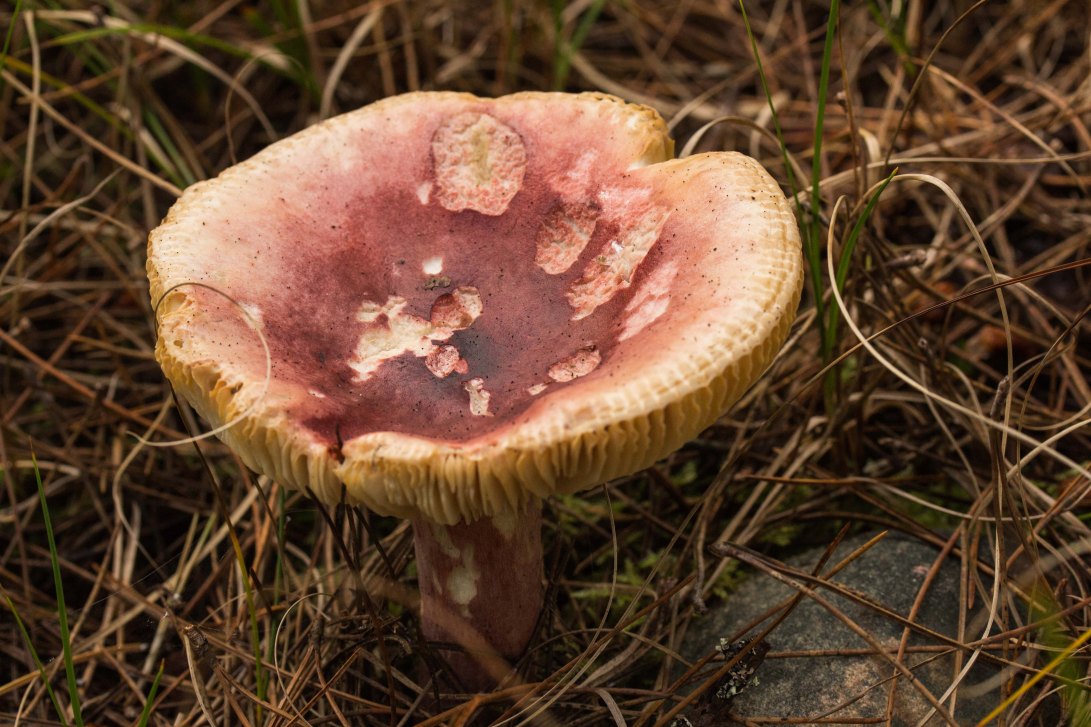
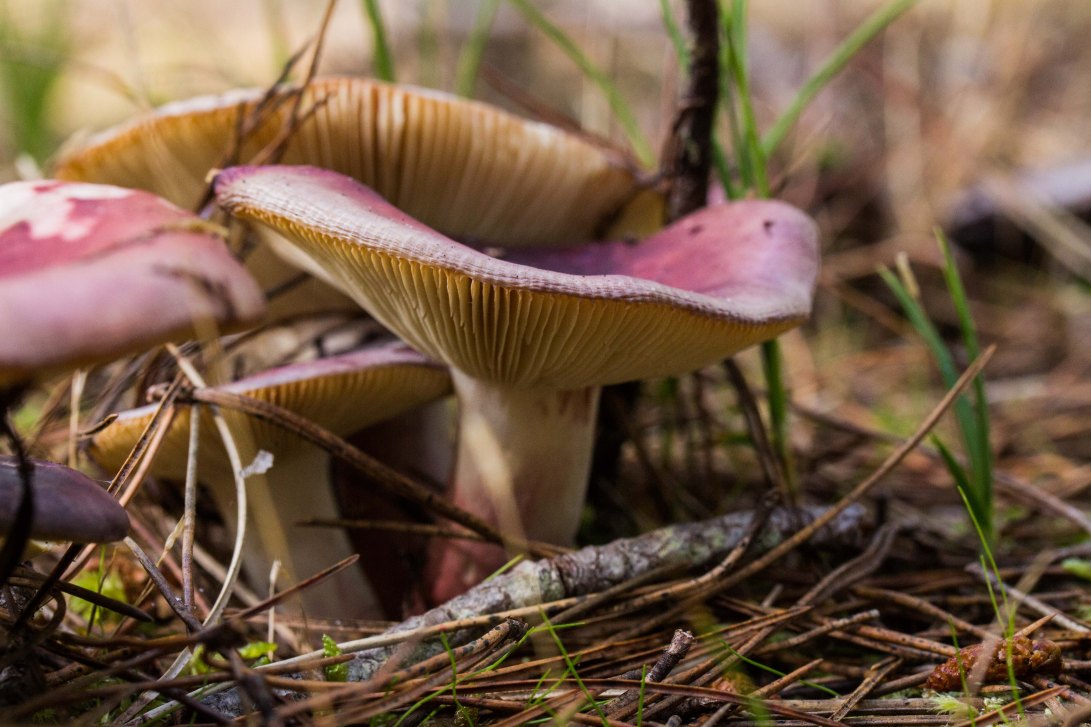
Soon, it became clear that Roseisle Forest was abundant with a medium-sized, red-capped mushroom that had faded to pink with age. After consulting the Burghead guide back at the cottage, I discovered that mushrooms in the Russula group, otherwise known as Brittlegills, were common here. After checking out the various species I identified this fungus as Sickener (Russula emetica), a poisonous species associated with pine woodland. This mushroom is found in groups and is most common in late summer to early autumn, perhaps explaining why the ones we saw weren’t the bright red colour of their prime.

IMG_5654IMG_5620

After finding dozens more Sickener mushrooms and spending a long time crawling on the forest floor photographing them, we headed back out onto the beach. We met up with my parents and Jasmine, who was whipping up a small sandstorm in her excitement. By this point my stomach was rumbling after the walk in Roseisle, so we headed to lunch and ate outside in the stunning sunshine.

IMG_5677IMG_5689

Burghead: Day One

The drive to Burghead was beautiful. As the town is situated on the edge of a peninsula protruding into the Moray Firth, it is surrounded by open ocean on three sides. As we drove up the high street it felt like we were at the edge of the world, and in a way we were. Northern Scotland could just be seen in the distance, but the space between still seemed vast. When we couldn’t drive any further, we found the cottage my parents were staying in and were greeted by a very happy Cockapoo who’d missed us both.

IMG_5495-2

I woke the next morning to see that the orange blinds were framed by a border of bright white light, and when I peeked behind them there lay the ocean, twinkling enticingly. After a hasty shower and breakfast we were off, keen to explore.

We made a beeline for the coast, climbing up to the highest point to take in the views. Down below, oystercatchers zoomed past, their alarmed cries cutting through the wind. A pair of cormorants glided effortlessly by, slender necks held parallel to the choppy waves below. I kept my binoculars trained on the horizon for a sign of dorsal fins breaking the surface. The Moray Firth is home to a resident population of more than 140 bottlenose dolphins, but we didn’t spot any stood up on the crag today.

IMG_5492-2IMG_5509-2

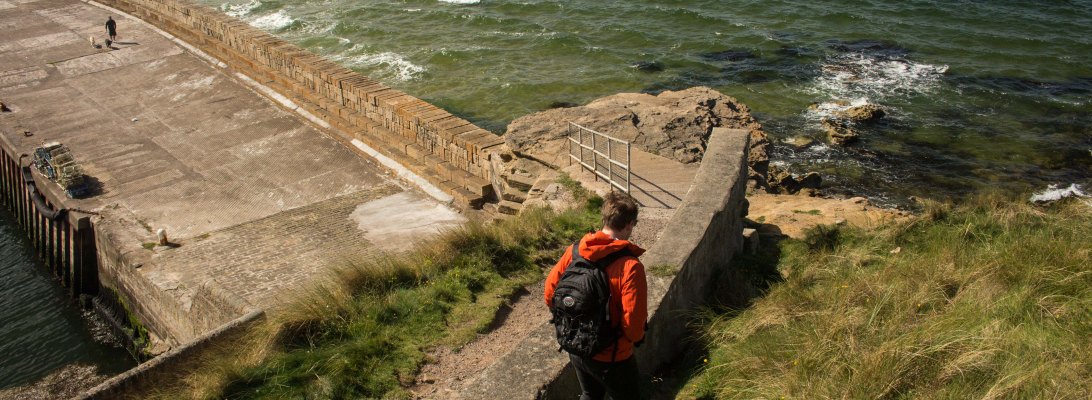
Once the wind had completely numbed our ears, we made our way back down and walked along the harbour, where a mix of tattered old and shining new boats stood resting in the docks. Down on the shingle bank, a pied wagtail hopped from rock to rock, waving his tail in the typical fashion of his species. We stumbled across a collection of crab claws and shells sprinkled across the concrete – perhaps a favoured feeding station for gulls and other seabirds.

IMG_5552IMG_5564

At the far end of the harbour I had another look for dolphins, with no luck. Every time a wave broke and a plume of froth shot upwards my heart leapt, but it was just the ocean playing tricks. The water was a stunning colour; azure blue and bottle green blending like marbled ink. Together with the rough rocks spotted with white barnacles, the sight was a feast for the eyes.

IMG_5522-2

A combination of the walk and the sea air had brought on an appetite, so we headed back to Main Street for some lunch. A beautifully fresh crab linguine filled the spot, but I still had room for a raspberry ripple waffle cone to lick on the walk back. We’d planned to wander down to the sand to find crabs or maybe starfish, but just at that moment the clouds grumbled and it began to pour, so we hurried back to the cottage instead. Shut inside, all there was to do was have a look at the photos from today and plan where to go tomorrow.

IMG_5539

Summer Back Home

Blogging has been slow recently – I’ve taken time out to relax now I’m home from university. I have an infuriating habit of constantly looking for work to do, and often forget that it’s okay to do nothing for a little while.

So here I am at home, and after being busy for so long I’m secretly wondering how to fill up all my time, because sitting idly and enjoying the summer just wouldn’t do. I brought home my troupe of cacti in an attempt to revive them; they all looked a little sad so I sought help from my nanny in the form of good compost and bigger pots. I’m so scared of killing them – alas I’m not a very good Mother of Plants – so now they’re repotted I’m hoping they can recover and I can be one of those women I find incredibly suave with houseplants flourishing on her windowsills.

As summer projects go (because I must have some form of work to get stuck into) I’m on the lookout for third year themes for my photography and writing. I’d love to have a concrete idea by September so I can jump right in when lectures start up again.

I’m also using the summer to refresh my Spanish. After seven years of tuition at school, I’m a little rusty since A levels. And seeing as I spent so long slaving over dictionaries and gazing quizzically at Spanish news coverage, it’d be a real shame to let it slip. So before I came home I got a novel from the library written entirely in Spanish on a motivated whim. It may be ridiculously complicated, but there’s no harm in tackling it.

And of course, I have my internship at Student and Graduate Publishing to look forward to, starting on Monday, so that’ll be something to keep me busy.