If you’re from the UK and have stories to tell about forests, I’d love to hear from you!
I’m writing an article about what forests mean to different people, and would love to include some personal stories about wildlife, family memories or anything in between. If you could take a few minutes to complete my survey, I’d be so grateful.
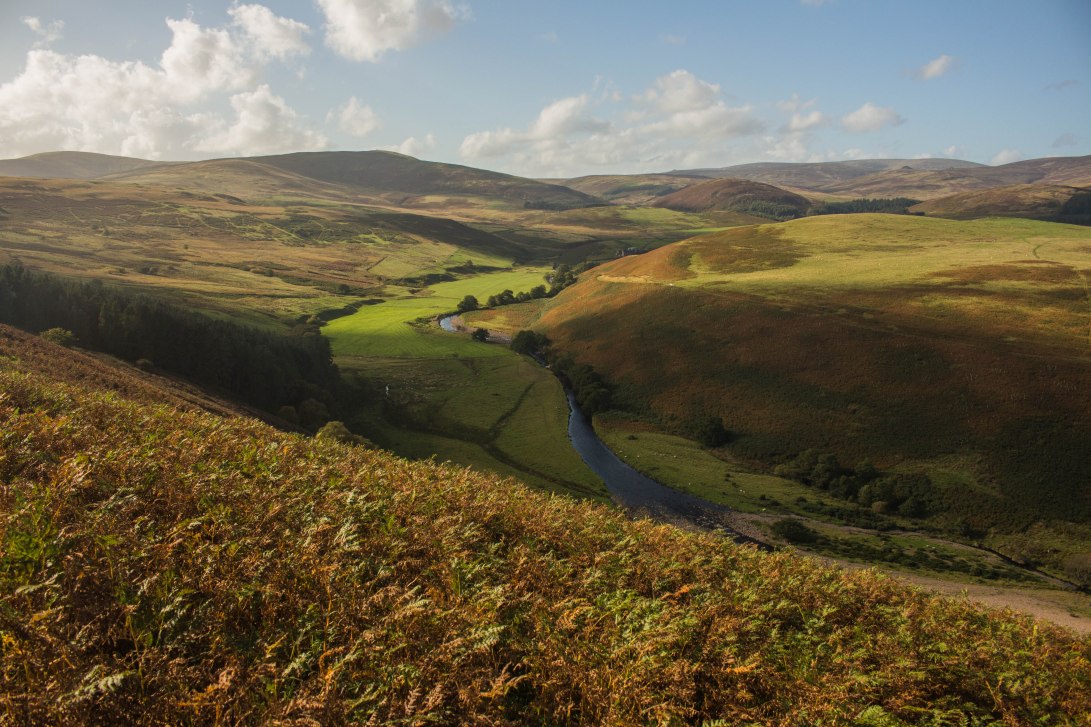
The rain was lashing on the windscreen as we made our bumpy way up the hill to Chesters. Sheep shook their sodden wool and watched the car with quizzical expressions as it grumbled over rocky grass. Before long the bothy came into view, nestled amongst the rolling bracken hills. I was just scanning the ground for darting pheasants when a pair of beady brown eyes made me call out for Cain to stop the car. Slowly reversing, we just caught a glimpse of the hare’s face before it turned tail and scarpered back through the bracken. I saw this as a very good wildlife omen for the rest of the weekend.
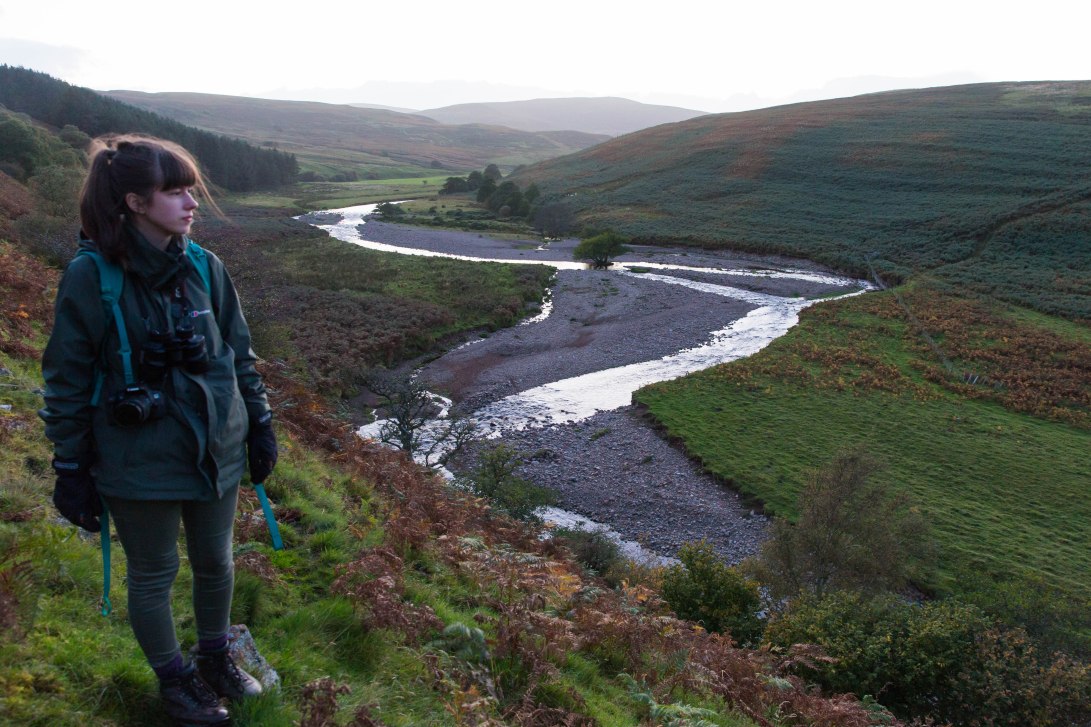
After settling in and enjoying some lunch, we headed through the Breamish Valley to meet the expeditioneers. I had a scan with the binoculars and spotted a kestrel hovering, drifting and hovering again. Heather told me she’d seen a pair of ravens swooping around yesterday, so it would be fantastic to hear some ‘kronking’ this weekend.
The weather couldn’t seem to make up its mind. Rain drummed on our heads one minute, then the sun was shining and turning the hills gold. Skylarks zoomed above, filling the air with their high-pitched chirruping, while pheasants screamed down in the valley, darting in and out of view like a Scooby Doo villain chase.
Once the expeditioneers had unpacked, we headed out for a wander. A breeze whistled in the grass but the sun still fought with the clouds for a good view. We ducked into the nearest conifer plantation to see if there were any good spots to set a camera trap. After following a trodden track that trailed through the trees – a sure sign that there were creatures using this route, perhaps a group of roe deer or even a badger – we positioned the trap with a good vantage point down the trail.
Further on through the plantation was a Scots pine peppered with deep, spherical holes. The tree was dead, and had become the perfect sculpting project for great-spotted woodpeckers, who had transformed it into a wooden honeycomb. It was extraordinary to see tough, dead bark being carved and moulded so easily by blackbird-sized creatures. Although we did hear their sharp ‘kik’ call somewhere in the plantation, we didn’t meet any possible culprits, so couldn’t be sure if it was the work of a single bird or perhaps multiple competing for such a valuable pecking post.
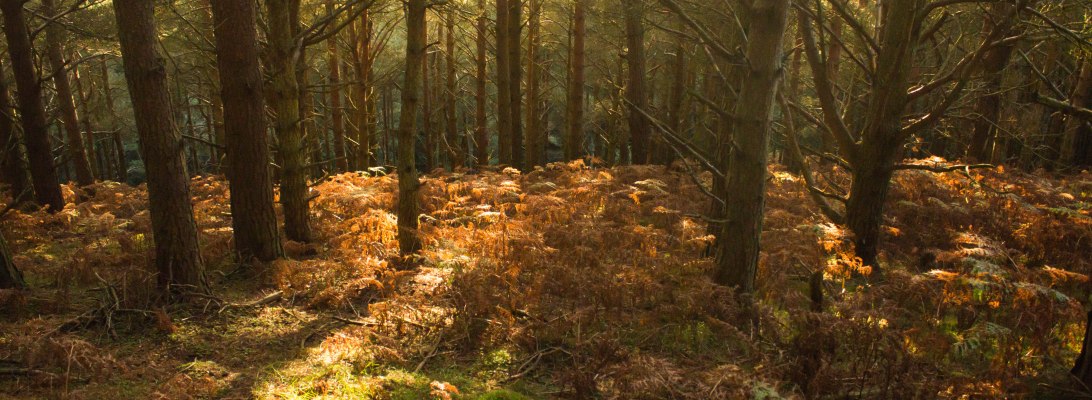
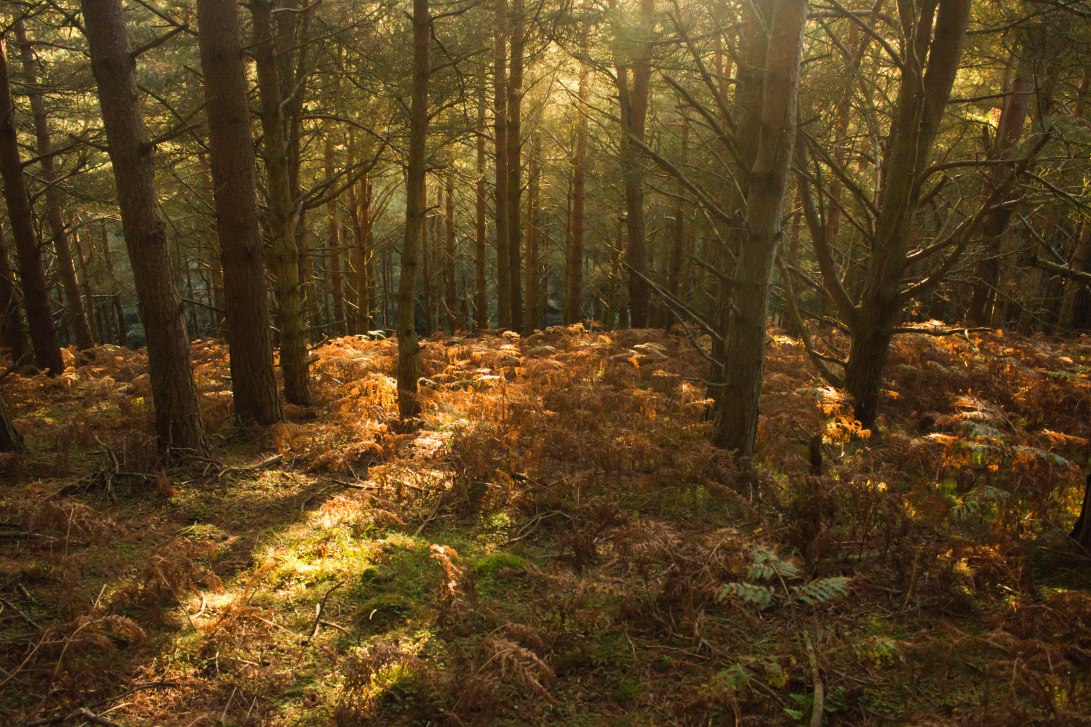
The sun was slowly setting. As the light faded, a hazy glow settled over the Cheviot Hills, illuminating the uppermost branches. Every colour was intensified; russet orange, army green, lime green, all blending together and criss-crossed with conifer needles. Spots of bright light broke through gaps in the canopy, playing tricks on my eyes when I thought a hyper-lit brown leaf was a luminous orange mushroom.
After a while we broke out of the plantation and wandered along the Chesters Burn as it bubbled downstream. The water was a vivid blue, frothing white as it crashed over rocks. A piercing ‘zrik!’ cut through the rush of the river and we all turned to spot the white-breasted bullet speeding down the watercourse. Sure enough, a dipper zoomed into view, wings a frantic blur. Perhaps less regally dressed than its neighbour the kingfisher, but still a charismatic and highly specialised little fisherman.
By now the sun had sunk out of view and the landscape dulled in colour, the familiar dusky haze settling over our surroundings. Heather told us about an expression that perfectly described this time of day: entre chien et loup, meaning “between dog and wolf”. In dim twilight, our eyes have to work harder to distinguish shapes, perhaps mistaking a harmless dog for a slightly more intimidating canine! Up in the Cheviots though, there were no monsters hiding, so it was enlightening to see what was venturing out at this time of day.
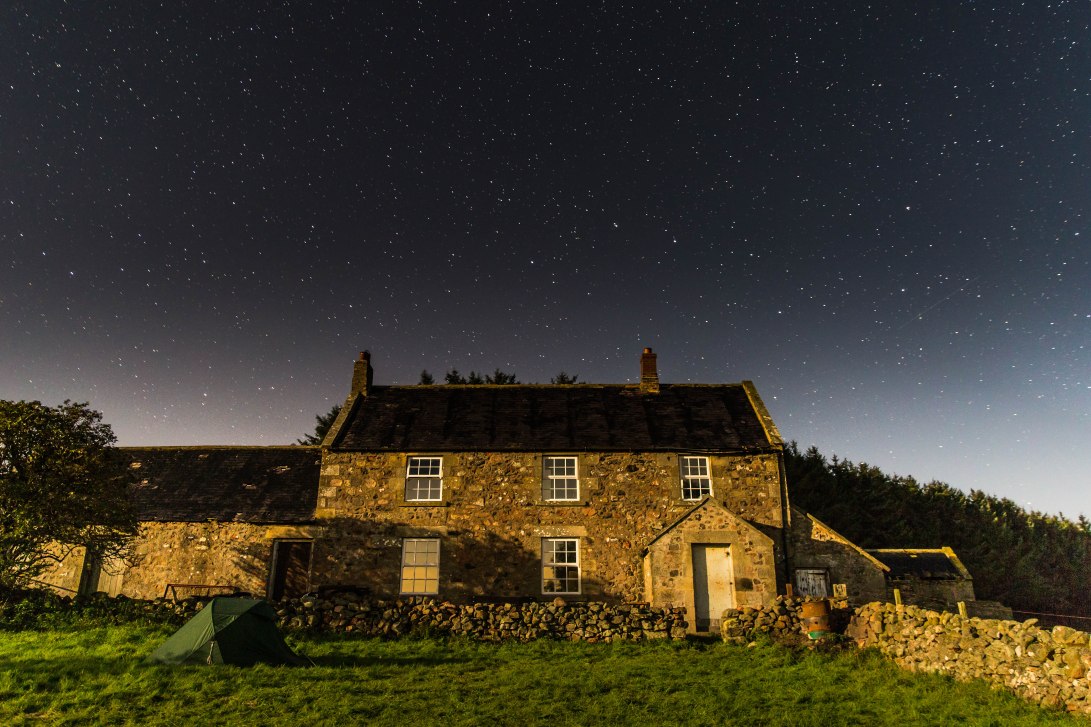
Once we’d made the ascent back up the hill to the bothy, the moon and stars had dominance of the sky. There were a few wispy clouds, but mostly the horizon was clear, so we all retrieved hats and gloves and set up tripods in the garden for some star photography. I hadn’t had a lot of practice shooting at night, so was pleased to capture some shots of the bothy backed by the entire night sky. Getting such good views of stars was a breathtaking end to our first day in the wilderness.
Another visit to one of my favourite wildlife places: Watchtree Nature Reserve. Zahrah and I hired bikes and set off through the reserve, taking a leisurely ride away from the hubbub of the café and car park to the quieter open fields and woodland.
The lake was fairly busy. A pair of Mute Swans and their two cygnets glided silently to and fro in one corner, shaking heads and rustling feathers. The youngsters were almost fully grown, their juvenile grey foliage blending to pristine adult white. When one stretched his wings, bright white armpits showed. Elsewhere on the lake, three Tufted Ducks were feeding, golden eyes blinking as they came up for air. A lone Little Grebe dived under the water and popped up again several metres away. As agile as a fish, the tiny bird curled its body and slipped silently beneath the surface.
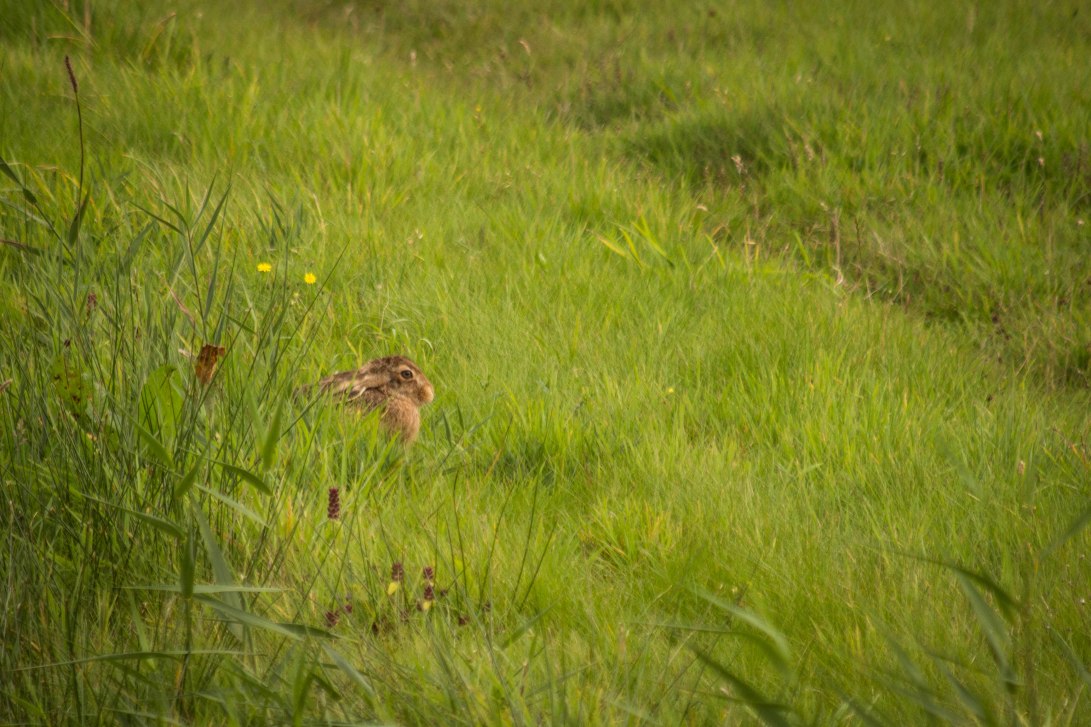
Suddenly, as I was scanning the feeders for any birds joining the Tree Sparrows already tucking into the feast, my eye caught on a brown shape nestled amongst the grass. From my vantage point on the top storey of the hide I could see the Brown Hare perfectly as it chewed, hunkered down. I called in a hushed whisper to Zahrah, who’d been watching the pond from the bottom level, and she darted up to see.
The hare was beautiful, with rich, brown streaked fur and piercing eyes. Its ears were pinned tightly to its nape, in an attempt to remain as inconspicuous as possible, but the creature was still brave enough to forage out of the cover of the long grass. We watched it for a few minutes, before it turned and hopped back into the grass. After waiting a while to see if it would re-emerge any closer, we accepted our hare was long gone.
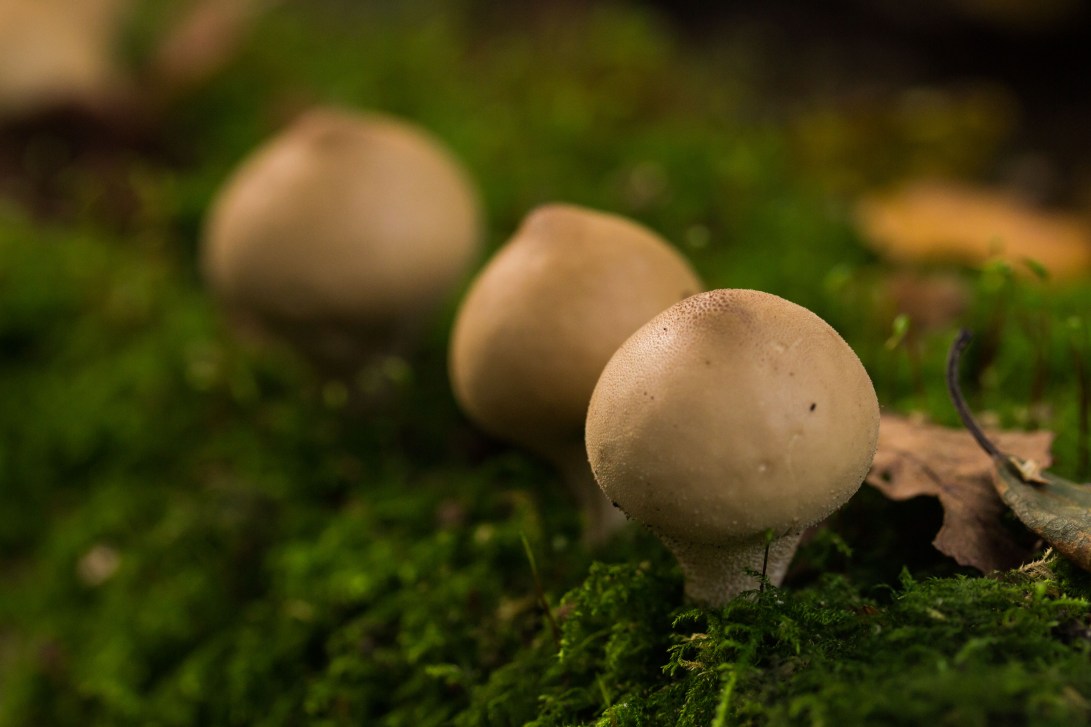
Leaving the lake behind, we looped around the reserve and cycled back through the woods. Once again, I was distracted by fungi, and Zahrah amused herself while I crawled around on the floor with my camera. Today, as always, there was plenty to see. A huge troop of Stump Puffballs (Lycoperdon pyriforme, the only British Lycoperdon to grow exclusively on wood) stood to attention on a fallen log, their portly bodies stood side by side.
Stump Puffball(Lycoperdon pyriforme)
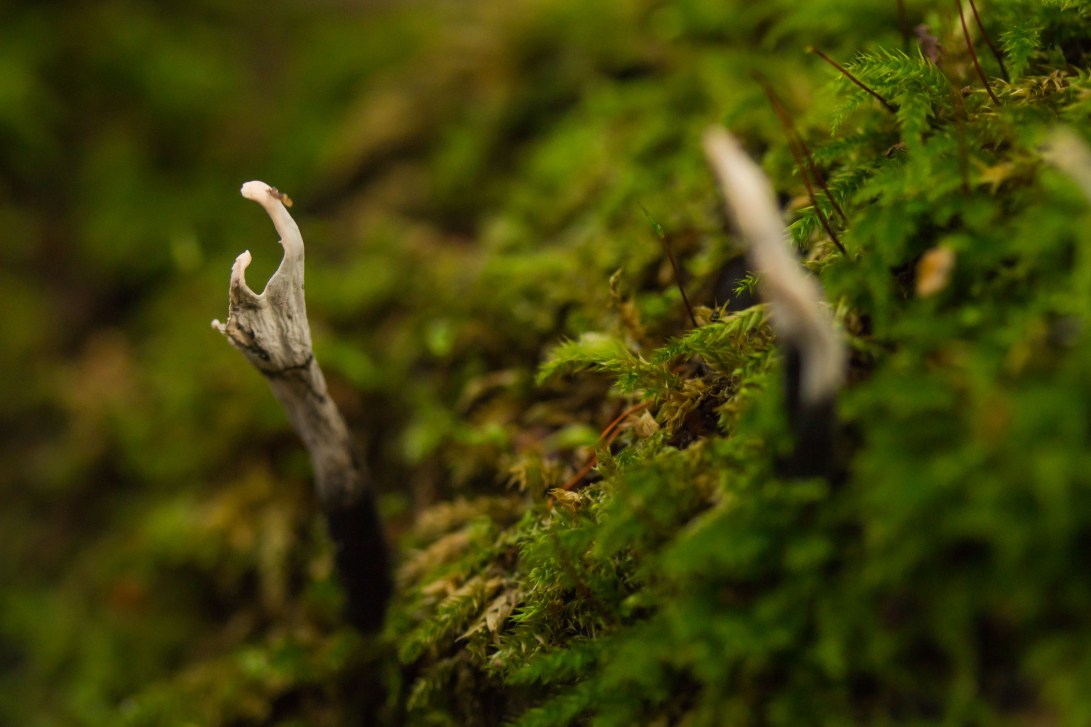
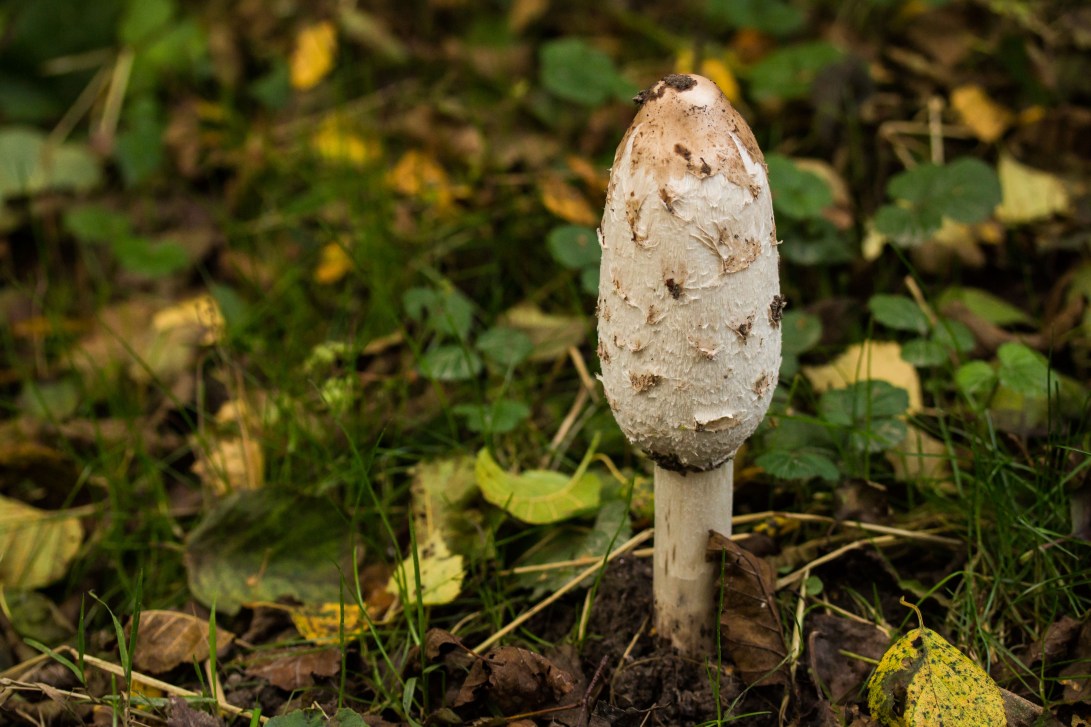
The delicate Candlesnuff fungus (Xylaria hypoxylon) stretched out of the wood, tiny black spindles dipped in white. Just as I had finally put away my camera and climbed back on the bike, I was greeted by three Shaggy Inkcaps (Coprinus comatus) stood on either side of the path like security guards. I hadn’t seen this fungus since autumn last year so it was a treat to photograph them again, and provided a satisfying end to our cycle in the woods.
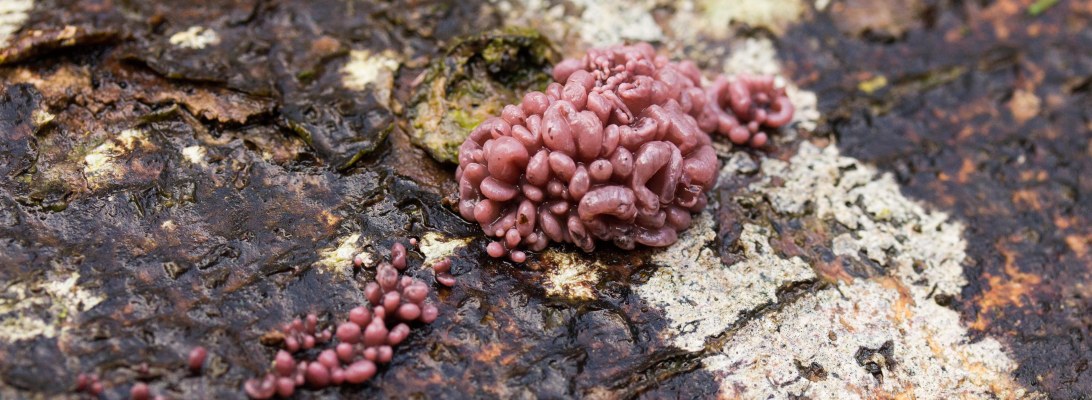
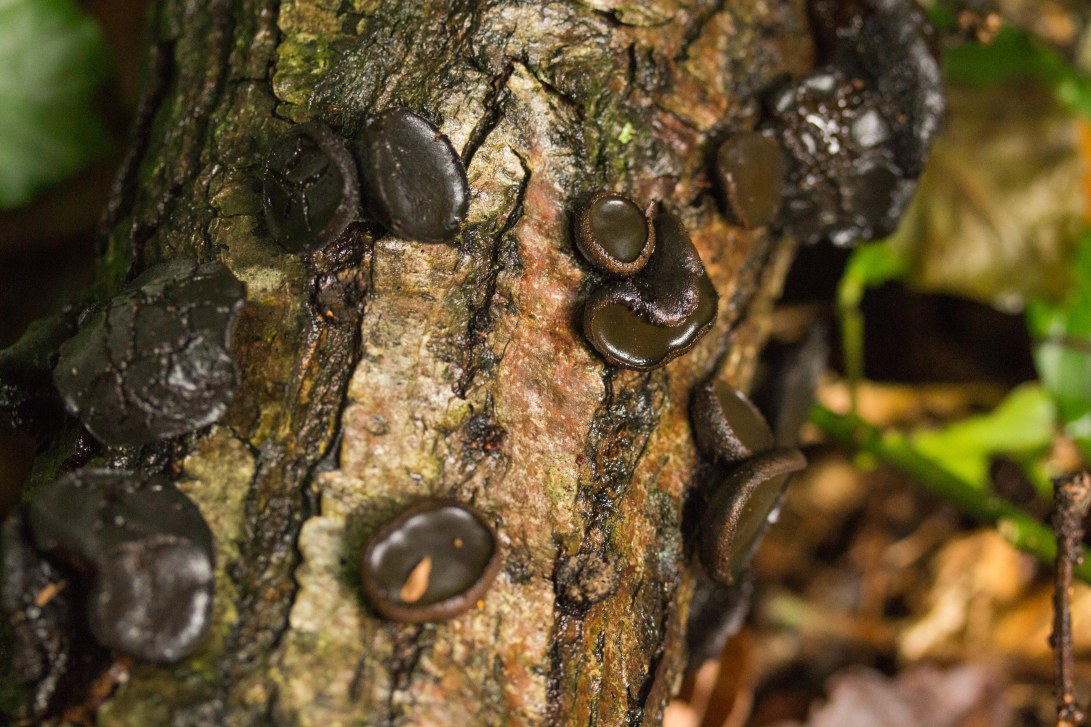
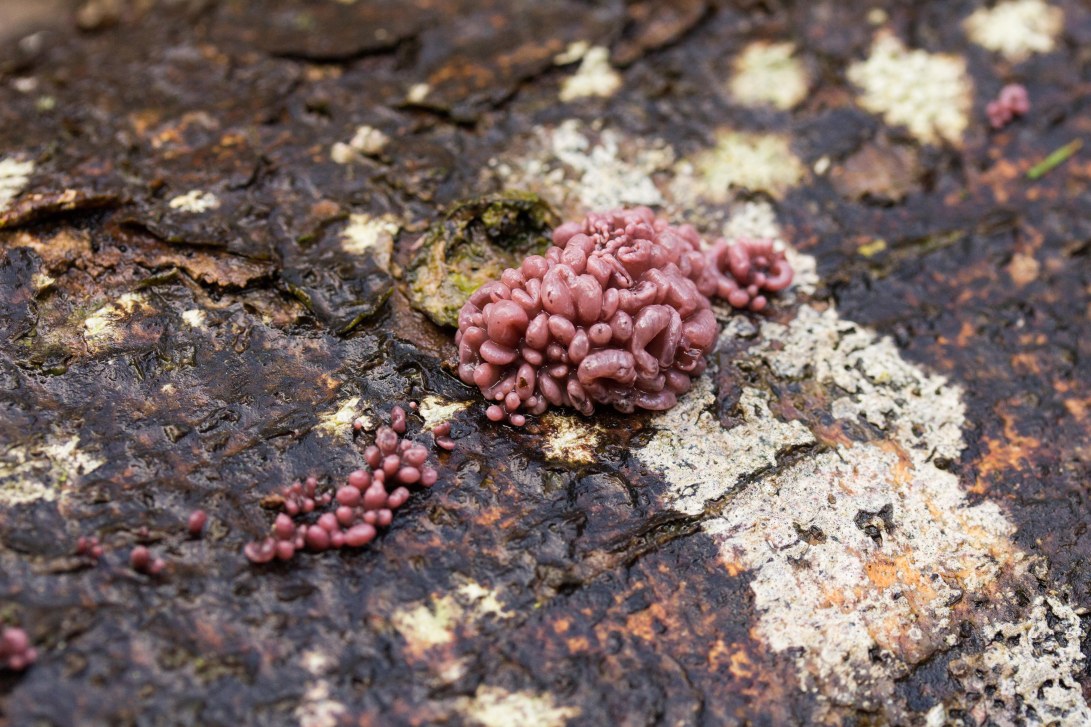
Almost all of the natural habitats that can support life are inhabited by fungi. While some species are only found in particular habitats, such as Black Bulgar (Bulgaria inquinans) on oak wood and Purple Jellydisc (Ascocoryne sarcoides) on beech, other species can thrive in many different types of habitats – coniferous woodland, broad-leafed woodland and heathland to name a few.
Autumn is one of the best times to see fungi in its prime. September rains bring the varied and often vibrant fruiting bodies out of the leaf litter and into the open. With a broad range of habitats and often wet weather, Cumbria is a fantastic location for finding fungi. I set out to several different locations to record the species that were in fruit at this time of year. Identifying them can be a challenge, so I enlisted the help of Paul Nichol from the Cumbria Fungi Group to help me with the trickier varieties. After just a few walks I’d seen dozens of species of different colours, shapes and sizes. Of these, there were four that stood out: the Common Puffball, Ochre Brittlegill, Sheathed Woodtuft and Artist’s Palette.
Black Bulgar(Bulgaria inquinans)Purple Jellydisc(Ascocoryne sarcoides)
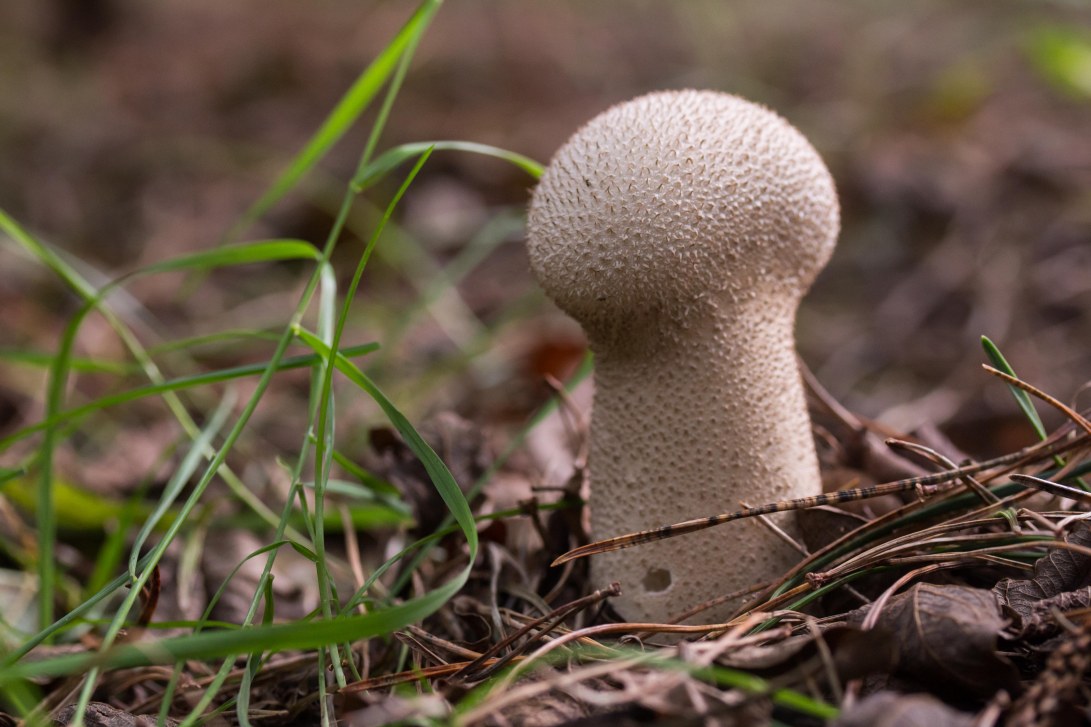
Common Puffball (Lycoperdon perlatum)
With a season spanning from July to November, the Common Puffball can be seen regularly in a broad range of habitats, from the leaf litter of broad-leafed, coniferous or mixed woodland to pastures and heathland. Although these Puffballs can be seen growing individually, they are frequently found in groups.
Young specimens are white and covered with tiny, pyramid like spikes all over the spherical cap. As the Puffball ages, its flesh begins to turn brown, and mature specimens have a circular hole on the top, which is used to release the spores in a ‘puff’ of brown powder.
Common Puffballs range in size and shape; while some are small with a stem that is barely visible beneath its low-lying cap, others grow larger with a thick stem sometimes reaching 9cm high.
I’d seen puffballs before, but never one this size; the stem was around 7cm long so the fungus protruded high up out of the ground. There were other Puffballs close by, though the stems of these were barely visible and hidden beneath the cap.
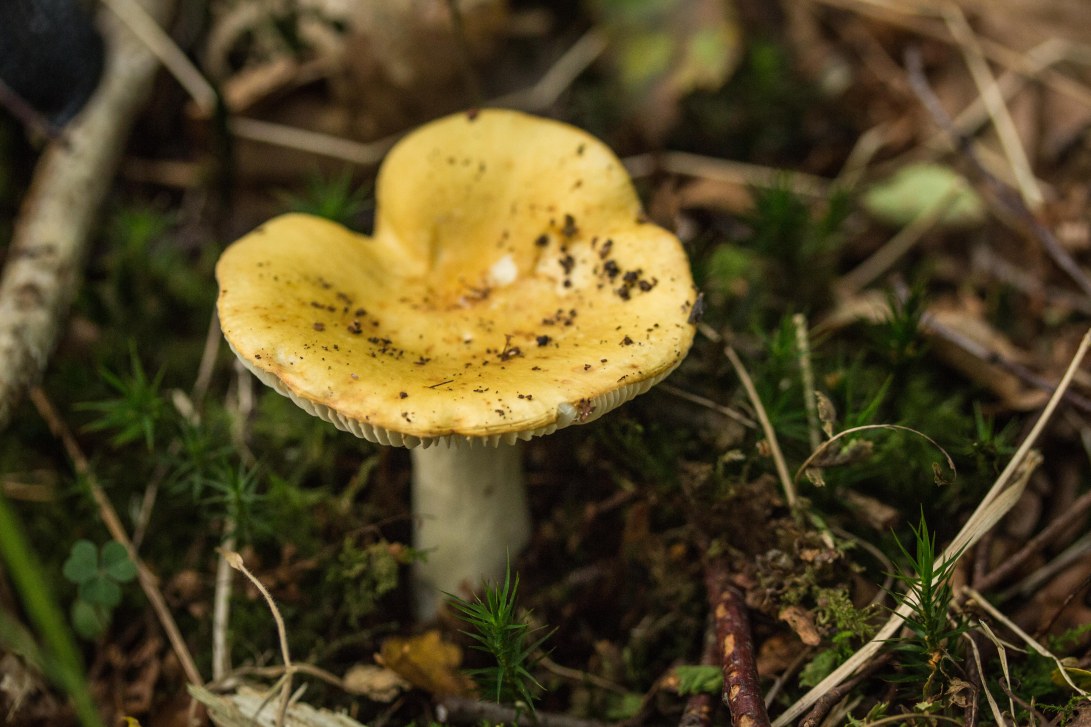
Ochre Brittlegill (Russula ochroleuca)
The Brittlegill family is an extensive one – there are over a hundred species in the UK alone. Of these, almost all have white gills and stems. The gills of this group are particularly interesting because they’re not varied in size with some small and some long, as is common in a lot of mushrooms, but all stretching from the stem to the edge of the cap in a uniform arrangement. While some are edible, others can make you very ill indeed, the Geranium Scented Russula (Russula fellea) being the nastiest of these.
Every tree you see will have a fungus growing on it somewhere. While some species are parasitic, there is often a very heart-warming relationship between the two. When a fungus grows on the root tips of its tree host, it is nourished by the tree’s photosynthesis. In response, the fungus absorbs the minerals produced, and passes on the excess back to the tree via its roots. This is an example of symbiosis between the tree and the fungus, where both species are benefitting from the interaction.
I’ve seen quite a few Brittlegill now. This one is Russula ochroleuca, the Ochre or Yellow Brittlegill. With a bright yellow cap and snow-white stem, it’s an extremely pretty mushroom, but with a distinct peppery taste so is not usually eaten. This chilli taste is typical of several varieties of Brittlegill, and can be used as an indicator of its species.
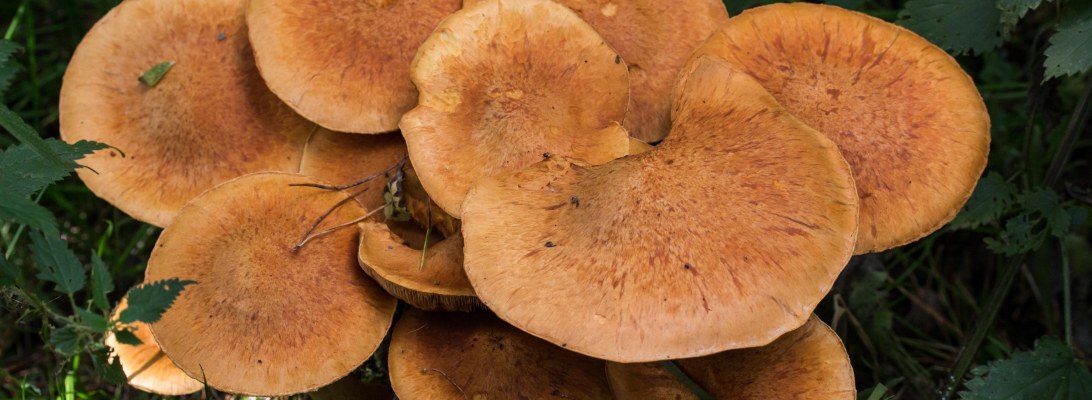
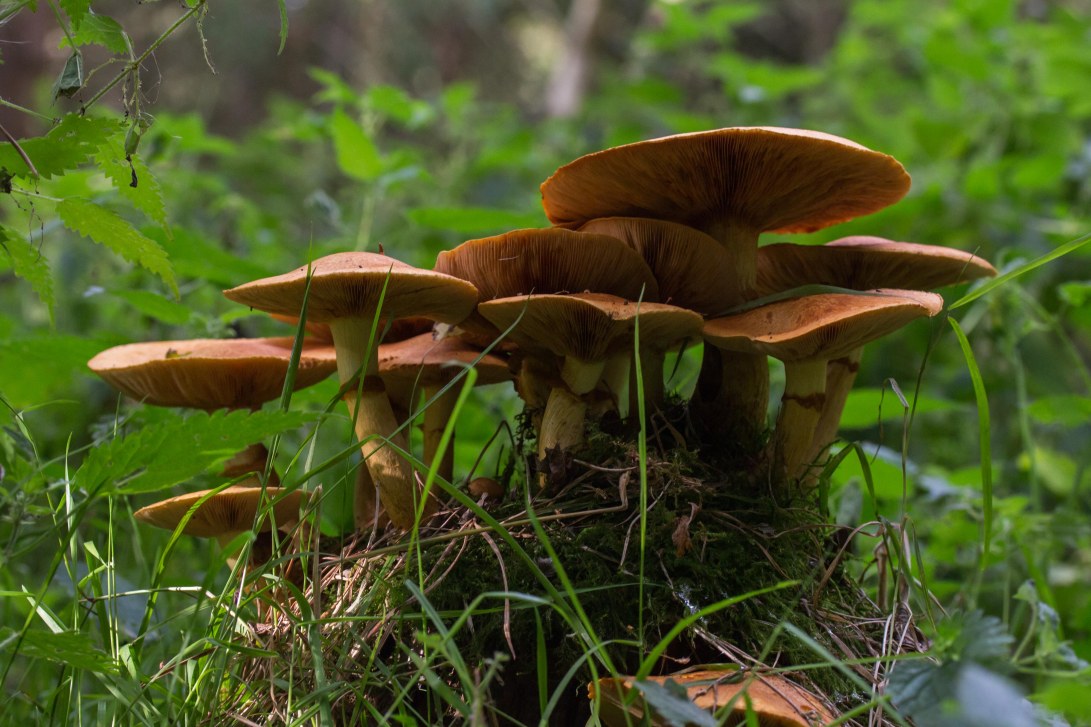
Sheathed Woodtuft (Kuehneromyces mutabilis)
This impressive-looking mushroom is one of the largest I’ve seen, and stood proudly with its troop amongst the nettles. After first consulting my fungi guides, I thought I’d found Velvet Shank (Flammulina velutipes). The bright orange, two-toned colour was consistent, along with the trooping. However, this mushroom was a lot waxier than the specimen I’d found, not to mention the size difference. While Velvet Shank stems can reach 10cm in length, these mushrooms were nearly double that. Stumped, I showed my photos to Paul, who informed me that in fact I’d found the tufted toadstool named Sheathed Woodtuft (Kuehneromyces mutabilis). Halfway down the stem was a clearly visible ring, which is present on a lot of mushroom stems, and is a mark of its development. When the fungus first emerges above ground, the cap is ball-shaped and attached to the stem. As it grows, the attachment breaks and the cap stretches into its mature umbrella shape, leaving the ring mark behind.
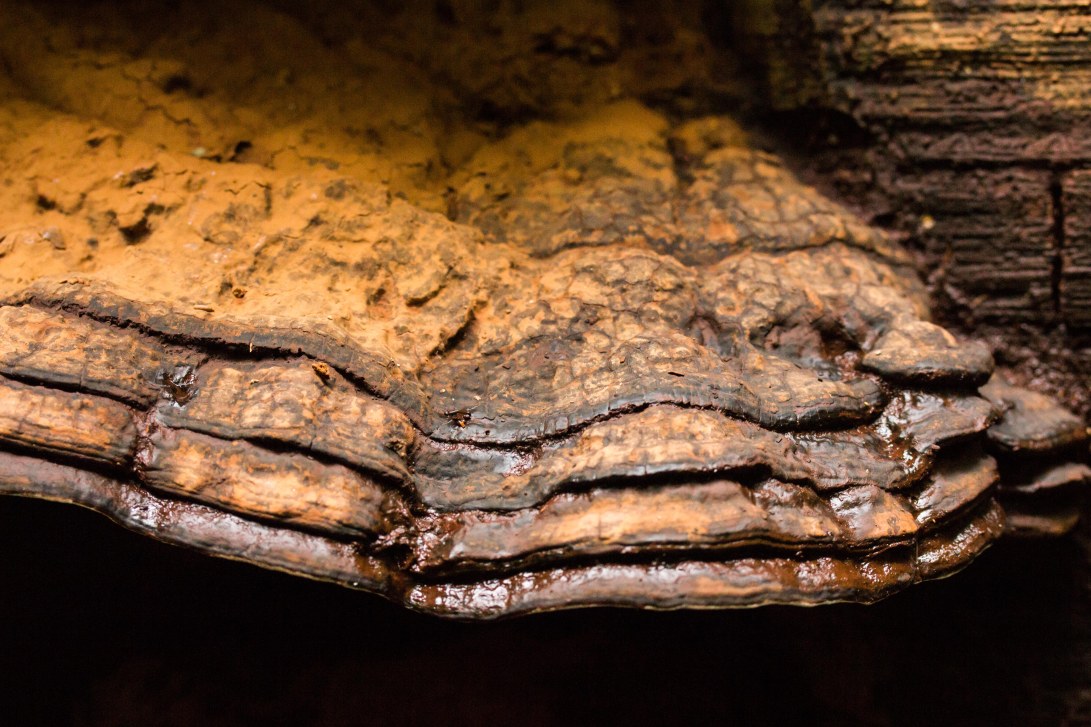
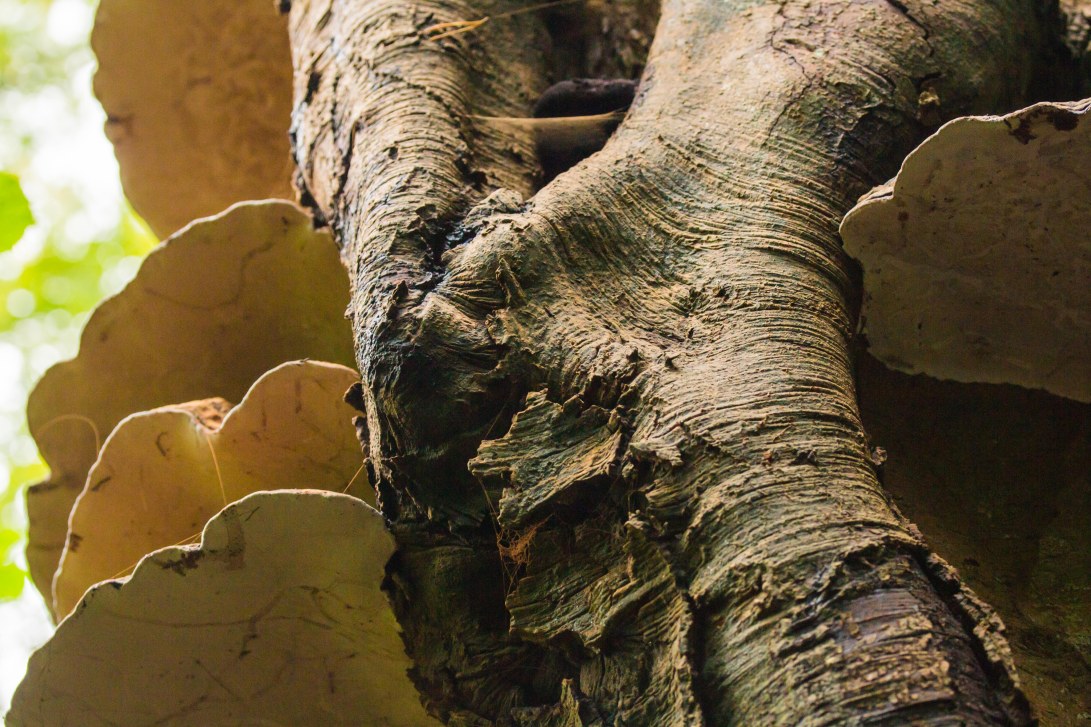
Artist’s Palette/Bracket(Ganoderma applanatum)
The Bracket family of mushrooms is a peculiar one, and quite often seen climbing trees in a ladder-like fashion. This particular troop of Ganoderma applanatum, or Artist’s Palette, was very impressive. A parasitic species with a creamy white pore surface and a red-brown upper surface, the fungus takes a host tree and slowly depletes it of nutrients, until it eventually grows on the deadwood alone. The vast slabs were longer than my hand and extremely tough. The fruit body grows perennially – producing new spores from the same fruiting structure over multiple years, as opposed to one (annual) – and the spores fall as a fine, rusty brown powder. This means it is essential for the Artist’s Palette to grow horizontally, to ensure maximum spore dispersal. Some of the individuals we saw lower down the tree were covered in a brown snow of spores from the brackets above them.
After just a few weeks studying fungi in Cumbria, I’ve seen just how many species there are to see, from vast, hard Brackets to tiny, squishy Puffballs. With plenty more chilly autumn days to come, I can’t wait to see what else begins to emerge.
It’s soon to be prime fungi season and I can’t wait to see what will start to emerge over the next few months. I find identifying fungi a real challenge, and recently I’ve mainly been interested in tracking fungi and photographing it. As with all wildlife though, I think every photographer should know exactly what it is they’re pointing the camera at. So, after consulting the “Fungi Bible” – otherwise known as the Collins Fungi Guide – I made my best guesses at what species I’d seen. Then, I consulted with a local fungi expert in my area, and was pleased to discover I’d got most of them right!
Here is a selection of the species I’ve seen so far, some in Carlisle where I’m studying and others at home in Hertfordshire. Hopefully this list will triple in size during the autumn!
Common Puffball(Lycoperdon perlatum)Ochre Brittlegill(Russula ochroleuca)Blue Roundhead(Stropharia caerulea)The Deceiver (Laccaria laccata)Brittlegill (unsure of species – too young)Sheathed Woodtuft(Kuehneromyces mutabilis)Sheathed Woodtuft from below
It was looking like another gorgeous day. As we walked along the harbour yesterday, I couldn’t help noticing how inviting the forest running alongside the beach looked. Stretching for over seven hundred hectares, Roseisle Forest was a stunningly beautiful pinewood. As we made our way up the slope between the first row of trees, sand dunes transformed to mounds of fallen pine needles and the sound of the ocean soon faded into silence.
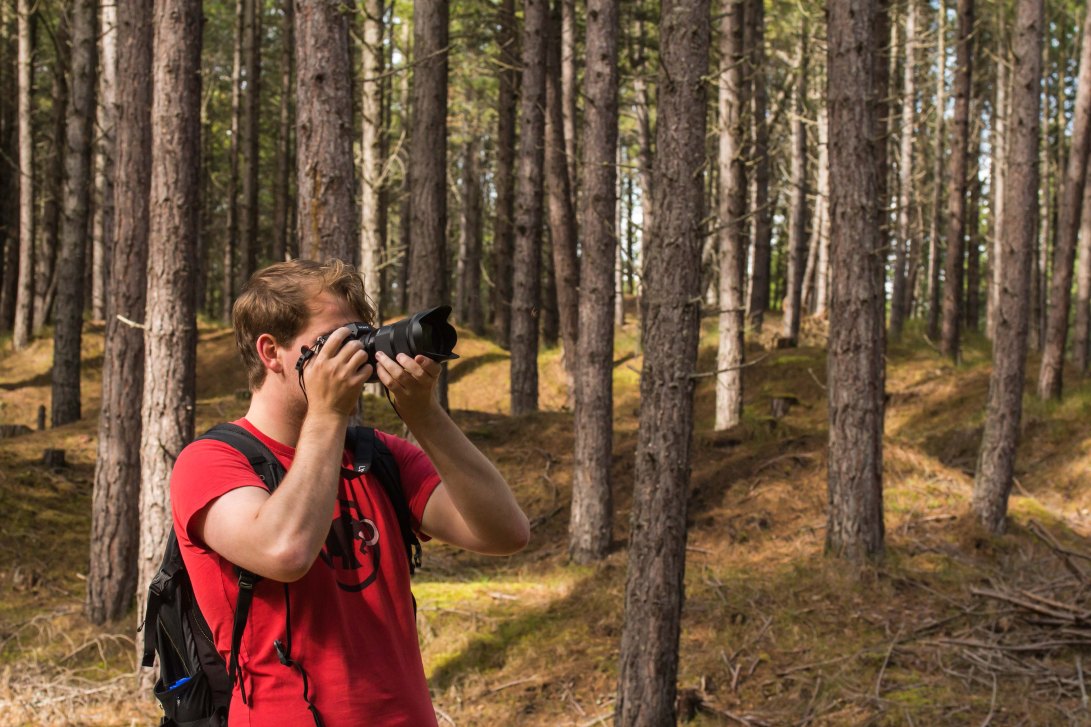
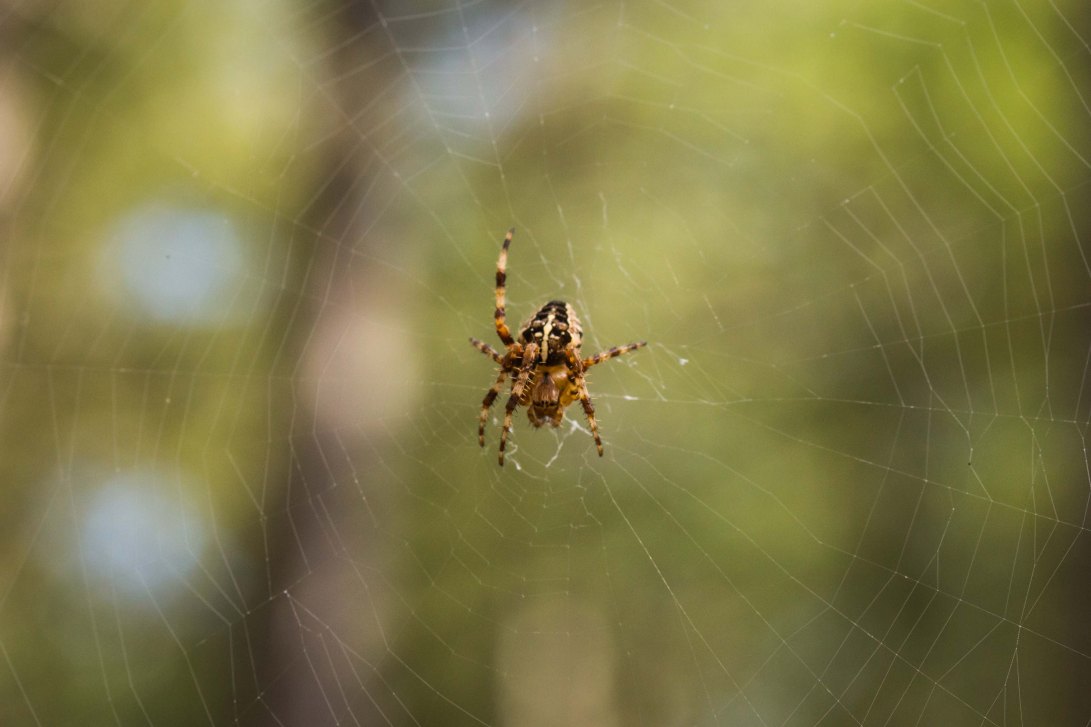
A wide trodden path snaked between the trees. I was on the lookout for fungi, so we headed off-road and ventured up the hills, giving us a great vantage point over the forest below. Before long, a sudden sparkle caught my eye, and I was amazed to discover that a spider had strung its web between two trees several metres apart. Luckily the sunlight had caught the web; otherwise we may have walked straight through it. We spent the next twenty minutes photographing our spider – it was a real challenge trying to get him in focus as the web swayed to and fro in the breeze, which must have felt like a gale to the spider. If you zoom in on the photo of Kerr, you can see a brown dot a few inches in front of his camera, showing just how tiny the little hunter was.
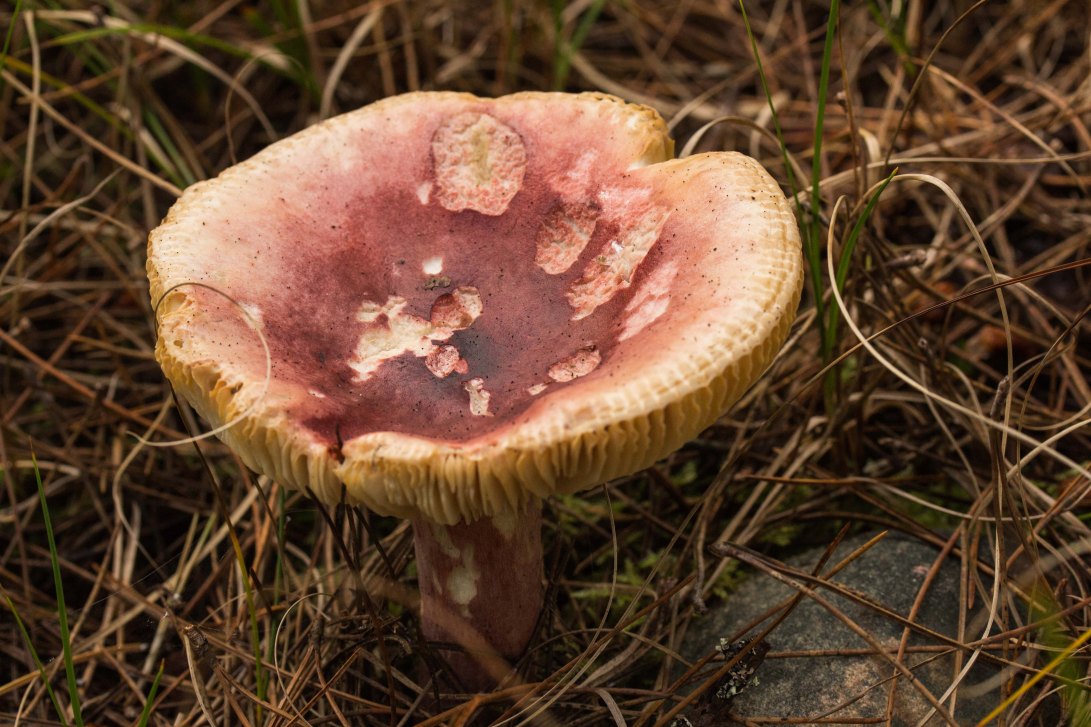
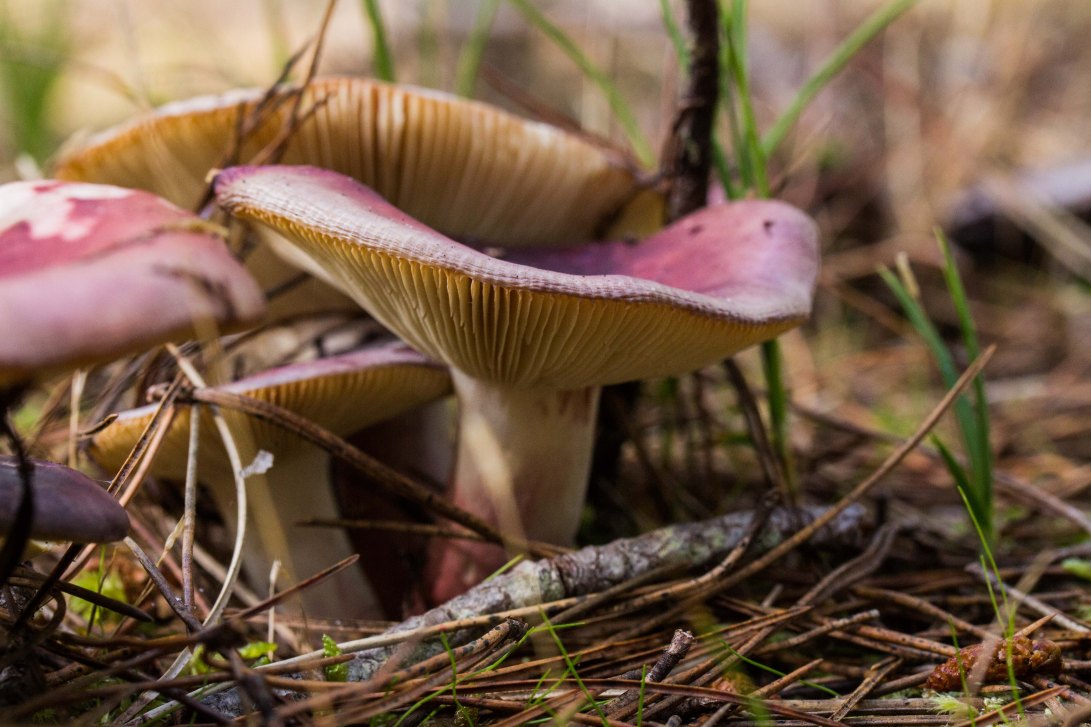
Soon, it became clear that Roseisle Forest was abundant with a medium-sized, red-capped mushroom that had faded to pink with age. After consulting the Burghead guide back at the cottage, I discovered that mushrooms in the Russula group, otherwise known as Brittlegills, were common here. After checking out the various species I identified this fungus as Sickener (Russula emetica), a poisonous species associated with pine woodland. This mushroom is found in groups and is most common in late summer to early autumn, perhaps explaining why the ones we saw weren’t the bright red colour of their prime.
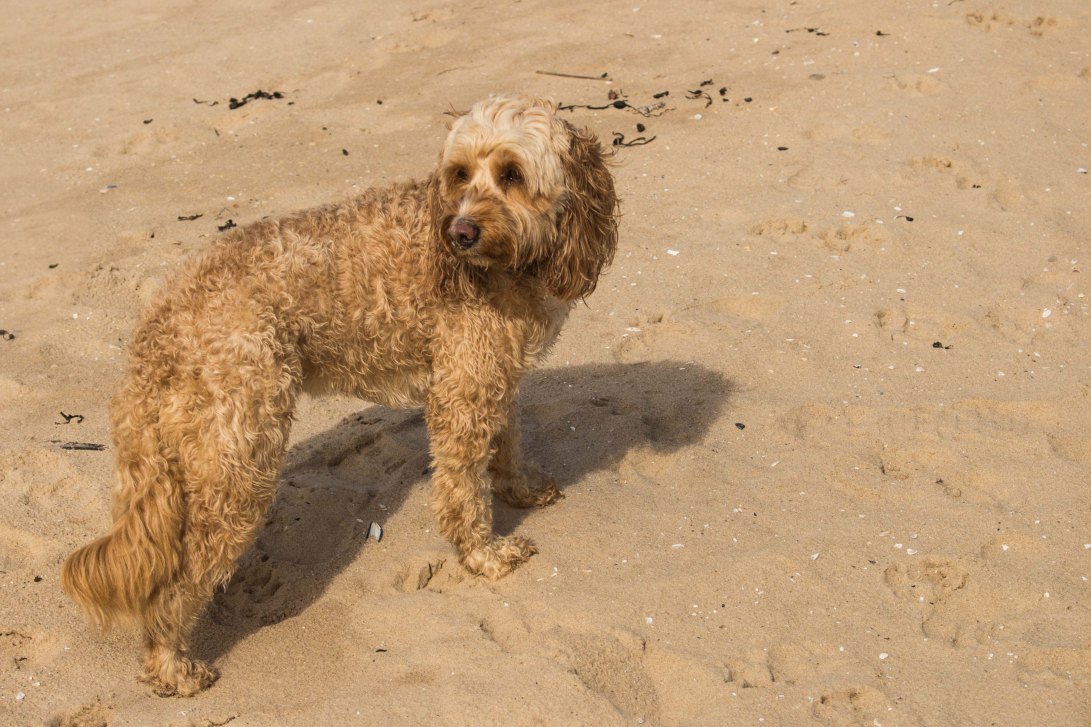
After finding dozens more Sickener mushrooms and spending a long time crawling on the forest floor photographing them, we headed back out onto the beach. We met up with my parents and Jasmine, who was whipping up a small sandstorm in her excitement. By this point my stomach was rumbling after the walk in Roseisle, so we headed to lunch and ate outside in the stunning sunshine.
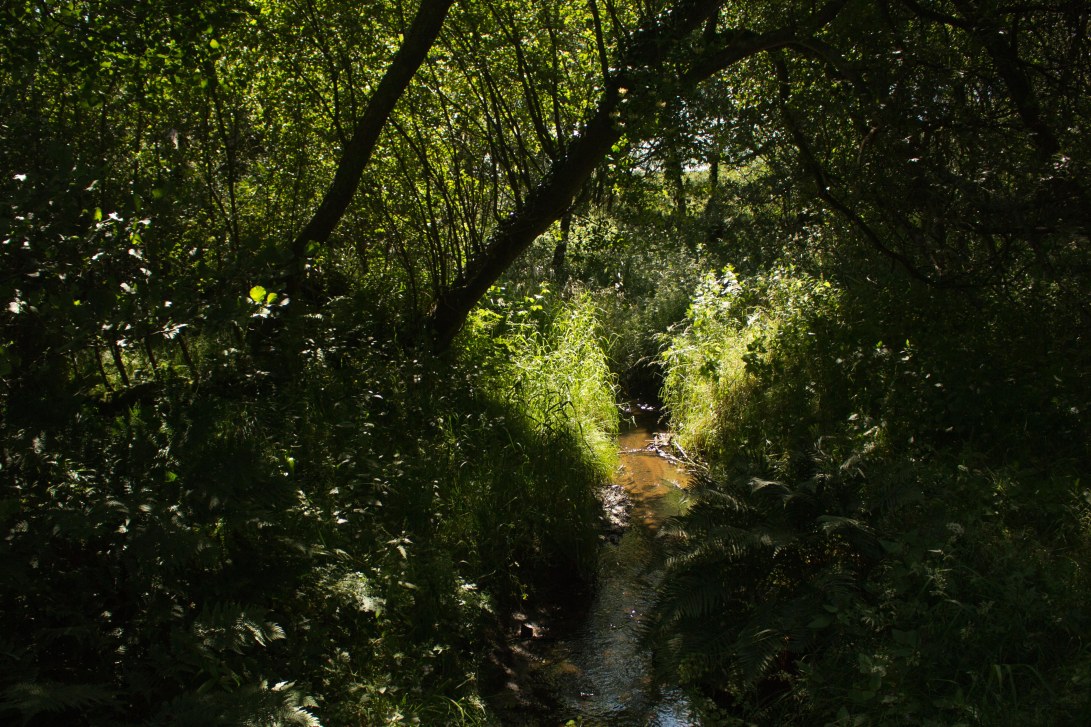
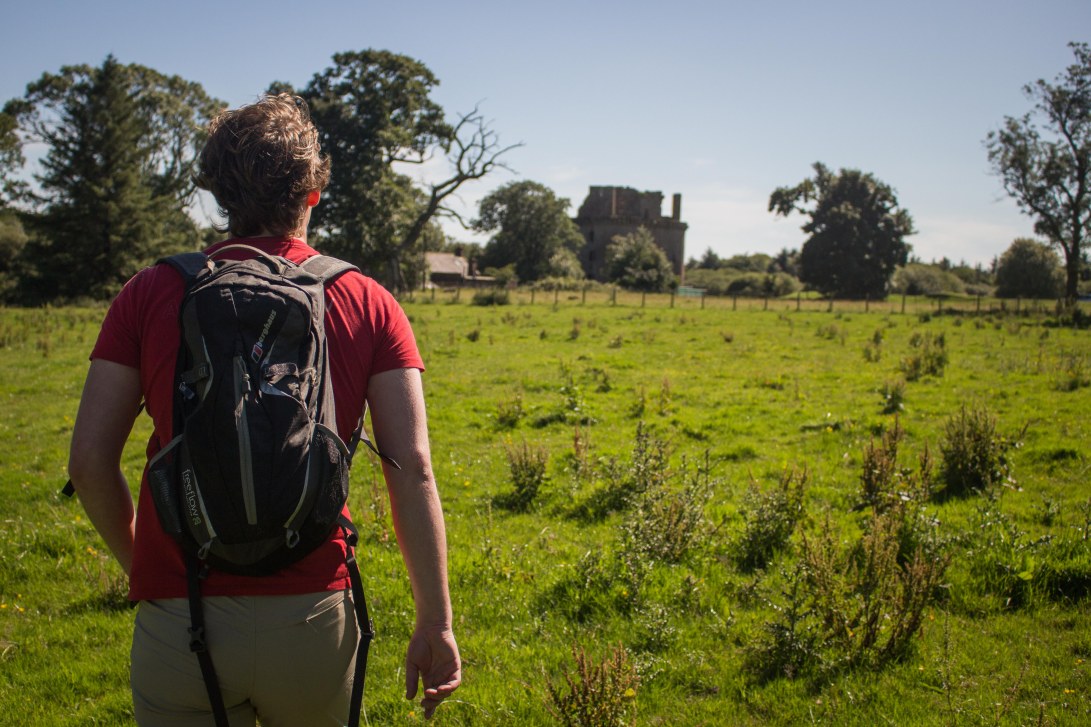
Kerr and I arrived at Caerlaverock Nature Reserve mid afternoon. We’d chosen the perfect day for our camping weekend; the sky was cloudless and the breeze off the water blew the scent of salt across the grass. We began our walk in the forest, following the trail as it weaved through the trees. A trickling stream criss-crossed beneath us, water glistening as it caught the sun. The path was dappled with patches of light that shifted as the breeze stirred the trees.
Soon we emerged into the open. Despite the breeze, the sun was strong and before long we’d both abandoned our jackets. A Red Admiral butterfly fluttered from reed to reed, buffeted by the breeze. As it rested on a patch of undisturbed grass I managed to snatch a few shots before it took to the air again, soon getting lost in the swaying grass.
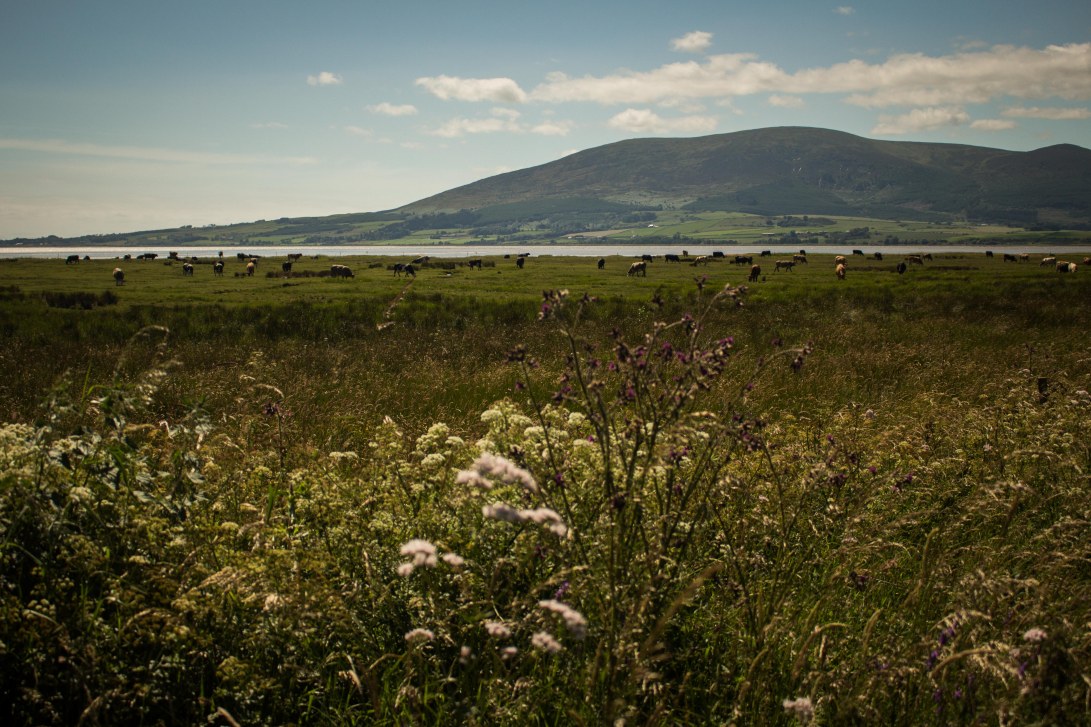
We followed the track on until grassland dissolved into farmland. Cows gazed at us quizzically as we passed, large eyes blinking. Before long we reached the end of the first field, where the only route to the next was crossing the stream over a felled tree. Balance is not my strength, but with Kerr’s help I reached the other side without getting soggy.
The obstacles weren’t all behind us though. I wouldn’t say I have a phobia of cows, but I certainly make an effort to avoid sharing a field with them, something I inherited from my mother. So when we emerged from the tree bridge and saw a herd forty-strong, I was a little apprehensive about going any further. Not only were they everywhere, they were also the friskiest cows I’d ever met. When they spied us, they broke into a run and spread out, covering our path to the gate. We were just contemplating the best course of action when they turned tail and retreated quickly back to the far end of the field. I knew my choices were to face these herbivorous, harmless creatures head-on or stumble back across the tree and find a new way round. Seizing the day, I gripped Kerr’s hand and we made our way slowly but surely across the field.
We were two thirds of the way across when I snuck a glimpse to the side and, to my horror, saw the entire herd stampeding right for us. The inevitable terror set in and I dragged Kerr towards the gate. He was telling me not to panic as I launched myself at the gate, wading through sticky mud in my haste. We’d just dropped down on the other side when the first cows reached us. I locked gazes with them, and for a moment they were cute and endearing again. Suddenly they took off again, galloping after each other like horses at the Grand National. I’d never seen such energetic cows in my life.
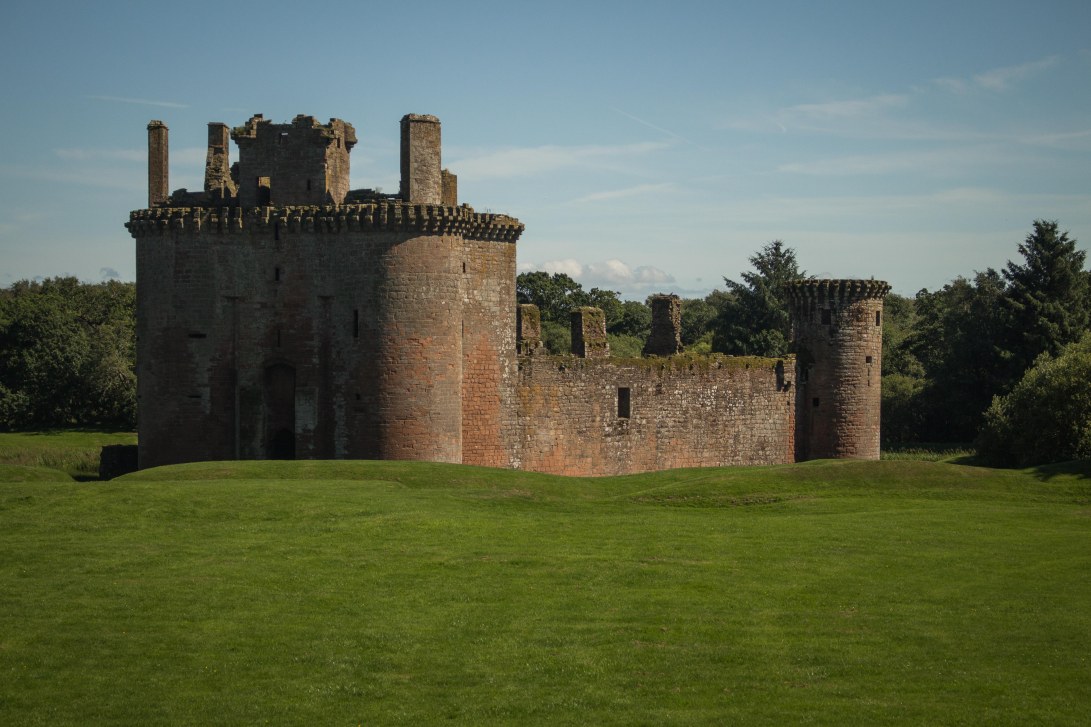
After all the drama, I was glad to be back on a tranquil, cow-free track up to Caerlaverock Castle. Two rabbits popped up out of the long grass, standing tall. Too tall in fact. I lifted my binoculars and saw that our rabbits were in fact hares, and my suspicions were confirmed when they pelted at the speed of lightning into the next field. They were small though, perhaps leverets exploring their new surroundings. I’d only seen a handful of hares before so it was a great sighting.
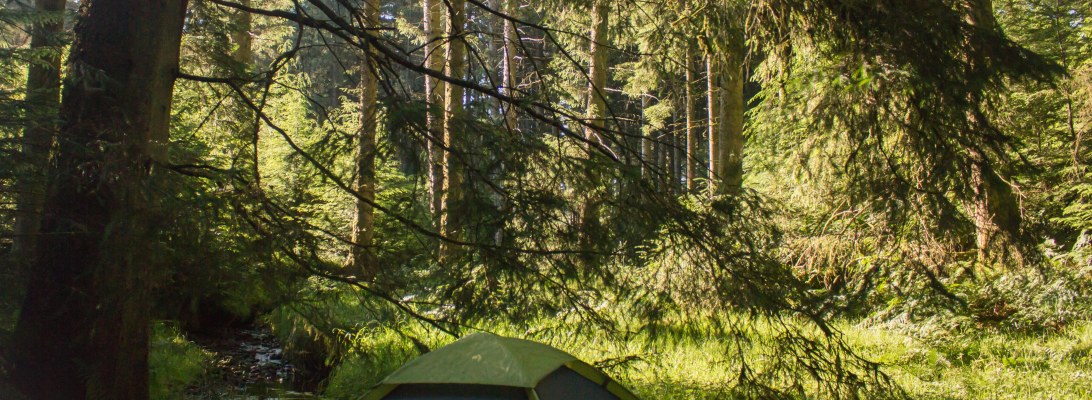
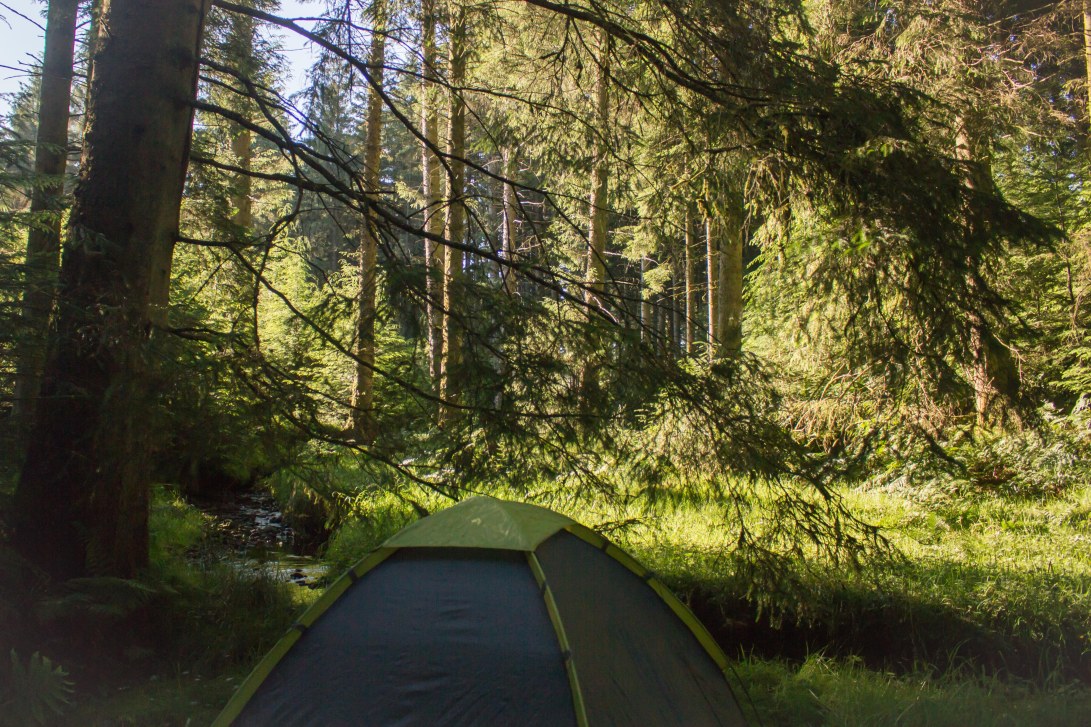
Leaving the hares behind, we headed past the castle and back to the car, where I’d foolishly left my cream soda Barr to boil. We left Caerlaverock behind and made our way to our camping spot. Buildings gave way to trees and before long the only sound was the radio. Once we were parked up, Kerr was determined to carry all our kit down to the site on a single trip, so I made the descent down the marshy hill with some trepidation. With my gaze fixed firmly on my feet, I almost didn’t notice just how incredible the spot was. From my vantage point on the hill, I gazed down at a flat clearing perfectly sized for a tent and campfire. The site was in a fishbowl, trees curled around it on all sides and a gurgling stream providing the perfect moat.
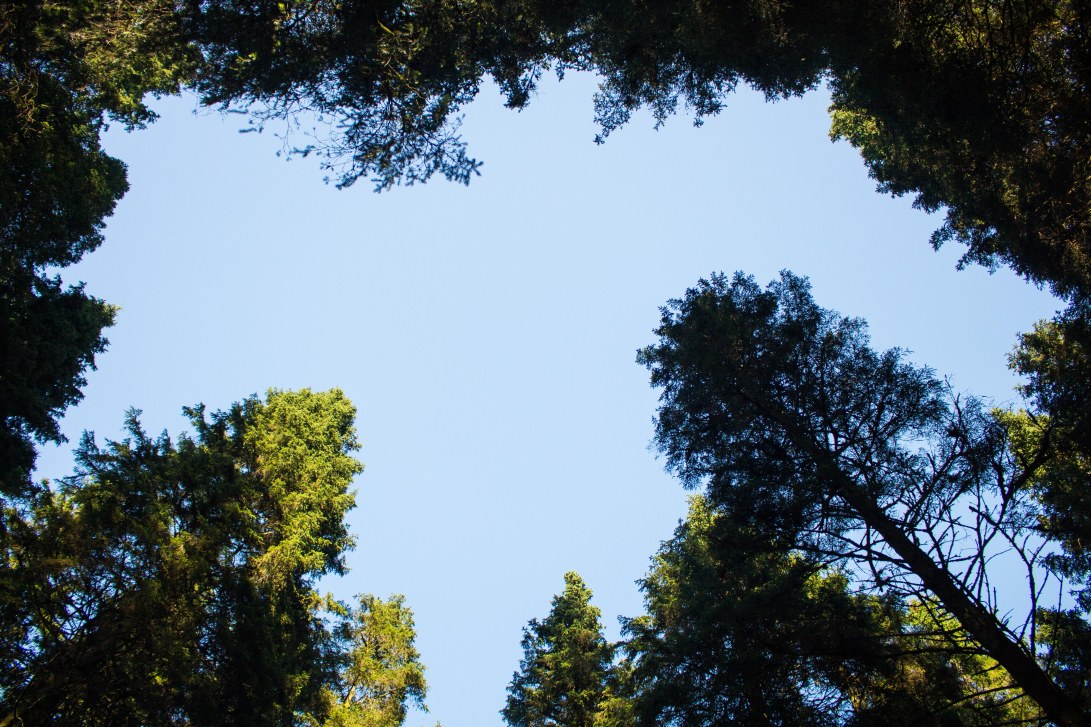
After hopping across the stream and setting down our kit, I congratulated Kerr on finding the perfect hideaway for a weekend’s camp. The flies and midges soon made their introductions, so before anything else we spritzed each other with repellent in the vain hope they’d keep their distance. First up was the tent, and in no time it was pegged in place overlooking the west side of the forest. The sun was beginning to set, transforming the woodland into a pinstripe suit of dark shadows and bleached highlights. A buzzard shrieked overhead, and I peered upwards just in time to see it appear in a suspiciously Batman-shaped break in the trees.
Soon Kerr had a magnificent fire going, and the sound of cracking wood was added to the hushed forest soundscape. Dinner was gnocci with chorizo – fried by yours truly on our fire – and with full bellies we sat back and relaxed, watching the flames flicker. A tawny owl hooted in the distance, and once the sun had finally sunk below the hills the first pipistrelles appeared. I’d been worried I’d feel the cold, but huddled by the fire I couldn’t have been cosier. Watching the flames for so long soon made me drowsy. We cleared up the dinner things and waited for the fire to fizzle into smoke and crisped kindling, before retreating into the tent for an early night.
I woke to the soft patter of rain on the tent. After such a beautiful day yesterday, it seemed we wouldn’t be so lucky today. We’d planned on cooking bacon and eggs for breakfast, but the darkening sky didn’t look promising so we decided to hit the road a little earlier. Once everything was packed up we headed back up the hill, which was getting slippy with the rain. We had just made it back to the car when the heavens opened. On the drive back home, the rain lashed on the windscreen and the sun was nowhere to be seen. We couldn’t believe our luck.
The day began with waking up from a heavenly night’s sleep – my bed was like a marshmallow. After breakfast and a dip into what Heather calls THE Beaver book, by Andrew Kitchener, we headed back along the river to find some spots to set up camera traps.
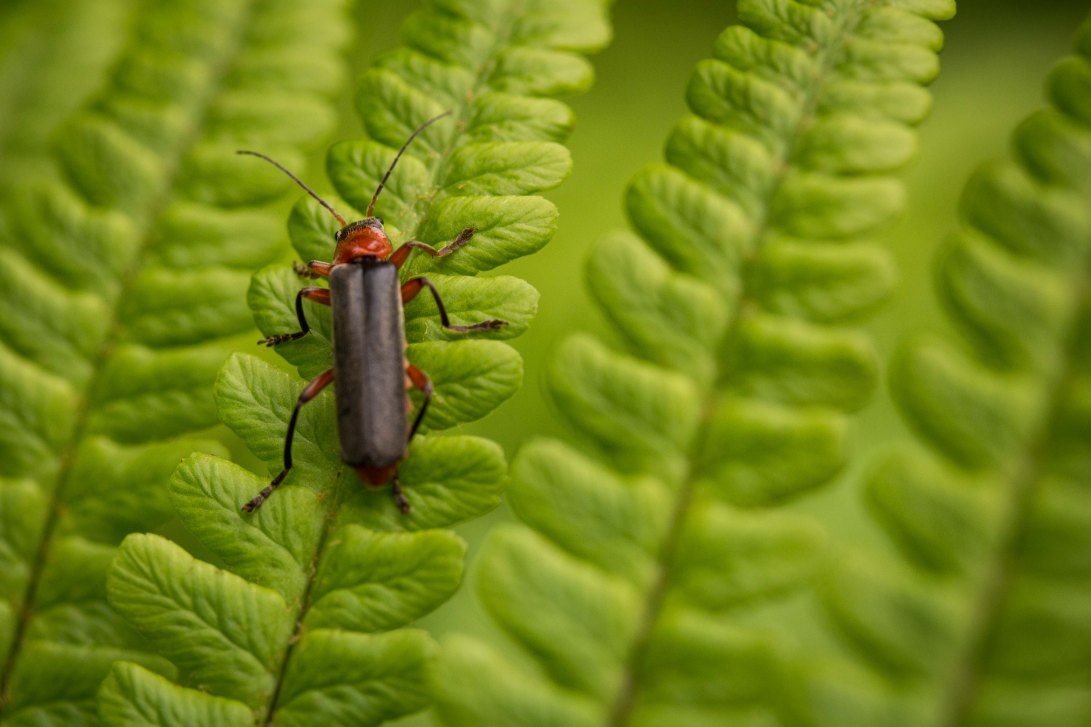
The sun came and went, bringing its heat with it so I couldn’t make up my mind whether I wanted my coat or not. Every so often we’d see a different coloured spot in the sea of green grass, and I spent a lot of the afternoon squatting in the grass training my macro lens on day moths, flies and beetles. Before long we reached a clearly trodden corridor in the grass that snaked down to the river. We followed it down and saw a defined mud slope leading into the water; this was a sure route for beavers. One camera trap set and ready.
We set the other two on the other side of the river, to hopefully catch any beavers coming down from the adjacent field like the one we spotted last night. Beaver footage would be incredibly exciting, especially during the day.
Back at the cottage, we retrieved the moths that Heather and Cain had caught in the traps during the night. Taking them outside, we had a little macro photo shoot. White Ermine, Poplar Hawkmoth, Large Yellow Underwing, all beautiful, delicate creatures with easily the same beauty as butterflies. Seeing them up close instead of zooming around my head in the shower made a world of difference; stood still they were stunning, covered in shimmering dust of every colour imaginable.
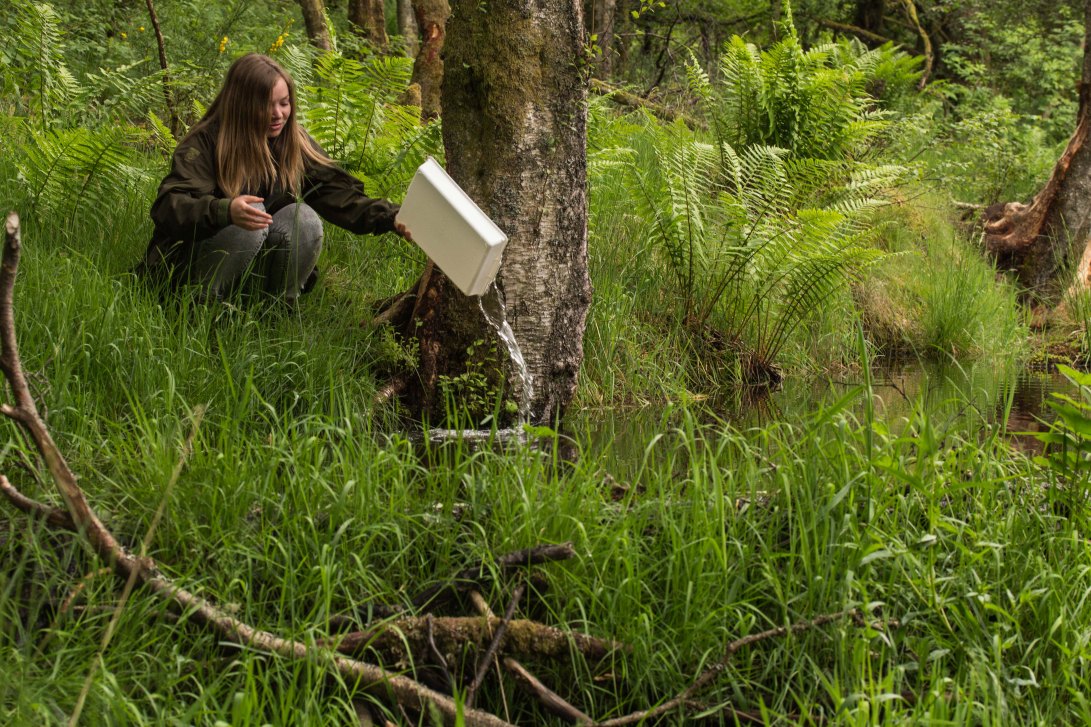
After some lunch at the cottage we headed back out, this time with nets and white trays ready for some pond dipping. I hadn’t pond dipped since I was tiny, so it brought back a lot of memories for me.
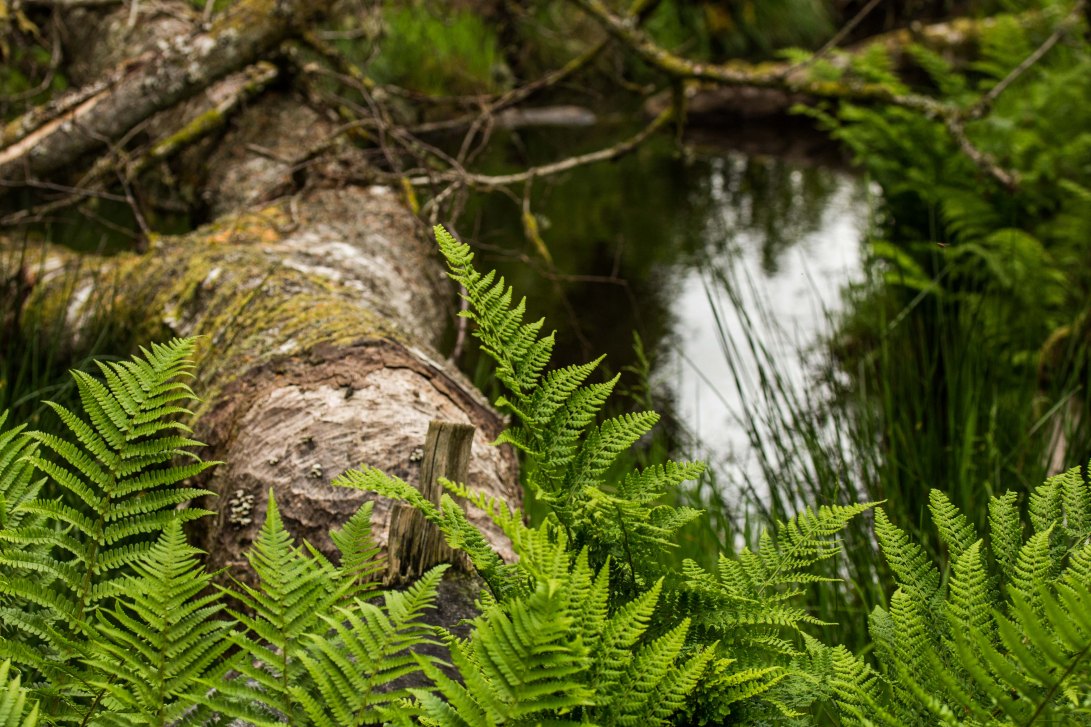
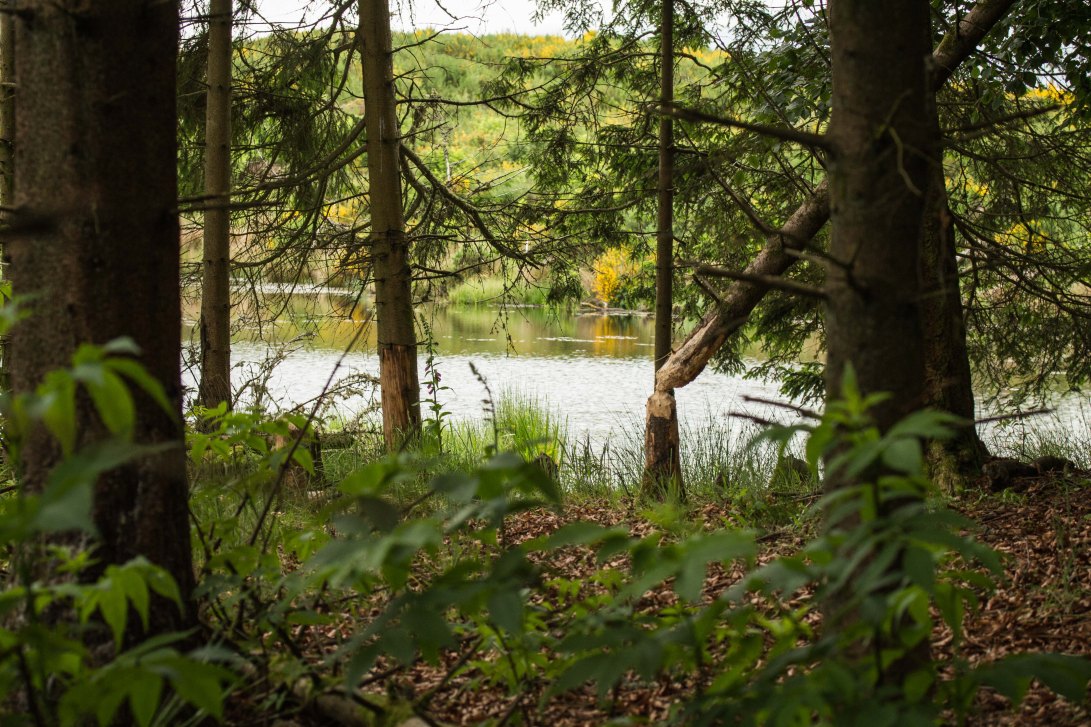
Finding the perfect dipping spot was difficult. The first place we tried was too steep, and knowing my balance I’d have fallen straight in. The next spot we found was good for dipping but we only managed to find a few blood worms, miniscule grains of wiggly sand that catapulted themselves around the tray with curled convulsions of their tiny bodies. Finally we headed away from the cottage towards the lake – made entirely by the beavers I hasten to add – where we had much better luck. In a single tray I got a good look at caddis fly larvae, damselfly nymphs, backswimmers (which performed their rather comedic backstroke around the tray), water beetles and lots of microscopic creatures. Using my macro lens I could capture the beautiful detail that make these pond aliens so extraordinary. They honestly looked like visitors from another planet.
There were even more treats on the journey back. Just as I was ducking under a low fern I saw a flash of chestnut red and my arm rose of its own accord in a rapid point. “Squirrel!” I whispered as urgently but quietly as I could. The squirrel darted along a felled tree then up a living one, skirting up the bark just as easy horizontally as vertically. A group of chaffinches began to mob it, clearly too close to a nest. Bounding from one tree to the next, the squirrel speedily made its way away from the ruffled birds, and paused to peer down at us as we gawped. A tail twitch later and he was down on the forest floor again, disappearing into the forest.
We continued on, making our way back to the cottage. Dinner was stir-fry, and after finishing up we headed to the river, in the hope of seeing our beavers again. We took cover under the overhang of a tree, nestling in amongst the roots that divided us like the arms of cinema seats. Then we lay in wait. And once again, after only a short wait there was a rustling beneath the rhododendrons and a dark shape emerged. It was too dark for photos, but just to see the beavers only a short distance away was yet another treat. Now all we had to do was return at sunrise.
Species seen:Blue tit(Cyanistes caeruleus) Chaffinch(Fringilla coelebs) European beaver(Castor fiber) European rabbit(Oryctolagus cuniculus) Great tit(Parus major) Heron (Ardea cinerea)House martin (Delichon urbicum)Jackdaw (Corvus monedula) Moorhen (Gallinula chloropus) Pied wagtail (Motacilla alba) Red squirrel (Sciurus vulgaris)Song Thrush(Turdus philomelos) Starling(Sturnus vulgaris) Swallow(Hirundo rustica)Woodpigeon(Columba palumbus)























 rebeccaonthewing.com