As diluted sunlight comes streaming through the window I’m awoken by the squalling of gulls – a tangled symphony of disgruntled burbles, high-pitched cheeps and open-throated cackles from chimney top perches.
The weather in the Scottish Highlands is always a lucky dip. Some days I wake up to driving rain and moody skies. Today the sky is bright, streaked only by wispy cirrus clouds. Despite the sunshine, there’s a bracing wind skirting up over the waves and whipping them up into frothy white peaks.
A gaggle has assembled on the beach while the tide is far back. Common sandpipers hurry across the sand, weaving their way between bunches of seaweed strewn around like abandoned clothes. A handsome oystercatcher kicks up a fuss, its shrill piping call spreading far along the beach. House martins swoop like missiles over puddles left behind by the tide, their inky blue plumage gleaming in the sun.
There isn’t a soul here. On a warm, sunny day like this in the south, the beach would be clogged with sun-bathers and a garish patchwork of multi-coloured towels. Here, the beach is my solitary refuge. The water may be icy, but the views are stunning.
After weaving my way through assorted rocks worn smooth by the ocean and abandoned shells lying chipped and half-buried, I clamber up the steep dune running the length of the beach. My boots sink and sharp grass brushes my legs but I finally reach the summit and slide down the other side. The coastal wind instantly dies like a door has been slammed against it. The forest is sheltered and muffled against outside noise. Seclusion is one of the habitat’s best qualities. There is a feeling of anticipation upon entering a forest. It’s full of surprises.
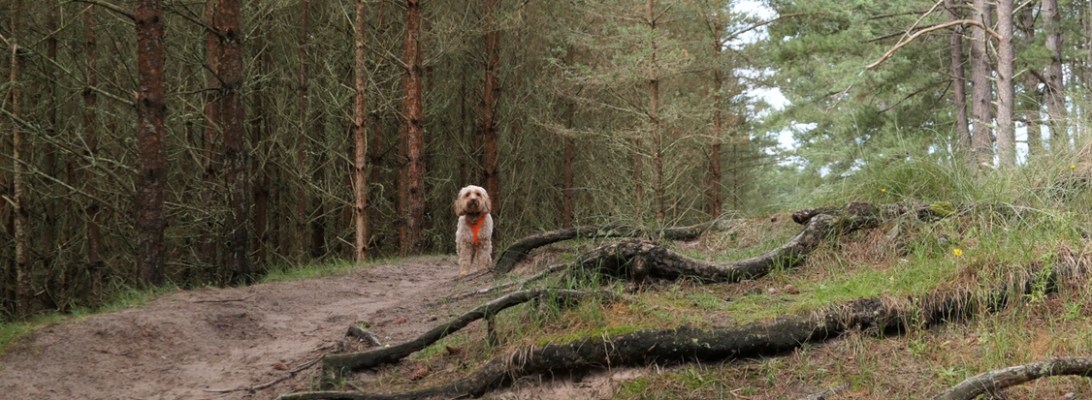
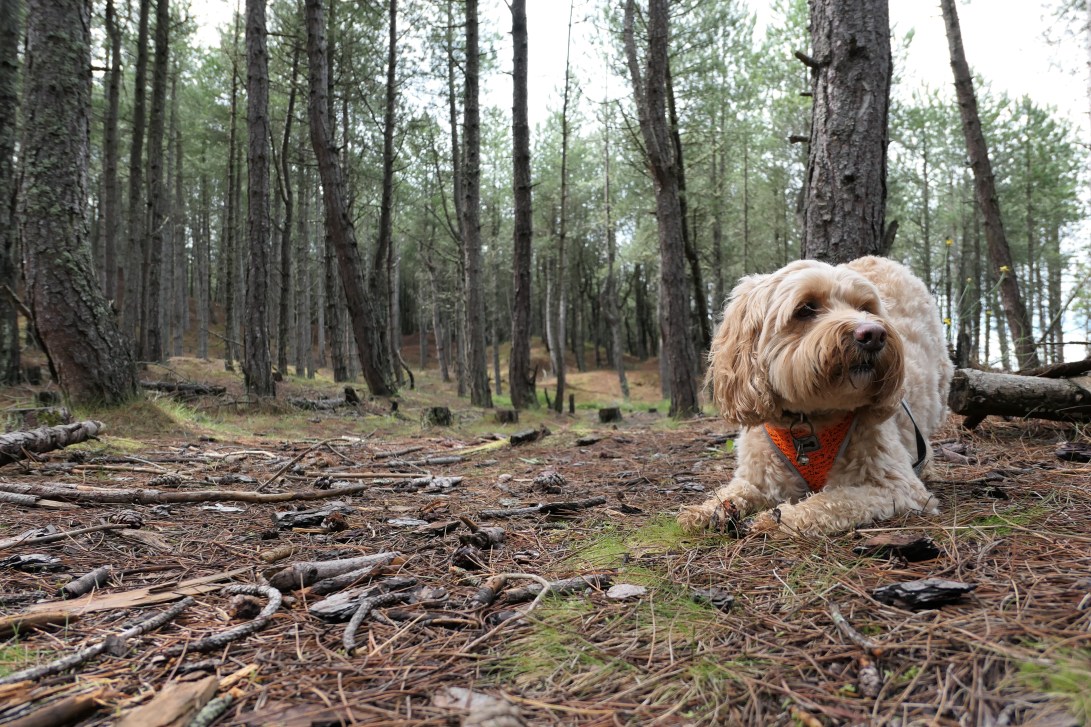
The dog wanders off by herself, true to form. The forest fragrance is too hard to resist. Her light fur flashes in and out of view behind the trees, their trunks as straight as the lines on a barcode.
I know there must be red squirrels in this forest, perhaps even pine martens. So far I haven’t seen either, but that is no guarantee of absence. It’s what I love about wildlife: it can never be rushed.
We pass another dog walker and for a while the only movement in the forest is the flurry of fur in a rambunctious chase. There will be no wild sightings this morning – martens are sleeping and squirrels are out of sight in the enclosed canopy. The dogs dash around blissfully, but eventually we pull them apart and I loop back towards town. Sounds of civilisation begin to permeate through the trees; car doors slamming, human voices, a distant bus. It’s like the sensation of ears popping and I’m back in the open, leaving the forest behind me. Until tomorrow morning.
The gloom that had settled over the Cairngorms earlier in the week was long gone. As we pulled into the car park I leant forward and saw sunlight pouring through the coniferous canopy in diagonal slants, turning green needles shimmering gold. Another forest to explore! I couldn’t wait.
Once all members of the convoy had arrived, we gathered around the notice board. Abernethy was the second largest nature reserve owned by the RSPB, spanning 140 square kilometres. It was home to around 5000 species – a list that grows every year. Our guide, Simon Pawsey from the Bird Watching Wildlife Club, looked up the crested tit on his Collins Bird app – something I definitely need to get at some point – and quietly played us the bird’s call: a rapid trilling that I was sure I would be able to distinguish above the chaffinch’s constant rambling, as lovely as that was.
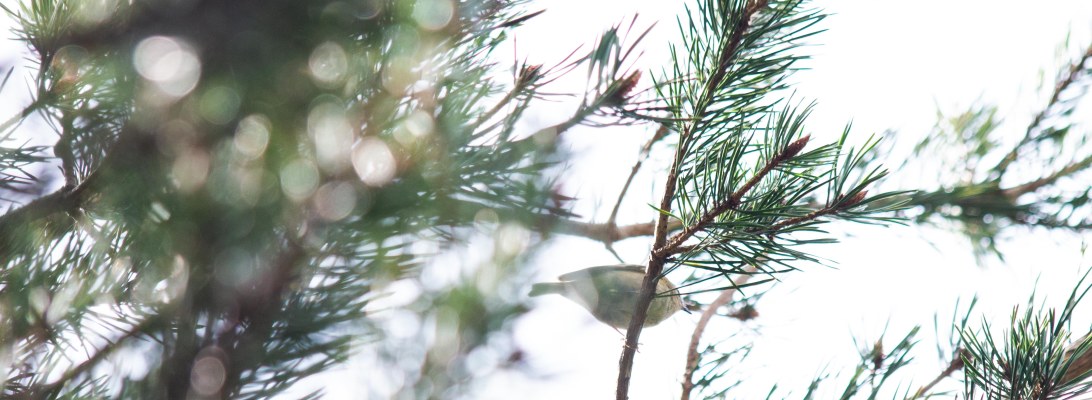
As Simon continued to tell us all about cresties, a small bird caught my eye a few dozen feet away. Lifting my binoculars, I focussed in and nearly disregarded the bird as a coal tit, which was exceptionally common in the local area. But then I noticed a peculiar tuft of feathers on the bird’s head. Surely not… A halo of light fringed the bird’s body and I squinted to make sure, keen not to make a fool of myself in front of all the other birders. But it was! It really was a crested tit! I exclaimed this to the group, embarrassed about interrupting Simon but deciding it was well worth it.
Not a great photograph, but an amazing sighting!
There was a flurry of excitement as we all pinpointed the crestie for those who hadn’t spotted it. The bird was perched on an obvious branch in a relatively open clearing, sitting at eye level in a car park full of human voices and slamming doors. It was such a good view of a species that I thought I’d only get a snatching glimpse of at the very top of a huge Scots pine, if that. The crestie stayed for a few minutes, allowing us all to admire him before he took off and disappeared. Our guide had been talking about crested tits and a crested tit appeared for us all to see, almost like a “Here’s one I prepared earlier” moment. What an extraordinary start to the day!
Buzzing after our first sighting, we set off into the forest, keeping an eye out for crossbills or red squirrels that might be foraging above. Several times a pair of dark wings high above had us briefly excited that we’d spotted an eagle, but each time it was a buzzard, or “tourist eagle” as it was often referred to in the Highlands.
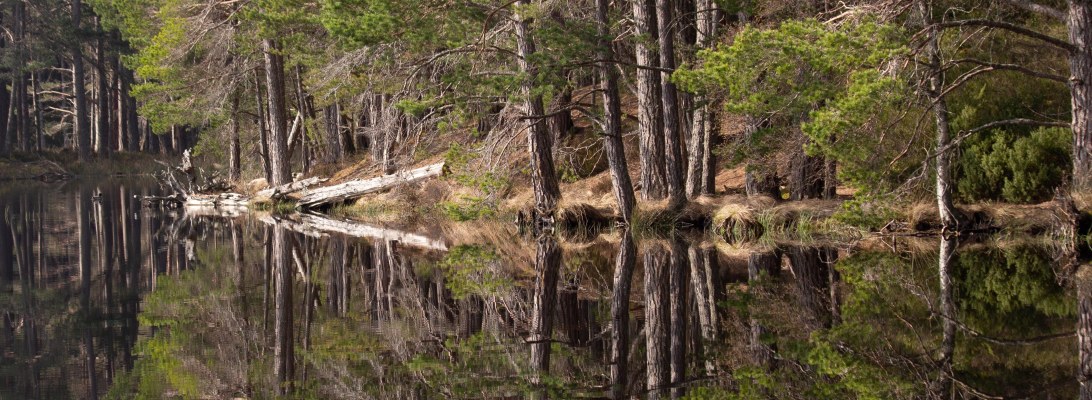
Before long Loch Garten came into view, and even with just a glimpse through the trees I knew it was going to be impressive. There was no breeze to stir the water so the loch lay as flat and still as a mirror, casting a perfect reflection of the trees along the margins and the blue hills in the distance. The only disturbance to the glassy surface was a lone mallard swimming far out in the loch, scratching a line across the water. Not a sound could be heard. As I stood on the bank absorbing the view, I thought how Loch Garten could be the perfect setting for an elaborate fantasy story. It was such a wild, beautiful place: seemingly tranquil and calm but with the power to turn at a moment’s notice.
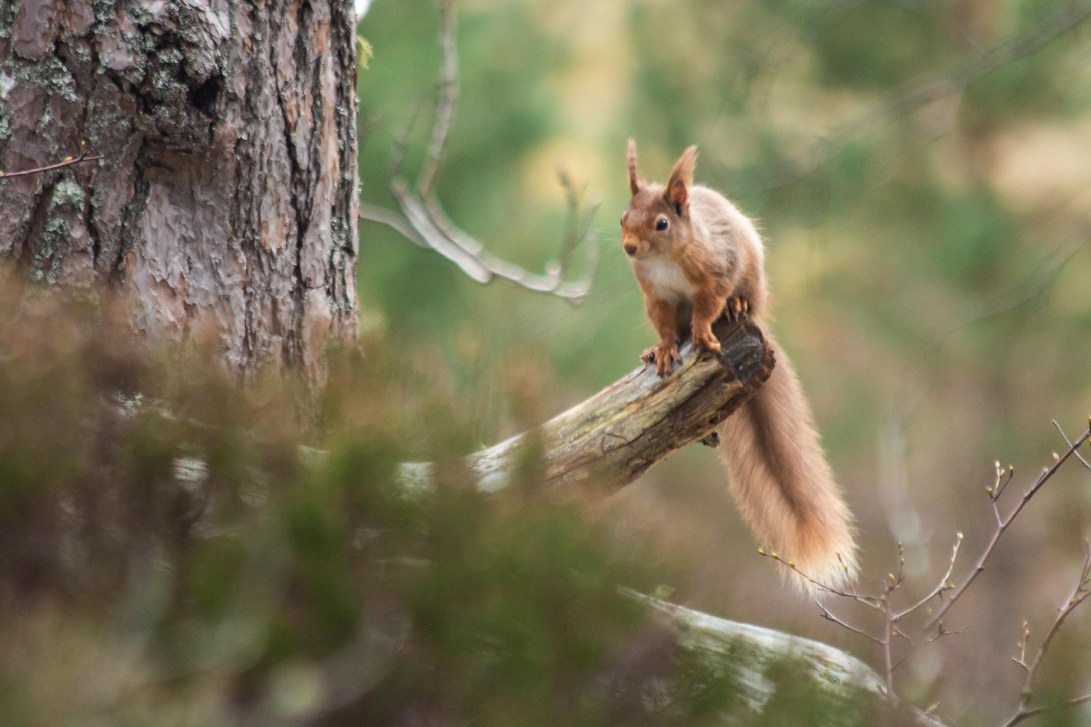
If I’d been alone, I would have sat by the loch all day, but I was here for birding with the group so reluctantly took my last few photos and followed them further along the trail, skirting the edge of the water. Sure enough, we found a red squirrel, although the animal was trickier to see than on the feeders in Anagach Woods back at the hotel. A bright orange mammal is surprisingly difficult to spot in dense green foliage, and it was only its sudden movements that gave it away.
After a while another loch came into view: Loch Mallachie. Here we were met by a gaggle of greylag geese as they glided across the water. This part of the reserve was marshier, and not far from the land we were stood on was a smaller island with far shorter trees. Simon explained that they were the exact same type as the giants that surrounded us on dry land, but because of the variation in soil quality and nutrients, the same species was half the size only a few metres away.
Suddenly one member of the group pointed out two dark specks on the horizon. I prepared myself for the inevitability of more buzzards, but once Simon had set up his scope I heard some very satisfying words: “Those are eagles”.
Everyone rushed towards the bank for a better view. The birds were very far off – tiny pinpricks on a white horizon – but sharp-eyed Simon could make out white patches on one of the eagles, suggesting it was a juvenile. After a while scanning empty sky I managed to locate them in my binoculars. They glided seemingly effortlessly at a dizzying height, barely moving their wings as they soared through the thermal currents. It was such composed flight: the movement of a creature that dominated its landscape. Fortunately, the eagles were flying closer, so one by one we had a peek through Simon’s scope. When it was my turn, I was thrilled to make out the bird’s head and beak even from such a distance. I’d seen a golden eagle once before on the west coast, but this was by far the clearer sighting. Eagles were the true celebrities of Scottish wildlife, and to see two at once was so special.
The eagles soared in large circles for a while before gliding further out of reach of our scopes and binoculars. Once again the group was buzzing. I couldn’t believe how lucky I’d been this week. After only four days in the Highlands I’d seen crested tits, crossbills, red squirrels, a pine marten and now two golden eagles. It reminded me of the importance of patience but also of luck; how being in the right spot at the right moment can bring unforgettable experiences. Being from the southeast where wildlife is far less abundant, I would treasure the sightings I’d had this week for a long time.
Our meeting point was a narrow track just outside Aviemore. The light was beginning to fade and the moon shone in a clear sky, fringed by a sprinkling of stars. We threaded our way up the track, keeping an eye out for roe deer in the surrounding fields, and eventually reached the hide: an impressive building with large windows running along each side. The interior was luxurious; carpeted flooring, posters adorning the walls and above all, heating! It was indulgence that I hadn’t had the fortune of experiencing in a lot of hides. This one was positively posh.
Once inside, there was the habitual jostling for the best space as politely as possible. The guide always says that the animals may come from any direction, but we all know some spots are usually better than others. After we were all settled, our guide James left the hide to distribute the food. He explained the importance of only providing a supplement to the animals’ diet to make sure they didn’t become reliant on human assistance. On the menu tonight was a selection of peanuts, raisins, dollops of peanut butter and the ultimate prize: an egg.
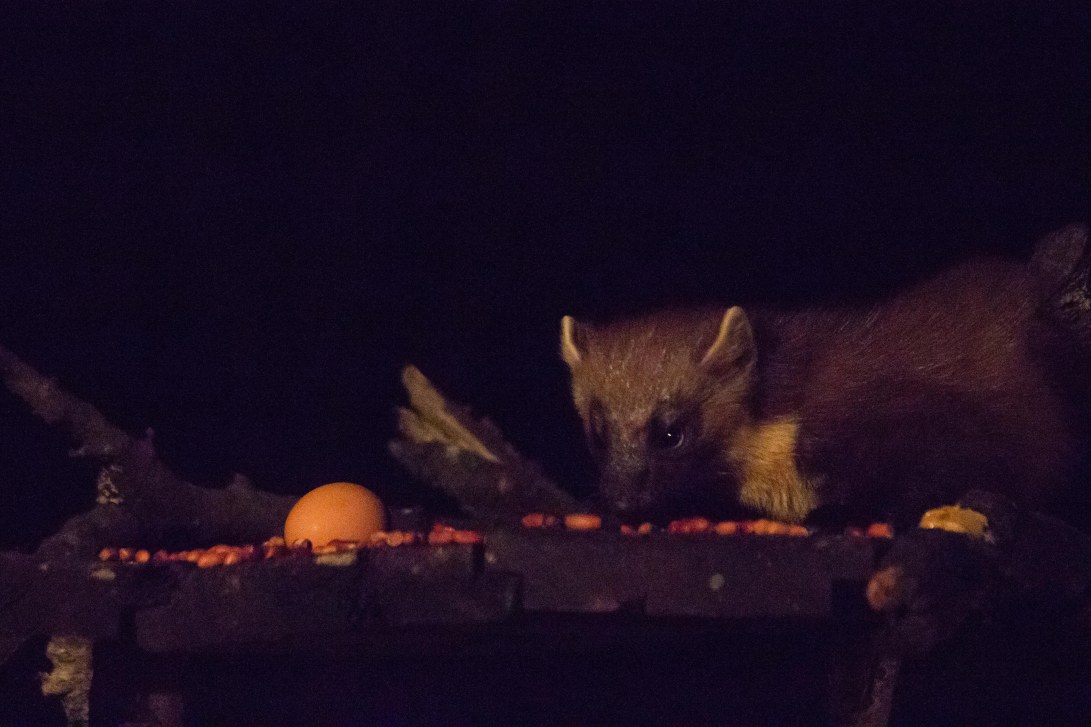
So what were we hoping to see at this time of night? To Victorian gamekeepers, they were the “scourge of the glen”, known for stealing the eggs and chicks of ground-nesting birds. In my opinion, they were on par with the unicorn – a creature so stealthy and elusive that although they’re relatively common in Scotland and doing well there, they are very rarely seen. Coming to a hide dedicated to seeing them is your only semi-reliable chance, but of course nothing about wildlife is ever guaranteed. I’m talking about the pine marten.
Photo: Jai Redman
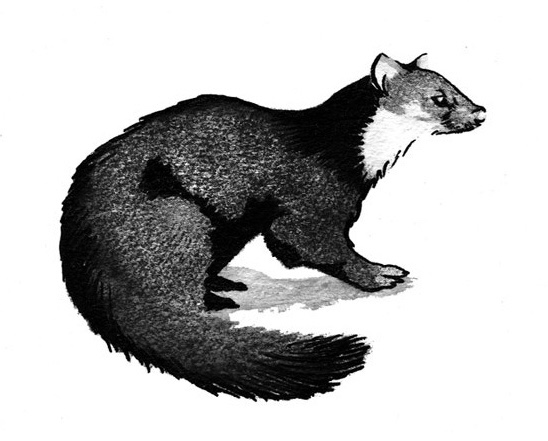
A member of the mustelid family with otters, stoats and weasels, pine martens are cat-like and forest-dwelling. Their coats are a rich, chocolate-brown and each animal has a unique pattern on their bib ranging in colour from yolky yellow to almost white. Pine martens are adept at dispatching grey squirrels, which are slower and less agile than reds. The latter have evolved alongside martens and know how to evade them, which is why there are no grey squirrels in the Highlands and plenty of reds. It’s interesting to think that if pine martens had been abundant across the whole of the UK when grey squirrels were introduced in the 1870s, would we have such a drastic problem with this invasive rodent today?
Once the food was in place, the wait began. Not only were we hoping for martens but also badgers, owls, a deer perhaps. It was a complete lottery, which made the whole thing incredibly exciting. The light was fading fast and my camera struggled to cope. Cranking up the ISO caused a sandstorm of grain to fill the screen, but I wasn’t planning on prize-winning photos on this occasion. This was one of those times when, more than anything, I wanted to watch.
After a short while we had our first visitor. Out of a knot of tree roots came a wood mouse. It appeared as though time had been sped up – the mouse zoomed out into the open, seized a peanut and retreated into its shelter within what seemed to be the blink of an eye. He or she entertained us for a while but before long it was quiet again.
Gazing outside into the dark clearing roused a slight feeling of unease. The longer I looked, the more my eyes played tricks on me. Shadows took on the appearance of strange shapes appearing to move on their own. Coupled with the expectant silence in the hide, the scene was close to eerie.
My eyes kept flicking to a shadowy patch just out of reach of the yellow spotlights. Beyond it the ground dipped into a shallow hill that plunged into complete darkness. I kept picturing a marten cresting the hill and trotting along the track for the tempting egg. I thought if I imagined this hard enough, it just might happen. I appreciated this fantasy had an undeniable whiff of desperation about it.
Suddenly, a flash of pale wings caught my eye. I glanced up and watched a scene unfold in slow motion. A bird catapulted through the air, wheeled tightly around the mouse’s tree and swept straight past the window. A blink-and-miss-it moment. For a few seconds I was stunned. I’d never seen a tawny owl before, and couldn’t believe how small they seemed! Small, yet incredibly skilled hunters. It really was a privilege to get nocturnal wildlife encounters, especially scenes as dramatic as a high-speed fly-by from a tawny.
After that exciting moment, there was a distinct lack of life for quite some time. It was still early days, I reminded myself, eyes flicking once more to the shadowy patch, there was time yet. I leant forwards on my stool, peering so close to the window that my breath fogged up the glass. Martens could approach from anywhere, and being so dark they would be completely concealed apart from their trademark bib.
The other visitors coughed, switched seats, paced up and down and chatted in hushed whispers. Meanwhile, I was glued to my stool. Far from blessed with social prowess at the best of times, I refrained from making conversation and kept my eyes planted firmly outside – there was no way I was missing anything.
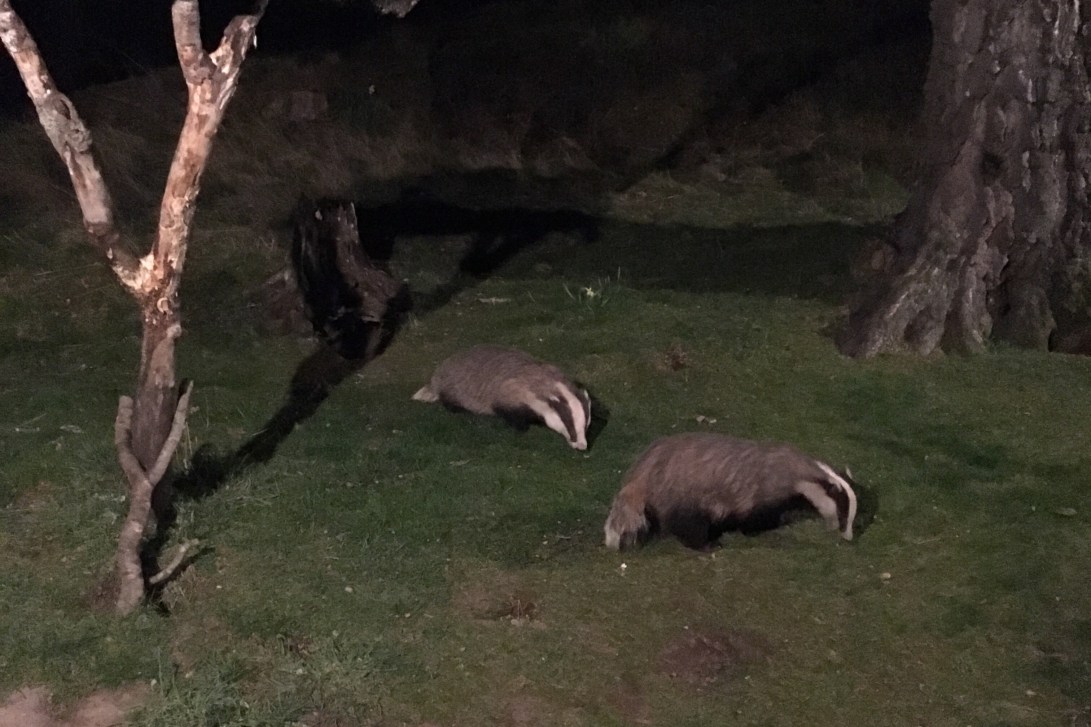
There was a sudden, hushed commotion in the hide and I peered to the side to see a badger had appeared. Badgers have terrible eyesight but an exceptional nose, and mainly use smell to discern their surroundings. The animal picked her way across the grass, fanning her snout over the ground like a metal detector. Tragically, my previous badger experience consisted of road kill and one that I had nearly killed myself when it ran out in front of my car, so to watch a real, live badger going about her nightly business mere feet away was such a treat.
After she’d polished off most of the nuts, the female was joined by a male. He was the same size, suggesting he was also the same age if not younger. Adult male badgers typically weigh a kilo more than females and are noticeably more muscular. The two animals completely ignored each other so there was no doubt that they belonged to the same clan. If they hadn’t, there would have been a serious standoff. The male cleared up what the female hadn’t found and one by one they left the way they’d come. The only evidence of their visit was a distinct lack of peanuts.
An hour and a half later, my enduring optimism was beginning to turn. I was conscious of the time and that our evening would eventually come to a close, marten or no marten. I started seeing more and more phantom animals out in the gloom. The moon was radiant and my eyes were drawn to its pure white hue. A lone bat darted over the roof of the hide, silhouetted briefly against the lighter sky before disappearing. How anyone got a decent photograph of a bat eluded me. To capture such erratic and rapid flight was seriously impressive.
I glanced over at the shadowy patch again and saw a pine marten staring back at me, beady eyes glinting in the light. My insides jolted and as quietly as could I exclaimed, “There’s one!” Everyone knew exactly what I meant and came hurrying in my direction with barely restrained urgency. I couldn’t quite believe what I was watching on the other side of a pane of glass.
James told us the marten was a female. Similar to badgers, males were larger and typically had broader faces. Many people underestimate a marten’s size when they see one, imagining something along the lines of a weasel or stoat. I was quite the opposite; the marten was smaller than I’d expected, smaller than most house cats. What couldn’t be disputed was how beautiful she was with her long bushy tail, sleek mocha fur, tiny button nose and white-rimmed ears. I fell instantly in love.
The marten crossed to the other window and we swiftly followed suit. She climbed up onto the table and munched through the peanuts. As stunning as she was, she certainly wasn’t the most ladylike when it came to eating. She took the egg in her mouth and, despite her sharp teeth, carried it delicately down the table onto the grass. After a quick readjustment, she lolloped out of sight.
We’d spent two hours in darkness and experienced less than a minute of what we’d travelled here to see, but the atmosphere in the hide could only be described as barely contained hysteria, in my corner at least. We made the unanimous decision to end our evening on a fantastic high. Not only had I had my first proper badger sighting, but I’d also seen a Scottish icon. I couldn’t have hoped for better.
I arrived in Grantown-on-Spey at night, so couldn’t see much of the Cairngorms wilderness that pressed heavily on both sides of the winding road. I glimpsed darting rabbits and the elegant form of a pair of deer, but there must have been dozens of other creatures concealed by the dense evergreens.
My accommodation, the Grant Arms Hotel, was beautiful; a formidable building of stone and wide sash windows that could easily be the set for an elaborate period drama. Also called the Wildlife Hotel, the Grant Arms provides guests with easy access to a range of reserves of all different habitats. When I checked in, a large notice board stood pride of place in the foyer, full of lists of upcoming events, guidance on watching wildlife – including the magnificent capercaillie – and sign-up sheets for the week’s guided walks and field trips. An impressive puzzle adorned with a picturesque nature scene lay finished nearby. On the walls were images of puffins, ospreys, black grouse and, in my room, a beautiful fieldfare. I’d never seen so much wildlife-related decor and I absolutely loved it.
As I unpacked, I felt a thrill of eager anticipation for the week to come. I’d never stopped in the Cairngorms before but only passed through, so I couldn’t wait to sample some of the incredible wildlife. I had my sights set in particular on the pine marten – an elusive and nocturnal member of the mustelid family. If I was going to fulfil my New Year’s Resolution and see one in 2019, the Grant Arms Wildlife Book Festival was my best chance.
On The Wing has been quiet recently, not for lack of inspiration but for lack of time. Over the past few months I’ve been busy with a few different projects. I’m close to finishing an annual report for SEZARC, outlining the highlights of their work in 2018. I’ve also moved part-time into the library where I’m filling notebooks with scribblings about Siberia, Russian megafauna, native tribes and the mysteries of shamanism. All this is for my book idea and the more I read, the more I need to read. It’s a constant cycle of finding a book, reading something fascinating and looking up similar books to find out more. I’d love to eventually start the actual writing process, but so far I’m waist-deep in other people’s books and loving every minute.
All of this work has meant that I’ve neglected my camera and seen most of my local wildlife from behind glass recently. However, this week brought the perfect opportunity to get back outside and into nature. It’s the Wildlife Book Festival at the Grant Arms in the Cairngorms. Also called the Wildlife Hotel, the Grant Arms is a beautiful Victorian building within easy reach of dense pine forests, boulder-studded rivers and sweeping mountain valleys. In other words, the perfect place to celebrate British wildlife.
It feels fantastic to be back out there with binoculars around my neck and a crumpled notebook in my hand. It also helps to be in such a stunning location. St Albans is nice, but when you’re woken to the sound of squealing oystercatchers and only need to walk for five minutes before hitting a thousand acre wood (check mate Winnie the Pooh), there is simply no contest.
It’s so easy for me to get caught up in work. I get so engrossed that I forget to ever switch off, which makes this week a very important break. It’s a little telling that I need to travel five hundred miles from home to take that break, but when the scenery is this pretty, I’ve figured it’s alright.
The trains to Glasgow and Largs and the ferry to the Isle of Cumbrae were all fine. It was when I boarded the bus to the Millport Field Centre that it dawned on me: what on earth had I let myself in for?! I’d booked onto a weekend course run by the Field Studies Council called ‘Marine Species and Habitats: The Biotope Approach’. After volunteering at an aquarium had sparked a new fascination for marine wildlife, I wanted to learn more about what could be found on British shores. I’d done a bit of research using the course’s suggested reading list, and had half an idea what a biotope was, but as I dragged my bags off the bus I wondered if I’d booked myself onto something that would sail completely over my head. I imagined working alongside a team of marine biologists with decades of experience in the field, and here I was with a newborn interest in fish. I was suddenly terrified, and literally marooned on an island for the weekend.
Blue Mussels(Mytilus edulis)
As I was mulling this over in my head, a girl my age carrying a black hold-all asked me if I was attending the Biotopes course. I was thrilled; fate had brought us together on the same ferry and meant I didn’t have to amble around alone wondering where I needed to be. Our rooms weren’t ready yet so we went for a wander towards the town of Millport. Her name was Abbie, and she was currently part-way through a PhD in non-native seaweeds. This was something I knew literally nothing about, but we chatted about uni and wildlife and all things in between. Meanwhile, it was a chance to see where we’d be spending the weekend, and it was beautiful. Of course, almost everywhere is beautiful in bright sunlight, but even so the Isle of Cumbrae promised a fascinating chance to survey marine wildlife.
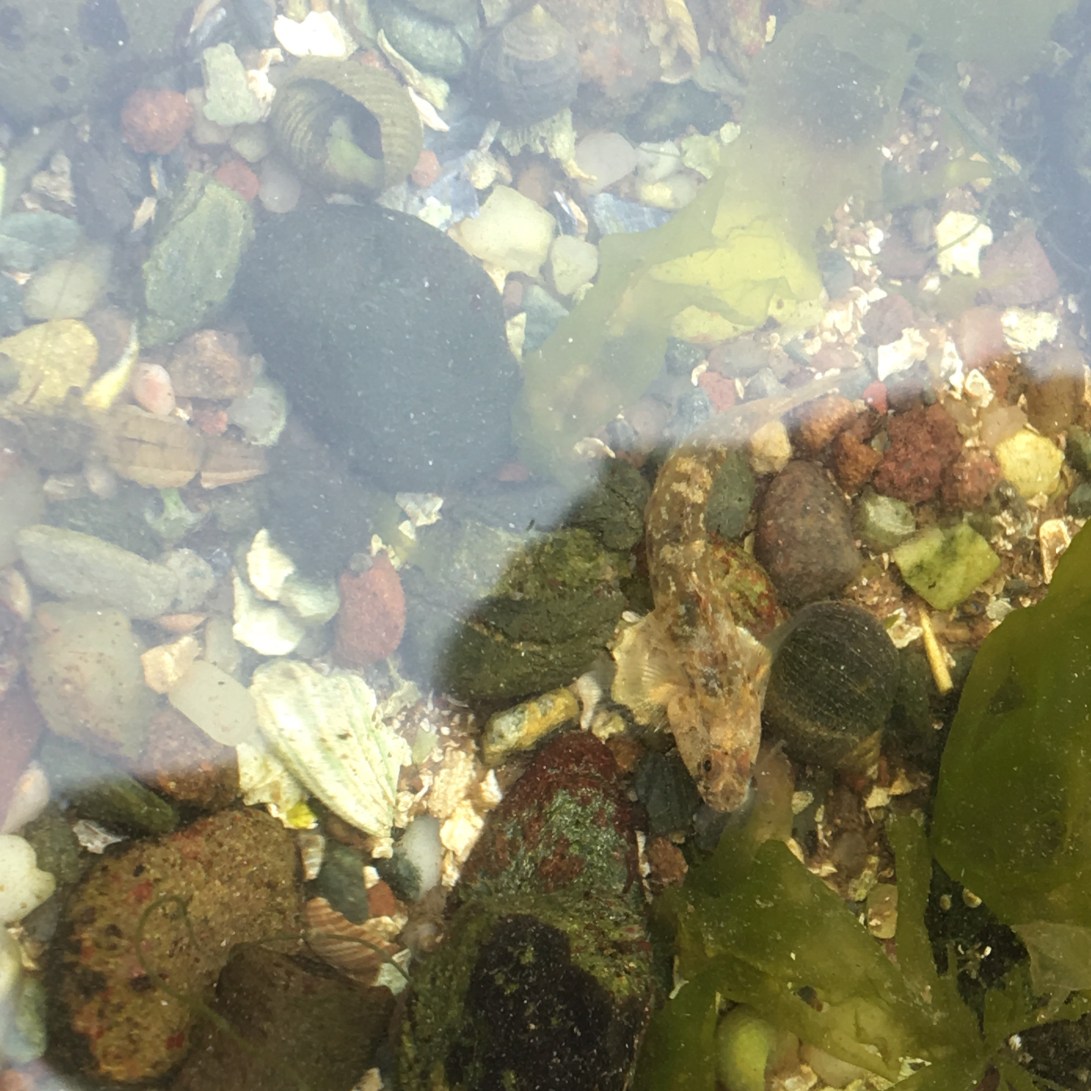
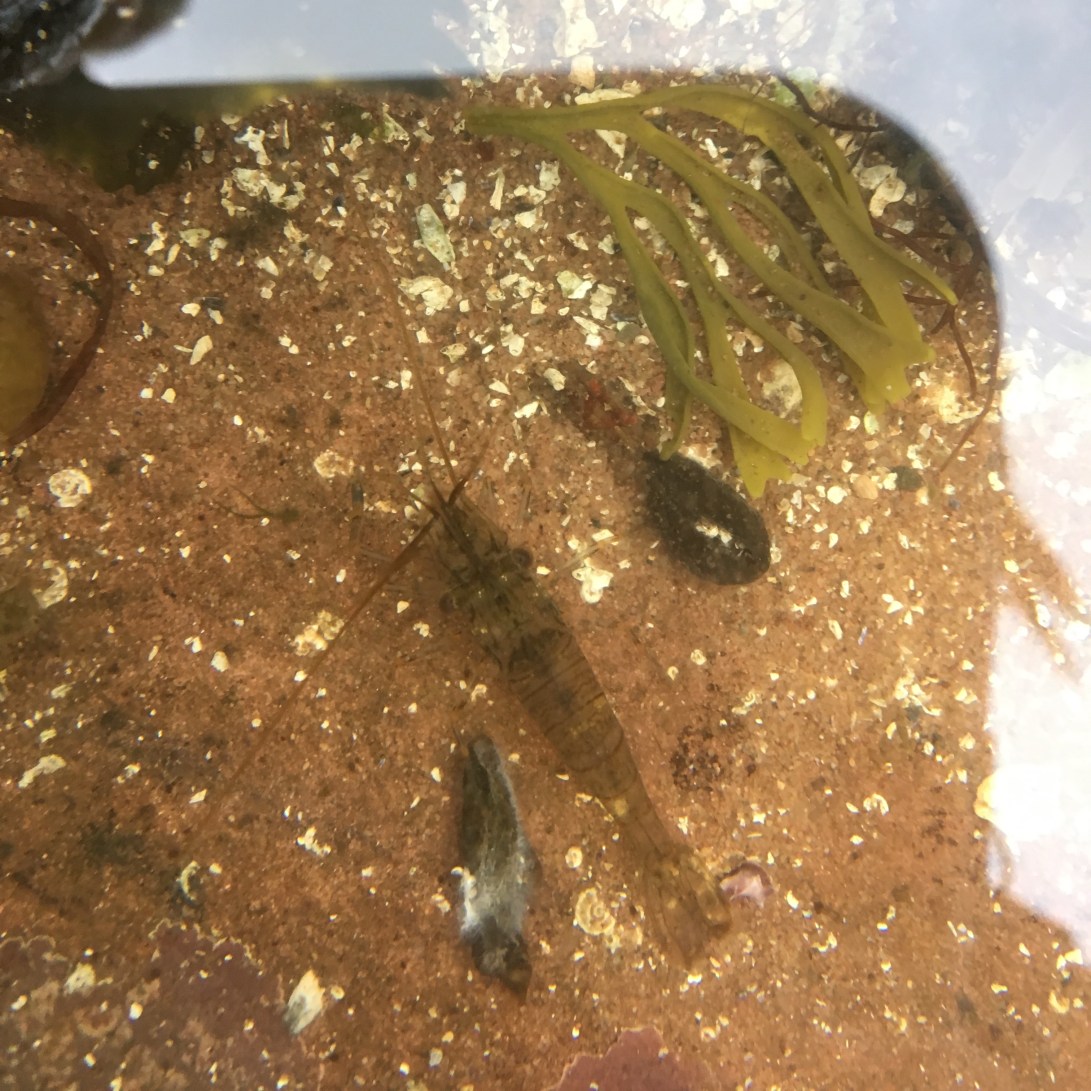
A well camouflaged Sand Goby(Pomatoschistus minutus)
After a loop around the bay we headed back to the Field Centre and took our bags to our rooms. I had feared with some trepidation what the washing facilities would be like, but was very pleasantly surprised to discover a large ensuite shower, not to mention a bed like a cloud. I hastily unpacked then met the rest of the group for our first briefing. Here I met Emily who worked at the Lancashire Wildlife Trust, and before dinner Abbie and I went for a walk with her to the shore to soak up the last sun of the day.
Dinner was macaroni cheese and apple crumble, perhaps one of the most perfect combinations of courses there can be. Then it was time for our first lecture: an introduction to biotopes. My research had prepared me well – a biotope is the combination of a physical habitat and the biological community found living there. Although some of the lecture’s content was lost on me, I left feeling inspired and ready to face new challenges over the weekend. I’d already met lovely people, and all my earlier worries began to feel very insignificant.
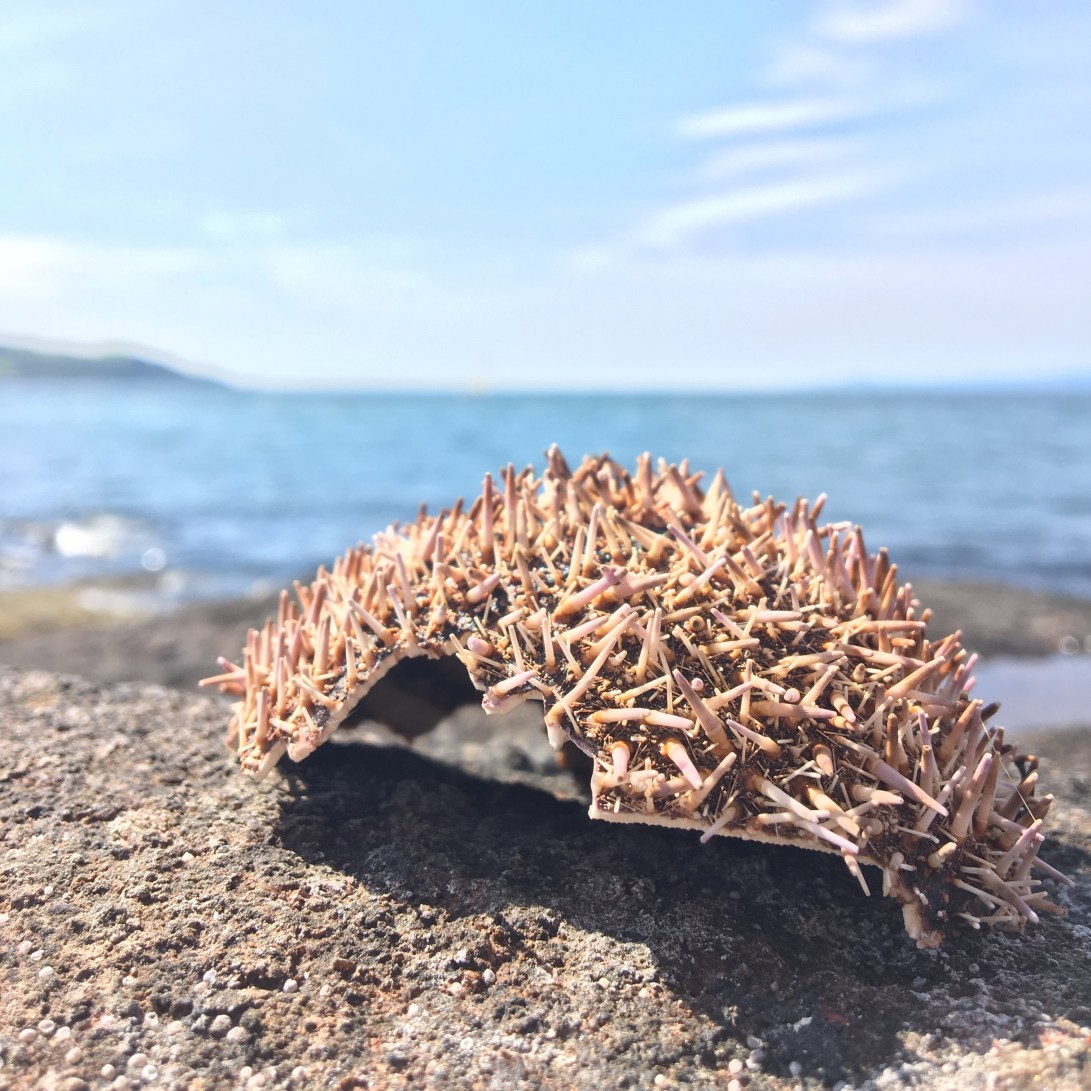
A fragment of broken sea urchin shell
Saturday
Today began early, and by 9am we were down on the beach beginning our first biotope survey. It was a beautiful day for it, and we wasted no time getting stuck in, in my case literally getting my wellies wedged in rock crevices and clinging desperately to my balance. Common species included beadlet anemones, dog whelks and acorn barnacles, but we also found common starfish, hermit crabs, a star ascidian (type of sea squirt) and plenty of seaweed. My knowledge of seaweed species was even smaller than my knowledge of seashore vertebrates, but as Abbie was doing her PhD on them I had a source of very valuable information.
Star Ascidian(Botryllus schlosseri)Common Brittlestar upside down (Ophiothrix fragilis)
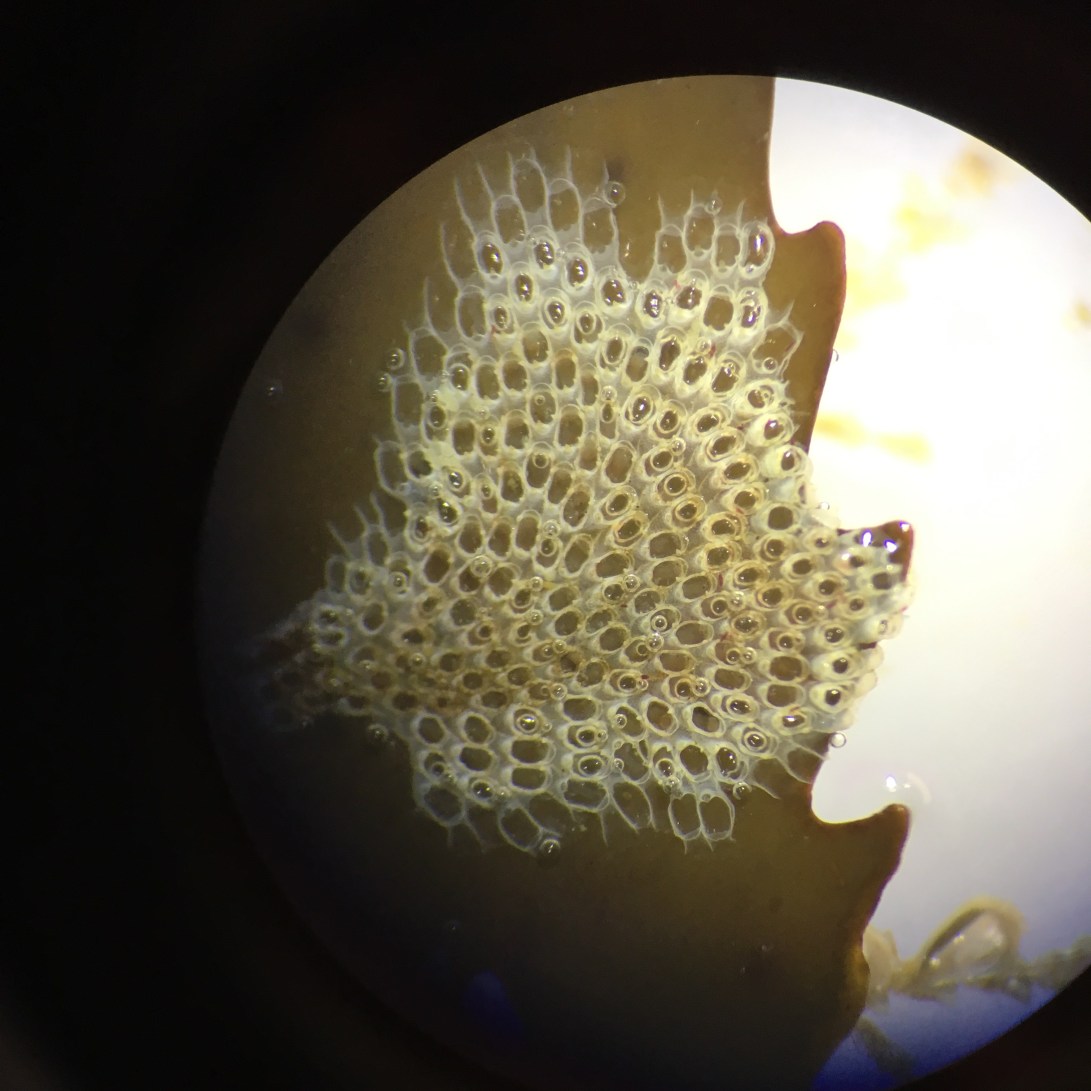
Once we’d covered as much of the bay as we could we ate lunch out in the sun (an excuse for some of the group to catch up with the goings on at the royal wedding) and then headed back to analyse our results and try to determine which biotopes we’d found. This was also an opportunity to play with lab equipment, which I haven’t been able to do since A Level Biology. I had good look at the bryozoa I’d found on a strand of seaweed (below). Bryozoa means “moss animal” and viewed up close reveals an intricate lattice of animals situated closely together. I studied these individuals for a while but couldn’t decide between Sea Mat or Hairy Sea Mat.
A cluster of bryozoa: either Sea Mat(Membranipora membranacea) or Hairy Sea Mat(Electra pilosa)
After beating the queue and getting served dinner almost first, I went back to my room for much-needed downtime before bed.
Sunday 20th
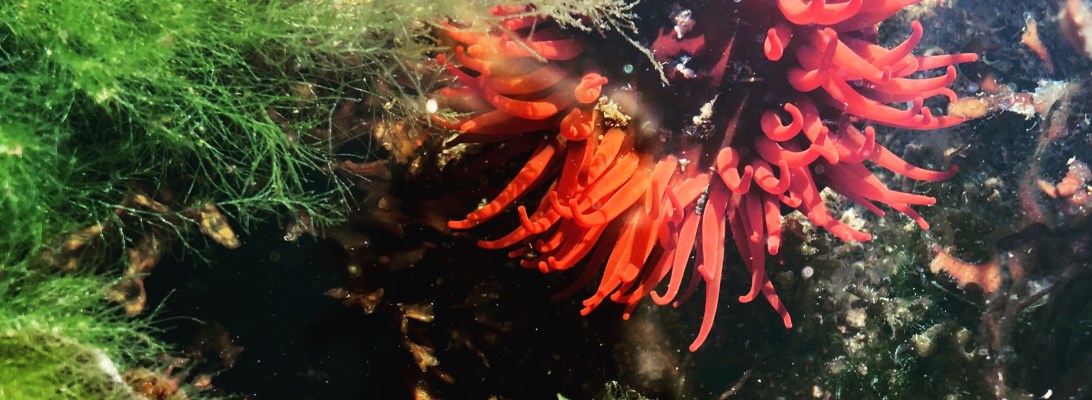
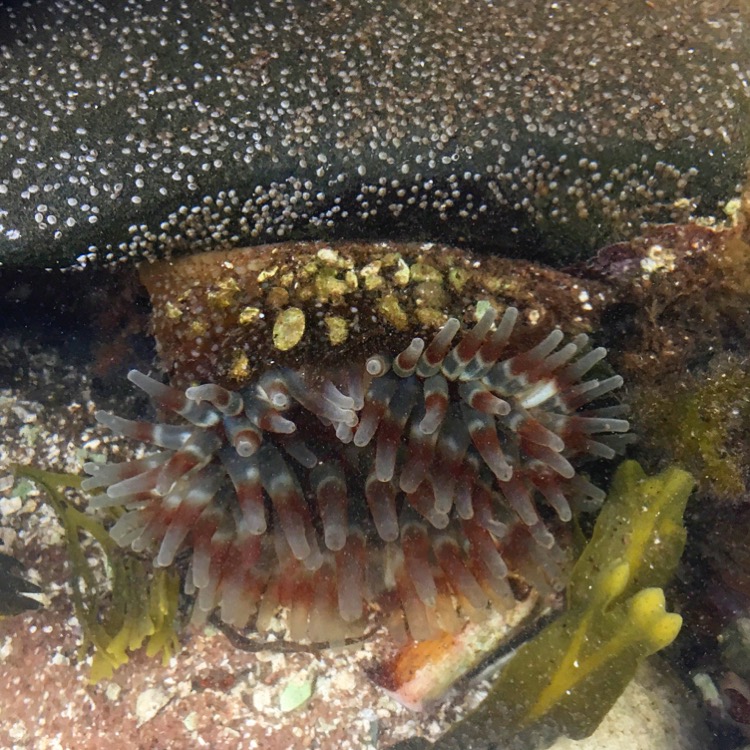
Today was another early start, and this time we drove the short distance to the northern end of Great Cumbrae to a much larger site. The weather was a little dreary but armed with quadrats, transects and clipboards we began to survey the biotopes. Findings started off slowly but once we reached the rock pools things really got exciting. Our course leader Paula found a slug species called a sea lemon – a very pretty blob – and a butterfish. Abbie, Alex and I found a sand goby, sand mason worm, lots of brittlestars, more hermits and beadlets, and my favourite from today: a dahlia anemone. It was the largest anemone I’d seen before, and had beautiful striated and brightly coloured tentacles that slowly emerged again once we’d calmed down to watch it properly. Just as I was squatting to try and get a decent picture, two common prawns appeared underneath a nearby rock. I didn’t know if maybe these were boring sightings but I recognised them from my volunteering at the aquarium so was thrilled to be able to confidently identify something in the field.
Back at the lab, Abbie got to work identifying her seaweeds and Alex had an ID test to do for his assignment, so I had a bash at identifying today’s biotopes by myself. Once I’d done that, I realised I’d accidentally brought a tiny brittlestar home with my sea urchin shells. With Paula’s help, I identified it as Amphipholis squamata. Later, Paula asked us what we’d found, and Alex and I had got the exact same biotopes! I was so pleased with myself.
Dinner was Sunday roast and sticky toffee pudding. I must have put on about eight stone this weekend – I’ve been fed like a queen and although my brain has been working overtime, my body hasn’t done so much. After dinner we had our last round-up lecture and went to the bar for drinks. I ended up talking to the two guys from Belfast about Father Ted – it was pretty funny talking to Irishmen about it. I would have stayed longer but I was absolutely shattered. So I headed to bed, falling asleep almost instantly.
On our last day, we drove out of Burghead into Hopeman, a nearby seaside village. Once again, the sun was shining and the sky was almost cloudless, coating the sand in a shimmering golden glow. Jas couldn’t contain herself, and pulled eagerly on the lead to get down to the seafront.
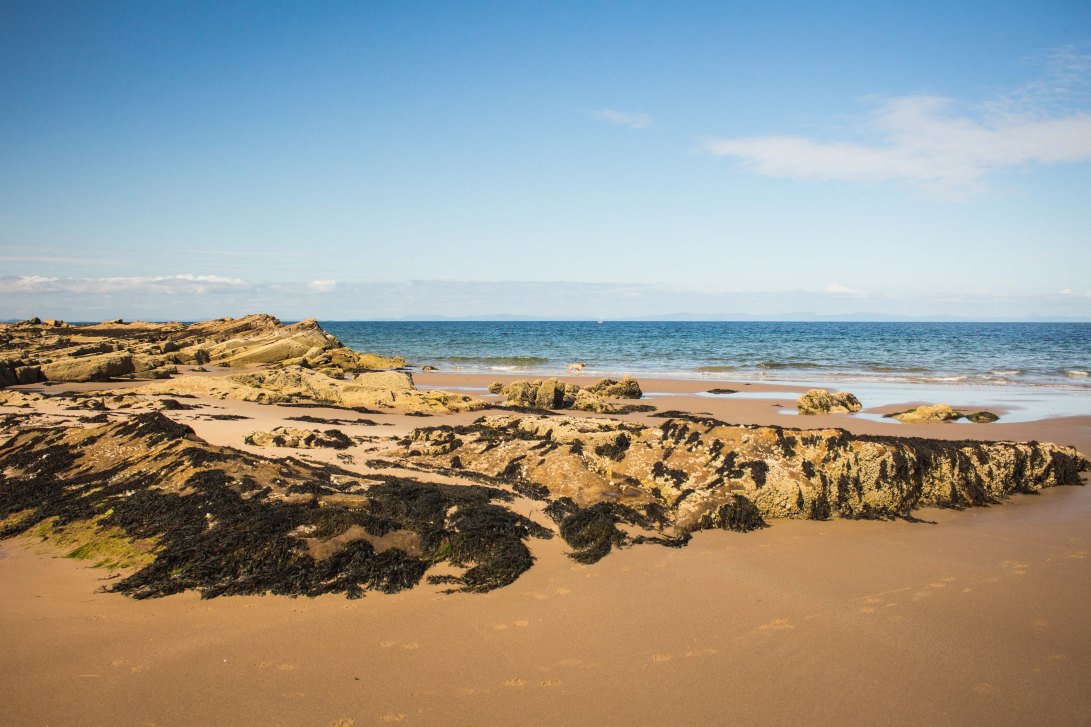
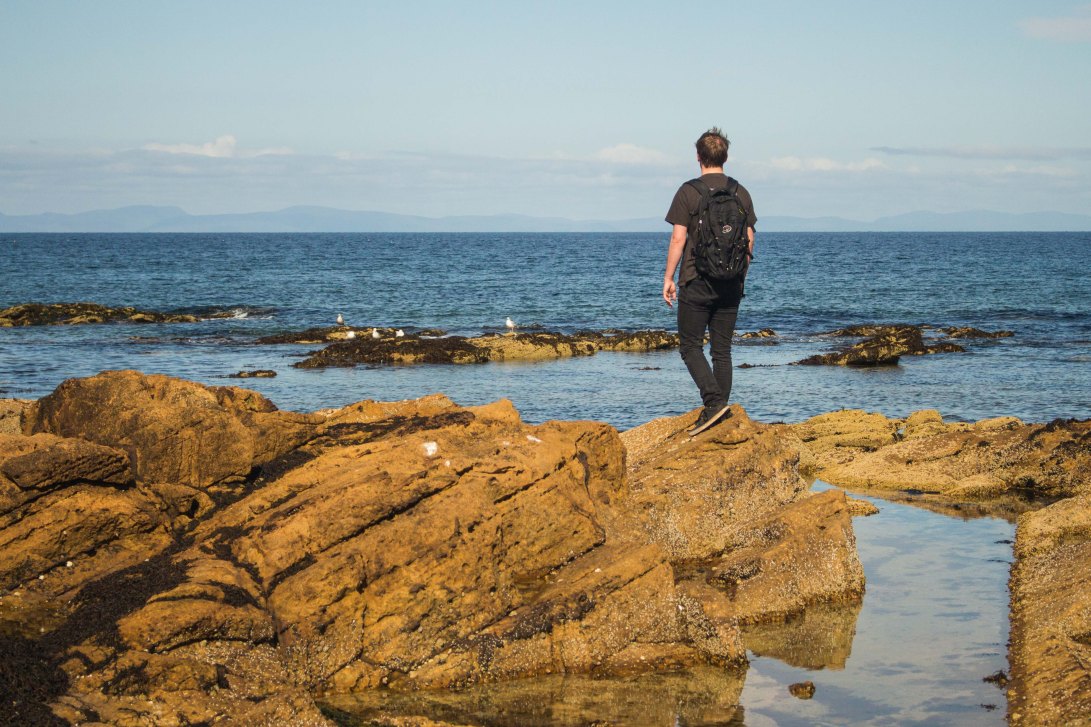
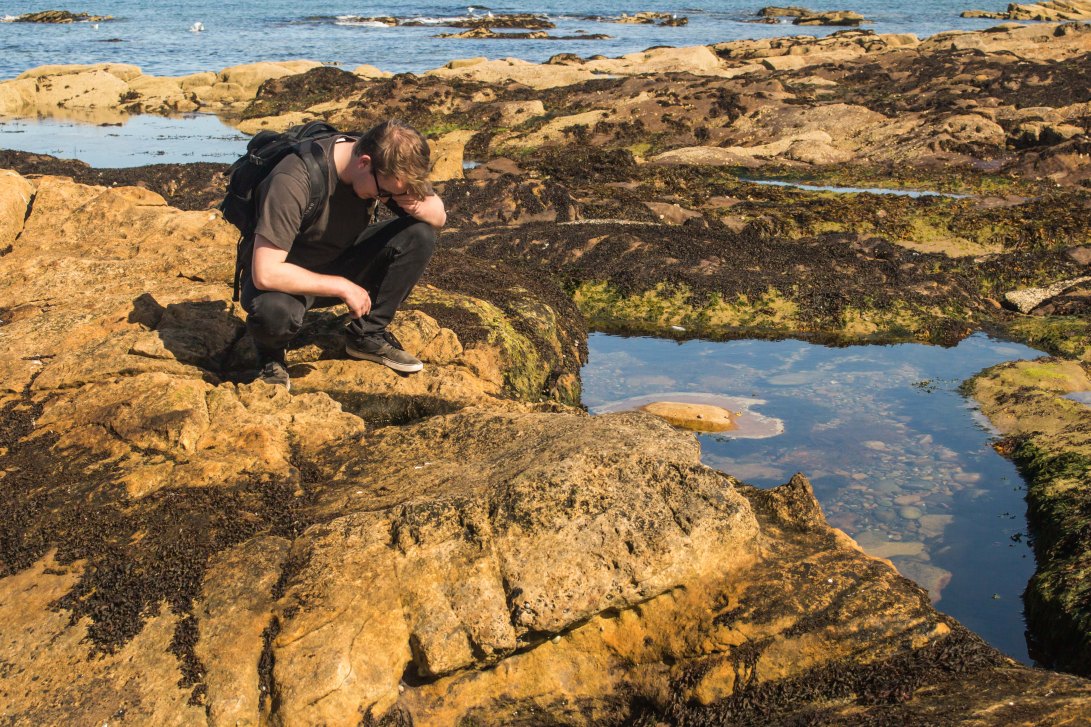
I began snapping immediately. The beach was a patchwork of fine, flat sand and weed-coated rocks where puddles of seawater were trapped from returning to the ocean until the tide swelled again. Kerr and I began to wander – rock pooling is one of those timeless summer activities that nobody is ever too old for. We stepped slowly from one rock to the next. A combination of slick seaweed and soft moss made me take extra care; although it was a beautifully warm day, I feared a dip in this water would still be a chilly one.
Another reason to watch your feet was the abundance of common limpets (Patella vulgata) clamped firmly to the rocks. We kept an eye out for any crabs lurking in the shadows, but perhaps the day was too hot for them. However, there were plenty of hollowed-out crab shells and discarded legs; remains of somebody’s breakfast no doubt.
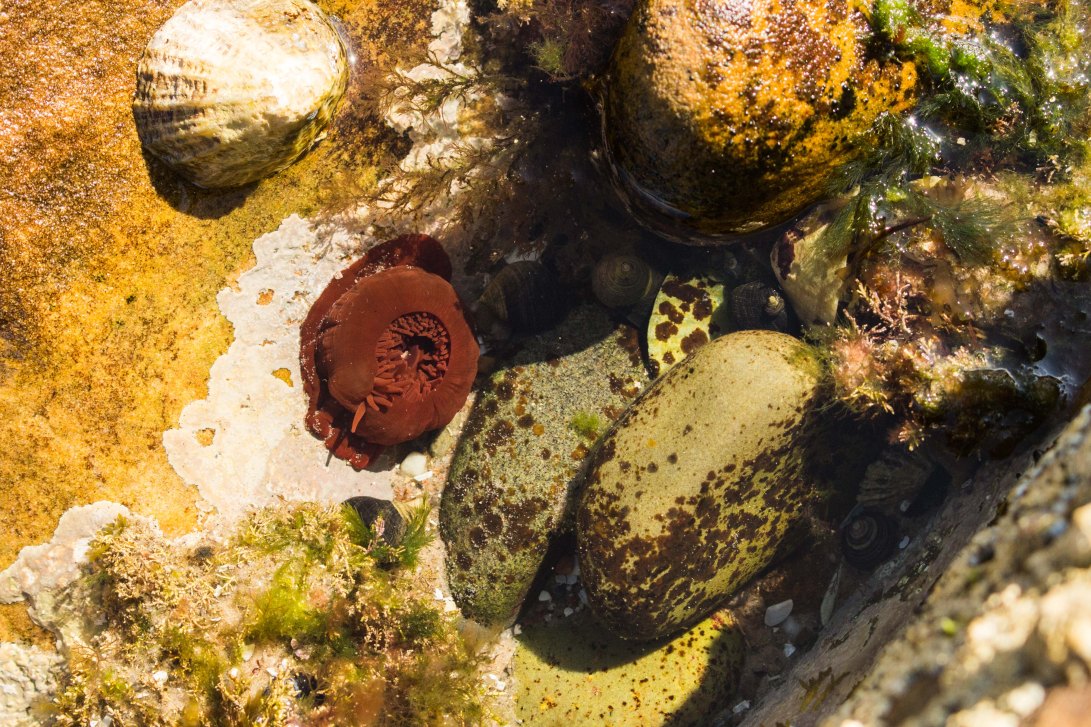
There were also several rusty red spherical bodies with tiny tentacles tucked up tight. After a little research I discovered that they were beadlet anemones (Actinia equina), an extremely territorial anemone that nudges and attacks rivals with stinging cells that act like harpoons, injecting the unfortunate neighbour with venom to clear them off their patch. Baby beadlet anemones are kept in the parents’ body cavity – which conveniently serves as both mouth and anus – and when they are ready to be born, the parents eject them through the water, where they find a rock to make their home.
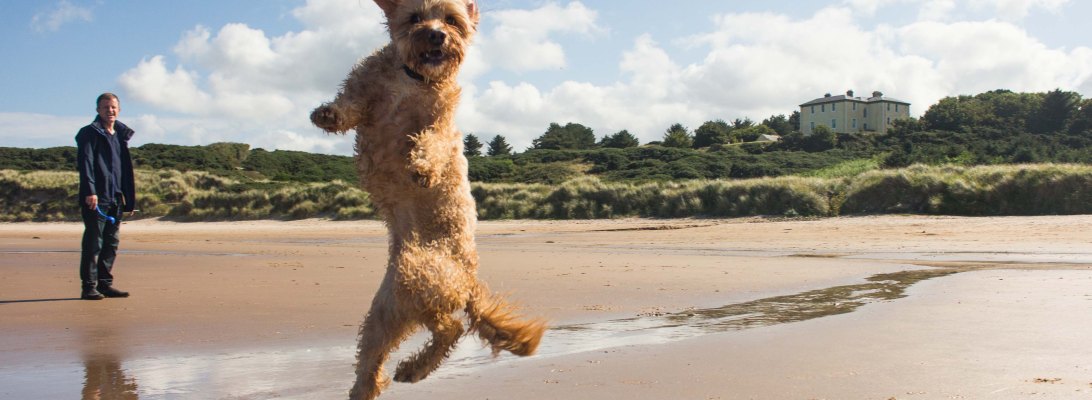
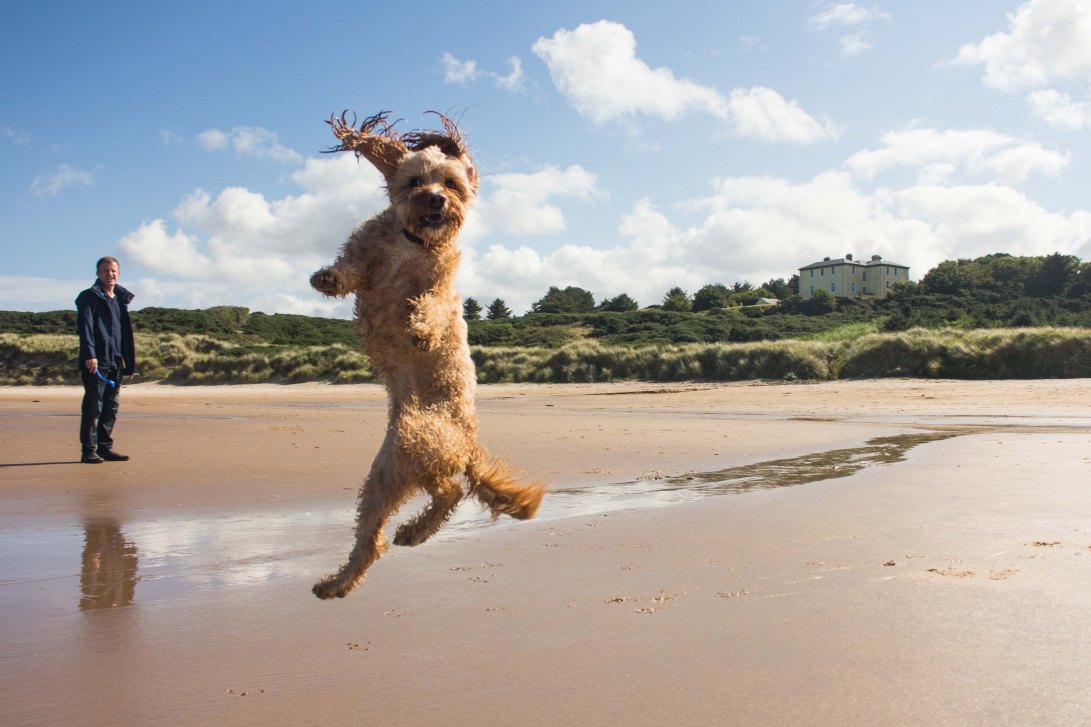
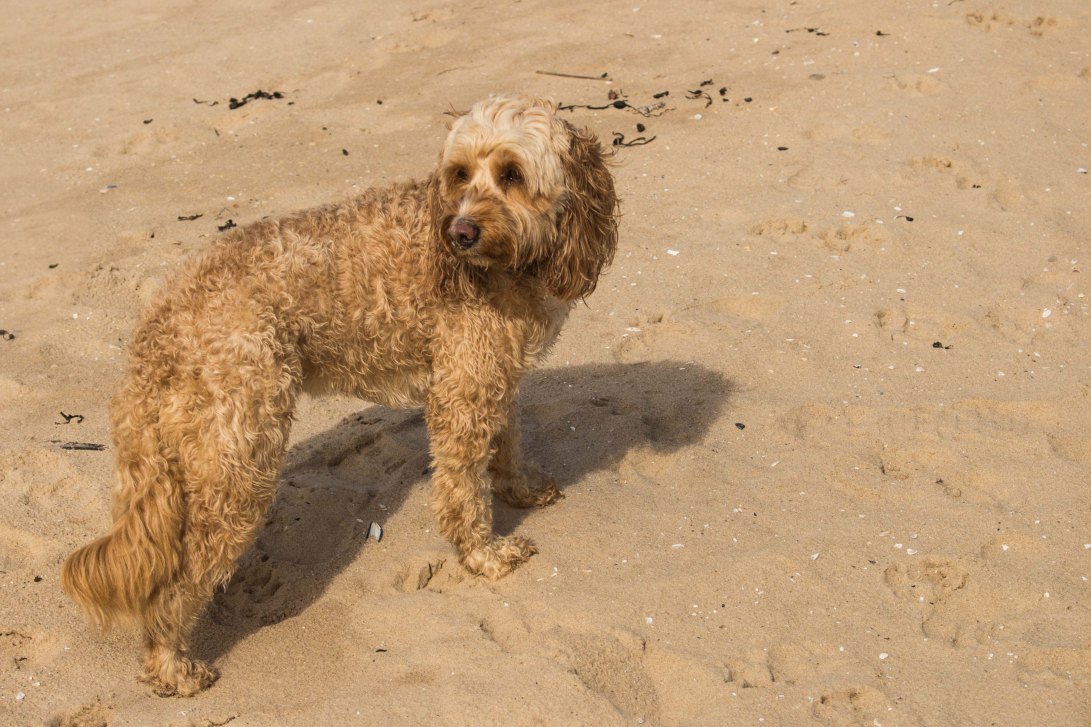
After a long time spent gazing into the pools and wondering what else could be lurking just out of sight, we joined the frantic game of fetch that was in full swing back on the beach. I couldn’t resist an opportunity to test my reflexes and see if I could photograph the fluffy torpedo in any mighty poses. I captured some absolute corkers but this was by far the best. Never has a dog loved the beach more than at this moment.
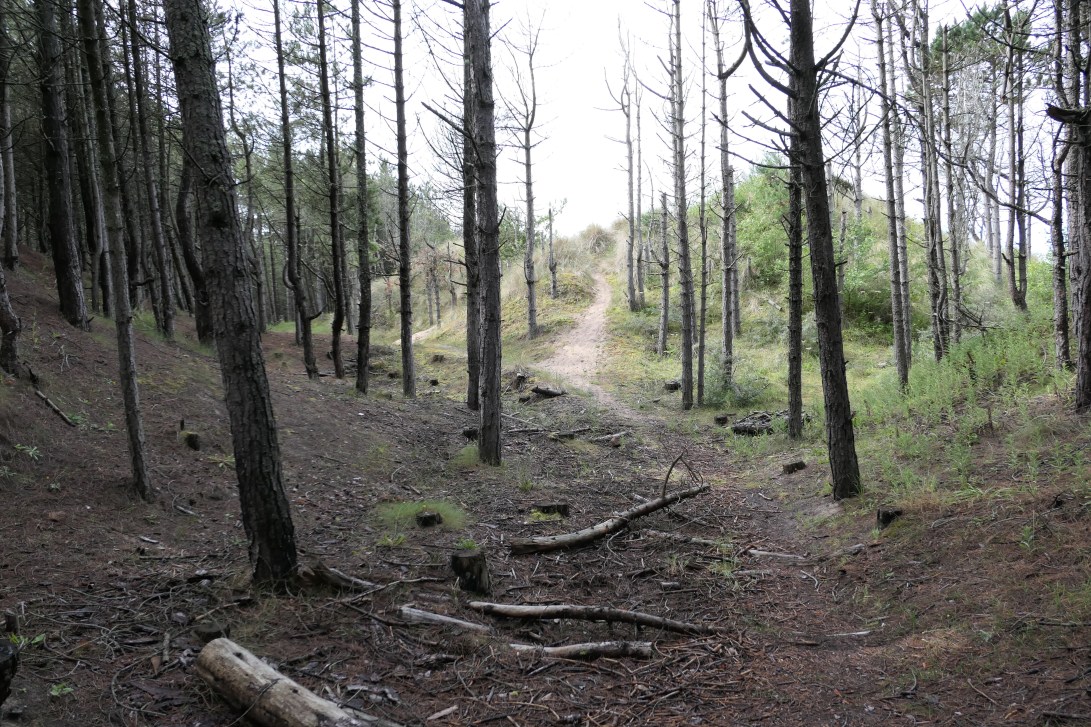
It was looking like another gorgeous day. As we walked along the harbour yesterday, I couldn’t help noticing how inviting the forest running alongside the beach looked. Stretching for over seven hundred hectares, Roseisle Forest was a stunningly beautiful pinewood. As we made our way up the slope between the first row of trees, sand dunes transformed to mounds of fallen pine needles and the sound of the ocean soon faded into silence.
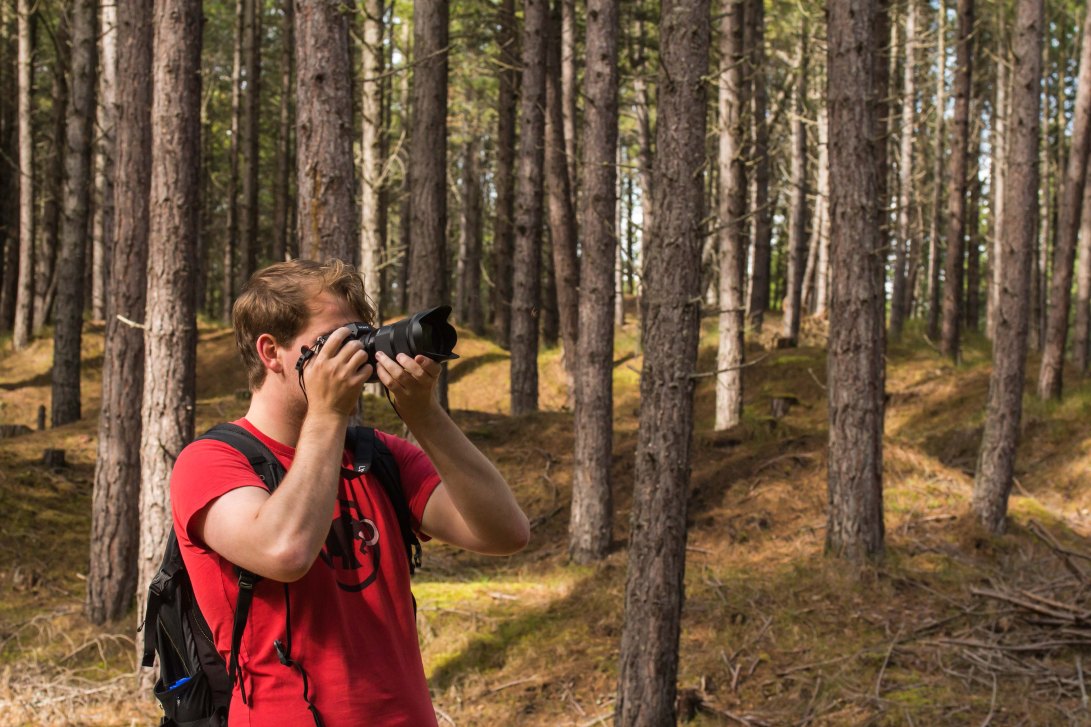
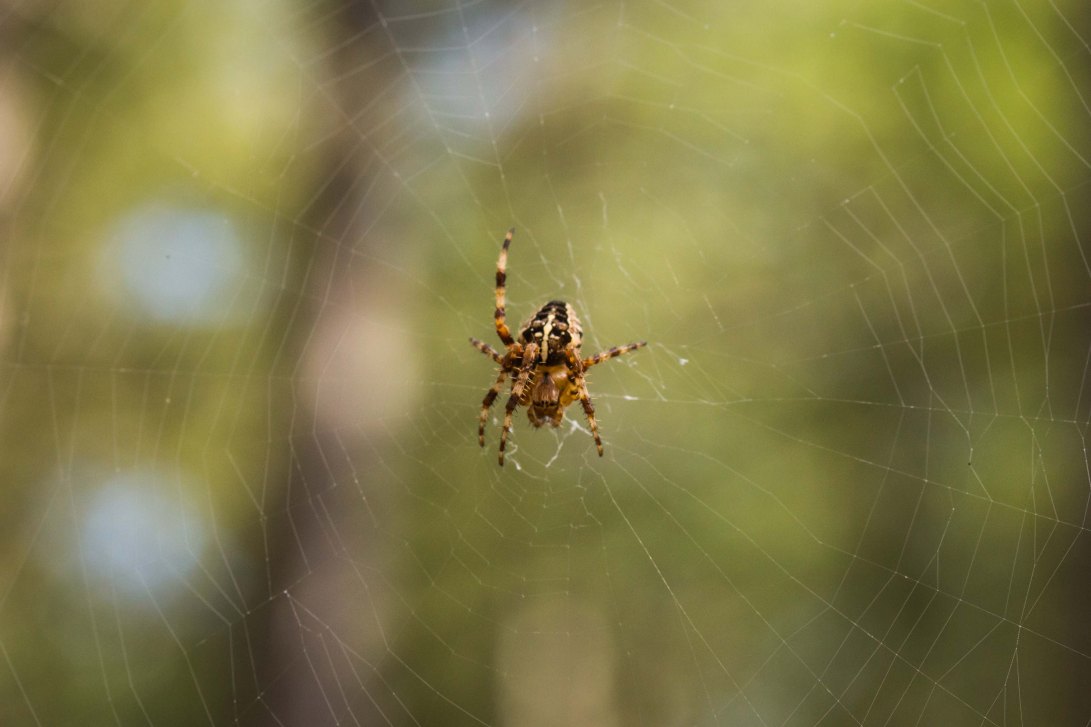
A wide trodden path snaked between the trees. I was on the lookout for fungi, so we headed off-road and ventured up the hills, giving us a great vantage point over the forest below. Before long, a sudden sparkle caught my eye, and I was amazed to discover that a spider had strung its web between two trees several metres apart. Luckily the sunlight had caught the web; otherwise we may have walked straight through it. We spent the next twenty minutes photographing our spider – it was a real challenge trying to get him in focus as the web swayed to and fro in the breeze, which must have felt like a gale to the spider. If you zoom in on the photo of Kerr, you can see a brown dot a few inches in front of his camera, showing just how tiny the little hunter was.
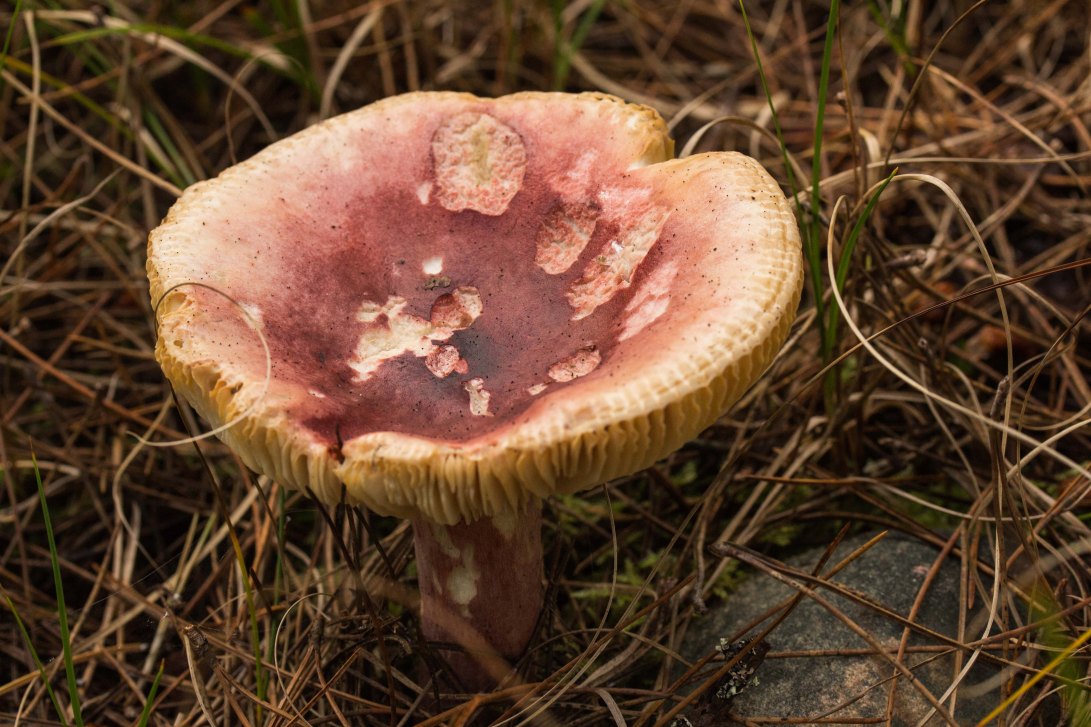
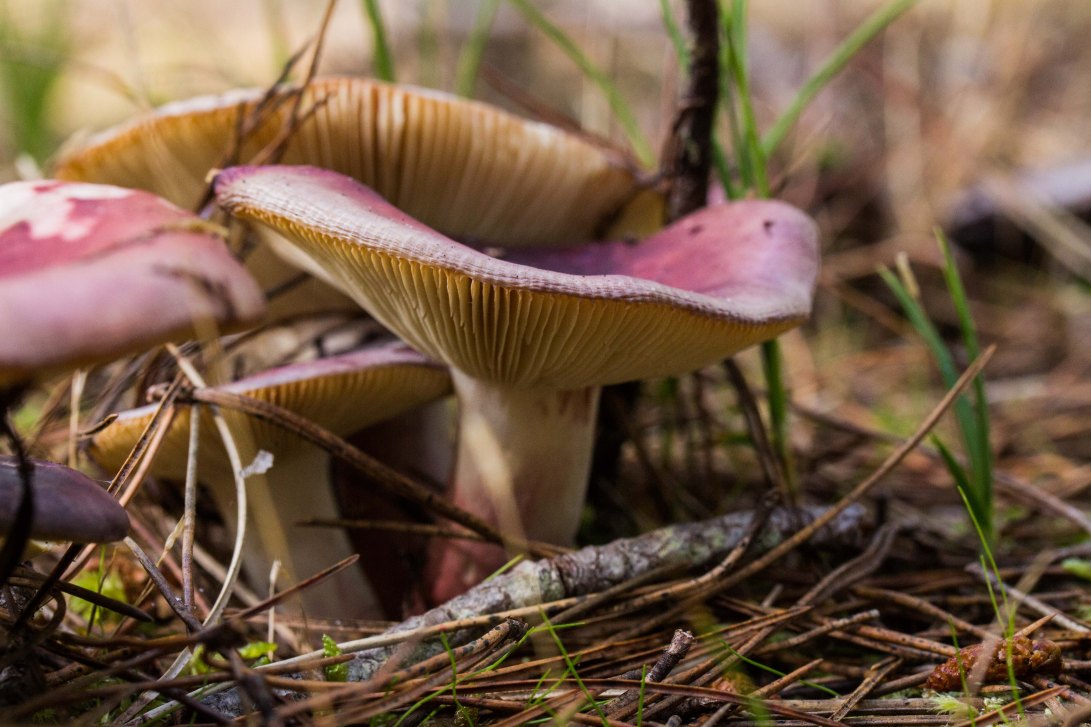
Soon, it became clear that Roseisle Forest was abundant with a medium-sized, red-capped mushroom that had faded to pink with age. After consulting the Burghead guide back at the cottage, I discovered that mushrooms in the Russula group, otherwise known as Brittlegills, were common here. After checking out the various species I identified this fungus as Sickener (Russula emetica), a poisonous species associated with pine woodland. This mushroom is found in groups and is most common in late summer to early autumn, perhaps explaining why the ones we saw weren’t the bright red colour of their prime.
After finding dozens more Sickener mushrooms and spending a long time crawling on the forest floor photographing them, we headed back out onto the beach. We met up with my parents and Jasmine, who was whipping up a small sandstorm in her excitement. By this point my stomach was rumbling after the walk in Roseisle, so we headed to lunch and ate outside in the stunning sunshine.
The drive to Burghead was beautiful. As the town is situated on the edge of a peninsula protruding into the Moray Firth, it is surrounded by open ocean on three sides. As we drove up the high street it felt like we were at the edge of the world, and in a way we were. Northern Scotland could just be seen in the distance, but the space between still seemed vast. When we couldn’t drive any further, we found the cottage my parents were staying in and were greeted by a very happy Cockapoo who’d missed us both.
I woke the next morning to see that the orange blinds were framed by a border of bright white light, and when I peeked behind them there lay the ocean, twinkling enticingly. After a hasty shower and breakfast we were off, keen to explore.
We made a beeline for the coast, climbing up to the highest point to take in the views. Down below, oystercatchers zoomed past, their alarmed cries cutting through the wind. A pair of cormorants glided effortlessly by, slender necks held parallel to the choppy waves below. I kept my binoculars trained on the horizon for a sign of dorsal fins breaking the surface. The Moray Firth is home to a resident population of more than 140 bottlenose dolphins, but we didn’t spot any stood up on the crag today.
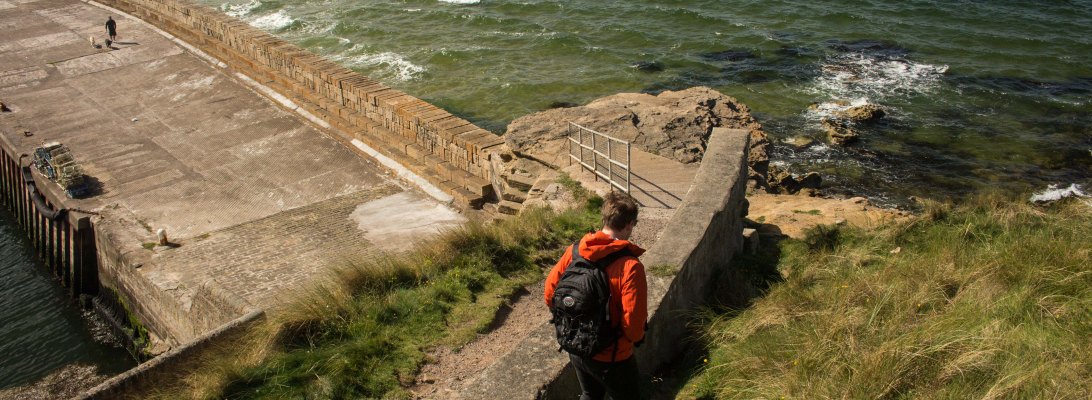
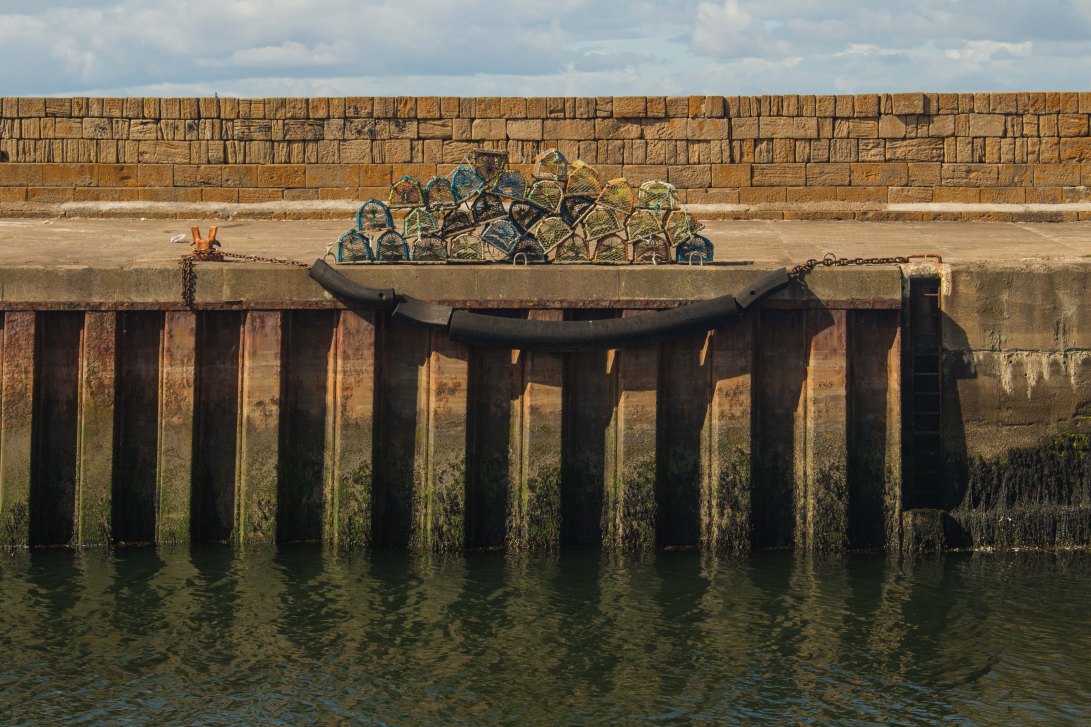
Once the wind had completely numbed our ears, we made our way back down and walked along the harbour, where a mix of tattered old and shining new boats stood resting in the docks. Down on the shingle bank, a pied wagtail hopped from rock to rock, waving his tail in the typical fashion of his species. We stumbled across a collection of crab claws and shells sprinkled across the concrete – perhaps a favoured feeding station for gulls and other seabirds.
At the far end of the harbour I had another look for dolphins, with no luck. Every time a wave broke and a plume of froth shot upwards my heart leapt, but it was just the ocean playing tricks. The water was a stunning colour; azure blue and bottle green blending like marbled ink. Together with the rough rocks spotted with white barnacles, the sight was a feast for the eyes.
A combination of the walk and the sea air had brought on an appetite, so we headed back to Main Street for some lunch. A beautifully fresh crab linguine filled the spot, but I still had room for a raspberry ripple waffle cone to lick on the walk back. We’d planned to wander down to the sand to find crabs or maybe starfish, but just at that moment the clouds grumbled and it began to pour, so we hurried back to the cottage instead. Shut inside, all there was to do was have a look at the photos from today and plan where to go tomorrow.



















 rebeccaonthewing.com