My Top Wildlife Sites 2

After sharing four of my top wildlife sites in the UK I began to think of more and more, so here are another set of places that everyone should visit. Read on for dwarf pansies, red squirrels, white-tailed eagles and a particularly spectacular murmuration.


  1. Isles of Scilly

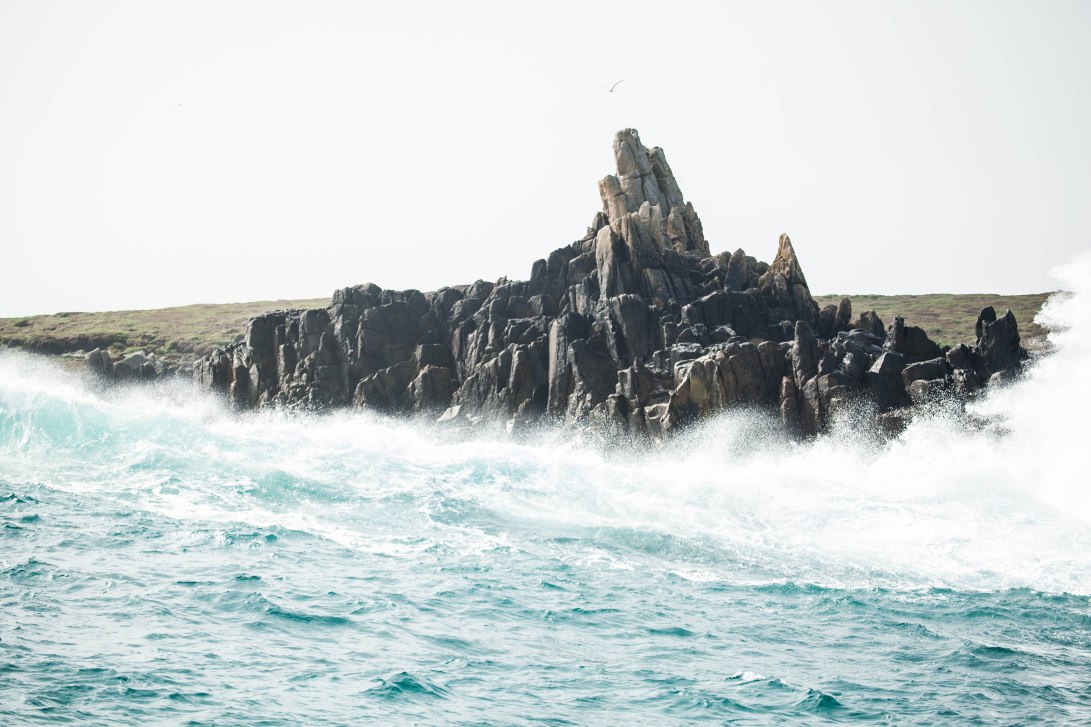
It sounds like an exaggeration but the Isles of Scilly really are incredible. I chose Scilly as the location for my final major project during my undergraduate degree and spent six days wandering through remote and near-tropical landscapes. Despite only being 28 miles from Cornwall, Scilly is so separate from mainland life that many of its species have evolved differently. The blackbirds have blood orange bills instead of their usual tangerine, wrens sing different songs and some plants are found nowhere else in the UK but on those few scattered islands.

I was there to try and find the dwarf pansy, a flower so tiny that the petals barely cover a little fingernail. By some miracle I found it, but Scilly also surprised me with its dramatic geology, impressive bird life and scorching temperatures. I didn’t have time to visit all the islands, but Bryher was by far my favourite. As well as the dwarf pansy, I found the furious waves of Hell Bay (the name is no coincidence), swarms of dog violet blooms and beaches impossible to describe without using clichés. I’ve promised myself I’ll go back to Scilly, not only to tick off the other islands but to just spend time in a place with barely any roads, air so clean that lichens bloom on almost every tree, and plants so special that crazy students travel hundreds of miles to find them.

3
Dwarf pansy


  1. Eskrigg Nature Reserve

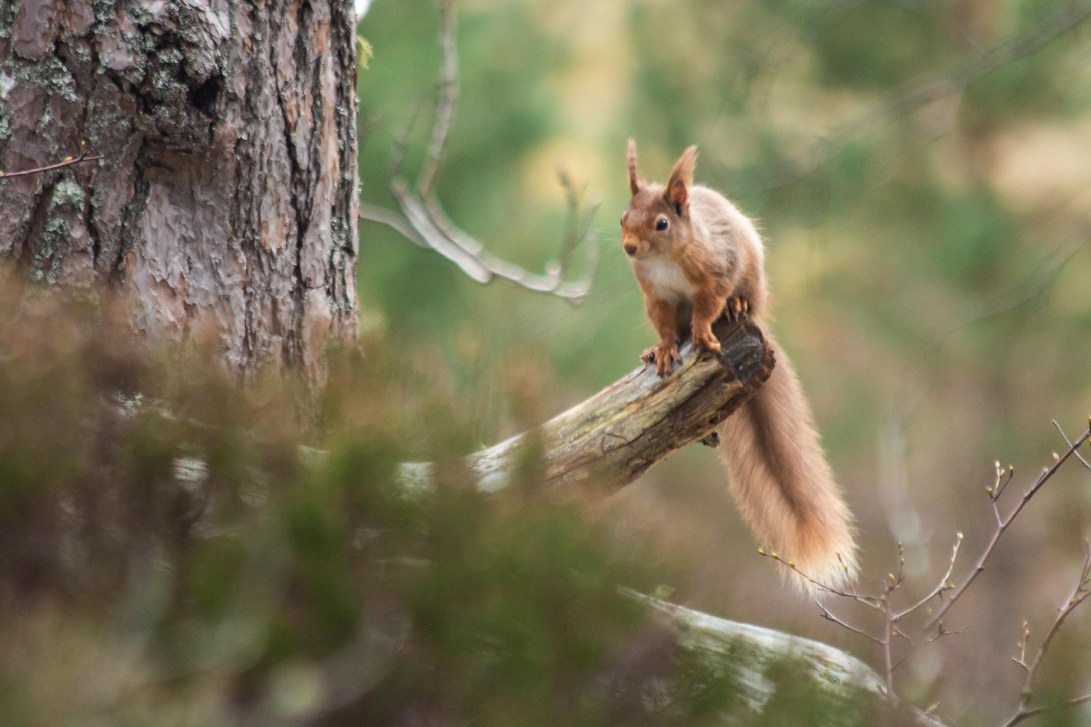
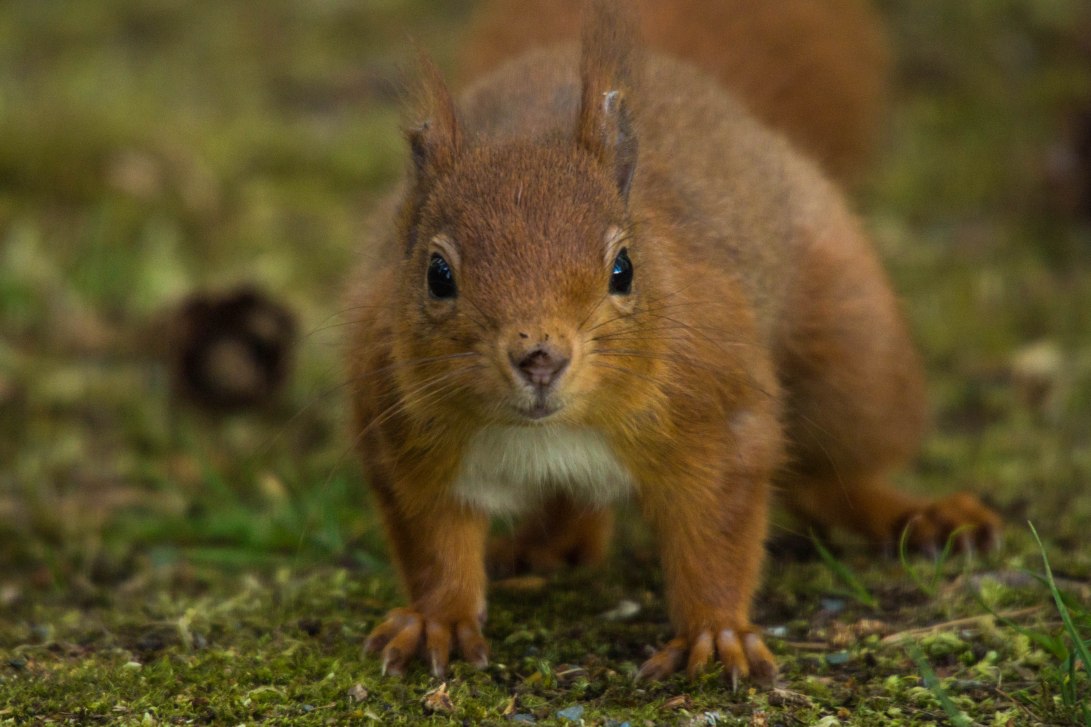
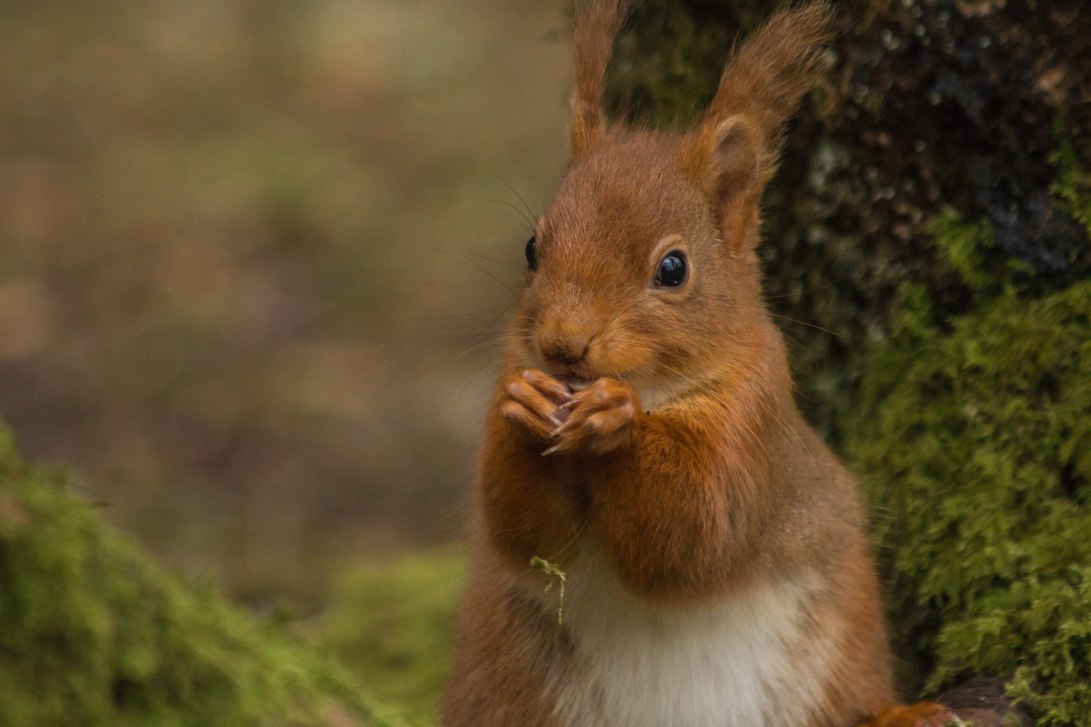
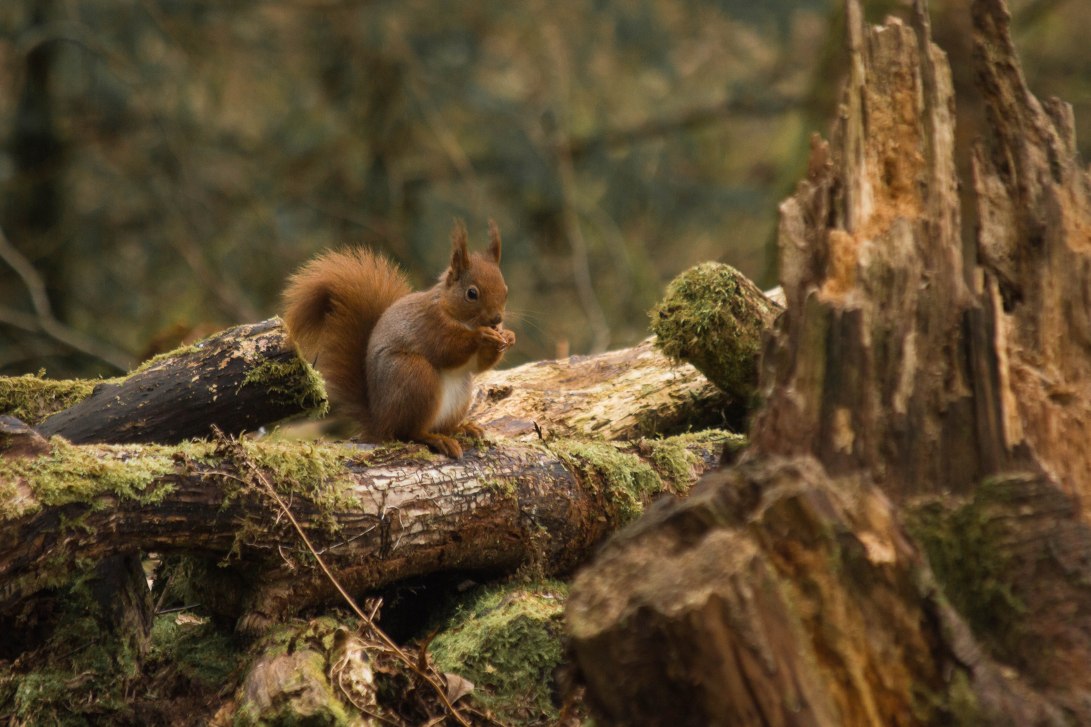
My mum had never seen a red squirrel before I took her to Eskrigg Nature Reserve. I’d been spoilt rotten there; after only two visits I’d seen about ten squirrels foraging six feet in front of me. Eskrigg is an exceptionally special place, managed by an exceptionally special person. I made a short documentary about Jim Rae for a university assignment and learnt just how much he has done not only for the reserve but also the community in Lockerbie.

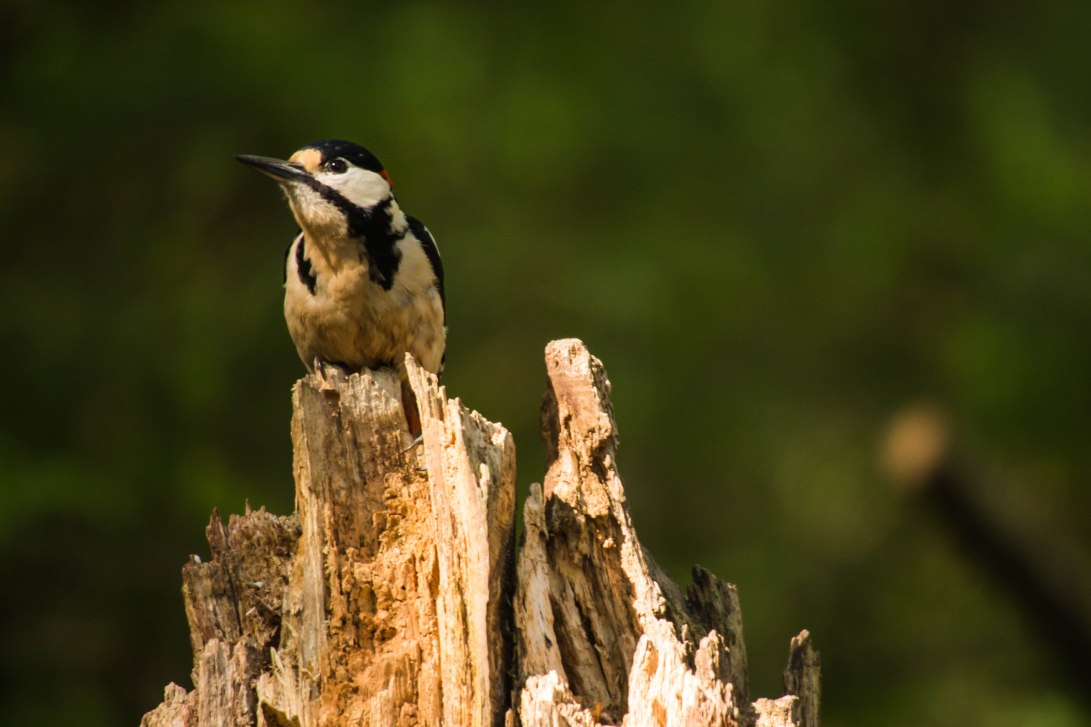
As well as red squirrels, I have spent hours watching bramblings, great-spotted woodpeckers, siskins and even a female mandarin duck on a rare visit. When my parents came to see me I took them straight to Eskrigg. While Dad occupied the dog, I sat with Mum outside the hide (no need to sit inside with such laid-back wildlife) and waited less than twenty minutes before squirrels were bounding and chasing right under our boots. My mum had the same look of complete adoration on her face that I did the first time I saw them. There are certain animals that make a person’s mouth fall open and demands all their attention. Red squirrels do this effortlessly.
IMG_9304IMG_9213


  1. Isle of Carna

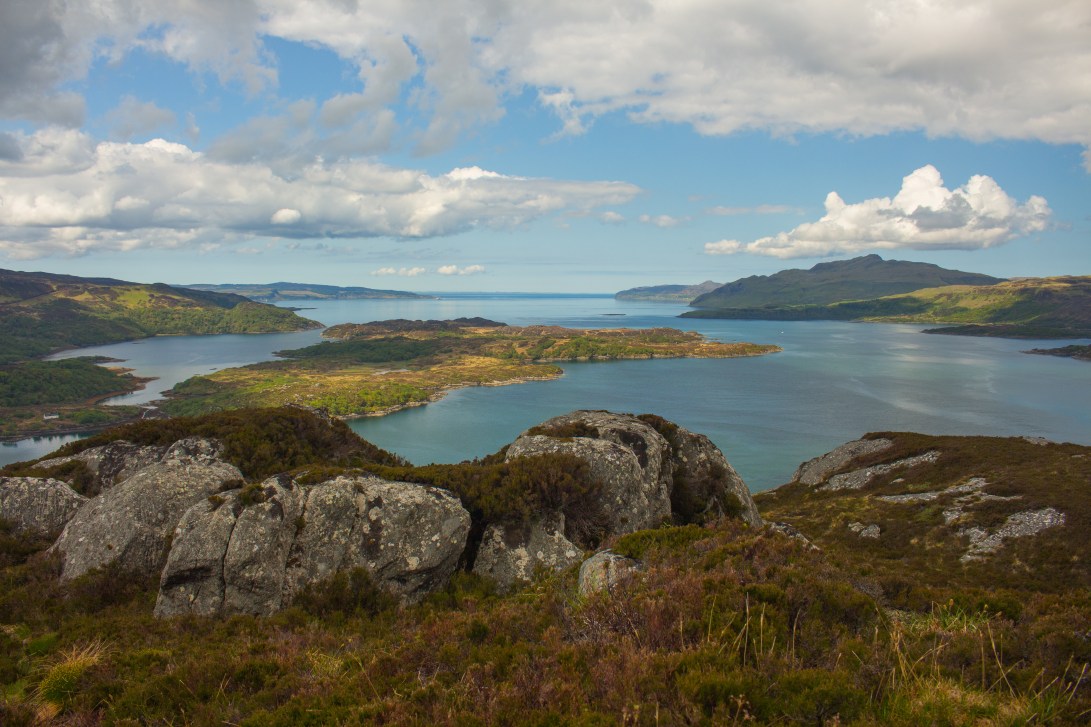
I could write pages about Carna. I went there in 2016 on an expedition with Wild Intrigue to leave technology behind and rewild myself. Carna is situated in Loch Sunart on the west coast of Scotland. We spent five days staying in one of two cottages on the entire island, which is let out to people looking for a break in complete seclusion. Even the deer have to swim to get there, which is certainly an unusual sight.

This was my first real foray into Scottish wilderness, and I couldn’t have asked for better guides. I didn’t know Heather and Cain well then, but they have since become good friends who have not only taught me most of what I know about wildlife, but have given me amazing opportunities, not least a year long internship as their Creative Content Developer.

During my stay on Carna I saw my first otter, cuckoo, golden eagle and white-tailed eagles. You know you’re in a truly wild place when white-tailed eagles become a regular occurrence after the first couple of days. We found common blennies, butterfish and dog whelks in rock pools, caught a female wood mouse in a live-capture Longworth trap and recorded foxes, roe deer and voles on trail cameras. It was a crash course in wildlife fieldcraft that showed me just how diverse Scotland is, and will always be remembered fondly as my first true wildlife trip.
IMG_6170

IMG_6216
Butterfish


  1. Avalon Marshes

Before our trip to Avalon Marshes, my time in Somerset had been windy, soggy and cold, so I wasn’t feeling particularly inspired when we arrived just as more rain was spotting my face. We headed along the river and took our position looking out over a reed bed. Forty minutes later, I was trying not to fall backwards as I watched 250,000 starlings swirling over my head. I’d never seen a starling murmuration before, and I was being thoroughly spoilt with my first experience. Not only starlings but a merlin, marsh harrier and peregrine falcon trying to snatch a meal, as well as a grey heron that chose the wrong time to take flight and found itself in a starling storm.

As majestic as murmurations look on TV, they are nothing compared to the real thing. The sound of that many starlings flying over your head is like soft rain, which is amplified by cupping a hand around your ear. I had my mouth hanging open like a cartoon character the entire time, scarcely believing the swarming shapes I was seeing. It was like a static screen come alive. Eventually, the starlings swooped down to roost, almost at the same time. The reed bed became a seething frenzy of voices and the sky was empty again.

IMG_0626

Over the Loch

The gloom that had settled over the Cairngorms earlier in the week was long gone. As we pulled into the car park I leant forward and saw sunlight pouring through the coniferous canopy in diagonal slants, turning green needles shimmering gold. Another forest to explore! I couldn’t wait.

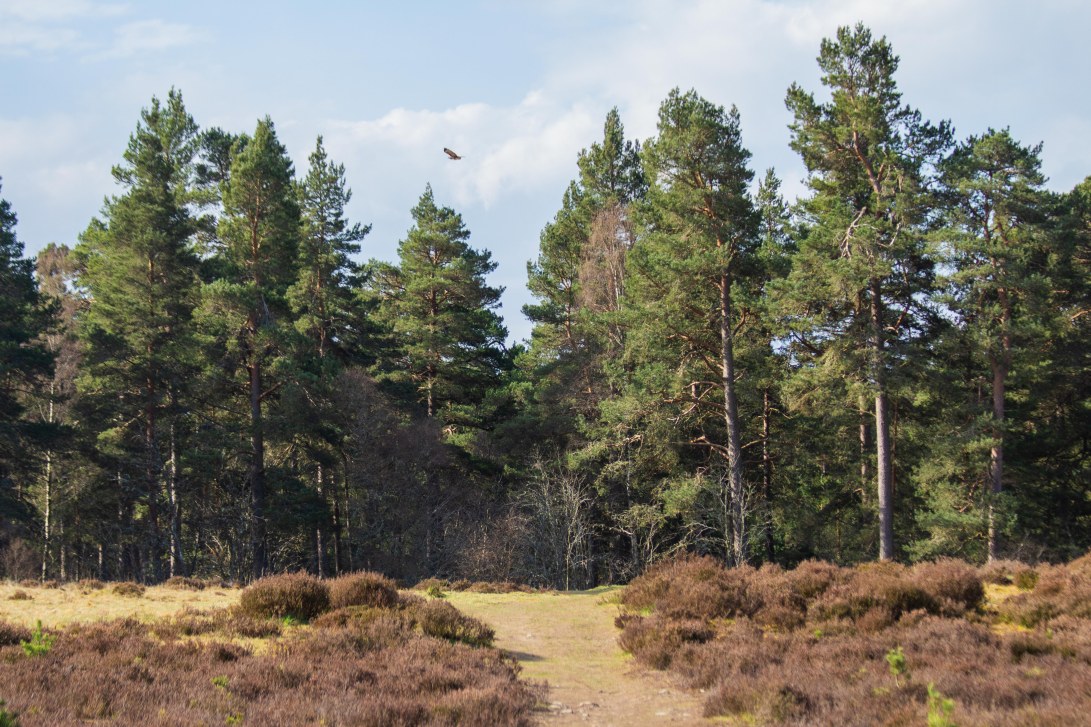
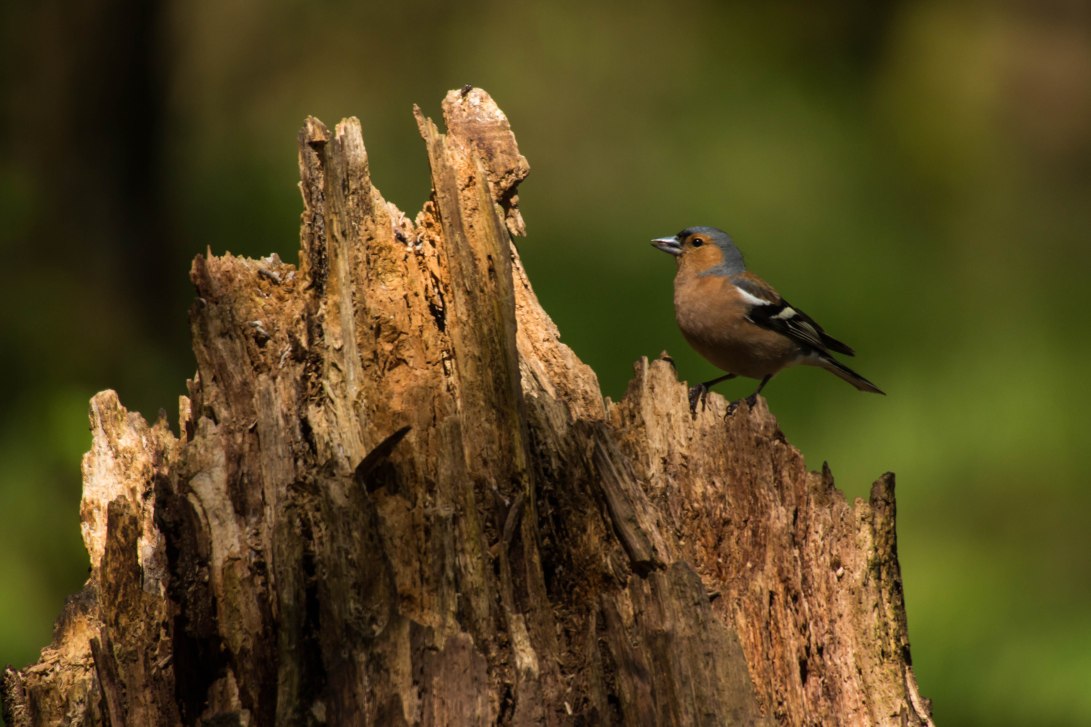
Once all members of the convoy had arrived, we gathered around the notice board. Abernethy was the second largest nature reserve owned by the RSPB, spanning 140 square kilometres. It was home to around 5000 species – a list that grows every year. Our guide, Simon Pawsey from the Bird Watching Wildlife Club, looked up the crested tit on his Collins Bird app – something I definitely need to get at some point – and quietly played us the bird’s call: a rapid trilling that I was sure I would be able to distinguish above the chaffinch’s constant rambling, as lovely as that was.

As Simon continued to tell us all about cresties, a small bird caught my eye a few dozen feet away. Lifting my binoculars, I focussed in and nearly disregarded the bird as a coal tit, which was exceptionally common in the local area. But then I noticed a peculiar tuft of feathers on the bird’s head. Surely not… A halo of light fringed the bird’s body and I squinted to make sure, keen not to make a fool of myself in front of all the other birders. But it was! It really was a crested tit! I exclaimed this to the group, embarrassed about interrupting Simon but deciding it was well worth it.

IMG_1596
Not a great photograph, but an amazing sighting!

There was a flurry of excitement as we all pinpointed the crestie for those who hadn’t spotted it. The bird was perched on an obvious branch in a relatively open clearing, sitting at eye level in a car park full of human voices and slamming doors. It was such a good view of a species that I thought I’d only get a snatching glimpse of at the very top of a huge Scots pine, if that. The crestie stayed for a few minutes, allowing us all to admire him before he took off and disappeared. Our guide had been talking about crested tits and a crested tit appeared for us all to see, almost like a “Here’s one I prepared earlier” moment. What an extraordinary start to the day!

Buzzing after our first sighting, we set off into the forest, keeping an eye out for crossbills or red squirrels that might be foraging above. Several times a pair of dark wings high above had us briefly excited that we’d spotted an eagle, but each time it was a buzzard, or “tourist eagle” as it was often referred to in the Highlands.

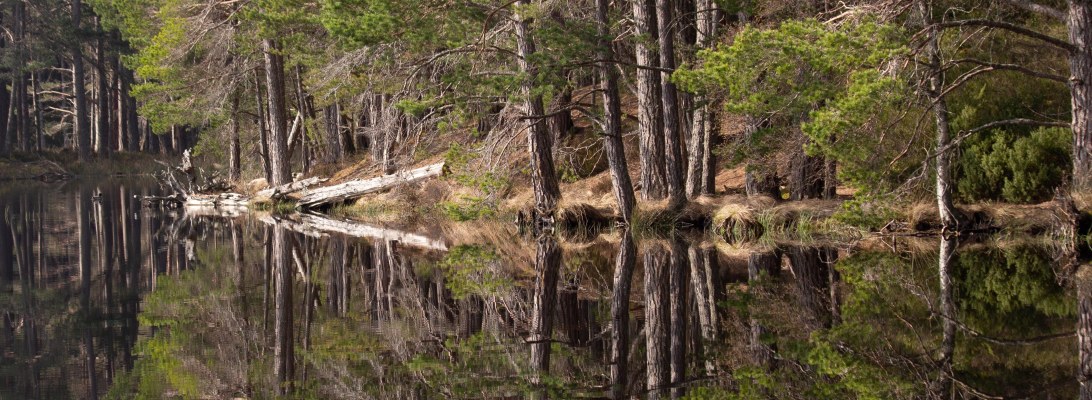
Before long Loch Garten came into view, and even with just a glimpse through the trees I knew it was going to be impressive. There was no breeze to stir the water so the loch lay as flat and still as a mirror, casting a perfect reflection of the trees along the margins and the blue hills in the distance. The only disturbance to the glassy surface was a lone mallard swimming far out in the loch, scratching a line across the water. Not a sound could be heard. As I stood on the bank absorbing the view, I thought how Loch Garten could be the perfect setting for an elaborate fantasy story. It was such a wild, beautiful place: seemingly tranquil and calm but with the power to turn at a moment’s notice.

IMG_1603IMG_1616

If I’d been alone, I would have sat by the loch all day, but I was here for birding with the group so reluctantly took my last few photos and followed them further along the trail, skirting the edge of the water. Sure enough, we found a red squirrel, although the animal was trickier to see than on the feeders in Anagach Woods back at the hotel. A bright orange mammal is surprisingly difficult to spot in dense green foliage, and it was only its sudden movements that gave it away.

IMG_1498

After a while another loch came into view: Loch Mallachie. Here we were met by a gaggle of greylag geese as they glided across the water. This part of the reserve was marshier, and not far from the land we were stood on was a smaller island with far shorter trees. Simon explained that they were the exact same type as the giants that surrounded us on dry land, but because of the variation in soil quality and nutrients, the same species was half the size only a few metres away.

IMG_1539

Suddenly one member of the group pointed out two dark specks on the horizon. I prepared myself for the inevitability of more buzzards, but once Simon had set up his scope I heard some very satisfying words: “Those are eagles”.

Everyone rushed towards the bank for a better view. The birds were very far off – tiny pinpricks on a white horizon – but sharp-eyed Simon could make out white patches on one of the eagles, suggesting it was a juvenile. After a while scanning empty sky I managed to locate them in my binoculars. They glided seemingly effortlessly at a dizzying height, barely moving their wings as they soared through the thermal currents. It was such composed flight: the movement of a creature that dominated its landscape. Fortunately, the eagles were flying closer, so one by one we had a peek through Simon’s scope. When it was my turn, I was thrilled to make out the bird’s head and beak even from such a distance. I’d seen a golden eagle once before on the west coast, but this was by far the clearer sighting. Eagles were the true celebrities of Scottish wildlife, and to see two at once was so special.

The eagles soared in large circles for a while before gliding further out of reach of our scopes and binoculars. Once again the group was buzzing. I couldn’t believe how lucky I’d been this week. After only four days in the Highlands I’d seen crested tits, crossbills, red squirrels, a pine marten and now two golden eagles. It reminded me of the importance of patience but also of luck; how being in the right spot at the right moment can bring unforgettable experiences. Being from the southeast where wildlife is far less abundant, I would treasure the sightings I’d had this week for a long time.

IMG_1626

The Scourge of the Glen

Our meeting point was a narrow track just outside Aviemore. The light was beginning to fade and the moon shone in a clear sky, fringed by a sprinkling of stars. We threaded our way up the track, keeping an eye out for roe deer in the surrounding fields, and eventually reached the hide: an impressive building with large windows running along each side. The interior was luxurious; carpeted flooring, posters adorning the walls and above all, heating! It was indulgence that I hadn’t had the fortune of experiencing in a lot of hides. This one was positively posh.

Once inside, there was the habitual jostling for the best space as politely as possible. The guide always says that the animals may come from any direction, but we all know some spots are usually better than others. After we were all settled, our guide James left the hide to distribute the food. He explained the importance of only providing a supplement to the animals’ diet to make sure they didn’t become reliant on human assistance. On the menu tonight was a selection of peanuts, raisins, dollops of peanut butter and the ultimate prize: an egg.

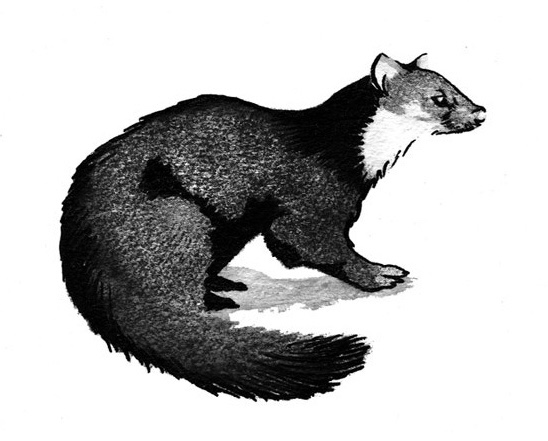
So what were we hoping to see at this time of night? To Victorian gamekeepers, they were the “scourge of the glen”, known for stealing the eggs and chicks of ground-nesting birds. In my opinion, they were on par with the unicorn – a creature so stealthy and elusive that although they’re relatively common in Scotland and doing well there, they are very rarely seen. Coming to a hide dedicated to seeing them is your only semi-reliable chance, but of course nothing about wildlife is ever guaranteed. I’m talking about the pine marten.

img_3348
Photo: Jai Redman

A member of the mustelid family with otters, stoats and weasels, pine martens are cat-like and forest-dwelling. Their coats are a rich, chocolate-brown and each animal has a unique pattern on their bib ranging in colour from yolky yellow to almost white. Pine martens are adept at dispatching grey squirrels, which are slower and less agile than reds. The latter have evolved alongside martens and know how to evade them, which is why there are no grey squirrels in the Highlands and plenty of reds. It’s interesting to think that if pine martens had been abundant across the whole of the UK when grey squirrels were introduced in the 1870s, would we have such a drastic problem with this invasive rodent today?

Once the food was in place, the wait began. Not only were we hoping for martens but also badgers, owls, a deer perhaps. It was a complete lottery, which made the whole thing incredibly exciting. The light was fading fast and my camera struggled to cope. Cranking up the ISO caused a sandstorm of grain to fill the screen, but I wasn’t planning on prize-winning photos on this occasion. This was one of those times when, more than anything, I wanted to watch.

After a short while we had our first visitor. Out of a knot of tree roots came a wood mouse. It appeared as though time had been sped up – the mouse zoomed out into the open, seized a peanut and retreated into its shelter within what seemed to be the blink of an eye. He or she entertained us for a while but before long it was quiet again.

Gazing outside into the dark clearing roused a slight feeling of unease. The longer I looked, the more my eyes played tricks on me. Shadows took on the appearance of strange shapes appearing to move on their own. Coupled with the expectant silence in the hide, the scene was close to eerie.

My eyes kept flicking to a shadowy patch just out of reach of the yellow spotlights. Beyond it the ground dipped into a shallow hill that plunged into complete darkness. I kept picturing a marten cresting the hill and trotting along the track for the tempting egg. I thought if I imagined this hard enough, it just might happen. I appreciated this fantasy had an undeniable whiff of desperation about it.

Suddenly, a flash of pale wings caught my eye. I glanced up and watched a scene unfold in slow motion. A bird catapulted through the air, wheeled tightly around the mouse’s tree and swept straight past the window. A blink-and-miss-it moment. For a few seconds I was stunned. I’d never seen a tawny owl before, and couldn’t believe how small they seemed! Small, yet incredibly skilled hunters. It really was a privilege to get nocturnal wildlife encounters, especially scenes as dramatic as a high-speed fly-by from a tawny.

After that exciting moment, there was a distinct lack of life for quite some time. It was still early days, I reminded myself, eyes flicking once more to the shadowy patch, there was time yet. I leant forwards on my stool, peering so close to the window that my breath fogged up the glass. Martens could approach from anywhere, and being so dark they would be completely concealed apart from their trademark bib.

The other visitors coughed, switched seats, paced up and down and chatted in hushed whispers. Meanwhile, I was glued to my stool. Far from blessed with social prowess at the best of times, I refrained from making conversation and kept my eyes planted firmly outside – there was no way I was missing anything.

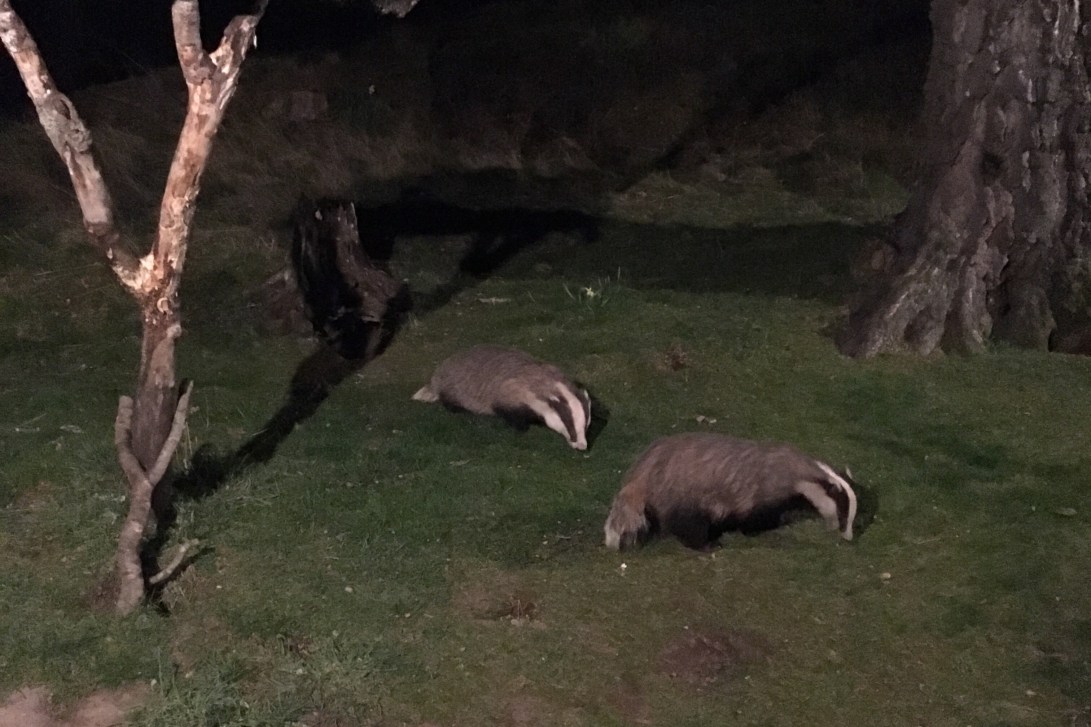
There was a sudden, hushed commotion in the hide and I peered to the side to see a badger had appeared. Badgers have terrible eyesight but an exceptional nose, and mainly use smell to discern their surroundings. The animal picked her way across the grass, fanning her snout over the ground like a metal detector. Tragically, my previous badger experience consisted of road kill and one that I had nearly killed myself when it ran out in front of my car, so to watch a real, live badger going about her nightly business mere feet away was such a treat.

img_3251

After she’d polished off most of the nuts, the female was joined by a male. He was the same size, suggesting he was also the same age if not younger. Adult male badgers typically weigh a kilo more than females and are noticeably more muscular. The two animals completely ignored each other so there was no doubt that they belonged to the same clan. If they hadn’t, there would have been a serious standoff. The male cleared up what the female hadn’t found and one by one they left the way they’d come. The only evidence of their visit was a distinct lack of peanuts.

img_3249

An hour and a half later, my enduring optimism was beginning to turn. I was conscious of the time and that our evening would eventually come to a close, marten or no marten. I started seeing more and more phantom animals out in the gloom. The moon was radiant and my eyes were drawn to its pure white hue. A lone bat darted over the roof of the hide, silhouetted briefly against the lighter sky before disappearing. How anyone got a decent photograph of a bat eluded me. To capture such erratic and rapid flight was seriously impressive.

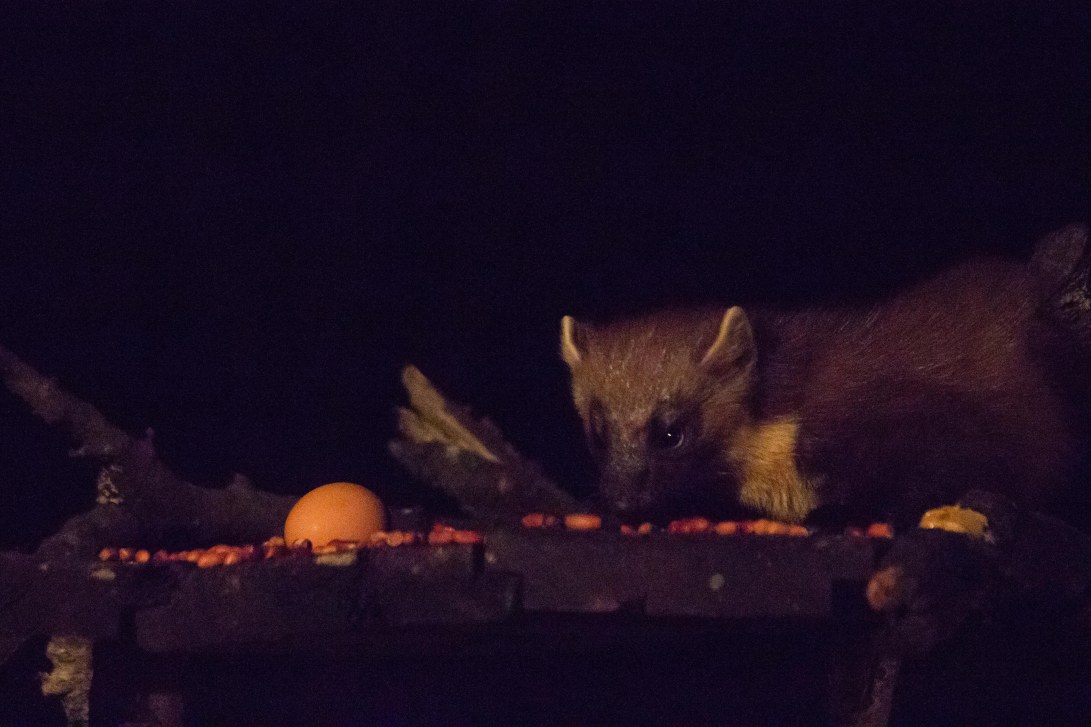
I glanced over at the shadowy patch again and saw a pine marten staring back at me, beady eyes glinting in the light. My insides jolted and as quietly as could I exclaimed, “There’s one!” Everyone knew exactly what I meant and came hurrying in my direction with barely restrained urgency. I couldn’t quite believe what I was watching on the other side of a pane of glass.

img_3262_lively

James told us the marten was a female. Similar to badgers, males were larger and typically had broader faces. Many people underestimate a marten’s size when they see one, imagining something along the lines of a weasel or stoat. I was quite the opposite; the marten was smaller than I’d expected, smaller than most house cats. What couldn’t be disputed was how beautiful she was with her long bushy tail, sleek mocha fur, tiny button nose and white-rimmed ears. I fell instantly in love.

The marten crossed to the other window and we swiftly followed suit. She climbed up onto the table and munched through the peanuts. As stunning as she was, she certainly wasn’t the most ladylike when it came to eating. She took the egg in her mouth and, despite her sharp teeth, carried it delicately down the table onto the grass. After a quick readjustment, she lolloped out of sight.

IMG_1579

We’d spent two hours in darkness and experienced less than a minute of what we’d travelled here to see, but the atmosphere in the hide could only be described as barely contained hysteria, in my corner at least. We made the unanimous decision to end our evening on a fantastic high. Not only had I had my first proper badger sighting, but I’d also seen a Scottish icon. I couldn’t have hoped for better.

img_3345
Mementos


Anagach Woods

After one day of the Grant Arms Wildlife Book Festival, I had already ticked off 27 species. The morning started off gloomy so I wrapped up knowing that the Highland air would bite without a little sunshine. After a delicious breakfast I met my guide Sue and we set off. Our destination was Anagach Woods, only a five minute walk from the hotel. I knew it was my kind of place from the first glimpse: dense evergreen trees, a winding trail and the lyrical murmuring of birdsong. The harsh, icy breeze that made the eyes squint and the neck shorten completely disappeared once we strolled past the first few trees.

IMG_1493

Anagach Woods were planted in 1766 using young pine trees dug up and transported from the old Caledonian pine forest of Abernethy. A few of these original trees are still standing today; wizened goliaths surrounded by waxy saplings. Throughout Anagach are deposits in the form of fluvio-glacial ridges, raised beach sands and gravel deposits dating back 10,000 years to the Ice Age. “Fluvio-glacial” refers to the meltwater created when a glacier melts.

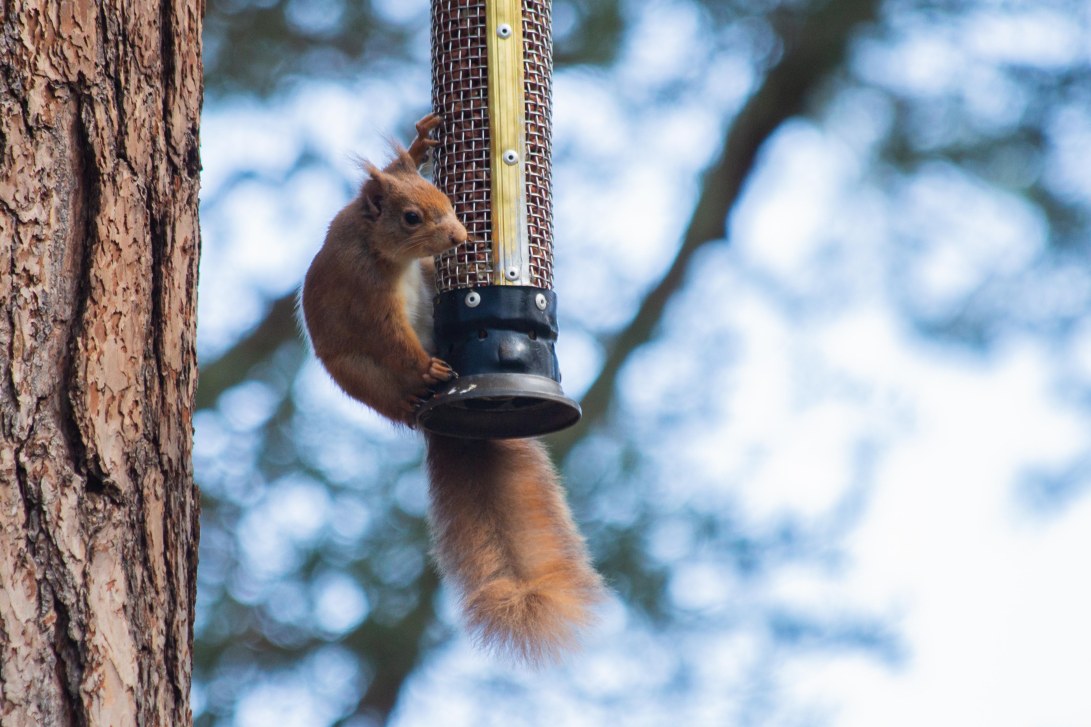
Within ten minutes of entering the woods, I had my binoculars trained on a red squirrel -tail and hands poised in the classic pose as it nibbled on a peanut. A completely peanut-based diet causes a deficiency in red squirrels, so the rangers fill their feeders with a special mix to keep the squirrels’ diet balanced. Whether the animals follow the regime is another thing entirely, and they don’t. They prefer to pick out the peanuts with the steely determination of a child eating around their vegetables.

IMG_1484

It’s impossible to dislike red squirrels. (Personally, I have no quibbles with greys either – they’re not inflicting reds with the pox with any malicious intent, nor did they ask to be brought here.) Reds have the eye-watering cuteness of babies their entire lives, coupled with boundless energy. We watched two up in the tree, neither tolerating the other’s presence. After a brief, silent stare-down, a ferocious squabble broke out. In the blink of an eye, two orange flashes flew up the tree, twirling around the trunk with scrabbling claws. The victor was soon perched proudly on the feeder shelf – stuffing head, front legs and one back leg inside to grasp the prize.

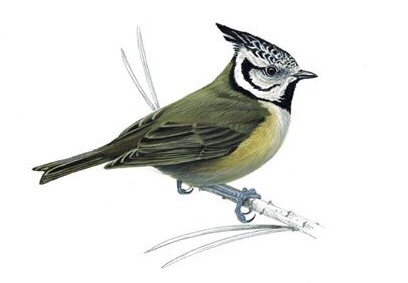
We ventured further into the forest. Each time a branch quivered or a chirrup sounded, I scoured the canopy for a particular little bird with a very impressive Latin name. Lophophanes cristatus is mostly confined to ancient Caledonian pine forests and Scots pine plantations. On the RSPB map of the UK, this bird’s presence is indicated by only a small patch in the Highlands of Scotland. A member of the tit family, it sports a magnificent punk hairdo.

Photo: RSPB

I had my sights set on the crested tit. As small as the far more common blue tit, the “crestie” is a firm favourite among Grant Arms guests and features on many wish lists including my own. My main objective during my time in the Cairngorms was to see a pine marten (dream big, I say). Or, if that dream turns out to be a little too big, I will happily settle for any new species.  I kept my eyes peeled for cresties but sadly they eluded us that morning. Sue said that at this time of year they would be right at the top of the trees gathering nest material. When those trees stretch to dizzying heights of around twenty metres, spotting a tiny bird in the dense canopy would certainly be a challenge.

IMG_1486

Despite the crested tit playing coy, we were treated to a lovely showing of a buzzard. Buzzards are one of those species that I sometimes underestimate. They don’t tend to get me too excited – especially for that one split second when you think you may have found an eagle – but that morning in Anagach I saw a buzzard land for the first time. Up in the air and bleached out by the sun, it can be hard to make out specific detail, but as the raptor perched in the pines, I could admire its snowy white chest – as soft as an owl’s – with speckled markings that gave it the air of a regal monarch’s gown. The buzzard preened its feathers for a while before taking to the air and melting into the trees. It was a fitting way to summarise the forest habitat: a creature can be there one moment, and vanish the next. Forests are irresistible to me, and Anagach easily became my new favourite.

IMG_1489


Calm After the Storm

The past few months have been fairly hectic. University assignments have ranged from writing an article and designing its magazine layout, a 3500 word report discussing a client project and an exhibition designed from scratch.

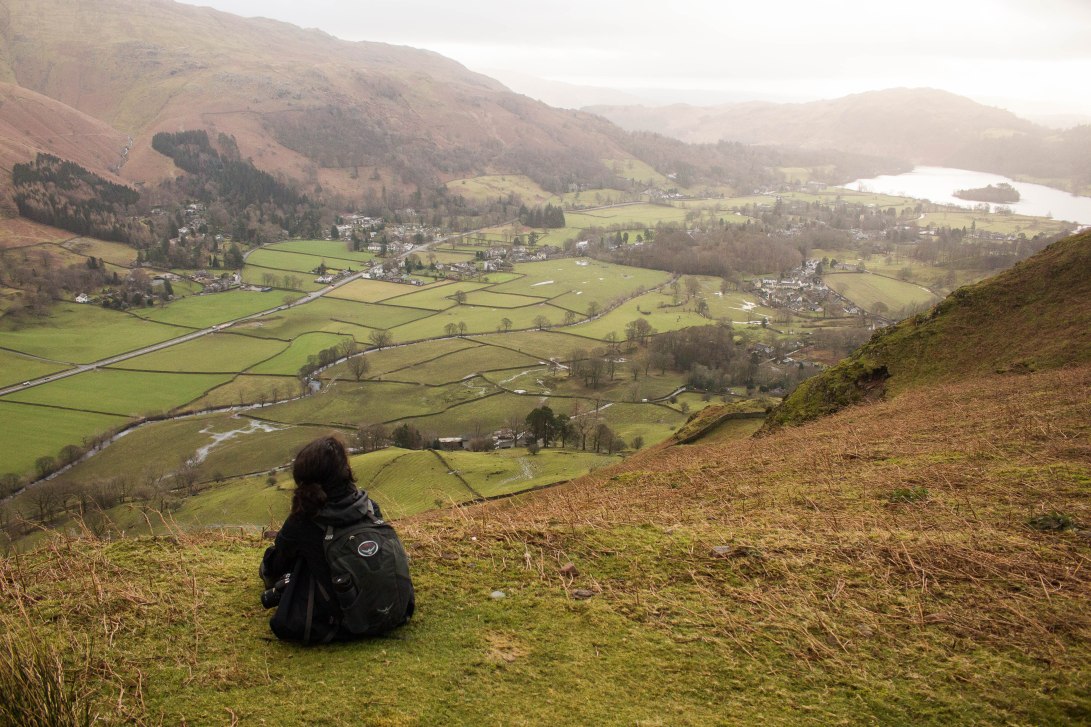
There was a week or so once these were all submitted, then lectures started again. The blessing (or curse, as far as I’m concerned) of third year is we only have lectures on one day, leaving the rest of the week disconcertingly empty. This has made my need to stay busy ever greater, so this week we chose the driest day to go for a hill walk in the Lakes. I’m ashamed to say I haven’t taken my camera out for a long time, so it was time to dust it off.

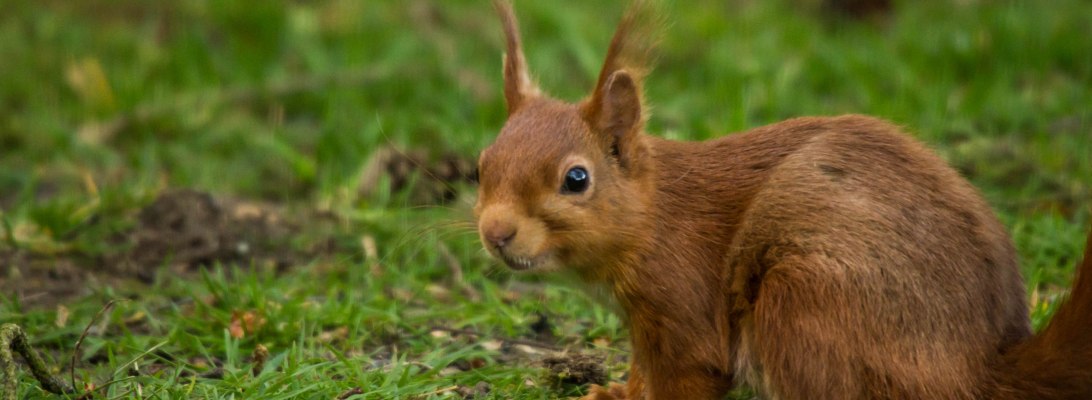
The wildlife highlight came before we’d even left Grasmere. Zahrah’s keen eyes spotted a red squirrel hopping around not far from the road – obviously this one was accustomed to the comings and goings of Grasmere’s inhabitants. While Kerr and Conor fussed over the map, Zahrah and I watched the squirrel forage at the foot of a tree. Inevitably, I didn’t have my telephoto lens so I just enjoyed the view. Once the boys had figured out our route, we set off into the hills, blowing off the cobwebs that had gathered from being cooped up working.

IMG_8702

Help For Red Squirrels

According to Red Squirrels Northern England (RSNE), there are approximately 138,000 red squirrels in the UK. For some people this may sound like a lot, but the grey squirrel population currently stands at 2.5 million. Due to the difficulty of monitoring these animals accurately, this number could be even greater.

Undoubtedly a much-loved aspect of British wildlife, red squirrels have faced many challenges in recent years, predominantly the impact of invasive grey squirrels and the subsequent squirrel pox that has decimated populations. While grey squirrels are immune to the disease, reds have a mortality rate of 100%. The virus causes skin ulcers, swelling and scabbing, and after contracting it, most animals die within two weeks.

However, our native reds still have strongholds in northern England, including Northumberland, North Yorkshire and several sites in Cumbria. For a chance of seeing this elusive mammal, it is important to know where exactly to look. Two particularly good spots for Cumbrian red squirrels are Aira Force on the Glencoyne Farm trail and Grasmere. There was an outbreak of squirrel pox at Grasmere in 2016, with more than ten confirmed cases in the valley. However, as a result of the hard work of the Grasmere Red Squirrel Group, the population of reds pulled through.

IMG_4181
Feeding red squirrel (photographed in Lockerbie)

With the squirrel pox virus having such drastic consequences, it can be difficult to know what the best solution is. In 2012, RSNE established a monitoring programme that samples 300 forests and gardens in northern England each spring, using trail cameras to record where red squirrels can be found. The Wildlife Trusts are working to improve the red squirrel’s favoured habitat of coniferous woodland, initiating reintroduction schemes and combating the presence of grey squirrels in a few carefully selected areas where red squirrels face the greatest risk.

If you are interested in the red squirrels of northern England and want to learn more about their status in Cumbria, Red Squirrels Northern England Project Officer Simon O’Hare is doing a talk on Monday 5th February and will be sharing updates on how red squirrels are faring and explaining why it is so important to protect them. The event is taking place at Kirkby Stephen Friends Meeting House. For more information take a look at the Cumbria Wildlife Trust.

Like this?

Have a read of my post about filming red squirrels in Lockerbie here.

Sun in the Woods

After discovering Eskrigg and how fantastic a reserve it is, I really wanted to take Zahrah as she’d never seen a red squirrel before. After my success last time, I was sure we’d have some luck. I also wanted to give the Manager, Jim Rae, a copy of the film I made on the reserve for my assignment.

We arrived at lunchtime, so headed straight for the Eskrigg Centre to set up tripods and tuck into our Sainsbury’s meal deals. The feeders were busy as usual. I kept an eye out for reds, but in the meantime we watched siskins, a nuthatch, a woodpecker and plenty of chaffinches snatching a quick snack before zooming back into the trees. It looked like the visiting female mandarin had moved on – it was a shame not to see a male, but still exciting to be able to tick off a new species.

IMG_3721IMG_3742

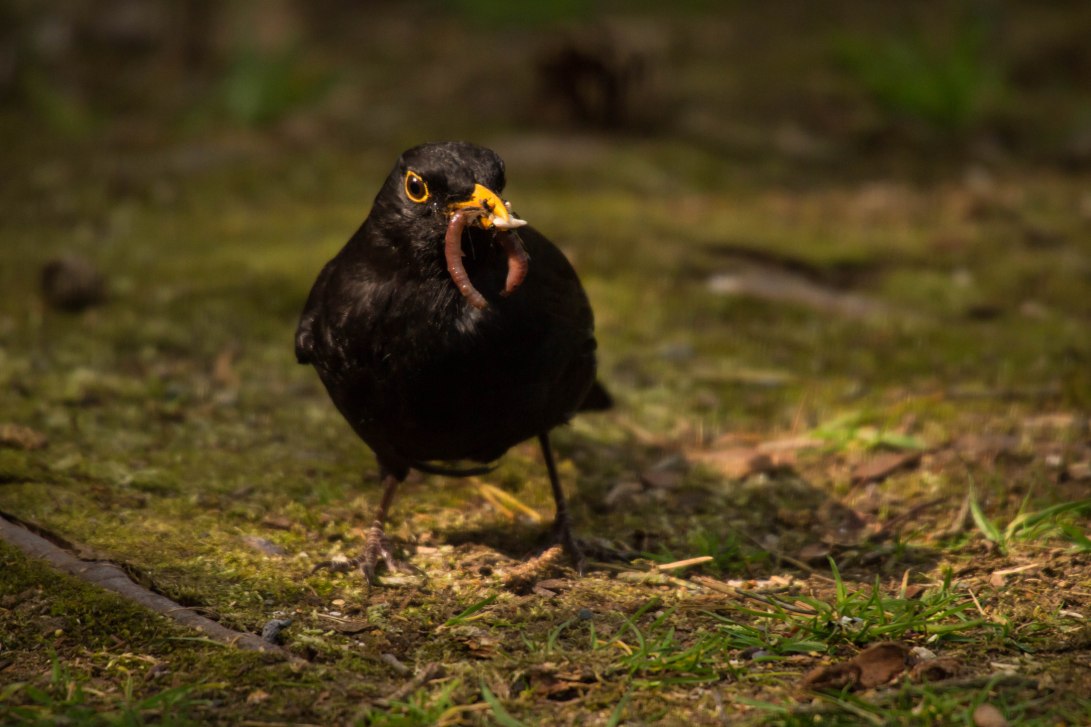
On my last visit, prime squirrel time was about 3pm, so after finishing up lunch and having our fill of the birds on the pond, we headed to the squirrel hide, joining a group of fellow photographers and twitchers. Coal tits swept across the clearing while robins hopped about on the ground. A lone male blackbird darted about with the species’ usual uncoordinated urgency, clutching a feast of flies and worms in his beak for a lucky brood.

IMG_3761

An hour and a half passed with no fluffy red visitors. I was a little embarrassed, having shown Zahrah my photos from last time and taken her with me today with perhaps blasé confidence that we’d be overrun with squirrels again today.

The heat of the day was fading and under the cover of the trees it was getting cool quickly. The group of photographers shouldered their cameras and left, and soon we began to consider abandoning ship and coming back next week. Zahrah suggested we stay half an hour longer, and in the next ten minutes my eye caught on a bright orange tuft twitching behind a nearby tree. As I hurried to focus I breathed an enormous but hushed sigh of relief.

IMG_3819

The squirrel approached slowly, sniffing the ground but pausing every so often to stand on its hind legs to look at us. I tried with all my might to catch these meerkat moments, but these animals are unbelievably nippy.

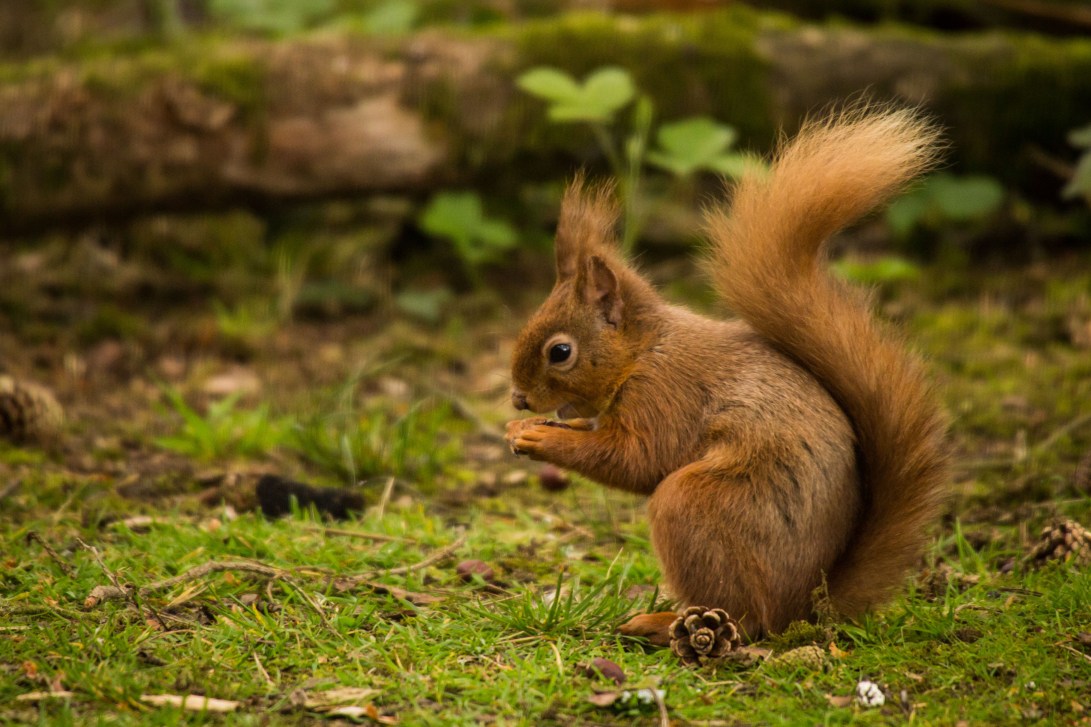
Soon, the squirrel was out in the open, collecting the hazelnuts that Jim had cracked and I’d sprinkled about. Pauses to eat were the best times to snatch some photos, when the animal’s only movement was a twitch of the tail. The way it clutched the nut in almost human hands and strategically nibbled was enough to make the coldest heart melt. As our cameras clicked I couldn’t help but gasp and squeal with excitement. Despite my interruptions the squirrel carried on feasting, scooping up all the nuts I’d left one by one.

IMG_4068-2IMG_4143

Before long, a second squirrel joined the first, skirting down a tree to find any nuts that the first had left, a third soon joining them. One of these individuals had somehow lost an ear tuft, looking adorably wonky as it paused to nibble, tail curled over its back in the iconic position.

My memory card was filling up fast – I couldn’t help but keep snapping as the squirrels explored and foraged. For me it was a combination of their distinct personalities, lovable curiosity and cute outfits that had me obsessed. They ventured close, peering up at us with beady eyes and tiny parted lips.

IMG_4147

I forgot to notice the growing chill but the slowly setting sun was beginning to make photography a challenge, especially when the squirrels’ rapid movement made a slow shutter speed impossible. We were about to finally pack up and leave when three more arrived, this time of the darker variety. So we stayed a little longer and kept taking photos. I had a sudden thought – if photography was still dominated by medium format film, I would have spent my entire student loan. The habit of only pressing the shutter for the perfect moment was admirable, but I don’t think everyone’s had the opportunity to photograph red squirrels.

When we eventually did get home, I uploaded the shots and assessed the damage. Six hundred and sixty photos, not bad at all.

IMG_4271IMG_4181

Filming Red Squirrels

It’s been a mad couple of weeks, with my second year at uni finishing this week: three deadlines in four days. The last – and for me the most challenging – is a five minute documentary on anything we can think of. The vagueness could seem like a blessing, but when you have the whole world as your subject matter, it seems impossible to think of anything to fill five short minutes.

After the racking of brains and chewing of fingernails, I decided to combine my project with my first visit to Eskrigg Reserve in Lockerbie. It was infamously known among Wildlife Media students for its resident red squirrels; I’d been meaning to go for the whole two years I’ve been living in Cumbria, and only now with a deadline looming did I decide to visit. I headed up the road mid morning and by late afternoon I was perched in front of the hide, sharing a small open clearing with four foraging red squirrels!

IMG_3621

Jim Rae, the Reserve Manager, is one of the nicest people I’ve met, and incredibly passionate about wildlife. Upon arrival he welcomed me like an old friend, giving me the tour of the reserve before settling down in the hide for the interview. He had prepared four typed pages of notes, and when I sat outside later to film the squirrels he brought me a nutcracker and a box of hazelnuts for me to feed them. I couldn’t believe, after only just seeing a wild red squirrel for the first time in Chesters two months ago, I was now spoilt for choice of animals to film.

IMG_3593

It is not difficult to see why people get so attached to these creatures. A lot smaller than the greys and with delightful little ear tufts, they bound across the grass like furry chestnut bullets – trying to keep them in frame was a nightmare. I’d get one in perfect focus as it paused to claim a nut, then it was off and I was filming empty grass again. I’d never been so challenged as a photographer, but their nippiness provided an excellent opportunity to test my reflexes.

IMG_3559

I could have stayed for hours, but I had a film to edit and countless clips to go through, 90% of which were squirrels. As of today I’m just making the finishing touches ready for the deadline on Friday. Eskrigg is a gem of a reserve, and somewhere I will definitely be revisiting over summer!

IMG_3611

Have a watch of the finished documentary here: