Burghead: Day One

The drive to Burghead was beautiful. As the town is situated on the edge of a peninsula protruding into the Moray Firth, it is surrounded by open ocean on three sides. As we drove up the high street it felt like we were at the edge of the world, and in a way we were. Northern Scotland could just be seen in the distance, but the space between still seemed vast. When we couldn’t drive any further, we found the cottage my parents were staying in and were greeted by a very happy Cockapoo who’d missed us both.

IMG_5495-2

I woke the next morning to see that the orange blinds were framed by a border of bright white light, and when I peeked behind them there lay the ocean, twinkling enticingly. After a hasty shower and breakfast we were off, keen to explore.

We made a beeline for the coast, climbing up to the highest point to take in the views. Down below, oystercatchers zoomed past, their alarmed cries cutting through the wind. A pair of cormorants glided effortlessly by, slender necks held parallel to the choppy waves below. I kept my binoculars trained on the horizon for a sign of dorsal fins breaking the surface. The Moray Firth is home to a resident population of more than 140 bottlenose dolphins, but we didn’t spot any stood up on the crag today.

IMG_5492-2IMG_5509-2

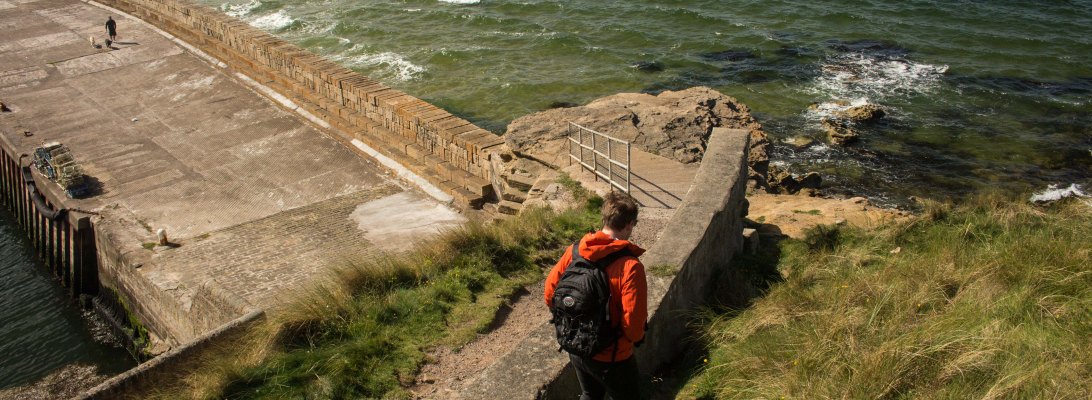
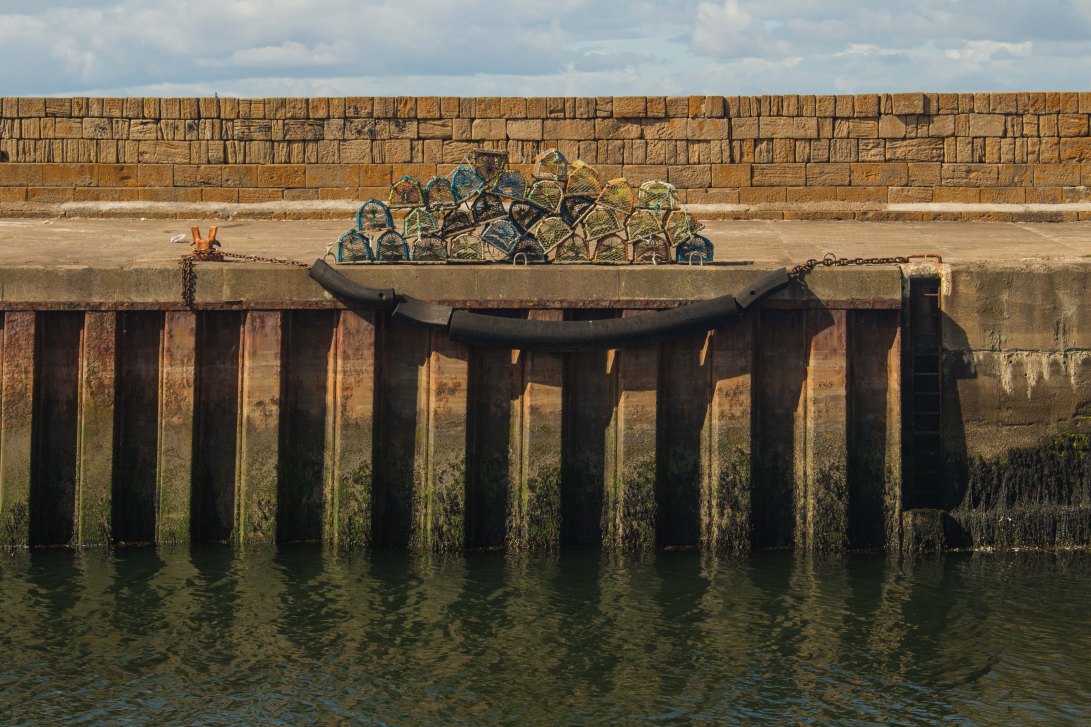
Once the wind had completely numbed our ears, we made our way back down and walked along the harbour, where a mix of tattered old and shining new boats stood resting in the docks. Down on the shingle bank, a pied wagtail hopped from rock to rock, waving his tail in the typical fashion of his species. We stumbled across a collection of crab claws and shells sprinkled across the concrete – perhaps a favoured feeding station for gulls and other seabirds.

IMG_5552IMG_5564

At the far end of the harbour I had another look for dolphins, with no luck. Every time a wave broke and a plume of froth shot upwards my heart leapt, but it was just the ocean playing tricks. The water was a stunning colour; azure blue and bottle green blending like marbled ink. Together with the rough rocks spotted with white barnacles, the sight was a feast for the eyes.

IMG_5522-2

A combination of the walk and the sea air had brought on an appetite, so we headed back to Main Street for some lunch. A beautifully fresh crab linguine filled the spot, but I still had room for a raspberry ripple waffle cone to lick on the walk back. We’d planned to wander down to the sand to find crabs or maybe starfish, but just at that moment the clouds grumbled and it began to pour, so we hurried back to the cottage instead. Shut inside, all there was to do was have a look at the photos from today and plan where to go tomorrow.

IMG_5539

Photography in Cumbria

During my internship at Student and Graduate Publishing, I was asked to write a piece for Study International magazine. I thought it would make a nice story to reflect on my favourite photography spots in Cumbria, to show international students studying in the North West just how beautiful it is. 

Studying at the University of Cumbria, I get the best of everything. Carlisle is a bustling city with all the facilities and resources a student needs, but nestled amongst the city are pockets of forest, river and grassland. Drive just a few miles out and you have access to the coast, vast expanses of woodland and beautiful nature reserves.

So for a student like me who is passionate about wildlife photography and writing, Cumbria in the North West of England is the perfect place. If you’re an avid photographer or just enjoy a walk outdoors, have a read of my favourite spots to enjoy in this beautiful area. For more inspiration see VisitCumbria.

The Ennerdale Valley boasts some of the most vibrant natural environments in England, and has been part of one of the longest ecological restoration projects in the UK. The Wild Ennerdale Partnership is determined to minimise human impact on the landscape and ensure the valley stays as wild as possible, while still being enjoyed by responsible visitors. The restorative work in the valley makes it one of those few naturally wild places, and is breathtaking to see.

One of our first year trips was to Ennerdale Valley, and I couldn’t believe how untouched the landscape looked. The hills were a patchwork of different shades of green dusted with snow at the very top, and luckily we’d visited on a beautiful day so the sky was a vivid blue. Down at the water’s edge, we could see straight through to the rocks below, indicating just how clean and pure the water was. There were so many photo opportunities that day, and definitely a location I’d recommend for landscape shots! For more information on the work Wild Ennerdale is doing in the valley, check out their website.

With the Lake District attracting 15.8 million tourists every year, it’s easy to forget that, although the Lakes are beautiful and well worth a visit, there are other parts of Cumbria with just as much wildlife, stunning scenery and photographic opportunities.

Carlisle is the county town of Cumbria and amongst its high streets and residential areas, a lot of wild places can be found. The rivers Eden, Caldew and Petteril wind through the city, breaking up the drab grey and giving wildlife space to thrive. Otters frequent the River Eden, and although I’ve yet to see one out and about I’ve been lucky enough to capture photos using remote camera traps and see their footprints in the sand just metres from a busy pedestrian bridge.

Just outside the heart of the city is Watchtree Nature Reserve, where a diverse variety of mammals, birds and invertebrates can be seen. Roe deer stalk the forests, while brown hares bound at astonishing speeds across the fields. If you’re lucky you’ll see a glimpse of red foxes between the trees when the sun sets, perhaps accompanied by scruffy cubs during spring time. For a list of things to do at the reserve – from attending guided walks to hiring bicycles and enjoying the reserve at a faster pace – see Watchtree’s website.

The Whale and the Freezer

Here’s another article I wrote during my time interning at Student and Graduate Publishing. My colleagues were so interested in the whale project at Tullie House that they asked me to write a piece on my volunteering experience. 

I’ve just finished my second year studying Wildlife Media. It’s really quite a niche course and when I tell people about it I get a mix of surprise, curiosity and almost every time I’m asked if I’ll be the next Attenborough.

A career in wildlife media is seriously competitive, making work experience essential. If you’re interested in nature and conservation take a look at Conservation Careers for inspiration. A lot of wildlife-related opportunities aren’t paid, due to the charitable organisations offering them, so my first two years have been full of volunteering. The thing with volunteering is you never know what to expect, and my experiences have proven that anything can happen.

I’d probably say one of my volunteering highlights this year was cleaning whale bones, something I never thought I’d say. Back in 2014, a massive whale skeleton was found on a beach in Cumbria and taken in by the local museum. I joined forces with two of my course mates to take on the behemoth. There was flesh hanging off the bones and they smelt nothing short of pungent. Donning our glamorous all-in-one suits, wellies and goggles, we got to work scrubbing the bones clean.

Nearly half a year later, after three hours a week of funky odours and a ridiculous amount of disposable gloves, we said our farewells to the whale, who we’d both grown very attached to. The bones have been sent off for industrial cleaning, and will then be hung up in all their glory in the museum atrium. Have a read of the full story.

That wasn’t the end of my antics at the museum, however. A week after the whale left us, we began a new project: the freezer. Deep in the basement of the museum – think restricted section of the Hogwarts library – are all kinds of treasures, some beautiful and others less so. There’s a freezer containing several hundred frozen specimens, from bats that could hide in your palm to far larger animals like otters and barn owls. It was our job to work through the freezer and document the name, date, locality and donor of every specimen to put them all on a database.

A lot of people would feel quite queasy at the thought of handling frozen dead animals, the majority of which were roadkill and had seen far better days. Luckily, or perhaps tragically, my friend and I couldn’t get enough of it. I have a particular obsession with British birds, so getting to see hawfinches, bullfinches and waxwings up close was a real privilege. And not just birds: one week we found a large bin bag containing the very rare and elusive blue mink, a member of the mustelid family with otters, stoats and weasels.

In fact, my friend and I were both quite sad when we reached the bottom of the freezer. Although it was a real shame that the animals had arrived at the museum in freezer bags, it was incredible to see all those birds, mammals and a few reptiles far closer than we ever could in the wild. It gave me an even greater appreciation of wildlife and provided an unforgettable experience that’s a great story to tell.

Camping in Dumfries

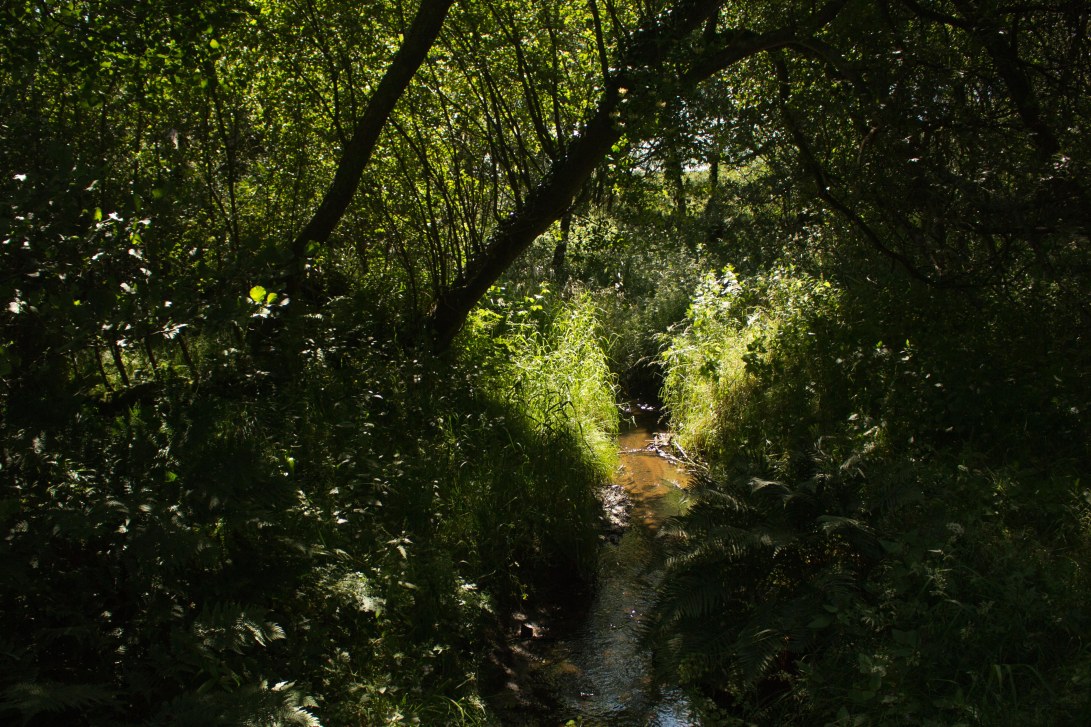
Kerr and I arrived at Caerlaverock Nature Reserve mid afternoon. We’d chosen the perfect day for our camping weekend; the sky was cloudless and the breeze off the water blew the scent of salt across the grass. We began our walk in the forest, following the trail as it weaved through the trees. A trickling stream criss-crossed beneath us, water glistening as it caught the sun. The path was dappled with patches of light that shifted as the breeze stirred the trees.

IMG_5170

Soon we emerged into the open. Despite the breeze, the sun was strong and before long we’d both abandoned our jackets. A Red Admiral butterfly fluttered from reed to reed, buffeted by the breeze. As it rested on a patch of undisturbed grass I managed to snatch a few shots before it took to the air again, soon getting lost in the swaying grass.

IMG_5161IMG_5176IMG_5179

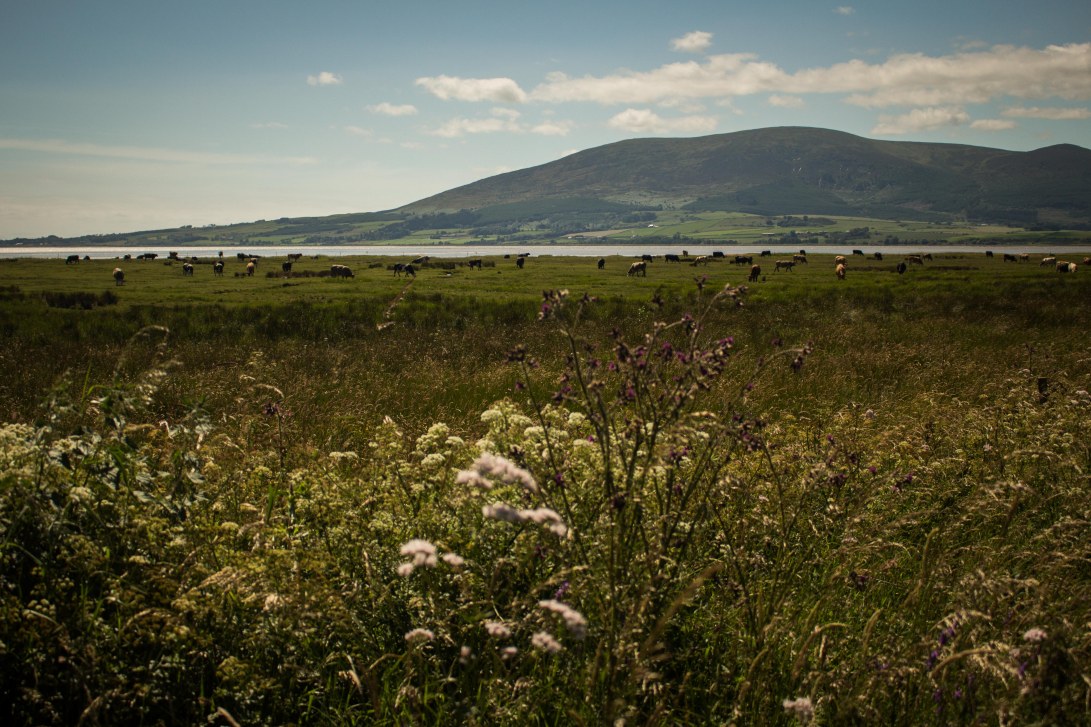
We followed the track on until grassland dissolved into farmland. Cows gazed at us quizzically as we passed, large eyes blinking. Before long we reached the end of the first field, where the only route to the next was crossing the stream over a felled tree. Balance is not my strength, but with Kerr’s help I reached the other side without getting soggy.

IMG_5177

The obstacles weren’t all behind us though. I wouldn’t say I have a phobia of cows, but I certainly make an effort to avoid sharing a field with them, something I inherited from my mother. So when we emerged from the tree bridge and saw a herd forty-strong, I was a little apprehensive about going any further. Not only were they everywhere, they were also the friskiest cows I’d ever met. When they spied us, they broke into a run and spread out, covering our path to the gate. We were just contemplating the best course of action when they turned tail and retreated quickly back to the far end of the field. I knew my choices were to face these herbivorous, harmless creatures head-on or stumble back across the tree and find a new way round. Seizing the day, I gripped Kerr’s hand and we made our way slowly but surely across the field.

We were two thirds of the way across when I snuck a glimpse to the side and, to my horror, saw the entire herd stampeding right for us. The inevitable terror set in and I dragged Kerr towards the gate. He was telling me not to panic as I launched myself at the gate, wading through sticky mud in my haste. We’d just dropped down on the other side when the first cows reached us. I locked gazes with them, and for a moment they were cute and endearing again. Suddenly they took off again, galloping after each other like horses at the Grand National. I’d never seen such energetic cows in my life.

IMG_5188

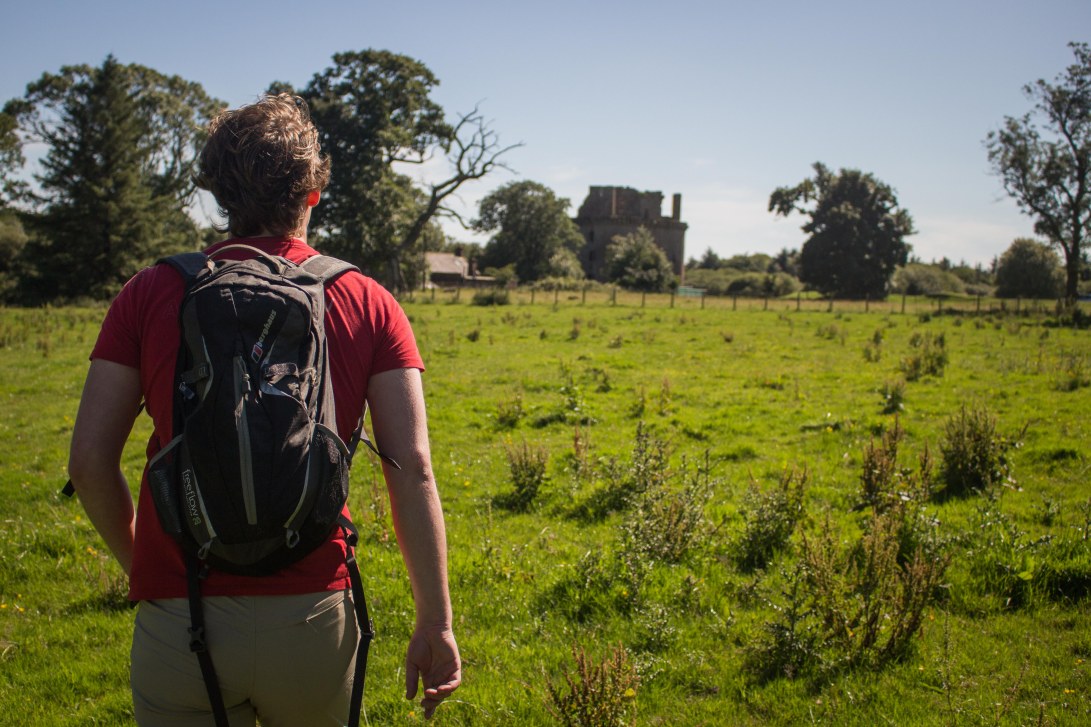
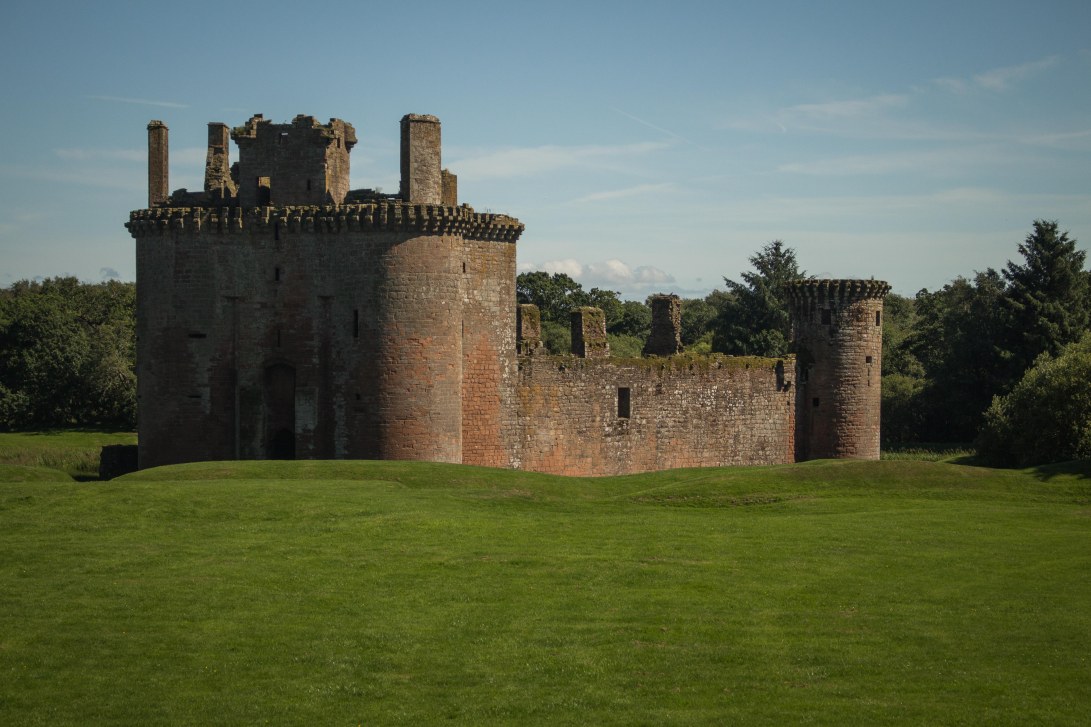
After all the drama, I was glad to be back on a tranquil, cow-free track up to Caerlaverock Castle. Two rabbits popped up out of the long grass, standing tall. Too tall in fact. I lifted my binoculars and saw that our rabbits were in fact hares, and my suspicions were confirmed when they pelted at the speed of lightning into the next field. They were small though, perhaps leverets exploring their new surroundings. I’d only seen a handful of hares before so it was a great sighting.

IMG_5194

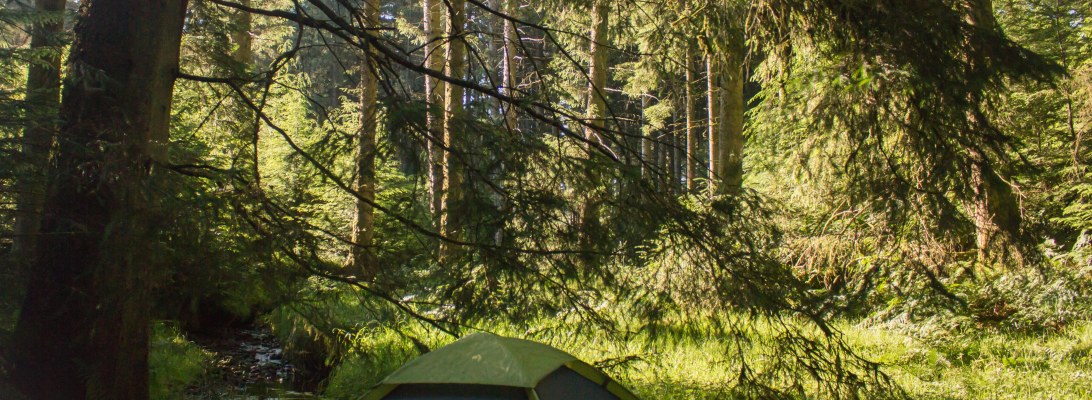
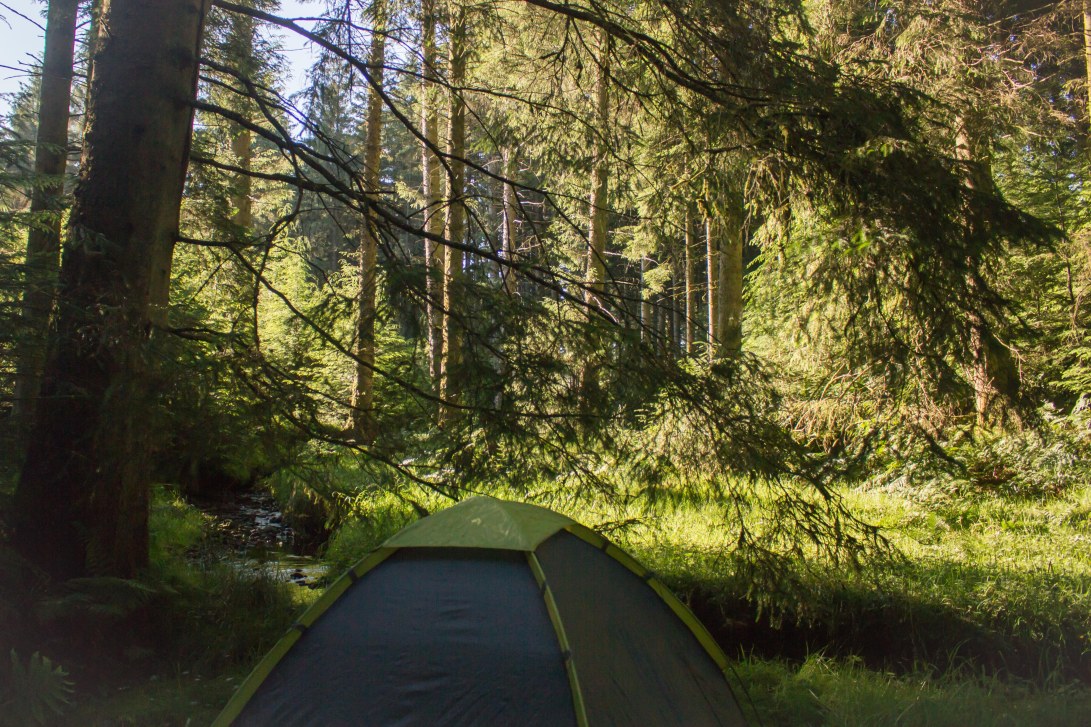
Leaving the hares behind, we headed past the castle and back to the car, where I’d foolishly left my cream soda Barr to boil. We left Caerlaverock behind and made our way to our camping spot. Buildings gave way to trees and before long the only sound was the radio. Once we were parked up, Kerr was determined to carry all our kit down to the site on a single trip, so I made the descent down the marshy hill with some trepidation. With my gaze fixed firmly on my feet, I almost didn’t notice just how incredible the spot was. From my vantage point on the hill, I gazed down at a flat clearing perfectly sized for a tent and campfire. The site was in a fishbowl, trees curled around it on all sides and a gurgling stream providing the perfect moat.

IMG_5202-2IMG_5216

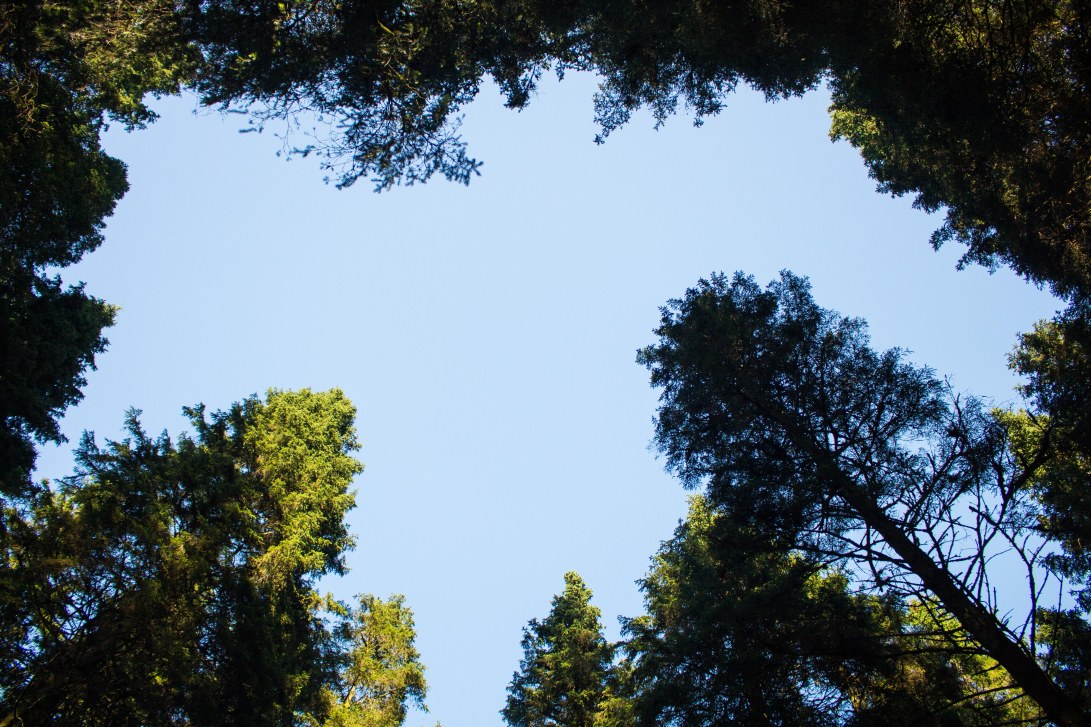
After hopping across the stream and setting down our kit, I congratulated Kerr on finding the perfect hideaway for a weekend’s camp. The flies and midges soon made their introductions, so before anything else we spritzed each other with repellent in the vain hope they’d keep their distance. First up was the tent, and in no time it was pegged in place overlooking the west side of the forest. The sun was beginning to set, transforming the woodland into a pinstripe suit of dark shadows and bleached highlights. A buzzard shrieked overhead, and I peered upwards just in time to see it appear in a suspiciously Batman-shaped break in the trees.

IMG_5215


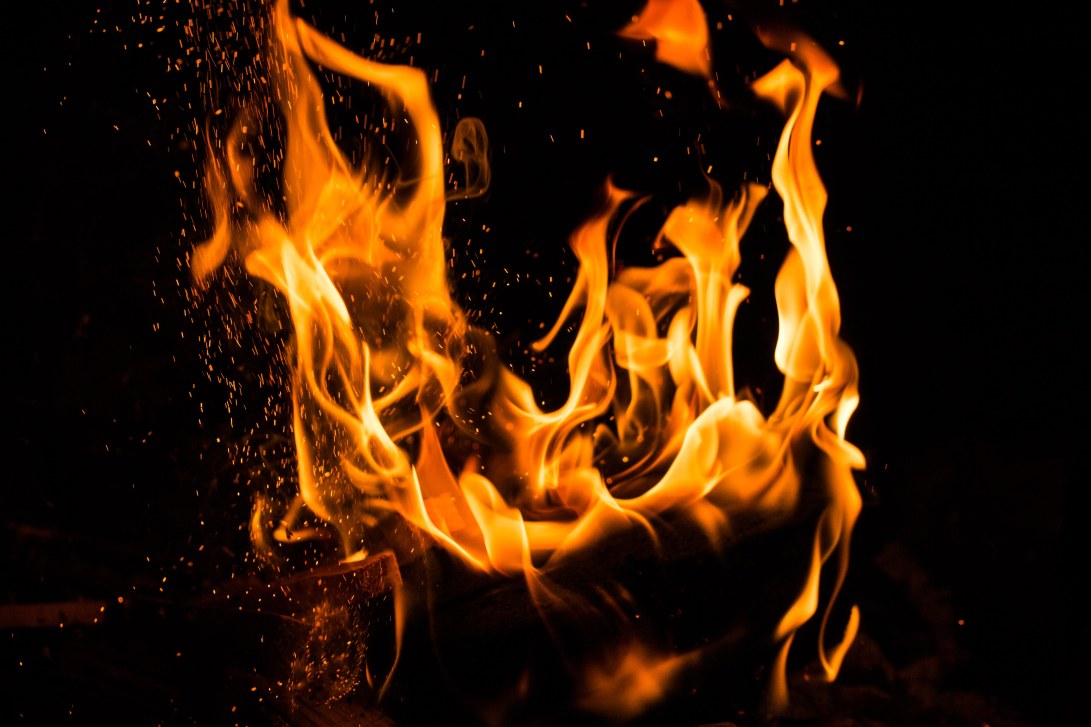
Soon Kerr had a magnificent fire going, and the sound of cracking wood was added to the hushed forest soundscape. Dinner was gnocci with chorizo – fried by yours truly on our fire – and with full bellies we sat back and relaxed, watching the flames flicker. A tawny owl hooted in the distance, and once the sun had finally sunk below the hills the first pipistrelles appeared. I’d been worried I’d feel the cold, but huddled by the fire I couldn’t have been cosier. Watching the flames for so long soon made me drowsy. We cleared up the dinner things and waited for the fire to fizzle into smoke and crisped kindling, before retreating into the tent for an early night.

IMG_5263

I woke to the soft patter of rain on the tent. After such a beautiful day yesterday, it seemed we wouldn’t be so lucky today. We’d planned on cooking bacon and eggs for breakfast, but the darkening sky didn’t look promising so we decided to hit the road a little earlier. Once everything was packed up we headed back up the hill, which was getting slippy with the rain. We had just made it back to the car when the heavens opened. On the drive back home, the rain lashed on the windscreen and the sun was nowhere to be seen. We couldn’t believe our luck.


Nairn Trip Away

With my second year of university done and dusted, I was really looking forward to celebrating the start of summer by doing very little. When Kerr had a few days off in a row, we decided to head up to his parents’ house in Nairn, a quaint seaside town in the Highlands of Scotland. I can’t get enough of Scotland; if Kerr and I aren’t spending a day out in Edinburgh, we’re on a mini holiday with his parents.

The journey was five hours from Carlisle and we arrived in the early hours, so after a long sleep in a marshmallow bed we headed into town for some supplies. Kerr tracked down a bakery, so we bought lunch and ate it looking out to sea. As I tucked into my Highland bridie I was faced with the challenge of consuming the delicious flaky pastry as quickly as I could whilst not burning my tongue. Thanks to the coastal breeze I got more hair in my mouth than bridie, but it was so good to be by the sea again. Far too cold for a dip, but it was lovely enough just to watch the choppy waves and hear the gulls bickering over leftovers.

CO0A0631
“Hey, take a casual photo of me looking natural.”

We spent the rest of the day destroying the third season of American Horror Story – introducing loved ones to your favourite TV shows is one of life’s greatest pleasures. After a quite formidable tray of chilli beef nachos for dinner, we headed back out for a walk along the seafront. It was past 9pm but the sun was still setting, with diluted orange splashes amongst the blue. All kinds of prints were peppered in the sand; big boots, smaller boots, dogs and the scratchy lined prints of birds.

CO0A0657-2

Kerr told me to run out to the stretch of sand not yet submerged by the approaching tide and he’d take my photo. I foolishly did as he said, and struck my most nonchalant pose as I gazed out to sea. Suddenly my Vans were wet and I looked down to find my route back to dry land had shrunk significantly. I had no choice but to sprint back before I got trapped on all sides by freezing cold seawater. The photo looked great though, so the hair-raising stunt had been worthwhile.

CO0A0686

Thanks to the lovely Kerr McNicoll for the photos in this post. You can see more of his beautiful photography on his website: http://www.crosssectionindustries.co.uk/


Beaver Expedition: Day 4

Another sunrise start for our final chance of watching the beavers. This morning the sun was visible, and when we set out it was a pale orange splotch hovering over the river, sending orange lines criss-crossing over the water as the wind stirred it. We made a beeline for our usual spot, slowing down as we approached the patch of rhododendrons in case the beavers had already emerged. Settling down and standing up tripods, the waiting game began. Infuriatingly, my hay fever chose this moment to launch its morning attack, and as my eyes streamed I fought the overwhelming impulse to sneeze and startle everything within a twelve-mile radius half to death. Not today hay fever.

IMG_5087

The morning continued on with no visitors. Slowly but surely the sun climbed higher, bleaching the blue water with white highlights. The usual breeze whistled under the overhang of the trees and made them wave and rustle; the only movement in sight. A pied wagtail landed on the dead wood, tail bobbing as it turned on the spot. Deep in the woodland thicket a thrush sang, while the jackdaws chattered noisily in the distance.

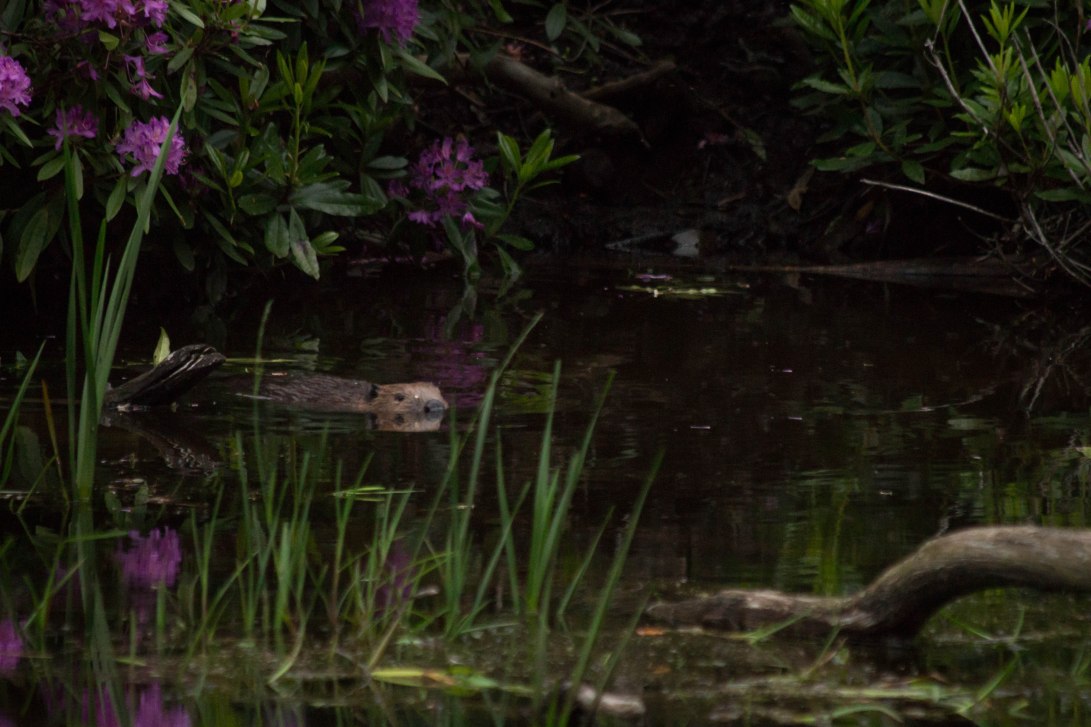
Suddenly a beaver appeared, cruising silently from under the bushes and into the light. It made its way upstream, to where the river weaved between clumps of reeds and grasses. There it disappeared, but soon we heard quiet chomping noises and knew it was breakfast time.

IMG_4455

In contrast to yesterday morning, the lone beaver wasn’t joined by any companions. It was possible that they had fed well late last night and did not need to venture out. Before long Heather and Cain headed off to get started on assembling the expedition vlog. As they made their slow way back over the water, Cain stopped and gestured into the reeds. I suddenly realised we hadn’t seen the beaver swim back, and while he could have easily dived under and passed by unnoticed, he could also still be feeding. Sure enough, Heather set the scope up to film again. Not wanting to miss the action, I treaded up the grass path nearly doubled over, until I saw what they’d spotted.

Just at the water’s edge, behind a layer of long grass like a bead curtain, was our beaver. Hunched up, the grass trembled as he chewed, shifted his body and chewed again. Squatting down, I got as close as I dared and peeked between the blades of grass to try and get a clear shot. The beaver paused, looked right at me – so much for my attempts at stealth – and carried on chewing. He stayed for a while longer until eventually stepping forward out of the grass and slipping back into the water, gliding down and out of sight.

IMG_5065IMG_5078

Once I’d got a few more hours’ sleep and eaten a hearty breakfast, it was time to check the camera traps. After the efforts of finding the right spot, setting them up and waiting for any visitors, retrieving the trap was the best bit. I retrieved my laptop and we all huddled around the table, eager to see if we’d got any beaver footage. After the first trap only showed clips of grass blowing in the wind, we were a little disappointed. However, on the trap that we’d set on a post in the river, pointing towards a mud slope, there were multiple clips of beavers waddling in and out of the water! First a male coming and going, dragging his paddle of a tail behind him. Then another clip showed a much wider animal – the female – following the same route. It was so great to see, especially since we’d only seen the tops of the beavers’ heads as they swam on our morning stakeouts. To see their whole body and capture moving footage was a fantastic end to the expedition.

IMG_5043

All too soon it was time to leave the site, and as we drove back down the gravel track the sun continued to shine. We decided to go back down south via the Loch of the Lowes, a Scottish Wildlife Trust site, to try and see some ospreys that were nesting there.

The loch was the largest I’d ever seen, looking more like an alcove that led into the ocean. The water was sparkling blue under the still beaming sun, surrounded by trees of every shade of green. We set up in the hide and the reserve guide pointed the nest out to us. On the far side of the loch, high up in one of the trees, was a clustered pile of branches and twigs, inside of which perched an adult osprey and two scruffy chicks. I’d never seen an osprey before so was thrilled to see such a fabulous raptor on the nest. As I watched them down the scope, the adult tended to her chicks, which were peering over the edge of the nest at the world around them.

IMG_5143IMG_5155

Before long it was time to hit the road again, and after such a packed weekend I couldn’t stop myself dozing off in the car. I arrived home with my pockets filled with beaver chippings, woodpecker feathers and endless pages of notes – sure signs of a good expedition.

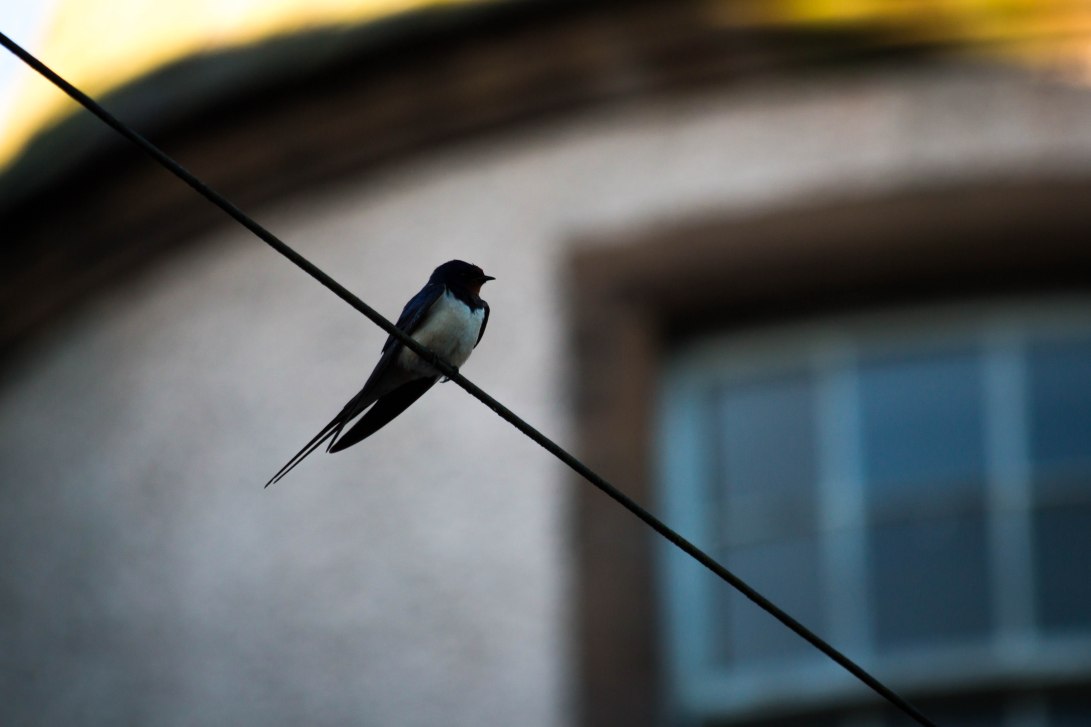
Species seen: Buzzard (Buteo buteo) European beaver (Castor fiber) Great tit (Parus major) House martin (Delichon urbicum) Jackdaw (Corvus monedula) Osprey (Pandion haliaetusPied wagtail (Motacilla alba) Song thrush (Turdus philomelosSwallow (Hirundo rustica)

Beaver Expedition: Day 3

This morning we were up before the sun at a bleary-eyed 3:30am. Once again we headed towards the river, confident that this time we’d get more than a fleeting glimpse of a face in the shadows. The sky was cloudy, so the morning grew slowly brighter without direct sunlight. The water beneath the rhododendrons was shrouded in darkness, so we needed sharp eyes to spot any faces emerging from the lodge.

IMG_5021

(Above) A beaver dam on the river, showing the significant difference between the water levels.

Sharp sheep bleats and whistling thrush song burst through the empty air, as well as the splashes of fish leaping from the water. A chilly breeze swept the reeds from side to side, making it a real challenge telling apart the normal water ripples and those made by the beavers. We waited a little while longer, then a slim flat shape made its way out from under the dead wood. Our beaver soon dived under again, but slowly and surely other individuals emerged. One of the rustles was tiny, and as two leaves parted a different face appeared: a kit. Far smaller than the adults, the kit swam in a small circle then dived down, showing a tail that would be more at home on an otter’s rump than a beaver’s; skinny and ending in a point.

IMG_4819-2

At this time of year, the kit may only be weeks old, having only just begun to venture out of the safety of the lodge. Similar to the precocious development of many other species of rodents, beaver kits are born at a very advanced stage of growth. Their eyes are fully open within a few days of birth and begin to eat solid food at just a week old.

The kit didn’t stay out for long, but the adults kept reappearing over the next two hours. At one point the male and a larger female met in a nose nuzzle, which was a great moment to capture brief footage of. At nearly 6am, the river grew quiet and still again, and after a while of inactivity we made our way back to the cottage.

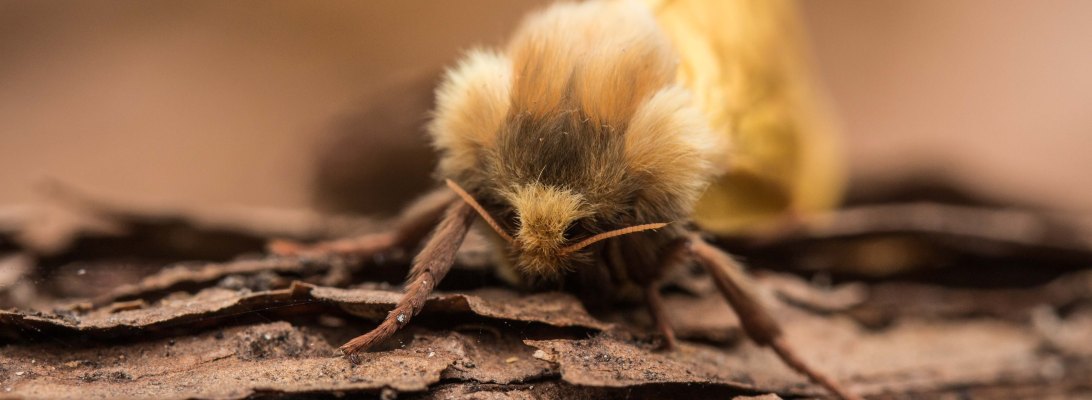
The next job of the day was checking the moth trap, and we got a much more successful haul than yesterday; Peach Blossom, Latticed Heath and Pale-Shouldered Brocade, as well as some we had yesterday like the Beautiful Golden Y, White Ermine and the formidable, spaceship-esque Poplar Hawkmoth. I really have fallen in love with moths this weekend; after only previously having seen them flapping around my face in the bath, it was great being able to see them properly and appreciate just how beautiful they can be.

IMG_4872

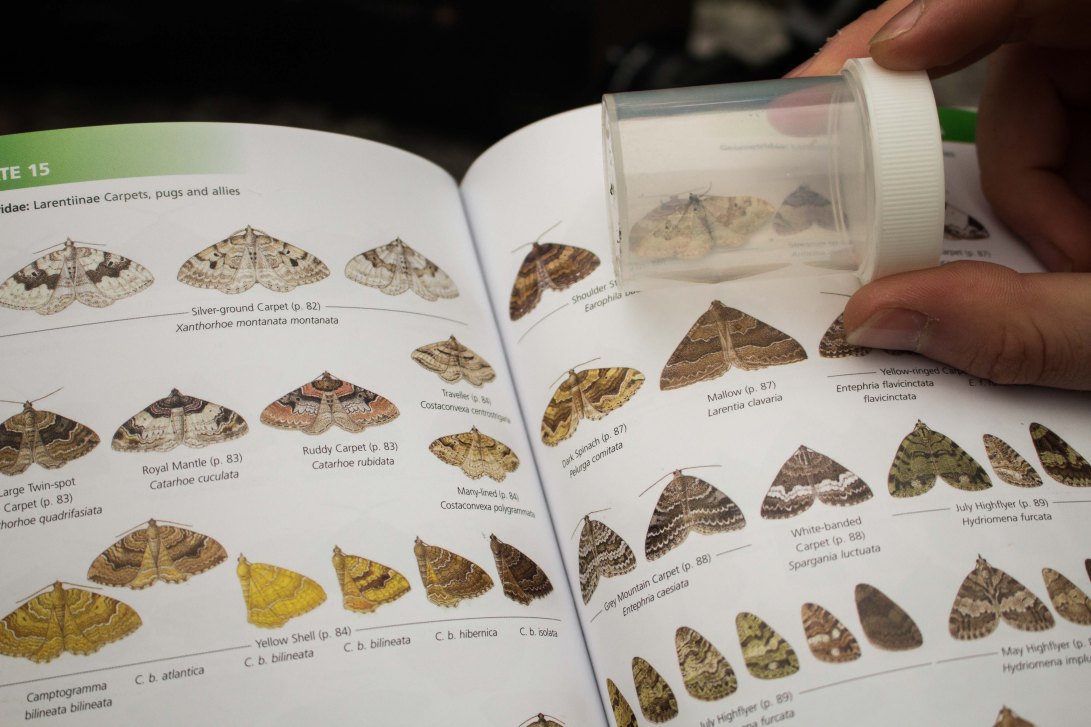
Identifying a Silver Ground Carpet moth

IMG_4901

Ghost moth

IMG_4938

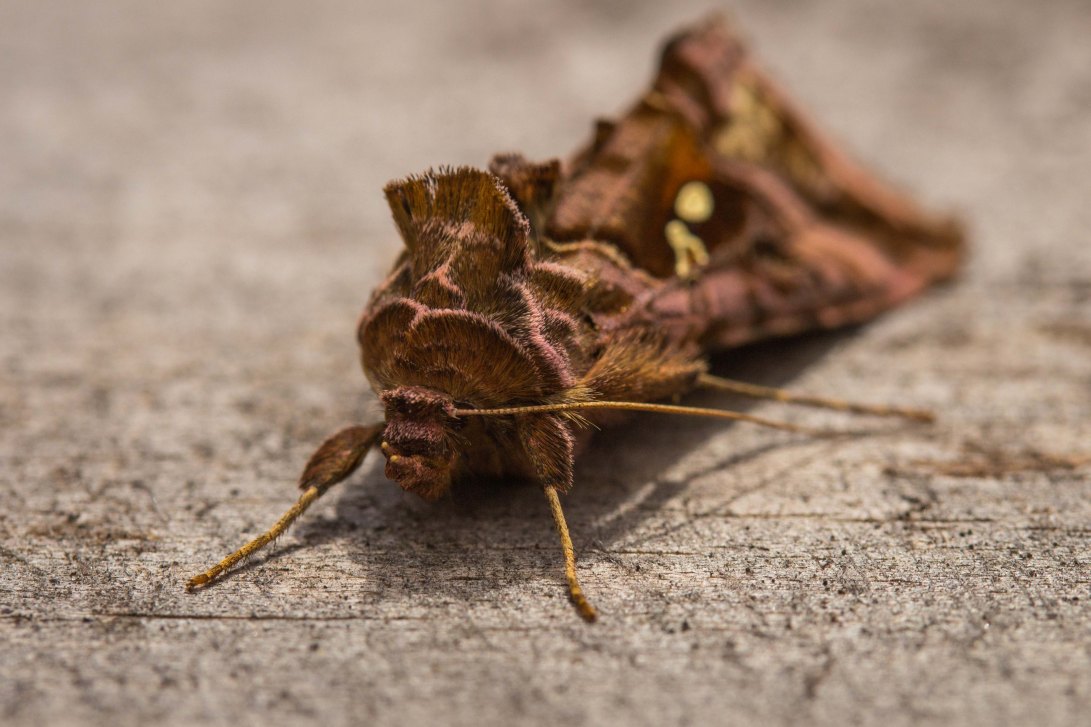
Beautiful Golden Y

After releasing the moths, it was time for lunch, then we went back out for a potter down the river. The clouds had long gone and now the sun was beating down, turning the grass and tree neon-green. Blue damselflies zipped about and bees buzzed, weaving in and out of the foxgloves. I took cover from the direct sun and sat by the water’s edge, where I was joined by a tiny, copper-coloured froglet, and then two aphids. It’s only at a time like this, when all my senses are tuned to nature, do I truly stop to study invertebrates. The aphids had pale spots on their backs and tiny black tips on their feet. I ended up walking them from hand to hand for ages.

IMG_5043

Before long the heat made the day just a little too sticky, so I took refuge in the shade of the cottage, where I spent the rest of the afternoon transferring my notes and backing up the photos from the day.

Species seen: Blackbird (Turdus merula) Chaffinch (Fringilla coelebs) European beaver (Castor fiber) European rabbit (Oryctolagus cuniculus) Great tit (Parus major) Grey wagtail (Motacilla cinerea) House martin (Delichon urbicum) Jackdaw (Corvus monedula) Peregrine falcon (Falco peregrinus) Pied wagtail (Motacilla alba) Roe deer (Capreolus capreolus) Song thrush (Turdus philomelos)

Beaver Expedition: Day 2

The day began with waking up from a heavenly night’s sleep – my bed was like a marshmallow. After breakfast and a dip into what Heather calls THE Beaver book, by Andrew Kitchener, we headed back along the river to find some spots to set up camera traps.

IMG_4699

The sun came and went, bringing its heat with it so I couldn’t make up my mind whether I wanted my coat or not. Every so often we’d see a different coloured spot in the sea of green grass, and I spent a lot of the afternoon squatting in the grass training my macro lens on day moths, flies and beetles. Before long we reached a clearly trodden corridor in the grass that snaked down to the river. We followed it down and saw a defined mud slope leading into the water; this was a sure route for beavers. One camera trap set and ready.

IMG_4512

We set the other two on the other side of the river, to hopefully catch any beavers coming down from the adjacent field like the one we spotted last night. Beaver footage would be incredibly exciting, especially during the day.

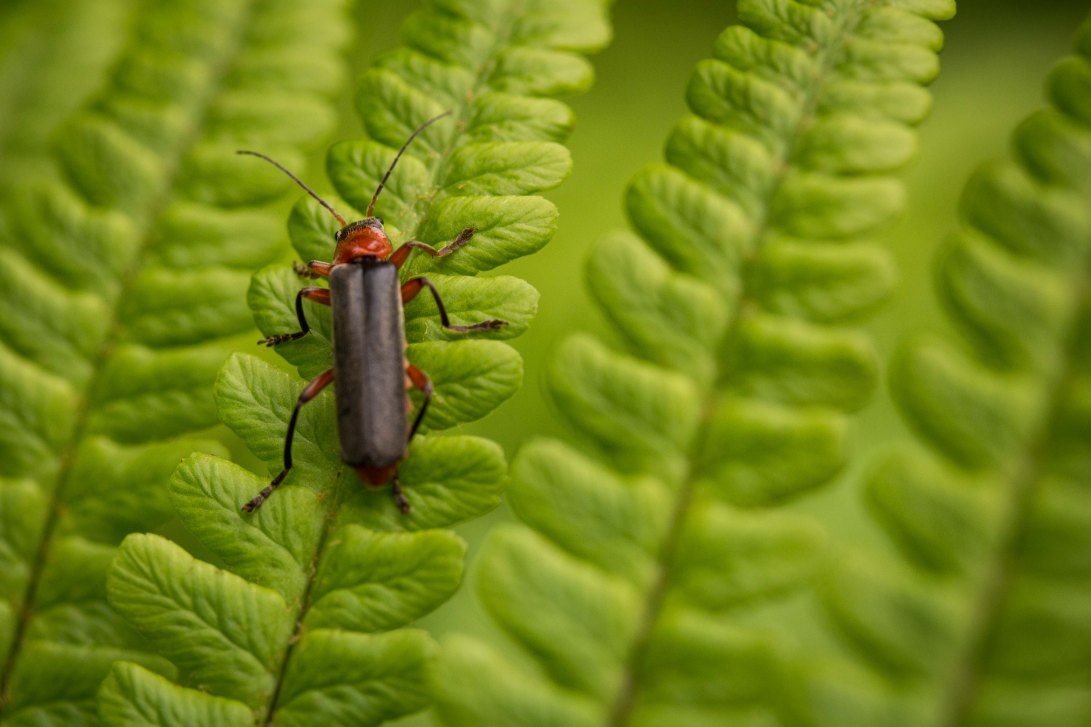
Back at the cottage, we retrieved the moths that Heather and Cain had caught in the traps during the night. Taking them outside, we had a little macro photo shoot. White Ermine, Poplar Hawkmoth, Large Yellow Underwing, all beautiful, delicate creatures with easily the same beauty as butterflies. Seeing them up close instead of zooming around my head in the shower made a world of difference; stood still they were stunning, covered in shimmering dust of every colour imaginable.

IMG_4575IMG_4633

After some lunch at the cottage we headed back out, this time with nets and white trays ready for some pond dipping. I hadn’t pond dipped since I was tiny, so it brought back a lot of memories for me.

IMG_4682

Finding the perfect dipping spot was difficult. The first place we tried was too steep, and knowing my balance I’d have fallen straight in. The next spot we found was good for dipping but we only managed to find a few blood worms, miniscule grains of wiggly sand that catapulted themselves around the tray with curled convulsions of their tiny bodies. Finally we headed away from the cottage towards the lake – made entirely by the beavers I hasten to add – where we had much better luck. In a single tray I got a good look at caddis fly larvae, damselfly nymphs, backswimmers (which performed their rather comedic backstroke around the tray), water beetles and lots of microscopic creatures. Using my macro lens I could capture the beautiful detail that make these pond aliens so extraordinary. They honestly looked like visitors from another planet.

IMG_4743IMG_4761

There were even more treats on the journey back. Just as I was ducking under a low fern I saw a flash of chestnut red and my arm rose of its own accord in a rapid point. “Squirrel!” I whispered as urgently but quietly as I could. The squirrel darted along a felled tree then up a living one, skirting up the bark just as easy horizontally as vertically. A group of chaffinches began to mob it, clearly too close to a nest. Bounding from one tree to the next, the squirrel speedily made its way away from the ruffled birds, and paused to peer down at us as we gawped. A tail twitch later and he was down on the forest floor again, disappearing into the forest.

We continued on, making our way back to the cottage. Dinner was stir-fry, and after finishing up we headed to the river, in the hope of seeing our beavers again. We took cover under the overhang of a tree, nestling in amongst the roots that divided us like the arms of cinema seats. Then we lay in wait. And once again, after only a short wait there was a rustling beneath the rhododendrons and a dark shape emerged. It was too dark for photos, but just to see the beavers only a short distance away was yet another treat. Now all we had to do was return at sunrise.

IMG_4730

Species seen: Blue tit (Cyanistes caeruleus) Chaffinch (Fringilla coelebs) European beaver (Castor fiber) European rabbit (Oryctolagus cuniculus) Great tit (Parus major) Heron (Ardea cinerea) House martin (Delichon urbicum) Jackdaw (Corvus monedula) Moorhen (Gallinula chloropus) Pied wagtail (Motacilla alba) Red squirrel (Sciurus vulgaris) Song Thrush (Turdus philomelos) Starling (Sturnus vulgaris) Swallow (Hirundo rustica) Woodpigeon (Columba palumbus)

Beaver Expedition: Day 1

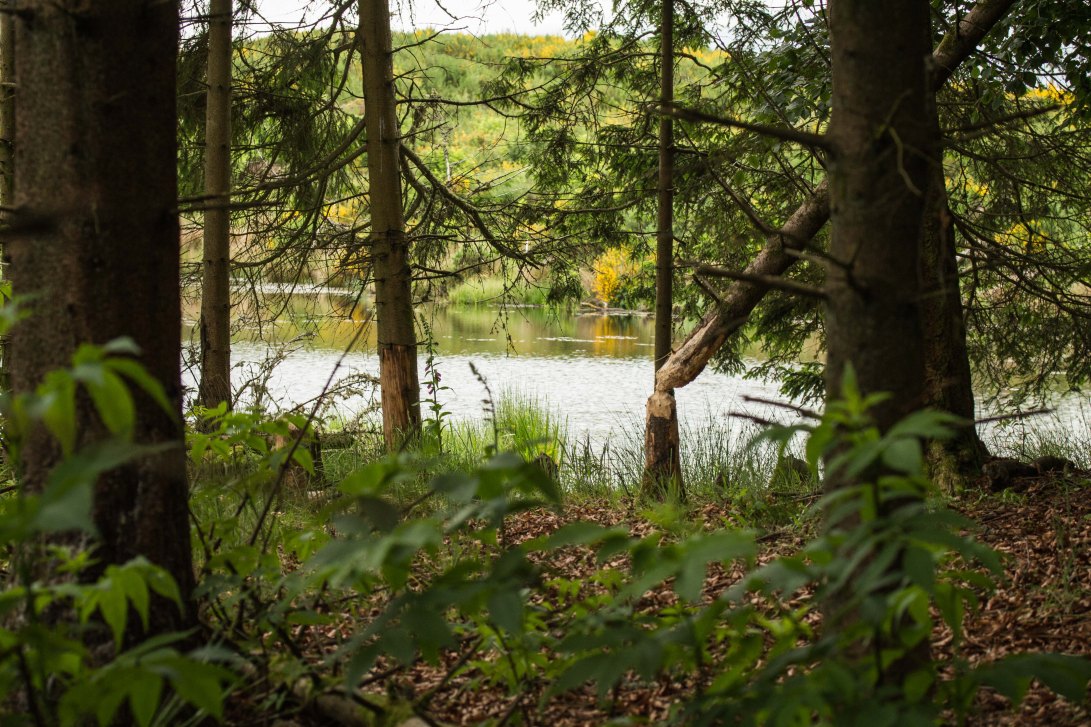
The drive to the cottage was as picturesque as I imagined it would be. As we bumped down a winding gravel path I peered out the window into the dense woodland on either side. As trees whipped past I squinted to see between them, in the hope of spotting a squirrel or perhaps a deer, or maybe even the star of our expedition, the European beaver.

IMG_4450

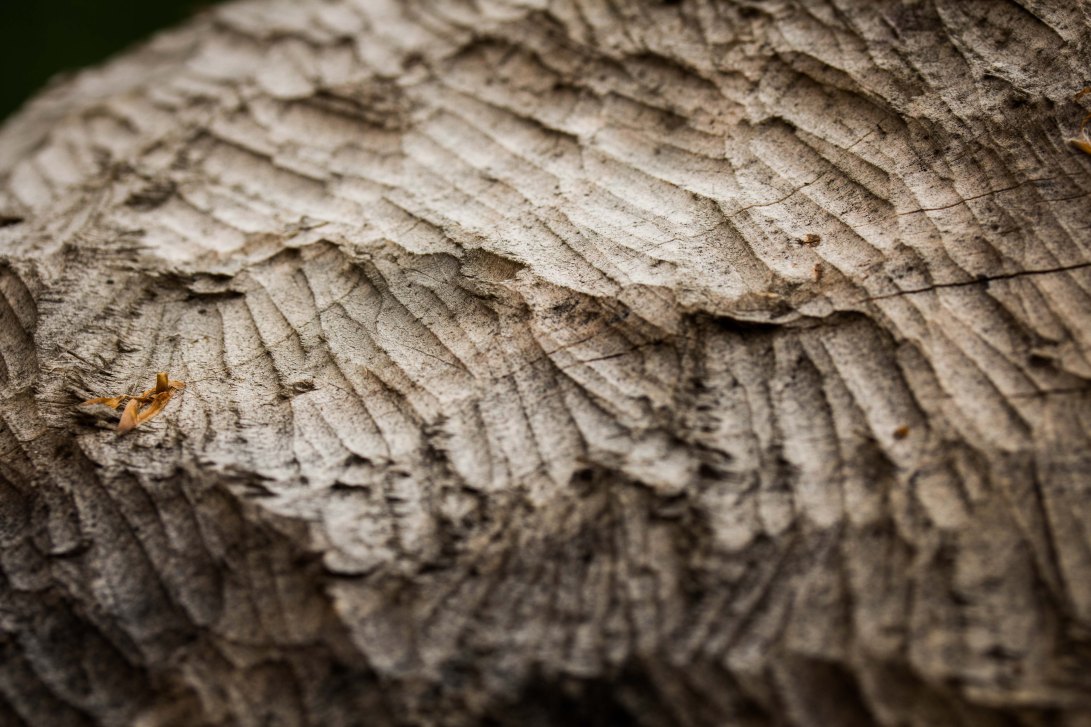
Woodland gave way to open fields, and amongst the sheep was a river that cut across the road. What was once a trickling stream was now several metres wide, all thanks to the handiwork of the beavers. Every once in a while a tree stump chiselled to a sharp point came into view, with a bed of wood clippings littered all around; countryside statues designed by the very large incisors of our beavers. Like all rodents, their incisors grow continuously, and have both a hard enamel outer layer and a softer dentine layer. Over time, wear of these two layers creates a very sharp edge, allowing the beavers to make short work of hard bark.

IMG_4708IMG_4537

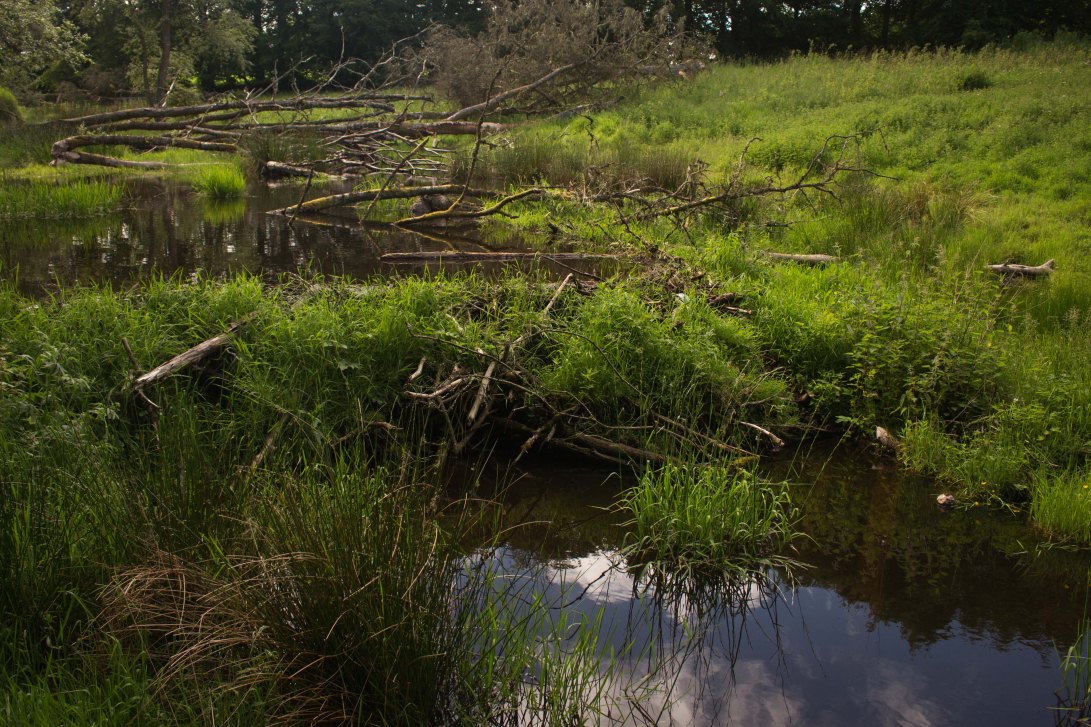
After settling into our quaint accommodation, it was back into the wild for a wander while we still had the sunlight. We headed back down the path and began to follow the river away from the cottages. It was clear this was prime beaver habitat. Branches of all different sizes lay strewn across the river, and every so often we’d come across a dam. Beaver dams are extremely important for preventing floods, stemming the flow of the river with packed mud and wood to force the water to flow at a much slower pace. Fascinatingly, the beavers here used to be captive, but after felling trees in their enclosure during the time of a flood, they managed to make their escape, and have since made this beautiful part of Perthshire their home. Now the fact remains whether they are feral, having escaped captivity, or wild, as they have had kits.

IMG_4507

A sudden ripple on the water and we all crouched down, scanning the reeds and waiting silently. Perhaps a fish, perhaps something furrier. The tricky thing with beavers is, they can move through water almost without disturbing it, so while we were watching where the ripple was, the animal could now be metres downstream. We walked on, keeping an eye out for beaver prints in the mud. More gnawed trees, and I was astonished to see a smooth chunk out of the bark several feet off the ground, meaning beavers were perfectly capable of climbing.

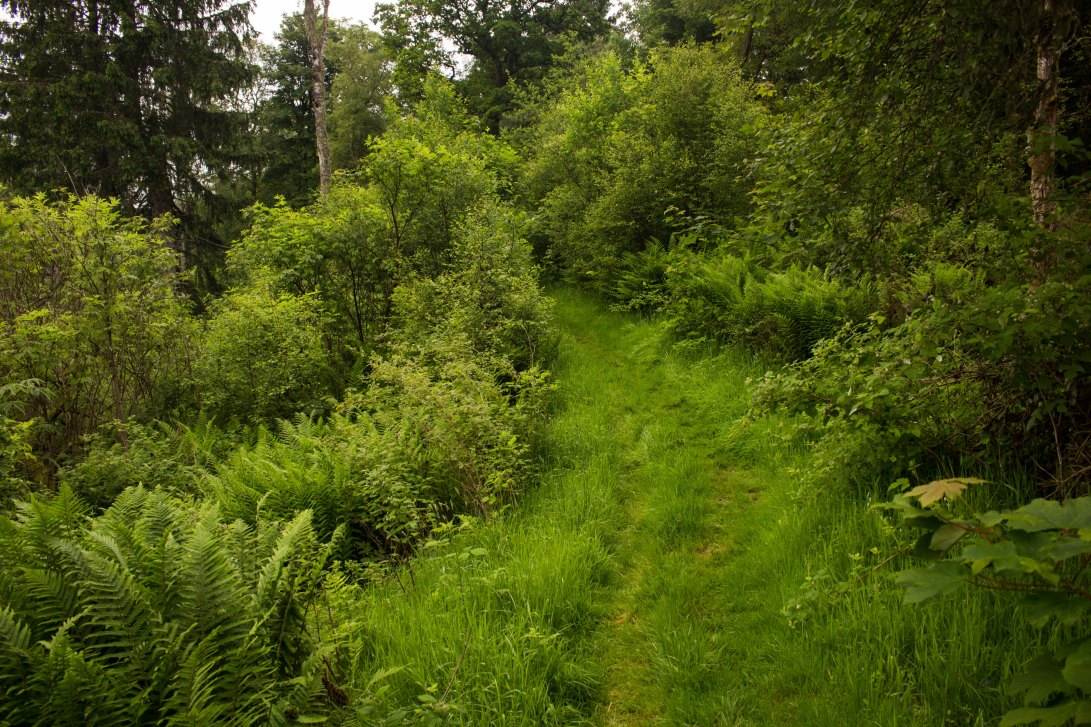
The forest was one of the greenest and richest I’d been in. It felt like the setting of Jurassic Park, with moist, bouncy grass and dense thicket. Beavers really are skilled decorators, adapting their habitat and changing the land and water use. Right now in late evening, the only sound I could hear were the bleats of sheep from the farms, but I knew hidden in these trees were hundreds of birds, mammals and invertebrates all taking advantage of the idyllic conditions here.
IMG_4463

We made our way off the beaten track and wound through the long grass. Suddenly, a sharp “WO” sound echoed through the air, signalling the presence of roe deer. A short time later and a female appeared, eying us cautiously with ears pricked up. She barked again, and in the distance the lower sound of the male echoed back. She foraged for a while before turning away, white tail flashing as she hopped athletically over the tussocks of grass.

She was doing a more graceful job than I was. Not blessed with great balance, I was staggering over logs and wading inelegantly through the grass that the deer negotiated so easily. As I stopped to find my next step, there was a speeding black bullet overheard and I looked up to see a bat zooming around in rapid circles. Heather turned on her bat detector and the alien-like clicks of the bats’ echolocation broke the silence. The calls were clearest at around 40-45Hz, suggesting that the bats were common pipistrelles, though the range of soprano pipistrelles also reaches 45Hz, so we couldn’t be entirely sure. Whichever species it was, they were abundant here; wherever I looked there were bats.

After a quick glance at the time, we realised it was nearly 11pm, despite there still being enough light to see clearly. We made our way back through the grass and towards the river, glancing at the water to see if there was any activity. A flash of white caught my eye and I felt a buzz of excitement as a barn owl swooped by in complete silence, looping ahead of us and disappearing into the trees.

Suddenly Cain froze and we ducked again. There in the field over the river was a brown blob that looked suspiciously beaver-shaped. Sure enough, the blob moved, and our first beaver made its way back towards the water, sliding down a trail and diving below the surface. The excitement was palpable, and we crept as quietly as possible along the path in an attempt to catch a second look.

The beaver didn’t seem to resurface, but then a line of ripples leading back the way we’d come made us freeze again, and a beaver raised its head above the water. As we hadn’t seen ripples coming the other way, we assumed it must be a second individual, which was even more exciting.

Sitting in complete silence, our eyes and ears were trained for any sign. Then we heard a chewing noise, and I realised I was listening to a beaver feed, which was a fantastic thing to hear.

We saw another, slightly smaller beaver floating at the edge of the river, and watched until it swam out of sight, then decided we must get back to the cottage and have some dinner. After such a successful first night, I couldn’t wait to see what we could find over the rest of this weekend.

IMG_4455

Species seen: Barn owl (Tyto alba) Common Pipistrelle (Pipistrellus pipistrellus) Cuckoo (Cuculus canorus) European beaver (Castor fiber) Moorhen (Gallinula chloropus) Roe deer (Capreolus capreolus) Swallow (Hirundo rustica) Tawny owl (Strix aluco) Wren (Troglodytes troglodytes)