Avian Meditation

I’ve never been able to meditate. I’ve tried it before, frustrated and envious of those people who can sit still and completely disengage from the distractions around them. For a start, I can’t even sit up straight without getting uncomfortable. I know you can meditate lying down, but then I just fall asleep. If I finally do find a comfortable position, I inevitably can’t stop thinking. “Focus on breathing”, all the books and videos say, and I focus on the first three inhalations wonderfully, but soon my mind wanders to my shopping list, deadlines, or reminding myself to put the bins out. I’ve discovered that meditation is just something that not everyone can do, in the conventional way at least.

The other day I went to Rye Meads Nature Reserve in Ware, Hertfordshire. I have quite a lot of things to do at the moment with my MA and the move to Scotland later this month, but I needed some time outside. I find it a real challenge to make time for walks, so I fought my better judgement and put work on hold to sit in a hide and watch birds. I don’t do this much – when I’m out and about I’m either on my way somewhere or keeping an eye on the dog to make sure she’s not getting into mischief, so it was a real indulgence to spend an entire morning ambling around a nature reserve.

I sampled each hide in turn, following muntjac prints in the mud as I walked, and eventually settled in one that overlooked a lake speckled with birds. A group of thirty lapwings were soaring over the water, swinging in a single mass from left to right. Each time they twisted the sunlight caught their backs, illuminating that iridescent green also concealed in magpies and starlings. I watched their display through the binoculars, captivated by the pendulum-like movement. Unlike a lot of wings that end in sharp points, these birds have wings that are loosely shaped like tennis rackets.

Eventually one bold individual decided that was quite enough flying, and as it swooped down to the water its companions followed until the air was empty again. They settled on the rocks alongside a pair of shelducks, shovelers, gadwall and a lone cormorant. The strips of pebbles cut the lake into wedges, separating midnight blue from slate grey. Ripples from bobbing coots sent tiny waves onto the shingle.

“Have you seen the green sandpiper?”

The voice made me jump after such a long silence. It was a member of RSPB staff, brandishing both binoculars and an impressive scope. Shimmying along the bench, I peered down the scope and watched the wader as it scoured the shingle for food on its skinny green legs. I’d have never spotted such a well-camouflaged bird without help. In fact, the green sandpiper was a species that I may have looked at but not noticed many times before.

The man with the scope carefully lowered the window cover and hitched the scope onto his back, heading back out into the sunshine. I carried on watching the lapwings, now foraging with their spiky hairdos fluttering. It occurred to me then that birdwatching was a form of meditation. You have to sit still, as quietly as possible, and often go for hours without speaking. My phone was on silent, buried at the bottom of my bag underneath gloves, sketchbooks and biros. The only connection I had was with the birds. Sure, I was hoping for bitterns, kingfishers and otters (none of which showed), but I found satisfaction in the more common residents. There is undeniable beauty in a young blue tit’s downy feathers, the tight curl of a cormorant’s dive and the vibrancy of a mallard drake’s head, which almost shines yellow in the right light. Maybe I’d denied myself the pleasure of birdwatching too long, but sitting in the hide looking out onto calm water felt like meditating. My work was back at the house and I was in the reserve sharing space with birds.
Over the Loch

The gloom that had settled over the Cairngorms earlier in the week was long gone. As we pulled into the car park I leant forward and saw sunlight pouring through the coniferous canopy in diagonal slants, turning green needles shimmering gold. Another forest to explore! I couldn’t wait.

Once all members of the convoy had arrived, we gathered around the notice board. Abernethy was the second largest nature reserve owned by the RSPB, spanning 140 square kilometres. It was home to around 5000 species – a list that grows every year. Our guide, Simon Pawsey from the Bird Watching Wildlife Club, looked up the crested tit on his Collins Bird app – something I definitely need to get at some point – and quietly played us the bird’s call: a rapid trilling that I was sure I would be able to distinguish above the chaffinch’s constant rambling, as lovely as that was.

As Simon continued to tell us all about cresties, a small bird caught my eye a few dozen feet away. Lifting my binoculars, I focussed in and nearly disregarded the bird as a coal tit, which was exceptionally common in the local area. But then I noticed a peculiar tuft of feathers on the bird’s head. Surely not… A halo of light fringed the bird’s body and I squinted to make sure, keen not to make a fool of myself in front of all the other birders. But it was! It really was a crested tit! I exclaimed this to the group, embarrassed about interrupting Simon but deciding it was well worth it.

IMG_1596
Not a great photograph, but an amazing sighting!

There was a flurry of excitement as we all pinpointed the crestie for those who hadn’t spotted it. The bird was perched on an obvious branch in a relatively open clearing, sitting at eye level in a car park full of human voices and slamming doors. It was such a good view of a species that I thought I’d only get a snatching glimpse of at the very top of a huge Scots pine, if that. The crestie stayed for a few minutes, allowing us all to admire him before he took off and disappeared. Our guide had been talking about crested tits and a crested tit appeared for us all to see, almost like a “Here’s one I prepared earlier” moment. What an extraordinary start to the day!

Buzzing after our first sighting, we set off into the forest, keeping an eye out for crossbills or red squirrels that might be foraging above. Several times a pair of dark wings high above had us briefly excited that we’d spotted an eagle, but each time it was a buzzard, or “tourist eagle” as it was often referred to in the Highlands.

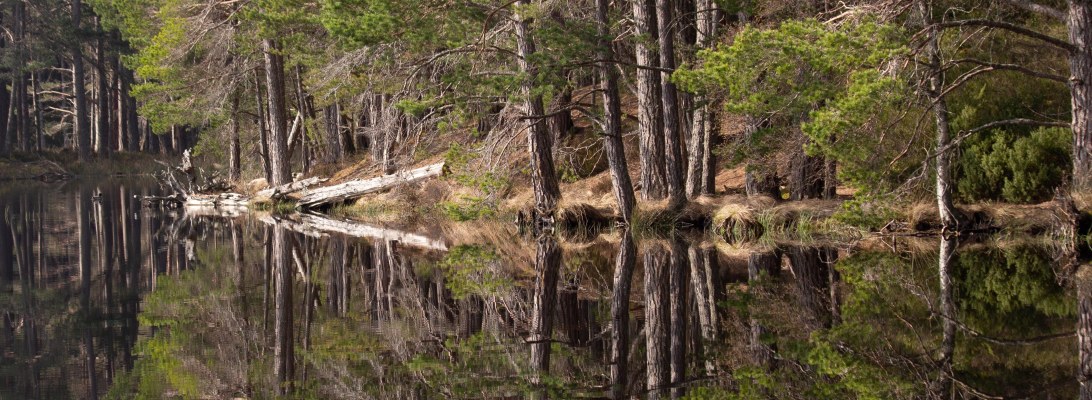
Before long Loch Garten came into view, and even with just a glimpse through the trees I knew it was going to be impressive. There was no breeze to stir the water so the loch lay as flat and still as a mirror, casting a perfect reflection of the trees along the margins and the blue hills in the distance. The only disturbance to the glassy surface was a lone mallard swimming far out in the loch, scratching a line across the water. Not a sound could be heard. As I stood on the bank absorbing the view, I thought how Loch Garten could be the perfect setting for an elaborate fantasy story. It was such a wild, beautiful place: seemingly tranquil and calm but with the power to turn at a moment’s notice.

IMG_1603IMG_1616

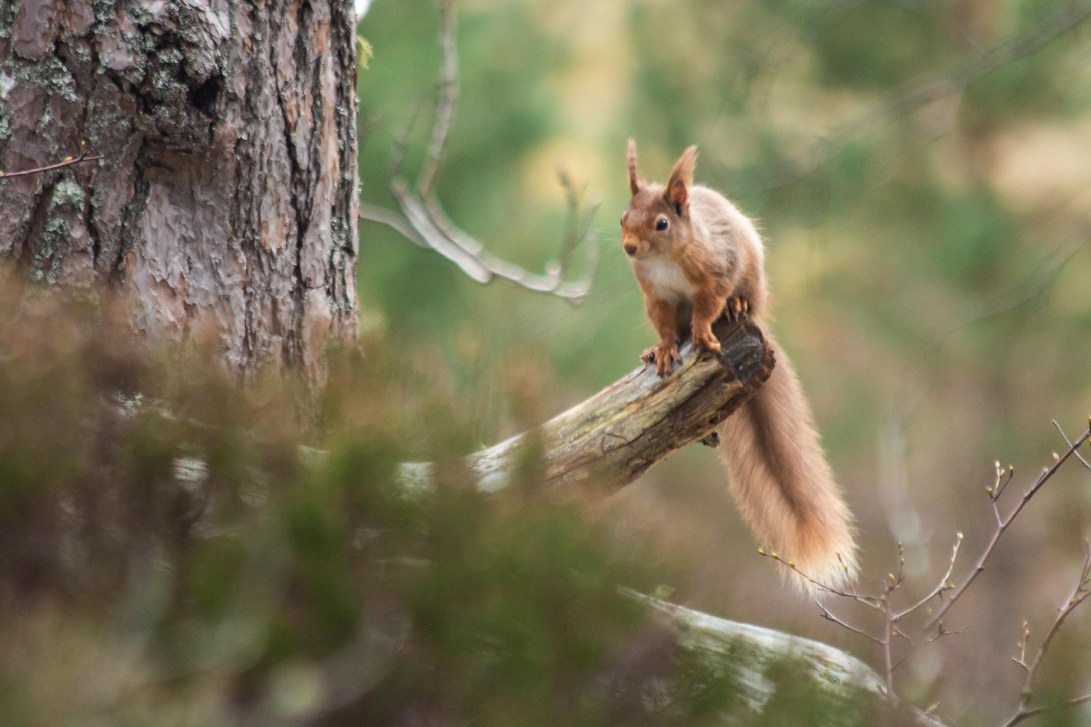
If I’d been alone, I would have sat by the loch all day, but I was here for birding with the group so reluctantly took my last few photos and followed them further along the trail, skirting the edge of the water. Sure enough, we found a red squirrel, although the animal was trickier to see than on the feeders in Anagach Woods back at the hotel. A bright orange mammal is surprisingly difficult to spot in dense green foliage, and it was only its sudden movements that gave it away.

IMG_1498

After a while another loch came into view: Loch Mallachie. Here we were met by a gaggle of greylag geese as they glided across the water. This part of the reserve was marshier, and not far from the land we were stood on was a smaller island with far shorter trees. Simon explained that they were the exact same type as the giants that surrounded us on dry land, but because of the variation in soil quality and nutrients, the same species was half the size only a few metres away.

IMG_1539

Suddenly one member of the group pointed out two dark specks on the horizon. I prepared myself for the inevitability of more buzzards, but once Simon had set up his scope I heard some very satisfying words: “Those are eagles”.

Everyone rushed towards the bank for a better view. The birds were very far off – tiny pinpricks on a white horizon – but sharp-eyed Simon could make out white patches on one of the eagles, suggesting it was a juvenile. After a while scanning empty sky I managed to locate them in my binoculars. They glided seemingly effortlessly at a dizzying height, barely moving their wings as they soared through the thermal currents. It was such composed flight: the movement of a creature that dominated its landscape. Fortunately, the eagles were flying closer, so one by one we had a peek through Simon’s scope. When it was my turn, I was thrilled to make out the bird’s head and beak even from such a distance. I’d seen a golden eagle once before on the west coast, but this was by far the clearer sighting. Eagles were the true celebrities of Scottish wildlife, and to see two at once was so special.

The eagles soared in large circles for a while before gliding further out of reach of our scopes and binoculars. Once again the group was buzzing. I couldn’t believe how lucky I’d been this week. After only four days in the Highlands I’d seen crested tits, crossbills, red squirrels, a pine marten and now two golden eagles. It reminded me of the importance of patience but also of luck; how being in the right spot at the right moment can bring unforgettable experiences. Being from the southeast where wildlife is far less abundant, I would treasure the sightings I’d had this week for a long time.

IMG_1626

Stop and Look

In our bittersweet digital age, it’s so easy to be lazy. As a photographer who has tried using film but undoubtedly prefers shooting digital, I have the ability to take thousands of photos of the same thing if I want to. Once I have a camera and hard drive, there are no other essential expenses or materials required. While I personally didn’t enjoy the process of developing film, I commend those who gather all that equipment and spend hours in the darkroom bringing their images to life. I’ll admit it is dedication beyond what a lot of digital photographers put in.

It got me thinking how I can see more when I explore my surroundings. I often leave my camera at home and just watch for a change, no longer distracted by adjusting settings and looking at yet another screen. But I still want a permanent memory of what I discover. An answer to this that I am trying to introduce into my routine is drawing.

I’ve always enjoyed art but never possessed any genuine talent for it, which is perhaps why it never became more than an occasional hobby. Whenever I see someone drawing or painting I feel an overwhelming urge to join in. I could do this at any time and yet never do. What starts as an “inspiring new project” eventually fades into a half-full notebook.

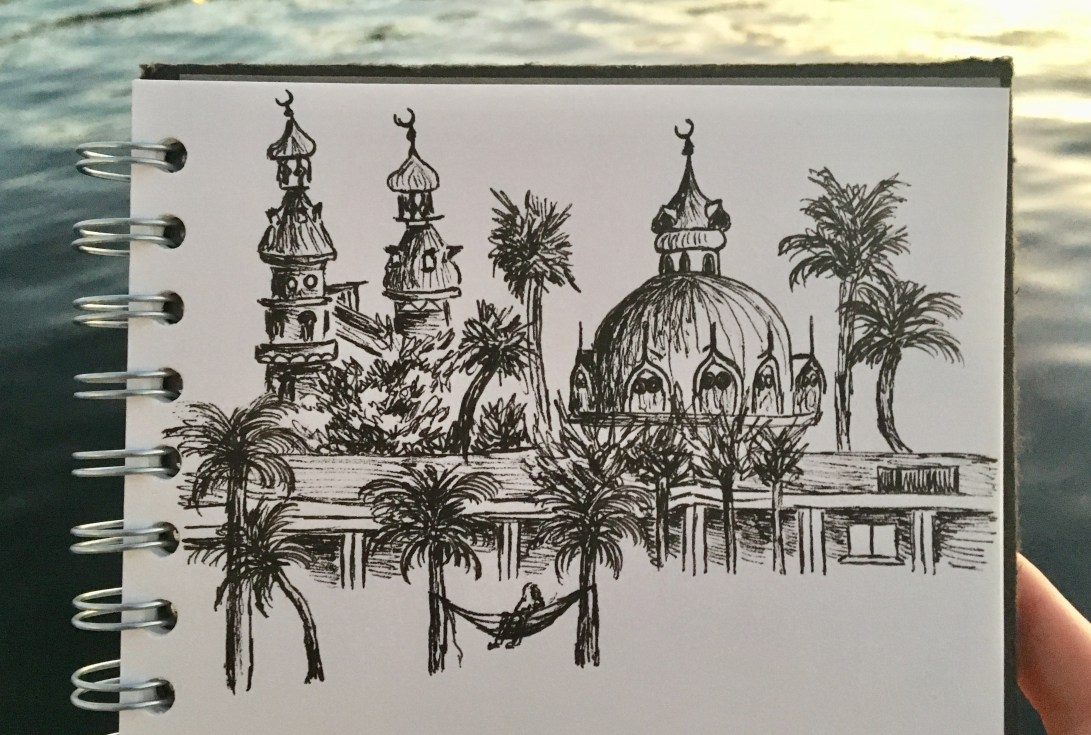
I was in Tampa this weekend visiting the Florida Aquarium, and I packed my (so far untouched) sketchbook and pens on a whim. On the first evening, I wandered along the riverside just as the sun was setting. Across the water I noticed an incredible building with bulb-like turrets and crescent moon decorations. It looked like an Indian temple; I had no idea what it really was but I retrieved my sketchbook and began to draw it.

Twenty minutes later I had drawn my impression of the scene: the turrets, a large gathering of palm trees and the restaurant in the foreground. During this time three different people approached and asked me about what I was doing. Copying as closely as I could provided an opportunity to observe a level of detail that is far harder to notice when taking photos. I finished with something I was quite proud of, not to mention a talking point with passers-by and a souvenir of my evening.

IMG_1900 (1)

I later discovered that the exotic building was the Henry B. Plant Museum. I was somewhat disappointed to find out that it wasn’t a museum full of plants as I had originally thought.

Carna – Day Two

Species seen:

  • Buzzard – Buteo buteo
  • Chaffinch – Fringilla coelebs
  • Common Sandpiper – Actitis hypoleucos
  • Common Seal – Phoca vitulina
  • Common Tern – Sterna hirundo
  • Cormorant – Phalacrocorax carbo
  • Cuckoo – Cuculus canorus
  • Drinker Moth caterpillar – Euthrix potatoria
  • Eurasian Otter – Lutra lutra
  • Eurasian Rock Pipit – Anthus petrosus
  • Great Black-Backed Gull – Larus marinus
  • Green-Veined Butterfly – Pieris napi
  • Grey Heron – Ardea cinerea
  • Hooded Crow – Corvus cornix
  • Oystercatcher – Haematopus ostralegus
  • Song Thrush – Turdus philomelos

IMG_5639

IMG_5664

After a great night’s sleep we woke to brilliant sunshine. Over breakfast, we started writing a storyboard for a film that would document our Carna experience. After some lunch, we headed out with Heather and Cain for a walk across the island. Naturally our pace was slow as we were stopping every few seconds as a mystery bird swooped over or a brief flash of brown promised an otter. Once again we were rewarded and saw many different species of bird, invertebrate and mammal.

IMG_5683
The stunning drinker moth caterpillar

IMG_5695

IMG_5696
Hidden Beach Treasures
IMG_5725
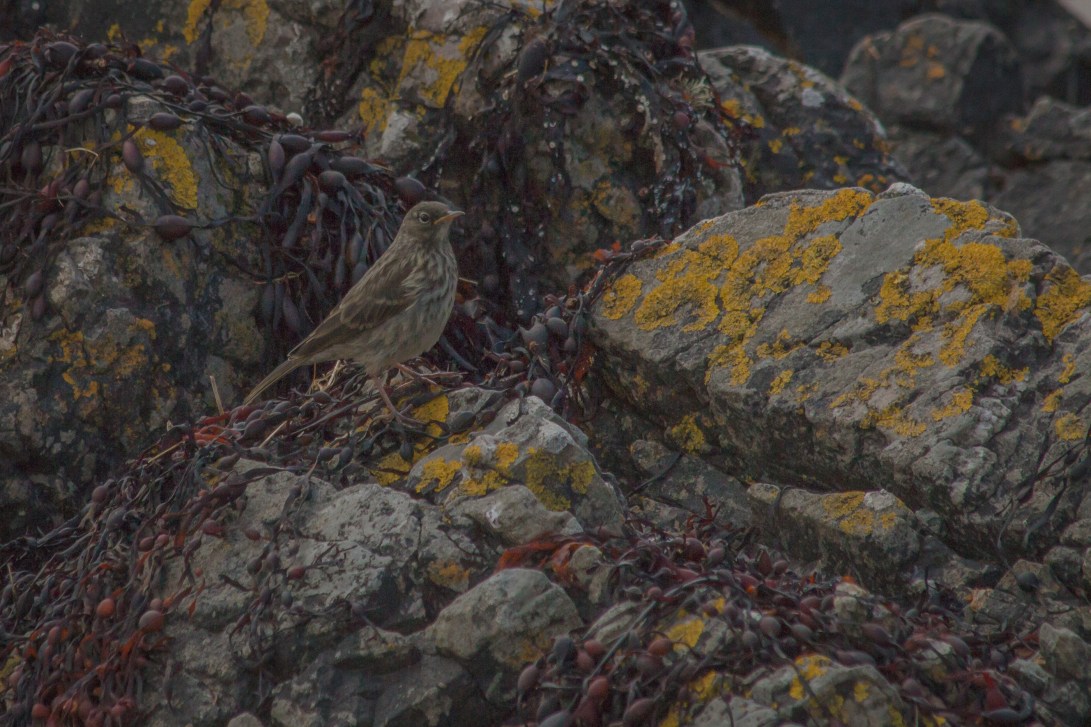
Lone Rock Pipit
IMG_5727
Common Tern hunting on the loch
IMG_5731
Song Thrush on the rocks

Of birds we saw a cormorant, common sandpiper, buzzard, rock pipit, grey heron and a pair of cuckoos, something we were all excited to see. We also found two drinker moth caterpillars, beautiful insects of black, hazel and amber. During the day we were fortunate enough to see mammals too. We were just admiring a view only the birds got to see when an otter came into view. It was hard to tell the gender, but we watched it for a while diving into the water and popping up again in a new spot. Heather explained that when a dark blob in the water was hard to distinguish, otters always show their tail when they dive under while seals do not. Our otter soon climbed on land and disappeared from view. We made our way down the hill after it but the sneaky mustelid was long gone. A lens change and a snack later, we spent some quality time perched on the rocks watching a herd of Common seals lounging in the sun. The group was spread out over two sub-islands; one was a skinny scrap of shingle where six seals were basking, both adults and juveniles. Seals are always so entertaining. Despite hardly moving, they provide endless enjoyment. For me it’s a combination of their banana pilates move, orb-like bottomless eyes and long white whiskers speckled with sand.

IMG_5759

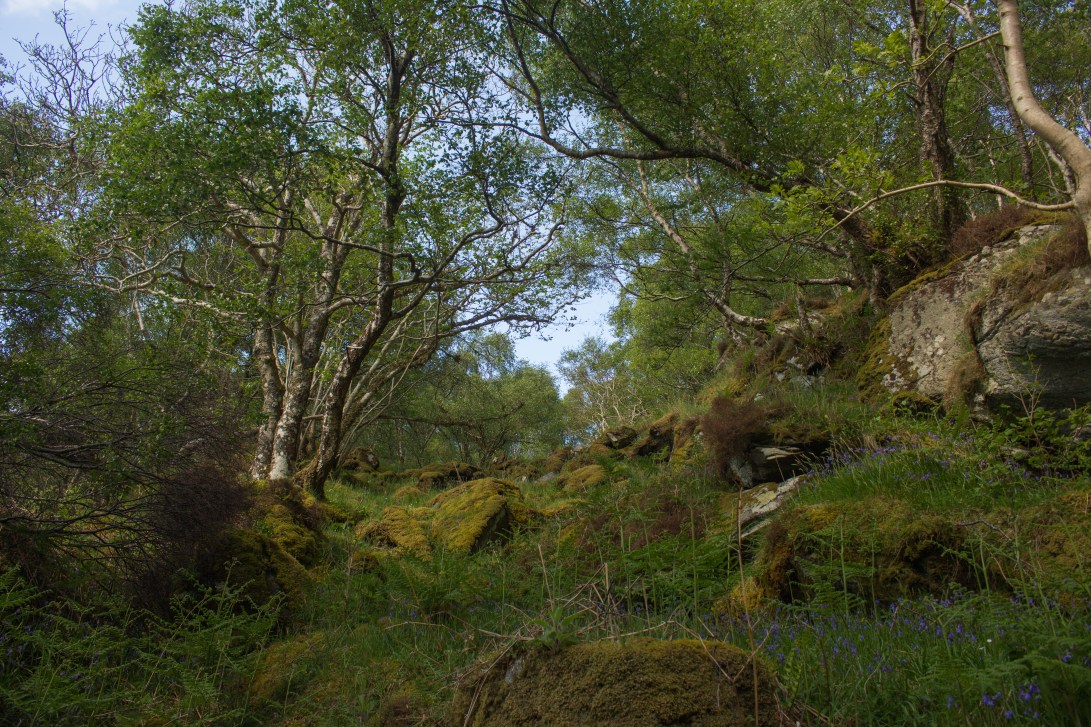
In a while we left the seals behind and headed into the wood. The area was predominantly silver birch; the thin overhead branches of the species allow bluebells to cover the forest floor in splashes of violet. We ascended up and up and started noticing several spraints left by otters, as well as some evidence of deer scat. The grass had been worn down in a narrow pathway, indicating that the area was frequently used. This looked like a good place for one of our camera traps, so we set up the kit and crossed our fingers.

IMG_5775IMG_5779IMG_5805IMG_5821

After leaving the first camera behind we soon found a good place for the second. Near the top of the hill we were climbing were small constructions of dry stonewalls that were slowly crumbling from misuse. It looked like the perfect haven for small mammals with countless hidey-holes, so we found a spot for another camera and baited it with apple.

IMG_5825

By early evening the sun was strong and casting an incredible light across the landscape, throwing the hills into sharp relief. Now standing amongst the heather and drinking in the view, the challenging terrain and heavy camera bags seemed trivial now we’d reached the top. The weather couldn’t have been better, no rain and hardly a breeze.

The way back was shorter as we cut across the hills instead of sticking to the coast. This allowed us to photograph the landscape from several high viewpoints and savour the perfect evening. Cain spotted a red deer darting through the heather and moments later we watched six more grazing across the water. After only a few slips and falls we made it back to the cottage unscathed. Needless to say, we would all be sleeping well tonight after a long but extremely awarding day.

IMG_5826IMG_5869

Carna – Day One

Species seen (heard):

  • Barn Owl – Tyto alba
  • Common Frog – Rana temporaria
  • Common Tern – Sterna hirundo
  • Eurasian Otter – Lutra lutra
  • Hooded Crow – Corvus cornix
  • Lesser Redpoll – Acanthis cabaret
  • Red-Breasted Merganser – Mergus serrator
  • (Cuckoo – Cuculus canorus)
  • (Snipe – Gallinago gallinago)
  • (Tawny Owl – Strix aluco)

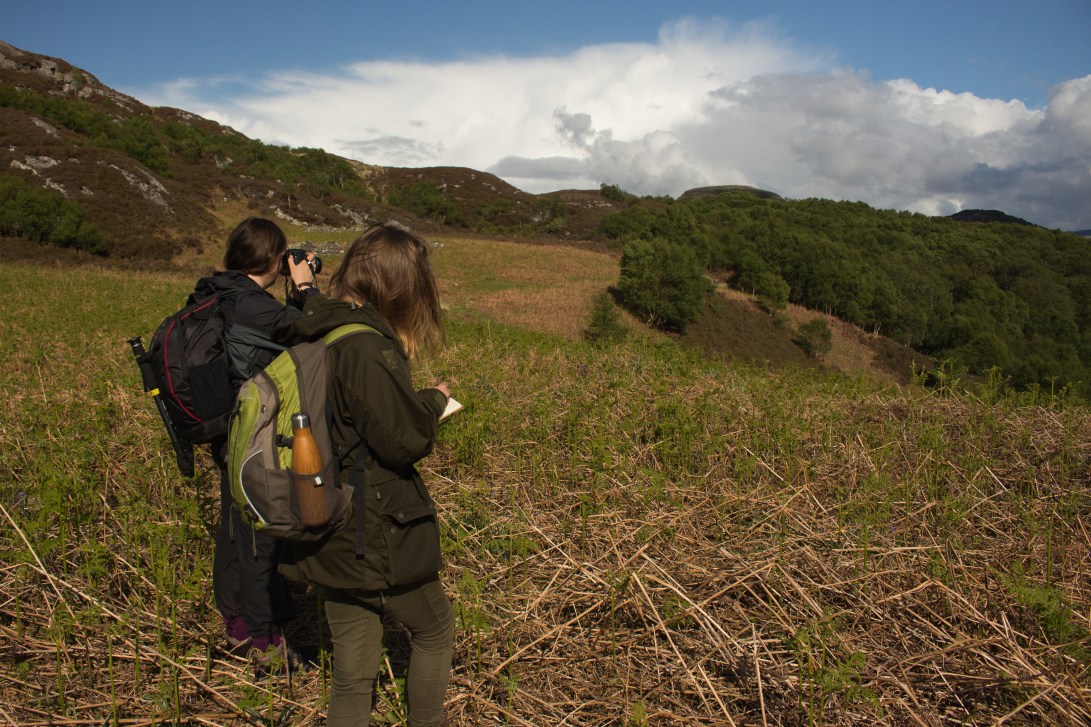
From May 21st to 26th, I joined four other Wildlife Media students for an unforgettable expedition to the Isle of Carna, a beautiful remote island on Loch Sunart on the west coast of Scotland. Our aim was to rewild ourselves by taking part in conservation activities like conducting bat surveys, setting up camera traps and recording wildlife using journals.

By mid afternoon we arrived at Ardnamurchan Charters, eager to see the island where we’d be spending the next five days. Andy Jackson, owner of the Charters, met us with his dog Tag and we began loading our kit onto the boat. There was a surprising amount for such a small group!

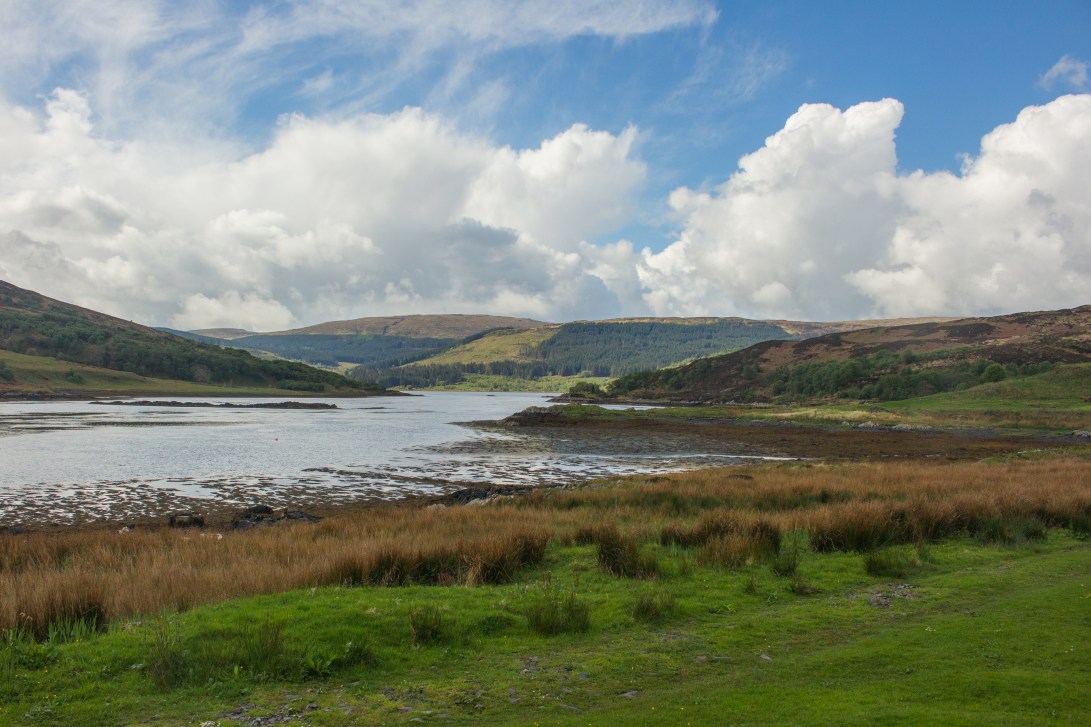
The day was overcast but Carna still looked impressive as we sped towards the island. The cottage came into view, a quaint white building with a conservatory that we knew would be perfect for observing wildlife on the loch. Sure enough, in the first few hours we saw red-breasted mergansers, chaffinches, song thrushes and a lesser redpoll.

IMG_5585
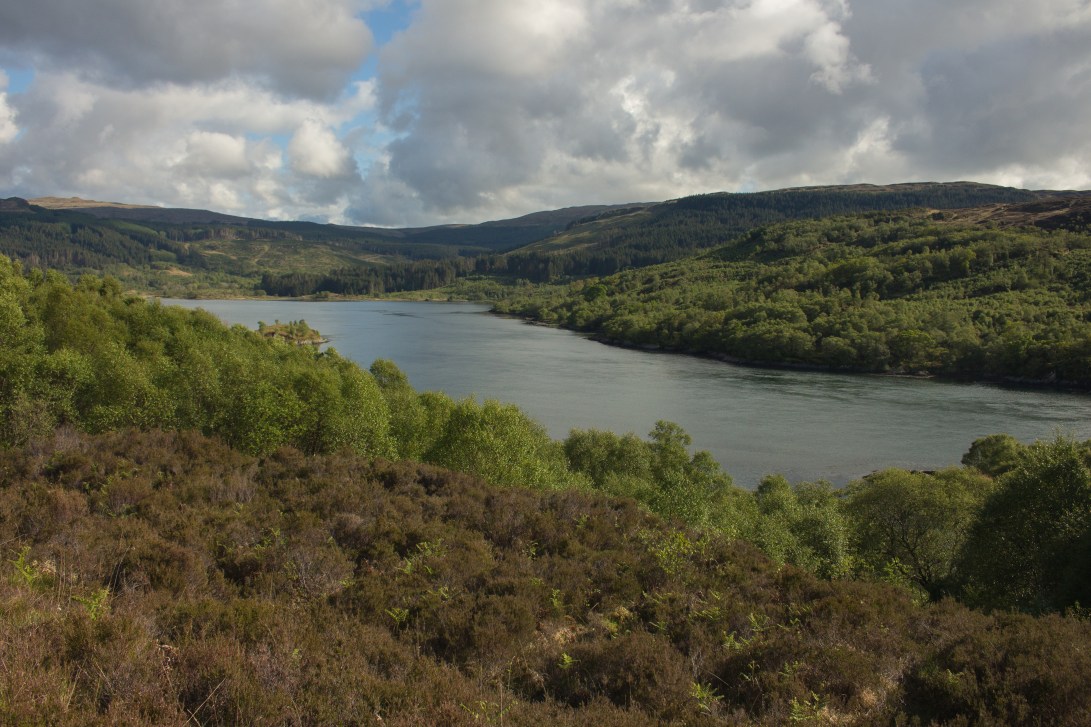
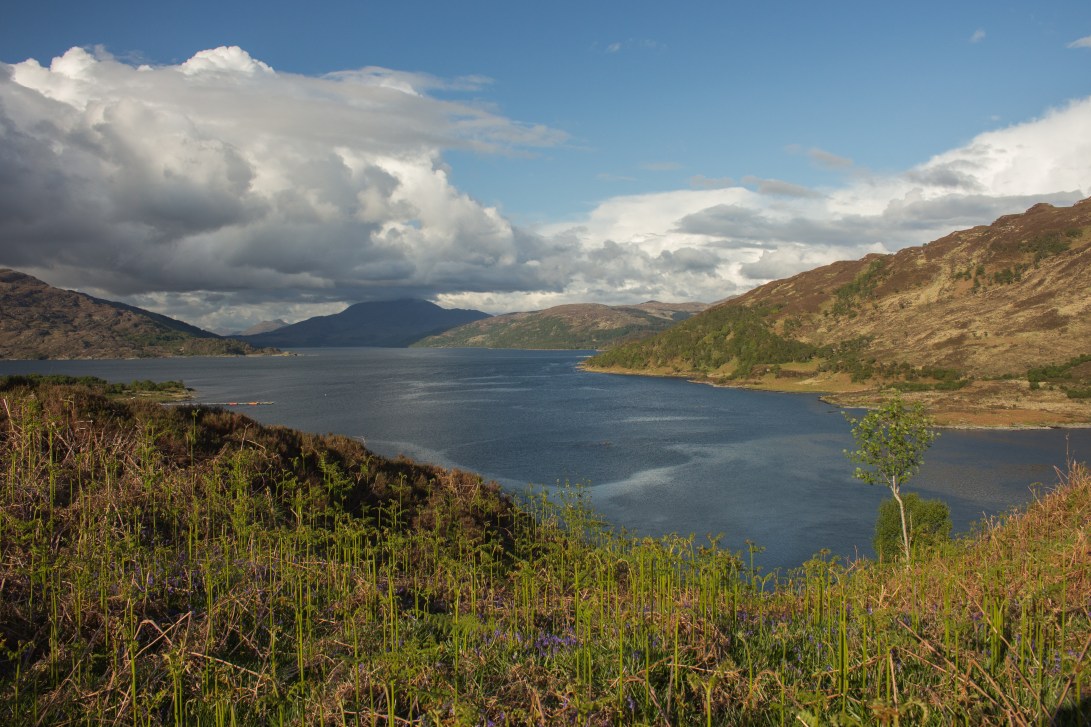
Loch Sunart
IMG_5591
The pontoon where we waited for Andy

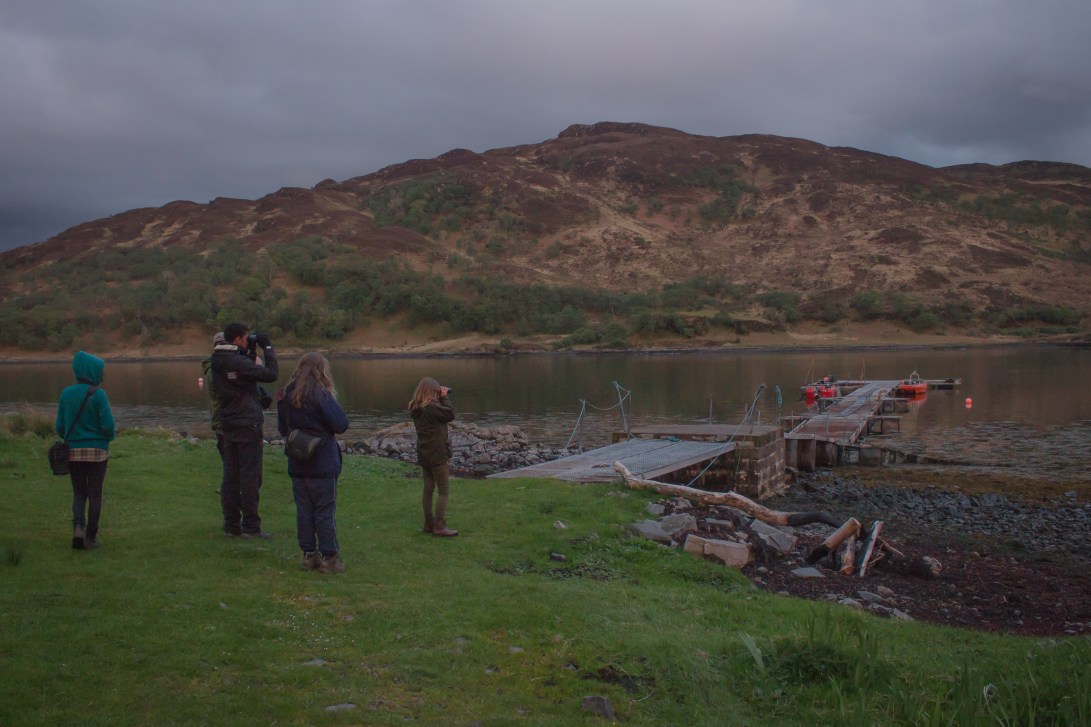
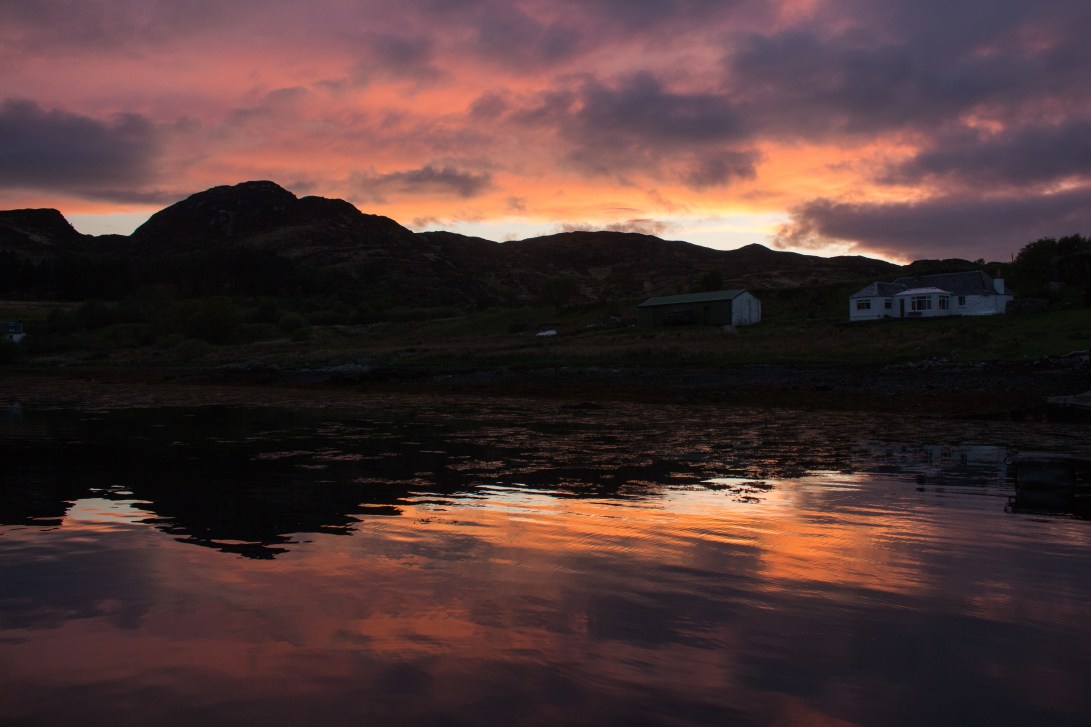
After settling in, we noticed how beautiful the evening sky was and armed ourselves with cameras and binoculars, eager to find out what we would see when the sun went down. After capturing a radiant pink sunset we retrieved the camera traps Heather and Cain had previously put out. The first was at the end of the pontoon, and immediately we saw evidence of otter sprainting, a sign of territory marking. Otters will use their faeces in this way to make their presence known to others in the area. At the pontoon there were several patches, so we were hopeful that the camera had caught the night-time visitor.

The second camera was in a wooded area up the hill. We knew the long grass would be full of ticks, but we’d bought tweezers and knew this was one of the many sacrifices a wildlife enthusiast has to make! Eventually we found the camera and made our way back down the hill.

A peculiar sound made us stop and listen. Heather quietly told us they were snipe, which make an extraordinary drumming noise with their tail feathers. Although we never saw them, they must have been wheeling around our heads, as the noise reverberated in every direction. Amongst the snipe’s commotion, we also heard the distant calls of a tawny owl and a cuckoo.

IMG_5602
Carna at dusk

Just as we were heading back to the cottage, Cain and I decided to check the pontoon with our binoculars. I made out a black blob in the gloom and suddenly the blob moved. As silently as possible, we alerted the others and watched the otter wander across the pontoon. This was my first ever wild otter so I was thrilled to see one on my first night here. I was so excited I almost missed a barn owl swoop across the loch, screeching into the night.

IMG_5615
Studying the water for otters

I couldn’t believe how much we’d managed to see in the first night alone. I got into bed tired after the long journey but excited for the following days.

IMG_5623
Stunning sunset