Burghead: Day One

The drive to Burghead was beautiful. As the town is situated on the edge of a peninsula protruding into the Moray Firth, it is surrounded by open ocean on three sides. As we drove up the high street it felt like we were at the edge of the world, and in a way we were. Northern Scotland could just be seen in the distance, but the space between still seemed vast. When we couldn’t drive any further, we found the cottage my parents were staying in and were greeted by a very happy Cockapoo who’d missed us both.

IMG_5495-2

I woke the next morning to see that the orange blinds were framed by a border of bright white light, and when I peeked behind them there lay the ocean, twinkling enticingly. After a hasty shower and breakfast we were off, keen to explore.

We made a beeline for the coast, climbing up to the highest point to take in the views. Down below, oystercatchers zoomed past, their alarmed cries cutting through the wind. A pair of cormorants glided effortlessly by, slender necks held parallel to the choppy waves below. I kept my binoculars trained on the horizon for a sign of dorsal fins breaking the surface. The Moray Firth is home to a resident population of more than 140 bottlenose dolphins, but we didn’t spot any stood up on the crag today.

IMG_5492-2IMG_5509-2

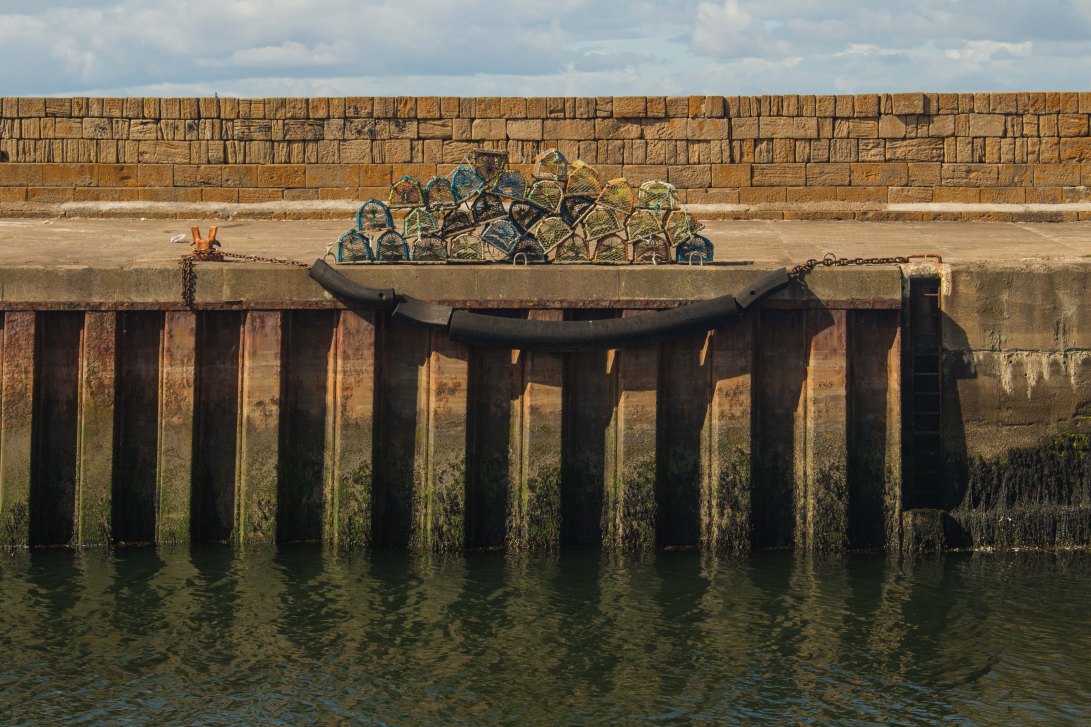
Once the wind had completely numbed our ears, we made our way back down and walked along the harbour, where a mix of tattered old and shining new boats stood resting in the docks. Down on the shingle bank, a pied wagtail hopped from rock to rock, waving his tail in the typical fashion of his species. We stumbled across a collection of crab claws and shells sprinkled across the concrete – perhaps a favoured feeding station for gulls and other seabirds.

IMG_5552IMG_5564

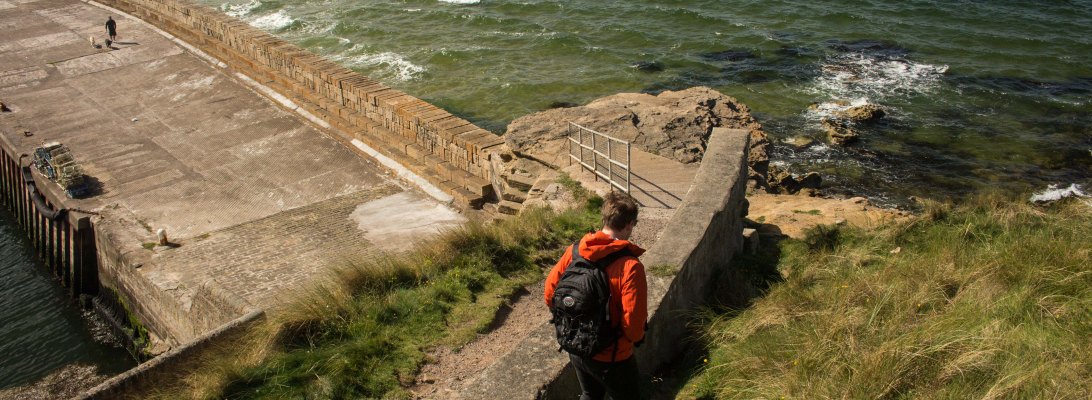
At the far end of the harbour I had another look for dolphins, with no luck. Every time a wave broke and a plume of froth shot upwards my heart leapt, but it was just the ocean playing tricks. The water was a stunning colour; azure blue and bottle green blending like marbled ink. Together with the rough rocks spotted with white barnacles, the sight was a feast for the eyes.

IMG_5522-2

A combination of the walk and the sea air had brought on an appetite, so we headed back to Main Street for some lunch. A beautifully fresh crab linguine filled the spot, but I still had room for a raspberry ripple waffle cone to lick on the walk back. We’d planned to wander down to the sand to find crabs or maybe starfish, but just at that moment the clouds grumbled and it began to pour, so we hurried back to the cottage instead. Shut inside, all there was to do was have a look at the photos from today and plan where to go tomorrow.

IMG_5539

Birdfair 2017

Zahrah and I only managed to attend the third and final day of Birdfair 2016. This year, we were set on squeezing everything we could out of this incredible event. Kerr decided to join us too, so last Thursday the three of us set off for Rutland Water Nature Reserve.

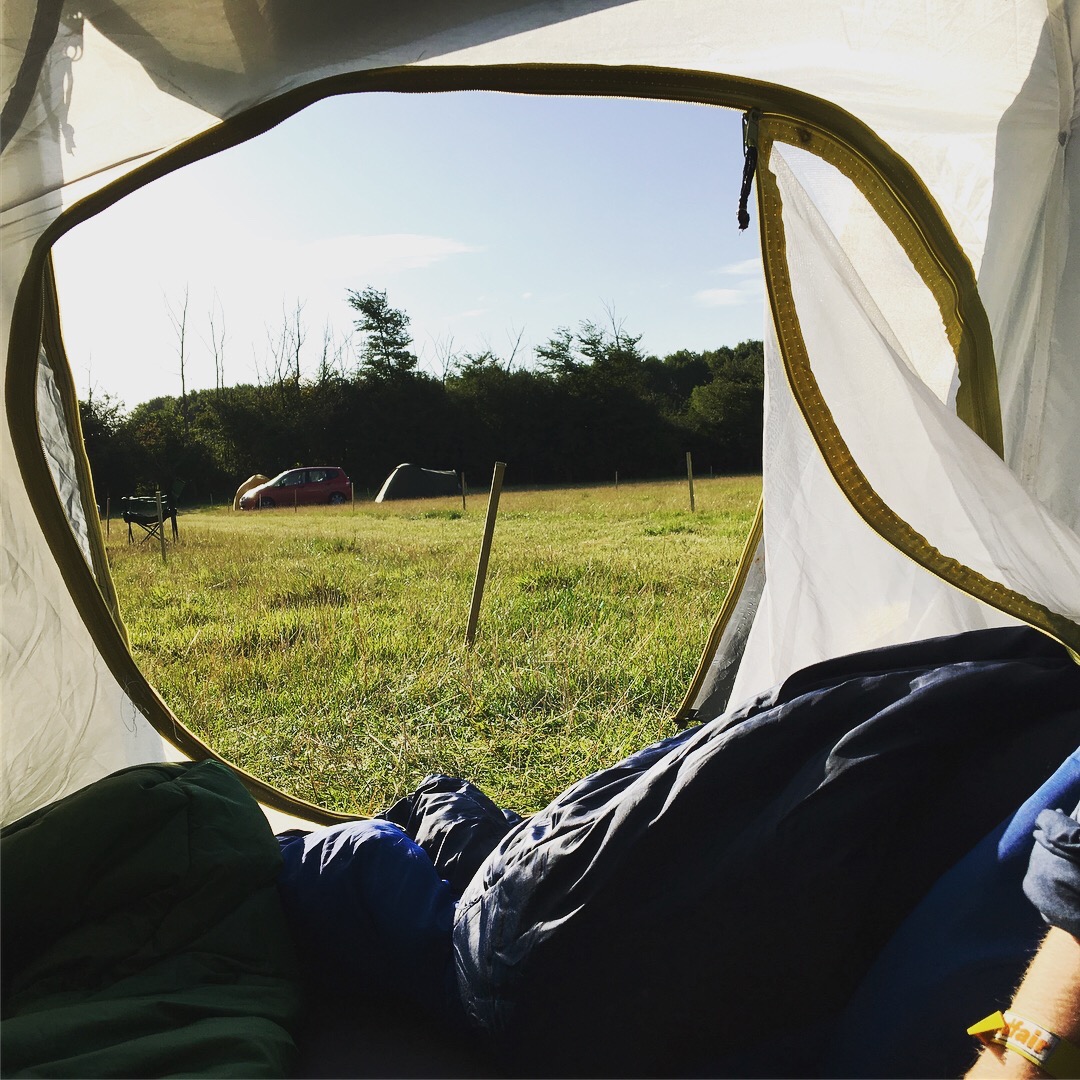
Due to a slight train mishap from Zahrah, it was nearly dark by the time we arrived at the campsite. We met the very charismatic steward and his wife, who cruised around the site on a rather fetching golf buggy and led us to our pitch. Perhaps ashamedly, I’d only been camping twice before, once ten years ago and once last month, so I was excited to get the tent up and spend our first night in the reserve.

IMG_8516

In the morning I woke from a genuinely good tent’s sleep. After eating pots of porridge around the stove we headed over to the fair. As usual, I was overwhelmed by just how much there was to see: eight long marquees, three lecture theatres, the main events marquee and a large cluster of food stalls, merchandise stands and of course, the reserve itself.

After a scan of the programme, we threaded our way through the first marquee. We met a lovely lady from the West Cumbria Swift Group, and I soon realised how little I knew about swifts. Due to house renovations, swifts are losing their nesting sites and should now be red-listed. The fastest bird in level flight, swifts shut down half their brain at a time to enable them to sleep on the wing and endure such long journeys overseas.

In the afternoon I attended a talk on the successes and challenges of conservation. As I listened to comeback stories of black-winged stilts, spoonbills and Manx shearwaters, it struck me how much we all dwell on the ‘doom and gloom’ of wildlife. Of course, it’s appalling how many of our planet’s species are now threatened, but invaluable work is being carried out all over the world and it should be celebrated. The talk inspired me to concentrate on conservation success, not failure, and it’s something I reckon I’ll be turning into a third year project.

IMG_8517

Day two of Birdfair began with some more networking in the marquees. I chatted to lots of lovely people, from the BBC Wildlife team to photographers to those offering amazing wildlife holidays (I lost count how many competitions I entered – bring on the promotional emails). After a delicious pulled pork roll with applesauce, my ultimate favourite, Zahrah and I caught Simon King’s talk. He really is a great speaker. Although it’s often the case at these events that the speakers are merely preaching to the choir, it’s always so good to be reminded just how important nature is. He included a quote from Anaïs Nin that drove his message home: “We don’t see things as they are, we see them as we are.” Mankind has done extraordinary things, some of them terrible, and it’s important not to lose focus on what really matters: preserving this planet. It’s a message I really hope can endure the test of time.

IMG_8518

I was a little sad to wake up on Sunday and realise Birdfair was nearly over. Zahrah and I anticipated long queues for Steve Backshall so we hurried to the fair earlier than usual. The marquee was filled to capacity, with people lining the walls and stuffing themselves into every space. I suppose it’s the nostalgia talking, but I think Steve Backshall is an inspiration. Deadly 60 was perfect, combining boisterous adventure with important messages about wildlife to capture every child’s imagination. In his talk, Steve showed various images of shark species, to which the children sat cross-legged at the front shouted out the names of without a moment’s hesitation. It gave me a fuzzy feeling: these kids absolutely loved wildlife. It’s true that engaging younger generations is undoubtedly the long-term solution for the natural world, and Steve Backshall was doing just that. I couldn’t help but put my hand up for a question. I asked him what species was next on his wish list, to which he replied the snow leopard.

IMG_8515

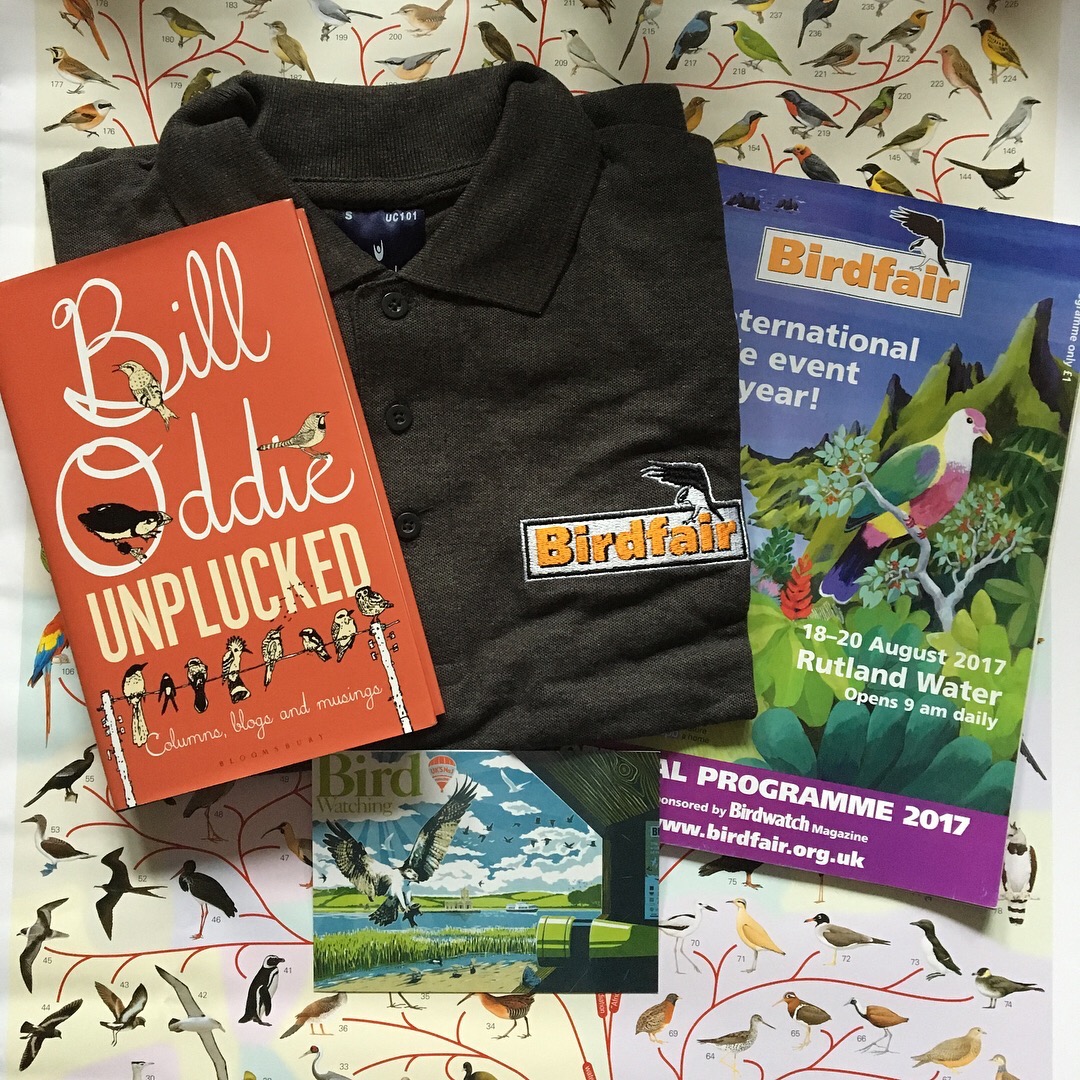
Before long it was time to go. Kerr had bought the Sony camera he’d been eyeing up for months and at a considerably lower price, so he was happy as Larry. I treated myself to a poster of the ‘Orders and Families of Birds of the World’, which is now hanging proudly alongside my others. Birdfair is one of those rare events where us wildies gather in our thousands to celebrate not only birds, but all wildlife. I know from previous experience that an interest in nature is not a common one, so to meet people from all over the world with the same passions as me is something really quite special. I’m already looking forward to next year.

Summer Back Home

Blogging has been slow recently – I’ve taken time out to relax now I’m home from university. I have an infuriating habit of constantly looking for work to do, and often forget that it’s okay to do nothing for a little while.

So here I am at home, and after being busy for so long I’m secretly wondering how to fill up all my time, because sitting idly and enjoying the summer just wouldn’t do. I brought home my troupe of cacti in an attempt to revive them; they all looked a little sad so I sought help from my nanny in the form of good compost and bigger pots. I’m so scared of killing them – alas I’m not a very good Mother of Plants – so now they’re repotted I’m hoping they can recover and I can be one of those women I find incredibly suave with houseplants flourishing on her windowsills.

As summer projects go (because I must have some form of work to get stuck into) I’m on the lookout for third year themes for my photography and writing. I’d love to have a concrete idea by September so I can jump right in when lectures start up again.

I’m also using the summer to refresh my Spanish. After seven years of tuition at school, I’m a little rusty since A levels. And seeing as I spent so long slaving over dictionaries and gazing quizzically at Spanish news coverage, it’d be a real shame to let it slip. So before I came home I got a novel from the library written entirely in Spanish on a motivated whim. It may be ridiculously complicated, but there’s no harm in tackling it.

And of course, I have my internship at Student and Graduate Publishing to look forward to, starting on Monday, so that’ll be something to keep me busy.


Beaver Expedition: Day 3

This morning we were up before the sun at a bleary-eyed 3:30am. Once again we headed towards the river, confident that this time we’d get more than a fleeting glimpse of a face in the shadows. The sky was cloudy, so the morning grew slowly brighter without direct sunlight. The water beneath the rhododendrons was shrouded in darkness, so we needed sharp eyes to spot any faces emerging from the lodge.

IMG_5021

(Above) A beaver dam on the river, showing the significant difference between the water levels.

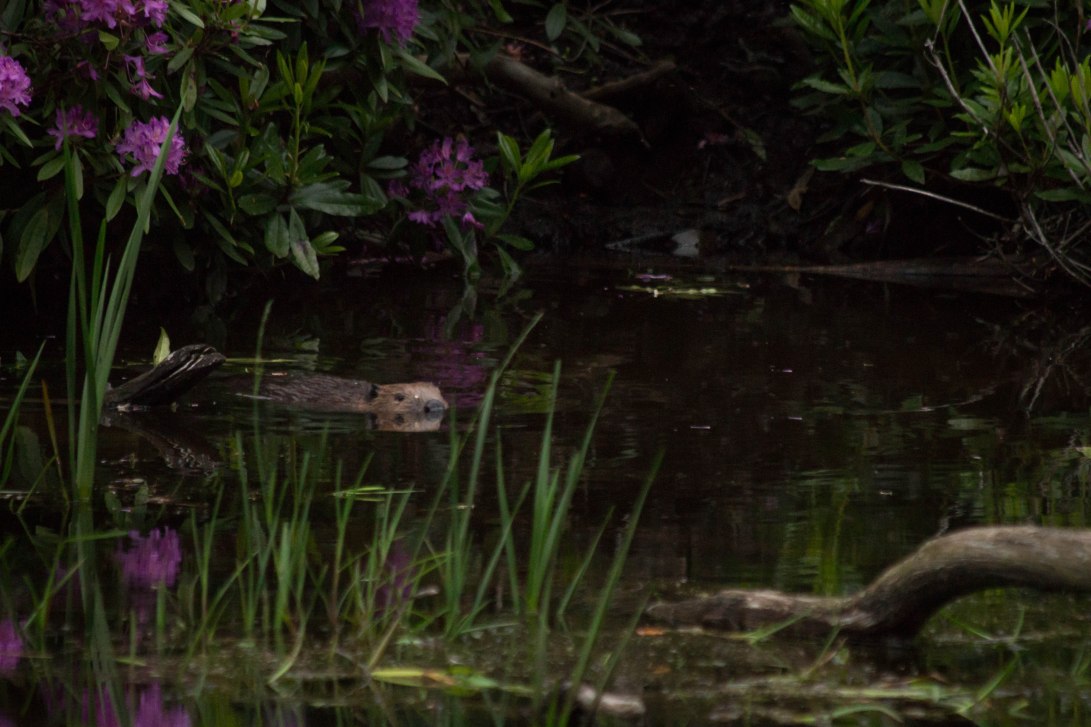
Sharp sheep bleats and whistling thrush song burst through the empty air, as well as the splashes of fish leaping from the water. A chilly breeze swept the reeds from side to side, making it a real challenge telling apart the normal water ripples and those made by the beavers. We waited a little while longer, then a slim flat shape made its way out from under the dead wood. Our beaver soon dived under again, but slowly and surely other individuals emerged. One of the rustles was tiny, and as two leaves parted a different face appeared: a kit. Far smaller than the adults, the kit swam in a small circle then dived down, showing a tail that would be more at home on an otter’s rump than a beaver’s; skinny and ending in a point.

IMG_4819-2

At this time of year, the kit may only be weeks old, having only just begun to venture out of the safety of the lodge. Similar to the precocious development of many other species of rodents, beaver kits are born at a very advanced stage of growth. Their eyes are fully open within a few days of birth and begin to eat solid food at just a week old.

The kit didn’t stay out for long, but the adults kept reappearing over the next two hours. At one point the male and a larger female met in a nose nuzzle, which was a great moment to capture brief footage of. At nearly 6am, the river grew quiet and still again, and after a while of inactivity we made our way back to the cottage.

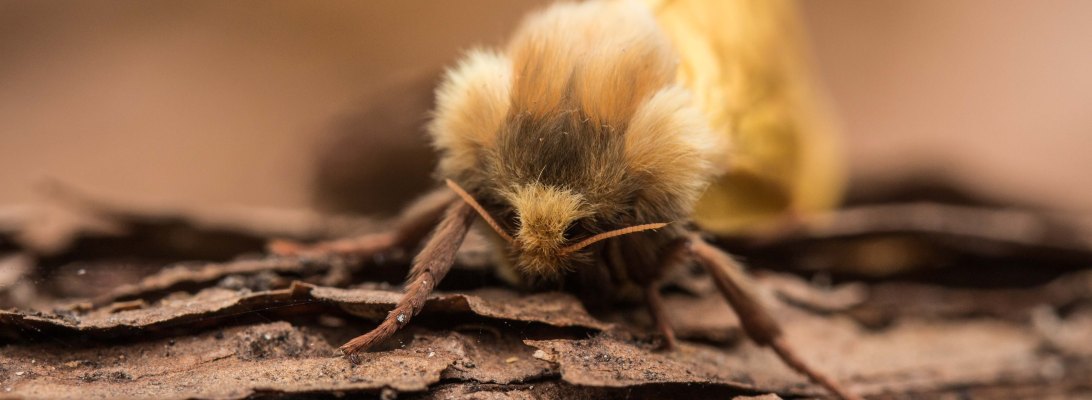
The next job of the day was checking the moth trap, and we got a much more successful haul than yesterday; Peach Blossom, Latticed Heath and Pale-Shouldered Brocade, as well as some we had yesterday like the Beautiful Golden Y, White Ermine and the formidable, spaceship-esque Poplar Hawkmoth. I really have fallen in love with moths this weekend; after only previously having seen them flapping around my face in the bath, it was great being able to see them properly and appreciate just how beautiful they can be.

IMG_4872

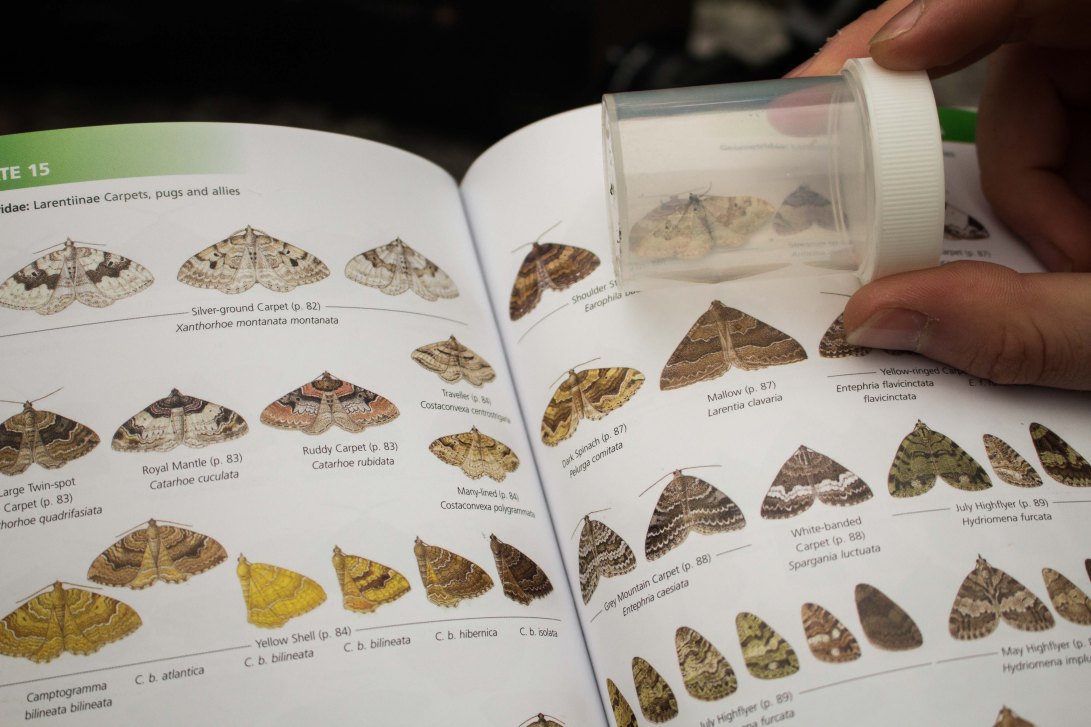
Identifying a Silver Ground Carpet moth

IMG_4901

Ghost moth

IMG_4938

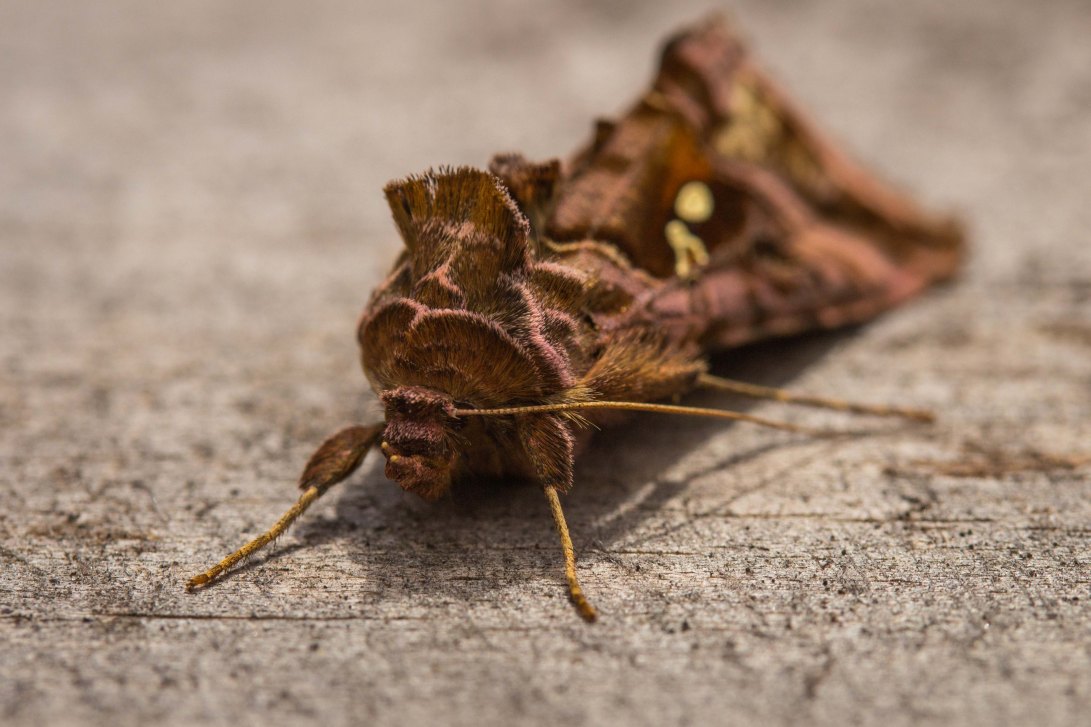
Beautiful Golden Y

After releasing the moths, it was time for lunch, then we went back out for a potter down the river. The clouds had long gone and now the sun was beating down, turning the grass and tree neon-green. Blue damselflies zipped about and bees buzzed, weaving in and out of the foxgloves. I took cover from the direct sun and sat by the water’s edge, where I was joined by a tiny, copper-coloured froglet, and then two aphids. It’s only at a time like this, when all my senses are tuned to nature, do I truly stop to study invertebrates. The aphids had pale spots on their backs and tiny black tips on their feet. I ended up walking them from hand to hand for ages.

IMG_5043

Before long the heat made the day just a little too sticky, so I took refuge in the shade of the cottage, where I spent the rest of the afternoon transferring my notes and backing up the photos from the day.

Species seen: Blackbird (Turdus merula) Chaffinch (Fringilla coelebs) European beaver (Castor fiber) European rabbit (Oryctolagus cuniculus) Great tit (Parus major) Grey wagtail (Motacilla cinerea) House martin (Delichon urbicum) Jackdaw (Corvus monedula) Peregrine falcon (Falco peregrinus) Pied wagtail (Motacilla alba) Roe deer (Capreolus capreolus) Song thrush (Turdus philomelos)

Beaver Expedition: Day 1

The drive to the cottage was as picturesque as I imagined it would be. As we bumped down a winding gravel path I peered out the window into the dense woodland on either side. As trees whipped past I squinted to see between them, in the hope of spotting a squirrel or perhaps a deer, or maybe even the star of our expedition, the European beaver.

IMG_4450

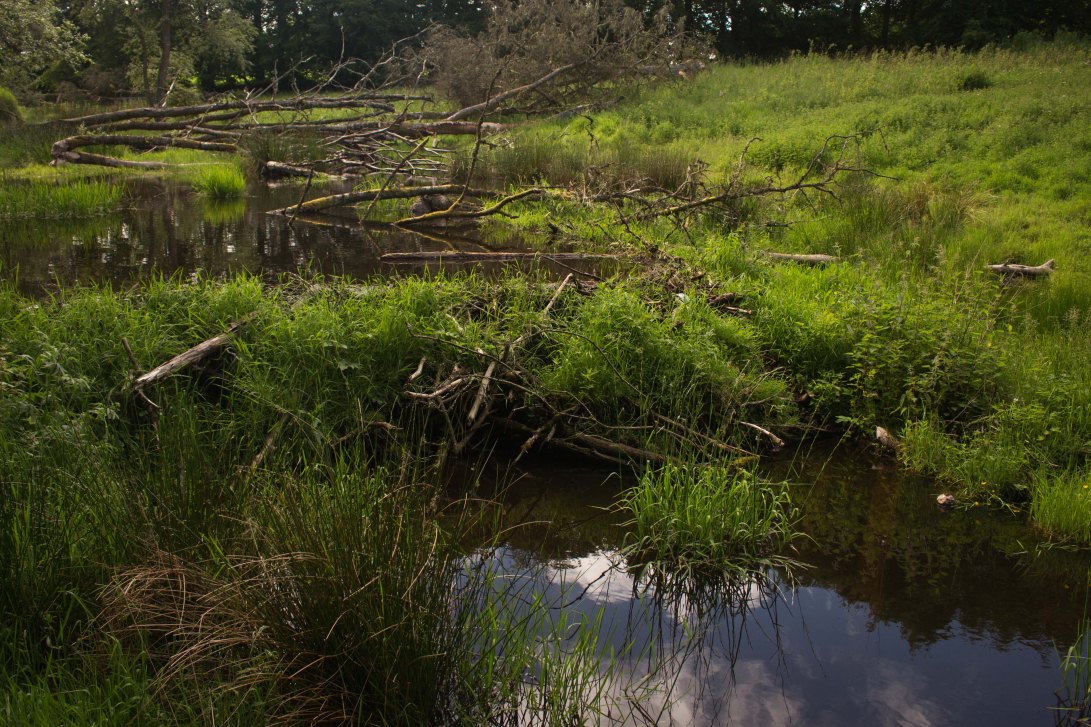
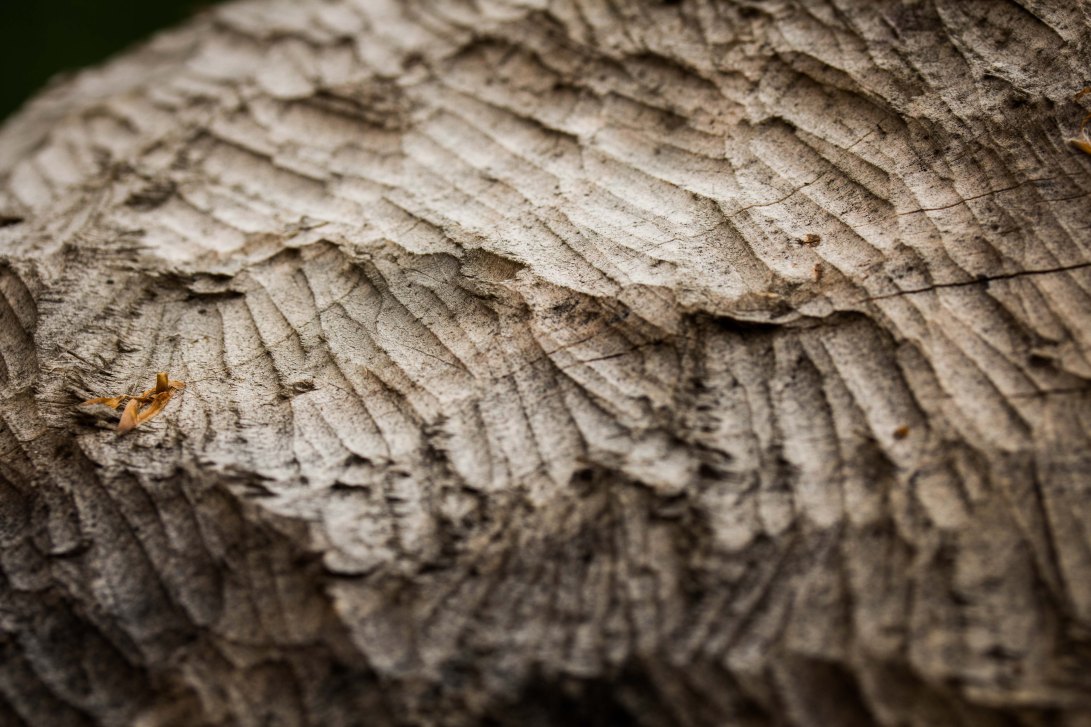
Woodland gave way to open fields, and amongst the sheep was a river that cut across the road. What was once a trickling stream was now several metres wide, all thanks to the handiwork of the beavers. Every once in a while a tree stump chiselled to a sharp point came into view, with a bed of wood clippings littered all around; countryside statues designed by the very large incisors of our beavers. Like all rodents, their incisors grow continuously, and have both a hard enamel outer layer and a softer dentine layer. Over time, wear of these two layers creates a very sharp edge, allowing the beavers to make short work of hard bark.

IMG_4708IMG_4537

After settling into our quaint accommodation, it was back into the wild for a wander while we still had the sunlight. We headed back down the path and began to follow the river away from the cottages. It was clear this was prime beaver habitat. Branches of all different sizes lay strewn across the river, and every so often we’d come across a dam. Beaver dams are extremely important for preventing floods, stemming the flow of the river with packed mud and wood to force the water to flow at a much slower pace. Fascinatingly, the beavers here used to be captive, but after felling trees in their enclosure during the time of a flood, they managed to make their escape, and have since made this beautiful part of Perthshire their home. Now the fact remains whether they are feral, having escaped captivity, or wild, as they have had kits.

IMG_4507

A sudden ripple on the water and we all crouched down, scanning the reeds and waiting silently. Perhaps a fish, perhaps something furrier. The tricky thing with beavers is, they can move through water almost without disturbing it, so while we were watching where the ripple was, the animal could now be metres downstream. We walked on, keeping an eye out for beaver prints in the mud. More gnawed trees, and I was astonished to see a smooth chunk out of the bark several feet off the ground, meaning beavers were perfectly capable of climbing.

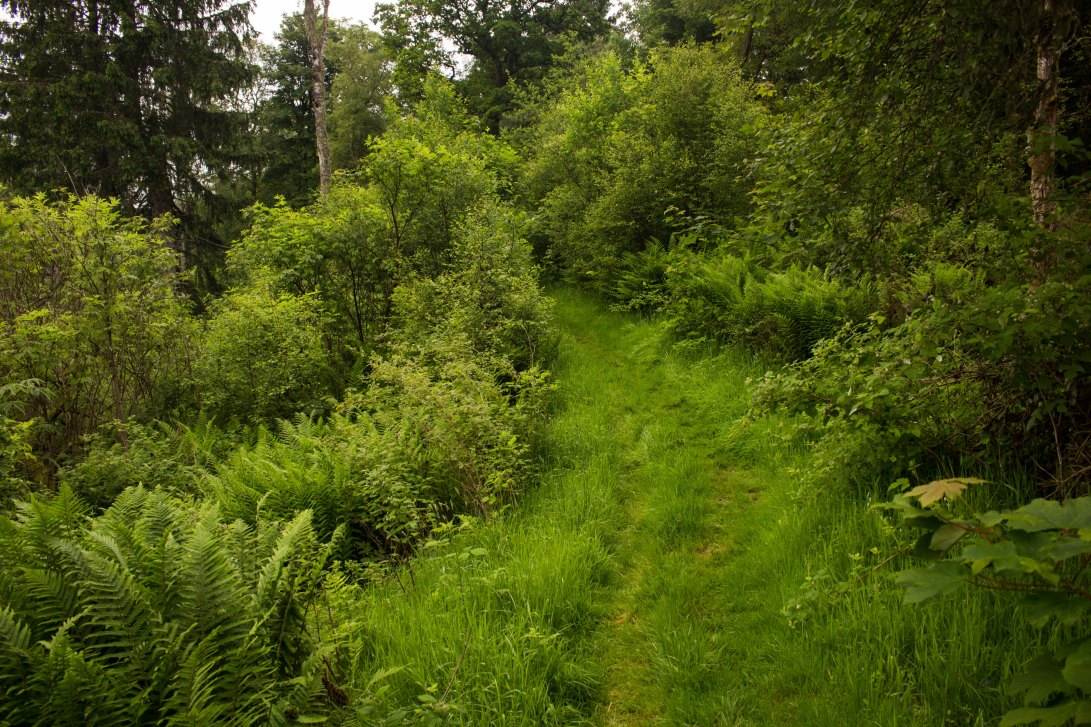
The forest was one of the greenest and richest I’d been in. It felt like the setting of Jurassic Park, with moist, bouncy grass and dense thicket. Beavers really are skilled decorators, adapting their habitat and changing the land and water use. Right now in late evening, the only sound I could hear were the bleats of sheep from the farms, but I knew hidden in these trees were hundreds of birds, mammals and invertebrates all taking advantage of the idyllic conditions here.
IMG_4463

We made our way off the beaten track and wound through the long grass. Suddenly, a sharp “WO” sound echoed through the air, signalling the presence of roe deer. A short time later and a female appeared, eying us cautiously with ears pricked up. She barked again, and in the distance the lower sound of the male echoed back. She foraged for a while before turning away, white tail flashing as she hopped athletically over the tussocks of grass.

She was doing a more graceful job than I was. Not blessed with great balance, I was staggering over logs and wading inelegantly through the grass that the deer negotiated so easily. As I stopped to find my next step, there was a speeding black bullet overheard and I looked up to see a bat zooming around in rapid circles. Heather turned on her bat detector and the alien-like clicks of the bats’ echolocation broke the silence. The calls were clearest at around 40-45Hz, suggesting that the bats were common pipistrelles, though the range of soprano pipistrelles also reaches 45Hz, so we couldn’t be entirely sure. Whichever species it was, they were abundant here; wherever I looked there were bats.

After a quick glance at the time, we realised it was nearly 11pm, despite there still being enough light to see clearly. We made our way back through the grass and towards the river, glancing at the water to see if there was any activity. A flash of white caught my eye and I felt a buzz of excitement as a barn owl swooped by in complete silence, looping ahead of us and disappearing into the trees.

Suddenly Cain froze and we ducked again. There in the field over the river was a brown blob that looked suspiciously beaver-shaped. Sure enough, the blob moved, and our first beaver made its way back towards the water, sliding down a trail and diving below the surface. The excitement was palpable, and we crept as quietly as possible along the path in an attempt to catch a second look.

The beaver didn’t seem to resurface, but then a line of ripples leading back the way we’d come made us freeze again, and a beaver raised its head above the water. As we hadn’t seen ripples coming the other way, we assumed it must be a second individual, which was even more exciting.

Sitting in complete silence, our eyes and ears were trained for any sign. Then we heard a chewing noise, and I realised I was listening to a beaver feed, which was a fantastic thing to hear.

We saw another, slightly smaller beaver floating at the edge of the river, and watched until it swam out of sight, then decided we must get back to the cottage and have some dinner. After such a successful first night, I couldn’t wait to see what we could find over the rest of this weekend.

IMG_4455

Species seen: Barn owl (Tyto alba) Common Pipistrelle (Pipistrellus pipistrellus) Cuckoo (Cuculus canorus) European beaver (Castor fiber) Moorhen (Gallinula chloropus) Roe deer (Capreolus capreolus) Swallow (Hirundo rustica) Tawny owl (Strix aluco) Wren (Troglodytes troglodytes)
 

Sun in the Woods

After discovering Eskrigg and how fantastic a reserve it is, I really wanted to take Zahrah as she’d never seen a red squirrel before. After my success last time, I was sure we’d have some luck. I also wanted to give the Manager, Jim Rae, a copy of the film I made on the reserve for my assignment.

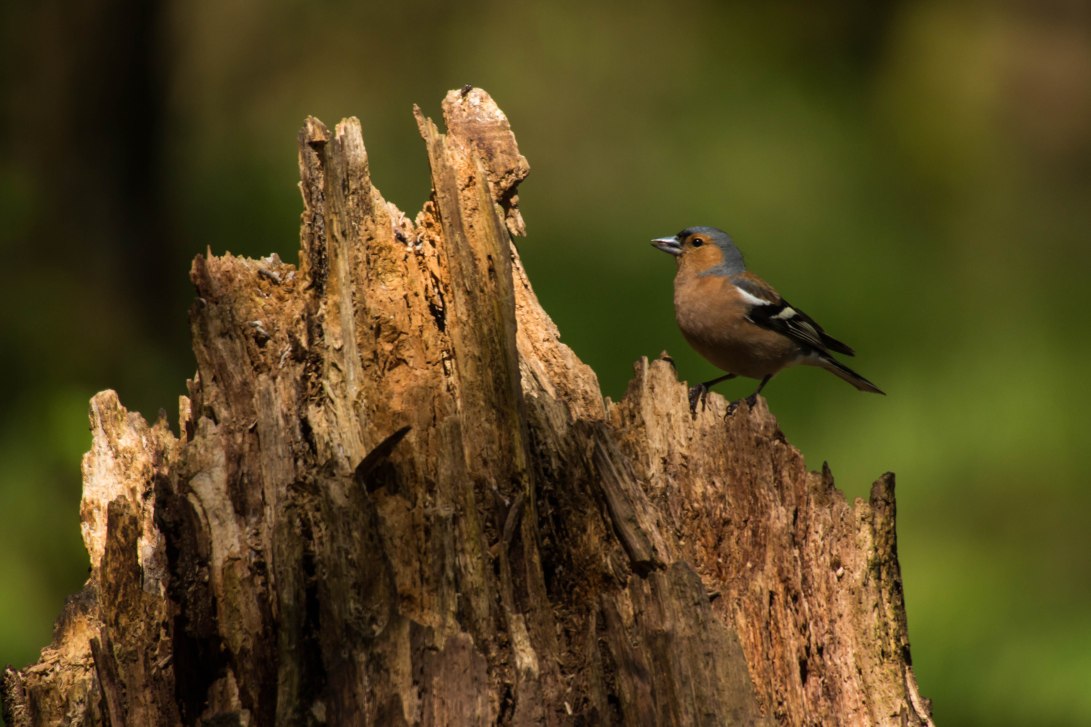
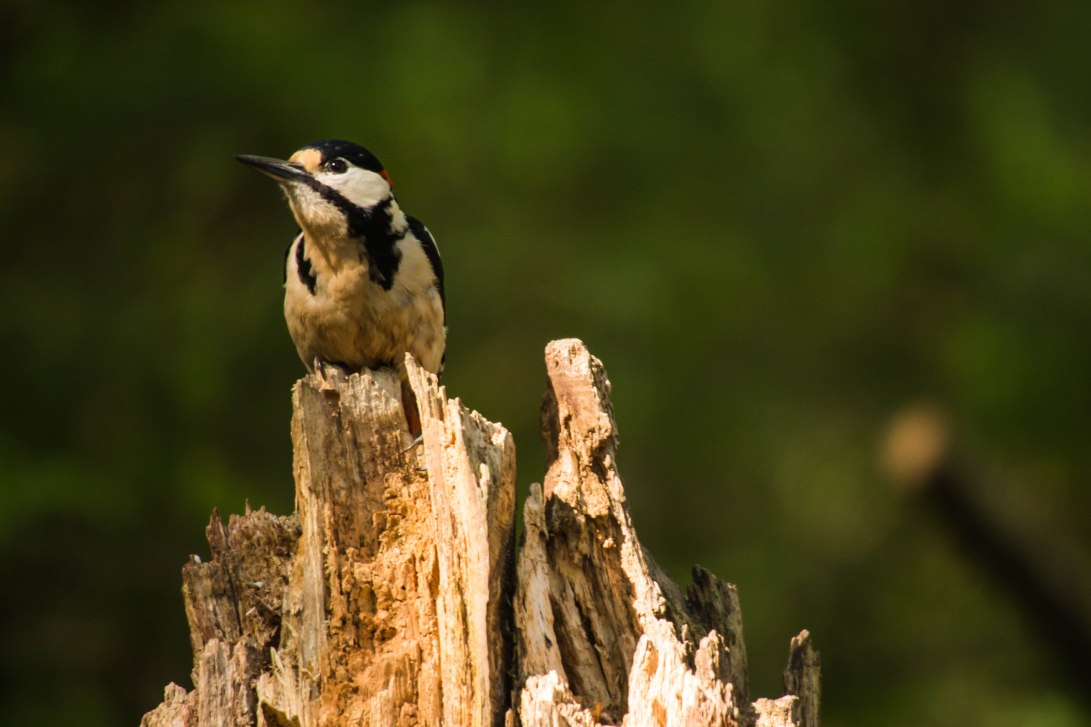
We arrived at lunchtime, so headed straight for the Eskrigg Centre to set up tripods and tuck into our Sainsbury’s meal deals. The feeders were busy as usual. I kept an eye out for reds, but in the meantime we watched siskins, a nuthatch, a woodpecker and plenty of chaffinches snatching a quick snack before zooming back into the trees. It looked like the visiting female mandarin had moved on – it was a shame not to see a male, but still exciting to be able to tick off a new species.

IMG_3721IMG_3742

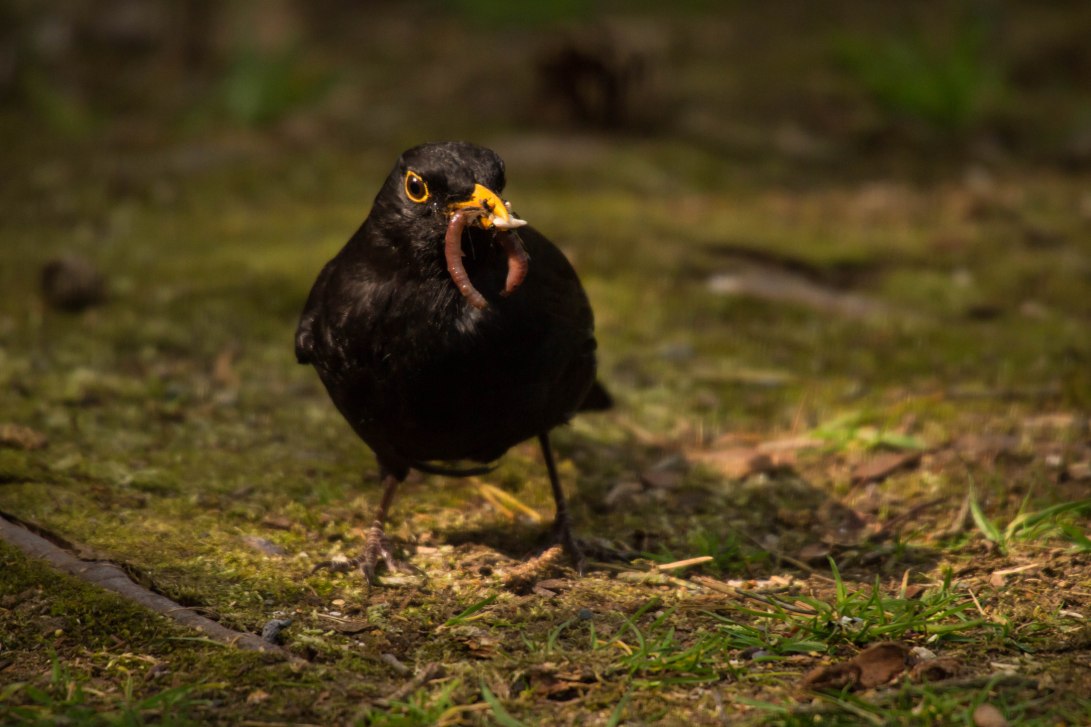
On my last visit, prime squirrel time was about 3pm, so after finishing up lunch and having our fill of the birds on the pond, we headed to the squirrel hide, joining a group of fellow photographers and twitchers. Coal tits swept across the clearing while robins hopped about on the ground. A lone male blackbird darted about with the species’ usual uncoordinated urgency, clutching a feast of flies and worms in his beak for a lucky brood.

IMG_3761

An hour and a half passed with no fluffy red visitors. I was a little embarrassed, having shown Zahrah my photos from last time and taken her with me today with perhaps blasé confidence that we’d be overrun with squirrels again today.

The heat of the day was fading and under the cover of the trees it was getting cool quickly. The group of photographers shouldered their cameras and left, and soon we began to consider abandoning ship and coming back next week. Zahrah suggested we stay half an hour longer, and in the next ten minutes my eye caught on a bright orange tuft twitching behind a nearby tree. As I hurried to focus I breathed an enormous but hushed sigh of relief.

IMG_3819

The squirrel approached slowly, sniffing the ground but pausing every so often to stand on its hind legs to look at us. I tried with all my might to catch these meerkat moments, but these animals are unbelievably nippy.

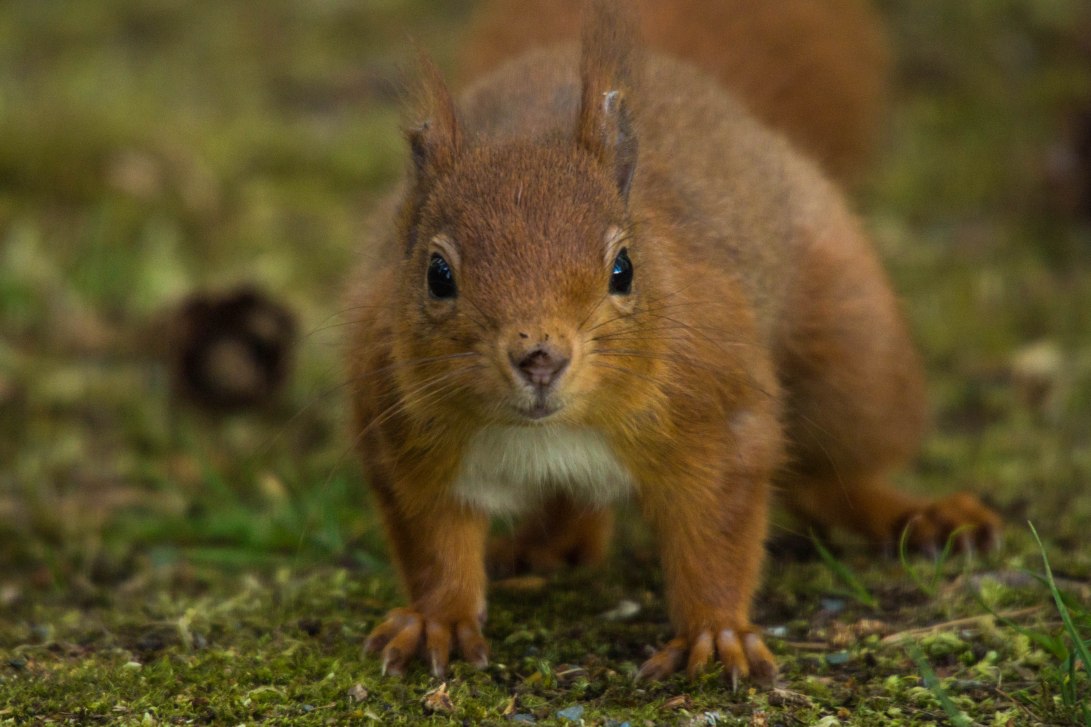
Soon, the squirrel was out in the open, collecting the hazelnuts that Jim had cracked and I’d sprinkled about. Pauses to eat were the best times to snatch some photos, when the animal’s only movement was a twitch of the tail. The way it clutched the nut in almost human hands and strategically nibbled was enough to make the coldest heart melt. As our cameras clicked I couldn’t help but gasp and squeal with excitement. Despite my interruptions the squirrel carried on feasting, scooping up all the nuts I’d left one by one.

IMG_4068-2IMG_4143

Before long, a second squirrel joined the first, skirting down a tree to find any nuts that the first had left, a third soon joining them. One of these individuals had somehow lost an ear tuft, looking adorably wonky as it paused to nibble, tail curled over its back in the iconic position.

My memory card was filling up fast – I couldn’t help but keep snapping as the squirrels explored and foraged. For me it was a combination of their distinct personalities, lovable curiosity and cute outfits that had me obsessed. They ventured close, peering up at us with beady eyes and tiny parted lips.

IMG_4147

I forgot to notice the growing chill but the slowly setting sun was beginning to make photography a challenge, especially when the squirrels’ rapid movement made a slow shutter speed impossible. We were about to finally pack up and leave when three more arrived, this time of the darker variety. So we stayed a little longer and kept taking photos. I had a sudden thought – if photography was still dominated by medium format film, I would have spent my entire student loan. The habit of only pressing the shutter for the perfect moment was admirable, but I don’t think everyone’s had the opportunity to photograph red squirrels.

When we eventually did get home, I uploaded the shots and assessed the damage. Six hundred and sixty photos, not bad at all.

IMG_4271IMG_4181

Birds at the bottom of the garden

As of today, I’ve been living in my new house a week! It’s not the biggest or the most glamorous, but it’s certainly enough to feel like home. There is also a generously sized garden that oozes potential. Currently, the grass is several feet high and tickles the midriffs of the two apple trees, but I’m determined to make it a spot both we and our neighbouring wildlife can enjoy.

Zahrah and I have already had debates over whether the grass should be cut at all. While she favours the truly wild, I prefer neat and tidy with areas that the wildlife can still feel at home in. My plan is to cut the majority of the lawn but leave a wild patch at the bottom, so all kinds of creatures can still seek sanctuary in its grassy depths.

I’ve noticed several species of garden bird already, namely robins (Erithacus rubecula), blue tits (Cyanistes caeruleus) and great tits (Parus major), but I’m sure we can attract more with a range of bird feeders – millet for dunnocks (Prunella modularis) and finches and sunflower seeds for the tits and hopefully greenfinch (Chloris chloris). As well as this, we could fit some nest boxes to the apple trees to encourage nesting birds to stay.
Now we have such a secure garden, Zahrah suggested setting up a camera trap to see what nocturnal wildlife we play host to. In an urban area, it’s possible we have hedgehogs (Erinaceus europaeus) and maybe red foxes (Vulpes vulpes), something I’d be thrilled to see. After managing to photograph a wood mouse (Apodemus sylvaticus) at Kingmoor Sidings nature reserve not far from here, I’m optimistic we’ll get to see a lot more once we’ve set some tasty bait.

As for the lawn itself, I’d love to create a winding path out of the stray slabs we’ve found lying around. The garden is large enough for a compost heap too, something else that would attract a range of species. I’d love to cultivate a pond, but feel like this may be beyond my skill set! However, it would be lovely to plant some flowers and inject some colour into the otherwise very green garden. Although not the prettiest, stinging nettles are well known for being excellent attractors of the red admiral (Vanessa atalanta), comma (Polygonia c-album) and small tortoiseshell (Aglais urticae). Other good plants for butterflies include garlic mustard (Alliaria petiolata) and marjoram (Origanum vulgare).

All in all, I see some exciting things on the horizon for our little garden! After living in halls for a year and the only green space being the faded carpet of my room, I can’t wait to unleash my inner gardener and make our patch the perfect wildlife haven.

Our Day On May

When the May Princess left Anstruther harbour the sun was at its highest, so as we headed out into open water we were slowly baking but not daring to complain in case the rain came back. As I watched my fellow passengers slap on the sun cream, I was geographically disorientated, not quite believing I was in Scotland and not Spain.

IMG_6949IMG_6957

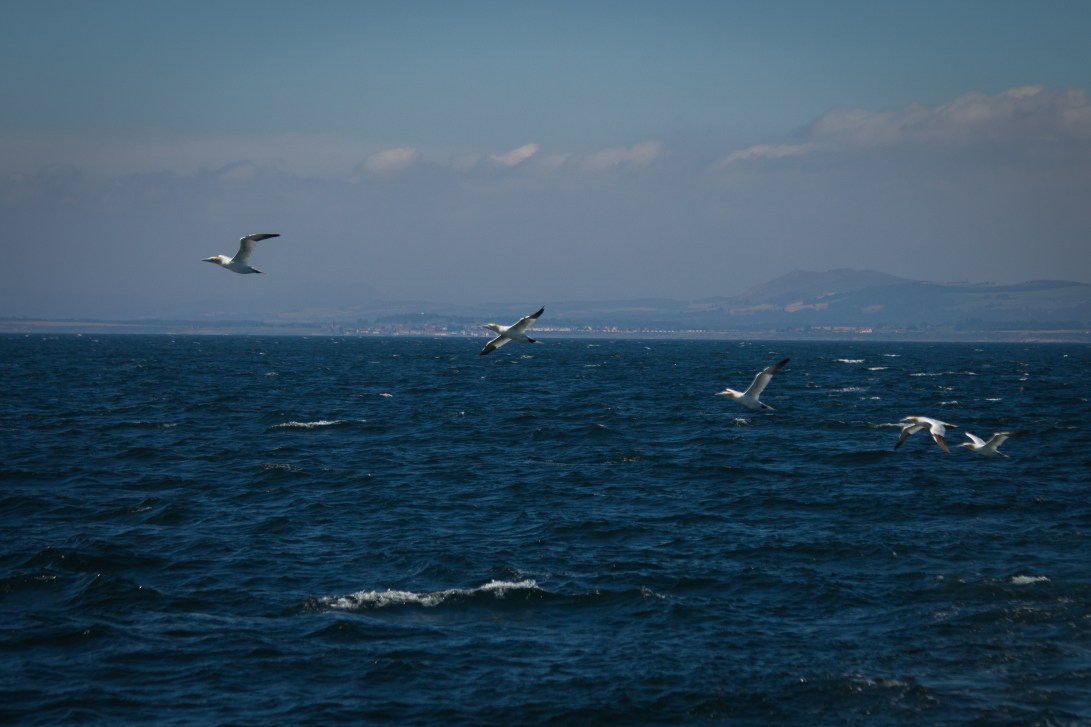
The water was choppy but that added to the fun. I was once again having to negotiate a tumbling boat and a telephoto lens to desperately try and capture the moving seabirds in focus. Many of my attempts were 96% sapphire sky and 4% wing tip in the corners of the frame. With gritty determination, I managed to photograph a few gannets (Morus bassanus) alone and in their strings of multiple individuals. Gannets happen to be my favourite seabirds. Capable of diving at speeds of 60mph, they hit the water with incredible force in their attempts to catch fish. When I saw my first gannet on the voyage to the Isle of Arran I fell in love with their striking face stripes and lightly tinted brown heads. To me they’re the coolest bird in British seas.

IMG_6963IMG_6983IMG_7004-2

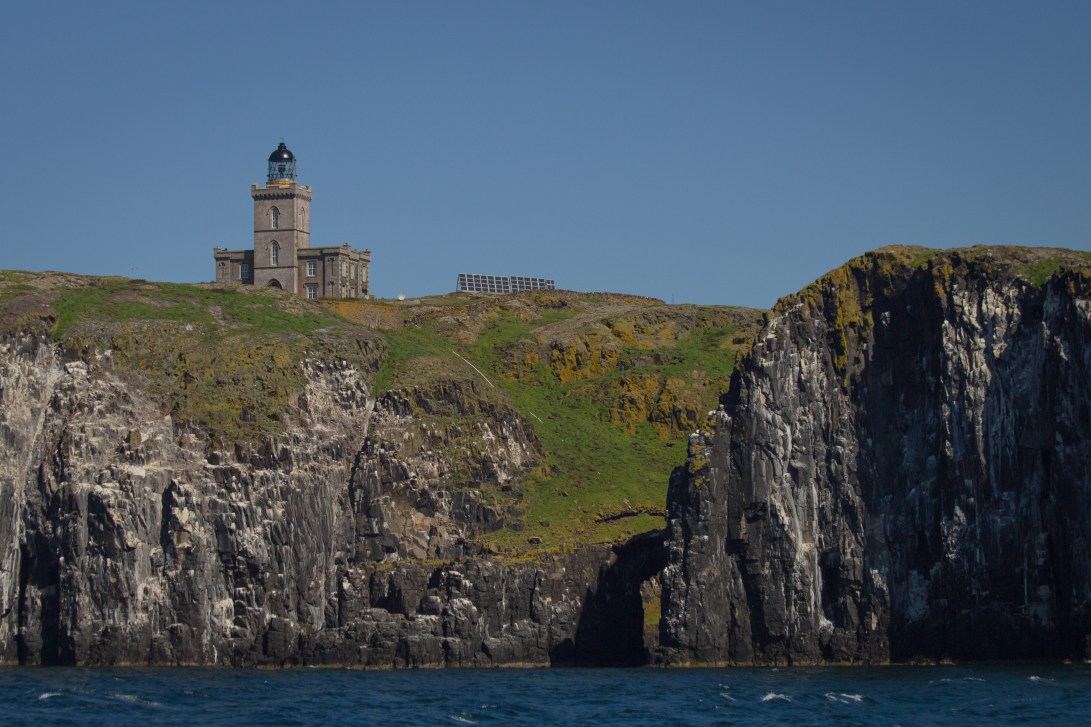
Before long the Isle of May appeared on the horizon, illuminated beautifully under the intense sun. The cliffs and crag faces oozed drama with their harsh black and white, thrown into sharp relief by the light. The few buildings were dotted around and looked very out of place amongst the grass and rocky shores, just how I liked it.

IMG_7000-2IMG_7027

Once we’d all disembarked and received a welcoming talk by a volunteer from Scottish Natural Heritage, we were allowed to explore. Visitors branched off in different directions; we decided to head up Fluke Street, past the Bath House and Main Light to the very tip of the crag. Beyond was Rona and North Ness, areas closed to the public for research. While we admired the view, we spotted a lone grey seal (Halichoerus grypus) wallowing in the shallows, snout resting on the rocks as it dozed.

IMG_7037

IMG_7040

IMG_7118

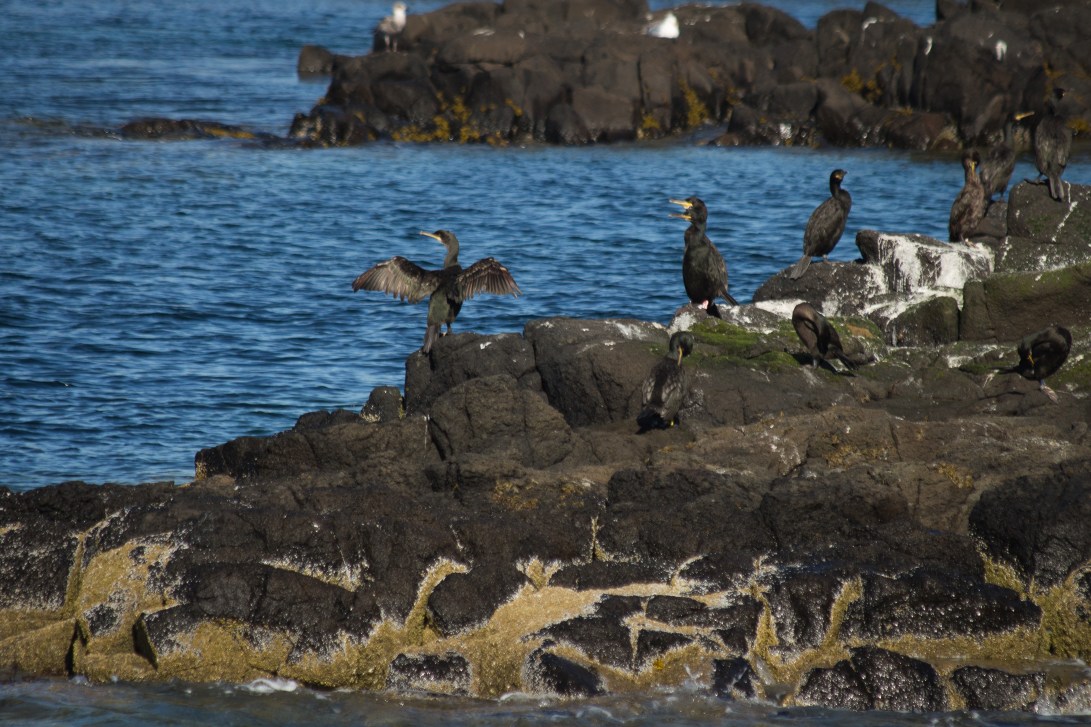
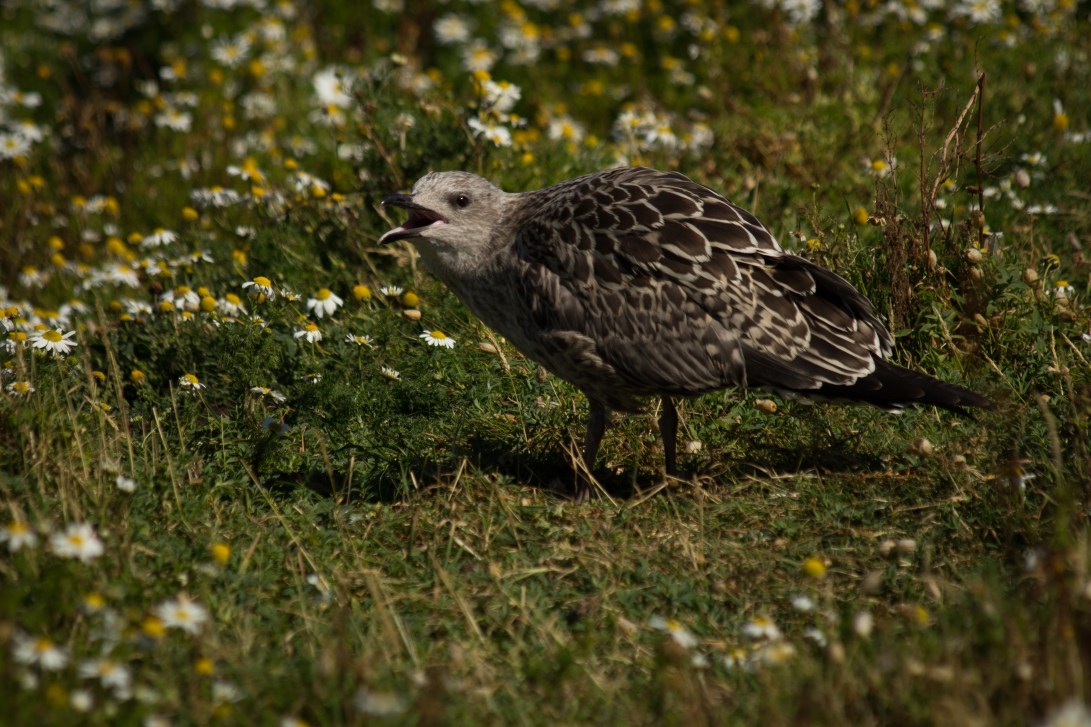
The seal was accompanied by the odd gull swooping through, but otherwise the island was mainly deserted. We hadn’t timed our trip quite right as most of the seabirds had left, including the elusive puffin (Fratercula arctica) that is high on my tick list. However, aside from the beautiful gannets we still managed to see a few kittiwakes (Rissa tridactyla), cormorants (Phalacrocorax carbo) and a lone juvenile guillemot (Uria aalge), a new bird for me.

IMG_7067IMG_7073IMG_7080

All too soon our time on the island was at an end, and we made our way back to the boat. Just as we were leaving, a grey seal – perhaps the one we’d seen earlier – bobbed out of the water as if waving us off. We thought he’d been our only seal sighting that day, but around the corner we were treated by a large colony, splashing each other and gazing at us with huge black eyes. Cormorants basked in the sun, wings spread as if inviting a hug, and once again the gannets swept over our heads. As the Isle of May grew smaller, my nose grew redder, and when I got home I realised I’d acquired a vicious sunburn. It was worth every moment!

Urban Nature

Last Wednesday, I caught the train to Hammersmith to meet up with Zahrah and embark on another of our wildlife excursions. Today we visited the London Wetland Centre, something I’d heard lots of good things about but never been.

IMG_6613
Canada geese (Branta canadensis)

Upon arrival we were greeted by a lovely volunteer who explained the site map to us. Taking her advice, we began on the south route which would take us to various hides that we could spend time in. Halfway down the foliage-lined path Zahrah spotted a warbler, but neither of us could be certain which species the bird was. As we stood stock still squinting into the dense undergrowth another volunteer passed. We told him what we were studying at university and explained how much we loved birds. It must have been refreshing for a wildlife veteran to stumble across two young people with the same interest. He began telling us all about the wildlife at the site, and the best places to view it. He showed us the WWF hide, where sand martins (Riparia riparia) performed an avian display for us, swooping down to the water’s edge and snatching midges from the surface. At this time of year, with no courtship taking place, the water was relatively calm with little activity. A lone mute swan (Cygnus olor) foraged in the shallows while a female mallard (Anas platyrhynchos) shepherded her young back to the nest. A lone moorhen (Gallinula chloropus) waded through the lily pads, pausing beside the pearly white buds.

IMG_6632
Moorhen (Gallinula chloropus)
IMG_6638
Coot (Fulica atra)

As the scene here was subdued, Bryn showed us the Peacock Tower, where we met up with another volunteer with a profound knowledge and passion for birds. Apparently a pair of peregrine falcons (Falco peregrinus) were nesting in a building nearby, and had been seen flying over the site. While we sat overlooking the lake with our lunch, the volunteer let us borrow his telescope to watch a family of tufted ducks (Aythya fuligula) and a lone gadwall (Anas strepera). Unsurprisingly, Zahrah had the lens trained on a pair of herons (Ardea cinerea), shoulders hunched like sulking old men. Grey herons hold a particularly special place in Zahrah’s heart; it never ceases to amaze me how touched she is by these gangly lake dwellers.

IMG_6749
Female Goldeneye (Bucephala clangula)
IMG_6758
Female Tufted Duck (Aythya fuligula) 
IMG_6609
Grey Heron (Ardea cinerea)

The fountain of knowledge that was our telescope-bearer told us one of his favourite birds was the long-tailed tit (Aegithalos caudatus). What I didn’t know was that in each group of these beautiful little birds, only the dominant female breeds. All other females act as child minders, sacrificing their own reproductive ability to care for another’s young.

IMG_6649

Before long it was nearly two o’clock and the otters were about to be fed on the south route. We left the Peacock Tower with plenty of time, but ended up speed walking after a sharp-eyed photographer pointed out a common lizard (Zootoca vivipara) basking in the hot city sunshine. This naturally required us to stop and snap away for a few minutes, as our model was posing so beautifully.

IMG_6661
Common Lizard (Zootoca vivipara)
IMG_6673
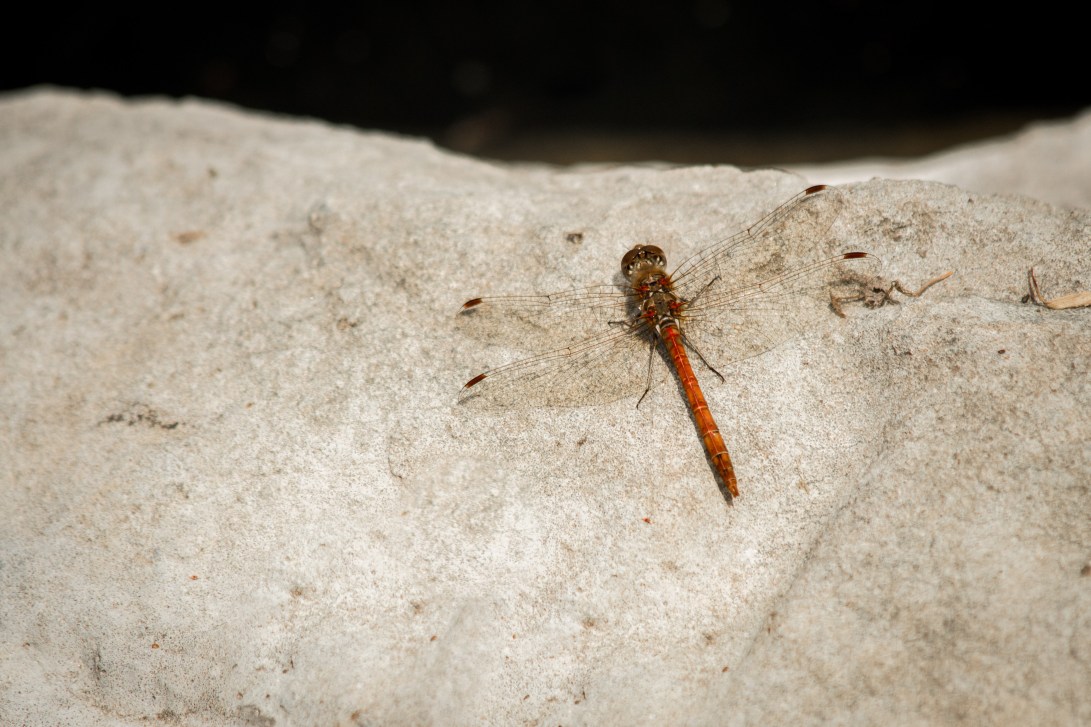
Common Darter (Sympetrum striolatum) 

The above invertebrate is a dragonfly, as its wings are positioned perpendicular to its body. A damselfly’s wings are parallel along its body. The individual I photographed is a male; the female is yellow with black markings.

IMG_6730

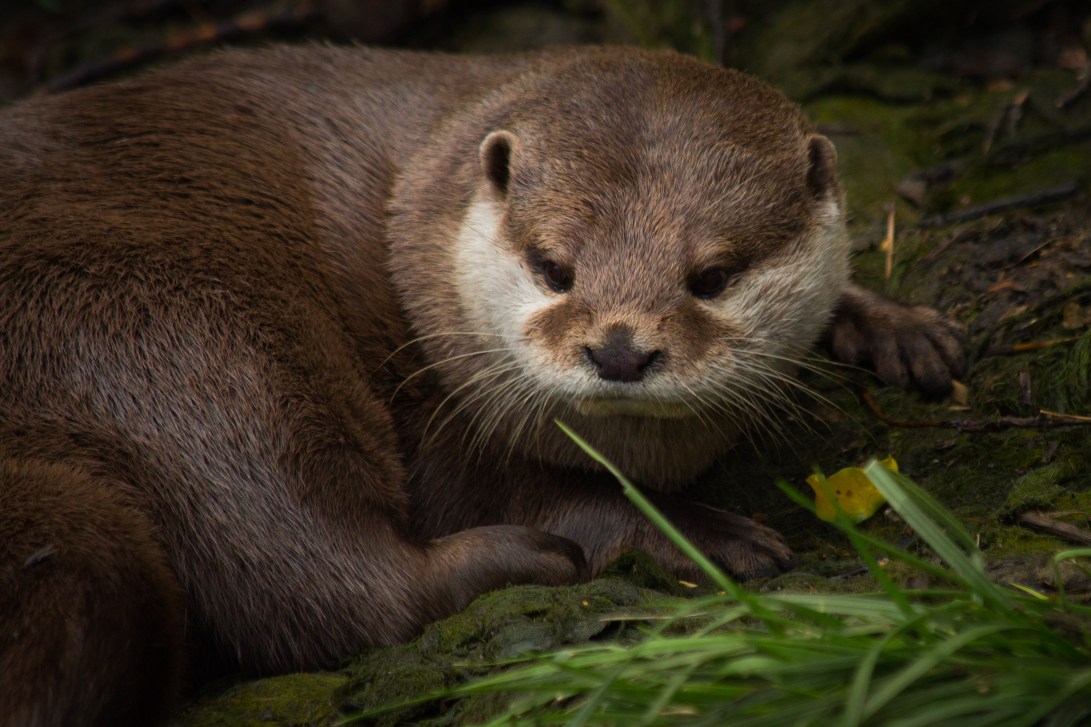
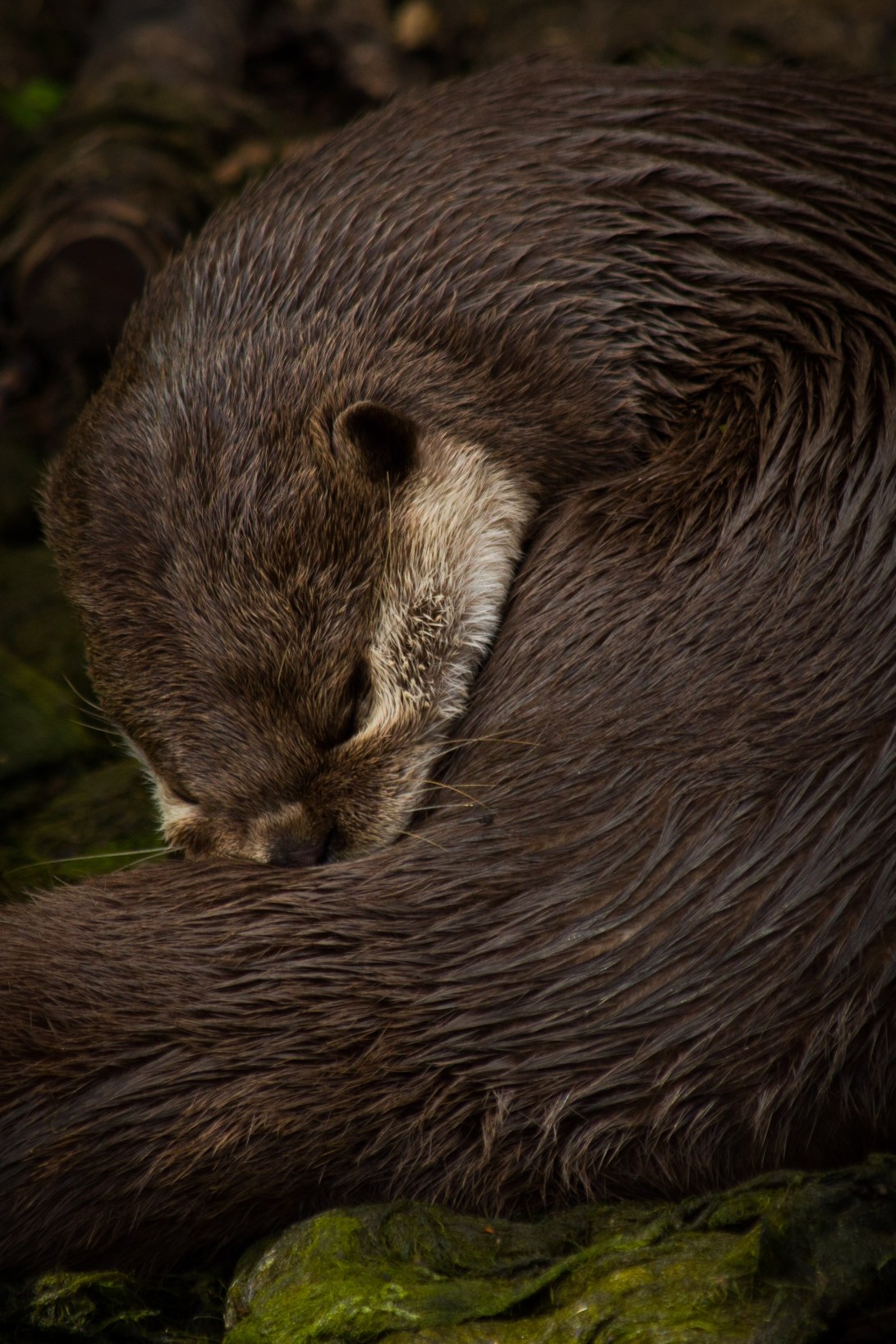
The otters were Asian short-clawed (Amblonyx cinereus), the smallest species of otter in the world weighing less than 5kg. In addition to its size, this species differs from the Eurasian otter (Lutra lutra) in that it has blunt claws on some toes, if any. We watched them feed for a while, diving into the water of their enclosure for scraps of fish. After feasting, they rolled in the soil to dry their fur and proceeded to grip fragments of shell in their paws, looking painfully adorable.

IMG_6717IMG_6744

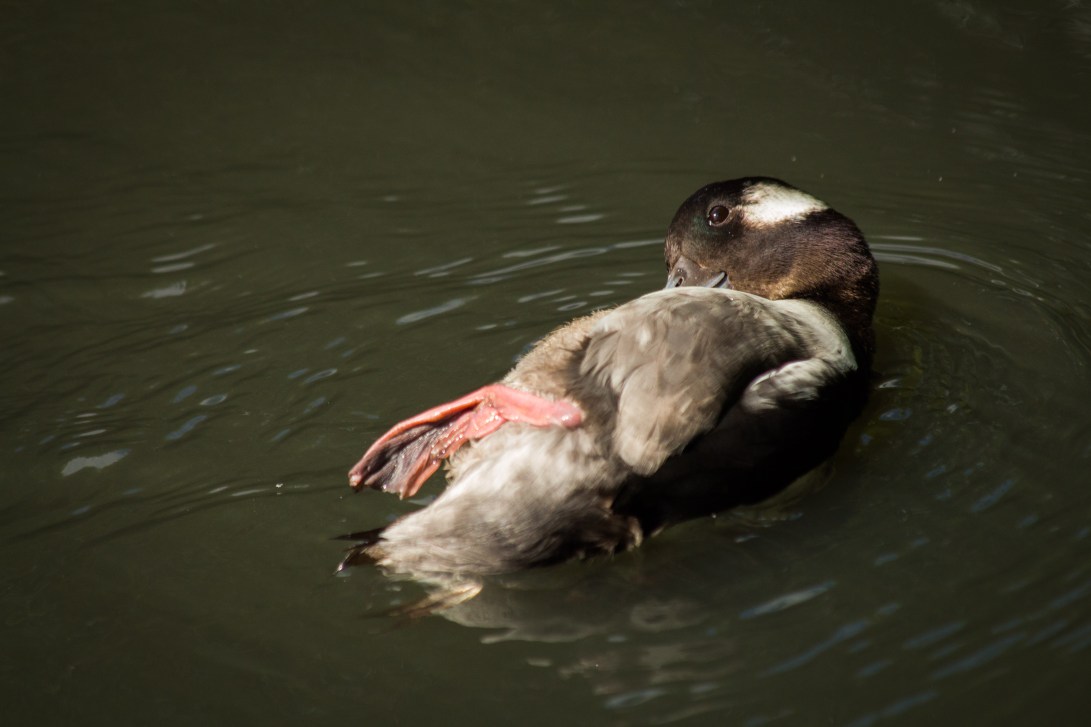
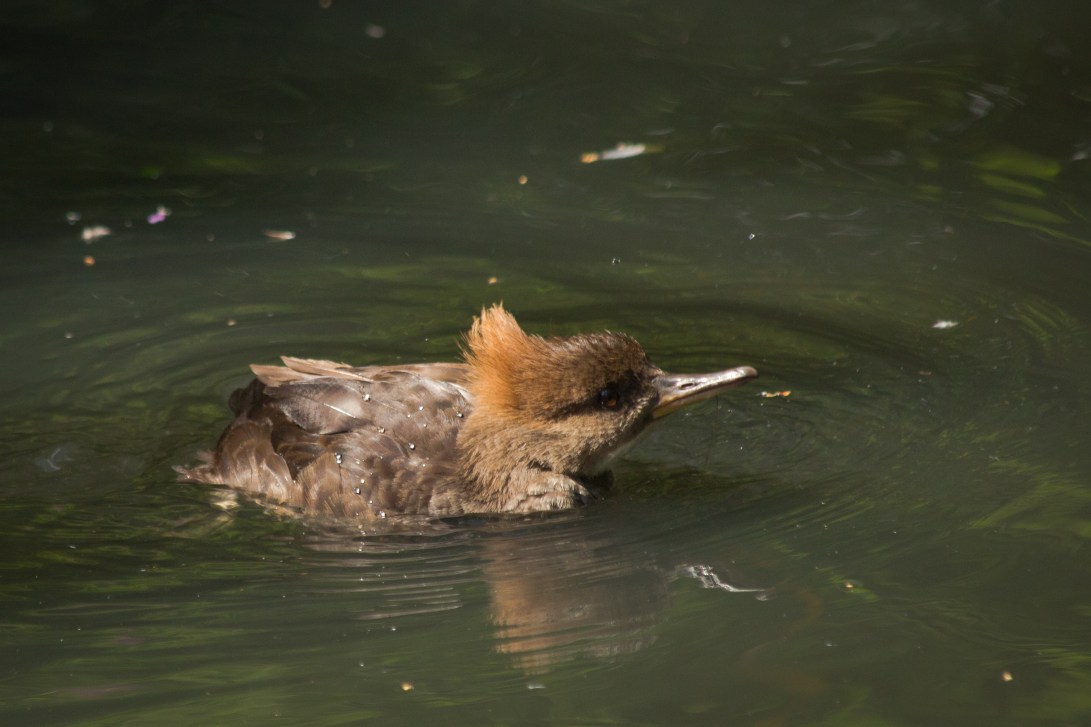
By now the sun was high in the sky and the day was sweltering. After watching the otters slip into their holt and out of sight, we wandered around the rest of the wetland centre and visited the more exotic species that inhabited the site. We sat for a while and watched buffleheads, hooded mergansers and more. While they all looked extravagant, the humble moorhen stole the show with its characteristic screech that made me jump on several occasions. I must say, British species will always fascinate me just as much as their foreign relatives. The weather was perfect for our visit to the London Wetland Centre, and I was thrilled to find a new wildlife hotspot.

IMG_6765
Bufflehead (Bucephala albeola)
IMG_6768
Female Hooded Merganser (Lophodytes cucullatus)