A Review of ‘Sky Dance’ by John D. Burns

I discovered ‘Sky Dance’ while looking for non-fiction titles in the Scottish Interest section of my local Waterstones. In the past I have struggled to engage with a lot of rewilding books and often been intimidated by the political conflict. But after reading the blurb I realised that ‘Sky Dance’ was actually a novel. The story follows two hill walkers who get caught up in a row between conservationists and landowners about the reintroduction of lynx into Scotland. There is a fictional island called Morven and a landowner who ticks all the stereotype boxes of a tweed outfit, upper middle-class pomposity and a disregard for any animals besides grouse.

It is a strange book in many ways – especially the surprising ending – but I enjoyed the unorthodox approach. Acknowledging a potentially heavy topic such as rewilding through the medium of fiction was intriguing. ‘Sky Dance’ conveys important messages while remaining full of action. There are a few too many side stories which muddled the plot for me, but the main narrative about the lynx was an engaging one.

It would be fantastic if the reintroduction of a long-lost predator into Scotland could one day be a reality and not a piece of fiction. Burns explains that lynx would pose no danger to humans and only have a very low impact on livestock. If famers were compensated for these small losses then lynx would undoubtedly make a valuable contribution to the restoration of an unbalanced ecosystem that is currently overflowing with deer and damaged trees. Wolves and bears raise more difficult issues, but I believe lynx should definitely be brought back to the UK. John D. Burns paints quite a haunting picture of what the Scottish Highlands could look like if we started to reverse the damage we’ve caused by hunting apex predators to extinction.

Published in 2019, ‘Sky Dance’ is John D. Burns’s third book. He has spent over forty years climbing mountains and fifteen years writing. To hear more from John, visit his website for blogs and podcasts.


Beaver Expedition: Day 2

The day began with waking up from a heavenly night’s sleep – my bed was like a marshmallow. After breakfast and a dip into what Heather calls THE Beaver book, by Andrew Kitchener, we headed back along the river to find some spots to set up camera traps.

IMG_4699

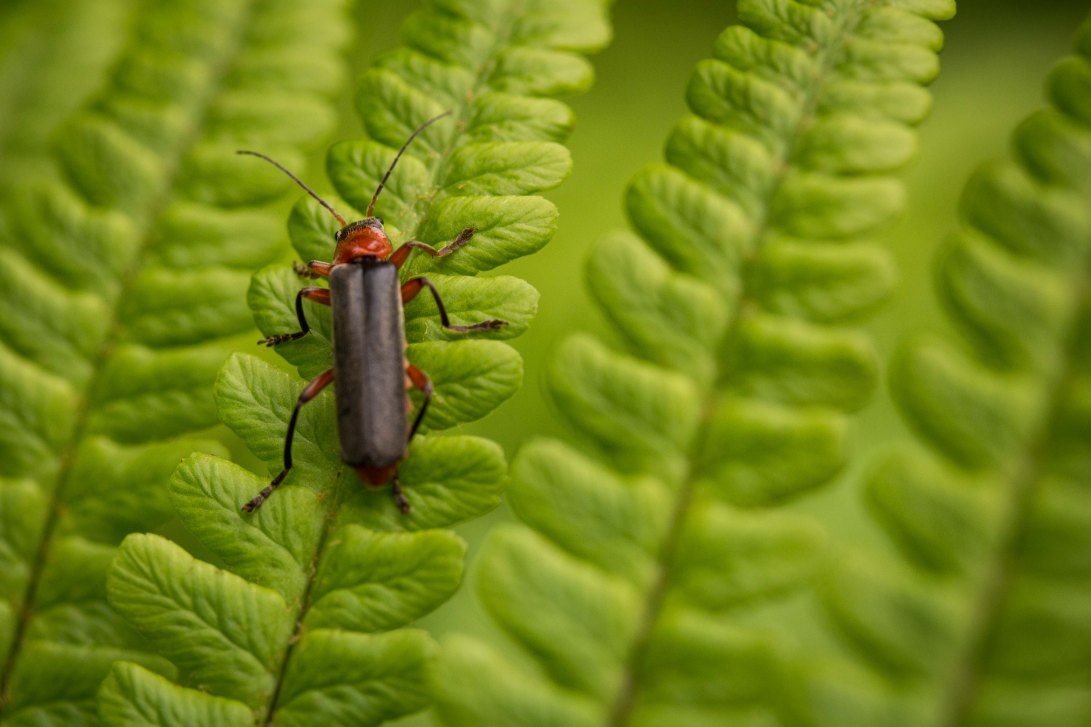
The sun came and went, bringing its heat with it so I couldn’t make up my mind whether I wanted my coat or not. Every so often we’d see a different coloured spot in the sea of green grass, and I spent a lot of the afternoon squatting in the grass training my macro lens on day moths, flies and beetles. Before long we reached a clearly trodden corridor in the grass that snaked down to the river. We followed it down and saw a defined mud slope leading into the water; this was a sure route for beavers. One camera trap set and ready.

IMG_4512

We set the other two on the other side of the river, to hopefully catch any beavers coming down from the adjacent field like the one we spotted last night. Beaver footage would be incredibly exciting, especially during the day.

Back at the cottage, we retrieved the moths that Heather and Cain had caught in the traps during the night. Taking them outside, we had a little macro photo shoot. White Ermine, Poplar Hawkmoth, Large Yellow Underwing, all beautiful, delicate creatures with easily the same beauty as butterflies. Seeing them up close instead of zooming around my head in the shower made a world of difference; stood still they were stunning, covered in shimmering dust of every colour imaginable.

IMG_4575IMG_4633

After some lunch at the cottage we headed back out, this time with nets and white trays ready for some pond dipping. I hadn’t pond dipped since I was tiny, so it brought back a lot of memories for me.

IMG_4682

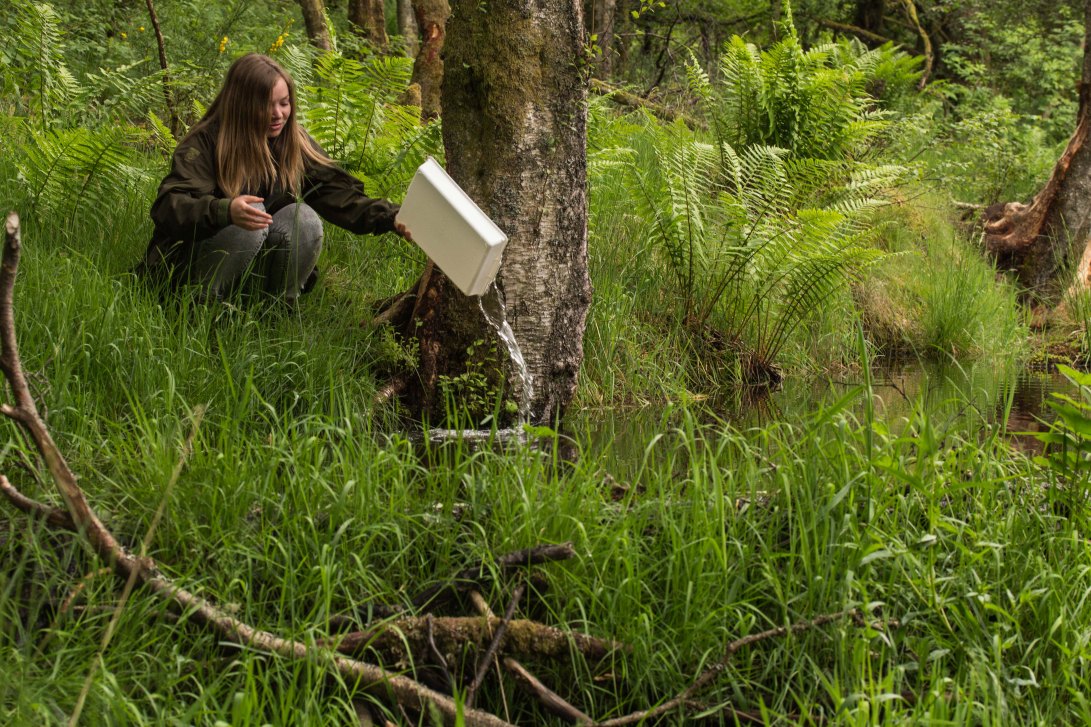
Finding the perfect dipping spot was difficult. The first place we tried was too steep, and knowing my balance I’d have fallen straight in. The next spot we found was good for dipping but we only managed to find a few blood worms, miniscule grains of wiggly sand that catapulted themselves around the tray with curled convulsions of their tiny bodies. Finally we headed away from the cottage towards the lake – made entirely by the beavers I hasten to add – where we had much better luck. In a single tray I got a good look at caddis fly larvae, damselfly nymphs, backswimmers (which performed their rather comedic backstroke around the tray), water beetles and lots of microscopic creatures. Using my macro lens I could capture the beautiful detail that make these pond aliens so extraordinary. They honestly looked like visitors from another planet.

IMG_4743IMG_4761

There were even more treats on the journey back. Just as I was ducking under a low fern I saw a flash of chestnut red and my arm rose of its own accord in a rapid point. “Squirrel!” I whispered as urgently but quietly as I could. The squirrel darted along a felled tree then up a living one, skirting up the bark just as easy horizontally as vertically. A group of chaffinches began to mob it, clearly too close to a nest. Bounding from one tree to the next, the squirrel speedily made its way away from the ruffled birds, and paused to peer down at us as we gawped. A tail twitch later and he was down on the forest floor again, disappearing into the forest.

We continued on, making our way back to the cottage. Dinner was stir-fry, and after finishing up we headed to the river, in the hope of seeing our beavers again. We took cover under the overhang of a tree, nestling in amongst the roots that divided us like the arms of cinema seats. Then we lay in wait. And once again, after only a short wait there was a rustling beneath the rhododendrons and a dark shape emerged. It was too dark for photos, but just to see the beavers only a short distance away was yet another treat. Now all we had to do was return at sunrise.

IMG_4730

Species seen: Blue tit (Cyanistes caeruleus) Chaffinch (Fringilla coelebs) European beaver (Castor fiber) European rabbit (Oryctolagus cuniculus) Great tit (Parus major) Heron (Ardea cinerea) House martin (Delichon urbicum) Jackdaw (Corvus monedula) Moorhen (Gallinula chloropus) Pied wagtail (Motacilla alba) Red squirrel (Sciurus vulgaris) Song Thrush (Turdus philomelos) Starling (Sturnus vulgaris) Swallow (Hirundo rustica) Woodpigeon (Columba palumbus)

Beaver Expedition: Day 1

The drive to the cottage was as picturesque as I imagined it would be. As we bumped down a winding gravel path I peered out the window into the dense woodland on either side. As trees whipped past I squinted to see between them, in the hope of spotting a squirrel or perhaps a deer, or maybe even the star of our expedition, the European beaver.

IMG_4450

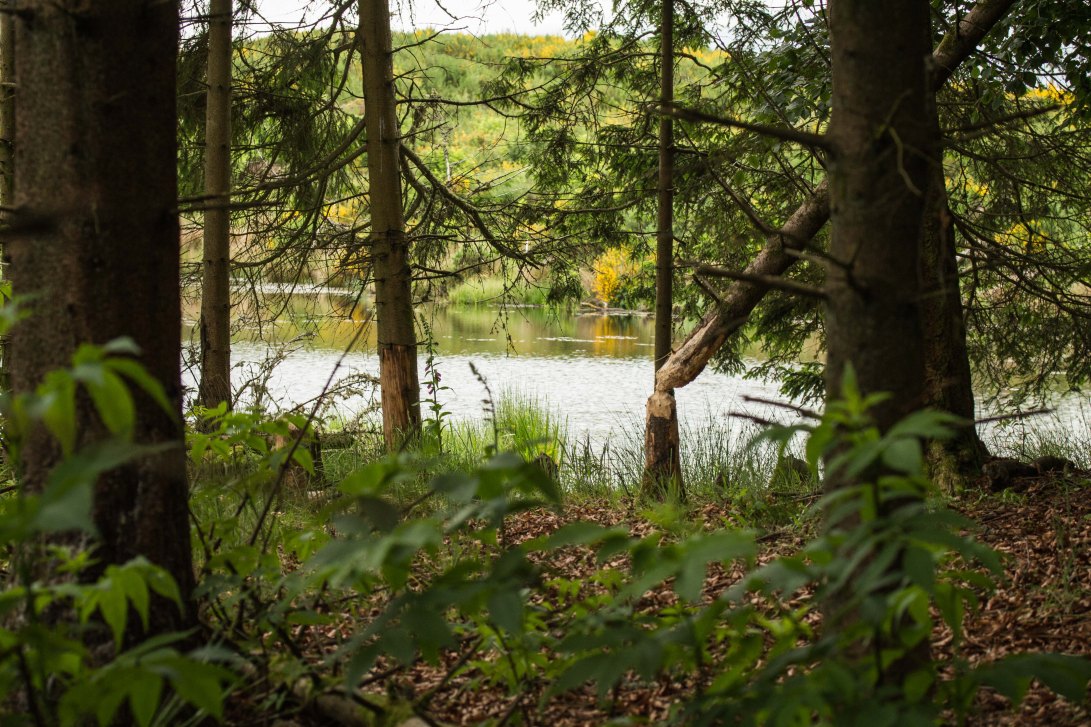
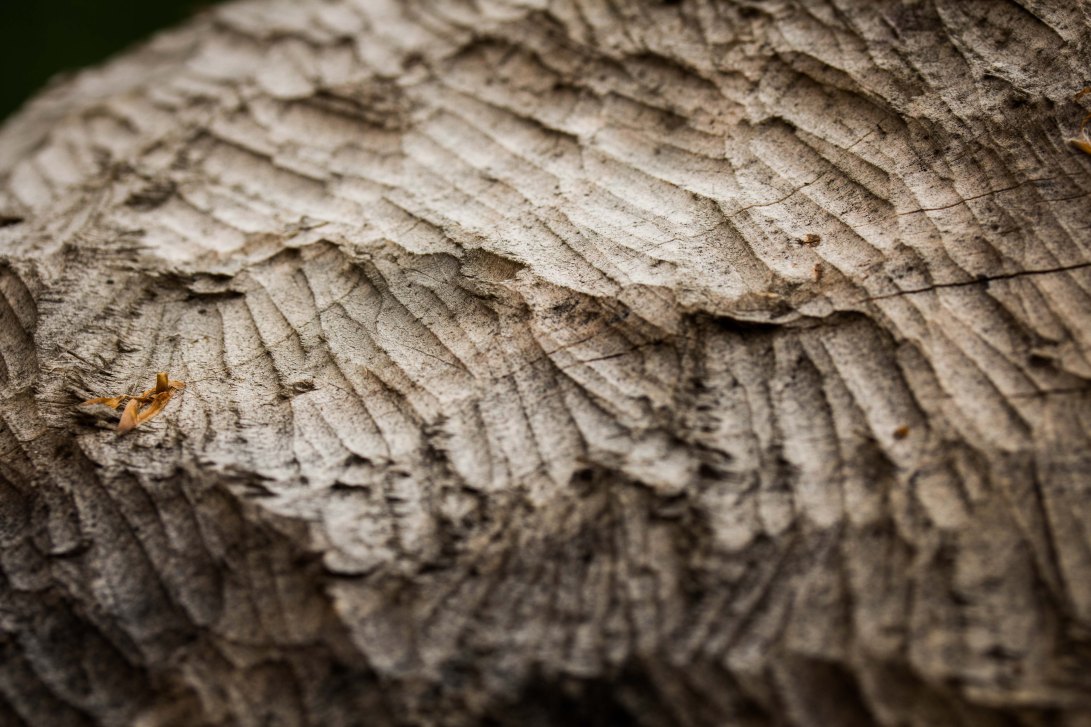
Woodland gave way to open fields, and amongst the sheep was a river that cut across the road. What was once a trickling stream was now several metres wide, all thanks to the handiwork of the beavers. Every once in a while a tree stump chiselled to a sharp point came into view, with a bed of wood clippings littered all around; countryside statues designed by the very large incisors of our beavers. Like all rodents, their incisors grow continuously, and have both a hard enamel outer layer and a softer dentine layer. Over time, wear of these two layers creates a very sharp edge, allowing the beavers to make short work of hard bark.

IMG_4708IMG_4537

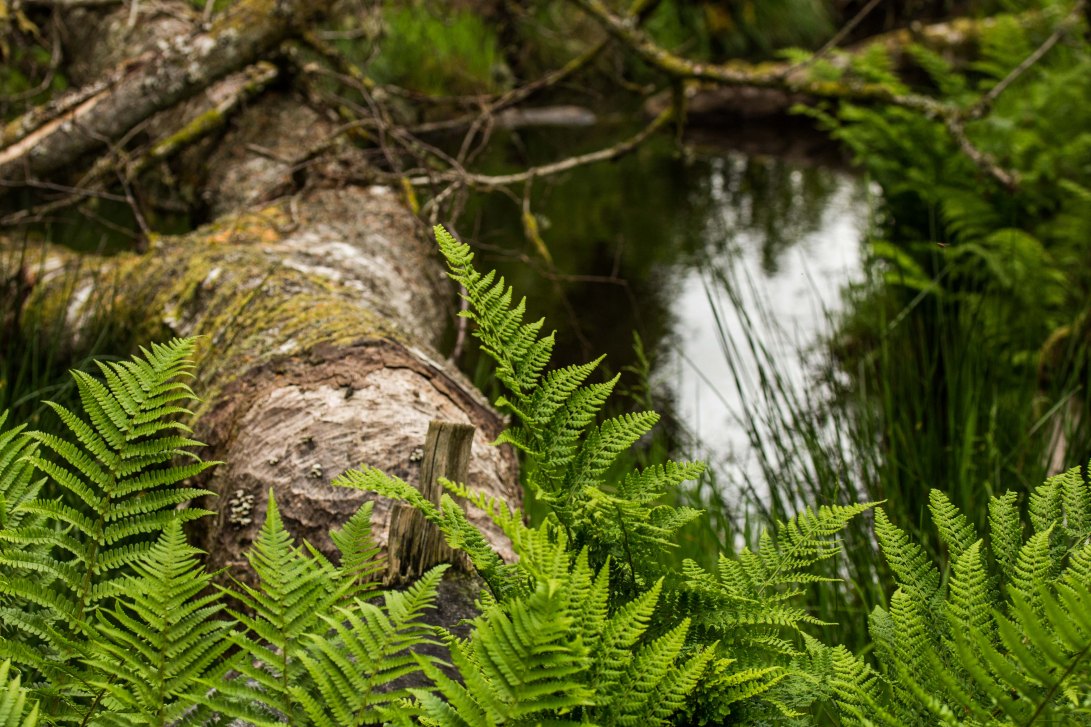
After settling into our quaint accommodation, it was back into the wild for a wander while we still had the sunlight. We headed back down the path and began to follow the river away from the cottages. It was clear this was prime beaver habitat. Branches of all different sizes lay strewn across the river, and every so often we’d come across a dam. Beaver dams are extremely important for preventing floods, stemming the flow of the river with packed mud and wood to force the water to flow at a much slower pace. Fascinatingly, the beavers here used to be captive, but after felling trees in their enclosure during the time of a flood, they managed to make their escape, and have since made this beautiful part of Perthshire their home. Now the fact remains whether they are feral, having escaped captivity, or wild, as they have had kits.

IMG_4507

A sudden ripple on the water and we all crouched down, scanning the reeds and waiting silently. Perhaps a fish, perhaps something furrier. The tricky thing with beavers is, they can move through water almost without disturbing it, so while we were watching where the ripple was, the animal could now be metres downstream. We walked on, keeping an eye out for beaver prints in the mud. More gnawed trees, and I was astonished to see a smooth chunk out of the bark several feet off the ground, meaning beavers were perfectly capable of climbing.

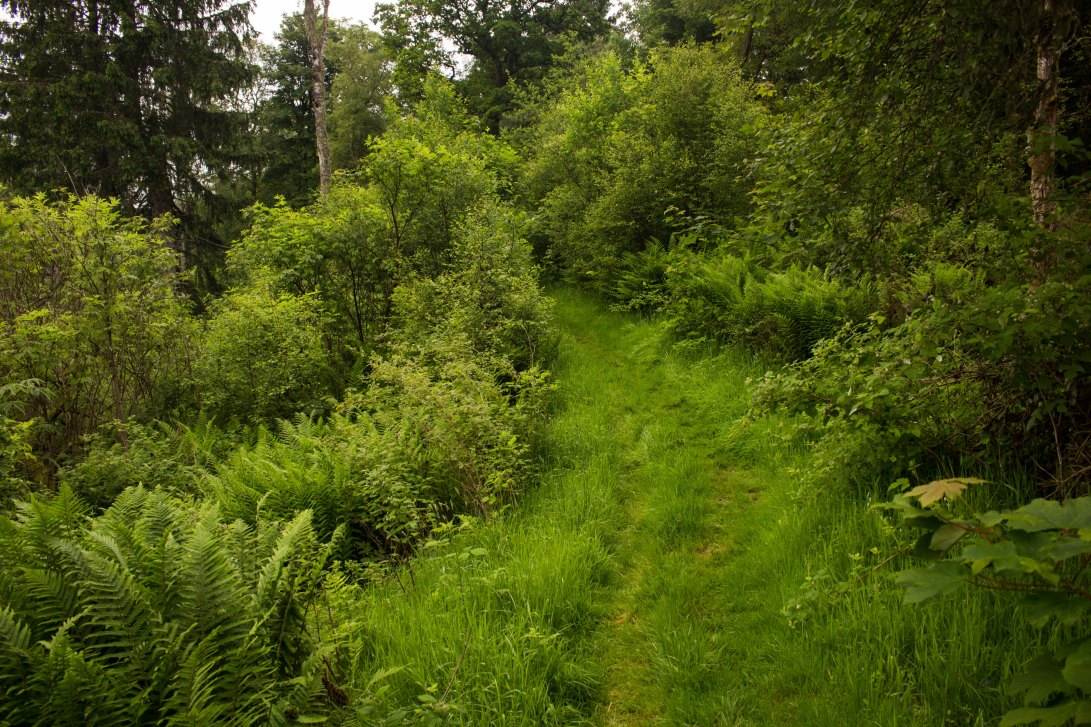
The forest was one of the greenest and richest I’d been in. It felt like the setting of Jurassic Park, with moist, bouncy grass and dense thicket. Beavers really are skilled decorators, adapting their habitat and changing the land and water use. Right now in late evening, the only sound I could hear were the bleats of sheep from the farms, but I knew hidden in these trees were hundreds of birds, mammals and invertebrates all taking advantage of the idyllic conditions here.
IMG_4463

We made our way off the beaten track and wound through the long grass. Suddenly, a sharp “WO” sound echoed through the air, signalling the presence of roe deer. A short time later and a female appeared, eying us cautiously with ears pricked up. She barked again, and in the distance the lower sound of the male echoed back. She foraged for a while before turning away, white tail flashing as she hopped athletically over the tussocks of grass.

She was doing a more graceful job than I was. Not blessed with great balance, I was staggering over logs and wading inelegantly through the grass that the deer negotiated so easily. As I stopped to find my next step, there was a speeding black bullet overheard and I looked up to see a bat zooming around in rapid circles. Heather turned on her bat detector and the alien-like clicks of the bats’ echolocation broke the silence. The calls were clearest at around 40-45Hz, suggesting that the bats were common pipistrelles, though the range of soprano pipistrelles also reaches 45Hz, so we couldn’t be entirely sure. Whichever species it was, they were abundant here; wherever I looked there were bats.

After a quick glance at the time, we realised it was nearly 11pm, despite there still being enough light to see clearly. We made our way back through the grass and towards the river, glancing at the water to see if there was any activity. A flash of white caught my eye and I felt a buzz of excitement as a barn owl swooped by in complete silence, looping ahead of us and disappearing into the trees.

Suddenly Cain froze and we ducked again. There in the field over the river was a brown blob that looked suspiciously beaver-shaped. Sure enough, the blob moved, and our first beaver made its way back towards the water, sliding down a trail and diving below the surface. The excitement was palpable, and we crept as quietly as possible along the path in an attempt to catch a second look.

The beaver didn’t seem to resurface, but then a line of ripples leading back the way we’d come made us freeze again, and a beaver raised its head above the water. As we hadn’t seen ripples coming the other way, we assumed it must be a second individual, which was even more exciting.

Sitting in complete silence, our eyes and ears were trained for any sign. Then we heard a chewing noise, and I realised I was listening to a beaver feed, which was a fantastic thing to hear.

We saw another, slightly smaller beaver floating at the edge of the river, and watched until it swam out of sight, then decided we must get back to the cottage and have some dinner. After such a successful first night, I couldn’t wait to see what we could find over the rest of this weekend.

IMG_4455

Species seen: Barn owl (Tyto alba) Common Pipistrelle (Pipistrellus pipistrellus) Cuckoo (Cuculus canorus) European beaver (Castor fiber) Moorhen (Gallinula chloropus) Roe deer (Capreolus capreolus) Swallow (Hirundo rustica) Tawny owl (Strix aluco) Wren (Troglodytes troglodytes)
 

Carna – Day Five

Species seen:  

  • Chaffinch – Fringilla coelebs
  • Common Porpoise – Phocoena phocoena
  • Common Seal – Phoca vitulina
  • Common Shag – Phalacrocorax aristotelis
  • Common Tern – Sterna hirundo
  • Golden eagle – Aquila chrysaetos
  • Grey Heron – Ardea cinerea
  • Herring Gull – Larus argentatus
  • Hooded Crow – Corvus cornix
  • Lesser Redpoll – Acanthis cabaret
  • Oystercatcher – Haematopus ostralegus
  • Song thrush – Turdus philomelos
  • White-tailed eagle – Haliaeetus albicilla
  • Wood mouse – Apodemus sylvaticus

This morning Heather woke us all up with a real treat; last night the Longworth trap had caught a wood mouse. As quietly as we could, we took some brief photos then sexed the animal. The nipples were clearly visible, meaning our mouse was a breeding female.

IMG_6260
Heather assured us the use of a plastic bag was standard procedure and it was held open for the very short time the mouse was inside. After releasing the animal back at the trap site, it scuttled away safely and unharmed.

After a few more hours sleep we visited what Heather described as a ‘sweet shop’. The shed beside the house was full of barn owl pellets which we had the opportunity to dissect. After some initial apprehension we got to work and I found myself enjoying pulling apart what a barn owl regurgitated many months previously. In my pellet I found both a mouse skull and a vole’s skull, as well as numerous minuscule jaws and ribs. It was yet another new experience for me and it was fantastic to analyse what an owl on Carna had been eating.

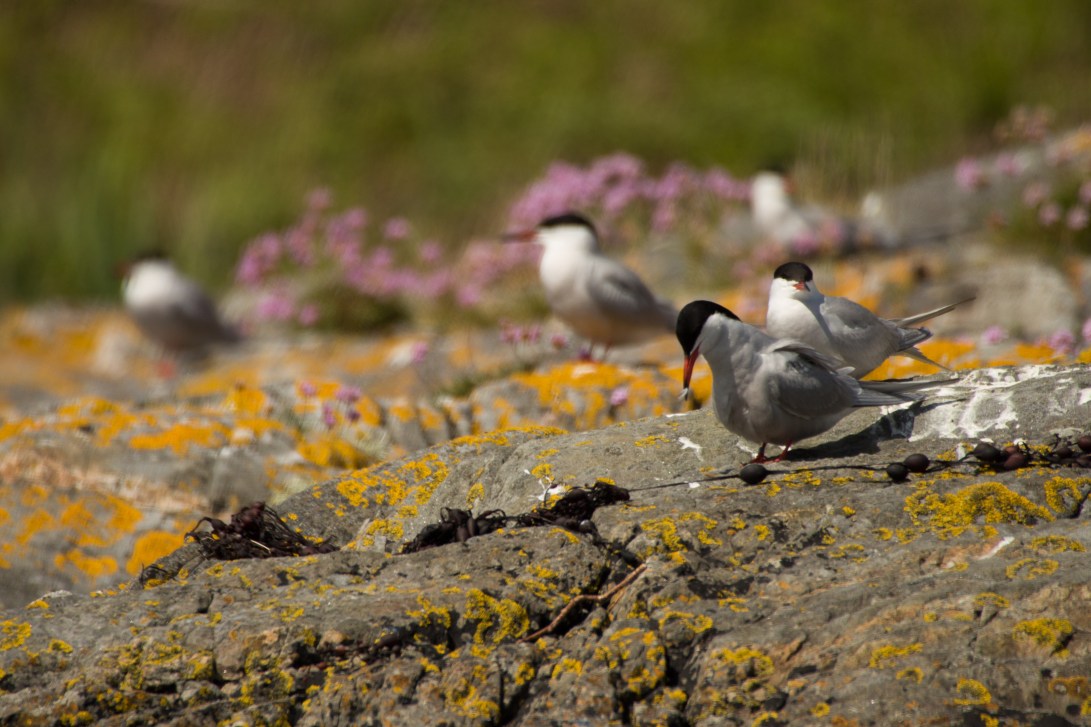
Shortly after we’d finished with the pellets Andy came to pick us up on the boat for a trip around the islands. Unbelievably we had another fantastic day of sunshine, so conditions were great for photography. For a while we watched common terns mating, and their stark white feathers contrasted with the rich colours of the moss clinging to the rock.

IMG_6277

IMG_6304

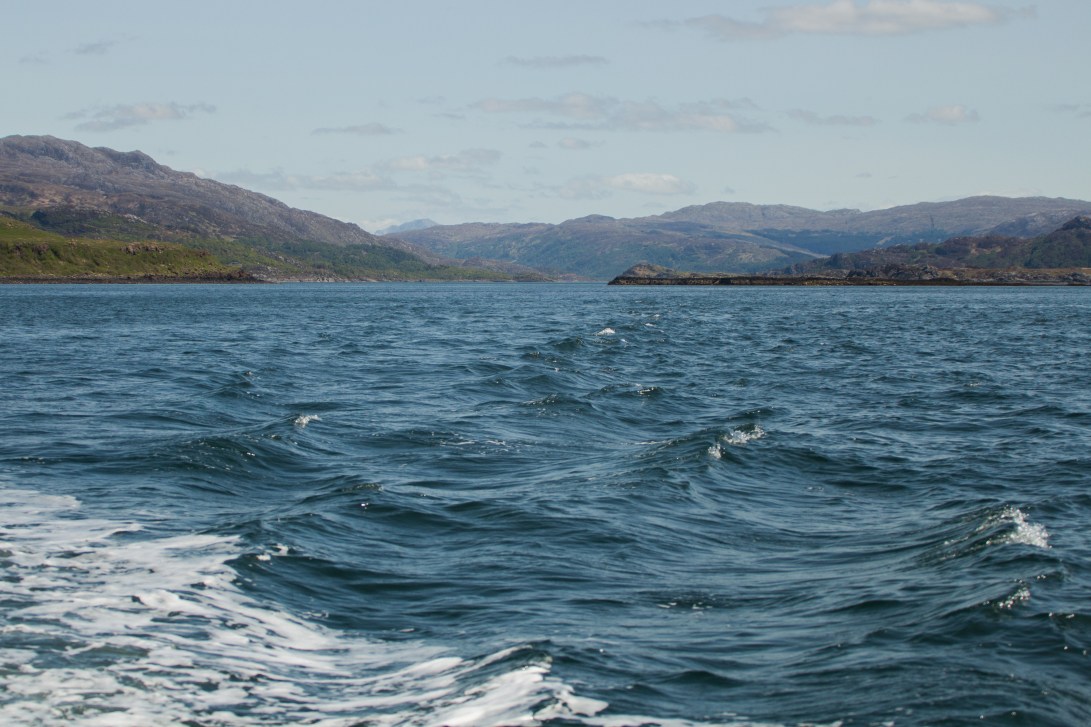
Once in open water we saw two more porpoises breaking through the waves. The tide was choppy and negotiating tripods and telephoto lenses while the boat tilted from side to side was a challenge we had to overcome. Once again Lequane was first to notice the white-tailed eagle far up in the sky, but almost immediately after we noticed a different bird above the hills. As it descended and came within binocular range we saw the rich hazel hue of the golden eagle’s wingspan. It dipped low and landed amongst the trees so we lost it, but this bird was near the top of my wish list and it was so satisfying ticking it off.

IMG_6293IMG_6320

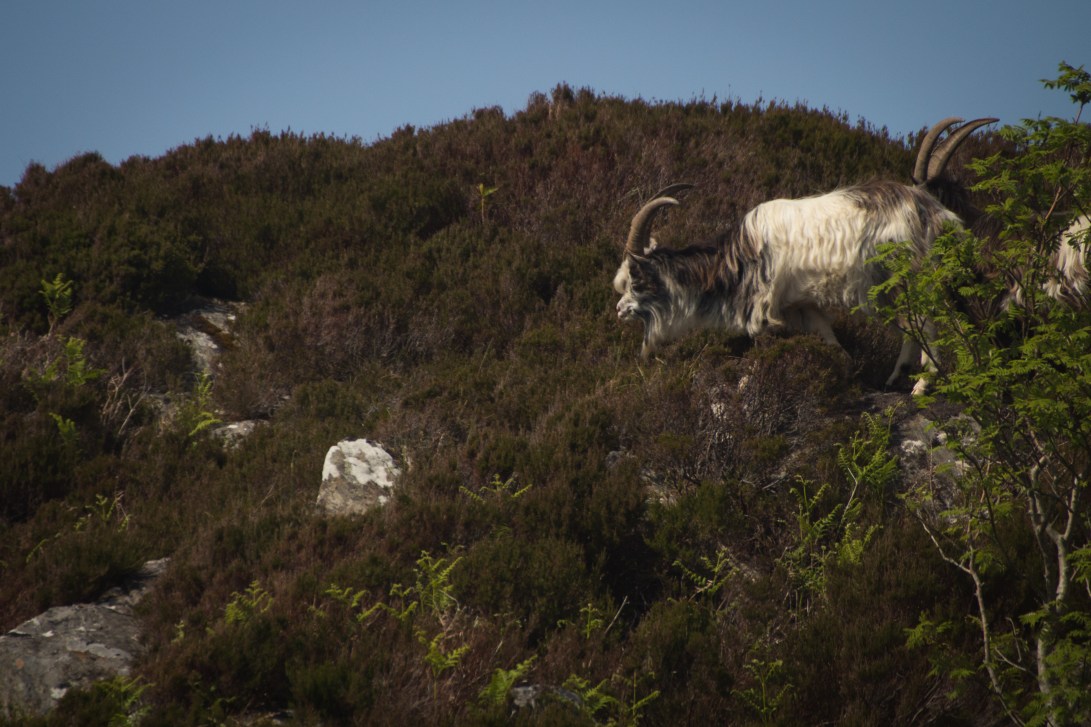
On the way back to the house we spotted some of the wild goats that had made the rocky coast of Carna their home. We also stopped off at the shag’s nesting site again. Not many people are aware of these birds but I find them extremely handsome with their sharp yellow eyes and the green sheen in their feathers.

IMG_6357IMG_6365

When we got back Cain and Heather had gone to pick up the camera traps and we all gathered at the kitchen table to see what we’d captured. It was nothing short of a success. In the first trap we had several clips of an otter trotting in and out of a small cave mouth and sprainting at the entrance. In the same spot a few hours later the whole frame was filled with two pricked up ears and a pair of antlers that were unmistakably a roe deer’s. Heather and Cain informed us that this was the first official footage of a roe deer on Carna so this was fantastic news. By using the camera traps we can find out new information about just how diverse Carna is.

Footage from the next trap showed a vole that we were unable to identify. It could have been either a bank vole or field vole sub-species. Either way, it was great watching the rodent feast on the apple and seeds we’d left, although it did manage to shift the trap so we could no longer see anything but out of focus rock.

Yet more treats were to follow. The next trap had been set in the bluebell wood and a fox had visited late one night. Though it didn’t linger, we still got to see the mammal’s gorgeous fluffy tail as it trotted through the bracken.

Seeing the wildlife on the Isle of Carna on the camera traps was a great end to an unforgettable experience. In only four and a half days I have learnt so much about tracking and field craft and got an insight into the ecology of an island rich in wildlife. It was so refreshing being around people who get as excited as I do when I hear a cuckoo or glimpse an otter swimming across the loch. By being separated from technology I have had the chance to enjoy the outdoors even more. I’ve been out of breath on numerous occasions during our hikes and scrambles but it’s been worth it every time. I even did some sketching, a pastime I haven’t enjoyed in years.

Everybody should spend time in a place like Carna, especially those who don’t fully appreciate the natural world. Sharing a loch with seals, otters and porpoises is something everybody should experience. While I am the last person to criticise books, sometimes the best way to learn about wildlife is to be a part of it. Get your hands dirty lifting rocks to see the starfish underneath, wade ankle deep in mud to set a camera trap and get a crick in your neck gazing at eagles. It really does change you.

Carna – Day Two

Species seen:

  • Buzzard – Buteo buteo
  • Chaffinch – Fringilla coelebs
  • Common Sandpiper – Actitis hypoleucos
  • Common Seal – Phoca vitulina
  • Common Tern – Sterna hirundo
  • Cormorant – Phalacrocorax carbo
  • Cuckoo – Cuculus canorus
  • Drinker Moth caterpillar – Euthrix potatoria
  • Eurasian Otter – Lutra lutra
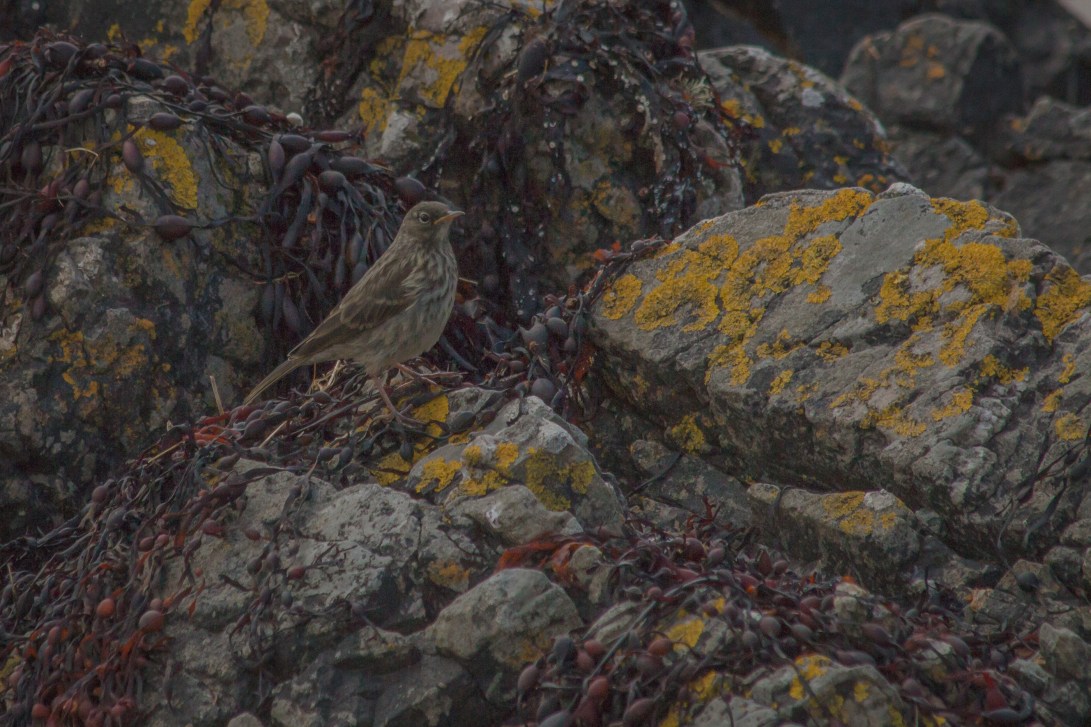
  • Eurasian Rock Pipit – Anthus petrosus
  • Great Black-Backed Gull – Larus marinus
  • Green-Veined Butterfly – Pieris napi
  • Grey Heron – Ardea cinerea
  • Hooded Crow – Corvus cornix
  • Oystercatcher – Haematopus ostralegus
  • Song Thrush – Turdus philomelos

IMG_5639

IMG_5664

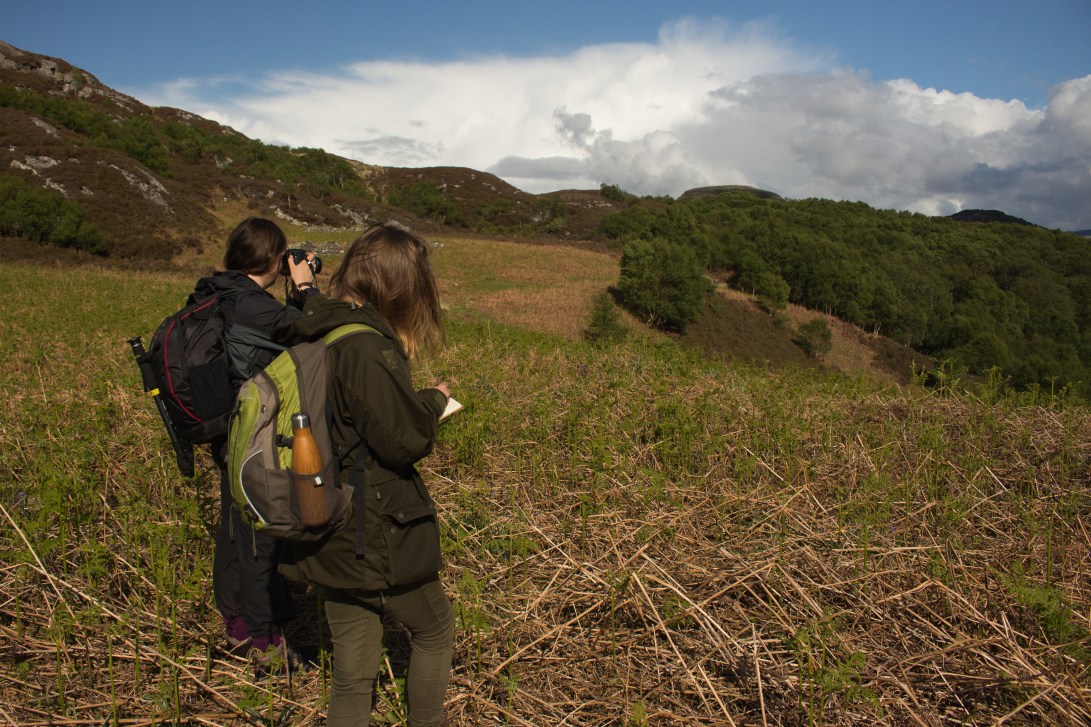
After a great night’s sleep we woke to brilliant sunshine. Over breakfast, we started writing a storyboard for a film that would document our Carna experience. After some lunch, we headed out with Heather and Cain for a walk across the island. Naturally our pace was slow as we were stopping every few seconds as a mystery bird swooped over or a brief flash of brown promised an otter. Once again we were rewarded and saw many different species of bird, invertebrate and mammal.

IMG_5683
The stunning drinker moth caterpillar

IMG_5695

IMG_5696
Hidden Beach Treasures
IMG_5725
Lone Rock Pipit
IMG_5727
Common Tern hunting on the loch
IMG_5731
Song Thrush on the rocks

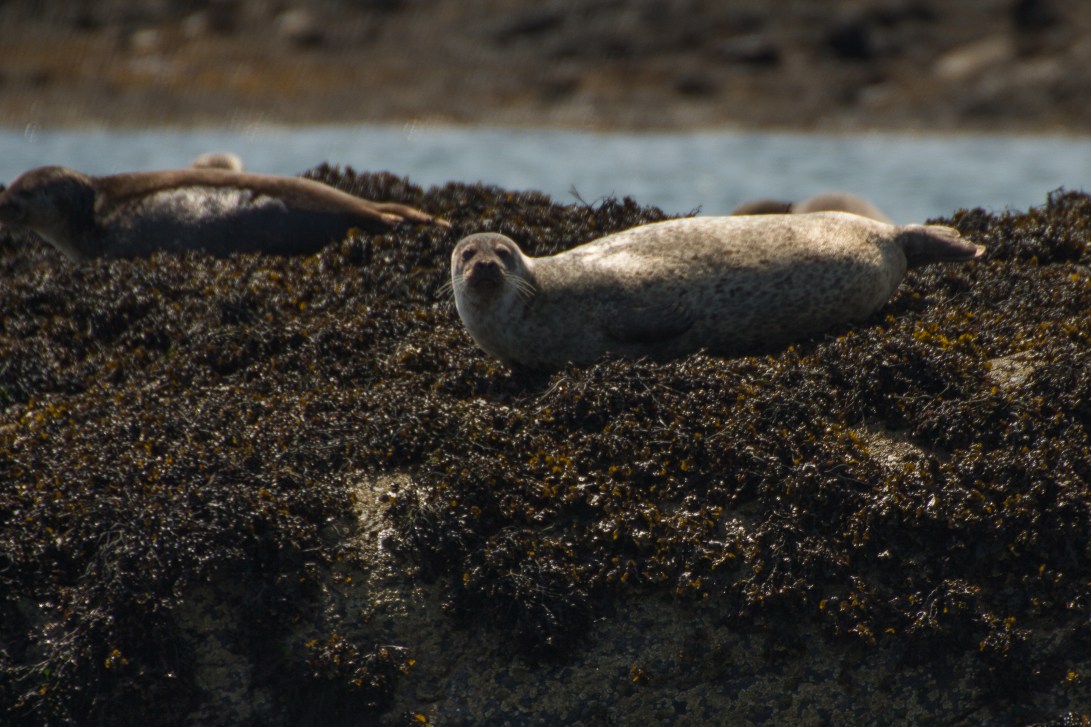
Of birds we saw a cormorant, common sandpiper, buzzard, rock pipit, grey heron and a pair of cuckoos, something we were all excited to see. We also found two drinker moth caterpillars, beautiful insects of black, hazel and amber. During the day we were fortunate enough to see mammals too. We were just admiring a view only the birds got to see when an otter came into view. It was hard to tell the gender, but we watched it for a while diving into the water and popping up again in a new spot. Heather explained that when a dark blob in the water was hard to distinguish, otters always show their tail when they dive under while seals do not. Our otter soon climbed on land and disappeared from view. We made our way down the hill after it but the sneaky mustelid was long gone. A lens change and a snack later, we spent some quality time perched on the rocks watching a herd of Common seals lounging in the sun. The group was spread out over two sub-islands; one was a skinny scrap of shingle where six seals were basking, both adults and juveniles. Seals are always so entertaining. Despite hardly moving, they provide endless enjoyment. For me it’s a combination of their banana pilates move, orb-like bottomless eyes and long white whiskers speckled with sand.

IMG_5759

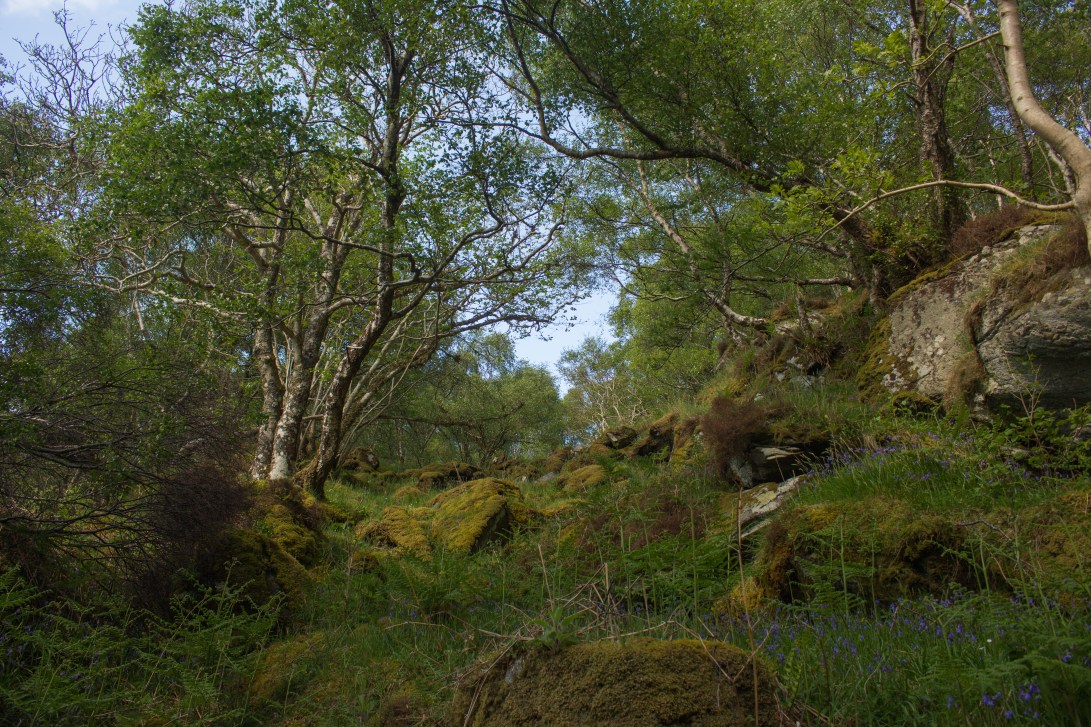
In a while we left the seals behind and headed into the wood. The area was predominantly silver birch; the thin overhead branches of the species allow bluebells to cover the forest floor in splashes of violet. We ascended up and up and started noticing several spraints left by otters, as well as some evidence of deer scat. The grass had been worn down in a narrow pathway, indicating that the area was frequently used. This looked like a good place for one of our camera traps, so we set up the kit and crossed our fingers.

IMG_5775IMG_5779IMG_5805IMG_5821

After leaving the first camera behind we soon found a good place for the second. Near the top of the hill we were climbing were small constructions of dry stonewalls that were slowly crumbling from misuse. It looked like the perfect haven for small mammals with countless hidey-holes, so we found a spot for another camera and baited it with apple.

IMG_5825

By early evening the sun was strong and casting an incredible light across the landscape, throwing the hills into sharp relief. Now standing amongst the heather and drinking in the view, the challenging terrain and heavy camera bags seemed trivial now we’d reached the top. The weather couldn’t have been better, no rain and hardly a breeze.

The way back was shorter as we cut across the hills instead of sticking to the coast. This allowed us to photograph the landscape from several high viewpoints and savour the perfect evening. Cain spotted a red deer darting through the heather and moments later we watched six more grazing across the water. After only a few slips and falls we made it back to the cottage unscathed. Needless to say, we would all be sleeping well tonight after a long but extremely awarding day.

IMG_5826IMG_5869

Carna – Day One

Species seen (heard):

  • Barn Owl – Tyto alba
  • Common Frog – Rana temporaria
  • Common Tern – Sterna hirundo
  • Eurasian Otter – Lutra lutra
  • Hooded Crow – Corvus cornix
  • Lesser Redpoll – Acanthis cabaret
  • Red-Breasted Merganser – Mergus serrator
  • (Cuckoo – Cuculus canorus)
  • (Snipe – Gallinago gallinago)
  • (Tawny Owl – Strix aluco)

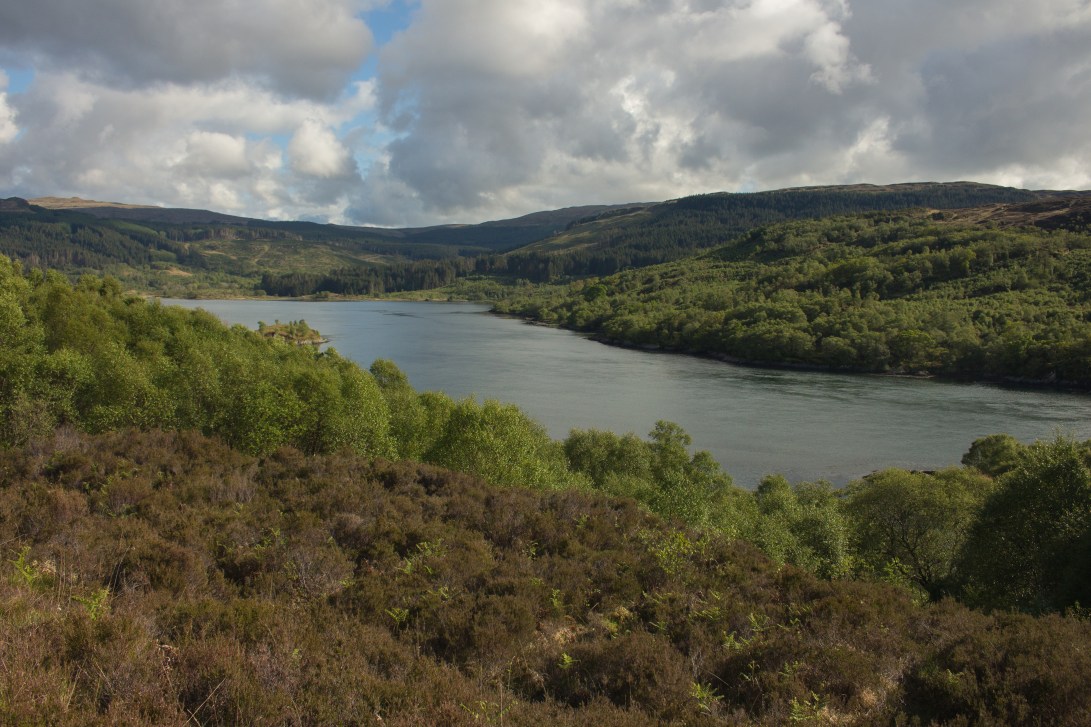
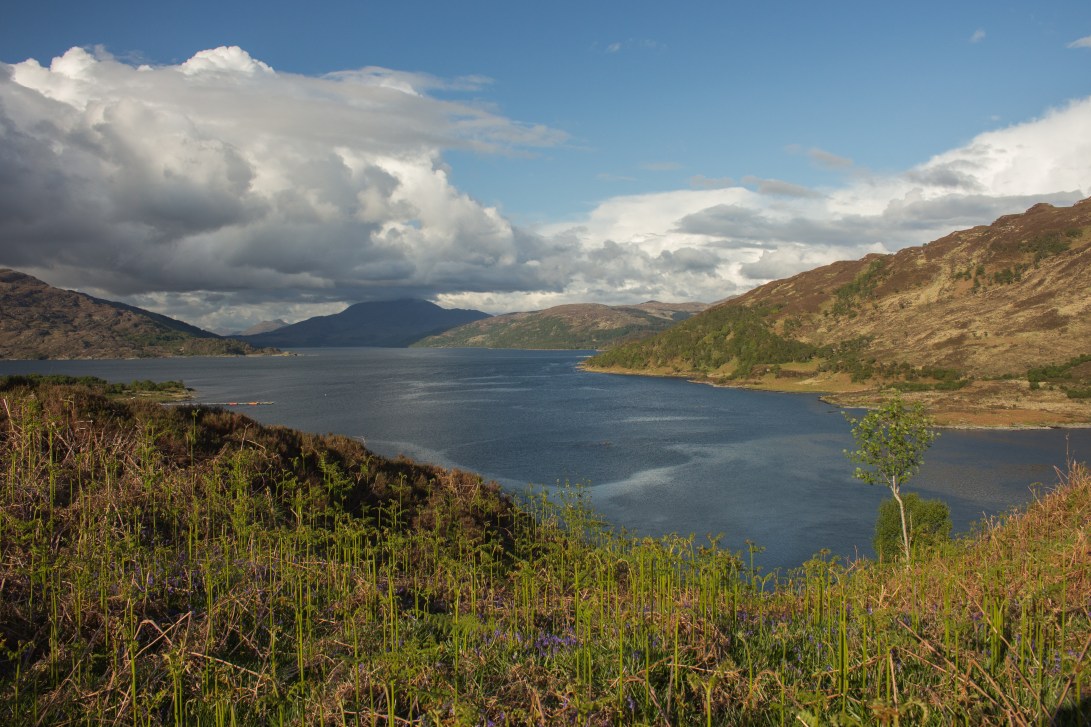
From May 21st to 26th, I joined four other Wildlife Media students for an unforgettable expedition to the Isle of Carna, a beautiful remote island on Loch Sunart on the west coast of Scotland. Our aim was to rewild ourselves by taking part in conservation activities like conducting bat surveys, setting up camera traps and recording wildlife using journals.

By mid afternoon we arrived at Ardnamurchan Charters, eager to see the island where we’d be spending the next five days. Andy Jackson, owner of the Charters, met us with his dog Tag and we began loading our kit onto the boat. There was a surprising amount for such a small group!

The day was overcast but Carna still looked impressive as we sped towards the island. The cottage came into view, a quaint white building with a conservatory that we knew would be perfect for observing wildlife on the loch. Sure enough, in the first few hours we saw red-breasted mergansers, chaffinches, song thrushes and a lesser redpoll.

IMG_5585
Loch Sunart
IMG_5591
The pontoon where we waited for Andy

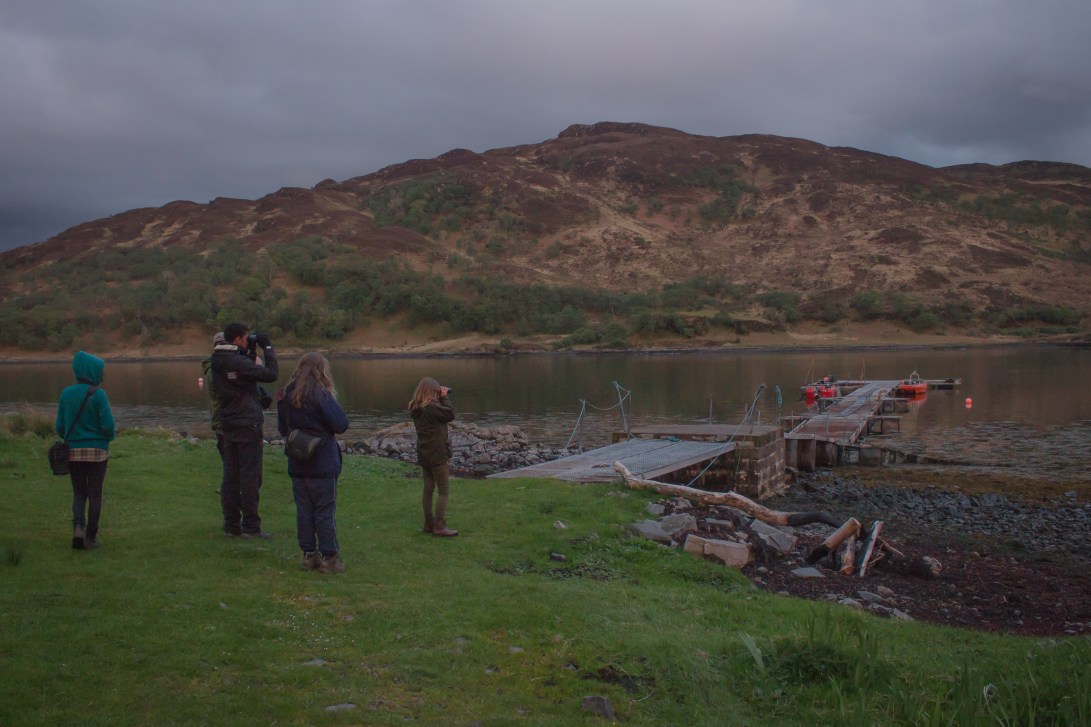
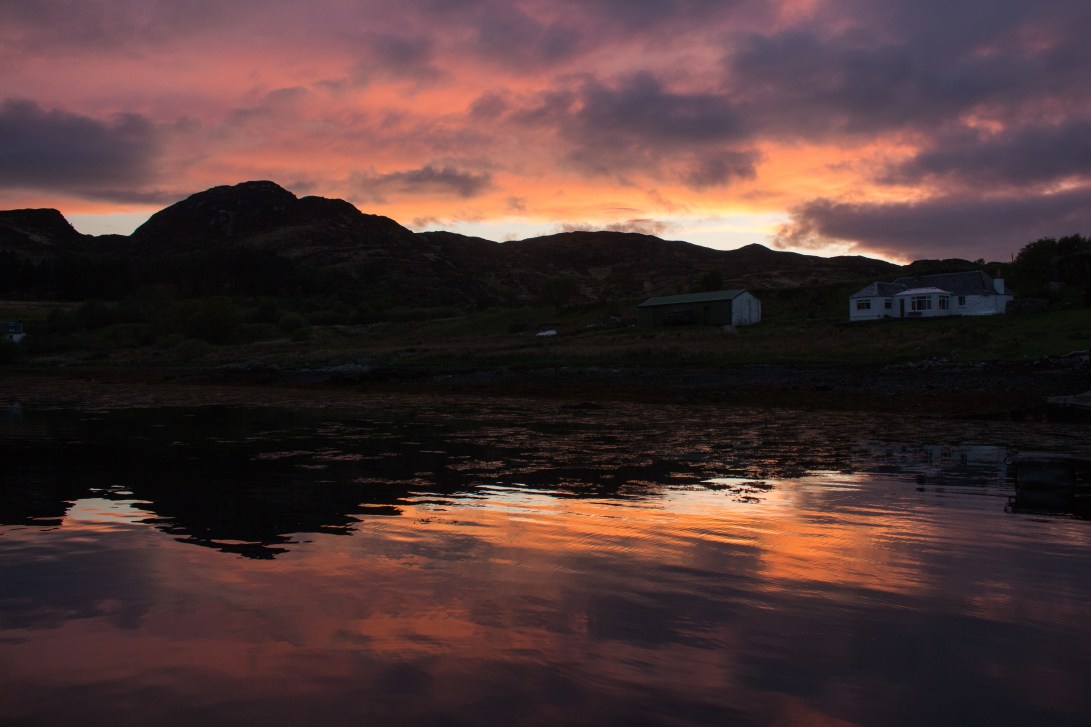
After settling in, we noticed how beautiful the evening sky was and armed ourselves with cameras and binoculars, eager to find out what we would see when the sun went down. After capturing a radiant pink sunset we retrieved the camera traps Heather and Cain had previously put out. The first was at the end of the pontoon, and immediately we saw evidence of otter sprainting, a sign of territory marking. Otters will use their faeces in this way to make their presence known to others in the area. At the pontoon there were several patches, so we were hopeful that the camera had caught the night-time visitor.

The second camera was in a wooded area up the hill. We knew the long grass would be full of ticks, but we’d bought tweezers and knew this was one of the many sacrifices a wildlife enthusiast has to make! Eventually we found the camera and made our way back down the hill.

A peculiar sound made us stop and listen. Heather quietly told us they were snipe, which make an extraordinary drumming noise with their tail feathers. Although we never saw them, they must have been wheeling around our heads, as the noise reverberated in every direction. Amongst the snipe’s commotion, we also heard the distant calls of a tawny owl and a cuckoo.

IMG_5602
Carna at dusk

Just as we were heading back to the cottage, Cain and I decided to check the pontoon with our binoculars. I made out a black blob in the gloom and suddenly the blob moved. As silently as possible, we alerted the others and watched the otter wander across the pontoon. This was my first ever wild otter so I was thrilled to see one on my first night here. I was so excited I almost missed a barn owl swoop across the loch, screeching into the night.

IMG_5615
Studying the water for otters

I couldn’t believe how much we’d managed to see in the first night alone. I got into bed tired after the long journey but excited for the following days.

IMG_5623
Stunning sunset