Northumberland: Day Two


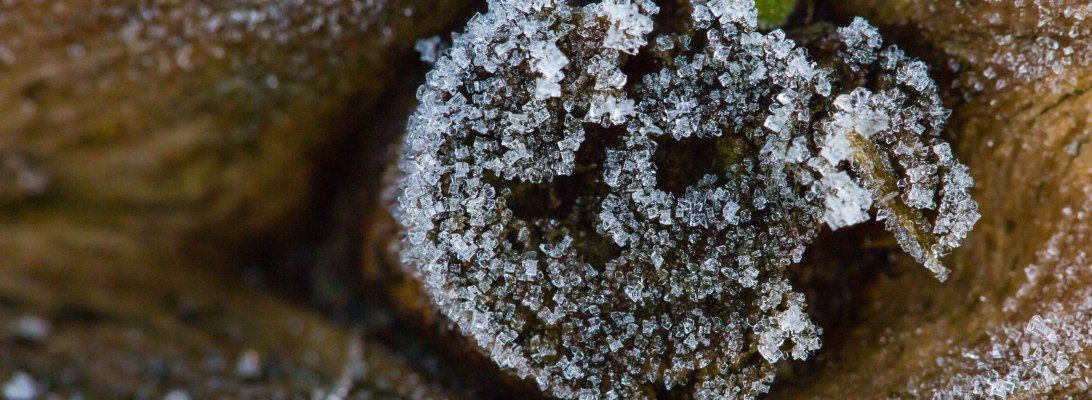
When I woke up the blinds were bright. I had a peek outside and was thrilled to see there was a frost clinging to the grass. I hurried into clothes and headed out into the garden. It had been a full year since my last frost and I was eager to capture some macro photos again. Leaves, twigs and thistles were all coated in a fine layer of silver crystals that, when hit by the sun, twinkled and shone like last night’s stars. Soon I had wet knees from crouching in the grass and the beginnings of a crick in my neck from getting as close as possible. My plan was to crop the photos in to create a repeating abstract texture. As usual, I took far more than I probably needed.

7W1A83007W1A8313-2

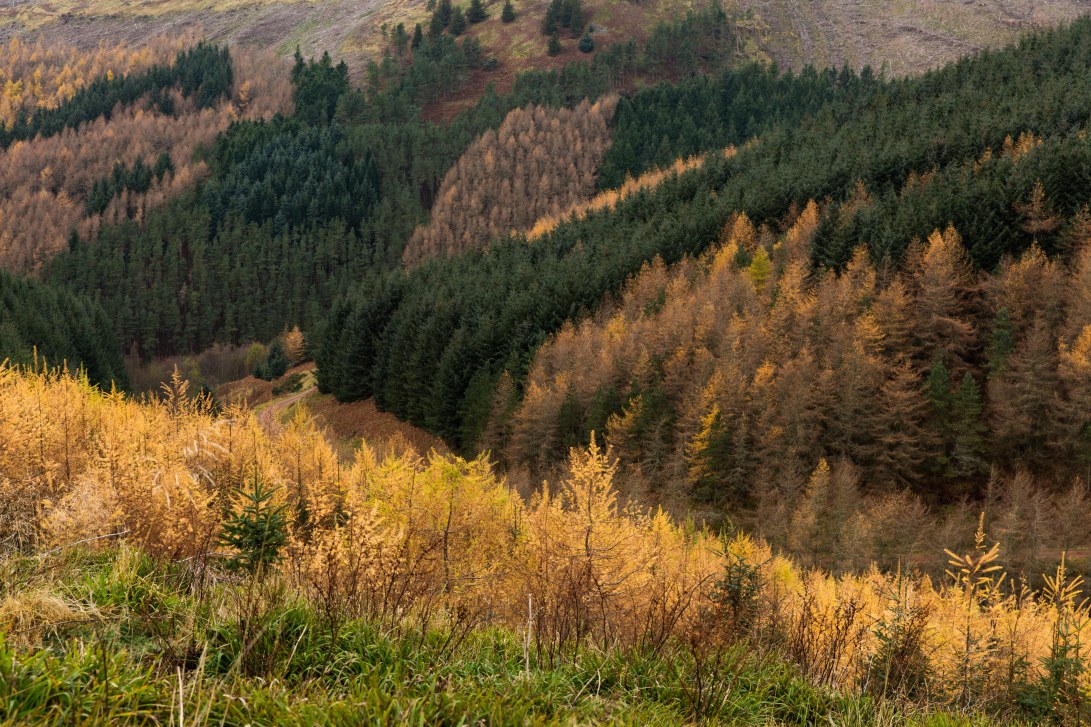
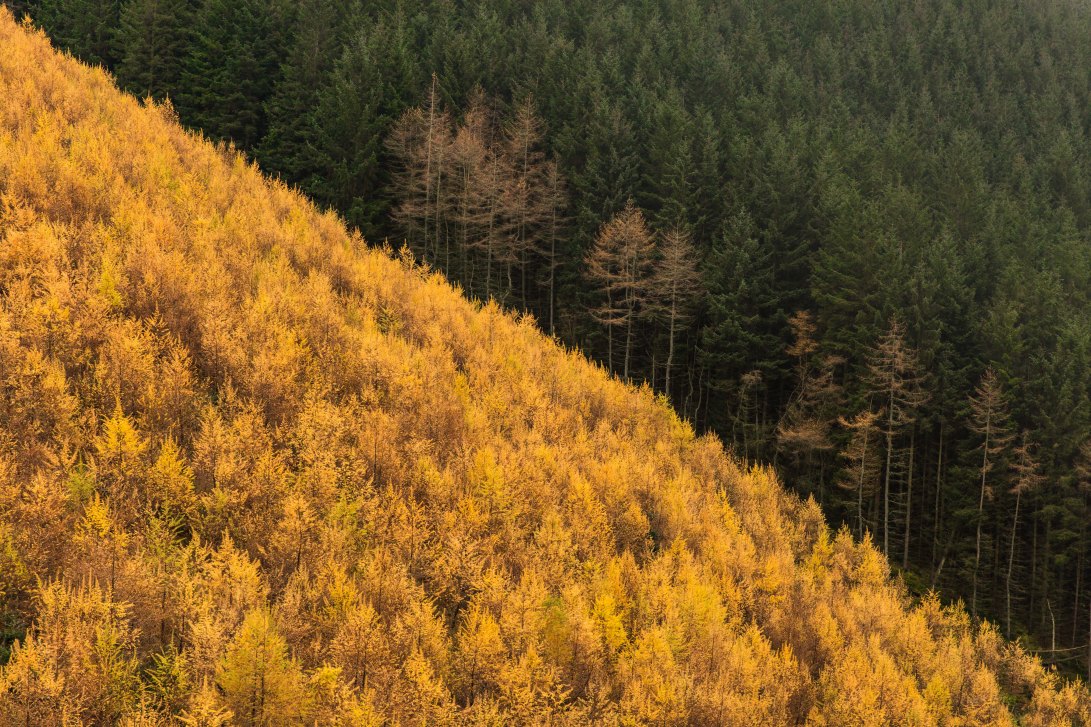
After relaxing for a while in the bothy I headed out again, down one hill and up the next. I passed the tyre swing, but the lack of decent light meant the shots weren’t quite what I imagined. I knew I had to photograph the bright yellow and orange larches that had taken my breath away on the drive in yesterday. Unfortunately the sun that I’d wanted to shine was well and truly concealed behind thick clouds; the light was so diluted I could gaze in its direction without difficulty. However, when I began to shoot, the rusty warm hues still popped. I began to experiment with positioning individual subjects like stray grasses in front of the camera, so the trees bled together and created a vibrant background.

7W1A83817W1A8426-27W1A8397

The rest of the day was spent writing beside the fire and recording what I’d seen during the day. I had a sneaky look at my photos so far and was pleased with some of the outcomes. Hopefully there’d be more opportunities on our last day tomorrow.

7W1A8440

Sightings

  • Chaffinch (Fringilla coelebs)
  • Goldcrest (Regulus regulus)
  • Goldfinch (Carduelis carduelis)
  • Robin (Erithacus rubecula)

Chesters: Day One

The rain was lashing on the windscreen as we made our bumpy way up the hill to Chesters. Sheep shook their sodden wool and watched the car with quizzical expressions as it grumbled over rocky grass. Before long the bothy came into view, nestled amongst the rolling bracken hills. I was just scanning the ground for darting pheasants when a pair of beady brown eyes made me call out for Cain to stop the car. Slowly reversing, we just caught a glimpse of the hare’s face before it turned tail and scarpered back through the bracken. I saw this as a very good wildlife omen for the rest of the weekend.

After settling in and enjoying some lunch, we headed through the Breamish Valley to meet the expeditioneers. I had a scan with the binoculars and spotted a kestrel hovering, drifting and hovering again. Heather told me she’d seen a pair of ravens swooping around yesterday, so it would be fantastic to hear some ‘kronking’ this weekend.

The weather couldn’t seem to make up its mind. Rain drummed on our heads one minute, then the sun was shining and turning the hills gold. Skylarks zoomed above, filling the air with their high-pitched chirruping, while pheasants screamed down in the valley, darting in and out of view like a Scooby Doo villain chase.
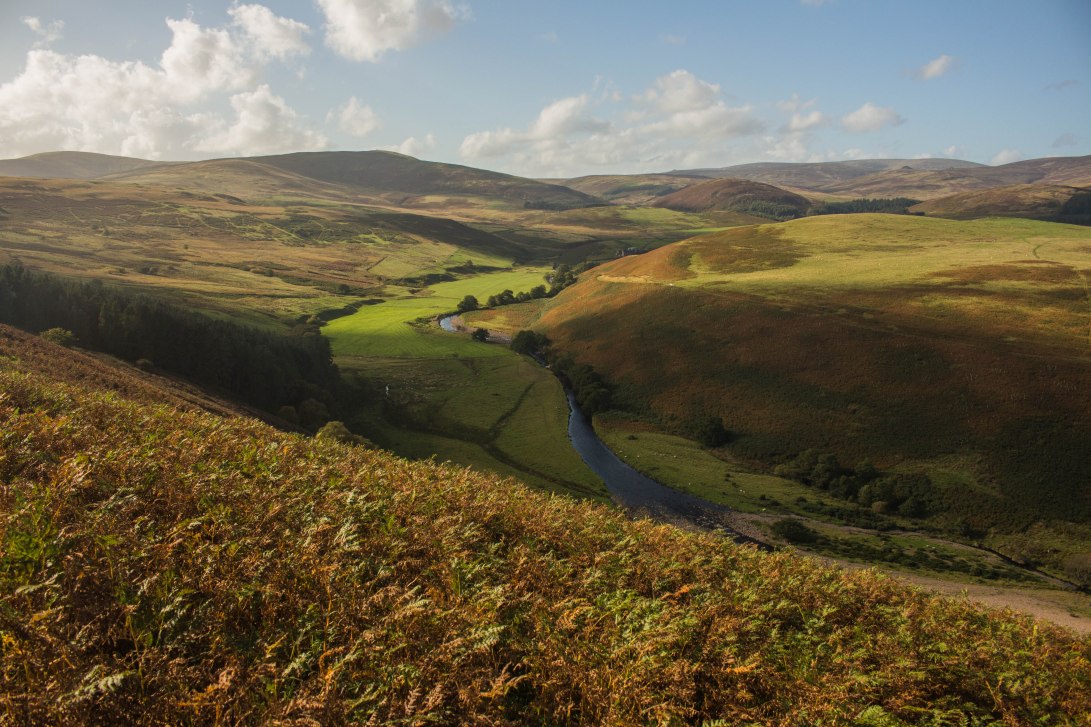
IMG_6120

Once the expeditioneers had unpacked, we headed out for a wander. A breeze whistled in the grass but the sun still fought with the clouds for a good view. We ducked into the nearest conifer plantation to see if there were any good spots to set a camera trap. After following a trodden track that trailed through the trees – a sure sign that there were creatures using this route, perhaps a group of roe deer or even a badger – we positioned the trap with a good vantage point down the trail.

Further on through the plantation was a Scots pine peppered with deep, spherical holes. The tree was dead, and had become the perfect sculpting project for great-spotted woodpeckers, who had transformed it into a wooden honeycomb. It was extraordinary to see tough, dead bark being carved and moulded so easily by blackbird-sized creatures. Although we did hear their sharp ‘kik’ call somewhere in the plantation, we didn’t meet any possible culprits, so couldn’t be sure if it was the work of a single bird or perhaps multiple competing for such a valuable pecking post.

IMG_6215

The sun was slowly setting. As the light faded, a hazy glow settled over the Cheviot Hills, illuminating the uppermost branches. Every colour was intensified; russet orange, army green, lime green, all blending together and criss-crossed with conifer needles. Spots of bright light broke through gaps in the canopy, playing tricks on my eyes when I thought a hyper-lit brown leaf was a luminous orange mushroom.
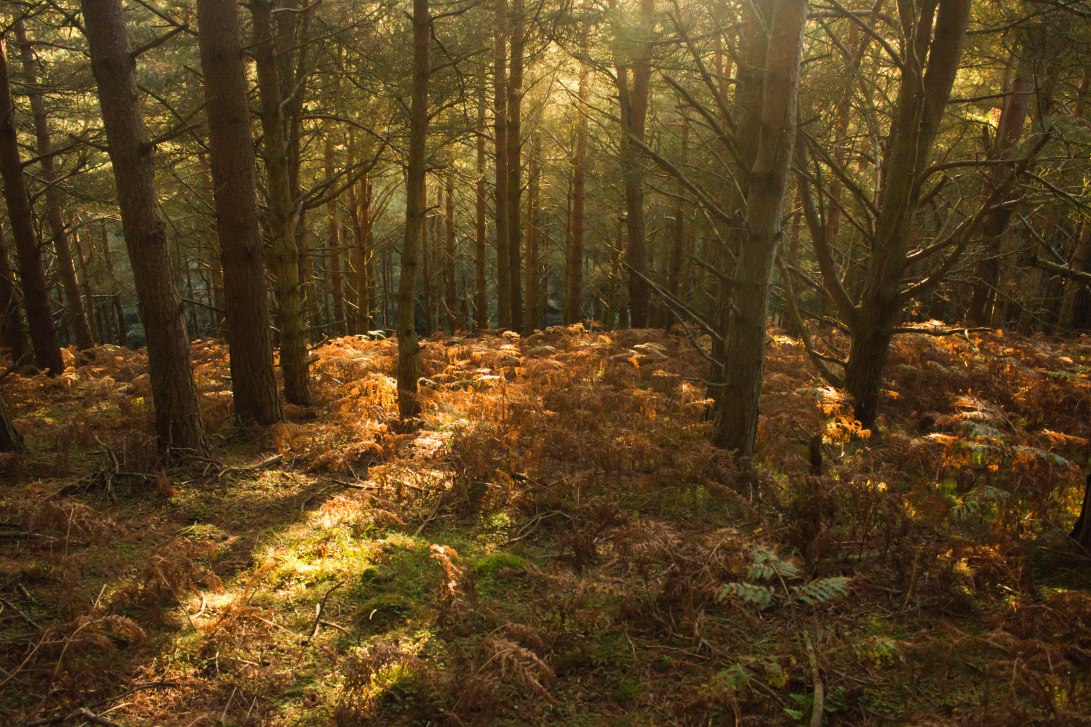
IMG_6190IMG_6160

After a while we broke out of the plantation and wandered along the Chesters Burn as it bubbled downstream. The water was a vivid blue, frothing white as it crashed over rocks. A piercing ‘zrik!’ cut through the rush of the river and we all turned to spot the white-breasted bullet speeding down the watercourse. Sure enough, a dipper zoomed into view, wings a frantic blur. Perhaps less regally dressed than its neighbour the kingfisher, but still a charismatic and highly specialised little fisherman.

By now the sun had sunk out of view and the landscape dulled in colour, the familiar dusky haze settling over our surroundings. Heather told us about an expression that perfectly described this time of day: entre chien et loup, meaning “between dog and wolf”. In dim twilight, our eyes have to work harder to distinguish shapes, perhaps mistaking a harmless dog for a slightly more intimidating canine! Up in the Cheviots though, there were no monsters hiding, so it was enlightening to see what was venturing out at this time of day.
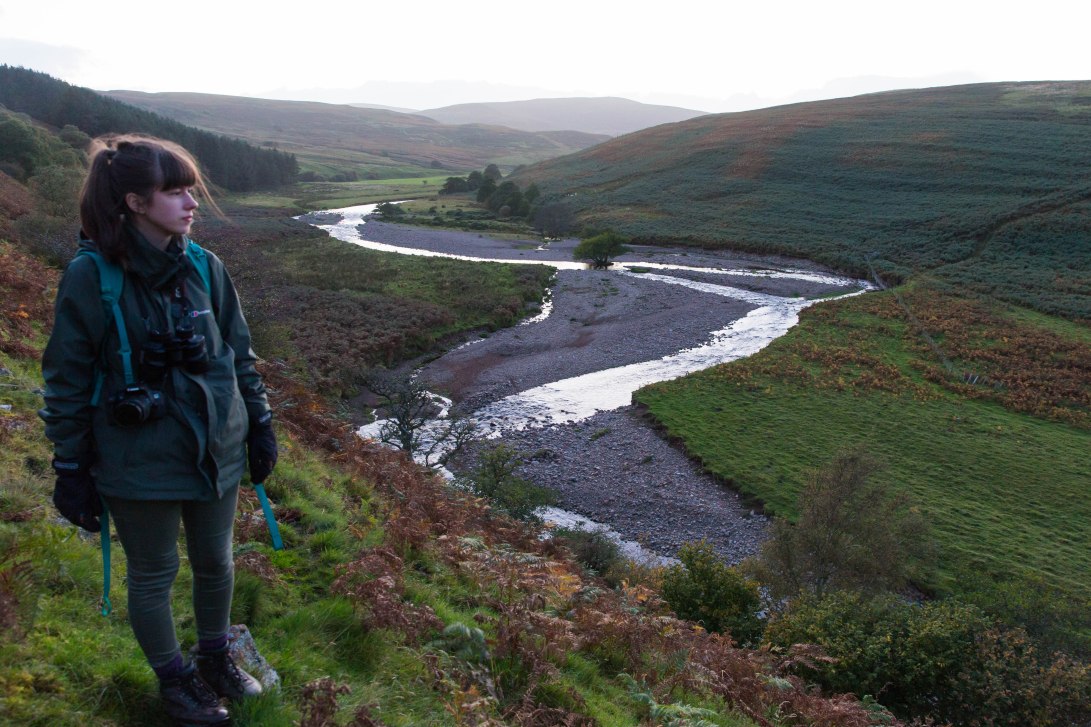
7V8A5395

Once we’d made the ascent back up the hill to the bothy, the moon and stars had dominance of the sky. There were a few wispy clouds, but mostly the horizon was clear, so we all retrieved hats and gloves and set up tripods in the garden for some star photography. I hadn’t had a lot of practice shooting at night, so was pleased to capture some shots of the bothy backed by the entire night sky. Getting such good views of stars was a breathtaking end to our first day in the wilderness.
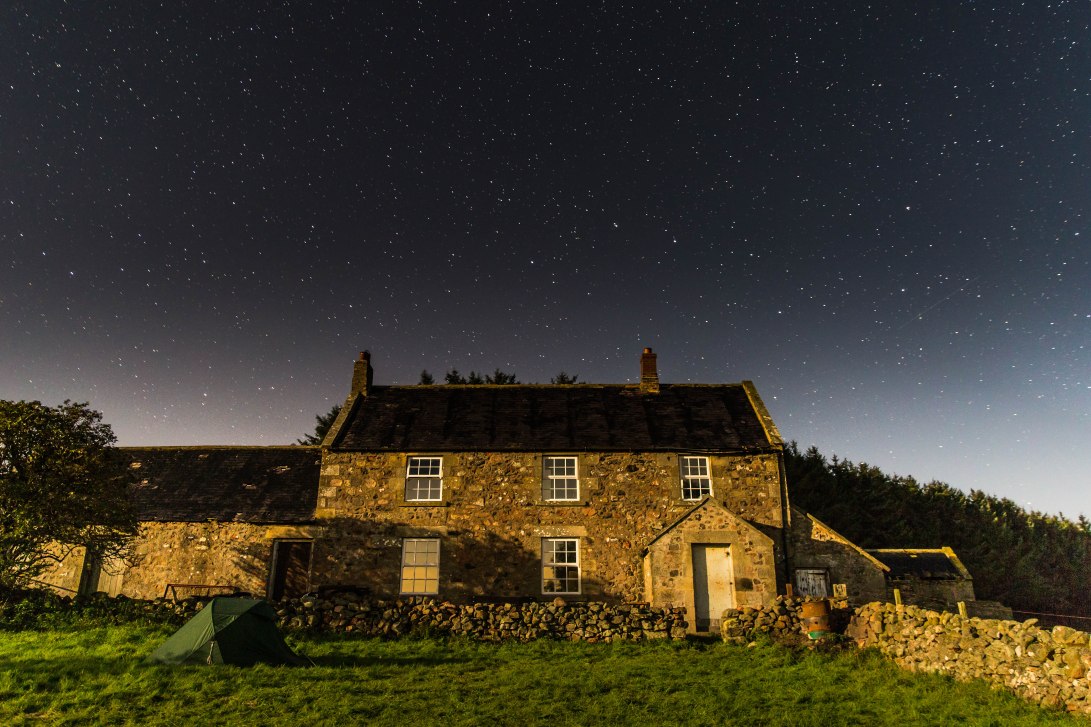
7V8A5401-2

Species Seen:

Brown Hare (Lepus europaeus) Buzzard (Buteo buteo) Carrion Crow (Corvus corone) Dipper (Cinclus cinclus) Coal Tit (Periparus ater) European Rabbit (Oryctolagus cuniculus) Goldcrest (Regulus regulus) Great Spotted Woodpecker (Dendrocopos major) Great Tit (Parus major) Grey Heron (Ardea cinerea) Kestrel (Falco tinnunculus) Long-Tailed Tit (Aegithalos caudatus)  Mallard (Anas platyrhynchos) Meadow Pipit (Anthus pratensis) Pheasant (Phasianus colchicus) Skylark (Alauda arvensis) Woodpigeon (Columba palumbus)
Carna – Day Five

Species seen:  

  • Chaffinch – Fringilla coelebs
  • Common Porpoise – Phocoena phocoena
  • Common Seal – Phoca vitulina
  • Common Shag – Phalacrocorax aristotelis
  • Common Tern – Sterna hirundo
  • Golden eagle – Aquila chrysaetos
  • Grey Heron – Ardea cinerea
  • Herring Gull – Larus argentatus
  • Hooded Crow – Corvus cornix
  • Lesser Redpoll – Acanthis cabaret
  • Oystercatcher – Haematopus ostralegus
  • Song thrush – Turdus philomelos
  • White-tailed eagle – Haliaeetus albicilla
  • Wood mouse – Apodemus sylvaticus

This morning Heather woke us all up with a real treat; last night the Longworth trap had caught a wood mouse. As quietly as we could, we took some brief photos then sexed the animal. The nipples were clearly visible, meaning our mouse was a breeding female.

IMG_6260
Heather assured us the use of a plastic bag was standard procedure and it was held open for the very short time the mouse was inside. After releasing the animal back at the trap site, it scuttled away safely and unharmed.

After a few more hours sleep we visited what Heather described as a ‘sweet shop’. The shed beside the house was full of barn owl pellets which we had the opportunity to dissect. After some initial apprehension we got to work and I found myself enjoying pulling apart what a barn owl regurgitated many months previously. In my pellet I found both a mouse skull and a vole’s skull, as well as numerous minuscule jaws and ribs. It was yet another new experience for me and it was fantastic to analyse what an owl on Carna had been eating.

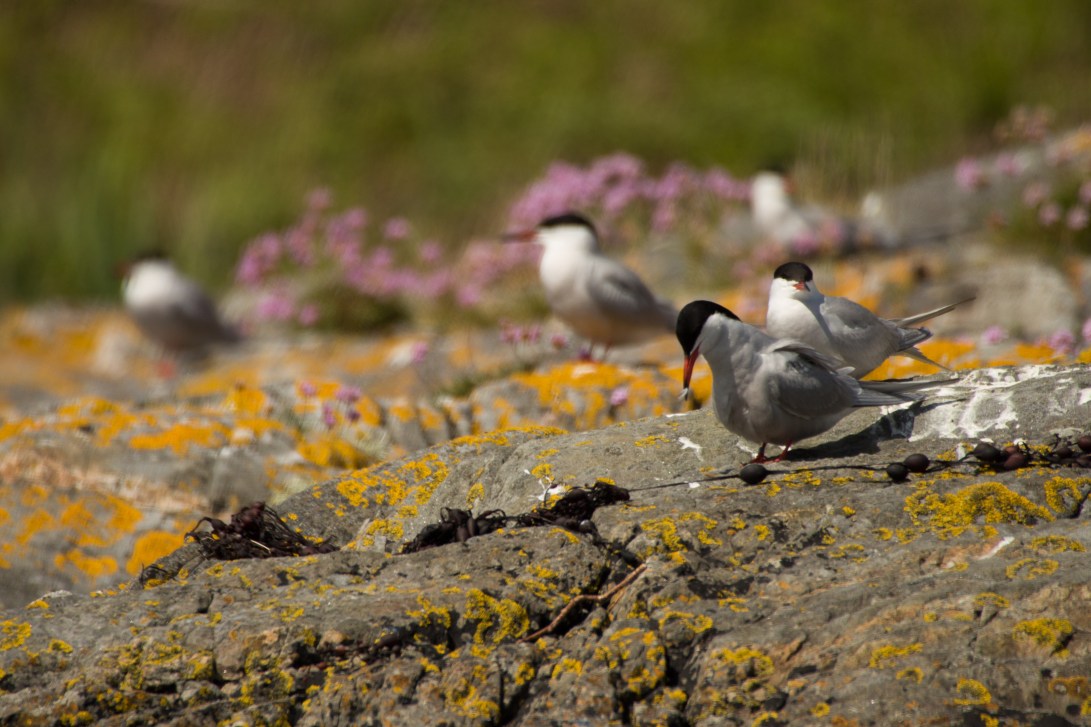
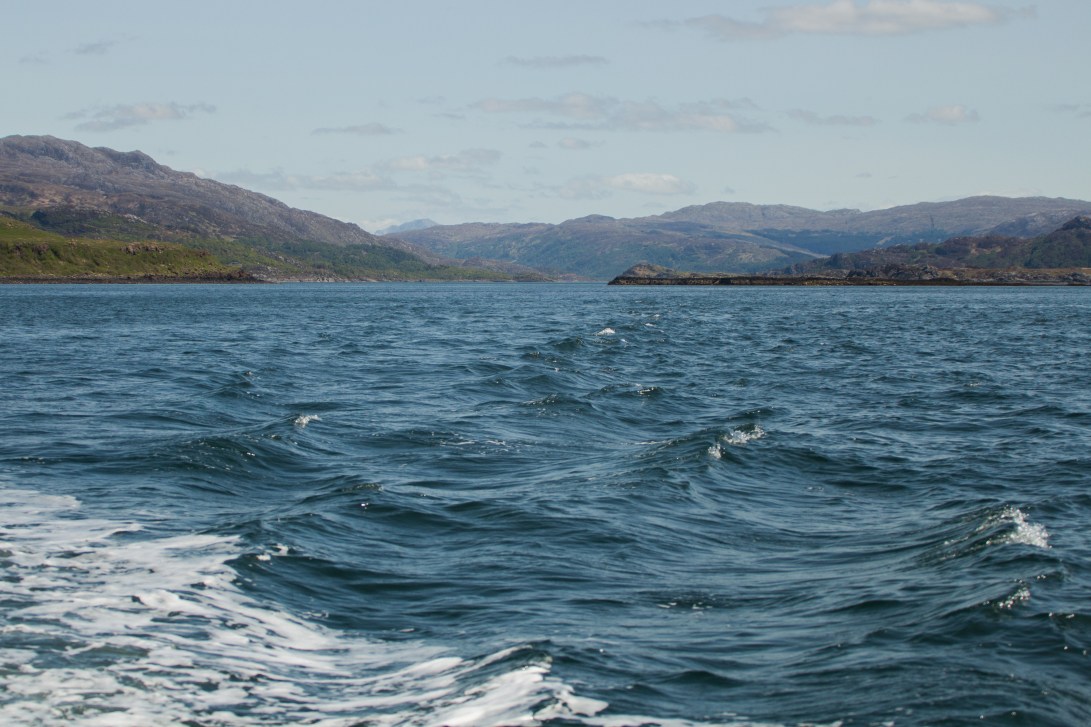
Shortly after we’d finished with the pellets Andy came to pick us up on the boat for a trip around the islands. Unbelievably we had another fantastic day of sunshine, so conditions were great for photography. For a while we watched common terns mating, and their stark white feathers contrasted with the rich colours of the moss clinging to the rock.

IMG_6277

IMG_6304

Once in open water we saw two more porpoises breaking through the waves. The tide was choppy and negotiating tripods and telephoto lenses while the boat tilted from side to side was a challenge we had to overcome. Once again Lequane was first to notice the white-tailed eagle far up in the sky, but almost immediately after we noticed a different bird above the hills. As it descended and came within binocular range we saw the rich hazel hue of the golden eagle’s wingspan. It dipped low and landed amongst the trees so we lost it, but this bird was near the top of my wish list and it was so satisfying ticking it off.

IMG_6293IMG_6320

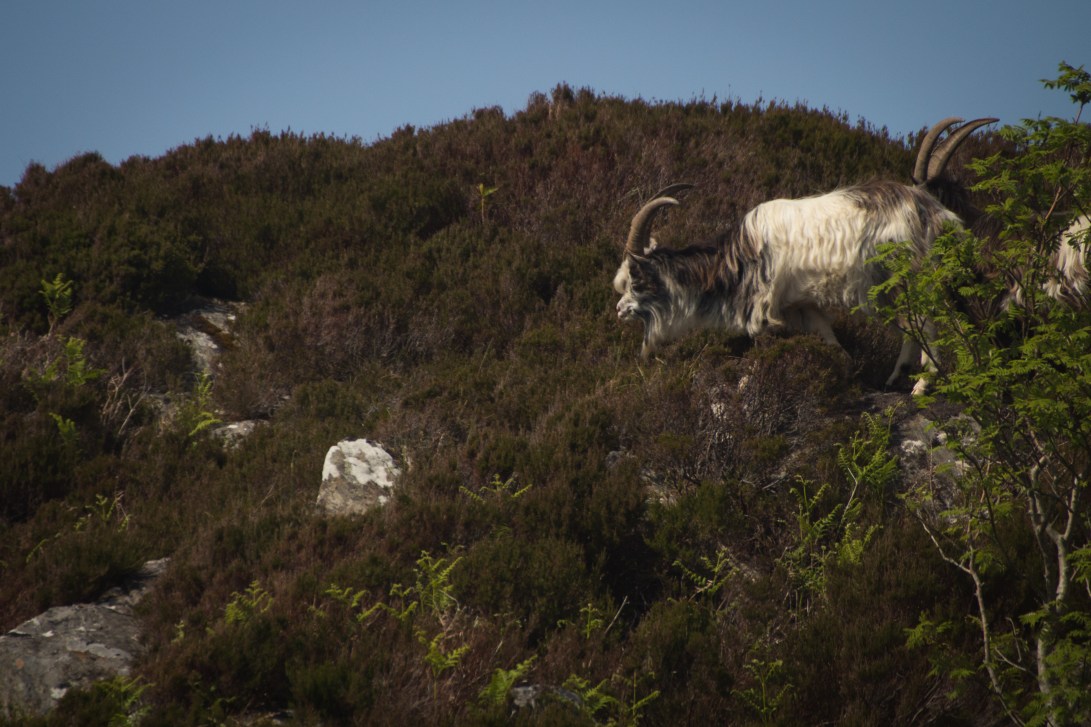
On the way back to the house we spotted some of the wild goats that had made the rocky coast of Carna their home. We also stopped off at the shag’s nesting site again. Not many people are aware of these birds but I find them extremely handsome with their sharp yellow eyes and the green sheen in their feathers.

IMG_6357IMG_6365

When we got back Cain and Heather had gone to pick up the camera traps and we all gathered at the kitchen table to see what we’d captured. It was nothing short of a success. In the first trap we had several clips of an otter trotting in and out of a small cave mouth and sprainting at the entrance. In the same spot a few hours later the whole frame was filled with two pricked up ears and a pair of antlers that were unmistakably a roe deer’s. Heather and Cain informed us that this was the first official footage of a roe deer on Carna so this was fantastic news. By using the camera traps we can find out new information about just how diverse Carna is.

Footage from the next trap showed a vole that we were unable to identify. It could have been either a bank vole or field vole sub-species. Either way, it was great watching the rodent feast on the apple and seeds we’d left, although it did manage to shift the trap so we could no longer see anything but out of focus rock.

Yet more treats were to follow. The next trap had been set in the bluebell wood and a fox had visited late one night. Though it didn’t linger, we still got to see the mammal’s gorgeous fluffy tail as it trotted through the bracken.

Seeing the wildlife on the Isle of Carna on the camera traps was a great end to an unforgettable experience. In only four and a half days I have learnt so much about tracking and field craft and got an insight into the ecology of an island rich in wildlife. It was so refreshing being around people who get as excited as I do when I hear a cuckoo or glimpse an otter swimming across the loch. By being separated from technology I have had the chance to enjoy the outdoors even more. I’ve been out of breath on numerous occasions during our hikes and scrambles but it’s been worth it every time. I even did some sketching, a pastime I haven’t enjoyed in years.

Everybody should spend time in a place like Carna, especially those who don’t fully appreciate the natural world. Sharing a loch with seals, otters and porpoises is something everybody should experience. While I am the last person to criticise books, sometimes the best way to learn about wildlife is to be a part of it. Get your hands dirty lifting rocks to see the starfish underneath, wade ankle deep in mud to set a camera trap and get a crick in your neck gazing at eagles. It really does change you.

Carna – Day Two

Species seen:

  • Buzzard – Buteo buteo
  • Chaffinch – Fringilla coelebs
  • Common Sandpiper – Actitis hypoleucos
  • Common Seal – Phoca vitulina
  • Common Tern – Sterna hirundo
  • Cormorant – Phalacrocorax carbo
  • Cuckoo – Cuculus canorus
  • Drinker Moth caterpillar – Euthrix potatoria
  • Eurasian Otter – Lutra lutra
  • Eurasian Rock Pipit – Anthus petrosus
  • Great Black-Backed Gull – Larus marinus
  • Green-Veined Butterfly – Pieris napi
  • Grey Heron – Ardea cinerea
  • Hooded Crow – Corvus cornix
  • Oystercatcher – Haematopus ostralegus
  • Song Thrush – Turdus philomelos

IMG_5639

IMG_5664

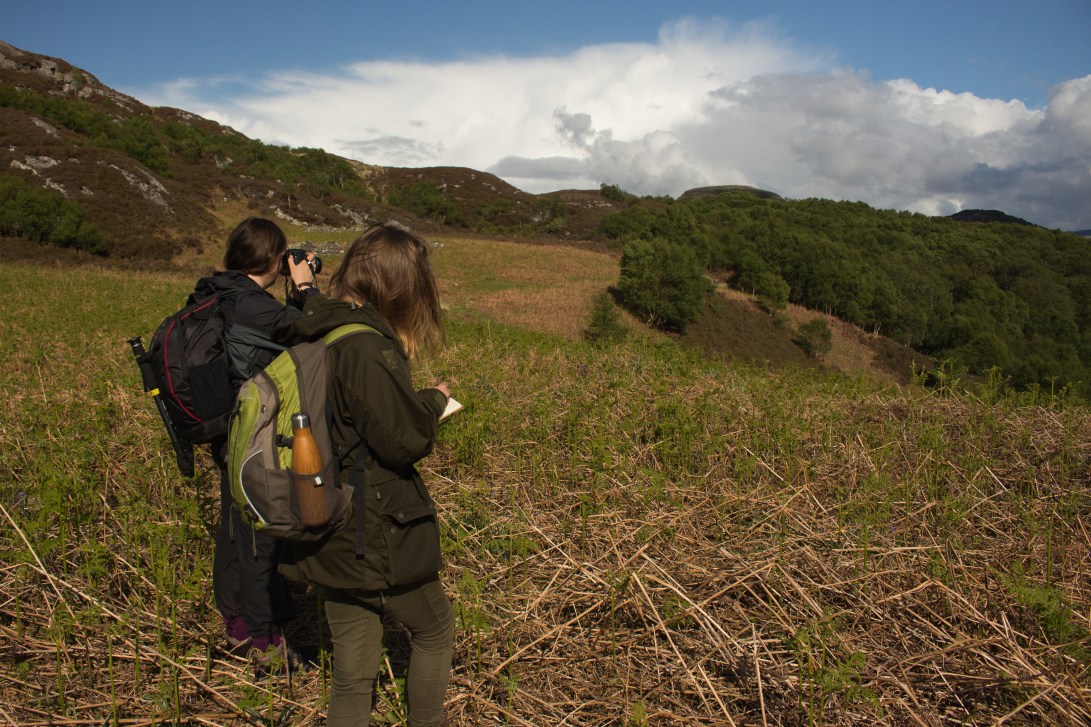
After a great night’s sleep we woke to brilliant sunshine. Over breakfast, we started writing a storyboard for a film that would document our Carna experience. After some lunch, we headed out with Heather and Cain for a walk across the island. Naturally our pace was slow as we were stopping every few seconds as a mystery bird swooped over or a brief flash of brown promised an otter. Once again we were rewarded and saw many different species of bird, invertebrate and mammal.

IMG_5683
The stunning drinker moth caterpillar

IMG_5695

IMG_5696
Hidden Beach Treasures
IMG_5725
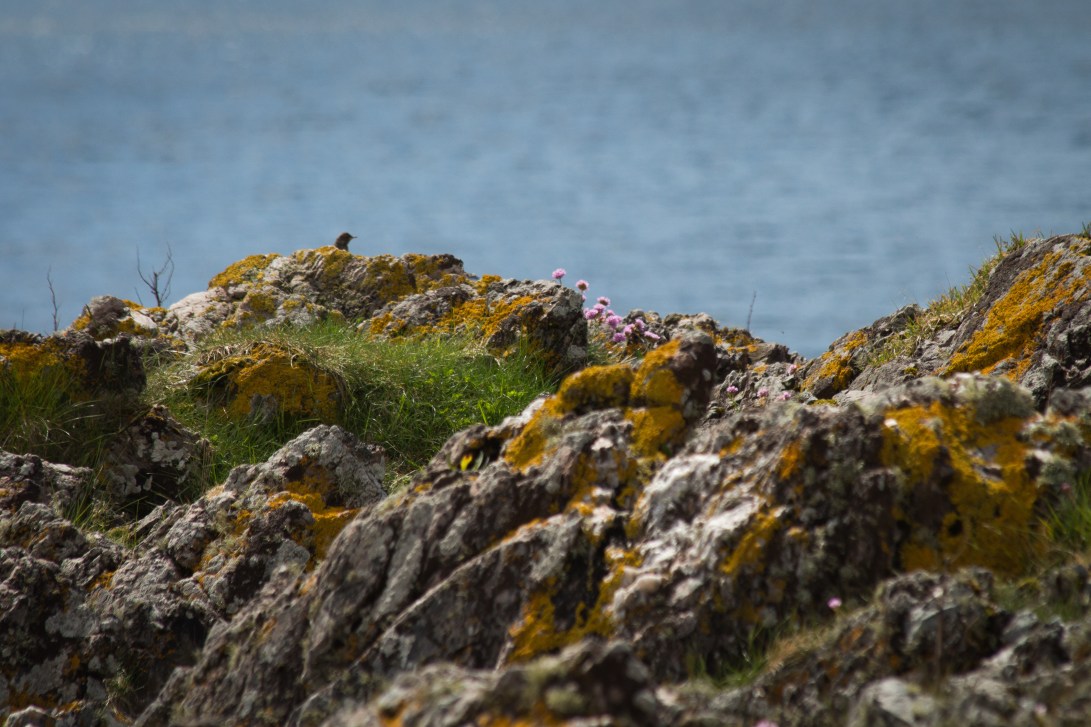
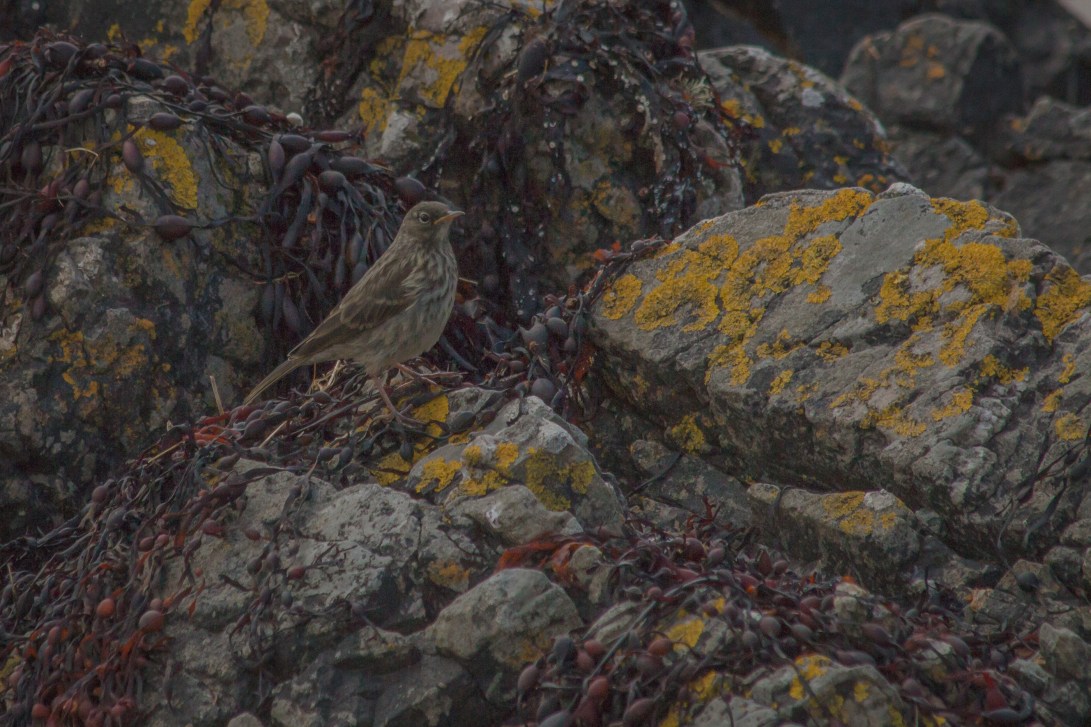
Lone Rock Pipit
IMG_5727
Common Tern hunting on the loch
IMG_5731
Song Thrush on the rocks

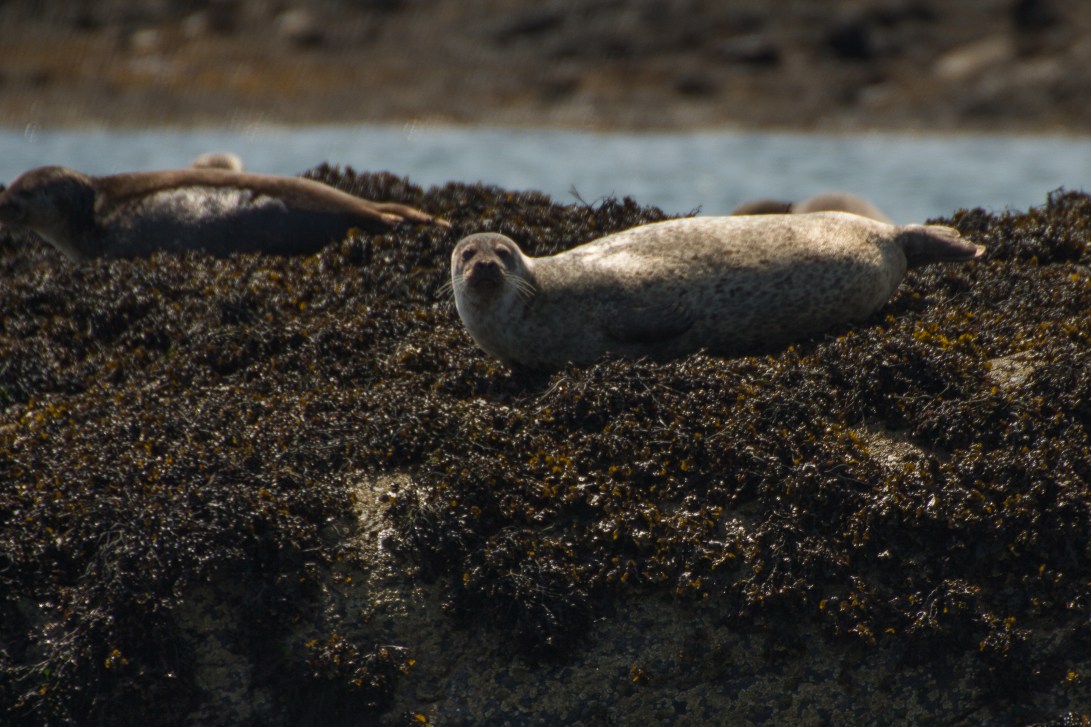
Of birds we saw a cormorant, common sandpiper, buzzard, rock pipit, grey heron and a pair of cuckoos, something we were all excited to see. We also found two drinker moth caterpillars, beautiful insects of black, hazel and amber. During the day we were fortunate enough to see mammals too. We were just admiring a view only the birds got to see when an otter came into view. It was hard to tell the gender, but we watched it for a while diving into the water and popping up again in a new spot. Heather explained that when a dark blob in the water was hard to distinguish, otters always show their tail when they dive under while seals do not. Our otter soon climbed on land and disappeared from view. We made our way down the hill after it but the sneaky mustelid was long gone. A lens change and a snack later, we spent some quality time perched on the rocks watching a herd of Common seals lounging in the sun. The group was spread out over two sub-islands; one was a skinny scrap of shingle where six seals were basking, both adults and juveniles. Seals are always so entertaining. Despite hardly moving, they provide endless enjoyment. For me it’s a combination of their banana pilates move, orb-like bottomless eyes and long white whiskers speckled with sand.

IMG_5759

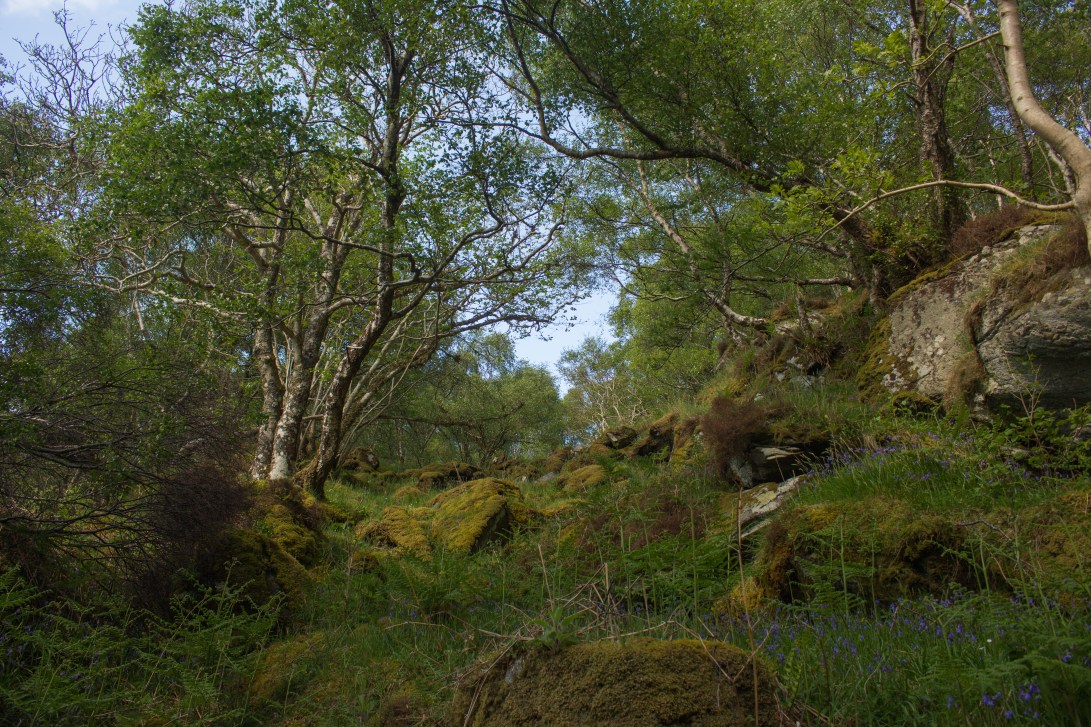
In a while we left the seals behind and headed into the wood. The area was predominantly silver birch; the thin overhead branches of the species allow bluebells to cover the forest floor in splashes of violet. We ascended up and up and started noticing several spraints left by otters, as well as some evidence of deer scat. The grass had been worn down in a narrow pathway, indicating that the area was frequently used. This looked like a good place for one of our camera traps, so we set up the kit and crossed our fingers.

IMG_5775IMG_5779IMG_5805IMG_5821

After leaving the first camera behind we soon found a good place for the second. Near the top of the hill we were climbing were small constructions of dry stonewalls that were slowly crumbling from misuse. It looked like the perfect haven for small mammals with countless hidey-holes, so we found a spot for another camera and baited it with apple.

IMG_5825

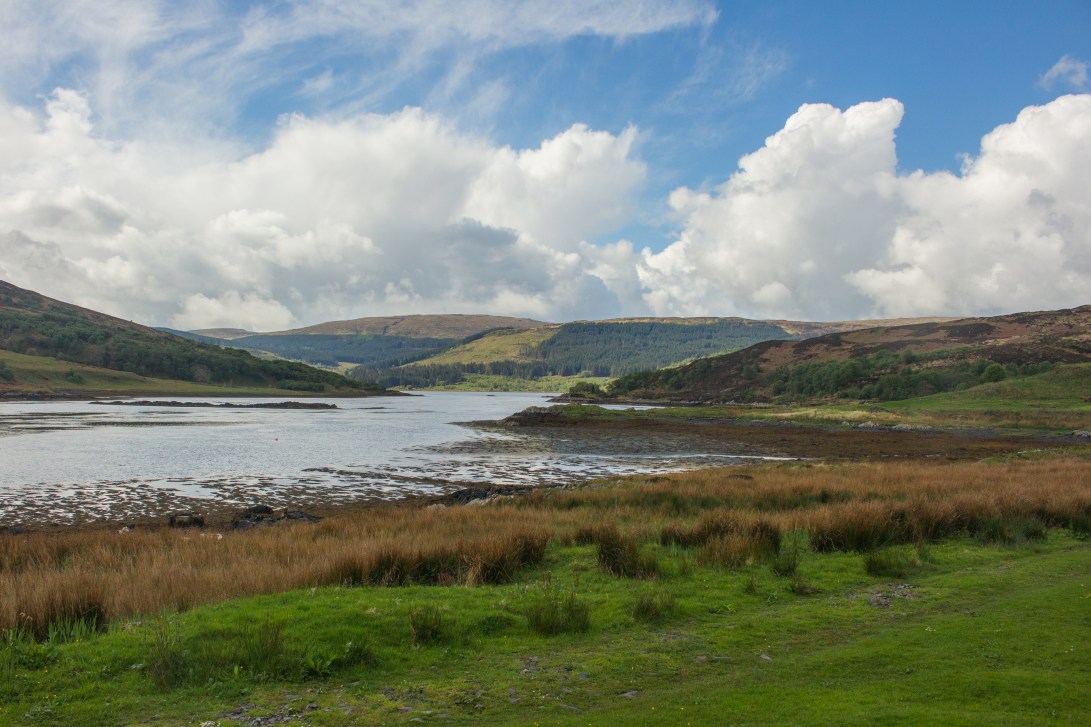
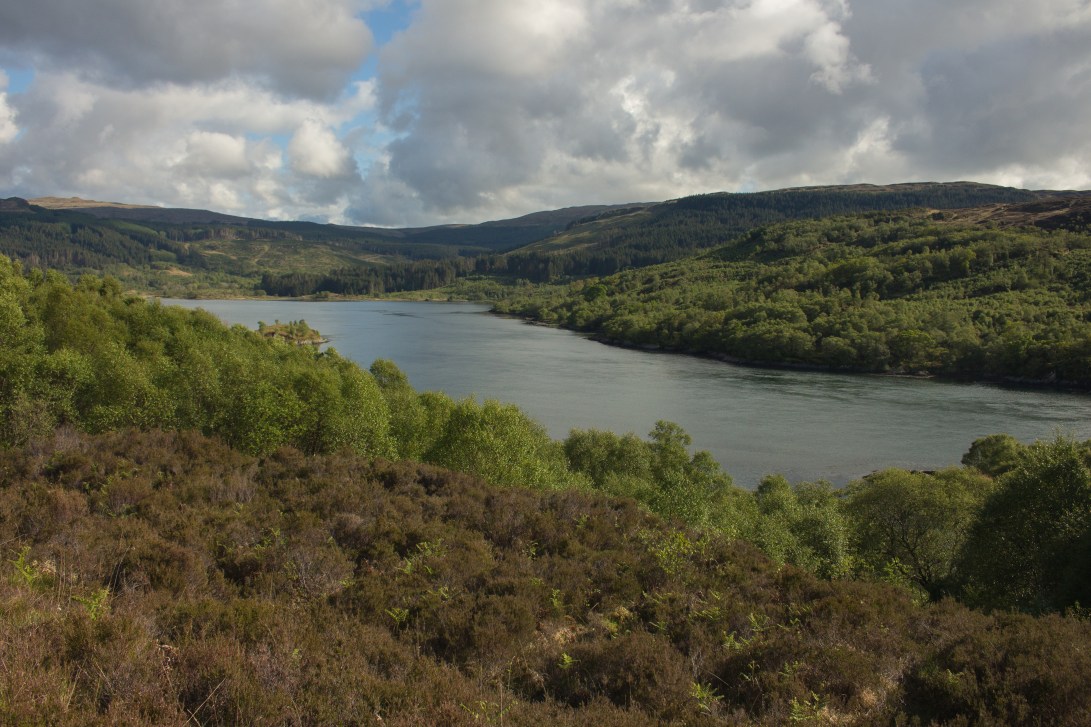
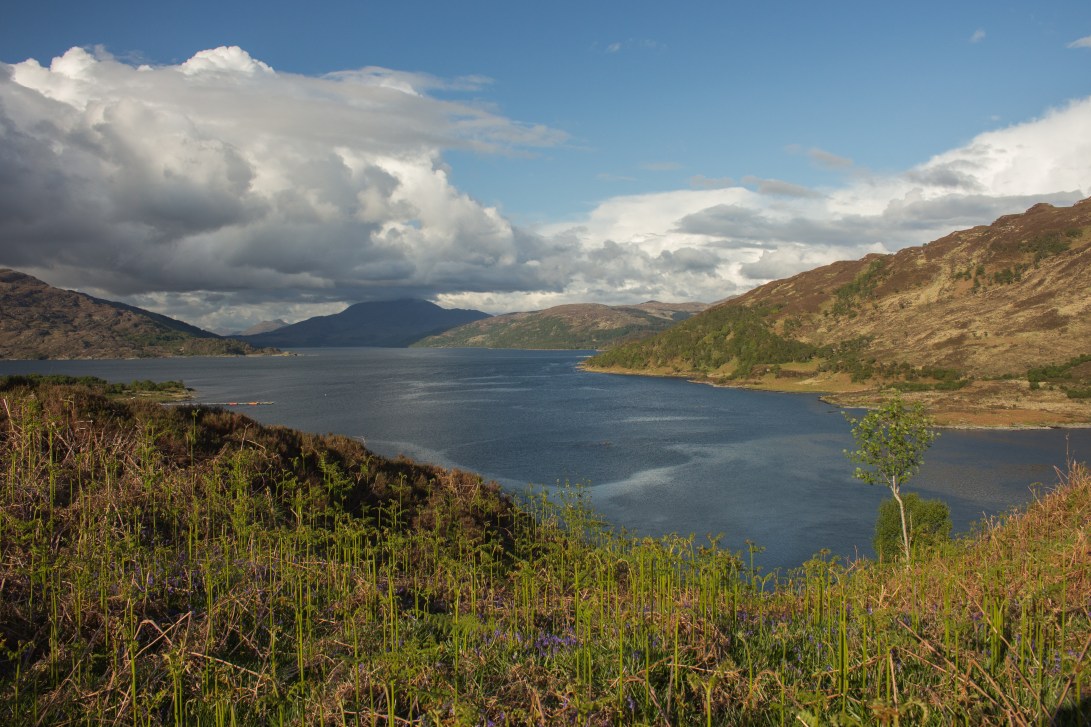
By early evening the sun was strong and casting an incredible light across the landscape, throwing the hills into sharp relief. Now standing amongst the heather and drinking in the view, the challenging terrain and heavy camera bags seemed trivial now we’d reached the top. The weather couldn’t have been better, no rain and hardly a breeze.

The way back was shorter as we cut across the hills instead of sticking to the coast. This allowed us to photograph the landscape from several high viewpoints and savour the perfect evening. Cain spotted a red deer darting through the heather and moments later we watched six more grazing across the water. After only a few slips and falls we made it back to the cottage unscathed. Needless to say, we would all be sleeping well tonight after a long but extremely awarding day.

IMG_5826IMG_5869