Success!

I was back on Bryher today, having another go at finding the elusive dwarf pansy. As was becoming a daily ritual, I engaged in friendly conversation with my fellow passengers on the Seahorse as it made its leisurely way out of St Mary’s Quay.

“That’s a fancy bit of kit you’ve got there,” one man said, gesturing at the camera hanging from my neck, “What are you hoping to photograph?”

I told them about my mission to find the dwarf pansy, to which the man said, “Ah yes, such a shame about the flowers this year.”

I supposed he was referring to the recent snowfall, which had pushed the growth and emergence of the Scilly wildflowers back a few weeks. Still, I didn’t like his pessimism and although I smiled politely I was feeling confident. The weather had been and still was beautiful, and I was here to find the dwarf pansy. So when the boat docked and I hopped onto dry land I strode towards Rushy Bay with steely confidence. The sun was already beating down and incidentally I would later regret not covering my sore, red ears from that beating sun. Meanwhile, I was on my hands and knees peering at grass and getting some very strange looks from passers-by. I found my tiny purple flower from last visit, which I vowed to ask the tour guide about on my walk that afternoon.

By lunchtime my stomach was rumbling, so I tucked into my sandwiches and rested my sore knees. It really was a stunning day, and I had the beach almost to myself. A couple of holidaymakers were foraging for shells by the water, and every so often a dog appeared with a wide-eyed expression of sheer joy before loping back over the dunes.

IMG_0996-2

I decided to give the area one more scope before it was time to walk back to the quay and meet the tour group. Just behind the high grass was a group of binocular-glad walkers huddled together gazing at something on the ground. My heart leapt into my mouth and I hovered awkwardly where I was standing. Was it cheeky to go over and exploit their find? I hadn’t paid for their walk, after all.

But this was the dwarf pansy, so I made a beeline and gazed between shoulders to see Will Wagstaff pointing at a tiny white speck in the grass. I waited as patiently as I could, hopping from one foot to the other, for the group to take their turns photographing the pansy. Once they’d dispersed, I lay down on the grass and noticed there were two! One was fully open, the other was partially closed but still beautiful; in fact, it was a real stroke of luck to see two different stages beside each other.

The Red Ruby cattle mooed at me as I lay there, trying countless angles and focuses. A man and his son approached me and asked what I was doing. In moments we were talking about the pansy, my uni work, and he was amazed that I’d come all this way for a flower. After he’d moved off another couple appeared from Heathy Hill, and once again I showed them what I was so captivated by. Like all the others, they responded with the courteous “oh really?” and “wow!” but I could tell they weren’t nearly as excited as I was. I wanted to shake them and say they were not found anywhere else in the UK, only this tiny archipelago! I had to share my joy with someone who’d appreciate just how special the sighting was.

IMG_1064

So, as I hurried back to the quay, now nearly late for the walk, I rang my parents and wheezed my good news. They’d shared my worry and calmed my panics on the run-up to the expedition so were thrilled that I’d found what I came for. I was beaming ear to ear.

Once I got to the meeting place and Darren, the guide from the Isles of Scilly Wildlife Trust, told us our route, I realised we weren’t even going through Rushy Bay, so I would have missed the pansy completely! I was hesitant to call it fate, but if I hadn’t eaten my lunch where I did, I’d have been journeying back to St Mary’s very disappointed.

IMG_1167

The Spirit of St Agnes

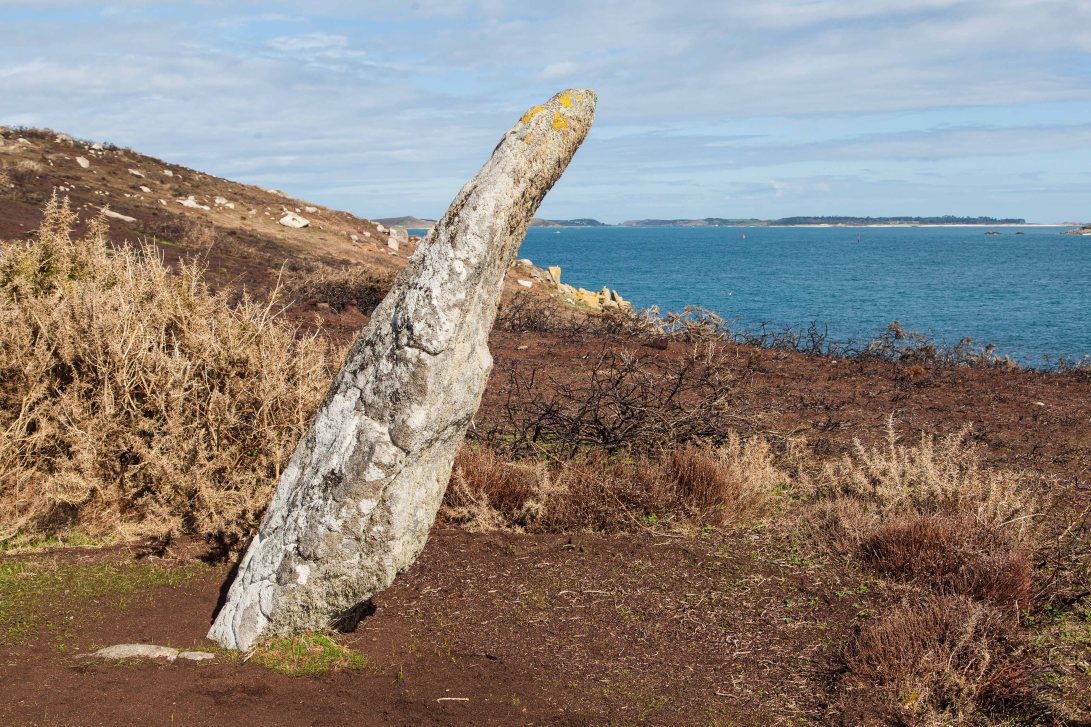
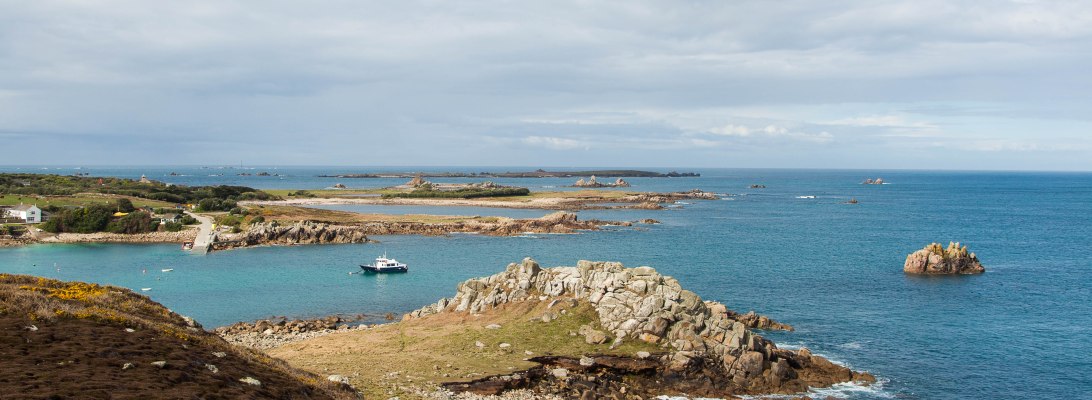
As soon as we docked at St Agnes’ Quay I asked a nearby guide when it was safe to cross over to Gugh, the neighbouring island linked to St Agnes by a sand bridge that disappeared when the tide came in. Getting stranded on an island with two houses and no facilities would be less than ideal. Luckily, the guide told me that the tide would be far enough out to be able to cross all day, so I made my way over to Gugh. My first object of interest was the Old Man of Gugh, a menhir dating back from the Bronze Age. Menhirs are tall upright standing stones erected by people living on the islands many thousands of years ago.

IMG_0619-2

After getting acquainted with the Old Man, I wandered down to Beady Pool, so named because to this day ceramic beads from a 17th century Venetian shipwreck can be found there. Although it was tempting to have a little look, I already had enough miniscule treasure to find, so after eating my lunch looking out to sea (again!) I walked out to Wingletang Down.

IMG_0655

The first thing I noticed – after the forest of gorse that almost completely covered Wingletang Down – was the Devil’s Punchbowl; a curious name for a curious phenomenon. It was described as a rocking stone because it was positioned in such a way that it rocked easily from side to side. Looking loosely like a ball and socket joint, the top of the stone was a sphere cut in half, resting on top of a thick, squat column of stone. What was most intriguing was that the stone was completely natural. Somehow, Mother Nature had created the Devil’s Punchbowl for seemingly no reason other than to exist, perched at the tip of St Agnes.

IMG_0747

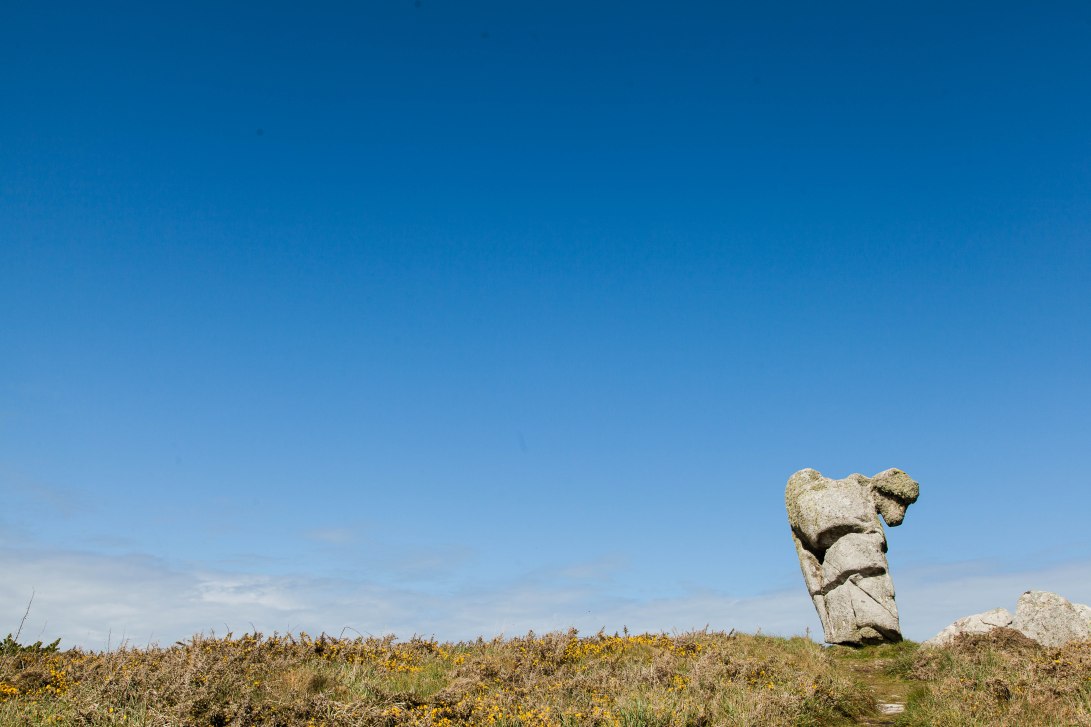
Amongst all the orange of the gorse were the delicate flowers of Ornithopus pinnatus, my target wild plant on St Agnes. After nibbling a few Haribo and admiring the Punchbowl a little longer, I began to search for it. However, after seemingly no time I noticed that time was running away from me again, and I headed around St Warna’s Cove towards another peculiarity: the Nag’s Head. Another naturally occurring feature of the landscape fully exposed to the Atlantic, the granite stone has been moulded into unusual shapes by the water and wind, so now it has a likeness to the head of a horse. William Borlase, a Cornish antiquarian saw the strange hollows and shapes of the Nag’s Head and thought the stone had been moulded by ancient cups and bowls, when in fact every mark on the granite is natural. It was yet another feature of the Scilly landscape that gave it its intriguing and quite unique personality.

IMG_0778

Exploring Bryher

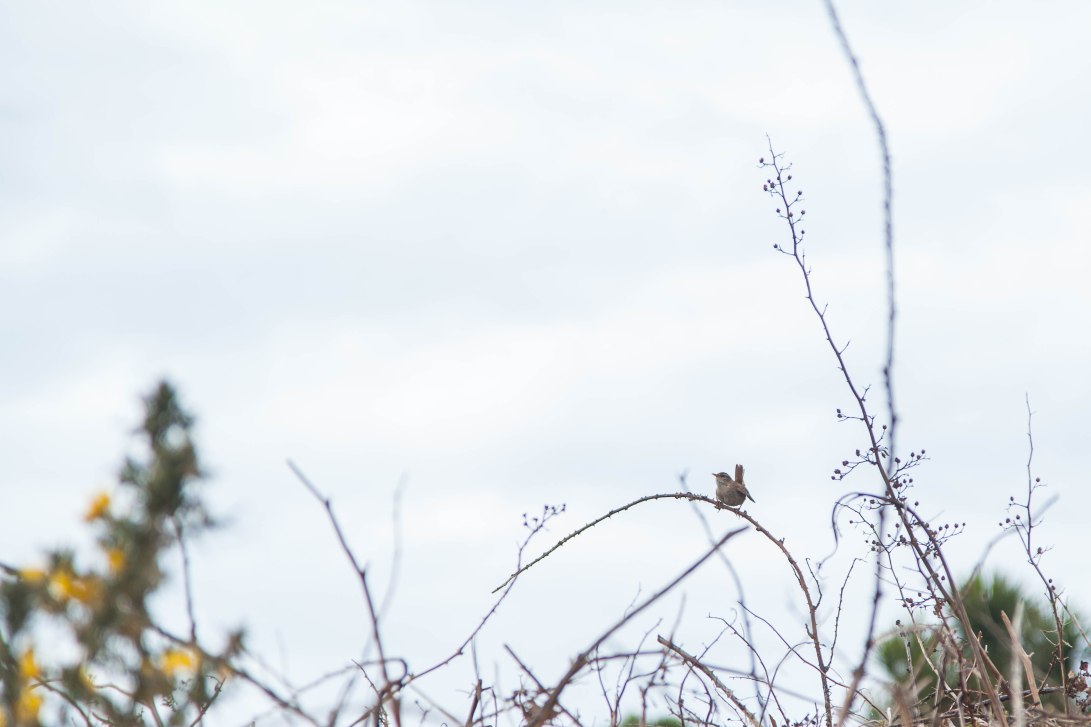
When I arrived on Bryher I was reminded of how scarcely populated the 1½-mile long island was. After an initial buzz of human activity at the quay, tourists and locals dispersed and I suddenly found myself completely alone, except for the ever-present wrens of course. One was perched high against the skyline only a few feet away, trilling with all its might. According to some Scillonians, wrens here are slightly different to those on the mainland. Their songs are different, and their mottled body markings are brighter. Perhaps this is a little Scillonian pride, but the shrews, bee and blackbirds are all unique here so I liked to entertain the possibility that Scilly wrens were just as special.

IMG_0244

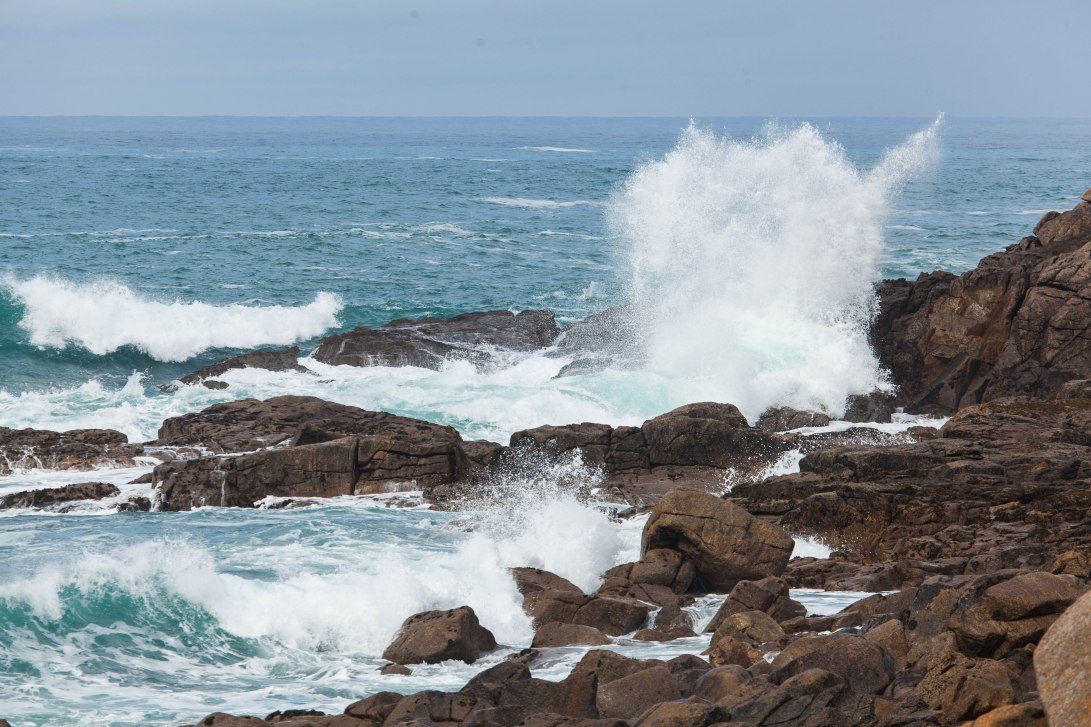
Bolstered by the wren’s enthusiasm, I made my way towards the northern side of the island, where the infamous Hell Bay laid waiting. So called because of its treacherous and unforgiving nature that had caused many a shipwreck in years past, it was hellish and beautiful in equal parts. I perched on a plump cushion of downy grass and watched the show – a dramatic display of rumbling waves, churning currents and seething white froth that surged up as each wave receded. Although each collision was intense, every so often a particularly furious wave thumped the rocks, sending vast plumes of water skywards. Backed as always by the wailing gulls and squealing oystercatchers, it was a feast for all the senses.

IMG_0293

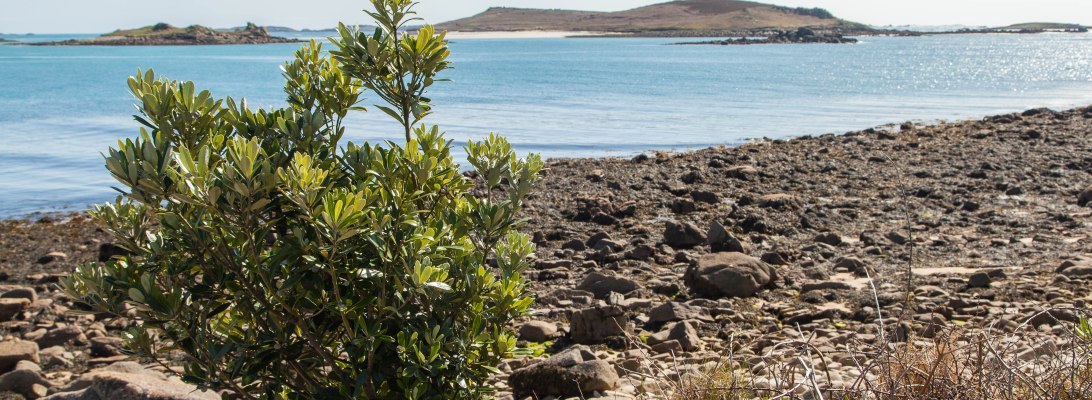
Time was pressing on. Conscious that I didn’t want to miss the only boat back to St Mary’s, I hugged the coast and followed the beaten track down the western stretch of Bryher. Red Ruby Devon cattle watched me cautiously, blinking with big bottomless eyes. Before long I reached Rushy Bay, and the sun was shining beautifully. I ate my lunch on the sand, which as always on Scilly was golden and impeccably clean.

IMG_0587

Replenished, I began the search for what I’d come here to find: the dwarf pansy. With flowers 4-8mm long, I braced myself for a challenge. During my research I’d learned that a good spot on Bryher was “the sandy turf behind Rushy Bay”, which at the time had seemed a doddle. How much sandy turf could there be? I thought, quite deluded. True, the area wasn’t vast, but when you were looking for a flower that could fit several times on your fingernail, the sandy turf seemed to expand tenfold. I’d found the true meaning of “needle in a haystack”.

IMG_0557

Wondering why I’d chosen to torture myself, I began to scour the ground, peering between thick grasses for a glimpse of violet. I found plenty of insects; sandy brown spiders that skittered in and out of sight (small enough not to trigger my panic response luckily), black beetles I couldn’t hope to identify and plenty of ladybirds sitting prettily. No such luck with pansies, though. Soon my knees and back began to ache so I tried my luck on Heathy Hill, another good spot for dwarf pansies and orange birdsfoot, a rare member of the pea family I was also hoping to find.

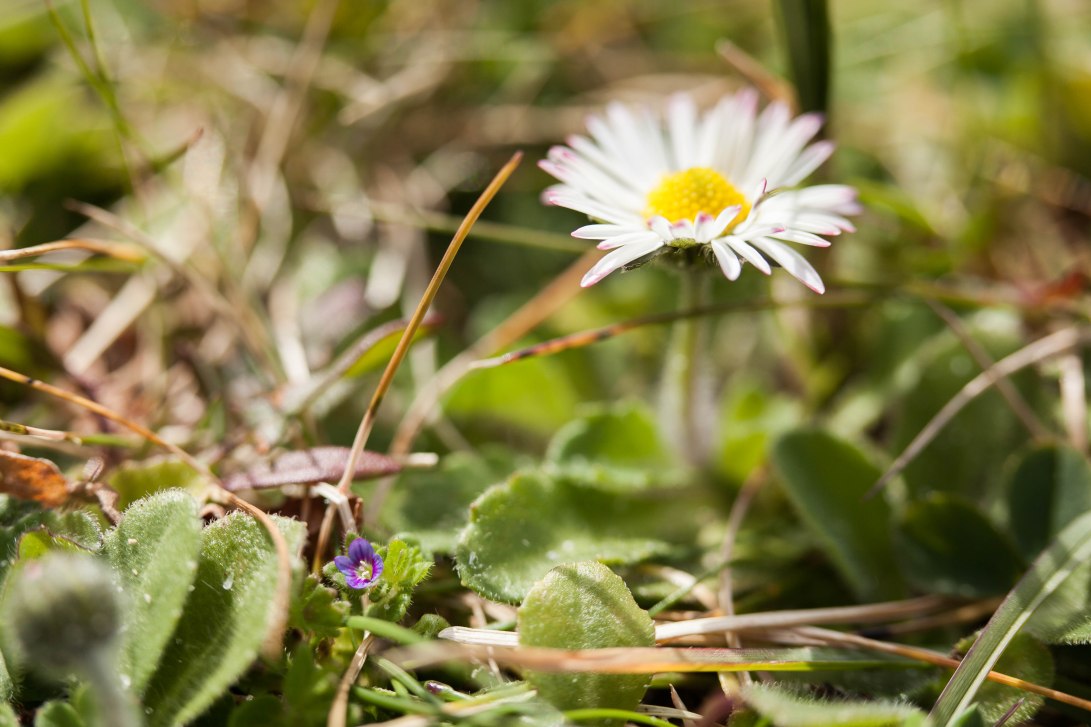
On the way, I stopped to admire the daisies. Interestingly, these common white flowers used to be known as “day’s eye” because they opened during the sunlight hours and closed at night like blinking eyes, but this soon morphed into daisies. By chance, my gaze wandered to a minuscule flower with purple petals that I could barely make out with the naked eye. In a slightly embarrassing lapse of composure I felt tears of joy prick the backs of my eyes, but I remembered that there were a lot of tiny flowers on Scilly. Due to the poor, acidic soil, often only small species could survive here. I knew I shouldn’t get my hopes up. It may not be my prized pansy, but I still lay sprawled on the floor photographing it for a good long while. Just in case.

IMG_0408

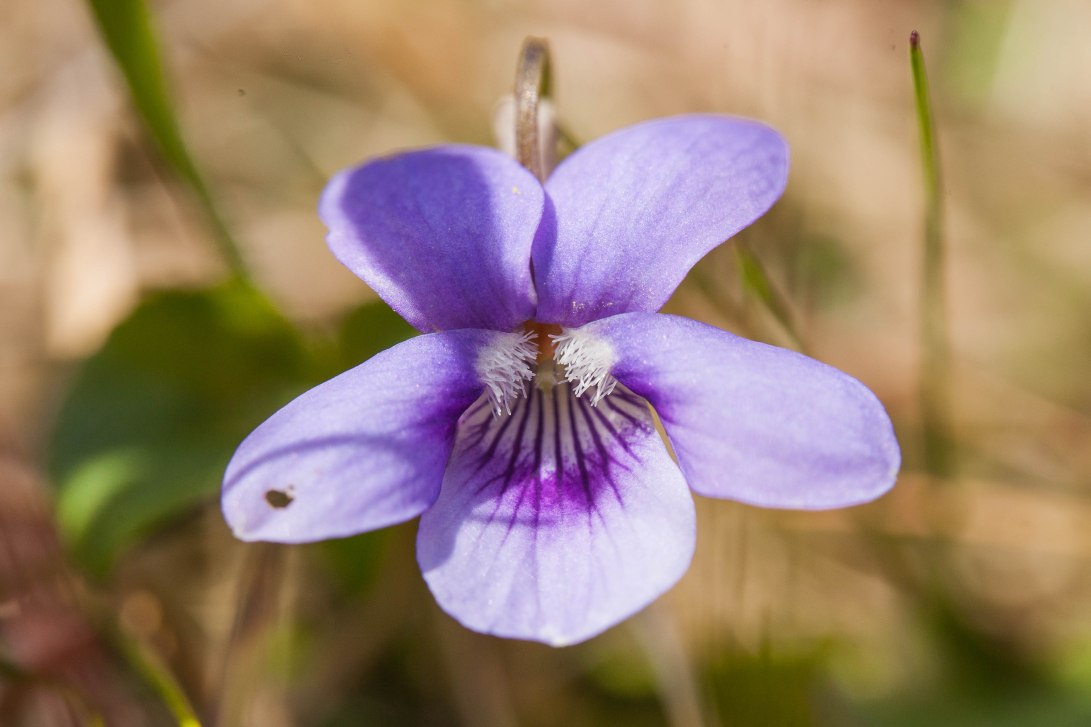
I headed further west towards Heathy Hill. Here I found a rather large cluster of blue-violet blooms and once again I was stumped. What if these were dwarf pansies and I hadn’t made full use of the opportunity? So, even though the petals looked a little large, I spent another twenty minutes rolling around in the grass getting very atmospheric photos of what could have been Scilly’s most common wildflower.

Back on St Mary’s that evening, at a wildlife talk at the village hall, I consulted Scilly naturalist Will Wagstaff about my finds. The second species I had found was dog violet, so not even a pansy sadly, but he couldn’t identify the first flower I found, which was quite intriguing.

IMG_0478

Arriving on Scilly

IMG_0143

To truly comprehend how isolated and tucked away the Isles of Scilly are, you have to get there. My travelling began at 4:30am, and after using four modes of transport I arrived on St Mary’s at 1pm. It was a complicated and fiddly excursion but when I finally arrived, eating chips overlooking a vast expanse of ocean, I knew I was really at the edge of Britain.

IMG_0174

Passionate gusts of wind blew the smells of salt and seaweed off the coast. The air was alive with birds. If I closed my eyes it was the same as home – wrens belting out their embellished trills, blackbirds speeding underfoot with shrieks of alarm – but as I was watching a dunnock I heard something that I thought at first to be a great tit, but the two syllables were the same pitch. Then, confirming my suspicions, a tiny brown, featureless bird appeared. My first chiffchaff in the flesh.

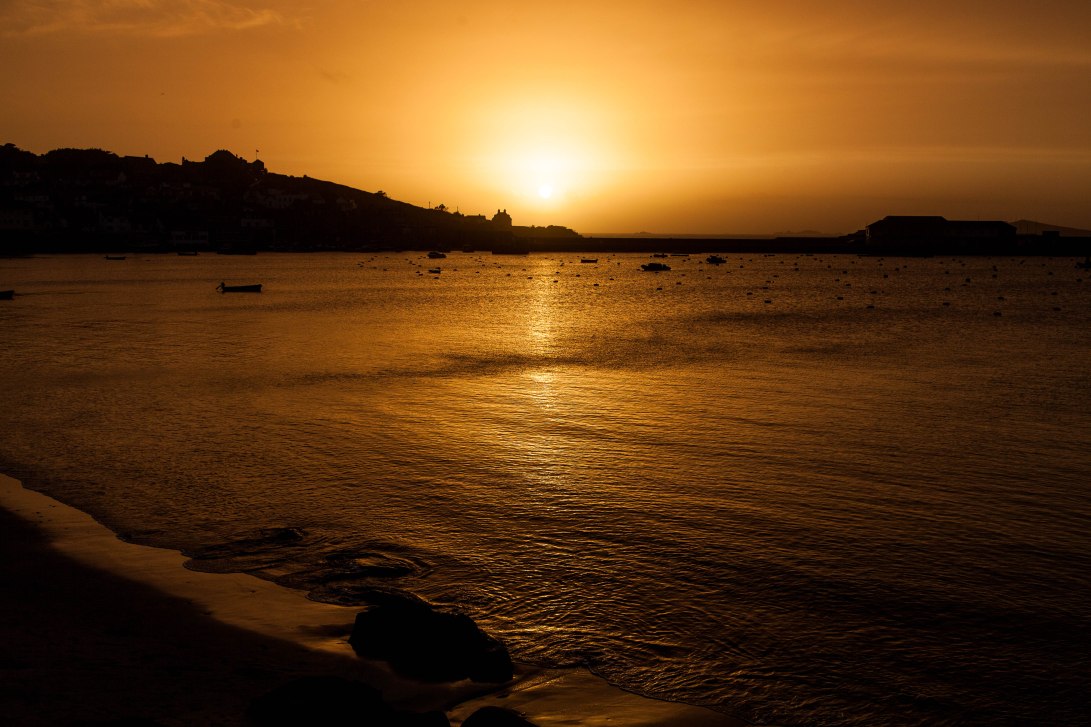
Later in the day I was struck with another bout of stress and worry. What if the flowers I wanted to photograph weren’t there? What if it rained every day this week? And as I stewed in paranoia I got a sign. I normally pulled faces at signs but this had to be something of an existential signal. As the sun went down the sky was alight with rich colour so I took my camera and headed down to the beach – only about twenty paces from the flat – and started taking photos of the foliage silhouetted against the sky. The sun sank so quickly that in minutes it had completely disappeared, but it was one of the most stunning sunsets I’d seen in months. There were other people taking photos too, and I heard one woman say “This is the best I’ve seen so far this year.” I arrived on Scilly this afternoon, and the day ended with a sky like that. I still felt apprehensive about this week, but my worry was also mixed with a little more optimism than before.

IMG_0200

The Avian Orchestra

There is an overwhelming quiet that comes with winter; a hush descends over the landscape that only adds to the bracing chill. As the season turns, the first few tentative voices break the spell of silence and before long there is an overpowering variety of diverse voices filling the air. While in the height of spring there can be hundreds of songs reverberating through the trees, there are a select few who can be heard again and again, reliable as the seasons. I took it upon myself to begin to tune in to this soundscape, a treat for the ears. Learning to birdlisten not only unlocks the ability to distinguish birds by song, but is also very useful as advanced warning for the reveal of the bird itself.

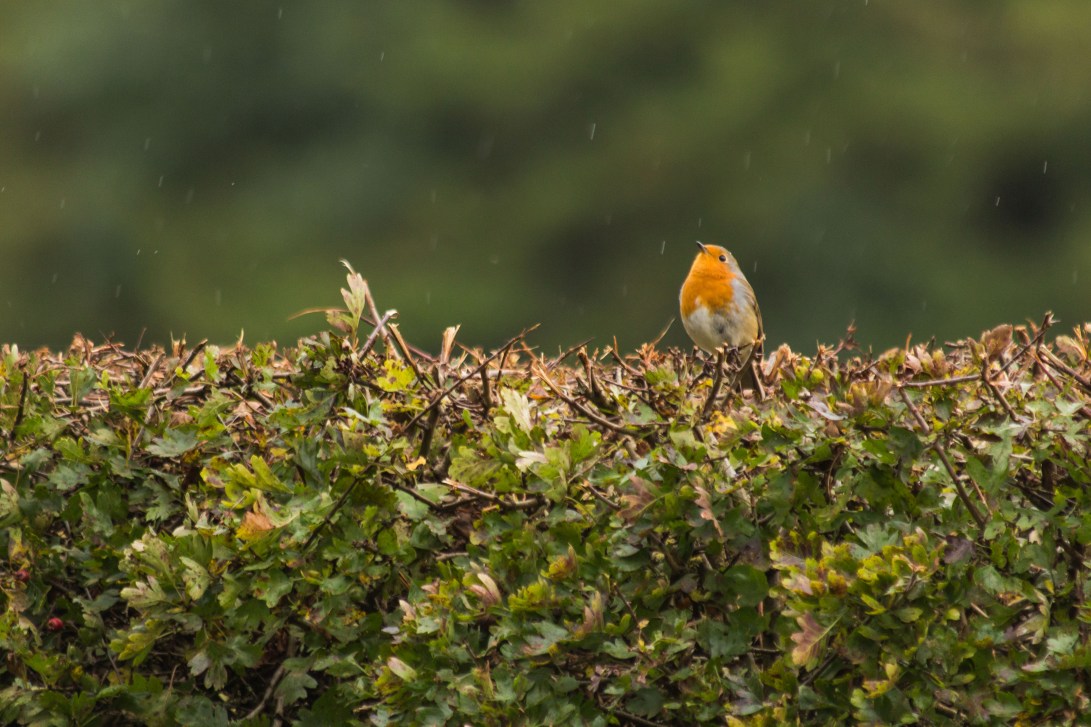
Robin (Erithacus rubecula)

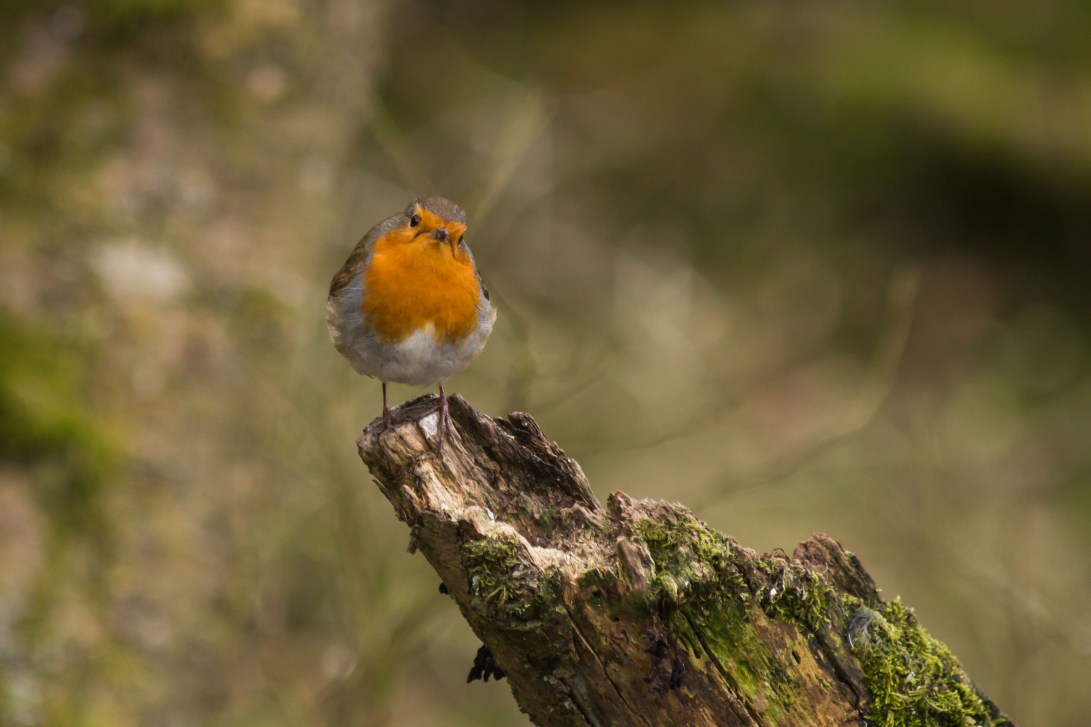
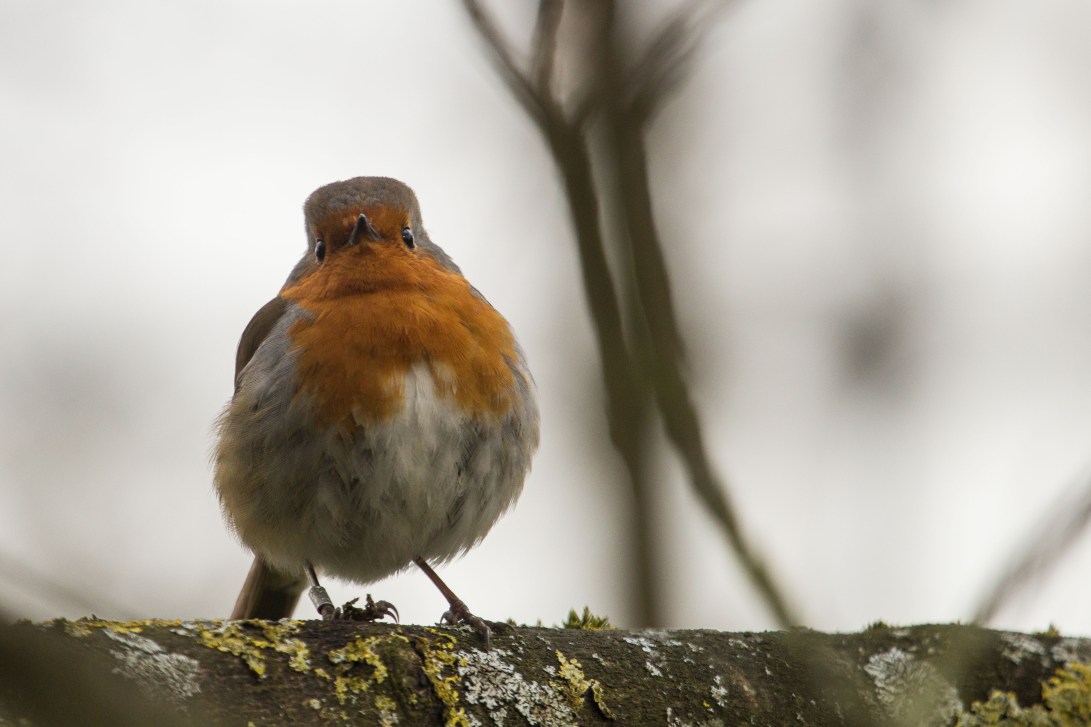
Perhaps the most significant voice is that of the robin, mainly because he never left the scene when other, less hardy birds took off for warmer climes. Even through the dark, bitter winter the robin endures, his lone song often the only consistent sound during the colder months. In spring males and females pair up and defend their breeding territory, often the first to start singing and the last to finish.

The robin’s song is a delightful melody; a high, twittering burble heard from all around. Although varied in its range and tempo, the robin’s voice is almost unmistakable – high, thin and soft but still richly diverse. Hear the robin and he won’t be far away, perching in plain sight and puffing up his red breast as he fills it with air. He is a proud bird, often chasing other robins from his patch, but with a voice as pretty as his, who can blame him?

IMG_9114

Wren (Troglodytes troglodytes)

Another commonly heard voice belongs to a rowdy bird that makes up for small size by belting out a piercing song for everyone to hear. The wren can often be seen speeding bullet-like through knee-high bushes. The wren sings like it’s scolding somebody; a furious round of high, loud chirrups with a distinctive trill at the end of some phrases that sounds like a miniscule machine gun. If you hear a very loud song wait for the trill, as it will inevitably come sooner or later and you’ll know you have your wren. Scan the lower branches and before long a stout brown bird holding its tail up like a stiff flag will appear, giving you a fierce reprimanding for something or other.

Great Tit (Parus major)

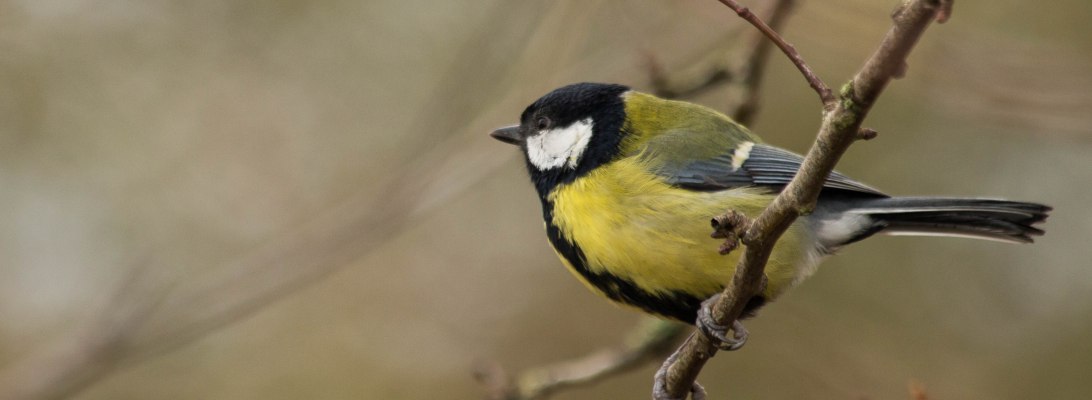
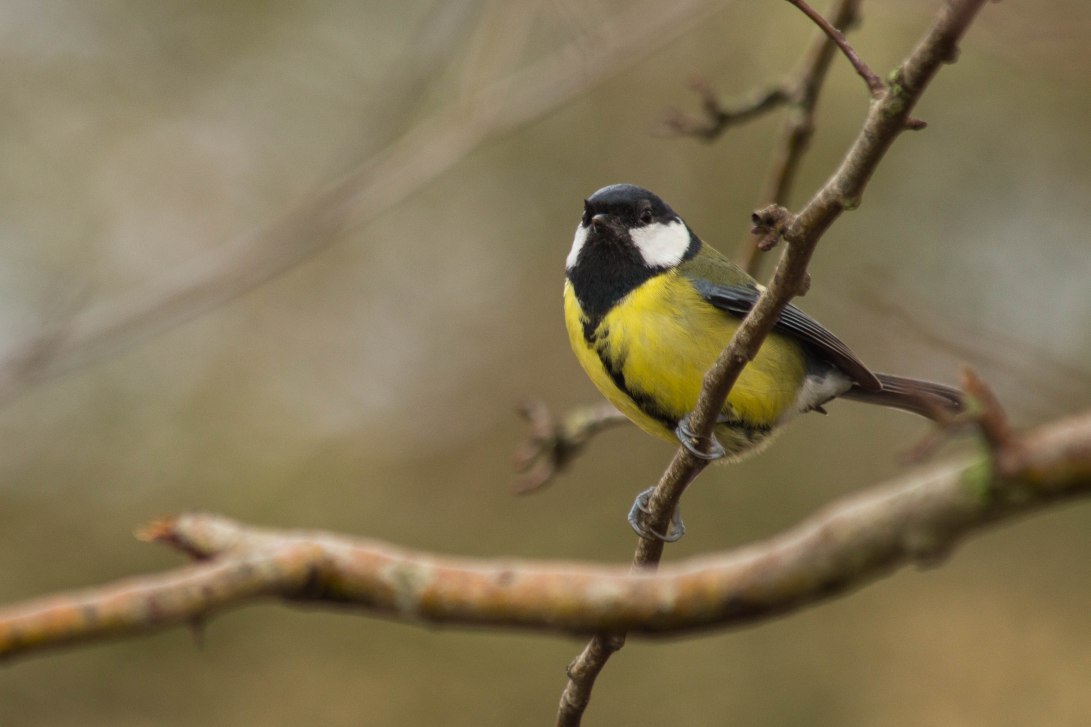
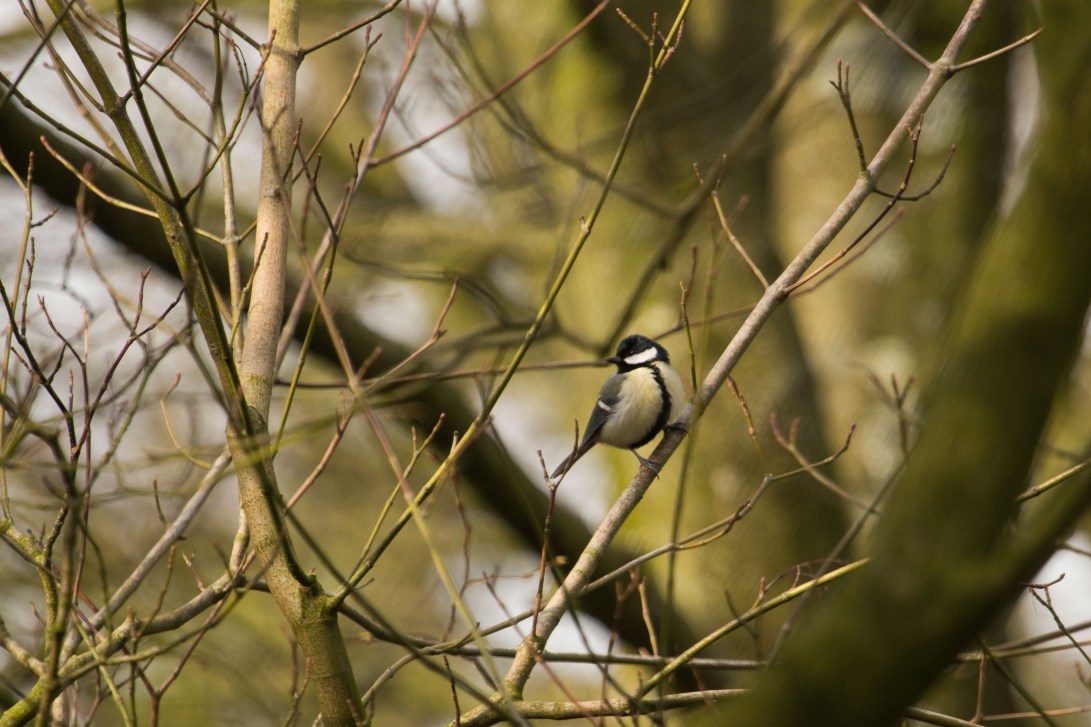
If robins and wrens are violins in the avian orchestra, the great tit is percussion; not quite as dazzling but just as important. In early spring, a two-toned call can be heard among the other singers, with emphasis on the first syllable. I like to think of it as the sound of a saw – effort on the forward stroke, then quieter on the draw back. After a few strokes of the squeaky saw there is a pause, and then the great tit sings it again, very resiliently as if rousing the troops to join in.

The great tit has other songs in its repertoire, including a “churr” call that reminds me of the chatter of a magpie, but a little faster and far gentler. This is the great tit’s alarm call, a sign of agitation that indicates something has disturbed it.

IMG_8751

Blue Tit (Cyanistes caeruleus)

With a lot of birdsong, it can help to adopt a Morse code approach when it comes to deciphering the rhythms of some particular species. Take the blue tit. A common little bird with splashes of blue, green, yellow and white with a fetching black goatee. The blue tit’s song is similar in tone to the great tit but gentler. Among its quite varied repertoire is a particularly distinctive melody, consisting of two clearly separated notes followed by two or three much faster ones. In dots and dashes it would look something like this:

– – . . .

Imagine, perhaps, that the bird is saying “I’m. A. Pretty Bird”, putting particular emphasis on the first two words.


If you like this, have a read of this post and find out where my inspiration to start birdlistening began.

Living off the Scilly Land

For my final major project at university, I am journeying to the Isles of Scilly for a photography project on this wildly diverse archipelago. My focus is currently the unique wildflowers of the islands, some of which are not found anywhere else in the UK such as the dwarf pansy. However, to broaden my understanding of Scilly (and also because it recently snowed there which has made me question my chances of seeing wildflowers next month), I have been researching how the first human residents used the land and its resources, which in some cases are vastly different ways to today.

  • During the Neolithic period, tribes were known to mark their presence on the islands using large stone monuments known as megaliths. These were for ritual or territorial purposes.
megalith
A megalith at Castle Down, Tresco (Source: The Megalithic Portal)
  • Wars and disputes subjected the inhabitants of Scilly to poverty and famine. One method of surviving such lean times was to forage seaweed. In 1684, production of soda ash from seaweed began, a material used to make soap, bleach and glass for the mainland. This practice lasted well over a century, and must have had disastrous impacts on wildlife.
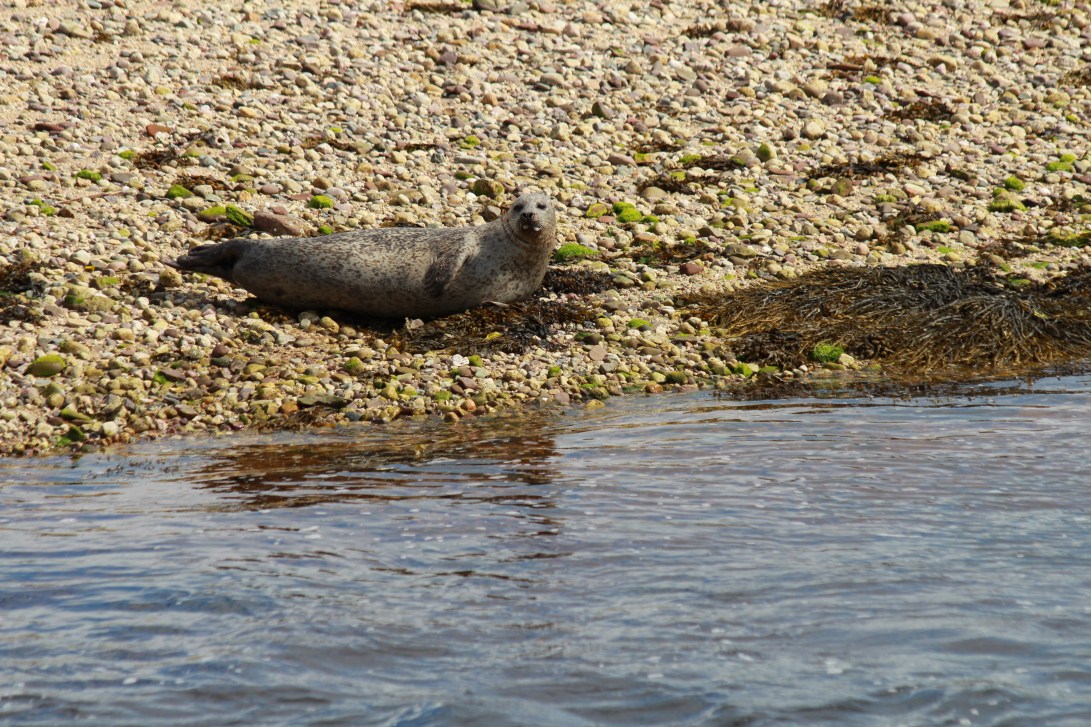
  • The Bronze Age saw the first permanent populations arrive from west Cornwall. They fished, farmed, hunted and scavenged all sorts of foods to make their living. Birds such as razorbill, guillemot and even ravens and swans were hunted for their meat. Seals and the occasional whale were hunted to supply oil used for lighting.

IMG_9258

  • Fishing was a vital source of food all year round, and once caught the animals were dried by the wind or salted for preservation. A vast amount of limpet shells suggests they may have been used as bait, and scallop shells to hold lighting lamp oil.

IMG_0979

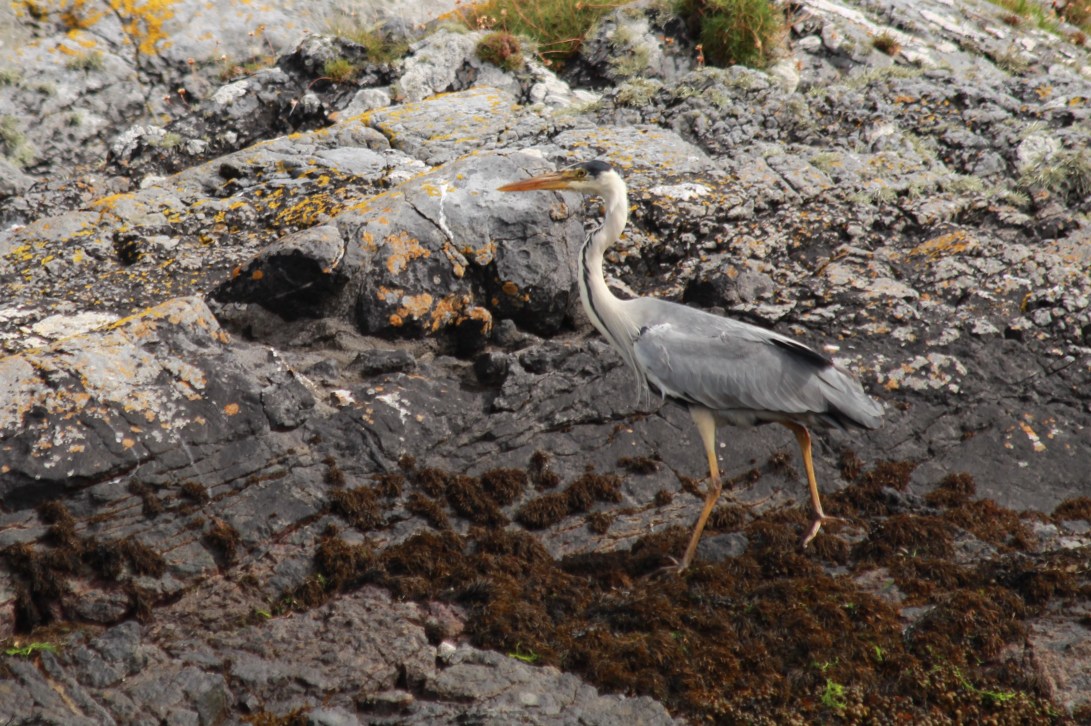
  • By the time of the Roman invasion of Britain in AD 43, red deer had disappeared and dogs and rabbits were introduced. The birdlife grew in variety, suggesting the environment was changing. New bodies of water attracted fowl such as bittern, heron, snipe and more excitingly, evidence of chough. Remains of what are believed to be these birds and dating back to the 2nd century AD were discovered on St Martin’s.

IMG_9145

  • The Duchy of Cornwall was established in 1337, when the title of Duke was granted to the Black Prince. Payment for a ledger dating from that year was 300 puffin, giving the impression that these coastal birds were a lot more abundant than in modern day. The puffin was highly valued, considered a fish instead of fowl, which allowed it to be eaten during Lent. Five hundred years later, although the monetary value of Scilly hadn’t been altered, the exchange rate for puffin had surged by 600% to fifty birds.

Incidentally, all of my photos in this post were taken in Scotland, but here’s hoping next month I’ll be capturing some Scillonian versions!

Learning to Birdlisten

Today marks the beginning of a new project: learning to birdlisten. It’s a much-used cliché but I have been an avid birdwatcher since I was a child. I’d sit out in the garden, hold as still as I possibly could, and after a while birds would begin to show, hopping out from under bushes and descending slowly from the treetops. This gradual emergence, the steady drip-drop of birds, was so exciting to me. The species would usually be very common – robin, dunnock, blackbird – but occasionally a blue tit or great tit would appear, and to my amateur eye these were very special indeed.

As my knowledge gradually improved, I began to notice more species and although the trusty robin and dunnock never grew boring, they lost their shine among more colourful or charismatic varieties. One by one I added birds to my repertoire, and although I didn’t notice my mental list growing, soon I could identify a wide range of species. Although waterfowl and waders had their charm, my favourites were always the passerines, or “perching birds”.

Passerines include a subgroup of species we call songbirds but are more accurately named oscines – birds that establish their territories by means of musical vocalisations. It never occurred to me why the singing birds attracted me most, until I turned my attention to listening for birds instead of looking for them, and then it became abundantly clear.

Birdsong is the soundtrack of nature. Even for me, a keen bird enthusiast, birdsong had blurred into the background of my time spent outdoors, nothing more than a pleasant backing track that accompanied my attempts to birdwatch. Why on earth did I let birdsong become such an unimportant feature of the landscape, no more significant than hold music? It was high time that I paid more attention to it, instead of letting it wash over my ears without acknowledgment. It is so true that we see but don’t observe, but it is also the case that many of us hear but don’t listen.

IMG_8860

Author of “Birdwatching With Your Eyes Closed” Simon Barnes points out that understanding birdsong allows us to see around corners. There’s a bird hidden up in the canopy somewhere, but unless you know its song you’ll never know what it is. I’ve had this frustration many times, when I see the distorted outline of a bird but no characteristic features that give it away. If I hadn’t neglected my auditory senses, I wouldn’t have been disappointed when the bird hopped further out of view.

And so begins my journey to learn the language of birdsong. It seemed a daunting prospect at first; to my untrained ear all chirrups and whistles sounded identical. However, like any problem, it is imperative to break it down, and that makes it far less intimidating.

I have already made progress. First was the robin: an unmistakable bird in appearance, and a good place to start when learning birdsong because of its presence all year round. During the usually hushed winter months, the robin still sings, an isolated soloist filling cold air with thin, gentle melodies. Spring is by far the most frustrating time to begin birdlistening, so to hear the robin on a chilly February morning with no other avian distractions allows us to begin to tune into this new world I for one took for granted.
IMG_8893

The wren also sings in winter, but has a far louder song bordering on rowdy. For such a small bird, the song bursts out of hedgerows, with a telltale trill at the end of some phrases, like a twirl of icing atop a cake. Then there is the two-note song of the great tit, like the squeak of a saw being pulled back and forth.

And so on. Already my ears are filling with birdsong and I’m really listening this time. Acquiring the skill of understanding this rich and varied language will not only help me become a better birdwatcher, but it will pave the way to a clearer understanding of nature as a whole – appreciating nature’s vibrant soundtrack.

IMG_8853


A Day in the Fells

As we turned into the car park at Honister Pass, the clouds were grumbling. Geoff Cox appeared and shook my hand in greeting, with the same kindliness he might offer to his closest friend. Having roamed the fells since childhood, the bracing chill and spattering rain are all too familiar to him. A gust of wind blew me sideways as I struggled to catch the flyaway sleeve of my coat and hastily zip it up. Pulling a hat firmly down on my head, I gazed up at the fells. The day was bleak, and an ominous mist obscured the tops of the hills, which would provide a dramatic background for filming.

Today marked the penultimate day of shooting for the second documentary about Geoff’s experiences as a fell runner. During his sixtieth year he attempted to run three notorious Lake District endurance-running rounds: in the Joss Naylor Lakeland Challenge and Gerry Charnley he was successful, but the Bob Graham round defeated him. The film we’d be shooting today was a reflection of this unsuccessful round, and how Geoff found redemption to complete the Charnley. Geoff wrote poems about each round to process these challenging ordeals, and approached filmmaker Richard Berry to transform his words into films. Today, I was joining them to see what happened behind the scenes.

We set off, following Geoff and the other endurance runners up the first incline. Before long it became evident just how comfortable they were on this terrain; while I took my time negotiating uneven and slippy rocks, the rest of the group hiked with confidence and admirable swiftness. As we climbed higher, I was told that the views up here were usually breathtaking, but the fog hung over the entire horizon like an impenetrable curtain. We were completely enclosed, walking along a single clear track with white walls on all sides. “Drifting in the Skiddaw mist”, Geoff wrote in his poem; how apt this line was today.

Now 62, Geoff has been fell running for decades, and can’t remember a specific time when this habit became a continuous routine in his life. “Work and family pressures meant I needed a sport I could focus on which didn’t need other people,” Geoff explained, “With running I could drop everything and go anytime, day or night.”

Fell running in the wilderness of the Lake District is a lonely and secluded past time, something Geoff often welcomes. “I needed a place where I could have a bit of ‘me time’. Society seems to look upon somebody who needs these extended periods of time in isolation as strange and even a bit weird. Long days running in the hills gave me what I needed; something about the independence and self-sufficiency was very appealing.”

In a few hours we reached the right place to begin the day’s filming. Director Richard and camera operator Kerr McNicoll set up and before long shooting was in full swing. Agile as mountain goats, the runners cascaded down the rocky slopes with impressive assertiveness. Surrounded by the silent fells, the only sounds were the cracking of the colliding rocks and soft squelch of mud as feet drove through. Puffs of breath spilled into the sky, and as the runners headed further off, the mist soon swallowed them.

“And again!” Richard shouted, the echo of his words bouncing for miles. After a few moments, the group appeared again. From this distance they looked like small dashes of coloured paint on a white page – the only distinguishable features of the landscape. They looped around a small lake, reflections bouncing on the water. After several takes of this shot it was time for cake – a delicious fruitcake made by Jim, one of the runners. This burst of energy was welcomed with open arms, and once Richard had filmed Geoff scaling a large rocky outcrop on his gimbal, we began to snake back through the fells, gathering footage on the way and constantly referring to Geoff’s poems to capture the essence of his experiences and narrative.

Writing poetry has helped Geoff to process the challenges and obstacles associated with endurance running. “I started writing poetry as a way of processing the mental and emotional garbage floating around in my head, or ‘mental detritus’ as I call it. Prose didn’t work because it has the wrong rhythm. Poetry allowed me to talk about what I’m thinking and meant that I could introduce the pace and metre that matched my memories.”

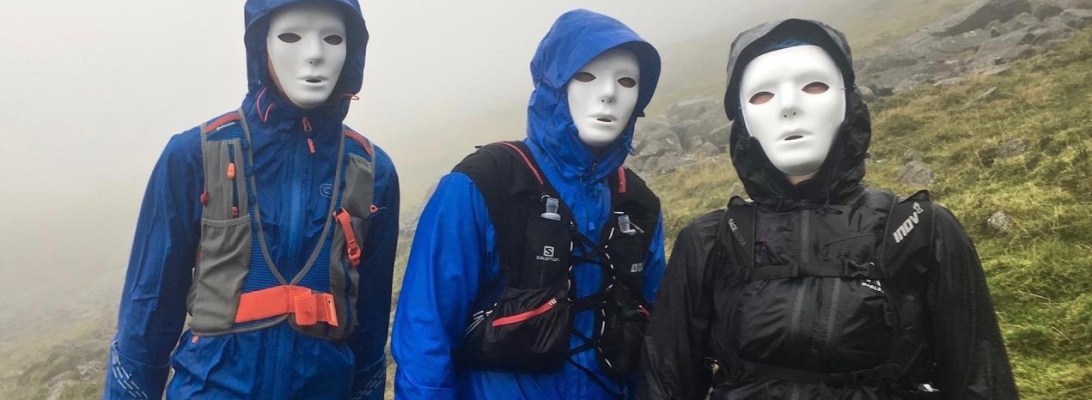
One of these memories took the form of white theatrical masks, worn by three of the runners looking over their shoulders at Geoff while he hung back, exhausted and near defeat. It was an intriguing idea and as we walked back through the fells I asked Geoff why he decided to include masks in the film. “They’re a symbol of how small doubts kick in and grow more insistent as the run goes on” he explained, “So we made them progressively more obvious throughout. ” This feeling of doubt was linked to people coming out to support Geoff while he competes and the pressure of not letting them down, a burden that can hang heavy on a runner under such physical and emotional strain.

I was astonished to hear that the masks were also a representation of hallucinations that Geoff said will be very familiar to long distance fell runners out on the hills for 24 hours or more. This “sleep monster” phenomenon is a result of exhaustion and sleep deprivation. “My particular version seems to be that I find myself running across strips of beautifully patterned Axminster carpet” Geoff told me, “All the time I’m thinking ‘It’s amazing that somebody has been up here and laid this carpet across these mountains!’”

Fell running in the Lake District is not for the faint-hearted. Unpredictable weather, unforgiving terrain, and a vast secluded landscape, and all with a burning in your legs. Even today, after walking seven miles, I returned to the warm café with aching knees. Geoff has proven that age is no match for will and determination, and is continuously training for new rounds to run. For him, fell running is more than exercise but a way of managing stress and even inspiring poetry. Spending time with him and the other runners opened my eyes to a life spent high above the ground, where so few people think to look.

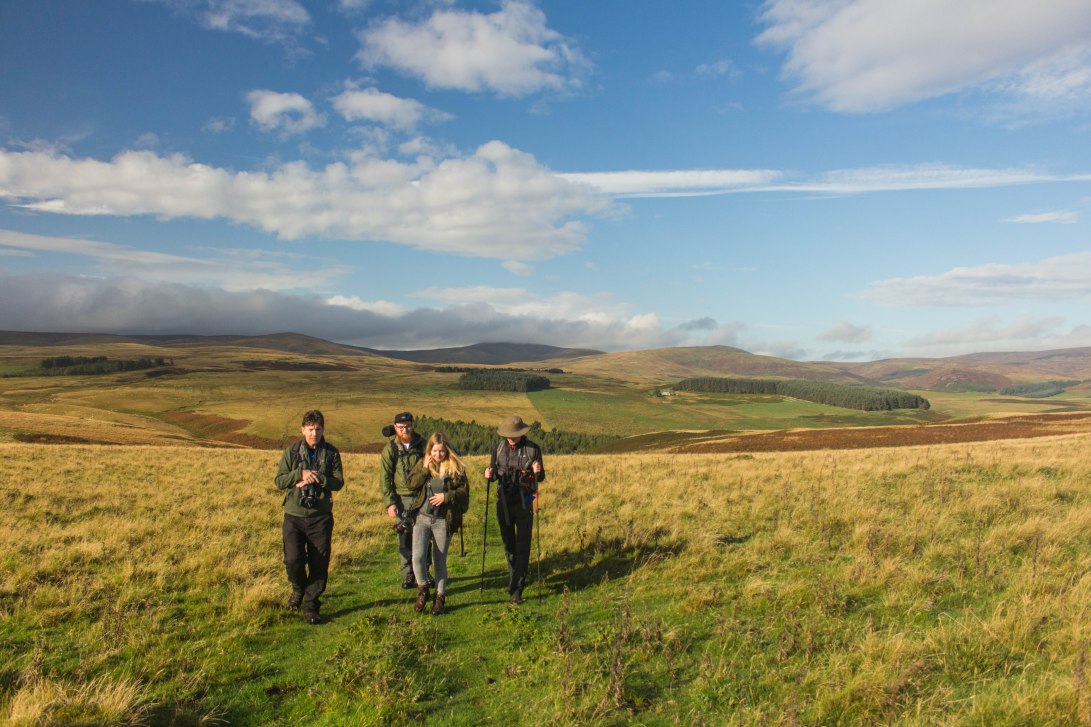
Chesters: Day Two

As I peeked out the window this morning, the sun was just beginning to shine. It looked like a promising day and I was glad, as we would be walking ten miles around the Breamish Valley.

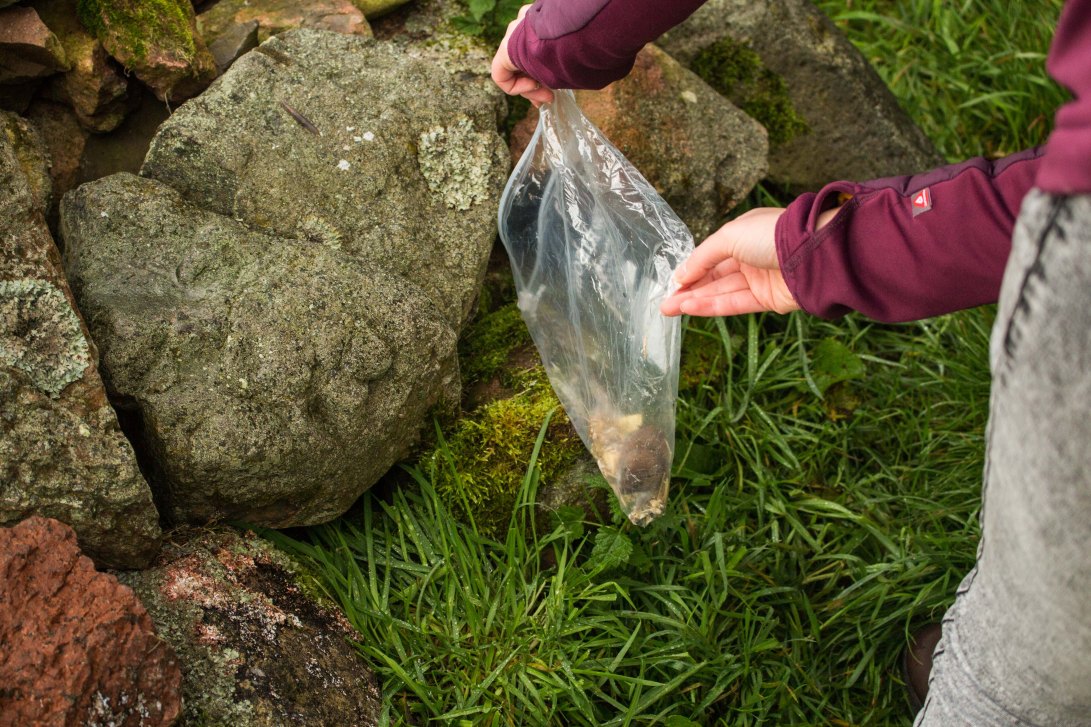
First things first though: check the Longworth trap for any visitors. Heather retrieved the trap and carefully emptied it into a paper bag. Along with the hay and leftover oats and apple chunks was a bank vole, gazing up at us with its beady black eyes.

If we were carrying out a proper small mammal survey we would attempt to sex the vole and perhaps snip a small section of fur from its back. The purpose of this is for re-trapping, so we’d know if the same vole came back. However, we were just trapping to see what mammals were in the area, so these procedures weren’t necessary. We observed the vole for a little while longer before Heather released it back into the dry stone wall alongside the bothy, where it slipped out of sight in seconds. We also left the remaining food for the vole to feast on – it was only polite.

IMG_6236

After eating a hearty bowl of porridge and making sure we had everything packed for the day ahead, we set off across the fields and down to the first plantation. Heather told us the habitat had been classed as “felled”, but there was nothing felled about it now. Trees loomed above us, and with foliage on all sides it felt like we’d wandered into an enclosure at Jurassic Park. My overactive imagination thought the grating screeches we heard were those of Velociraptors, but sadly were just squabbling jays.

IMG_6341

I led the group down the hill, taking care over crooked roots and dislodged rocks. I was just negotiating a particularly steep section when Cain called us back. I knew he’d seen something so I rummaged for my telephoto lens while scrambling back up to where the others had binoculars trained at the very top of a large conifer. There was a loud chirruping, and among siskins and chaffinches was a larger finch with a forked tail and an unmistakable bill that had the upper mandible overlapping the lower: common crossbills. There were several up in the tree, and as I zoomed in I saw that a male was being pestered by a begging juvenile, its pale wings flapping ten to the dozen in an attempt to catch its parent’s attention. The male, and another a few branches away, were plucking cones from the tree and holding them aloft like they weren’t quite sure where to put them. It was fascinating to watch such a strangely designed bird negotiate its food.
IMG_6292

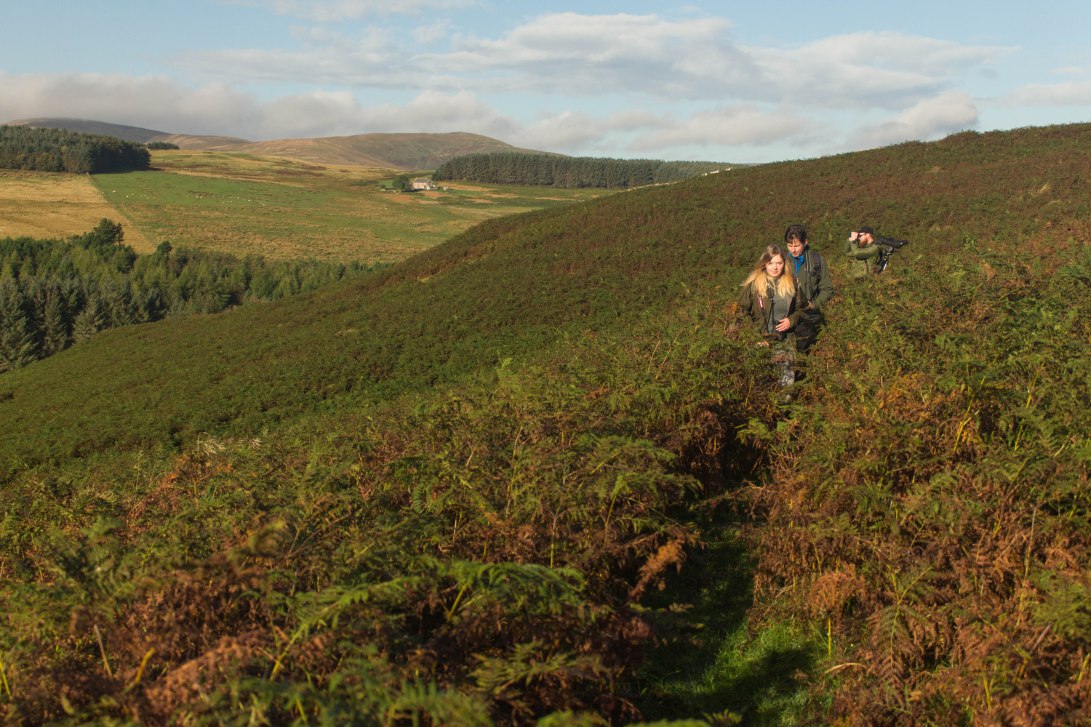
We wandered on, breaking out of the trees and beginning the first ascent of the day. The trail wound through an ocean of bracken, and I soon found myself chest-deep. When I glanced behind me I could only see everyone’s heads and shoulders as they waded through. The resident skylarks joined us, as well as a distant buzzard that I’m sure the skylarks were keeping a close eye on.

IMG_6327

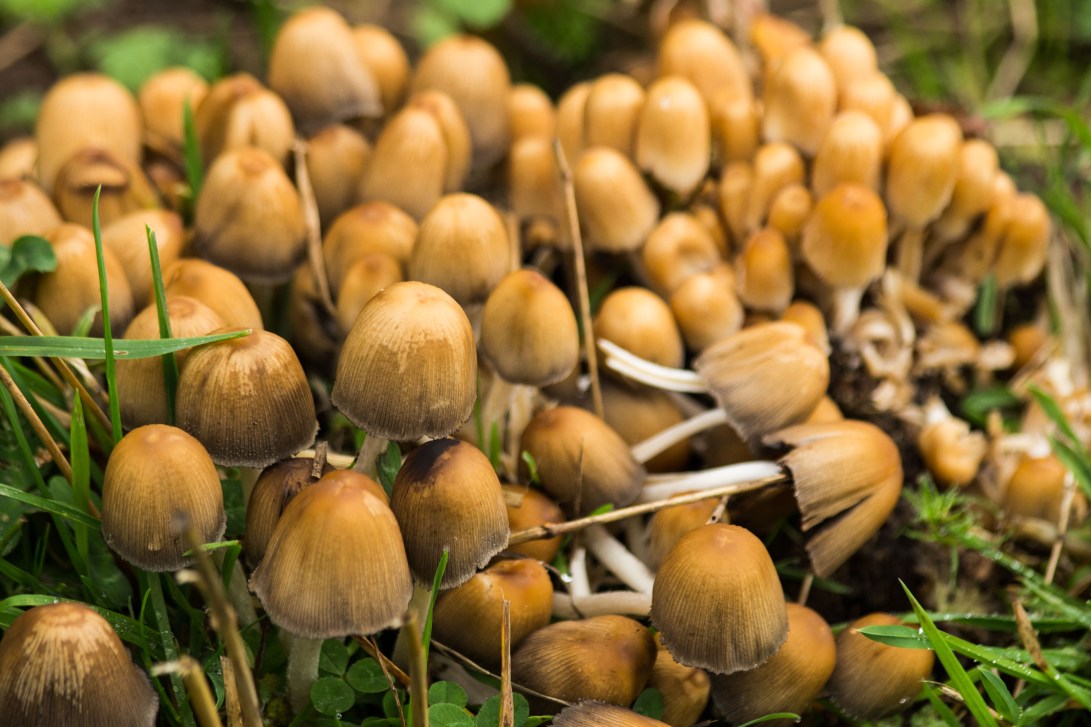
The sun sunk in and out of the clouds as we made our way through the valley, stopping every once in a while to photograph a mysterious fungus or watch a bird through binoculars. By lunchtime, just as my stomach was rumbling for my sandwiches, we arrived at Branton Nature Reserve. The first sound that greeted us was the noisy gabble of greylag geese as they fought for space to sit down on the crowded island. There were dozens of birds here; groups of lapwing, snipe, goosander and moorhen. There was minimal mingling between the species, reminding me of a school canteen full of cliques. Suddenly there was a commotion and many birds took to the air. The source of the panic was a heron, gliding in with broad wings and a curled neck. As he landed with spindly legs dangling, the geese gabbled uncertainly and gave him plenty of space.

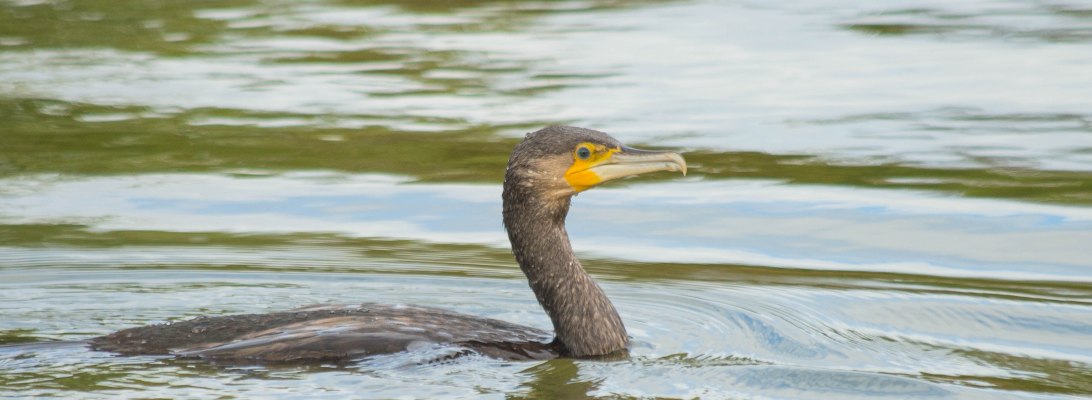
We slunk as inconspicuously as we could into the hide and tucked into lunch while keeping one eye on the lake’s activity. A cormorant surfaced a few feet from the window, and paused long enough for a few breaths before diving back down, emerging moments later in a completely different place and with a wriggling fish in its bill, which was swallowed up in the blink of an eye.

IMG_6381-2IMG_6417

Soon it was time to start heading back. It was trying to rain, and as we were making our way back past the village of Ingram it succeeded, so I hastily packed away my camera and bins. Later, once Cain had got a fire going, we’d rested our aching feet and eaten dinner, we pottered into the garden with the bat detector, to see if any bats were passing through. Before we heard any clicks though, there was a flash of white wings and a barn owl swooped out into the open. Shortly after, a second owl appeared some distance from the first, which was even more exciting. We ventured a little further up the hill and the detector started clicking. That evening we heard both common and soprano pipistrelles, and although we were leaving the wilderness behind and heading back home tomorrow, just these two days have been enough to remind me once again how important it is to spend time in nature.

IMG_6452

Species Seen: Adder (Vipera berus) Bank Vole (Myodes glareolus) Black-Headed Gull (Chroicocephalus ridibundusBuzzard (Buteo buteo) Chaffinch (Fringilla coelebs) Common Crossbill (Loxia curvirostra) Cormorant (Phalacrocorax carbo) Coot (Fulica atra) Eurasian Rabbit (Oryctolagus cuniculusEurasian Siskin (Spinus spinus) Goldcrest (Regulus regulus) Goosander (Mergus merganser) Greylag Goose (Anser anser) House Sparrow (Passer domesticus) Jackdaw (Corvus monedula) Jay (Garrulus glandarius) Kestrel (Falco tinnunculus) Lapwing (Vanellus vanellus) Lesser Black-Backed Gull (Larus fuscus) Lesser Redpoll (Acanthis cabaret) Little Grebe (Tachybaptus ruficollisMagpie (Pica pica) Moorhen (Gallinula chloropus) Mute Swan (Cygnus olor) Pheasant (Phasianus colchicus) Red-Legged Partridge (Alectoris rufa) Reed Bunting (Emberiza schoeniclus) Robin (Erithacus rubecula) Rook (Corvus frugilegus) Skylark (Alauda arvensis) Snipe (Gallinago gallinago) Sparrowhawk (Accipiter nisus) Starling (Sturnus vulgaris) Teal (Anas crecca) Tufted Duck (Aythya fuligula) Wigeon (Anas penelope)