Northumberland: Day One

We arrived at the bothy just as the sun was at its warmest. We were in the Northumberland National Park, and as the car rumbled up the hill I craned my neck to see the valley opening up into a patchwork blanket of green, orange and brown. It was autumn at its finest; an explosion of colour with just the right amount of chill in the air. On the way up to the bothy I spied an abandoned tyre swing, which would be a great accompaniment to the stories about childhood memories, so I made a mental note to return tomorrow.

After the customary dumping of the bags, I headed out with Cain and Lequane to set up two camera traps. With a new area, you never knew what could be roaming the forests; red squirrels, even a pine marten perhaps. We followed the burn down the hill, which was a thick sponge of fallen leaves. A dry stone wall ran parallel to the water, and I could just imagine small mammals darting along it, so set up the first trap looking out over the wall.

The light was fading, so we made our way along the burn with torchlight. The wall had collided with a tangle of sticks in one patch, perhaps a resting place for voles or mice. I set the second trap up with a viewpoint over the wall.

We made our way back up the road to the bothy, and were very surprised to see bats zooming around over our heads. Cain told us how it was very late in the year for bats, and they were perhaps roosting in or around the bothy. Cain’s sharp ears picked up a redwing calling in the distance, and then we heard a tawny owl very close by, so decided to pursue it into the cluster of trees behind the house. It was tantalizingly close and we searched the trees in the gathering gloom for any sign of it. No doubt the owl could see us perfectly and was watching with a combination of confusion and amusement, as it stopped calling as soon as we reached the trees and we didn’t hear it after that.

After taking shifts to cook our separate dinners, we had a look outside and there was a series of gasps and excitable shrieks when we all saw the night sky. I don’t think I’d ever seen so many stars – the sky was pitch black, with not a single lamppost or car light to spoil it. We all hurried inside to layer up and grab cameras, then broke off in different directions to get started. Some wandered up the hill and turned towards the Milky Way, while others stayed in the car park and began a time lapse of Orion’s Belt.

I hadn’t done a great deal of night photography, but I began to experiment and soon I found myself quite addicted to it, especially with such a beautiful and flawless background. The camera picked up millions more white pinpricks in the sky, and I was very pleased to find that I’d caught a shooting star in one image.

After an hour or so, my fingers had begun to grow numb, and I found myself capturing the same photos multiple times just because they were so beautiful. For the sake of my memory card, I headed back to the bothy to warm up and have a snack before bed.

7W1A8243

Sightings

  • Barn Owl (Tyto alba)
  • Chaffinch (Fringilla coelebs)
  • European Rabbit (Oryctolagus cuniculus)
  • Redwing – heard (Turdus iliacus)
  • Robin (Erithacus rubecula)
  • Soprano Pipistrelle (Pipistrellus pygmaeus)
  • Tawny Owl – heard (Strix aluco)
The Beginnings of Winter

Before I’d even got to the hide there was a chirruping in the bushes and I turned to see a group of juvenile yellowhammers mobbing their parents, hopping between branches for attention. Three birds flew past overhead and I caught the triangular shape of starling wings as they soared over me.

The lake was quiet – a pair of mallards floated in circles on the far side, while mute swans waddled along the bank. Once I was settled inside, they appeared by the feeders, accompanied by the juvenile swans I’d seen last time. The whole family loitered beneath the swinging seed canisters, mopping up anything dropped.

The feeders themselves were a flurry of activity. As usual, the nearby bushes were full of house sparrows, fighting to snatch a mouthful. Blue tits and great tits waited in the queue and I was particularly excited to see a lone greenfinch among the group too; back home in Hertfordshire these birds are becoming scarcer and scarcer.

After watching the birds feed for a while, I wandered on. It was a lot colder than usual – dew covered the grass but it wasn’t quite cold enough to freeze it, though perhaps this may soon be the case on early mornings. There were other signs of winter too; bursts of red berries and a fat robin perched on the fence. Even though these birds are around all year, somehow a day in early winter feels like Christmas is a lot closer when you spot one.

As I made my way to the wood the only sound was the usual “whizz-burr” of the turbines as they swung. There was a break in the clouds and beautiful streaks of sunlight shone through at jaunty angles. The forest was gloomy but still inviting, and as I walked round I scanned both sides of the path to see if any fungi were sprouting up. The ground was boggy in places, and when drops of water fell in the puddles, the reflected trees twitched.

IMG_9019

Suddenly, just as I was looping back round to the gate, a woodpigeon exploded out of the trees and made me jump a mile. Why do pigeons love doing this? It must give them a wicked satisfaction to see me clutch my chest and try to get my breath back to normal.

Once I was back in the open, the chill was even stronger. I wrapped my coat tighter around myself and hurried back to the cafe to warm up.


Bike Ride in the Woods

Another visit to one of my favourite wildlife places: Watchtree Nature Reserve. Zahrah and I hired bikes and set off through the reserve, taking a leisurely ride away from the hubbub of the café and car park to the quieter open fields and woodland.

The lake was fairly busy. A pair of Mute Swans and their two cygnets glided silently to and fro in one corner, shaking heads and rustling feathers. The youngsters were almost fully grown, their juvenile grey foliage blending to pristine adult white. When one stretched his wings, bright white armpits showed. Elsewhere on the lake, three Tufted Ducks were feeding, golden eyes blinking as they came up for air. A lone Little Grebe dived under the water and popped up again several metres away. As agile as a fish, the tiny bird curled its body and slipped silently beneath the surface.

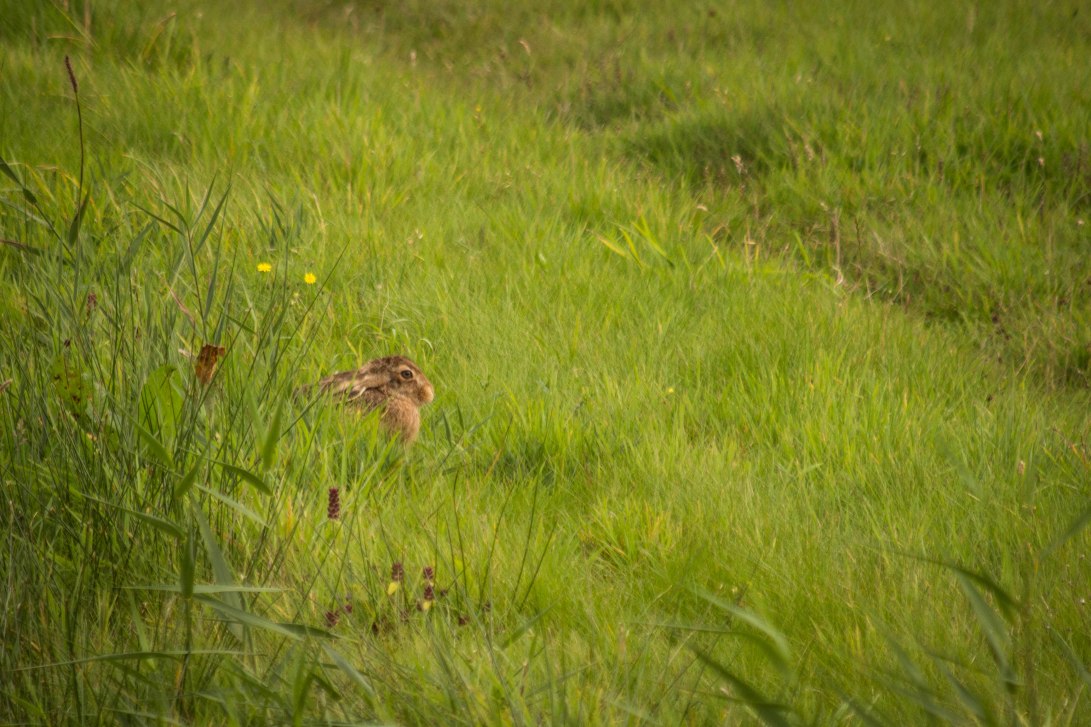
Suddenly, as I was scanning the feeders for any birds joining the Tree Sparrows already tucking into the feast, my eye caught on a brown shape nestled amongst the grass. From my vantage point on the top storey of the hide I could see the Brown Hare perfectly as it chewed, hunkered down. I called in a hushed whisper to Zahrah, who’d been watching the pond from the bottom level, and she darted up to see.

IMG_5952-2

The hare was beautiful, with rich, brown streaked fur and piercing eyes. Its ears were pinned tightly to its nape, in an attempt to remain as inconspicuous as possible, but the creature was still brave enough to forage out of the cover of the long grass. We watched it for a few minutes, before it turned and hopped back into the grass. After waiting a while to see if it would re-emerge any closer, we accepted our hare was long gone.

IMG_5953

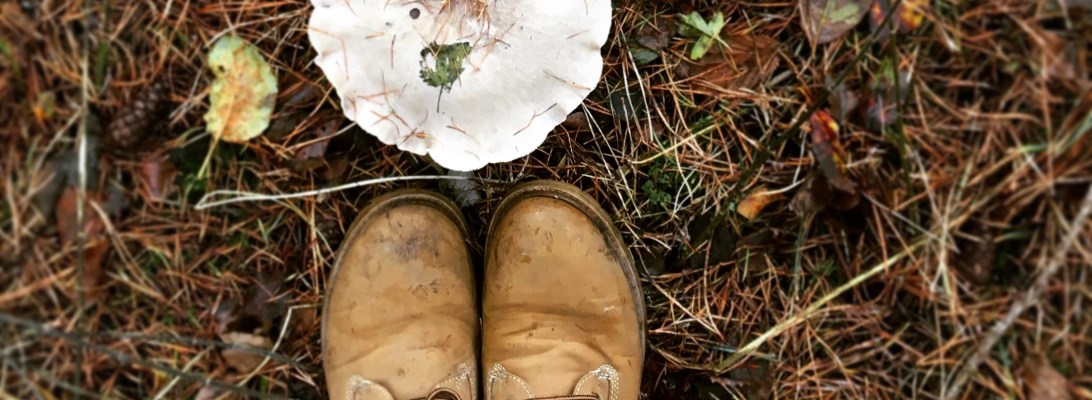
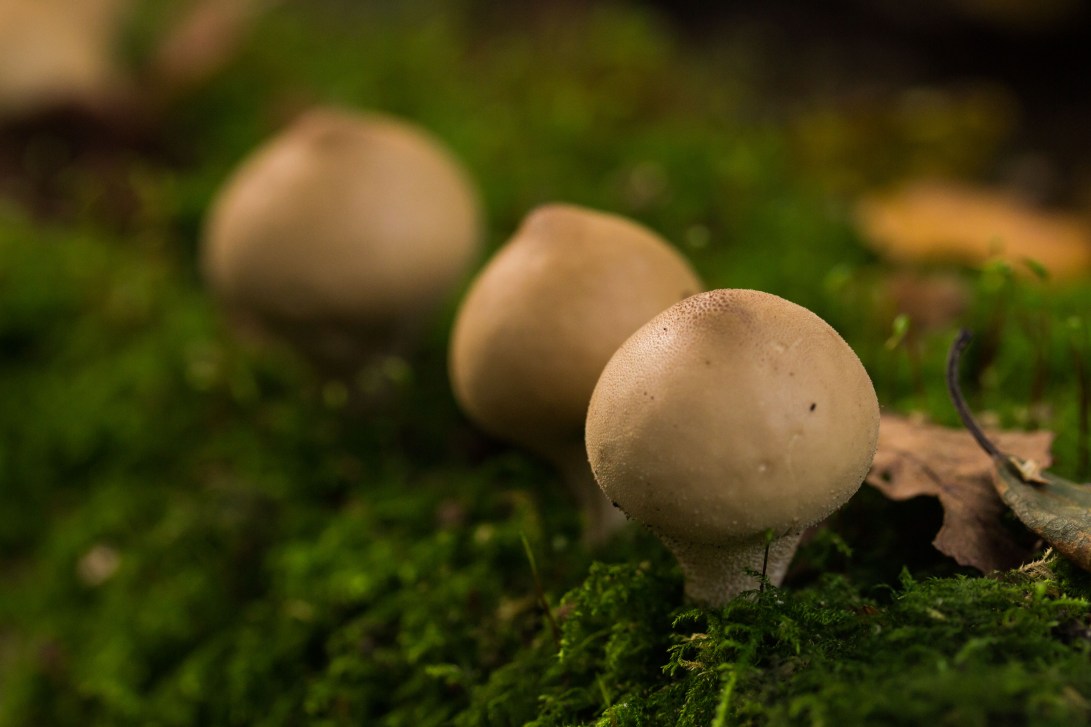
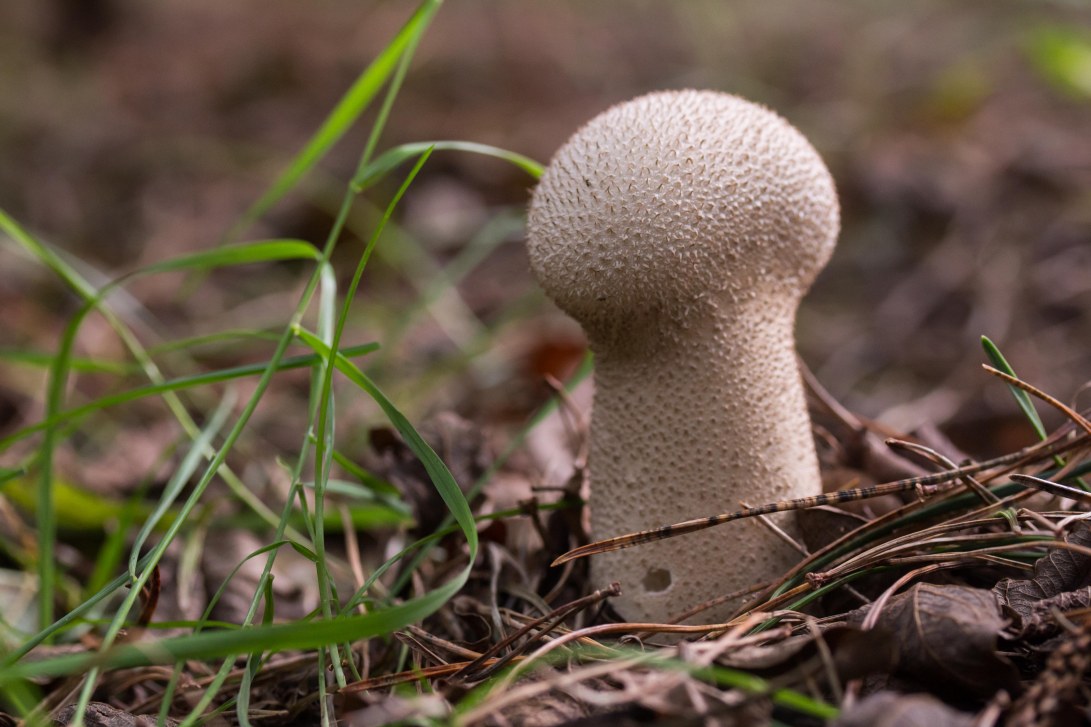
Leaving the lake behind, we looped around the reserve and cycled back through the woods. Once again, I was distracted by fungi, and Zahrah amused herself while I crawled around on the floor with my camera. Today, as always, there was plenty to see. A huge troop of Stump Puffballs (Lycoperdon pyriforme, the only British Lycoperdon to grow exclusively on wood) stood to attention on a fallen log, their portly bodies stood side by side.

IMG_5972
Stump Puffball (Lycoperdon pyriforme) 

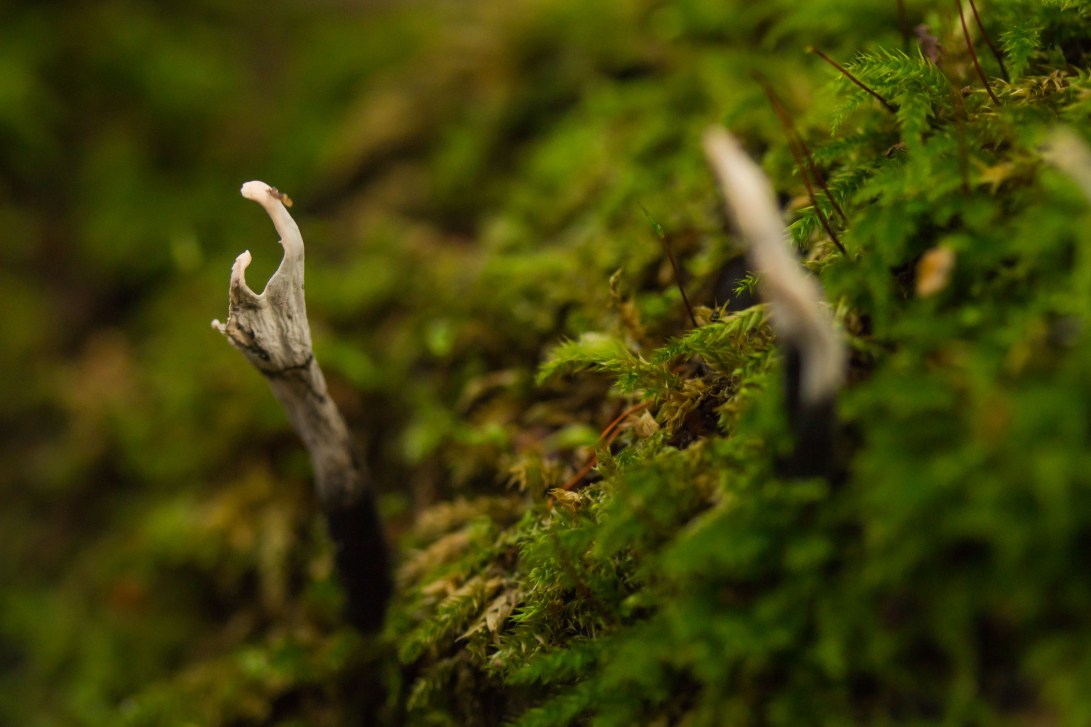
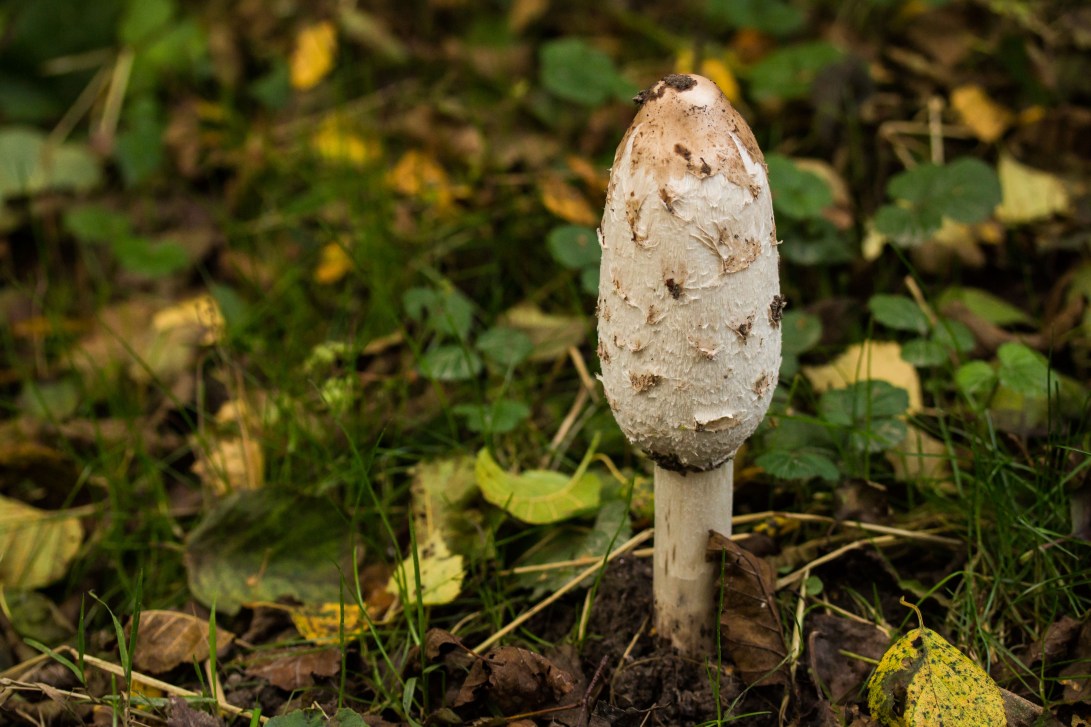
The delicate Candlesnuff fungus (Xylaria hypoxylon) stretched out of the wood, tiny black spindles dipped in white. Just as I had finally put away my camera and climbed back on the bike, I was greeted by three Shaggy Inkcaps (Coprinus comatus) stood on either side of the path like security guards. I hadn’t seen this fungus since autumn last year so it was a treat to photograph them again, and provided a satisfying end to our cycle in the woods.

IMG_5978
Candlesnuff (Xylaria hypoxylon) 
IMG_6002
Shaggy Inkcap (Coprinus comatus)

Fungi Trail

It’s soon to be prime fungi season and I can’t wait to see what will start to emerge over the next few months. I find identifying fungi a real challenge, and recently I’ve mainly been interested in tracking fungi and photographing it. As with all wildlife though, I think every photographer should know exactly what it is they’re pointing the camera at. So, after consulting the “Fungi Bible” – otherwise known as the Collins Fungi Guide – I made my best guesses at what species I’d seen. Then, I consulted with a local fungi expert in my area, and was pleased to discover I’d got most of them right!

Here is a selection of the species I’ve seen so far, some in Carlisle where I’m studying and others at home in Hertfordshire. Hopefully this list will triple in size during the autumn!

Hertfordshire

IMG_5300
Amethyst Deceiver (Laccaria amethystina)
IMG_5306
Red Cracked Bolete (Xerocomellus chrysenteron)
IMG_5314
Yellow Stagshorn (Calocera viscosa)

Cumbria

IMG_5431
Common Puffball (Lycoperdon perlatum)
IMG_5376
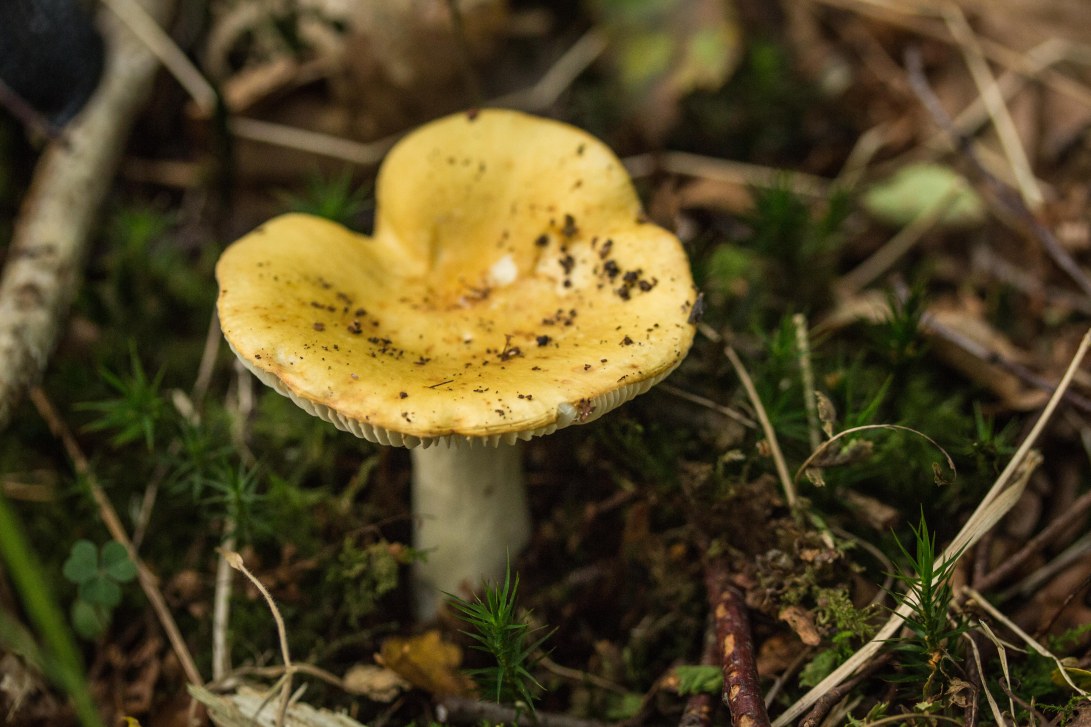
Ochre Brittlegill (Russula ochroleuca)
IMG_5365
Blue Roundhead (Stropharia caerulea)
IMG_5402
The Deceiver (Laccaria laccata)
IMG_5423
Brittlegill (unsure of species – too young)
6) Sheathed Woodtuft
Sheathed Woodtuft (Kuehneromyces mutabilis)
IMG_5443
Sheathed Woodtuft from below

Burghead, Moray

IMG_5654
The Sickener (Russula emetica)

Burghead: Day Three

On our last day, we drove out of Burghead into Hopeman, a nearby seaside village. Once again, the sun was shining and the sky was almost cloudless, coating the sand in a shimmering golden glow. Jas couldn’t contain herself, and pulled eagerly on the lead to get down to the seafront.

IMG_5764

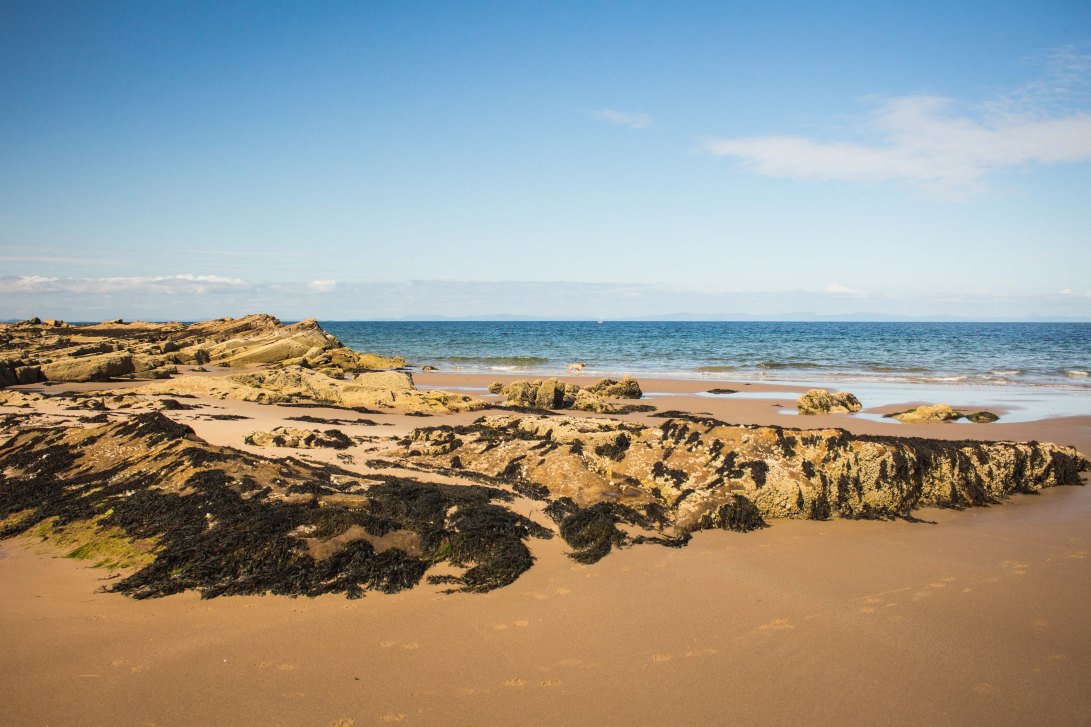
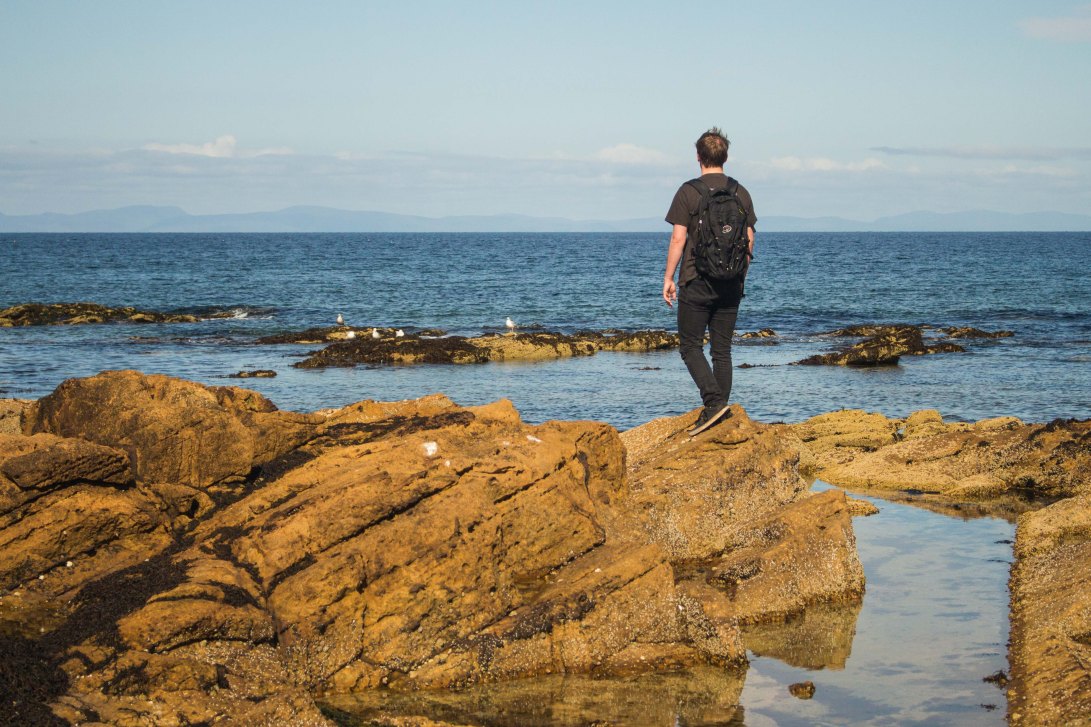
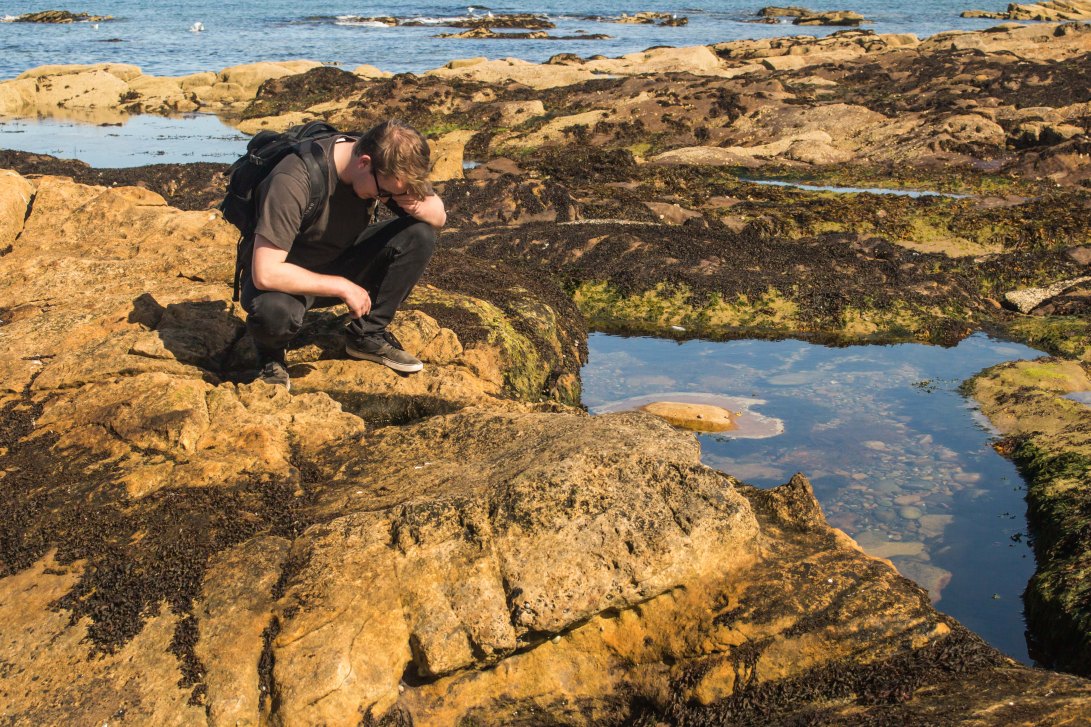
I began snapping immediately. The beach was a patchwork of fine, flat sand and weed-coated rocks where puddles of seawater were trapped from returning to the ocean until the tide swelled again. Kerr and I began to wander – rock pooling is one of those timeless summer activities that nobody is ever too old for. We stepped slowly from one rock to the next. A combination of slick seaweed and soft moss made me take extra care; although it was a beautifully warm day, I feared a dip in this water would still be a chilly one.

IMG_5757

Another reason to watch your feet was the abundance of common limpets (Patella vulgata) clamped firmly to the rocks. We kept an eye out for any crabs lurking in the shadows, but perhaps the day was too hot for them. However, there were plenty of hollowed-out crab shells and discarded legs; remains of somebody’s breakfast no doubt.

IMG_5746-2

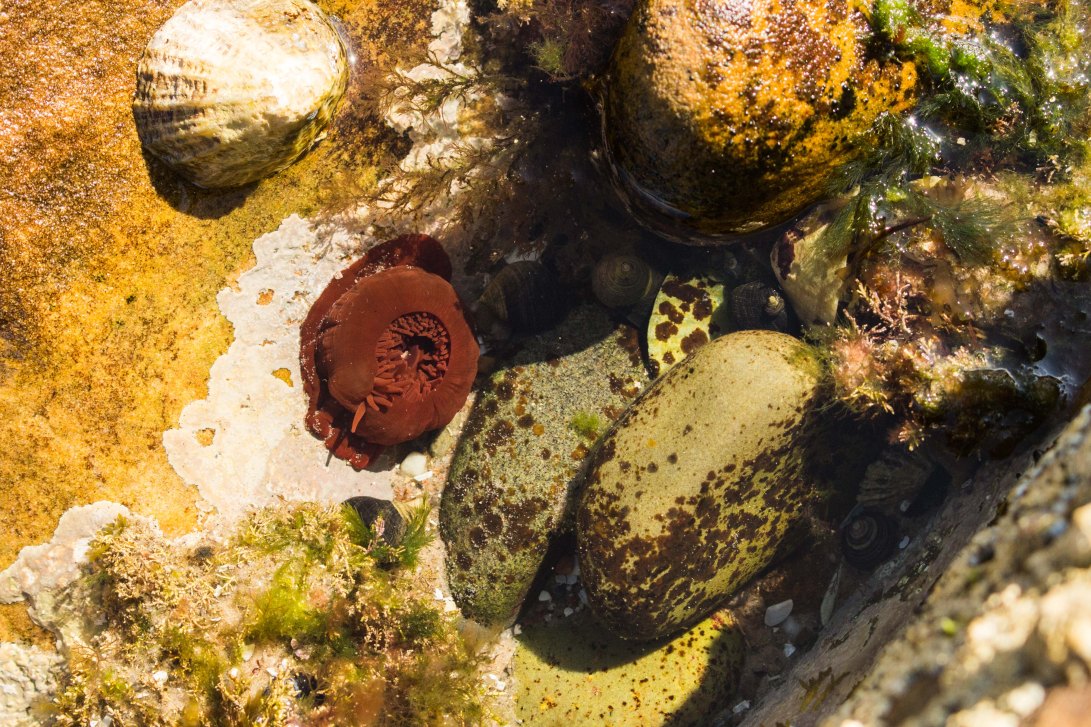
There were also several rusty red spherical bodies with tiny tentacles tucked up tight. After a little research I discovered that they were beadlet anemones (Actinia equina), an extremely territorial anemone that nudges and attacks rivals with stinging cells that act like harpoons, injecting the unfortunate neighbour with venom to clear them off their patch. Baby beadlet anemones are kept in the parents’ body cavity – which conveniently serves as both mouth and anus – and when they are ready to be born, the parents eject them through the water, where they find a rock to make their home.

IMG_5752

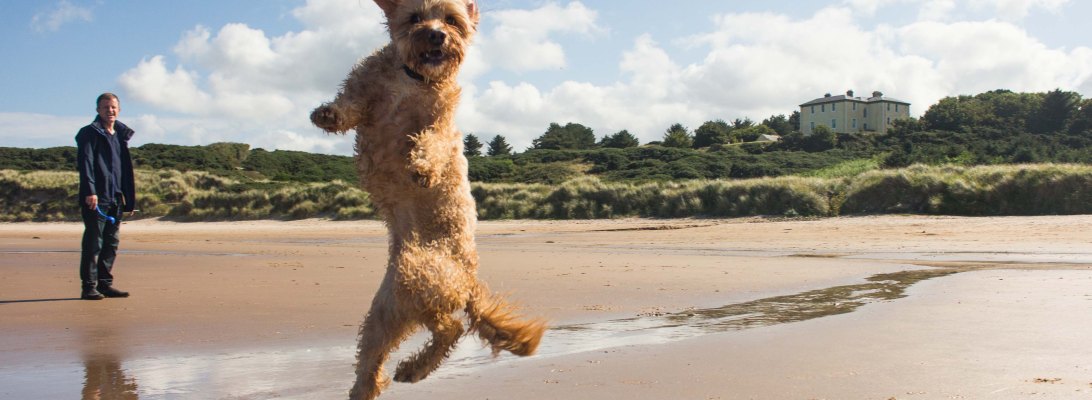
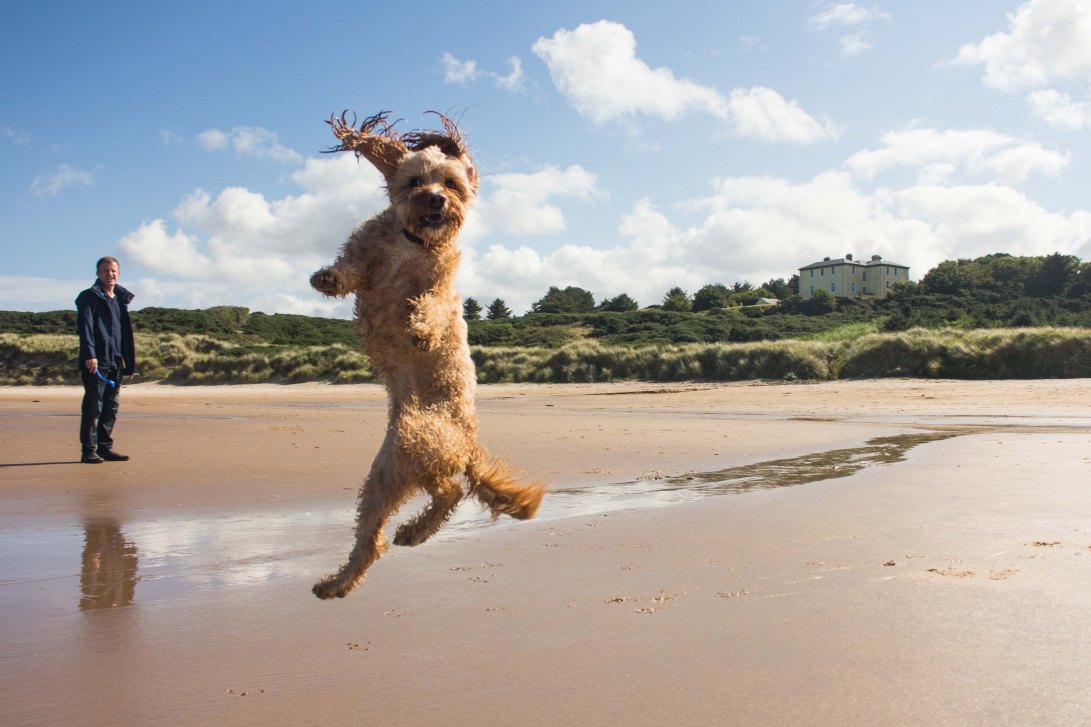
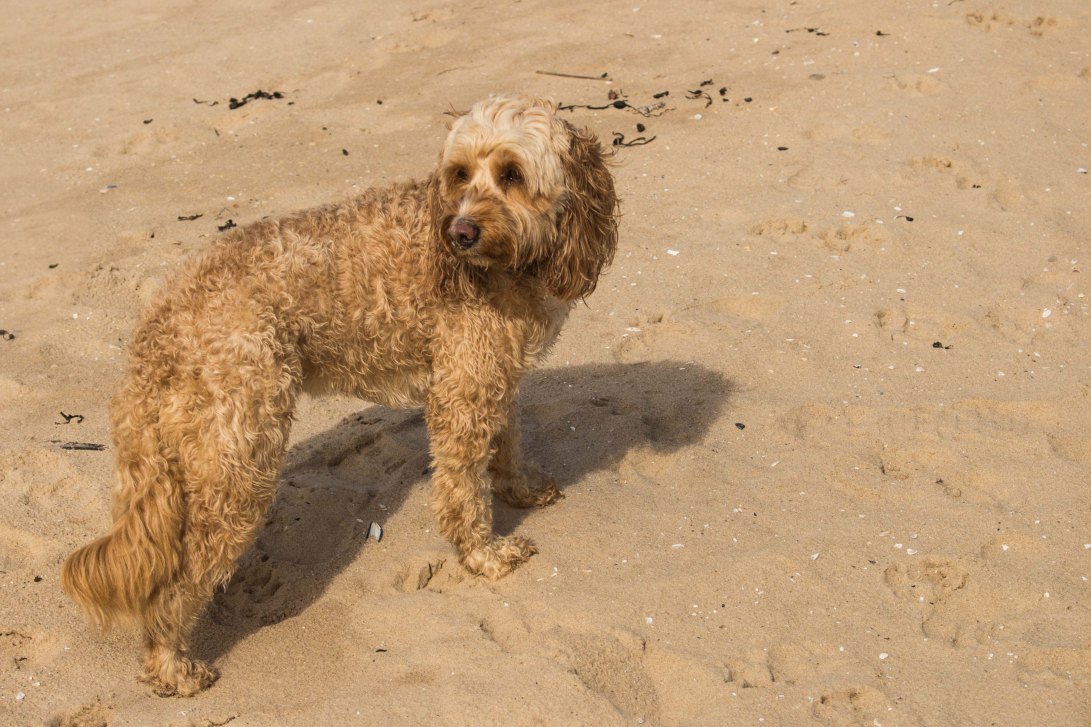
After a long time spent gazing into the pools and wondering what else could be lurking just out of sight, we joined the frantic game of fetch that was in full swing back on the beach. I couldn’t resist an opportunity to test my reflexes and see if I could photograph the fluffy torpedo in any mighty poses. I captured some absolute corkers but this was by far the best. Never has a dog loved the beach more than at this moment.

IMG_5773-3

Burghead: Day Two

It was looking like another gorgeous day. As we walked along the harbour yesterday, I couldn’t help noticing how inviting the forest running alongside the beach looked. Stretching for over seven hundred hectares, Roseisle Forest was a stunningly beautiful pinewood. As we made our way up the slope between the first row of trees, sand dunes transformed to mounds of fallen pine needles and the sound of the ocean soon faded into silence.

IMG_5588

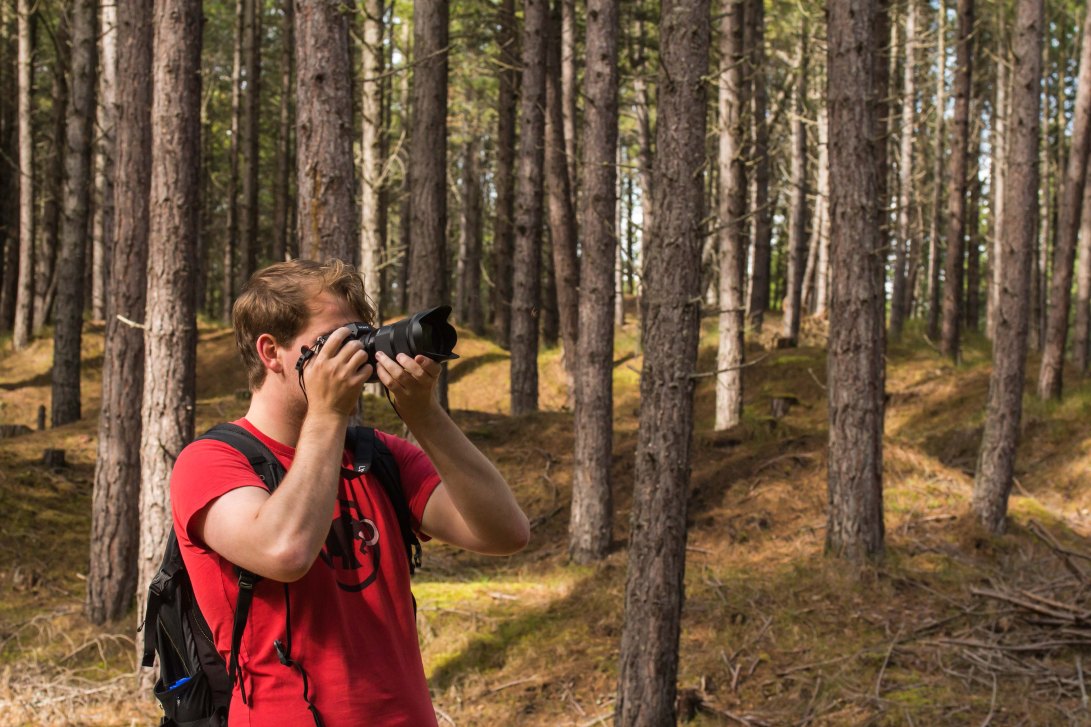
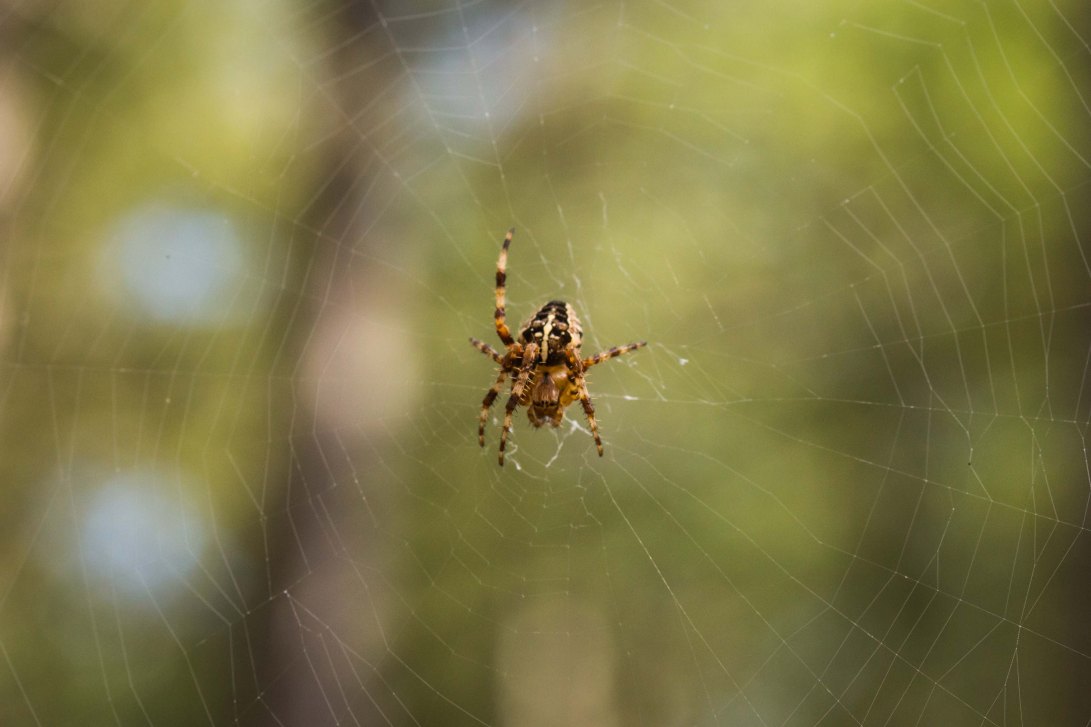
A wide trodden path snaked between the trees. I was on the lookout for fungi, so we headed off-road and ventured up the hills, giving us a great vantage point over the forest below. Before long, a sudden sparkle caught my eye, and I was amazed to discover that a spider had strung its web between two trees several metres apart. Luckily the sunlight had caught the web; otherwise we may have walked straight through it. We spent the next twenty minutes photographing our spider – it was a real challenge trying to get him in focus as the web swayed to and fro in the breeze, which must have felt like a gale to the spider. If you zoom in on the photo of Kerr, you can see a brown dot a few inches in front of his camera, showing just how tiny the little hunter was.

IMG_5614-2IMG_5632


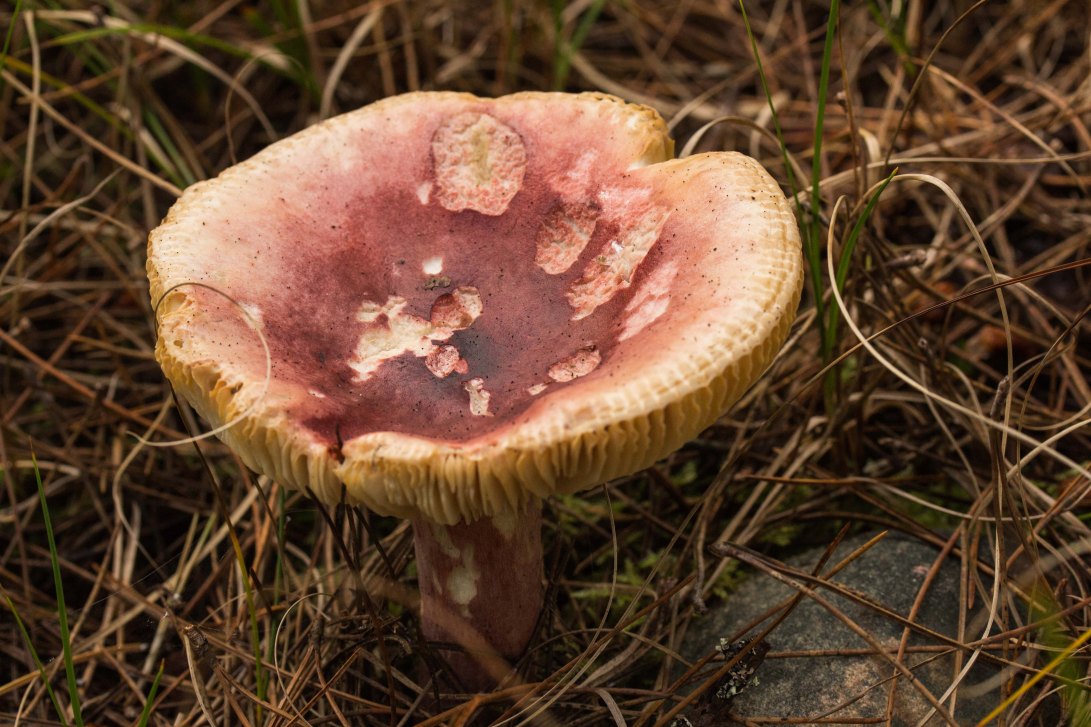
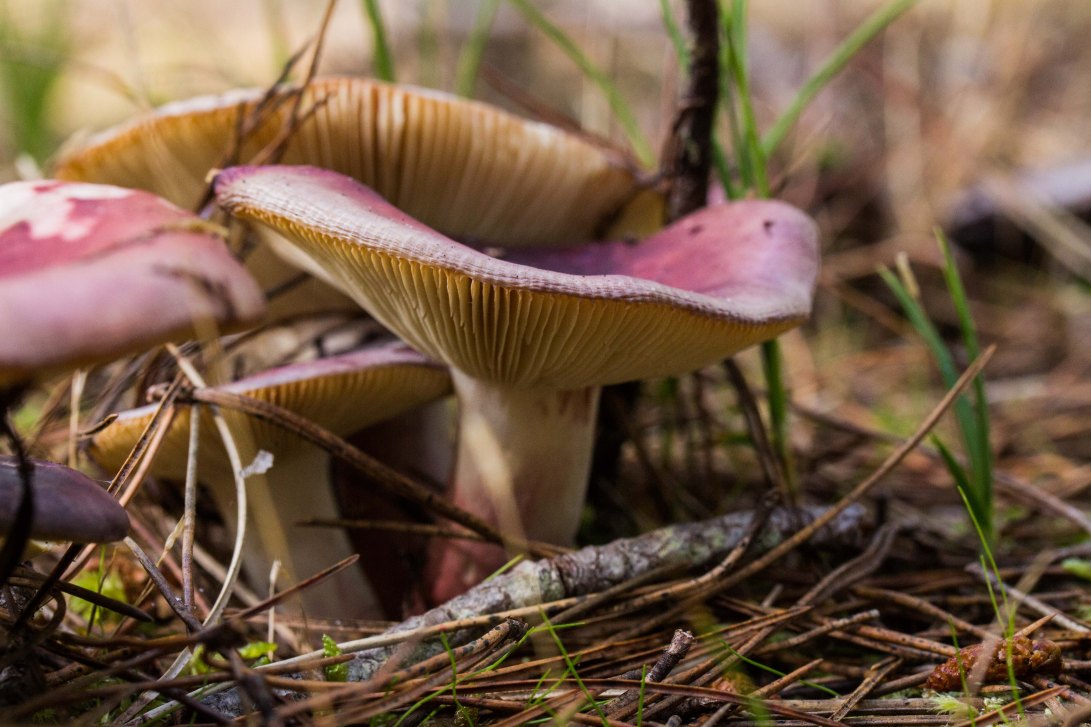
Soon, it became clear that Roseisle Forest was abundant with a medium-sized, red-capped mushroom that had faded to pink with age. After consulting the Burghead guide back at the cottage, I discovered that mushrooms in the Russula group, otherwise known as Brittlegills, were common here. After checking out the various species I identified this fungus as Sickener (Russula emetica), a poisonous species associated with pine woodland. This mushroom is found in groups and is most common in late summer to early autumn, perhaps explaining why the ones we saw weren’t the bright red colour of their prime.

IMG_5654IMG_5620

After finding dozens more Sickener mushrooms and spending a long time crawling on the forest floor photographing them, we headed back out onto the beach. We met up with my parents and Jasmine, who was whipping up a small sandstorm in her excitement. By this point my stomach was rumbling after the walk in Roseisle, so we headed to lunch and ate outside in the stunning sunshine.

IMG_5677IMG_5689

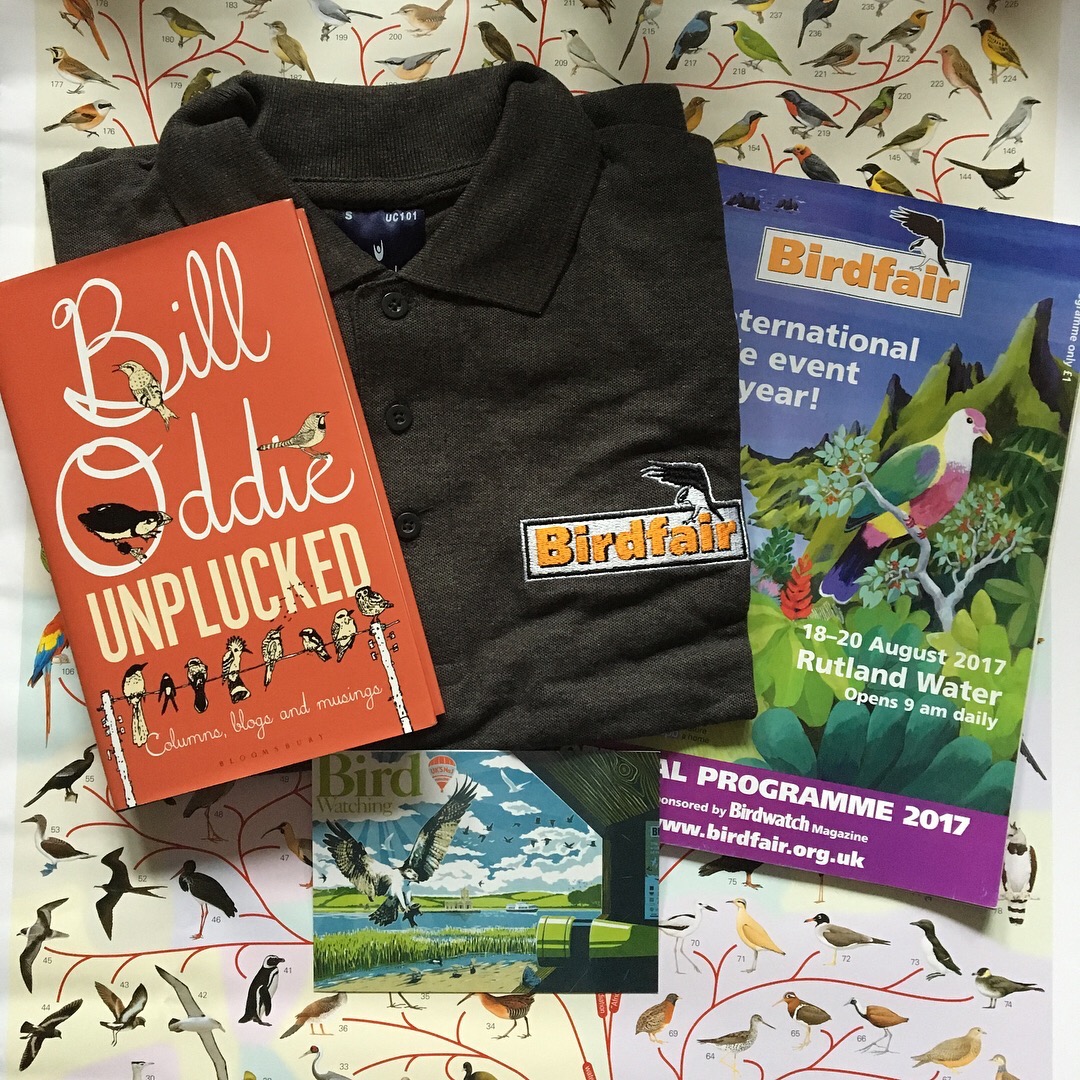
Birdfair 2017

Zahrah and I only managed to attend the third and final day of Birdfair 2016. This year, we were set on squeezing everything we could out of this incredible event. Kerr decided to join us too, so last Thursday the three of us set off for Rutland Water Nature Reserve.

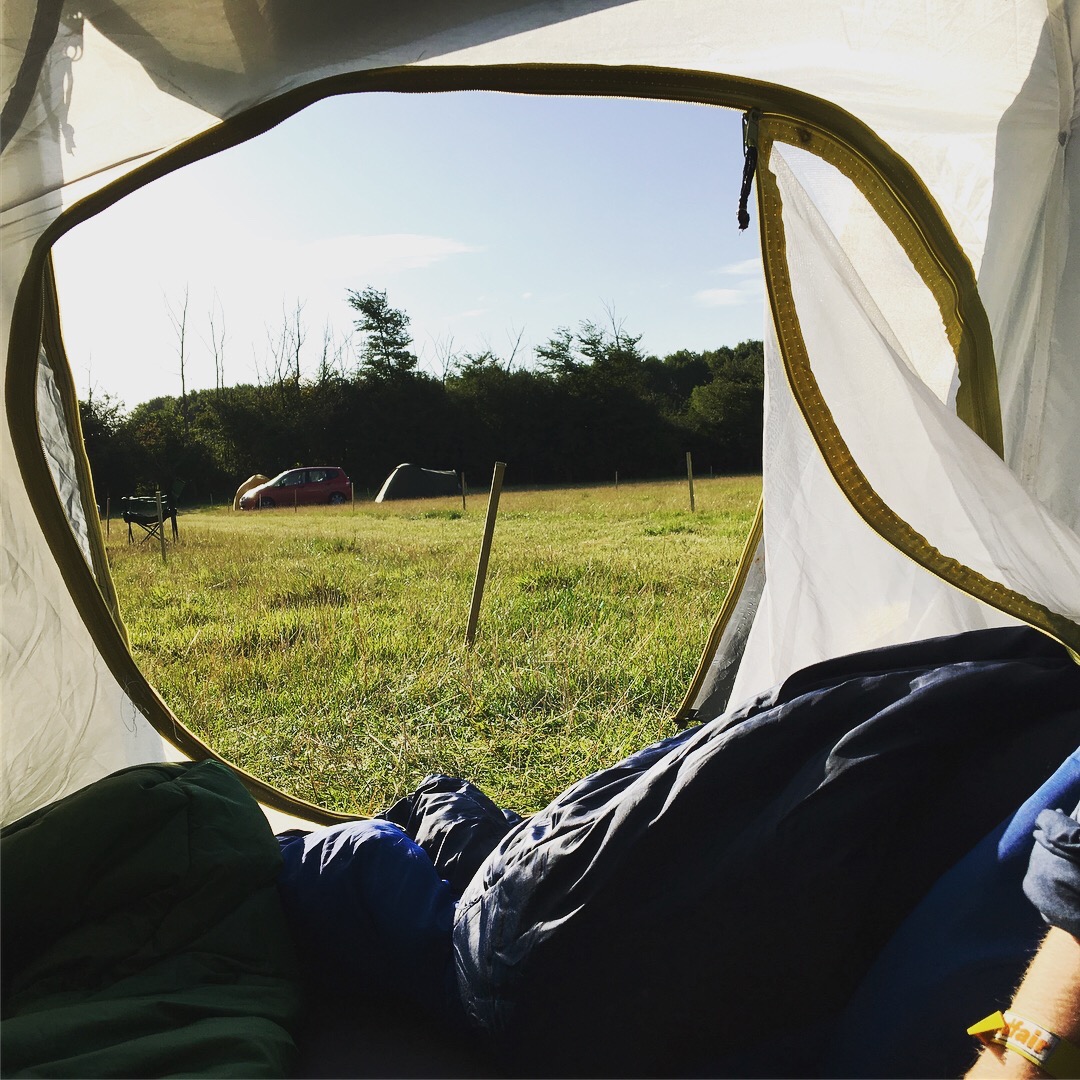
Due to a slight train mishap from Zahrah, it was nearly dark by the time we arrived at the campsite. We met the very charismatic steward and his wife, who cruised around the site on a rather fetching golf buggy and led us to our pitch. Perhaps ashamedly, I’d only been camping twice before, once ten years ago and once last month, so I was excited to get the tent up and spend our first night in the reserve.

IMG_8516

In the morning I woke from a genuinely good tent’s sleep. After eating pots of porridge around the stove we headed over to the fair. As usual, I was overwhelmed by just how much there was to see: eight long marquees, three lecture theatres, the main events marquee and a large cluster of food stalls, merchandise stands and of course, the reserve itself.

After a scan of the programme, we threaded our way through the first marquee. We met a lovely lady from the West Cumbria Swift Group, and I soon realised how little I knew about swifts. Due to house renovations, swifts are losing their nesting sites and should now be red-listed. The fastest bird in level flight, swifts shut down half their brain at a time to enable them to sleep on the wing and endure such long journeys overseas.

In the afternoon I attended a talk on the successes and challenges of conservation. As I listened to comeback stories of black-winged stilts, spoonbills and Manx shearwaters, it struck me how much we all dwell on the ‘doom and gloom’ of wildlife. Of course, it’s appalling how many of our planet’s species are now threatened, but invaluable work is being carried out all over the world and it should be celebrated. The talk inspired me to concentrate on conservation success, not failure, and it’s something I reckon I’ll be turning into a third year project.

IMG_8517

Day two of Birdfair began with some more networking in the marquees. I chatted to lots of lovely people, from the BBC Wildlife team to photographers to those offering amazing wildlife holidays (I lost count how many competitions I entered – bring on the promotional emails). After a delicious pulled pork roll with applesauce, my ultimate favourite, Zahrah and I caught Simon King’s talk. He really is a great speaker. Although it’s often the case at these events that the speakers are merely preaching to the choir, it’s always so good to be reminded just how important nature is. He included a quote from Anaïs Nin that drove his message home: “We don’t see things as they are, we see them as we are.” Mankind has done extraordinary things, some of them terrible, and it’s important not to lose focus on what really matters: preserving this planet. It’s a message I really hope can endure the test of time.

IMG_8518

I was a little sad to wake up on Sunday and realise Birdfair was nearly over. Zahrah and I anticipated long queues for Steve Backshall so we hurried to the fair earlier than usual. The marquee was filled to capacity, with people lining the walls and stuffing themselves into every space. I suppose it’s the nostalgia talking, but I think Steve Backshall is an inspiration. Deadly 60 was perfect, combining boisterous adventure with important messages about wildlife to capture every child’s imagination. In his talk, Steve showed various images of shark species, to which the children sat cross-legged at the front shouted out the names of without a moment’s hesitation. It gave me a fuzzy feeling: these kids absolutely loved wildlife. It’s true that engaging younger generations is undoubtedly the long-term solution for the natural world, and Steve Backshall was doing just that. I couldn’t help but put my hand up for a question. I asked him what species was next on his wish list, to which he replied the snow leopard.

IMG_8515

Before long it was time to go. Kerr had bought the Sony camera he’d been eyeing up for months and at a considerably lower price, so he was happy as Larry. I treated myself to a poster of the ‘Orders and Families of Birds of the World’, which is now hanging proudly alongside my others. Birdfair is one of those rare events where us wildies gather in our thousands to celebrate not only birds, but all wildlife. I know from previous experience that an interest in nature is not a common one, so to meet people from all over the world with the same passions as me is something really quite special. I’m already looking forward to next year.

Camping in Dumfries

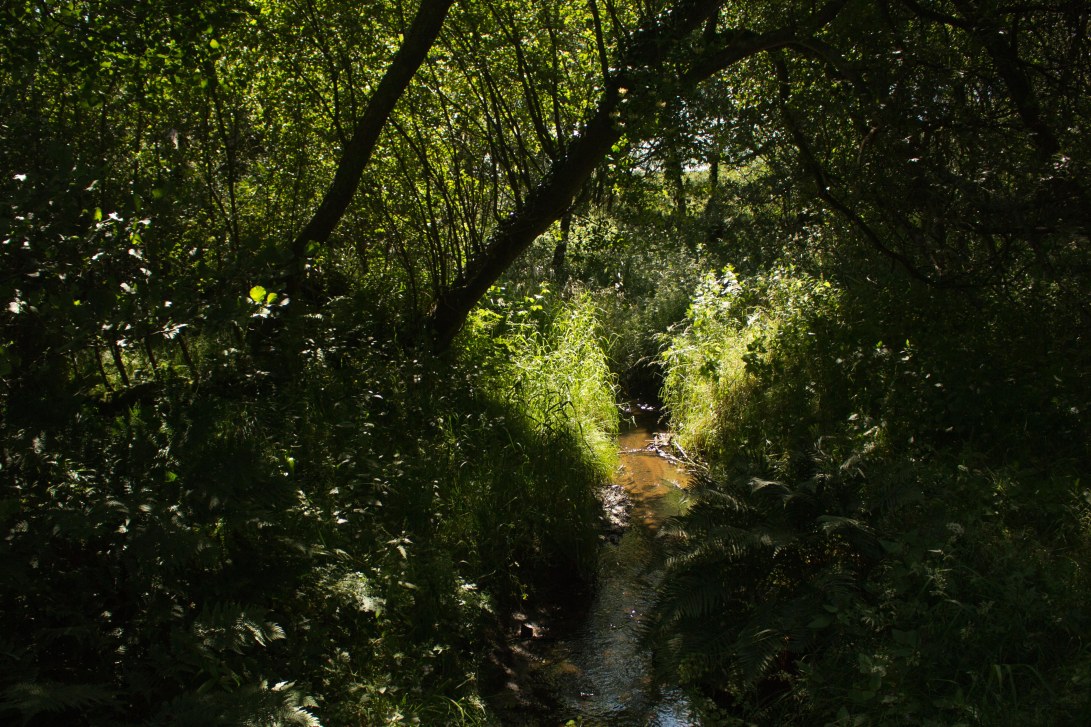
Kerr and I arrived at Caerlaverock Nature Reserve mid afternoon. We’d chosen the perfect day for our camping weekend; the sky was cloudless and the breeze off the water blew the scent of salt across the grass. We began our walk in the forest, following the trail as it weaved through the trees. A trickling stream criss-crossed beneath us, water glistening as it caught the sun. The path was dappled with patches of light that shifted as the breeze stirred the trees.

IMG_5170

Soon we emerged into the open. Despite the breeze, the sun was strong and before long we’d both abandoned our jackets. A Red Admiral butterfly fluttered from reed to reed, buffeted by the breeze. As it rested on a patch of undisturbed grass I managed to snatch a few shots before it took to the air again, soon getting lost in the swaying grass.

IMG_5161IMG_5176IMG_5179

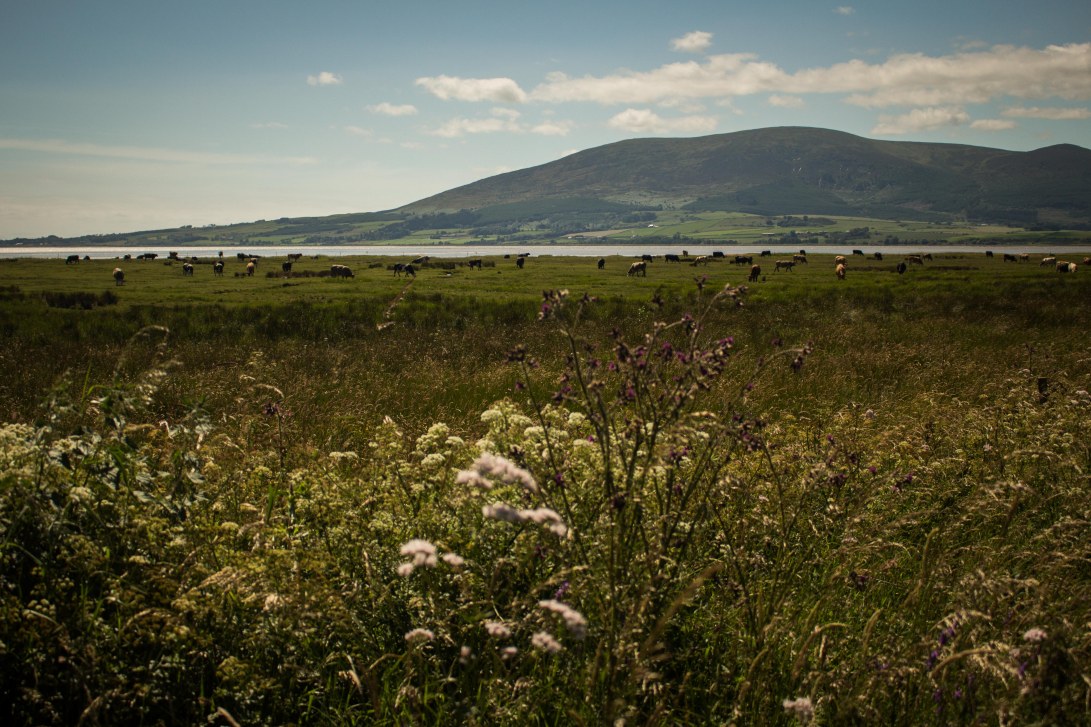
We followed the track on until grassland dissolved into farmland. Cows gazed at us quizzically as we passed, large eyes blinking. Before long we reached the end of the first field, where the only route to the next was crossing the stream over a felled tree. Balance is not my strength, but with Kerr’s help I reached the other side without getting soggy.

IMG_5177

The obstacles weren’t all behind us though. I wouldn’t say I have a phobia of cows, but I certainly make an effort to avoid sharing a field with them, something I inherited from my mother. So when we emerged from the tree bridge and saw a herd forty-strong, I was a little apprehensive about going any further. Not only were they everywhere, they were also the friskiest cows I’d ever met. When they spied us, they broke into a run and spread out, covering our path to the gate. We were just contemplating the best course of action when they turned tail and retreated quickly back to the far end of the field. I knew my choices were to face these herbivorous, harmless creatures head-on or stumble back across the tree and find a new way round. Seizing the day, I gripped Kerr’s hand and we made our way slowly but surely across the field.

We were two thirds of the way across when I snuck a glimpse to the side and, to my horror, saw the entire herd stampeding right for us. The inevitable terror set in and I dragged Kerr towards the gate. He was telling me not to panic as I launched myself at the gate, wading through sticky mud in my haste. We’d just dropped down on the other side when the first cows reached us. I locked gazes with them, and for a moment they were cute and endearing again. Suddenly they took off again, galloping after each other like horses at the Grand National. I’d never seen such energetic cows in my life.

IMG_5188

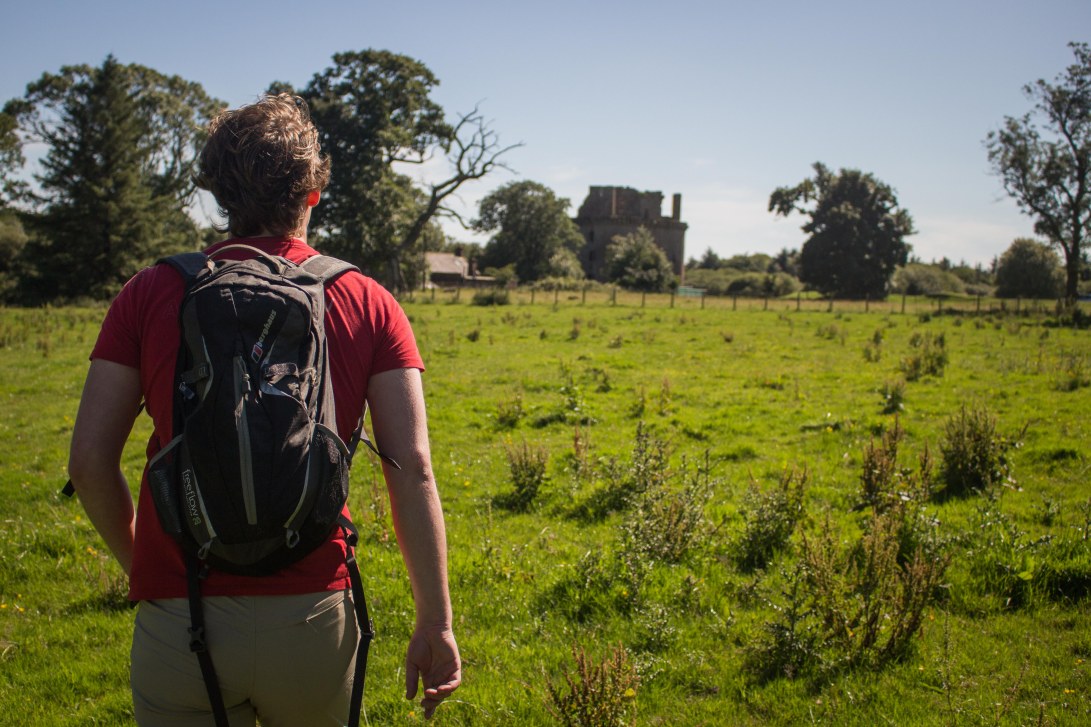
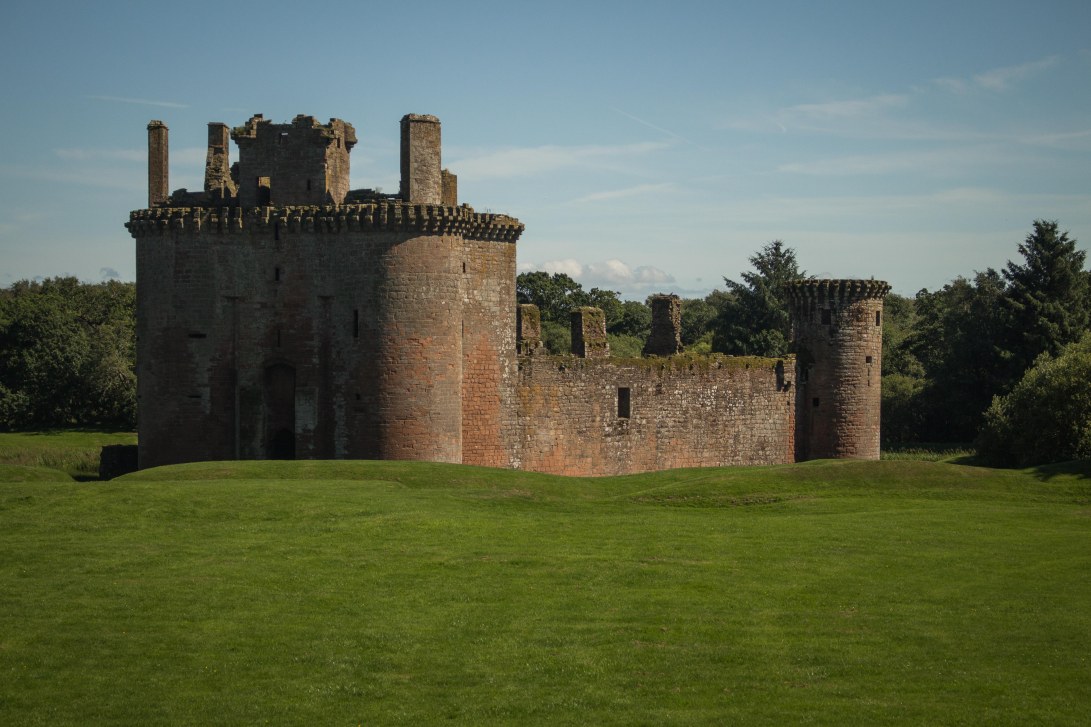
After all the drama, I was glad to be back on a tranquil, cow-free track up to Caerlaverock Castle. Two rabbits popped up out of the long grass, standing tall. Too tall in fact. I lifted my binoculars and saw that our rabbits were in fact hares, and my suspicions were confirmed when they pelted at the speed of lightning into the next field. They were small though, perhaps leverets exploring their new surroundings. I’d only seen a handful of hares before so it was a great sighting.

IMG_5194

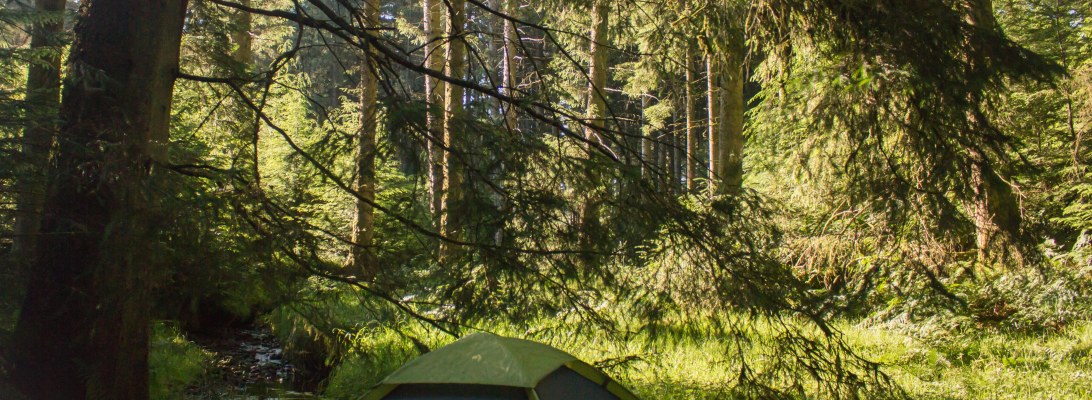
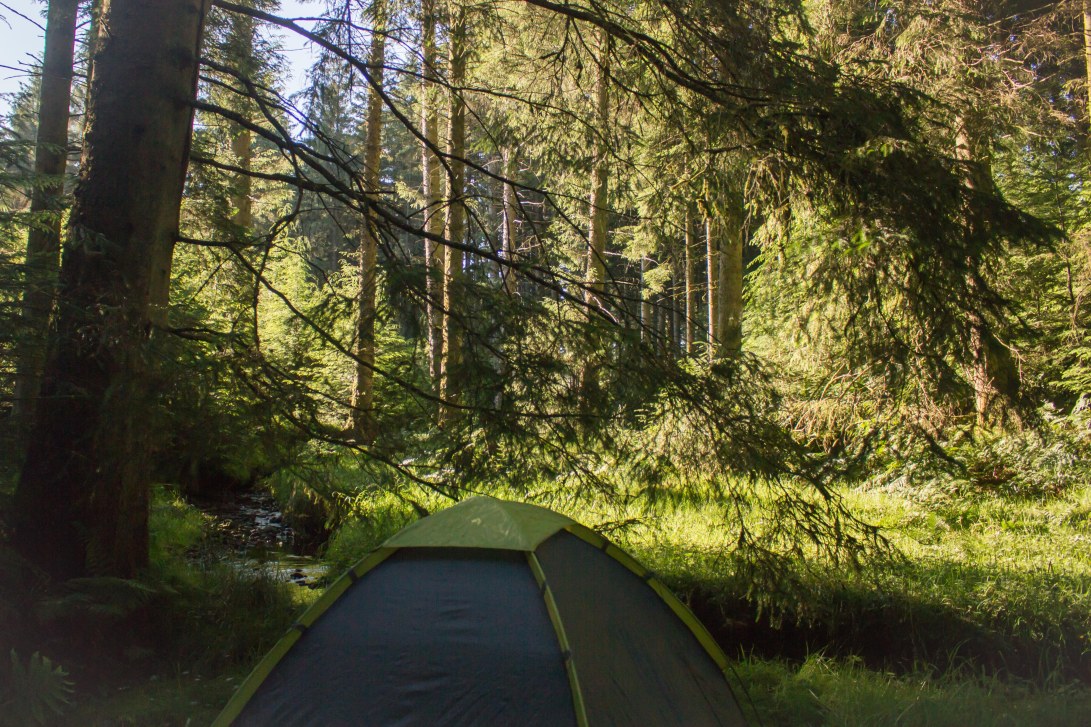
Leaving the hares behind, we headed past the castle and back to the car, where I’d foolishly left my cream soda Barr to boil. We left Caerlaverock behind and made our way to our camping spot. Buildings gave way to trees and before long the only sound was the radio. Once we were parked up, Kerr was determined to carry all our kit down to the site on a single trip, so I made the descent down the marshy hill with some trepidation. With my gaze fixed firmly on my feet, I almost didn’t notice just how incredible the spot was. From my vantage point on the hill, I gazed down at a flat clearing perfectly sized for a tent and campfire. The site was in a fishbowl, trees curled around it on all sides and a gurgling stream providing the perfect moat.

IMG_5202-2IMG_5216

After hopping across the stream and setting down our kit, I congratulated Kerr on finding the perfect hideaway for a weekend’s camp. The flies and midges soon made their introductions, so before anything else we spritzed each other with repellent in the vain hope they’d keep their distance. First up was the tent, and in no time it was pegged in place overlooking the west side of the forest. The sun was beginning to set, transforming the woodland into a pinstripe suit of dark shadows and bleached highlights. A buzzard shrieked overhead, and I peered upwards just in time to see it appear in a suspiciously Batman-shaped break in the trees.

IMG_5215


Soon Kerr had a magnificent fire going, and the sound of cracking wood was added to the hushed forest soundscape. Dinner was gnocci with chorizo – fried by yours truly on our fire – and with full bellies we sat back and relaxed, watching the flames flicker. A tawny owl hooted in the distance, and once the sun had finally sunk below the hills the first pipistrelles appeared. I’d been worried I’d feel the cold, but huddled by the fire I couldn’t have been cosier. Watching the flames for so long soon made me drowsy. We cleared up the dinner things and waited for the fire to fizzle into smoke and crisped kindling, before retreating into the tent for an early night.

IMG_5263

I woke to the soft patter of rain on the tent. After such a beautiful day yesterday, it seemed we wouldn’t be so lucky today. We’d planned on cooking bacon and eggs for breakfast, but the darkening sky didn’t look promising so we decided to hit the road a little earlier. Once everything was packed up we headed back up the hill, which was getting slippy with the rain. We had just made it back to the car when the heavens opened. On the drive back home, the rain lashed on the windscreen and the sun was nowhere to be seen. We couldn’t believe our luck.


Beaver Expedition: Day 4

Another sunrise start for our final chance of watching the beavers. This morning the sun was visible, and when we set out it was a pale orange splotch hovering over the river, sending orange lines criss-crossing over the water as the wind stirred it. We made a beeline for our usual spot, slowing down as we approached the patch of rhododendrons in case the beavers had already emerged. Settling down and standing up tripods, the waiting game began. Infuriatingly, my hay fever chose this moment to launch its morning attack, and as my eyes streamed I fought the overwhelming impulse to sneeze and startle everything within a twelve-mile radius half to death. Not today hay fever.

IMG_5087

The morning continued on with no visitors. Slowly but surely the sun climbed higher, bleaching the blue water with white highlights. The usual breeze whistled under the overhang of the trees and made them wave and rustle; the only movement in sight. A pied wagtail landed on the dead wood, tail bobbing as it turned on the spot. Deep in the woodland thicket a thrush sang, while the jackdaws chattered noisily in the distance.

Suddenly a beaver appeared, cruising silently from under the bushes and into the light. It made its way upstream, to where the river weaved between clumps of reeds and grasses. There it disappeared, but soon we heard quiet chomping noises and knew it was breakfast time.

IMG_4455

In contrast to yesterday morning, the lone beaver wasn’t joined by any companions. It was possible that they had fed well late last night and did not need to venture out. Before long Heather and Cain headed off to get started on assembling the expedition vlog. As they made their slow way back over the water, Cain stopped and gestured into the reeds. I suddenly realised we hadn’t seen the beaver swim back, and while he could have easily dived under and passed by unnoticed, he could also still be feeding. Sure enough, Heather set the scope up to film again. Not wanting to miss the action, I treaded up the grass path nearly doubled over, until I saw what they’d spotted.

Just at the water’s edge, behind a layer of long grass like a bead curtain, was our beaver. Hunched up, the grass trembled as he chewed, shifted his body and chewed again. Squatting down, I got as close as I dared and peeked between the blades of grass to try and get a clear shot. The beaver paused, looked right at me – so much for my attempts at stealth – and carried on chewing. He stayed for a while longer until eventually stepping forward out of the grass and slipping back into the water, gliding down and out of sight.

IMG_5065IMG_5078

Once I’d got a few more hours’ sleep and eaten a hearty breakfast, it was time to check the camera traps. After the efforts of finding the right spot, setting them up and waiting for any visitors, retrieving the trap was the best bit. I retrieved my laptop and we all huddled around the table, eager to see if we’d got any beaver footage. After the first trap only showed clips of grass blowing in the wind, we were a little disappointed. However, on the trap that we’d set on a post in the river, pointing towards a mud slope, there were multiple clips of beavers waddling in and out of the water! First a male coming and going, dragging his paddle of a tail behind him. Then another clip showed a much wider animal – the female – following the same route. It was so great to see, especially since we’d only seen the tops of the beavers’ heads as they swam on our morning stakeouts. To see their whole body and capture moving footage was a fantastic end to the expedition.

IMG_5043

All too soon it was time to leave the site, and as we drove back down the gravel track the sun continued to shine. We decided to go back down south via the Loch of the Lowes, a Scottish Wildlife Trust site, to try and see some ospreys that were nesting there.

The loch was the largest I’d ever seen, looking more like an alcove that led into the ocean. The water was sparkling blue under the still beaming sun, surrounded by trees of every shade of green. We set up in the hide and the reserve guide pointed the nest out to us. On the far side of the loch, high up in one of the trees, was a clustered pile of branches and twigs, inside of which perched an adult osprey and two scruffy chicks. I’d never seen an osprey before so was thrilled to see such a fabulous raptor on the nest. As I watched them down the scope, the adult tended to her chicks, which were peering over the edge of the nest at the world around them.

IMG_5143IMG_5155

Before long it was time to hit the road again, and after such a packed weekend I couldn’t stop myself dozing off in the car. I arrived home with my pockets filled with beaver chippings, woodpecker feathers and endless pages of notes – sure signs of a good expedition.

Species seen: Buzzard (Buteo buteo) European beaver (Castor fiber) Great tit (Parus major) House martin (Delichon urbicum) Jackdaw (Corvus monedula) Osprey (Pandion haliaetusPied wagtail (Motacilla alba) Song thrush (Turdus philomelosSwallow (Hirundo rustica)