Burghead: Day One

The drive to Burghead was beautiful. As the town is situated on the edge of a peninsula protruding into the Moray Firth, it is surrounded by open ocean on three sides. As we drove up the high street it felt like we were at the edge of the world, and in a way we were. Northern Scotland could just be seen in the distance, but the space between still seemed vast. When we couldn’t drive any further, we found the cottage my parents were staying in and were greeted by a very happy Cockapoo who’d missed us both.

IMG_5495-2

I woke the next morning to see that the orange blinds were framed by a border of bright white light, and when I peeked behind them there lay the ocean, twinkling enticingly. After a hasty shower and breakfast we were off, keen to explore.

We made a beeline for the coast, climbing up to the highest point to take in the views. Down below, oystercatchers zoomed past, their alarmed cries cutting through the wind. A pair of cormorants glided effortlessly by, slender necks held parallel to the choppy waves below. I kept my binoculars trained on the horizon for a sign of dorsal fins breaking the surface. The Moray Firth is home to a resident population of more than 140 bottlenose dolphins, but we didn’t spot any stood up on the crag today.

IMG_5492-2IMG_5509-2

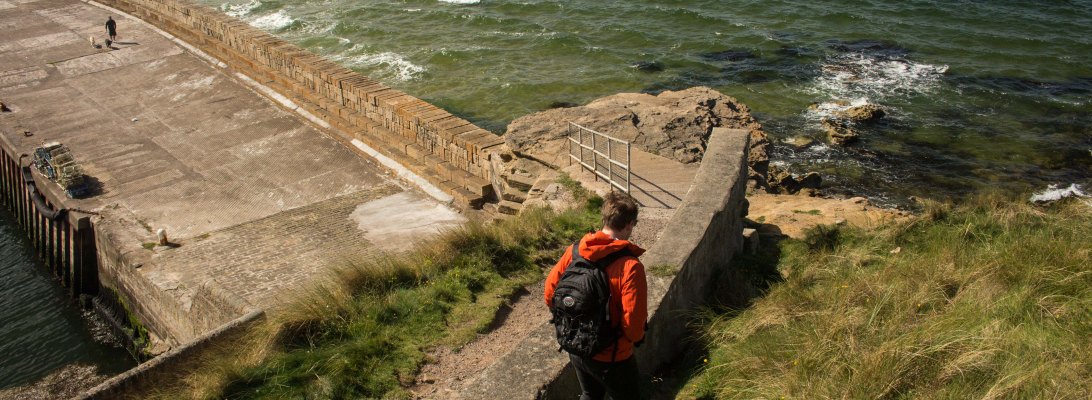
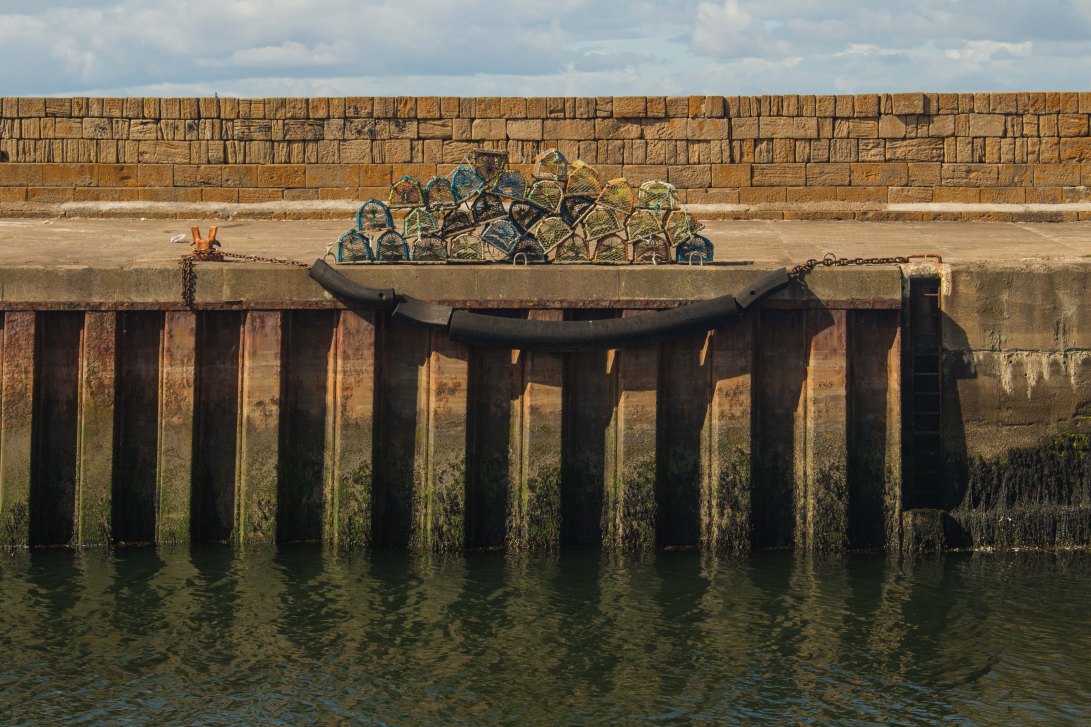
Once the wind had completely numbed our ears, we made our way back down and walked along the harbour, where a mix of tattered old and shining new boats stood resting in the docks. Down on the shingle bank, a pied wagtail hopped from rock to rock, waving his tail in the typical fashion of his species. We stumbled across a collection of crab claws and shells sprinkled across the concrete – perhaps a favoured feeding station for gulls and other seabirds.
IMG_5552IMG_5564

At the far end of the harbour I had another look for dolphins, with no luck. Every time a wave broke and a plume of froth shot upwards my heart leapt, but it was just the ocean playing tricks. The water was a stunning colour; azure blue and bottle green blending like marbled ink. Together with the rough rocks spotted with white barnacles, the sight was a feast for the eyes.

IMG_5522-2

A combination of the walk and the sea air had brought on an appetite, so we headed back to Main Street for some lunch. A beautifully fresh crab linguine filled the spot, but I still had room for a raspberry ripple waffle cone to lick on the walk back. We’d planned to wander down to the sand to find crabs or maybe starfish, but just at that moment the clouds grumbled and it began to pour, so we hurried back to the cottage instead. Shut inside, all there was to do was have a look at the photos from today and plan where to go tomorrow.

IMG_5539

Photography in Cumbria

During my internship at Student and Graduate Publishing, I was asked to write a piece for Study International magazine. I thought it would make a nice story to reflect on my favourite photography spots in Cumbria, to show international students studying in the North West just how beautiful it is. 

Studying at the University of Cumbria, I get the best of everything. Carlisle is a bustling city with all the facilities and resources a student needs, but nestled amongst the city are pockets of forest, river and grassland. Drive just a few miles out and you have access to the coast, vast expanses of woodland and beautiful nature reserves.

So for a student like me who is passionate about wildlife photography and writing, Cumbria in the North West of England is the perfect place. If you’re an avid photographer or just enjoy a walk outdoors, have a read of my favourite spots to enjoy in this beautiful area. For more inspiration see VisitCumbria.

The Ennerdale Valley boasts some of the most vibrant natural environments in England, and has been part of one of the longest ecological restoration projects in the UK. The Wild Ennerdale Partnership is determined to minimise human impact on the landscape and ensure the valley stays as wild as possible, while still being enjoyed by responsible visitors. The restorative work in the valley makes it one of those few naturally wild places, and is breathtaking to see.

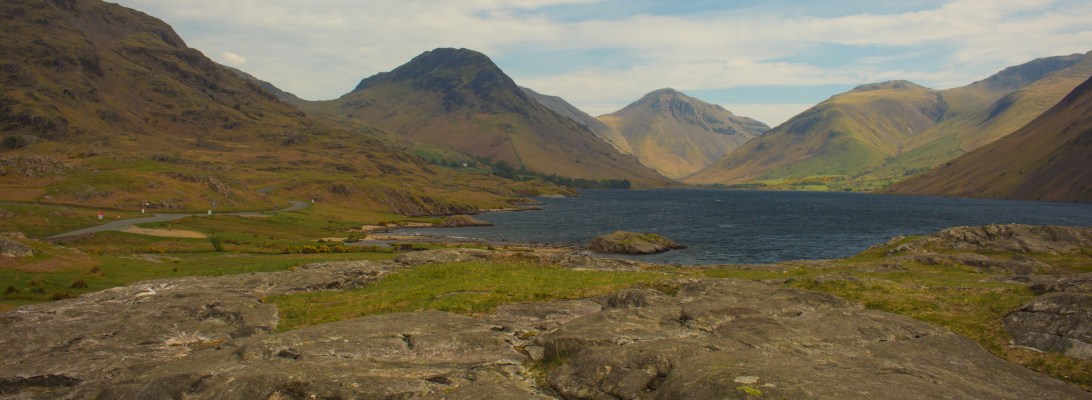
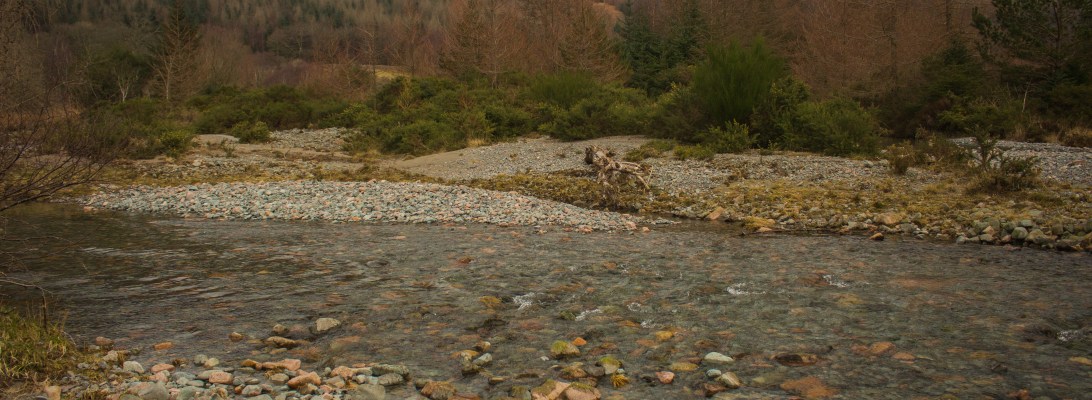
One of our first year trips was to Ennerdale Valley, and I couldn’t believe how untouched the landscape looked. The hills were a patchwork of different shades of green dusted with snow at the very top, and luckily we’d visited on a beautiful day so the sky was a vivid blue. Down at the water’s edge, we could see straight through to the rocks below, indicating just how clean and pure the water was. There were so many photo opportunities that day, and definitely a location I’d recommend for landscape shots! For more information on the work Wild Ennerdale is doing in the valley, check out their website.

With the Lake District attracting 15.8 million tourists every year, it’s easy to forget that, although the Lakes are beautiful and well worth a visit, there are other parts of Cumbria with just as much wildlife, stunning scenery and photographic opportunities.

Carlisle is the county town of Cumbria and amongst its high streets and residential areas, a lot of wild places can be found. The rivers Eden, Caldew and Petteril wind through the city, breaking up the drab grey and giving wildlife space to thrive. Otters frequent the River Eden, and although I’ve yet to see one out and about I’ve been lucky enough to capture photos using remote camera traps and see their footprints in the sand just metres from a busy pedestrian bridge.

Just outside the heart of the city is Watchtree Nature Reserve, where a diverse variety of mammals, birds and invertebrates can be seen. Roe deer stalk the forests, while brown hares bound at astonishing speeds across the fields. If you’re lucky you’ll see a glimpse of red foxes between the trees when the sun sets, perhaps accompanied by scruffy cubs during spring time. For a list of things to do at the reserve – from attending guided walks to hiring bicycles and enjoying the reserve at a faster pace – see Watchtree’s website.

The Whale and the Freezer

Here’s another article I wrote during my time interning at Student and Graduate Publishing. My colleagues were so interested in the whale project at Tullie House that they asked me to write a piece on my volunteering experience. 

I’ve just finished my second year studying Wildlife Media. It’s really quite a niche course and when I tell people about it I get a mix of surprise, curiosity and almost every time I’m asked if I’ll be the next Attenborough.

A career in wildlife media is seriously competitive, making work experience essential. If you’re interested in nature and conservation take a look at Conservation Careers for inspiration. A lot of wildlife-related opportunities aren’t paid, due to the charitable organisations offering them, so my first two years have been full of volunteering. The thing with volunteering is you never know what to expect, and my experiences have proven that anything can happen.

I’d probably say one of my volunteering highlights this year was cleaning whale bones, something I never thought I’d say. Back in 2014, a massive whale skeleton was found on a beach in Cumbria and taken in by the local museum. I joined forces with two of my course mates to take on the behemoth. There was flesh hanging off the bones and they smelt nothing short of pungent. Donning our glamorous all-in-one suits, wellies and goggles, we got to work scrubbing the bones clean.

Nearly half a year later, after three hours a week of funky odours and a ridiculous amount of disposable gloves, we said our farewells to the whale, who we’d both grown very attached to. The bones have been sent off for industrial cleaning, and will then be hung up in all their glory in the museum atrium. Have a read of the full story.

That wasn’t the end of my antics at the museum, however. A week after the whale left us, we began a new project: the freezer. Deep in the basement of the museum – think restricted section of the Hogwarts library – are all kinds of treasures, some beautiful and others less so. There’s a freezer containing several hundred frozen specimens, from bats that could hide in your palm to far larger animals like otters and barn owls. It was our job to work through the freezer and document the name, date, locality and donor of every specimen to put them all on a database.

A lot of people would feel quite queasy at the thought of handling frozen dead animals, the majority of which were roadkill and had seen far better days. Luckily, or perhaps tragically, my friend and I couldn’t get enough of it. I have a particular obsession with British birds, so getting to see hawfinches, bullfinches and waxwings up close was a real privilege. And not just birds: one week we found a large bin bag containing the very rare and elusive blue mink, a member of the mustelid family with otters, stoats and weasels.

In fact, my friend and I were both quite sad when we reached the bottom of the freezer. Although it was a real shame that the animals had arrived at the museum in freezer bags, it was incredible to see all those birds, mammals and a few reptiles far closer than we ever could in the wild. It gave me an even greater appreciation of wildlife and provided an unforgettable experience that’s a great story to tell.

Things to Do in the Lakes

For the past two weeks I’ve been on an internship at Student and Graduate Publishing. I’ve been writing non-stop for their three online magazines. This article on the Lake District was written for Study International. 

In July 2017, the Lake District officially became a UNESCO World Heritage Site, making it part of a group of iconic locations across the world alongside the Taj Mahal, Machu Picchu and the Grand Canyon. There are sixteen official lakes in the Lake District, each surrounded by stunning scenery and with plenty of things to see and do. Whatever your interest, the Lake District has so much to offer. So if you’re studying in the North West of England, take a look at what you could be planning for your next weekend trip.

Coniston Boating

For the adventurous, there is lots of sporting fun to be had on Coniston Water. Stretching five miles long and watched over by a mountain called the Old Man of Coniston, the lake boasts a wide range of possibilities for boating. Enjoy the sights on a motor boat, or perhaps try a more hands-on approach with rowing boats, paddle boards or canoes. Take a look at the Coniston Boating Service to book online and find out more. There are also bikes available for hire, for those who’d rather stay on dry land.

All that time on the water is bound to build up an appetite. Situated right on the shore is the Bluebird Cafe, where you can enjoy freshly-made cakes, ice cream or hot drinks, depending on the weather.

Derwentwater and the Theatre by the Lake

Another of the beautiful Lakes is Derwentwater, a site that has been named a SSSI (Site of Special Scientific Interest) due to the wide range of flora and fauna that inhabit the water and surrounding shores. One species that resides in the lake is the Vendace fish, Britain’s rarest freshwater fish.

In addition to being able to walk the entire circumference of Derwentwater, there is also the Theatre by the Lake, situated right on the shore. A wide range of events are shown here, whether your interest is theatre, film or music. The annual Words by the Water literary festival takes place here too, where famous authors gather to discuss and sell their works. A brochure of upcoming events can be found on the Theatre by the Lake website.

Visit Beatrix Potter

Relive a classic from your childhood and visit the quaint 17th century farmhouse of Beatrix Potter, nestled in idyllic Ambleside. Beatrix Potter bought Hill Top after the success of her first few books, and her visits to the Lake District were spent sketching the house and garden for new stories. Infamous characters such as Jemima Puddleduck and Tom Kitten were created in this picturesque cottage, along with many landscapes that featured in her books.

Anyone who enjoys a bit of British history will love exploring the cottage, with its quaint interior and surrounding garden exploding with flowers, as well as fruit and vegetable patches where Peter Rabbit could be hiding.

Upon her death in 1943, Beatrix Potter left Hill Top to the National Trust, insisting that the site remained completely untouched. So as you wander through the entrance hall with a pot of tea waiting on the table, it almost seems as if Miss Potter is still living there. Read more information from the National Trust about this beautiful cottage and what there is to discover there.

‘Journeys’ Article in Watermark Magazine

One of my upcoming uni assignments is a portfolio of non-fiction writing. For one of my pieces, I was inspired by the theme of journeys, and how influential they can be. While many people instantly think of physical journeys, I wanted to reflect on the emotional journey I faced when coming to university. This piece was published in a university magazine in association with the literary festival “Words by the Water” in Keswick, Cumbria.

KM_C224e-20170530110948


Chesters – Day Four

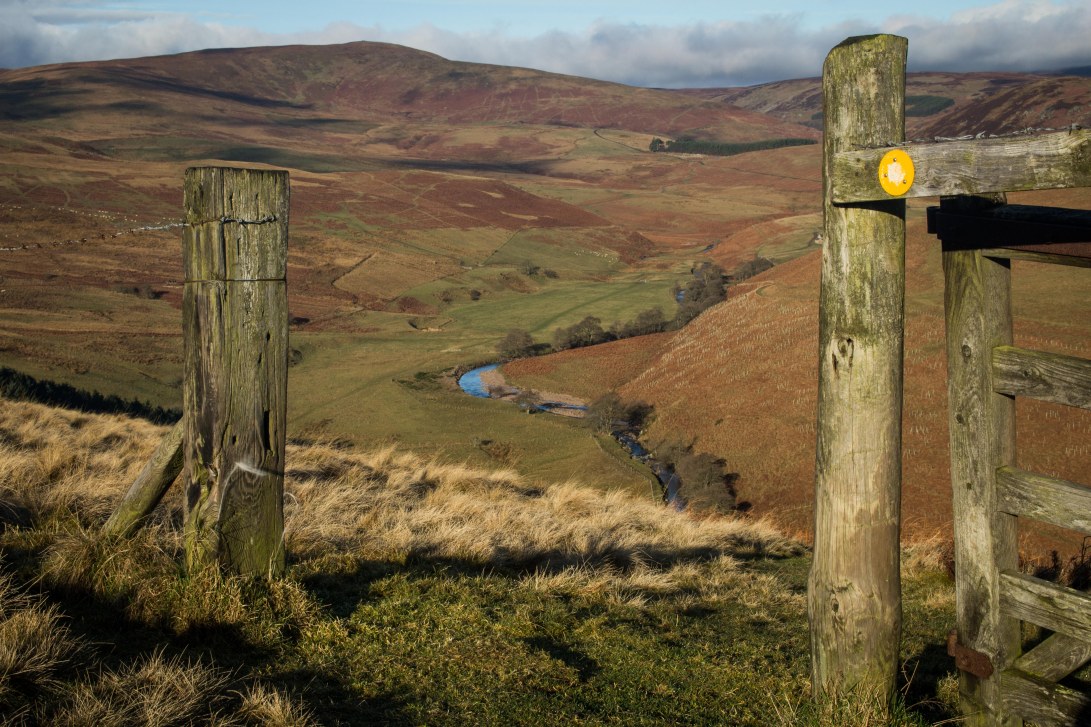
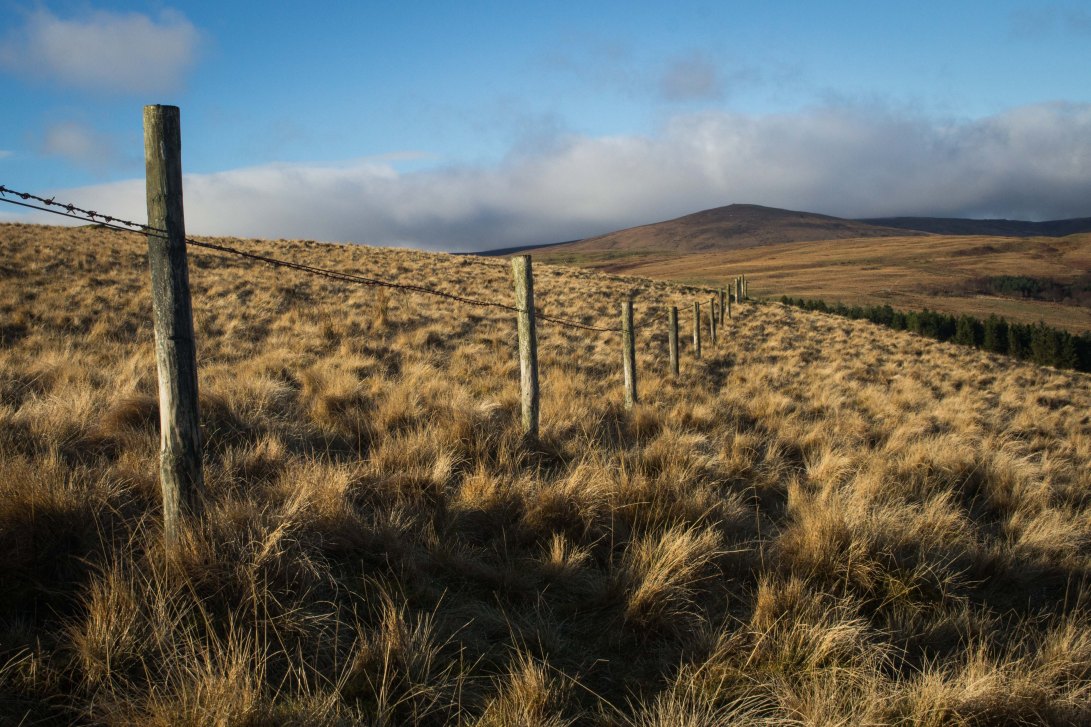
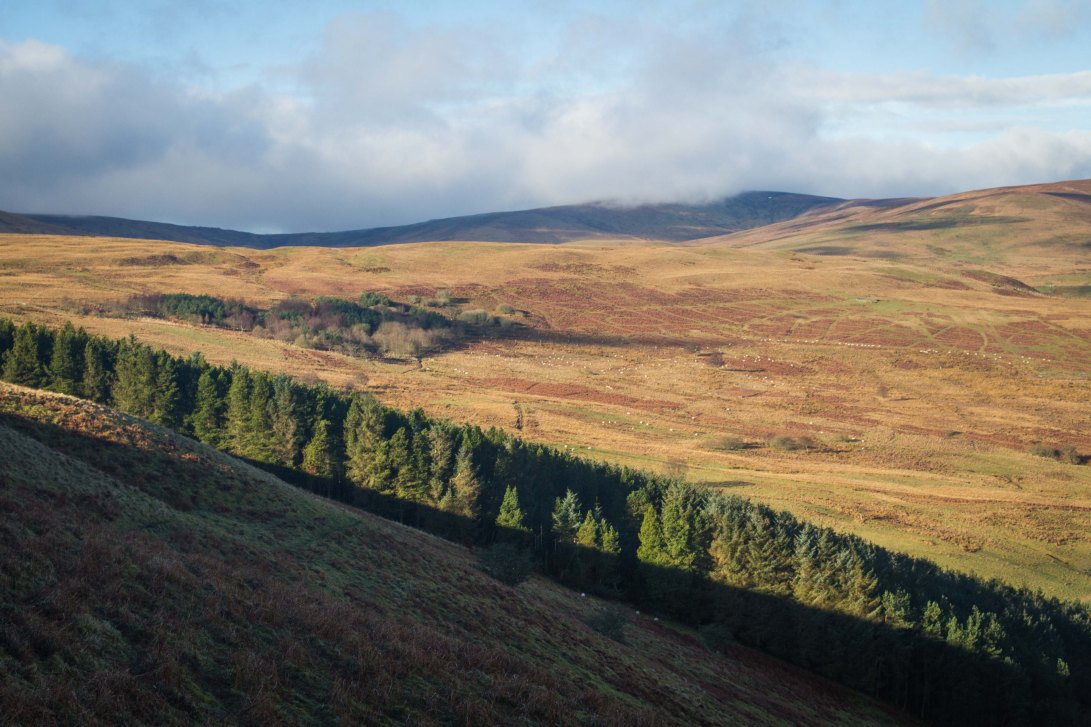
Sadly the day began with no visitors to the Longworth trap we’d set out, but on a positive note the Cheviots were shining under the sun again. I walked up towards the conifer plantation where we saw the red squirrels and drank in the views. Northumberland National Park was beautiful even on a grey day, but when the sun was bright and the clouds’ shadows were drifting across the hills, it was truly stunning. Despite the river gurgling many metres below, I could hear it as clear as if I was standing on the shingle bank. With no disturbance and very few voices on the air, sounds sliced straight through the landscape. It was one of the most tranquil places I’d ever been to.

IMG_0498-2IMG_0504-2IMG_0510-2

After gathering our bags together ready to leave Chesters, we went on a final walk to a new plantation close to the bothy. As we scanned the horizon, we spotted three buzzards circling. Heather told us it was a courtship display, where the males soared high into the sky then dropped down in a dramatic feat of bravery to impress would-be partners. It was fascinating to watch – I only hope the watching females were as impressed as I was!

The plantation we visited was dominated by larch trees, and despite fragmentation of woodland in the Cheviots it was a very old habitat. We could tell this by the presence of tummocks; moss growing over the rocks. This kind of succession would take many years to take place, meaning the habitat had become established a long time ago.

Throughout the plantation, there were many holes in the grassy bank of many different shapes and sizes. Commonly, a fox hole will be oval-shaped, while the sett of a badger will have a sideways oval opening. Meanwhile, a rabbit warren will be made up of many holes of similar size. There were also a lot of droppings, including the dimpled pellets of roe deer, fox and what Heather suspected to be pine marten, which was a really exciting find with a pine marten never having been seen at Chesters. Both of the scats belonging to predators had been deposited right outside the opening of a rabbit warren; a sign to other predators that the poor rabbits within were claimed prey. It was a sinister sign, especially for emerging rabbits!

In fact, the plantation had a likeness to a graveyard. Mammal and bird bones littered the forest floor, from woodpigeon and pheasant to ram skulls. I found a pheasant’s pelvis, which was beautifully intricate and incredibly fragile. However, bones weren’t the only treasure. After nearly stubbing my toe on it, I found an open orb of white quartz within an ordinary rock. The crystals in the crevice were tiny, but reflected the sun in dazzling fragments.

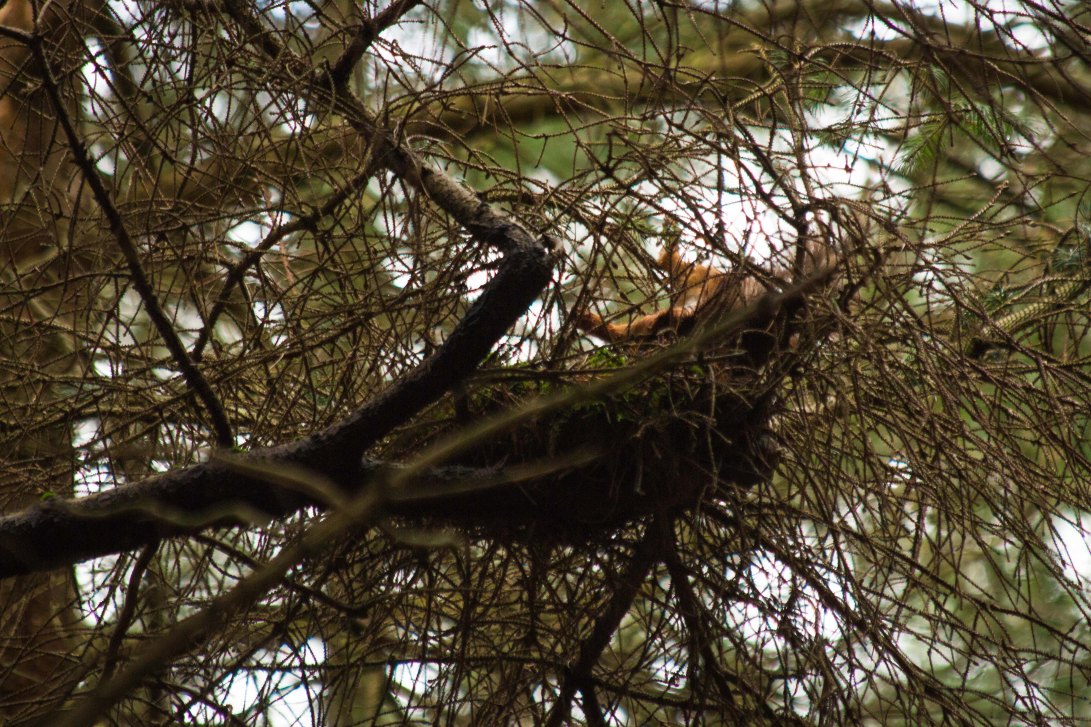
Shortly after, we found an even more peculiar discovery. Hawk-eyed Heather spotted a patch of bright red up in the tree canopy. There, lying in a nest on the end of a bough was a dead red squirrel. Although it was a sad sight, it was also a fascinating one, certainly something I’d never seen before. We debated whether the nest belonged to the predator, or perhaps the squirrel had simply been stored there, or the nest was being used as a plucking post, as is often the case with birds of prey. We walked around the tree looking for feathers or pellets that would tell us the culprit, but there were no tell-tale signs. It was a real mystery that we unfortunately never got to uncover!

IMG_0597-2

Soon we returned to the bothy, carefully carrying the treasures we’d found including the quartz and animal bones, as well as an array of feathers and owl pellets. We spent the rest of the day packing to leave and reflecting on the experiences we’d had over the weekend. As a final send-off, we had a rabbit visit the garden and put extensive time and effort into digging perhaps the beginning of a warren not two metres from the front door. I tested my luck and crept outside to watch him, and was amazed to find him so calm in my presence. Every few seconds he would stop and peer at me, dry earth sprinkled on his head like brownie crumbs, but each time he was convinced I was no threat and continued his work. It was the closest I’d ever been to a wild rabbit and a real privilege to be able to film it digging and moving twigs aside with its long lagomorph teeth. It was perhaps my favourite wildlife encounter of my time at Chesters, and happened right on the bothy doorstep.

IMG_0699-2

Species seen/heard:

Buzzard Buteo buteo Chaffinch Fringilla coelebs European rabbit Oryctolagus cuniculus Fieldfare Turdus pilaris Great tit Parus major Grey wagtail Motacilla cinerea Mistle thrush Turdus viscivorus Oystercatcher Haematopus ostralegus Pheasant Phasianus colchicus Pied wagtail Motacilla alba Skylark Alauda arvensis

Chesters – Day Three

Today was the toughest day for my feet, but also the most rewarding. We set off east away from Chesters on a ten-mile hike to the gravel pits of Branton Nature Reserve, though the journey was just as fulfilling as the destination.

IMG_0266-2

After the trials of crossing the Chesters Burn without getting wet, we ascended towards Ewe Hill, where lapwings zoomed with seemingly erratic coordination, and skylarks serenaded us from overhead, in a hovering flight they can maintain for the approximate equivalent of running five marathons back to back.

On the way down Turf Knowe, we spotted two hares dashing across a field, accompanied by the frustrated squawking of a distant rookery. We also stumbled across a common frog in a puddle, keeping its numerous frogspawn company.

IMG_0358-2

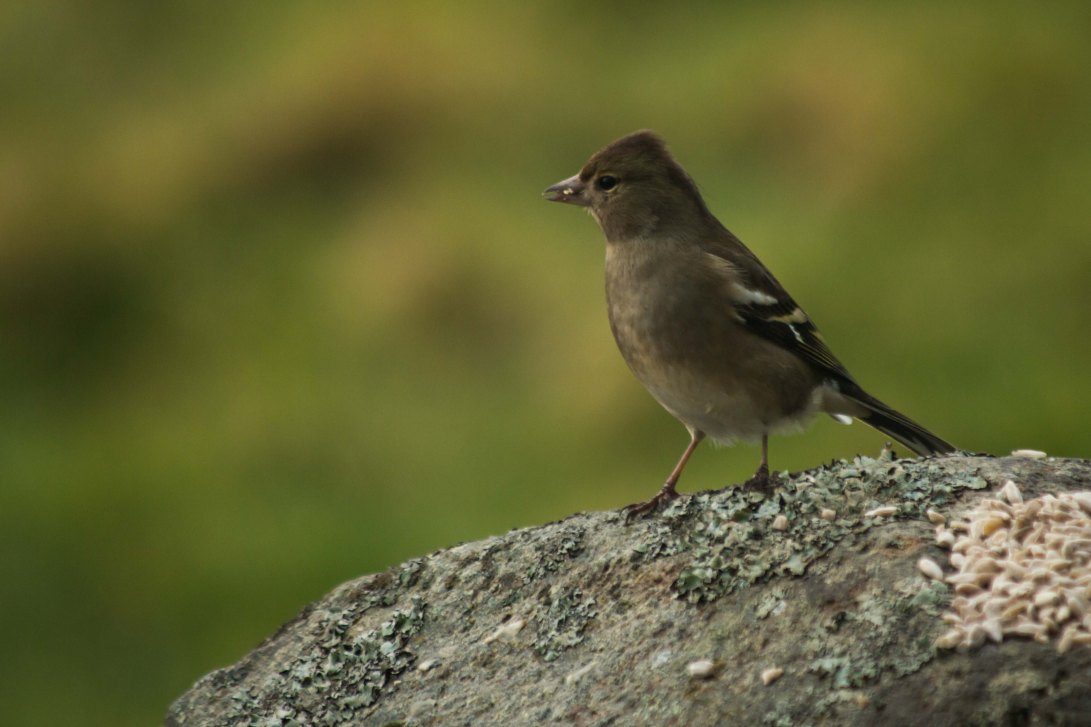
Soon, we reached the village of Ingram, situated on the edge of Northumberland National Park. Here the birdlife transformed to an orchestra of finches, tits and some special guests, including two male yellowhammers, a bustling group of siskins and some striking chaffinches in their immaculate breeding plumage. As we left Ingram behind, we followed the River Breamish to the gravel pits to do a spot of bird watching in the hide overlooking the lake.

Since the 1920s, the Breamish Valley was used for sand and gravel extraction, including gravel from the riverbed, which was used to surface roads. After the area was restored to agricultural land, concrete company CEMEX asked for permission to extract and was denied, as it was thought the extraction would be taking place too near to the National Park. However, in 1993, CEMEX was granted permission to extract, on the one condition that the company also converted the area to a nature reserve that would “complement and enhance the rural landscape”, ultimately creating a landscape that would improve the area’s biodiversity and provide a stable aquatic environment for many species.

As we sat and watched the lake from the bird hide, we spotted a broad variety of waders, geese and passerines, or songbirds. Greylag geese, goldeneye, wigeon, tufted duck and many more were bobbing about on the still water. Interestingly, instead of the usual drab colouring used for camouflage when on the nest, female shelducks have the same striking green head and bright red bill as the male. The reason for this is the bird’s choice of nest, which is often in rabbit warrens instead of out in the open. This makes female camouflage unnecessary.

Another highlight of our time in the hide was hearing the first chiffchaffs of the year, which arrive from their wintering ground in sub-Saharan Africa in mid March, staying until around October.

Once the drizzling rain had subsided, we did a spot more tracking around the lake. There was an otter spraint by the stream, a sign of territory marking, the square pad of a badger print and several roe deer tracks. While sheep prints – which were abundant virtually everywhere – are rounded, deer prints meet at a point.

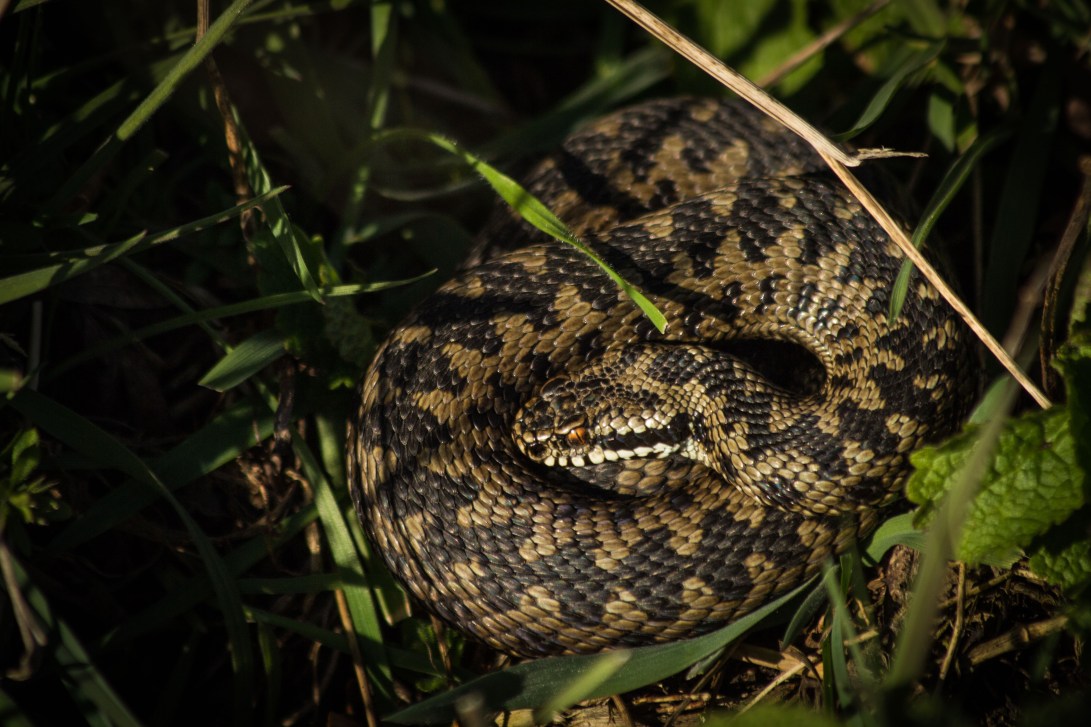
By then the best of the daylight had passed, so we made our way back to Chesters, pockets laden with treasures collected during the day. Along the way we tried our luck spotting some adders. As it was still drizzling and the sun had gone in, chances of a sight of basking adders was slim. However, we managed to find two that were catching the last rays before returning to cover. After such a long walk to find them, I’m glad a few stayed out just a little longer.

IMG_0582-2IMG_0238-2

Species seen/heard:

Adder Vipera berus Bank vole Myodes glareolus Black-headed gull Chroicocephalus ridibundus Blue tit Cyanistes caeruleus Canada goose Branta canadensis Carrion crow Corvus corone Chaffinch Fringilla coelebs Common chiffchaff Phylloscopus collybita Common frog Rana temporaria Common toad Bufo bufo Curlew Numenius arquata Eurasian siskin Spinus spinus European mole Talpa europaea European hare Lepus europaeus Fieldfare Turdus pilaris Goldcrest Regulus regulus Goldeneye Bucephala clangula Goldfinch Carduelis carduelis Grey heron Ardea cinerea Greylag goose Anser anser Lapwing Vanellus vanellus Lesser black-backed gull Larus fuscus Long-tailed tit Aegithalos caudatus Mallard Anas platyrhynchos Meadow pipit Anthus pratensis Moorhen Gallinula chloropus Oystercatcher Haematopus ostralegus Pheasant Phasianus colchicus Pied wagtail Motacilla alba Red-legged partridge Alectoris rufa Reed bunting Emberiza schoeniclus Robin Erithacus rubecula Rook Corvus frugilegus Shelduck Tadorna tadorna Skylark Alauda arvensis Snipe Gallinago gallinago Song thrush Turdus philomelos Treecreeper Certhia familiaris Wigeon Anas penelope Woodpigeon Columba palumbus Wren Troglodytes troglodytes Yellowhammer Emberiza citrinella

Chesters – Day Two

As it happened, I slept extremely well last night, so I missed out on the tawny owl calling from the Chesters bothy roof. The morning was bright, and as I peered out of the cocoon of my sleeping bag I felt the familiar pull of the wild. The combination of hushed soundscape and pine woodland packed with secrets was enough to lure me out of bed.

IMG_0465-2

As I ate breakfast I had the pleasure of watching a bank vole feeding on the sunflower hearts Heather had left out. He was a challenge to photograph as he only stayed in view for a second, but it was impossible not to love his curious expression as he peered through the window.

IMG_0476-2

After preparing the bothy for the expeditioneers’ arrival, Cain and I headed back through the Breamish Valley to meet them. Although no red squirrels this time, we came across two dead pheasants. They looked incredibly fresh with no obvious wounds. The only indication of possible death was the presence of downy feathers in the birds’ claws, suggesting the frisky males had fought to the death. It was a great opportunity to photograph a pheasant’s feathers up close – there are so many beautiful colours.

IMG_0185

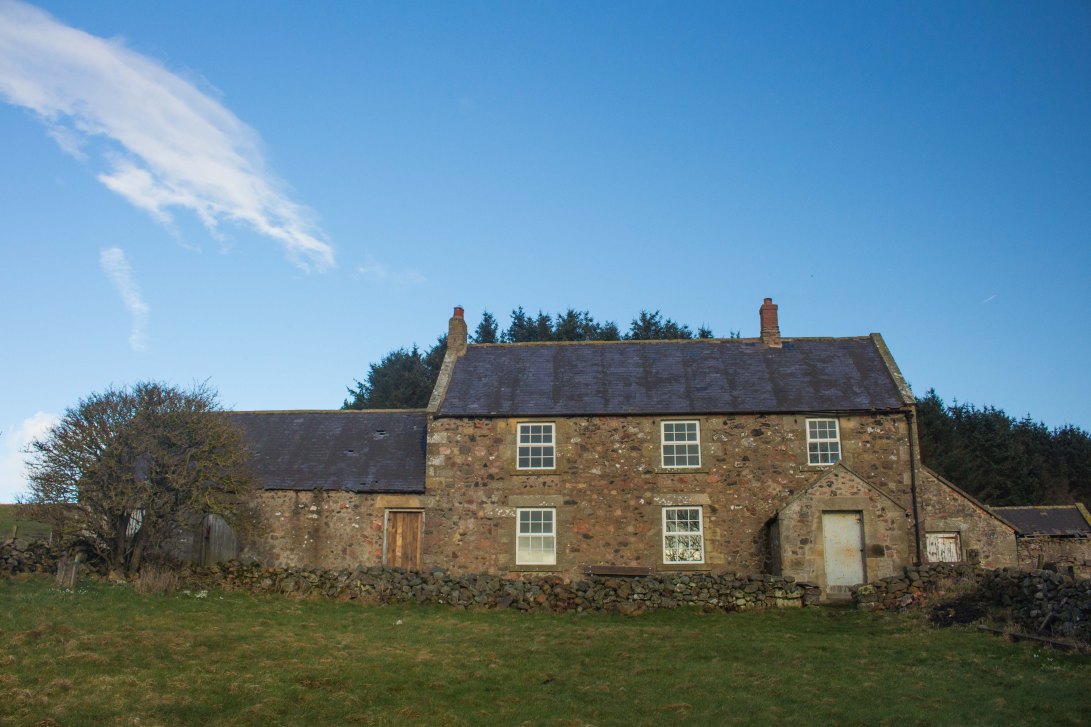
When we returned, Heather explained the itinerary for the next three days and introduced the expeditioneers to camera traps and Longworth traps, recording equipment used to live trap small mammals. Finally, we all found Chesters bothy on a map of the Cheviots.

Just before the sun began to set, we all headed out into a patch of woodland just beside Chesters, where we used the rest of the daylight foraging for signs of the forest’s inhabitants. There were abundant droppings, and although most belonged to sheep and pheasants, a prominent sprinkling on a mound of grass beside an extensive burrow indicated rabbits. Later, we saw different droppings that were more elongated, suggesting hares were also present. Among other treasures, we found rabbit bones, a red squirrel drey – a nest built of twigs, dry leaves or grass – the chest plate of a woodpigeon and feathers belonging to a buzzard and a long-eared owl.

After a thorough forage we suddenly realised the sun had gone, so we hurriedly set up two camera traps, one in the woods to hopefully capture roe deer and the other beside a clump of frogspawn to see if the parent showed up.

Once the traps were set we returned to the bothy. Heather went to fetch wood for the fire and returned with a sleeping moth. After searching through the moth ID book we discovered it was a herald moth. I’d never seen this species before, and took the opportunity to use my macro lens and accentuate its rich copper-coloured wings. After returning the moth to the woodshed to avoid disturbing it, we had an early night in preparation for our long walk tomorrow in search of elusive adders.

IMG_0450-2

Species seen/heard:

Bank vole Myodes glareolus Blackbird Turdus merula Chaffinch Fringilla coelebs Coal tit Periparus ater Goosander Mergus merganser Grey wagtail Motacilla cinerea Great-spotted woodpecker Dendrocopos major Herald moth Scoliopteryx libatrix Mistle thrush Turdus viscivorus Oystercatcher Haematopus ostralegus Pheasant Phasianus colchicus Red-legged partridge Alectoris rufa Robin Erithacus rubecula Snipe Gallinago gallinago Song thrush Turdus philomelos Tawny owl Strix aluco Woodcock Scolopax rusticola Wren Troglodytes troglodytes

Chesters – Day One


The drive to the Village Tearoom and Emporium was stunning. As the sun was beating down on my right arm I was a little nervous I hadn’t brought the sun cream, but luckily the light was just right to make Northumberland’s hills shine gold, without turning my skin pink.

After meeting Heather, we drove to a top-secret spot where adders were frequently sighted. Due to the adder’s rarity in the UK, it is important not to broadcast locations of their possible breeding sites, to avoid a rush of human activity and potentially disturbing the snakes. As the afternoon was still very hot, we found eight adders basking, both males and larger females. In fact, in one spot there were four males writhing together, perhaps in an attempt to attract a watching female. It was my second adder sighting, but getting the chance to see them so clearly was a real treat. While maintaining our distance, we watched them bask for nearly an hour. Though I could have stayed far longer, it was time to head to Chesters bothy before it grew dark.

IMG_0124-2

Leaving the adders behind, we drove to the end of the road, where urbanisation ended and true wilderness began. Shouldering our bags for the weekend, we began the two-mile walk through the beautiful Breamish Valley, accompanied only by the bleating of sheep and the infamous scraping call of pheasants.

IMG_0194-2IMG_0196-2

As the day drew to a close, the hills faded from shimmering orange to dusky pink with a patchwork of dark green conifers and purple heather. Then suddenly a flash of brown as a hare darted up the hill, white tail flashing. He was too far for my camera to get a clean shot, but it was a great sighting on my first day in the Cheviot Hills. Fascinatingly, hares can be pregnant with two young that are not twins simultaneously. The unborn leverets may have been conceived at different times, meaning they have different growth rates.

Before long we reached a patch of conifer forest that looked like something from a fairytale. As we threaded up the pinecone-dotted track I couldn’t help but think how well a pack of wolves could fit in here, miles from interfering humans.

IMG_0552-2

Just as we emerged on the other side of the forest and paused for a breather to gaze upon some truly stunning views of the River Breamish, Heather explained how there were tales of red squirrels in the Cheviot Hills, but due to habitat fragmentation resulting in isolated patches of woodland, she didn’t think the area could support a breeding population. As if we’d been overheard, a high-pitched chattering sounded from above and two red squirrels appeared, hopping from bough to bough and scrabbling up the trunks. Not only were these the first red squirrels I’d seen in the wild, they were the first individuals that Heather had seen at Chesters, so it was a special moment indeed.

After such good luck, we almost had a skip in our step as we made the rest of the way up the hill to Chesters bothy. Almost immediately we were met by a flock of fieldfare as they swooped overhead, another new species for me.

IMG_0543-2

After dumping our bags, we sat outside on the dry stone wall and listened to the evening’s birds before the generator drowned them out. Amongst the shrieking pheasants, there was the distant hoot of a tawny owl, and later when the sun finally sunk behind the hills, the bizarre wing beats of snipe reverberated across the landscape. If you’ve never heard a snipe drumming, any description I could give would never give it justice. It’s a sound I’ll never grow tired of hearing. It reminded me that I was in the middle of nowhere. I was cut off from technology and we needed a fire to get hot water – it’s the sort of living many people have never truly experienced. Sitting outside in complete silence could seem eerie, but to me there’s a haunting beauty to the only traffic being speeding fieldfare and the occasional skylark hovering overhead. It’s like stepping back in time to when technology was an unheard of impossibility.

Later, when Cain arrived, the three of us headed over the hills in search of long-eared owls, a bird Cain was eager to tick off during our stay at Chesters. The night was as beautiful as the day had been – the sky was clear and a huge ethereal glow encircled the moon. Sadly, the owls didn’t appear, but the night walk was the perfect end to my first day in the Cheviots. When we returned to the bothy I spent some time writing about the day to jog my memory when I returned home. I knew that without a doubt, my notebook would be essential this weekend.

Species seen/heard:

Adder Vipera berus Coal tit Periparus ater European hare Lepus europaeus Fieldfare Turdus pilaris Great tit Parus major Oystercatcher Haematopus ostralegus Pheasant Phasianus colchicus Red squirrel Sciurus vulgaris Robin Erithacus rubecula Snipe Gallinago gallinago Song thrush Turdus philomelos Tawny owl Strix aluco