November Wildlife


In November, many mammals are preparing for hibernation while some new faces are arriving on the scene. In the latest instalment of my monthly series for Bloom in Doom magazine, I’ve shared some of the British wildlife highlights that can be seen during November.

Birds

Winter is an excellent time for birders because of all the overwintering geese, ducks and waders that have arrived. It is thought that around 50,000 barnacle geese travel from as far away as Russia to reach our shores, which may seem chilly but are far warmer in comparison!

All those birds attract the attention of raptors, so also keep an eye out for peregrine falcons and harriers which are looking for a possible meal. Short-eared owls also travel south for winter and are often seen near the coast. 

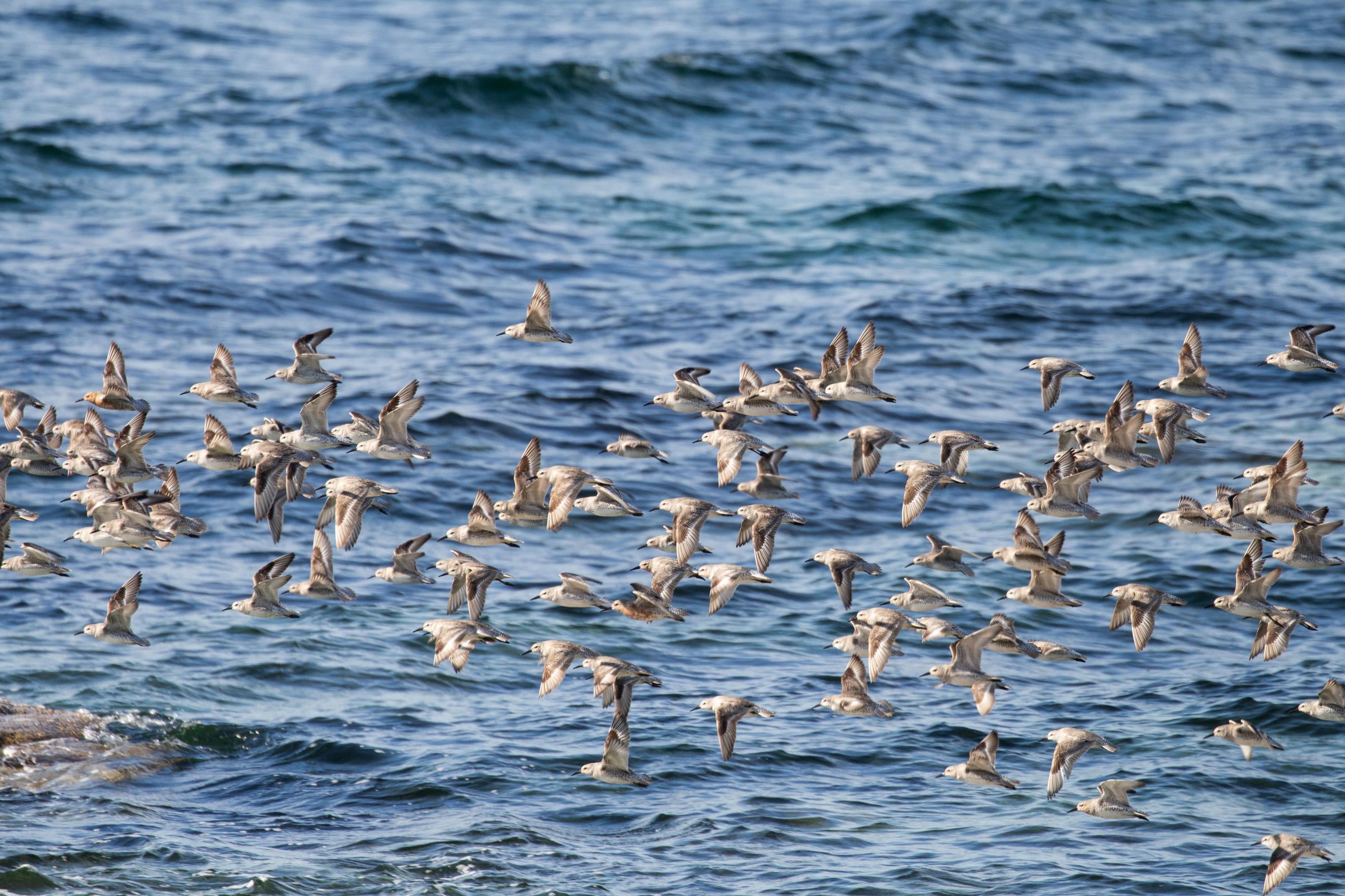
A flock of knot flying along the shore
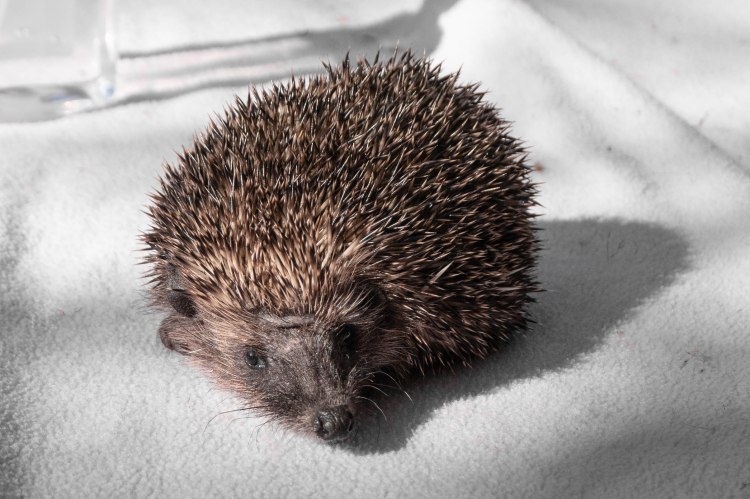
A recuperating hedgehog at Hornbeam Wood Hedgehog Sanctuary

Mammals

Many mammals are now looking to start their hibernation in November, including our special but now scarce hedgehogs. They search for large piles of branches and leaves, which sadly often include bonfires. Please always check bonfires for hibernating hedgehogs – the best thing to do is build it just before you light it. Also, it’s a good idea to leave fallen leaves on the ground instead of raking them up because they provide important hedgehog nesting material.

In November there are usually lots of baby hedgehogs handed in to wildlife rescue centres because they are born late and therefore too small to survive hibernation. For more information on what to do if you find an injured hedgehog, check out this link.

Fish

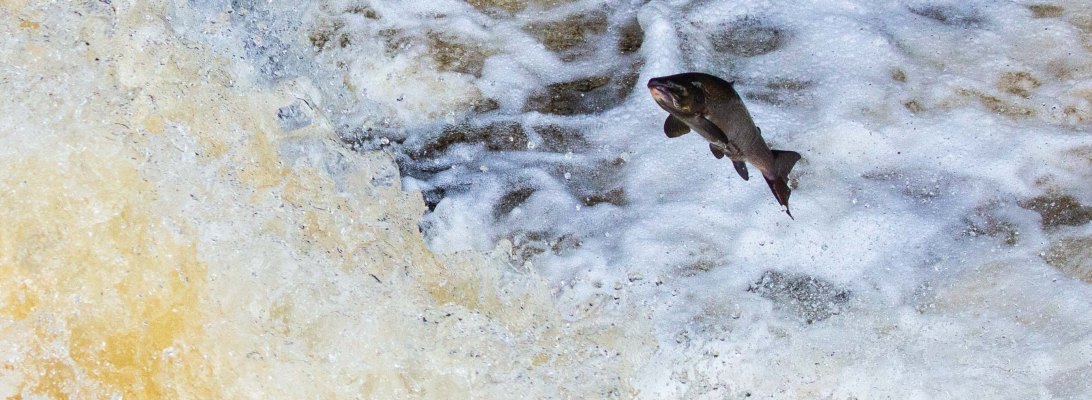
November is usually the peak of the salmon run – a dramatic and impressive feat. Mature fish are swimming upriver from the Atlantic to their spawning grounds, having waited in estuaries for the rains that raised the water levels enough to allow them to travel back to where they were born.

As if leaping several metres into the air to pass thundering water wasn’t impressive enough, during this time the salmon don’t feed at all and concentrate solely on their mission to breed.

Winter Walks in Hertfordshire


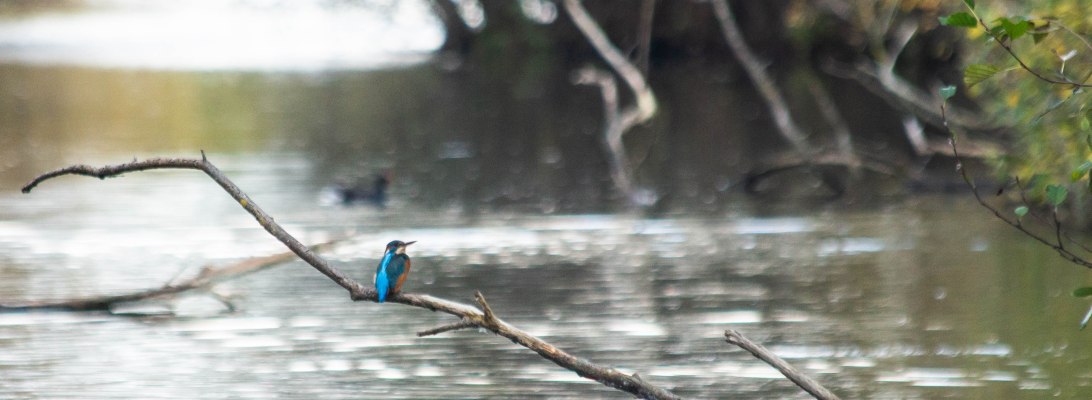
I am so pleased to announce that I have another article published in Hertfordshire Life magazine. This piece was inspired by wintery walks around the county and focussed on three Herts and Middlesex Wildlife Trust sites in particular: Lemsford Springs, Amwell and Stocker’s Lake. During my visit to Stocker’s Lake, I was treated to an incredible kingfisher sighting – my first glimpse of the bird that wasn’t just a zoomy blue blur dashing up the river. I also spent the afternoon watching great crested grebes, ring-necked parakeets and shovelers.

IMG_2252

Other avian highlights at these reserves include green sandpipers, fieldfare, redpolls and spew, a particularly striking bird that overwinters from Russia and Scandinavia. I learnt so much researching this article and it’s such a thrill to see it in print. For anyone living in Herts, get yourself a copy and get inspired during these chilly winter months!

6) Herts Life Jan 1

Published!

This month I was thrilled to have an article and two photographs published in the Christmas issue of Hertfordshire Life magazine. I have started volunteering as a Communications Assistant for the Herts and Middlesex Wildlife Trust, and as part of my work I was able to write a festive article about twelve wild things to see and do at Christmas.

4) Herts Life Dec 14) Herts Life Dec 2

In the past I’ve had a few articles published on websites and a column in a local Cumbrian newspaper, but this was my first full-length article in print and I was overwhelmingly proud. Hertfordshire Life is a beautiful and professional publication, and I was so grateful to be given the chance to contribute to one of its issues.

Even more excitingly, I have submitted another article which shall be published in the next issue in a few weeks. This one will be about winter walks to banish the January Blues and I can’t wait to see it!

New Leaves

This year I am dedicating a lot of my time to something I have wanted to do for many years: write a novel. I often write fictional scenes and enjoy creating characters and I wanted to set myself the enormous challenge of extending those elements into a book. I’ve read that while many authors swear by detailed outlines and believe that spontaneity is recipe for disaster, others encourage new writers to see where their imagination takes them. I’m trying the latter technique. I have a protagonist and several themes I would like to focus on, but so far my plot is far from finalised. The following is a passage I’ve written as a scene-setter that introduces both the location and my leading lady. 

  ____________________

The snow fell heavier than it had in a hundred years. There was no wind – the land lay still, muffled under six inches of brilliant white. Evergreens buckled beneath the weight of their silvery coats. Even the river had succumbed to winter; it lay motionless beneath a slab of ice, arranged in a winding, serpentine fashion between hills and mountains. It was late February – there was just over a month left of the winter that spanned half the year, but the coldest season still had a firm grip over the land. In March, the climbing temperatures would start to melt the snow into large freshwater pools and reawaken sleeping giants eager for the salmon run in July.

Halfway up a sprawling larch tree perched a teenage girl. She was small for her age, but agile and nimble. With her back pressed against the trunk, she had the perfect vantage point over the land. Before her the forest sprawled as far as the eye could see. Thousands of trees stood beneath snow and ice, their skeletal branches brittle in the cold.

Vanya’s breath rose from her lungs in icy shards, tumbling from her mouth in clouds of grey mist that swirled upwards into the sky. An eagle cried far away, her voice transported many miles over the sleeping land. Vanya had lived in the taiga forest her entire life, but gazed upon its sweeping scenery with the same wonder as the first time she saw it. It was a paradise of silver beauty. The silence was so thick she could feel it, heavy and palpable in the air. It was an anticipative silence that made the hairs on her neck stand on end. There was change in that silence – something new just beyond the horizon.

Despite her thick furs, Vanya soon began to feel the cold as the sun weakened. While she still had the light to see, she descended from her tree, scrabbling down the trunk with impressive confidence before dropping the last six feet to the soft ground. She padded down the hill, sinking into the snow with each step. Behind her lay a long trail of boot prints, already softened at the edges by fresh flakes. Frost clung to her eyelashes, brushing her cheeks with cold strokes and fringing her vision with a white vignette. Snow rustled in the folds of her coat and crunched beneath her feet. If undisturbed, the snow would fall and rest in utter silence. Only when it was touched did it begin to whisper and crackle. In the heavy air, the sounds were deafening.

When she reached a dense thicket of pine trees, Vanya slowed her pace and gazed skywards, scouring the canopy for birds. Snow clogged the gaps in the branches, concealing all manner of wild creatures. A sudden commotion cut through the silence like a knife. Vanya’s eyes flicked to the sound, freezing on the spot as a flurry of fine powder drifted down. The branch trembled, sending more snow to tumble from within its stiff needles. In moments the raid was over and the culprit emerged at the trunk. It was a young male sable, perhaps from last year’s litter, with dark brown fur and a splash of dusky orange on his neck. A small, carnivorous mammal, the sable belonged to the marten family. The animal cascaded deftly down the tree with agile limbs and keen claws.

Landing with a soft thud on the forest floor, he immediately looked up at Vanya, who had sunk down onto her knees to watch. The sable was clutching a stolen egg in his mouth, razor sharp teeth sunk into the shell for a better grip. Confidently, he trotted over to Vanya, dropped the egg and began sniffing her coat. Vanya extended a hand to the animal, noting the way his sleek fur rippled with each movement. The sable studied the girl’s face briefly before clambering onto the open hand, his nose twitching furiously. Vanya ran the backs of her fingers along his fur, delighting in its buttery softness. After a few more moments in her hands, she set the animal back down onto the snow, where he snatched up his egg. With a brief backward glance, the sable lolloped away to cache his prize.

To anyone else, this behaviour was unheard of. Sables, like many mustelids, could be notoriously aggressive towards humans, especially when food or kits were involved. Vanya was an exception to the rule. Since birth, she had truly understood animals. They were not stupid or cruel, like humans, but sensitive and respectful. Vanya saw no reason not to behave equally, and in response any animal she interacted with was fascinated by her. They sensed goodness in her; a quality that they had learned was absent in most humans. Instead of fearing her, they immediately trusted her.

Vanya studied the sable’s prints in the snow. In less than a minute, the snow obscured the impressions the tiny pads had made. In five minutes, they had disappeared completely. Her interaction with a wild sable might never have happened. Vanya was alone, and yet surrounded with life.

Golden Hour

The light was still faint as I drove through fields of green. Cars tore past in a work-fuelled rush, while I cruised leisurely in the opposite direction. My focus was on the forest today – my only objective to walk through trees and listen to wild sounds.

A flash of copper caught my eye and a stunning red kite appeared in the sky, wheeling over the rolling hill as it hunted for unsuspecting mice. I pulled over in a layby – the mud sticky before the sun reached it – and spotted three more circling in large, overlapping loops. Occasionally there was a squabble, and two birds would tussle in the air, cascading downwards and surging back up. It was easy to forget that bounty hunters and egg collectors almost pushed the red kite to extinction only a few decades ago. Now, you could drive down most country roads in Hertfordshire and see at least one. I had never seen four so closely together, and savoured the opportunity to watch such an inspiring conservation success story in the flesh.

Soon the kites drifted further off, reduced to dark flecks in the sky. I left them to their hunt and drove on, arriving at the edge of the forest before anyone else that day. As lovely as dogs were, I didn’t need their boisterous presence this morning. I pulled on hat and gloves and slung camera and binoculars around my neck, then crossed the road towards the woods.

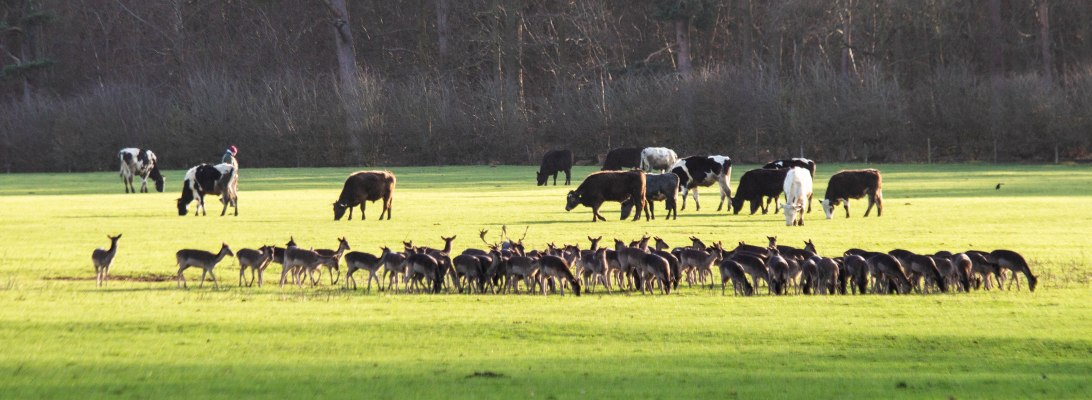
To my delight, the species I’d come to see was already here in abundance. Grazing in a field beside the cows was a herd of fallow deer around seventy-strong. I have always been fascinated by the variation in fallow deer pelts. When I first saw deer at this site, having previously seen photos of white-spotted Bambis, I had thought they were a different species altogether. These fallows were two-tone; dark brown on the top half and a lighter brown on the bottom half, as if they had waded flank-deep in mud. I hastily took to the cover of the trees, creeping as quietly as I could along the fence to get a closer look.

However, these deer were no fools. The next time I stopped and snuck a look through the binoculars, there were several faces turned my way, ears pricked upwards and eyes gazing down the lenses. My cover was blown. I decided to carry on with my approach, heading diagonally and pausing behind each tree. Ears twitched, and after a few more moments of studying me, the herd moved off, first at a trot then at a gentle canter. Among so many deer, there were only two males; as the herd bounded in loose procession across the field I watched two sets of antlers bobbing among dozens of ears.

I continued deeper into the forest, dulling the sound of passing cars with birdsong and wind-rustled leaves. The trees were gently swaying, creaking eerily like squeaky doors. The breeze played tricks on me, sending leaves skittering across my path in a perfect imitation of birds. The thrum of a woodpecker echoed through the cold air. A buzzard called faintly in the distance.

Suddenly there was an invasion of grey squirrels, bounding over the leaf litter and across fallen logs. Two of them darted in a reverse helter-skelter up a thick trunk, their claws scratching wildly in the chase. Another was saving his energy, choosing instead to perch and chew on a shrivelled leaf, twisting and turning it in his tiny hands.

I left the squirrels to their play and headed further along the fence, glancing between the trees to see if the deer might have come back. They hadn’t, but there was a sprinkling of brown birds foraging in the grass, dotted among the cows. For a few moments I couldn’t figure out what they were. Speckled like thrushes, but I’d never seen a large group of thrushes before. Just then the sun appeared, illuminating bright red patches on the birds’ sides. Redwings! My first this winter, and what a show. There were around forty of them, hopping around in the grass. They were too far away for a decent photo, but close enough to watch through the binoculars.

After a while, a startling screech made me jump. The only culprit I could think of was a barn owl, but I was sure they would have finished their night’s hunt by now. I followed the voice further down the trail. It was an ungainly, dinosaur-like squawk that sounded deafening in the tranquil forest. Suddenly, as I was scanning the canopy overhead, a crow-sized bird with white, brown and grey feathers shot out of the leafy cover. I hadn’t seen a jay once when I’d lived in Cumbria, so it had been about four years since my last sighting. I was desperate for a good photo of a jay but this one wouldn’t be cooperating. It darted from tree to tree, pausing only for a few hoarse shrieks before taking to the air again, soon disappearing completely from view. Undoubtedly the prettiest of the corvids, but not the sweetest singer.

Soon the forest was nearly silent again, with just the gusts of wind disturbing the trees. The morning was rolling on, and golden hour had arrived. Between breaks in the cloud, rich yellow light illuminated the trunks, throwing their gnarled, twisted bark into stark relief. It was a glimpse of magic that only lasted until a cloud muffled the sunlight and the forest fell back into shadow.

The cold was beginning to bite my fingertips, and I could already hear the first dog walkers. It was a good time to turn back. I made my way slowly through the woods, past the field and the squirrel tree, looking forward to warming up back home. I was just scanning the trees one last time for any small birds when my eye caught on two more pairs of ears sticking up. The deer were perfectly camouflaged, and after we stood watching each other for a few more moments, the doe stepped out from her hiding place and began picking her way through the foliage. The buck took one more look at me before following her, just as the sun emerged again and made their brown fur shine gold.

There was something undeniably magical about watching deer in a forest. They were elegant and beautiful animals, their habitat just as serene. As I stood watching them stride away out of sight, I felt a strong connection to the forest and the creatures that lived within it. Although I didn’t truly belong here, for just a few short hours I felt at home.
A Charm of Bramblings


With the bitter cold of winter often come unexpected and welcome surprises. Two years ago, flocks of waxwings graced us with their presence as they passed through from Scandinavia. The following year, hawfinches could be seen crunching hard seeds with their formidable bills. In 2019, it seems to be bramblings that are turning heads as they gather en masse across the UK. While they have been known to breed in Scotland in previous years, this is very rare. However, bramblings often visit the UK during the winter months, with this year being no exception.

At a quick glance, bramblings could easily be mistaken for a male chaffinch; these birds are of the same size and have very similar colouration, if a little more diluted than our more common garden inhabitants. Both male and female bramblings have an attractive orange blush on their sides and a white belly. In summer, males have black markings on their head. Bramblings can be found in beech woodland and close to other wooded areas, often joining flocks of chaffinches to look for food. Like many finches, bramblings prefer seed, so providing a good seed mix could attract them into gardens. There are several collective nouns for finches, including a “charm”, “company” and “trembling”. I couldn’t find a specific term for a gathering of bramblings, but as the birds themselves are so charming to look at, a “charm” seems appropriate.

It is thought that the reason behind this year’s explosion of bramblings is beech mast, or fruit, that falls from the trees, dispersing seeds for the birds to eat. If the beech mast fails in European countries such as Scandinavia, species including bramblings will move south and west in vast flocks to find more food. While impressive gatherings of five hundred bramblings can currently be seen in areas of the UK, earlier in January there was a flock of around five million in Slovenia. This number of birds could seem difficult to comprehend, but even that pales in comparison to the flock seen in Switzerland in the winter of 1951, which was up to 70 million strong.

As with all winter visitors, the bramblings’ time here could be short. Despite the plummeting temperatures, wrap up warm and head outside to find some of these beautiful finches. For more information on wildlife winter sightings, check out the BBC Winterwatch page. I for one would love to see a charm of bramblings before the winter wanes.

A Lensball Study

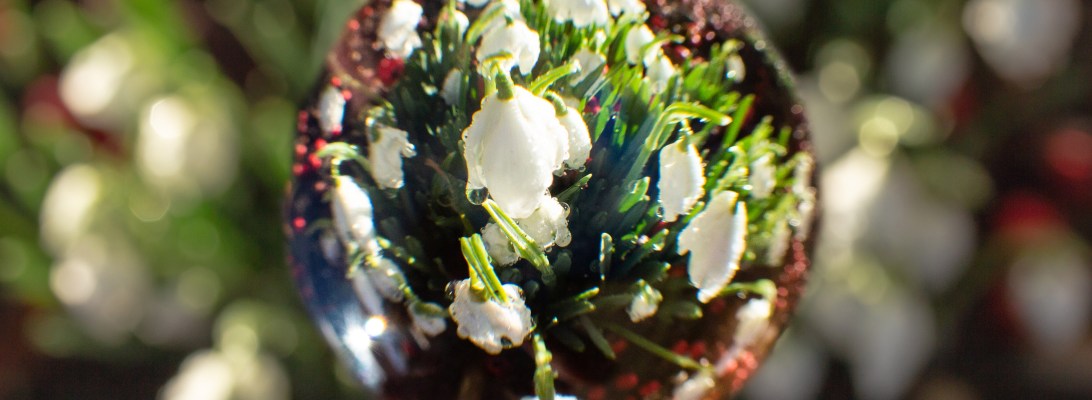
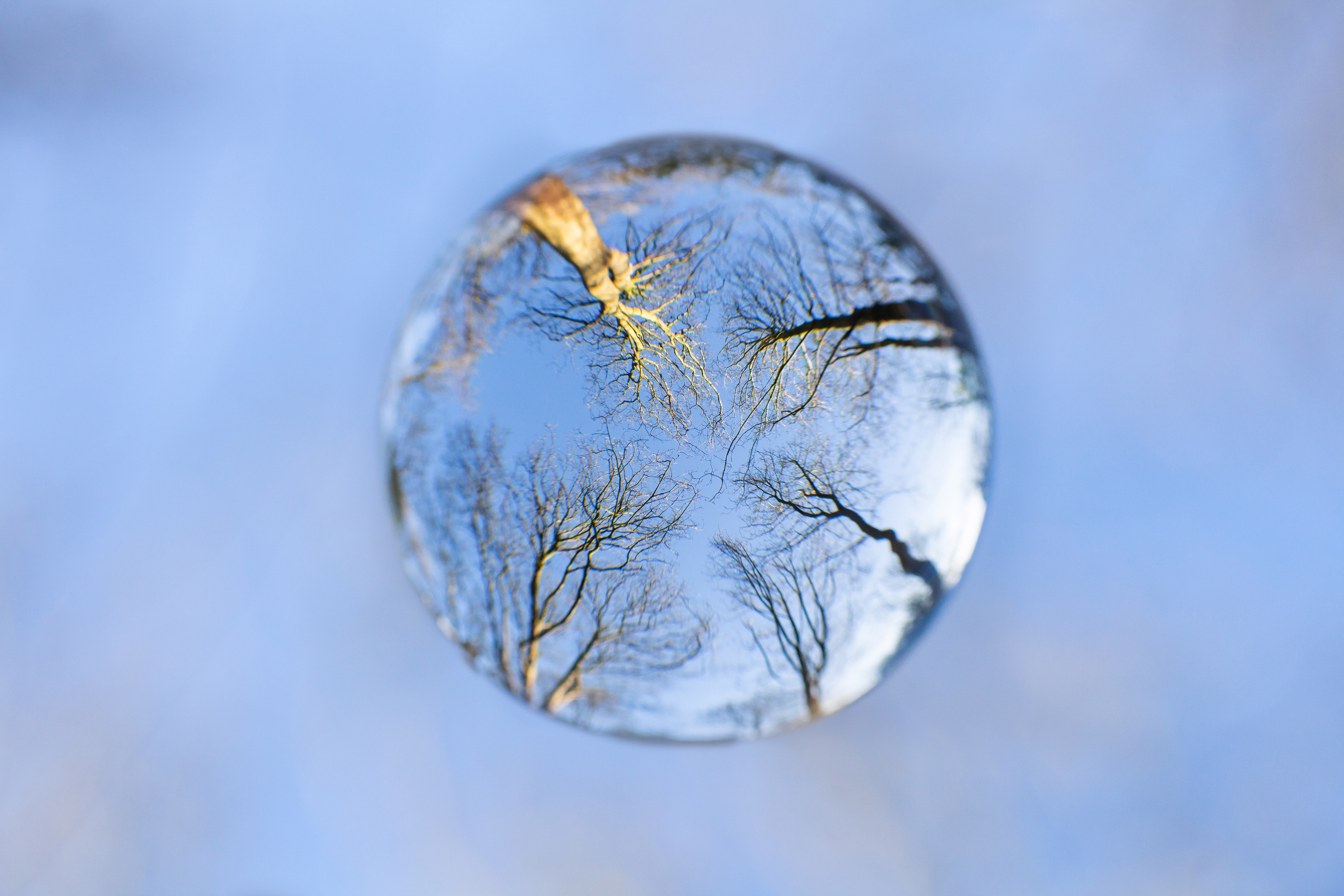
As I briefly mentioned in my last post, I’ve recently been experimenting with the lensball, which is a simple and effective tool to give photos a new perspective. I tried it out in the garden first with mixed results, but once I ventured further from home and found more intriguing subjects to capture, I began to really see the appeal with lensballs. The following shots are my latest creations.

img_1125 2img_1127 2

After spending far too much time on Photoshop – I never like to over-edit my wildlife photos as I think they look far better natural – I decided that a quick and easy way to remove my hand from the image was to take an additional photo of the scene out of focus, which provided the background to the final shot. Then I placed one image over the other and erased my hand. I think the pieces with slightly more complex backgrounds are more effective than those with a plain one such as the blue sky, which make the already obscure subject look perhaps a little too surreal.

img_1133 3img_1167 2

I love seeing a whole new perspective through the lensball, and I can’t wait to continue exploring my natural surroundings with this additional piece of kit!


Waiting In Anticipation

Winter is one of my favourite times of year. Not only is there the excitement of Christmas (which at 21 years old is still very important to me) and my birthday, but also the stunning beauty of nature. Frosts, snow, diluted sunshine – it’s a photographer’s dream. I cannot wait for the first real frost to arrive, when once again I’ll be rummaging around in the garden on my hands and knees clutching my trusty macro lens.

As winter approaches, there is always a rush of social media posts about visiting migrant birds. Stunning images of waxwings, redwings and fieldfare dominate the birdwatching online groups. While I love to see rare visitors in the UK, there are more common species coming to the fore during the colder seasons too.

The long-tailed tit is easily recognisable, with a tiny body and unnaturally long tail. These charismatic birds are nearly always seen in groups, and with a weight of less than 10 grams, sticking together can be a lifesaver in the winter months. As temperatures fall during the night, long-tailed tits roost together in large groups of related birds, lining up on branches and huddling for warmth. Long-tailed tits are particularly known for their altruistic behaviours. If one pair loses their eggs, they will help a relative raise theirs. This behaviour is known as cooperative breeding.

Another bird that is more prominent in winter, but far less endearing than the long-tailed tit, is the great black-backed gull. This formidable animal is bigger than a buzzard, and bad habits including stealing food from some birds and eating others has given this gull a bad reputation. Nonetheless, great black-backs are impressive to watch, and during the winter months they are drawn inland by swelling migrant populations. This means now is a good chance to see this amazing species up close.

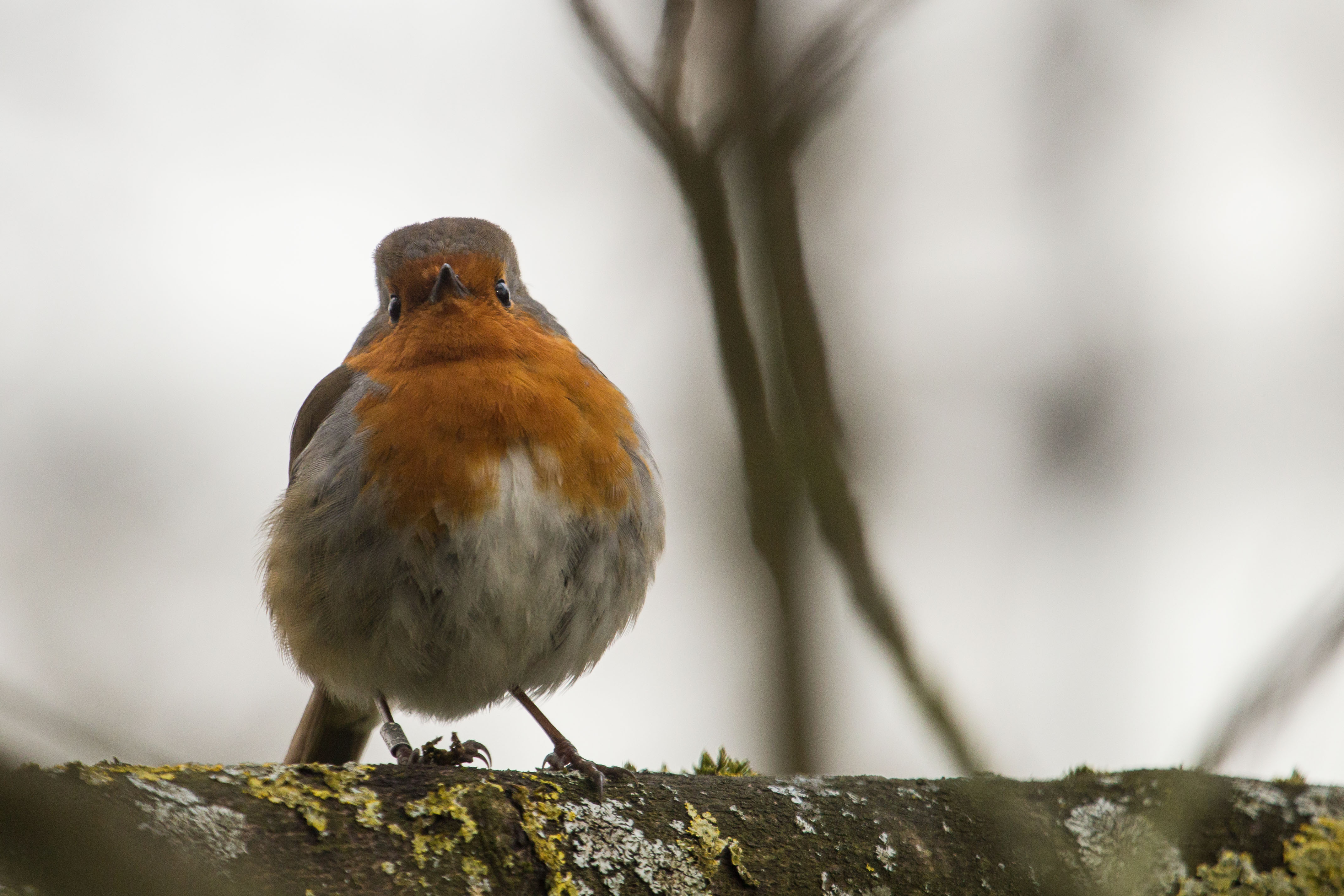
One voice that sings long into winter is that of the robin. This plucky redbreast is often thought of as a winter bird, when it is found all year round but simply stays put when other birds migrate during the colder months. Despite their beautiful song, robins are fiercely territorial. Who can blame them, when food and shelter is so scarce during the winter? Perhaps the epitome of Christmas is seeing a plump robin perched on a berry- and snow-strewn branch. It may be a controversial opinion, but I can’t wait for the snow to come. Seeing how bitterly cold it’s been recently, hopefully the wait won’t be too long.


Learning to Birdlisten

Today marks the beginning of a new project: learning to birdlisten. It’s a much-used cliché but I have been an avid birdwatcher since I was a child. I’d sit out in the garden, hold as still as I possibly could, and after a while birds would begin to show, hopping out from under bushes and descending slowly from the treetops. This gradual emergence, the steady drip-drop of birds, was so exciting to me. The species would usually be very common – robin, dunnock, blackbird – but occasionally a blue tit or great tit would appear, and to my amateur eye these were very special indeed.

As my knowledge gradually improved, I began to notice more species and although the trusty robin and dunnock never grew boring, they lost their shine among more colourful or charismatic varieties. One by one I added birds to my repertoire, and although I didn’t notice my mental list growing, soon I could identify a wide range of species. Although waterfowl and waders had their charm, my favourites were always the passerines, or “perching birds”.

Passerines include a subgroup of species we call songbirds but are more accurately named oscines – birds that establish their territories by means of musical vocalisations. It never occurred to me why the singing birds attracted me most, until I turned my attention to listening for birds instead of looking for them, and then it became abundantly clear.

Birdsong is the soundtrack of nature. Even for me, a keen bird enthusiast, birdsong had blurred into the background of my time spent outdoors, nothing more than a pleasant backing track that accompanied my attempts to birdwatch. Why on earth did I let birdsong become such an unimportant feature of the landscape, no more significant than hold music? It was high time that I paid more attention to it, instead of letting it wash over my ears without acknowledgment. It is so true that we see but don’t observe, but it is also the case that many of us hear but don’t listen.

IMG_8860

Author of “Birdwatching With Your Eyes Closed” Simon Barnes points out that understanding birdsong allows us to see around corners. There’s a bird hidden up in the canopy somewhere, but unless you know its song you’ll never know what it is. I’ve had this frustration many times, when I see the distorted outline of a bird but no characteristic features that give it away. If I hadn’t neglected my auditory senses, I wouldn’t have been disappointed when the bird hopped further out of view.

And so begins my journey to learn the language of birdsong. It seemed a daunting prospect at first; to my untrained ear all chirrups and whistles sounded identical. However, like any problem, it is imperative to break it down, and that makes it far less intimidating.

I have already made progress. First was the robin: an unmistakable bird in appearance, and a good place to start when learning birdsong because of its presence all year round. During the usually hushed winter months, the robin still sings, an isolated soloist filling cold air with thin, gentle melodies. Spring is by far the most frustrating time to begin birdlistening, so to hear the robin on a chilly February morning with no other avian distractions allows us to begin to tune into this new world I for one took for granted.

IMG_8893

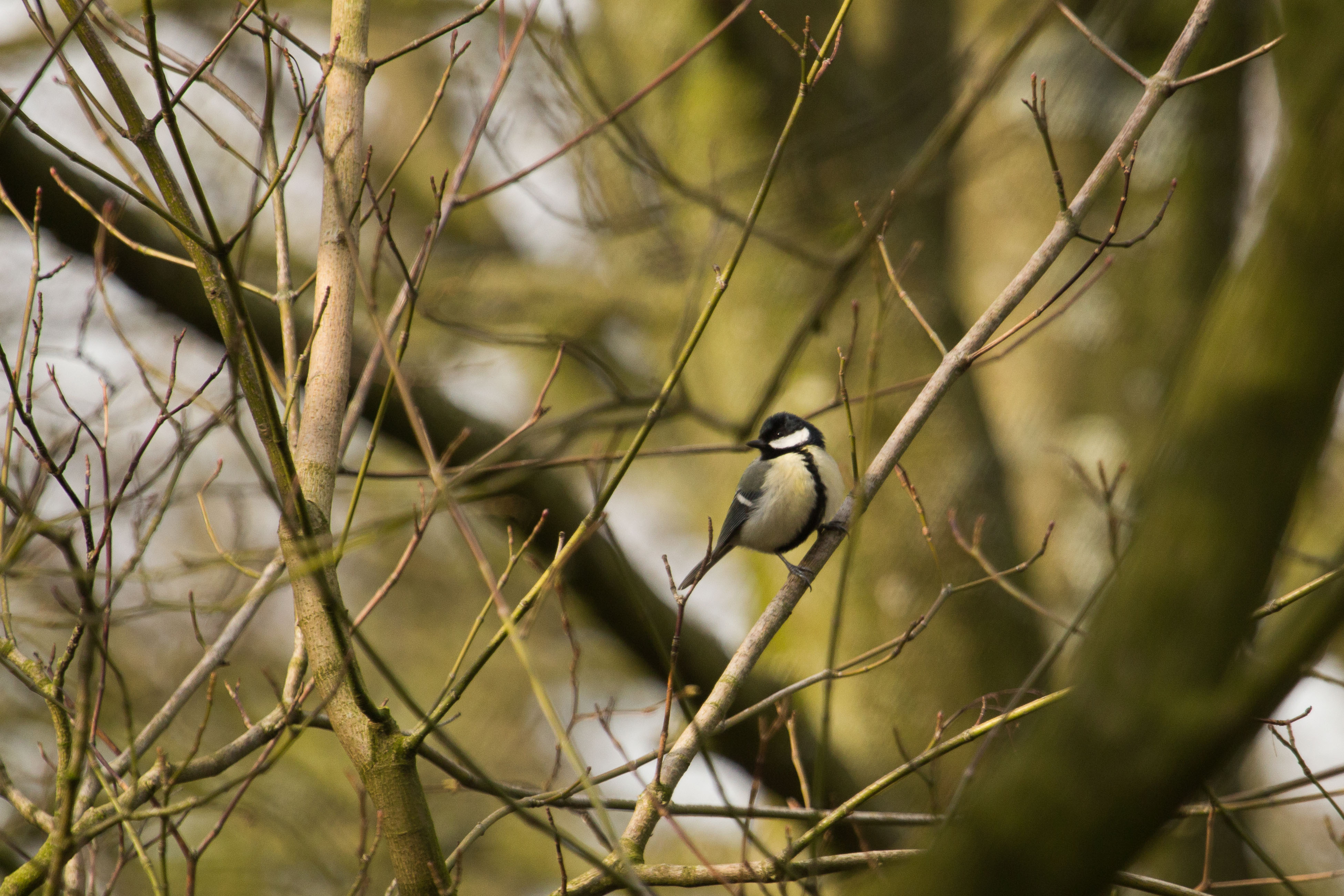
The wren also sings in winter, but has a far louder song bordering on rowdy. For such a small bird, the song bursts out of hedgerows, with a telltale trill at the end of some phrases, like a twirl of icing atop a cake. Then there is the two-note song of the great tit, like the squeak of a saw being pulled back and forth.

And so on. Already my ears are filling with birdsong and I’m really listening this time. Acquiring the skill of understanding this rich and varied language will not only help me become a better birdwatcher, but it will pave the way to a clearer understanding of nature as a whole – appreciating nature’s vibrant soundtrack.

IMG_8853