The Farne Islands – Part 1

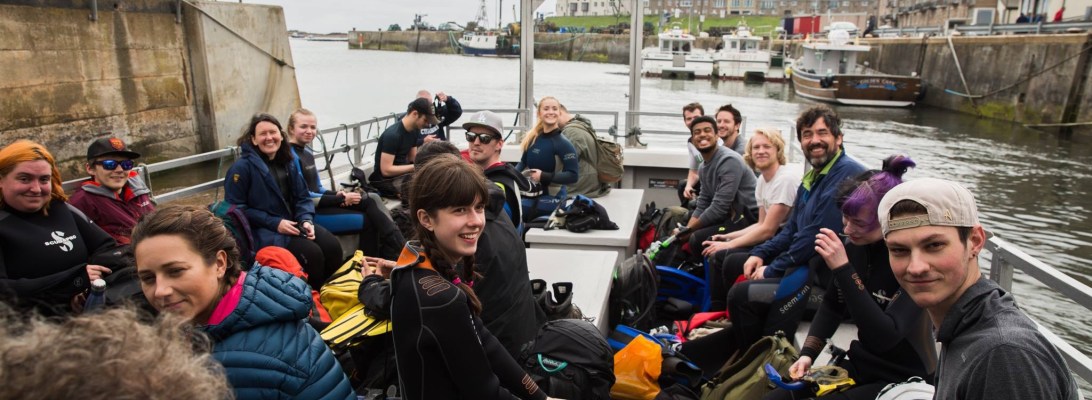
Our trip to the Farne Islands was looking like it would be a day of unforgettable wildlife encounters. We boarded the boat at Seahouses kitted out in wetsuits, boots, hoods and clutching snorkels in gloved hands. The clouds were light in colour and I had faith that the sun would soon break out.
IMG_0816
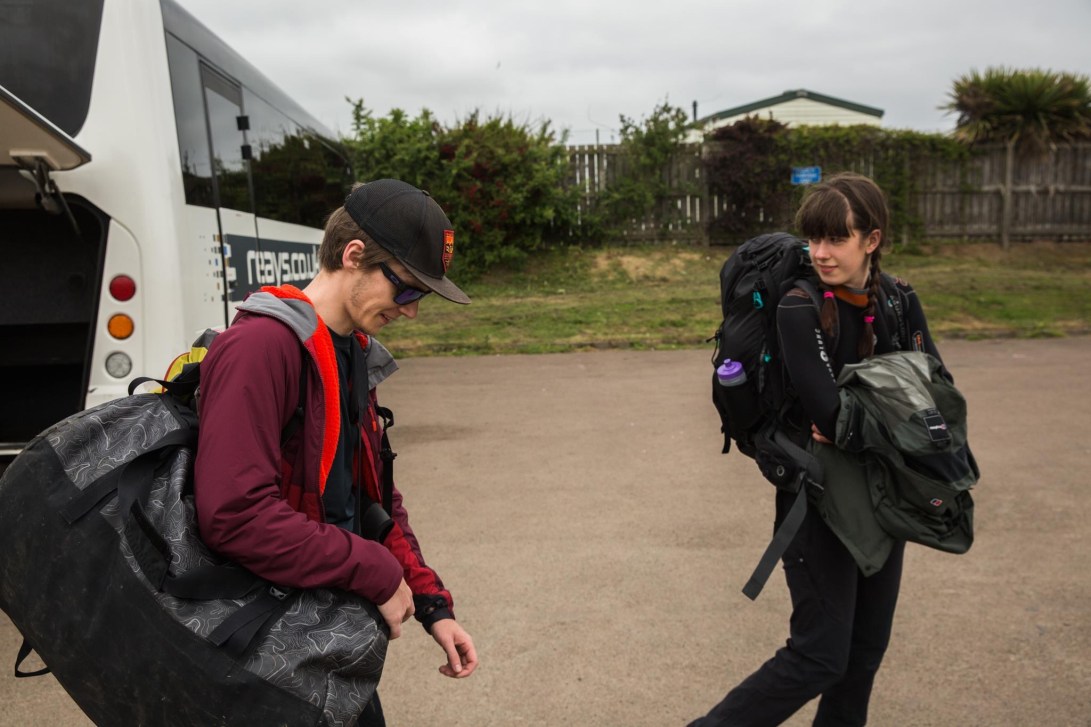
En route to the boat (Photo: Cain Scrimgeour)

There was a buzz of excited conversation as we moved out into open water, scanning the surface for wildlife. Cain, sharp-eyed as always, spotted the first puffin, as well as razorbill, guillemot, and a Manx shearwater. I twisted in my seat to spot everything he pointed out, but as usual, I was perplexed how Cain could identify such small, distant birds with immediate certainty. I could easily see the gannets though, a group of four that glided low over the water past the boat. I’ve said it many times before, but gannets are one of the best birds out there, and I never tire of watching them.

Before long we reached a widespread rocky outcrop where the boat would stop and let us jump out into the sea. One by one, we pulled on fins and adjusted facemasks. When it was my turn, I waddled ungainly to the back of the boat and took a somewhat hesitant jump off.

IMG_0814
Taking the plunge! (Photo: Cain Scrimgeour)

Cold water hit me like a fist and I suddenly couldn’t breathe. I was filled with a very unfamiliar panic that I’d never felt in water before. I was lifted back onto the boat and it was then that the skipper told me my over-sized hood had risen up over my mouth and my mask had filled with water. Feeling very sheepish, I calmed my breathing and tried again. My second attempt was more successful, but I was very unaccustomed to wearing fins when swimming. They were two dead weights on my feet that pulled my legs to the surface and completely threw off my balance. Having only ever worn a swimming costume in the ocean before, it now took real effort to get used to all this additional kit.

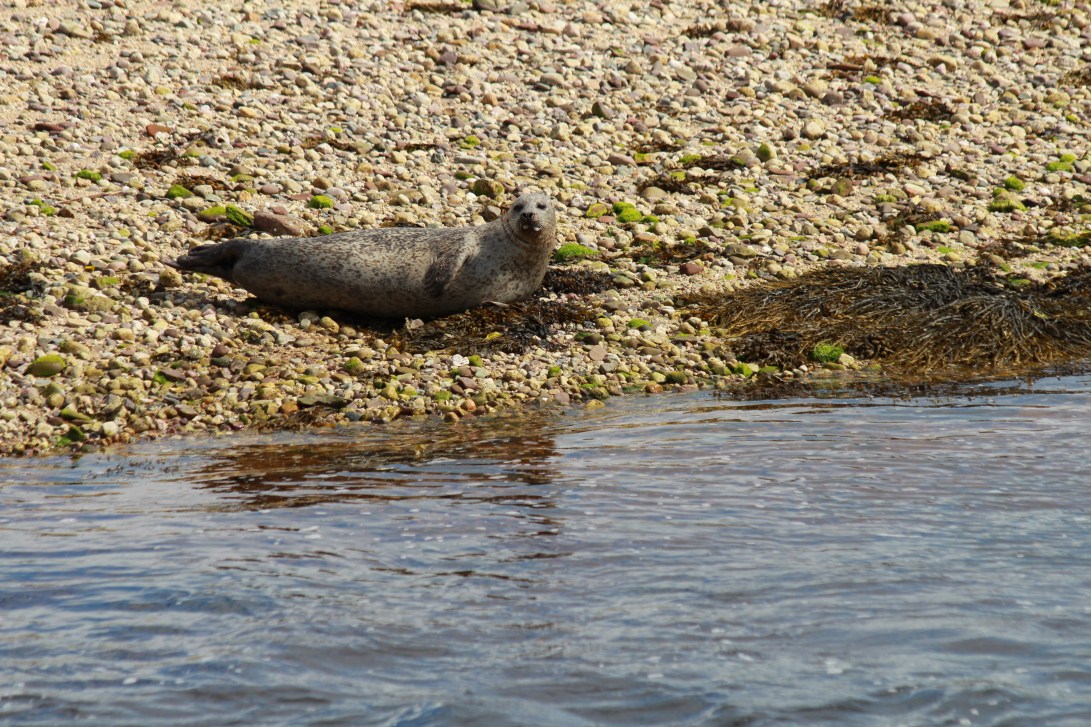
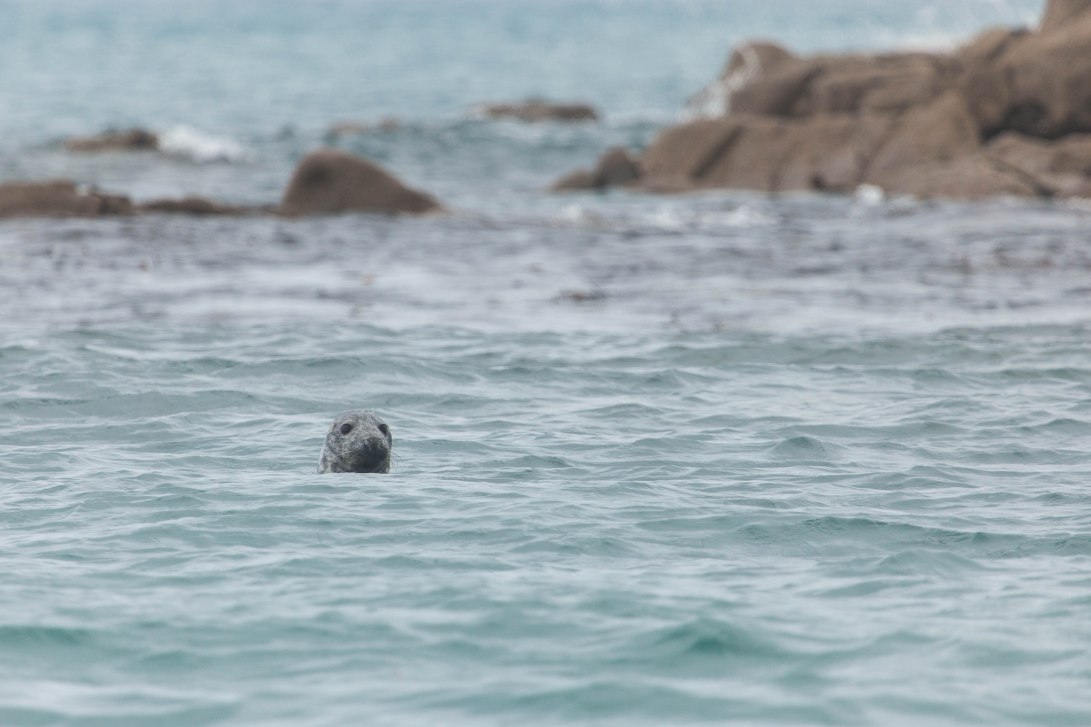
I glanced up and saw another of our group bobbing up and down in the water, but then I looked properly and saw it was in fact a grey seal. I experienced a combination of surprise and elation, and when I looked around I realised I was surrounded. Seals were everywhere, gazing with inquisitive expressions. One ducked under the water so I copied, watching it glide out of the kelp with an astonishing grace that it didn’t bring with it onto land. Water seeped into my mask again, and once I’d tightened it and put my face back under, there was a jellyfish right in front of me. I’d seen dead ones on the beach, but to see a live jellyfish propelling itself effortlessly through the water was truly beautiful.

I reached the rocks and rested for a while, watching the snorkels of other students in every direction. Suddenly another seal appeared, an arm’s length away. It flared its nostrils and snorted, staring directly at me, then ducked underwater. Once again, I followed its direction and watched with amazement as it brushed against me. Then, it held out his flippers and wrapped them around my leg. It was a surreal and incredible experience, feeling a wild grey seal squeeze my leg in what the anthropomorphist in me liked to think was a hug. It was nothing like it of course, but the seal reminded me of an excited puppy, and even nibbled my wetsuit like my dog would do. Before long it swam away and disappeared into the gloom, and I was left feeling ecstatic. Any encounter with a wild animal in its natural habitat was special, but to me it was even more exciting to share a completely new world with one, a world I never normally got the chance to be a part of.
IMG_1517
A curious face

As much as I hated to admit it, my hands were beginning to grow numb, so I waved to the skipper and got back on the boat. As I warmed up, I felt niggles of regret that I hadn’t tried to film my encounter on the GoPro I’d brought with me. But as I reflected on what had happened beneath the surface, I was glad that I hadn’t. In that moment I hadn’t been distracted by technology; I’d simply been there.

Exhibition Launch!

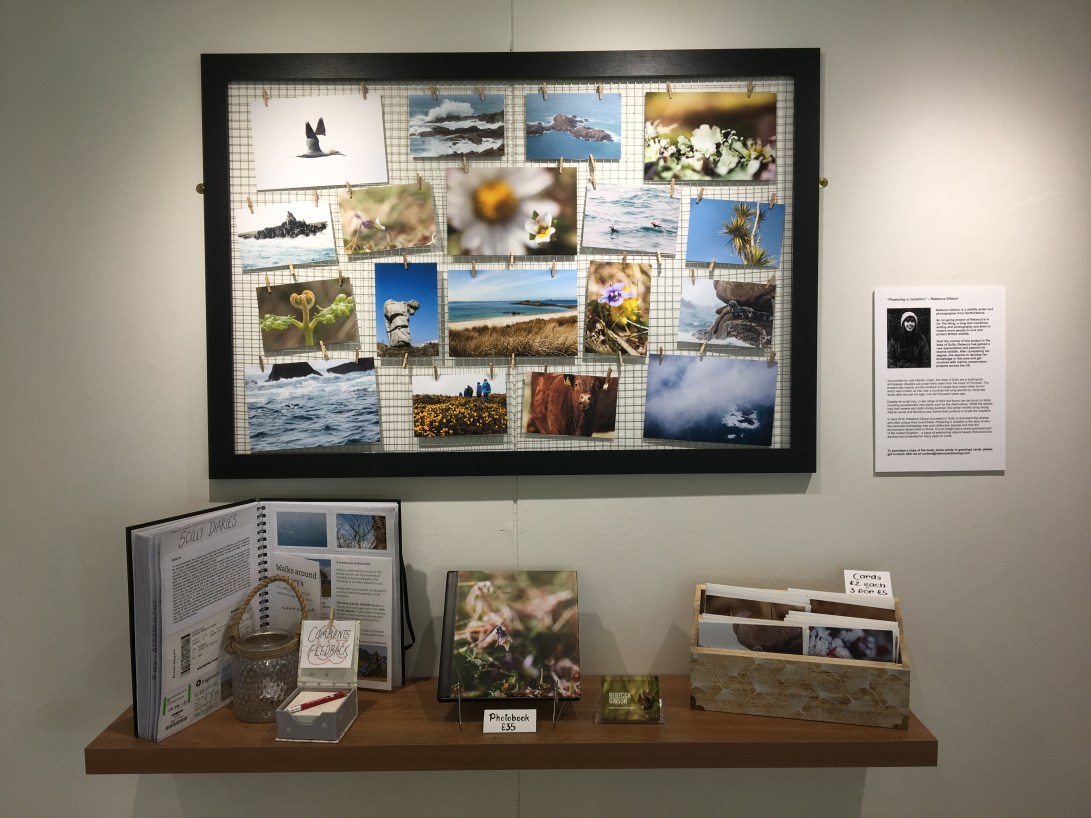
The past few weeks have been fairly frantic, with preparations for my final showcase in full swing. Campus has been a buzz of activity as we all work on exhibiting our major projects and making them look their absolute best. After creative brainstorming and purchasing countless items and decorative pieces, I have finally finished my display and couldn’t be more proud of it.

IMG_0737

The exhibition will be held at the Vallum Gallery in Carlisle, Cumbria from the 1st to 8th of June. It’s a beautiful space to display work, especially photography where good lighting is so important. As the main part of my project was a printed photo book, I have also mounted a collage frame of snapshots from my expedition to the Isles of Scilly. To find out what I got up to during my time on Scilly, have a read of the start of my journey to this stunning archipelago.

IMG_0731
A peek into the finished photo book
IMG_0733
Some greetings card for sale

If you are interested in purchasing a copy of the photo book, or perhaps a few greetings cards of my photography, please don’t hesitate to get in touch with me at contact@rebeccaonthewing.com and I would be more than happy to provide more information.


A Biotope Weekend

Friday

The trains to Glasgow and Largs and the ferry to the Isle of Cumbrae were all fine. It was when I boarded the bus to the Millport Field Centre that it dawned on me: what on earth had I let myself in for?! I’d booked onto a weekend course run by the Field Studies Council called ‘Marine Species and Habitats: The Biotope Approach’. After volunteering at an aquarium had sparked a new fascination for marine wildlife, I wanted to learn more about what could be found on British shores. I’d done a bit of research using the course’s suggested reading list, and had half an idea what a biotope was, but as I dragged my bags off the bus I wondered if I’d booked myself onto something that would sail completely over my head. I imagined working alongside a team of marine biologists with decades of experience in the field, and here I was with a newborn interest in fish. I was suddenly terrified, and literally marooned on an island for the weekend.

IMG_0596
Blue Mussels (Mytilus edulis)

As I was mulling this over in my head, a girl my age carrying a black hold-all asked me if I was attending the Biotopes course. I was thrilled; fate had brought us together on the same ferry and meant I didn’t have to amble around alone wondering where I needed to be. Our rooms weren’t ready yet so we went for a wander towards the town of Millport. Her name was Abbie, and she was currently part-way through a PhD in non-native seaweeds. This was something I knew literally nothing about, but we chatted about uni and wildlife and all things in between. Meanwhile, it was a chance to see where we’d be spending the weekend, and it was beautiful. Of course, almost everywhere is beautiful in bright sunlight, but even so the Isle of Cumbrae promised a fascinating chance to survey marine wildlife.

IMG_0630
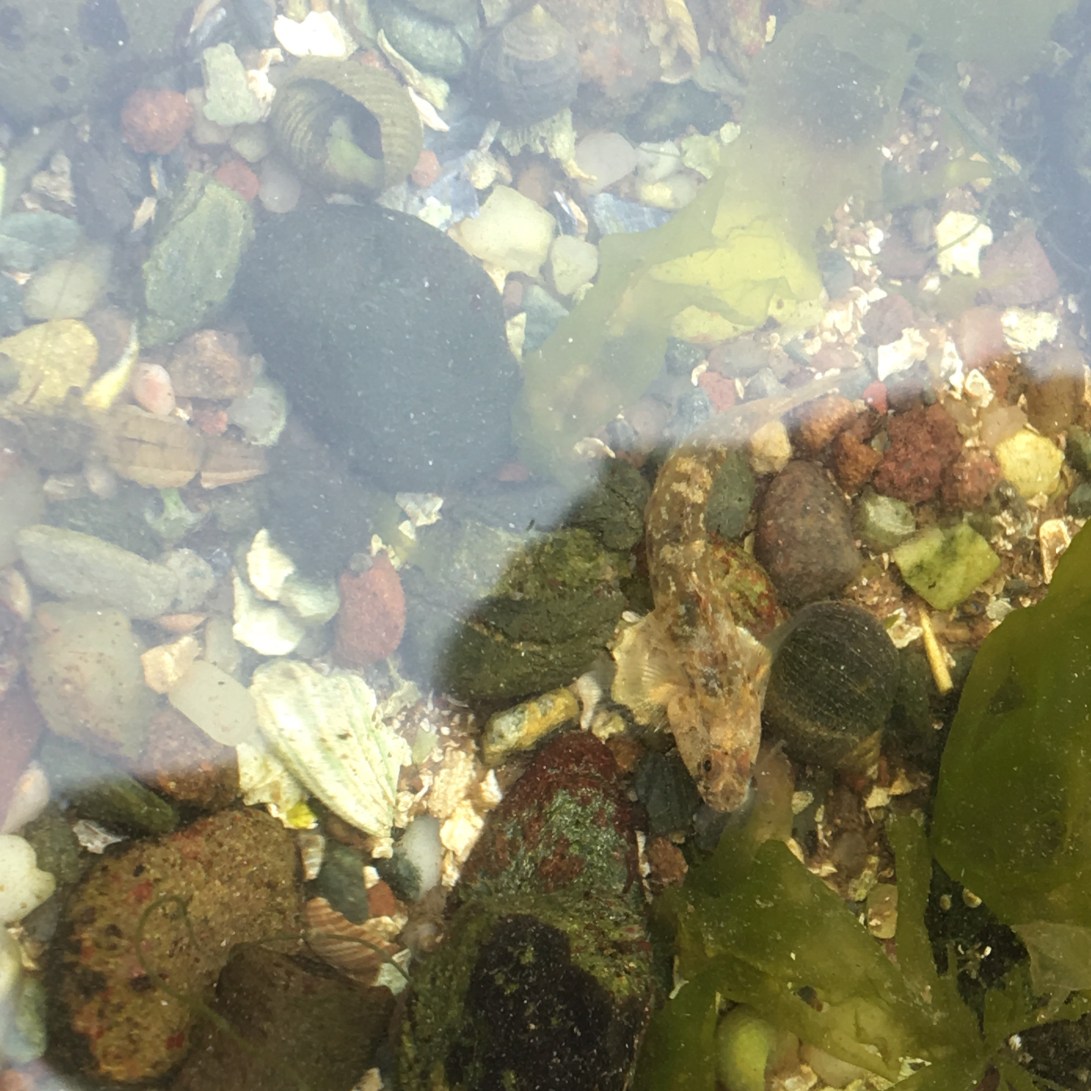
A well camouflaged Sand Goby (Pomatoschistus minutus)

After a loop around the bay we headed back to the Field Centre and took our bags to our rooms. I had feared with some trepidation what the washing facilities would be like, but was very pleasantly surprised to discover a large ensuite shower, not to mention a bed like a cloud. I hastily unpacked then met the rest of the group for our first briefing. Here I met Emily who worked at the Lancashire Wildlife Trust, and before dinner Abbie and I went for a walk with her to the shore to soak up the last sun of the day.

Dinner was macaroni cheese and apple crumble, perhaps one of the most perfect combinations of courses there can be. Then it was time for our first lecture: an introduction to biotopes. My research had prepared me well – a biotope is the combination of a physical habitat and the biological community found living there. Although some of the lecture’s content was lost on me, I left feeling inspired and ready to face new challenges over the weekend. I’d already met lovely people, and all my earlier worries began to feel very insignificant.
IMG_0602
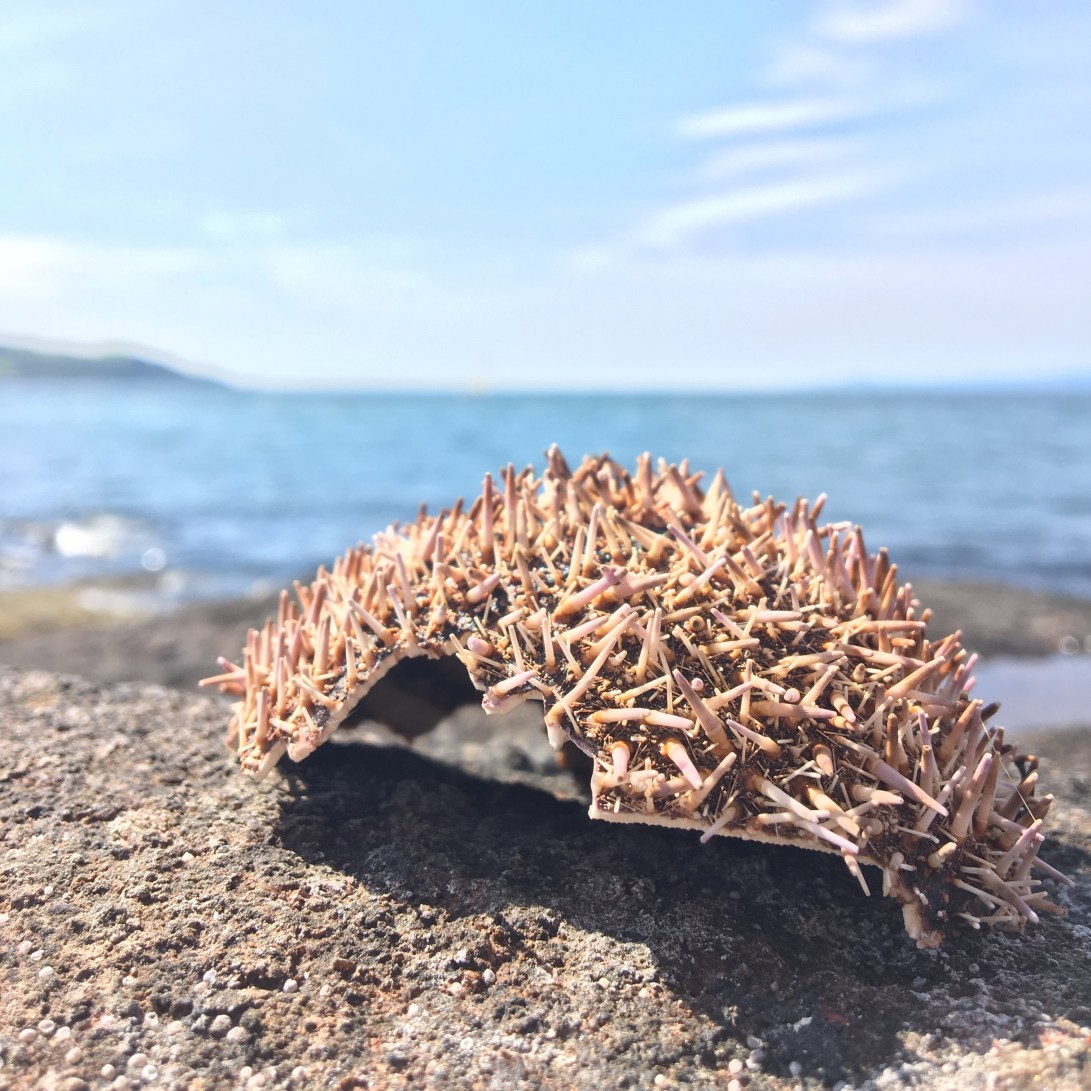
A fragment of broken sea urchin shell

Saturday

Today began early, and by 9am we were down on the beach beginning our first biotope survey. It was a beautiful day for it, and we wasted no time getting stuck in, in my case literally getting my wellies wedged in rock crevices and clinging desperately to my balance. Common species included beadlet anemones, dog whelks and acorn barnacles, but we also found common starfish, hermit crabs, a star ascidian (type of sea squirt) and plenty of seaweed. My knowledge of seaweed species was even smaller than my knowledge of seashore vertebrates, but as Abbie was doing her PhD on them I had a source of very valuable information.
IMG_0570
Star Ascidian (Botryllus schlosseri)
IMG_0621
Common Brittlestar upside down (Ophiothrix fragilis)

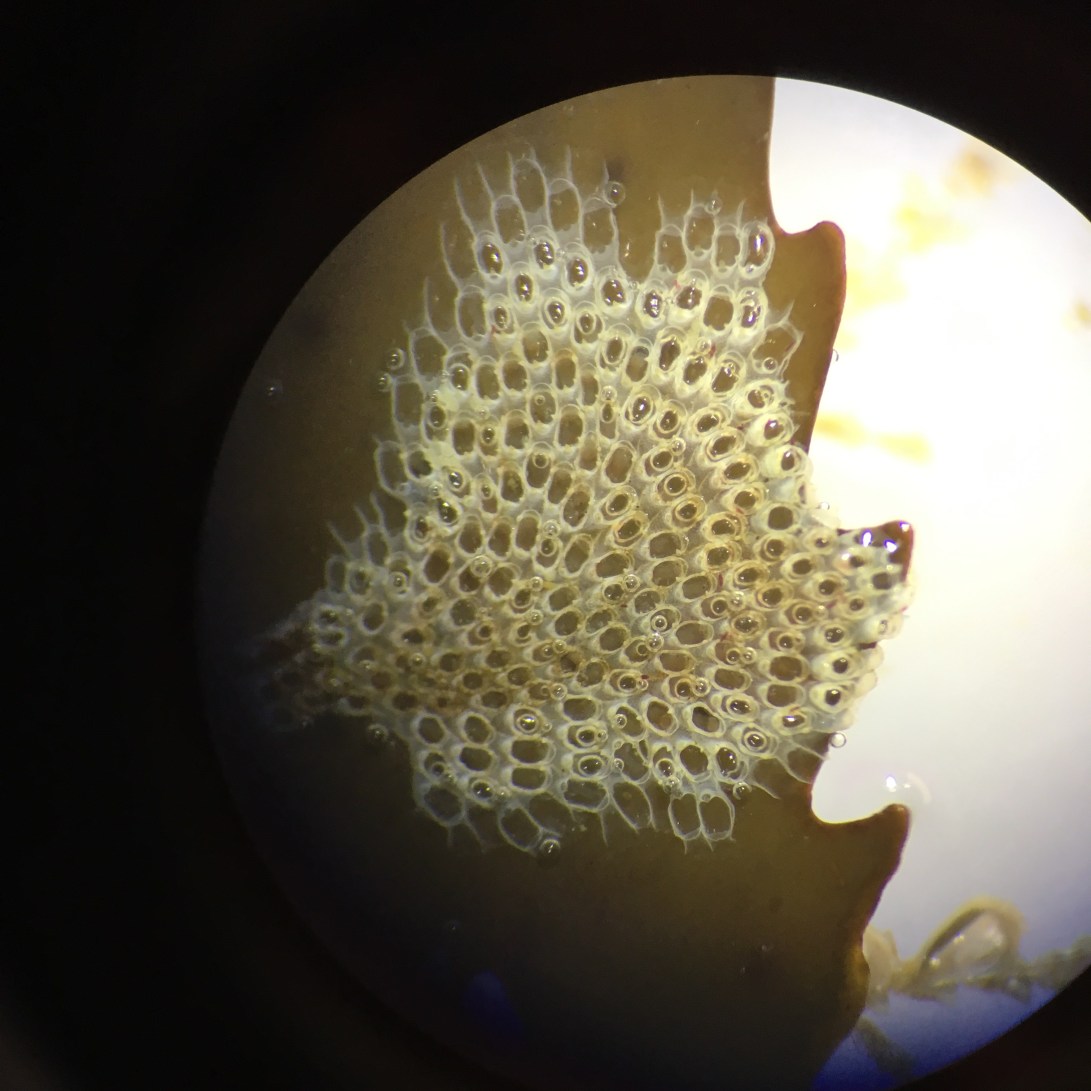
Once we’d covered as much of the bay as we could we ate lunch out in the sun (an excuse for some of the group to catch up with the goings on at the royal wedding) and then headed back to analyse our results and try to determine which biotopes we’d found. This was also an opportunity to play with lab equipment, which I haven’t been able to do since A Level Biology. I had good look at the bryozoa I’d found on a strand of seaweed (below). Bryozoa means “moss animal” and viewed up close reveals an intricate lattice of animals situated closely together. I studied these individuals for a while but couldn’t decide between Sea Mat or Hairy Sea Mat.

IMG_0606
A cluster of bryozoa: either Sea Mat (Membranipora membranacea) or Hairy Sea Mat (Electra pilosa)

After beating the queue and getting served dinner almost first, I went back to my room for much-needed downtime before bed.

Sunday 20th

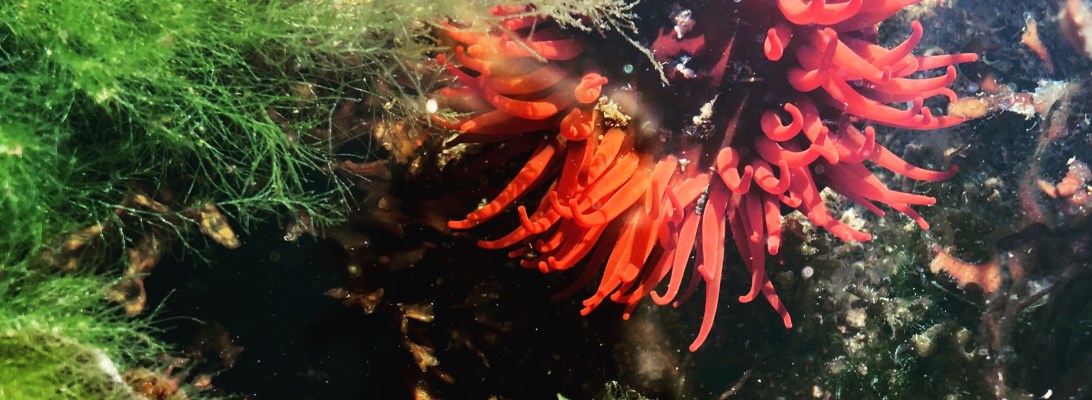
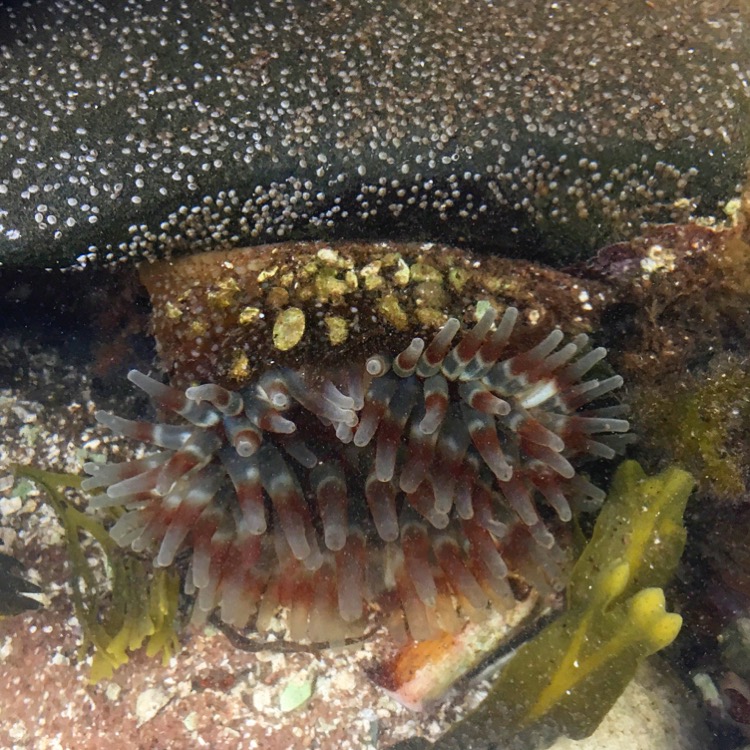
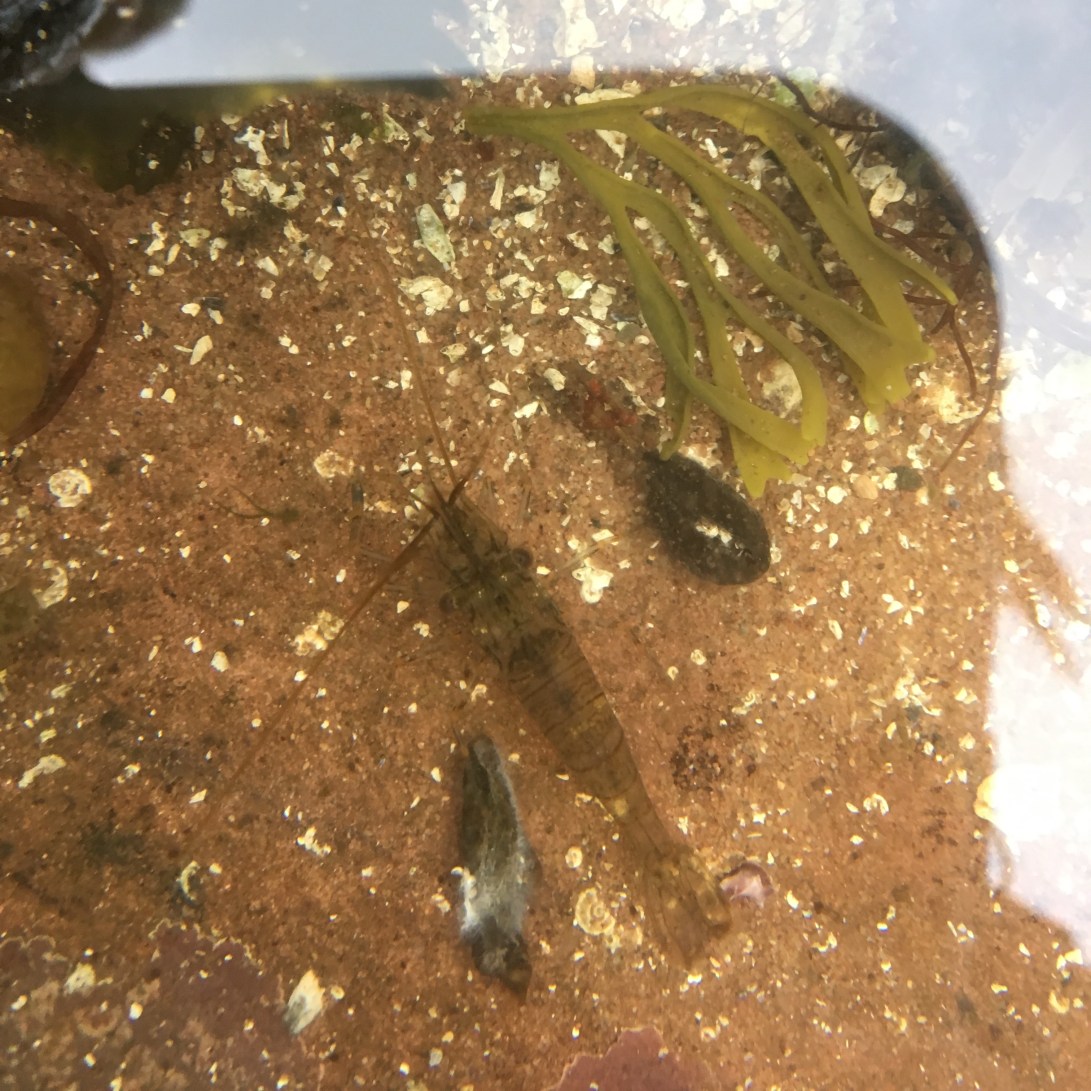
Today was another early start, and this time we drove the short distance to the northern end of Great Cumbrae to a much larger site. The weather was a little dreary but armed with quadrats, transects and clipboards we began to survey the biotopes. Findings started off slowly but once we reached the rock pools things really got exciting. Our course leader Paula found a slug species called a sea lemon – a very pretty blob – and a butterfish. Abbie, Alex and I found a sand goby, sand mason worm, lots of brittlestars, more hermits and beadlets, and my favourite from today: a dahlia anemone. It was the largest anemone I’d seen before, and had beautiful striated and brightly coloured tentacles that slowly emerged again once we’d calmed down to watch it properly. Just as I was squatting to try and get a decent picture, two common prawns appeared underneath a nearby rock. I didn’t know if maybe these were boring sightings but I recognised them from my volunteering at the aquarium so was thrilled to be able to confidently identify something in the field.

IMG_0684
Dahlia Anemone (Urticina felina)
IMG_0648
Common Prawn (Palaemon serratus)

Back at the lab, Abbie got to work identifying her seaweeds and Alex had an ID test to do for his assignment, so I had a bash at identifying today’s biotopes by myself. Once I’d done that, I realised I’d accidentally brought a tiny brittlestar home with my sea urchin shells. With Paula’s help, I identified it as Amphipholis squamata. Later, Paula asked us what we’d found, and Alex and I had got the exact same biotopes! I was so pleased with myself.

Dinner was Sunday roast and sticky toffee pudding. I must have put on about eight stone this weekend – I’ve been fed like a queen and although my brain has been working overtime, my body hasn’t done so much. After dinner we had our last round-up lecture and went to the bar for drinks. I ended up talking to the two guys from Belfast about Father Ted – it was pretty funny talking to Irishmen about it. I would have stayed longer but I was absolutely shattered. So I headed to bed, falling asleep almost instantly.

IMG_0607
Beadlet Anemone (Actinia equina)

Around St Mary’s

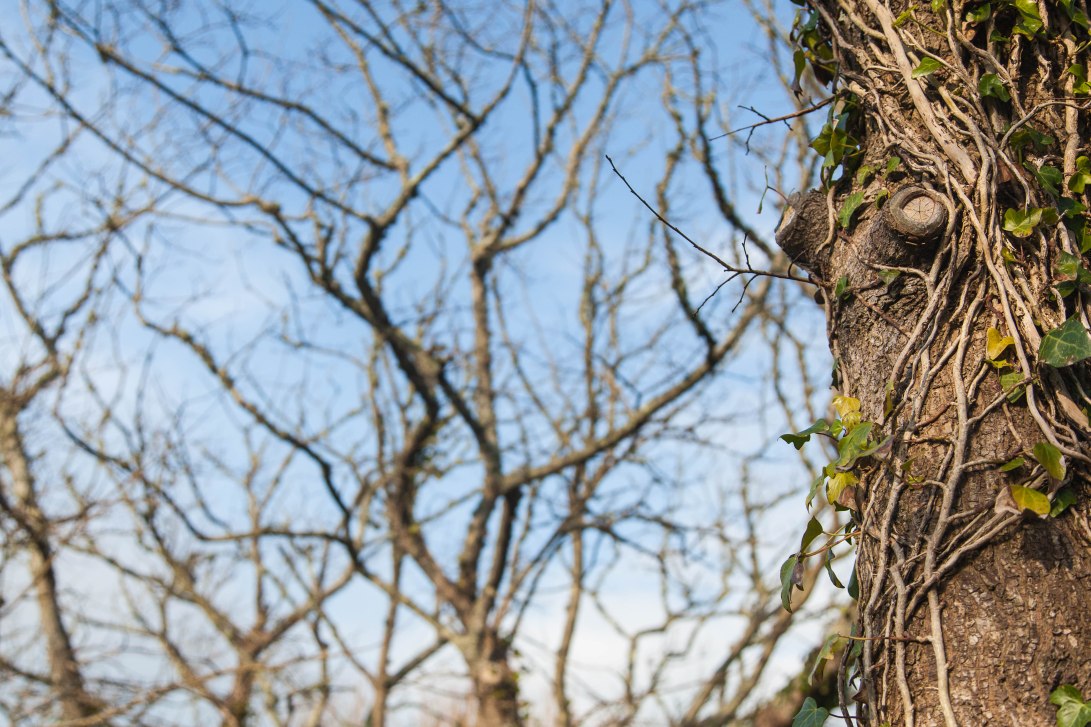
Today was slightly less eventful but still productive. I went for a walk to the Lower Moors of St Mary’s to find elm trees. Being so isolated, the elms on Scilly have successfully avoided Dutch elm disease, which has claimed all living elms on the British mainland. When I arrived at the spot on the map, I was quite shocked to see that although the elms were free of disease, they were covered from top to root in a thick coat of ivy. It was quite a disconcerting sight, but I had come to photograph live elms and here they were, so I experimented with different angles – shooting right against the trunk and looking up, focussing on a close section in the foreground and so on.

IMG_1635

I also found some beautiful patches of lichen so spent a lot of time photographing them too. Abundance of lichen was a good indicator of clean air. There is a distinct lack of dust and pollution on Scilly, and as a result there are forty different species of lichen on the islands. It can be seen growing on almost every surface, whether that’s tree, rock or garden fence. Lichen is what’s known as a composite organism, consisting of a fungal element for structure and an algal element for photosynthesis. This combination allows lichens to grow in a diverse range of habitats and environmental conditions. Sea ivory (Ramalina siliquosa) is a branched lichen – known as fruticose – that is one of the more common varieties, but there are also crustose lichens that form a tightly-clinging crust on rocks and foliose lichens which appear leaf-like, growing in lobes that are more-or-less parallel to the substrate on which they are found. Although I had no hope of identifying the lichen species I found on Lower Moors, it was fascinating to photograph them and see just how diverse they could be.

IMG_1267

Success!

I was back on Bryher today, having another go at finding the elusive dwarf pansy. As was becoming a daily ritual, I engaged in friendly conversation with my fellow passengers on the Seahorse as it made its leisurely way out of St Mary’s Quay.

“That’s a fancy bit of kit you’ve got there,” one man said, gesturing at the camera hanging from my neck, “What are you hoping to photograph?”

I told them about my mission to find the dwarf pansy, to which the man said, “Ah yes, such a shame about the flowers this year.”

I supposed he was referring to the recent snowfall, which had pushed the growth and emergence of the Scilly wildflowers back a few weeks. Still, I didn’t like his pessimism and although I smiled politely I was feeling confident. The weather had been and still was beautiful, and I was here to find the dwarf pansy. So when the boat docked and I hopped onto dry land I strode towards Rushy Bay with steely confidence. The sun was already beating down and incidentally I would later regret not covering my sore, red ears from that beating sun. Meanwhile, I was on my hands and knees peering at grass and getting some very strange looks from passers-by. I found my tiny purple flower from last visit, which I vowed to ask the tour guide about on my walk that afternoon.

By lunchtime my stomach was rumbling, so I tucked into my sandwiches and rested my sore knees. It really was a stunning day, and I had the beach almost to myself. A couple of holidaymakers were foraging for shells by the water, and every so often a dog appeared with a wide-eyed expression of sheer joy before loping back over the dunes.

IMG_0996-2

I decided to give the area one more scope before it was time to walk back to the quay and meet the tour group. Just behind the high grass was a group of binocular-glad walkers huddled together gazing at something on the ground. My heart leapt into my mouth and I hovered awkwardly where I was standing. Was it cheeky to go over and exploit their find? I hadn’t paid for their walk, after all.

But this was the dwarf pansy, so I made a beeline and gazed between shoulders to see Will Wagstaff pointing at a tiny white speck in the grass. I waited as patiently as I could, hopping from one foot to the other, for the group to take their turns photographing the pansy. Once they’d dispersed, I lay down on the grass and noticed there were two! One was fully open, the other was partially closed but still beautiful; in fact, it was a real stroke of luck to see two different stages beside each other.

The Red Ruby cattle mooed at me as I lay there, trying countless angles and focuses. A man and his son approached me and asked what I was doing. In moments we were talking about the pansy, my uni work, and he was amazed that I’d come all this way for a flower. After he’d moved off another couple appeared from Heathy Hill, and once again I showed them what I was so captivated by. Like all the others, they responded with the courteous “oh really?” and “wow!” but I could tell they weren’t nearly as excited as I was. I wanted to shake them and say they were not found anywhere else in the UK, only this tiny archipelago! I had to share my joy with someone who’d appreciate just how special the sighting was.

IMG_1064

So, as I hurried back to the quay, now nearly late for the walk, I rang my parents and wheezed my good news. They’d shared my worry and calmed my panics on the run-up to the expedition so were thrilled that I’d found what I came for. I was beaming ear to ear.

Once I got to the meeting place and Darren, the guide from the Isles of Scilly Wildlife Trust, told us our route, I realised we weren’t even going through Rushy Bay, so I would have missed the pansy completely! I was hesitant to call it fate, but if I hadn’t eaten my lunch where I did, I’d have been journeying back to St Mary’s very disappointed.

IMG_1167

Minimalism in Photography

Recently I discovered a photographer called Petros Koublis during research for my photography project. In preparation for my upcoming trip to the Isles of Scilly, I was exploring the theme of isolation, as on Scilly geographical isolation has resulted in extraordinary diversity of both flora and fauna. So, I want my images to convey this seclusion without the subjects looking barren. When I found Koublis’s work I thought how beautifully minimalist the images were, and yet still varied and intriguing. The beauty was its simplicity.

Petros Koublis 11

So I set out and tried to capture my own images where the subject looked isolated but was still thriving. Inspired by Koublis’s minimalistic approach, I concentrated on simple colours, repeating shapes and uncluttered compositions. Using my 60mm macro lens, I de-cluttered the frame even more and filled it with my subject while washing out any detail in the background.

IMG_9365IMG_9390IMG_9384

I almost always zoom in as tight as I can, especially when doing macro photography. There is a great urge to make your subject as large and detailed as possible, but often I’ve found that this removes all context from the image and it loses some impact. While it’s always nice to have a little mystery in photography, revealing a few secrets can bring even more magic to an image. For example, the lichen on the twig below was only a few centimetres in diameter, but with nothing to compare it to, all scale is lost. Now the image has been taken, the lichen could be any size and the challenge of getting such a tiny plane of detail in focus doesn’t seem as significant. Although the texture is still intriguing, the presence of something more familiar could only have added to the effect.

IMG_9401

So on another trip out I began to step back. Although I couldn’t achieve the same crisp detail with more distance between myself and the subject, I could begin to introduce context and place the subject into a scene. An isolated section of this terracotta brick could have been taken in a garden or even at a construction site, but with the border of dry pebbles and the blurred suggestion of ocean, the subject is put in a time and place. As all photography is subjective, those with a fine art approach might say context isn’t necessary, but I like the way this image is clearly of the coast but it isn’t conventional in its composition or choice of focus. It suggests the theme more subtly. Also, the absence of any other noticeable features conveys the isolation I’m interested in showing, and shallow depth of field draws the eye immediately to the subject.

IMG_9438

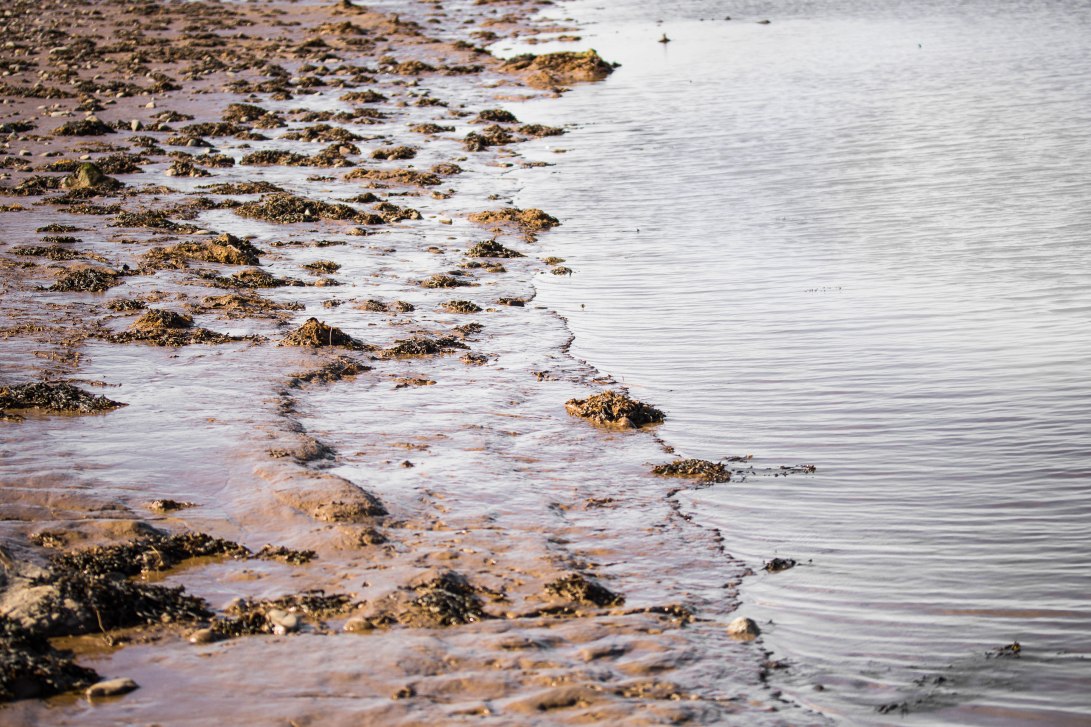
I’ve always been interested in shapes and lines in photography. Although perhaps a beginner’s cliche, a leading line is undeniably pleasing to look at. Here, the point of focus is the very centre of the image, with the tide line leading the viewer directly to it. It is loosely symmetrical, a technique I like to use to show balance and calmness in a scene. Here, there are two clear halves; one is almost completely lacking in detail except thin lines of movement from the tide, and the other has extensive detail. To emphasise this contrast even further, I desaturated the right half so even colour was absent from the water. I never excessively manipulate my photos as I like to replicate the true scene as much as I can, but subtle changes like this (when the colour of the water was almost grey anyway) can draw attention away from certain aspects in the frame to others.

IMG_9468

My Scilly expedition is fast approaching. I can’t wait to see what opportunities arise during my week’s stay on such a diverse archipelago. I think practice shoots like these will help broaden my creativity in preparation for a whole new environment.

The Avian Orchestra

There is an overwhelming quiet that comes with winter; a hush descends over the landscape that only adds to the bracing chill. As the season turns, the first few tentative voices break the spell of silence and before long there is an overpowering variety of diverse voices filling the air. While in the height of spring there can be hundreds of songs reverberating through the trees, there are a select few who can be heard again and again, reliable as the seasons. I took it upon myself to begin to tune in to this soundscape, a treat for the ears. Learning to birdlisten not only unlocks the ability to distinguish birds by song, but is also very useful as advanced warning for the reveal of the bird itself.

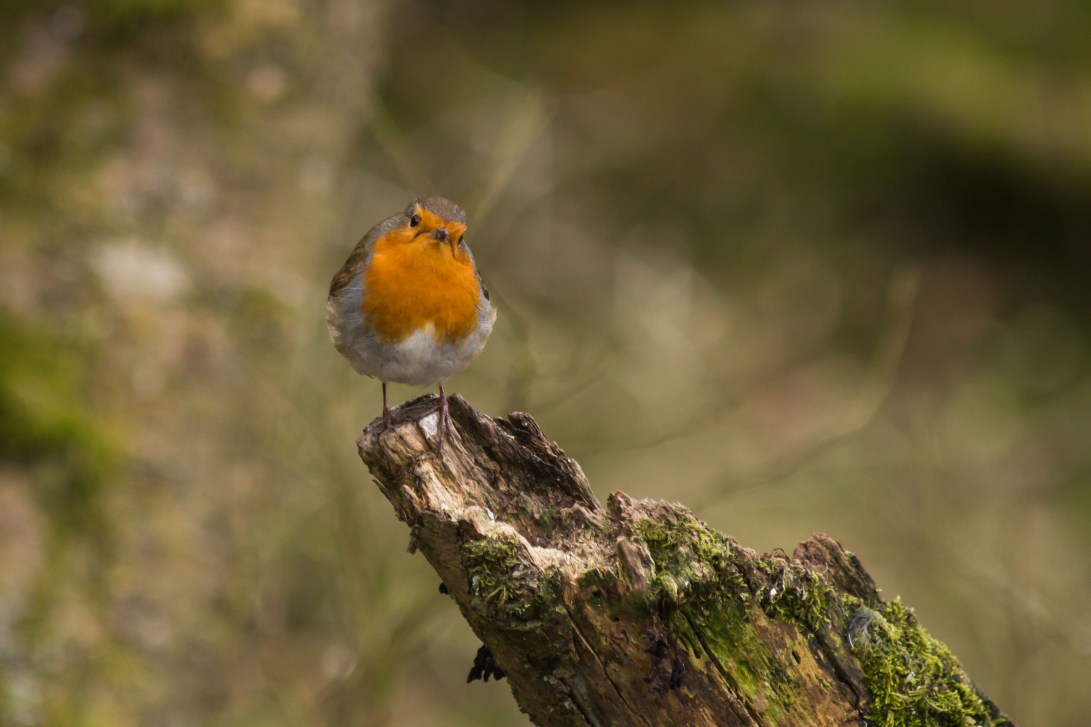
Robin (Erithacus rubecula)

Perhaps the most significant voice is that of the robin, mainly because he never left the scene when other, less hardy birds took off for warmer climes. Even through the dark, bitter winter the robin endures, his lone song often the only consistent sound during the colder months. In spring males and females pair up and defend their breeding territory, often the first to start singing and the last to finish.

The robin’s song is a delightful melody; a high, twittering burble heard from all around. Although varied in its range and tempo, the robin’s voice is almost unmistakable – high, thin and soft but still richly diverse. Hear the robin and he won’t be far away, perching in plain sight and puffing up his red breast as he fills it with air. He is a proud bird, often chasing other robins from his patch, but with a voice as pretty as his, who can blame him?

IMG_9114

Wren (Troglodytes troglodytes)

Another commonly heard voice belongs to a rowdy bird that makes up for small size by belting out a piercing song for everyone to hear. The wren can often be seen speeding bullet-like through knee-high bushes. The wren sings like it’s scolding somebody; a furious round of high, loud chirrups with a distinctive trill at the end of some phrases that sounds like a miniscule machine gun. If you hear a very loud song wait for the trill, as it will inevitably come sooner or later and you’ll know you have your wren. Scan the lower branches and before long a stout brown bird holding its tail up like a stiff flag will appear, giving you a fierce reprimanding for something or other.

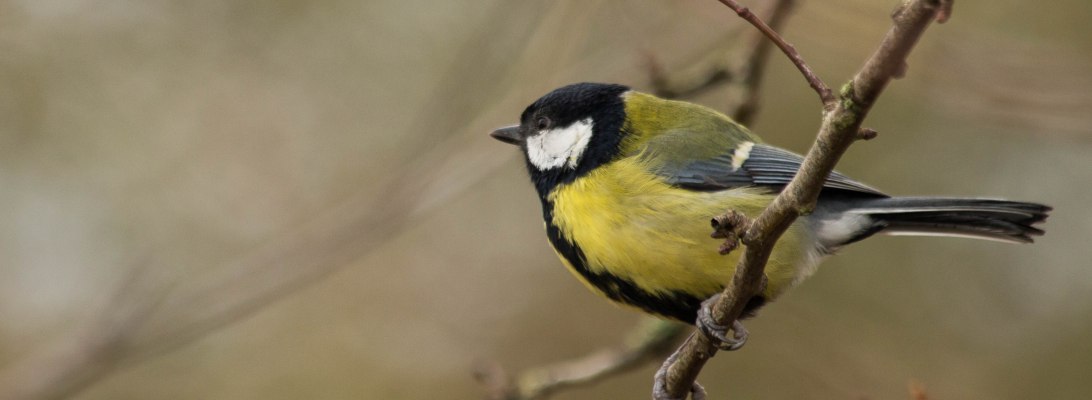
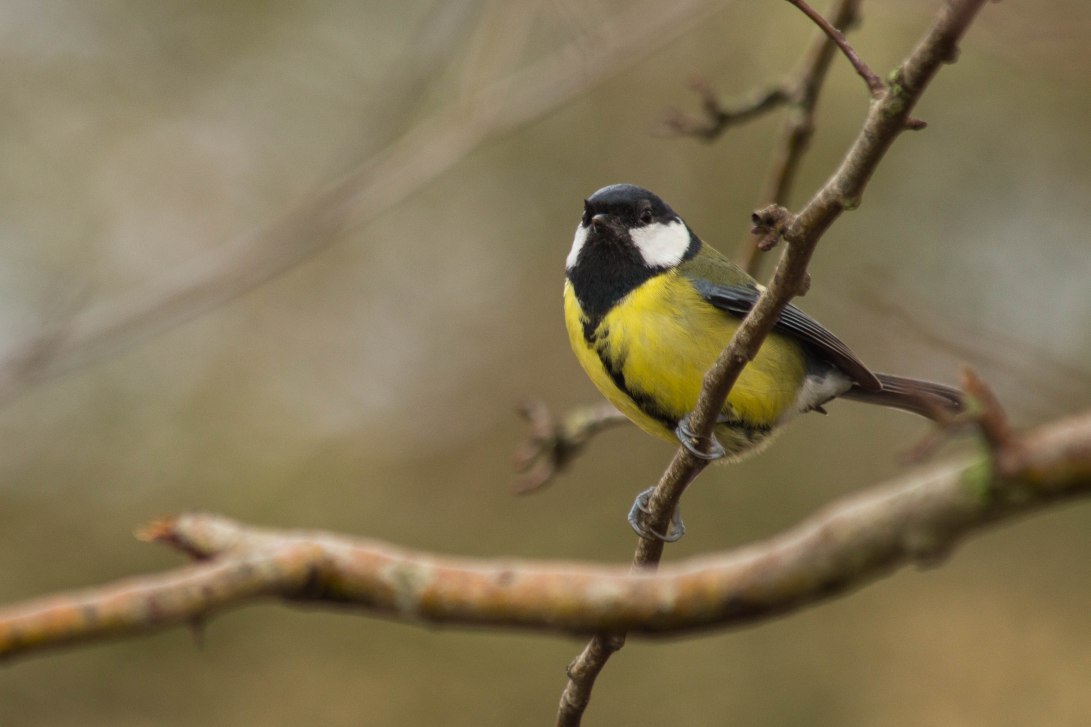
Great Tit (Parus major)

If robins and wrens are violins in the avian orchestra, the great tit is percussion; not quite as dazzling but just as important. In early spring, a two-toned call can be heard among the other singers, with emphasis on the first syllable. I like to think of it as the sound of a saw – effort on the forward stroke, then quieter on the draw back. After a few strokes of the squeaky saw there is a pause, and then the great tit sings it again, very resiliently as if rousing the troops to join in.

The great tit has other songs in its repertoire, including a “churr” call that reminds me of the chatter of a magpie, but a little faster and far gentler. This is the great tit’s alarm call, a sign of agitation that indicates something has disturbed it.

IMG_8751

Blue Tit (Cyanistes caeruleus)

With a lot of birdsong, it can help to adopt a Morse code approach when it comes to deciphering the rhythms of some particular species. Take the blue tit. A common little bird with splashes of blue, green, yellow and white with a fetching black goatee. The blue tit’s song is similar in tone to the great tit but gentler. Among its quite varied repertoire is a particularly distinctive melody, consisting of two clearly separated notes followed by two or three much faster ones. In dots and dashes it would look something like this:

– – . . .

Imagine, perhaps, that the bird is saying “I’m. A. Pretty Bird”, putting particular emphasis on the first two words.


If you like this, have a read of this post and find out where my inspiration to start birdlistening began.

Living off the Scilly Land

For my final major project at university, I am journeying to the Isles of Scilly for a photography project on this wildly diverse archipelago. My focus is currently the unique wildflowers of the islands, some of which are not found anywhere else in the UK such as the dwarf pansy. However, to broaden my understanding of Scilly (and also because it recently snowed there which has made me question my chances of seeing wildflowers next month), I have been researching how the first human residents used the land and its resources, which in some cases are vastly different ways to today.

  • During the Neolithic period, tribes were known to mark their presence on the islands using large stone monuments known as megaliths. These were for ritual or territorial purposes.
megalith
A megalith at Castle Down, Tresco (Source: The Megalithic Portal)
  • Wars and disputes subjected the inhabitants of Scilly to poverty and famine. One method of surviving such lean times was to forage seaweed. In 1684, production of soda ash from seaweed began, a material used to make soap, bleach and glass for the mainland. This practice lasted well over a century, and must have had disastrous impacts on wildlife.
  • The Bronze Age saw the first permanent populations arrive from west Cornwall. They fished, farmed, hunted and scavenged all sorts of foods to make their living. Birds such as razorbill, guillemot and even ravens and swans were hunted for their meat. Seals and the occasional whale were hunted to supply oil used for lighting.

IMG_9258

  • Fishing was a vital source of food all year round, and once caught the animals were dried by the wind or salted for preservation. A vast amount of limpet shells suggests they may have been used as bait, and scallop shells to hold lighting lamp oil.

IMG_0979

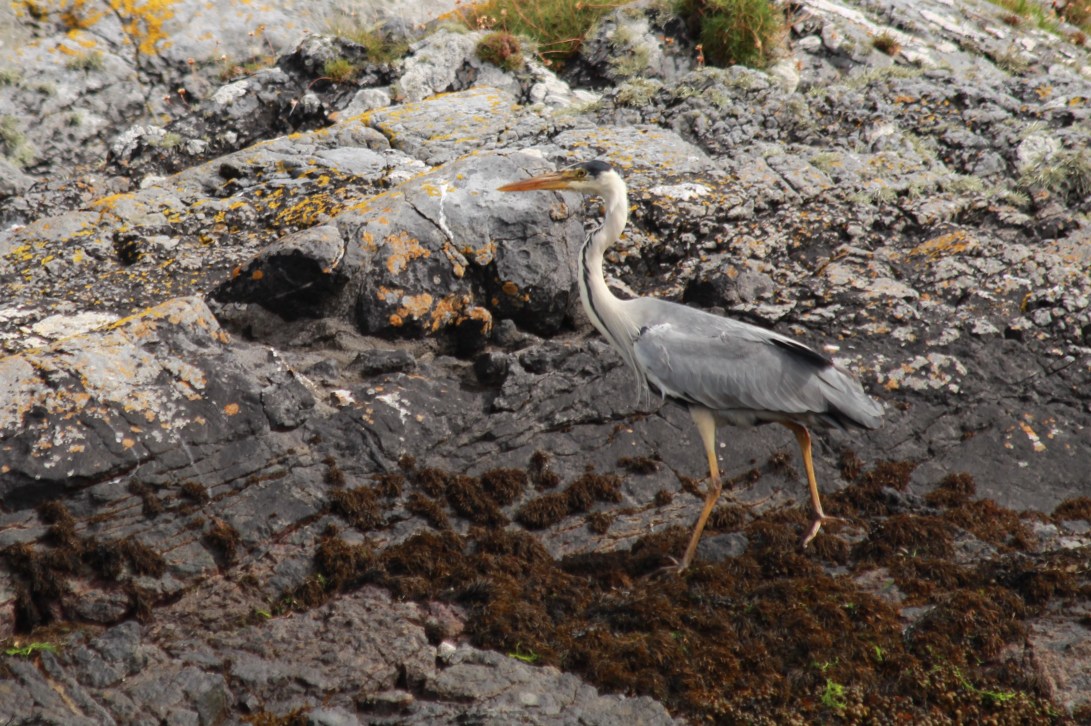
  • By the time of the Roman invasion of Britain in AD 43, red deer had disappeared and dogs and rabbits were introduced. The birdlife grew in variety, suggesting the environment was changing. New bodies of water attracted fowl such as bittern, heron, snipe and more excitingly, evidence of chough. Remains of what are believed to be these birds and dating back to the 2nd century AD were discovered on St Martin’s.

IMG_9145

  • The Duchy of Cornwall was established in 1337, when the title of Duke was granted to the Black Prince. Payment for a ledger dating from that year was 300 puffin, giving the impression that these coastal birds were a lot more abundant than in modern day. The puffin was highly valued, considered a fish instead of fowl, which allowed it to be eaten during Lent. Five hundred years later, although the monetary value of Scilly hadn’t been altered, the exchange rate for puffin had surged by 600% to fifty birds.

Incidentally, all of my photos in this post were taken in Scotland, but here’s hoping next month I’ll be capturing some Scillonian versions!

The Freeze

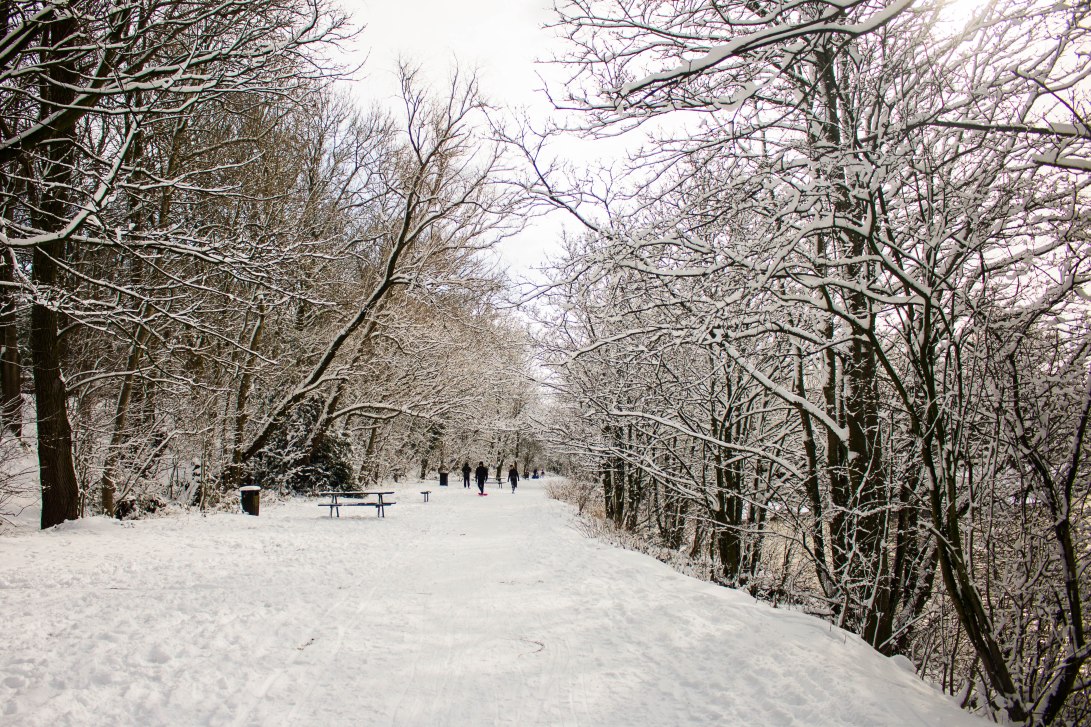
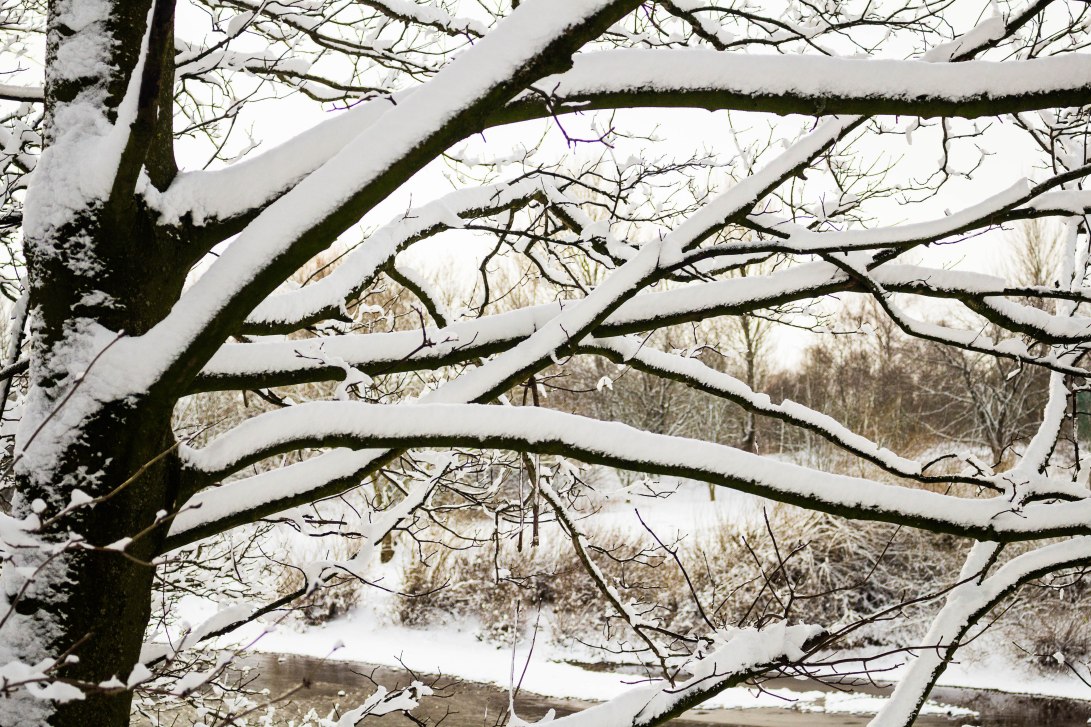
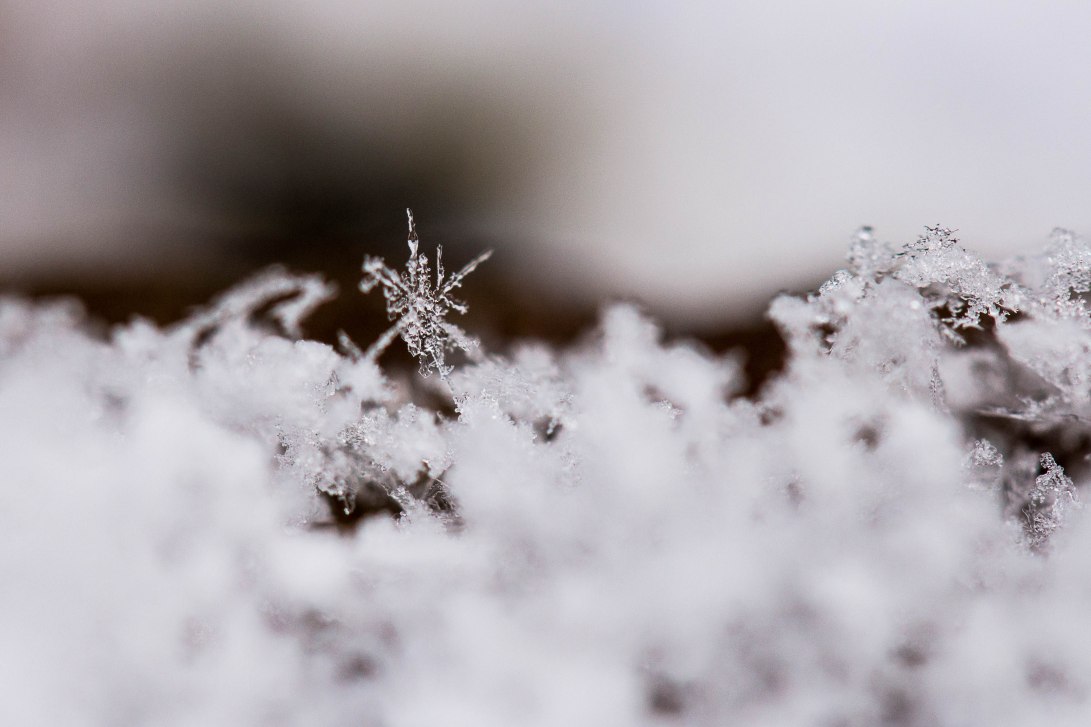
The snow was here again. It descended from the skies in heavy drifts, flakes swirling as they came to rest. All through the night the snow fell, dramatically silent, and when morning came everything was smothered in pristine white icing: irresistible.

IMG_9050

Outside there was a chill that tightened the lungs, so cold was the air that even breathing in felt like getting smothered in snow. Each branch was cloaked, giving the impression of an overly enthusiastic artist splashing every bough with thick white highlights. Undisturbed snow on the sides of the track glistened, catching the light and sparkling with wintery luminescence. On the cusp of March, it was more of a spring wonderland than a winter one, and yet it could have easily been Christmas morning.

IMG_9046

Up in the trees, a whisper of falling snow betrayed the presence of a blackbird, sending tremors up the branch that dislodged loose flakes. A male, black feathers stark against his festive background, spotted with rich red berries and the undersides of dark leaves. He chirruped softly, his song more melancholy than it should be.

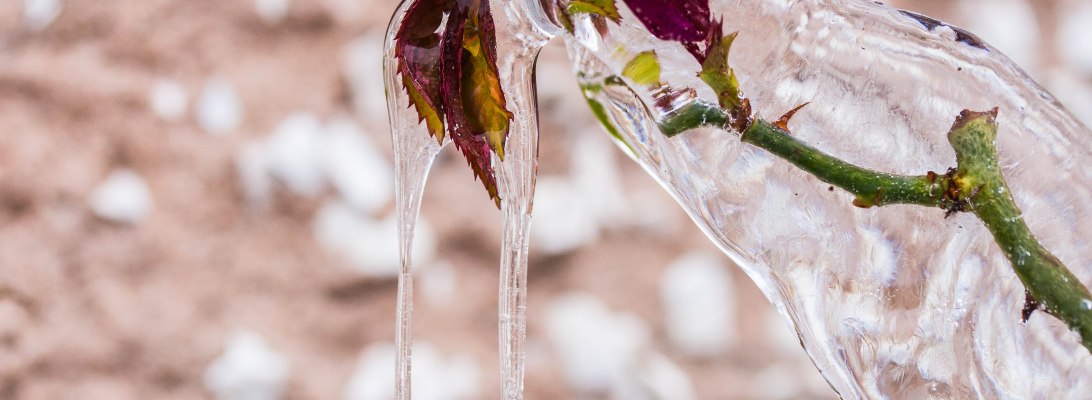
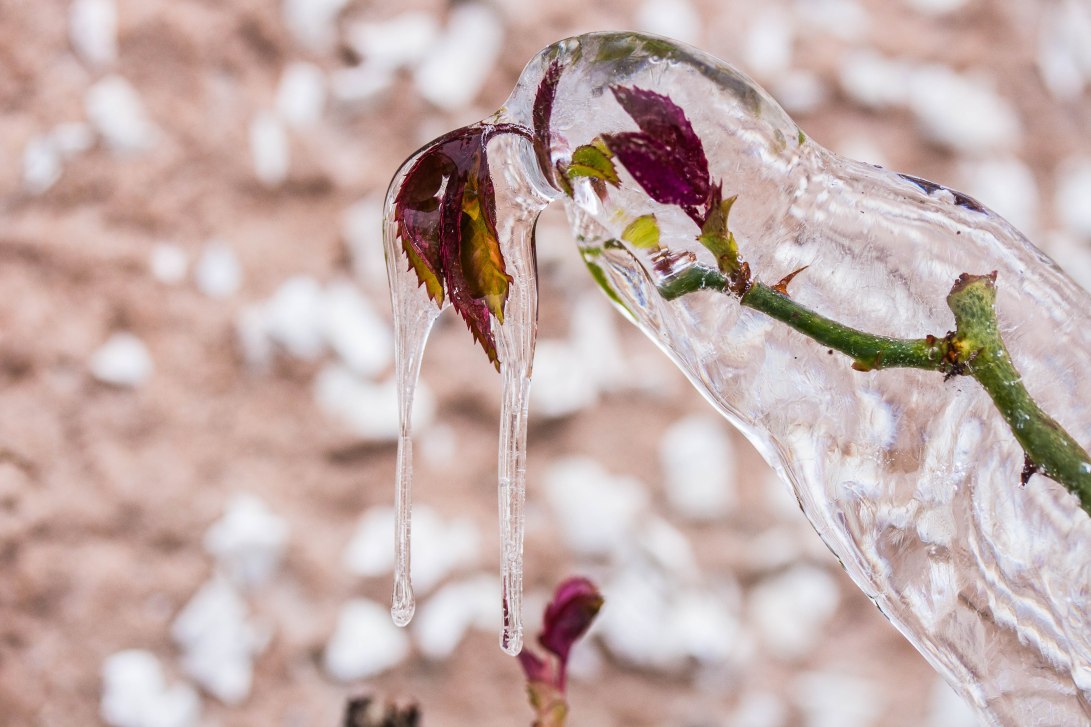
A man passed me on his bicycle, his tyres crackling like static feedback that faded as he disappeared. The landscape quietened again, a deafening silence only found with snow, when the world stops and waits with baited breath for this unexpected phenomenon to pass. It is a time when even nature stands still. Water is stopped in its tracks, defiant of gravity’s pull.

IMG_9063-2

Sloping down the bank to the river was a series of deep tracks, dogs mingled with hopping birds. The ever-falling snow began to repair the damage, forming undulations of half-hidden footsteps with softened edges. A wren sped past, trilling its bold song that seemed too big for its tiny lungs. What must the birds think? Have they anticipated this, read some sign in the climate to help soften the blow? The already challenging task of finding food in winter just became more trying, a test of strength and endurance in such temperatures.

IMG_9012

After a while my feet began to grow numb and my stomach rumbled. As I trudged back up the track, curving away from the coursing, white-framed river, I thought how I would snuggle up in my warm house with something to eat. I glanced back over my shoulder and saw a song thrush foraging. It had a snail pinned in its beak, and was cracking the shell hard on a rock. Such work the birds put in, when all I needed to do was open a can of soup and I’d be warm.

Back at the house, I peered outside and saw the feeder swinging empty again. Thinking of the blackbird, wren and diligent thrush, I hurried into the garden and replenished the feeder with rich fatty seeds, sprinkling some on the ground for those too heavy or timid to feed from the plastic perches. The birds needed all the help they could get.