Learning to Dive – Part Two

On the second day of Open Water weekend (read about Day One here), I awoke to the alarm feeling a lot more confident. We were halfway through, with two dives down and two to go. The weather had deteriorated slightly and as I waited for the morning briefing it began to drizzle, but hopefully that meant the day would be slightly warmer (I was clinging to any silver lining).

My wetsuit was still damp from yesterday, so dragging it up my legs was even more impossible than usual. It was the reverse of a snake shedding its skin, and as I hopped about and contorted my limbs I couldn’t help feeling extremely silly. Finally it was on, and I doused myself in hot shower water in a vain attempt to warm up before facing the quarry.

Dive three was the most daunting, as it required a longer list of skills, including the dreaded mask removal. Perhaps I was jittery from nerves, because as I began my descent pain shot through my right ear and I hovered, trying and failing to equalise my ears. As you descend, the increased pressure compresses air spaces in your ears, sinuses and mask. Failing to add air to these spaces can cause serious injuries. I eventually had to resurface until I could equalise, then made my way back down. It was a setback that I tried not to concentrate on, especially with my least favourite skill coming up.

We gathered on the platform and took it in turns to fully flood our mask and take it off. I disliked this skill so much because the air bubbles that gather underneath the nostrils feel like water shooting up your nose. When I attempted this in the pool I had the sensation of not being able to breathe; quite a daunting prospect when you’re seven metres underwater and definitely cannot shoot up like a cork to the surface. In preparation, I’d been putting my face underwater in the bath and breathing through a snorkel, and although it triggered several involuntary swallows I could just about manage it.

Taking a deep breath, I pulled the strap over my head and held my mask away from my face, placing it back over as soon as I was allowed. Feeling very pleased with myself, I ran a finger around my hood to check the seal and cleared the water out ready for the next skill. But as we made to swim off the platform, the mask flooded again. I cleared it, and water immediately trickled back in. I signalled to the instructor who checked the seal and couldn’t find the cause of the problem, so once again we surfaced and I made absolute sure I’d sorted it out.

As I descended for the third time on the same dive, I reflected that I’d encountered an unforeseen problem and dealt with it without panicking; I had made serious progress since my first session in the pool. The rest of the dive passed with no further mishaps, and as I had my fifth hot shower of the day I finally began to relax. Our fourth and final dive wouldn’t be full of tests and I could enjoy the experience of feeling weightless in water and exploring Stoney Cove.

After a brief time on the surface and a delicious cheeseburger at Nemo’s, we took a giant stride back into the quarry. We’d planned dive four ourselves, and led the instructors down to the aircraft cockpit and along the shelf that tumbled down to 22m on the other side. Staying firmly away from the edge, we swam across to the Nautilus again and back to the platform, where we gathered for the last time. Alan, the instructor, had an underwater notebook with him, and one by one turned it to face us. I don’t think I’d ever been so happy to read the words:

“You’ve passed. Congratulations!”


To Catch A Fly

Fly agaric, or Amanita muscaria, is perhaps one of the most recognised mushrooms in the UK. It is often used as perching posts for pixies and gnomes in storybooks, and can regularly be seen bringing a spot of colour to the forest landscape. With its blood red cap and white spots, it’s almost unmistakable. Fly agaric can be found from late summer throughout winter, dotted around birch, spruce and pine trees.

As is often the case in the natural world, pretty means dangerous. With a name derived from its ability to kill flies, fly agaric has been widely used as an insecticide. It is a poisonous mushroom known for its hallucinogenic properties but, despite this, it has been a part of religious tradition for thousands of years. In Hindu practice, fly agaric was supposedly used to produce a psychedelic drink called soma, taken as part of religious ceremonies to increase one’s awareness and evoke sensations of bliss, poetic inspiration and even immortality. However, there has been disagreement among modern scholars over the exact ingredients in this psychoactive beverage. Soma has been described as containing a plant with leaves and flowers, contrast to fly agaric.

Elsewhere in ancient history, fly agaric was consumed in potion-form by Vikings in the 8th century, allowing them to fight in battles with increased frenzy. And of course, Alice used the mushroom to change her size in Wonderland, after being instructed to do so by a smoking caterpillar with a ‘languid, sleepy voice’.

Though perhaps this wouldn’t be the recommended theme in modern children’s literature, it shows that the mysterious fly agaric has woven a complex and intriguing story through the ages. Now, as autumn descends, the fungi season is in full swing. Fly agaric sits radiantly among more drab varieties of mushroom, its vibrant colour a dangerous lure. It is a specimen that has fascinated us for centuries, and will continue to intrigue long into the future.

IMG_1026-2

Up in the Air

The plane roared to life and I experienced the age-old feeling of excitement whenever I fly. As we chased the runway and the plane slowly lifted, I pressed my face to the window to see the ground fall away. I will never tire of that feeling of utter weightlessness – the peculiar thought of something so bulky taking to the air.

I’d been invited onto my boss’s plane for a morning trip to Naples, a city in southwest Florida looking out onto the Gulf of Mexico. We were flying to break in a new engine, and planned to refuel in Naples before returning to Yulee. It was a whistle-stop state tour, a four hour round trip that would take twelve in a car.

Within moments of take-off we were over the beach – long piers stretched out into the sea like the teeth of a comb. At 9am on a Saturday the beach was almost deserted. It was a treat to see so much uninterrupted sand before the tourist tide came rushing in.

We curved back inland and passed over a maze of river and marshland that I had already explored by boat, but this time we were too high to look for egrets. The only movement was the white streak of a lonely boat as it navigated the watery trails. I wondered how many alligators were down there, then decided not to think about that.

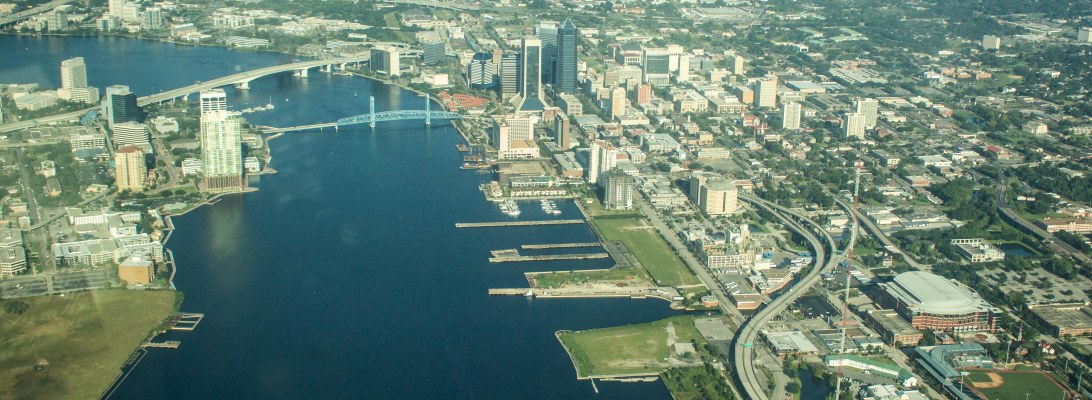
The marshy solitude of Amelia Island dissolved into towering office blocks, and I soon recognised downtown Jacksonville. There was the Landing, where I’d been just a week before the shooting. It had been enough to dissuade me from visiting downtown again, but I still had fond memories of the river walk, the MOSH museum and the topaz blue water of Friendship Fountain.

Leaving vast, sprawling Jacksonville behind, the landscape was soon dominated by trees again. Green was undoubtedly a primary colour in Florida – a patchwork quilt of field and forest stretched as far as the eye could see. In some places the trees were confined in tightly packed cubic parameters. In others, they were sprinkled sporadically. Criss-crossed over it all were the highways, dead straight lines in parallel and perpendicular.

Fluffy cumulus clouds were gathering, and a rather ominous feeling began to grow in my stomach as we bumped over them. Sunlight poured into the stuffy cabin, which did nothing to suppress my queasiness. Because of the new engine, we had no choice but to fly low. While the views were still stunning, I was somewhat distracted by the turbulent ride, and as Naples came into view I couldn’t help feeling slightly relieved that we’d be getting out of the clouds.

Once down on the ground, we stopped just long enough to stock up on drinks – fuel for the plane, a Gatorade for me – before taking off again, back through the spectrum of concrete jungles and green wildernesses.

The Greenway

The Egan’s Greenway is an unexpected jungle in the middle of smoke-belching industry and deckchair tourism. The mundane sounds of traffic are deafened by the furious chatter of cicadas – enormous insects that seem prehistoric. Their strange call is like the sound of angry water sprinklers, growing louder and faster until it reaches an alarming tempo, then abruptly stops.

IMG_0497

At first light the Greenway is sharply divided into light and dark. The dense, impenetrable forests are still cool – the trees in muted greens – but out on the marsh the grass is alight with fiery golds and oranges. Naked trees poke the sky with sharp limbs white as bone, while beside them sway lush evergreens. It is a land of stark contrast, a spectrum of vitality and decay. Time passes here with the tick of the cicadas.

IMG_0560

The day warms up, throwing a shimmer onto the surface of the creek. Here there be dragons, some cruising between reeds on transparent wings, others scrambling up trees with long claws. A flash of movement and then a disappearing act, they blend seamlessly into their surroundings. Just a flick of the beady eye will give them away, and then they will shoot off into the undergrowth.

IMG_0638

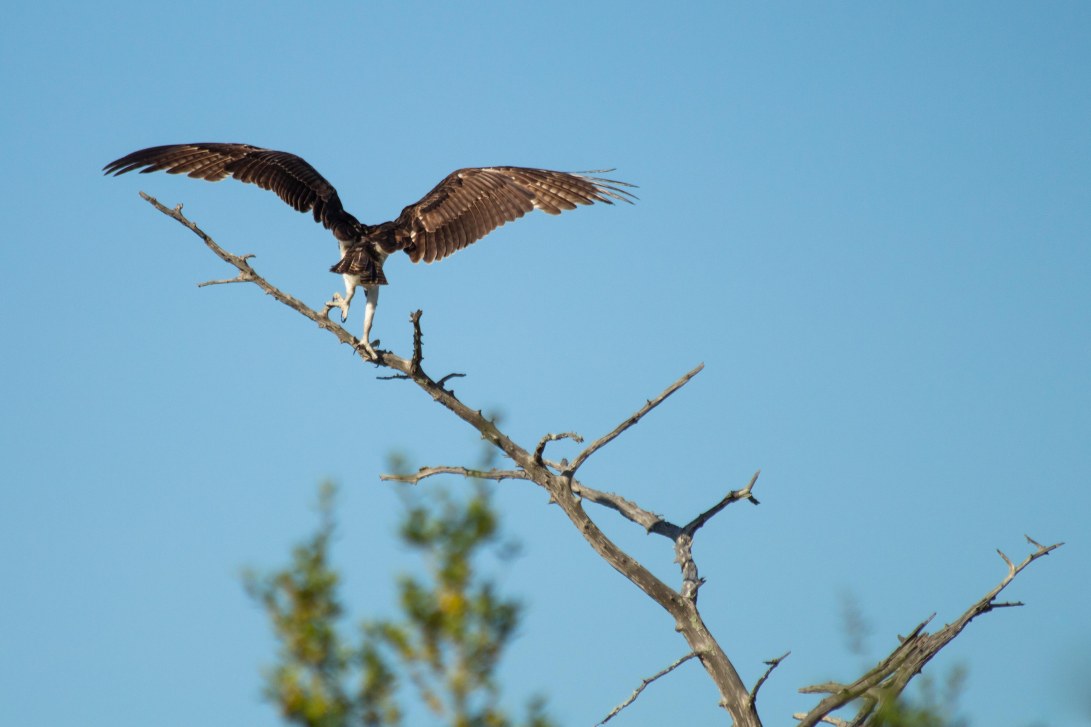
Other beasts can be found higher up. Perched on the skeleton fingers are ospreys, scanning the creek in every direction. One takes to the air and its mate follows. Together they wheel in deep circles, overlapping in smooth figures of eight. A wood stork, large enough to be unfazed by the raptors, joins their sky with dark wings barely flapping.

IMG_0582

Then, a real dinosaur. A creature that survived what forty-metre sauropods could not, almost unchanged for millions of years. This one is only small, an arm’s length perhaps, but even so it floats beneath the water’s surface with the stealth of an adult, startling green eyes always watching. A glance away and back again and it has disappeared, moving across the creek without a sound.

Where is mum? Perhaps it is best not to stay and find out.

IMG_0656

Searching for Spoons

After so much excitement, I’ve neglected my camera recently and wanted to finally spend some proper time searching for Florida’s wildlife. I’d been told about a good spot for wading birds, and knew that the inhabitants included my new favourite bird, the roseate spoonbill. I set out before sunrise and reached the water just as the sky was beginning to lighten; pinks and oranges blending with blue.

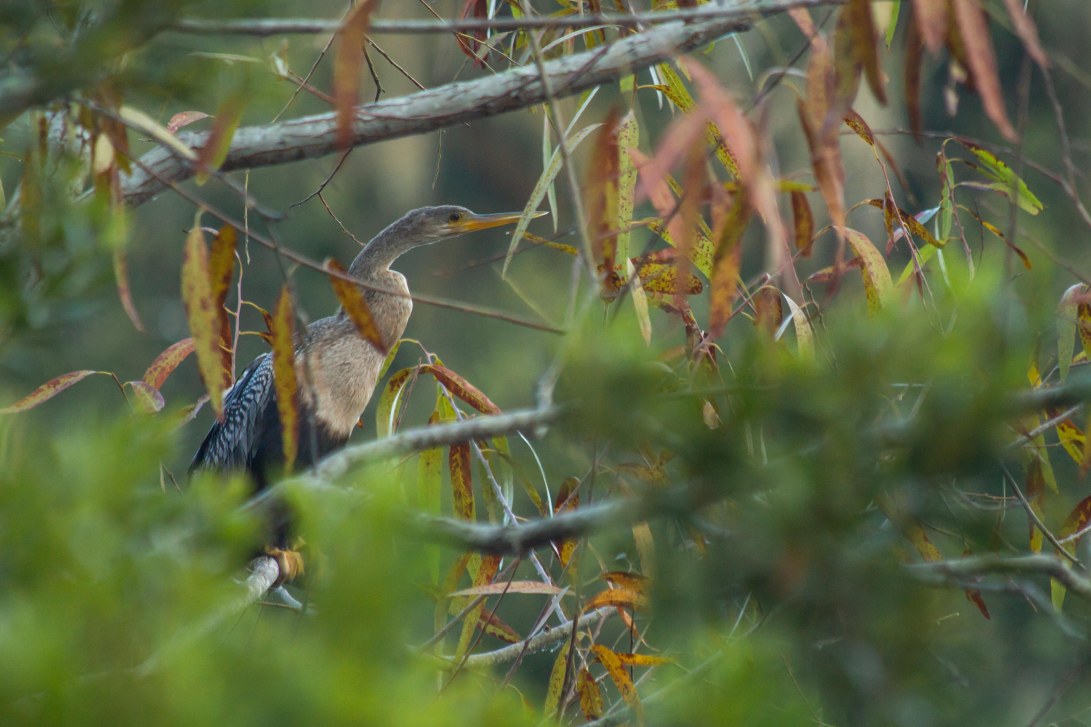
My first sighting was almost immediate. Perched on a branch overhanging the lake and peering curiously as I wound down the window was an anhinga. With both heron and cormorant-like features, anhingas spear fish under the water with their long, sharp bills. The name originates from the Brazilian Tupi language and translates as “devil bird”. I don’t quite see the devilish resemblance – I found the anhinga delightful, especially when it shook out its striped wings. Like cormorants, anhingas hold out their wings after swimming to dry them. This one looked like either a female or a juvenile, as males are jet black with silvery streaks.

IMG_9976
Anhinga

IMG_0044

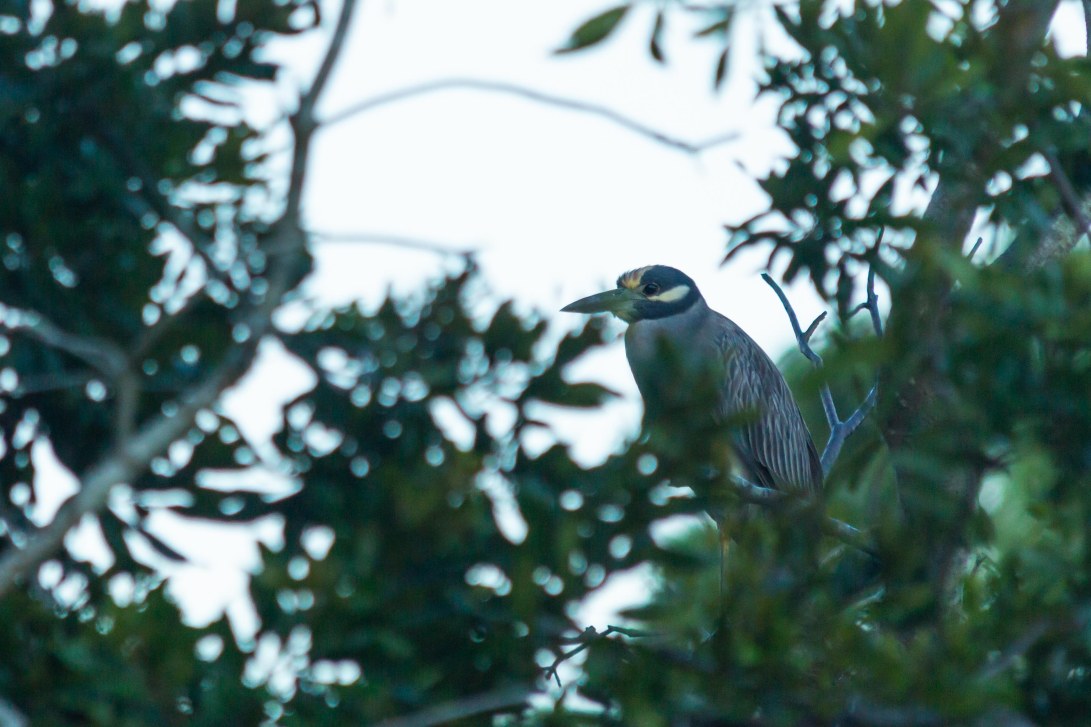
Soon the anhinga was joined by a yellow-crowned night heron, shoulders hunched down as if with cold. With a white cheek patch and a pale crown of feathers that looks more white than yellow, the yellow-crowned night heron is actually nocturnal, so I must have been really lucky to catch a late glimpse just before the sun emerged.

IMG_9936
Yellow-crowned night heron

Elsewhere in the tree was a green heron, who was more brown than green so was perhaps a juvenile. Apparently, green herons are known to throw insects into the water to encourage fish to the surface, which is genius and must look amazing to see.

IMG_9938
Green heron

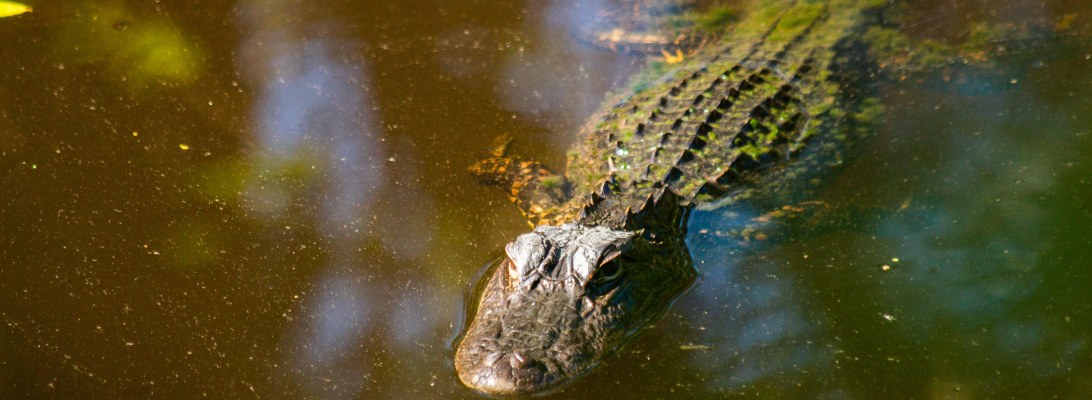
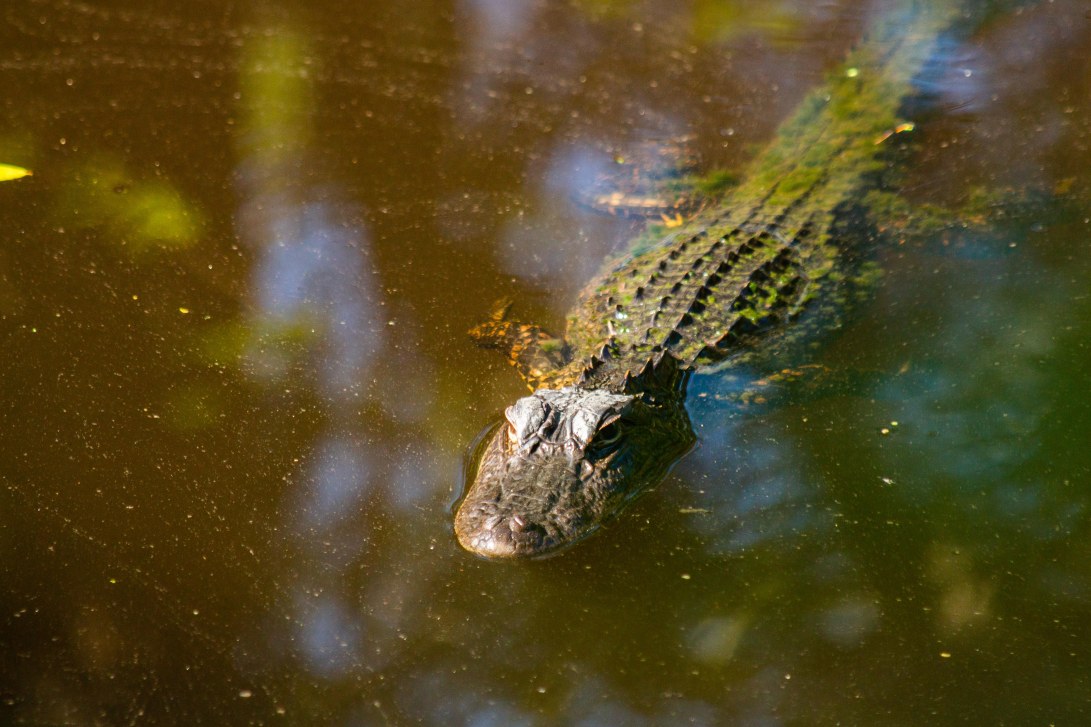
Suddenly a snowy egret burst into view, legs dangling and panicked wings flapping. There was a deep, kronking call as more birds surged upwards. Puzzled, I glanced around for signs of a raptor, when a disturbance in the water caught my eye. There, gliding without a sound, was an alligator. My first alligator! I could hardly contain myself. All I could see of it was a pair of eyes and nostrils, so I had no idea how big it was, which was perhaps more nerve-wracking than seeing the whole animal. Even from the safety of the car my paranoia imagined the alligator leaping headlong at the open window, but it just cruised out of sight and the birds soon calmed down.

IMG_9951
Alligator!

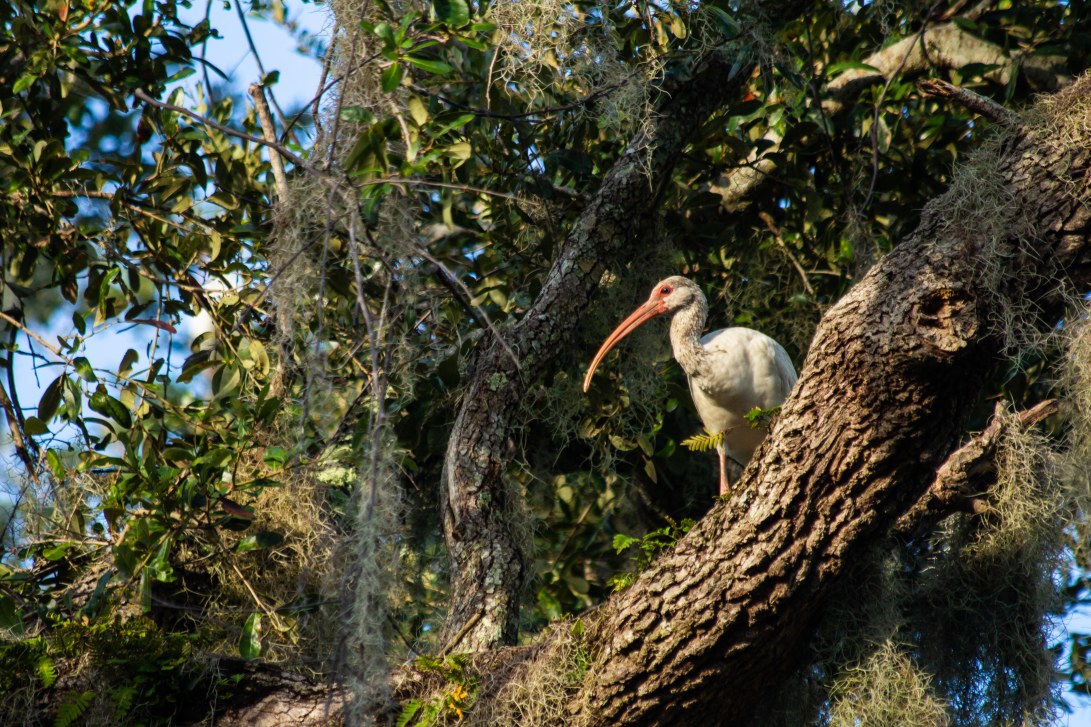
I wandered further on to try and find a spoonbill. There was a loud rustling above and I looked up to see the trees absolutely covered in white ibis; wading birds that gather in large groups all across Florida. I was spoilt for choice for photos. Although they’re not the prettiest of birds, their long, red bills still looked impressive, especially when they all took off in one simultaneous swoop. In the absence of car engines and people this early on a Sunday, the only sound to be heard was the wind in their wings which sounded so magical.

IMG_0051
White ibis

IMG_0173

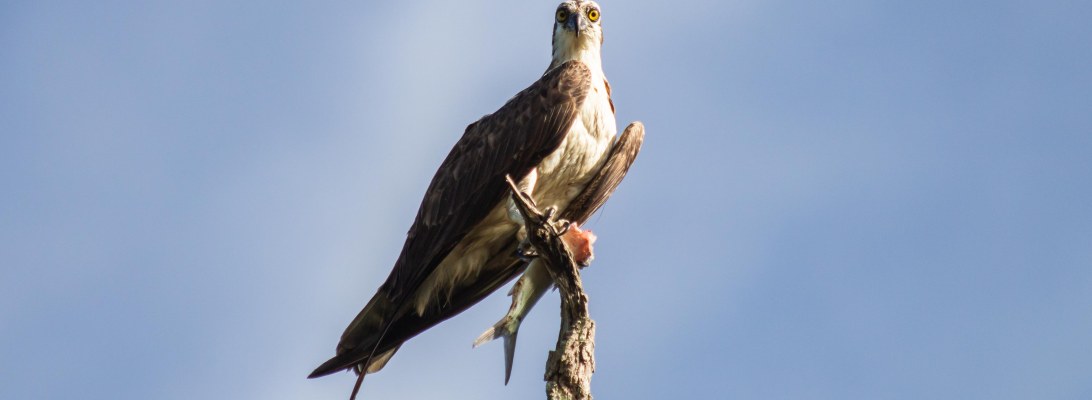
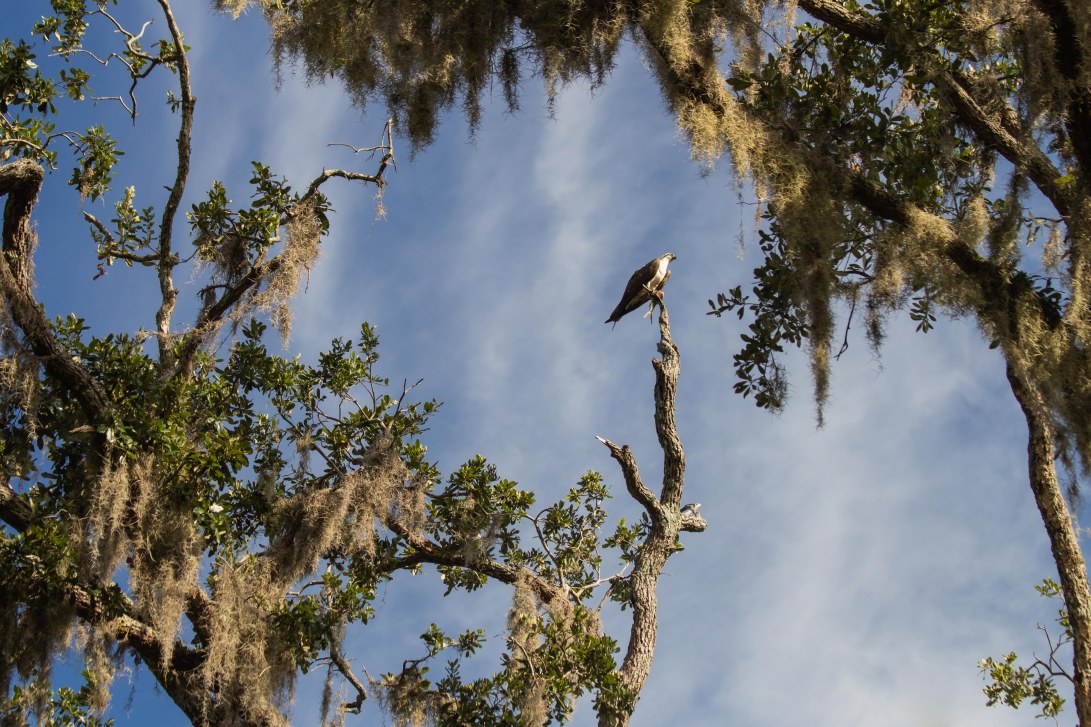
After watching them leave I wondered what had scared them off. Once again I scanned the trees for signs of a raptor and this time I found one: a stunning osprey with a fish in its claws! I’d only seen ospreys once before in Scotland, all the way across a loch that made taking photos quite the challenge. This osprey, however, was a tree’s height away and sat in a perfect patch of sunlight that made its yellow eyes dazzle. It spotted me straight away and watched as I took photo after photo. Eventually it gathered up its breakfast and took off, just as the first dog walker came into view.

IMG_0146

IMG_0138
Osprey

At 9:30am it was already getting too hot to be out without a hat, and my hastily eaten bowl of cereal at 6am seemed far away. I’d loved to have found my spoonbill, but having seen a bonus osprey and alligator I was far from disappointed. I’d just got back to the car and was fumbling for my keys when I glanced up, and by some miracle there was a spoonbill perched at the very top of a tree. It was the pink cherry on an incredible cake.

IMG_0187
Roseate spoonbill

IMG_0203

More to See, More to Zoo

Last week I visited Jacksonville Zoo, which boasts “more to see, more to zoo”. And it certainly delivered, with a broad range of exhibits including some very special ones that I’d never seen before. A particularly unique exhibit was Wild Florida, a collection of species native to the state. I discovered just how big alligators are (which only confirmed my decision not to go anywhere near a river during my time here) and caught a glimpse of a manatee as it glided underwater. Manatees are the state marine mammal of Florida but threats such as collisions with boats, habitat loss and the devastating red tide have now made them endangered.

In response to these threats, Jacksonville Zoo is in the process of making the first manatee critical care centre in northeast Florida. This will allow more injured animals to be rescued and cared for, and minimise travel distance to other centres such as the ones in Miami, Tampa and Orlando. To make the experience as natural as possible for the manatees, they have a very large tank, which can only be viewed from one side. They are only seen occasionally when they swim close to the tank’s edge, giving them much needed privacy.

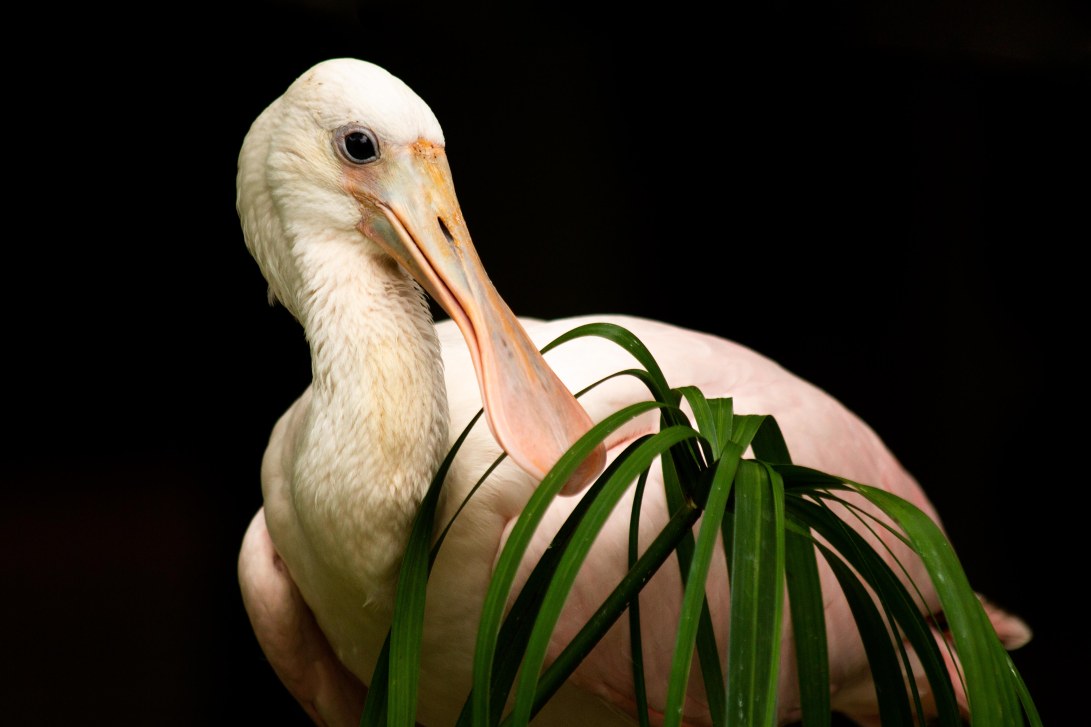
Elsewhere on the site was the Emerald Forest Aviary, where I met my new favourite bird: the roseate spoonbill. Native to Florida, this extraordinary wading bird is candy floss pink in colour and sports a magnificent bill that it waves from side to side underwater to sift through the mud. There was a group of them in the aviary, perched on branches overhanging a deep, dark pond. I positioned myself to put this dark pond behind a particular bird who had stood beside some very photogenic foliage. After just a little editorial tweaking, I was pleased with the dramatic result.

IMG_9799IMG_9800

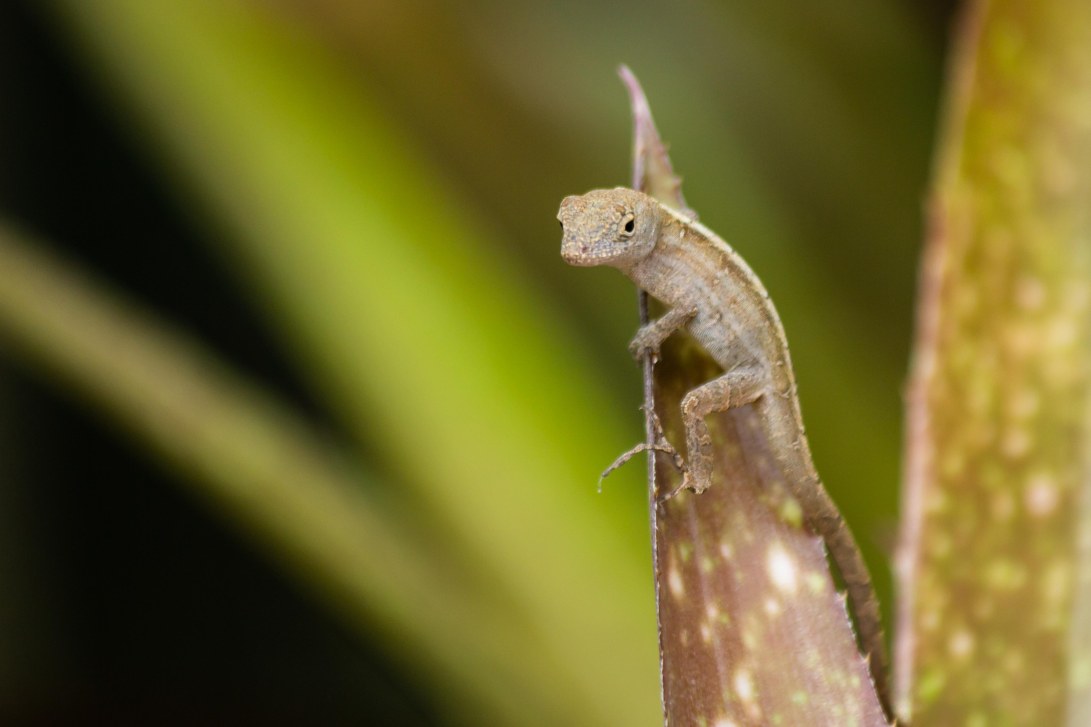
Although I always love seeing the star animals of the zoo, some of my best moments from the day were the wild individuals that had snuck in uninvited. As usual, I fell in love with some new lizards, including one that posed for me with an over-the-shoulder glance.

IMG_9712

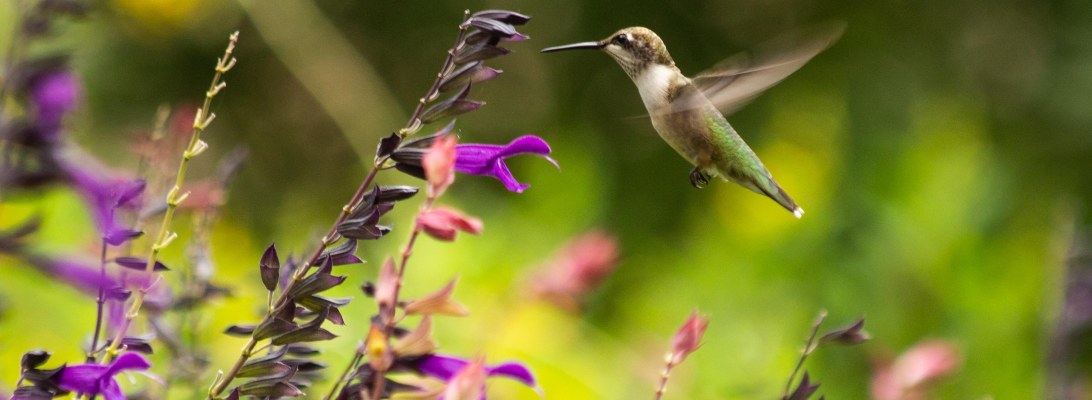
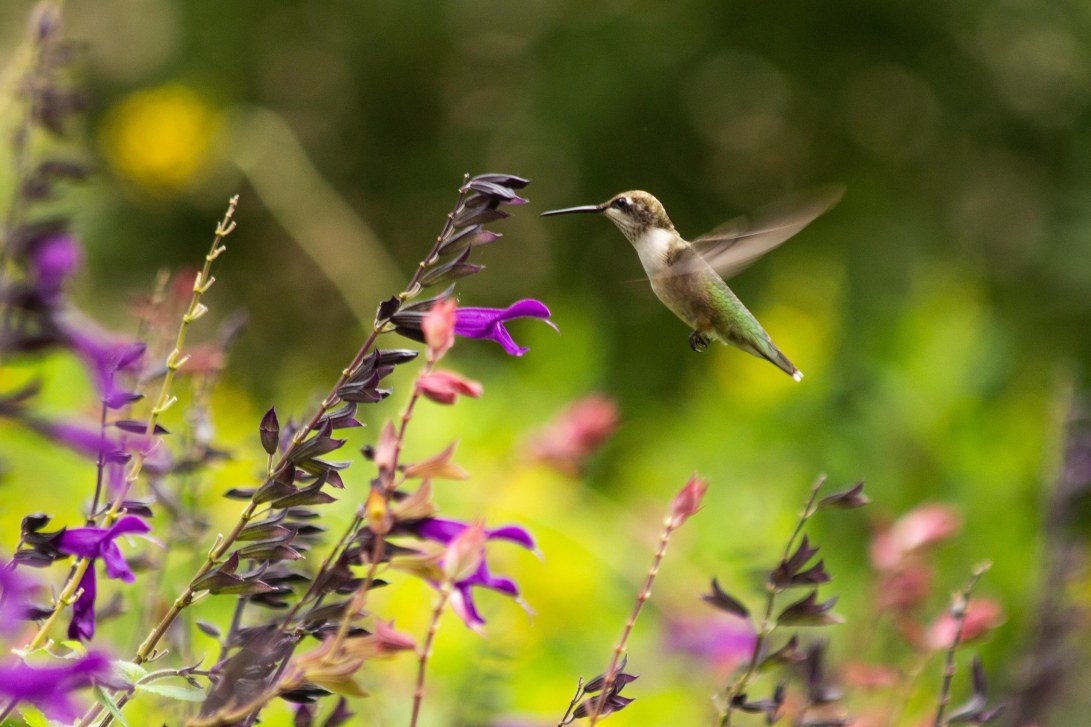
However, the most incredible moment came just before I left. I was wandering past the lions and admiring the wildflowers that were attracting all sorts of butterflies and dragonflies. Then, I saw something larger than an invertebrate zooming around and was thrilled to discover it was a hummingbird!

IMG_9832

I fumbled to get my camera ready, and for a while took lots of blurry pictures of flowers. Eventually, I got used to the hummingbird’s pattern of flying and managed to capture the animal in frame. I stood watching it for ages, as usual receiving looks from passers-by wondering what I was so interested in. For me though, it was an amazing sight and one of those perfect surprises.

IMG_9823


Meet the Neighbours

After a busy week getting to grips with my new routine in Florida and getting stuck into all sorts of exciting work at the SEZARC lab, I was invited onto a tour of the White Oak site. Having only had glimpses up until now – mainly the white rhinos whose enclosure runs alongside the road to the lab – I was eager to see all of the animals that live at White Oak.

Our first stop was the greater one-horned rhino, and I was thrilled to see one of the females had a calf. The clue to the most immediate difference between these individuals and white rhinos was in the name; white rhinos, from Africa, have one more horn than the greater one horned, and they’re typically larger. To compensate for a shorter horn, these rhinos – from India and Nepal – have very long lower incisors that are used during fights and can grow up to 8cm long in males.

IMG_9548

The armour-like skin gives these rhinos the appearance of a prehistoric creature. It is deeply folded to increase the surface area for water absorption, and especially thick around the neck to protect this vulnerable area. Greater one-horned rhinos have a prehensile lip that they use to forage in scrub and foliage.

IMG_9554

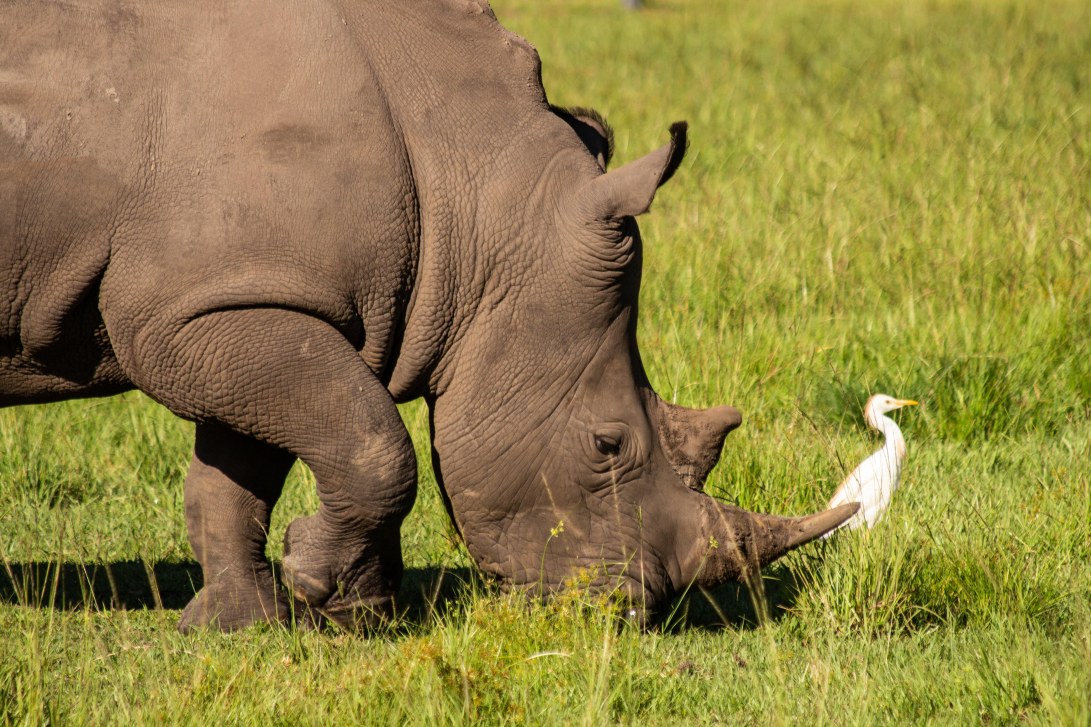
White rhinos, on the other hand, are known as square-lipped rhinos and shed grass like a lawnmower. As we watched them graze we saw they were surrounded by cattle egrets, a common sight at White Oak. These white, gangly birds follow large mammals around their enclosures, as their weighty footsteps disturb insects hidden in the ground below, which the egrets take full advantage of.

IMG_9577

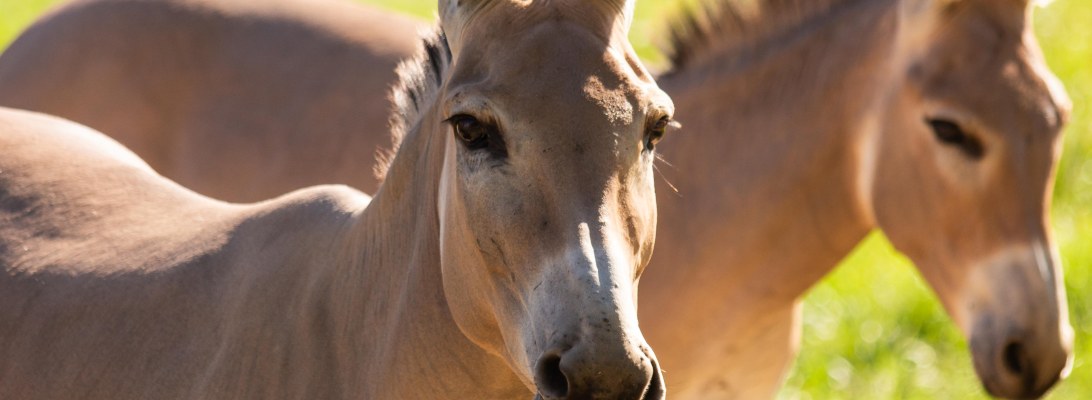
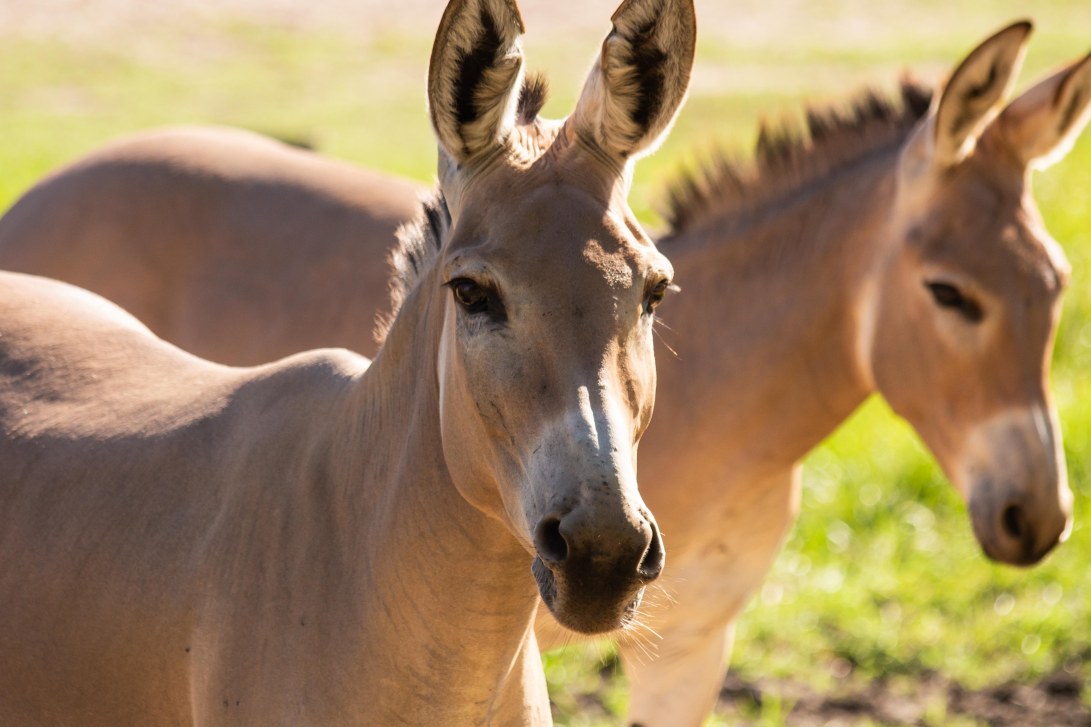
Next we headed off to find the Somali wild ass, a species I had never heard of but fell completely in love with. Found in East Africa, Somali wild ass are the smallest and also the rarest wild horses (equids) in the world, with fewer than 2000 left in the wild. They have a beautiful grey coat that almost appears purple in a certain light. Reminiscent of their relative the zebra, these wild ass have characteristically striped legs. Due to competition with domestic farm animals for grass and water, these animals have become critically endangered. In response, White Oak obtained a herd in 2008, and since then have raised twenty foals.

IMG_9594

Nearby to the Somali wild ass was another species I hadn’t come across before: the gerenuk, meaning “giraffe-necked” in Somali. These slender antelope are golden in colour with extraordinarily large necks, ears and eyes. Interestingly, these antelope rear up onto their hind legs to get to even higher places.
IMG_9615

One of the final stops on our tour was an unforgettable moment for me: the giraffes. I’ve always had a soft spot for giraffes, and today I had the extraordinary surprise of being told I could hand-feed one. His name was Griffin, and as soon as the bus stopped he came striding over, keenly peering in through the window. One by one, we took a piece of browse and lifted it high, and Griffin gently took it. It was such a treat and a moment I will treasure for a long time.

As we got back onto the bus and made our bumpy way back to the car park, I felt honoured to have seen first-hand what an amazing place White Oak is for conserving and protecting wildlife. While I commend many zoos for their conservation work, I was so pleased with how much space these animals had, giving them the freedom to behave as naturally as possible. It made me so excited to continue my internship and I looked forward to getting even more involved as the weeks progress.

IMG_9649

Landing in the Sunshine State

I’d never been to America before. It was a vast, distant land that I didn’t think I’d have the chance to visit very soon, perhaps not until my thirties or even later. However, after weeks of planning and preparation here I am in Florida, the Sunshine State. For two whole months.

The journey here was the first big hurdle. Jet lag is defined as a sleep disorder which alters the internal body clock. Some people experience insomnia, others indigestion. I just sobbed for a while. Having religiously followed an eight-hour sleep routine for as long as I can remember, I suddenly found myself getting off the plane in Jacksonville at 17:30 while my brain was convinced it was actually 22:30. A combination of this disorientation, stress from travelling and heat that I had never experienced before all descended on me at once.

I could have slept standing up that night. When I woke up and remembered I was in America, I experienced another jolt, this time not of fear that I’d forgotten something or panic that Passport Control would send me back home, but of sheer excitement. Even as I nervously picked up the rental car and grappled in the door for a gear stick that wasn’t there, I was eager for the adventure to begin.

IMG_1404

I have begun to slowly acclimatise myself to daily American life. I still can’t resist acting the tourist, taking photos of the British section of the supermarket (Jammy Dodgers and Ambrosia custard akimbo) and marvelling over the countless lizards that scoot across the pavement, or should I say sidewalk. I have seen the yellow school buses, driven past long lines of mailboxes at the end of driveways, and already been complimented on my accent, plain as I think it is.

The heat in Florida is something I’m still not used to, however. I had envisaged myself getting a glorious tan, but by 9am it’s already too hot to sit outside. Thank goodness for high-quality air conditioning, a world away from the lousy version back home that’s either non-existent or Baltic.

Caught up in the whirlwind of settling in, I haven’t yet had the chance to get out and truly explore what I’m sure is incredible native wildlife. Every time I see a bird I’m craning to see what it could be, despite not having the foggiest idea. All I know for sure are the circling vultures that I regularly spot driving, and I think that is a brilliant start. After all, when have I ever had the chance to see wild vultures in the sky before?! There have been huge swallowtail butterflies fluttering in front of the car, and of course the lizards that I’m becoming obsessed with. I’m so excited to see what I’ll discover over the next two months, and I have a sneaking suspicion I’ll make some unforgettable memories.

The Farne Islands – Part 2

After sharing the waves with a herd of very curious seals, it was now time to get changed on a boat with thirty other people. This was a challenge, especially as getting a wet wetsuit off required the flexibility and strength of a contortionist. I teamed up with another girl to make a temporary changing cubicle, which made it somewhat easier.

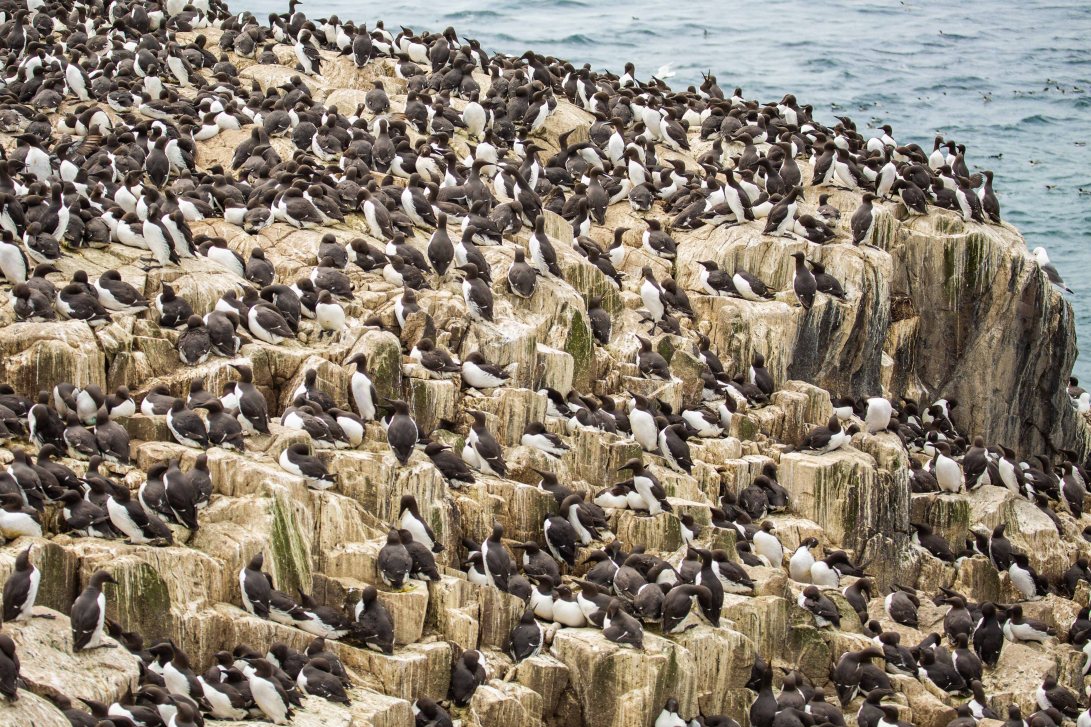
Once everyone was back in dry clothes, the boat headed to Staple Island for a spot of birdwatching. On the approach, all we could see and hear was guillemots, a blanket of birds completely covering the rock. People were dotted amongst them but vastly outnumbered. It was the kind of ratio I liked to see.

O12C4099-2

On dry land, it was impossible to decide where to start. I was used to choosing a spot to sit and wait for the wildlife to appear. Here, we had joined a metropolis of seabirds all going about their business without blinking an eye at what we were doing. Red posts were stuck into the ground at places, and as we passed I notice each one signalled the presence of a nest, some situated almost on top of the path that threaded through. Shags watched nonchalantly as we passed, eyes half closed.

O12C4243

Some of the guillemots looked different to others. While most had completely brown heads, a select few had bright white rings around their eyes. I asked Cain, who told me they were bridled guillemots. Back at home I looked them up, and discovered that these individuals are an example of dimorphism. Usually relating to variety in plumage colour, dimorphism is the existence of two distinct forms within a single species. This is different from two subspecies, as both guillemots and bridled guillemots have the same Latin binomial: Uria aalge. Were they subspecies, they would have an additional subspecies name. Furthermore, subspecies tend to be permanently geographically isolated from one another.

O12C4247

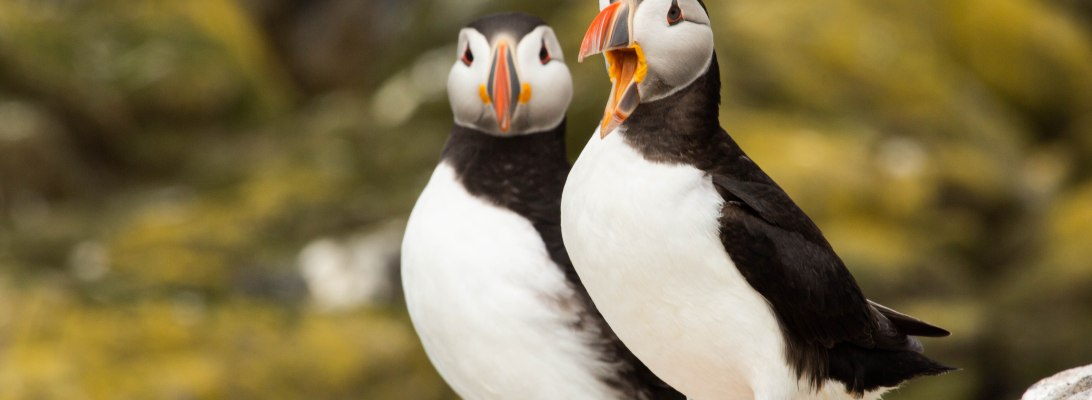
After watching the guillemots for a while, I found where the puffin clique spent their time. Away from the larger birds, there were countless burrows in the grassy banks, and after a while puffins would pop into view or land and duck inside, sometimes carrying large mouthfuls of sandeels in their vibrant bills.

O12C4119

I had been so excited to see my first puffins on the Isles of Scilly, and while I still treasured the memories, those had been distant sightings compared to now. Here on the Farnes, puffins sat twenty feet from two-tiered photographers, lying on the rock or glancing from side to side with their sad clown eyes. They were a joy to watch, and so much smaller than people think!

O12C4204-2O12C4194-2

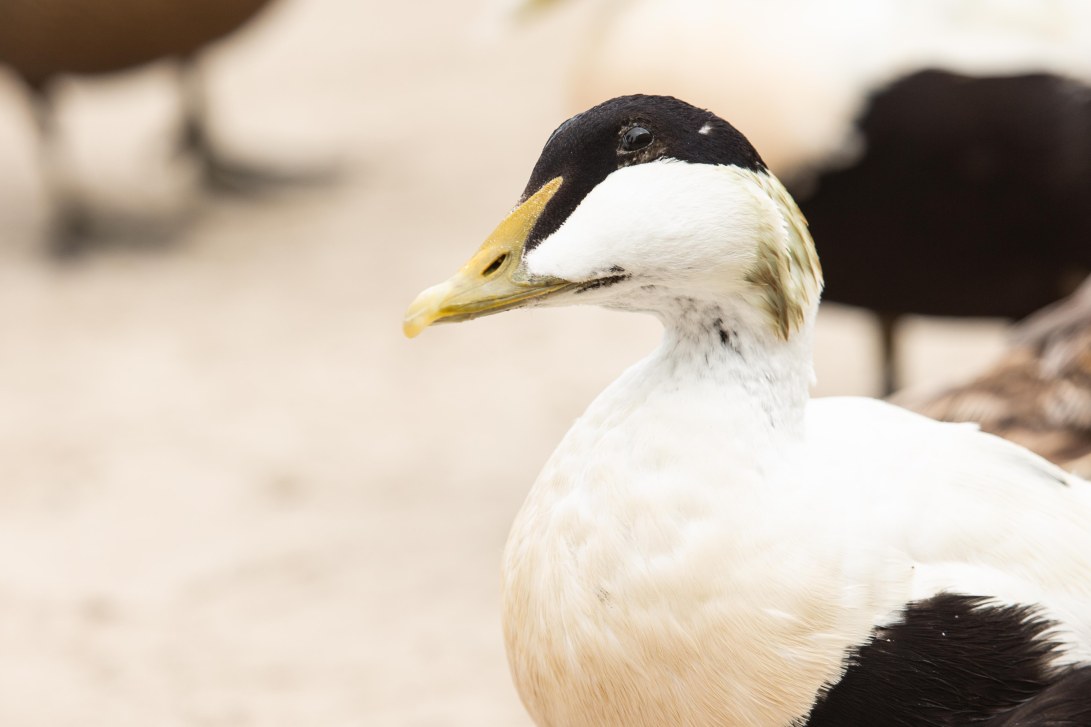
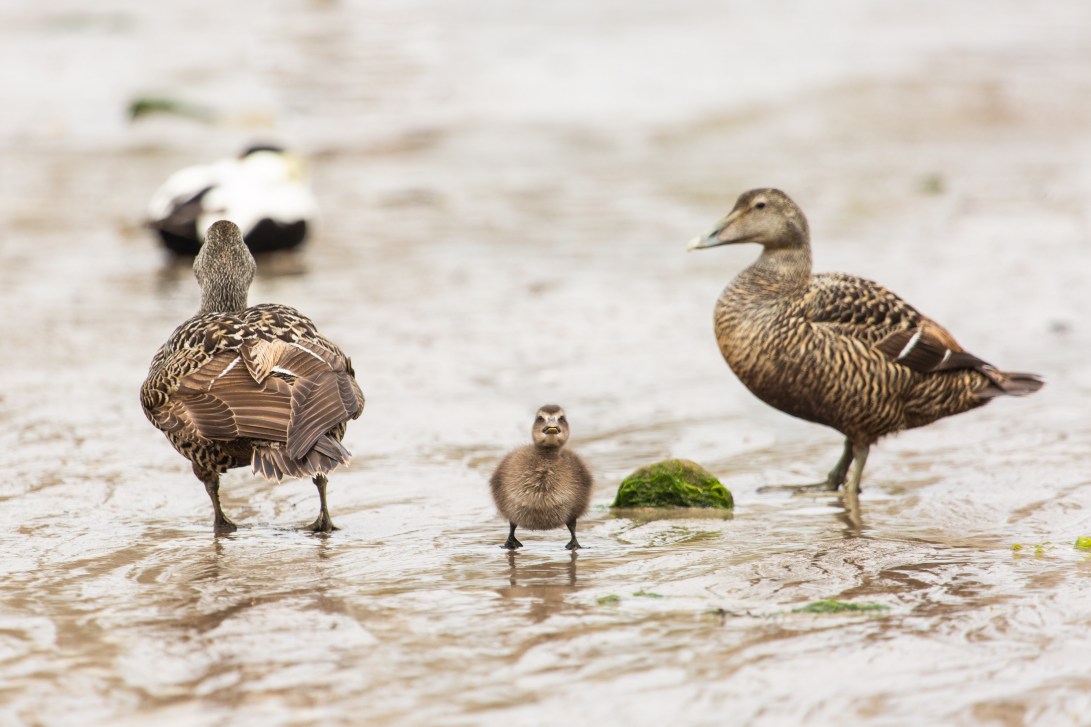
Sadly, the time flew by and before I knew it I was back on the boat and leaving Staple Island behind. When we arrived into Seahouses, I caught the irresistible smell of fresh doughnuts on the breeze. Tired after the swim, I made a beeline for the van and bought a bag to sit and eat on the bay. A group of very tame eider ducks approached, eyeing my bag with enthusiasm. Unfortunately for them, I wasn’t sharing my doughnuts with anyone, but I did make use of the opportunity to photograph the beauties so close.

O12C4286-2

I was thrilled to see ducklings accompanying some of the females, perhaps one of the cutest baby animals there is. As the females lowered their bills into puddles of seawater, the ducklings copied, mirroring the adults’ every move. Watching such intimate family behaviour while I devoured my doughnuts was a perfect way to end such a dramatic and unforgettable day at sea.

O12C4306-2O12C4309