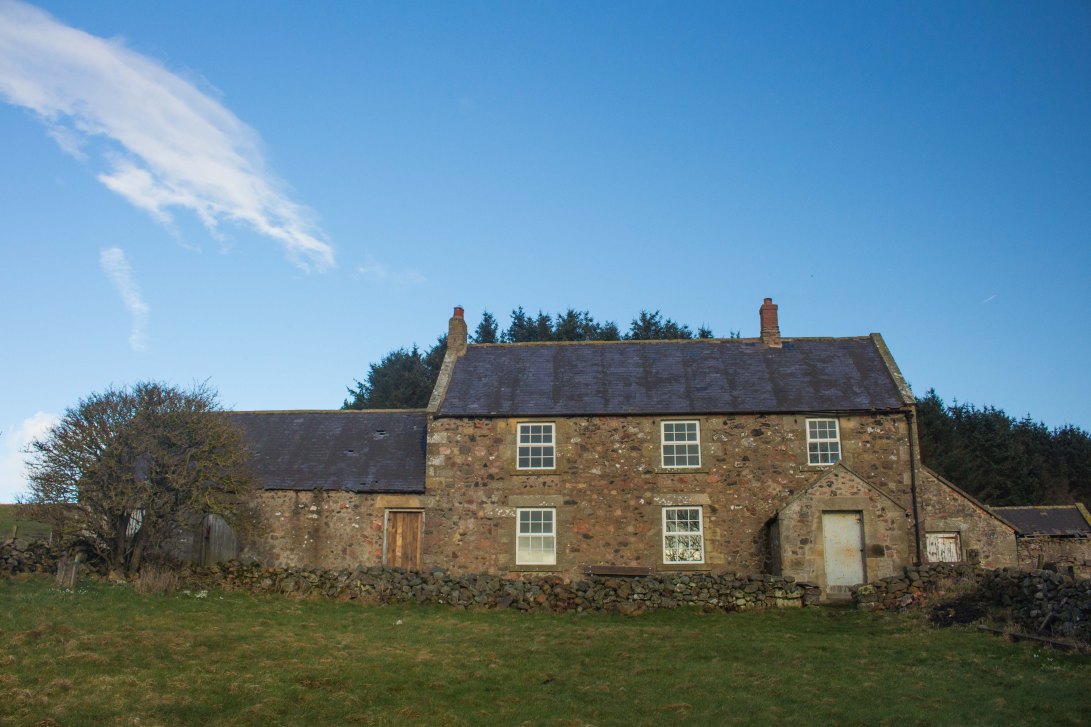
Chesters – Day Four

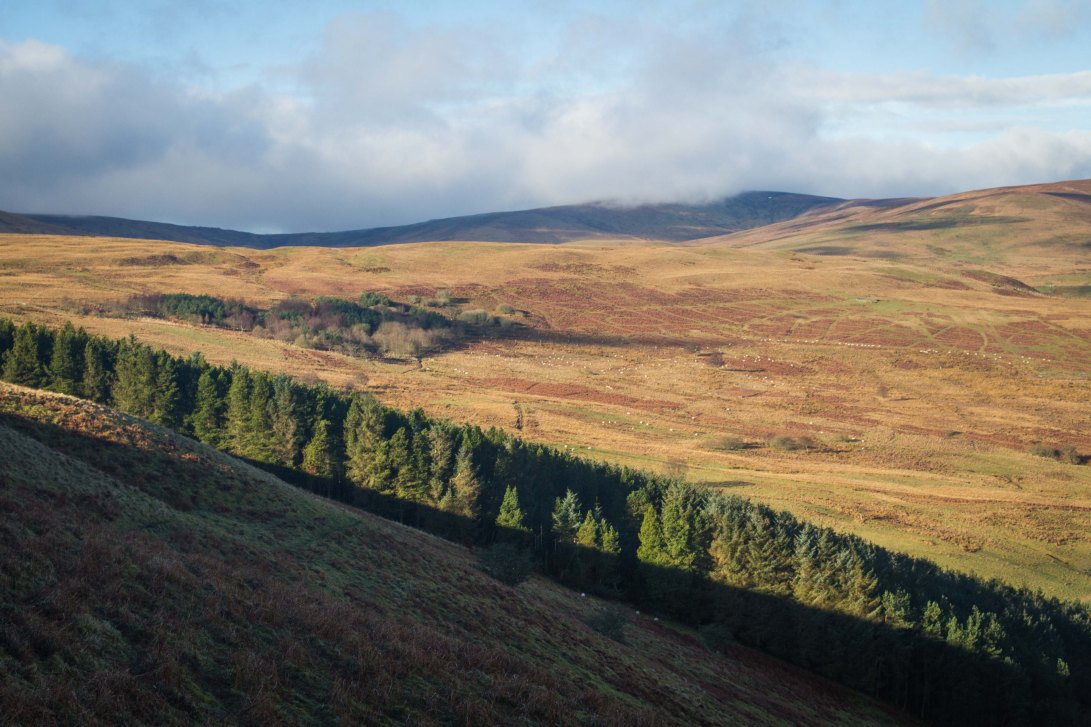
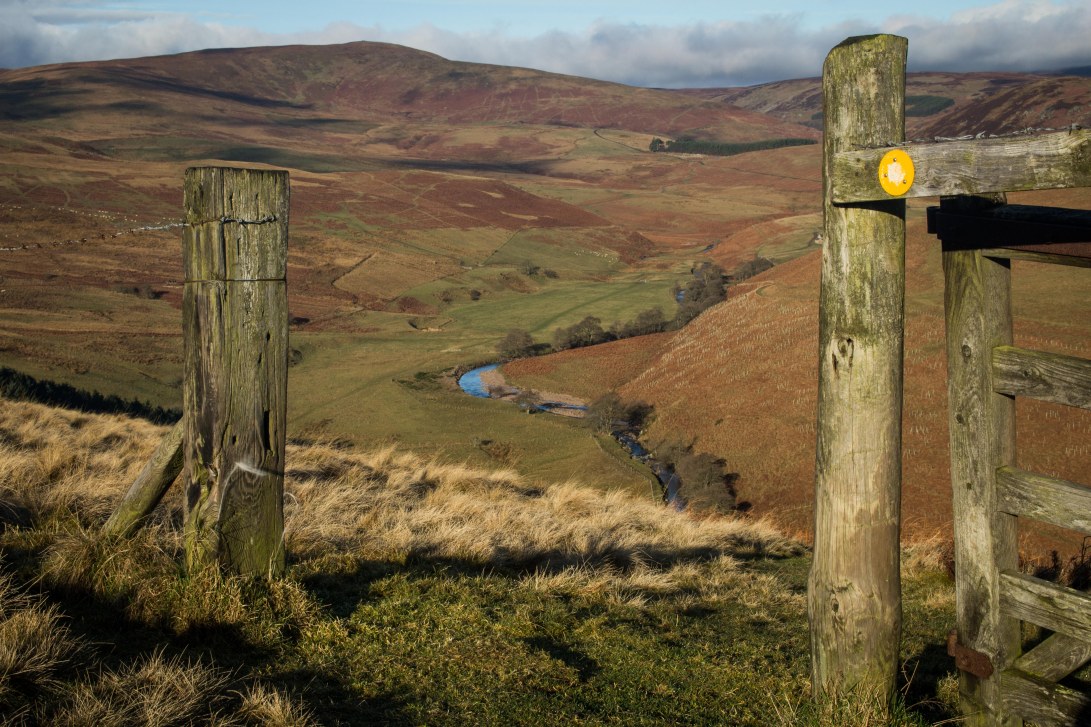
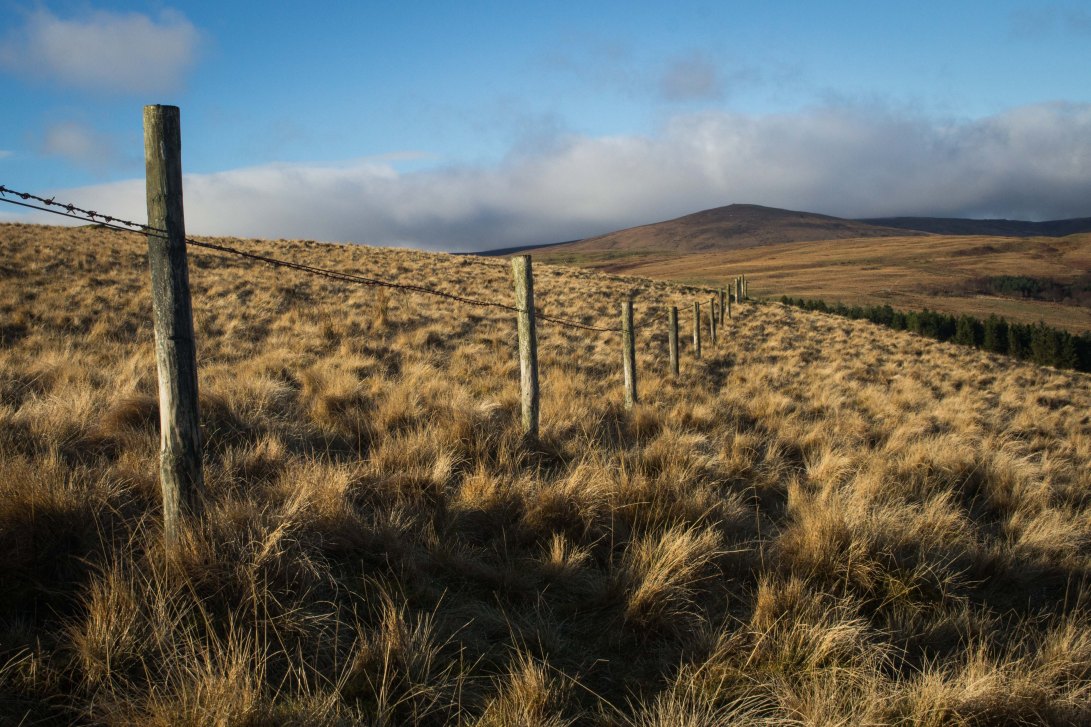
Sadly the day began with no visitors to the Longworth trap we’d set out, but on a positive note the Cheviots were shining under the sun again. I walked up towards the conifer plantation where we saw the red squirrels and drank in the views. Northumberland National Park was beautiful even on a grey day, but when the sun was bright and the clouds’ shadows were drifting across the hills, it was truly stunning. Despite the river gurgling many metres below, I could hear it as clear as if I was standing on the shingle bank. With no disturbance and very few voices on the air, sounds sliced straight through the landscape. It was one of the most tranquil places I’d ever been to.
IMG_0498-2IMG_0504-2IMG_0510-2

After gathering our bags together ready to leave Chesters, we went on a final walk to a new plantation close to the bothy. As we scanned the horizon, we spotted three buzzards circling. Heather told us it was a courtship display, where the males soared high into the sky then dropped down in a dramatic feat of bravery to impress would-be partners. It was fascinating to watch – I only hope the watching females were as impressed as I was!

The plantation we visited was dominated by larch trees, and despite fragmentation of woodland in the Cheviots it was a very old habitat. We could tell this by the presence of tummocks; moss growing over the rocks. This kind of succession would take many years to take place, meaning the habitat had become established a long time ago.

Throughout the plantation, there were many holes in the grassy bank of many different shapes and sizes. Commonly, a fox hole will be oval-shaped, while the sett of a badger will have a sideways oval opening. Meanwhile, a rabbit warren will be made up of many holes of similar size. There were also a lot of droppings, including the dimpled pellets of roe deer, fox and what Heather suspected to be pine marten, which was a really exciting find with a pine marten never having been seen at Chesters. Both of the scats belonging to predators had been deposited right outside the opening of a rabbit warren; a sign to other predators that the poor rabbits within were claimed prey. It was a sinister sign, especially for emerging rabbits!

In fact, the plantation had a likeness to a graveyard. Mammal and bird bones littered the forest floor, from woodpigeon and pheasant to ram skulls. I found a pheasant’s pelvis, which was beautifully intricate and incredibly fragile. However, bones weren’t the only treasure. After nearly stubbing my toe on it, I found an open orb of white quartz within an ordinary rock. The crystals in the crevice were tiny, but reflected the sun in dazzling fragments.

Shortly after, we found an even more peculiar discovery. Hawk-eyed Heather spotted a patch of bright red up in the tree canopy. There, lying in a nest on the end of a bough was a dead red squirrel. Although it was a sad sight, it was also a fascinating one, certainly something I’d never seen before. We debated whether the nest belonged to the predator, or perhaps the squirrel had simply been stored there, or the nest was being used as a plucking post, as is often the case with birds of prey. We walked around the tree looking for feathers or pellets that would tell us the culprit, but there were no tell-tale signs. It was a real mystery that we unfortunately never got to uncover!
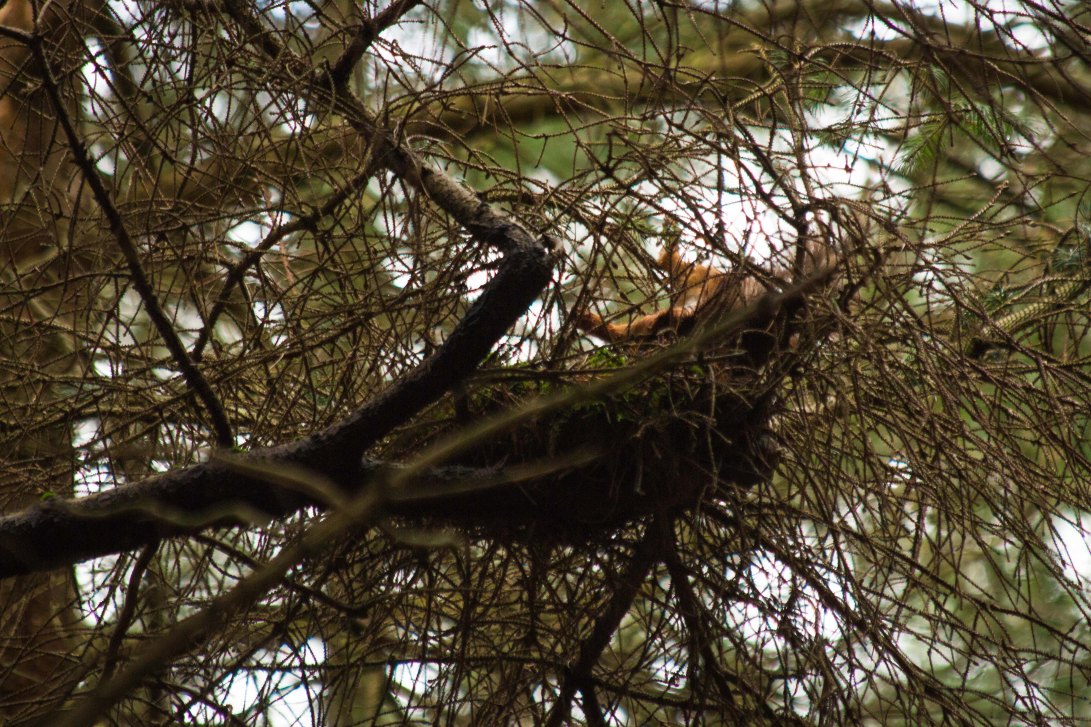
IMG_0597-2

Soon we returned to the bothy, carefully carrying the treasures we’d found including the quartz and animal bones, as well as an array of feathers and owl pellets. We spent the rest of the day packing to leave and reflecting on the experiences we’d had over the weekend. As a final send-off, we had a rabbit visit the garden and put extensive time and effort into digging perhaps the beginning of a warren not two metres from the front door. I tested my luck and crept outside to watch him, and was amazed to find him so calm in my presence. Every few seconds he would stop and peer at me, dry earth sprinkled on his head like brownie crumbs, but each time he was convinced I was no threat and continued his work. It was the closest I’d ever been to a wild rabbit and a real privilege to be able to film it digging and moving twigs aside with its long lagomorph teeth. It was perhaps my favourite wildlife encounter of my time at Chesters, and happened right on the bothy doorstep.

IMG_0699-2

Species seen/heard:

Buzzard Buteo buteo Chaffinch Fringilla coelebs European rabbit Oryctolagus cuniculus Fieldfare Turdus pilaris Great tit Parus major Grey wagtail Motacilla cinerea Mistle thrush Turdus viscivorus Oystercatcher Haematopus ostralegus Pheasant Phasianus colchicus Pied wagtail Motacilla alba Skylark Alauda arvensis
Chesters – Day Three

Today was the toughest day for my feet, but also the most rewarding. We set off east away from Chesters on a ten-mile hike to the gravel pits of Branton Nature Reserve, though the journey was just as fulfilling as the destination.

IMG_0266-2

After the trials of crossing the Chesters Burn without getting wet, we ascended towards Ewe Hill, where lapwings zoomed with seemingly erratic coordination, and skylarks serenaded us from overhead, in a hovering flight they can maintain for the approximate equivalent of running five marathons back to back.

On the way down Turf Knowe, we spotted two hares dashing across a field, accompanied by the frustrated squawking of a distant rookery. We also stumbled across a common frog in a puddle, keeping its numerous frogspawn company.

IMG_0358-2

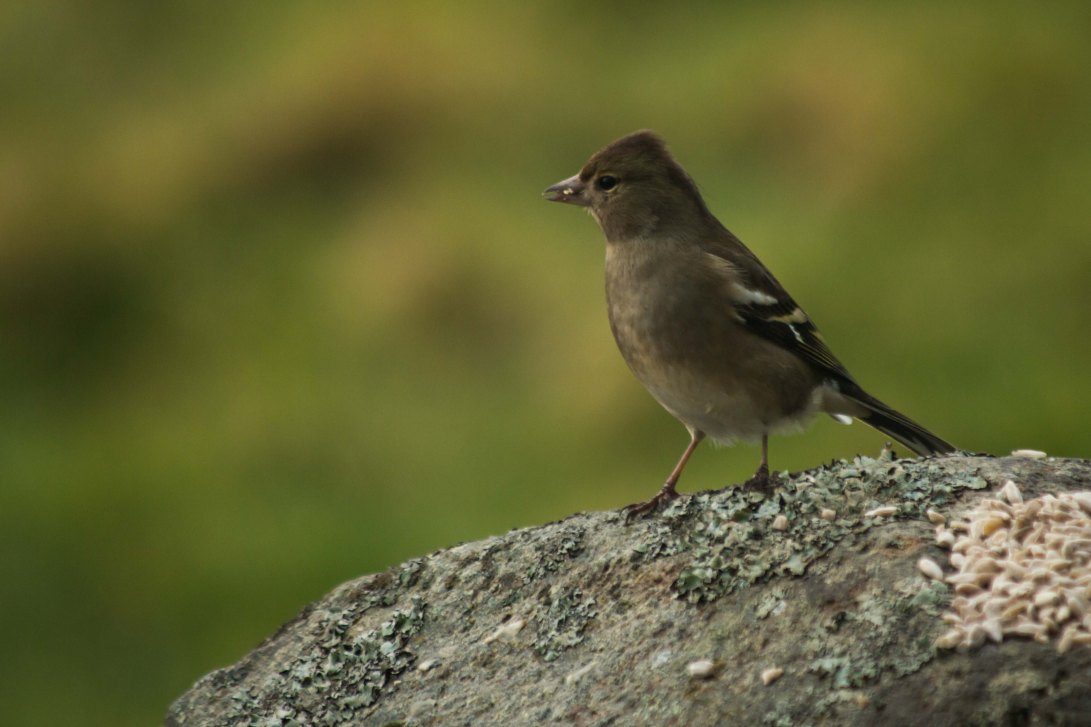
Soon, we reached the village of Ingram, situated on the edge of Northumberland National Park. Here the birdlife transformed to an orchestra of finches, tits and some special guests, including two male yellowhammers, a bustling group of siskins and some striking chaffinches in their immaculate breeding plumage. As we left Ingram behind, we followed the River Breamish to the gravel pits to do a spot of bird watching in the hide overlooking the lake.

Since the 1920s, the Breamish Valley was used for sand and gravel extraction, including gravel from the riverbed, which was used to surface roads. After the area was restored to agricultural land, concrete company CEMEX asked for permission to extract and was denied, as it was thought the extraction would be taking place too near to the National Park. However, in 1993, CEMEX was granted permission to extract, on the one condition that the company also converted the area to a nature reserve that would “complement and enhance the rural landscape”, ultimately creating a landscape that would improve the area’s biodiversity and provide a stable aquatic environment for many species.

As we sat and watched the lake from the bird hide, we spotted a broad variety of waders, geese and passerines, or songbirds. Greylag geese, goldeneye, wigeon, tufted duck and many more were bobbing about on the still water. Interestingly, instead of the usual drab colouring used for camouflage when on the nest, female shelducks have the same striking green head and bright red bill as the male. The reason for this is the bird’s choice of nest, which is often in rabbit warrens instead of out in the open. This makes female camouflage unnecessary.

Another highlight of our time in the hide was hearing the first chiffchaffs of the year, which arrive from their wintering ground in sub-Saharan Africa in mid March, staying until around October.

Once the drizzling rain had subsided, we did a spot more tracking around the lake. There was an otter spraint by the stream, a sign of territory marking, the square pad of a badger print and several roe deer tracks. While sheep prints – which were abundant virtually everywhere – are rounded, deer prints meet at a point.

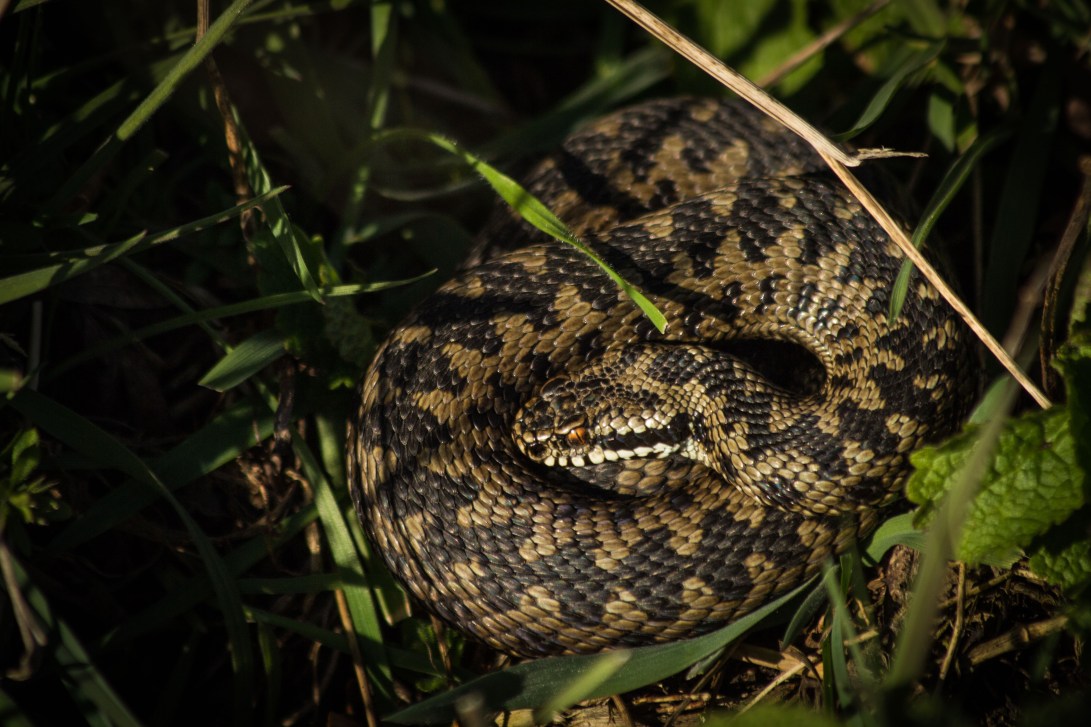
By then the best of the daylight had passed, so we made our way back to Chesters, pockets laden with treasures collected during the day. Along the way we tried our luck spotting some adders. As it was still drizzling and the sun had gone in, chances of a sight of basking adders was slim. However, we managed to find two that were catching the last rays before returning to cover. After such a long walk to find them, I’m glad a few stayed out just a little longer.

IMG_0582-2IMG_0238-2

Species seen/heard:

Adder Vipera berus Bank vole Myodes glareolus Black-headed gull Chroicocephalus ridibundus Blue tit Cyanistes caeruleus Canada goose Branta canadensis Carrion crow Corvus corone Chaffinch Fringilla coelebs Common chiffchaff Phylloscopus collybita Common frog Rana temporaria Common toad Bufo bufo Curlew Numenius arquata Eurasian siskin Spinus spinus European mole Talpa europaea European hare Lepus europaeus Fieldfare Turdus pilaris Goldcrest Regulus regulus Goldeneye Bucephala clangula Goldfinch Carduelis carduelis Grey heron Ardea cinerea Greylag goose Anser anser Lapwing Vanellus vanellus Lesser black-backed gull Larus fuscus Long-tailed tit Aegithalos caudatus Mallard Anas platyrhynchos Meadow pipit Anthus pratensis Moorhen Gallinula chloropus Oystercatcher Haematopus ostralegus Pheasant Phasianus colchicus Pied wagtail Motacilla alba Red-legged partridge Alectoris rufa Reed bunting Emberiza schoeniclus Robin Erithacus rubecula Rook Corvus frugilegus Shelduck Tadorna tadorna Skylark Alauda arvensis Snipe Gallinago gallinago Song thrush Turdus philomelos Treecreeper Certhia familiaris Wigeon Anas penelope Woodpigeon Columba palumbus Wren Troglodytes troglodytes Yellowhammer Emberiza citrinella
Chesters – Day Two

As it happened, I slept extremely well last night, so I missed out on the tawny owl calling from the Chesters bothy roof. The morning was bright, and as I peered out of the cocoon of my sleeping bag I felt the familiar pull of the wild. The combination of hushed soundscape and pine woodland packed with secrets was enough to lure me out of bed.

IMG_0465-2

As I ate breakfast I had the pleasure of watching a bank vole feeding on the sunflower hearts Heather had left out. He was a challenge to photograph as he only stayed in view for a second, but it was impossible not to love his curious expression as he peered through the window.

IMG_0476-2

After preparing the bothy for the expeditioneers’ arrival, Cain and I headed back through the Breamish Valley to meet them. Although no red squirrels this time, we came across two dead pheasants. They looked incredibly fresh with no obvious wounds. The only indication of possible death was the presence of downy feathers in the birds’ claws, suggesting the frisky males had fought to the death. It was a great opportunity to photograph a pheasant’s feathers up close – there are so many beautiful colours.

IMG_0185

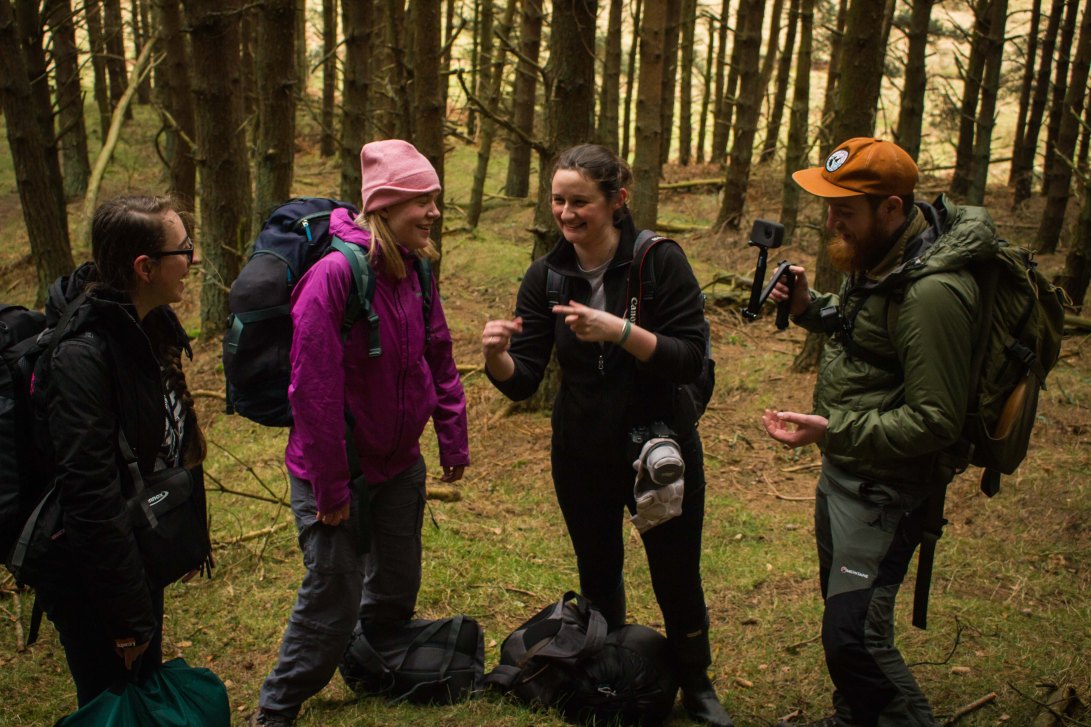
When we returned, Heather explained the itinerary for the next three days and introduced the expeditioneers to camera traps and Longworth traps, recording equipment used to live trap small mammals. Finally, we all found Chesters bothy on a map of the Cheviots.

Just before the sun began to set, we all headed out into a patch of woodland just beside Chesters, where we used the rest of the daylight foraging for signs of the forest’s inhabitants. There were abundant droppings, and although most belonged to sheep and pheasants, a prominent sprinkling on a mound of grass beside an extensive burrow indicated rabbits. Later, we saw different droppings that were more elongated, suggesting hares were also present. Among other treasures, we found rabbit bones, a red squirrel drey – a nest built of twigs, dry leaves or grass – the chest plate of a woodpigeon and feathers belonging to a buzzard and a long-eared owl.

After a thorough forage we suddenly realised the sun had gone, so we hurriedly set up two camera traps, one in the woods to hopefully capture roe deer and the other beside a clump of frogspawn to see if the parent showed up.

Once the traps were set we returned to the bothy. Heather went to fetch wood for the fire and returned with a sleeping moth. After searching through the moth ID book we discovered it was a herald moth. I’d never seen this species before, and took the opportunity to use my macro lens and accentuate its rich copper-coloured wings. After returning the moth to the woodshed to avoid disturbing it, we had an early night in preparation for our long walk tomorrow in search of elusive adders.

IMG_0450-2

Species seen/heard:

Bank vole Myodes glareolus Blackbird Turdus merula Chaffinch Fringilla coelebs Coal tit Periparus ater Goosander Mergus merganser Grey wagtail Motacilla cinerea Great-spotted woodpecker Dendrocopos major Herald moth Scoliopteryx libatrix Mistle thrush Turdus viscivorus Oystercatcher Haematopus ostralegus Pheasant Phasianus colchicus Red-legged partridge Alectoris rufa Robin Erithacus rubecula Snipe Gallinago gallinago Song thrush Turdus philomelos Tawny owl Strix aluco Woodcock Scolopax rusticola Wren Troglodytes troglodytes

Chesters – Day One


The drive to the Village Tearoom and Emporium was stunning. As the sun was beating down on my right arm I was a little nervous I hadn’t brought the sun cream, but luckily the light was just right to make Northumberland’s hills shine gold, without turning my skin pink.

After meeting Heather, we drove to a top-secret spot where adders were frequently sighted. Due to the adder’s rarity in the UK, it is important not to broadcast locations of their possible breeding sites, to avoid a rush of human activity and potentially disturbing the snakes. As the afternoon was still very hot, we found eight adders basking, both males and larger females. In fact, in one spot there were four males writhing together, perhaps in an attempt to attract a watching female. It was my second adder sighting, but getting the chance to see them so clearly was a real treat. While maintaining our distance, we watched them bask for nearly an hour. Though I could have stayed far longer, it was time to head to Chesters bothy before it grew dark.

IMG_0124-2

Leaving the adders behind, we drove to the end of the road, where urbanisation ended and true wilderness began. Shouldering our bags for the weekend, we began the two-mile walk through the beautiful Breamish Valley, accompanied only by the bleating of sheep and the infamous scraping call of pheasants.

IMG_0194-2IMG_0196-2

As the day drew to a close, the hills faded from shimmering orange to dusky pink with a patchwork of dark green conifers and purple heather. Then suddenly a flash of brown as a hare darted up the hill, white tail flashing. He was too far for my camera to get a clean shot, but it was a great sighting on my first day in the Cheviot Hills. Fascinatingly, hares can be pregnant with two young that are not twins simultaneously. The unborn leverets may have been conceived at different times, meaning they have different growth rates.

Before long we reached a patch of conifer forest that looked like something from a fairytale. As we threaded up the pinecone-dotted track I couldn’t help but think how well a pack of wolves could fit in here, miles from interfering humans.

IMG_0552-2

Just as we emerged on the other side of the forest and paused for a breather to gaze upon some truly stunning views of the River Breamish, Heather explained how there were tales of red squirrels in the Cheviot Hills, but due to habitat fragmentation resulting in isolated patches of woodland, she didn’t think the area could support a breeding population. As if we’d been overheard, a high-pitched chattering sounded from above and two red squirrels appeared, hopping from bough to bough and scrabbling up the trunks. Not only were these the first red squirrels I’d seen in the wild, they were the first individuals that Heather had seen at Chesters, so it was a special moment indeed.

After such good luck, we almost had a skip in our step as we made the rest of the way up the hill to Chesters bothy. Almost immediately we were met by a flock of fieldfare as they swooped overhead, another new species for me.

IMG_0543-2

After dumping our bags, we sat outside on the dry stone wall and listened to the evening’s birds before the generator drowned them out. Amongst the shrieking pheasants, there was the distant hoot of a tawny owl, and later when the sun finally sunk behind the hills, the bizarre wing beats of snipe reverberated across the landscape. If you’ve never heard a snipe drumming, any description I could give would never give it justice. It’s a sound I’ll never grow tired of hearing. It reminded me that I was in the middle of nowhere. I was cut off from technology and we needed a fire to get hot water – it’s the sort of living many people have never truly experienced. Sitting outside in complete silence could seem eerie, but to me there’s a haunting beauty to the only traffic being speeding fieldfare and the occasional skylark hovering overhead. It’s like stepping back in time to when technology was an unheard of impossibility.

Later, when Cain arrived, the three of us headed over the hills in search of long-eared owls, a bird Cain was eager to tick off during our stay at Chesters. The night was as beautiful as the day had been – the sky was clear and a huge ethereal glow encircled the moon. Sadly, the owls didn’t appear, but the night walk was the perfect end to my first day in the Cheviots. When we returned to the bothy I spent some time writing about the day to jog my memory when I returned home. I knew that without a doubt, my notebook would be essential this weekend.

Species seen/heard:

Adder Vipera berus Coal tit Periparus ater European hare Lepus europaeus Fieldfare Turdus pilaris Great tit Parus major Oystercatcher Haematopus ostralegus Pheasant Phasianus colchicus Red squirrel Sciurus vulgaris Robin Erithacus rubecula Snipe Gallinago gallinago Song thrush Turdus philomelos Tawny owl Strix aluco

Coming soon!

Last week, I went on an expedition to the Northumberland National Park, where I spent four days living in a bothy and discovering the ecology of the Cheviot Hills. During that time I had several wildlife firsts, including some real rarities!

Stay tuned for the full posts, which I’m hoping to publish very soon. In the meantime, enjoy this little bank vole who paid us a visit each morning.

IMG_0478

Puffballs, Prints and Pellets

Due to a lecture cancellation, Zahrah and I seized the day and paid Watchtree Nature Reserve a second visit. As the sun was actually shining, we made haste before the English climate returned to its usual cheeriness.

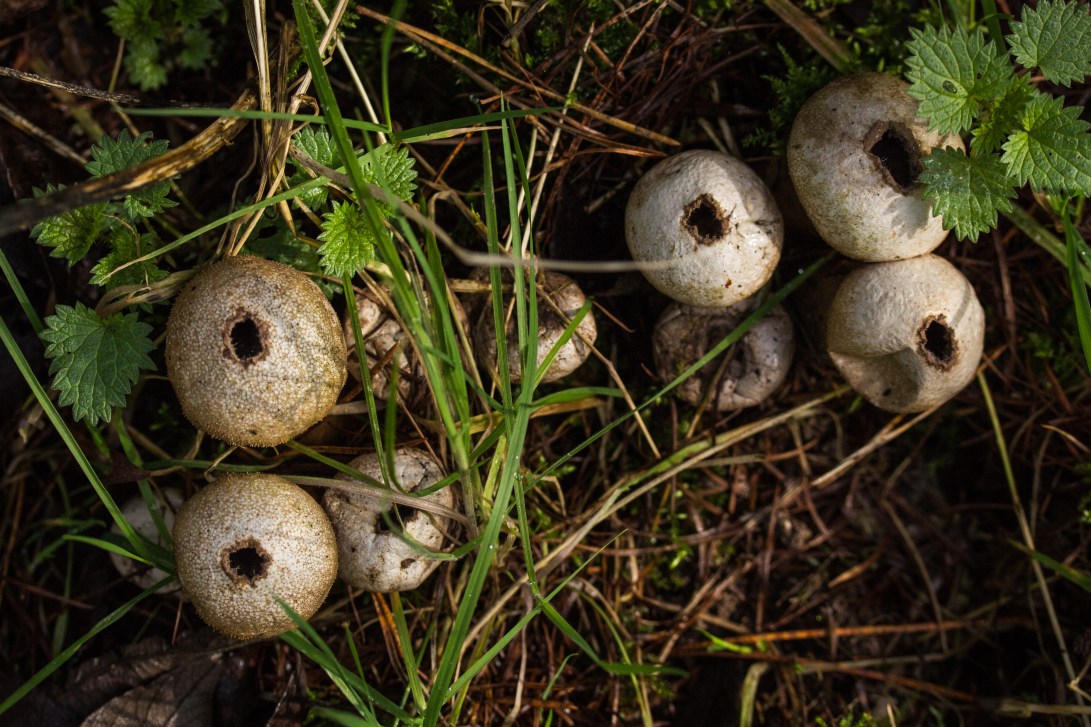
As we’d found several roe deer skulls at the reserve last time, we headed straight to Pow Wood and began to forage. My first find was a cluster of puffballs (Lycoperdon sp.). I find these little guys are extremely difficult to identify, but they’re always fun to see and remind me of terrestrial sea urchin shells.

img_9893

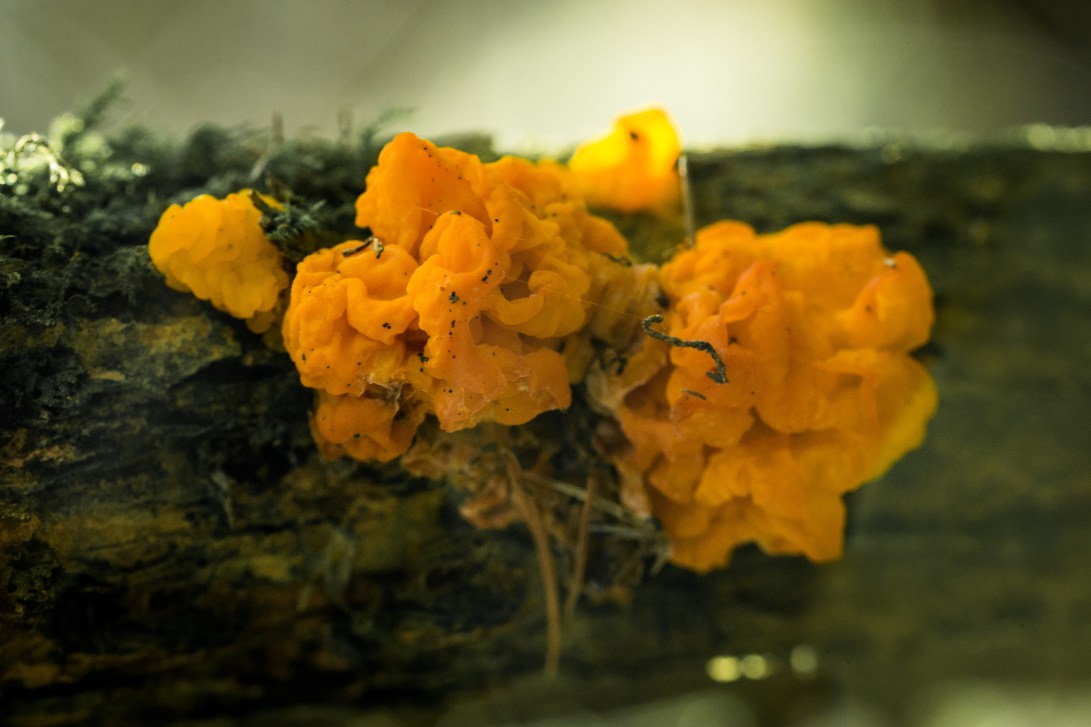
Further into the wood I was extraordinarily excited to identify more fungi. This ID lark is slowly getting easier! I found a patch of jelly ear (Auricularia auricula-judae) on some dead wood, and wrestled for some time with said dead wood to get close enough for my macro lens to work its magic.

img_9935

Shortly afterwards, I found several violent red blooms amongst the green foliage. The only scarlet elf cup (Sarcoscypha austriaca) I’d seen before was the size of my little fingernail, so to see some two inches wide was fabulous.

img_9955

Finally, my eye caught on a bright patch of yellow as we untangled our clothes and hair from the low-hanging branches of the pine trees and, completely forgetting my wildlife voice, I shrieked “witches’ butter!”. In my defence, Tremella mesenterica is a really intriguing fungus and it’s the first I’ve seen up close.

img_9971

In addition to our success with fungi, we also did some pretty good tracking. Putting the tricks we’d learned from Alex to the test, we found some deer tracks in the mud. As we found roe deer (Capreolus capreolus) skulls in Pow Wood on our last visit, we deduced that the same species had left these prints. Our suspicions were confirmed when we saw a flash of white and watched as three female roe deer darted into the forest, white bob tails stark against the brown and green of the trees.

img_9979-2


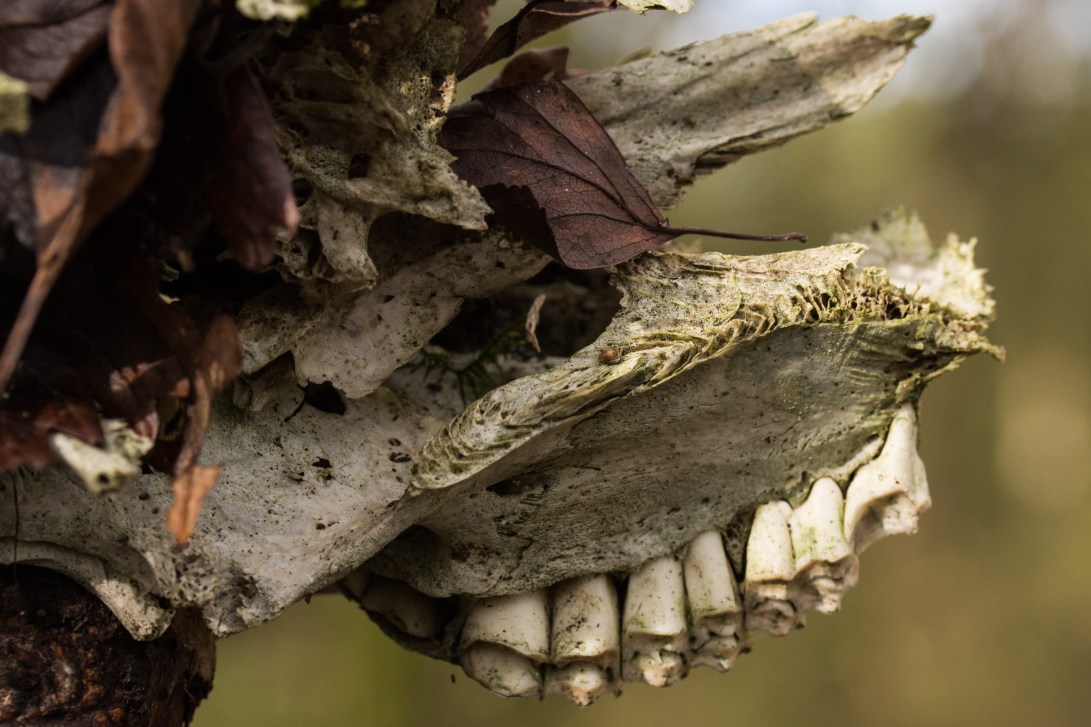
Incidentally, I didn’t realise that I was on a walk with Hawkeye. In just a few hours, Zahrah found two roe deer skulls, what we suspect was a sheep skull, and a headless skeleton with beautifully pristine white vertebrae. I guess I’d been too distracted by the fungi. We scooped up the bones into a plastic bag, ready to douse them in hydrogen peroxide when we got back home.

img_9947

Despite my ineptitude at finding skulls, I did find a collection of pellets at the foot of a tree along with a discarded white egg shell. The combination of these two signs suggested that the tree was home to a nest. After some research, I discovered that barn owls (Tyto alba) are known for their stark white eggs and dark, charcoal grey pellets, so perhaps this was our bird.

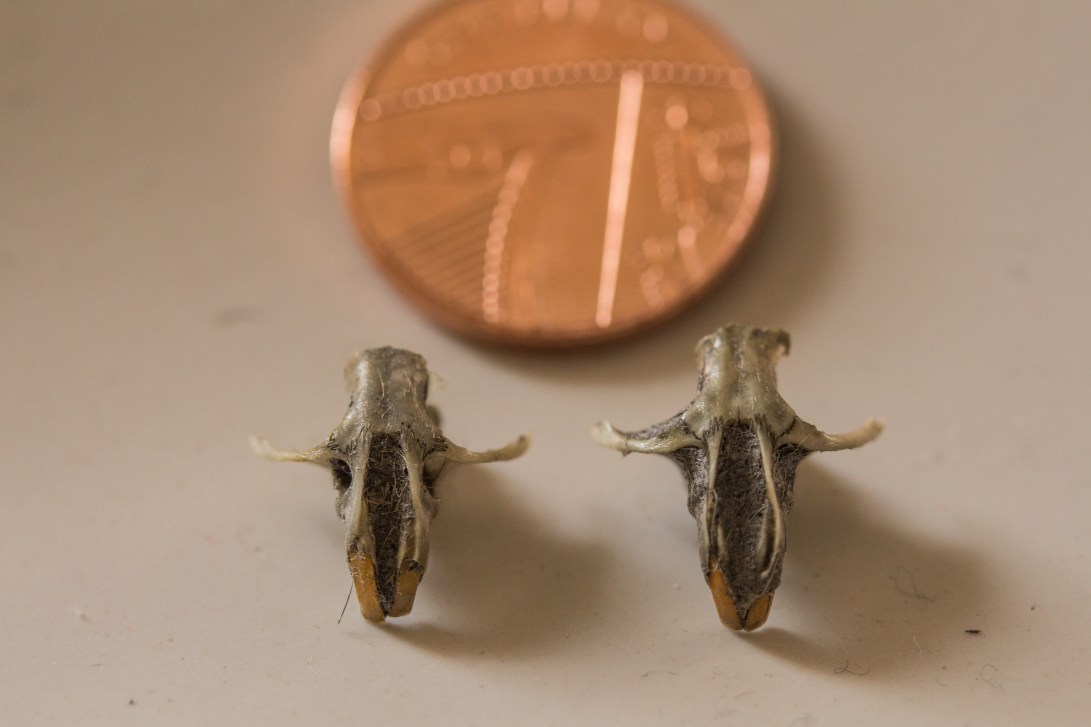
Back at the house, I dissected the pellets and in just three I recovered the remains of six rodent skulls, seven mandibles (lower jaws), several loose rodent incisors and a variety of leg bones. I attempted to identify who the skulls belonged to, but sadly they all looked the same. Still, it was fascinating to see how many kills the owl had made; there were at least two skulls in each pellet. This indicates that the bird was hunting regularly, as a barn owl usually regurgitates 1-2 pellets each night (Barn Owl Trust).

In addition, the egg shell I found had no yolk, suggesting the chick hatched naturally and wasn’t predated. If this were the case, the edges of the shell would have been pushed in and parts of the membrane would still be visible.

img_0005img_0007img_0002

In short, it was a very successful day’s foraging! It’s amazing how much you can see when you know what to look for.

Sunset Sunday (on Tuesday)

Yesterday my lovely boyfriend cooked me sausages and the most incredible fried bread for breakfast because the horrid lurgy that had been lingering menacingly had finally reared its ugly head. For the majority of the day we watched Sherlock and ate the cake we were up until 2am making the previous night, while I wheezed and sniffed.

By evening I was up for a walk, so we decided to head out to Talkin Tarn Country Park in Brampton, Cumbria. It was a spot I’d heard good things about but never been to, and it was truly beautiful. As the day faded and the sun sunk into shadows, the rich blue evening sky illuminated the water, ruffled occasionally by the passing rower. A wind nipped my fingers and I pulled on my gloves with slightly exaggerated enthusiasm; I couldn’t wait for winter to make its appearance so I could dig out my finest wooly scarves and bobble hats. For now though, all I needed was my trusty Berghaus jacket to keep me warm as we made our way round the lake.

img_7187

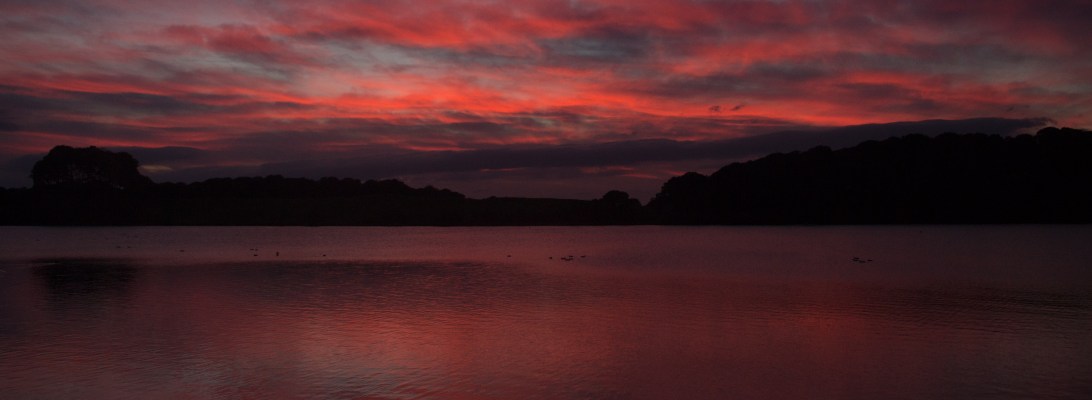
The sunset crept up on us. One moment the sky was blue, the next it was a vivid red, like a furious blush across the horizon. The water, now still and smooth as glass, took on a beautiful pink hue as the clouds rolled over it. Ducks, geese and swans alike settled to roost. One Canada goose honked into the silence, finishing his argument before succumbing to sleep.

We wandered on and perched inside a bird hide for a while, craning out the window for creative angles of the paint-splashed lake. In minutes the colours had drained and all that remained were grey water and an ever-darkening sky. We made our way back around the lake to the car, feeling very grateful to have witnessed such a visually stunning end of the day.

img_7209

Birds at the bottom of the garden

As of today, I’ve been living in my new house a week! It’s not the biggest or the most glamorous, but it’s certainly enough to feel like home. There is also a generously sized garden that oozes potential. Currently, the grass is several feet high and tickles the midriffs of the two apple trees, but I’m determined to make it a spot both we and our neighbouring wildlife can enjoy.

Zahrah and I have already had debates over whether the grass should be cut at all. While she favours the truly wild, I prefer neat and tidy with areas that the wildlife can still feel at home in. My plan is to cut the majority of the lawn but leave a wild patch at the bottom, so all kinds of creatures can still seek sanctuary in its grassy depths.

I’ve noticed several species of garden bird already, namely robins (Erithacus rubecula), blue tits (Cyanistes caeruleus) and great tits (Parus major), but I’m sure we can attract more with a range of bird feeders – millet for dunnocks (Prunella modularis) and finches and sunflower seeds for the tits and hopefully greenfinch (Chloris chloris). As well as this, we could fit some nest boxes to the apple trees to encourage nesting birds to stay.

Now we have such a secure garden, Zahrah suggested setting up a camera trap to see what nocturnal wildlife we play host to. In an urban area, it’s possible we have hedgehogs (Erinaceus europaeus) and maybe red foxes (Vulpes vulpes), something I’d be thrilled to see. After managing to photograph a wood mouse (Apodemus sylvaticus) at Kingmoor Sidings nature reserve not far from here, I’m optimistic we’ll get to see a lot more once we’ve set some tasty bait.

As for the lawn itself, I’d love to create a winding path out of the stray slabs we’ve found lying around. The garden is large enough for a compost heap too, something else that would attract a range of species. I’d love to cultivate a pond, but feel like this may be beyond my skill set! However, it would be lovely to plant some flowers and inject some colour into the otherwise very green garden. Although not the prettiest, stinging nettles are well known for being excellent attractors of the red admiral (Vanessa atalanta), comma (Polygonia c-album) and small tortoiseshell (Aglais urticae). Other good plants for butterflies include garlic mustard (Alliaria petiolata) and marjoram (Origanum vulgare).

All in all, I see some exciting things on the horizon for our little garden! After living in halls for a year and the only green space being the faded carpet of my room, I can’t wait to unleash my inner gardener and make our patch the perfect wildlife haven.

Our Day On May

When the May Princess left Anstruther harbour the sun was at its highest, so as we headed out into open water we were slowly baking but not daring to complain in case the rain came back. As I watched my fellow passengers slap on the sun cream, I was geographically disorientated, not quite believing I was in Scotland and not Spain.

IMG_6949IMG_6957

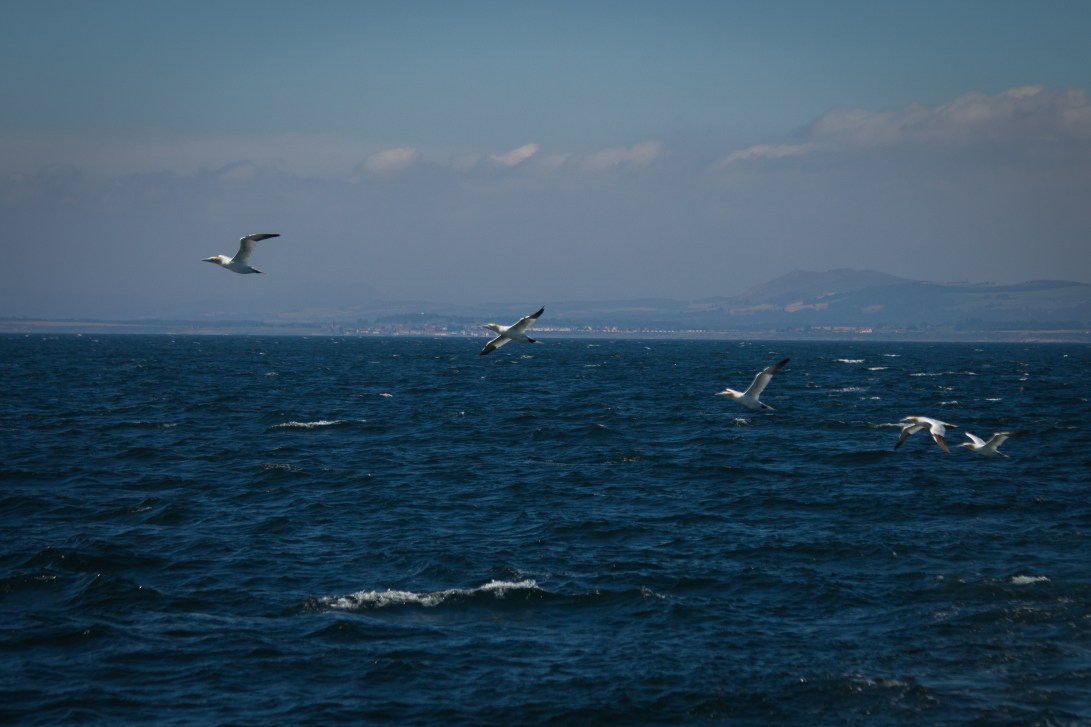
The water was choppy but that added to the fun. I was once again having to negotiate a tumbling boat and a telephoto lens to desperately try and capture the moving seabirds in focus. Many of my attempts were 96% sapphire sky and 4% wing tip in the corners of the frame. With gritty determination, I managed to photograph a few gannets (Morus bassanus) alone and in their strings of multiple individuals. Gannets happen to be my favourite seabirds. Capable of diving at speeds of 60mph, they hit the water with incredible force in their attempts to catch fish. When I saw my first gannet on the voyage to the Isle of Arran I fell in love with their striking face stripes and lightly tinted brown heads. To me they’re the coolest bird in British seas.

IMG_6963IMG_6983IMG_7004-2

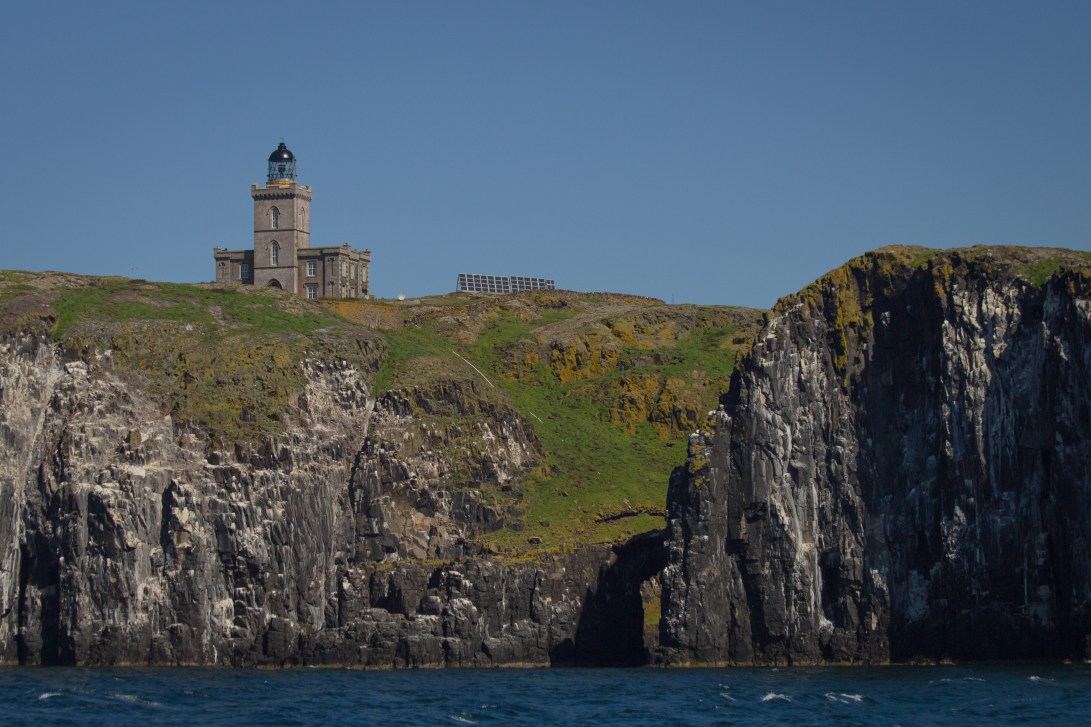
Before long the Isle of May appeared on the horizon, illuminated beautifully under the intense sun. The cliffs and crag faces oozed drama with their harsh black and white, thrown into sharp relief by the light. The few buildings were dotted around and looked very out of place amongst the grass and rocky shores, just how I liked it.

IMG_7000-2IMG_7027

Once we’d all disembarked and received a welcoming talk by a volunteer from Scottish Natural Heritage, we were allowed to explore. Visitors branched off in different directions; we decided to head up Fluke Street, past the Bath House and Main Light to the very tip of the crag. Beyond was Rona and North Ness, areas closed to the public for research. While we admired the view, we spotted a lone grey seal (Halichoerus grypus) wallowing in the shallows, snout resting on the rocks as it dozed.

IMG_7037

IMG_7040

IMG_7118

The seal was accompanied by the odd gull swooping through, but otherwise the island was mainly deserted. We hadn’t timed our trip quite right as most of the seabirds had left, including the elusive puffin (Fratercula arctica) that is high on my tick list. However, aside from the beautiful gannets we still managed to see a few kittiwakes (Rissa tridactyla), cormorants (Phalacrocorax carbo) and a lone juvenile guillemot (Uria aalge), a new bird for me.

IMG_7067IMG_7073IMG_7080

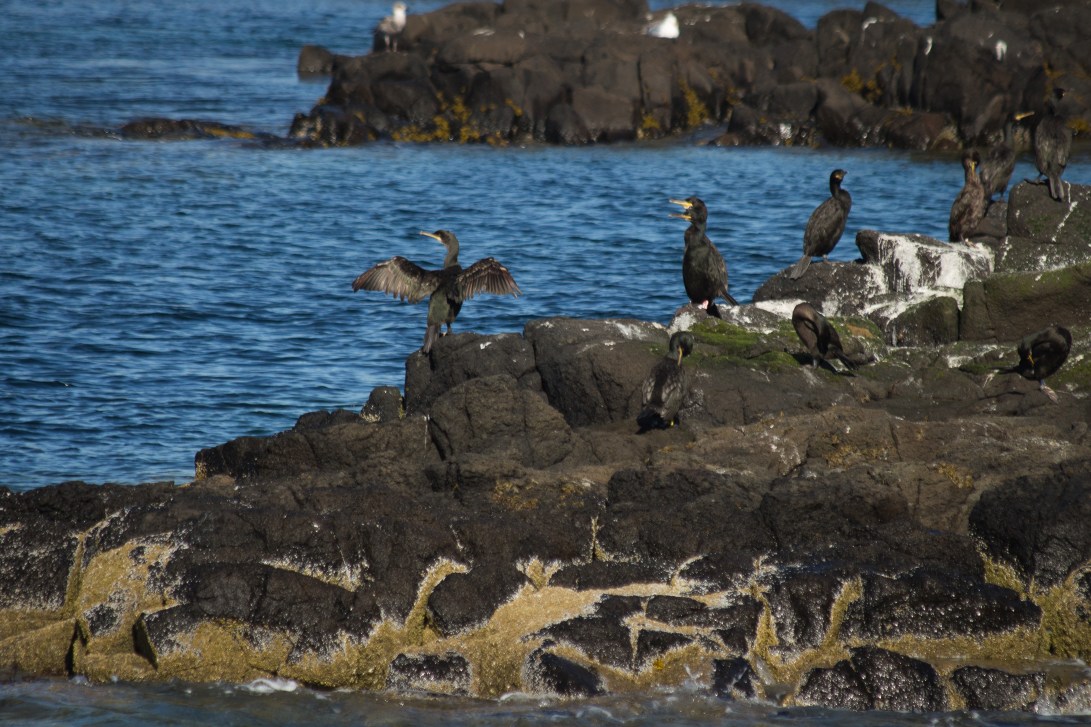
All too soon our time on the island was at an end, and we made our way back to the boat. Just as we were leaving, a grey seal – perhaps the one we’d seen earlier – bobbed out of the water as if waving us off. We thought he’d been our only seal sighting that day, but around the corner we were treated by a large colony, splashing each other and gazing at us with huge black eyes. Cormorants basked in the sun, wings spread as if inviting a hug, and once again the gannets swept over our heads. As the Isle of May grew smaller, my nose grew redder, and when I got home I realised I’d acquired a vicious sunburn. It was worth every moment!