Carna – Day Four

Species seen:

  • Barn Owl – Tyto alba
  • Bladder-wrack – Fucus vesiculosus
  • Butterfish – Pholis gunnellus
  • Chaffinch – Fringilla coelebs
  • Common Blenny – Lipophrys pholis
  • Common Hermit crab – Pagurus bernhardus
  • Common Pipistrelle – Pipistrellus pipistrellus
  • Common Sandpiper – Actitis hypoleucos
  • Common Tern – Sterna hirundo
  • Eurasian Otter – Lutra lutra
  • Eurasian Rock Pipit – Anthus petrosus
  • Flat-wrack – Fucus spiralis
  • Grey Heron – Ardea cinerea
  • Hare’s Tail – Lagurus ovatus
  • Hooded Crow – Corvus cornix
  • Knotted-wrack – Ascophyllum nodosum
  • Lesser Redpoll – Acanthis cabaret
  • Saw-wrack – Fucus serratus
  • Sea-mat – Victorella pavida
  • Serpulid worm – Serpulidae
  • Shore crab – Carcinus maenas
  • Small winkle – Littorina littorea
  • Song Thrush – Turdus philomelos
  • White-Tailed Eagle – Haliaeetus albicilla
  • Willow Warbler – Phylloscopus trochilus
  • Wren – Troglodytes troglodytes
  • (Cuckoo – Cuculus canorus)
  • (Robin – Erithacus rubecula)

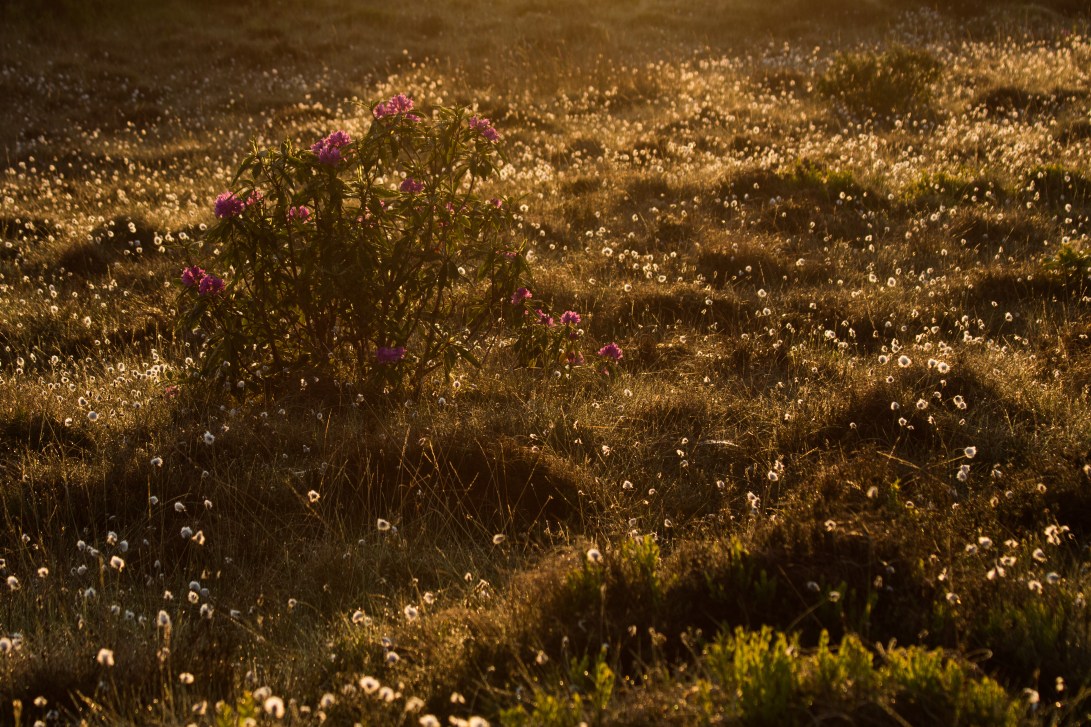
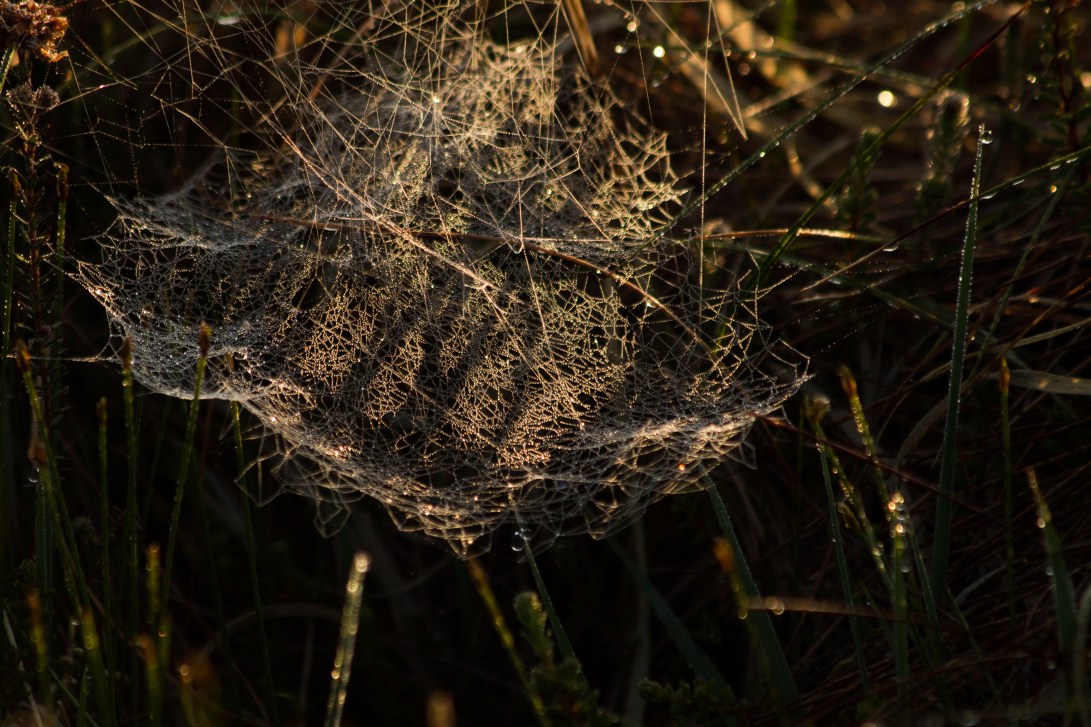
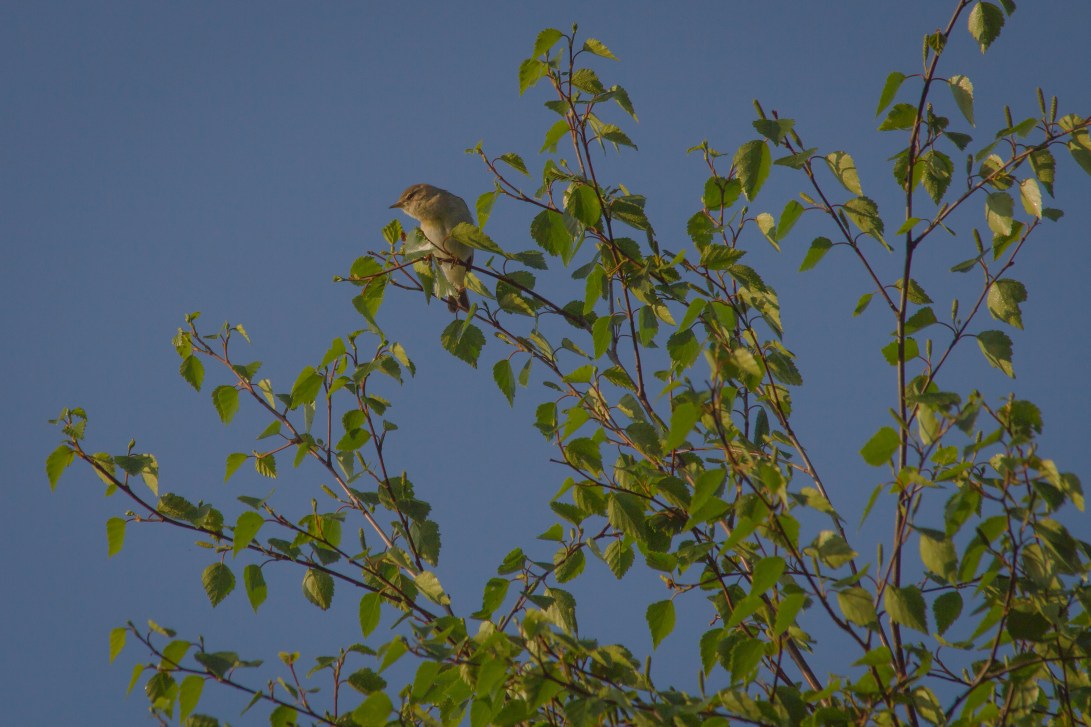
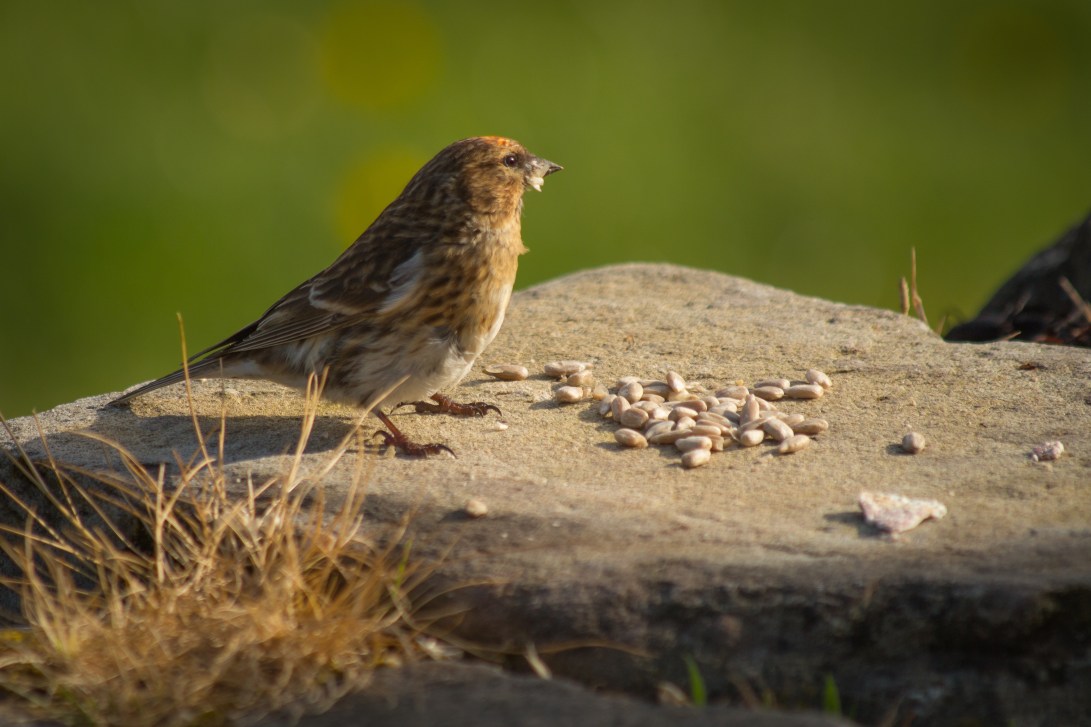
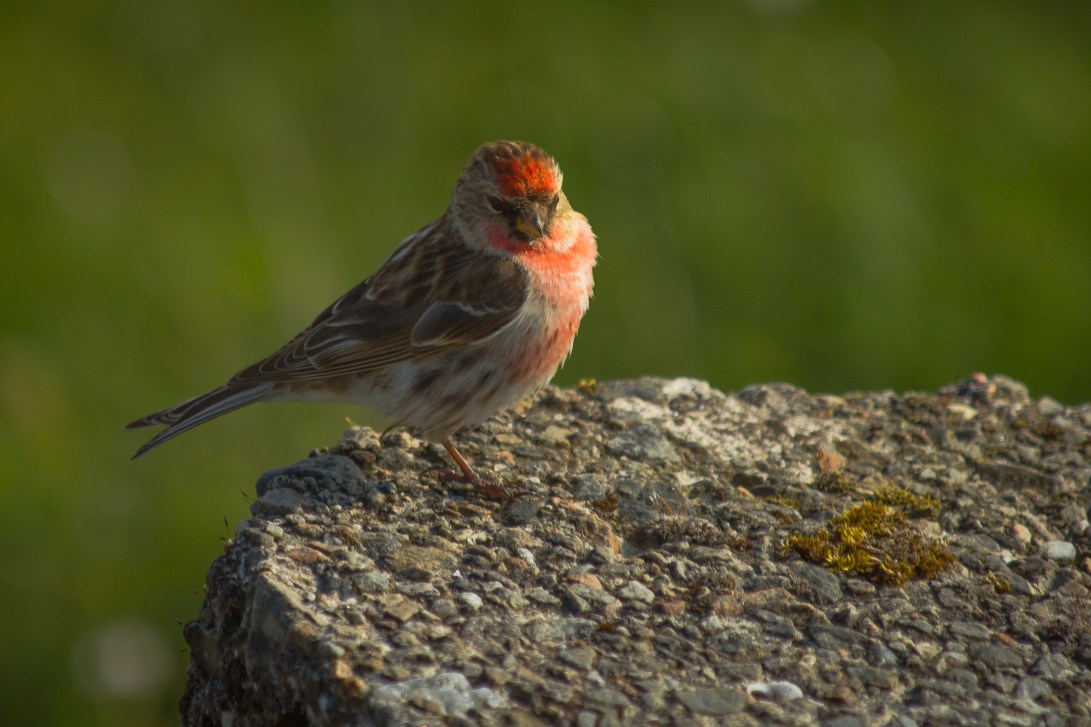
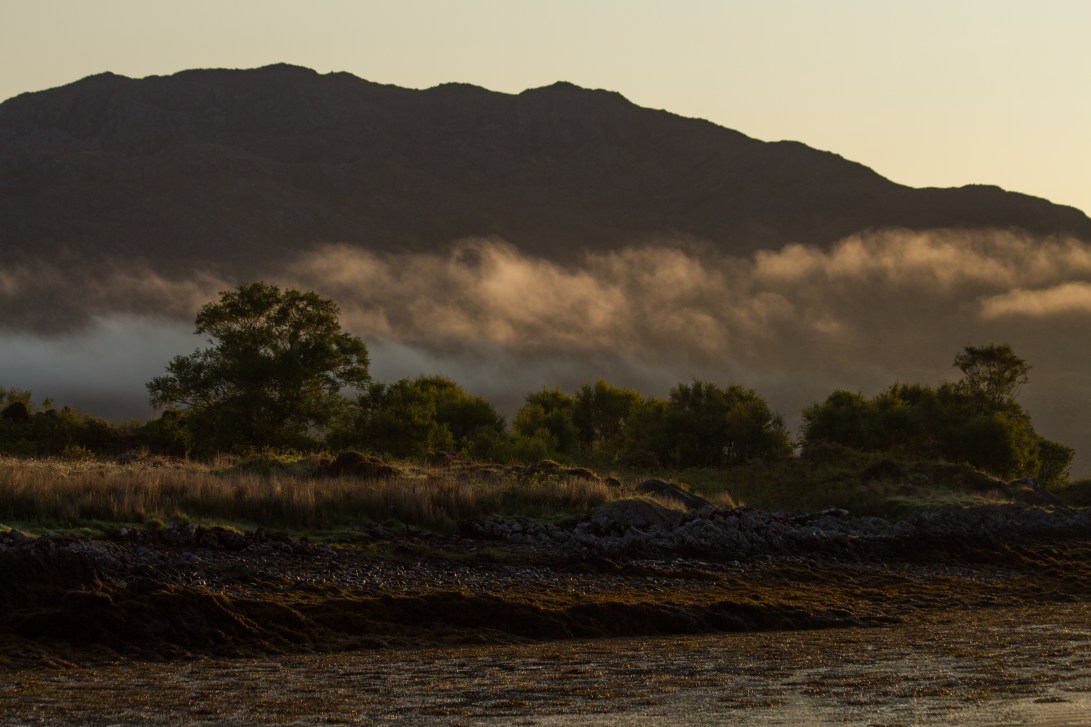
We were woken at the tender hour of 5am this morning for a wander through the dew-soaked grass. Tiny droplets clung to the hare’s tail and made them look like teasels instead of their usual fluffy tops. There was a fine mist rolling over the hills which looked beautiful with the weak sunlight shining through. We spent some time listening to birdsong and trying to untangle the many different voices. Cain described the descending tone of the willow warbler and the drilling call of the lesser redpoll. I would love to improve my knowledge of birdsong; it’s at the very centre of the morning routine for all wildlife.
IMG_6118IMG_6122IMG_6124IMG_6125IMG_6143

IMG_6157
A willow warbler high in the trees

After a break we began the scramble up Crachan Chárna, the tallest hill on Carna standing 170m tall. Once again the sun was shining, which we certainly shouldn’t be ungrateful for, but the heat made the climb just that little bit more challenging. Luckily the path up was well trodden, so we didn’t have to battle through knee high bracken or wade through too many sodden swamps.

Partway up we came across a muddy puddle stuffed with grey and black feathers, clearly the scene of a crime. Cain explained how he knew the culprit was a bird not a mammal. When foxes feed they chew the feathers off the carcass, splintering the feather shafts. Birds of prey pluck the feathers so leave them relatively undamaged. It was then a case of determining the exact species; this involved identifying the prey. When viewed in direct sunlight the black feathers glimmered, the dark green sheen of a shag. The size of this bird meant the predator had to be an eagle; a buzzard wouldn’t have the size over seabirds such as shags. It was so interesting deducing what happened based on the evidence; I’m noticing so much more now I’ve got some field knowledge.
IMG_6170

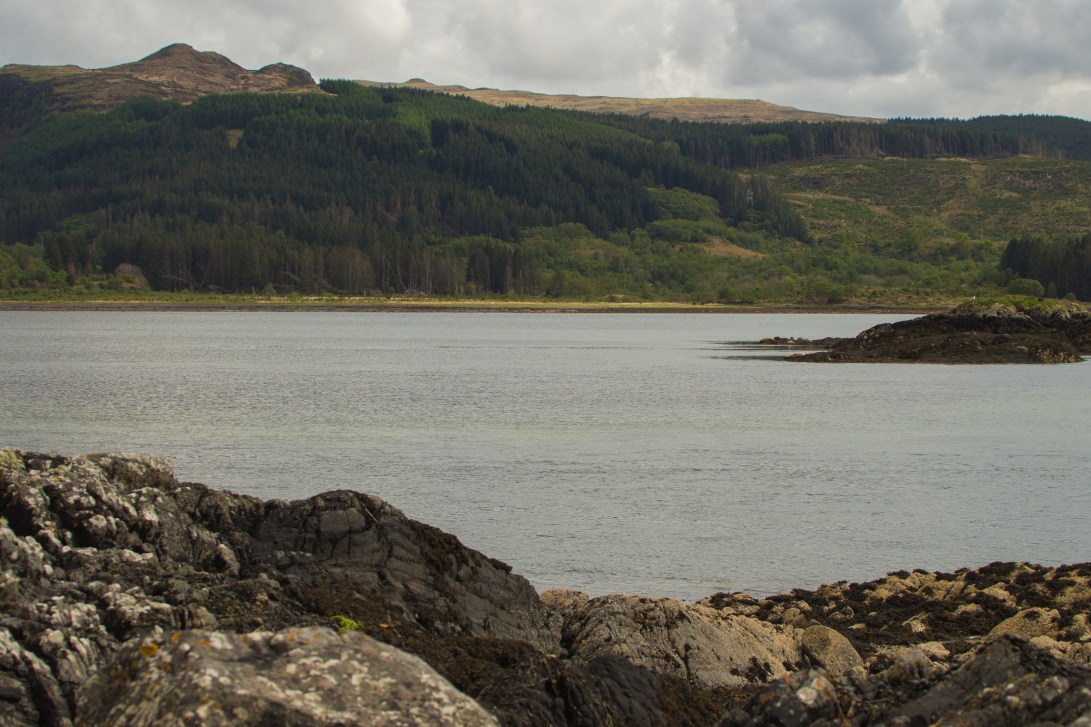
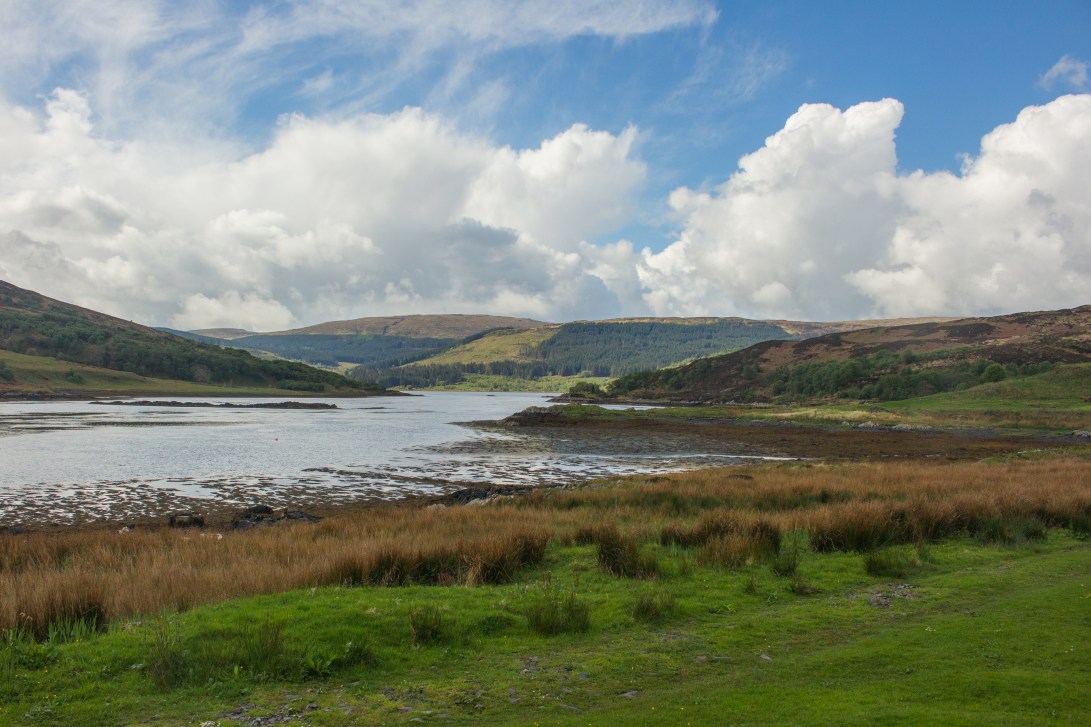
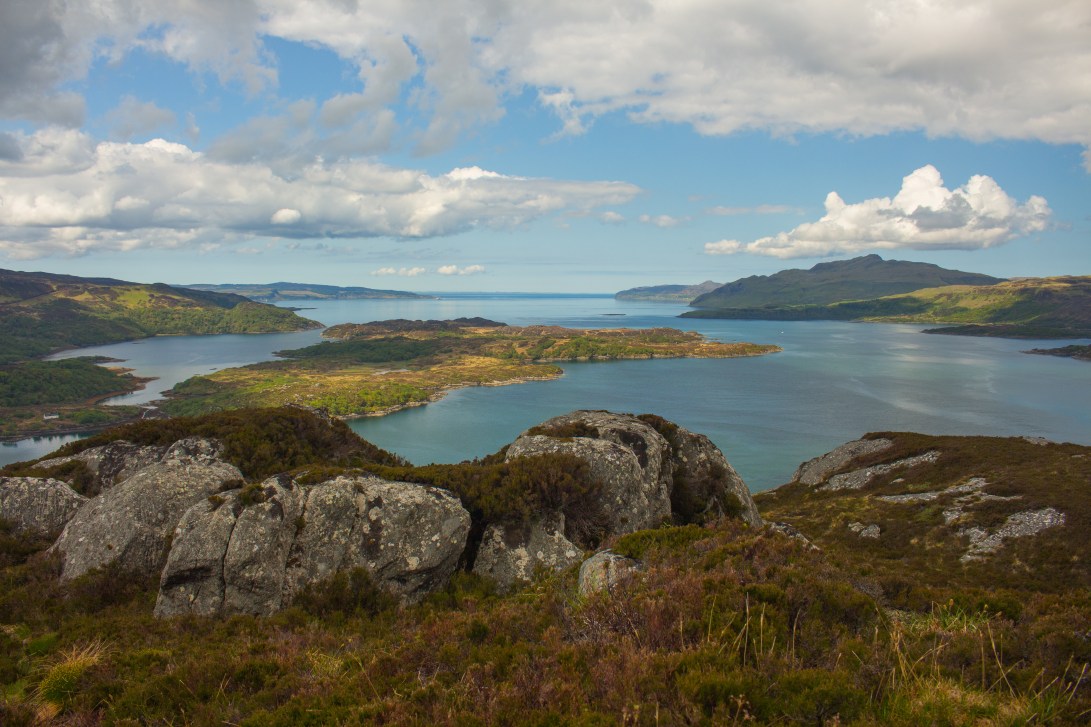
In less than half an hour we’d reached the summit, only stumbling a handful of times. After we’d caught our breath we could fully appreciate the beauty of the island. For miles in every direction sprawled the surrounding isles, smaller patches of rocky terrain jutting out of the loch and the open sea to the west. We spent a long time at the summit, eating lunch and twisting and turning to see every view. Common terns swept overhead, turning into the wind and flapping furiously. Far down below a heron stood poised, neck braced to strike. After enjoying some lunch we made our slow descent back to the ground.
IMG_6206

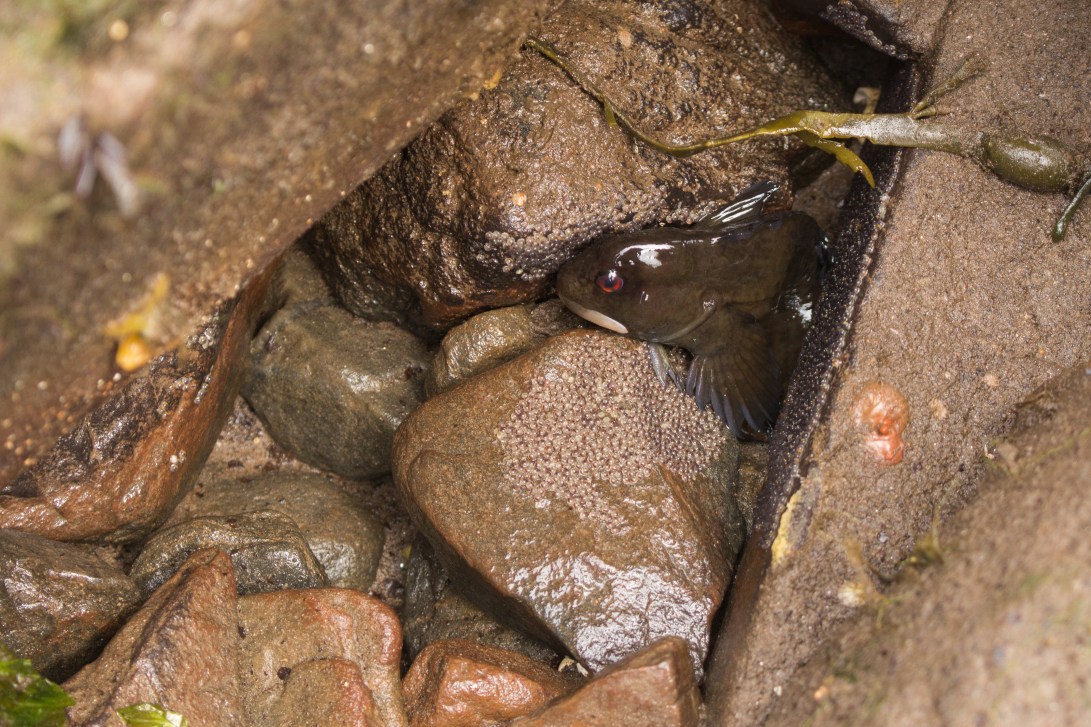
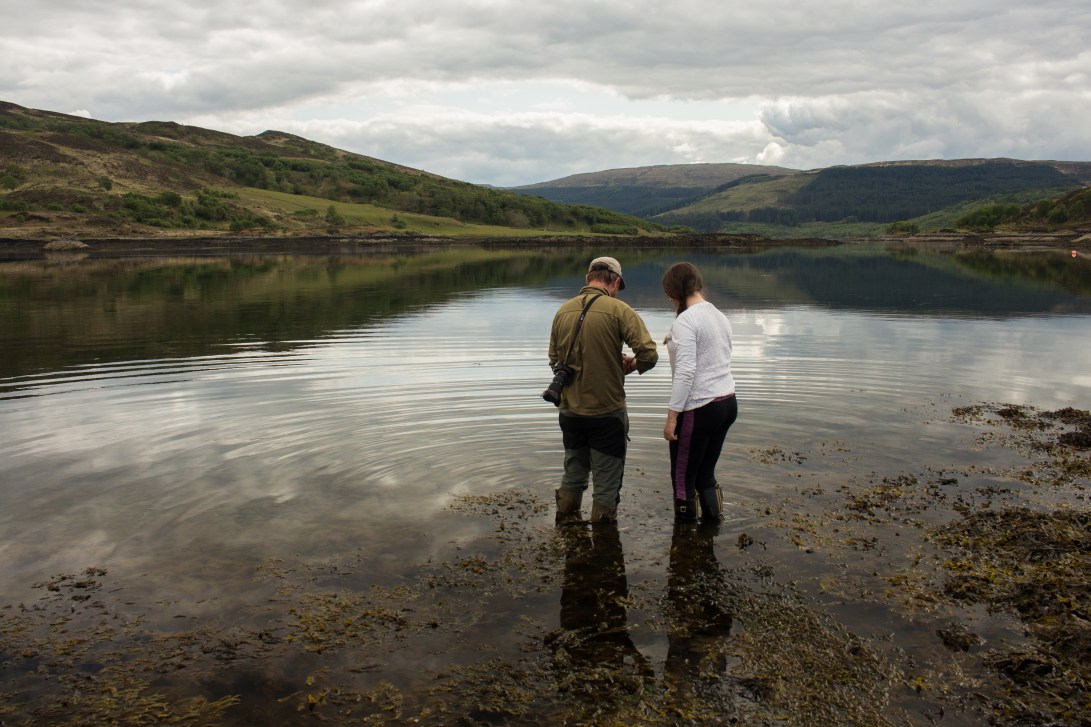
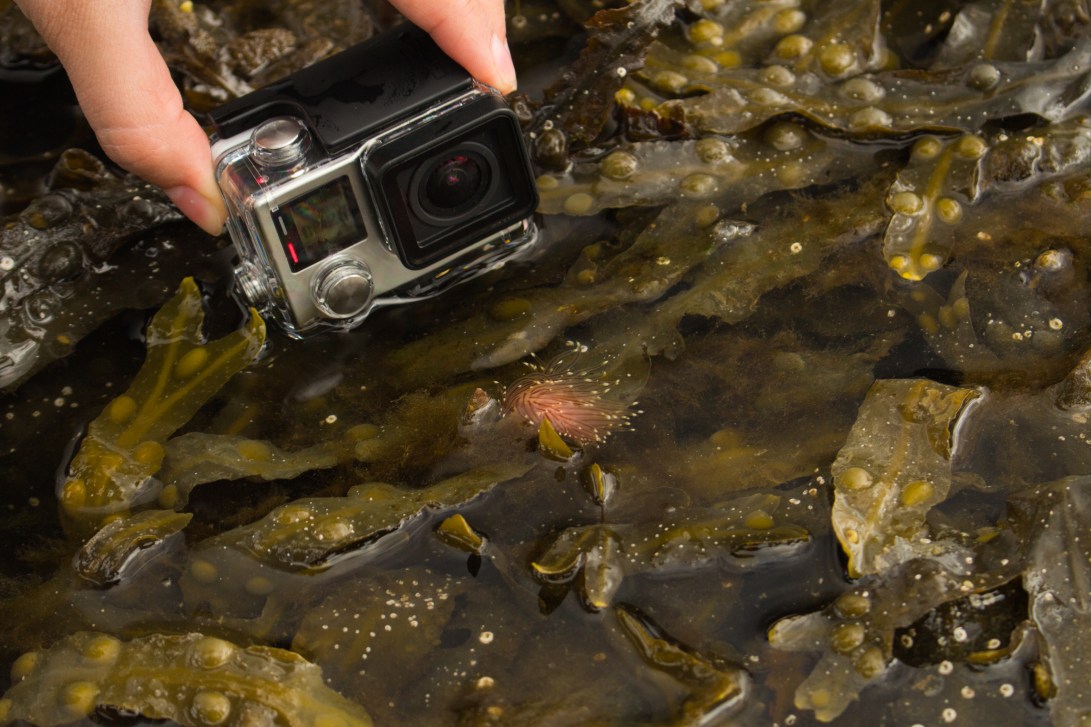
In the afternoon we spent time exploring the coast outside the house. While the tide was out we could forage the seaweed to our heart’s content. I discovered many different species including bladder wrack, sea mat and flat-wrack. In addition we saw many creatures beneath the weed-choked rocks such as edible winkles, barnacles and shore crabs. As well as this we saw butterfish, common blennies, whelks and starfish. We all lay on our fronts on the pontoon and watched a common hermit crab creep along the lakebed.

IMG_6216
Butterfish
IMG_6222
A species in the mollusc family, specifically Nudibranchia
IMG_6228
A whelk feeding on a crab carcass

IMG_6237

IMG_6245
A common blenny with eggs

Later, once the sun had finally set, we headed out to see if we could pick up any bat calls on the detector. We could determine the species by what frequency their call was recorded at. After only a short walk the detector picked up a series of clicking calls at 45Hz, and sure enough a tiny black bullet shot through the night, leathery wings beating the air. Once we’d consulted the identification key we discovered that the common pipistrelle was picked up at 45Hz, so concluded that this was the bat we’d found.

We wandered on and picked up another common pipistrelle further down the path, then suddenly Verity noticed a flash of white above and we all celebrated in hushed tones as the barn owl swept over our heads. By now it was late so we headed back to the house, pleased we’d got the opportunity to use such great tracking equipment.
Carna – Day Three

Species seen:

  • Bog Myrtle – Myrica gale
  • Chaffinch – Fringilla coelebs
  • Common Frog – Rana temporaria
  • Common Porpoise – Phocoena phocoena
  • Common Shag – Phalacrocorax aristotelis
  • Common Tern – Sterna hirundo
  • Common Wood Sorrel – Oxalis acetosella
  • Cormorant – Phalacrocorax carbo
  • Eurasian Otter – Lutra lutra
  • Green-Veined Butterfly – Pieris napi
  • Grey Heron – Ardea cinerea
  • Hare’s Tail – Lagurus ovatus
  • Hooded Crow – Corvus cornix
  • Oystercatcher – Haematopus ostralegus
  • Pignut – Conopodium majus
  • Red-Breasted Merganser – Mergus serrator
  • Song Thrush – Turdus philomelos
  • Round-leaved Sundew – Drosera rotundifolia
  • White-Tailed Eagle – Haliaeetus albicilla
  • Willow Warbler – Phylloscopus trochilus
  • (Meadow Pipit – Anthus pratensis)

After another great night’s sleep we woke to learn about setting up a Longworth trap, a contraption used to live-capture small mammals. Usually the trap is initially set to pre-bait, meaning the door doesn’t close once the animal triggers the mechanism. This enables the creature to become more accustomed to the trap’s presence in the environment.

We filled the trap with ripped up grass for bedding and seeds for food, then nestled it amongst the rocks underneath a tree behind the cottage. We’re hoping to check the trap in a few days and see if we’ve managed to entice anything in.

IMG_5913

IMG_5901
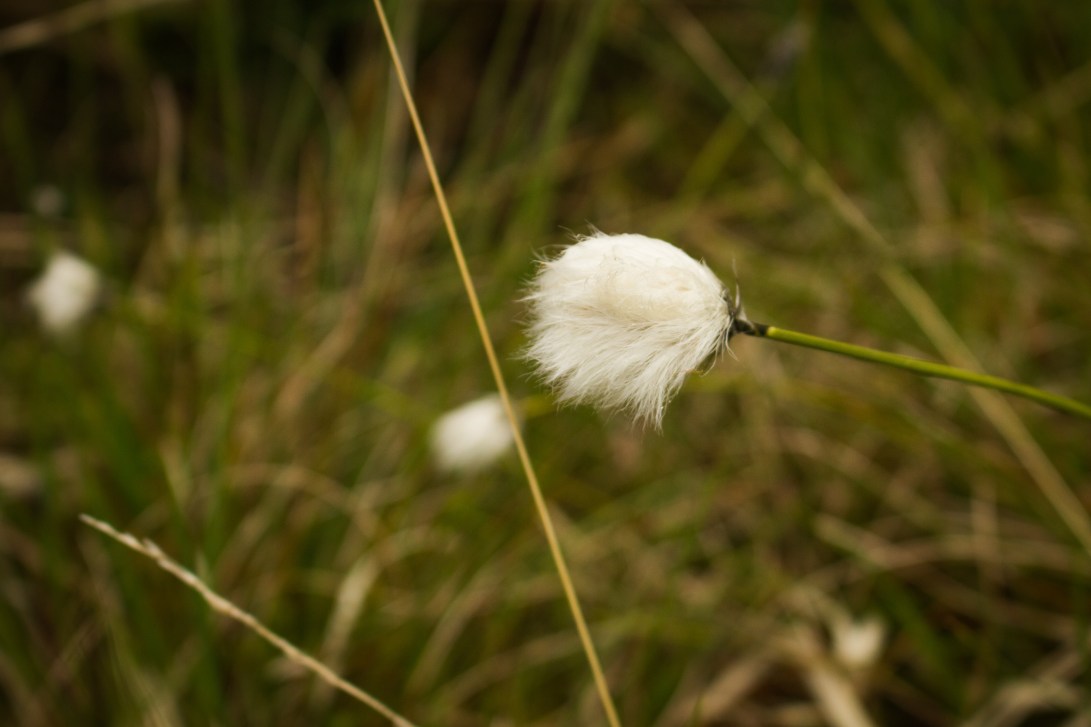
The cotton-like hare’s tail

After the trap was set Cain talked us through the hides he’d brought with him; later today we’d split up and spend some time in them. For now though, Heather took us over to a different part of the island and we improved our flora knowledge. We learnt about many different species I’d never seen back home, including hare’s tail, pignut and wood-sorrel – the leaves of the latter tasted like apple!

IMG_5903

IMG_5933

I got round to some sketching of the landscape this afternoon before heading back to the cottage for lunch. Shortly after, we all headed off to the hides. Verity and Zahrah were occupying the site nearer to the house which promised glimpses of otters. Freya, Lequane and I chose to use a hide further on that looked out over the seal colony.

IMG_5926

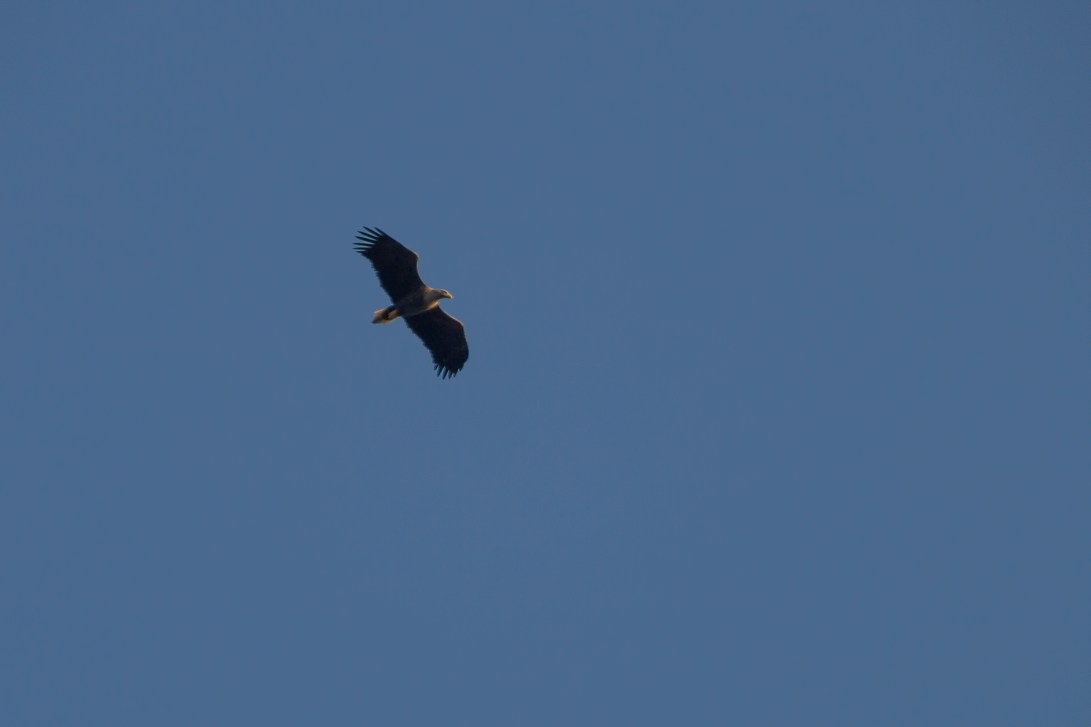
The tide was yet to fully come in so there were only a few seals dotted along the coastline, basking in the sun. Birds fluttered around them; oystercatchers, shags and herons alike. I was just admiring the hills of the mainland when I noticed a black speck in the sky. Binoculars up in an instant, I spied what I hoped and prayed to be an eagle. The three of us gazed up at the mystery visitor and deliberated over eagle or buzzard. A few moments later Cain came running out of the bluebell wood to tell us he’d just seen a white-tailed eagle swooping overhead, so our suspicions were confirmed. Giddy with excitement, we watched the ‘flying barn door’ glide through the sky, barely moving its gigantic wings. This was my first eagle sighting and I was thrilled.

IMG_6002

IMG_5960IMG_5968

A few hours later, when the eagle was long gone and the seals were still fast asleep, we vacated the hide and wandered back. Just before dinner we were treated to both a male and female lesser redpoll just outside the cottage, the male in his beautiful breeding plumage.

IMG_6013

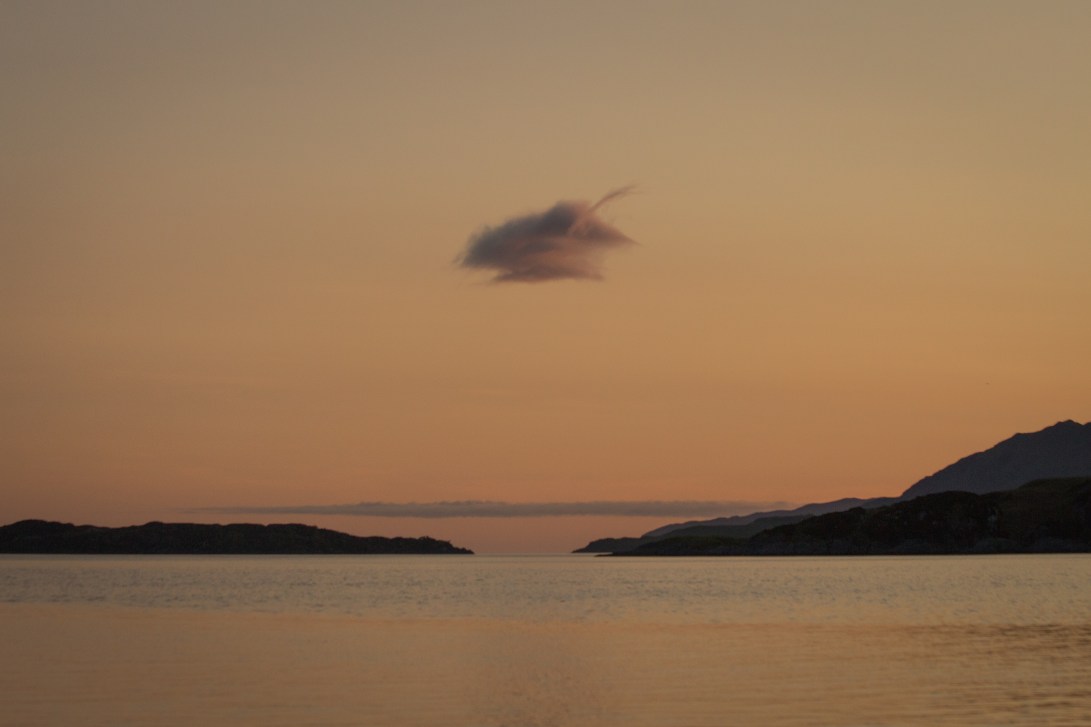
After our meal we set out on the boat with Cain. The sun was sinking low and casting a beautiful orange light across the water; even despite the boat’s engine the loch’s surface was smooth as glass. Our eyes were peeled for otters but we were rewarded with an equally special visitor: a porpoise. A brief flash of black every moment or so, dorsal fin slicing out of the water and back down. Despite the blinding sunset in our eyes we watched the elusive animal meander across the loch until it drifted off. Moments later a lone seal took its place, studying us with big black eyes.

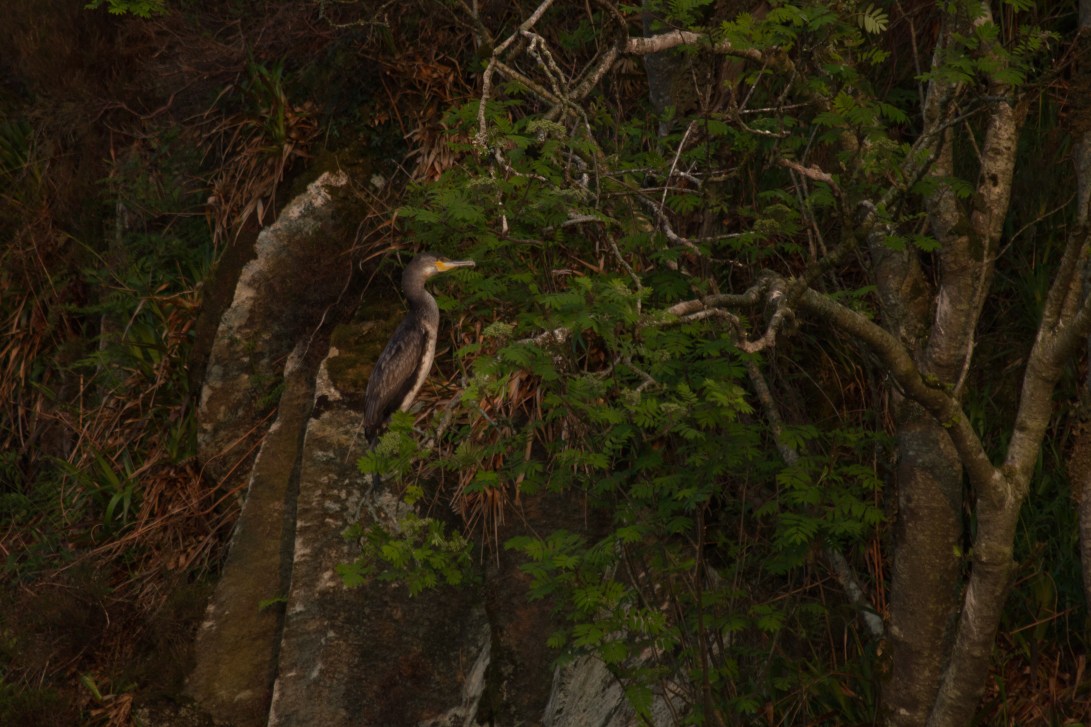
Cain showed us where the shags were nesting amongst the rock face. A year old juvenile perched proudly in the tree, supposedly trying to find a place to roost amongst the expecting parents. Several jet-black adults guarded the nests, squawking to each other.

IMG_6011
Common Sandpiper in flight
IMG_6074
Young shag on the rocks

As the day faded we completed the loop back to the cottage. All was calm until the single word ‘eagle!’ got everyone’s attention. Once again the magnificent bird was above our heads. It was fantastic to see such a formidable bird in the wild; even so high up above us the eagle’s wingspan was vast. I’d never seen anything like it. Sadly the light was too low to get good photos.

IMG_6088

Settling into bed after yet another successful day, I felt so grateful to have seen so much wildlife in two and a half days. So far we’ve covered an array of birds, mammals and insects – all I can hope for is more of the same for the rest of our time here!

Carna – Day Two

Species seen:

  • Buzzard – Buteo buteo
  • Chaffinch – Fringilla coelebs
  • Common Sandpiper – Actitis hypoleucos
  • Common Seal – Phoca vitulina
  • Common Tern – Sterna hirundo
  • Cormorant – Phalacrocorax carbo
  • Cuckoo – Cuculus canorus
  • Drinker Moth caterpillar – Euthrix potatoria
  • Eurasian Otter – Lutra lutra
  • Eurasian Rock Pipit – Anthus petrosus
  • Great Black-Backed Gull – Larus marinus
  • Green-Veined Butterfly – Pieris napi
  • Grey Heron – Ardea cinerea
  • Hooded Crow – Corvus cornix
  • Oystercatcher – Haematopus ostralegus
  • Song Thrush – Turdus philomelos

IMG_5639

IMG_5664

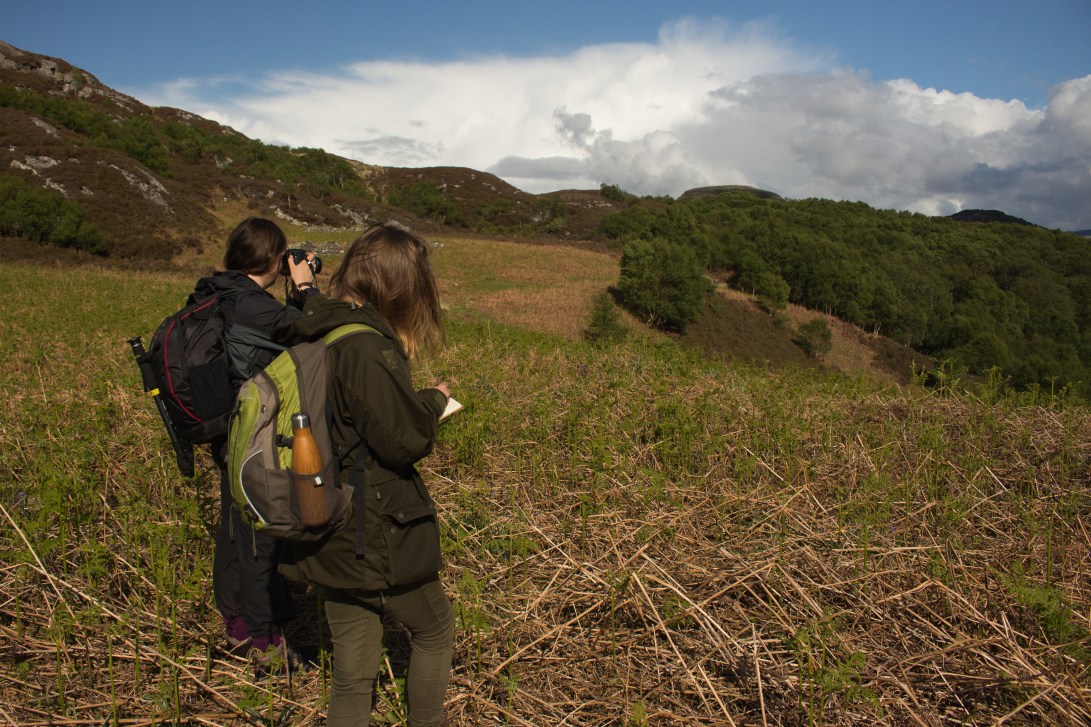
After a great night’s sleep we woke to brilliant sunshine. Over breakfast, we started writing a storyboard for a film that would document our Carna experience. After some lunch, we headed out with Heather and Cain for a walk across the island. Naturally our pace was slow as we were stopping every few seconds as a mystery bird swooped over or a brief flash of brown promised an otter. Once again we were rewarded and saw many different species of bird, invertebrate and mammal.

IMG_5683
The stunning drinker moth caterpillar

IMG_5695

IMG_5696
Hidden Beach Treasures
IMG_5725
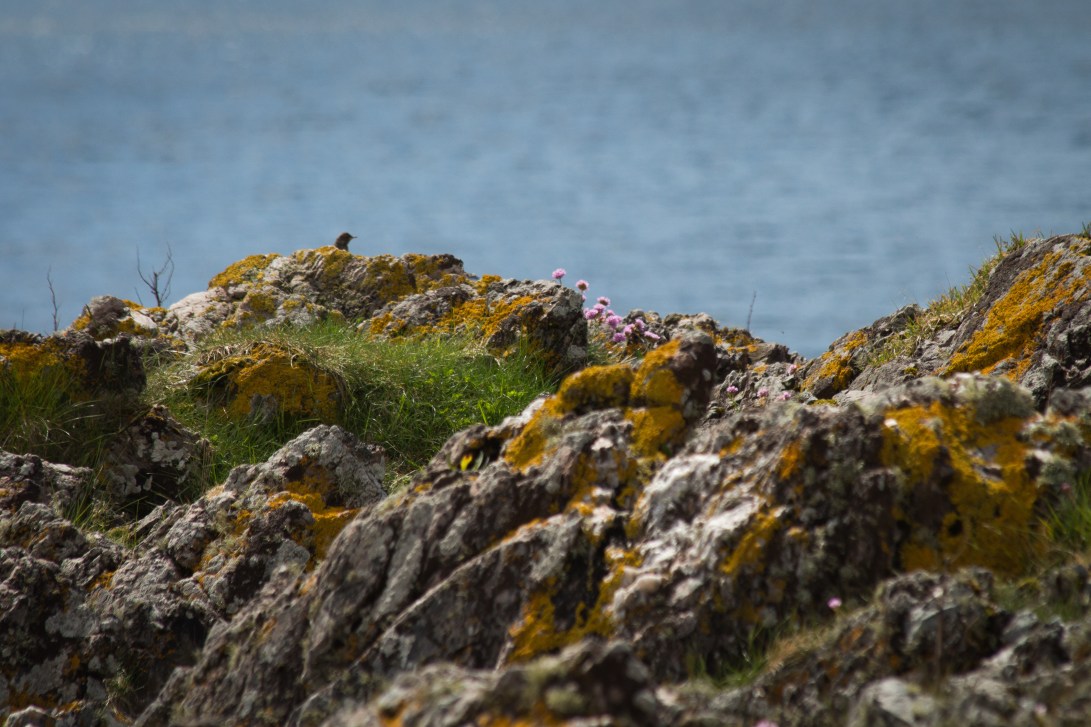
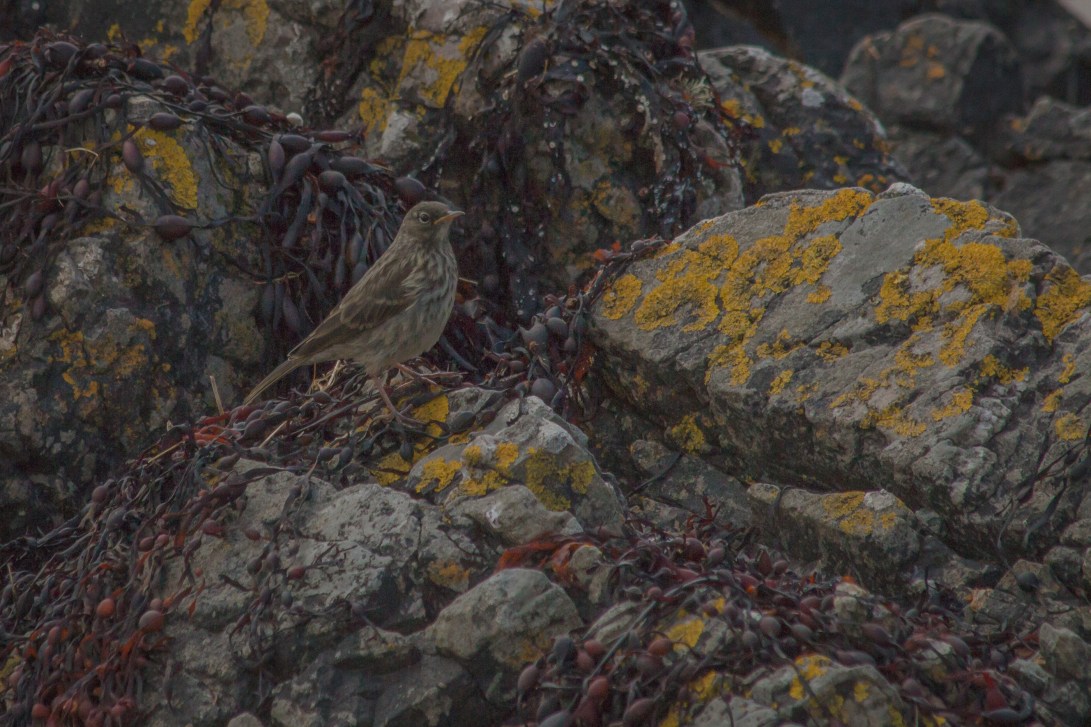
Lone Rock Pipit
IMG_5727
Common Tern hunting on the loch
IMG_5731
Song Thrush on the rocks

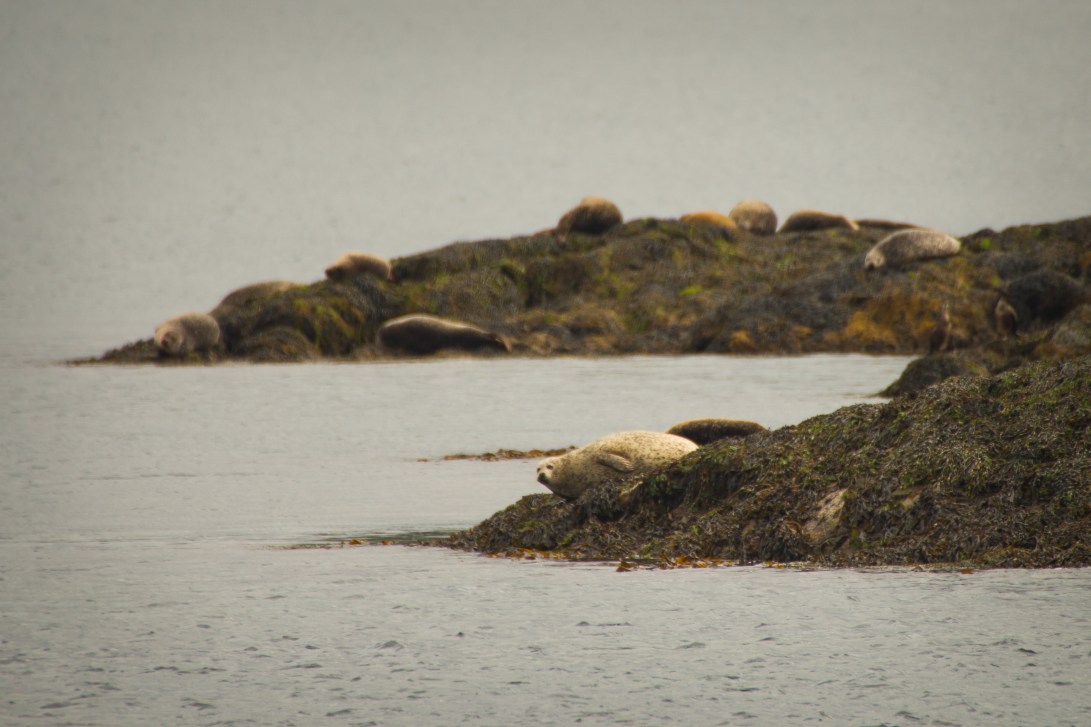
Of birds we saw a cormorant, common sandpiper, buzzard, rock pipit, grey heron and a pair of cuckoos, something we were all excited to see. We also found two drinker moth caterpillars, beautiful insects of black, hazel and amber. During the day we were fortunate enough to see mammals too. We were just admiring a view only the birds got to see when an otter came into view. It was hard to tell the gender, but we watched it for a while diving into the water and popping up again in a new spot. Heather explained that when a dark blob in the water was hard to distinguish, otters always show their tail when they dive under while seals do not. Our otter soon climbed on land and disappeared from view. We made our way down the hill after it but the sneaky mustelid was long gone. A lens change and a snack later, we spent some quality time perched on the rocks watching a herd of Common seals lounging in the sun. The group was spread out over two sub-islands; one was a skinny scrap of shingle where six seals were basking, both adults and juveniles. Seals are always so entertaining. Despite hardly moving, they provide endless enjoyment. For me it’s a combination of their banana pilates move, orb-like bottomless eyes and long white whiskers speckled with sand.

IMG_5759

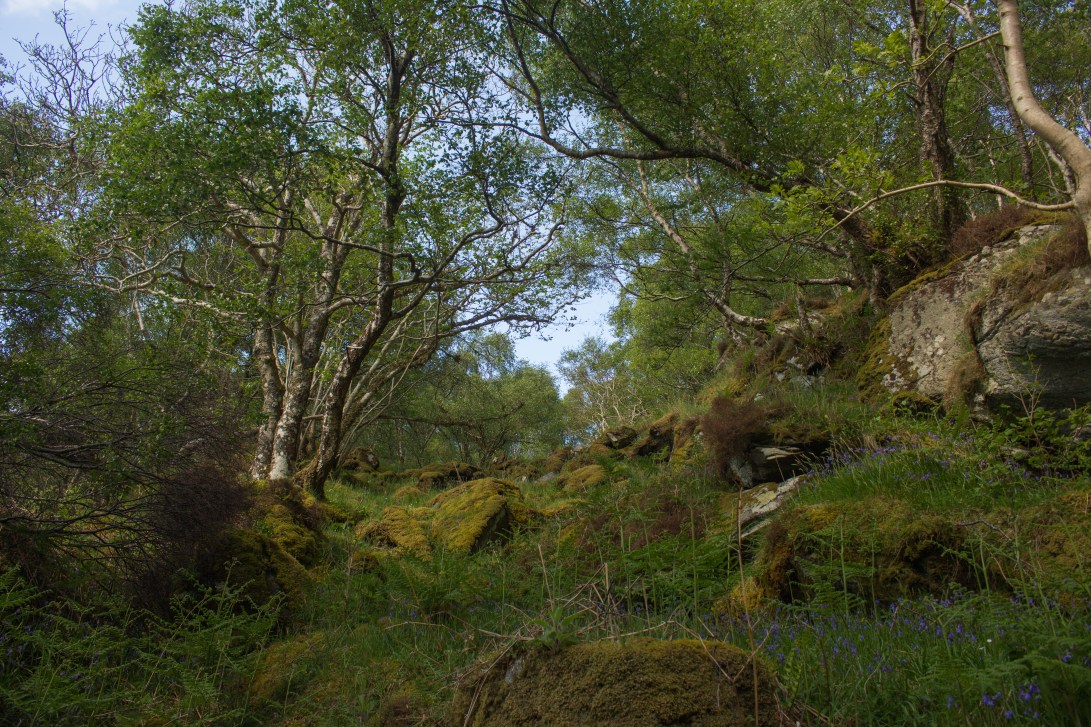
In a while we left the seals behind and headed into the wood. The area was predominantly silver birch; the thin overhead branches of the species allow bluebells to cover the forest floor in splashes of violet. We ascended up and up and started noticing several spraints left by otters, as well as some evidence of deer scat. The grass had been worn down in a narrow pathway, indicating that the area was frequently used. This looked like a good place for one of our camera traps, so we set up the kit and crossed our fingers.

IMG_5775IMG_5779IMG_5805IMG_5821

After leaving the first camera behind we soon found a good place for the second. Near the top of the hill we were climbing were small constructions of dry stonewalls that were slowly crumbling from misuse. It looked like the perfect haven for small mammals with countless hidey-holes, so we found a spot for another camera and baited it with apple.

IMG_5825

By early evening the sun was strong and casting an incredible light across the landscape, throwing the hills into sharp relief. Now standing amongst the heather and drinking in the view, the challenging terrain and heavy camera bags seemed trivial now we’d reached the top. The weather couldn’t have been better, no rain and hardly a breeze.

The way back was shorter as we cut across the hills instead of sticking to the coast. This allowed us to photograph the landscape from several high viewpoints and savour the perfect evening. Cain spotted a red deer darting through the heather and moments later we watched six more grazing across the water. After only a few slips and falls we made it back to the cottage unscathed. Needless to say, we would all be sleeping well tonight after a long but extremely awarding day.

IMG_5826IMG_5869

Carna – Day One

Species seen (heard):

  • Barn Owl – Tyto alba
  • Common Frog – Rana temporaria
  • Common Tern – Sterna hirundo
  • Eurasian Otter – Lutra lutra
  • Hooded Crow – Corvus cornix
  • Lesser Redpoll – Acanthis cabaret
  • Red-Breasted Merganser – Mergus serrator
  • (Cuckoo – Cuculus canorus)
  • (Snipe – Gallinago gallinago)
  • (Tawny Owl – Strix aluco)

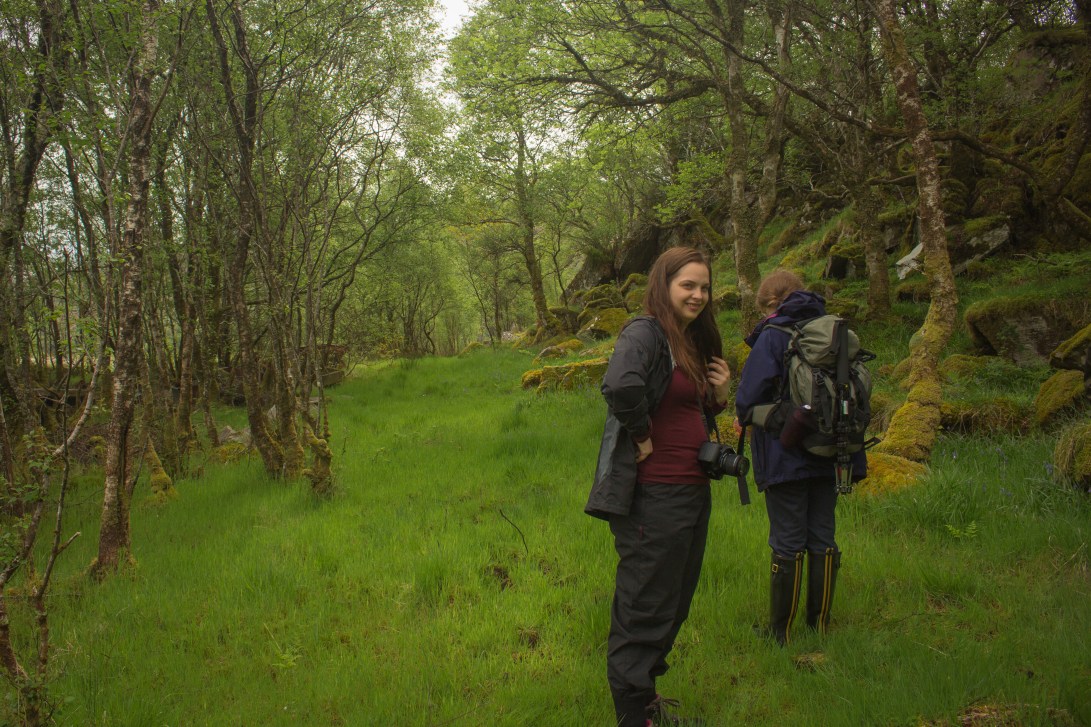
From May 21st to 26th, I joined four other Wildlife Media students for an unforgettable expedition to the Isle of Carna, a beautiful remote island on Loch Sunart on the west coast of Scotland. Our aim was to rewild ourselves by taking part in conservation activities like conducting bat surveys, setting up camera traps and recording wildlife using journals.

By mid afternoon we arrived at Ardnamurchan Charters, eager to see the island where we’d be spending the next five days. Andy Jackson, owner of the Charters, met us with his dog Tag and we began loading our kit onto the boat. There was a surprising amount for such a small group!

The day was overcast but Carna still looked impressive as we sped towards the island. The cottage came into view, a quaint white building with a conservatory that we knew would be perfect for observing wildlife on the loch. Sure enough, in the first few hours we saw red-breasted mergansers, chaffinches, song thrushes and a lesser redpoll.

IMG_5585
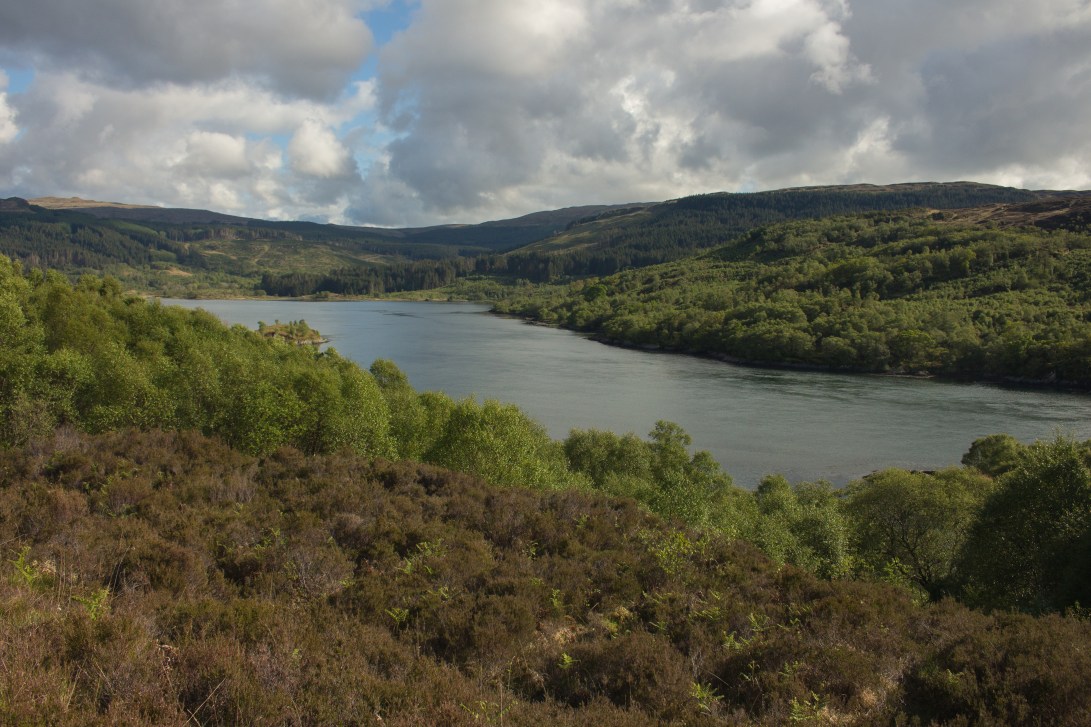
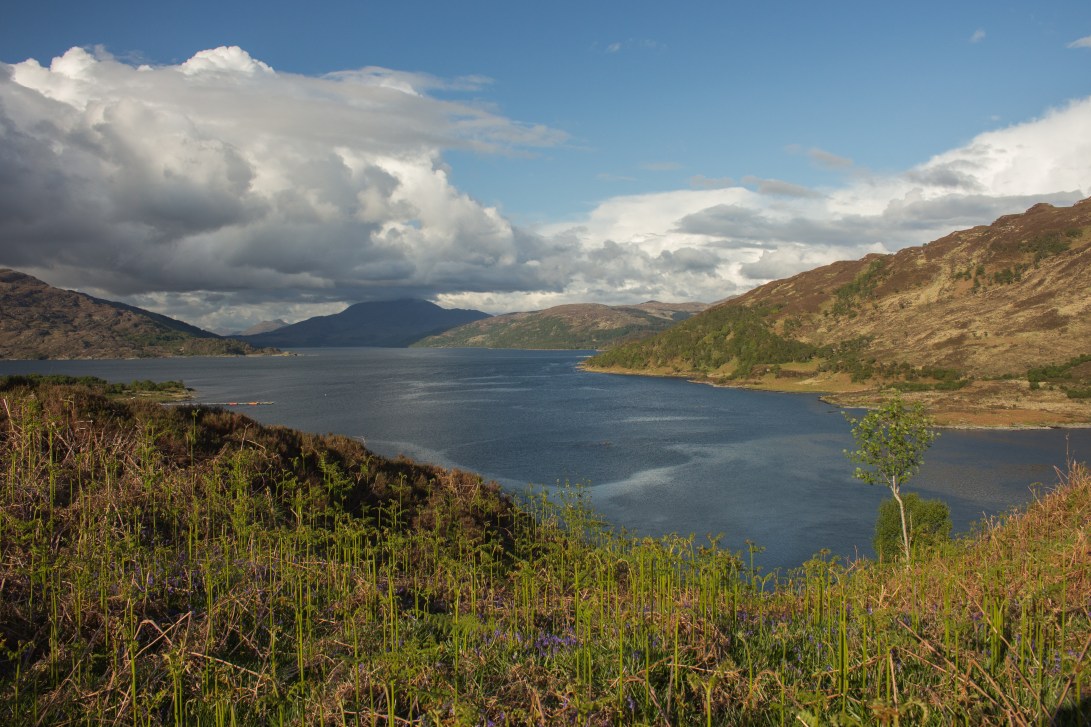
Loch Sunart
IMG_5591
The pontoon where we waited for Andy

After settling in, we noticed how beautiful the evening sky was and armed ourselves with cameras and binoculars, eager to find out what we would see when the sun went down. After capturing a radiant pink sunset we retrieved the camera traps Heather and Cain had previously put out. The first was at the end of the pontoon, and immediately we saw evidence of otter sprainting, a sign of territory marking. Otters will use their faeces in this way to make their presence known to others in the area. At the pontoon there were several patches, so we were hopeful that the camera had caught the night-time visitor.

The second camera was in a wooded area up the hill. We knew the long grass would be full of ticks, but we’d bought tweezers and knew this was one of the many sacrifices a wildlife enthusiast has to make! Eventually we found the camera and made our way back down the hill.

A peculiar sound made us stop and listen. Heather quietly told us they were snipe, which make an extraordinary drumming noise with their tail feathers. Although we never saw them, they must have been wheeling around our heads, as the noise reverberated in every direction. Amongst the snipe’s commotion, we also heard the distant calls of a tawny owl and a cuckoo.

IMG_5602
Carna at dusk

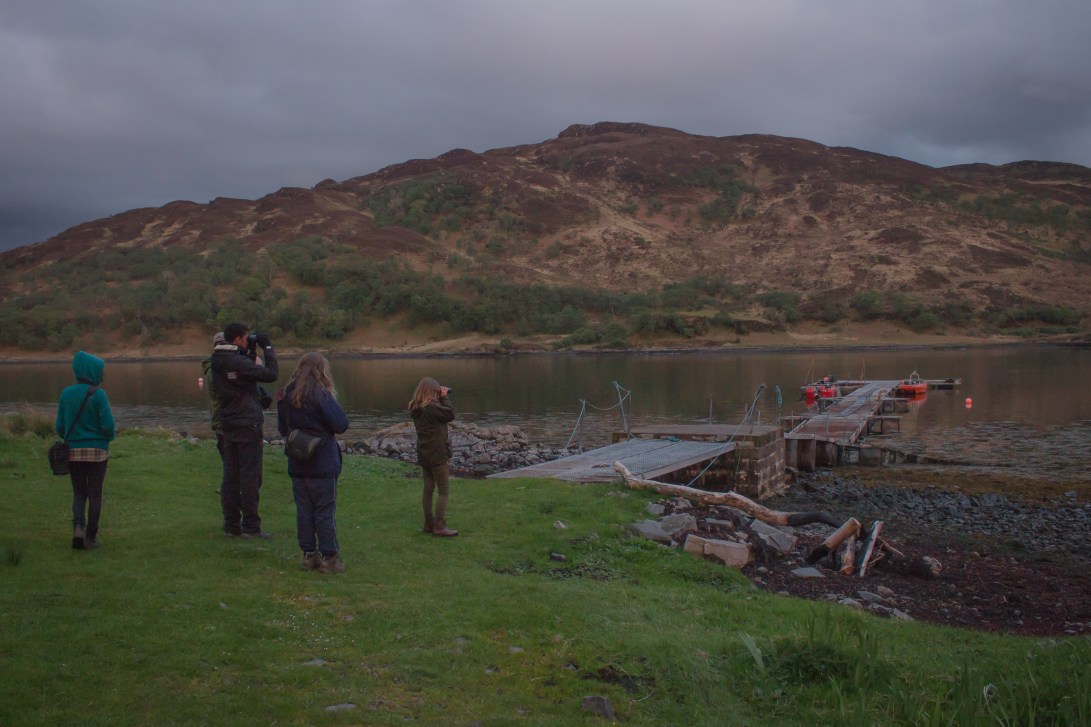
Just as we were heading back to the cottage, Cain and I decided to check the pontoon with our binoculars. I made out a black blob in the gloom and suddenly the blob moved. As silently as possible, we alerted the others and watched the otter wander across the pontoon. This was my first ever wild otter so I was thrilled to see one on my first night here. I was so excited I almost missed a barn owl swoop across the loch, screeching into the night.

IMG_5615
Studying the water for otters

I couldn’t believe how much we’d managed to see in the first night alone. I got into bed tired after the long journey but excited for the following days.

IMG_5623
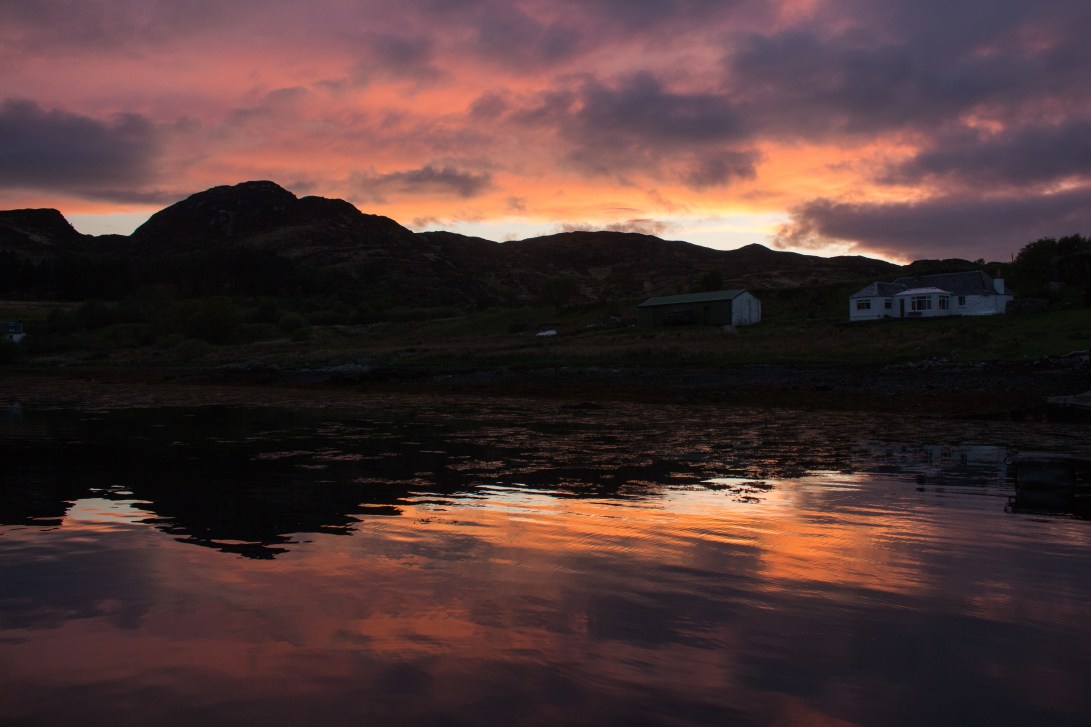
Stunning sunset