A Day at Sea

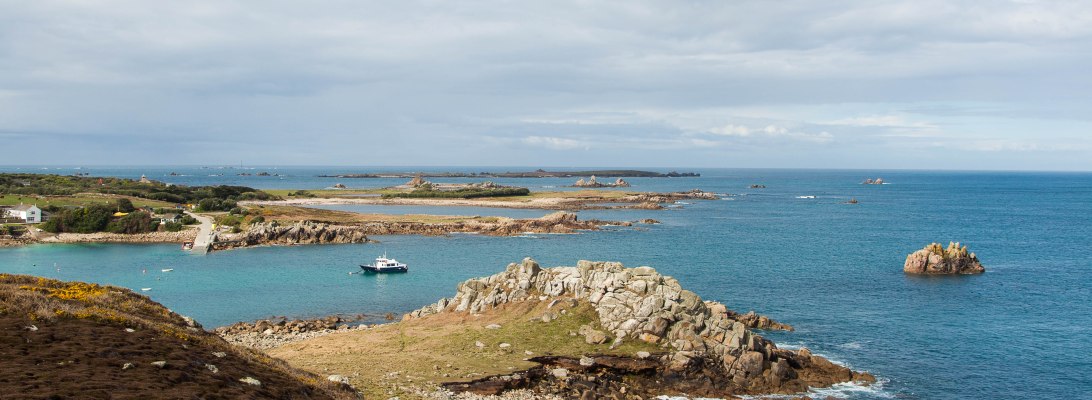
Like almost every other visitor to the Isles of Scilly, I had my sights set on puffins during my stay, not to mention razorbill, guillemot and perhaps a seal or two. I’d planned on joining the afternoon Sea Safari around Annet, known as the bird sanctuary island, and the Western Rocks.

I wandered down to St Mary’s Quay to check it was going ahead and saw there was a trip to Annet in the morning too. I stood at the harbour and pondered what to do. The weather didn’t look promising – the looming clouds threatened to burst at any moment. So, somewhat recklessly, I bought a ticket for the morning trip and boarded the Sea King. As St Mary’s drifted slowly out of view, I hoped I’d made the right decision.

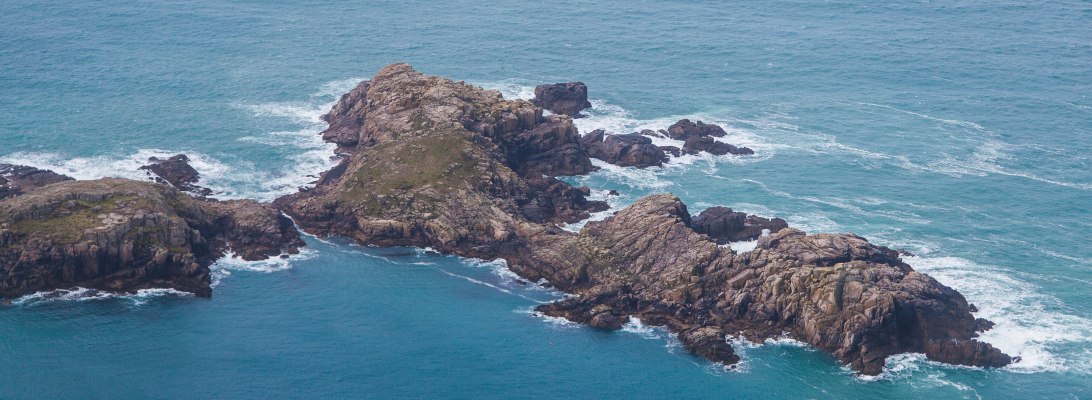
By the time we reached St Agnes the sun was doing its best to break through. As we headed out towards Annet, our guide pointed out the rock called the Cow, a smaller rock named the Calf beside it. When the tide came up, the Calf disappeared completely, only emphasising the fact that boatmen on Scilly needed their wits about them when navigating such challenging waters. Shags were perched on the Cow with wings held wide. The structure of their wings reduced buoyancy, which made it easier for the birds to chase fish underwater. As a result of this adaptation, however, their feathers were not truly water-repellent, so they needed to hold them up to dry them. Although, I doubted these shags would have much luck drying them in the current temperature. Perhaps it was for another reason; spread-wing postures aid digestion. Birds that adopt this position have low metabolic rates and high rates of heat loss. By positioning themselves with their backs to the sun, shags could increase the rate of thermoregulation, absorbing solar energy to increase their metabolic rate.

IMG_1472

Lesser black-backed and great black-backed gulls wheeled overhead, mouths open as they wailed at us. I had my binoculars scanning the rocks and nearby surf for a glimpse of vibrant, toucan-like beaks and droopy, clown eyes. The skipper slowed the boat suddenly and I sat up straight – a sure sign he’d seen something. A pair of great northern divers cruised into view when a wave subsided – beautiful grey birds not yet in their summer plumage. The divers, as a group, were extremely glamorous, with sleek heads and slender necks and bills.

IMG_1431

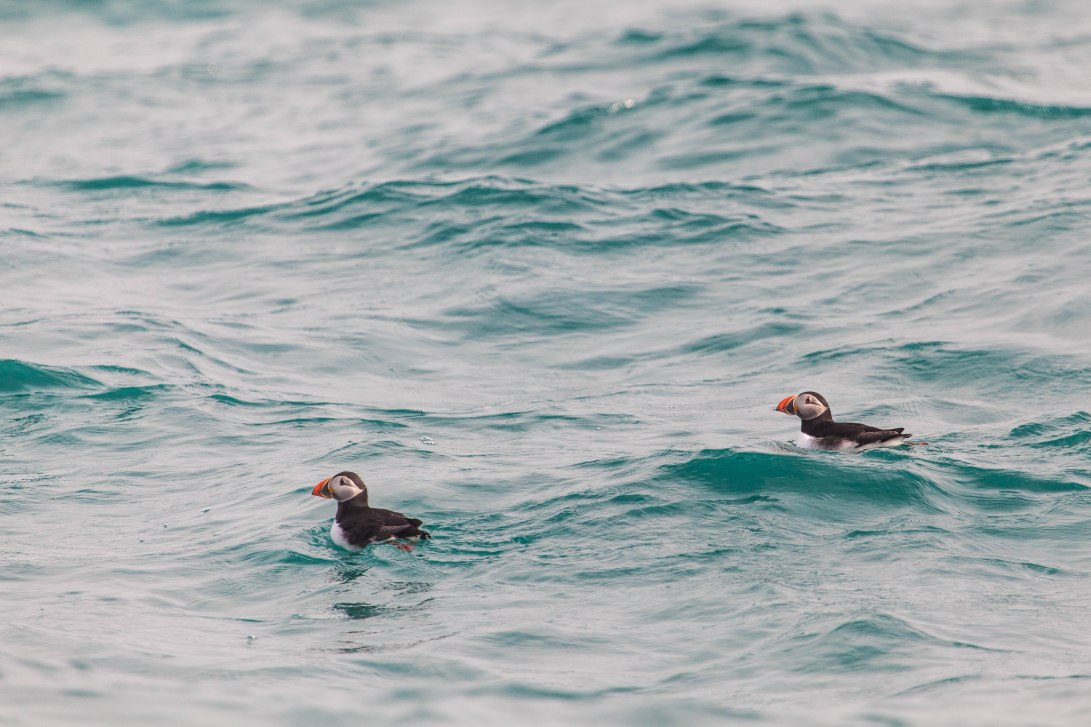
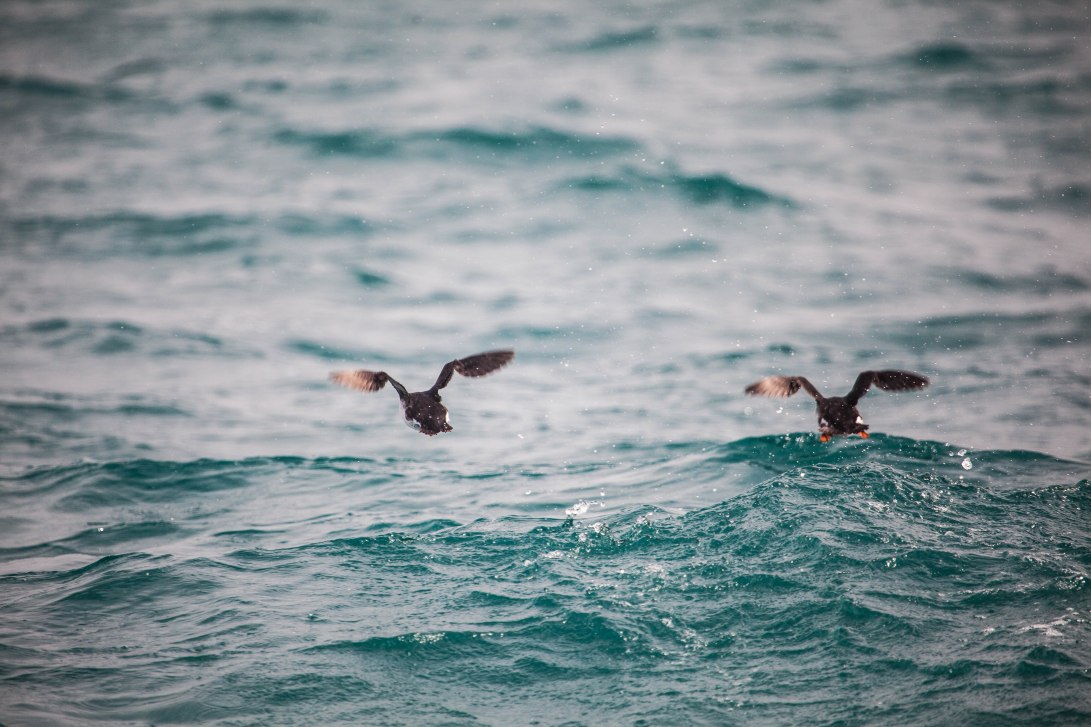
A while after our divers had swum further away, I suddenly found myself looking at my first puffins. Two of them, perhaps a breeding pair. Down the binoculars, all concept of scale was warped, and it was impossible to see how small they were – just 12 inches tall! After a few moments they took to the air and, flapping rather ungainly, they gathered enough momentum to carry them off across the water. I was thrilled.
IMG_1412-2IMG_1413

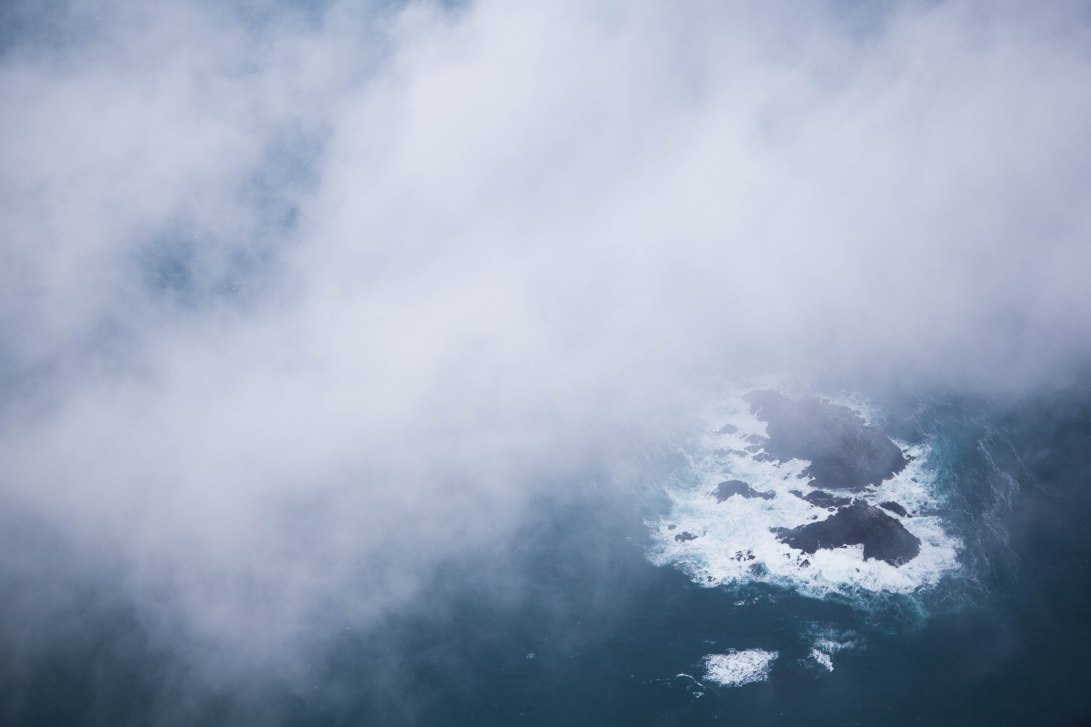
Leaving Annet behind, we moved into choppier water, the boat swaying beneath us as it negotiated unsteady waves. I was reminded again of how wild and isolated Scilly was, and it was this seclusion that protected and enhanced its flora and fauna. It was an island paradise.

A razorbill – a member of the puffin family – flew into view, wings beating rapidly either side of a stout, monochrome body. It wheeled in a wide circle, zooming back around the boat and away again; a bird’s second glance, too quick to photograph.

Just before it was time to turn back, a vast herd of forty grey seals appeared, some sprawled across the rocks and others bobbing in the water, long dog-like noses pointing in our direction. There were a range of ages, with some of the seals still sporting very lightly coloured coats and juvenile, inquisitive expressions. They continued to gaze after us until the rocks obscured us from their view, and the skipper took us back to St Agnes.
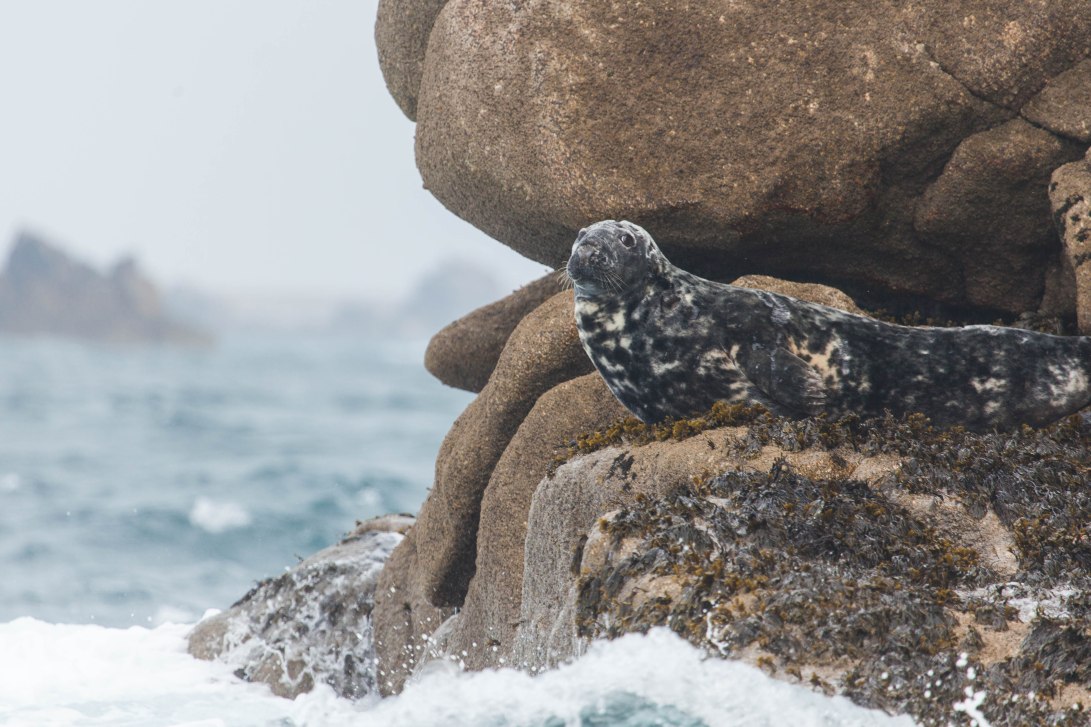
IMG_1482-2IMG_1525

Once we had all disembarked from the Sea King, it wasn’t long before the Spirit of St Agnes had taken its place, ready to take more eager birdwatchers out to sea. I decided that I rarely had the opportunity to go looking for puffins, so I bought a ticket and left dry land again, excited to be back out on open water.

Amongst the blue-green waves were the white outlines of gannets, looking like swans of the sea with their slender necks and stocky bodies. Britain’s largest seabird, with a formidable wingspan of six feet; not only did they have beautiful plumage and facial markings, but they were truly built for a life at sea. Gannets can dive into the ocean from heights of 40 metres, hitting the water at speeds of almost 60mph. To withstand the pressure of such a dive, gannets have “airbags” that protect their organs on impact. They also breathe through slits, situated where the upper mandible meets the head, which are covered by flaps of hard tissue that prevent water from entering them.
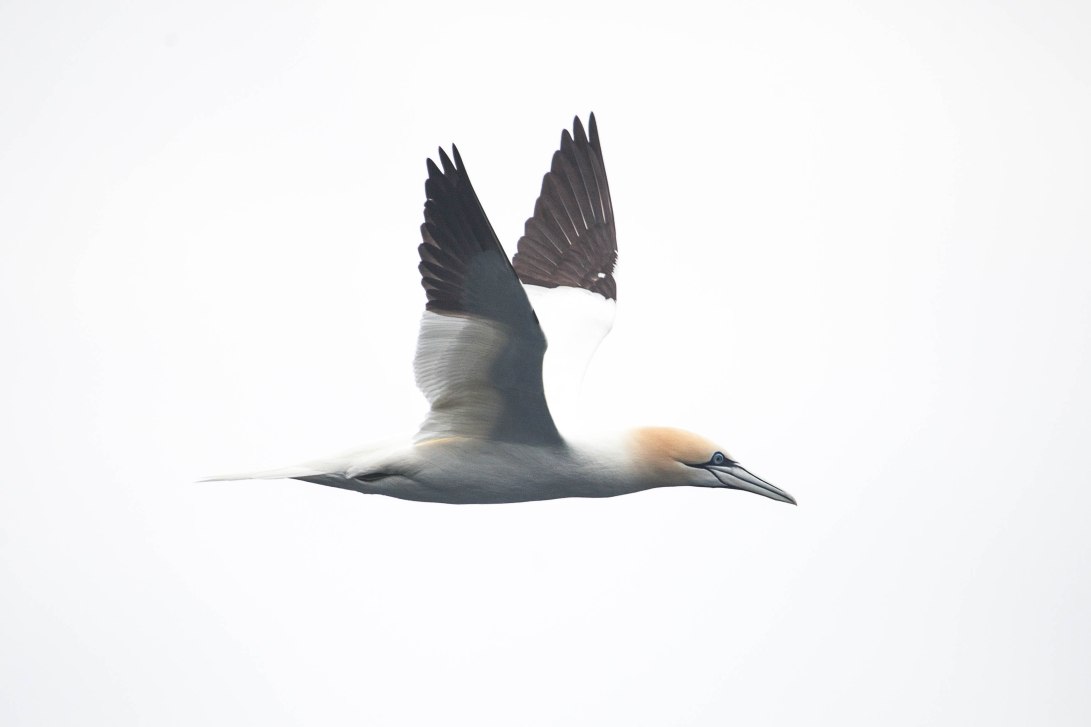
IMG_1575

These gannets weren’t diving, but they were soaring low over the boat, providing beautiful photo opportunities. It was always a challenge trying to focus a fully extended 400mm lens on a rocking boat, but I kept the camera as steady as possible and followed the birds as they glided majestically overhead.

The last bird to make an appearance was a special one; the Manx shearwater. Belonging to the order Procellariiformes along with albatrosses, these birds can live for some sixty years. They only produce one egg a year, so are highly susceptible to predation by rats. To combat this, the Isles of Scilly Seabird Recovery Project was established to eradicate rats from St Agnes, as it was suspected that they could swim the reasonably short distance to Annet, where the Manx shearwater bred. The project was successful, St Agnes was declared rat-free and the birds are now breeding successfully. In 2015, a total of 28 Manxie chicks were seen to be fledging from St Agnes and Gugh. These birds only breed on Scilly and Lundy in the UK, emphasising the importance of protecting the Scillonian population.
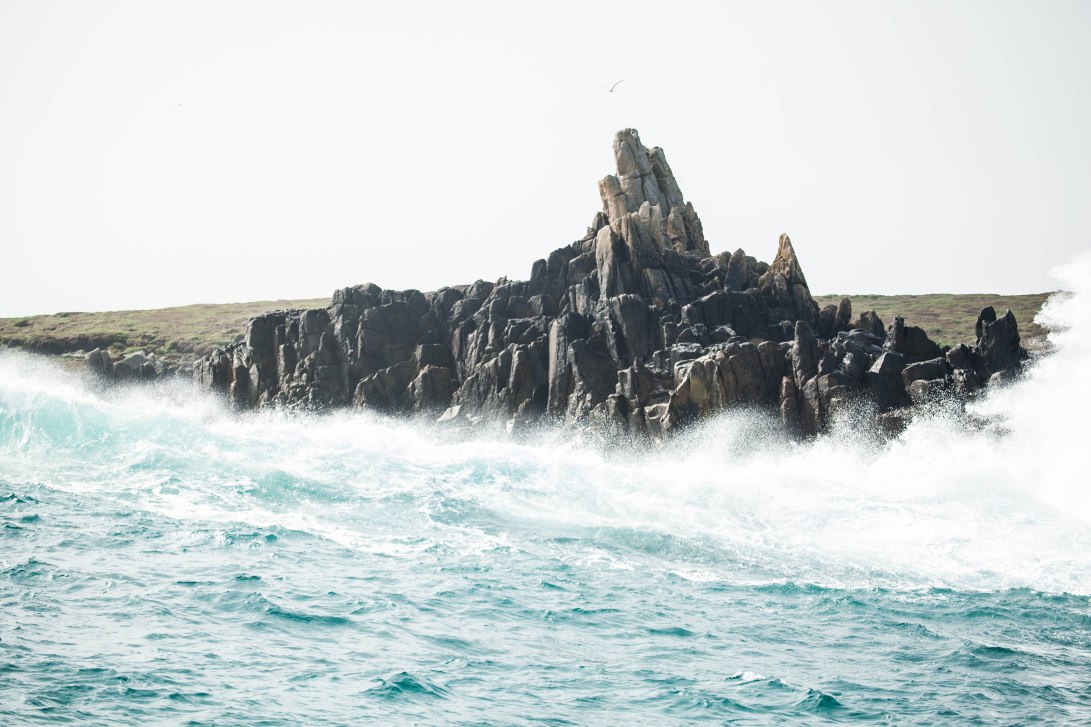
IMG_1397

Before long it was time to leave rugged Annet behind and return to (scarcely) populated St Agnes. Although we’d had Manxies and gannets on this trip, the puffins had eluded us. I spoke to the guide on the journey back and she said they didn’t like bright sunlight. As the clouds had shifted and it had turned into another beautiful day, the puffins were obviously finding shade elsewhere. Later, as I looked through my photos, I felt very fortunate to have gone down to the harbour earlier than planned.

IMG_1497-2

Success!

I was back on Bryher today, having another go at finding the elusive dwarf pansy. As was becoming a daily ritual, I engaged in friendly conversation with my fellow passengers on the Seahorse as it made its leisurely way out of St Mary’s Quay.

“That’s a fancy bit of kit you’ve got there,” one man said, gesturing at the camera hanging from my neck, “What are you hoping to photograph?”

I told them about my mission to find the dwarf pansy, to which the man said, “Ah yes, such a shame about the flowers this year.”

I supposed he was referring to the recent snowfall, which had pushed the growth and emergence of the Scilly wildflowers back a few weeks. Still, I didn’t like his pessimism and although I smiled politely I was feeling confident. The weather had been and still was beautiful, and I was here to find the dwarf pansy. So when the boat docked and I hopped onto dry land I strode towards Rushy Bay with steely confidence. The sun was already beating down and incidentally I would later regret not covering my sore, red ears from that beating sun. Meanwhile, I was on my hands and knees peering at grass and getting some very strange looks from passers-by. I found my tiny purple flower from last visit, which I vowed to ask the tour guide about on my walk that afternoon.

By lunchtime my stomach was rumbling, so I tucked into my sandwiches and rested my sore knees. It really was a stunning day, and I had the beach almost to myself. A couple of holidaymakers were foraging for shells by the water, and every so often a dog appeared with a wide-eyed expression of sheer joy before loping back over the dunes.

IMG_0996-2

I decided to give the area one more scope before it was time to walk back to the quay and meet the tour group. Just behind the high grass was a group of binocular-glad walkers huddled together gazing at something on the ground. My heart leapt into my mouth and I hovered awkwardly where I was standing. Was it cheeky to go over and exploit their find? I hadn’t paid for their walk, after all.

But this was the dwarf pansy, so I made a beeline and gazed between shoulders to see Will Wagstaff pointing at a tiny white speck in the grass. I waited as patiently as I could, hopping from one foot to the other, for the group to take their turns photographing the pansy. Once they’d dispersed, I lay down on the grass and noticed there were two! One was fully open, the other was partially closed but still beautiful; in fact, it was a real stroke of luck to see two different stages beside each other.

The Red Ruby cattle mooed at me as I lay there, trying countless angles and focuses. A man and his son approached me and asked what I was doing. In moments we were talking about the pansy, my uni work, and he was amazed that I’d come all this way for a flower. After he’d moved off another couple appeared from Heathy Hill, and once again I showed them what I was so captivated by. Like all the others, they responded with the courteous “oh really?” and “wow!” but I could tell they weren’t nearly as excited as I was. I wanted to shake them and say they were not found anywhere else in the UK, only this tiny archipelago! I had to share my joy with someone who’d appreciate just how special the sighting was.

IMG_1064

So, as I hurried back to the quay, now nearly late for the walk, I rang my parents and wheezed my good news. They’d shared my worry and calmed my panics on the run-up to the expedition so were thrilled that I’d found what I came for. I was beaming ear to ear.

Once I got to the meeting place and Darren, the guide from the Isles of Scilly Wildlife Trust, told us our route, I realised we weren’t even going through Rushy Bay, so I would have missed the pansy completely! I was hesitant to call it fate, but if I hadn’t eaten my lunch where I did, I’d have been journeying back to St Mary’s very disappointed.

IMG_1167

The Spirit of St Agnes

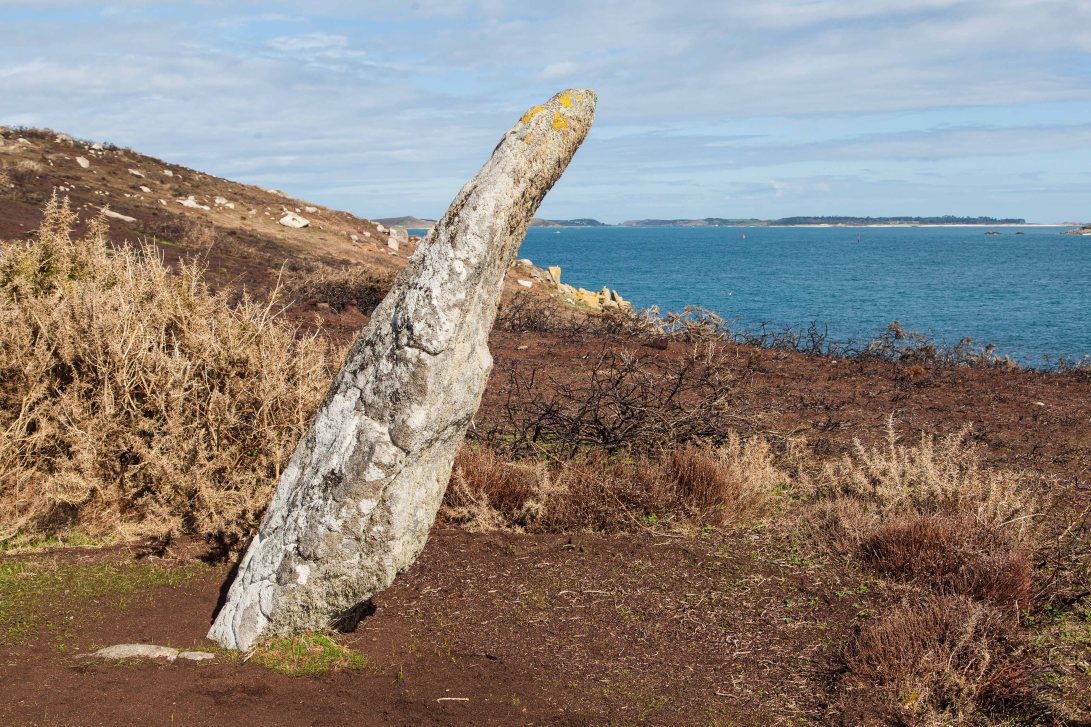
As soon as we docked at St Agnes’ Quay I asked a nearby guide when it was safe to cross over to Gugh, the neighbouring island linked to St Agnes by a sand bridge that disappeared when the tide came in. Getting stranded on an island with two houses and no facilities would be less than ideal. Luckily, the guide told me that the tide would be far enough out to be able to cross all day, so I made my way over to Gugh. My first object of interest was the Old Man of Gugh, a menhir dating back from the Bronze Age. Menhirs are tall upright standing stones erected by people living on the islands many thousands of years ago.

IMG_0619-2

After getting acquainted with the Old Man, I wandered down to Beady Pool, so named because to this day ceramic beads from a 17th century Venetian shipwreck can be found there. Although it was tempting to have a little look, I already had enough miniscule treasure to find, so after eating my lunch looking out to sea (again!) I walked out to Wingletang Down.

IMG_0655

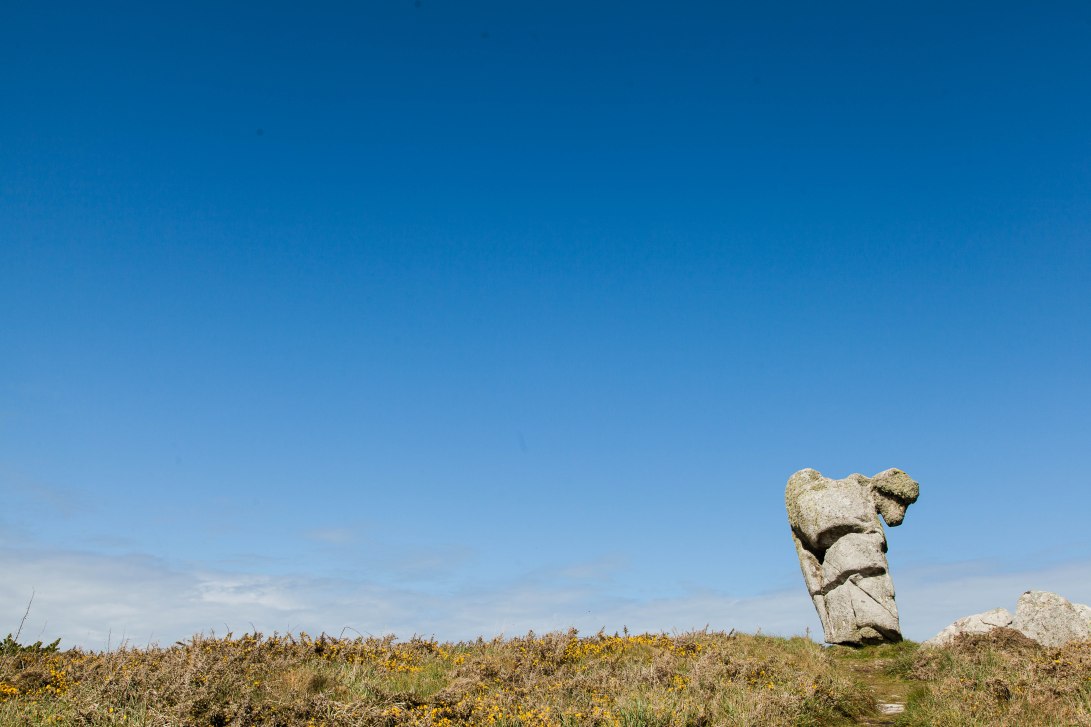
The first thing I noticed – after the forest of gorse that almost completely covered Wingletang Down – was the Devil’s Punchbowl; a curious name for a curious phenomenon. It was described as a rocking stone because it was positioned in such a way that it rocked easily from side to side. Looking loosely like a ball and socket joint, the top of the stone was a sphere cut in half, resting on top of a thick, squat column of stone. What was most intriguing was that the stone was completely natural. Somehow, Mother Nature had created the Devil’s Punchbowl for seemingly no reason other than to exist, perched at the tip of St Agnes.

IMG_0747

Amongst all the orange of the gorse were the delicate flowers of Ornithopus pinnatus, my target wild plant on St Agnes. After nibbling a few Haribo and admiring the Punchbowl a little longer, I began to search for it. However, after seemingly no time I noticed that time was running away from me again, and I headed around St Warna’s Cove towards another peculiarity: the Nag’s Head. Another naturally occurring feature of the landscape fully exposed to the Atlantic, the granite stone has been moulded into unusual shapes by the water and wind, so now it has a likeness to the head of a horse. William Borlase, a Cornish antiquarian saw the strange hollows and shapes of the Nag’s Head and thought the stone had been moulded by ancient cups and bowls, when in fact every mark on the granite is natural. It was yet another feature of the Scilly landscape that gave it its intriguing and quite unique personality.

IMG_0778

Exploring Bryher

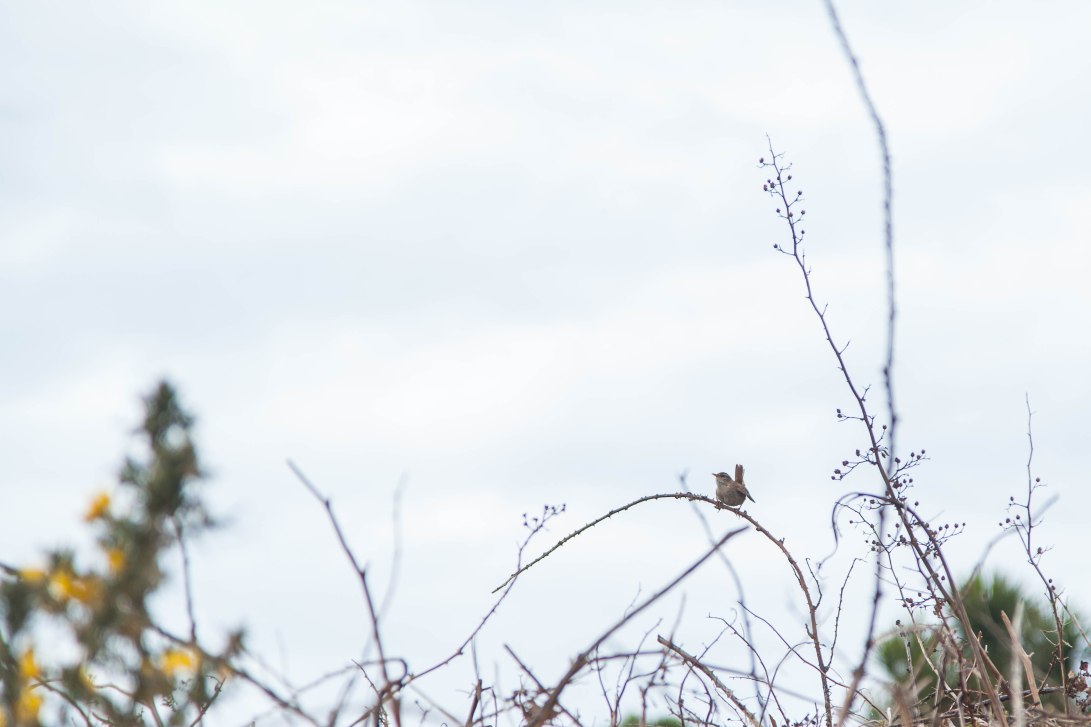
When I arrived on Bryher I was reminded of how scarcely populated the 1½-mile long island was. After an initial buzz of human activity at the quay, tourists and locals dispersed and I suddenly found myself completely alone, except for the ever-present wrens of course. One was perched high against the skyline only a few feet away, trilling with all its might. According to some Scillonians, wrens here are slightly different to those on the mainland. Their songs are different, and their mottled body markings are brighter. Perhaps this is a little Scillonian pride, but the shrews, bee and blackbirds are all unique here so I liked to entertain the possibility that Scilly wrens were just as special.

IMG_0244

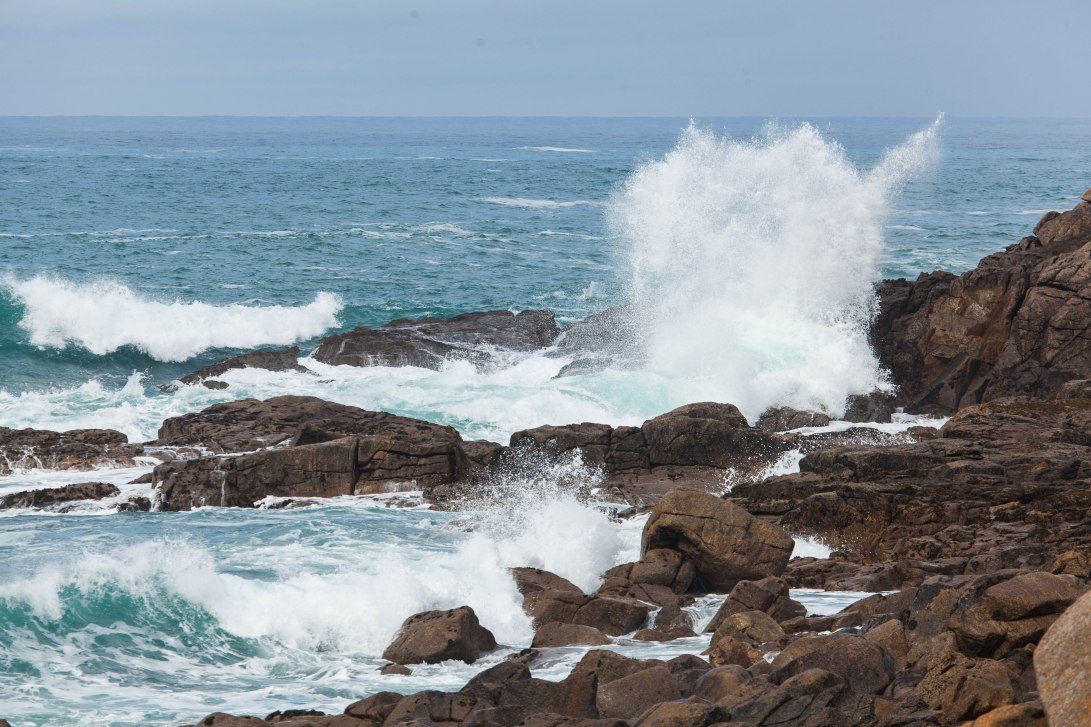
Bolstered by the wren’s enthusiasm, I made my way towards the northern side of the island, where the infamous Hell Bay laid waiting. So called because of its treacherous and unforgiving nature that had caused many a shipwreck in years past, it was hellish and beautiful in equal parts. I perched on a plump cushion of downy grass and watched the show – a dramatic display of rumbling waves, churning currents and seething white froth that surged up as each wave receded. Although each collision was intense, every so often a particularly furious wave thumped the rocks, sending vast plumes of water skywards. Backed as always by the wailing gulls and squealing oystercatchers, it was a feast for all the senses.

IMG_0293

Time was pressing on. Conscious that I didn’t want to miss the only boat back to St Mary’s, I hugged the coast and followed the beaten track down the western stretch of Bryher. Red Ruby Devon cattle watched me cautiously, blinking with big bottomless eyes. Before long I reached Rushy Bay, and the sun was shining beautifully. I ate my lunch on the sand, which as always on Scilly was golden and impeccably clean.

IMG_0587

Replenished, I began the search for what I’d come here to find: the dwarf pansy. With flowers 4-8mm long, I braced myself for a challenge. During my research I’d learned that a good spot on Bryher was “the sandy turf behind Rushy Bay”, which at the time had seemed a doddle. How much sandy turf could there be? I thought, quite deluded. True, the area wasn’t vast, but when you were looking for a flower that could fit several times on your fingernail, the sandy turf seemed to expand tenfold. I’d found the true meaning of “needle in a haystack”.

IMG_0557

Wondering why I’d chosen to torture myself, I began to scour the ground, peering between thick grasses for a glimpse of violet. I found plenty of insects; sandy brown spiders that skittered in and out of sight (small enough not to trigger my panic response luckily), black beetles I couldn’t hope to identify and plenty of ladybirds sitting prettily. No such luck with pansies, though. Soon my knees and back began to ache so I tried my luck on Heathy Hill, another good spot for dwarf pansies and orange birdsfoot, a rare member of the pea family I was also hoping to find.

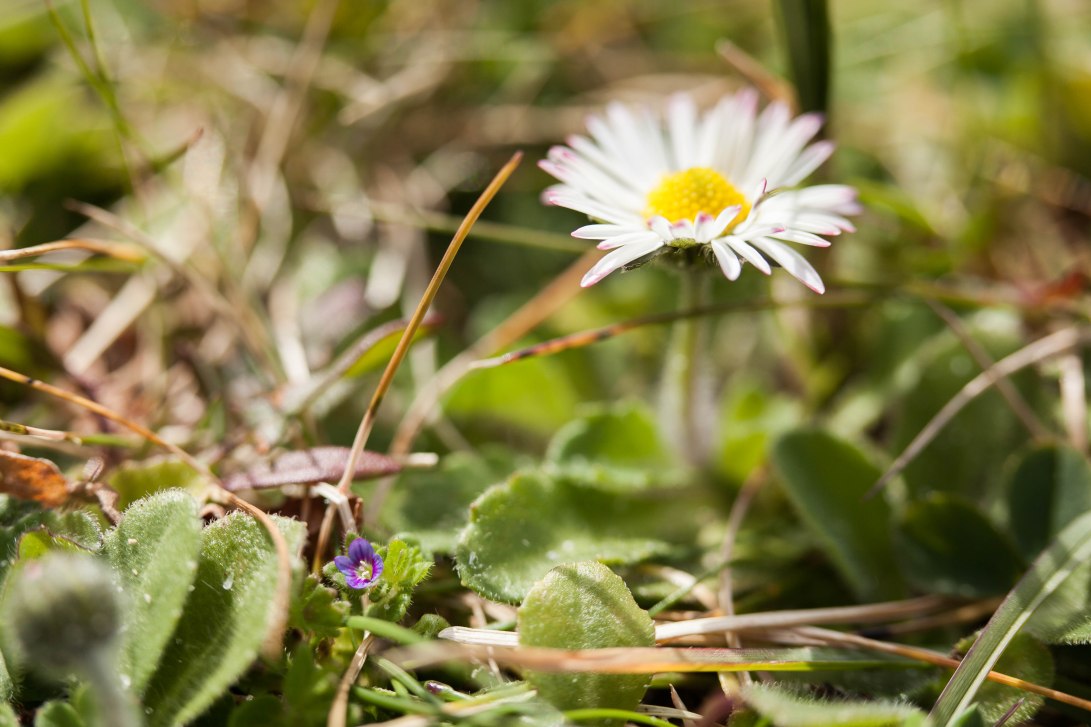
On the way, I stopped to admire the daisies. Interestingly, these common white flowers used to be known as “day’s eye” because they opened during the sunlight hours and closed at night like blinking eyes, but this soon morphed into daisies. By chance, my gaze wandered to a minuscule flower with purple petals that I could barely make out with the naked eye. In a slightly embarrassing lapse of composure I felt tears of joy prick the backs of my eyes, but I remembered that there were a lot of tiny flowers on Scilly. Due to the poor, acidic soil, often only small species could survive here. I knew I shouldn’t get my hopes up. It may not be my prized pansy, but I still lay sprawled on the floor photographing it for a good long while. Just in case.

IMG_0408

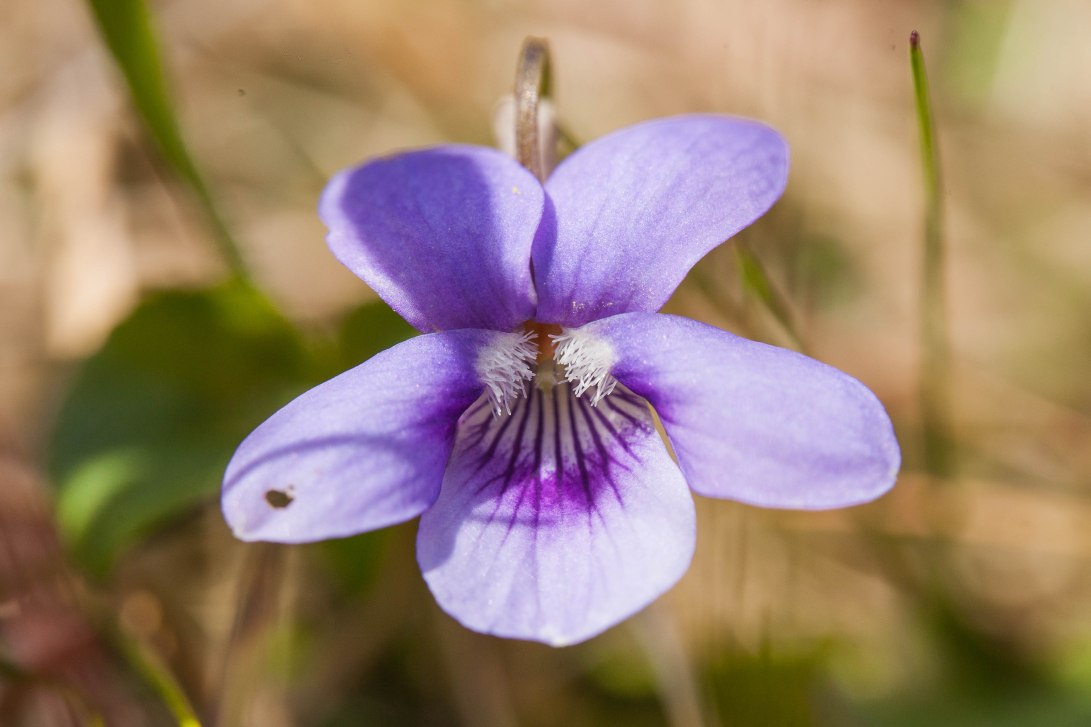
I headed further west towards Heathy Hill. Here I found a rather large cluster of blue-violet blooms and once again I was stumped. What if these were dwarf pansies and I hadn’t made full use of the opportunity? So, even though the petals looked a little large, I spent another twenty minutes rolling around in the grass getting very atmospheric photos of what could have been Scilly’s most common wildflower.

Back on St Mary’s that evening, at a wildlife talk at the village hall, I consulted Scilly naturalist Will Wagstaff about my finds. The second species I had found was dog violet, so not even a pansy sadly, but he couldn’t identify the first flower I found, which was quite intriguing.

IMG_0478

Arriving on Scilly

IMG_0143

To truly comprehend how isolated and tucked away the Isles of Scilly are, you have to get there. My travelling began at 4:30am, and after using four modes of transport I arrived on St Mary’s at 1pm. It was a complicated and fiddly excursion but when I finally arrived, eating chips overlooking a vast expanse of ocean, I knew I was really at the edge of Britain.

IMG_0174

Passionate gusts of wind blew the smells of salt and seaweed off the coast. The air was alive with birds. If I closed my eyes it was the same as home – wrens belting out their embellished trills, blackbirds speeding underfoot with shrieks of alarm – but as I was watching a dunnock I heard something that I thought at first to be a great tit, but the two syllables were the same pitch. Then, confirming my suspicions, a tiny brown, featureless bird appeared. My first chiffchaff in the flesh.

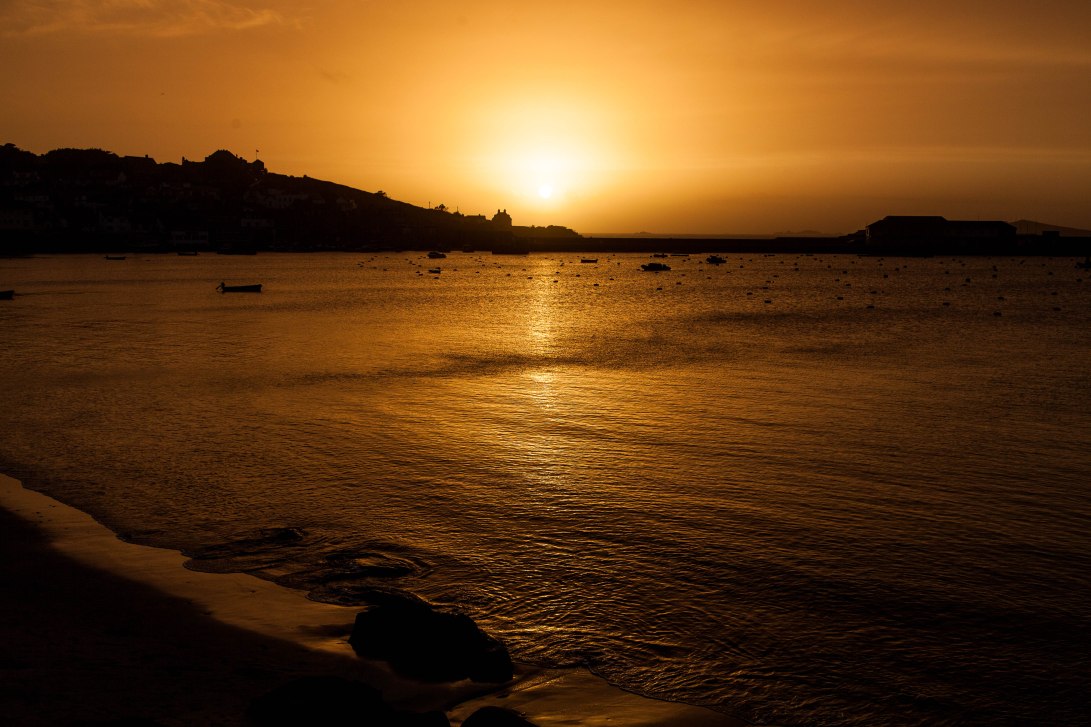
Later in the day I was struck with another bout of stress and worry. What if the flowers I wanted to photograph weren’t there? What if it rained every day this week? And as I stewed in paranoia I got a sign. I normally pulled faces at signs but this had to be something of an existential signal. As the sun went down the sky was alight with rich colour so I took my camera and headed down to the beach – only about twenty paces from the flat – and started taking photos of the foliage silhouetted against the sky. The sun sank so quickly that in minutes it had completely disappeared, but it was one of the most stunning sunsets I’d seen in months. There were other people taking photos too, and I heard one woman say “This is the best I’ve seen so far this year.” I arrived on Scilly this afternoon, and the day ended with a sky like that. I still felt apprehensive about this week, but my worry was also mixed with a little more optimism than before.

IMG_0200

Carna – Day Four

Species seen:

  • Barn Owl – Tyto alba
  • Bladder-wrack – Fucus vesiculosus
  • Butterfish – Pholis gunnellus
  • Chaffinch – Fringilla coelebs
  • Common Blenny – Lipophrys pholis
  • Common Hermit crab – Pagurus bernhardus
  • Common Pipistrelle – Pipistrellus pipistrellus
  • Common Sandpiper – Actitis hypoleucos
  • Common Tern – Sterna hirundo
  • Eurasian Otter – Lutra lutra
  • Eurasian Rock Pipit – Anthus petrosus
  • Flat-wrack – Fucus spiralis
  • Grey Heron – Ardea cinerea
  • Hare’s Tail – Lagurus ovatus
  • Hooded Crow – Corvus cornix
  • Knotted-wrack – Ascophyllum nodosum
  • Lesser Redpoll – Acanthis cabaret
  • Saw-wrack – Fucus serratus
  • Sea-mat – Victorella pavida
  • Serpulid worm – Serpulidae
  • Shore crab – Carcinus maenas
  • Small winkle – Littorina littorea
  • Song Thrush – Turdus philomelos
  • White-Tailed Eagle – Haliaeetus albicilla
  • Willow Warbler – Phylloscopus trochilus
  • Wren – Troglodytes troglodytes
  • (Cuckoo – Cuculus canorus)
  • (Robin – Erithacus rubecula)

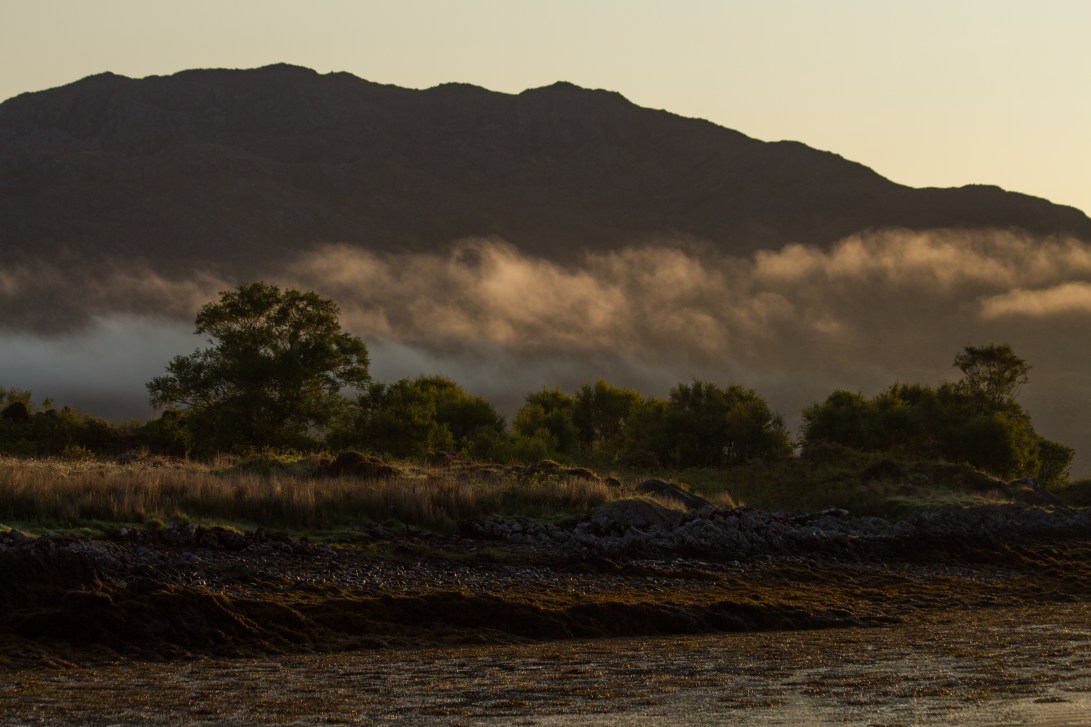
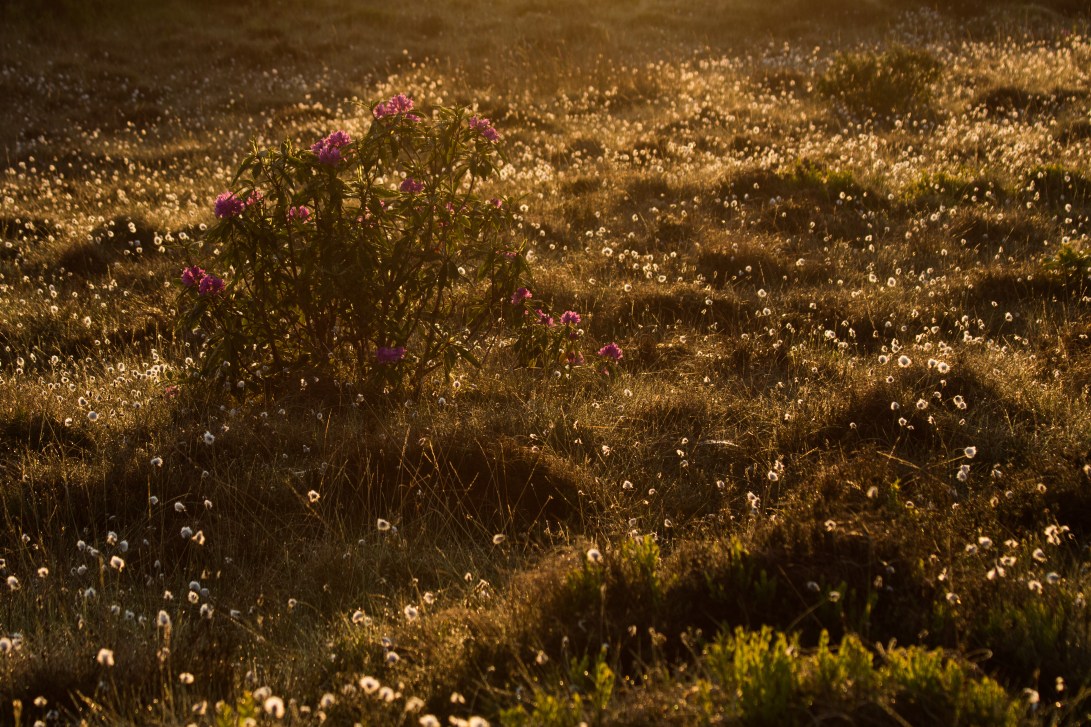
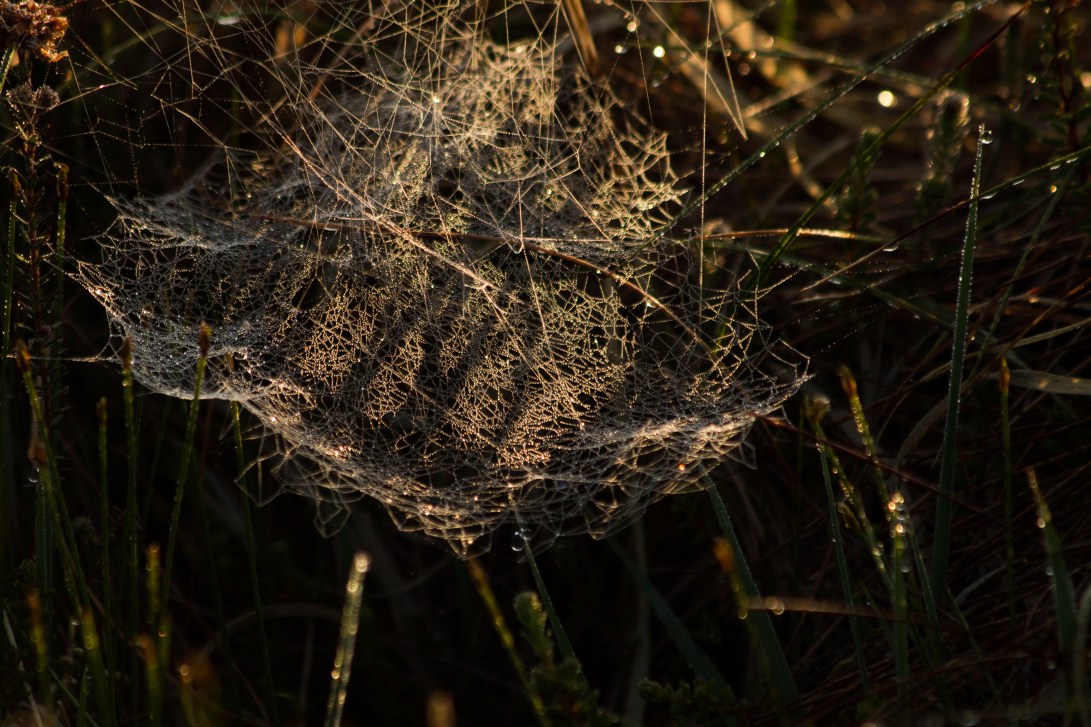
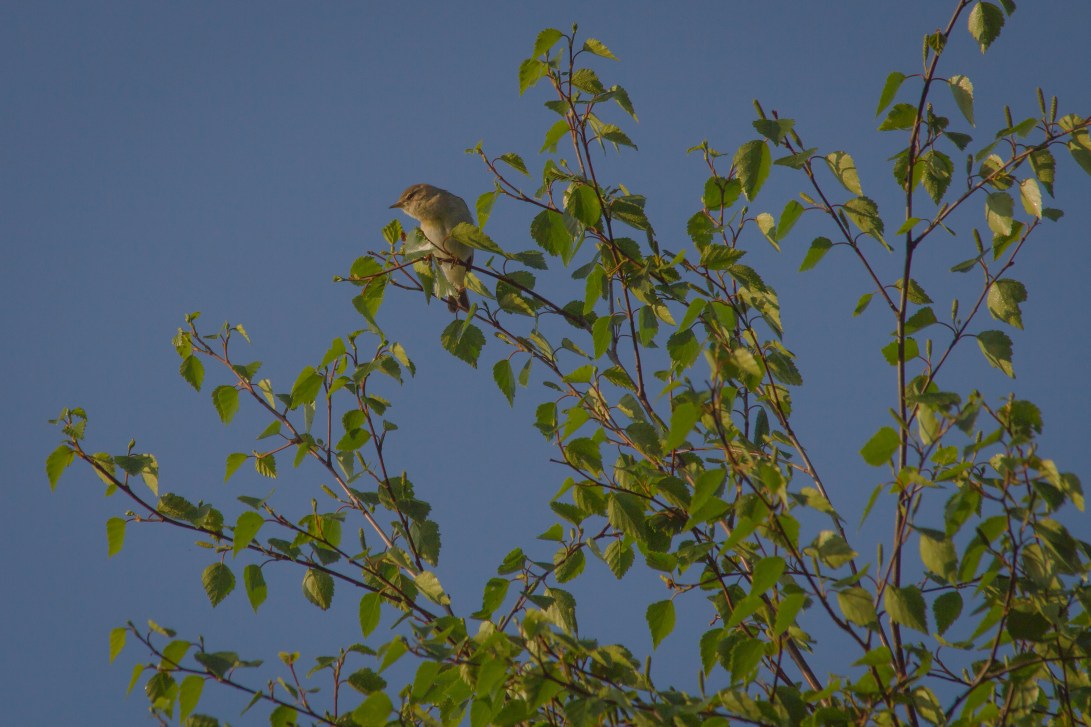
We were woken at the tender hour of 5am this morning for a wander through the dew-soaked grass. Tiny droplets clung to the hare’s tail and made them look like teasels instead of their usual fluffy tops. There was a fine mist rolling over the hills which looked beautiful with the weak sunlight shining through. We spent some time listening to birdsong and trying to untangle the many different voices. Cain described the descending tone of the willow warbler and the drilling call of the lesser redpoll. I would love to improve my knowledge of birdsong; it’s at the very centre of the morning routine for all wildlife.

IMG_6118IMG_6122IMG_6124IMG_6125IMG_6143

IMG_6157
A willow warbler high in the trees

After a break we began the scramble up Crachan Chárna, the tallest hill on Carna standing 170m tall. Once again the sun was shining, which we certainly shouldn’t be ungrateful for, but the heat made the climb just that little bit more challenging. Luckily the path up was well trodden, so we didn’t have to battle through knee high bracken or wade through too many sodden swamps.

Partway up we came across a muddy puddle stuffed with grey and black feathers, clearly the scene of a crime. Cain explained how he knew the culprit was a bird not a mammal. When foxes feed they chew the feathers off the carcass, splintering the feather shafts. Birds of prey pluck the feathers so leave them relatively undamaged. It was then a case of determining the exact species; this involved identifying the prey. When viewed in direct sunlight the black feathers glimmered, the dark green sheen of a shag. The size of this bird meant the predator had to be an eagle; a buzzard wouldn’t have the size over seabirds such as shags. It was so interesting deducing what happened based on the evidence; I’m noticing so much more now I’ve got some field knowledge.

IMG_6170

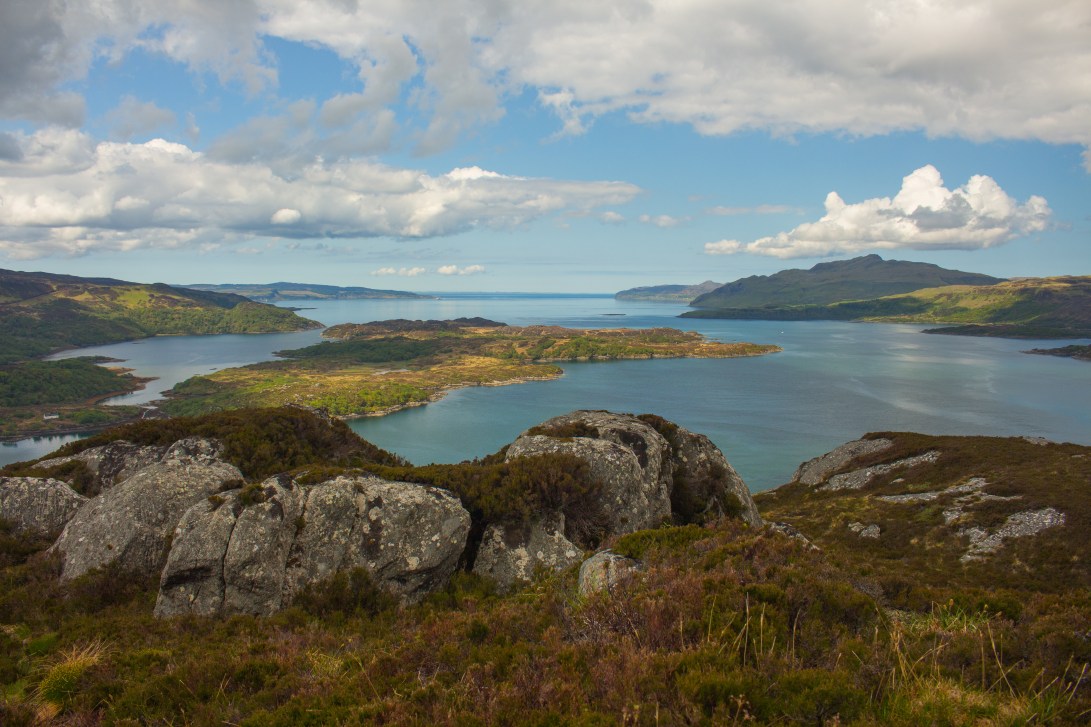
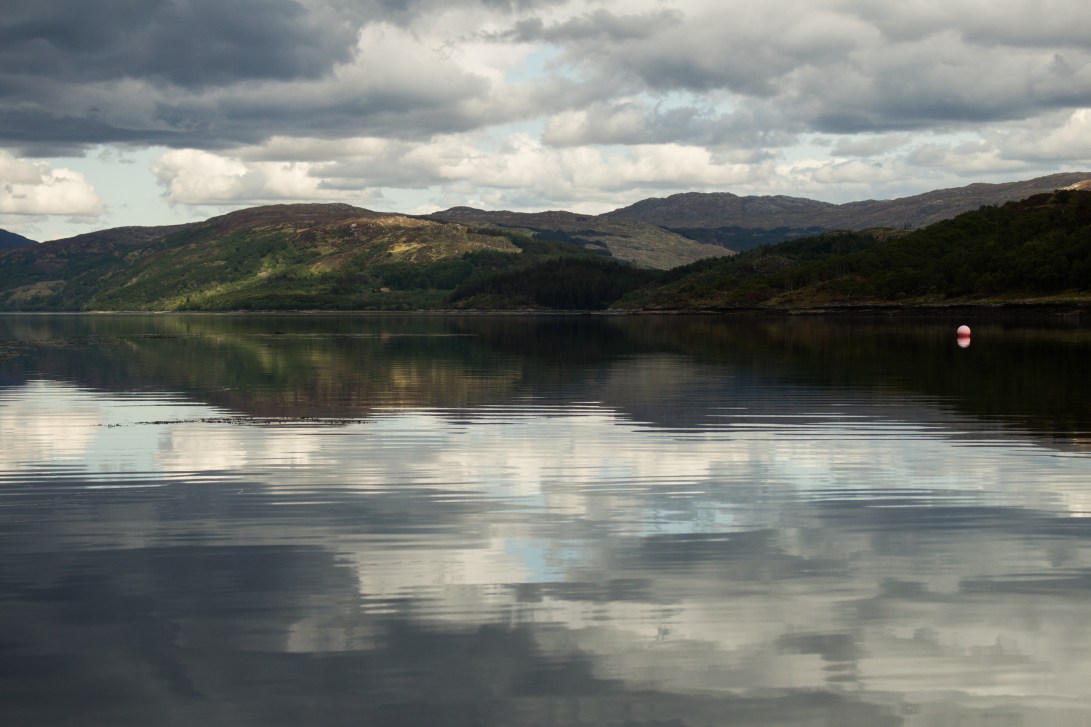
In less than half an hour we’d reached the summit, only stumbling a handful of times. After we’d caught our breath we could fully appreciate the beauty of the island. For miles in every direction sprawled the surrounding isles, smaller patches of rocky terrain jutting out of the loch and the open sea to the west. We spent a long time at the summit, eating lunch and twisting and turning to see every view. Common terns swept overhead, turning into the wind and flapping furiously. Far down below a heron stood poised, neck braced to strike. After enjoying some lunch we made our slow descent back to the ground.

IMG_6206

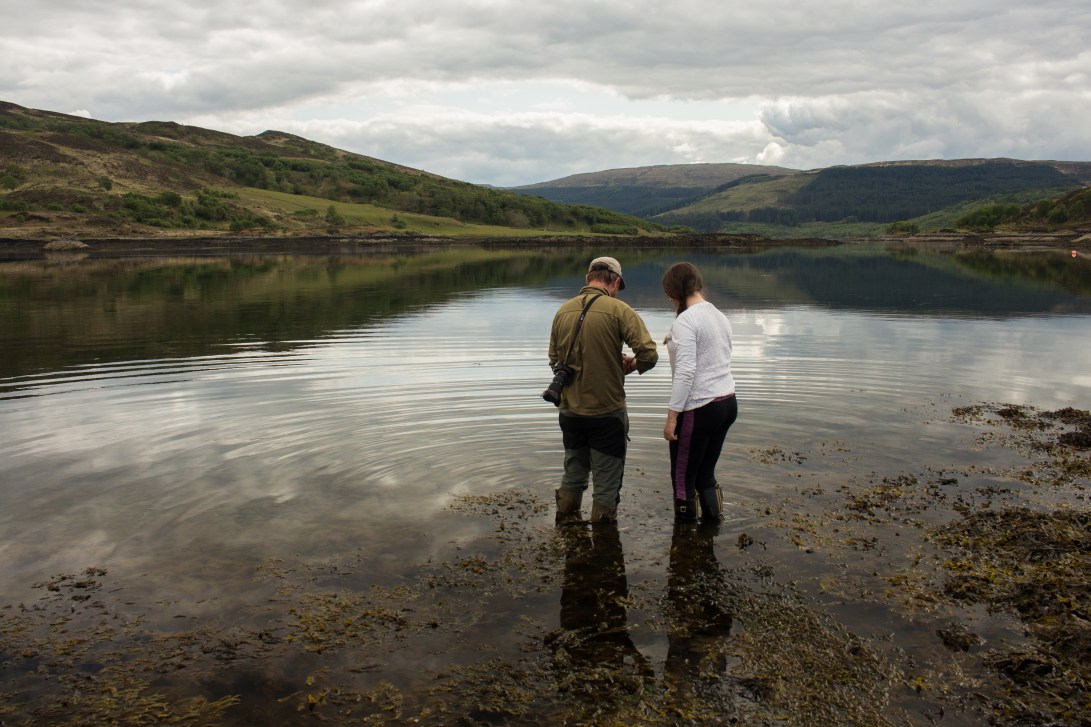
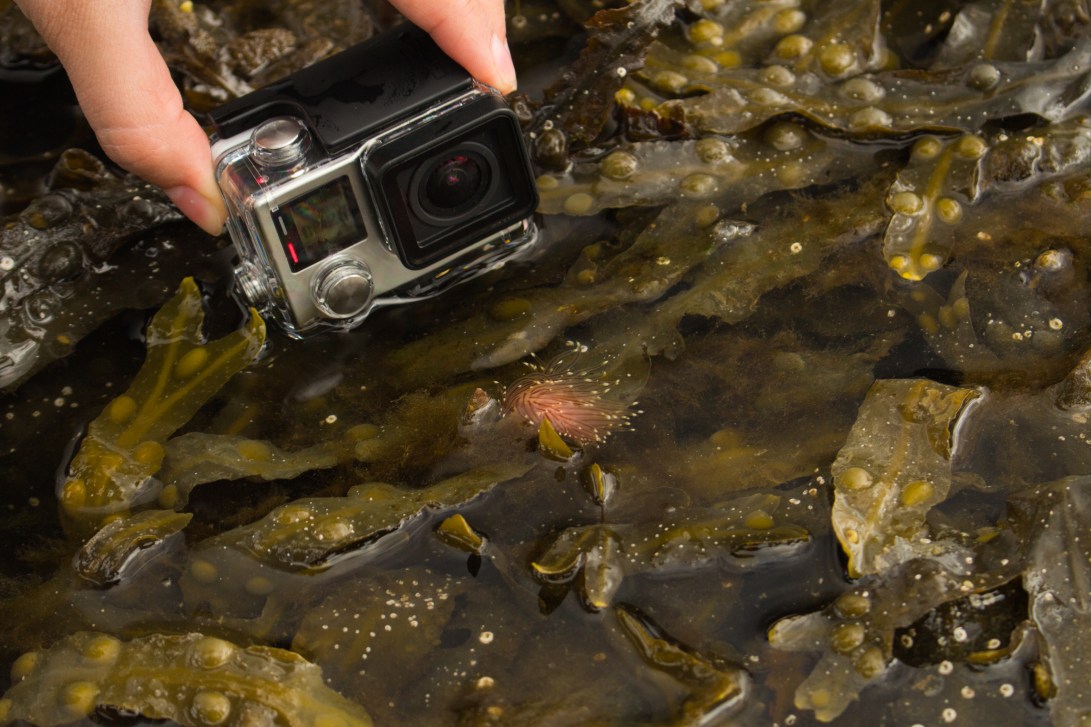
In the afternoon we spent time exploring the coast outside the house. While the tide was out we could forage the seaweed to our heart’s content. I discovered many different species including bladder wrack, sea mat and flat-wrack. In addition we saw many creatures beneath the weed-choked rocks such as edible winkles, barnacles and shore crabs. As well as this we saw butterfish, common blennies, whelks and starfish. We all lay on our fronts on the pontoon and watched a common hermit crab creep along the lakebed.

IMG_6216
Butterfish
IMG_6222
A species in the mollusc family, specifically Nudibranchia
IMG_6228
A whelk feeding on a crab carcass

IMG_6237

IMG_6245
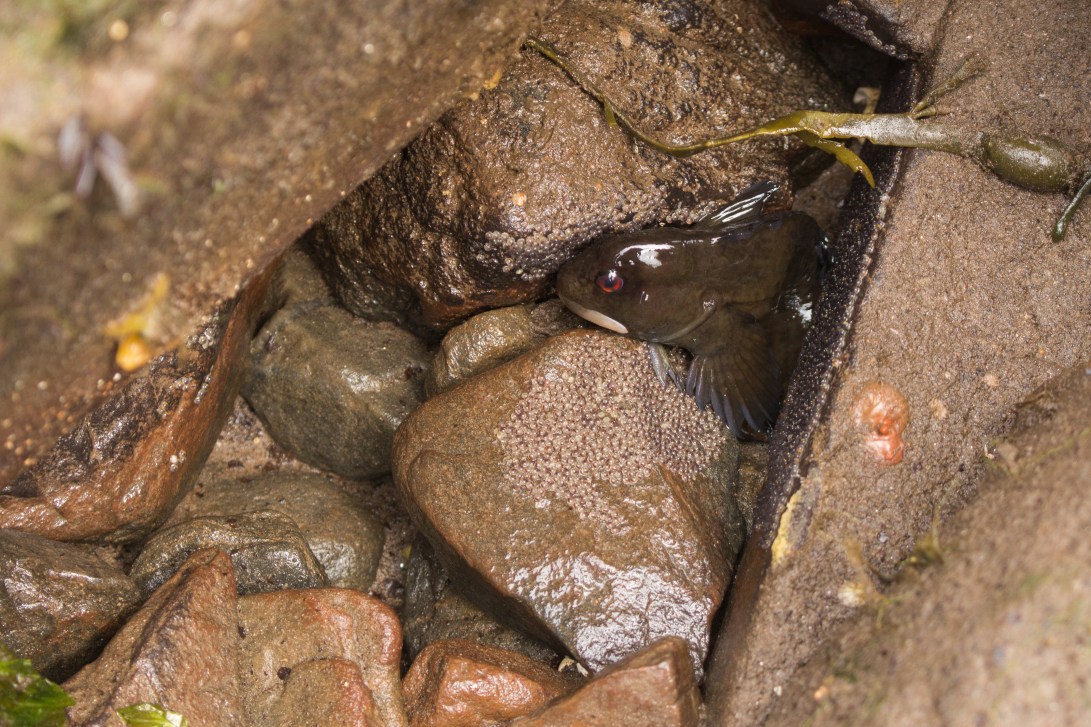
A common blenny with eggs

Later, once the sun had finally set, we headed out to see if we could pick up any bat calls on the detector. We could determine the species by what frequency their call was recorded at. After only a short walk the detector picked up a series of clicking calls at 45Hz, and sure enough a tiny black bullet shot through the night, leathery wings beating the air. Once we’d consulted the identification key we discovered that the common pipistrelle was picked up at 45Hz, so concluded that this was the bat we’d found.

We wandered on and picked up another common pipistrelle further down the path, then suddenly Verity noticed a flash of white above and we all celebrated in hushed tones as the barn owl swept over our heads. By now it was late so we headed back to the house, pleased we’d got the opportunity to use such great tracking equipment.