The Farne Islands – Part 1

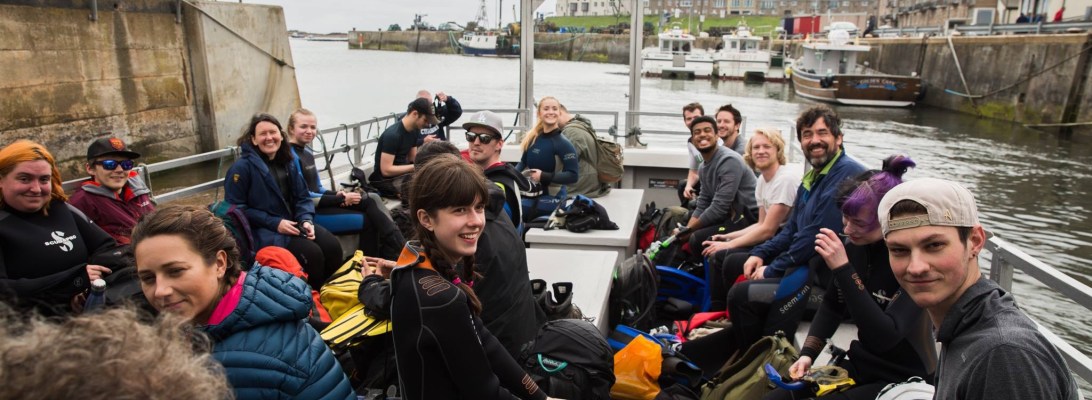
Our trip to the Farne Islands was looking like it would be a day of unforgettable wildlife encounters. We boarded the boat at Seahouses kitted out in wetsuits, boots, hoods and clutching snorkels in gloved hands. The clouds were light in colour and I had faith that the sun would soon break out.
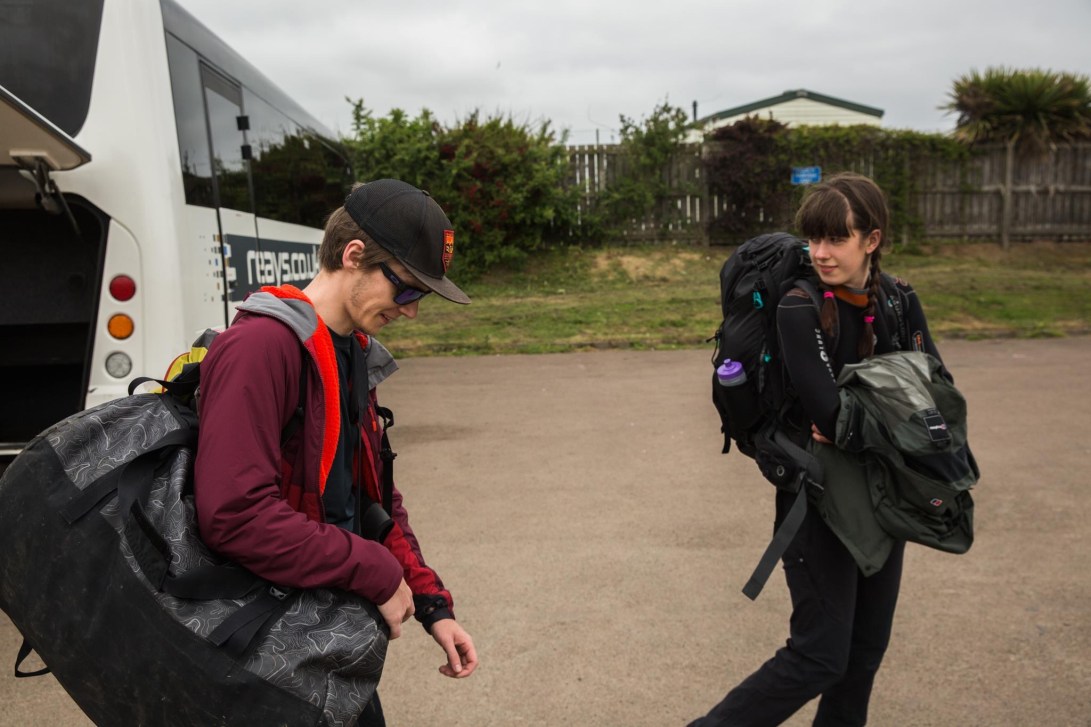
IMG_0816
En route to the boat (Photo: Cain Scrimgeour)

There was a buzz of excited conversation as we moved out into open water, scanning the surface for wildlife. Cain, sharp-eyed as always, spotted the first puffin, as well as razorbill, guillemot, and a Manx shearwater. I twisted in my seat to spot everything he pointed out, but as usual, I was perplexed how Cain could identify such small, distant birds with immediate certainty. I could easily see the gannets though, a group of four that glided low over the water past the boat. I’ve said it many times before, but gannets are one of the best birds out there, and I never tire of watching them.

Before long we reached a widespread rocky outcrop where the boat would stop and let us jump out into the sea. One by one, we pulled on fins and adjusted facemasks. When it was my turn, I waddled ungainly to the back of the boat and took a somewhat hesitant jump off.

IMG_0814
Taking the plunge! (Photo: Cain Scrimgeour)

Cold water hit me like a fist and I suddenly couldn’t breathe. I was filled with a very unfamiliar panic that I’d never felt in water before. I was lifted back onto the boat and it was then that the skipper told me my over-sized hood had risen up over my mouth and my mask had filled with water. Feeling very sheepish, I calmed my breathing and tried again. My second attempt was more successful, but I was very unaccustomed to wearing fins when swimming. They were two dead weights on my feet that pulled my legs to the surface and completely threw off my balance. Having only ever worn a swimming costume in the ocean before, it now took real effort to get used to all this additional kit.

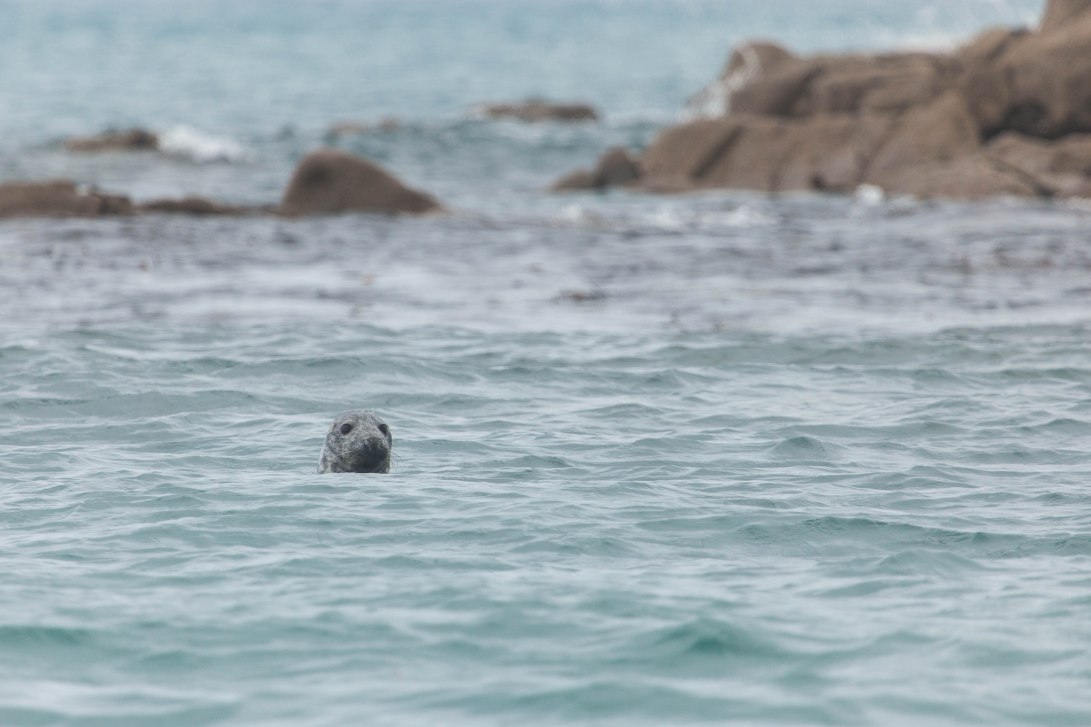
I glanced up and saw another of our group bobbing up and down in the water, but then I looked properly and saw it was in fact a grey seal. I experienced a combination of surprise and elation, and when I looked around I realised I was surrounded. Seals were everywhere, gazing with inquisitive expressions. One ducked under the water so I copied, watching it glide out of the kelp with an astonishing grace that it didn’t bring with it onto land. Water seeped into my mask again, and once I’d tightened it and put my face back under, there was a jellyfish right in front of me. I’d seen dead ones on the beach, but to see a live jellyfish propelling itself effortlessly through the water was truly beautiful.

I reached the rocks and rested for a while, watching the snorkels of other students in every direction. Suddenly another seal appeared, an arm’s length away. It flared its nostrils and snorted, staring directly at me, then ducked underwater. Once again, I followed its direction and watched with amazement as it brushed against me. Then, it held out his flippers and wrapped them around my leg. It was a surreal and incredible experience, feeling a wild grey seal squeeze my leg in what the anthropomorphist in me liked to think was a hug. It was nothing like it of course, but the seal reminded me of an excited puppy, and even nibbled my wetsuit like my dog would do. Before long it swam away and disappeared into the gloom, and I was left feeling ecstatic. Any encounter with a wild animal in its natural habitat was special, but to me it was even more exciting to share a completely new world with one, a world I never normally got the chance to be a part of.
IMG_1517
A curious face

As much as I hated to admit it, my hands were beginning to grow numb, so I waved to the skipper and got back on the boat. As I warmed up, I felt niggles of regret that I hadn’t tried to film my encounter on the GoPro I’d brought with me. But as I reflected on what had happened beneath the surface, I was glad that I hadn’t. In that moment I hadn’t been distracted by technology; I’d simply been there.
Eleanor Oliphant Is What We Need

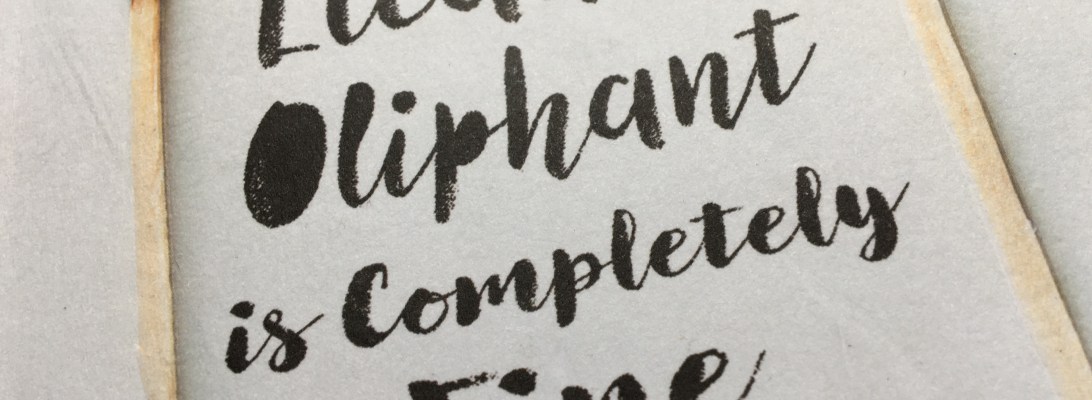
In 2017, 40-year-old author Gail Honeyman entered a story about a lonely and damaged young girl into a writing competition. Now winner of the Costa First Novel Award and scheduled to become Reese Witherspoon’s next film project, Eleanor Oliphant is Completely Fine has become a triumph for modern literature.

Our heroine, Eleanor, is evidently not at all fine. She often goes home from work on Friday and doesn’t speak to another person until she arrives at work on Monday morning. She is a source of amusement amongst her colleagues, and many modern advances are completely lost on her. “D’you like a smoky eye?” The makeup assistant at Bobbi Brown asks, to which Eleanor replies, “I don’t like anything to do with smoking.”

At the background of it all, her manipulative mother is an ominous presence looming at the end of the phone, hinting at a darkness in Eleanor’s past that may be the explanation for her isolation and uniqueness.

When Eleanor and Raymond, an IT consultant in her office, witness an elderly man falling unconscious in the street, an unlikely friendship begins to form between them. Somewhat hesitantly, Eleanor opens up to the possibility that people genuinely want to spend time with her, and with Raymond’s friendship comes a growing sense of self-assurance.

As we are introduced to Eleanor’s quirky persona, she initially appears very hostile to strangers and speaks her mind with seemingly no understanding of the consequences: “You’ll die years earlier than you would have otherwise, probably from cancer…you’ve already got the smoker’s characteristically dull, prematurely lined skin.” However, as we spend more time with Eleanor it becomes very clear that she has had nobody to help her align with societal norms – she was a confused child passed from carer to carer until university at seventeen. How can anybody blame her for reacting how many of us would were it not for our awareness of social politeness? Not only that, but being surrounded by unkindness and ridicule, it must be a natural reaction to close up and use that barrier of separation as a form of protection.

While Eleanor’s confidently naïve observations of the world can be enormously funny, the humour is threaded with heartbreak. At seeing her reflection after a new haircut she thanks the stylist for “making her shiny”. Having been surrounded by damaging and neglectful people all her life, becoming introduced to kind individuals is a foreign but welcomed concept for her.

Honeyman has created a character that is somehow completely fresh and new among literary heroines, and yet can be related to in countless ways. It has been commented that chronic loneliness is a very real problem for elderly people, but it never seems to be addressed among younger generations. Why must age be a contributing factor to a feeling of isolation? Eleanor has had a very troubled childhood and adolescence, but even those of us with caring families are capable of feeling lonely. In fact, according to a 2018 report by the Office for National Statistics, almost 10% of people aged 16-24 said they “always or often” felt lonely. This statistic was over three times higher than for those aged 65 or more.

This novel undoubtedly speaks to many young people, including myself. I have struggled with loneliness in the past – a desire for new friends coupled with fierce insecurity in social situations has made meeting new people a real challenge, and it is something I continue to struggle with. Loneliness can be incredibly upsetting, and is often hard to recognise in someone experiencing it. Honeyman has succeeded in raising awareness of the issue with her original and deeply moving novel, outlining the importance of kindness and compassion.

Minimalism in Photography

Recently I discovered a photographer called Petros Koublis during research for my photography project. In preparation for my upcoming trip to the Isles of Scilly, I was exploring the theme of isolation, as on Scilly geographical isolation has resulted in extraordinary diversity of both flora and fauna. So, I want my images to convey this seclusion without the subjects looking barren. When I found Koublis’s work I thought how beautifully minimalist the images were, and yet still varied and intriguing. The beauty was its simplicity.

Petros Koublis 11

So I set out and tried to capture my own images where the subject looked isolated but was still thriving. Inspired by Koublis’s minimalistic approach, I concentrated on simple colours, repeating shapes and uncluttered compositions. Using my 60mm macro lens, I de-cluttered the frame even more and filled it with my subject while washing out any detail in the background.

IMG_9365IMG_9390IMG_9384

I almost always zoom in as tight as I can, especially when doing macro photography. There is a great urge to make your subject as large and detailed as possible, but often I’ve found that this removes all context from the image and it loses some impact. While it’s always nice to have a little mystery in photography, revealing a few secrets can bring even more magic to an image. For example, the lichen on the twig below was only a few centimetres in diameter, but with nothing to compare it to, all scale is lost. Now the image has been taken, the lichen could be any size and the challenge of getting such a tiny plane of detail in focus doesn’t seem as significant. Although the texture is still intriguing, the presence of something more familiar could only have added to the effect.

IMG_9401

So on another trip out I began to step back. Although I couldn’t achieve the same crisp detail with more distance between myself and the subject, I could begin to introduce context and place the subject into a scene. An isolated section of this terracotta brick could have been taken in a garden or even at a construction site, but with the border of dry pebbles and the blurred suggestion of ocean, the subject is put in a time and place. As all photography is subjective, those with a fine art approach might say context isn’t necessary, but I like the way this image is clearly of the coast but it isn’t conventional in its composition or choice of focus. It suggests the theme more subtly. Also, the absence of any other noticeable features conveys the isolation I’m interested in showing, and shallow depth of field draws the eye immediately to the subject.

IMG_9438

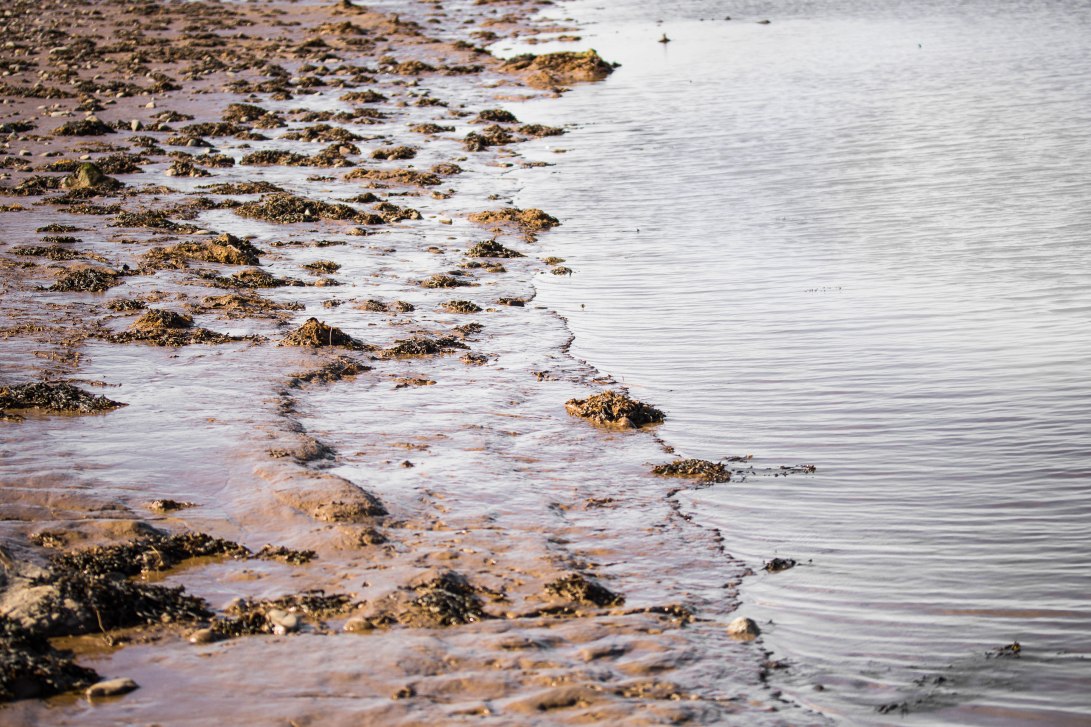
I’ve always been interested in shapes and lines in photography. Although perhaps a beginner’s cliche, a leading line is undeniably pleasing to look at. Here, the point of focus is the very centre of the image, with the tide line leading the viewer directly to it. It is loosely symmetrical, a technique I like to use to show balance and calmness in a scene. Here, there are two clear halves; one is almost completely lacking in detail except thin lines of movement from the tide, and the other has extensive detail. To emphasise this contrast even further, I desaturated the right half so even colour was absent from the water. I never excessively manipulate my photos as I like to replicate the true scene as much as I can, but subtle changes like this (when the colour of the water was almost grey anyway) can draw attention away from certain aspects in the frame to others.

IMG_9468

My Scilly expedition is fast approaching. I can’t wait to see what opportunities arise during my week’s stay on such a diverse archipelago. I think practice shoots like these will help broaden my creativity in preparation for a whole new environment.

The Avian Orchestra

There is an overwhelming quiet that comes with winter; a hush descends over the landscape that only adds to the bracing chill. As the season turns, the first few tentative voices break the spell of silence and before long there is an overpowering variety of diverse voices filling the air. While in the height of spring there can be hundreds of songs reverberating through the trees, there are a select few who can be heard again and again, reliable as the seasons. I took it upon myself to begin to tune in to this soundscape, a treat for the ears. Learning to birdlisten not only unlocks the ability to distinguish birds by song, but is also very useful as advanced warning for the reveal of the bird itself.

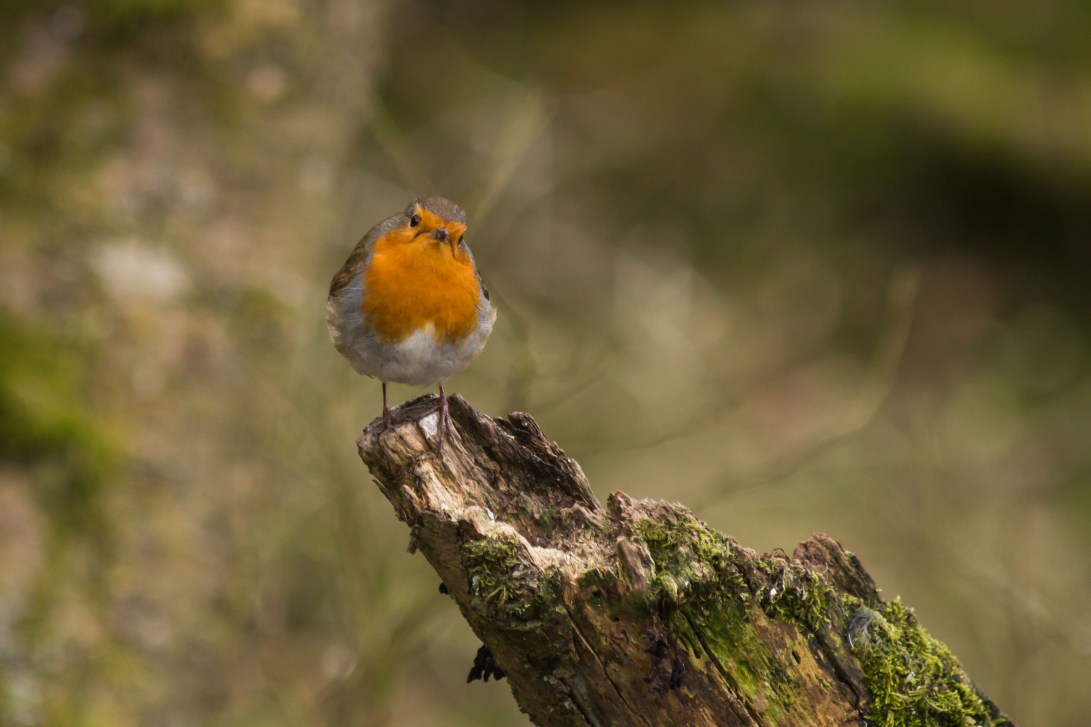
Robin (Erithacus rubecula)

Perhaps the most significant voice is that of the robin, mainly because he never left the scene when other, less hardy birds took off for warmer climes. Even through the dark, bitter winter the robin endures, his lone song often the only consistent sound during the colder months. In spring males and females pair up and defend their breeding territory, often the first to start singing and the last to finish.

The robin’s song is a delightful melody; a high, twittering burble heard from all around. Although varied in its range and tempo, the robin’s voice is almost unmistakable – high, thin and soft but still richly diverse. Hear the robin and he won’t be far away, perching in plain sight and puffing up his red breast as he fills it with air. He is a proud bird, often chasing other robins from his patch, but with a voice as pretty as his, who can blame him?

IMG_9114

Wren (Troglodytes troglodytes)

Another commonly heard voice belongs to a rowdy bird that makes up for small size by belting out a piercing song for everyone to hear. The wren can often be seen speeding bullet-like through knee-high bushes. The wren sings like it’s scolding somebody; a furious round of high, loud chirrups with a distinctive trill at the end of some phrases that sounds like a miniscule machine gun. If you hear a very loud song wait for the trill, as it will inevitably come sooner or later and you’ll know you have your wren. Scan the lower branches and before long a stout brown bird holding its tail up like a stiff flag will appear, giving you a fierce reprimanding for something or other.

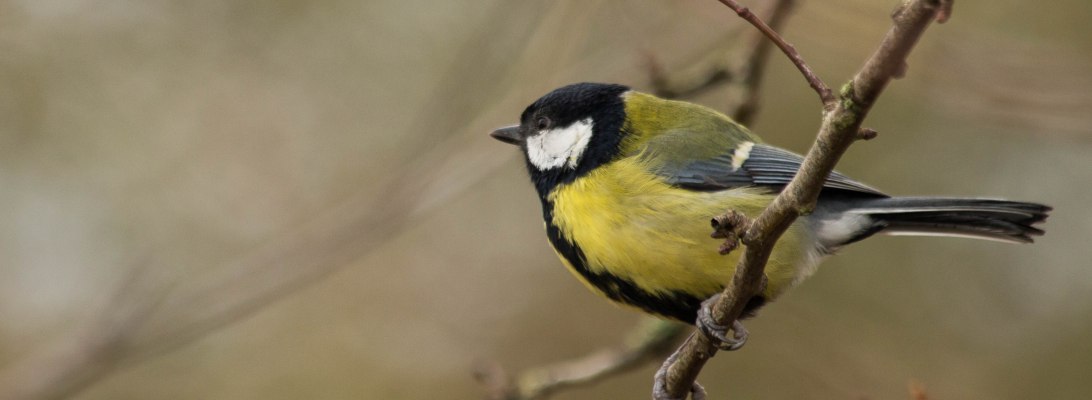
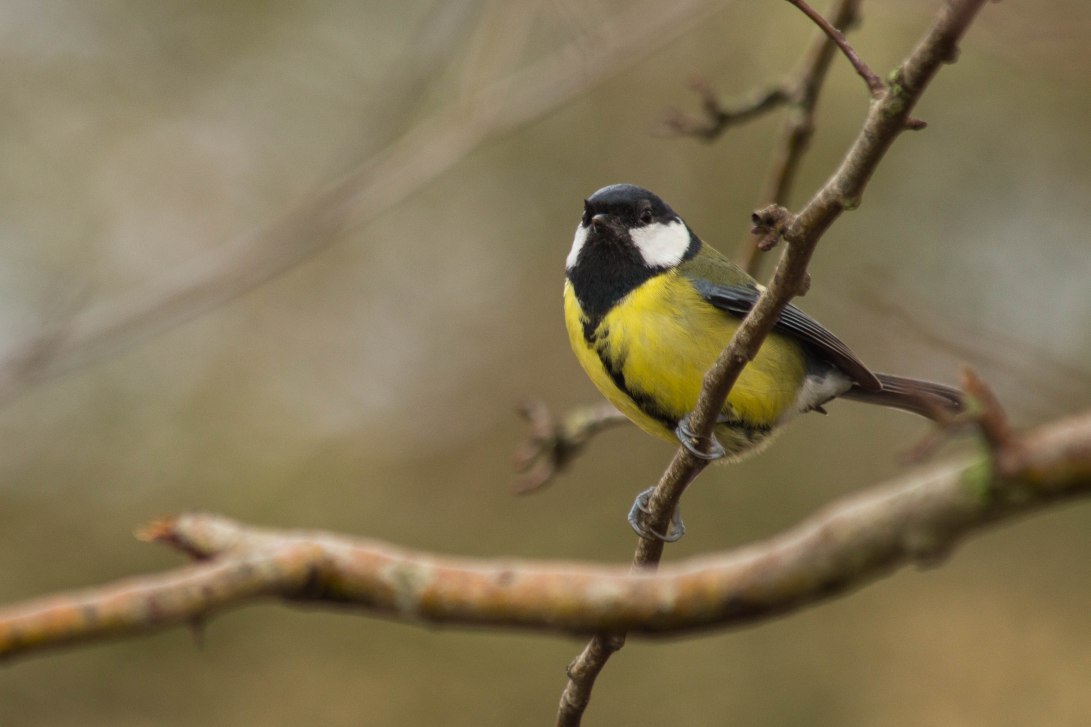
Great Tit (Parus major)

If robins and wrens are violins in the avian orchestra, the great tit is percussion; not quite as dazzling but just as important. In early spring, a two-toned call can be heard among the other singers, with emphasis on the first syllable. I like to think of it as the sound of a saw – effort on the forward stroke, then quieter on the draw back. After a few strokes of the squeaky saw there is a pause, and then the great tit sings it again, very resiliently as if rousing the troops to join in.

The great tit has other songs in its repertoire, including a “churr” call that reminds me of the chatter of a magpie, but a little faster and far gentler. This is the great tit’s alarm call, a sign of agitation that indicates something has disturbed it.

IMG_8751

Blue Tit (Cyanistes caeruleus)

With a lot of birdsong, it can help to adopt a Morse code approach when it comes to deciphering the rhythms of some particular species. Take the blue tit. A common little bird with splashes of blue, green, yellow and white with a fetching black goatee. The blue tit’s song is similar in tone to the great tit but gentler. Among its quite varied repertoire is a particularly distinctive melody, consisting of two clearly separated notes followed by two or three much faster ones. In dots and dashes it would look something like this:

– – . . .

Imagine, perhaps, that the bird is saying “I’m. A. Pretty Bird”, putting particular emphasis on the first two words.


If you like this, have a read of this post and find out where my inspiration to start birdlistening began.

Birdfair 2017

Zahrah and I only managed to attend the third and final day of Birdfair 2016. This year, we were set on squeezing everything we could out of this incredible event. Kerr decided to join us too, so last Thursday the three of us set off for Rutland Water Nature Reserve.

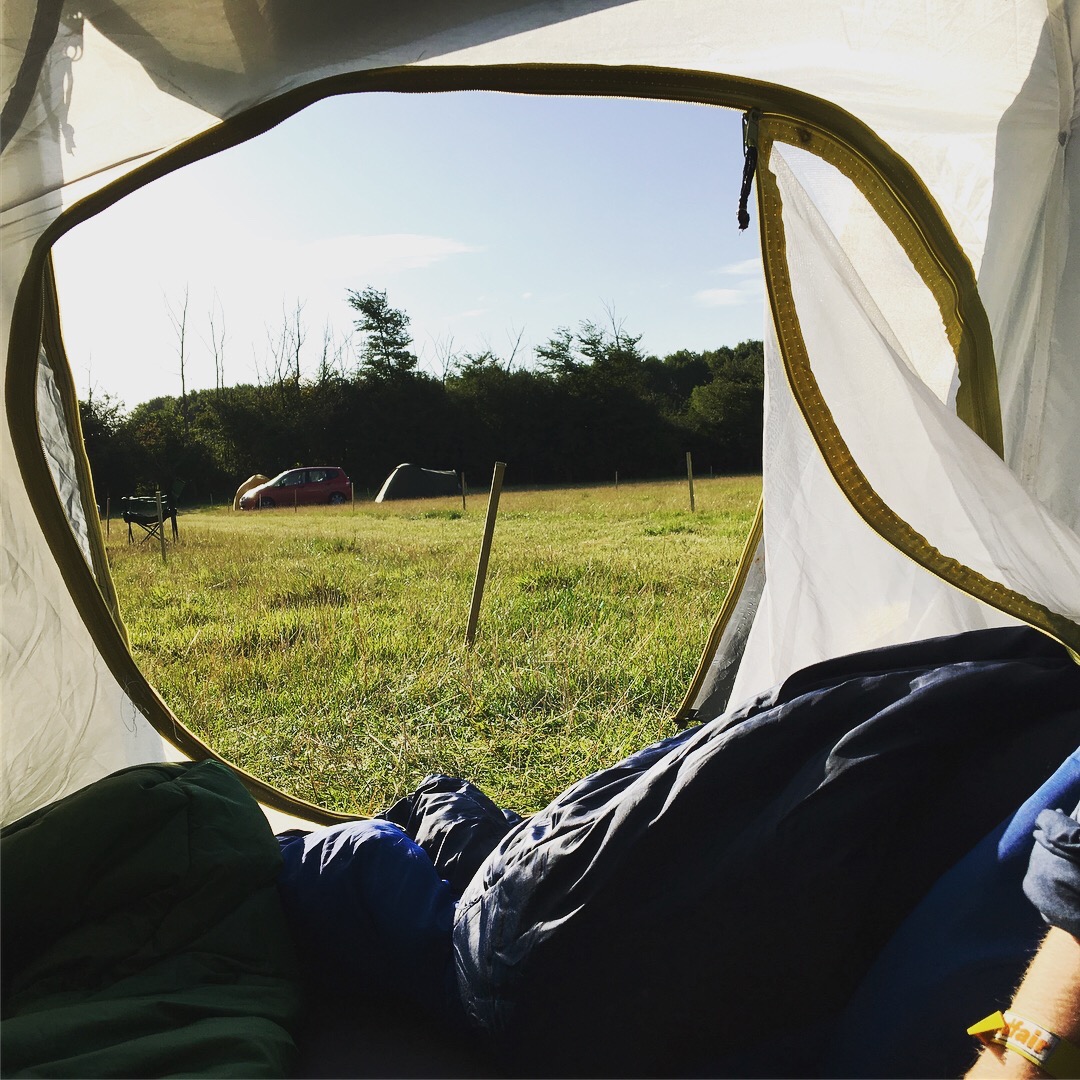
Due to a slight train mishap from Zahrah, it was nearly dark by the time we arrived at the campsite. We met the very charismatic steward and his wife, who cruised around the site on a rather fetching golf buggy and led us to our pitch. Perhaps ashamedly, I’d only been camping twice before, once ten years ago and once last month, so I was excited to get the tent up and spend our first night in the reserve.

IMG_8516

In the morning I woke from a genuinely good tent’s sleep. After eating pots of porridge around the stove we headed over to the fair. As usual, I was overwhelmed by just how much there was to see: eight long marquees, three lecture theatres, the main events marquee and a large cluster of food stalls, merchandise stands and of course, the reserve itself.

After a scan of the programme, we threaded our way through the first marquee. We met a lovely lady from the West Cumbria Swift Group, and I soon realised how little I knew about swifts. Due to house renovations, swifts are losing their nesting sites and should now be red-listed. The fastest bird in level flight, swifts shut down half their brain at a time to enable them to sleep on the wing and endure such long journeys overseas.

In the afternoon I attended a talk on the successes and challenges of conservation. As I listened to comeback stories of black-winged stilts, spoonbills and Manx shearwaters, it struck me how much we all dwell on the ‘doom and gloom’ of wildlife. Of course, it’s appalling how many of our planet’s species are now threatened, but invaluable work is being carried out all over the world and it should be celebrated. The talk inspired me to concentrate on conservation success, not failure, and it’s something I reckon I’ll be turning into a third year project.

IMG_8517

Day two of Birdfair began with some more networking in the marquees. I chatted to lots of lovely people, from the BBC Wildlife team to photographers to those offering amazing wildlife holidays (I lost count how many competitions I entered – bring on the promotional emails). After a delicious pulled pork roll with applesauce, my ultimate favourite, Zahrah and I caught Simon King’s talk. He really is a great speaker. Although it’s often the case at these events that the speakers are merely preaching to the choir, it’s always so good to be reminded just how important nature is. He included a quote from Anaïs Nin that drove his message home: “We don’t see things as they are, we see them as we are.” Mankind has done extraordinary things, some of them terrible, and it’s important not to lose focus on what really matters: preserving this planet. It’s a message I really hope can endure the test of time.

IMG_8518

I was a little sad to wake up on Sunday and realise Birdfair was nearly over. Zahrah and I anticipated long queues for Steve Backshall so we hurried to the fair earlier than usual. The marquee was filled to capacity, with people lining the walls and stuffing themselves into every space. I suppose it’s the nostalgia talking, but I think Steve Backshall is an inspiration. Deadly 60 was perfect, combining boisterous adventure with important messages about wildlife to capture every child’s imagination. In his talk, Steve showed various images of shark species, to which the children sat cross-legged at the front shouted out the names of without a moment’s hesitation. It gave me a fuzzy feeling: these kids absolutely loved wildlife. It’s true that engaging younger generations is undoubtedly the long-term solution for the natural world, and Steve Backshall was doing just that. I couldn’t help but put my hand up for a question. I asked him what species was next on his wish list, to which he replied the snow leopard.

IMG_8515

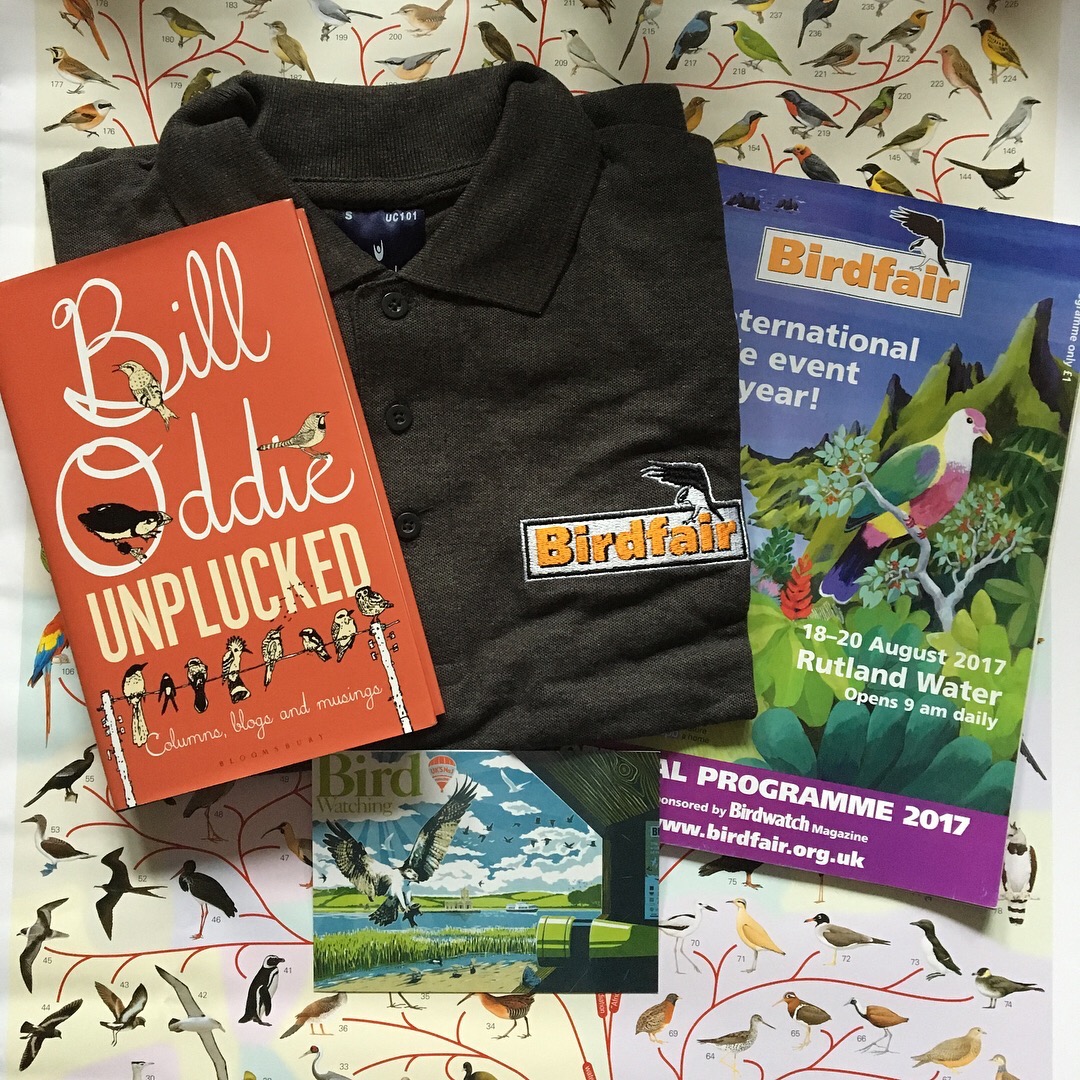
Before long it was time to go. Kerr had bought the Sony camera he’d been eyeing up for months and at a considerably lower price, so he was happy as Larry. I treated myself to a poster of the ‘Orders and Families of Birds of the World’, which is now hanging proudly alongside my others. Birdfair is one of those rare events where us wildies gather in our thousands to celebrate not only birds, but all wildlife. I know from previous experience that an interest in nature is not a common one, so to meet people from all over the world with the same passions as me is something really quite special. I’m already looking forward to next year.

Birds at the bottom of the garden

As of today, I’ve been living in my new house a week! It’s not the biggest or the most glamorous, but it’s certainly enough to feel like home. There is also a generously sized garden that oozes potential. Currently, the grass is several feet high and tickles the midriffs of the two apple trees, but I’m determined to make it a spot both we and our neighbouring wildlife can enjoy.

Zahrah and I have already had debates over whether the grass should be cut at all. While she favours the truly wild, I prefer neat and tidy with areas that the wildlife can still feel at home in. My plan is to cut the majority of the lawn but leave a wild patch at the bottom, so all kinds of creatures can still seek sanctuary in its grassy depths.

I’ve noticed several species of garden bird already, namely robins (Erithacus rubecula), blue tits (Cyanistes caeruleus) and great tits (Parus major), but I’m sure we can attract more with a range of bird feeders – millet for dunnocks (Prunella modularis) and finches and sunflower seeds for the tits and hopefully greenfinch (Chloris chloris). As well as this, we could fit some nest boxes to the apple trees to encourage nesting birds to stay.

Now we have such a secure garden, Zahrah suggested setting up a camera trap to see what nocturnal wildlife we play host to. In an urban area, it’s possible we have hedgehogs (Erinaceus europaeus) and maybe red foxes (Vulpes vulpes), something I’d be thrilled to see. After managing to photograph a wood mouse (Apodemus sylvaticus) at Kingmoor Sidings nature reserve not far from here, I’m optimistic we’ll get to see a lot more once we’ve set some tasty bait.

As for the lawn itself, I’d love to create a winding path out of the stray slabs we’ve found lying around. The garden is large enough for a compost heap too, something else that would attract a range of species. I’d love to cultivate a pond, but feel like this may be beyond my skill set! However, it would be lovely to plant some flowers and inject some colour into the otherwise very green garden. Although not the prettiest, stinging nettles are well known for being excellent attractors of the red admiral (Vanessa atalanta), comma (Polygonia c-album) and small tortoiseshell (Aglais urticae). Other good plants for butterflies include garlic mustard (Alliaria petiolata) and marjoram (Origanum vulgare).

All in all, I see some exciting things on the horizon for our little garden! After living in halls for a year and the only green space being the faded carpet of my room, I can’t wait to unleash my inner gardener and make our patch the perfect wildlife haven.

Nick Baker at Birdfair

Two weeks ago, Birdfair was held at Rutland Water Nature Reserve from Friday to Sunday. As we were on holiday in Scotland, we could only make the third and final day, but I am so glad we managed to experience this fantastic event.

Upon arrival we were greeted by an explosion of colour and noise. I bought a map and discovered I was in one of eight marquees lined on both sides with stalls and things to buy. A lot of them were selling wildlife holidays, so I couldn’t help but enter a few competitions, as well as buy some wildlife art.

One talk we attended was ‘Building a Naturalist’ by Nick Baker, a naturalist I’ve admired for many years. His topic of discussion was getting more children interested in the natural world. In a way, he was preaching to the converted by delivering his speech to an audience of wildlife enthusiasts, but it appears as if the responsibility of making nature a focus for children lies with us, the people who understand its importance.

What I love about Baker is his heart-warming enthusiasm for wildlife. He described his first white plume moth (Pterophorus pentadactyla) sighting as “like looking at fairies at the bottom of the garden”. He learnt a great deal about newts by collecting them and watching them in tanks – he made a point of saying that this was long before the Wildlife and Countryside Act 1981 when the handling of British newts became illegal – and read up on them to broaden his knowledge.

“Experience is everything,” he explained, and I agree entirely. The only way to understand the natural world is to be out in it. As much as it pains me to say, reading books will only get a naturalist so far; by spending hours searching the coast or wandering through the forest, they can become a part of the world they’re passionate about.

Baker shared some alarming statistics. In a study of 8-15 year-olds, 53% had never seen a flock of starlings (Sturnus vulgaris) in the UK. Baker described this as “extinction of experience”. Our mentors are becoming an endangered species; with less interest in nature, where are the passionate naturalists who will teach and inspire the next generation? Baker’s mentor was his dad, without whom he may not have had the experiences that brought about his interest in wildlife. For me, my mentor was my mum, and for her it was my grandad. There must be a link between each generation to keep the passion alive.

There will come a time when I get to show my children how incredible the natural world is. I will buy them all the books I can afford and take them on walks through woodland and meadows. We will sit silently in hides and lay on our fronts watching aquatic life in ponds. All this brings such joy to my life, and to the lives of many others. Unfortunately, we are the rare few. It means a great deal to me to watch and study wildlife, but I am no longer the youngest generation. Children are walking sponges and will soak up everything around them; it’s up to us nature folk to ignite their imaginations with trees and birds, as well as TVs and computers.

“It’s innate in all of us. We are born curious… all it takes is a spark of curiosity.” Nick Baker