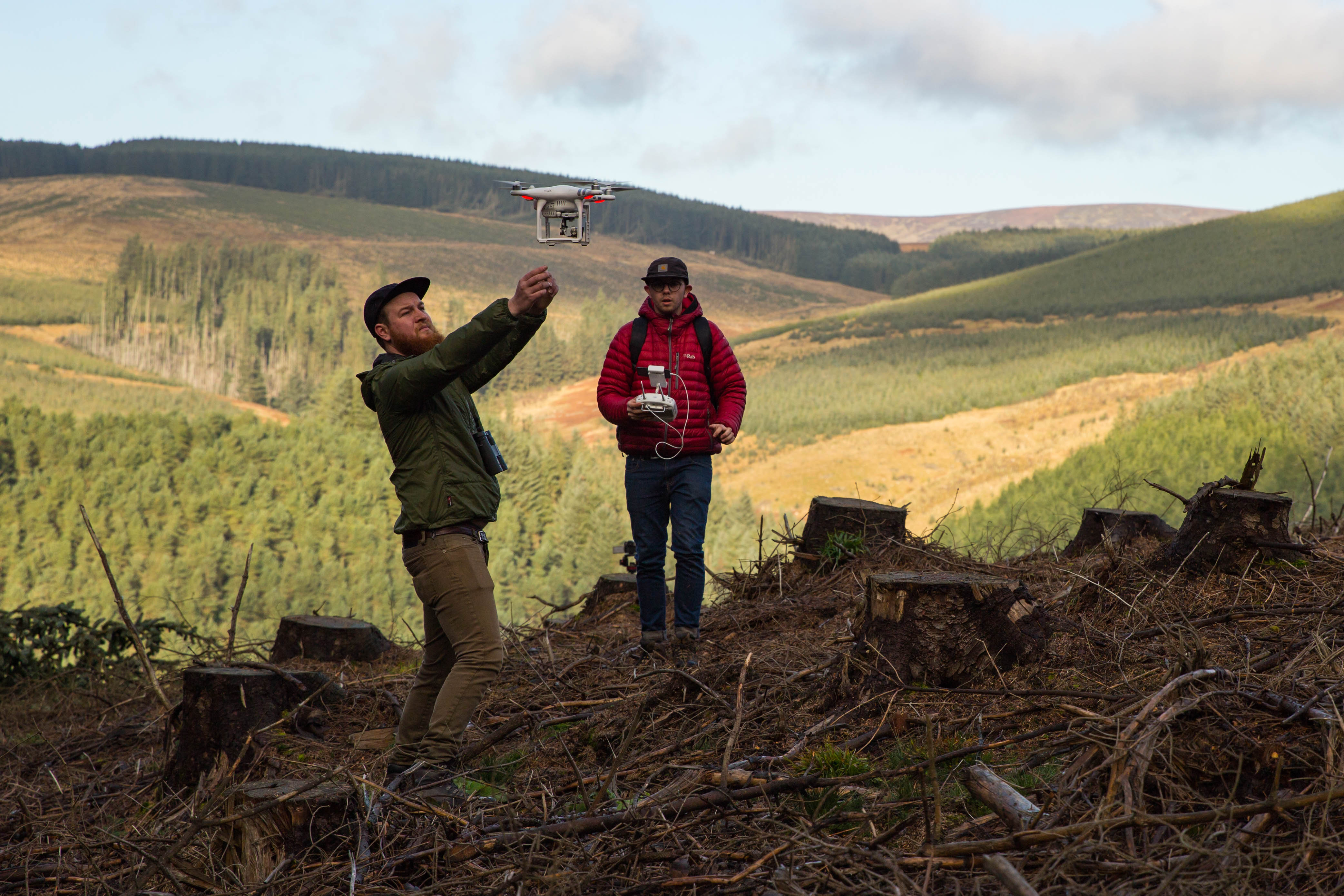
There was no frost today, but the sun was shining brightly and I knew the larches on the hills would be lit up like fiery beacons. We only had the morning, as we were leaving the bothy just after lunch, so first I headed out with Cain to pick up the camera traps. I was wrapped up in my fleece but was soon peeling layers off – the weather was surprisingly warm today with such bright sunshine and little wind.
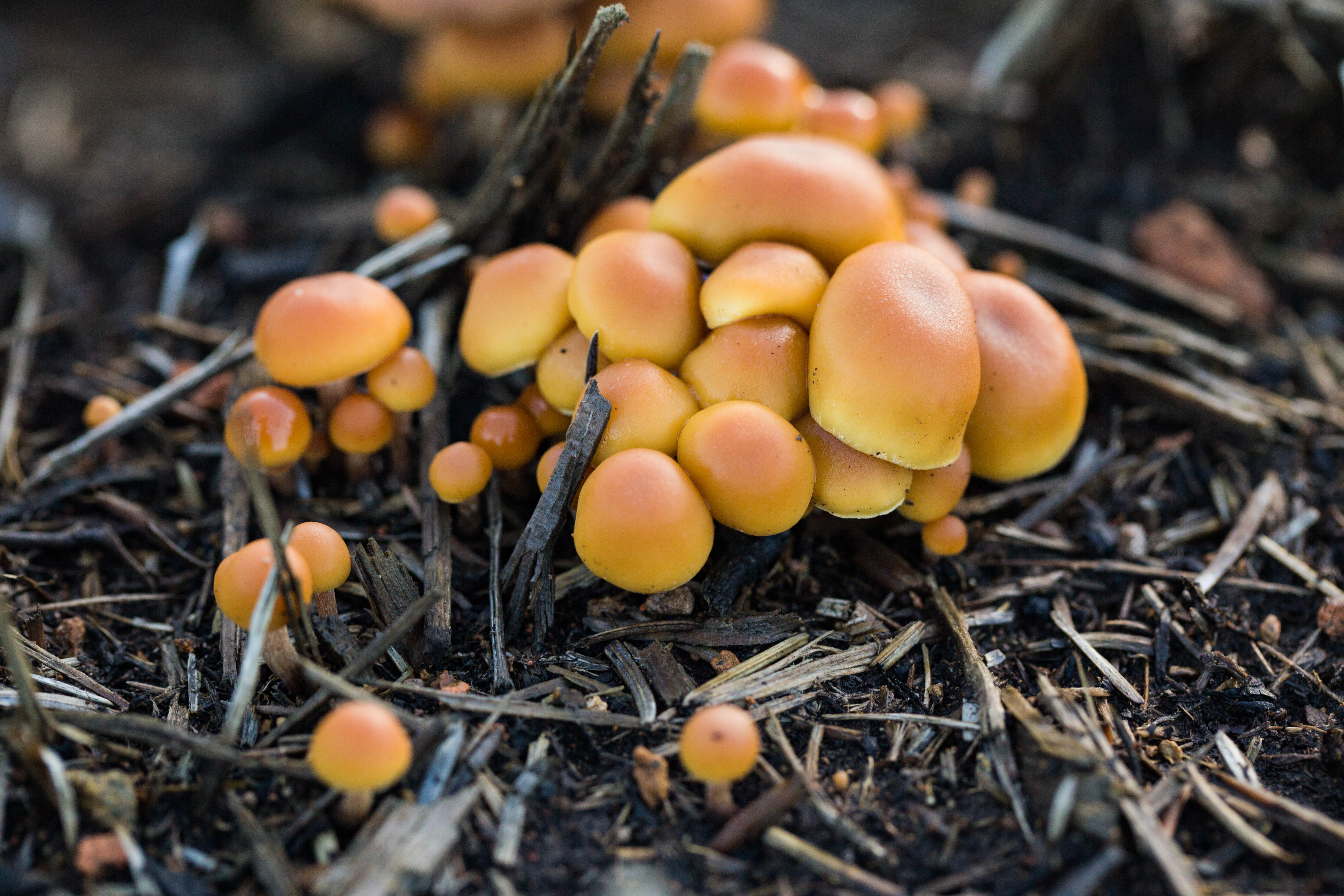
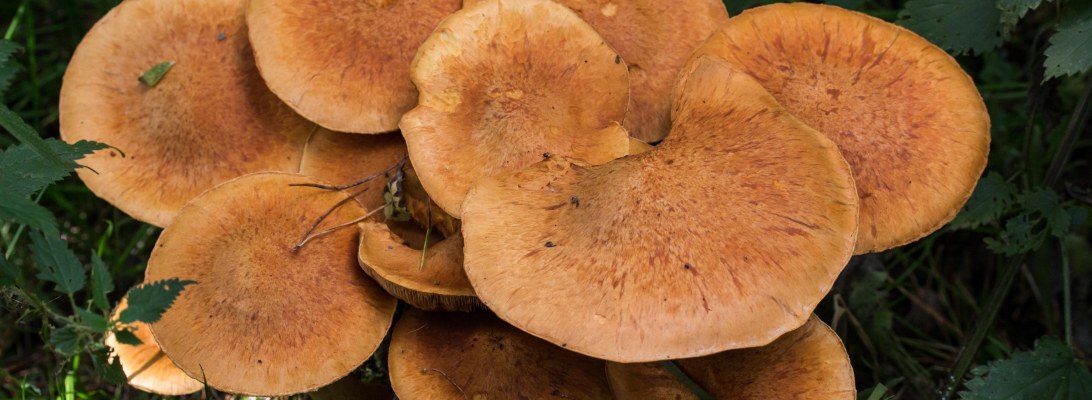
Just before we returned to the bothy to check the footage, Cain took me to see the huge troops of orange fungi up the hill by the clearing. I’d just been saying how little fungi I’d seen, but I was soon proved wrong when I saw how many there were up here. Sprinkled all the way along the track were small orange bulbs of every shape and size. Some were illuminated in patches of sunlight, which made their colours shine even brighter.
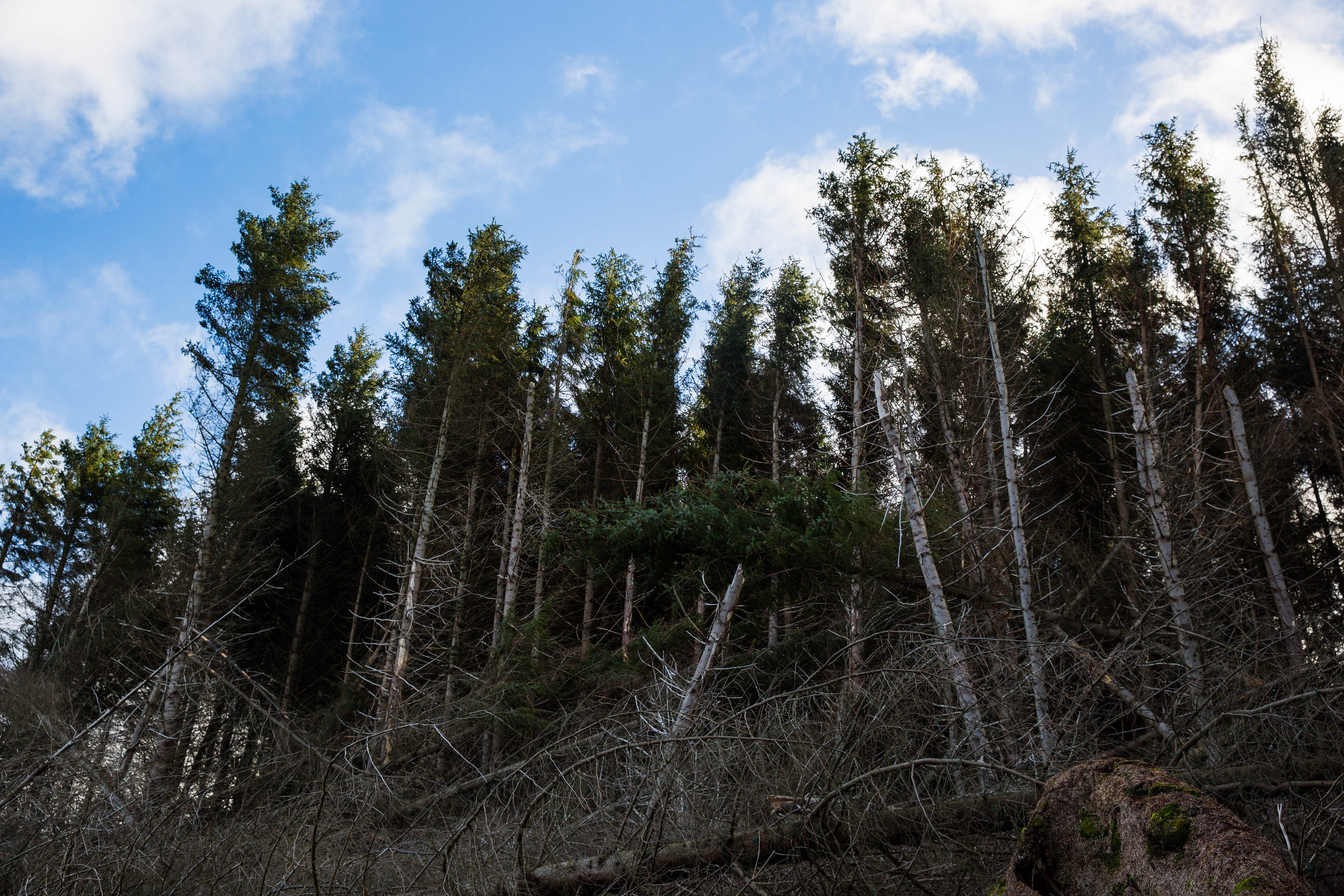
As I was stooped on the ground photographing the fungi, I heard a bizarre sound that reminded me of an angry cat. I turned and saw the outer layer of trees swaying in the growing wind, releasing the most peculiar creaking noises. Cain explained how these trees would usually grow on the inside of the forest, but due to felling they were now on the outer layer and were struggling to cope with the battering elements. Some had already succumbed, and we passed gigantic trees lying flat on the forest floor, their roots larger than tractor wheels.
Out in the open, the wind was a lot stronger, so we ducked back down and sought the shelter of the forest. We gathered everyone in the bothy and had a look to see if the traps had been successful. Sadly, the two I had put out only had footage of my bobble hat as I attached and detached the trap from its post. However, Cain had put one in the garden and this had filmed several clips of a bank vole darting in and out of the rock pile. Later in the night, a wood mouse joined the scene, distinguishable by its longer tail and much larger Mickey Mouse ears. So, the traps weren’t a complete disaster, but certainly no pine marten footage.
Before I’d even got to the hide there was a chirruping in the bushes and I turned to see a group of juvenile yellowhammers mobbing their parents, hopping between branches for attention. Three birds flew past overhead and I caught the triangular shape of starling wings as they soared over me.
The lake was quiet – a pair of mallards floated in circles on the far side, while mute swans waddled along the bank. Once I was settled inside, they appeared by the feeders, accompanied by the juvenile swans I’d seen last time. The whole family loitered beneath the swinging seed canisters, mopping up anything dropped.
The feeders themselves were a flurry of activity. As usual, the nearby bushes were full of house sparrows, fighting to snatch a mouthful. Blue tits and great tits waited in the queue and I was particularly excited to see a lone greenfinch among the group too; back home in Hertfordshire these birds are becoming scarcer and scarcer.
After watching the birds feed for a while, I wandered on. It was a lot colder than usual – dew covered the grass but it wasn’t quite cold enough to freeze it, though perhaps this may soon be the case on early mornings. There were other signs of winter too; bursts of red berries and a fat robin perched on the fence. Even though these birds are around all year, somehow a day in early winter feels like Christmas is a lot closer when you spot one.
As I made my way to the wood the only sound was the usual “whizz-burr” of the turbines as they swung. There was a break in the clouds and beautiful streaks of sunlight shone through at jaunty angles. The forest was gloomy but still inviting, and as I walked round I scanned both sides of the path to see if any fungi were sprouting up. The ground was boggy in places, and when drops of water fell in the puddles, the reflected trees twitched.
Suddenly, just as I was looping back round to the gate, a woodpigeon exploded out of the trees and made me jump a mile. Why do pigeons love doing this? It must give them a wicked satisfaction to see me clutch my chest and try to get my breath back to normal.
Once I was back in the open, the chill was even stronger. I wrapped my coat tighter around myself and hurried back to the cafe to warm up.
Another visit to one of my favourite wildlife places: Watchtree Nature Reserve. Zahrah and I hired bikes and set off through the reserve, taking a leisurely ride away from the hubbub of the café and car park to the quieter open fields and woodland.
The lake was fairly busy. A pair of Mute Swans and their two cygnets glided silently to and fro in one corner, shaking heads and rustling feathers. The youngsters were almost fully grown, their juvenile grey foliage blending to pristine adult white. When one stretched his wings, bright white armpits showed. Elsewhere on the lake, three Tufted Ducks were feeding, golden eyes blinking as they came up for air. A lone Little Grebe dived under the water and popped up again several metres away. As agile as a fish, the tiny bird curled its body and slipped silently beneath the surface.
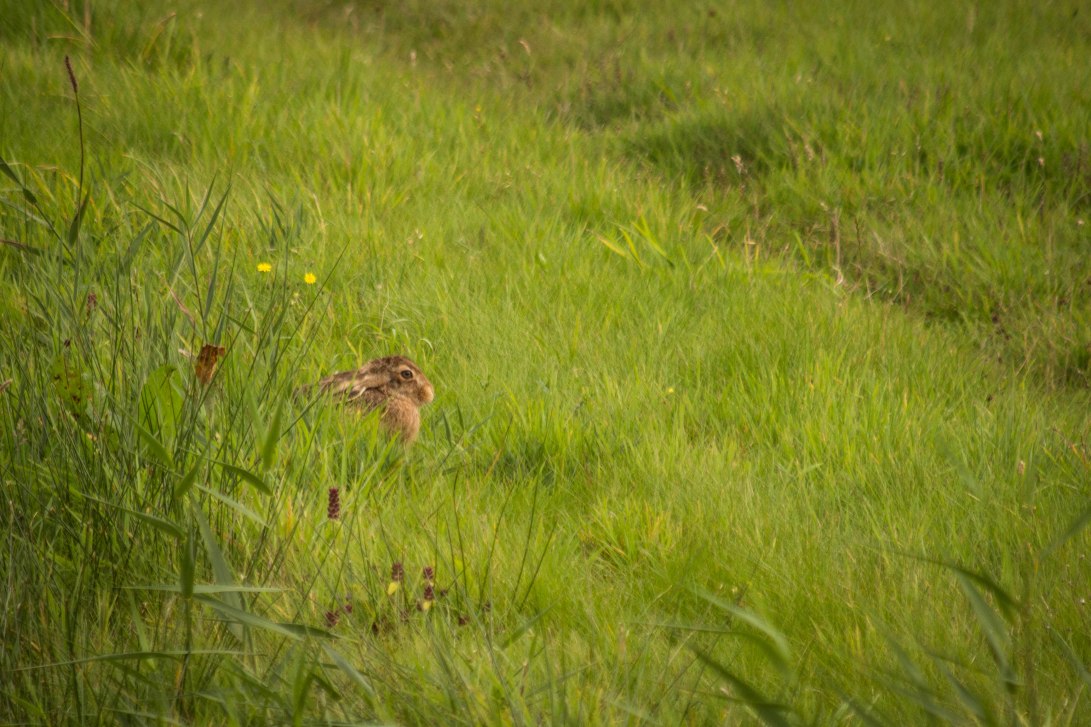
Suddenly, as I was scanning the feeders for any birds joining the Tree Sparrows already tucking into the feast, my eye caught on a brown shape nestled amongst the grass. From my vantage point on the top storey of the hide I could see the Brown Hare perfectly as it chewed, hunkered down. I called in a hushed whisper to Zahrah, who’d been watching the pond from the bottom level, and she darted up to see.
The hare was beautiful, with rich, brown streaked fur and piercing eyes. Its ears were pinned tightly to its nape, in an attempt to remain as inconspicuous as possible, but the creature was still brave enough to forage out of the cover of the long grass. We watched it for a few minutes, before it turned and hopped back into the grass. After waiting a while to see if it would re-emerge any closer, we accepted our hare was long gone.
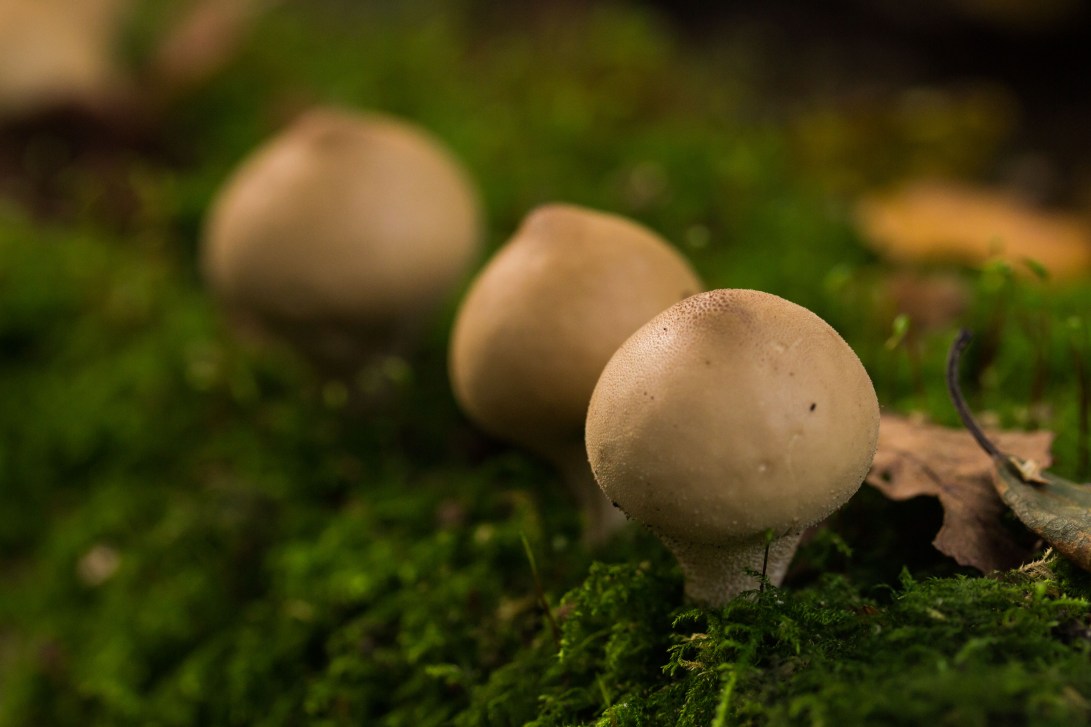
Leaving the lake behind, we looped around the reserve and cycled back through the woods. Once again, I was distracted by fungi, and Zahrah amused herself while I crawled around on the floor with my camera. Today, as always, there was plenty to see. A huge troop of Stump Puffballs (Lycoperdon pyriforme, the only British Lycoperdon to grow exclusively on wood) stood to attention on a fallen log, their portly bodies stood side by side.
Stump Puffball(Lycoperdon pyriforme)
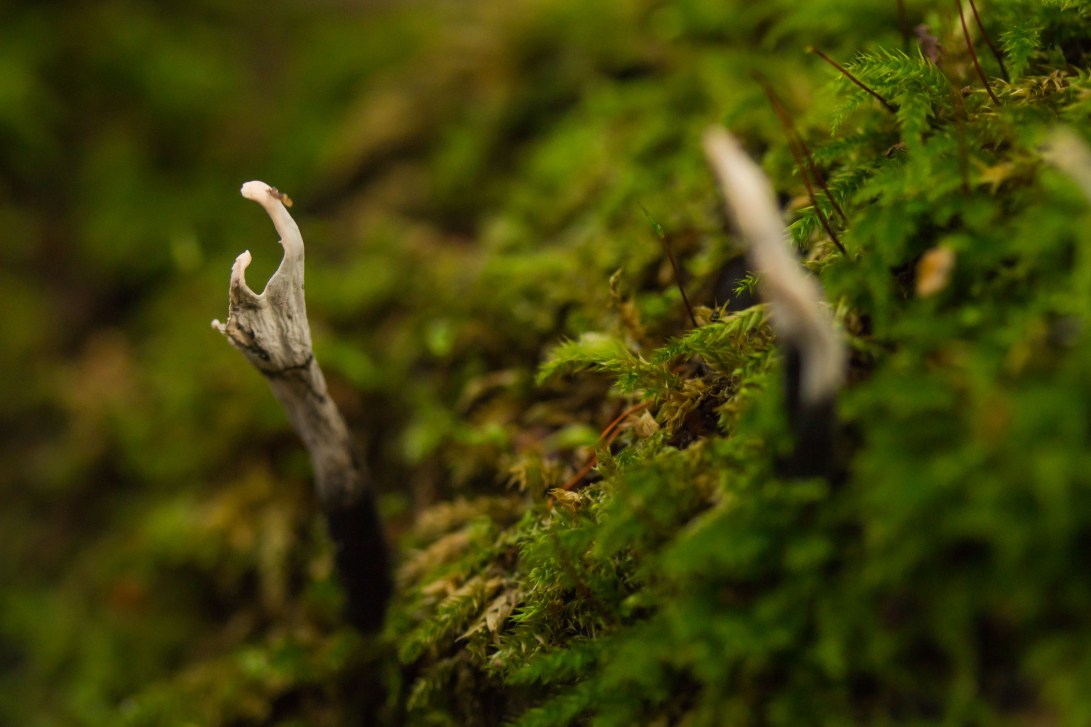
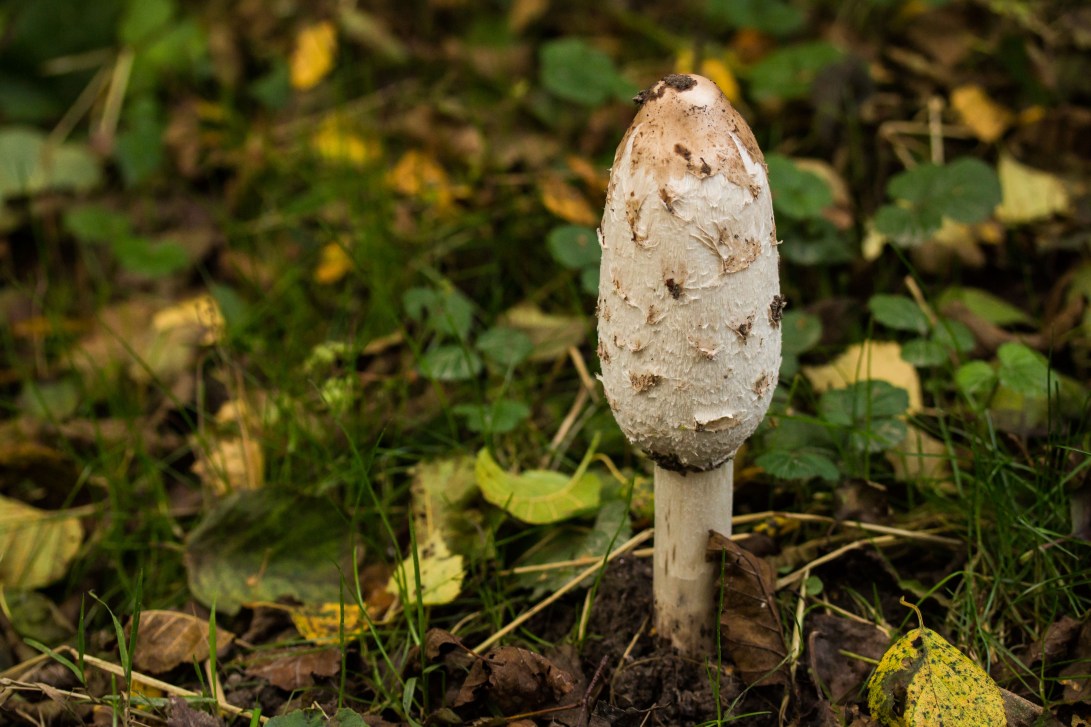
The delicate Candlesnuff fungus (Xylaria hypoxylon) stretched out of the wood, tiny black spindles dipped in white. Just as I had finally put away my camera and climbed back on the bike, I was greeted by three Shaggy Inkcaps (Coprinus comatus) stood on either side of the path like security guards. I hadn’t seen this fungus since autumn last year so it was a treat to photograph them again, and provided a satisfying end to our cycle in the woods.
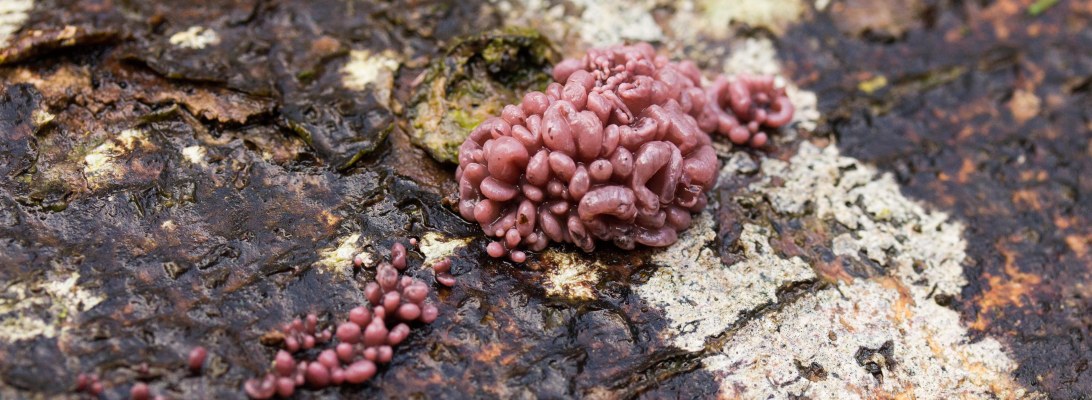
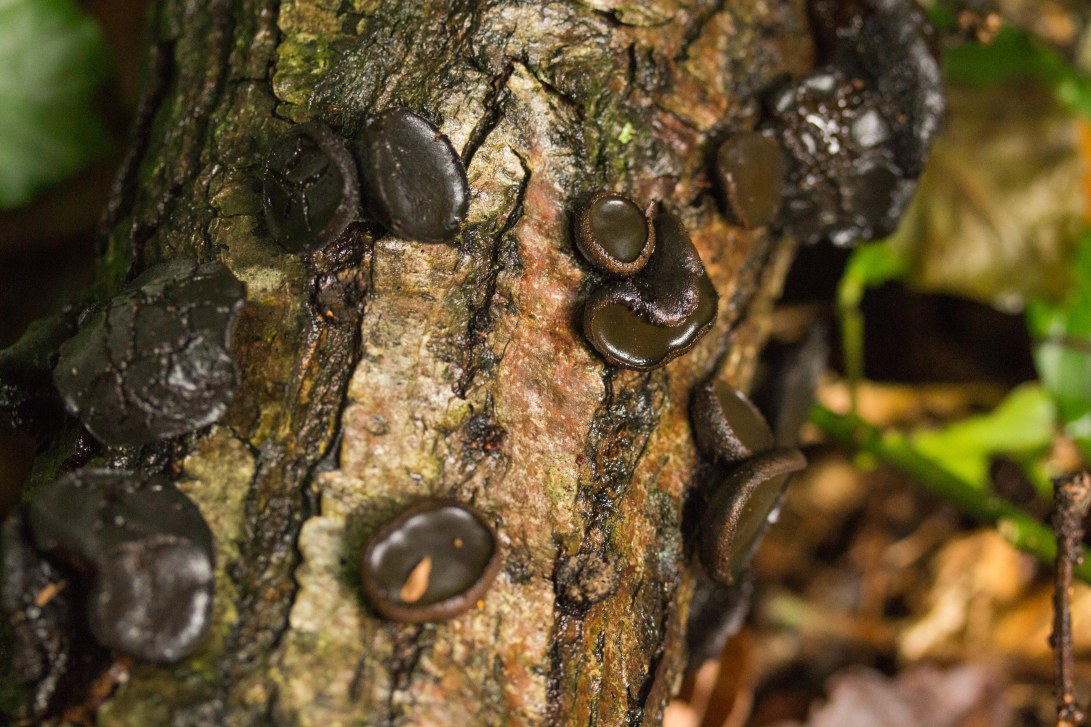
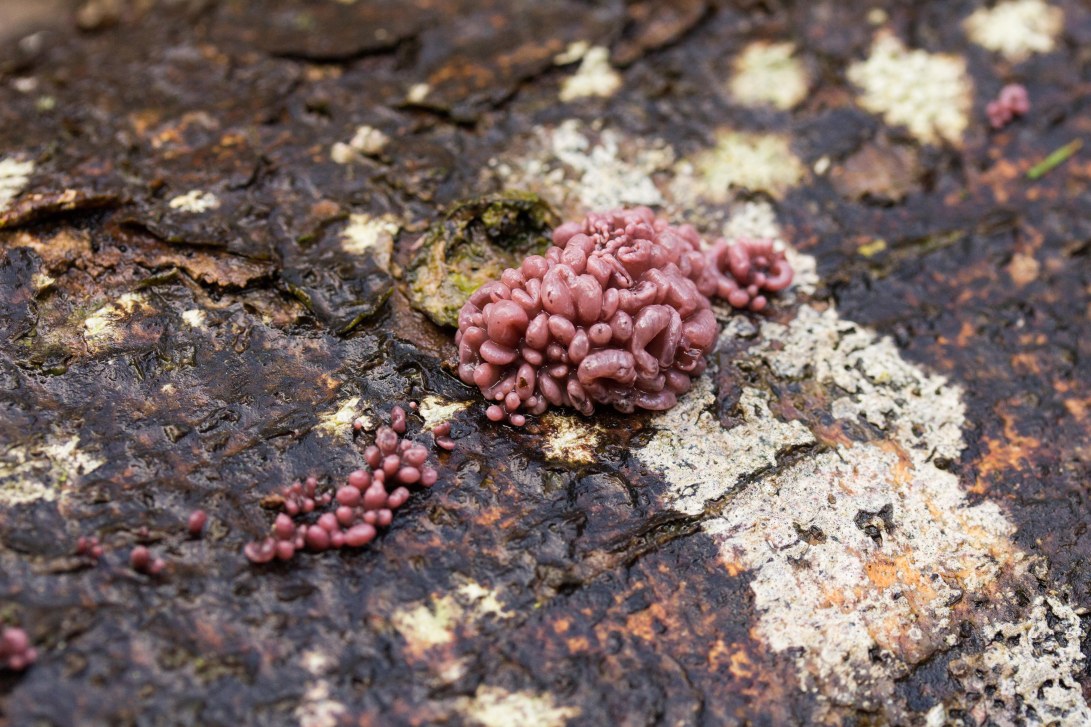
Almost all of the natural habitats that can support life are inhabited by fungi. While some species are only found in particular habitats, such as Black Bulgar (Bulgaria inquinans) on oak wood and Purple Jellydisc (Ascocoryne sarcoides) on beech, other species can thrive in many different types of habitats – coniferous woodland, broad-leafed woodland and heathland to name a few.
Autumn is one of the best times to see fungi in its prime. September rains bring the varied and often vibrant fruiting bodies out of the leaf litter and into the open. With a broad range of habitats and often wet weather, Cumbria is a fantastic location for finding fungi. I set out to several different locations to record the species that were in fruit at this time of year. Identifying them can be a challenge, so I enlisted the help of Paul Nichol from the Cumbria Fungi Group to help me with the trickier varieties. After just a few walks I’d seen dozens of species of different colours, shapes and sizes. Of these, there were four that stood out: the Common Puffball, Ochre Brittlegill, Sheathed Woodtuft and Artist’s Palette.
Black Bulgar(Bulgaria inquinans)Purple Jellydisc(Ascocoryne sarcoides)
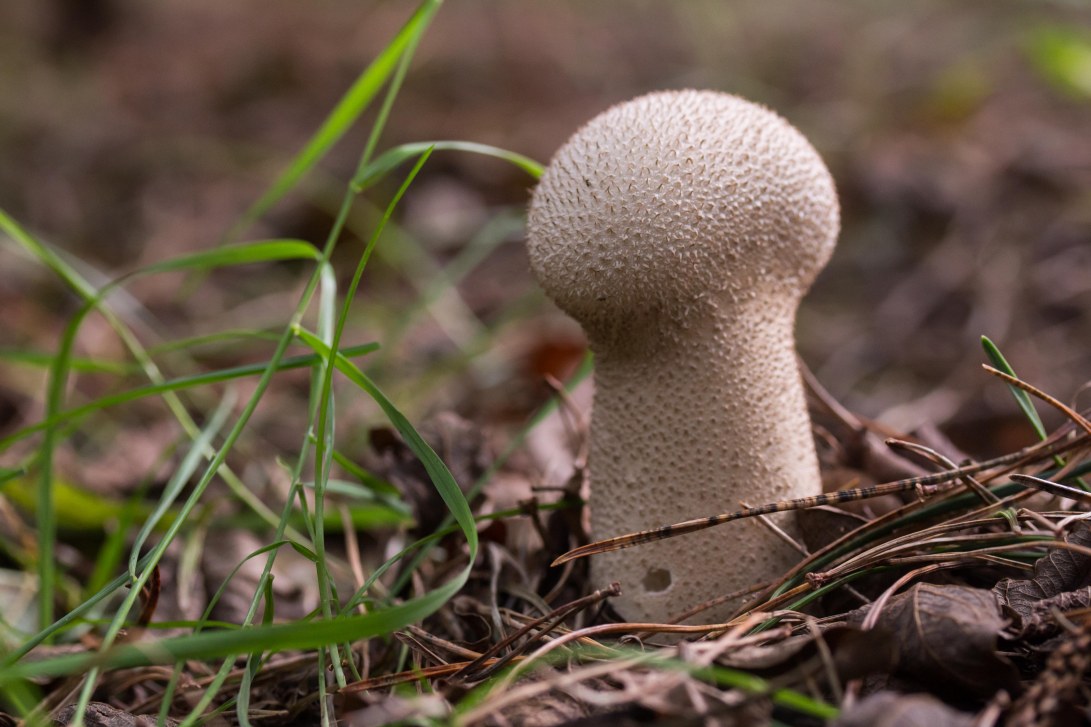
Common Puffball (Lycoperdon perlatum)
With a season spanning from July to November, the Common Puffball can be seen regularly in a broad range of habitats, from the leaf litter of broad-leafed, coniferous or mixed woodland to pastures and heathland. Although these Puffballs can be seen growing individually, they are frequently found in groups.
Young specimens are white and covered with tiny, pyramid like spikes all over the spherical cap. As the Puffball ages, its flesh begins to turn brown, and mature specimens have a circular hole on the top, which is used to release the spores in a ‘puff’ of brown powder.
Common Puffballs range in size and shape; while some are small with a stem that is barely visible beneath its low-lying cap, others grow larger with a thick stem sometimes reaching 9cm high.
I’d seen puffballs before, but never one this size; the stem was around 7cm long so the fungus protruded high up out of the ground. There were other Puffballs close by, though the stems of these were barely visible and hidden beneath the cap.
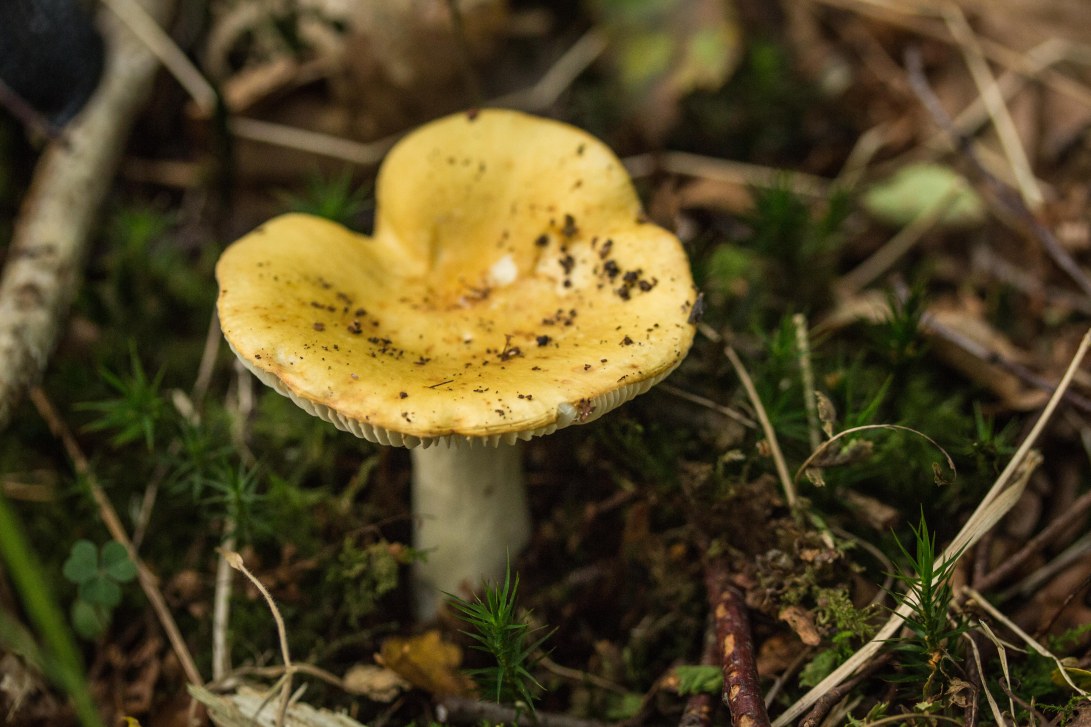
Ochre Brittlegill (Russula ochroleuca)
The Brittlegill family is an extensive one – there are over a hundred species in the UK alone. Of these, almost all have white gills and stems. The gills of this group are particularly interesting because they’re not varied in size with some small and some long, as is common in a lot of mushrooms, but all stretching from the stem to the edge of the cap in a uniform arrangement. While some are edible, others can make you very ill indeed, the Geranium Scented Russula (Russula fellea) being the nastiest of these.
Every tree you see will have a fungus growing on it somewhere. While some species are parasitic, there is often a very heart-warming relationship between the two. When a fungus grows on the root tips of its tree host, it is nourished by the tree’s photosynthesis. In response, the fungus absorbs the minerals produced, and passes on the excess back to the tree via its roots. This is an example of symbiosis between the tree and the fungus, where both species are benefitting from the interaction.
I’ve seen quite a few Brittlegill now. This one is Russula ochroleuca, the Ochre or Yellow Brittlegill. With a bright yellow cap and snow-white stem, it’s an extremely pretty mushroom, but with a distinct peppery taste so is not usually eaten. This chilli taste is typical of several varieties of Brittlegill, and can be used as an indicator of its species.
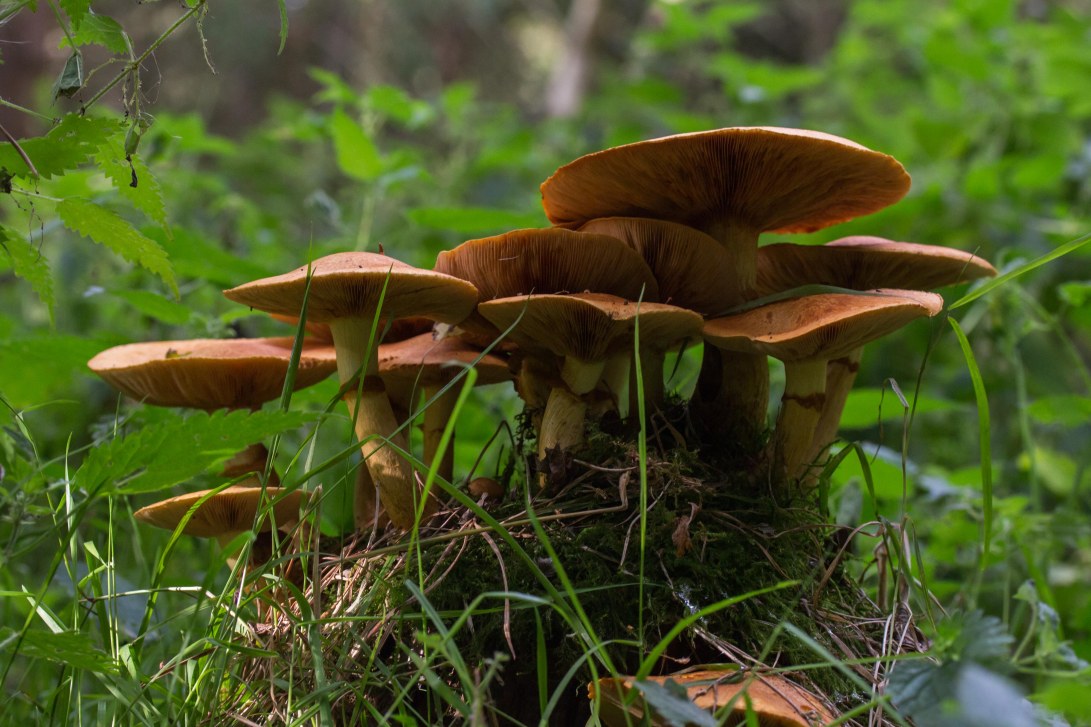
Sheathed Woodtuft (Kuehneromyces mutabilis)
This impressive-looking mushroom is one of the largest I’ve seen, and stood proudly with its troop amongst the nettles. After first consulting my fungi guides, I thought I’d found Velvet Shank (Flammulina velutipes). The bright orange, two-toned colour was consistent, along with the trooping. However, this mushroom was a lot waxier than the specimen I’d found, not to mention the size difference. While Velvet Shank stems can reach 10cm in length, these mushrooms were nearly double that. Stumped, I showed my photos to Paul, who informed me that in fact I’d found the tufted toadstool named Sheathed Woodtuft (Kuehneromyces mutabilis). Halfway down the stem was a clearly visible ring, which is present on a lot of mushroom stems, and is a mark of its development. When the fungus first emerges above ground, the cap is ball-shaped and attached to the stem. As it grows, the attachment breaks and the cap stretches into its mature umbrella shape, leaving the ring mark behind.
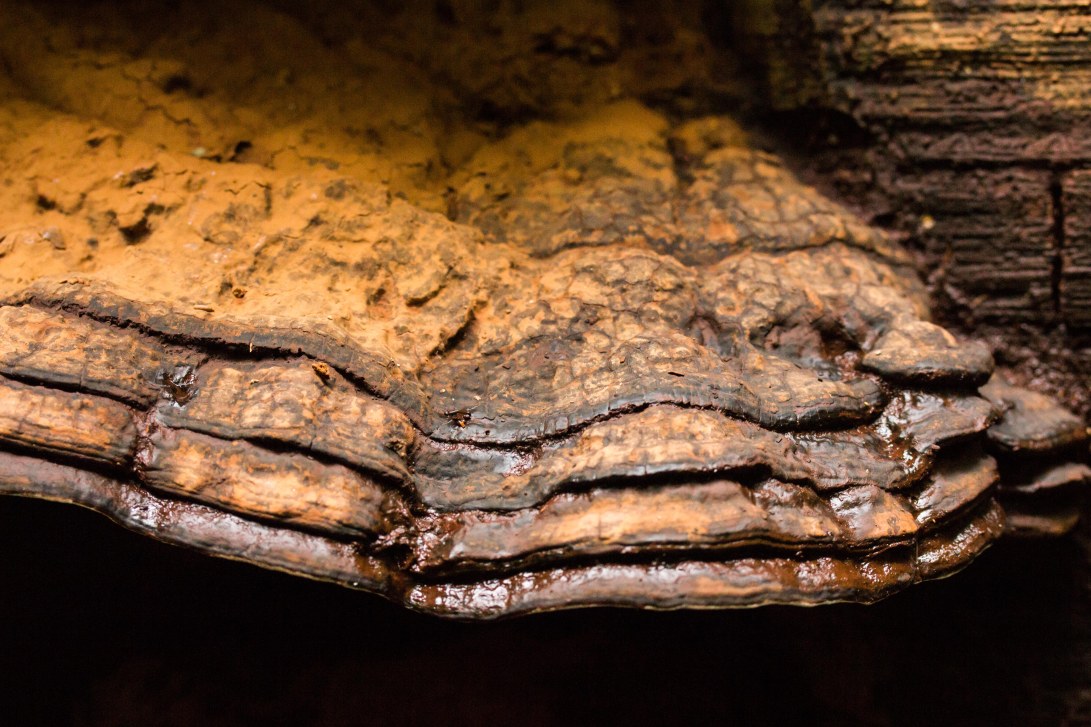
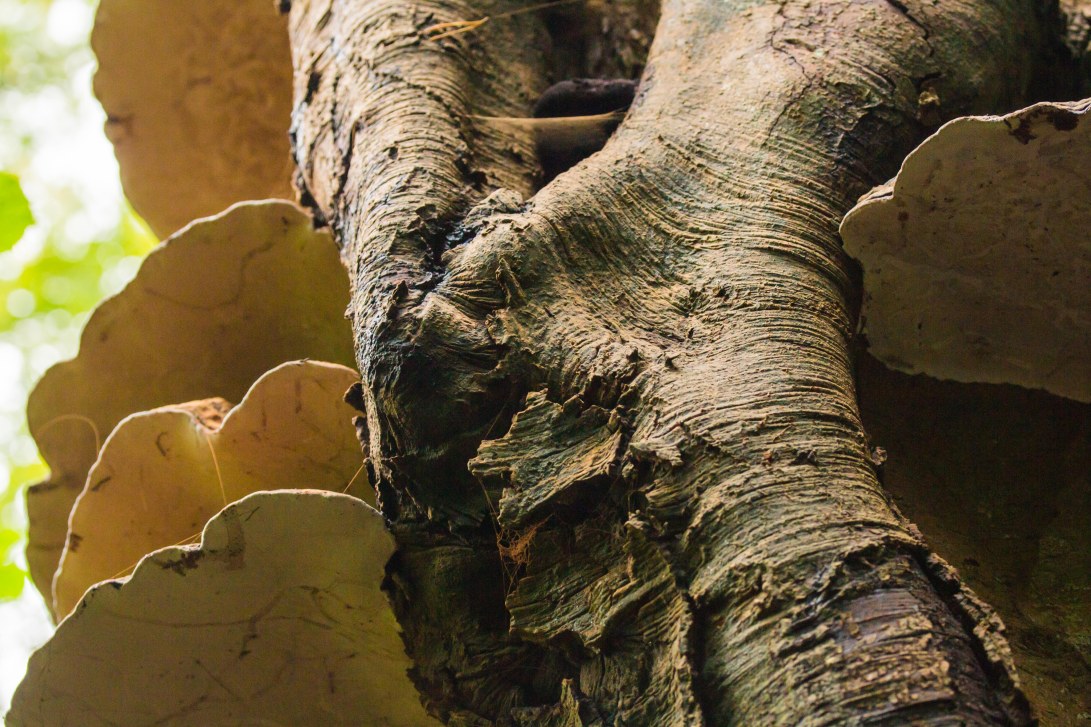
Artist’s Palette/Bracket(Ganoderma applanatum)
The Bracket family of mushrooms is a peculiar one, and quite often seen climbing trees in a ladder-like fashion. This particular troop of Ganoderma applanatum, or Artist’s Palette, was very impressive. A parasitic species with a creamy white pore surface and a red-brown upper surface, the fungus takes a host tree and slowly depletes it of nutrients, until it eventually grows on the deadwood alone. The vast slabs were longer than my hand and extremely tough. The fruit body grows perennially – producing new spores from the same fruiting structure over multiple years, as opposed to one (annual) – and the spores fall as a fine, rusty brown powder. This means it is essential for the Artist’s Palette to grow horizontally, to ensure maximum spore dispersal. Some of the individuals we saw lower down the tree were covered in a brown snow of spores from the brackets above them.
After just a few weeks studying fungi in Cumbria, I’ve seen just how many species there are to see, from vast, hard Brackets to tiny, squishy Puffballs. With plenty more chilly autumn days to come, I can’t wait to see what else begins to emerge.
It’s soon to be prime fungi season and I can’t wait to see what will start to emerge over the next few months. I find identifying fungi a real challenge, and recently I’ve mainly been interested in tracking fungi and photographing it. As with all wildlife though, I think every photographer should know exactly what it is they’re pointing the camera at. So, after consulting the “Fungi Bible” – otherwise known as the Collins Fungi Guide – I made my best guesses at what species I’d seen. Then, I consulted with a local fungi expert in my area, and was pleased to discover I’d got most of them right!
Here is a selection of the species I’ve seen so far, some in Carlisle where I’m studying and others at home in Hertfordshire. Hopefully this list will triple in size during the autumn!
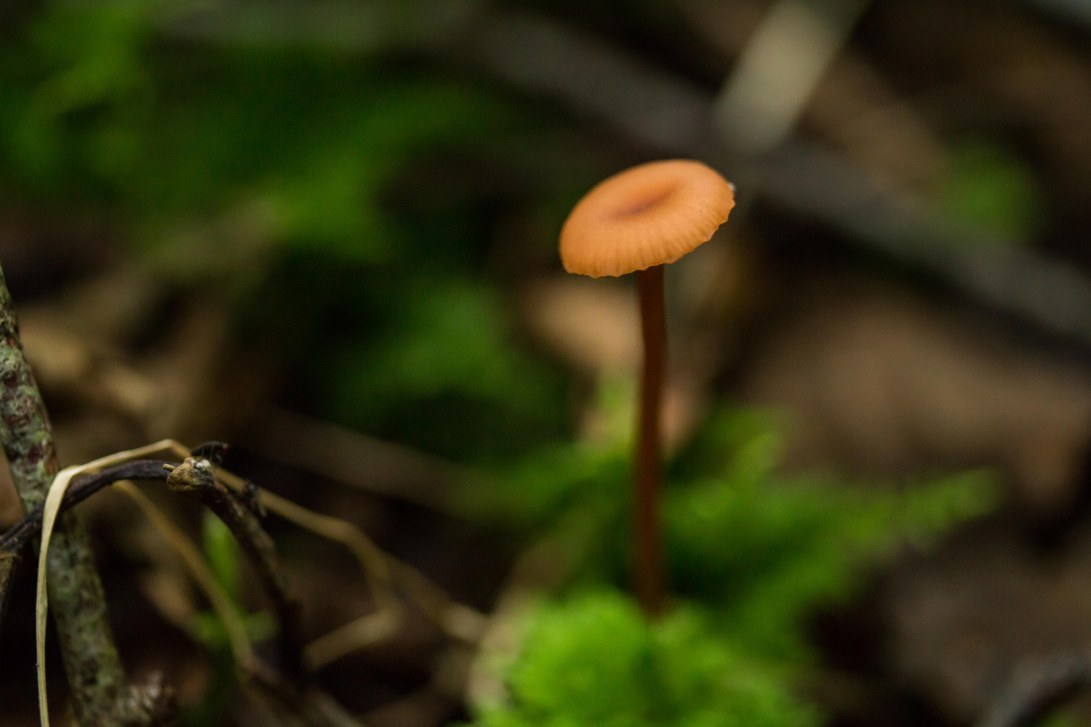
Common Puffball(Lycoperdon perlatum)Ochre Brittlegill(Russula ochroleuca)Blue Roundhead(Stropharia caerulea)The Deceiver (Laccaria laccata)Brittlegill (unsure of species – too young)Sheathed Woodtuft(Kuehneromyces mutabilis)Sheathed Woodtuft from below
It was looking like another gorgeous day. As we walked along the harbour yesterday, I couldn’t help noticing how inviting the forest running alongside the beach looked. Stretching for over seven hundred hectares, Roseisle Forest was a stunningly beautiful pinewood. As we made our way up the slope between the first row of trees, sand dunes transformed to mounds of fallen pine needles and the sound of the ocean soon faded into silence.
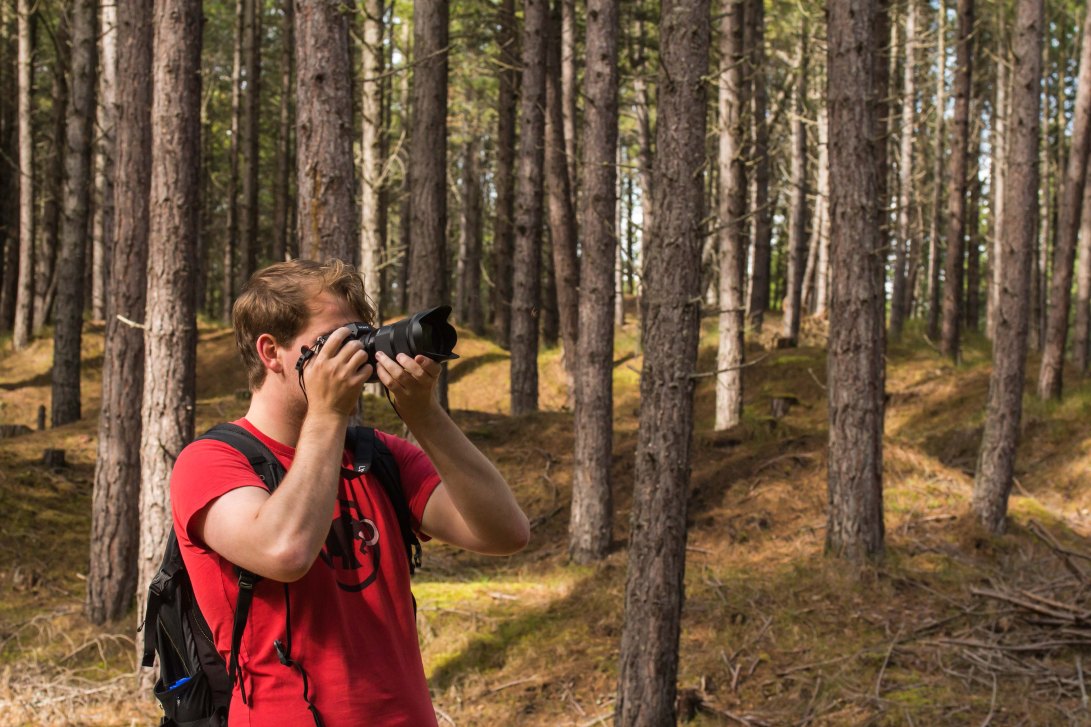
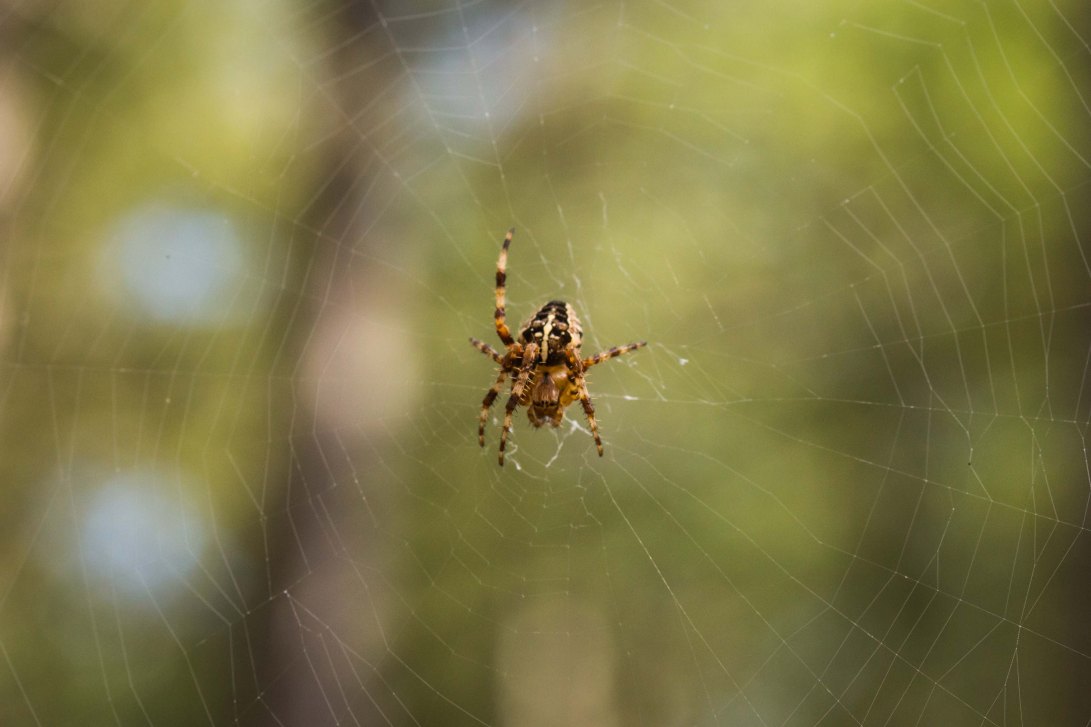
A wide trodden path snaked between the trees. I was on the lookout for fungi, so we headed off-road and ventured up the hills, giving us a great vantage point over the forest below. Before long, a sudden sparkle caught my eye, and I was amazed to discover that a spider had strung its web between two trees several metres apart. Luckily the sunlight had caught the web; otherwise we may have walked straight through it. We spent the next twenty minutes photographing our spider – it was a real challenge trying to get him in focus as the web swayed to and fro in the breeze, which must have felt like a gale to the spider. If you zoom in on the photo of Kerr, you can see a brown dot a few inches in front of his camera, showing just how tiny the little hunter was.
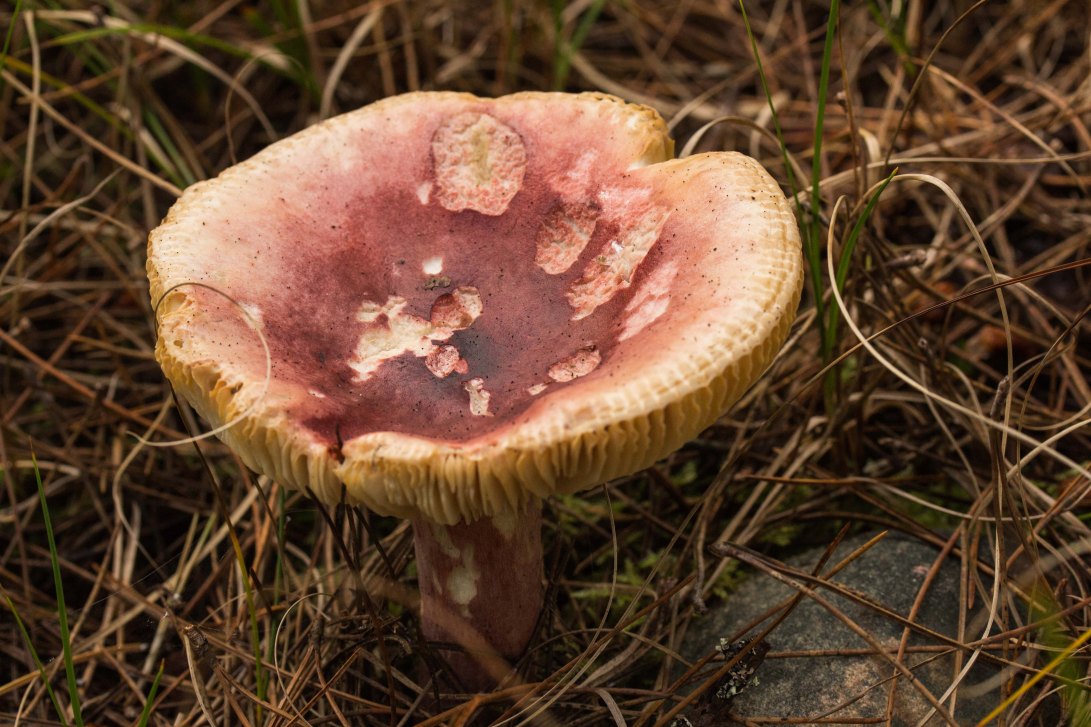
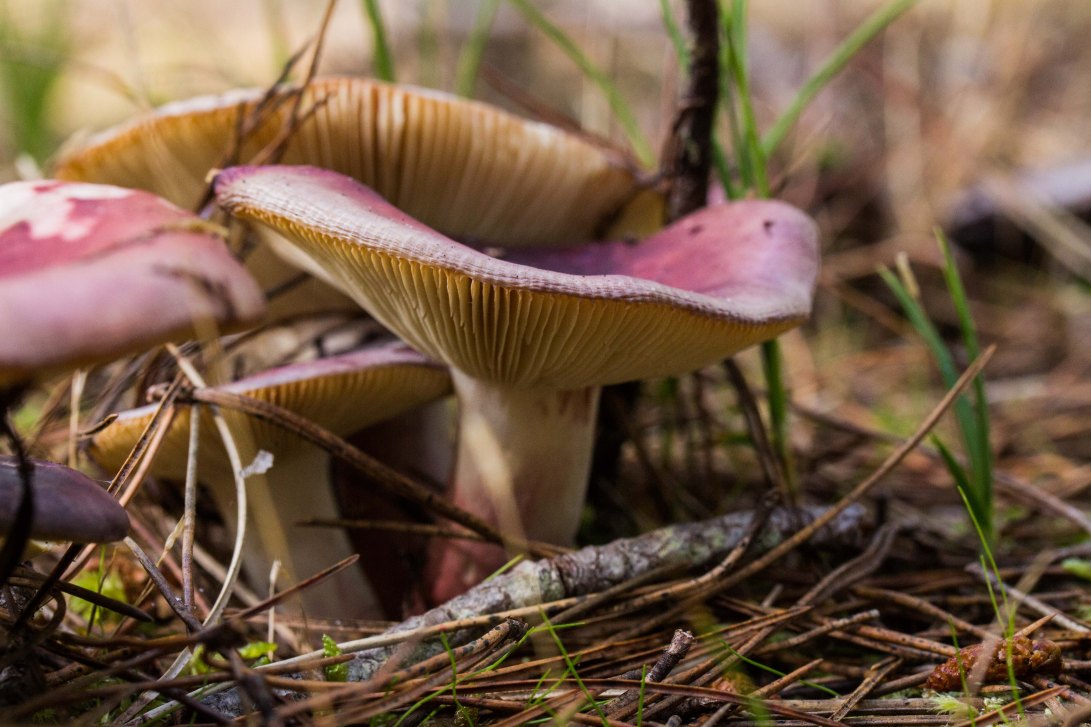
Soon, it became clear that Roseisle Forest was abundant with a medium-sized, red-capped mushroom that had faded to pink with age. After consulting the Burghead guide back at the cottage, I discovered that mushrooms in the Russula group, otherwise known as Brittlegills, were common here. After checking out the various species I identified this fungus as Sickener (Russula emetica), a poisonous species associated with pine woodland. This mushroom is found in groups and is most common in late summer to early autumn, perhaps explaining why the ones we saw weren’t the bright red colour of their prime.
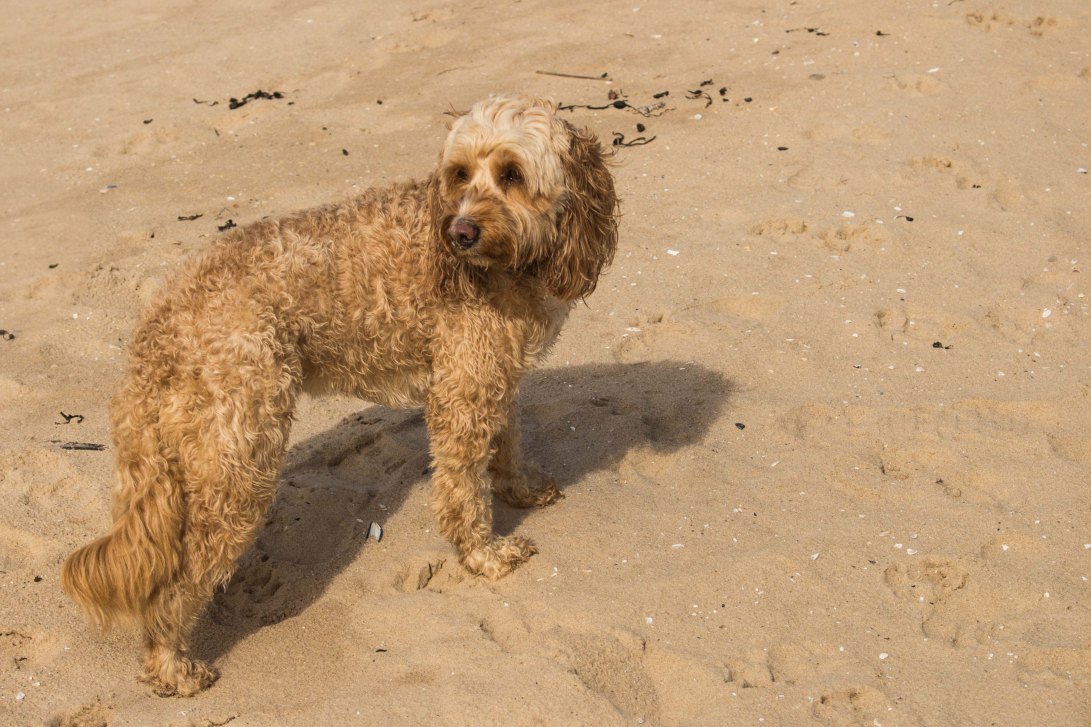
After finding dozens more Sickener mushrooms and spending a long time crawling on the forest floor photographing them, we headed back out onto the beach. We met up with my parents and Jasmine, who was whipping up a small sandstorm in her excitement. By this point my stomach was rumbling after the walk in Roseisle, so we headed to lunch and ate outside in the stunning sunshine.
Due to a lecture cancellation, Zahrah and I seized the day and paid Watchtree Nature Reserve a second visit. As the sun was actually shining, we made haste before the English climate returned to its usual cheeriness.
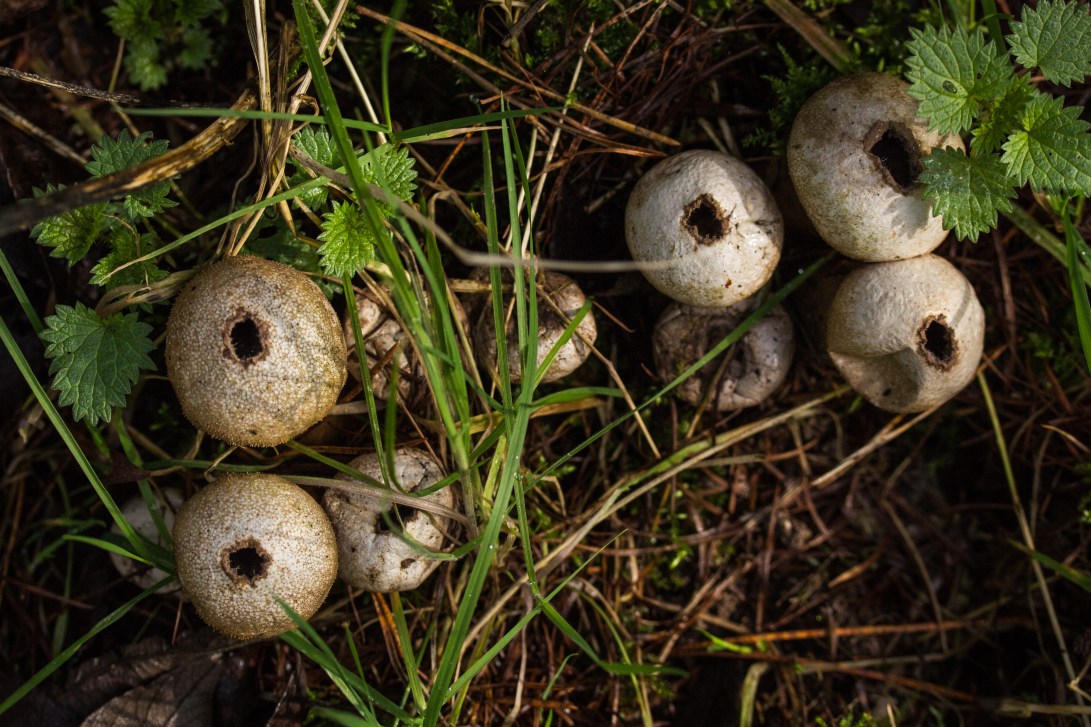
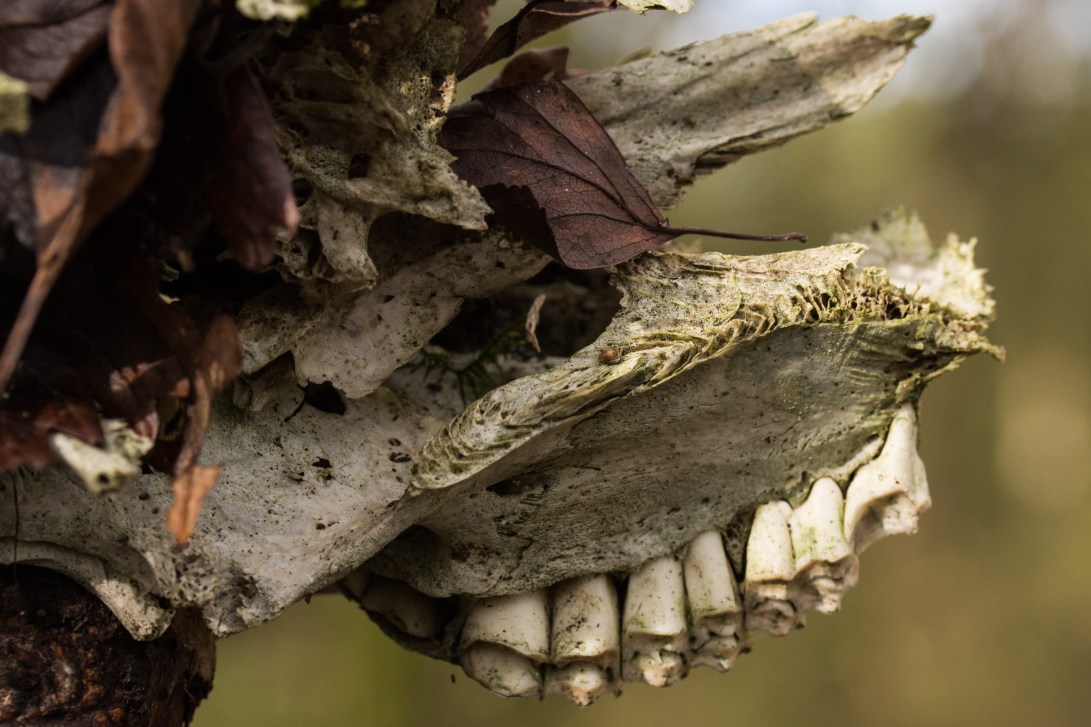
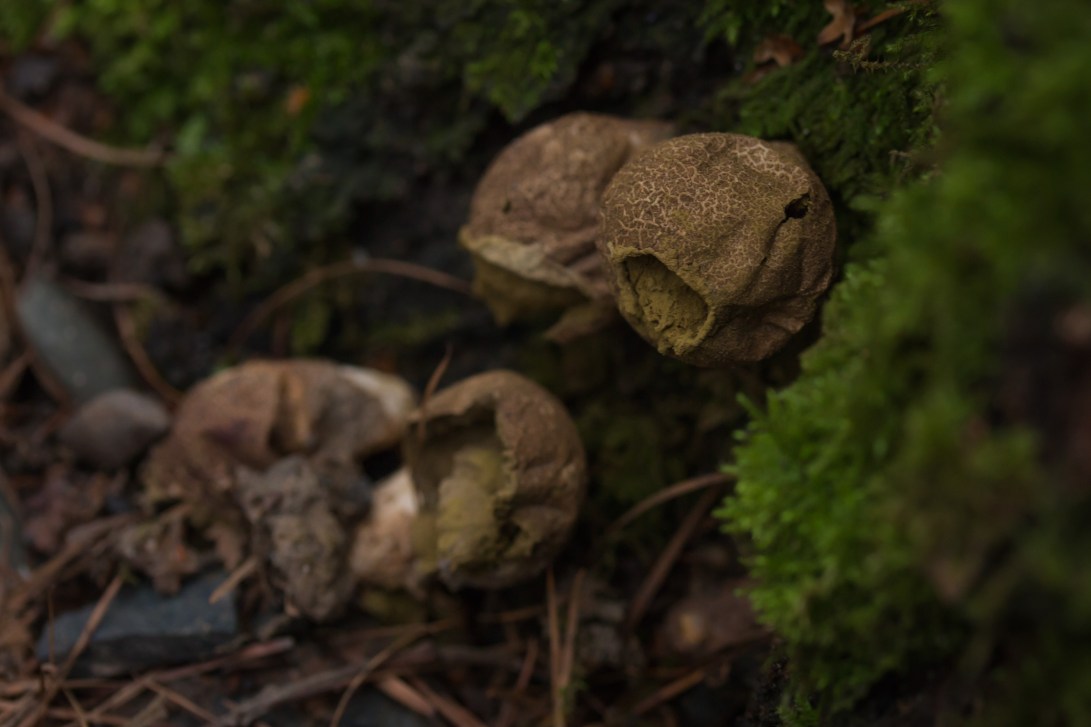
As we’d found several roe deer skulls at the reserve last time, we headed straight to Pow Wood and began to forage. My first find was a cluster of puffballs (Lycoperdon sp.). I find these little guys are extremely difficult to identify, but they’re always fun to see and remind me of terrestrial sea urchin shells.
Further into the wood I was extraordinarily excited to identify more fungi. This ID lark is slowly getting easier! I found a patch of jelly ear (Auricularia auricula-judae) on some dead wood, and wrestled for some time with said dead wood to get close enough for my macro lens to work its magic.
Shortly afterwards, I found several violent red blooms amongst the green foliage. The only scarlet elf cup (Sarcoscypha austriaca) I’d seen before was the size of my little fingernail, so to see some two inches wide was fabulous.
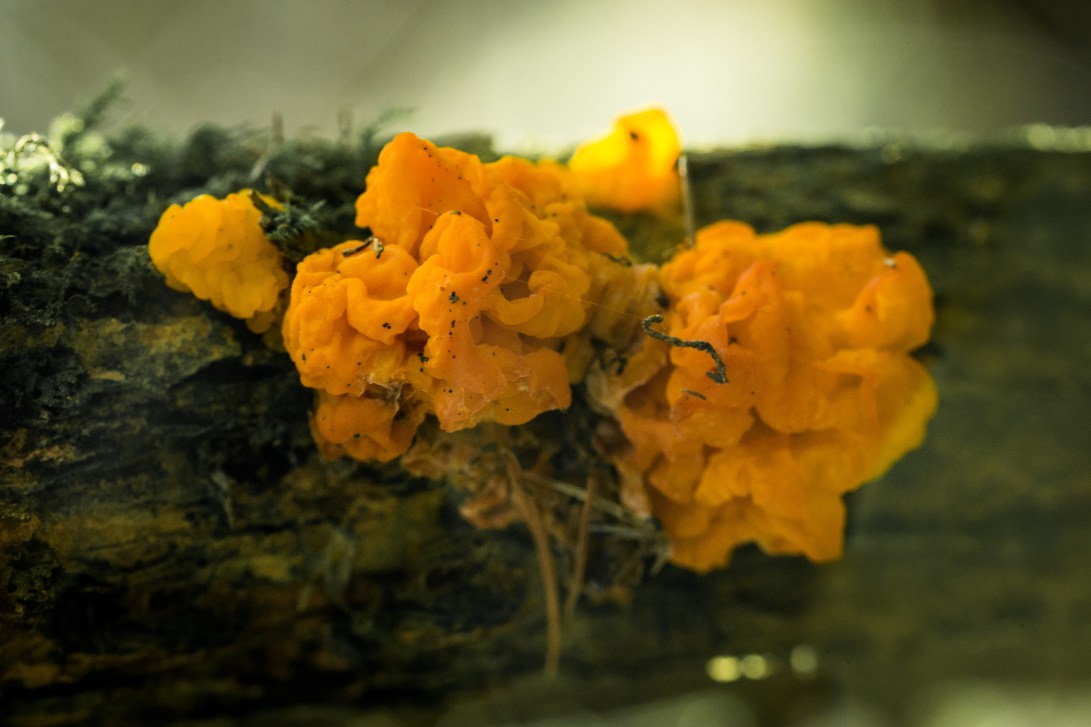
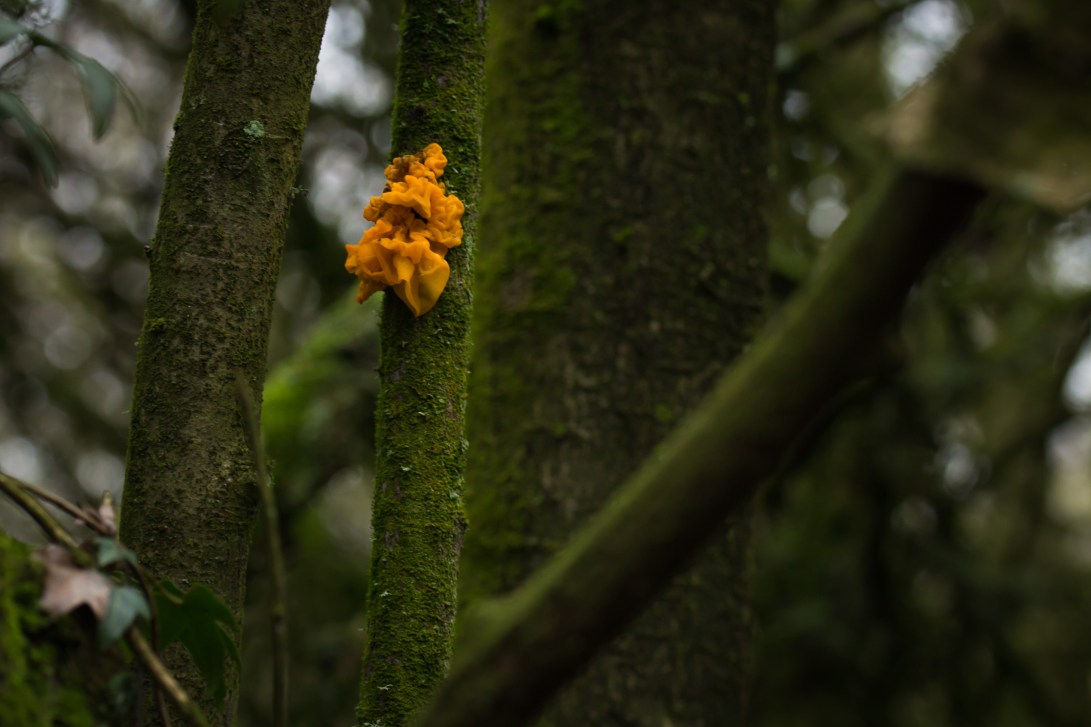
Finally, my eye caught on a bright patch of yellow as we untangled our clothes and hair from the low-hanging branches of the pine trees and, completely forgetting my wildlife voice, I shrieked “witches’ butter!”. In my defence, Tremella mesenterica is a really intriguing fungus and it’s the first I’ve seen up close.
In addition to our success with fungi, we also did some pretty good tracking. Putting the tricks we’d learned from Alex to the test, we found some deer tracks in the mud. As we found roe deer (Capreolus capreolus) skulls in Pow Wood on our last visit, we deduced that the same species had left these prints. Our suspicions were confirmed when we saw a flash of white and watched as three female roe deer darted into the forest, white bob tails stark against the brown and green of the trees.
Incidentally, I didn’t realise that I was on a walk with Hawkeye. In just a few hours, Zahrah found two roe deer skulls, what we suspect was a sheep skull, and a headless skeleton with beautifully pristine white vertebrae. I guess I’d been too distracted by the fungi. We scooped up the bones into a plastic bag, ready to douse them in hydrogen peroxide when we got back home.
Despite my ineptitude at finding skulls, I did find a collection of pellets at the foot of a tree along with a discarded white egg shell. The combination of these two signs suggested that the tree was home to a nest. After some research, I discovered that barn owls (Tyto alba) are known for their stark white eggs and dark, charcoal grey pellets, so perhaps this was our bird.
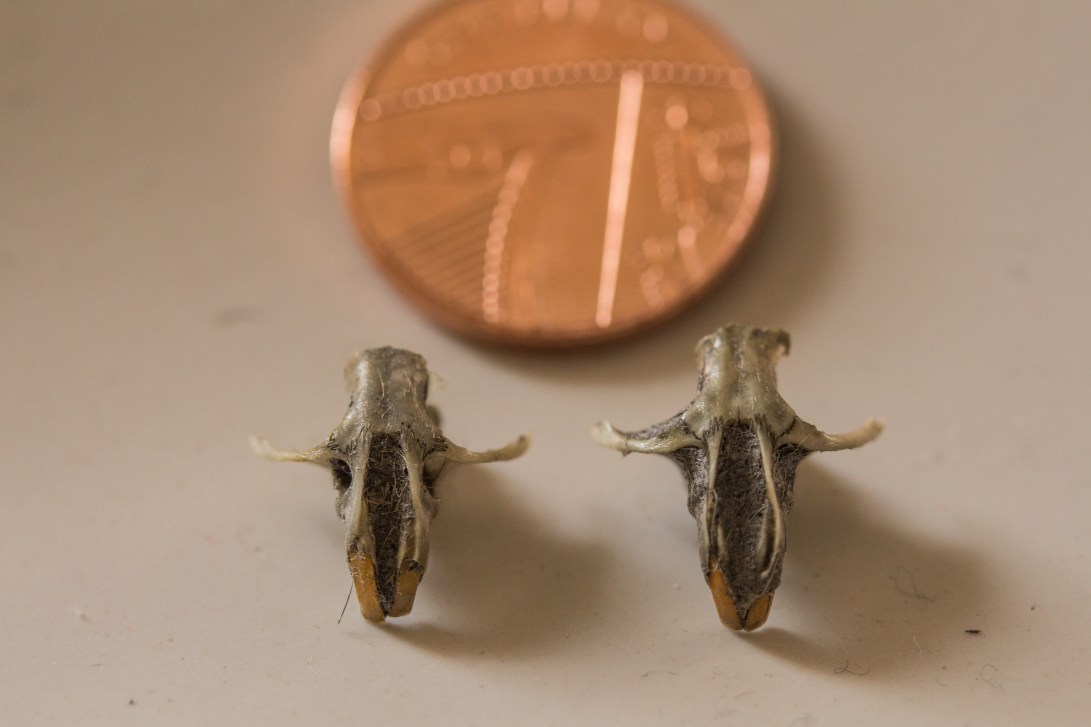
Back at the house, I dissected the pellets and in just three I recovered the remains of six rodent skulls, seven mandibles (lower jaws), several loose rodent incisors and a variety of leg bones. I attempted to identify who the skulls belonged to, but sadly they all looked the same. Still, it was fascinating to see how many kills the owl had made; there were at least two skulls in each pellet. This indicates that the bird was hunting regularly, as a barn owl usually regurgitates 1-2 pellets each night (Barn Owl Trust).
In addition, the egg shell I found had no yolk, suggesting the chick hatched naturally and wasn’t predated. If this were the case, the edges of the shell would have been pushed in and parts of the membrane would still be visible.
In short, it was a very successful day’s foraging! It’s amazing how much you can see when you know what to look for.
It had been way too long since Zahrah and I last went on an adventure, so on a grey, cloudy Friday morning we headed out to Kingmoor South and North nature reserves for a wander. The aim was to train our senses and become expert animal trackers. We had our hopes on finding owl pellets and maybe even the fabled “Beast of Cumbria” – I share George Monbiot’s rather pessimistic opinion on a black panther stalking sheep in the Lakes but that’s a whole other blog post.
Common Puffball(Lycoperdon perlatum)Frothy Porecrust(Oxyporus latemarginatus)Yellow Brain(Tremella mesenterica)
Sadly our adventure was pellet-less, but what we did find was a lot of fungi. I’ve been really interested in macro photography recently, and have subsequently been spending a lot more time crawling on the floor finding tiny things to photograph. I never realised quite how extraordinary fungi could be – so many shapes, sizes and colours. Like every naturalist I’d love to be a wild forager and have a nibble on the safe varieties, but after trying to name the ones I’d found I discovered it was dangerous territory. Take Morel (Morchella esculenta) for example, an egg-shaped cup fungus that apparently tastes wonderful. Then take its almost-twin, False Morel (Gyromitra esculenta), which can be fatal and even after careful preparation is believed to cause cancer. Nature is a cruel mistress indeed!
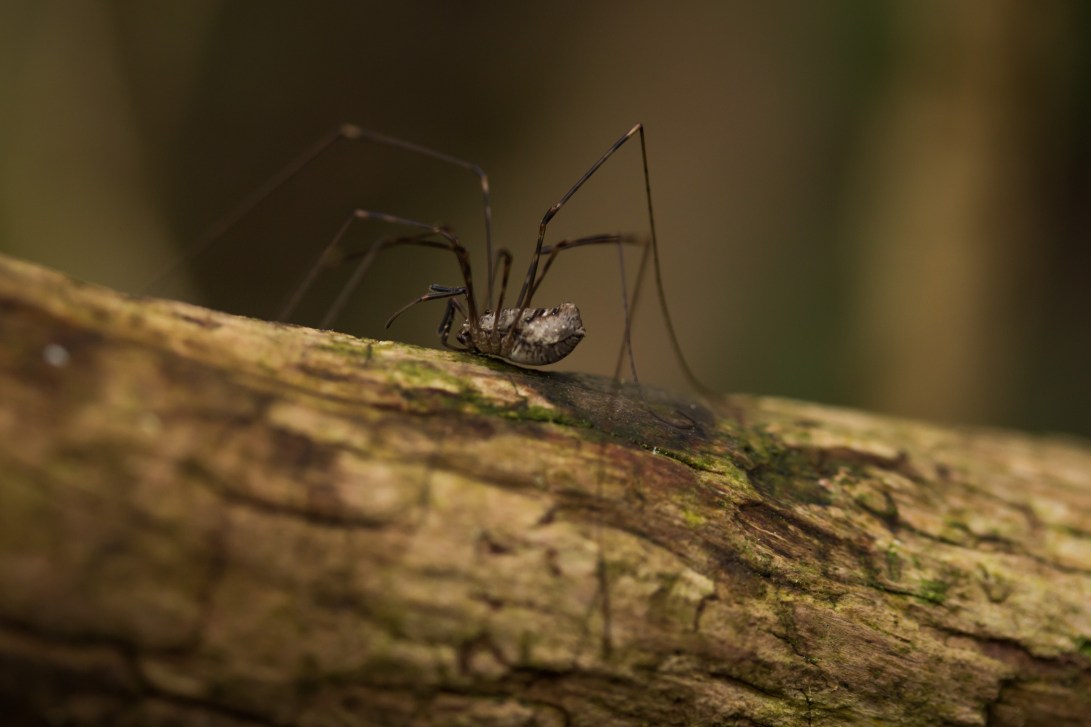
So we decided against finding a snack and stuck to taking photos of the fungi we found. Zahrah graciously held a branch up while I crawled underneath to photograph a group of Jelly Ears. I was mid shot when I heard “aw look at this little spider” over my head and regretted every decision I’d made getting to the Jelly Ears. The little critter was a harvestman (Opilione), and luckily he was only small so I was even brave enough to take a shot of him before he scuttled away.
We ate our lunch on a bench nestled amongst the vast oak trees, the forest floor covered in a crunchy bed of orange and brown. It was eerily quiet, even for a forest landscape. I can’t wait for the spring when the air will be alive with birdsong again. Winter has its own magic, but it can’t be denied that spring is when nature truly shines.
Brown Mottlegill(Panaeolina foenisecii)Candlesnuff Fungus (Xylaria hypoxylon)






















 rebeccaonthewing.com