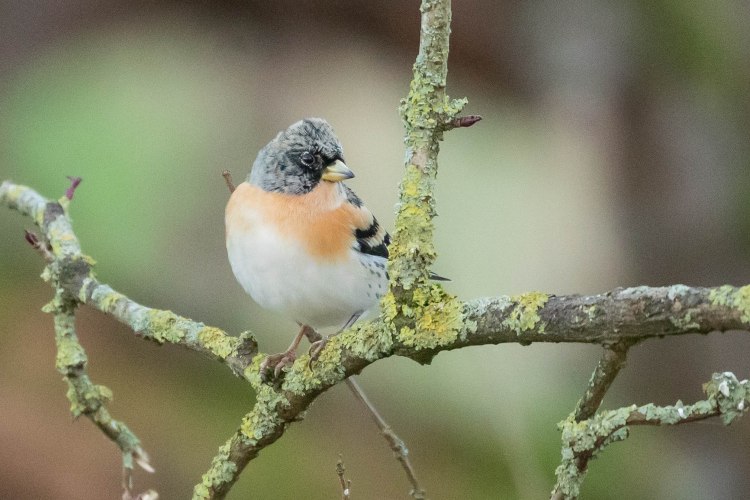
I was sorry to see winter go – for over a week I trudged through ankle deep snow and captured some really magical wildlife. But now the snow has gone and all the lovely fieldfares, redwings and bramblings have gone with it. While everyone was looking forward to spring, I was looking back to the winter I loved most.
At the weekend I went for my usual walk and instead of the serene silence that I usually hear in coniferous woodland, I heard birdsong. I picked out robins, coal tits, blue tits and a distant yellowhammer in the gorse fringing the forest. Perhaps most special of all though was the trill of one of my absolute favourite birds: the crested tit. I think I’ll always feel that little jolt of joy when I spot a crestie – they’re just so rare and special and I feel privileged to be able to see them quite easily where I live. The sun was shining so brightly I wished I’d dusted off my sunglasses, and although there was still a chill in the air, I began to embrace spring a little more.
Today my phone made an exciting sound – it was the jingle I’d set especially for local bottlenose dolphin sightings. If the dolphins had returned then spring was really kicking off. It was another glorious day so during a work break I walked up to a particularly good sea vantage point near my house and scanned the perfectly still water. No fins this time, but I watched dozens of birds criss-crossing the horizon from zippy turnstones to bulky cormorants. There was a group of twelve long tailed ducks too, which was a familiar winter sight among the spring buzz. I’ve felt a significant shift in my natural surroundings this week and although I still miss the snow, I’m really looking forward to those gorgeous dolphins coming back.
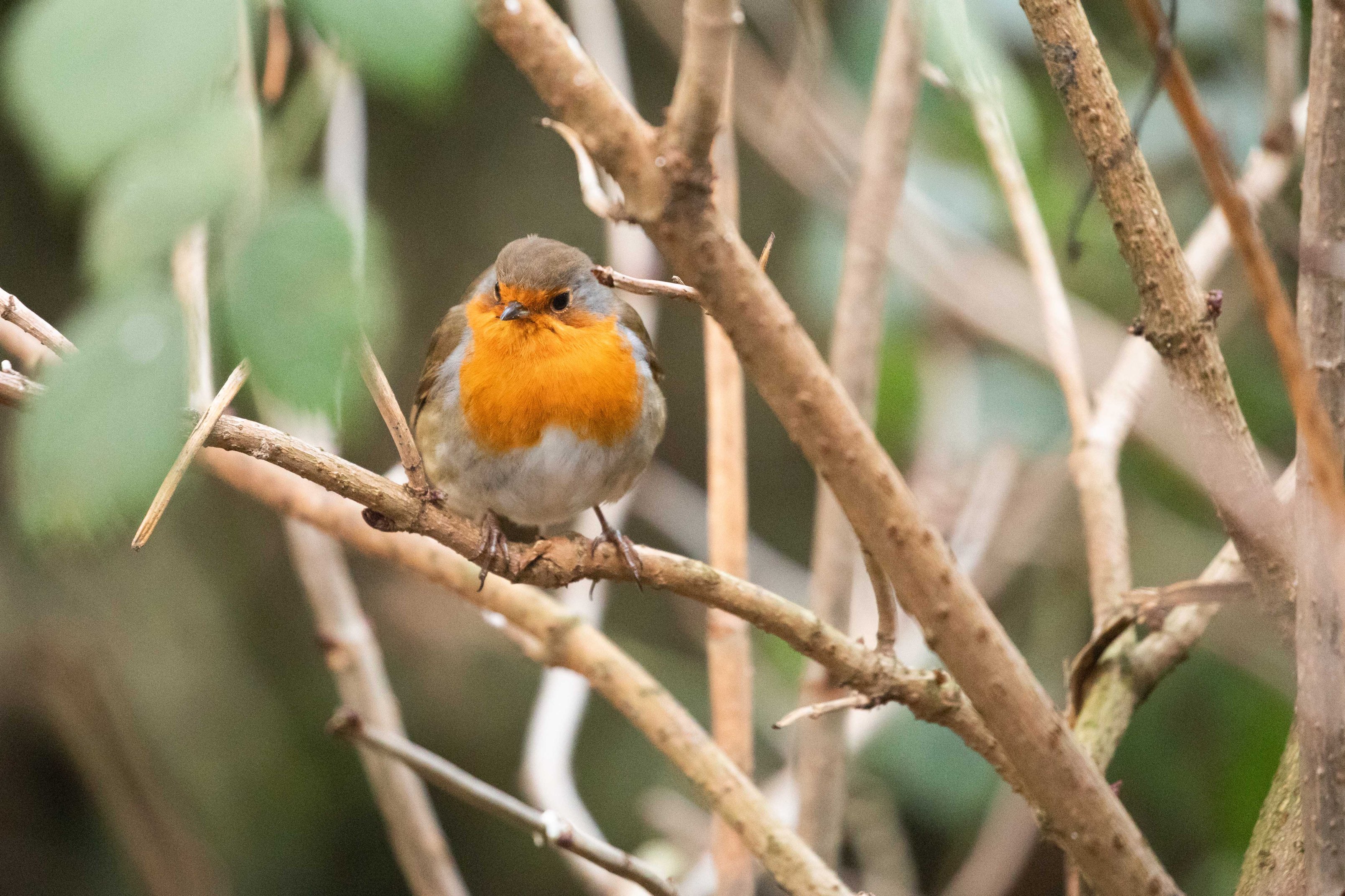
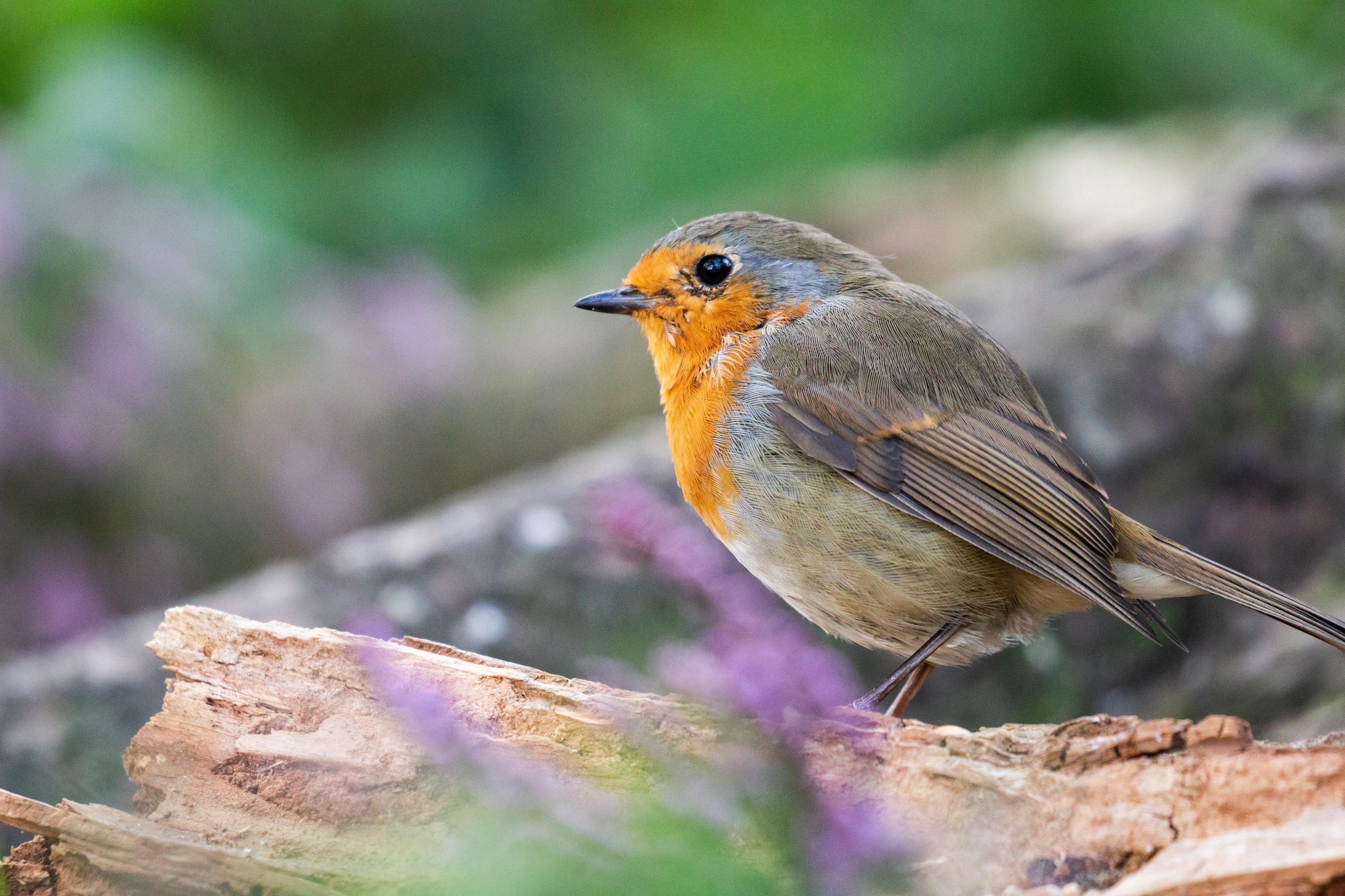
I was determined to make the first day of the year full of wildlife so I headed to my favourite woodland spot to try my luck seeing red squirrels. As usual I was met by a gust of coal tits, brazenly unafraid of me, and once I’d settled down the more timid characters began to emerge. There were blue tits, great tits, siskins, dunnocks and chaffinches. Blackbirds rustled beneath the trees and a plucky robin perched within arm’s reach of me, gazing with that analytical expression typical of its species. I was soon in my element: enjoying the peace and quiet, tucked up warm against the cold and surrounded by birds.
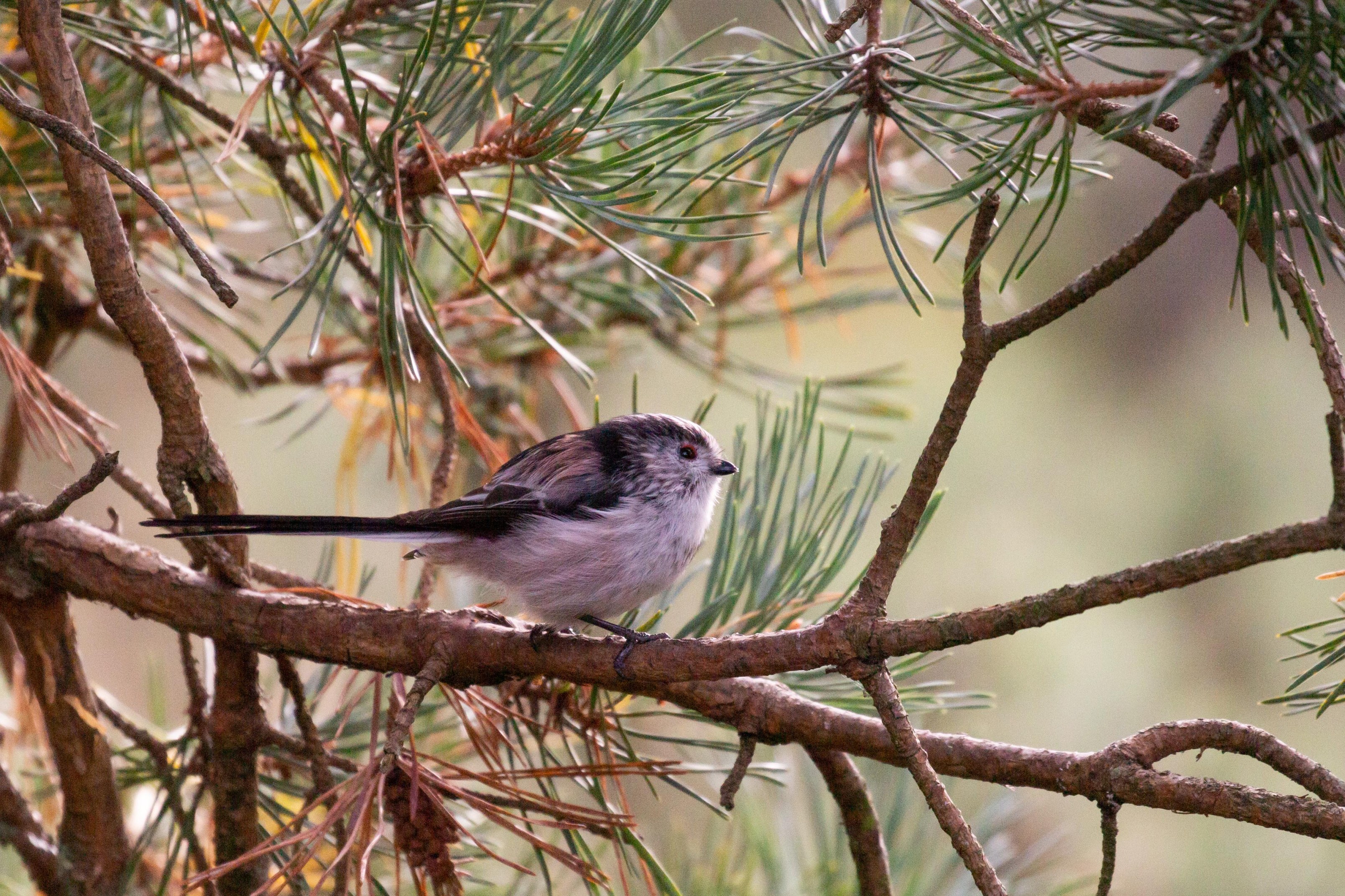
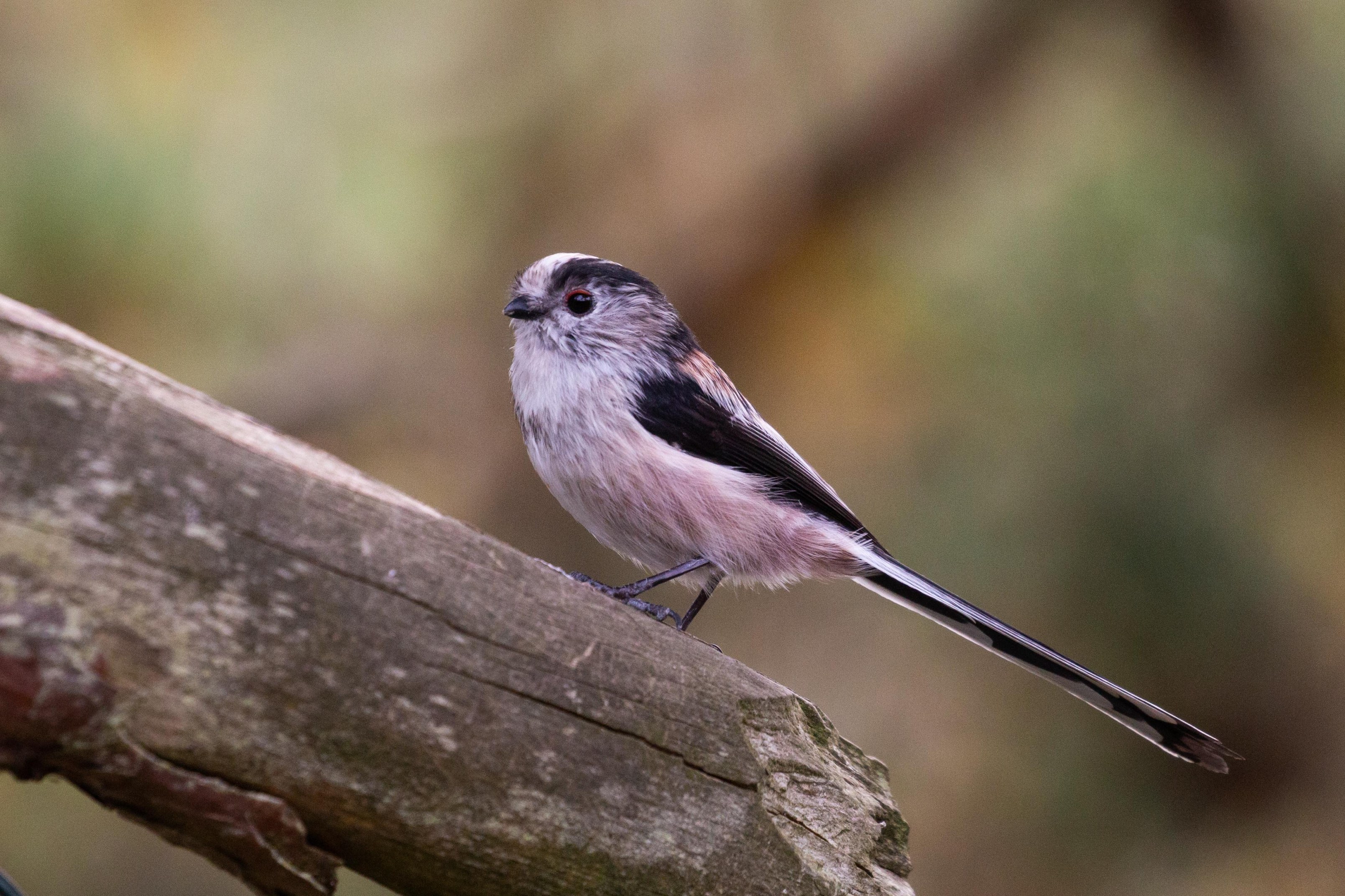
A black and pink troop of long tailed tits caught my eye as they appeared one by one, hanging together off the branches. Mike Tomkies described them as “flying crotchets escaped from nature’s music sheet”, which I think is an impeccable piece of writing. And so true – long tailed tits have crotchety proportions with a golf ball body and a huge staff of a tail. But what enchants me most about them is their tiny little faces. Eyes and beak are all crammed into the exact same place, giving them a ridiculously cute expression. I love how they always travel in packs too. Despite being such dainty looking birds they soon dominate a space with both sights and sounds. One of their calls reminds me of a raspberry being blown. The next time you see long tailed tits listen out for it. A cheeky raspberry from an even cheekier bird.
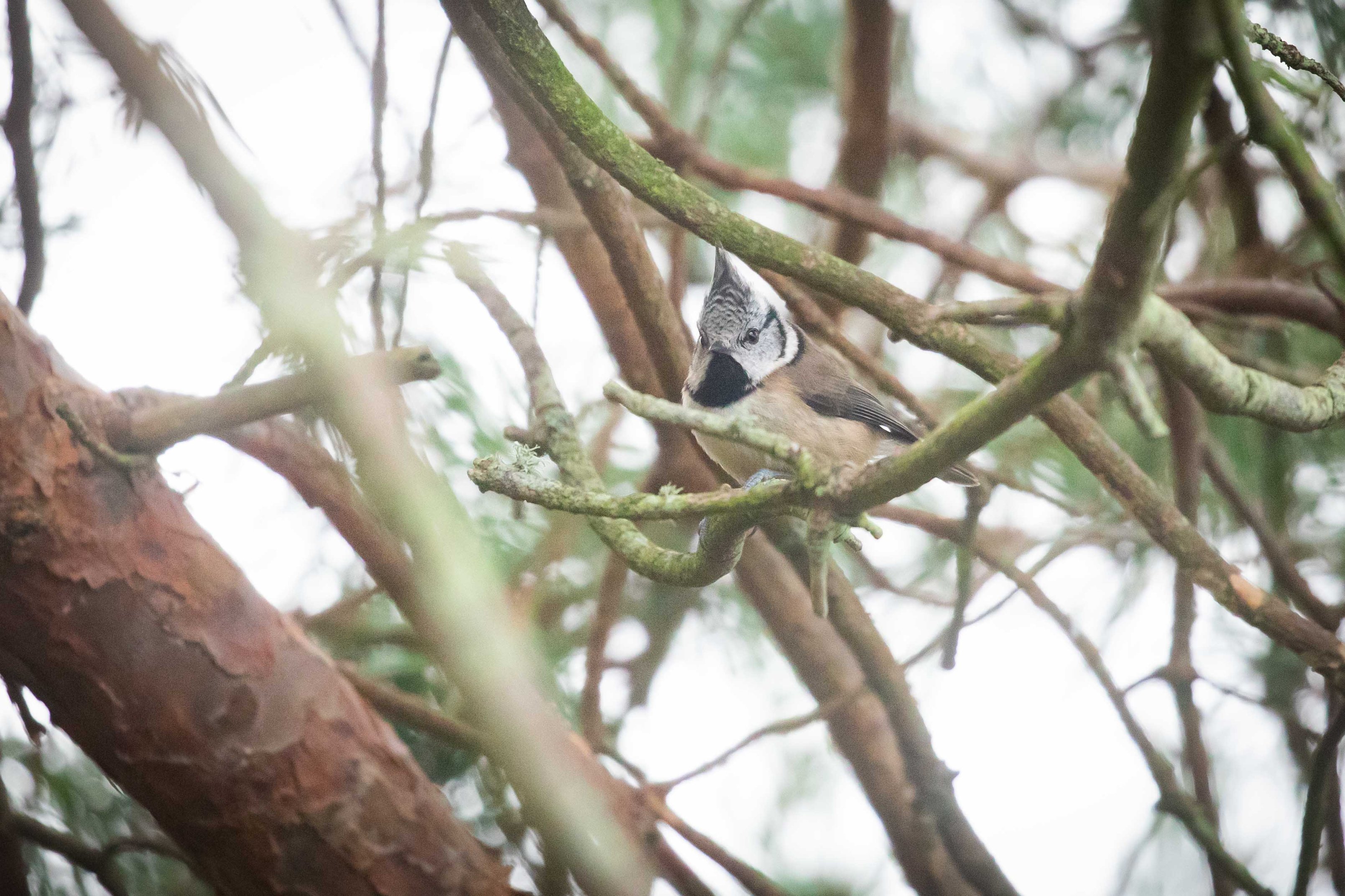
Then I heard a different snap of sound on the breeze: the trill of a crested tit. I’ve only recently learned what a crestie sounds like and now I hear it regularly, often in places where I would never predict them such as over the most heavily pressed forest trails. I don’t always see them, but the beauty of recognising birdsong is it gives you the ability to meet a bird without actually clapping eyes on it.
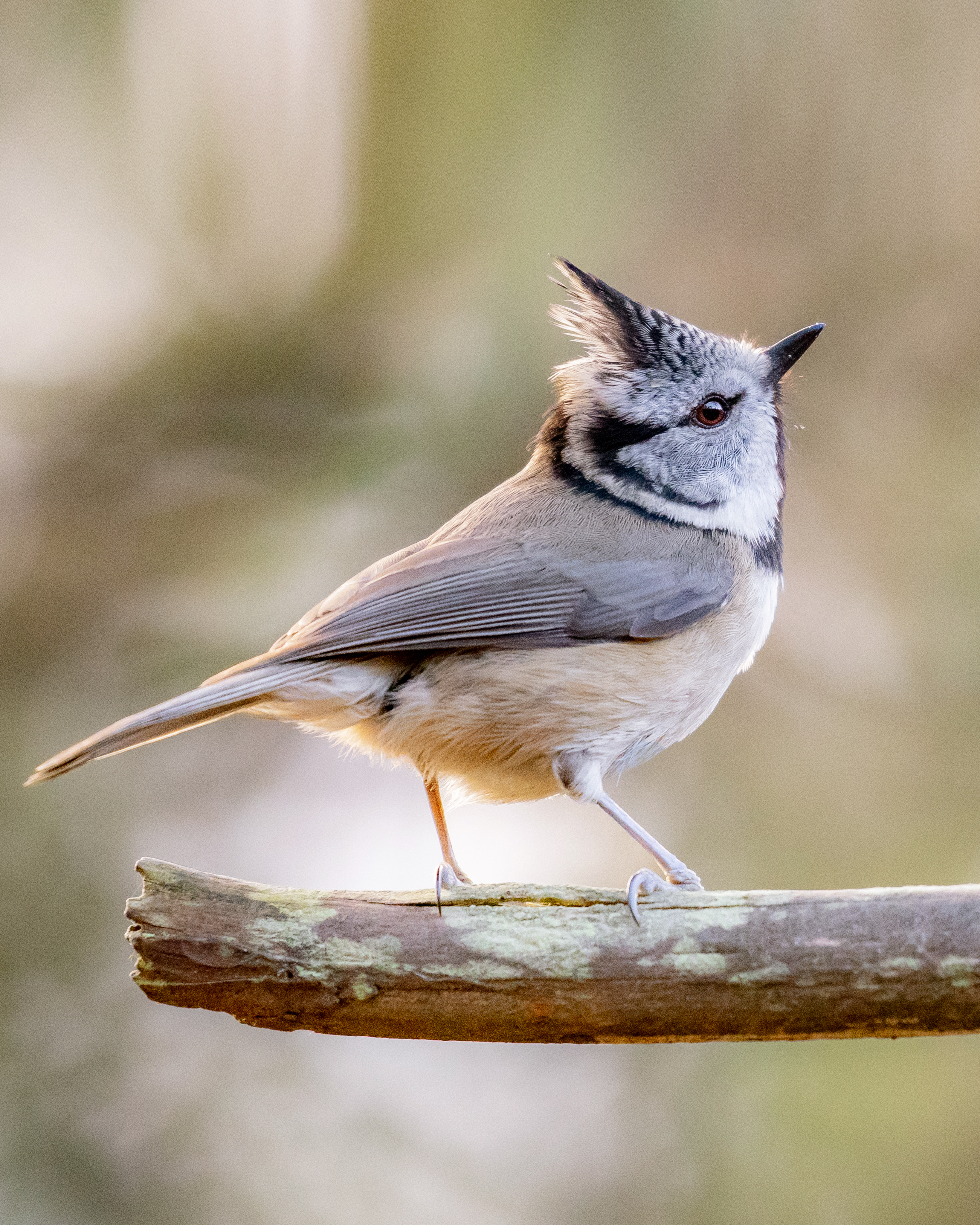
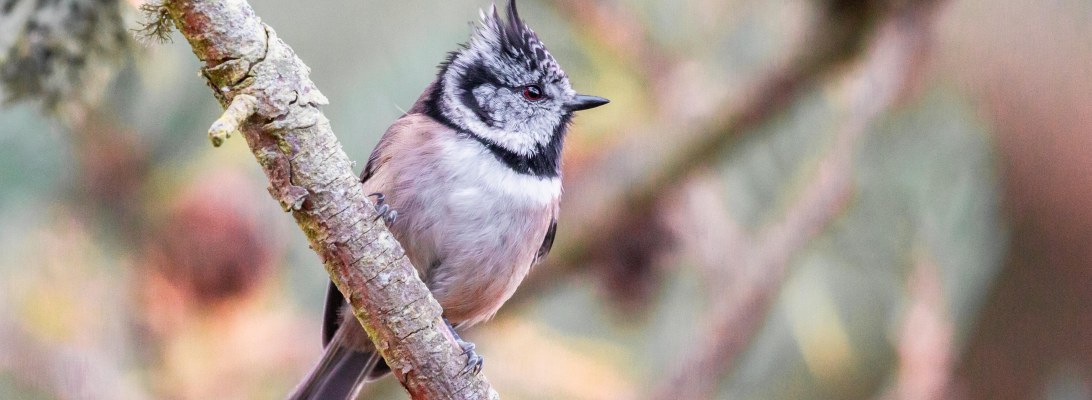
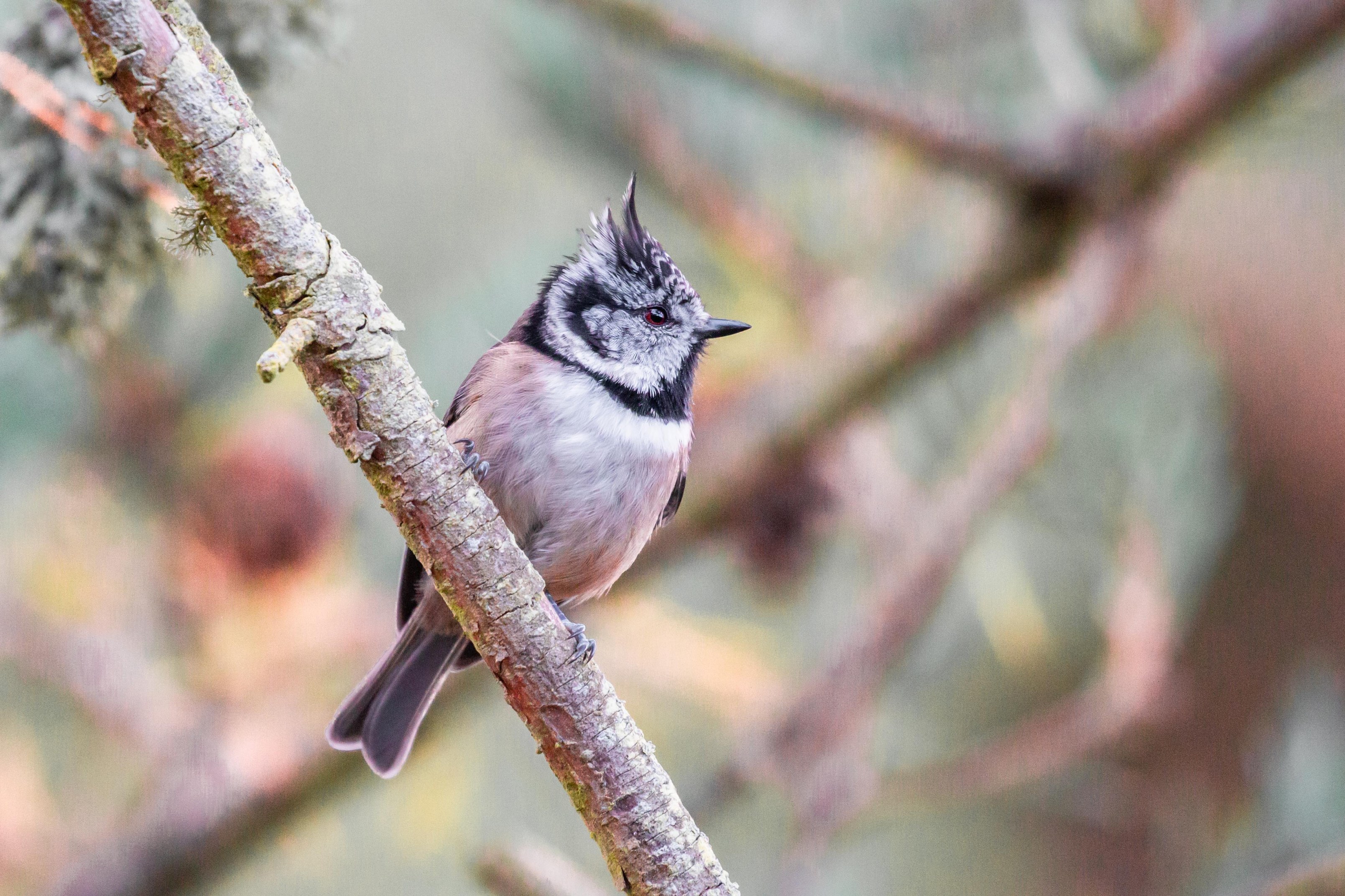
And suddenly there it was. I’m hesitant to use the word “icon” because it’s become a cliché, but in the case of a crested tit there’s no other word for it. Found nowhere in the whole of the UK apart from the Scots pines forests of the Highlands, it’s a really special bird. I find cresties are also a real challenge to photograph on account of the ants in their pants. I’ve got a few photos of them now, but I’m still waiting for THE crestie shot.
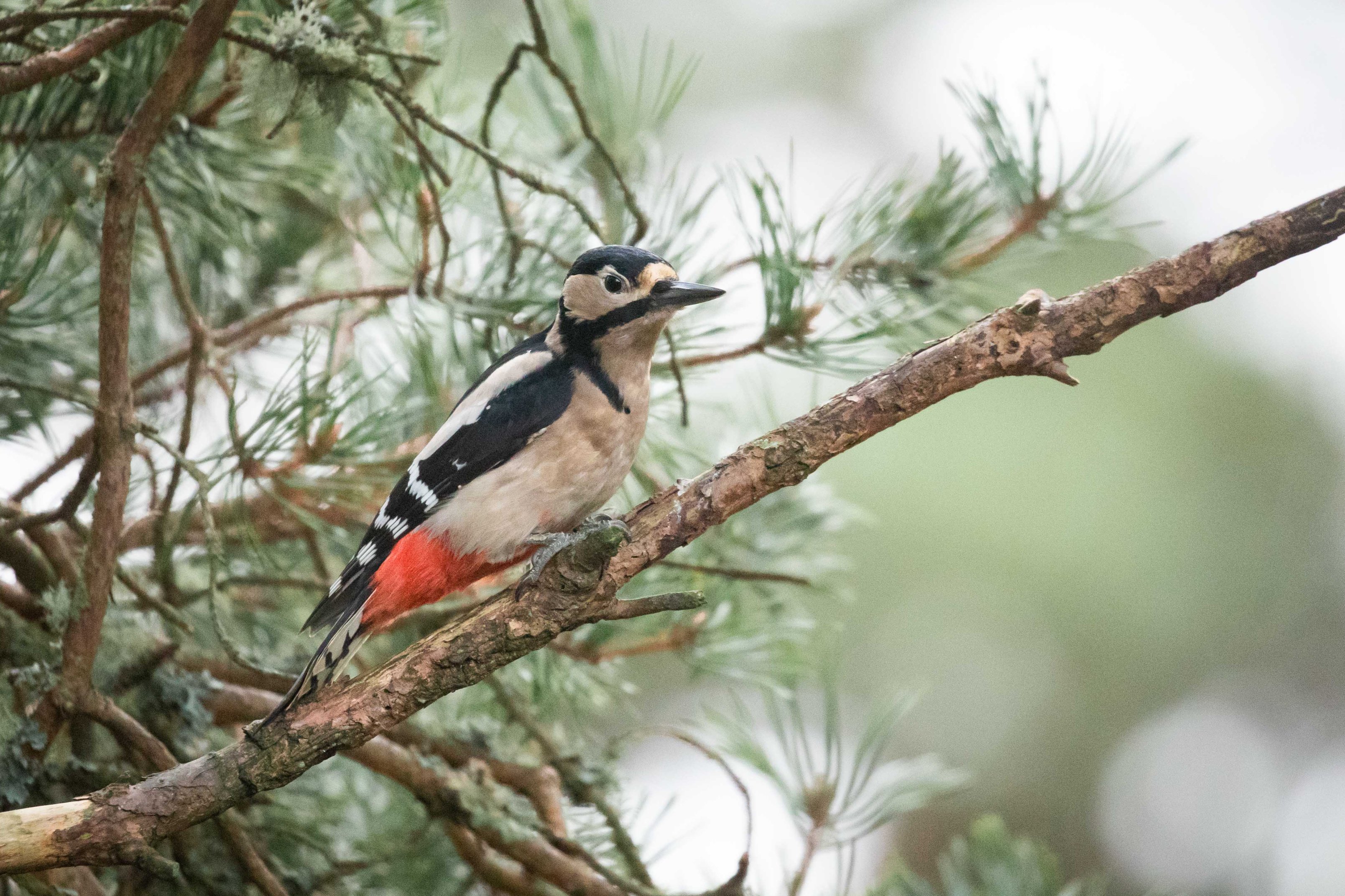
As I sat marvelling, a bigger bird appeared and I almost clapped with happiness. A great spotted woodpecker landed right there in the open, which I’ve never seen before. If they’re not fifty feet up a tree they’re concealed behind so many branches that there’s no hope of a decent photo, but it seemed that today was my lucky day.
Although of course I was pleased to see so many birds, I was secretly hoping for a glimpse of red fur too. I waited patiently, watching countless tits and finches come and go, until eventually I turned to see what I thought was the robin again but was actually a red squirrel, standing two feet from my boots. It hopped leisurely across the pine needles to the tree and shimmied up the trunk, pausing just long enough in the crook of a branch for a photo before heading off. A very fleeting visit, but I was thrilled. When wildlife comes to me (rather than the other way around) I get an overwhelming feeling of acceptance. Both squirrels and birds alike must trust that I won’t hurt them and feel relaxed enough to come close, and that is a really special thing.
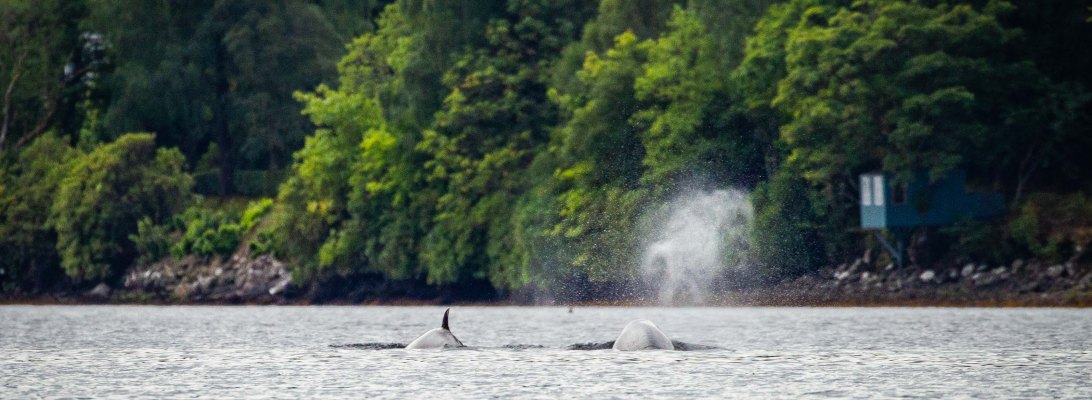
As this strange year continues, I’ve been busy taking photos, writing articles and getting stuck into new projects. I’ve ticked off 36 new species this quarter including my first otter, basking shark and northern bottlenose whales. Now the temperature has started to drop and I’m really looking forward to autumn and all its exciting wildlife spectacles!
It has become a running joke that I’m pretty unlucky when it comes to seeing certain species. Examples include otters, badgers and deer, despite the fact that I now live in Scotland, which is essentially the deer capital of the UK! But, if there’s one animal that I have an affinity for, it’s the red squirrel. There’s something irresistible about their fluffy tails, tiny hands and beady eyes. And of course they all have completely different personalities. I will never not be excited by red squirrels, no matter how many times I see one. I must have thousands of photos of them by now but I always take more, and this weekend was no exception.
My friend Steve and I visited Lossiemouth for some wildlife watching in a beautiful patch of coniferous woodland by the estuary. Within ten minutes of arriving I was gazing down my telephoto lens at a red squirrel as it clutched a monkey nut in its paws. Despite the flurry of coal, great and blue tits, I would happily have just watched the squirrels until a particularly special bird caught my eye: the crested tit. In Britain, these birds are mostly confined to the Caledonian forests and Scots pine plantations of Scotland. The punky hairdo is perhaps the most striking feature of the crested tit but their bright red eyes are pretty amazing too! I couldn’t believe I was so close to such an uncommon and beautiful British bird.
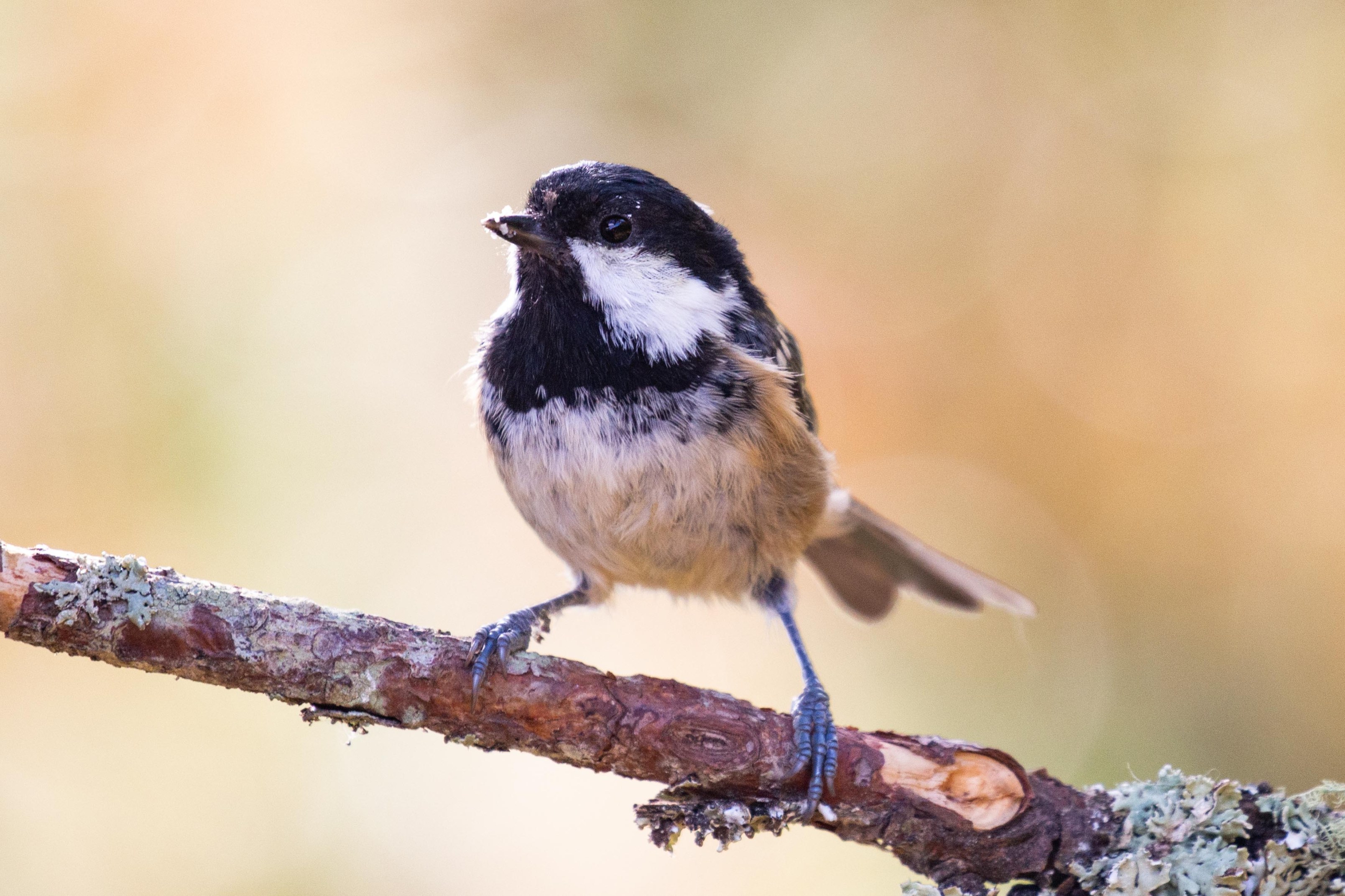
Coal tit
As well as squirrels and cresties, we were surrounded by dozens of other birds including another favourite of mine: the long tailed tit. The proportions of this bird are what I love most about them. They have a body like a golf ball with a spoon handle sticking out one end and the sharp nib of a bill out the other. What a bird! And where there’s one, there are nearly always more and I often hear them before I see them. Their alarm call sounds frog-like and the trees erupt with soft ribbits whenever I pass by.
I am in my element in the forest. It’s my favourite wild place to visit and I absolutely loved getting such close-up views of some fantastic species. After a couple of hours the afternoon sun began to fade and a chilly breeze had us packing up and heading home, though I’d definitely be back soon.
The gloom that had settled over the Cairngorms earlier in the week was long gone. As we pulled into the car park I leant forward and saw sunlight pouring through the coniferous canopy in diagonal slants, turning green needles shimmering gold. Another forest to explore! I couldn’t wait.
Once all members of the convoy had arrived, we gathered around the notice board. Abernethy was the second largest nature reserve owned by the RSPB, spanning 140 square kilometres. It was home to around 5000 species – a list that grows every year. Our guide, Simon Pawsey from the Bird Watching Wildlife Club, looked up the crested tit on his Collins Bird app – something I definitely need to get at some point – and quietly played us the bird’s call: a rapid trilling that I was sure I would be able to distinguish above the chaffinch’s constant rambling, as lovely as that was.
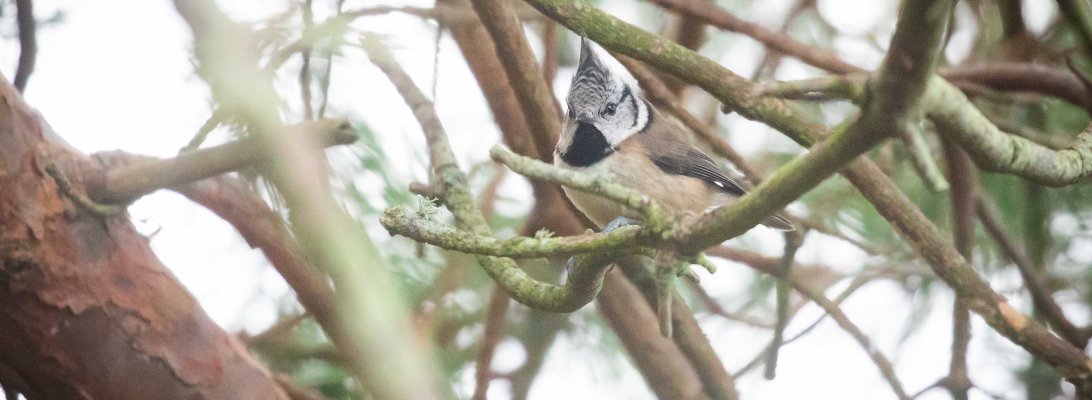
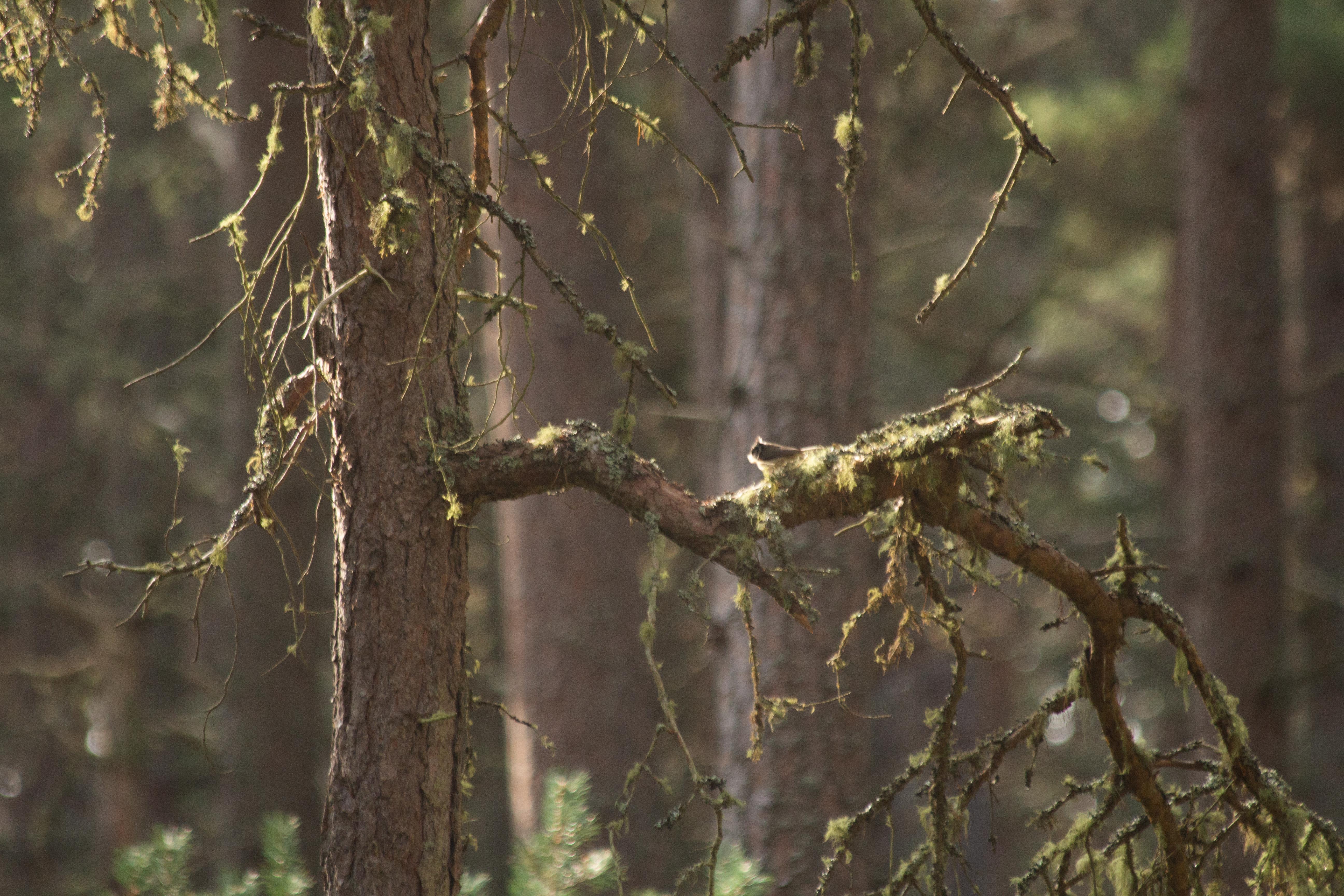
As Simon continued to tell us all about cresties, a small bird caught my eye a few dozen feet away. Lifting my binoculars, I focussed in and nearly disregarded the bird as a coal tit, which was exceptionally common in the local area. But then I noticed a peculiar tuft of feathers on the bird’s head. Surely not… A halo of light fringed the bird’s body and I squinted to make sure, keen not to make a fool of myself in front of all the other birders. But it was! It really was a crested tit! I exclaimed this to the group, embarrassed about interrupting Simon but deciding it was well worth it.
Not a great photograph, but an amazing sighting!
There was a flurry of excitement as we all pinpointed the crestie for those who hadn’t spotted it. The bird was perched on an obvious branch in a relatively open clearing, sitting at eye level in a car park full of human voices and slamming doors. It was such a good view of a species that I thought I’d only get a snatching glimpse of at the very top of a huge Scots pine, if that. The crestie stayed for a few minutes, allowing us all to admire him before he took off and disappeared. Our guide had been talking about crested tits and a crested tit appeared for us all to see, almost like a “Here’s one I prepared earlier” moment. What an extraordinary start to the day!
Buzzing after our first sighting, we set off into the forest, keeping an eye out for crossbills or red squirrels that might be foraging above. Several times a pair of dark wings high above had us briefly excited that we’d spotted an eagle, but each time it was a buzzard, or “tourist eagle” as it was often referred to in the Highlands.
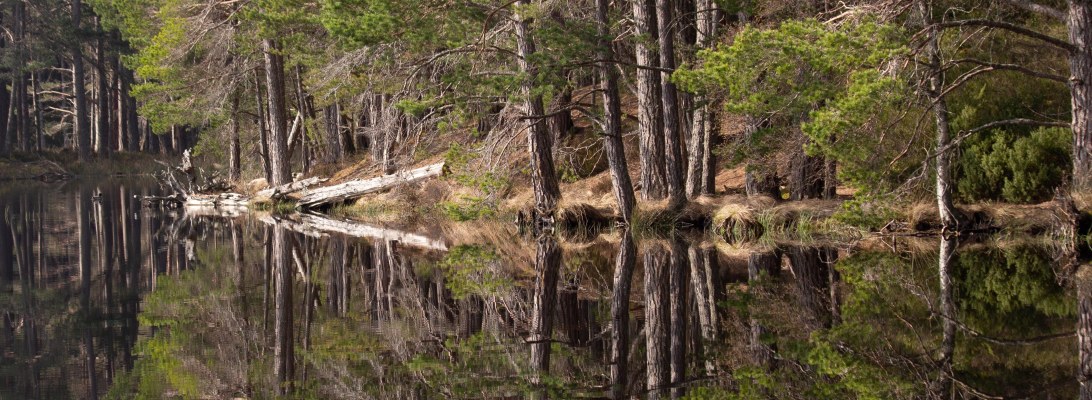
Before long Loch Garten came into view, and even with just a glimpse through the trees I knew it was going to be impressive. There was no breeze to stir the water so the loch lay as flat and still as a mirror, casting a perfect reflection of the trees along the margins and the blue hills in the distance. The only disturbance to the glassy surface was a lone mallard swimming far out in the loch, scratching a line across the water. Not a sound could be heard. As I stood on the bank absorbing the view, I thought how Loch Garten could be the perfect setting for an elaborate fantasy story. It was such a wild, beautiful place: seemingly tranquil and calm but with the power to turn at a moment’s notice.
If I’d been alone, I would have sat by the loch all day, but I was here for birding with the group so reluctantly took my last few photos and followed them further along the trail, skirting the edge of the water. Sure enough, we found a red squirrel, although the animal was trickier to see than on the feeders in Anagach Woods back at the hotel. A bright orange mammal is surprisingly difficult to spot in dense green foliage, and it was only its sudden movements that gave it away.
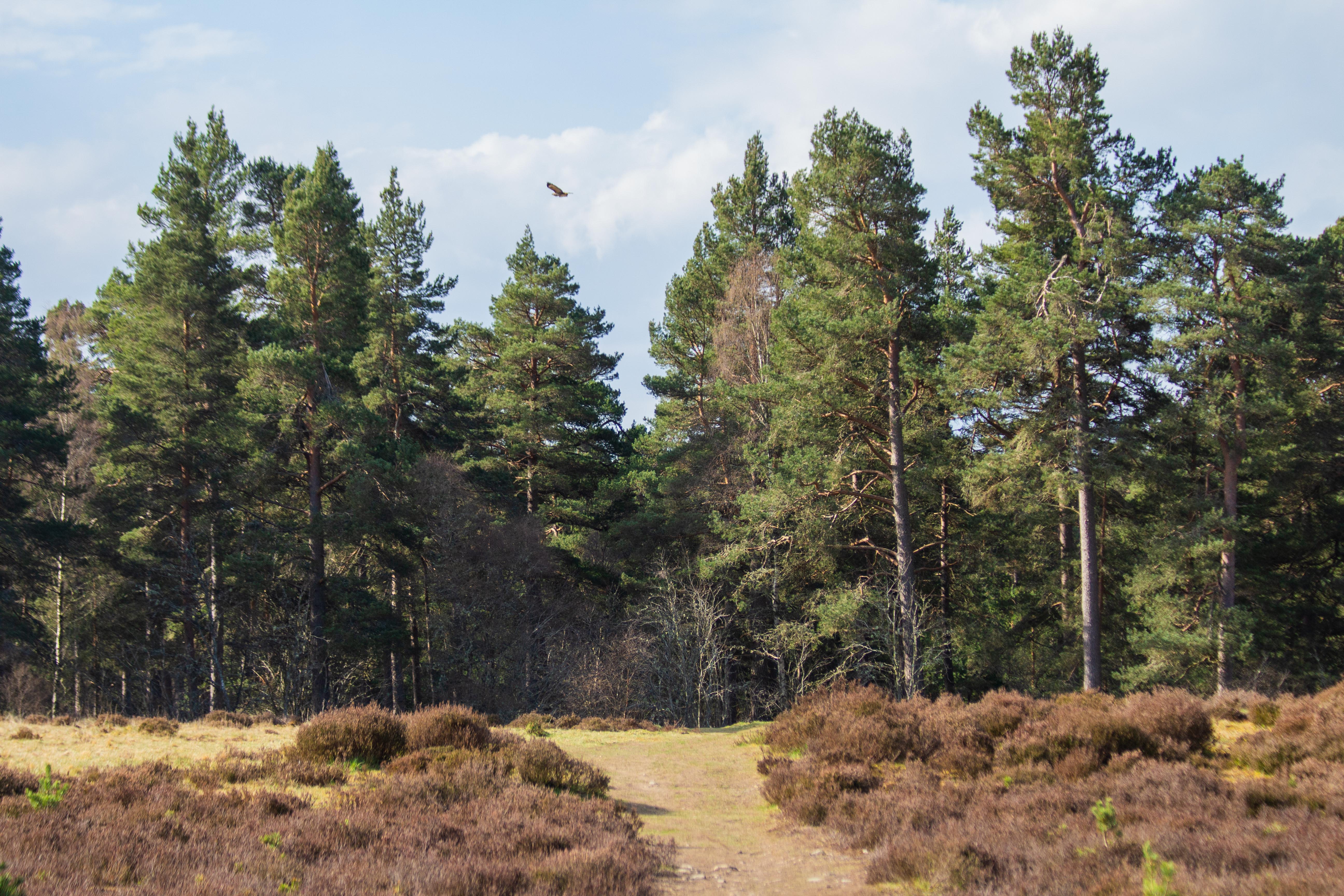
After a while another loch came into view: Loch Mallachie. Here we were met by a gaggle of greylag geese as they glided across the water. This part of the reserve was marshier, and not far from the land we were stood on was a smaller island with far shorter trees. Simon explained that they were the exact same type as the giants that surrounded us on dry land, but because of the variation in soil quality and nutrients, the same species was half the size only a few metres away.
Suddenly one member of the group pointed out two dark specks on the horizon. I prepared myself for the inevitability of more buzzards, but once Simon had set up his scope I heard some very satisfying words: “Those are eagles”.
Everyone rushed towards the bank for a better view. The birds were very far off – tiny pinpricks on a white horizon – but sharp-eyed Simon could make out white patches on one of the eagles, suggesting it was a juvenile. After a while scanning empty sky I managed to locate them in my binoculars. They glided seemingly effortlessly at a dizzying height, barely moving their wings as they soared through the thermal currents. It was such composed flight: the movement of a creature that dominated its landscape. Fortunately, the eagles were flying closer, so one by one we had a peek through Simon’s scope. When it was my turn, I was thrilled to make out the bird’s head and beak even from such a distance. I’d seen a golden eagle once before on the west coast, but this was by far the clearer sighting. Eagles were the true celebrities of Scottish wildlife, and to see two at once was so special.
The eagles soared in large circles for a while before gliding further out of reach of our scopes and binoculars. Once again the group was buzzing. I couldn’t believe how lucky I’d been this week. After only four days in the Highlands I’d seen crested tits, crossbills, red squirrels, a pine marten and now two golden eagles. It reminded me of the importance of patience but also of luck; how being in the right spot at the right moment can bring unforgettable experiences. Being from the southeast where wildlife is far less abundant, I would treasure the sightings I’d had this week for a long time.
After one day of the Grant Arms Wildlife Book Festival, I had already ticked off 27 species. The morning started off gloomy so I wrapped up knowing that the Highland air would bite without a little sunshine. After a delicious breakfast I met my guide Sue and we set off. Our destination was Anagach Woods, only a five minute walk from the hotel. I knew it was my kind of place from the first glimpse: dense evergreen trees, a winding trail and the lyrical murmuring of birdsong. The harsh, icy breeze that made the eyes squint and the neck shorten completely disappeared once we strolled past the first few trees.
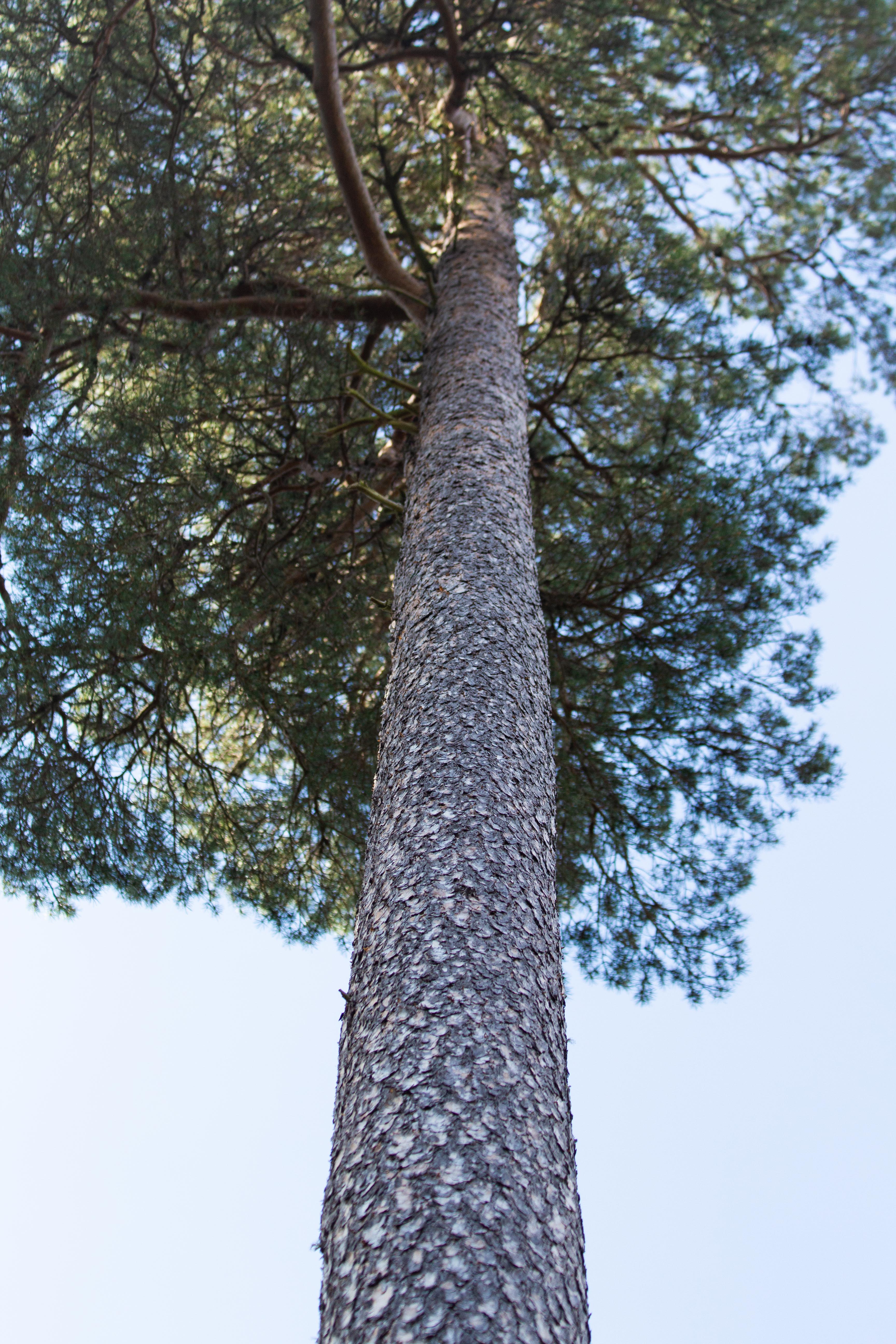
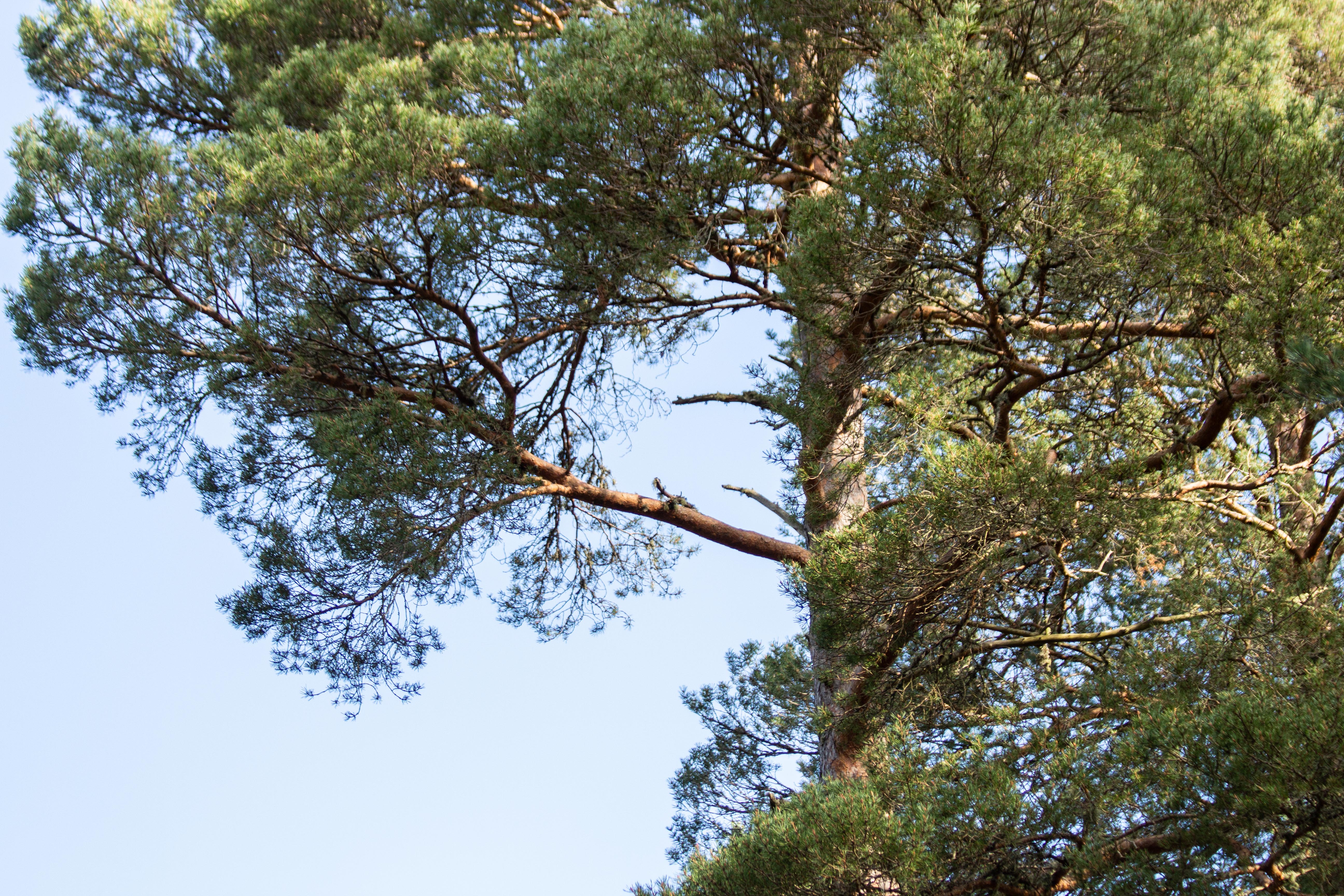
Anagach Woods were planted in 1766 using young pine trees dug up and transported from the old Caledonian pine forest of Abernethy. A few of these original trees are still standing today; wizened goliaths surrounded by waxy saplings. Throughout Anagach are deposits in the form of fluvio-glacial ridges, raised beach sands and gravel deposits dating back 10,000 years to the Ice Age. “Fluvio-glacial” refers to the meltwater created when a glacier melts.
Within ten minutes of entering the woods, I had my binoculars trained on a red squirrel -tail and hands poised in the classic pose as it nibbled on a peanut. A completely peanut-based diet causes a deficiency in red squirrels, so the rangers fill their feeders with a special mix to keep the squirrels’ diet balanced. Whether the animals follow the regime is another thing entirely, and they don’t. They prefer to pick out the peanuts with the steely determination of a child eating around their vegetables.
It’s impossible to dislike red squirrels. (Personally, I have no quibbles with greys either – they’re not inflicting reds with the pox with any malicious intent, nor did they ask to be brought here.) Reds have the eye-watering cuteness of babies their entire lives, coupled with boundless energy. We watched two up in the tree, neither tolerating the other’s presence. After a brief, silent stare-down, a ferocious squabble broke out. In the blink of an eye, two orange flashes flew up the tree, twirling around the trunk with scrabbling claws. The victor was soon perched proudly on the feeder shelf – stuffing head, front legs and one back leg inside to grasp the prize.
We ventured further into the forest. Each time a branch quivered or a chirrup sounded, I scoured the canopy for a particular little bird with a very impressive Latin name. Lophophanes cristatus is mostly confined to ancient Caledonian pine forests and Scots pine plantations. On the RSPB map of the UK, this bird’s presence is indicated by only a small patch in the Highlands of Scotland. A member of the tit family, it sports a magnificent punk hairdo.
Photo: RSPB
I had my sights set on the crested tit. As small as the far more common blue tit, the “crestie” is a firm favourite among Grant Arms guests and features on many wish lists including my own. My main objective during my time in the Cairngorms was to see a pine marten (dream big, I say). Or, if that dream turns out to be a little too big, I will happily settle for any new species. I kept my eyes peeled for cresties but sadly they eluded us that morning. Sue said that at this time of year they would be right at the top of the trees gathering nest material. When those trees stretch to dizzying heights of around twenty metres, spotting a tiny bird in the dense canopy would certainly be a challenge.
Despite the crested tit playing coy, we were treated to a lovely showing of a buzzard. Buzzards are one of those species that I sometimes underestimate. They don’t tend to get me too excited – especially for that one split second when you think you may have found an eagle – but that morning in Anagach I saw a buzzard land for the first time. Up in the air and bleached out by the sun, it can be hard to make out specific detail, but as the raptor perched in the pines, I could admire its snowy white chest – as soft as an owl’s – with speckled markings that gave it the air of a regal monarch’s gown. The buzzard preened its feathers for a while before taking to the air and melting into the trees. It was a fitting way to summarise the forest habitat: a creature can be there one moment, and vanish the next. Forests are irresistible to me, and Anagach easily became my new favourite.











 rebeccaonthewing.com