Birdfair Begins!

Once I’d pushed my belongings through the campsite in a wheelbarrow, I began the head-scratching task of setting up my tent. I didn’t have much camping experience, but after a practice in the garden earlier in the week I was feeling confident. There was a brief tussle with a stiff breeze, but soon I had everything pegged down and in location. I was in business.

I straightened up to admire my handiwork and locked eyes with a cow twenty feet away, separated from me by a wire-thin fence. I wasn’t entirely thrilled with my neighbour for the weekend and eyed her suspiciously. I’d always been a little wary around cows – a few years ago I’d been crossing a field full of them, which had unfortunately been unavoidable, and when I was halfway across the herd started lumbering towards me at full speed. They say you shouldn’t run from cows, but I had vaulted over that fence with the steely determination of a long jumper. Luckily, this one didn’t seem like she had it in for me, and only stopped long enough to urinate before plodding back towards the herd.

Once everything was in order, I sat in my camping chair and admired the view. The setting sun cast a pink blush over Rutland Water. Although this campsite was slightly further away from Birdfair than the main site, this one had far superior views, not to mention it was blissfully quiet. House martins were out in force, plucking insects from the air and plunging in graceful loops. A little further away a kestrel was hunting, body suspended motionless between two rapidly beating wings. In the stillness, a gaggle of chattering geese passed overhead, but they were too far up for me to recognise the species.

I couldn’t wait for Birdfair to begin. This year would be my third, and I loved being a part of such a prestigious and important event in the wildlife calendar. It’s wonderfully indulgent for bird nerds like me – an impressive gathering of thousands of naturalists, conservationists, photographers and more, not to mention a dizzying range of things to see and do.

Once the sun had set, leaving behind an evening chill, I retreated to the warmth of my tent, snuggling up in my sleeping bag to get a good night’s shut eye in preparation for the first day of the fair.

Checking in

I arrived in Grantown-on-Spey at night, so couldn’t see much of the Cairngorms wilderness that pressed heavily on both sides of the winding road. I glimpsed darting rabbits and the elegant form of a pair of deer, but there must have been dozens of other creatures concealed by the dense evergreens.

My accommodation, the Grant Arms Hotel, was beautiful; a formidable building of stone and wide sash windows that could easily be the set for an elaborate period drama. Also called the Wildlife Hotel, the Grant Arms provides guests with easy access to a range of reserves of all different habitats. When I checked in, a large notice board stood pride of place in the foyer, full of lists of upcoming events, guidance on watching wildlife – including the magnificent capercaillie – and sign-up sheets for the week’s guided walks and field trips. An impressive puzzle adorned with a picturesque nature scene lay finished nearby. On the walls were images of puffins, ospreys, black grouse and, in my room, a beautiful fieldfare. I’d never seen so much wildlife-related decor and I absolutely loved it.

As I unpacked, I felt a thrill of eager anticipation for the week to come. I’d never stopped in the Cairngorms before but only passed through, so I couldn’t wait to sample some of the incredible wildlife. I had my sights set in particular on the pine marten – an elusive and nocturnal member of the mustelid family. If I was going to fulfil my New Year’s Resolution and see one in 2019, the Grant Arms Wildlife Book Festival was my best chance.

The Greenway

The Egan’s Greenway is an unexpected jungle in the middle of smoke-belching industry and deckchair tourism. The mundane sounds of traffic are deafened by the furious chatter of cicadas – enormous insects that seem prehistoric. Their strange call is like the sound of angry water sprinklers, growing louder and faster until it reaches an alarming tempo, then abruptly stops.

IMG_0497

At first light the Greenway is sharply divided into light and dark. The dense, impenetrable forests are still cool – the trees in muted greens – but out on the marsh the grass is alight with fiery golds and oranges. Naked trees poke the sky with sharp limbs white as bone, while beside them sway lush evergreens. It is a land of stark contrast, a spectrum of vitality and decay. Time passes here with the tick of the cicadas.

IMG_0560

The day warms up, throwing a shimmer onto the surface of the creek. Here there be dragons, some cruising between reeds on transparent wings, others scrambling up trees with long claws. A flash of movement and then a disappearing act, they blend seamlessly into their surroundings. Just a flick of the beady eye will give them away, and then they will shoot off into the undergrowth.

IMG_0638

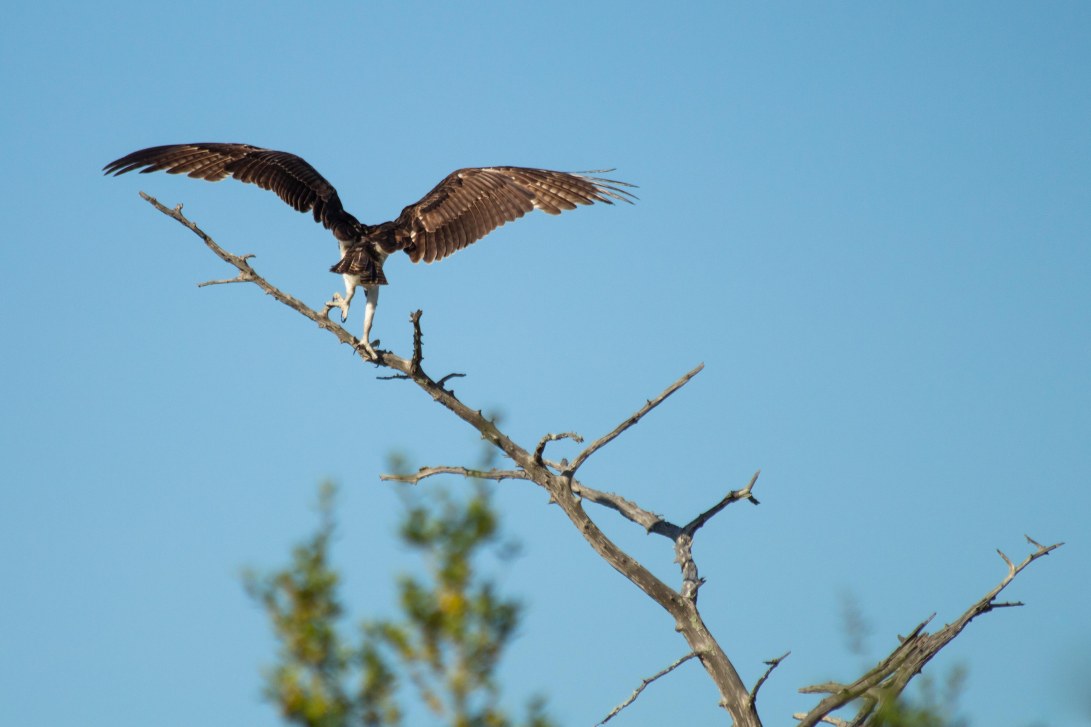
Other beasts can be found higher up. Perched on the skeleton fingers are ospreys, scanning the creek in every direction. One takes to the air and its mate follows. Together they wheel in deep circles, overlapping in smooth figures of eight. A wood stork, large enough to be unfazed by the raptors, joins their sky with dark wings barely flapping.

IMG_0582

Then, a real dinosaur. A creature that survived what forty-metre sauropods could not, almost unchanged for millions of years. This one is only small, an arm’s length perhaps, but even so it floats beneath the water’s surface with the stealth of an adult, startling green eyes always watching. A glance away and back again and it has disappeared, moving across the creek without a sound.

Where is mum? Perhaps it is best not to stay and find out.

IMG_0656

Searching for Spoons

After so much excitement, I’ve neglected my camera recently and wanted to finally spend some proper time searching for Florida’s wildlife. I’d been told about a good spot for wading birds, and knew that the inhabitants included my new favourite bird, the roseate spoonbill. I set out before sunrise and reached the water just as the sky was beginning to lighten; pinks and oranges blending with blue.

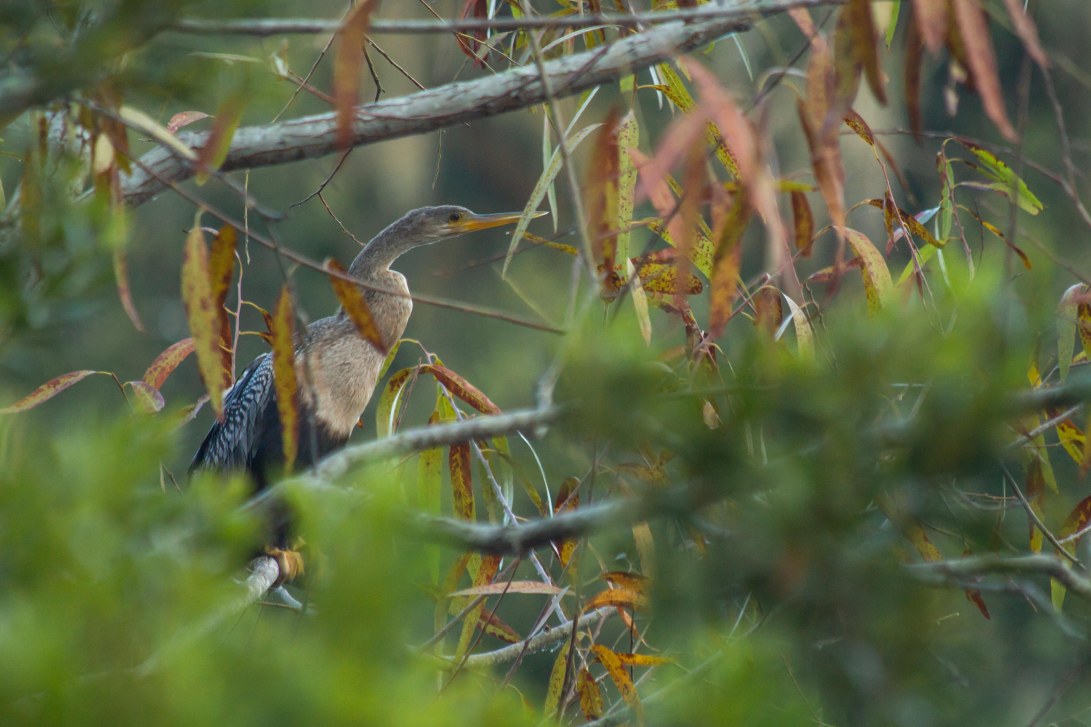
My first sighting was almost immediate. Perched on a branch overhanging the lake and peering curiously as I wound down the window was an anhinga. With both heron and cormorant-like features, anhingas spear fish under the water with their long, sharp bills. The name originates from the Brazilian Tupi language and translates as “devil bird”. I don’t quite see the devilish resemblance – I found the anhinga delightful, especially when it shook out its striped wings. Like cormorants, anhingas hold out their wings after swimming to dry them. This one looked like either a female or a juvenile, as males are jet black with silvery streaks.

IMG_9976
Anhinga

IMG_0044

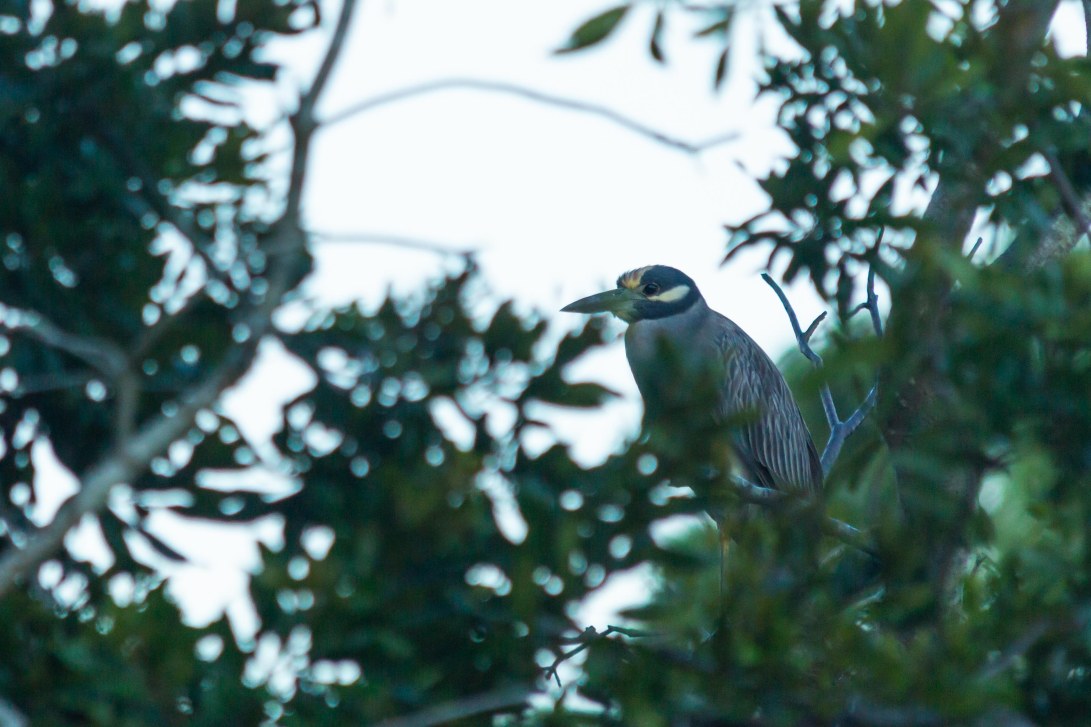
Soon the anhinga was joined by a yellow-crowned night heron, shoulders hunched down as if with cold. With a white cheek patch and a pale crown of feathers that looks more white than yellow, the yellow-crowned night heron is actually nocturnal, so I must have been really lucky to catch a late glimpse just before the sun emerged.

IMG_9936
Yellow-crowned night heron

Elsewhere in the tree was a green heron, who was more brown than green so was perhaps a juvenile. Apparently, green herons are known to throw insects into the water to encourage fish to the surface, which is genius and must look amazing to see.

IMG_9938
Green heron

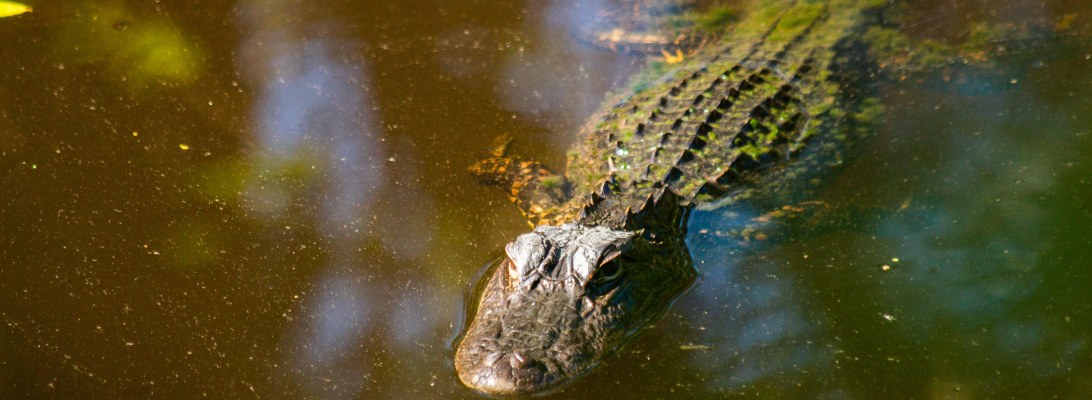
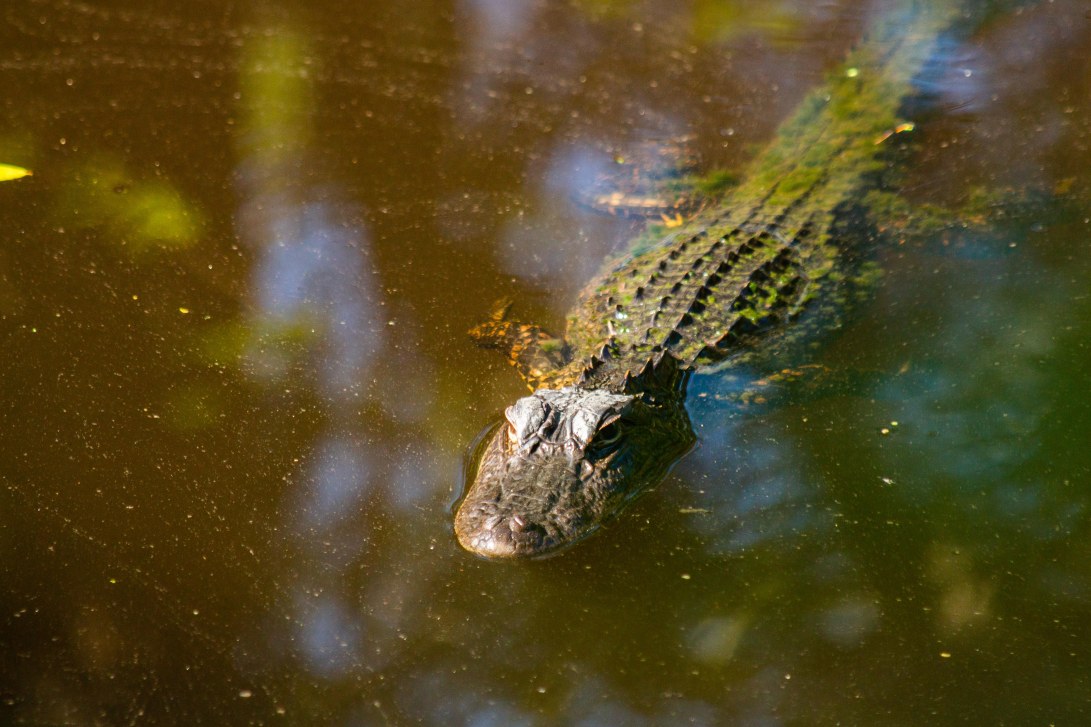
Suddenly a snowy egret burst into view, legs dangling and panicked wings flapping. There was a deep, kronking call as more birds surged upwards. Puzzled, I glanced around for signs of a raptor, when a disturbance in the water caught my eye. There, gliding without a sound, was an alligator. My first alligator! I could hardly contain myself. All I could see of it was a pair of eyes and nostrils, so I had no idea how big it was, which was perhaps more nerve-wracking than seeing the whole animal. Even from the safety of the car my paranoia imagined the alligator leaping headlong at the open window, but it just cruised out of sight and the birds soon calmed down.

IMG_9951
Alligator!

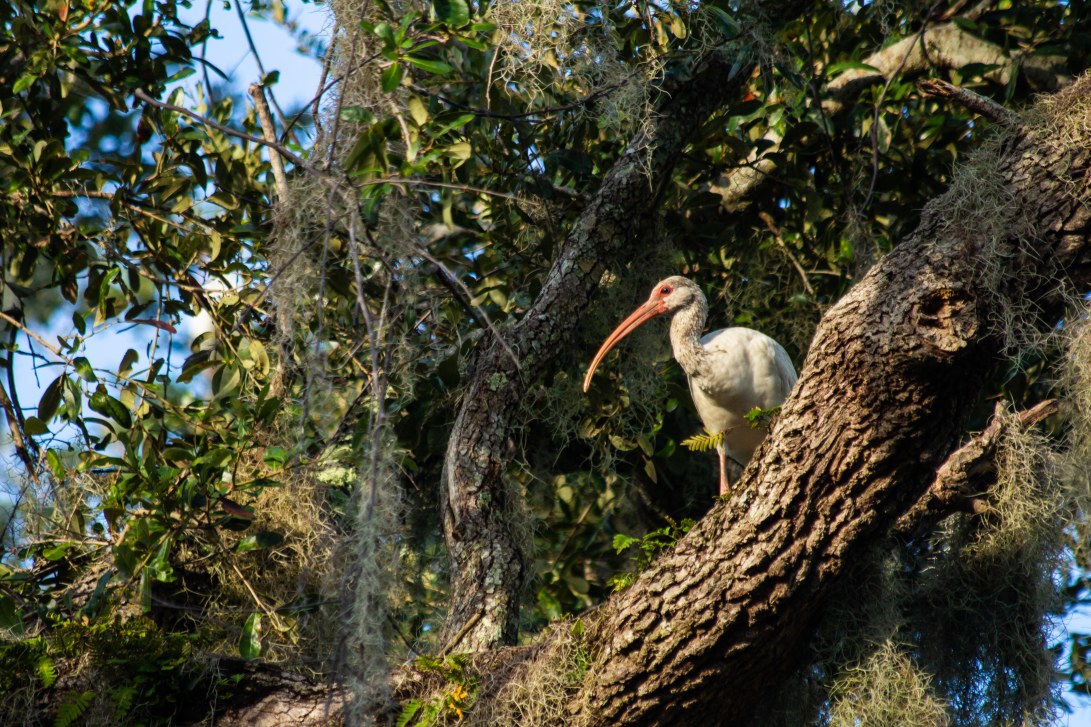
I wandered further on to try and find a spoonbill. There was a loud rustling above and I looked up to see the trees absolutely covered in white ibis; wading birds that gather in large groups all across Florida. I was spoilt for choice for photos. Although they’re not the prettiest of birds, their long, red bills still looked impressive, especially when they all took off in one simultaneous swoop. In the absence of car engines and people this early on a Sunday, the only sound to be heard was the wind in their wings which sounded so magical.

IMG_0051
White ibis

IMG_0173

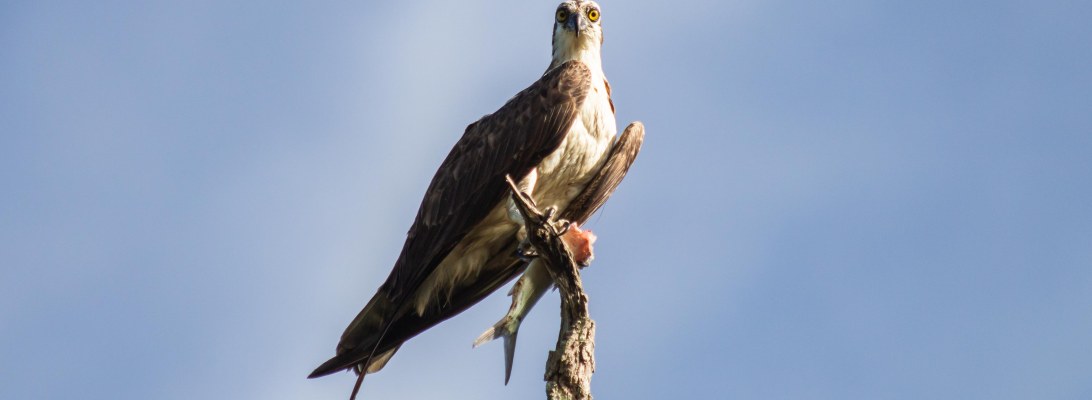
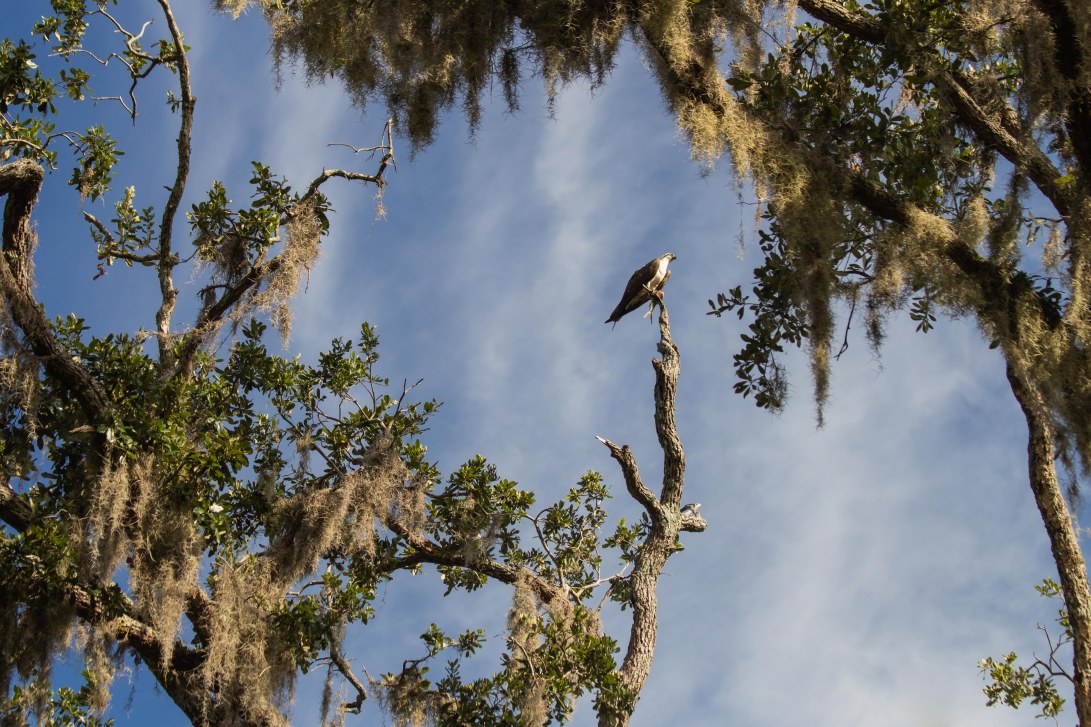
After watching them leave I wondered what had scared them off. Once again I scanned the trees for signs of a raptor and this time I found one: a stunning osprey with a fish in its claws! I’d only seen ospreys once before in Scotland, all the way across a loch that made taking photos quite the challenge. This osprey, however, was a tree’s height away and sat in a perfect patch of sunlight that made its yellow eyes dazzle. It spotted me straight away and watched as I took photo after photo. Eventually it gathered up its breakfast and took off, just as the first dog walker came into view.

IMG_0146

IMG_0138
Osprey

At 9:30am it was already getting too hot to be out without a hat, and my hastily eaten bowl of cereal at 6am seemed far away. I’d loved to have found my spoonbill, but having seen a bonus osprey and alligator I was far from disappointed. I’d just got back to the car and was fumbling for my keys when I glanced up, and by some miracle there was a spoonbill perched at the very top of a tree. It was the pink cherry on an incredible cake.

IMG_0187
Roseate spoonbill

IMG_0203

Learning to Birdlisten

Today marks the beginning of a new project: learning to birdlisten. It’s a much-used cliché but I have been an avid birdwatcher since I was a child. I’d sit out in the garden, hold as still as I possibly could, and after a while birds would begin to show, hopping out from under bushes and descending slowly from the treetops. This gradual emergence, the steady drip-drop of birds, was so exciting to me. The species would usually be very common – robin, dunnock, blackbird – but occasionally a blue tit or great tit would appear, and to my amateur eye these were very special indeed.

As my knowledge gradually improved, I began to notice more species and although the trusty robin and dunnock never grew boring, they lost their shine among more colourful or charismatic varieties. One by one I added birds to my repertoire, and although I didn’t notice my mental list growing, soon I could identify a wide range of species. Although waterfowl and waders had their charm, my favourites were always the passerines, or “perching birds”.

Passerines include a subgroup of species we call songbirds but are more accurately named oscines – birds that establish their territories by means of musical vocalisations. It never occurred to me why the singing birds attracted me most, until I turned my attention to listening for birds instead of looking for them, and then it became abundantly clear.

Birdsong is the soundtrack of nature. Even for me, a keen bird enthusiast, birdsong had blurred into the background of my time spent outdoors, nothing more than a pleasant backing track that accompanied my attempts to birdwatch. Why on earth did I let birdsong become such an unimportant feature of the landscape, no more significant than hold music? It was high time that I paid more attention to it, instead of letting it wash over my ears without acknowledgment. It is so true that we see but don’t observe, but it is also the case that many of us hear but don’t listen.

IMG_8860

Author of “Birdwatching With Your Eyes Closed” Simon Barnes points out that understanding birdsong allows us to see around corners. There’s a bird hidden up in the canopy somewhere, but unless you know its song you’ll never know what it is. I’ve had this frustration many times, when I see the distorted outline of a bird but no characteristic features that give it away. If I hadn’t neglected my auditory senses, I wouldn’t have been disappointed when the bird hopped further out of view.

And so begins my journey to learn the language of birdsong. It seemed a daunting prospect at first; to my untrained ear all chirrups and whistles sounded identical. However, like any problem, it is imperative to break it down, and that makes it far less intimidating.

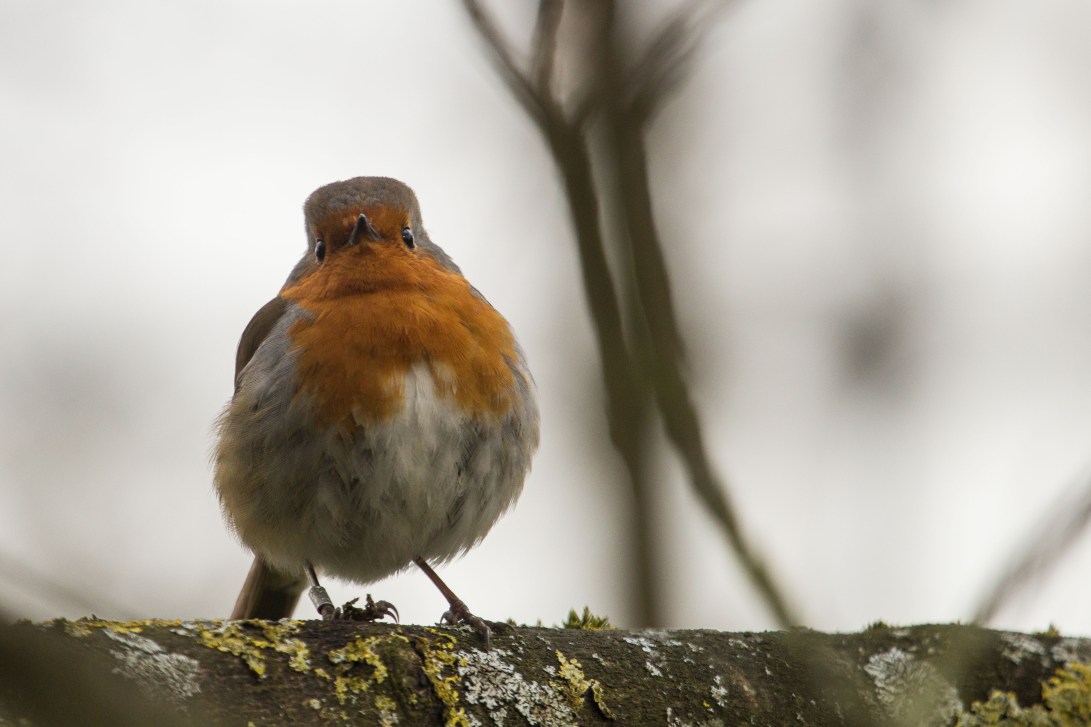
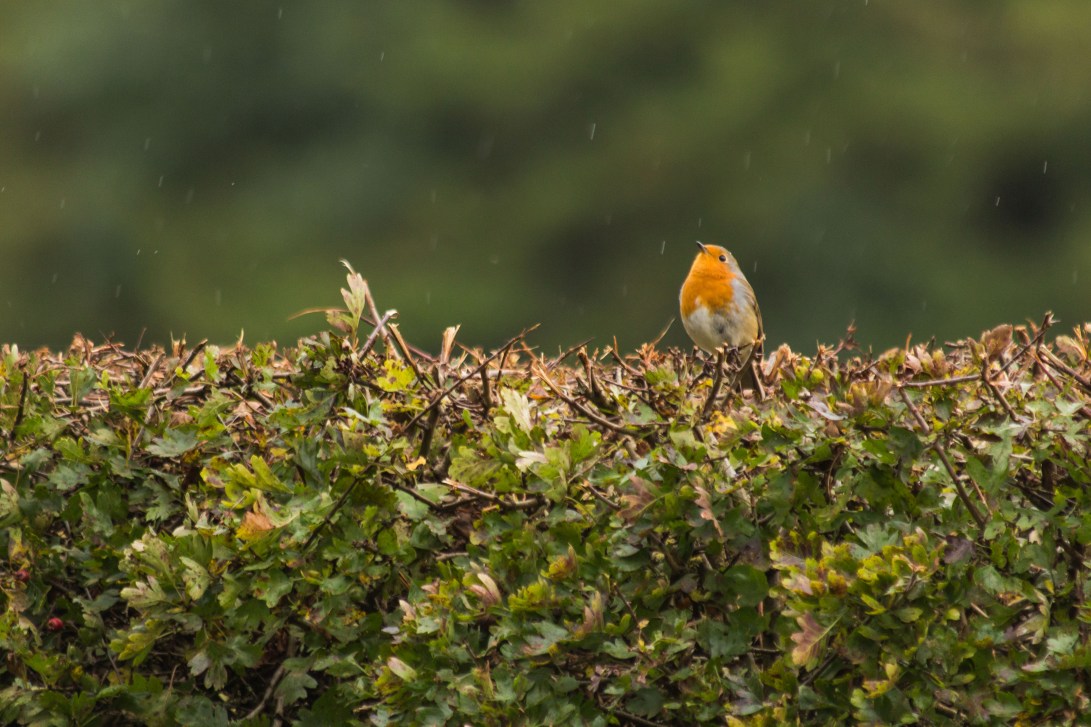
I have already made progress. First was the robin: an unmistakable bird in appearance, and a good place to start when learning birdsong because of its presence all year round. During the usually hushed winter months, the robin still sings, an isolated soloist filling cold air with thin, gentle melodies. Spring is by far the most frustrating time to begin birdlistening, so to hear the robin on a chilly February morning with no other avian distractions allows us to begin to tune into this new world I for one took for granted.

IMG_8893

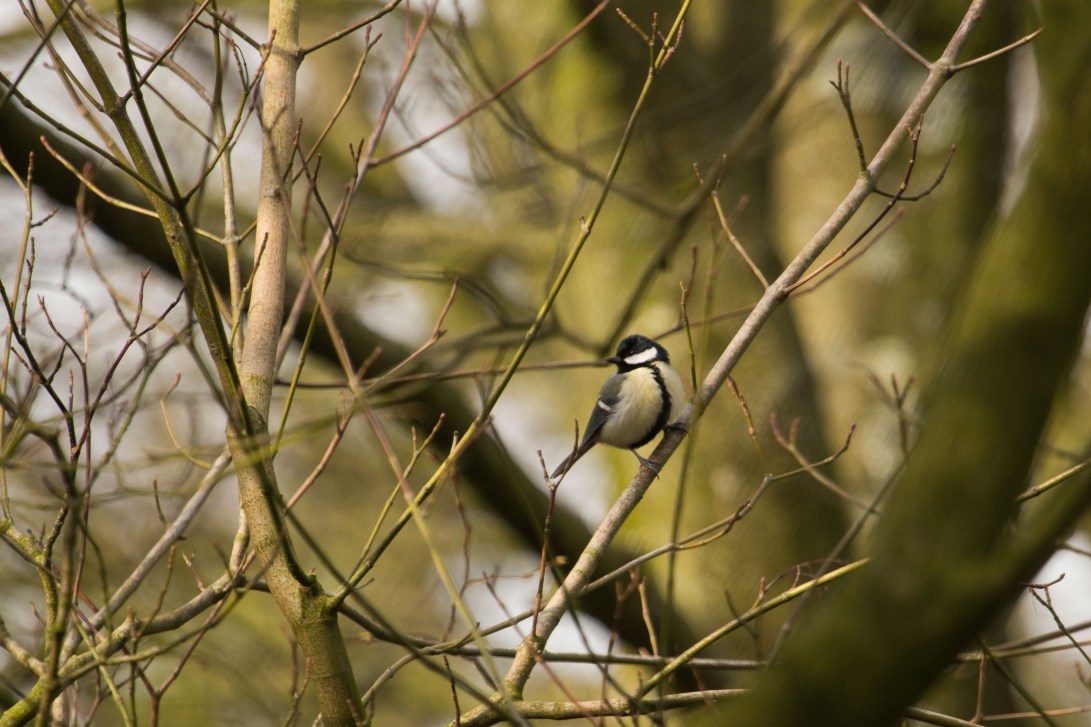
The wren also sings in winter, but has a far louder song bordering on rowdy. For such a small bird, the song bursts out of hedgerows, with a telltale trill at the end of some phrases, like a twirl of icing atop a cake. Then there is the two-note song of the great tit, like the squeak of a saw being pulled back and forth.

And so on. Already my ears are filling with birdsong and I’m really listening this time. Acquiring the skill of understanding this rich and varied language will not only help me become a better birdwatcher, but it will pave the way to a clearer understanding of nature as a whole – appreciating nature’s vibrant soundtrack.

IMG_8853


Chesters: Day Two

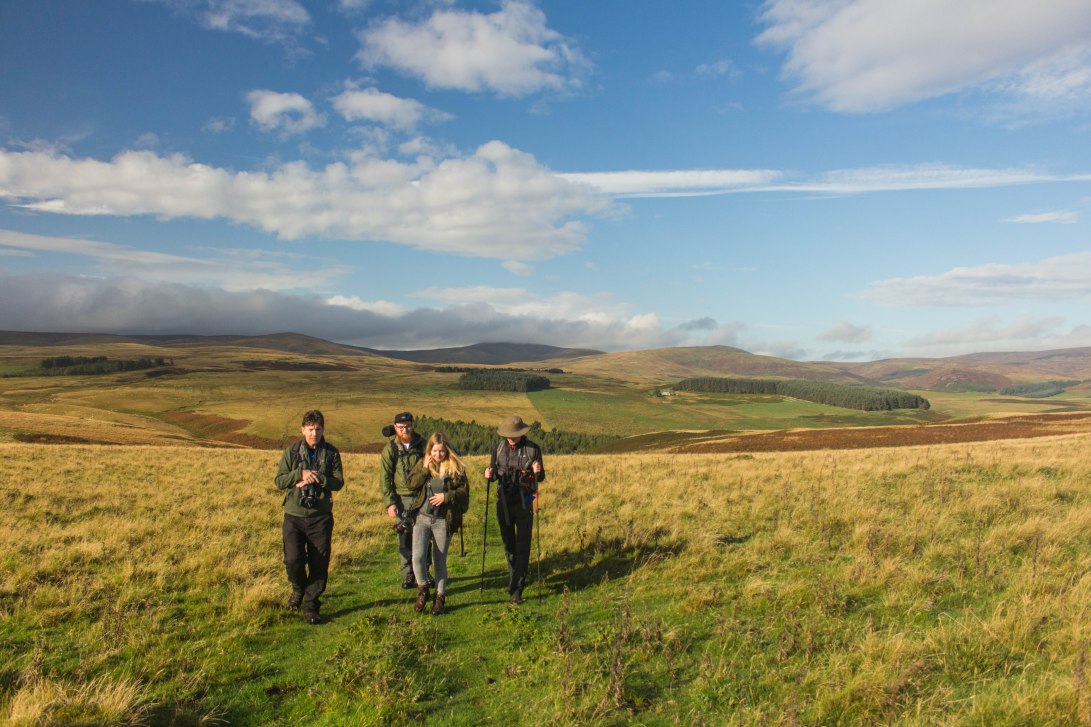
As I peeked out the window this morning, the sun was just beginning to shine. It looked like a promising day and I was glad, as we would be walking ten miles around the Breamish Valley.

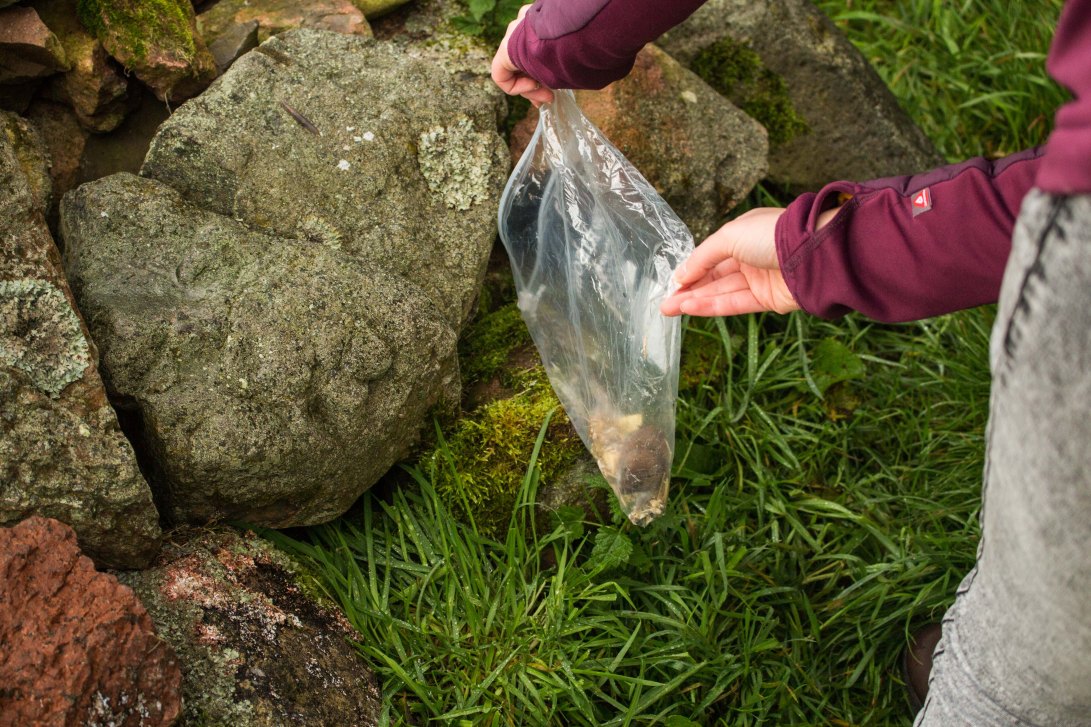
First things first though: check the Longworth trap for any visitors. Heather retrieved the trap and carefully emptied it into a paper bag. Along with the hay and leftover oats and apple chunks was a bank vole, gazing up at us with its beady black eyes.

If we were carrying out a proper small mammal survey we would attempt to sex the vole and perhaps snip a small section of fur from its back. The purpose of this is for re-trapping, so we’d know if the same vole came back. However, we were just trapping to see what mammals were in the area, so these procedures weren’t necessary. We observed the vole for a little while longer before Heather released it back into the dry stone wall alongside the bothy, where it slipped out of sight in seconds. We also left the remaining food for the vole to feast on – it was only polite.
IMG_6236

After eating a hearty bowl of porridge and making sure we had everything packed for the day ahead, we set off across the fields and down to the first plantation. Heather told us the habitat had been classed as “felled”, but there was nothing felled about it now. Trees loomed above us, and with foliage on all sides it felt like we’d wandered into an enclosure at Jurassic Park. My overactive imagination thought the grating screeches we heard were those of Velociraptors, but sadly were just squabbling jays.
IMG_6341

I led the group down the hill, taking care over crooked roots and dislodged rocks. I was just negotiating a particularly steep section when Cain called us back. I knew he’d seen something so I rummaged for my telephoto lens while scrambling back up to where the others had binoculars trained at the very top of a large conifer. There was a loud chirruping, and among siskins and chaffinches was a larger finch with a forked tail and an unmistakable bill that had the upper mandible overlapping the lower: common crossbills. There were several up in the tree, and as I zoomed in I saw that a male was being pestered by a begging juvenile, its pale wings flapping ten to the dozen in an attempt to catch its parent’s attention. The male, and another a few branches away, were plucking cones from the tree and holding them aloft like they weren’t quite sure where to put them. It was fascinating to watch such a strangely designed bird negotiate its food.

IMG_6292

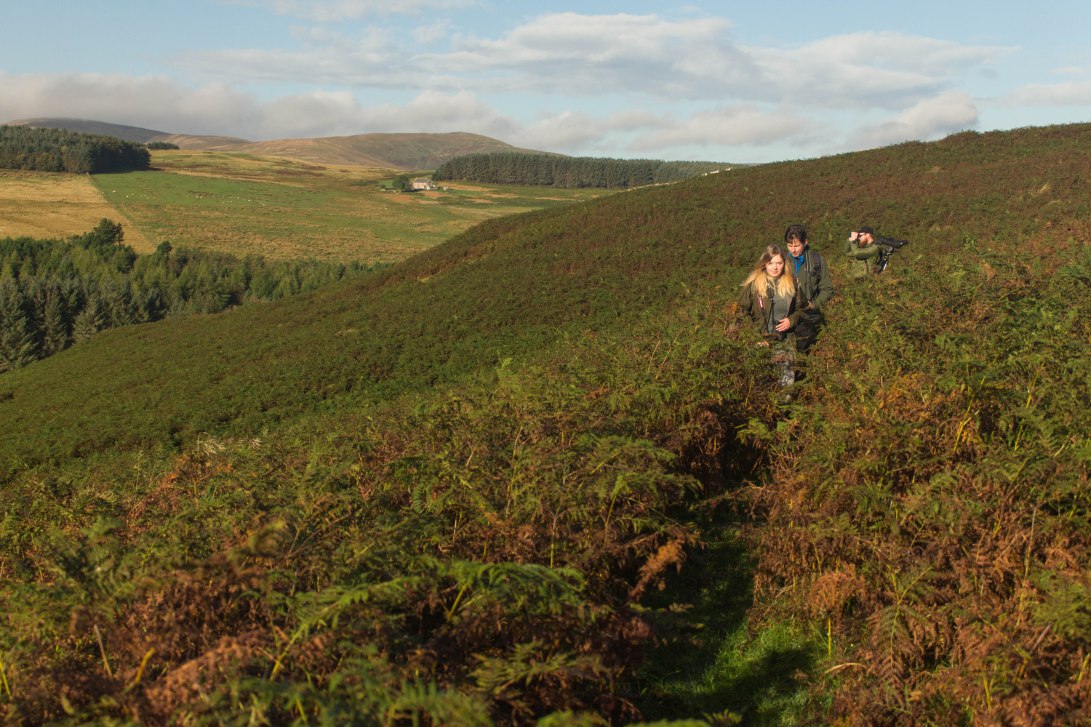
We wandered on, breaking out of the trees and beginning the first ascent of the day. The trail wound through an ocean of bracken, and I soon found myself chest-deep. When I glanced behind me I could only see everyone’s heads and shoulders as they waded through. The resident skylarks joined us, as well as a distant buzzard that I’m sure the skylarks were keeping a close eye on.
IMG_6327

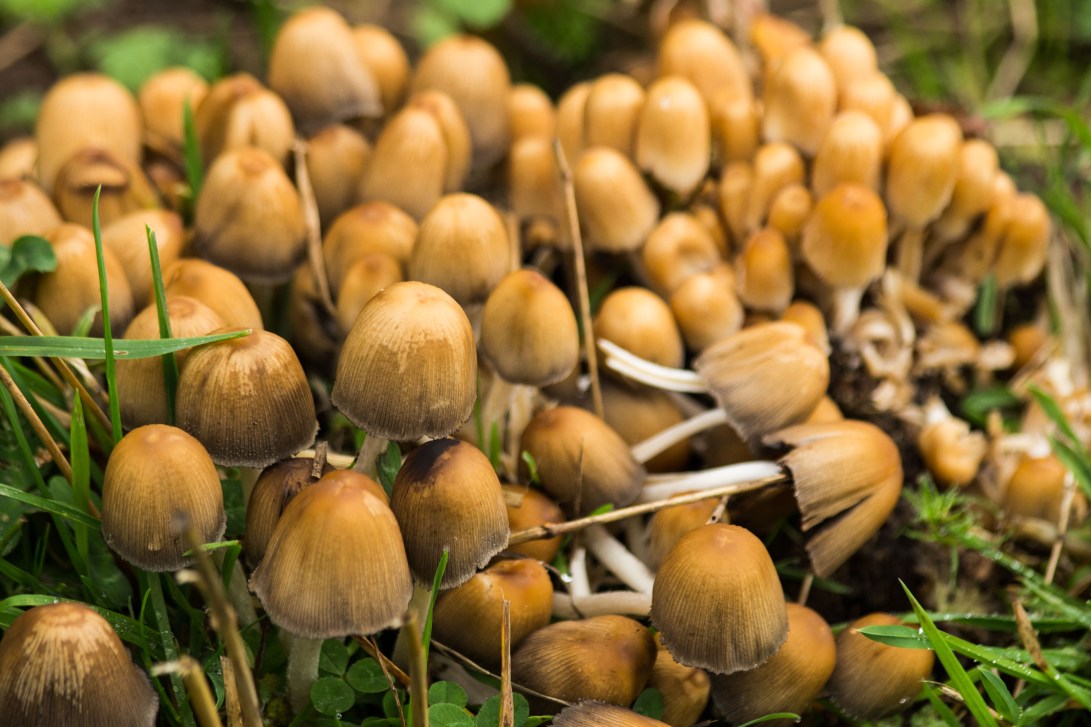
The sun sunk in and out of the clouds as we made our way through the valley, stopping every once in a while to photograph a mysterious fungus or watch a bird through binoculars. By lunchtime, just as my stomach was rumbling for my sandwiches, we arrived at Branton Nature Reserve. The first sound that greeted us was the noisy gabble of greylag geese as they fought for space to sit down on the crowded island. There were dozens of birds here; groups of lapwing, snipe, goosander and moorhen. There was minimal mingling between the species, reminding me of a school canteen full of cliques. Suddenly there was a commotion and many birds took to the air. The source of the panic was a heron, gliding in with broad wings and a curled neck. As he landed with spindly legs dangling, the geese gabbled uncertainly and gave him plenty of space.

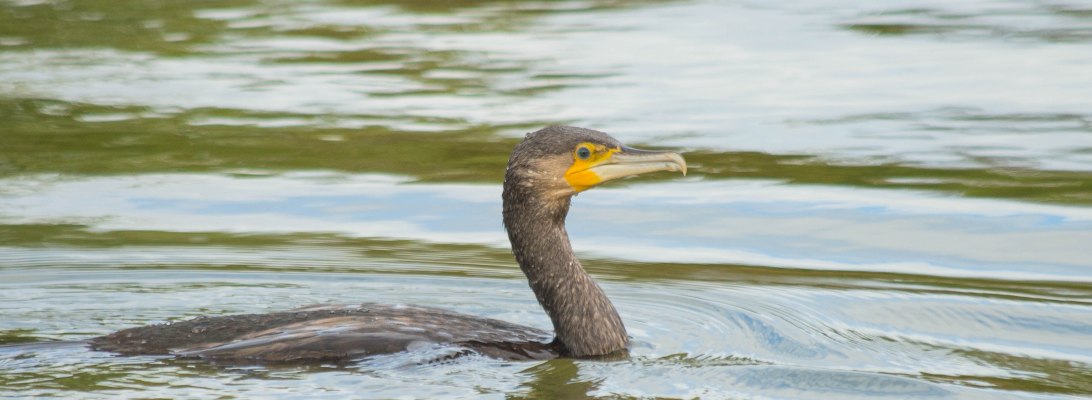
We slunk as inconspicuously as we could into the hide and tucked into lunch while keeping one eye on the lake’s activity. A cormorant surfaced a few feet from the window, and paused long enough for a few breaths before diving back down, emerging moments later in a completely different place and with a wriggling fish in its bill, which was swallowed up in the blink of an eye.

IMG_6381-2IMG_6417

Soon it was time to start heading back. It was trying to rain, and as we were making our way back past the village of Ingram it succeeded, so I hastily packed away my camera and bins. Later, once Cain had got a fire going, we’d rested our aching feet and eaten dinner, we pottered into the garden with the bat detector, to see if any bats were passing through. Before we heard any clicks though, there was a flash of white wings and a barn owl swooped out into the open. Shortly after, a second owl appeared some distance from the first, which was even more exciting. We ventured a little further up the hill and the detector started clicking. That evening we heard both common and soprano pipistrelles, and although we were leaving the wilderness behind and heading back home tomorrow, just these two days have been enough to remind me once again how important it is to spend time in nature.
IMG_6452

Species Seen: Adder (Vipera berus) Bank Vole (Myodes glareolus) Black-Headed Gull (Chroicocephalus ridibundusBuzzard (Buteo buteo) Chaffinch (Fringilla coelebs) Common Crossbill (Loxia curvirostra) Cormorant (Phalacrocorax carbo) Coot (Fulica atra) Eurasian Rabbit (Oryctolagus cuniculusEurasian Siskin (Spinus spinus) Goldcrest (Regulus regulus) Goosander (Mergus merganser) Greylag Goose (Anser anser) House Sparrow (Passer domesticus) Jackdaw (Corvus monedula) Jay (Garrulus glandarius) Kestrel (Falco tinnunculus) Lapwing (Vanellus vanellus) Lesser Black-Backed Gull (Larus fuscus) Lesser Redpoll (Acanthis cabaret) Little Grebe (Tachybaptus ruficollisMagpie (Pica pica) Moorhen (Gallinula chloropus) Mute Swan (Cygnus olor) Pheasant (Phasianus colchicus) Red-Legged Partridge (Alectoris rufa) Reed Bunting (Emberiza schoeniclus) Robin (Erithacus rubecula) Rook (Corvus frugilegus) Skylark (Alauda arvensis) Snipe (Gallinago gallinago) Sparrowhawk (Accipiter nisus) Starling (Sturnus vulgaris) Teal (Anas crecca) Tufted Duck (Aythya fuligula) Wigeon (Anas penelope)
Bike Ride in the Woods

Another visit to one of my favourite wildlife places: Watchtree Nature Reserve. Zahrah and I hired bikes and set off through the reserve, taking a leisurely ride away from the hubbub of the café and car park to the quieter open fields and woodland.

The lake was fairly busy. A pair of Mute Swans and their two cygnets glided silently to and fro in one corner, shaking heads and rustling feathers. The youngsters were almost fully grown, their juvenile grey foliage blending to pristine adult white. When one stretched his wings, bright white armpits showed. Elsewhere on the lake, three Tufted Ducks were feeding, golden eyes blinking as they came up for air. A lone Little Grebe dived under the water and popped up again several metres away. As agile as a fish, the tiny bird curled its body and slipped silently beneath the surface.

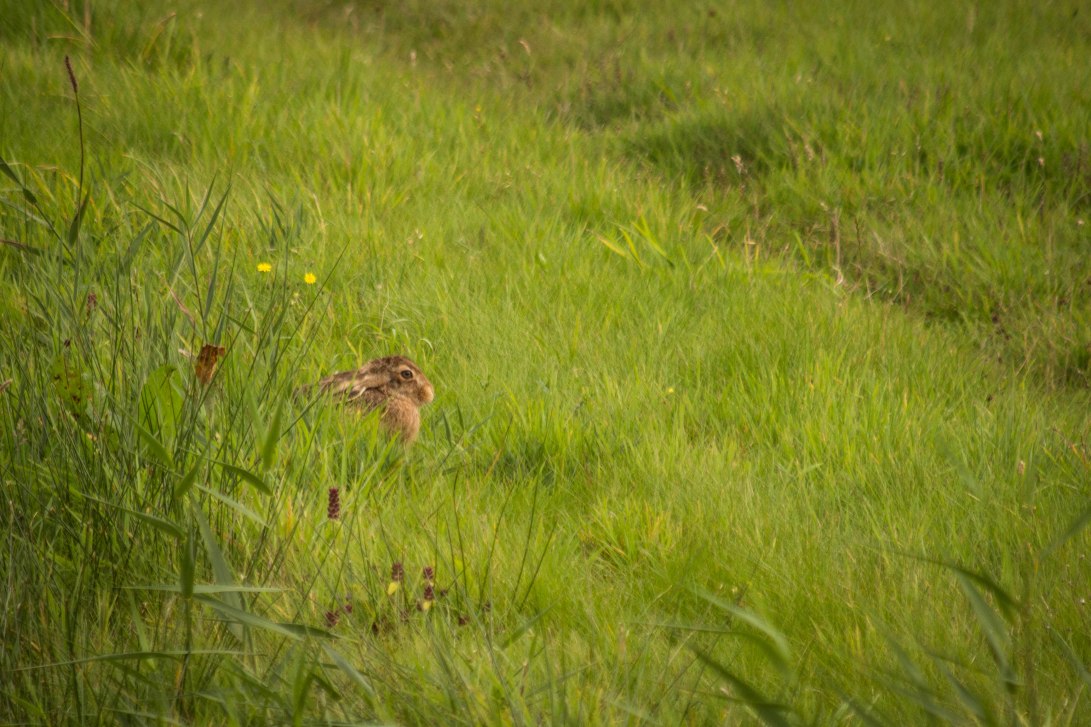
Suddenly, as I was scanning the feeders for any birds joining the Tree Sparrows already tucking into the feast, my eye caught on a brown shape nestled amongst the grass. From my vantage point on the top storey of the hide I could see the Brown Hare perfectly as it chewed, hunkered down. I called in a hushed whisper to Zahrah, who’d been watching the pond from the bottom level, and she darted up to see.

IMG_5952-2

The hare was beautiful, with rich, brown streaked fur and piercing eyes. Its ears were pinned tightly to its nape, in an attempt to remain as inconspicuous as possible, but the creature was still brave enough to forage out of the cover of the long grass. We watched it for a few minutes, before it turned and hopped back into the grass. After waiting a while to see if it would re-emerge any closer, we accepted our hare was long gone.

IMG_5953

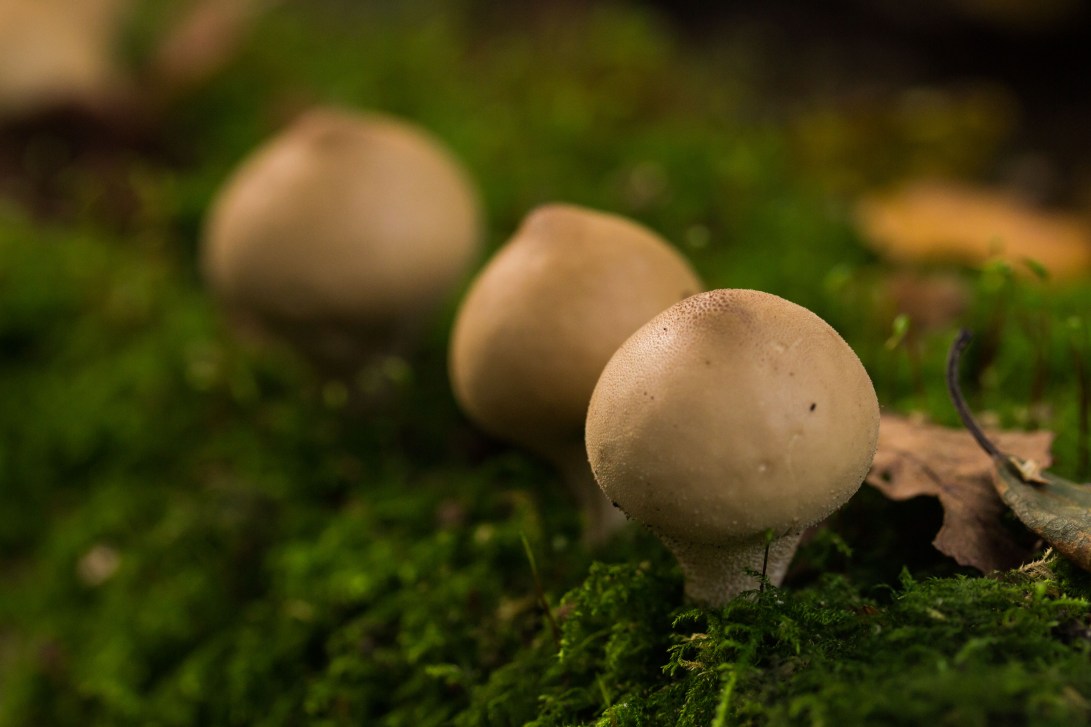
Leaving the lake behind, we looped around the reserve and cycled back through the woods. Once again, I was distracted by fungi, and Zahrah amused herself while I crawled around on the floor with my camera. Today, as always, there was plenty to see. A huge troop of Stump Puffballs (Lycoperdon pyriforme, the only British Lycoperdon to grow exclusively on wood) stood to attention on a fallen log, their portly bodies stood side by side.

IMG_5972
Stump Puffball (Lycoperdon pyriforme) 

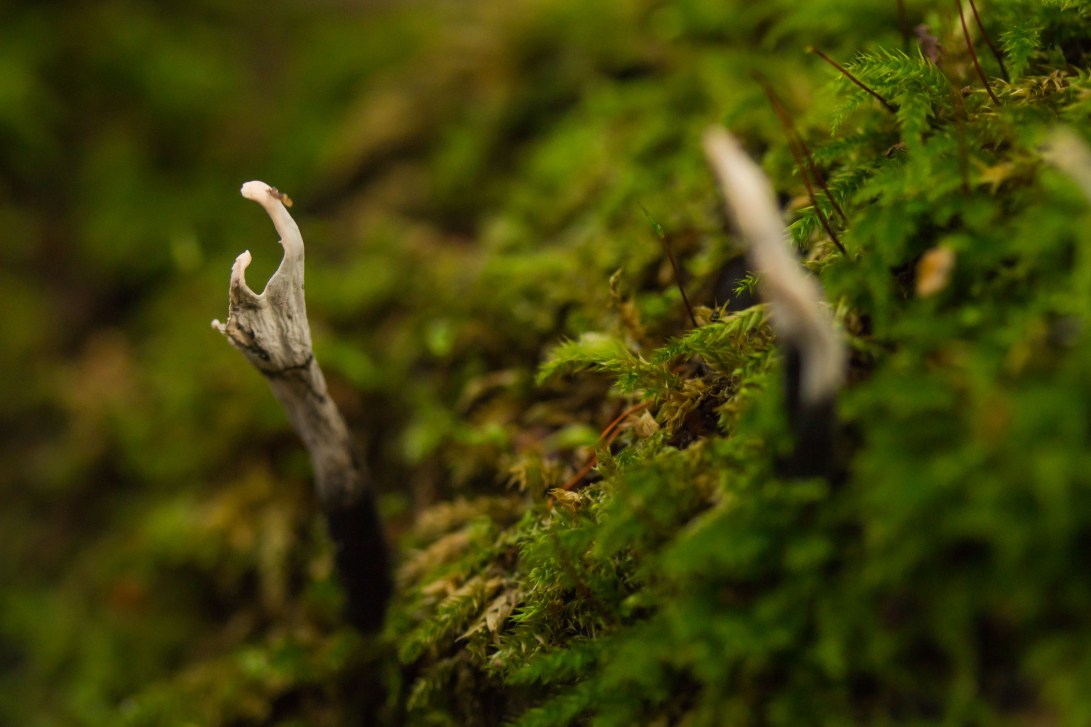
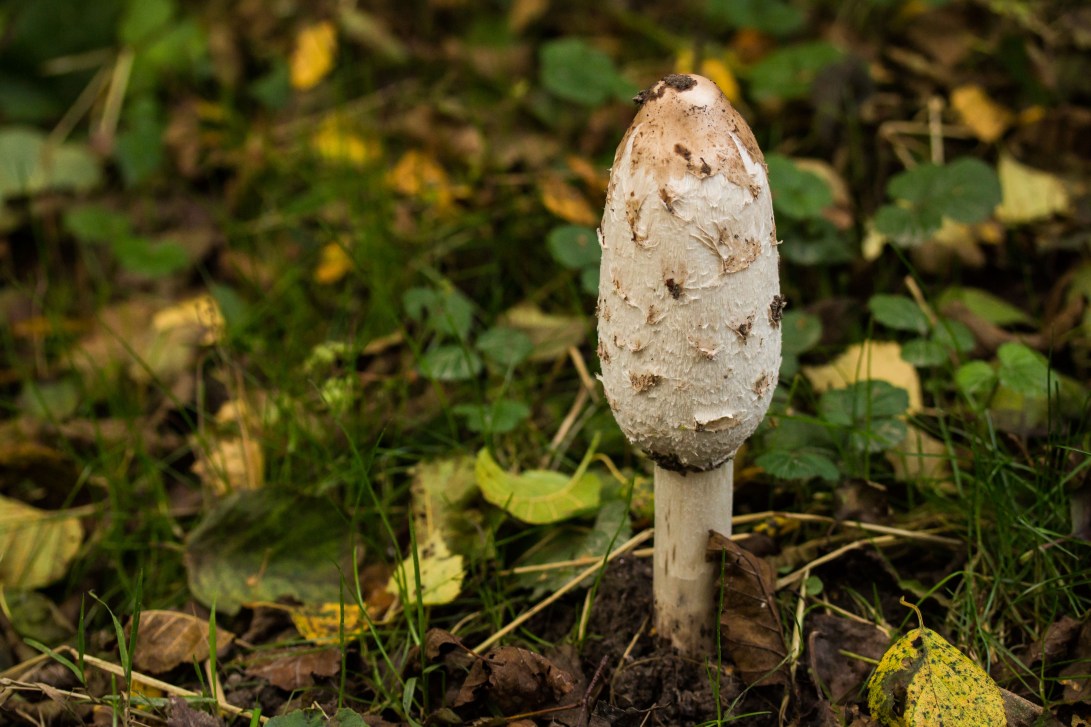
The delicate Candlesnuff fungus (Xylaria hypoxylon) stretched out of the wood, tiny black spindles dipped in white. Just as I had finally put away my camera and climbed back on the bike, I was greeted by three Shaggy Inkcaps (Coprinus comatus) stood on either side of the path like security guards. I hadn’t seen this fungus since autumn last year so it was a treat to photograph them again, and provided a satisfying end to our cycle in the woods.

IMG_5978
Candlesnuff (Xylaria hypoxylon) 
IMG_6002
Shaggy Inkcap (Coprinus comatus)