Avian Meditation

I’ve never been able to meditate. I’ve tried it before, frustrated and envious of those people who can sit still and completely disengage from the distractions around them. For a start, I can’t even sit up straight without getting uncomfortable. I know you can meditate lying down, but then I just fall asleep. If I finally do find a comfortable position, I inevitably can’t stop thinking. “Focus on breathing”, all the books and videos say, and I focus on the first three inhalations wonderfully, but soon my mind wanders to my shopping list, deadlines, or reminding myself to put the bins out. I’ve discovered that meditation is just something that not everyone can do, in the conventional way at least.

The other day I went to Rye Meads Nature Reserve in Ware, Hertfordshire. I have quite a lot of things to do at the moment with my MA and the move to Scotland later this month, but I needed some time outside. I find it a real challenge to make time for walks, so I fought my better judgement and put work on hold to sit in a hide and watch birds. I don’t do this much – when I’m out and about I’m either on my way somewhere or keeping an eye on the dog to make sure she’s not getting into mischief, so it was a real indulgence to spend an entire morning ambling around a nature reserve.

I sampled each hide in turn, following muntjac prints in the mud as I walked, and eventually settled in one that overlooked a lake speckled with birds. A group of thirty lapwings were soaring over the water, swinging in a single mass from left to right. Each time they twisted the sunlight caught their backs, illuminating that iridescent green also concealed in magpies and starlings. I watched their display through the binoculars, captivated by the pendulum-like movement. Unlike a lot of wings that end in sharp points, these birds have wings that are loosely shaped like tennis rackets.

Eventually one bold individual decided that was quite enough flying, and as it swooped down to the water its companions followed until the air was empty again. They settled on the rocks alongside a pair of shelducks, shovelers, gadwall and a lone cormorant. The strips of pebbles cut the lake into wedges, separating midnight blue from slate grey. Ripples from bobbing coots sent tiny waves onto the shingle.

“Have you seen the green sandpiper?”

The voice made me jump after such a long silence. It was a member of RSPB staff, brandishing both binoculars and an impressive scope. Shimmying along the bench, I peered down the scope and watched the wader as it scoured the shingle for food on its skinny green legs. I’d have never spotted such a well-camouflaged bird without help. In fact, the green sandpiper was a species that I may have looked at but not noticed many times before.

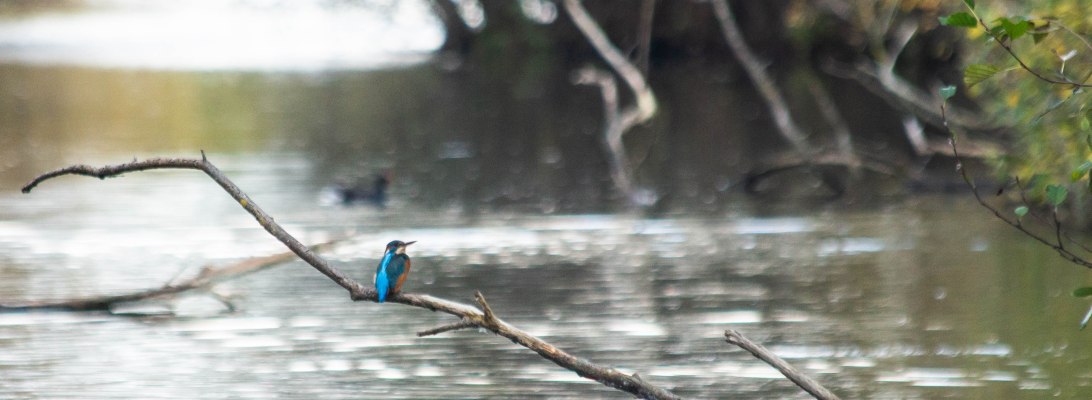
The man with the scope carefully lowered the window cover and hitched the scope onto his back, heading back out into the sunshine. I carried on watching the lapwings, now foraging with their spiky hairdos fluttering. It occurred to me then that birdwatching was a form of meditation. You have to sit still, as quietly as possible, and often go for hours without speaking. My phone was on silent, buried at the bottom of my bag underneath gloves, sketchbooks and biros. The only connection I had was with the birds. Sure, I was hoping for bitterns, kingfishers and otters (none of which showed), but I found satisfaction in the more common residents. There is undeniable beauty in a young blue tit’s downy feathers, the tight curl of a cormorant’s dive and the vibrancy of a mallard drake’s head, which almost shines yellow in the right light. Maybe I’d denied myself the pleasure of birdwatching too long, but sitting in the hide looking out onto calm water felt like meditating. My work was back at the house and I was in the reserve sharing space with birds.

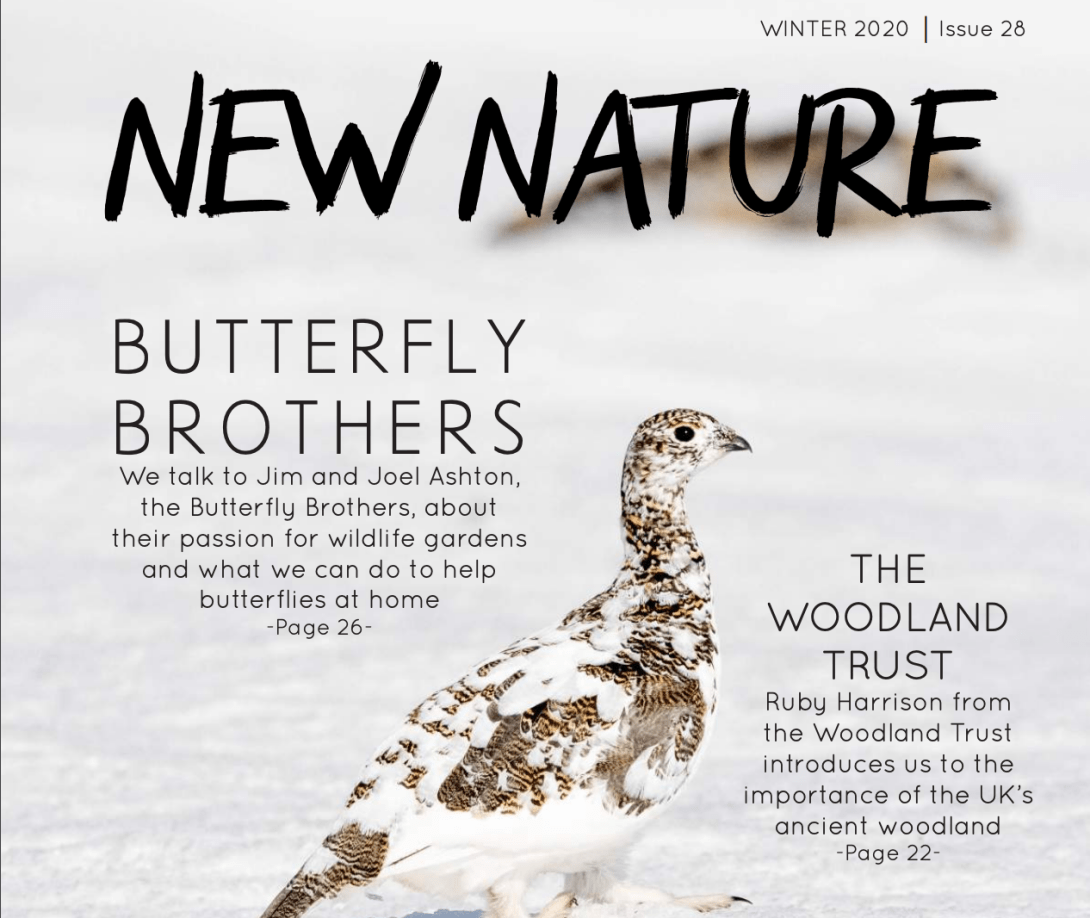
New Nature magazine

A few years ago I had an article published in New Nature magazine about my time in the Cheviot Hills in Northumberland. In autumn last year I pitched another article, this time about my visit to Anagach Woods in Grantown-on-Spey, my all time favourite area of woodland. There was no room in the autumn issue but it has just been published in the first issue of 2020.

New Nature is written, designed and produced entirely by young people. It features the work of ecologists, photographers, ecologists and writers. Its purpose is primarily to entertain, but with an underlying mission to celebrate wildlife and encourage its protection. I feel proud to be part of a project run by the younger generation and know that I have contributed alongside a team of talented and passionate individuals.

To read the latest issue of the magazine, click here.


Screenshot 2020-01-28 at 10.31.26

2019 Wrapped Up

Christmas is here again, which means it’s time to reflect on what I’ve achieved in 2019. I still have a long way to go before I can really call myself a freelance writer, but I’m so proud of the progress I’ve made this year.

img_3859

A particularly significant event was the Grant Arms Wildlife Book Festival in April, where I travelled to the beautiful Cairngorms National Park to stay in what is undoubtedly the coolest hotel in the UK for wildlife lovers like me. I attended some fascinating talks, met many established writers and was thrilled to see my first pine marten. However, perhaps the most influential moment was meeting author Stephen Moss, who runs the MA in Travel and Nature Writing at Bath Spa University. We sat down for a chat and spoke about my work so far, and after our talk I began to think seriously about doing a masters. I was sad to leave the beautiful wilderness of Grantown-on-Spey behind, but I was also intrigued by the possibility of further study and what it could do for me.

img_3262_lively

In the summer I visited Madrid – my first solo trip to a non-English speaking country. I don’t think it occurred to me how daunting that prospect could be until I arrived and realised that my A Level Spanish was a lot rustier than I had anticipated. Nonetheless, despite the language barrier and the most intense heat I have ever experienced, I really enjoyed my stay and learnt a lot about my resilience when travelling alone. Madrid is a beautiful city that I would love to return to some day, just in a slightly cooler season! The highlight was undoubtedly the flamenco show on my last night – that experience will stay with me for a very long time.

P1000122

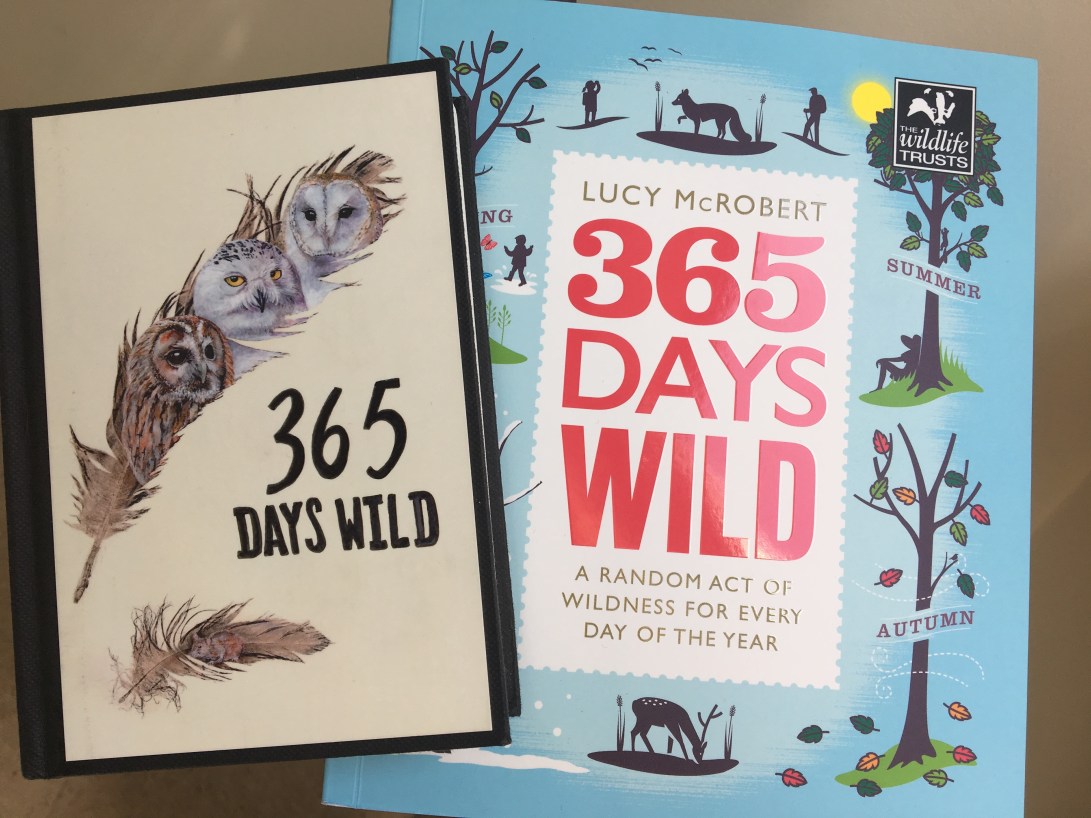
Not long after Madrid it was time to drive up to Rutland Water nature reserve for Birdfair, which has now become a yearly tradition. I caught up with good friends from uni, met the lovely Lucy McRobert and finally christened my new tent in the campsite. As always, Birdfair was a fantastic networking opportunity and I met some lovely authors and conservationists who were keen to share their advice. I also saw Stephen Moss again and bought rather too much wildlife art…

IMG_4060

September saw some more networking at the AFON conference – I’d never seen so many young naturalists in one place and I felt proud to be part of that community. During the weekend I introduced myself to author and illustrator Tiffany Francis, who is one of the loveliest people I’ve ever met. I swapped Instagrams with lots of inspiring writers and conservationists, many of whom I’ve stayed in contact with since. Events like the AFON conference are such a great way of reaching out to like-minded people and I was so happy to build my network further.

IMG_4207

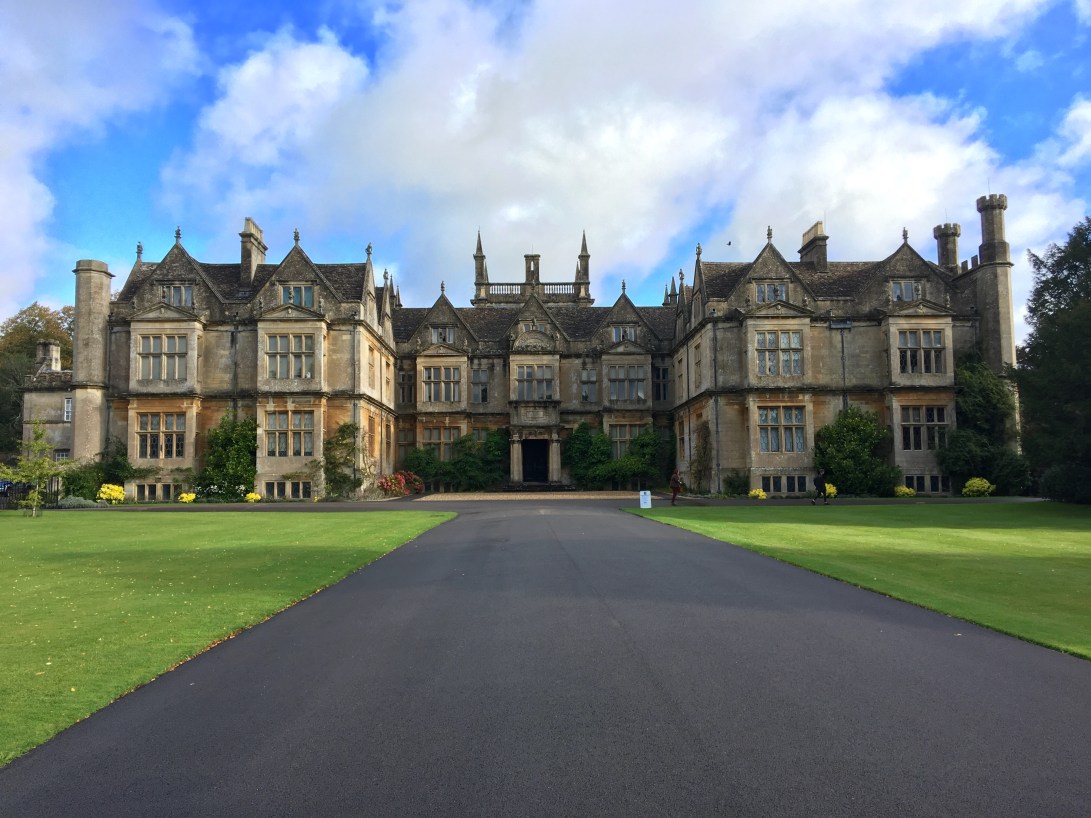
In October there was a very big change: beginning the MA. The week-long residential in Corsham was a chance to meet my fellow students and be introduced to the way the degree was run. I’m sharing the year with a diverse and enthusiastic group of people and I already feel close to them after so little time. An unexpected achievement has been my rekindled love for drawing and painting, which has proven to be a great tool for inspiration. So far I have submitted two assignments for the course and have been really pleased with my results. The second term will begin in the new year and I can’t wait to tackle the next module – a trip completely organised and funded by me where I need to try and get writing commissions from professional publications. Naturally I’m apprehensive about it, but I’ve done this before with the Isles of Scilly so I know once I begin my research I’ll be away.

IMG_4272

Finally, the end of 2019 saw my first official commissions – two for Blue Sky Wildlife, two in Hertfordshire Life magazine and the completed annual report for SEZARC. The team in Florida loved what I’d done and have now asked me to make the next report for 2019, which I can’t wait to get started on. In fact, I’m excited to announce that I shall be visiting Florida again in 2020. Not only will it be a chance to see my friends and work colleagues, but also a fantastic opportunity to gather new images to use in the next report. I don’t know when it will be yet, but I’m so excited to get the details in place.

I began this year feeling a little shaky and unsure of exactly where I planned to go. I still don’t have everything figured out, but the commissions have given me a real boost of confidence. It has been great meeting other naturalists including young women like Tiffany Francis and Lucy McRobert, as well as everyone on my course who are all making amazing contributions to wildlife writing. I have a great feeling about 2020, and I can’t wait to see where I am this time next year.

Winter Walks in Hertfordshire


I am so pleased to announce that I have another article published in Hertfordshire Life magazine. This piece was inspired by wintery walks around the county and focussed on three Herts and Middlesex Wildlife Trust sites in particular: Lemsford Springs, Amwell and Stocker’s Lake. During my visit to Stocker’s Lake, I was treated to an incredible kingfisher sighting – my first glimpse of the bird that wasn’t just a zoomy blue blur dashing up the river. I also spent the afternoon watching great crested grebes, ring-necked parakeets and shovelers.

IMG_2252

Other avian highlights at these reserves include green sandpipers, fieldfare, redpolls and spew, a particularly striking bird that overwinters from Russia and Scandinavia. I learnt so much researching this article and it’s such a thrill to see it in print. For anyone living in Herts, get yourself a copy and get inspired during these chilly winter months!

6) Herts Life Jan 1

Published!

This month I was thrilled to have an article and two photographs published in the Christmas issue of Hertfordshire Life magazine. I have started volunteering as a Communications Assistant for the Herts and Middlesex Wildlife Trust, and as part of my work I was able to write a festive article about twelve wild things to see and do at Christmas.

4) Herts Life Dec 14) Herts Life Dec 2

In the past I’ve had a few articles published on websites and a column in a local Cumbrian newspaper, but this was my first full-length article in print and I was overwhelmingly proud. Hertfordshire Life is a beautiful and professional publication, and I was so grateful to be given the chance to contribute to one of its issues.

Even more excitingly, I have submitted another article which shall be published in the next issue in a few weeks. This one will be about winter walks to banish the January Blues and I can’t wait to see it!

Golden Hour

The light was still faint as I drove through fields of green. Cars tore past in a work-fuelled rush, while I cruised leisurely in the opposite direction. My focus was on the forest today – my only objective to walk through trees and listen to wild sounds.

A flash of copper caught my eye and a stunning red kite appeared in the sky, wheeling over the rolling hill as it hunted for unsuspecting mice. I pulled over in a layby – the mud sticky before the sun reached it – and spotted three more circling in large, overlapping loops. Occasionally there was a squabble, and two birds would tussle in the air, cascading downwards and surging back up. It was easy to forget that bounty hunters and egg collectors almost pushed the red kite to extinction only a few decades ago. Now, you could drive down most country roads in Hertfordshire and see at least one. I had never seen four so closely together, and savoured the opportunity to watch such an inspiring conservation success story in the flesh.

Soon the kites drifted further off, reduced to dark flecks in the sky. I left them to their hunt and drove on, arriving at the edge of the forest before anyone else that day. As lovely as dogs were, I didn’t need their boisterous presence this morning. I pulled on hat and gloves and slung camera and binoculars around my neck, then crossed the road towards the woods.

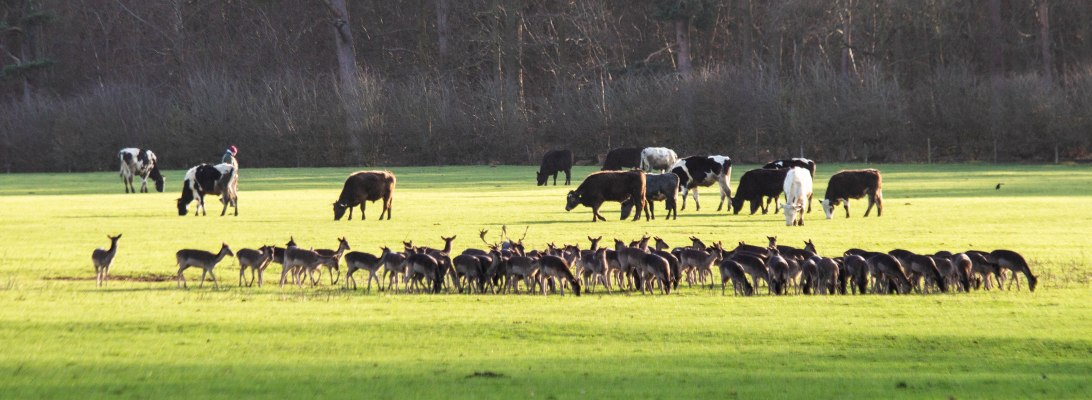
To my delight, the species I’d come to see was already here in abundance. Grazing in a field beside the cows was a herd of fallow deer around seventy-strong. I have always been fascinated by the variation in fallow deer pelts. When I first saw deer at this site, having previously seen photos of white-spotted Bambis, I had thought they were a different species altogether. These fallows were two-tone; dark brown on the top half and a lighter brown on the bottom half, as if they had waded flank-deep in mud. I hastily took to the cover of the trees, creeping as quietly as I could along the fence to get a closer look.

However, these deer were no fools. The next time I stopped and snuck a look through the binoculars, there were several faces turned my way, ears pricked upwards and eyes gazing down the lenses. My cover was blown. I decided to carry on with my approach, heading diagonally and pausing behind each tree. Ears twitched, and after a few more moments of studying me, the herd moved off, first at a trot then at a gentle canter. Among so many deer, there were only two males; as the herd bounded in loose procession across the field I watched two sets of antlers bobbing among dozens of ears.

I continued deeper into the forest, dulling the sound of passing cars with birdsong and wind-rustled leaves. The trees were gently swaying, creaking eerily like squeaky doors. The breeze played tricks on me, sending leaves skittering across my path in a perfect imitation of birds. The thrum of a woodpecker echoed through the cold air. A buzzard called faintly in the distance.

Suddenly there was an invasion of grey squirrels, bounding over the leaf litter and across fallen logs. Two of them darted in a reverse helter-skelter up a thick trunk, their claws scratching wildly in the chase. Another was saving his energy, choosing instead to perch and chew on a shrivelled leaf, twisting and turning it in his tiny hands.

I left the squirrels to their play and headed further along the fence, glancing between the trees to see if the deer might have come back. They hadn’t, but there was a sprinkling of brown birds foraging in the grass, dotted among the cows. For a few moments I couldn’t figure out what they were. Speckled like thrushes, but I’d never seen a large group of thrushes before. Just then the sun appeared, illuminating bright red patches on the birds’ sides. Redwings! My first this winter, and what a show. There were around forty of them, hopping around in the grass. They were too far away for a decent photo, but close enough to watch through the binoculars.

After a while, a startling screech made me jump. The only culprit I could think of was a barn owl, but I was sure they would have finished their night’s hunt by now. I followed the voice further down the trail. It was an ungainly, dinosaur-like squawk that sounded deafening in the tranquil forest. Suddenly, as I was scanning the canopy overhead, a crow-sized bird with white, brown and grey feathers shot out of the leafy cover. I hadn’t seen a jay once when I’d lived in Cumbria, so it had been about four years since my last sighting. I was desperate for a good photo of a jay but this one wouldn’t be cooperating. It darted from tree to tree, pausing only for a few hoarse shrieks before taking to the air again, soon disappearing completely from view. Undoubtedly the prettiest of the corvids, but not the sweetest singer.

Soon the forest was nearly silent again, with just the gusts of wind disturbing the trees. The morning was rolling on, and golden hour had arrived. Between breaks in the cloud, rich yellow light illuminated the trunks, throwing their gnarled, twisted bark into stark relief. It was a glimpse of magic that only lasted until a cloud muffled the sunlight and the forest fell back into shadow.

The cold was beginning to bite my fingertips, and I could already hear the first dog walkers. It was a good time to turn back. I made my way slowly through the woods, past the field and the squirrel tree, looking forward to warming up back home. I was just scanning the trees one last time for any small birds when my eye caught on two more pairs of ears sticking up. The deer were perfectly camouflaged, and after we stood watching each other for a few more moments, the doe stepped out from her hiding place and began picking her way through the foliage. The buck took one more look at me before following her, just as the sun emerged again and made their brown fur shine gold.

There was something undeniably magical about watching deer in a forest. They were elegant and beautiful animals, their habitat just as serene. As I stood watching them stride away out of sight, I felt a strong connection to the forest and the creatures that lived within it. Although I didn’t truly belong here, for just a few short hours I felt at home.

A Charm of Bramblings


With the bitter cold of winter often come unexpected and welcome surprises. Two years ago, flocks of waxwings graced us with their presence as they passed through from Scandinavia. The following year, hawfinches could be seen crunching hard seeds with their formidable bills. In 2019, it seems to be bramblings that are turning heads as they gather en masse across the UK. While they have been known to breed in Scotland in previous years, this is very rare. However, bramblings often visit the UK during the winter months, with this year being no exception.

At a quick glance, bramblings could easily be mistaken for a male chaffinch; these birds are of the same size and have very similar colouration, if a little more diluted than our more common garden inhabitants. Both male and female bramblings have an attractive orange blush on their sides and a white belly. In summer, males have black markings on their head. Bramblings can be found in beech woodland and close to other wooded areas, often joining flocks of chaffinches to look for food. Like many finches, bramblings prefer seed, so providing a good seed mix could attract them into gardens. There are several collective nouns for finches, including a “charm”, “company” and “trembling”. I couldn’t find a specific term for a gathering of bramblings, but as the birds themselves are so charming to look at, a “charm” seems appropriate.

It is thought that the reason behind this year’s explosion of bramblings is beech mast, or fruit, that falls from the trees, dispersing seeds for the birds to eat. If the beech mast fails in European countries such as Scandinavia, species including bramblings will move south and west in vast flocks to find more food. While impressive gatherings of five hundred bramblings can currently be seen in areas of the UK, earlier in January there was a flock of around five million in Slovenia. This number of birds could seem difficult to comprehend, but even that pales in comparison to the flock seen in Switzerland in the winter of 1951, which was up to 70 million strong.

As with all winter visitors, the bramblings’ time here could be short. Despite the plummeting temperatures, wrap up warm and head outside to find some of these beautiful finches. For more information on wildlife winter sightings, check out the BBC Winterwatch page. I for one would love to see a charm of bramblings before the winter wanes.

A Lensball Study

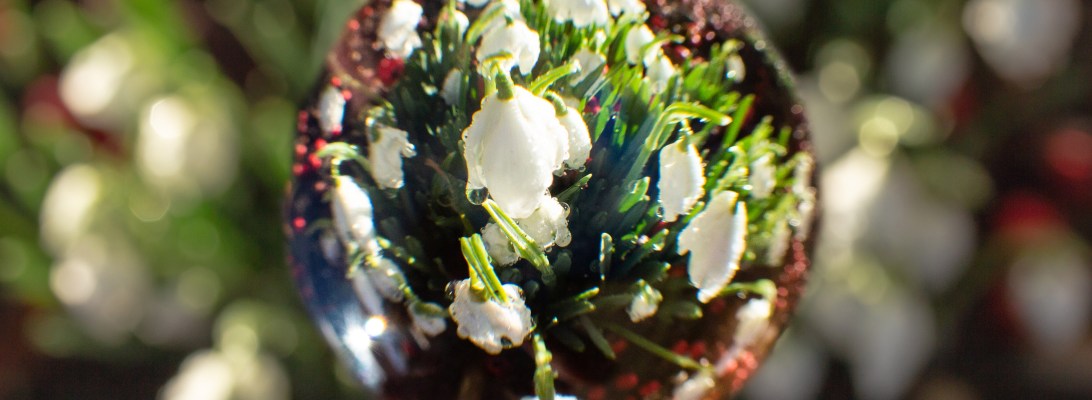
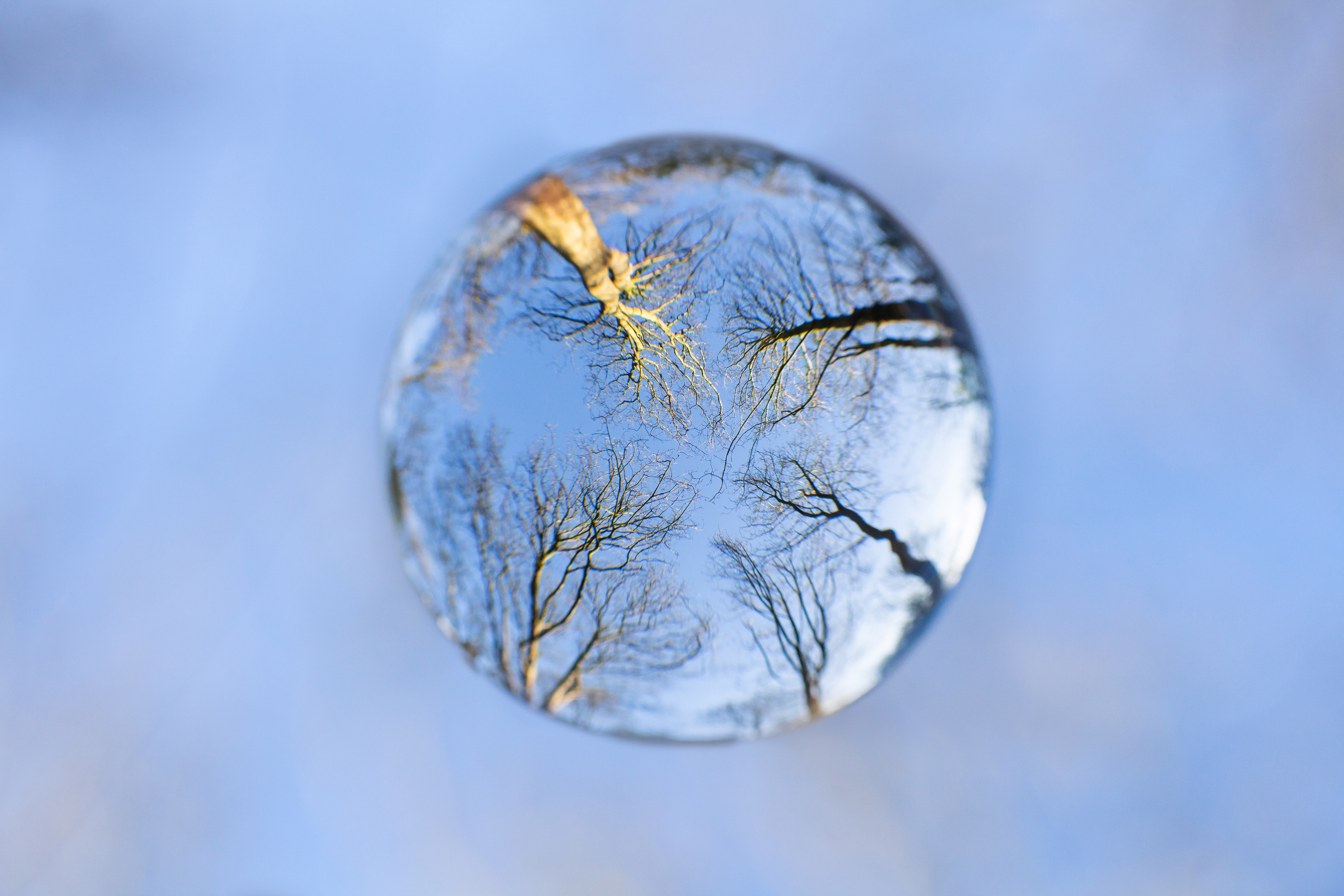
As I briefly mentioned in my last post, I’ve recently been experimenting with the lensball, which is a simple and effective tool to give photos a new perspective. I tried it out in the garden first with mixed results, but once I ventured further from home and found more intriguing subjects to capture, I began to really see the appeal with lensballs. The following shots are my latest creations.

img_1125 2img_1127 2

After spending far too much time on Photoshop – I never like to over-edit my wildlife photos as I think they look far better natural – I decided that a quick and easy way to remove my hand from the image was to take an additional photo of the scene out of focus, which provided the background to the final shot. Then I placed one image over the other and erased my hand. I think the pieces with slightly more complex backgrounds are more effective than those with a plain one such as the blue sky, which make the already obscure subject look perhaps a little too surreal.

img_1133 3img_1167 2

I love seeing a whole new perspective through the lensball, and I can’t wait to continue exploring my natural surroundings with this additional piece of kit!


Waiting In Anticipation

Winter is one of my favourite times of year. Not only is there the excitement of Christmas (which at 21 years old is still very important to me) and my birthday, but also the stunning beauty of nature. Frosts, snow, diluted sunshine – it’s a photographer’s dream. I cannot wait for the first real frost to arrive, when once again I’ll be rummaging around in the garden on my hands and knees clutching my trusty macro lens.

As winter approaches, there is always a rush of social media posts about visiting migrant birds. Stunning images of waxwings, redwings and fieldfare dominate the birdwatching online groups. While I love to see rare visitors in the UK, there are more common species coming to the fore during the colder seasons too.

The long-tailed tit is easily recognisable, with a tiny body and unnaturally long tail. These charismatic birds are nearly always seen in groups, and with a weight of less than 10 grams, sticking together can be a lifesaver in the winter months. As temperatures fall during the night, long-tailed tits roost together in large groups of related birds, lining up on branches and huddling for warmth. Long-tailed tits are particularly known for their altruistic behaviours. If one pair loses their eggs, they will help a relative raise theirs. This behaviour is known as cooperative breeding.

Another bird that is more prominent in winter, but far less endearing than the long-tailed tit, is the great black-backed gull. This formidable animal is bigger than a buzzard, and bad habits including stealing food from some birds and eating others has given this gull a bad reputation. Nonetheless, great black-backs are impressive to watch, and during the winter months they are drawn inland by swelling migrant populations. This means now is a good chance to see this amazing species up close.

One voice that sings long into winter is that of the robin. This plucky redbreast is often thought of as a winter bird, when it is found all year round but simply stays put when other birds migrate during the colder months. Despite their beautiful song, robins are fiercely territorial. Who can blame them, when food and shelter is so scarce during the winter? Perhaps the epitome of Christmas is seeing a plump robin perched on a berry- and snow-strewn branch. It may be a controversial opinion, but I can’t wait for the snow to come. Seeing how bitterly cold it’s been recently, hopefully the wait won’t be too long.