Meet the Neighbours

After a busy week getting to grips with my new routine in Florida and getting stuck into all sorts of exciting work at the SEZARC lab, I was invited onto a tour of the White Oak site. Having only had glimpses up until now – mainly the white rhinos whose enclosure runs alongside the road to the lab – I was eager to see all of the animals that live at White Oak.

Our first stop was the greater one-horned rhino, and I was thrilled to see one of the females had a calf. The clue to the most immediate difference between these individuals and white rhinos was in the name; white rhinos, from Africa, have one more horn than the greater one horned, and they’re typically larger. To compensate for a shorter horn, these rhinos – from India and Nepal – have very long lower incisors that are used during fights and can grow up to 8cm long in males.

IMG_9548

The armour-like skin gives these rhinos the appearance of a prehistoric creature. It is deeply folded to increase the surface area for water absorption, and especially thick around the neck to protect this vulnerable area. Greater one-horned rhinos have a prehensile lip that they use to forage in scrub and foliage.

IMG_9554

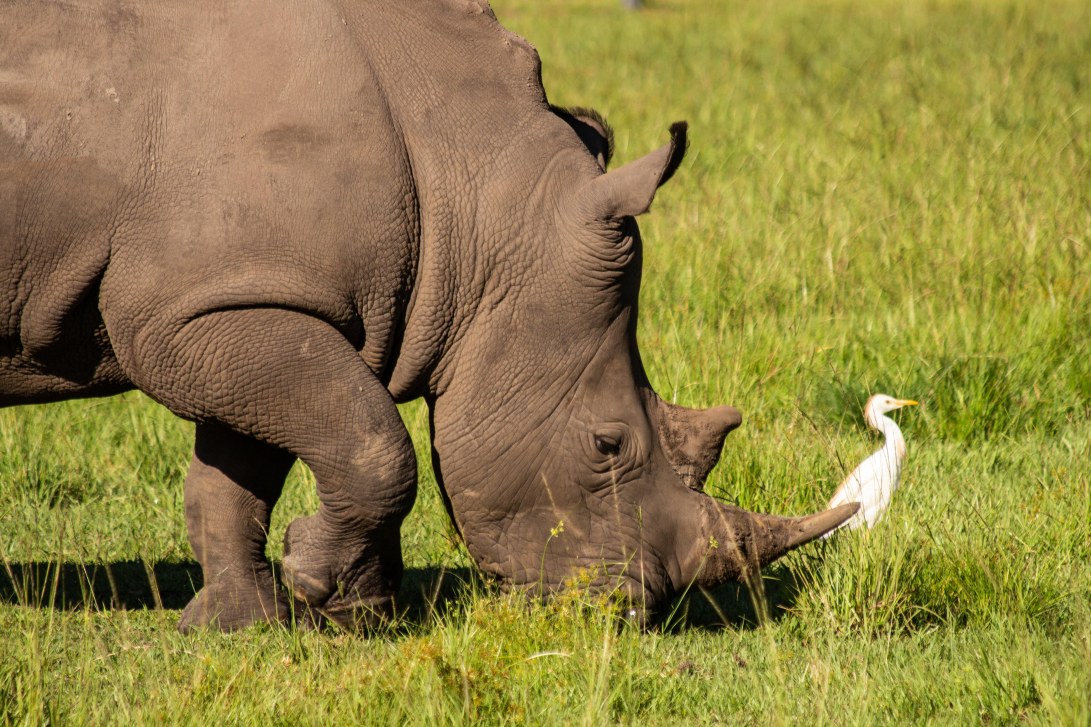
White rhinos, on the other hand, are known as square-lipped rhinos and shed grass like a lawnmower. As we watched them graze we saw they were surrounded by cattle egrets, a common sight at White Oak. These white, gangly birds follow large mammals around their enclosures, as their weighty footsteps disturb insects hidden in the ground below, which the egrets take full advantage of.
IMG_9577

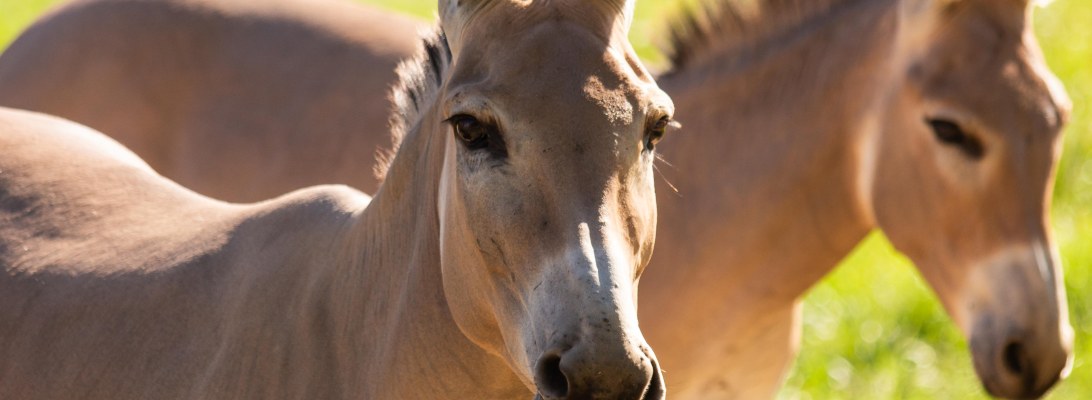
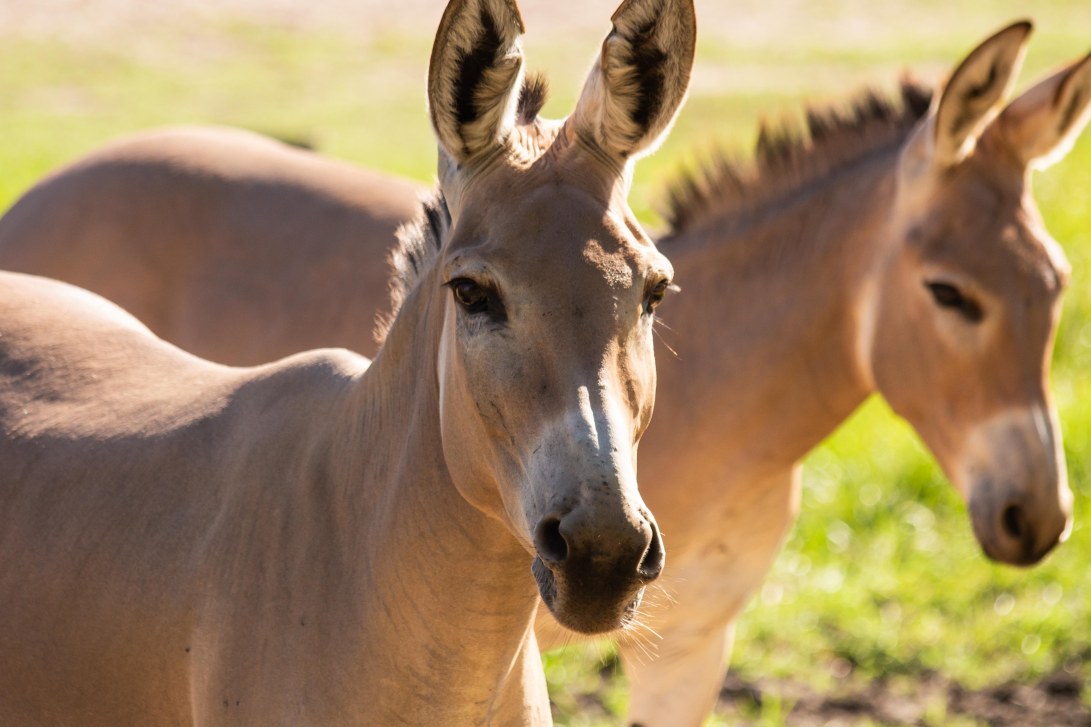
Next we headed off to find the Somali wild ass, a species I had never heard of but fell completely in love with. Found in East Africa, Somali wild ass are the smallest and also the rarest wild horses (equids) in the world, with fewer than 2000 left in the wild. They have a beautiful grey coat that almost appears purple in a certain light. Reminiscent of their relative the zebra, these wild ass have characteristically striped legs. Due to competition with domestic farm animals for grass and water, these animals have become critically endangered. In response, White Oak obtained a herd in 2008, and since then have raised twenty foals.
IMG_9594

Nearby to the Somali wild ass was another species I hadn’t come across before: the gerenuk, meaning “giraffe-necked” in Somali. These slender antelope are golden in colour with extraordinarily large necks, ears and eyes. Interestingly, these antelope rear up onto their hind legs to get to even higher places.

IMG_9615

One of the final stops on our tour was an unforgettable moment for me: the giraffes. I’ve always had a soft spot for giraffes, and today I had the extraordinary surprise of being told I could hand-feed one. His name was Griffin, and as soon as the bus stopped he came striding over, keenly peering in through the window. One by one, we took a piece of browse and lifted it high, and Griffin gently took it. It was such a treat and a moment I will treasure for a long time.

As we got back onto the bus and made our bumpy way back to the car park, I felt honoured to have seen first-hand what an amazing place White Oak is for conserving and protecting wildlife. While I commend many zoos for their conservation work, I was so pleased with how much space these animals had, giving them the freedom to behave as naturally as possible. It made me so excited to continue my internship and I looked forward to getting even more involved as the weeks progress.

IMG_9649

Landing in the Sunshine State

I’d never been to America before. It was a vast, distant land that I didn’t think I’d have the chance to visit very soon, perhaps not until my thirties or even later. However, after weeks of planning and preparation here I am in Florida, the Sunshine State. For two whole months.

The journey here was the first big hurdle. Jet lag is defined as a sleep disorder which alters the internal body clock. Some people experience insomnia, others indigestion. I just sobbed for a while. Having religiously followed an eight-hour sleep routine for as long as I can remember, I suddenly found myself getting off the plane in Jacksonville at 17:30 while my brain was convinced it was actually 22:30. A combination of this disorientation, stress from travelling and heat that I had never experienced before all descended on me at once.

I could have slept standing up that night. When I woke up and remembered I was in America, I experienced another jolt, this time not of fear that I’d forgotten something or panic that Passport Control would send me back home, but of sheer excitement. Even as I nervously picked up the rental car and grappled in the door for a gear stick that wasn’t there, I was eager for the adventure to begin.

IMG_1404

I have begun to slowly acclimatise myself to daily American life. I still can’t resist acting the tourist, taking photos of the British section of the supermarket (Jammy Dodgers and Ambrosia custard akimbo) and marvelling over the countless lizards that scoot across the pavement, or should I say sidewalk. I have seen the yellow school buses, driven past long lines of mailboxes at the end of driveways, and already been complimented on my accent, plain as I think it is.

The heat in Florida is something I’m still not used to, however. I had envisaged myself getting a glorious tan, but by 9am it’s already too hot to sit outside. Thank goodness for high-quality air conditioning, a world away from the lousy version back home that’s either non-existent or Baltic.

Caught up in the whirlwind of settling in, I haven’t yet had the chance to get out and truly explore what I’m sure is incredible native wildlife. Every time I see a bird I’m craning to see what it could be, despite not having the foggiest idea. All I know for sure are the circling vultures that I regularly spot driving, and I think that is a brilliant start. After all, when have I ever had the chance to see wild vultures in the sky before?! There have been huge swallowtail butterflies fluttering in front of the car, and of course the lizards that I’m becoming obsessed with. I’m so excited to see what I’ll discover over the next two months, and I have a sneaking suspicion I’ll make some unforgettable memories.

Volunteer Interview

I have now completed six volunteer shifts at Paradise Wildlife Park and although at times it’s been challenging, especially in the recent 30 degree scorchers, the experience so far has been extremely rewarding. I’ve worked on three of the six sections – paddocks/farmyard, small mammals and primates – and each has offered me new experiences. In just a few days’ work I have fed tapirs by hand, helped weigh a group of meerkats and been pooed on by Nam Pang the red panda as I cleaned his enclosure. This wasn’t the sort of gratitude I was used to but it’s something not everyone can say has happened to them.

Now a member of the Paradise Park volunteer Facebook group, I saw a post asking for volunteer interviews for the website’s blog. Eager to get involved, I submitted an interview and in a few days the final post was published. I’d been told that due to the high number of responses, the post would feature quotes from several volunteers not just from the Animal Park but across all areas of Paradise. The following are my answers in full, but the final post can be found here.


Why I started volunteering at Paradise:

Having just graduated from university studying Wildlife Media, I’ve spent the past three years photographing and blogging about wildlife. Now I want hands-on, practical experience working with animals. Volunteering at Paradise gives me the opportunity to be part of a fantastic organisation that is passionate about celebrating and conserving some of the world’s most beautiful species.

I’ve been visiting Paradise since I was a child, and have fond memories of watching the talks, reading all about the zoo’s occupants and taking ride after ride on the dinosaur train. Returning as a volunteer, I can see it is still just as exciting, if not more so.

Best parts of the day:

While I enjoy many aspects of work as a volunteer, one of my favourite parts of the day is walking across the park, to and from the enclosures. During this time I get to see so many different people of all ages getting excited about and inspired by the animals. I’m frequently stopped and asked questions, and while I’m still no expert, I’m so happy when I can answer them and enhance the visitors’ experiences. My walks across the park also allow me to glimpse the large carnivores that I’m not allowed to work with just yet!

Most challenging parts of the day:

I began volunteering almost at the start of the heat wave, so have found it really challenging to lift heavy muck buckets and scrub floors clean while the sun beats down on my back! While volunteering at Paradise is physically demanding it’s also incredibly rewarding, and I savour the chance to work hard. I come home with aching arms and legs but know I’ve had a successful day!

Would you recommend other people volunteer (either at Paradise or in general)?

During my time at university I did a lot of volunteering at various places including Oxfam bookshop and the Lake District Coast Aquarium. As more and more people my age have degrees, it’s essential to also carry out plenty of work experience, and for me volunteering is invaluable. Not only can you pursue your interests, but you can gain so many different skills that can be brought into almost any working environment. Even in a few days volunteering at Paradise I have developed skills in communication, self-confidence and learnt so much about how much work and commitment it takes to run a successful zoo. I couldn’t recommend volunteering enough. I believe it brings an essential edge when applying for any job.

What are your ambitions and/or long term hopes for volunteering?

I am hoping to pursue a career in animal conservation and believe that volunteering at Paradise will help me develop my skills and learn what it takes to be successful in such a competitive field. I hope that some day I can be a permanent member of the team and have the opportunity to share my passion with the public. I welcome the responsibility of caring for wild animals and want to encourage a greater interest in conservation, particularly among young people.

Funniest volunteering story:

It was a scorching hot day and I was out in the reindeer enclosure removing old bedding and scrubbing the floors. As I was concentrating on a particularly stubborn piece of dirt I nearly jumped out my skin at the sound of an almighty roar from behind me. I spun round, expecting to come face-to-face with an escaped white lion, but instead saw a family gazing up at the Triceratops, whose audio had just been triggered by the motion sensor. I felt incredibly sheepish and hastily got back to scrubbing. Surrounded by reindeer, red deer and red foxes, I had not expected to also be spending the afternoon in the Cretaceous period!

Favourite animal at Paradise and why:

It sounds so predictable but like many visitors, I love the unique white tiger, adorable red pandas and equally sweet Asian short-clawed otters. However, for me the most charismatic animals so far have been the ferrets in the Farmyard. Each morning, once I’ve cleaned and fed the rabbits and guinea pigs, I wait for the keeper to remove the group of six male ferrets from their enclosure so I can clean it. This sounds simple, but opening the gate wide enough to grab one ferret is enough for all six to jump out, so catching them is no easy task. Ferrets are notoriously feisty, and once they’re shut safely in their boxes I can see their tiny faces watching me. They are a treat to watch, and easily as entertaining as any tiger.

Unforgettable moment at Paradise:

Although I’m still very new at Paradise and will undoubtedly have many more great memories, my most treasured moment so far happened on my very first morning. It was my trial day and I was sat in the Discovery Centre feeling very nervous about the day to come. Suddenly, I heard the sound of a white lion stirring from sleep – its deep, guttural roars echoed across the park. The sound made the hairs on my neck stand up. It was at that moment I knew why I was here, and I put my absolute all into my trial day and was thrilled when I was invited to return as a volunteer.

Fresh Inspiration

Recently I’ve become a writer who doesn’t write much. I have ideas, many a day, of what to write, but somehow I never get round to making them a reality. I’m blaming this latest case of writer’s block on my new occupation, so I’ve decided to write about that. I have been accepted as a volunteer at Paradise Wildlife Park in Broxbourne, Hertfordshire. It was the longest application process for a voluntary position I’d ever experienced, but after interview, induction and trail day I was successful.

Volunteering in a small aquarium in Cumbria could not have prepared me for work in a zoo. Although far from large with only around 400 animals (in comparison with Chester Zoo’s 20,000), Paradise Park still requires plenty of hard work and for me it’s a physically demanding and challenging role. I anticipated this beforehand and should have been ready, and yet I still came home from my first day with aches in every limb, rashes on my arms from the hay and mysterious scratches from the day’s manual labour. As is expected of all volunteers, I spent most of my time with what the animals left behind (you cannot believe how heavy camel poo is) and in the July heat I worked up a significant sweat.

And the funny thing? I loved it. Three years of university has been a mental workout but not so much a physical one. My arms are little more than jointed matchsticks, and just as strong. Volunteering at a zoo will be such a great opportunity to build up some strength. There is also something immensely satisfying about scrubbing a paddock clean, even though the moment the animals are let back in they completely rearrange the fresh bedding and christen it with droppings.

If I had a pound for every time I’ve been asked “So what’s next?” since I came back from university, I could retire without having started a career. I still don’t know what I want to do or where I want to be. While I still love writing and photography, I feel a pull in a new direction – the daily grind of contributing towards a successful and high quality zoo. There is something very appealing to me about caring for wild animals in a place that values them (that’s the important bit) and sharing my passion with other people. I watched the Small Mammals keeper giving a talk as she fed the red pandas and I had an urge to join her, but my knowledge of red pandas is really quite limited. I want to study them, I want to know everything there is to know about these animals, and share that with people. And I believe I can do that by writing but also by being there among them.

I’m fully aware that becoming a zookeeper is an incredibly gruelling and challenging process. I’m also aware that my current academic background will not help me in that mission. Every keeper I’ve spoken to so far has begun by volunteering, and worked their way up the ladder. So I have joined Paradise at the very bottom, and the only way to go is up. I’m inspired by this, and know that I have to pursue it.

A Manic Few Weeks

The past few weeks have been a whirlwind! I have now completely moved out of Carlisle and come back home in Hertfordshire to spend time with my family and Cockapoo puppy, who at five years old is finally starting to calm down.

I’ve been back for a fourth visit to the Warner Bros Studio Tour of Harry Potter, and was throughly impressed by the new Forbidden Forest, not to mention the Butterbeer ice cream. I won’t give away too many spoilers as it’s an incredible place that you need to see to truly believe. I’ve been a Harry Potter fanatic for a million years and always get teary-eyed when I go. Even my Uncle Rod who was indifferent to Harry Potter ended up taking dozens of photos.

IMG_1027

I’ve also had my final results from university and was thrilled to discover I achieved first class honours, though I have to wait until November until graduation! It seems as though I shall need the cap and gown to keep me warm after spending the summer in the much hotter south.

IMG_1048

But I barely had time to celebrate my results before I managed to secure an internship at an animal sanctuary in Florida! I will be working for SEZARC (South East Zoo Alliance for Reproduction and Conservation) and I’ll be getting involved with a lot of lab work. One of SEZARC’s main lines of work is carrying out health studies to try and resolve reproductive issues that rare and endangered animals face when breeding.

It’s such an exciting and important area of conservation and something I’ve never had the chance to get involved with. I’m so excited to begin, but I’ll need to wait a little longer yet. I fly out at the start of August and work for two months before returning at the end of September. Just yesterday I booked all my flights as well as an international driving licence. Driving in America is quite a daunting prospect but seeing as there is no public transport in that part of Florida, I don’t have much choice! I’m quite nervous about going so far alone but I know I’ll love it once I get into the swing of things.

Now I have all of July to continue preparations for my extraordinary expedition! I dread to think how long my packing list will be…

The Farne Islands – Part 2

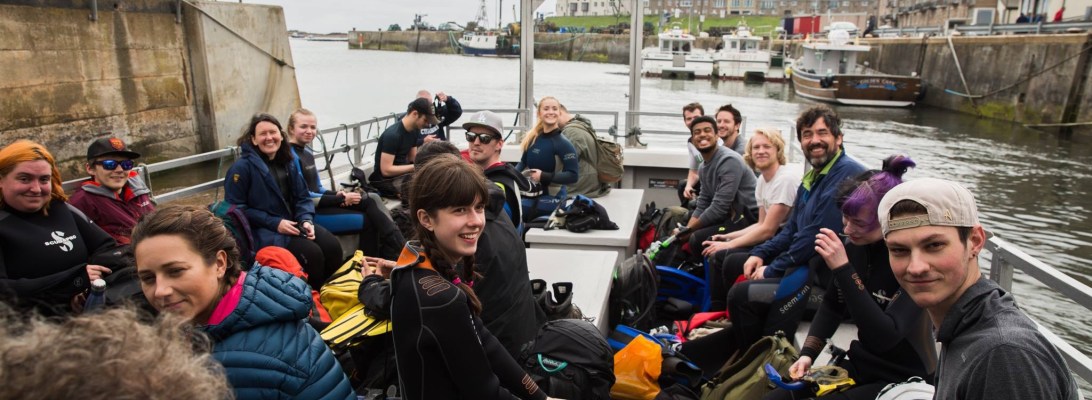
After sharing the waves with a herd of very curious seals, it was now time to get changed on a boat with thirty other people. This was a challenge, especially as getting a wet wetsuit off required the flexibility and strength of a contortionist. I teamed up with another girl to make a temporary changing cubicle, which made it somewhat easier.

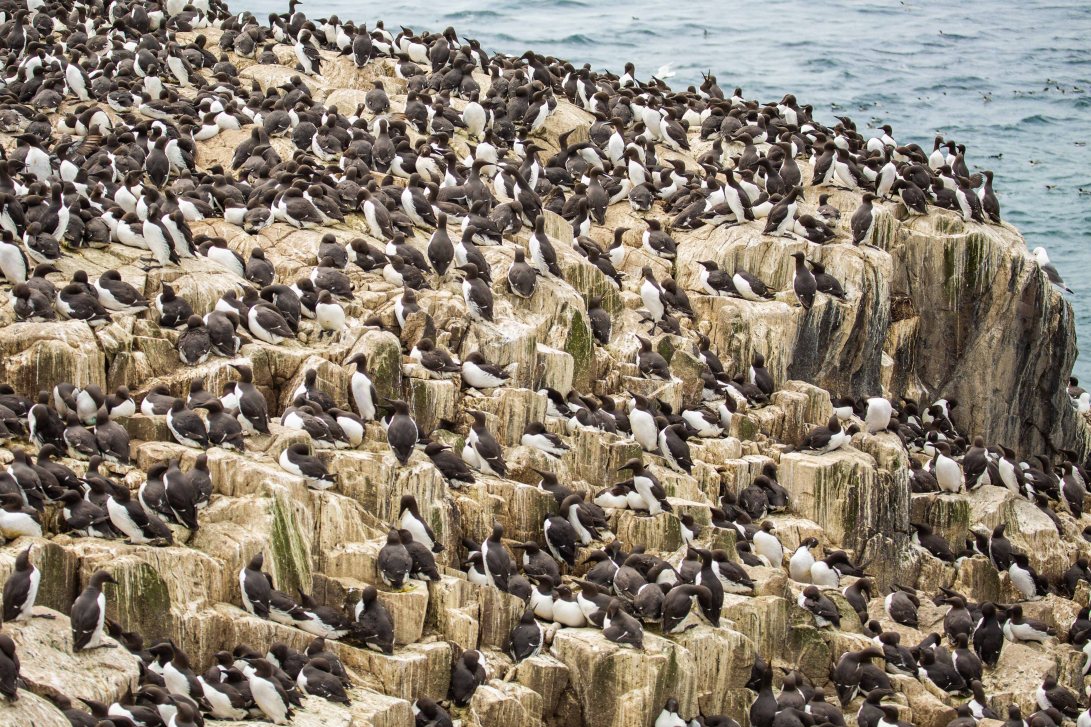
Once everyone was back in dry clothes, the boat headed to Staple Island for a spot of birdwatching. On the approach, all we could see and hear was guillemots, a blanket of birds completely covering the rock. People were dotted amongst them but vastly outnumbered. It was the kind of ratio I liked to see.

O12C4099-2

On dry land, it was impossible to decide where to start. I was used to choosing a spot to sit and wait for the wildlife to appear. Here, we had joined a metropolis of seabirds all going about their business without blinking an eye at what we were doing. Red posts were stuck into the ground at places, and as we passed I notice each one signalled the presence of a nest, some situated almost on top of the path that threaded through. Shags watched nonchalantly as we passed, eyes half closed.

O12C4243

Some of the guillemots looked different to others. While most had completely brown heads, a select few had bright white rings around their eyes. I asked Cain, who told me they were bridled guillemots. Back at home I looked them up, and discovered that these individuals are an example of dimorphism. Usually relating to variety in plumage colour, dimorphism is the existence of two distinct forms within a single species. This is different from two subspecies, as both guillemots and bridled guillemots have the same Latin binomial: Uria aalge. Were they subspecies, they would have an additional subspecies name. Furthermore, subspecies tend to be permanently geographically isolated from one another.

O12C4247

After watching the guillemots for a while, I found where the puffin clique spent their time. Away from the larger birds, there were countless burrows in the grassy banks, and after a while puffins would pop into view or land and duck inside, sometimes carrying large mouthfuls of sandeels in their vibrant bills.

O12C4119

I had been so excited to see my first puffins on the Isles of Scilly, and while I still treasured the memories, those had been distant sightings compared to now. Here on the Farnes, puffins sat twenty feet from two-tiered photographers, lying on the rock or glancing from side to side with their sad clown eyes. They were a joy to watch, and so much smaller than people think!

O12C4204-2O12C4194-2

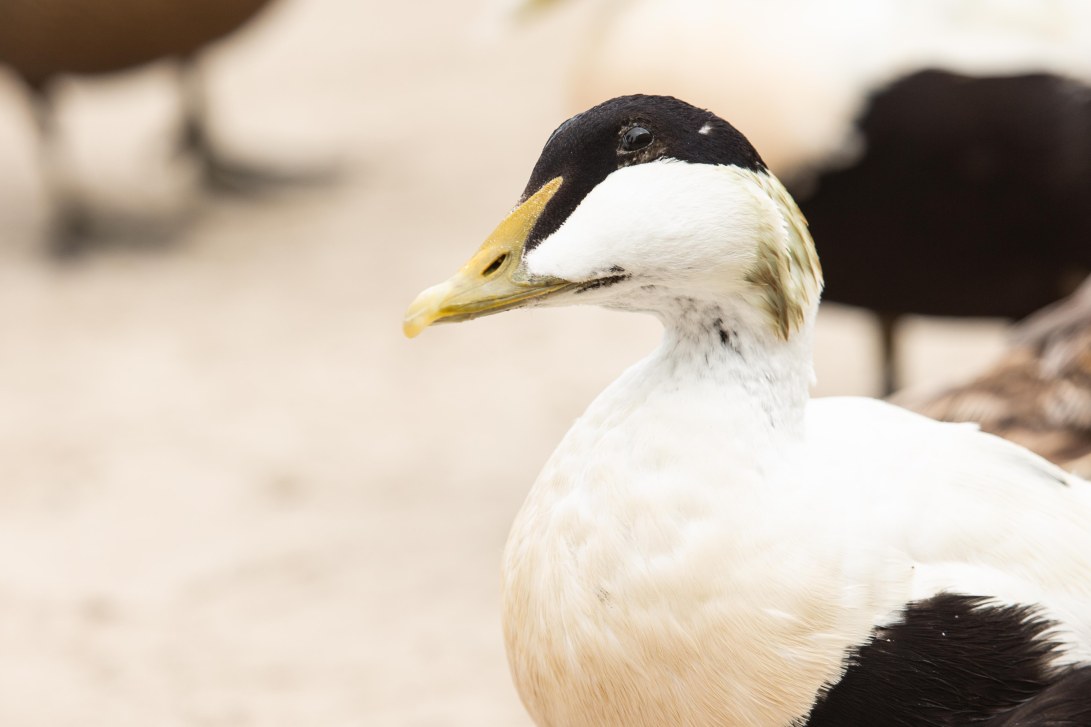
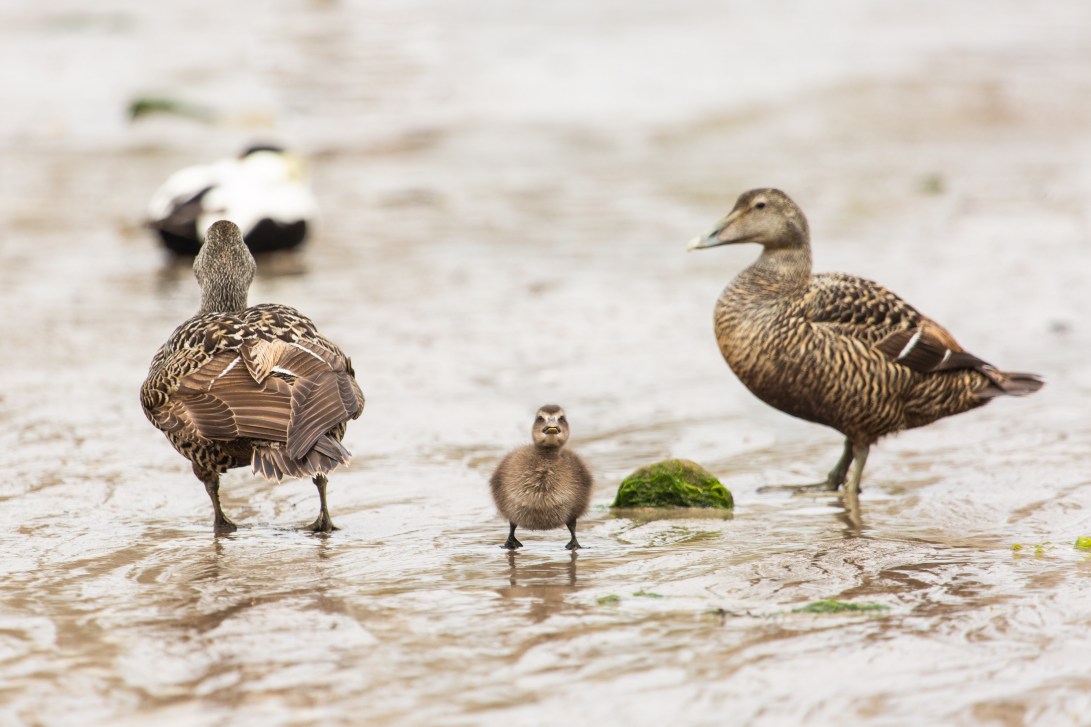
Sadly, the time flew by and before I knew it I was back on the boat and leaving Staple Island behind. When we arrived into Seahouses, I caught the irresistible smell of fresh doughnuts on the breeze. Tired after the swim, I made a beeline for the van and bought a bag to sit and eat on the bay. A group of very tame eider ducks approached, eyeing my bag with enthusiasm. Unfortunately for them, I wasn’t sharing my doughnuts with anyone, but I did make use of the opportunity to photograph the beauties so close.

O12C4286-2

I was thrilled to see ducklings accompanying some of the females, perhaps one of the cutest baby animals there is. As the females lowered their bills into puddles of seawater, the ducklings copied, mirroring the adults’ every move. Watching such intimate family behaviour while I devoured my doughnuts was a perfect way to end such a dramatic and unforgettable day at sea.

O12C4306-2O12C4309

The Farne Islands – Part 1

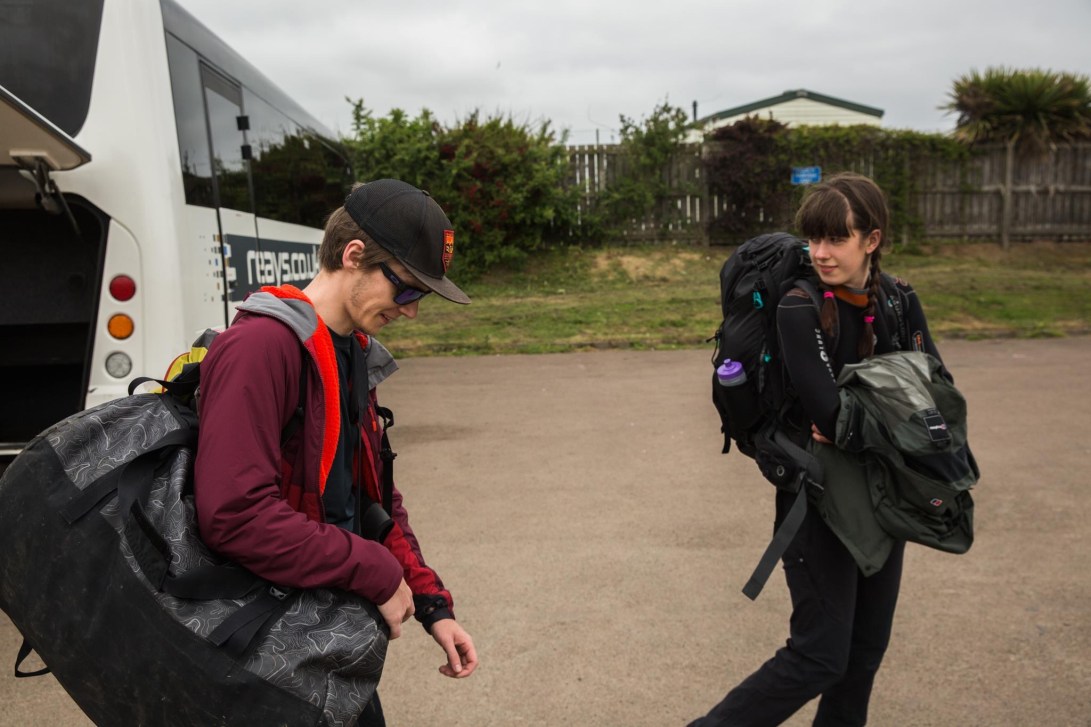
Our trip to the Farne Islands was looking like it would be a day of unforgettable wildlife encounters. We boarded the boat at Seahouses kitted out in wetsuits, boots, hoods and clutching snorkels in gloved hands. The clouds were light in colour and I had faith that the sun would soon break out.

IMG_0816
En route to the boat (Photo: Cain Scrimgeour)

There was a buzz of excited conversation as we moved out into open water, scanning the surface for wildlife. Cain, sharp-eyed as always, spotted the first puffin, as well as razorbill, guillemot, and a Manx shearwater. I twisted in my seat to spot everything he pointed out, but as usual, I was perplexed how Cain could identify such small, distant birds with immediate certainty. I could easily see the gannets though, a group of four that glided low over the water past the boat. I’ve said it many times before, but gannets are one of the best birds out there, and I never tire of watching them.

Before long we reached a widespread rocky outcrop where the boat would stop and let us jump out into the sea. One by one, we pulled on fins and adjusted facemasks. When it was my turn, I waddled ungainly to the back of the boat and took a somewhat hesitant jump off.

IMG_0814
Taking the plunge! (Photo: Cain Scrimgeour)

Cold water hit me like a fist and I suddenly couldn’t breathe. I was filled with a very unfamiliar panic that I’d never felt in water before. I was lifted back onto the boat and it was then that the skipper told me my over-sized hood had risen up over my mouth and my mask had filled with water. Feeling very sheepish, I calmed my breathing and tried again. My second attempt was more successful, but I was very unaccustomed to wearing fins when swimming. They were two dead weights on my feet that pulled my legs to the surface and completely threw off my balance. Having only ever worn a swimming costume in the ocean before, it now took real effort to get used to all this additional kit.

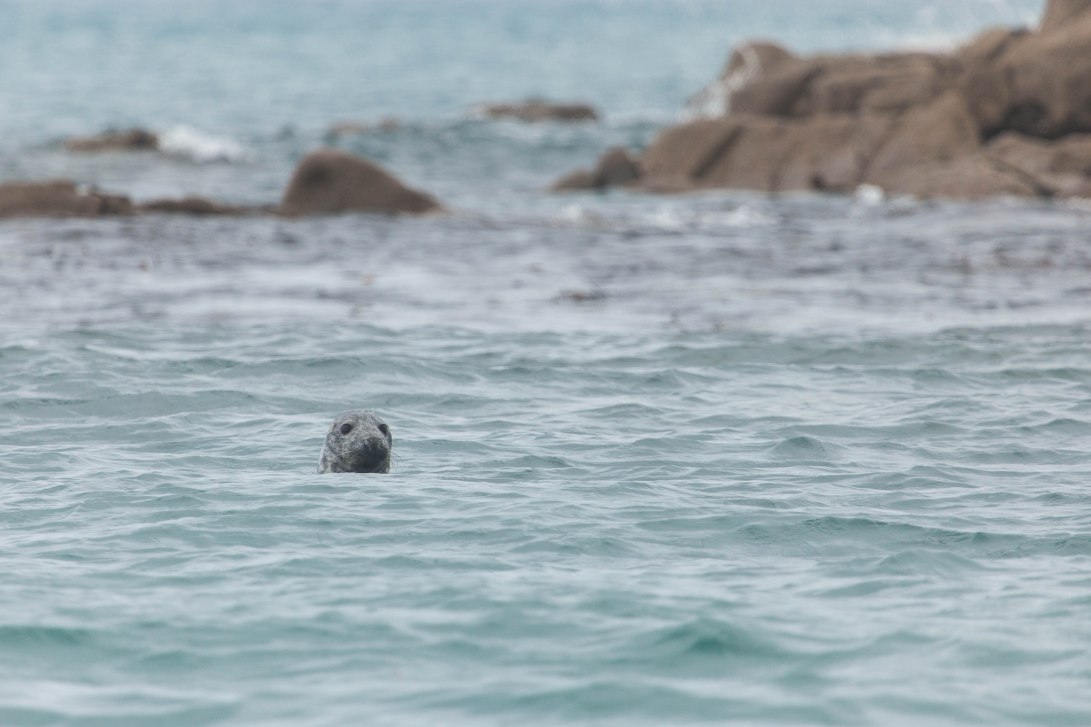
I glanced up and saw another of our group bobbing up and down in the water, but then I looked properly and saw it was in fact a grey seal. I experienced a combination of surprise and elation, and when I looked around I realised I was surrounded. Seals were everywhere, gazing with inquisitive expressions. One ducked under the water so I copied, watching it glide out of the kelp with an astonishing grace that it didn’t bring with it onto land. Water seeped into my mask again, and once I’d tightened it and put my face back under, there was a jellyfish right in front of me. I’d seen dead ones on the beach, but to see a live jellyfish propelling itself effortlessly through the water was truly beautiful.

I reached the rocks and rested for a while, watching the snorkels of other students in every direction. Suddenly another seal appeared, an arm’s length away. It flared its nostrils and snorted, staring directly at me, then ducked underwater. Once again, I followed its direction and watched with amazement as it brushed against me. Then, it held out his flippers and wrapped them around my leg. It was a surreal and incredible experience, feeling a wild grey seal squeeze my leg in what the anthropomorphist in me liked to think was a hug. It was nothing like it of course, but the seal reminded me of an excited puppy, and even nibbled my wetsuit like my dog would do. Before long it swam away and disappeared into the gloom, and I was left feeling ecstatic. Any encounter with a wild animal in its natural habitat was special, but to me it was even more exciting to share a completely new world with one, a world I never normally got the chance to be a part of.

IMG_1517
A curious face

As much as I hated to admit it, my hands were beginning to grow numb, so I waved to the skipper and got back on the boat. As I warmed up, I felt niggles of regret that I hadn’t tried to film my encounter on the GoPro I’d brought with me. But as I reflected on what had happened beneath the surface, I was glad that I hadn’t. In that moment I hadn’t been distracted by technology; I’d simply been there.

Exhibition Launch!

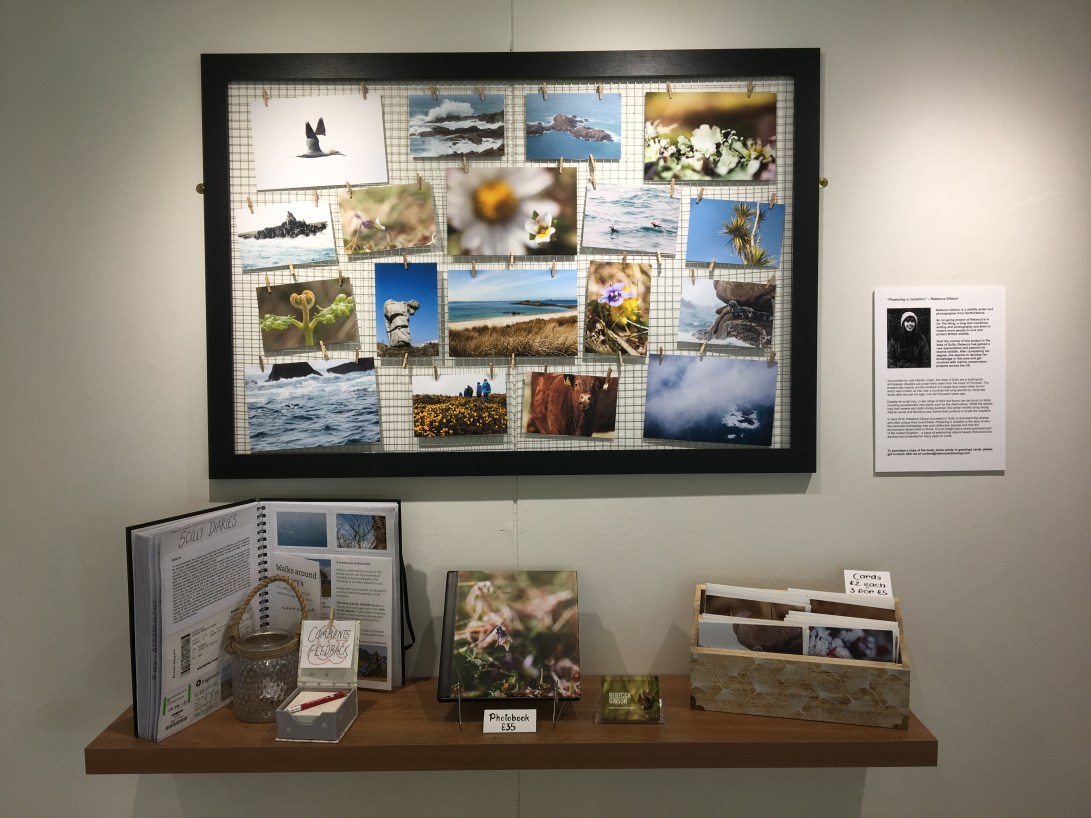
The past few weeks have been fairly frantic, with preparations for my final showcase in full swing. Campus has been a buzz of activity as we all work on exhibiting our major projects and making them look their absolute best. After creative brainstorming and purchasing countless items and decorative pieces, I have finally finished my display and couldn’t be more proud of it.

IMG_0737

The exhibition will be held at the Vallum Gallery in Carlisle, Cumbria from the 1st to 8th of June. It’s a beautiful space to display work, especially photography where good lighting is so important. As the main part of my project was a printed photo book, I have also mounted a collage frame of snapshots from my expedition to the Isles of Scilly. To find out what I got up to during my time on Scilly, have a read of the start of my journey to this stunning archipelago.

IMG_0731
A peek into the finished photo book
IMG_0733
Some greetings card for sale

If you are interested in purchasing a copy of the photo book, or perhaps a few greetings cards of my photography, please don’t hesitate to get in touch with me at contact@rebeccaonthewing.com and I would be more than happy to provide more information.


A Biotope Weekend

Friday

The trains to Glasgow and Largs and the ferry to the Isle of Cumbrae were all fine. It was when I boarded the bus to the Millport Field Centre that it dawned on me: what on earth had I let myself in for?! I’d booked onto a weekend course run by the Field Studies Council called ‘Marine Species and Habitats: The Biotope Approach’. After volunteering at an aquarium had sparked a new fascination for marine wildlife, I wanted to learn more about what could be found on British shores. I’d done a bit of research using the course’s suggested reading list, and had half an idea what a biotope was, but as I dragged my bags off the bus I wondered if I’d booked myself onto something that would sail completely over my head. I imagined working alongside a team of marine biologists with decades of experience in the field, and here I was with a newborn interest in fish. I was suddenly terrified, and literally marooned on an island for the weekend.

IMG_0596
Blue Mussels (Mytilus edulis)

As I was mulling this over in my head, a girl my age carrying a black hold-all asked me if I was attending the Biotopes course. I was thrilled; fate had brought us together on the same ferry and meant I didn’t have to amble around alone wondering where I needed to be. Our rooms weren’t ready yet so we went for a wander towards the town of Millport. Her name was Abbie, and she was currently part-way through a PhD in non-native seaweeds. This was something I knew literally nothing about, but we chatted about uni and wildlife and all things in between. Meanwhile, it was a chance to see where we’d be spending the weekend, and it was beautiful. Of course, almost everywhere is beautiful in bright sunlight, but even so the Isle of Cumbrae promised a fascinating chance to survey marine wildlife.

IMG_0630
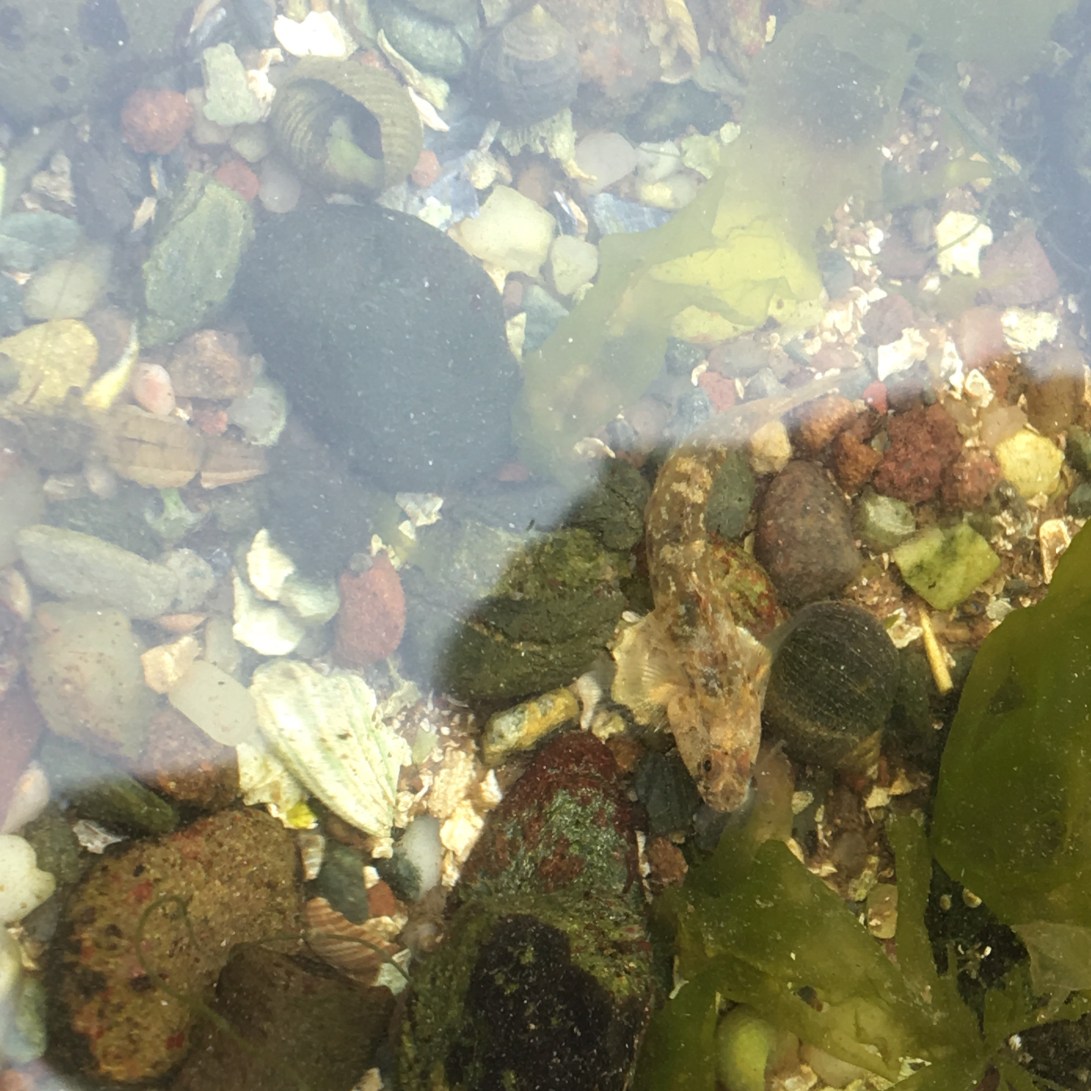
A well camouflaged Sand Goby (Pomatoschistus minutus)

After a loop around the bay we headed back to the Field Centre and took our bags to our rooms. I had feared with some trepidation what the washing facilities would be like, but was very pleasantly surprised to discover a large ensuite shower, not to mention a bed like a cloud. I hastily unpacked then met the rest of the group for our first briefing. Here I met Emily who worked at the Lancashire Wildlife Trust, and before dinner Abbie and I went for a walk with her to the shore to soak up the last sun of the day.

Dinner was macaroni cheese and apple crumble, perhaps one of the most perfect combinations of courses there can be. Then it was time for our first lecture: an introduction to biotopes. My research had prepared me well – a biotope is the combination of a physical habitat and the biological community found living there. Although some of the lecture’s content was lost on me, I left feeling inspired and ready to face new challenges over the weekend. I’d already met lovely people, and all my earlier worries began to feel very insignificant.

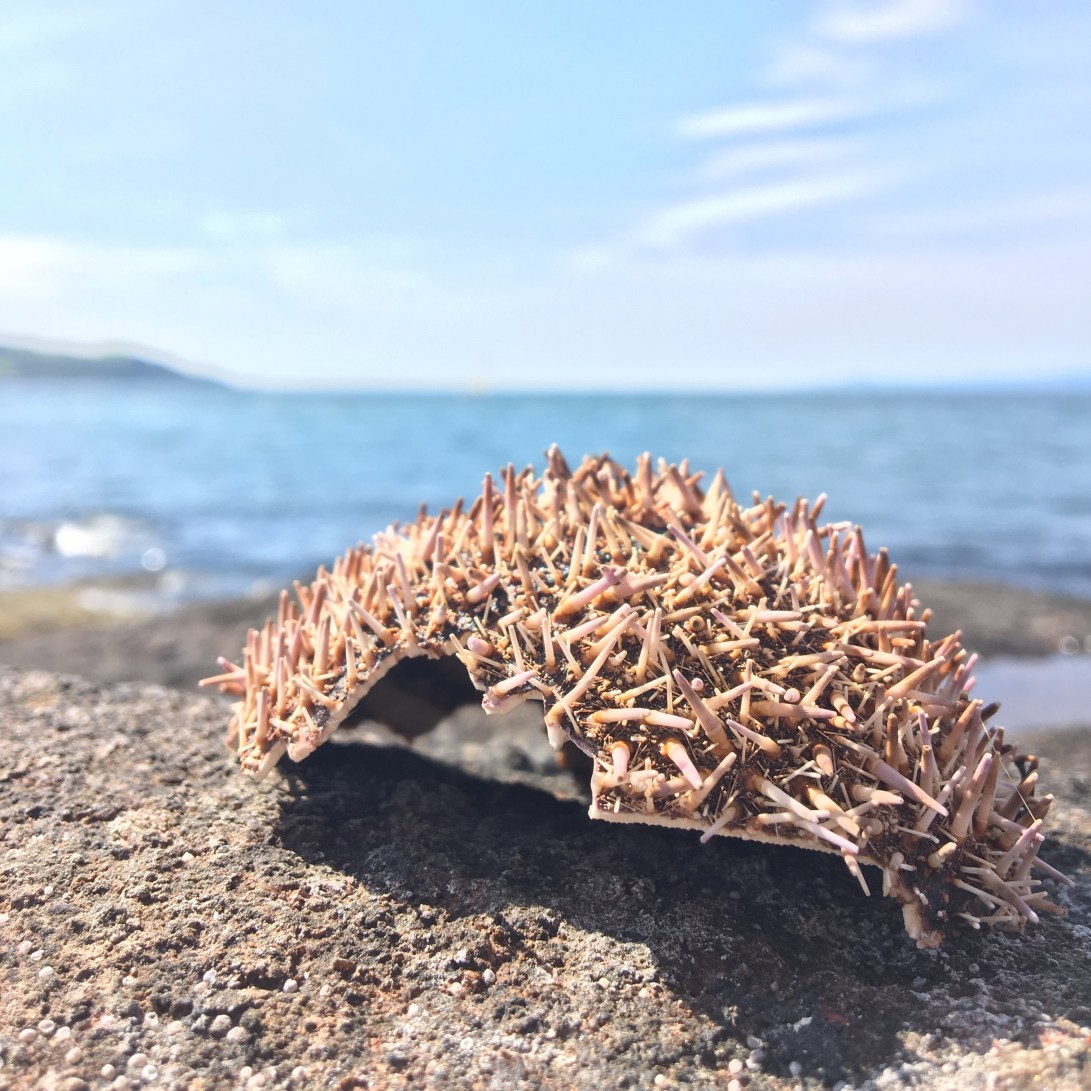
IMG_0602
A fragment of broken sea urchin shell

Saturday

Today began early, and by 9am we were down on the beach beginning our first biotope survey. It was a beautiful day for it, and we wasted no time getting stuck in, in my case literally getting my wellies wedged in rock crevices and clinging desperately to my balance. Common species included beadlet anemones, dog whelks and acorn barnacles, but we also found common starfish, hermit crabs, a star ascidian (type of sea squirt) and plenty of seaweed. My knowledge of seaweed species was even smaller than my knowledge of seashore vertebrates, but as Abbie was doing her PhD on them I had a source of very valuable information.

IMG_0570
Star Ascidian (Botryllus schlosseri)
IMG_0621
Common Brittlestar upside down (Ophiothrix fragilis)

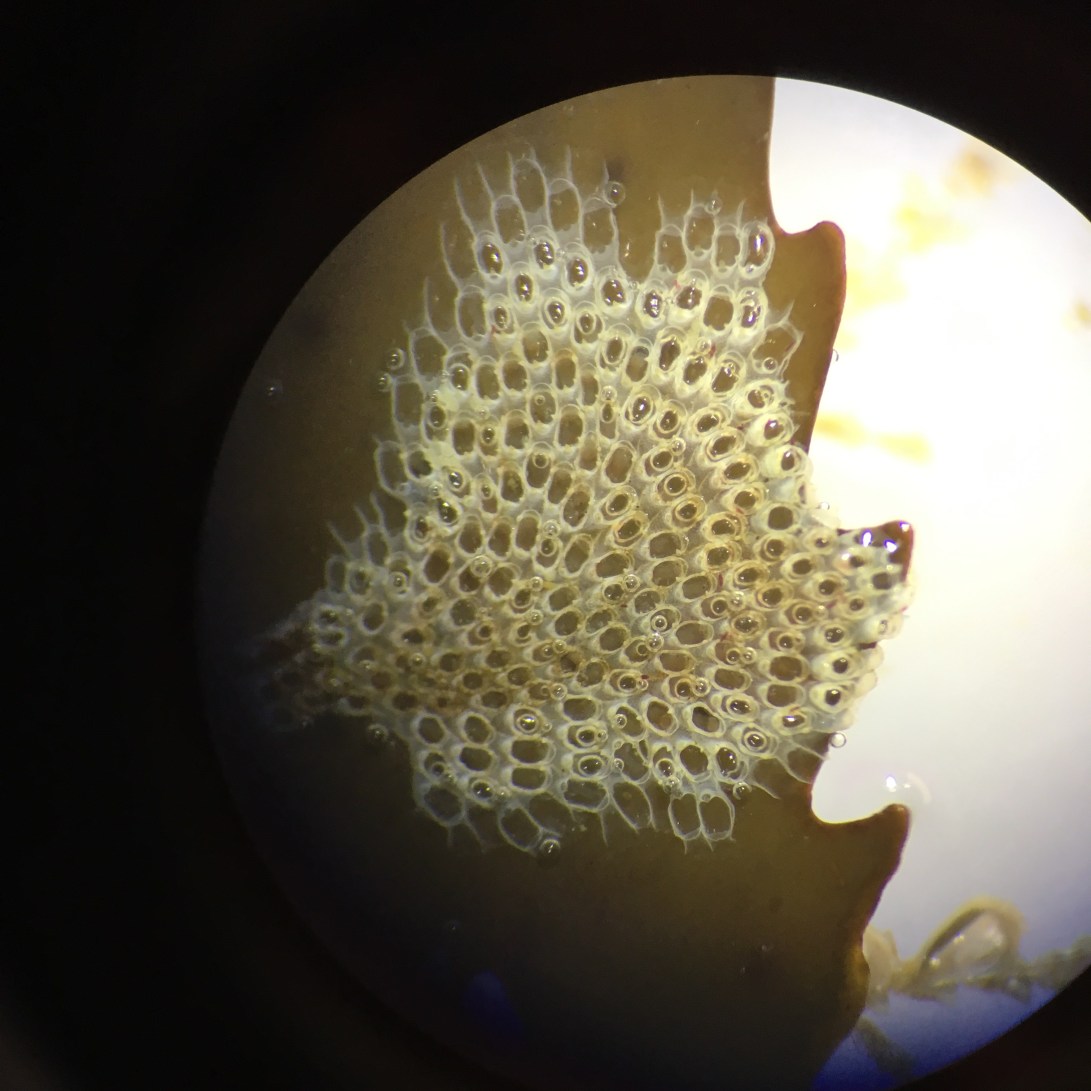
Once we’d covered as much of the bay as we could we ate lunch out in the sun (an excuse for some of the group to catch up with the goings on at the royal wedding) and then headed back to analyse our results and try to determine which biotopes we’d found. This was also an opportunity to play with lab equipment, which I haven’t been able to do since A Level Biology. I had good look at the bryozoa I’d found on a strand of seaweed (below). Bryozoa means “moss animal” and viewed up close reveals an intricate lattice of animals situated closely together. I studied these individuals for a while but couldn’t decide between Sea Mat or Hairy Sea Mat.

IMG_0606
A cluster of bryozoa: either Sea Mat (Membranipora membranacea) or Hairy Sea Mat (Electra pilosa)

After beating the queue and getting served dinner almost first, I went back to my room for much-needed downtime before bed.

Sunday 20th

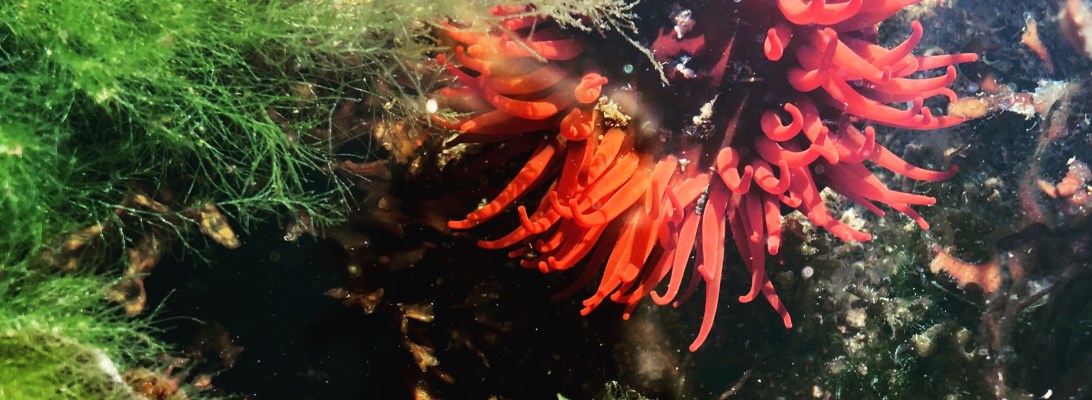
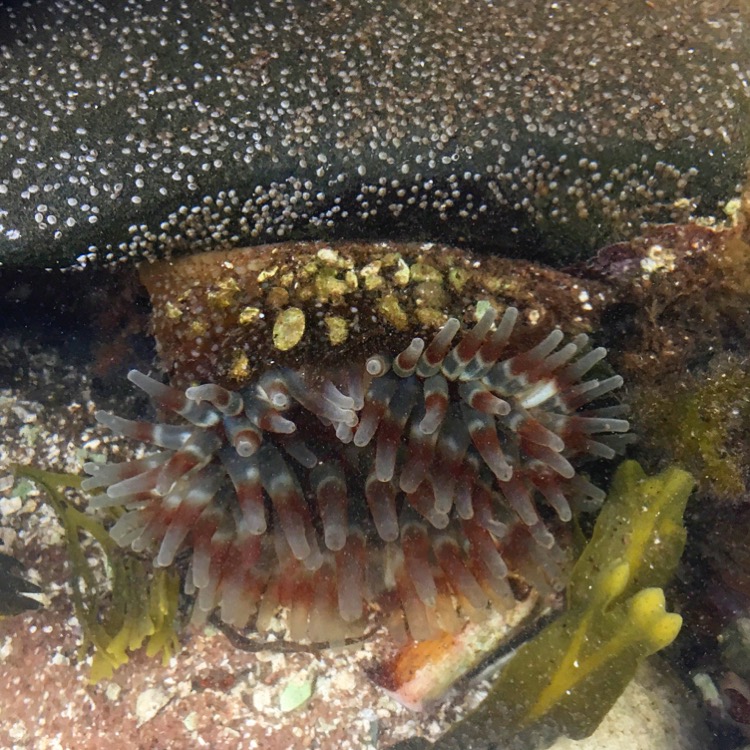
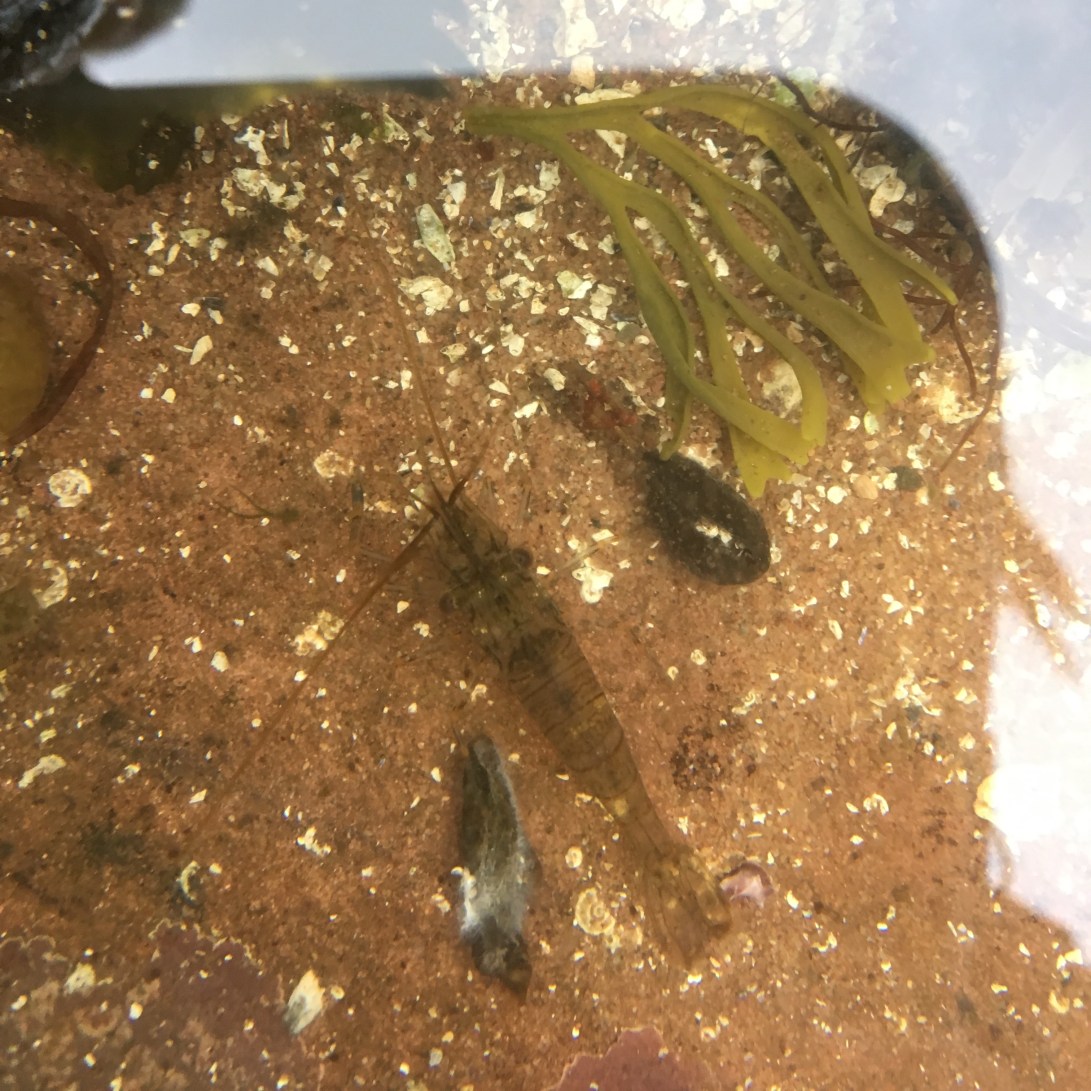
Today was another early start, and this time we drove the short distance to the northern end of Great Cumbrae to a much larger site. The weather was a little dreary but armed with quadrats, transects and clipboards we began to survey the biotopes. Findings started off slowly but once we reached the rock pools things really got exciting. Our course leader Paula found a slug species called a sea lemon – a very pretty blob – and a butterfish. Abbie, Alex and I found a sand goby, sand mason worm, lots of brittlestars, more hermits and beadlets, and my favourite from today: a dahlia anemone. It was the largest anemone I’d seen before, and had beautiful striated and brightly coloured tentacles that slowly emerged again once we’d calmed down to watch it properly. Just as I was squatting to try and get a decent picture, two common prawns appeared underneath a nearby rock. I didn’t know if maybe these were boring sightings but I recognised them from my volunteering at the aquarium so was thrilled to be able to confidently identify something in the field.

IMG_0684
Dahlia Anemone (Urticina felina)
IMG_0648
Common Prawn (Palaemon serratus)

Back at the lab, Abbie got to work identifying her seaweeds and Alex had an ID test to do for his assignment, so I had a bash at identifying today’s biotopes by myself. Once I’d done that, I realised I’d accidentally brought a tiny brittlestar home with my sea urchin shells. With Paula’s help, I identified it as Amphipholis squamata. Later, Paula asked us what we’d found, and Alex and I had got the exact same biotopes! I was so pleased with myself.

Dinner was Sunday roast and sticky toffee pudding. I must have put on about eight stone this weekend – I’ve been fed like a queen and although my brain has been working overtime, my body hasn’t done so much. After dinner we had our last round-up lecture and went to the bar for drinks. I ended up talking to the two guys from Belfast about Father Ted – it was pretty funny talking to Irishmen about it. I would have stayed longer but I was absolutely shattered. So I headed to bed, falling asleep almost instantly.

IMG_0607
Beadlet Anemone (Actinia equina)