August is an intriguing time for wildlife. Although birds are relatively quiet at this time of year, insects are out in force. This month sees summer and autumn blending together and there is plenty to discover out in the countryside. So, here are some of my favourite British wildlife highlights during August.
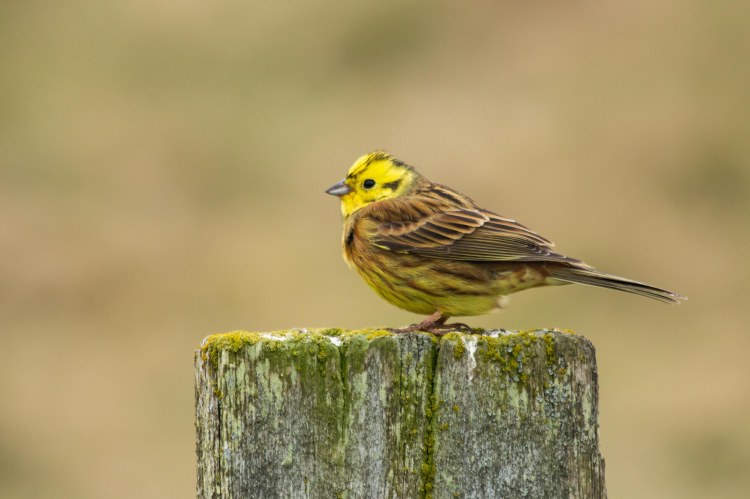
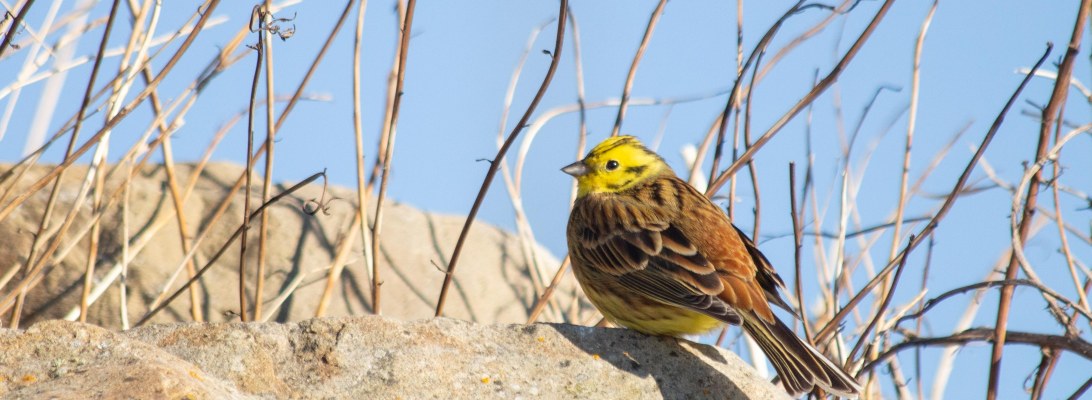
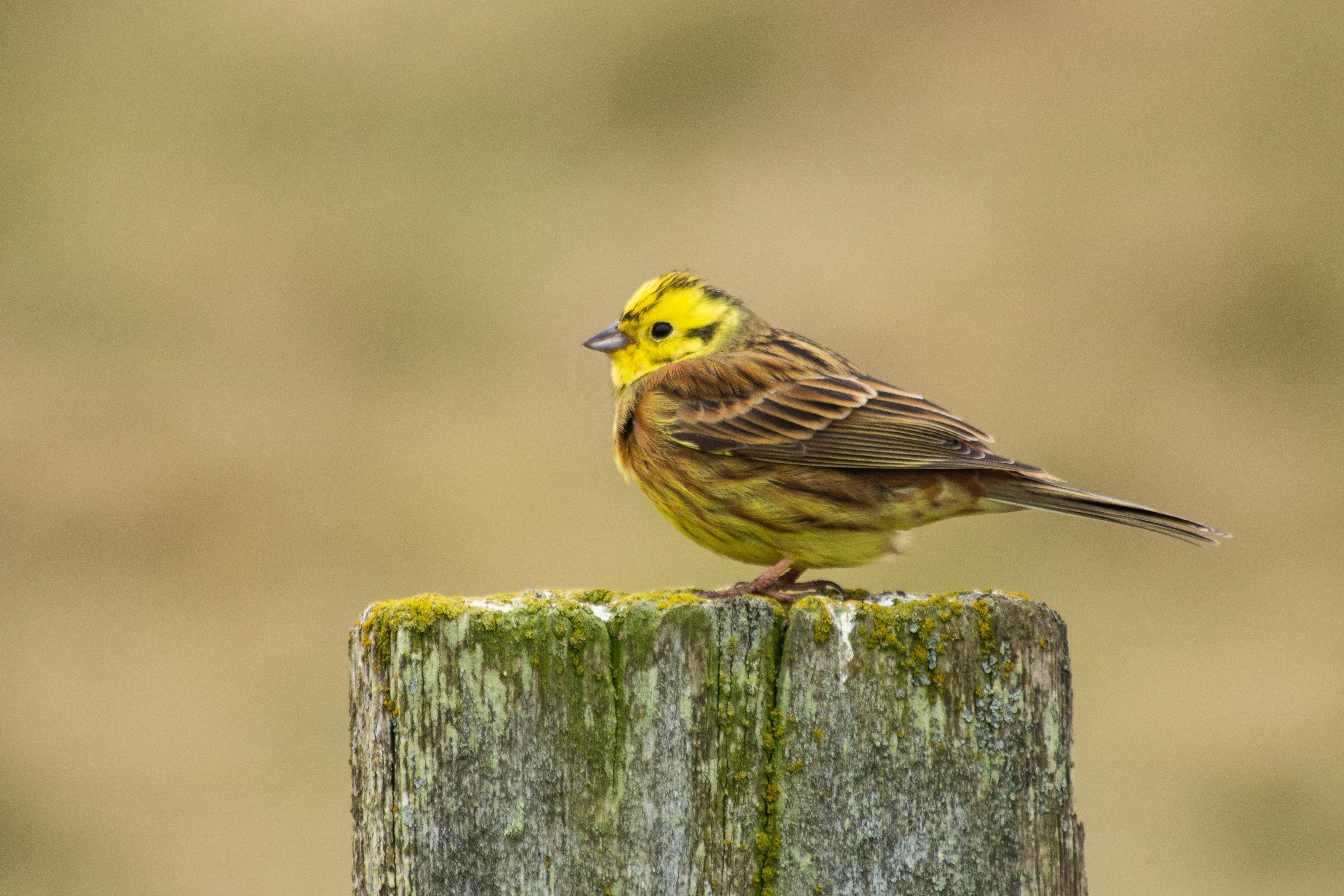
This month, yellowhammers are one of the few birds still singing. They can be seen perching high up on gorse bushes as they fill the air with a charismatic phrase that many birders say sounds like “a little bit of bread and no cheese”.
Migratory British birds such as swifts and blackcaps start to make their way back south this month – swifts are particularly noisy flyers and soon the skies will be much quieter in their absence. Other migrants including swallows and house martins will stay around a little longer and usually depart around September.
Tawny owls may start calling in August, but this usually picks up in autumn and then throughout winter. It is during this time that young birds leave their parents and attempt to establish their own territories, using their calls to announce their presence. The well-known “twit twoo” call of a tawny owl is a combination of voices – the female calls “ke-wick” and the male answers “hoo-hoo-ooo”.
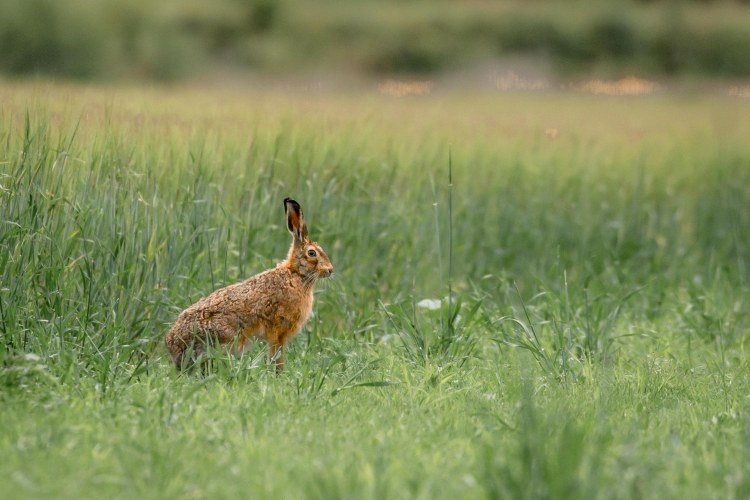
August is a good time to spot hares because farmland is starting to be harvested and crops are cut low to the ground. Keep an eye out for them darting along hedgerows or crouching low to the ground, looking remarkably like rusty stones.
Bats are actively feeding on the explosion of flying insects and badgers are starting to collect their bedding. Dry, warm weather can often mean there are fewer worms available and badgers may be drawn to gardens to drink from ponds.
Unlike red deer which rut in the autumn, roe deer have their breeding season from mid-July to mid-August. During this time a male – which is called a buck, not a stag – follows a female (doe) around and chases her in tight and continuous circles. This behaviour is known as ring-running, and when a ring is stamped into a permanent trail it may be used for future ruts.
August is also good for spotting insects. Dragonflies such as the common darter can be seen flying around ponds and other still bodies of water. They are also found far away from water as they rest on plants in patches of woodland.
This month, the second generation of many butterfly species are on the wing including comma, red admiral and painted lady. For those interested in butterflies, now is the time to contribute to The Big Butterfly Count. Launched in 2010, this UK-wide citizen science survey is running from the 17th July to the 9th August. It’s easy to take part – just choose a place to sit and record the butterfly species you see for fifteen minutes. As pollinators, butterflies are extremely beneficial for the health of the ecosystem but are currently facing severe declines, so the records collected during the count will provide valuable data for conservation projects and research.
This article was originally published on Bloom in Doom as part of my role as Nature Editor. It is the first of a monthly column of the best British wildlife highlights throughout the year.
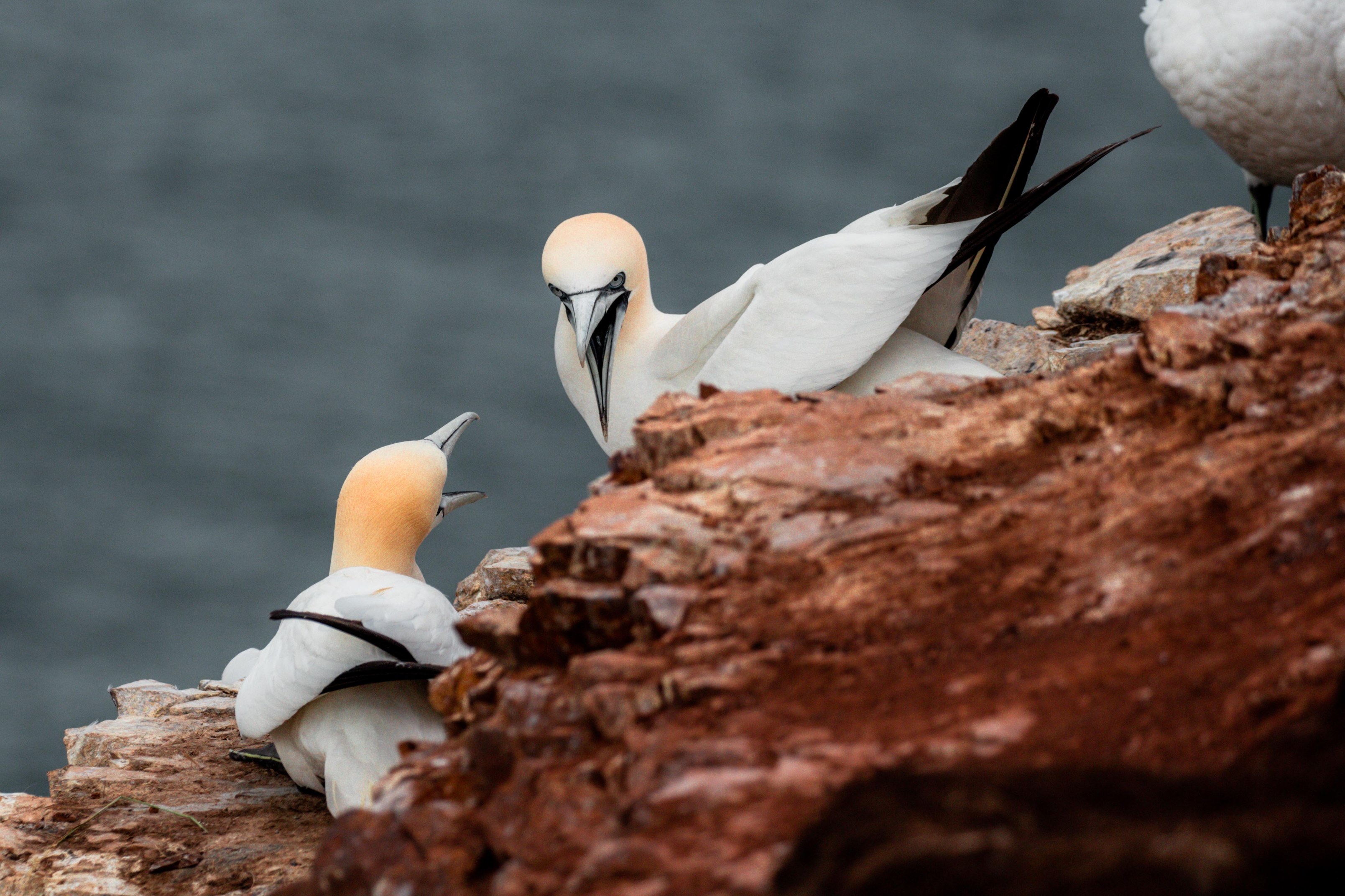
I had seen gannets a few times before; on a trip to the Isles of Scilly they had flown over the boat, and more recently I’d enjoyed watching them dive for fish near where I live in Moray. However, nothing could have prepared me for Troup Head. This RSPB site in Banff, about an hour’s drive from Aberdeen, provides nesting grounds for two thousand pairs of gannets, as well as thousands of other seabirds. During the short walk from the car park to the cliffs, both sounds and smells intensified until they reached a crescendo of squawks and guano pongs.
There were gannets everywhere. Without wanting to make them sound like flies, they swarmed around the cliff, gliding in deep circles as they came into land on the rocks. Many of them had chicks – currently clouds of white down with black reptilian heads. Dotted among them were the auks: guillemots, razorbills and the occasional puffin all grappling for a bit of wing room in the tight squeeze. Peering carefully down, I noticed just how high up we were. The swan-sized gannets – Britain’s largest seabird – looked like sparrows at sea level. Even the coastguard helicopter that passed by was below us. Troup Head really was a bird’s eye view.
The site became a significant birdwatching spot when gannets began to colonise it in 1988. Troup Head is now Scotland’s largest mainland gannet colony. We spent seven hours wandering along the track, shuffling across the tussocks to get the right vantage point for photos. Gannets came sweeping in to land in an endless queue, many suspended in mid-air and bobbing in the wind. There was something very duck-like about the way their webbed feet stuck out to the sides, and more than once a bird would crash-land quite unceremoniously with a ruffle of the feathers.
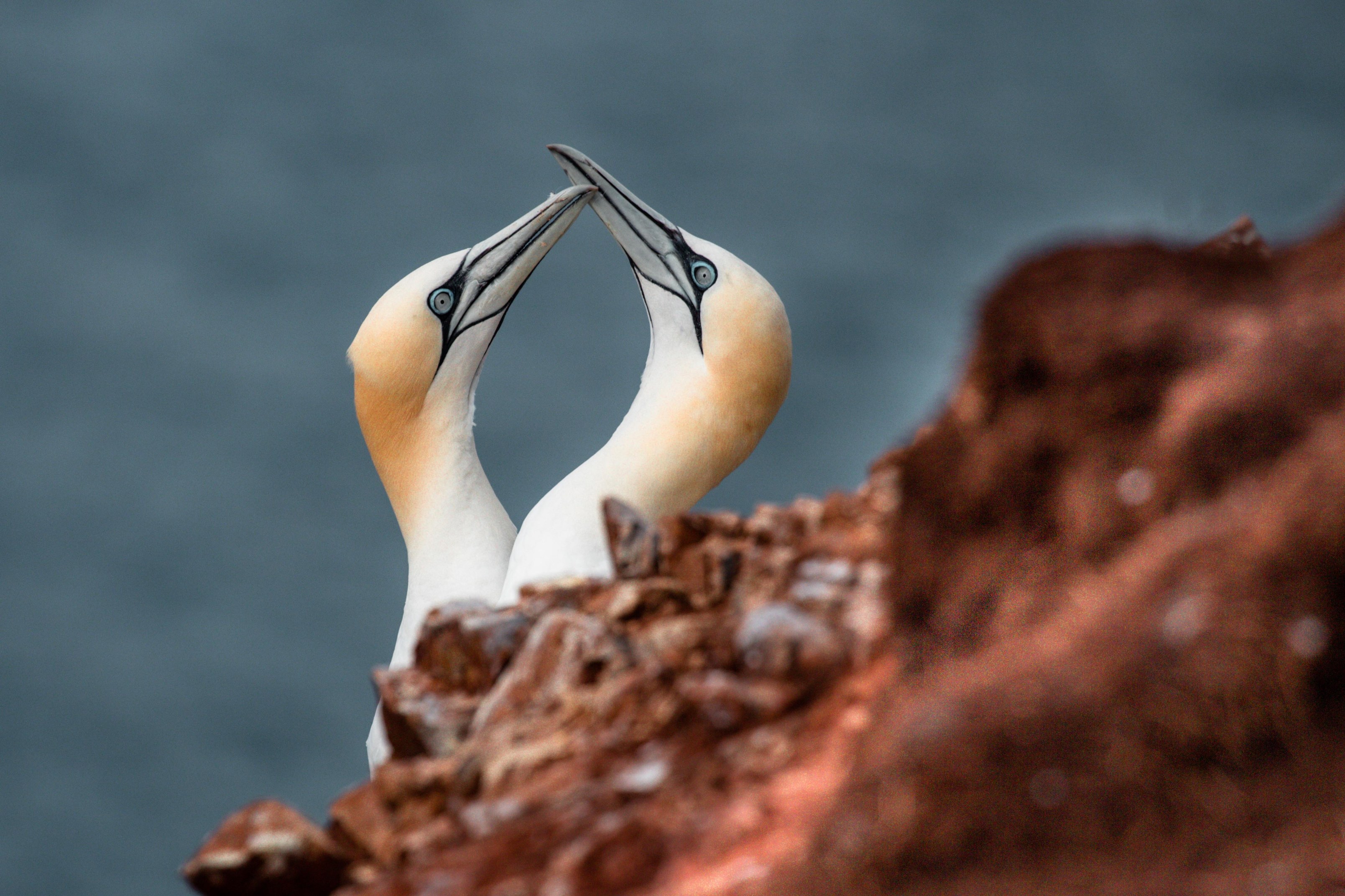
It was interesting to see lots of gannet behaviours up close. The birds pair for life and return to the same nest site each year with the same partner. To cement their pair bond, males and females will ‘fence’ together, clicking their bills from side to side and mutually grooming one another.
‘Fencing’
To ensure that one parent remains on the nest at all times, a gannet will stretch its neck and stare straight upwards in a pose called ‘sky pointing’, which signals to its mate that it is about to take off.
‘Sky Pointing’
With so many birds on one cliff, it’s inevitable that there will be disputes over space. If a gannet gets too close to a neighbour’s nest, there is a display called ‘menacing’, where the birds will open their bills and lock them together in an attempt to jostle each other off the cliff.
‘Menacing’
While some quarrels are short-lived, others develop into full-blown fights, and with such formidable bills these can be aggressive.
Gannets have been a favourite of mine for many years, so to see such a vast colony so full of activity was a real treat. I was even more impressed that I didn’t get pooed on once!
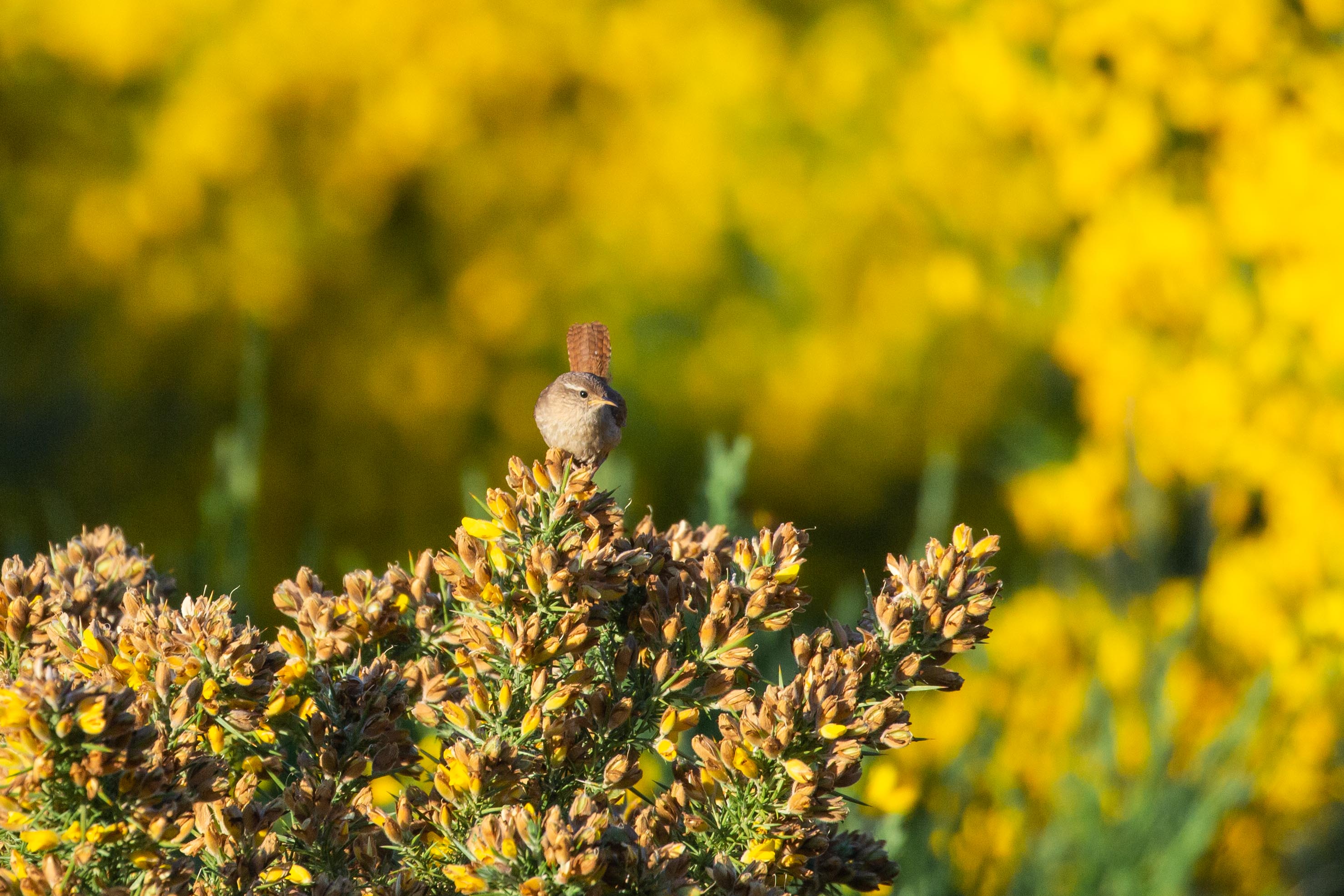
Earlier this week I went looking for badgers. Unfortunately I didn’t see any but I wasn’t discouraged. Any foray into the natural world is dependent on good timing and a healthy dose of luck. Besides, even if you don’t manage to see what you set out to find, there’s nearly always a surprise and this evening was no exception. As well as a brown hare, a very well camouflaged roe deer and pairs of siskins and greenfinches, I met a bubbly family of wrens living beneath the eaves of a tiny shed.
There were two slender adults and five golfball chicks all hopping from the shed to nearby trees and back, the latter being particularly vocal and standing with their beaks wide open demanding a snack. Wrens are notoriously bold and easily one of the noisiest British birds in relation to their size so they weren’t at all afraid of me; in fact they continued their foraging quite happily while I sat below with my camera. Of course it would have been lovely to see some badgers, but it’s just an excuse to go back and see what surprises I find next time.
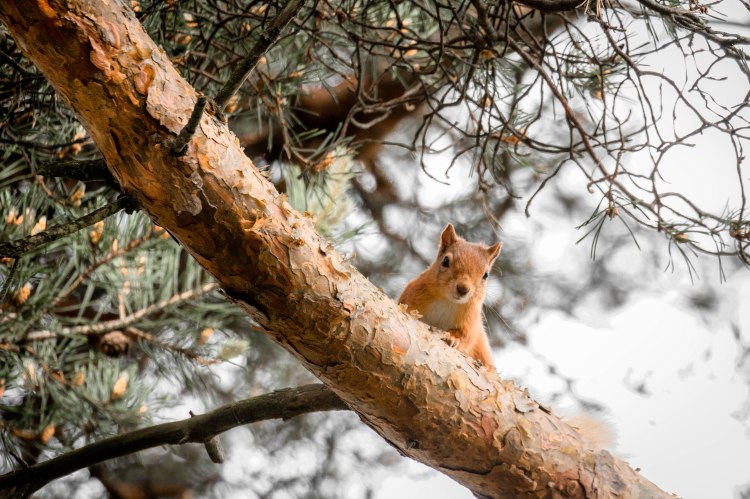
Recently I was very pleasantly surprised to see an email in my inbox from the editor of Pay Our Planet magazine asking me to write a feature for them. I hadn’t heard of them because it was going to be the very first issue. I leapt at the chance and decided to write about red squirrels, which are an animal very close to my heart. During my time at university I was lucky enough to have some very up-close encounters with red squirrels in Lockerbie, and can now spot them quite regularly in the forests near where I live.
I was particularly taken by how environmentally aware Pay Our Planet is. Studies have shown that mangrove trees store carbon at a rate of four times that of mature tropical forests, so Pay Our Planet have partnered with the Eden Reforestation Project to plant mangrove trees in Madagascar. For every subscriber of the digital magazine, Pay Our Planet plants 15 trees each month. This makes that subscriber carbon positive, meaning their actions remove more carbon from the atmosphere than they put into it.
It’s been such a privilege to share the story of one of Britain’s most well-loved species to an international audience. I’m so grateful to Pay Our Planet for giving me the opportunity to not only write a feature for the magazine but also for putting my photo on the front cover!
With all the dolphin excitement recently, I’ve been sticking closely to the shore on my walks and neglecting the forest. I’ve always been worried that I’ll walk for miles and then get an alert saying there are leaping whales in the complete opposite direction.
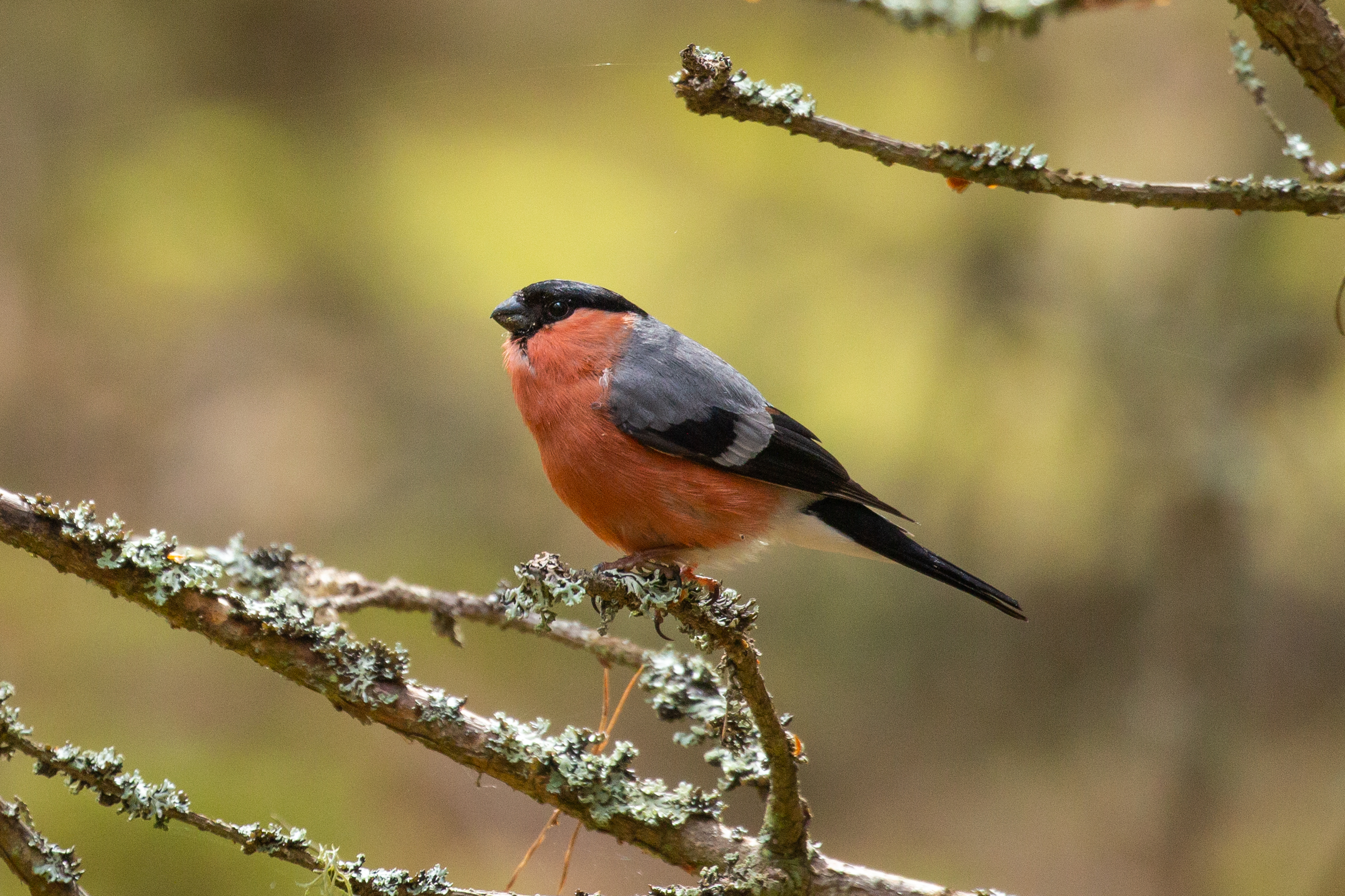
But, the other day I decided to take a chance and walk the dog in the forest for a change. Within five minutes, I saw a flash of rosy red and my heart did the familiar jolt that happens whenever I see something unexpected. And this was certainly unexpected: a pair of bullfinches not twenty feet away from me.
I’ve been trying to get a decent photo of a bullfinch for years. They’re one of my favourite birds but I’ve only seen them a handful of times. On every occasion they’ve either kept their backs to me or been concealed behind branches. I’ve taken a few blurry shots that prove they were there, but they’ve never been good enough to post. Now I was being treated with both male and female. While the male is more conventionally striking, I find the dusty brown plumage of the female just as beautiful. I just love their short, stubby bills, which are perfect for cracking hard seeds.
During the entire encounter my dog was amusing herself elsewhere, completely indifferent to my excitement. I stayed with the bullfinches as they hopped around logs and fluttered up to low branches. I could have sat and watched them for hours, but after a while I left them in peace.
Still buzzing from my sighting later that day, I decided to go back to the forest for an evening walk. There would be fewer humans and hopefully more animals to see. Roe deer were another of my favourites and a few weeks ago I saw a flash of brown fur as a doe pelted past me. I was keen to get a good photo of one – they were another animal that I’d never managed to get a proper glimpse of. So, despite the warm evening I wrapped up and headed out again. The sun wouldn’t be setting until 10pm so I had plenty of daylight left. In fact, it was prime golden hour and the broom – a shrub similar to gorse but without the spines – was glittering.
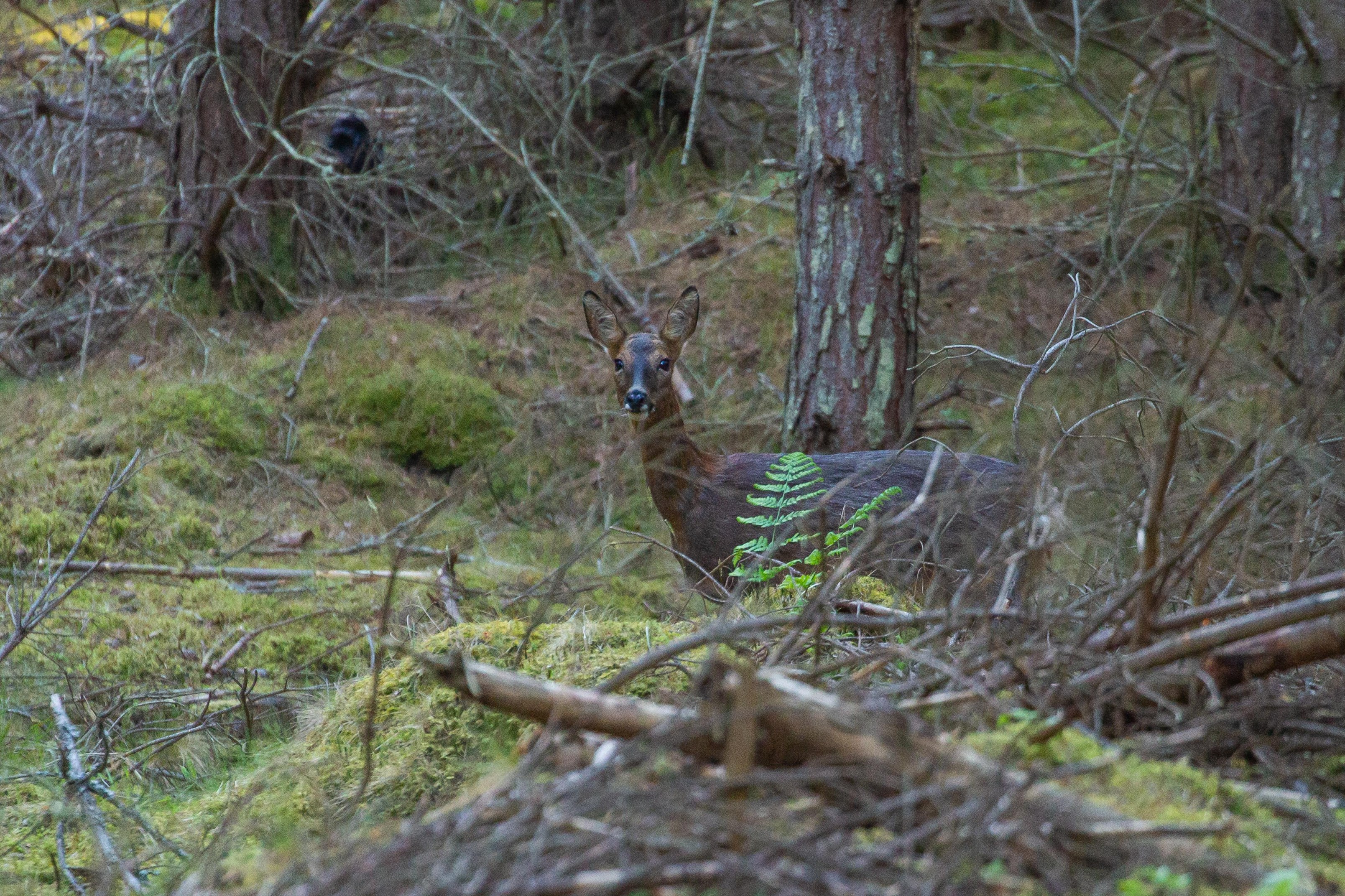
It seemed I hadn’t run out of good luck. After walking for less five minutes I saw movement through the trees. Four of the skinny saplings weren’t trees at all but slender brown legs. I froze where I was, conscious of every snappable twig by my feet. She was moving slowly, leisurely. I dared myself to tread up a grassy mound for a slightly higher viewpoint. There was so much dense ground foliage that I couldn’t see her very well. She headed to my left, straight towards a clearing between two columns of trees where I’d be able to see her perfectly. I lifted my camera slowly to my face and waited. When the moment came, the click of the first photo caught her attention and she turned to face me. For about ten seconds we stared at one another. Her pricked ears were huge satellite dishes on an otherwise skinny face, punctuated by large eyes and the characteristic roe moustache. The light was fading and I stretched to a slightly higher ISO than I would have liked. I knew the images were going to be a little grainy, but my deer was posing magnificently.
Eventually, human voices cut through my moment (of all the 1700 acres they could have chosen!) and the deer darted back the way she’d come. With such a slow shutter speed I had no hope of capturing her at that pace, so I just watched her springy legs disappear into the trees.
Inspired by such an early sighting, I pressed deeper into the woods, keeping my ears open for any unusual sounds that I wouldn’t hear during the day. The fantastical idea of pine martens popped into my mind but I pushed it away. To see a wild pine marten on my first evening forest walk would something close to miraculous. But a fox or perhaps an owl might be more likely, so I stayed as quiet as I could and did my best to avoid noisy leaf litter, although my stealth skills left a lot to be desired.
It’s astonishing how soothing a forest can be, if you let yourself align to its peace and quiet. I regularly stopped to listen to the birds, which at 9pm were still going strong. Far off, a blackbird perched on an overhead wire. If I closed my eyes, I could easily have been sat on my garden porch in Hertfordshire. A blackbird used to sing in the holly tree every evening without fail, and the sound became a firm part of my childhood. Elsewhere in the forest tonight was a chaffinch’s downward running tune, a wren’s bolstering trill and a chiffchaff whistling its name. I took recordings on my phone of all the assembled voices.
I walked and sat in the forest for three hours, until eventually at 10:15pm I began to feel the chill. Even so, the light was close to what it had been when I arrived, just without the bright sun – everything was lit with a milky glow that carried on long into the night. Moray is situated on the same latitude line as Gothenburgh in Sweden so during the summer months, the days last much longer and nothing goes completely dark. It’s a phenomenon I haven’t gotten used to yet. Many nights recently I’ve gone to bed and it’s still been light outside.
Taken at 10:17pm
I decided to call it a night. Looping back the way I’d come, I headed down the straight track that was lined on both sides by thick clouds of broom. I glanced briefly through a gap in the foliage and saw a face. Freezing, I stepped slowly back and came eye to eye with a male roe deer. My fingers itched for my camera, but there was no real chance of getting a photo. I could barely make him out with the naked eye. Most of his body was shrouded in shadows cast by the trees, but his face and antlers were dimly lit enough to spot. Again, we stood eyeing each other for a few moments before he took off, bounding down the ditch and up again. Then a sharp, gruff bark broke through the trees, which I realised was the deer! I’d never heard their barks before and couldn’t believe how canine they sounded. I wondered now if perhaps I had heard it and just dismissed it as a dog. It was haunting, especially in an ever darkening forest, but I loved it.
When I broke out of the trees and onto the open field, the spell broke. I felt a physical difference between the forest and civilisation. For hours I’d immersed myself in a place where people weren’t the most abundant presence and it was unbelievably refreshing. I decided, during the summer at least, to make my evening forays a regular thing. Daytime walks are good – I’d seen my bullfinches that morning after all – but there’s something far more mysterious and captivating about the night.
Although I’m naturally quite an introverted person and love having time to myself, I’ve still struggled to adapt to the lockdown routine. I like to potter around outside for hours while I write or just watch the world go by, so it goes without saying that I’ve missed wildlife far more than the pub. Alerts have hit my local Facebook groups about ospreys just a few miles away from me and orcas (orcas!) further along the coast, but lockdown measures have kept me stuck in one spot.
Still, it’s a beautiful spot to be stuck in, and there have been some new visitors to my local patch over the past few weeks. Before the clocks went forward, the daily sightings always included goldeneyes, long-tailed ducks and red-breasted mergansers. Now, as the spring wildflowers emerge and the days grow longer, I’m seeing some new faces on the backshore.
Willow Warbler
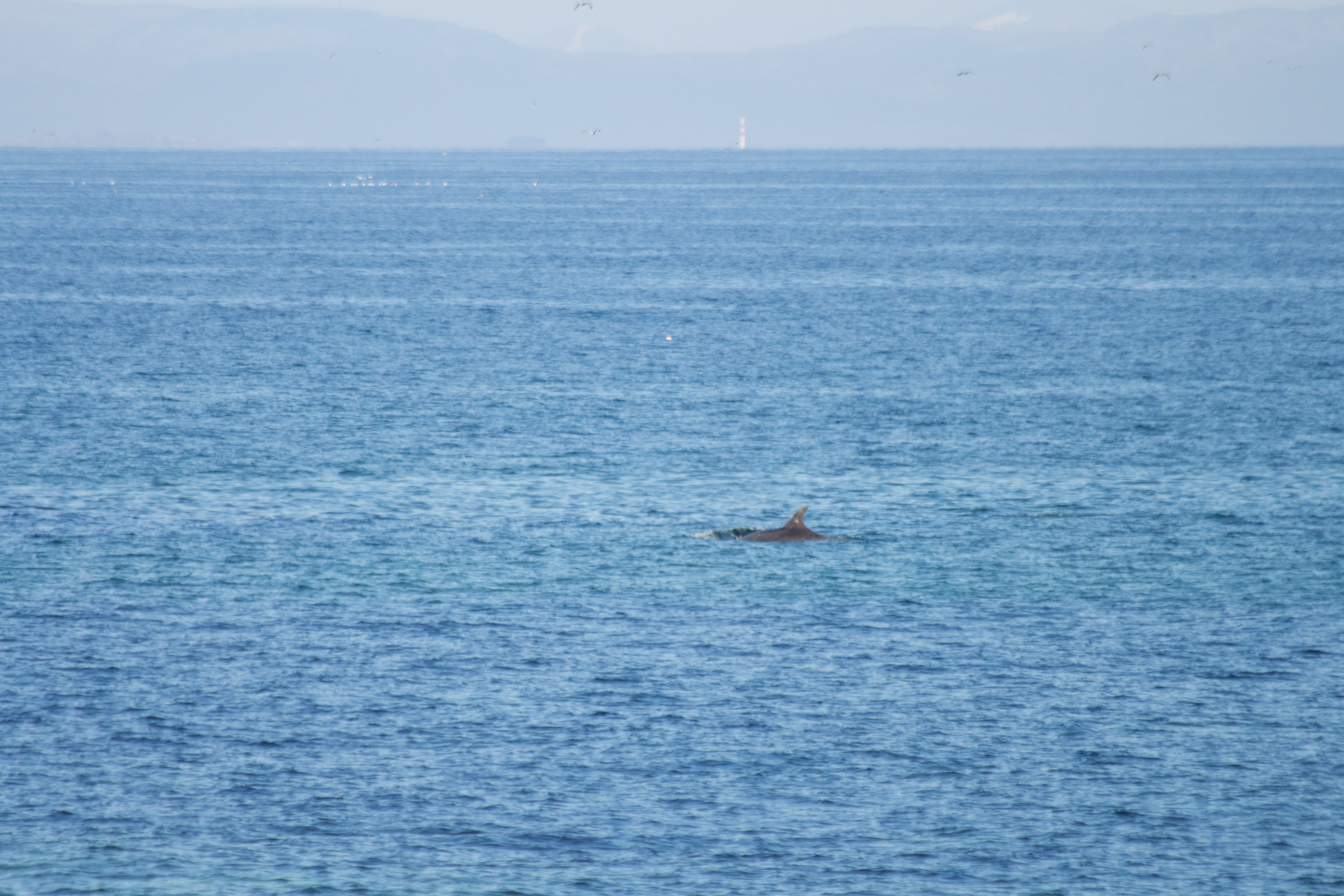
When I arrived in Scotland I was told that May was the true start of the bottlenose dolphin season, but I’ve already been spotting dorsal fins on the water. I’ve had three different sightings so far, and on the second I managed to photograph some for the first time. Even from a distance and with most of their bodies submerged, it’s easy to see just how large these marine mammals are. In fact, the bottlenose dolphins in the Moray Firth are the largest and most northerly in the world.
Bottlenose Dolphin
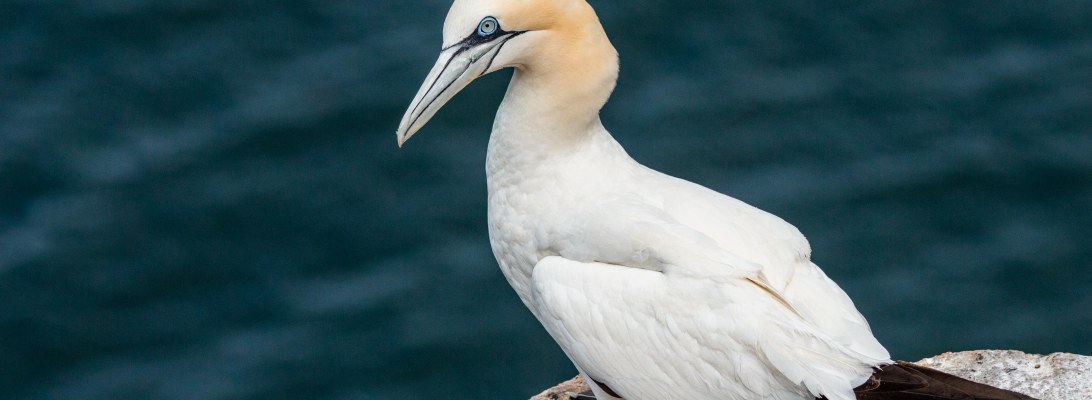
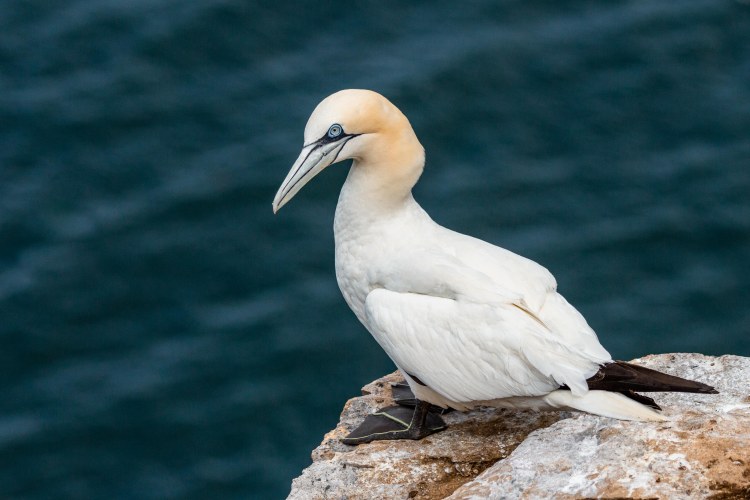
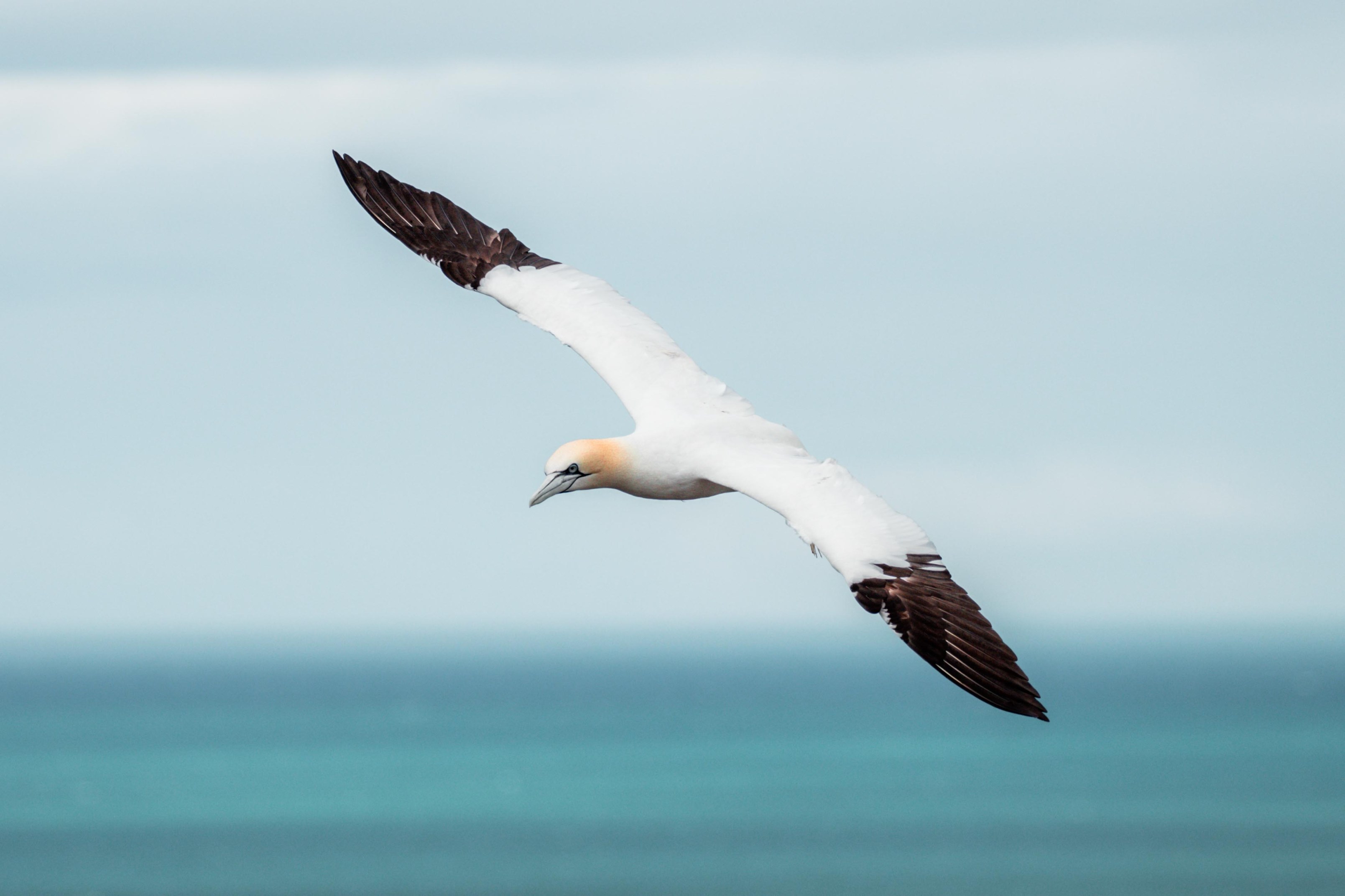
As well as cetaceans, there’s been some avian excitement too. My absolute favourite birds have arrived in my patch: gannets! I glimpsed a white wingspan last week but wasn’t sure if it was just another herring gull, but since then I’ve had indisputable views of these vast and beautiful seabirds. As well as flyovers, I had the privilege of watching a dozen gannets diving for fish just offshore – twisting their bodies and tucking in their wings at the last moment before hitting the water like feathered torpedoes. I’ve always been drawn to gannets’ subtle plumage and dramatic facial markings and it’s been such a treat to watch them in my patch.
Gannet
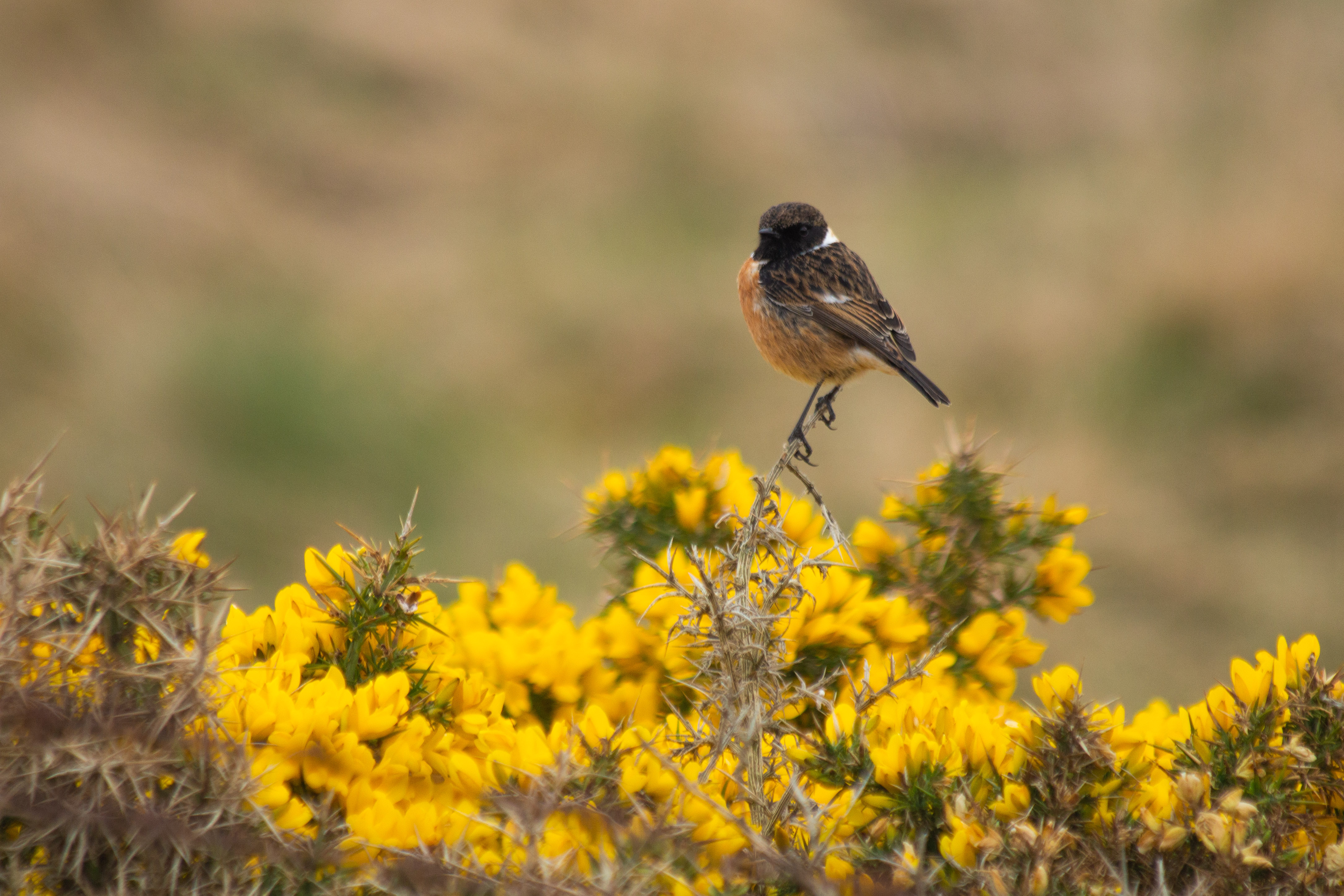
As I walk along the shore, I have the option of looking left to the ocean or right to dense clouds of gorse. As well as infusing the air with a beautiful coconut smell, the gorse provides excellent shelter for lots of different birds. Over the last week I’ve seen willow warblers, stonechats, linnets, skylarks, hooded crows, swallows, swifts and yellowhammers in just a small area. The charm of the gorse forest is that you never know what you’re going to spot and I’m almost always surprised by something.
Yellowhammer (male)Stonechat (male)
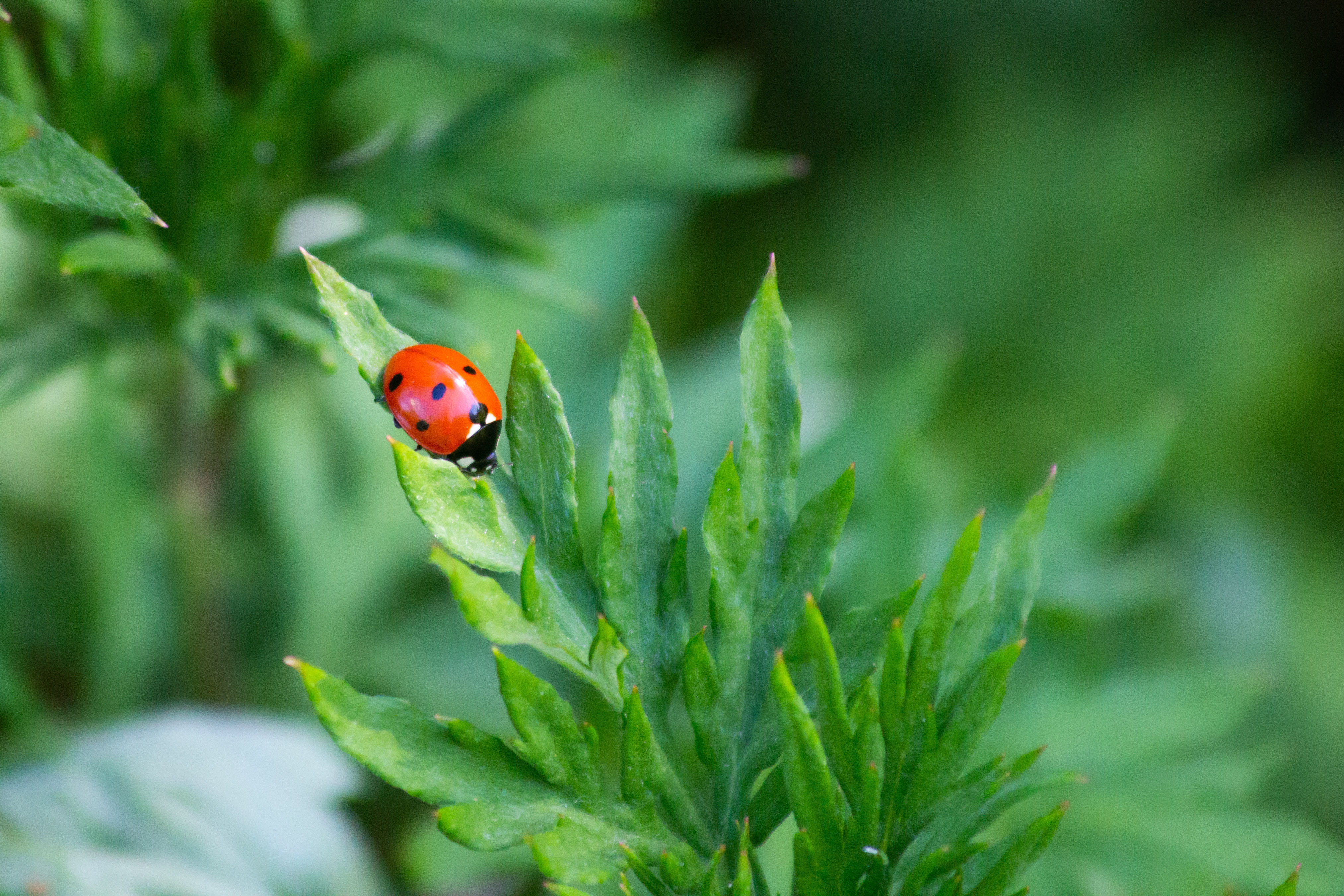
Although I’m usually drawn towards birds and mammals, I can’t help but notice emerging insects as the temperature climbs. Just along from the town allotments I’ve seen bees, peacock and red admiral butterflies and green foliage that’s speckled with ladybirds.
It’s been difficult for us all to stay connected to the natural world during the lockdown, but seeing snippets of spring visitors on my daily walks has really lifted my mood. Nature never fails to make me feel better, and it’s during these challenging times that our time spent outdoors is the most important. Stay safe and stay wild everyone.
While carrying out my (perhaps too) regular scroll of Instagram I passed an intriguing post by Bloom in Doom magazine advertising media positions, one of which was an Online Nature Editor.
Bloom in Doom is one of those beautiful journal magazines where the pages look like works of art. A bi-annual publication, it’s all about positive and solution-based ecological journalism. As someone who always has an optimistic slant on their wildlife writing, I was interested in getting involved.
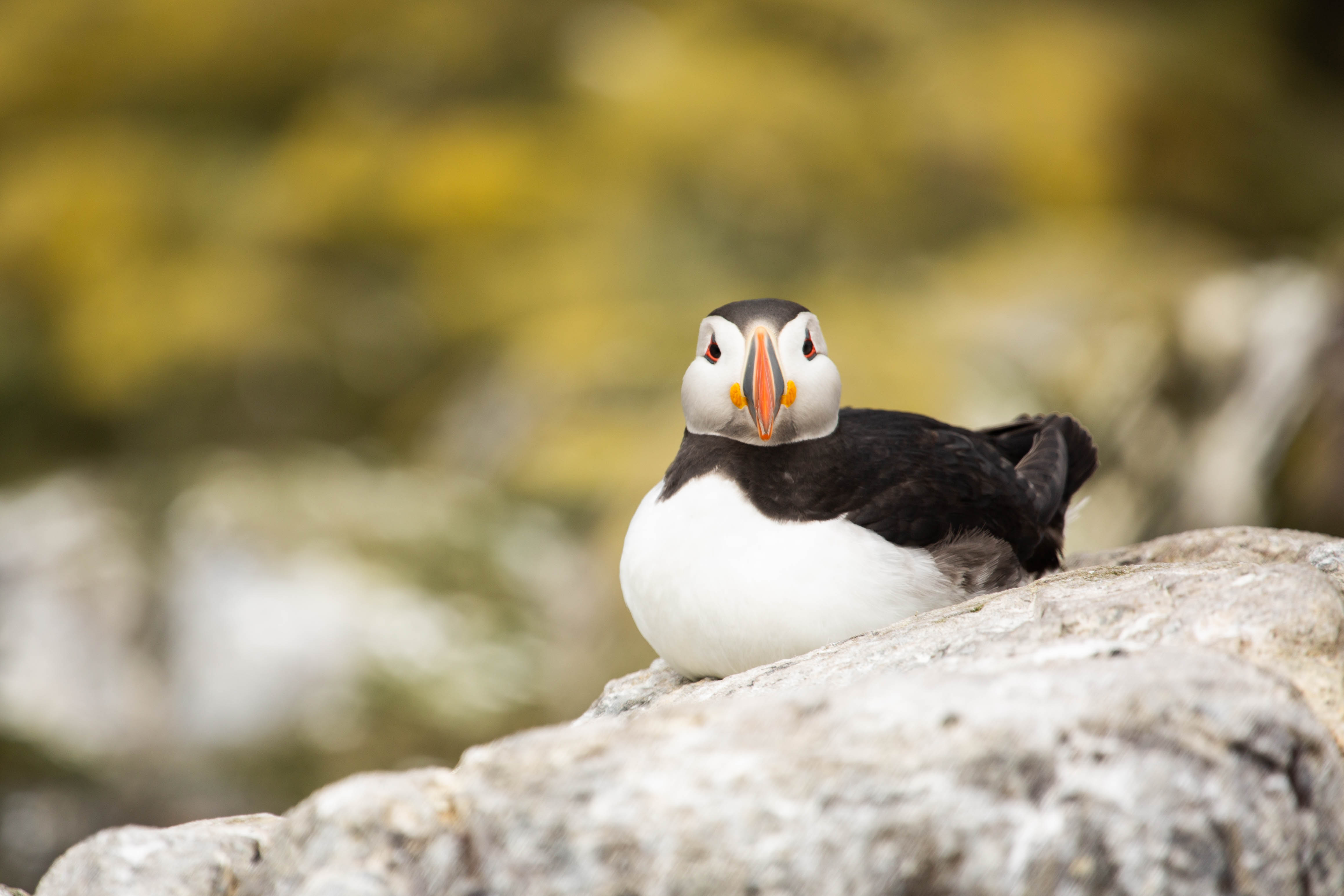
Less than a week later I have started as a new Nature Editor and posted my first web article, which is about how you can help puffins. The second volume of the printed and digital magazine is titled “Sustainability” and will be out in June. I am hoping to be able to contribute to the third volume, but until then I will be sharing lots of positive wildlife stories on the Bloom in Doom website.
I discovered ‘Sky Dance’ while looking for non-fiction titles in the Scottish Interest section of my local Waterstones. In the past I have struggled to engage with a lot of rewilding books and often been intimidated by the political conflict. But after reading the blurb I realised that ‘Sky Dance’ was actually a novel. The story follows two hill walkers who get caught up in a row between conservationists and landowners about the reintroduction of lynx into Scotland. There is a fictional island called Morven and a landowner who ticks all the stereotype boxes of a tweed outfit, upper middle-class pomposity and a disregard for any animals besides grouse.
It is a strange book in many ways – especially the surprising ending – but I enjoyed the unorthodox approach. Acknowledging a potentially heavy topic such as rewilding through the medium of fiction was intriguing. ‘Sky Dance’ conveys important messages while remaining full of action. There are a few too many side stories which muddled the plot for me, but the main narrative about the lynx was an engaging one.
It would be fantastic if the reintroduction of a long-lost predator into Scotland could one day be a reality and not a piece of fiction. Burns explains that lynx would pose no danger to humans and only have a very low impact on livestock. If famers were compensated for these small losses then lynx would undoubtedly make a valuable contribution to the restoration of an unbalanced ecosystem that is currently overflowing with deer and damaged trees. Wolves and bears raise more difficult issues, but I believe lynx should definitely be brought back to the UK. John D. Burns paints quite a haunting picture of what the Scottish Highlands could look like if we started to reverse the damage we’ve caused by hunting apex predators to extinction.
Published in 2019, ‘Sky Dance’ is John D. Burns’s third book. He has spent over forty years climbing mountains and fifteen years writing. To hear more from John, visit his website for blogs and podcasts.
Back in 2017, I spent the year as the Creative Content Developer intern for Wild Intrigue. As well as teaching me a huge amount about British wildlife, Wild Intrigue founder Heather gave me my first experience writing for a client. During my year with her and media director Cain, I wrote blog posts, took photographs and was able to attend incredible rewilding expeditions in Northumberland, Cumbria, Perthshire and the stunning Isle of Carna on Scotland’s west coast. I learnt how to use camera traps, bat detectors and Longworth traps, which are used to humanely survey small mammals.
Heather and I have stayed in touch regularly since I graduated. Now the coronavirus lockdown is interfering with small businesses and preventing companies like Wild Intrigue from running face-to-face events, I was keen to help out at a distance with a guest blog post. During these strange times, it’s so important to remember that nature is right outside the window and we don’t need to miss out. In my post I share intriguing insights into some common garden birds: blackbirds, blue tits and robins. I hope readers will learn something unexpected about these often overlooked species and be inspired to discover their local wildlife.
You can read my guest blog post here. To find out more about the amazing work Wild Intrigue does, check out their live video from last week where they share camera trap footage and reflect on their past projects and expeditions.

















 rebeccaonthewing.com