Is Giving Up On A Book Ever OK?

Here’s a question. When is it acceptable to give up on a book? Some may say it never is, but surely there are times when we are allowed to ditch a book halfway through.

I’ve been struggling with this for some time now. I’ve meandered through the last four or five books with mild interest without ever having that undeniable connection. I see people with their heads in books on trains and in cafes and I’m filled with jealousy at how much fun they’re having. I can’t help but feel that I’m becoming fussy, because I never struggled with book boredom as a child.

I tried researching how to resolve this. I typed “can’t find your book” and Google regurgitated a whole range of possible solutions: Wikihow’s “3 ways to find lost objects”, how to find a book on a library system, and “7 steps to find lost objects after panic sets in” (that was just as patronising as it sounds).

None of this was what I meant. I wanted to know how to find MY book, the book that would keep me up all night and have me clinging to every page. It’s a cliché but, annoyingly, clichés are often true. I wanted that experience of falling in love with a book, feeling like you knew the protagonist intimately and was a part of their story as it unfolded. I’ve only felt like this a select number of times, two occasions being Harry Potter and Game of Thrones. Both series are seven books strong and although the latter took me a while, I was just as engaged during the last book as I was at the beginning (good job George).

My latest attempt – and I predict soon-to-be failure – is The Lion’s Eye by Joanna Greenfield. The story is one student’s account of her time studying chimpanzees in East Africa on a once-in-a-lifetime research opportunity. When I found this book in the library I was intrigued. I always love a female protagonist with gumption and I thought I would empathise, seeing as the author was only just in her twenties when offered the research assignment.

I’m now eighty pages in, which is shamefully only a quarter of the book. She’s in the Impenetrable Forest and struggling to adapt to the unforgiving environment, but I find myself still very disconnected. I don’t feel any anticipation or excitement – to care one jot about a real-life story I need to know the author’s history, understand their passions and what drives them. Aside from a genetic condition in one of her eyes, I barely know anything about this woman. As I write about it now I’m not surprised I don’t care what happens to her.

This has turned into a rant, and I didn’t really want to start slating books, but I’ve convinced myself that I shouldn’t need to hang on to an underwhelming book just because it seemed like I would enjoy it or because other people have. While I would advise against giving up most things, there really are too many fish in the sea and too many books in the library. Although there are millions to try, one day I will find MY book.

Spring Beginnings

For many wildlife enthusiasts, spring is perhaps the most eagerly anticipated season of the year, especially for birdwatchers. Migrants arrive from their wintering areas and settle back into their breeding grounds. After the cold of winter there is suddenly a buzz of activity, especially for males hoping to attract a female.

While some bird displays leave something to be desired, other individuals put in great effort. As we move into March, birdsong is elevated both in volume and intensity. Greenfinches have a particularly impressive display that involves large bursts of activity. The male, dressed in his finest vivid green plumage, circles in wide loops with emphasised slow wing beats, looking more like a butterfly or a bat than a bird. During these theatrical acrobatics, the males constantly call out to the females with twittering phrases that finish with a long, nasal “dzweee”. If the female is won over, the new pair often perch high in the trees, with the male always in the open to ward off any other potential new suitors.

The arrival of March also brings in the sand martins, one of the UK’s earliest arriving migrants. The smallest of the European hirundines (swallows and martins), sand martins have arrived from Africa, crossing the Sahara desert to reach their nesting colonies and excavate tunnels in sandy vertical banks. Over the past fifty years, populations of sand martins have crashed twice because of drought in their African wintering grounds, which makes protecting their breeding sites in Britain even more important.

Elsewhere in the arrivals gate are chiffchaffs, and from late March to April these plain-looking birds can be heard calling their name in woodland copses and shrubby undergrowth. A tiny warbler no larger than a blue tit, chiffchaffs have spent the winter in the Mediterranean and western Africa. Breeding begins in April to May, when the female builds a domed nest that lies very close to the ground. Incubating eggs and rearing the chicks are solely the female’s responsibility. Chiffchaffs usually leave the UK in September, heading south towards France and occasionally on to West Africa.

Despite the recent snowfall that has smothered the emerging snowdrops and crocuses, keep an eye and ear out for the arrival of spring migrants who will hopefully find some warmth as they prepare to settle in for the breeding season.

Learning to Birdlisten

Today marks the beginning of a new project: learning to birdlisten. It’s a much-used cliché but I have been an avid birdwatcher since I was a child. I’d sit out in the garden, hold as still as I possibly could, and after a while birds would begin to show, hopping out from under bushes and descending slowly from the treetops. This gradual emergence, the steady drip-drop of birds, was so exciting to me. The species would usually be very common – robin, dunnock, blackbird – but occasionally a blue tit or great tit would appear, and to my amateur eye these were very special indeed.

As my knowledge gradually improved, I began to notice more species and although the trusty robin and dunnock never grew boring, they lost their shine among more colourful or charismatic varieties. One by one I added birds to my repertoire, and although I didn’t notice my mental list growing, soon I could identify a wide range of species. Although waterfowl and waders had their charm, my favourites were always the passerines, or “perching birds”.

Passerines include a subgroup of species we call songbirds but are more accurately named oscines – birds that establish their territories by means of musical vocalisations. It never occurred to me why the singing birds attracted me most, until I turned my attention to listening for birds instead of looking for them, and then it became abundantly clear.

Birdsong is the soundtrack of nature. Even for me, a keen bird enthusiast, birdsong had blurred into the background of my time spent outdoors, nothing more than a pleasant backing track that accompanied my attempts to birdwatch. Why on earth did I let birdsong become such an unimportant feature of the landscape, no more significant than hold music? It was high time that I paid more attention to it, instead of letting it wash over my ears without acknowledgment. It is so true that we see but don’t observe, but it is also the case that many of us hear but don’t listen.

IMG_8860

Author of “Birdwatching With Your Eyes Closed” Simon Barnes points out that understanding birdsong allows us to see around corners. There’s a bird hidden up in the canopy somewhere, but unless you know its song you’ll never know what it is. I’ve had this frustration many times, when I see the distorted outline of a bird but no characteristic features that give it away. If I hadn’t neglected my auditory senses, I wouldn’t have been disappointed when the bird hopped further out of view.

And so begins my journey to learn the language of birdsong. It seemed a daunting prospect at first; to my untrained ear all chirrups and whistles sounded identical. However, like any problem, it is imperative to break it down, and that makes it far less intimidating.

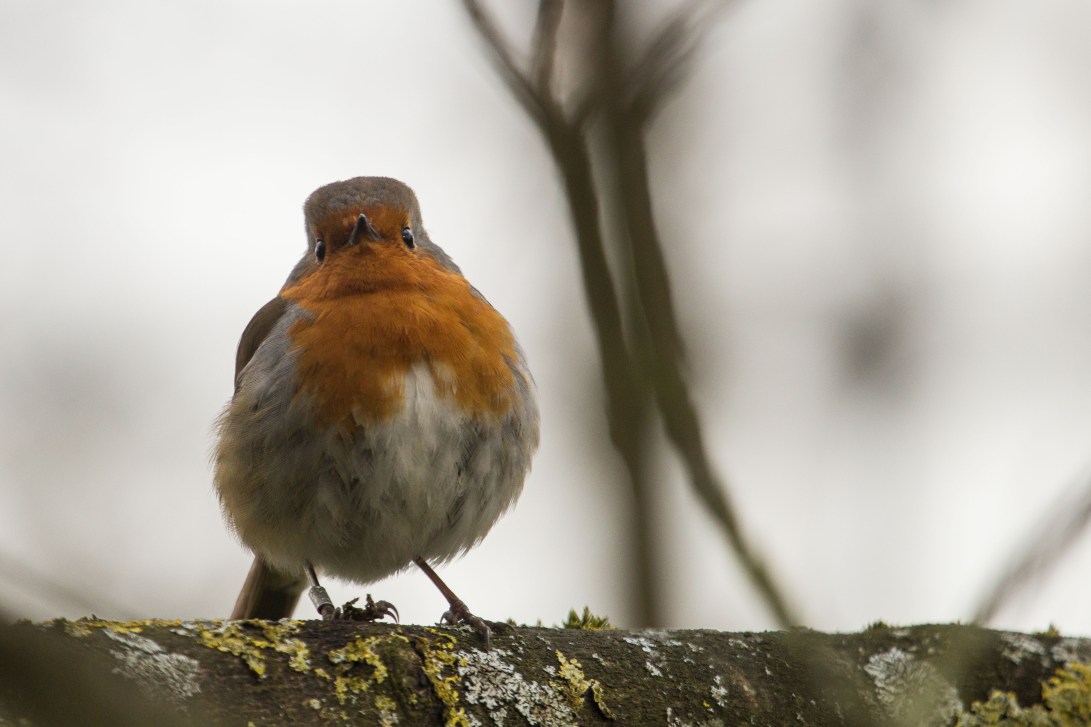
I have already made progress. First was the robin: an unmistakable bird in appearance, and a good place to start when learning birdsong because of its presence all year round. During the usually hushed winter months, the robin still sings, an isolated soloist filling cold air with thin, gentle melodies. Spring is by far the most frustrating time to begin birdlistening, so to hear the robin on a chilly February morning with no other avian distractions allows us to begin to tune into this new world I for one took for granted.

IMG_8893

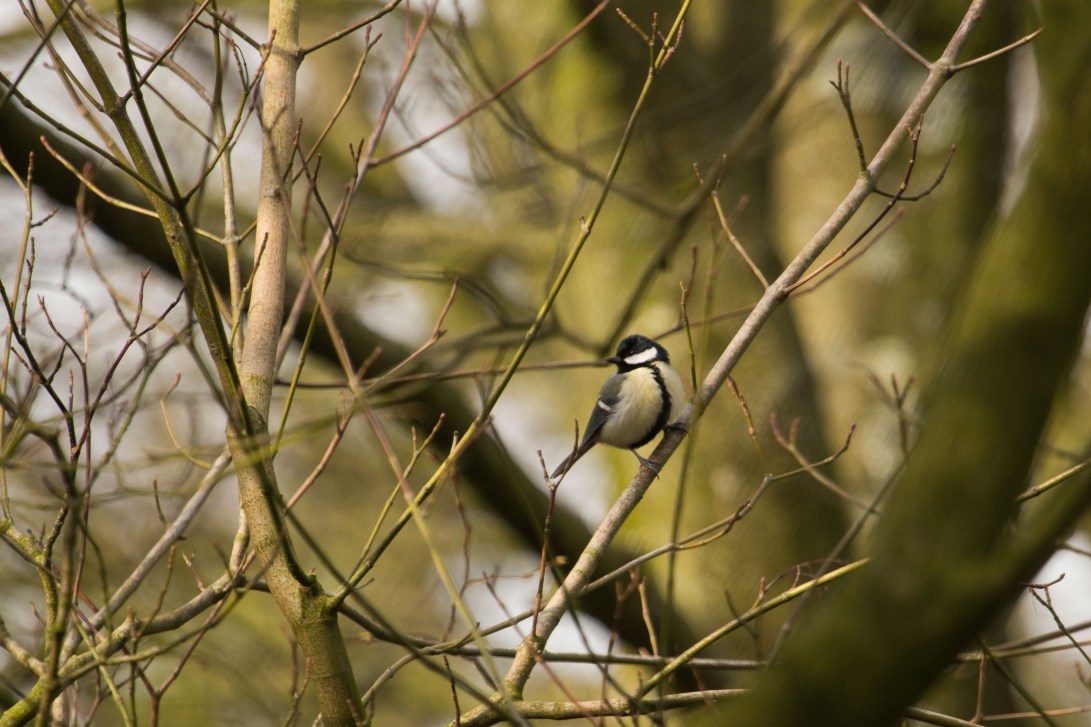
The wren also sings in winter, but has a far louder song bordering on rowdy. For such a small bird, the song bursts out of hedgerows, with a telltale trill at the end of some phrases, like a twirl of icing atop a cake. Then there is the two-note song of the great tit, like the squeak of a saw being pulled back and forth.

And so on. Already my ears are filling with birdsong and I’m really listening this time. Acquiring the skill of understanding this rich and varied language will not only help me become a better birdwatcher, but it will pave the way to a clearer understanding of nature as a whole – appreciating nature’s vibrant soundtrack.

IMG_8853


Signs of Spring

Here is a piece I wrote for ‘A Focus on Nature’, the UK’s Youth Nature Network, where I’ve already met some really interesting writers, photographers and artists. I’m also very proud to say I’ve just been shortlisted for the AFON Pictures of the Week 2017. If you’d like to vote for my photography, follow the instructions on this link. Thank you!


“It is a moment of quickening, of rebirth. The old, lovely story: life surging back, despite everything, once again. However spring finds you – birdsong, blossom or spawn – it is a signal: the earth turning its ancient face back to the sun.” Melissa Harrison

One afternoon as I arrived home from a university lecture I stood at the living room window and peered out into the garden as I always do. As usual, the birdseed I had put out the evening before had already gone, polished off by jackdaw and sparrow alike. Today, however, there was a crucial and very welcome difference – the appearance of the first snowdrops of the year. They were very young, still curled up tight in stiff buds, but I knew before long they would be hesitantly opening, their petals tiny white flags signalling the slow beginning of spring.

1 Snowdrop Rebecca Gibson

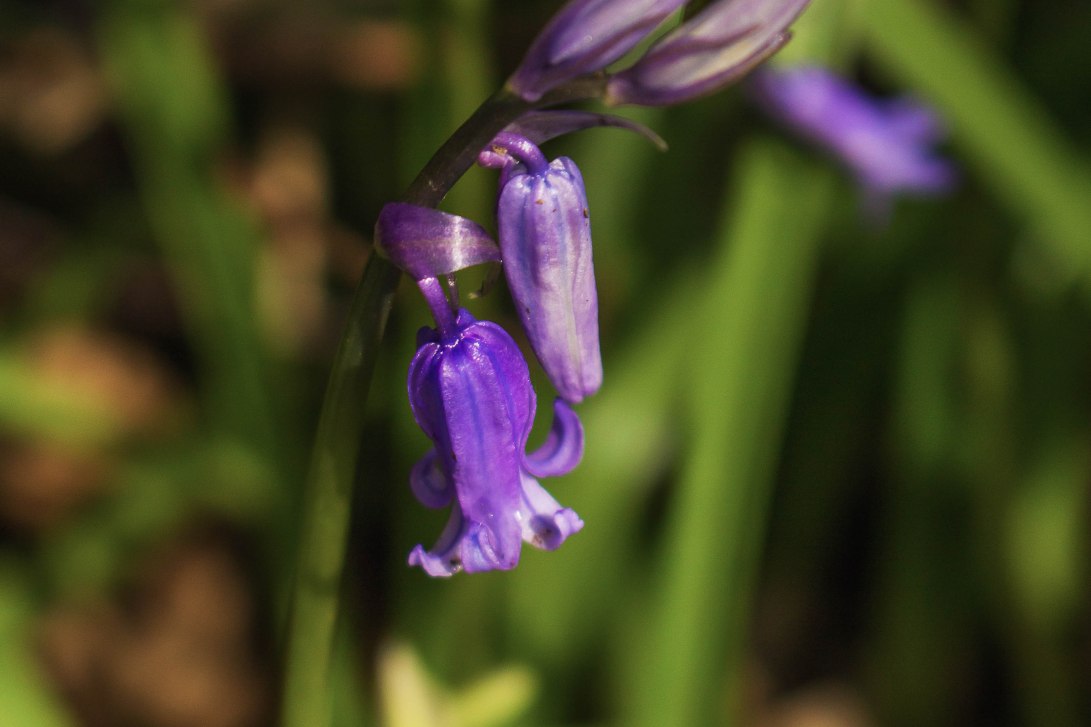
As January draws to a close, the temperature lifts and although the winter rains usually persist, our gardens are brightened by the tentative emergence of wildflowers. Bold snowdrops have led the way, but soon to follow are yellow and early (purple) crocuses, bringing a splash of colour to the repetitive greens of the lawn. Amongst all this emerging beauty is perhaps the true star of spring: the bluebell. A delicate flower more violet than blue; even one alone is a welcome sight after the biting winds and downpours of winter, but a carpet of bluebells is enough to take your breath away.

Two years ago, back home in Hertfordshire, I was stood in a patch of woodland that had long been heralded as a haven for bluebells. I surveyed the scene from a respectable distance, knowing I’d cause significant damage if I strayed from the worn path. The ocean was vast, spanning far in each direction. Together, the bluebells looked like a single blue blanket coating the tree roots, but up close each bell waved independently, and my romantic imagination gave them the quiet tinkling chime of their namesake.

2 Bluebell Rebecca Gibson

Aside from wildflowers, there are plenty more indications that spring is almost here, from birds to bees to rather odorous plants.

  • The gathering warmth of February rouses overwintering insects, such as the greenbottle fly, whose unappreciated beauty is something quite wonderful to see up close, even if they’re not always welcome buzzing around indoors.
  • Early breeding birds such as rooks will be seen gathering nesting material in preparation for the arrival of their broods. The first eggs will appear around early March, so be sure to look out for rookeries high up in the trees and listen for the constant chatter of busy parents-to-be.
  • One of my favourite spring sounds is the buzz of a busy bumblebee. As wildflowers expose their nectar, bees are quick to make use of the opportunity to gather it in the early part of the season.
  • The heady scent of wild garlic will soon be filling the air. A walk through my local park often includes a good whiff of this pungent but flavoursome plant. Note: wild garlic is similar in appearance to lily of the valley, which is poisonous, so if in doubt please do not forage to eat.

Spring is undoubtedly a time of rejuvenation – an opportunity to shake off the January blues and be inspired by the emerging life outside. As many of us live in towns and cities, it can be difficult to notice these subtle changes in such busy urban environments. This only emphasises how important it is to stop and look, just for a moment, and you’ll notice that however our world changes, nature will always persevere.

3 Wood Anemone Rebecca Gibson

Life in the Forest

For my latest university project, I explored the concept of forests and what people have to say about them. By creating a survey, I gathered a range of intimate stories that reveal just how important the forest habitat is to us all, for many different reasons.


Peaceful. Majestic. Timeless. Forests are a vast and highly diverse habitat with a different meaning for everyone, and provide the perfect opportunity to get time and space away from regular life. To find out just how significant forests can be, a recent survey was conducted, uncovering some varied and intimate stories.

“Forests remind me of home. While standing in any other habitat you surround yourself with nature, but the forest is the only one that swallows you.”

Despite our love for woodland, Britain and Ireland are some of the least wooded countries in Europe, even with the presence of approximately 13,000 ancient trees. Some of these have been standing for over a millennium. This, when compared to the human lifespan, seems an eternity.

“Woodland is a much-loved feature of the landscape,” writes Sophie Lake, author of ‘A Guide to the Wildlife Habitats of Britain and Ireland’, “Stepping inside an ancient wood can be a welcome escape from the monotony of the abrasive, urban environment.” For lots of us, forests are holders of secrets and memories, paving the way for personal reflection and relaxation that cannot always be achieved in the bustle and noise of our everyday existence. Forests enable us to lose ourselves, literally and figuratively.

We admire forests for their natural beauty. Most noticeable of all the seasons is undoubtedly autumn, when frost, crunching leaves and a flurry of excitement in preparation for winter really brings them alive. The forest is not just important for the survival of hundreds of forest-dwelling species but also for ourselves. We are nemophilists – that is, we have a deep fondness for forests and woodland – and have childhood stories to tell of long days spent climbing trees, collecting conkers or watching birds.
7W1A8426-2

“I went on aimless walks as a child – my mum and I used to collect pretty sticks and stones. I’ve always been surrounded by forests and even if I wasn’t in them physically, their presence was always there.”

Forests are a place of play, where children dream up kingdoms and magical lands. There is an undeniable magic to forests that we first discover during childhood, but this stays long into adulthood whether or not we care to admit it. We ask ourselves what exactly it is about a forest that makes us shed our deep-set cynicism and embrace childlike wonder again. Perhaps it is the seclusion that the trees provide that prompts a split from the real world and allows our minds to wander, creating a barricade that shields us from reality. There is also the enchanting way that many wild, forested places muffle our connection to technology, rendering our phones useless. We are cut off from the outside world so we must embrace wilderness, and that is when we realise what we’ve been missing.

“I was convinced I was Mowgli and went running off – ducking to make sure I wasn’t seen by any creatures that might be lurking in the woods. I wanted to stay there forever.”

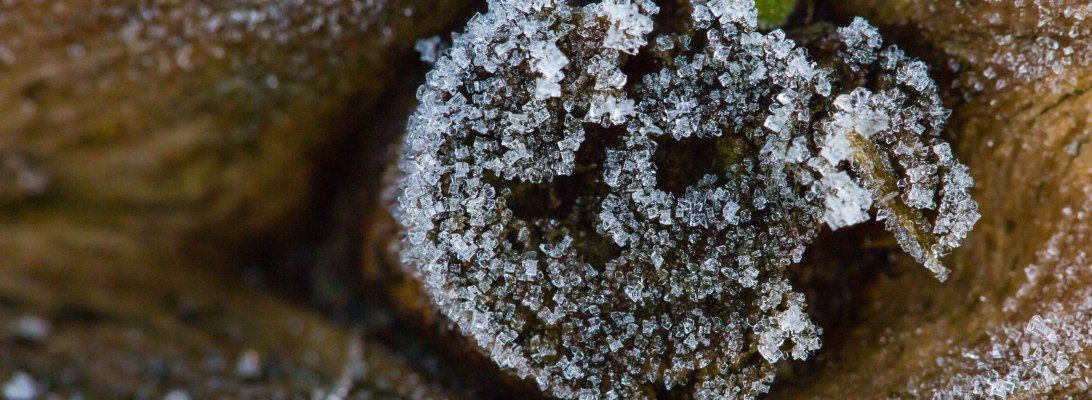
As children we see and savour so much more, with no limits to our imagination. The rumble in the bushes is a prowling tiger, so we pick up a stick and have a sword. By spending time in the forest as adults, we see nature with fresh eyes. Senses that have been dulled by noise and brightness are now reinvigorated to appreciate new marvels – the sound of birdsong, the smell of conifers, the sight of leaves coated in frozen, silver crystals. It is not until we return to a forest that we remember what a surreal place it is, full to bursting with secrets.

After a recent trip to Kidland Forest in the Northumberland National Park, with over five thousand acres to explore, all these feelings came flooding back to me. The forest was silent; listening while others threw sounds into the air. An abandoned tyre swing creaked, a tawny owl called, but the trees stayed hushed. Each one has survived bleak winters, dry summers and overseen a thousand births and deaths. Seeing such colossal larch trees stretching into the sky put into perspective how powerful and significant the forest landscape is.

“A favourite memory of mine is an enormous old oak that I used to play on. Its limbs went on forever – the sheer size was incredible and it’s amazing to think of the memories it might have held.”

Our love for forests must surely be from the respect we hold for these vast, natural structures that have been standing for centuries while generations have come and gone. These unmoving, unspeaking elephants with trunks of bark and thick, deep-set roots have a majesty that is easy to overlook. They begin life as a seed we can hide in our hands, but will eventually, and inevitably, dwarf adults and children alike.

“Spring is fresh and green, summer is full of birdsong, autumn brings the golden colours and in winter it is a stark place, with all the tree branches exposed scratching lines across the sky.”

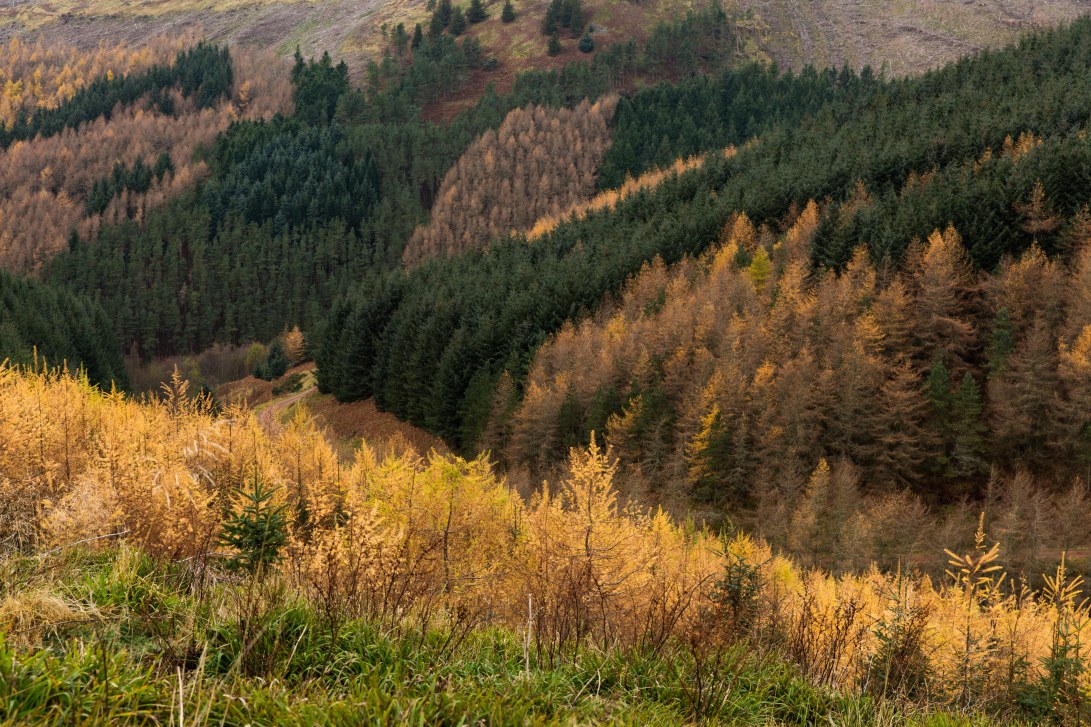
Forests in November are patchwork blankets of green, orange and brown, where the trees shine like fiery beacons. It is autumn at its finest: an explosion of colour with just the right amount of chill in the air. Arranged in rows like ornately dressed soldiers, trees stand in silence, the sort of hush that comes just before something long-anticipated. The sun shines in slanted shards, illuminating certain branches and leaving others in chilled shadows. The forest is a drug – beautifully addictive. Its costumes are always changing throughout the year. This season: orange is well and truly in.

The forest is particularly wonderful because it never dies. Whatever the season, there is something happening. Come September, the temperatures drop and the rain persists, but new life is always arriving. Leaves fall and curl up into dry husks, but from amongst them sprout fungi, mushrooms of every colour that decorate and cloak the tree roots like nature’s Persian rug. Soon the nights will be cold enough to freeze, and come morning when the weak sunlight breaks through, millions of miniscule ice sculptures cling to every surface, each one unique. The forest is a menagerie of sights, smells and sounds; even with the wind and rain, the last few months of the year bring breathtaking beauty.

“Every Christmas morning my mum and I have breakfast in the forest. The whole place is frozen and beautiful. I remember how big it was and that I’d never see all of it. That just made what I did see more special.”

Christmas is undoubtedly a time of magic, and forests can be the perfect place for festive celebrations. Businesses are using this to their advantage and hosting holidays in wood cabins and yurts deep in picturesque forest locations; with ever advancing technology it is becoming even easier to find the perfect wild spot. If done sustainably, encouraging a greater participation in the forest can only be beneficial. Being surrounded by the winter chill with perhaps a sprinkling of snow is idyllic – the presence of such an enchanted habitat accentuates the beauty of winter.

7W1A8328

“It is the ability to put to one side the complexities of modern life and modern living and to escape into a world seemingly untouched by the industrial intervention of man.”

Forests are vast, varied and can accommodate everyone. They offer the freedom to forget the modern world for a while and spend time in true wilderness. Walking through a forest feels like stepping back in time, where nothing is artificial. The forest is vast, yet its size and range never seem ominous. Barren and haunting depictions of woodland always resurface around Halloween, painting a rather commercial picture of a scary place, but a forest in autumn and winter is as enchanting as one in midsummer, perhaps with even more wonder.

“I think forests are irreplaceable and I need to go there regularly to remind myself of what’s important.” 

Many people surveyed for this feature revealed that they spend time in forests for meditation, thinking and to enhance creativity. The fact that being surrounded by trees encourages this self-care is truly humbling. In our otherwise hectic existence, minds preoccupied with material wealth, a brief moment spent surrounded by peaceful, green silence allows us to step back and put all of these worries into perspective. And that is worth more than anything money can buy.

Northumberland: Day Three

There was no frost today, but the sun was shining brightly and I knew the larches on the hills would be lit up like fiery beacons. We only had the morning, as we were leaving the bothy just after lunch, so first I headed out with Cain to pick up the camera traps. I was wrapped up in my fleece but was soon peeling layers off – the weather was surprisingly warm today with such bright sunshine and little wind.

7W1A8462

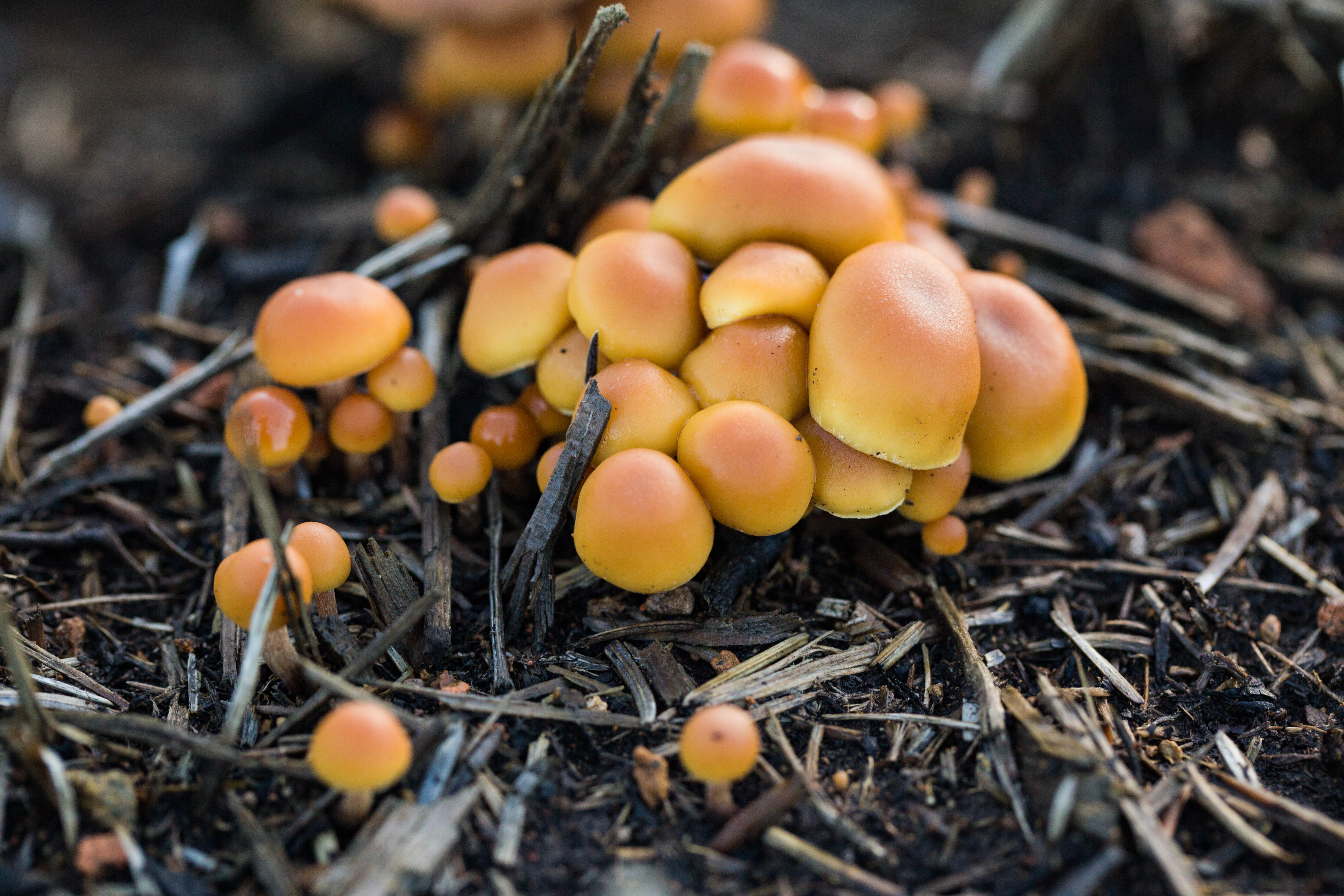
Just before we returned to the bothy to check the footage, Cain took me to see the huge troops of orange fungi up the hill by the clearing. I’d just been saying how little fungi I’d seen, but I was soon proved wrong when I saw how many there were up here. Sprinkled all the way along the track were small orange bulbs of every shape and size. Some were illuminated in patches of sunlight, which made their colours shine even brighter.

7W1A8528

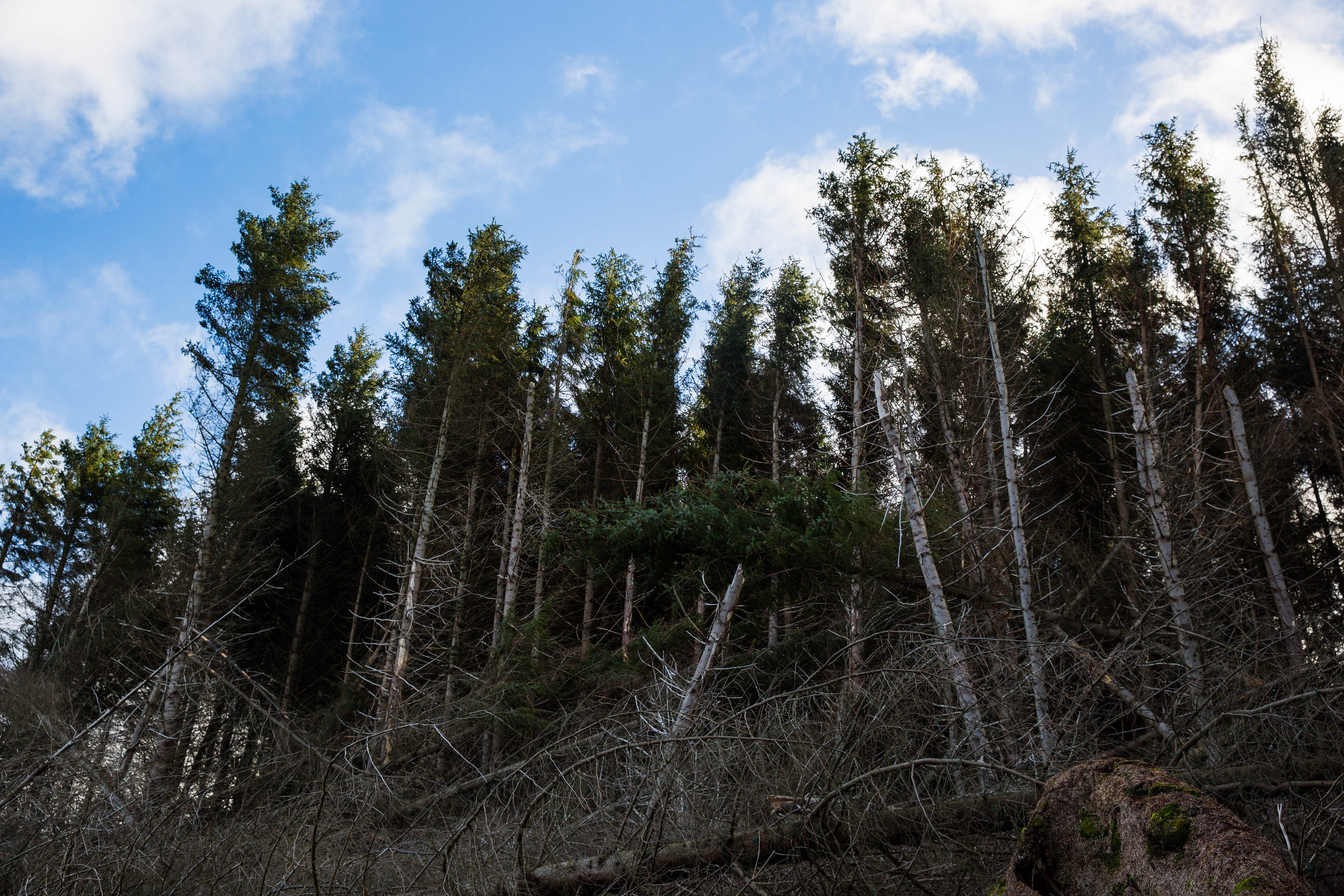
As I was stooped on the ground photographing the fungi, I heard a bizarre sound that reminded me of an angry cat. I turned and saw the outer layer of trees swaying in the growing wind, releasing the most peculiar creaking noises. Cain explained how these trees would usually grow on the inside of the forest, but due to felling they were now on the outer layer and were struggling to cope with the battering elements. Some had already succumbed, and we passed gigantic trees lying flat on the forest floor, their roots larger than tractor wheels.

7W1A8512

Out in the open, the wind was a lot stronger, so we ducked back down and sought the shelter of the forest. We gathered everyone in the bothy and had a look to see if the traps had been successful. Sadly, the two I had put out only had footage of my bobble hat as I attached and detached the trap from its post. However, Cain had put one in the garden and this had filmed several clips of a bank vole darting in and out of the rock pile. Later in the night, a wood mouse joined the scene, distinguishable by its longer tail and much larger Mickey Mouse ears. So, the traps weren’t a complete disaster, but certainly no pine marten footage.

7W1A8510

Sightings

  • Bank vole – on camera trap (Myodes glareolus)
  • Chaffinch(Fringilla coelebs)
  • Kestrel(Falco tinnunculus)
  • Robin(Erithacus rubecula)
  • Wood mouse – on camera trap (Apodemus sylvaticus)

Northumberland: Day Two


When I woke up the blinds were bright. I had a peek outside and was thrilled to see there was a frost clinging to the grass. I hurried into clothes and headed out into the garden. It had been a full year since my last frost and I was eager to capture some macro photos again. Leaves, twigs and thistles were all coated in a fine layer of silver crystals that, when hit by the sun, twinkled and shone like last night’s stars. Soon I had wet knees from crouching in the grass and the beginnings of a crick in my neck from getting as close as possible. My plan was to crop the photos in to create a repeating abstract texture. As usual, I took far more than I probably needed.

7W1A83007W1A8313-2

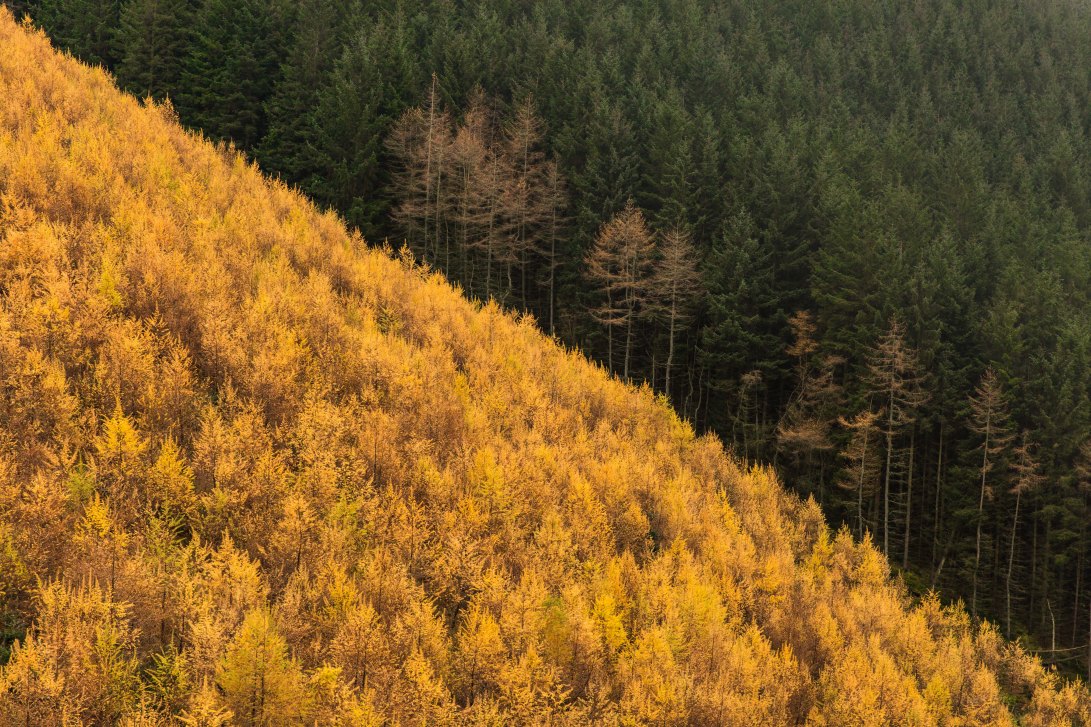
After relaxing for a while in the bothy I headed out again, down one hill and up the next. I passed the tyre swing, but the lack of decent light meant the shots weren’t quite what I imagined. I knew I had to photograph the bright yellow and orange larches that had taken my breath away on the drive in yesterday. Unfortunately the sun that I’d wanted to shine was well and truly concealed behind thick clouds; the light was so diluted I could gaze in its direction without difficulty. However, when I began to shoot, the rusty warm hues still popped. I began to experiment with positioning individual subjects like stray grasses in front of the camera, so the trees bled together and created a vibrant background.

7W1A83817W1A8426-27W1A8397

The rest of the day was spent writing beside the fire and recording what I’d seen during the day. I had a sneaky look at my photos so far and was pleased with some of the outcomes. Hopefully there’d be more opportunities on our last day tomorrow.

7W1A8440

Sightings

  • Chaffinch (Fringilla coelebs)
  • Goldcrest (Regulus regulus)
  • Goldfinch (Carduelis carduelis)
  • Robin (Erithacus rubecula)

Northumberland: Day One

We arrived at the bothy just as the sun was at its warmest. We were in the Northumberland National Park, and as the car rumbled up the hill I craned my neck to see the valley opening up into a patchwork blanket of green, orange and brown. It was autumn at its finest; an explosion of colour with just the right amount of chill in the air. On the way up to the bothy I spied an abandoned tyre swing, which would be a great accompaniment to the stories about childhood memories, so I made a mental note to return tomorrow.

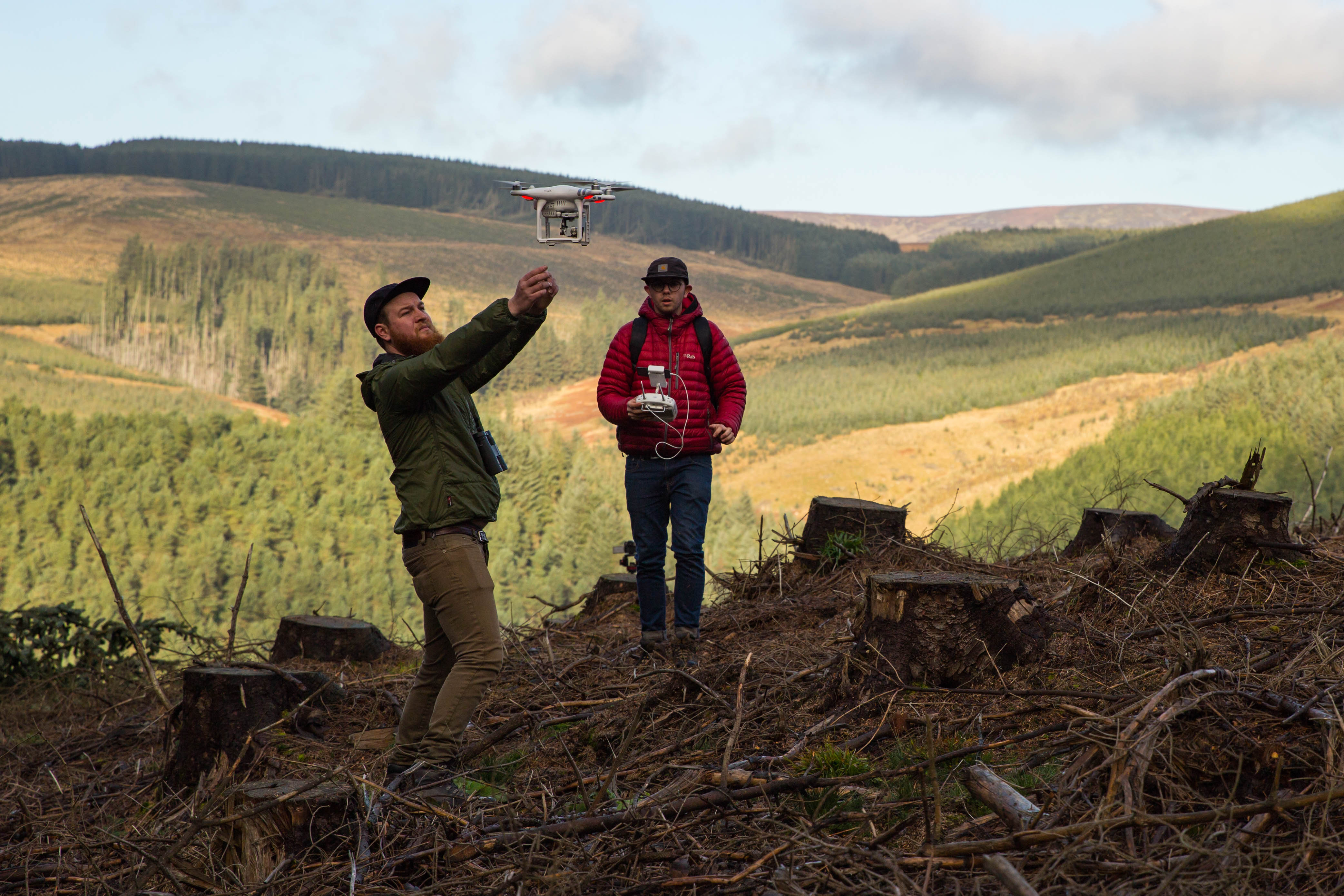
After the customary dumping of the bags, I headed out with Cain and Lequane to set up two camera traps. With a new area, you never knew what could be roaming the forests; red squirrels, even a pine marten perhaps. We followed the burn down the hill, which was a thick sponge of fallen leaves. A dry stone wall ran parallel to the water, and I could just imagine small mammals darting along it, so set up the first trap looking out over the wall.

The light was fading, so we made our way along the burn with torchlight. The wall had collided with a tangle of sticks in one patch, perhaps a resting place for voles or mice. I set the second trap up with a viewpoint over the wall.

We made our way back up the road to the bothy, and were very surprised to see bats zooming around over our heads. Cain told us how it was very late in the year for bats, and they were perhaps roosting in or around the bothy. Cain’s sharp ears picked up a redwing calling in the distance, and then we heard a tawny owl very close by, so decided to pursue it into the cluster of trees behind the house. It was tantalizingly close and we searched the trees in the gathering gloom for any sign of it. No doubt the owl could see us perfectly and was watching with a combination of confusion and amusement, as it stopped calling as soon as we reached the trees and we didn’t hear it after that.

After taking shifts to cook our separate dinners, we had a look outside and there was a series of gasps and excitable shrieks when we all saw the night sky. I don’t think I’d ever seen so many stars – the sky was pitch black, with not a single lamppost or car light to spoil it. We all hurried inside to layer up and grab cameras, then broke off in different directions to get started. Some wandered up the hill and turned towards the Milky Way, while others stayed in the car park and began a time lapse of Orion’s Belt.

I hadn’t done a great deal of night photography, but I began to experiment and soon I found myself quite addicted to it, especially with such a beautiful and flawless background. The camera picked up millions more white pinpricks in the sky, and I was very pleased to find that I’d caught a shooting star in one image.

After an hour or so, my fingers had begun to grow numb, and I found myself capturing the same photos multiple times just because they were so beautiful. For the sake of my memory card, I headed back to the bothy to warm up and have a snack before bed.

7W1A8243

Sightings

  • Barn Owl (Tyto alba)
  • Chaffinch (Fringilla coelebs)
  • European Rabbit (Oryctolagus cuniculus)
  • Redwing – heard (Turdus iliacus)
  • Robin (Erithacus rubecula)
  • Soprano Pipistrelle (Pipistrellus pygmaeus)
  • Tawny Owl – heard (Strix aluco)

A Day in Newcastle

I’ve been writing a lot recently. This week, when I went to Newcastle for an adventure, I decided to dedicate the day to photography.

Rebecca Gibson Newcastle Bridge Street
When you’re crossing the road and a good shot catches your eye
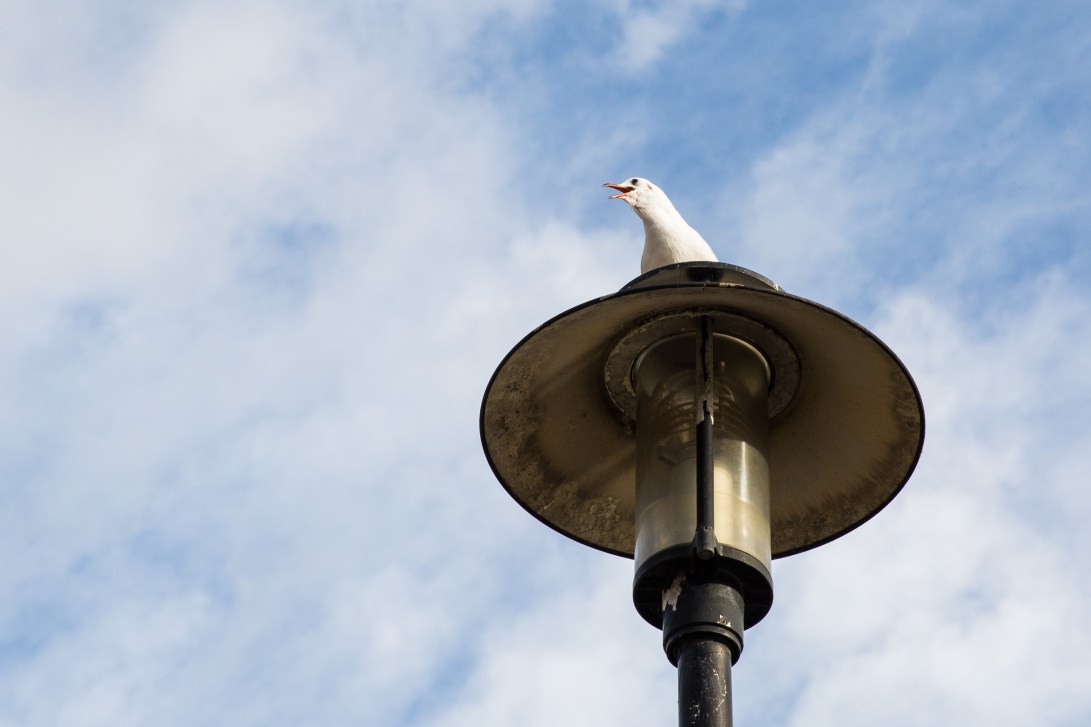
Rebecca Gibson Gull
A very vocal gull at the Quayside
Rebecca Gibson Newcastle Horse
Business open as usual
Rebecca Gibson Newcastle Alley
Quaint cut-throughs
Rebecca Gibson Zapatista
Working up an appetite – this bundle of heaven was butternut squash and halloumi
Rebecca Gibson Laing Art
“Isabella and the Pot of Basil” by William Holman Hunt. Here’s poor Isabella cradling a pot containing the head of her lover Lorenzo, who was murdered by her two evil brothers.
Rebecca Gibson Stain Glass
Late afternoon miracles
Rebecca Gibson Street
Wandering down winding streets
Rebecca Gibson Cat Cafe
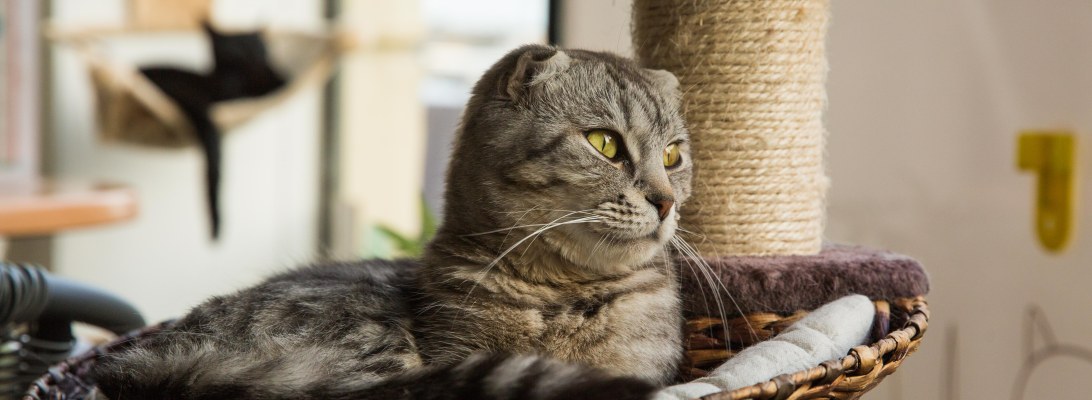
Having a drink at the cat cafe
Rebecca Gibson Newcastle Sunet
The sun sets over Newcastle