New Leaves

This year I am dedicating a lot of my time to something I have wanted to do for many years: write a novel. I often write fictional scenes and enjoy creating characters and I wanted to set myself the enormous challenge of extending those elements into a book. I’ve read that while many authors swear by detailed outlines and believe that spontaneity is recipe for disaster, others encourage new writers to see where their imagination takes them. I’m trying the latter technique. I have a protagonist and several themes I would like to focus on, but so far my plot is far from finalised. The following is a passage I’ve written as a scene-setter that introduces both the location and my leading lady. 

  ____________________

The snow fell heavier than it had in a hundred years. There was no wind – the land lay still, muffled under six inches of brilliant white. Evergreens buckled beneath the weight of their silvery coats. Even the river had succumbed to winter; it lay motionless beneath a slab of ice, arranged in a winding, serpentine fashion between hills and mountains. It was late February – there was just over a month left of the winter that spanned half the year, but the coldest season still had a firm grip over the land. In March, the climbing temperatures would start to melt the snow into large freshwater pools and reawaken sleeping giants eager for the salmon run in July.

Halfway up a sprawling larch tree perched a teenage girl. She was small for her age, but agile and nimble. With her back pressed against the trunk, she had the perfect vantage point over the land. Before her the forest sprawled as far as the eye could see. Thousands of trees stood beneath snow and ice, their skeletal branches brittle in the cold.

Vanya’s breath rose from her lungs in icy shards, tumbling from her mouth in clouds of grey mist that swirled upwards into the sky. An eagle cried far away, her voice transported many miles over the sleeping land. Vanya had lived in the taiga forest her entire life, but gazed upon its sweeping scenery with the same wonder as the first time she saw it. It was a paradise of silver beauty. The silence was so thick she could feel it, heavy and palpable in the air. It was an anticipative silence that made the hairs on her neck stand on end. There was change in that silence – something new just beyond the horizon.

Despite her thick furs, Vanya soon began to feel the cold as the sun weakened. While she still had the light to see, she descended from her tree, scrabbling down the trunk with impressive confidence before dropping the last six feet to the soft ground. She padded down the hill, sinking into the snow with each step. Behind her lay a long trail of boot prints, already softened at the edges by fresh flakes. Frost clung to her eyelashes, brushing her cheeks with cold strokes and fringing her vision with a white vignette. Snow rustled in the folds of her coat and crunched beneath her feet. If undisturbed, the snow would fall and rest in utter silence. Only when it was touched did it begin to whisper and crackle. In the heavy air, the sounds were deafening.

When she reached a dense thicket of pine trees, Vanya slowed her pace and gazed skywards, scouring the canopy for birds. Snow clogged the gaps in the branches, concealing all manner of wild creatures. A sudden commotion cut through the silence like a knife. Vanya’s eyes flicked to the sound, freezing on the spot as a flurry of fine powder drifted down. The branch trembled, sending more snow to tumble from within its stiff needles. In moments the raid was over and the culprit emerged at the trunk. It was a young male sable, perhaps from last year’s litter, with dark brown fur and a splash of dusky orange on his neck. A small, carnivorous mammal, the sable belonged to the marten family. The animal cascaded deftly down the tree with agile limbs and keen claws.

Landing with a soft thud on the forest floor, he immediately looked up at Vanya, who had sunk down onto her knees to watch. The sable was clutching a stolen egg in his mouth, razor sharp teeth sunk into the shell for a better grip. Confidently, he trotted over to Vanya, dropped the egg and began sniffing her coat. Vanya extended a hand to the animal, noting the way his sleek fur rippled with each movement. The sable studied the girl’s face briefly before clambering onto the open hand, his nose twitching furiously. Vanya ran the backs of her fingers along his fur, delighting in its buttery softness. After a few more moments in her hands, she set the animal back down onto the snow, where he snatched up his egg. With a brief backward glance, the sable lolloped away to cache his prize.

To anyone else, this behaviour was unheard of. Sables, like many mustelids, could be notoriously aggressive towards humans, especially when food or kits were involved. Vanya was an exception to the rule. Since birth, she had truly understood animals. They were not stupid or cruel, like humans, but sensitive and respectful. Vanya saw no reason not to behave equally, and in response any animal she interacted with was fascinated by her. They sensed goodness in her; a quality that they had learned was absent in most humans. Instead of fearing her, they immediately trusted her.

Vanya studied the sable’s prints in the snow. In less than a minute, the snow obscured the impressions the tiny pads had made. In five minutes, they had disappeared completely. Her interaction with a wild sable might never have happened. Vanya was alone, and yet surrounded with life.

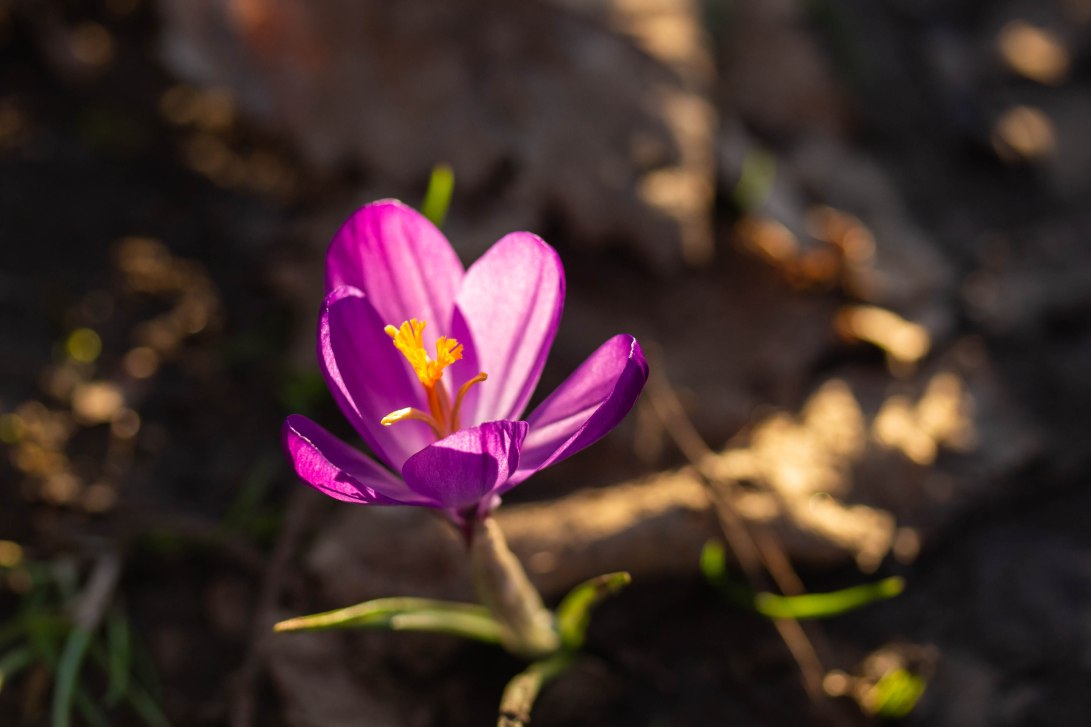
An Unscheduled Spring

It seems as if spring has come early, and I’m certainly not complaining. For the past few days I’ve been stuck indoors trying (and mostly failing) to write through an infuriating case of The Block. Multiple times I’ve caught myself gazing outside at the gorgeous sunshine, listening to the spring sounds of birds and bees that come drifting through the open window. I decided that it was time for a break, so I arranged to meet my friend Chloé for a walk. Chloé is an artist and writer with a deep love for wildlife like me. She recommended a local patch of woodland that I hadn’t even heard of before. I love discovering new wild places, especially ones I’ve driven or walked past without realising they’re there!

IMG_1395

Heading away from the noise of the road and nearby school, we set off into the park. Chloé pointed out the numerous trees that could be found here, and I was surprised to see such a variety of species in a relatively small area. I’ve always struggled to identify trees, especially during winter when there are no leaves to study, but Chloé said that leaves can actually be a distraction. She showed me the large clumps of hanging seeds that can be found on ash trees, the dark bobbles along the boughs of larches and the vivid red branches of dogwood. There is another delightful clue with dogwood – the buds have two tiny prongs that look a little like Viking helmets. I had no idea that looking at the buds of a tree could help so much when trying to identify it. Hopefully I’ll start to notice these clues more often when I’m out and finally begin to recognise some British trees.

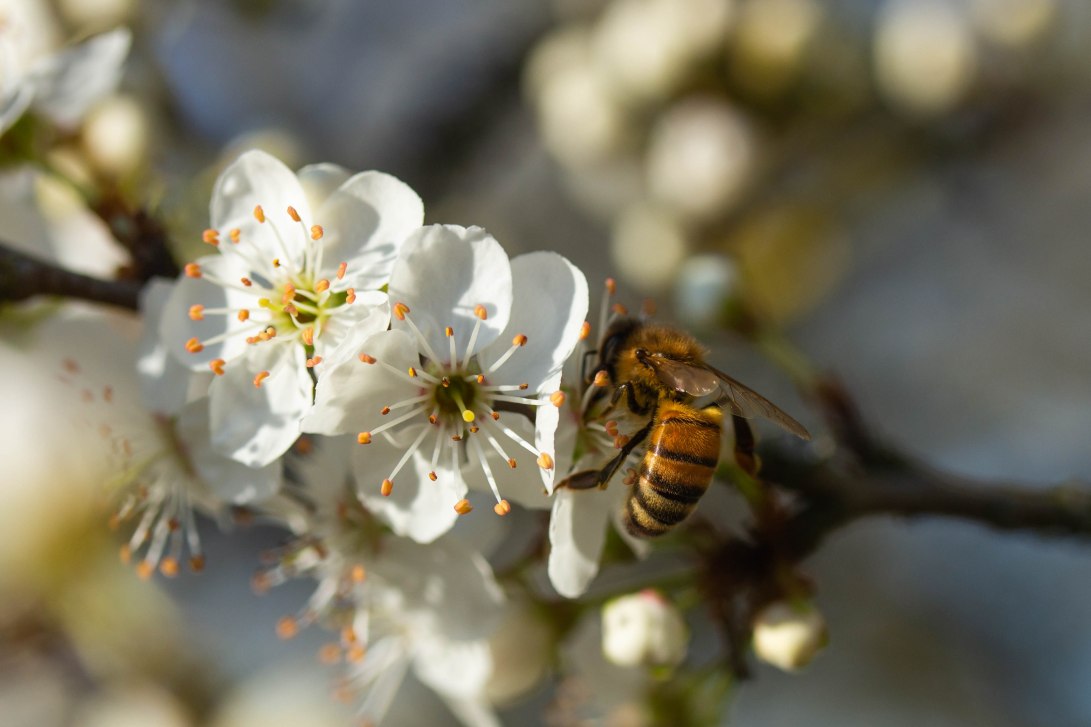
We headed into the open and followed a path that threaded up a hill, giving us a great vantage point over the countryside. A skylark swept across the sky, flying in large undulating dips before settling on the grass. I saw my first cherry blossom of the year: a stunning spray of white blooms that had attracted the attention of dozens of bees. We stood quietly and listened to the steady, buzzing drone as the bees threaded their way between the flowers in search for pollen – an indisputable sound of spring.

IMG_1376

Further down the hill we were just inspecting what we thought was a beech tree when I glanced up and saw a red kite wheeling overhead. We took it in turns watching through the binoculars. It was fascinating to observe the bird’s flight pattern – it moved across the sky in gentle loop-the-loops, following the shape of a tightly coiled telephone cord, all while barely flapping its wings. Its red feathers looked magnificent in the sun, its forked tail silhouetted against the sky.

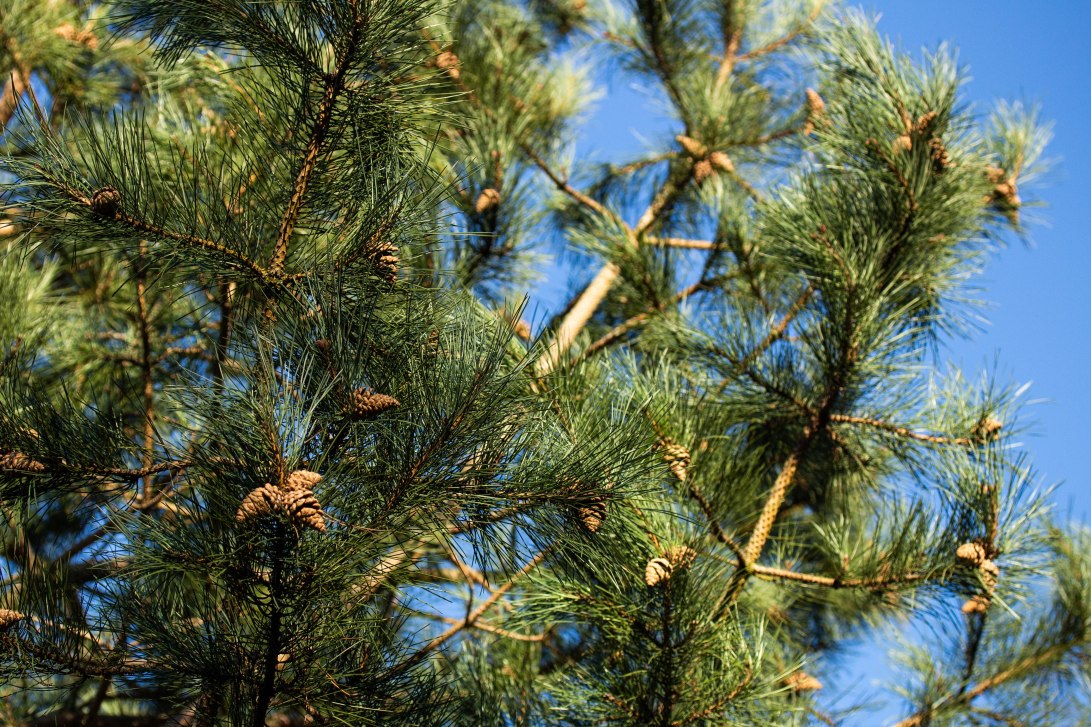
After the kite had drifted out of sight, we heard a soft clicking noise coming from a nearby evergreen. I started scanning the branches for birds, but Chloé told me that the noise was in fact the pinecones cracking open. It was a surreal sound that I couldn’t quite believe at first. Having always assumed that pinecones opened gradually like flower petals, it was incredible to actually hear them popping as they dispersed their seeds. Apparently, the scales of seed-bearing pinecones flex in response to changes in humidity. When it is warm and dry like it was yesterday, they pop open. In cool, damp conditions, they close up. I found this absolutely fascinating.

IMG_1381

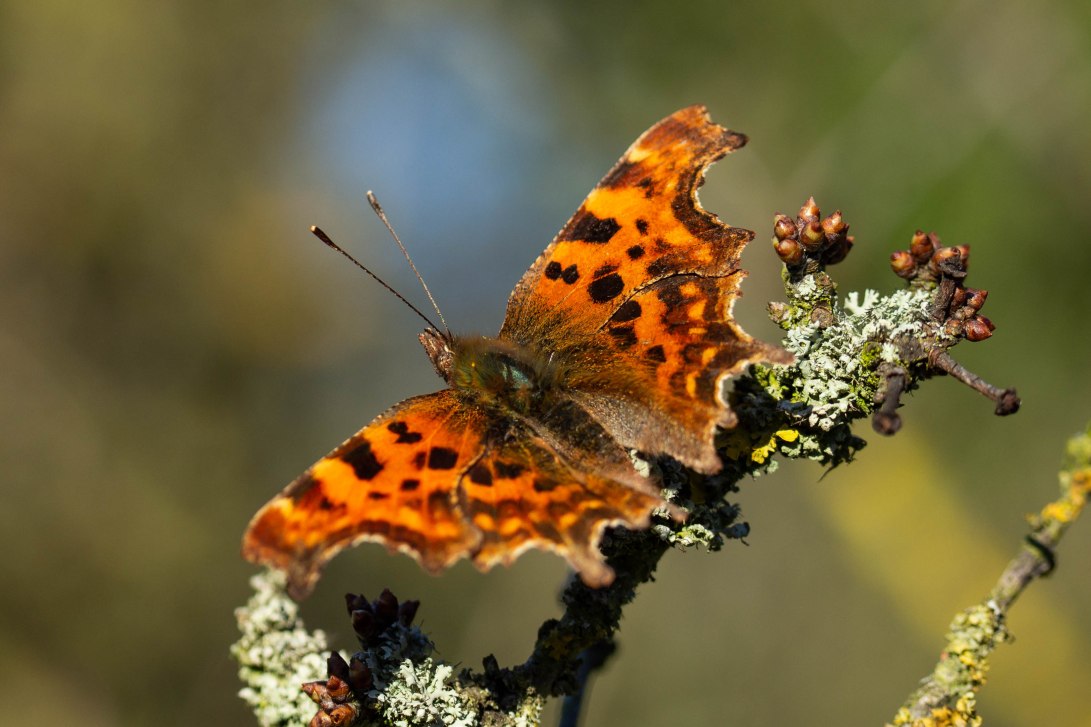
Further on through the park we came across my first butterfly of the year: a stunning comma basking in the sun. With unusual, scalloped edges to its wings, the comma is a master of camouflage, using its mottled colouring to blend seamlessly into dead leaf litter. Its larvae are equally well disguised, with brown and white flecked markings that give them the appearance of bird droppings. This individual was lounging on a leaf with barely a twitch of its wings, allowing us to get lots of photos and observe its beautiful markings up close. Its furry body almost looked iridescent in the sun. After a while it turned round, positioned its rear end over the edge of its perch and released a small black blob before settling again. This was another first, not just of the year but also of my life: watching a butterfly poo!

IMG_1386

Eventually the comma took to the air and fluttered up into the sky. The shadows were lengthening and the warmth was slowly ebbing from the afternoon, so we began to loop back through the park towards Chloé’s house. It was so refreshing to be able to exchange wildlife knowledge with someone. I pointed out birdsong while Chloé helped me with trees. It really is true that walking outside is a form of natural therapy. When I returned home I was inspired to write and reflect on the day. I’ve also been motivated to start up painting again, after seeing some of Chloé’s work. I dug out my watercolours and acrylics and can’t wait to get back outside while spring is here in full force.

Golden Hour

The light was still faint as I drove through fields of green. Cars tore past in a work-fuelled rush, while I cruised leisurely in the opposite direction. My focus was on the forest today – my only objective to walk through trees and listen to wild sounds.

A flash of copper caught my eye and a stunning red kite appeared in the sky, wheeling over the rolling hill as it hunted for unsuspecting mice. I pulled over in a layby – the mud sticky before the sun reached it – and spotted three more circling in large, overlapping loops. Occasionally there was a squabble, and two birds would tussle in the air, cascading downwards and surging back up. It was easy to forget that bounty hunters and egg collectors almost pushed the red kite to extinction only a few decades ago. Now, you could drive down most country roads in Hertfordshire and see at least one. I had never seen four so closely together, and savoured the opportunity to watch such an inspiring conservation success story in the flesh.

Soon the kites drifted further off, reduced to dark flecks in the sky. I left them to their hunt and drove on, arriving at the edge of the forest before anyone else that day. As lovely as dogs were, I didn’t need their boisterous presence this morning. I pulled on hat and gloves and slung camera and binoculars around my neck, then crossed the road towards the woods.

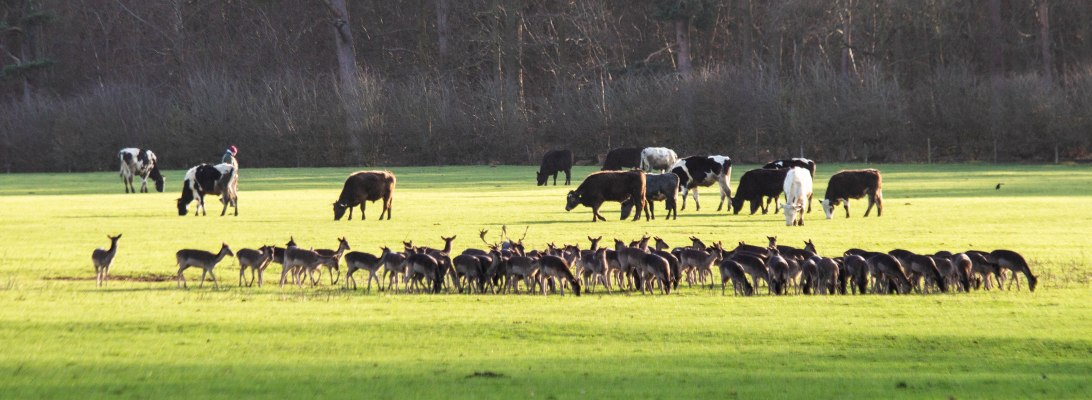
To my delight, the species I’d come to see was already here in abundance. Grazing in a field beside the cows was a herd of fallow deer around seventy-strong. I have always been fascinated by the variation in fallow deer pelts. When I first saw deer at this site, having previously seen photos of white-spotted Bambis, I had thought they were a different species altogether. These fallows were two-tone; dark brown on the top half and a lighter brown on the bottom half, as if they had waded flank-deep in mud. I hastily took to the cover of the trees, creeping as quietly as I could along the fence to get a closer look.

However, these deer were no fools. The next time I stopped and snuck a look through the binoculars, there were several faces turned my way, ears pricked upwards and eyes gazing down the lenses. My cover was blown. I decided to carry on with my approach, heading diagonally and pausing behind each tree. Ears twitched, and after a few more moments of studying me, the herd moved off, first at a trot then at a gentle canter. Among so many deer, there were only two males; as the herd bounded in loose procession across the field I watched two sets of antlers bobbing among dozens of ears.

I continued deeper into the forest, dulling the sound of passing cars with birdsong and wind-rustled leaves. The trees were gently swaying, creaking eerily like squeaky doors. The breeze played tricks on me, sending leaves skittering across my path in a perfect imitation of birds. The thrum of a woodpecker echoed through the cold air. A buzzard called faintly in the distance.

Suddenly there was an invasion of grey squirrels, bounding over the leaf litter and across fallen logs. Two of them darted in a reverse helter-skelter up a thick trunk, their claws scratching wildly in the chase. Another was saving his energy, choosing instead to perch and chew on a shrivelled leaf, twisting and turning it in his tiny hands.

I left the squirrels to their play and headed further along the fence, glancing between the trees to see if the deer might have come back. They hadn’t, but there was a sprinkling of brown birds foraging in the grass, dotted among the cows. For a few moments I couldn’t figure out what they were. Speckled like thrushes, but I’d never seen a large group of thrushes before. Just then the sun appeared, illuminating bright red patches on the birds’ sides. Redwings! My first this winter, and what a show. There were around forty of them, hopping around in the grass. They were too far away for a decent photo, but close enough to watch through the binoculars.

After a while, a startling screech made me jump. The only culprit I could think of was a barn owl, but I was sure they would have finished their night’s hunt by now. I followed the voice further down the trail. It was an ungainly, dinosaur-like squawk that sounded deafening in the tranquil forest. Suddenly, as I was scanning the canopy overhead, a crow-sized bird with white, brown and grey feathers shot out of the leafy cover. I hadn’t seen a jay once when I’d lived in Cumbria, so it had been about four years since my last sighting. I was desperate for a good photo of a jay but this one wouldn’t be cooperating. It darted from tree to tree, pausing only for a few hoarse shrieks before taking to the air again, soon disappearing completely from view. Undoubtedly the prettiest of the corvids, but not the sweetest singer.

Soon the forest was nearly silent again, with just the gusts of wind disturbing the trees. The morning was rolling on, and golden hour had arrived. Between breaks in the cloud, rich yellow light illuminated the trunks, throwing their gnarled, twisted bark into stark relief. It was a glimpse of magic that only lasted until a cloud muffled the sunlight and the forest fell back into shadow.

The cold was beginning to bite my fingertips, and I could already hear the first dog walkers. It was a good time to turn back. I made my way slowly through the woods, past the field and the squirrel tree, looking forward to warming up back home. I was just scanning the trees one last time for any small birds when my eye caught on two more pairs of ears sticking up. The deer were perfectly camouflaged, and after we stood watching each other for a few more moments, the doe stepped out from her hiding place and began picking her way through the foliage. The buck took one more look at me before following her, just as the sun emerged again and made their brown fur shine gold.

There was something undeniably magical about watching deer in a forest. They were elegant and beautiful animals, their habitat just as serene. As I stood watching them stride away out of sight, I felt a strong connection to the forest and the creatures that lived within it. Although I didn’t truly belong here, for just a few short hours I felt at home.

2018 Wrapped Up

December was quite a dry month for me in terms of inspiration, so I apologise for the distinct lack of posts over the past few weeks. It is high time for some fresh writing, but before beginning anything new in 2019, I wanted to reflect on the progress I made in 2018.

IMG_9823

Last year began with my first breakup. After having seen and spent time with a person almost every day and now suddenly being faced with the possibility of never seeing them again, I suffered quite a knock. My inspiration took a significant slump at a time when I needed it most: the launch of my final major assignment at university.

Determined not to let a relationship affect my work, I applied for a grant to help fund an expedition. I had a whacky idea about going to the Isles of Scilly, which at the time seemed a very far-off venture and logistically challenging to say the least. However, after presenting to a panel of judges I was granted enough money to completely cover travel and accommodation. It took a while to come to terms with the fact that the Scilly expedition was really happening.

IMG_0655

It was just the solution I needed for my slump. Spending six days in near-complete wilderness with a list of images to take was a perfect and rewarding distraction. I was filled with exciting ideas for my project – a study on the rare and unique flora of Scilly, including the dwarf pansy which is the size of a baby fingernail and found nowhere else in the UK. I was so fascinated by Scilly’s diverse wildlife and intriguing ecosystems, and I never wanted the trip to end. It is a place I will now treasure, as it helped me through a very difficult time, not to mention providing a huge boost to my confidence. I had funded, planned and carried out a full expedition single-handedly, and returned with a great story to tell. Following the trip was my last exhibition at university, and my project was received well. I even made some money from my photographs, which was an unexpected bonus.

IMG_1482-2

Before I knew it, it was time to finish my degree. I picked up my life in Cumbria and brought it back home to Hertfordshire, where I (foolishly) thought that I would land a job straight away. This wasn’t to be the case, but what followed instead was a truly life-changing experience: an internship in Florida.

I didn’t really know what to expect when I was invited for a two-month internship in America to work with SEZARC. I knew they worked with zoos to monitor their animals and help facilitate breeding, but I didn’t know where I would fit in with a media background. I went simply with the aim of learning as much as I could about a completely new field and enjoying the opportunity to contribute to wildlife conservation.

IMG_9548

I’d never been abroad on my own before, nor had I been outside of Europe before. Upon arrival, I was hit by extreme panic triggered by a strange new place, having to drive a car in a strange new place, and the fear that this had all been a terrible mistake. However, after a very careful car journey from the airport and arriving unscathed at my accommodation, I was filled with perhaps a disproportionately large sense of achievement. My small victory spurred me on, and after a few more shaky days, I found my rhythm.

IMG_1404

Two months later, I was torn between wanting to see my family and friends back home, and wanting to stay a little longer with my new friends in Florida. I had loved the work I did with SEZARC, which was varied and fascinating. I also fulfilled a dream of mine, even if just for a little while: I’d learned to ballroom dance, and met the most kind and welcoming people. Back home in England, I truly realised what an incredible time I’d had in America.

And it wasn’t over. Later in the autumn, I caught up with my friends at SEZARC and was asked to produce their annual report of their progress this year. It is work that I thoroughly enjoy, and I’m so pleased that SEZARC want to keep me involved.

IMG_0051

So, moving forwards. The past year has taught me so much, not just about work but also about myself. In all honesty I have no idea what 2019 will bring. I’m hoping a job, but in the meantime I want to continue writing and learning new things (next up is the guitar!) I have the tendency of being anxious without a strategic plan, but after this year I’ve discovered that you just can’t know where twelve months will take you. A year ago today, I had no idea I would soon be journeying to America by myself, nor was I remotely aware that my relationship was about to end. All through school it’s easy to know what’s next: the following year up. There is no mystery, not even after you finish school. For me, the choice was easy and I was going to university. Now that’s over too, and I’m trying not to be daunted by the unknown because as I’ve found out this last year, the unknown can be incredible.

Waiting In Anticipation

Winter is one of my favourite times of year. Not only is there the excitement of Christmas (which at 21 years old is still very important to me) and my birthday, but also the stunning beauty of nature. Frosts, snow, diluted sunshine – it’s a photographer’s dream. I cannot wait for the first real frost to arrive, when once again I’ll be rummaging around in the garden on my hands and knees clutching my trusty macro lens.

As winter approaches, there is always a rush of social media posts about visiting migrant birds. Stunning images of waxwings, redwings and fieldfare dominate the birdwatching online groups. While I love to see rare visitors in the UK, there are more common species coming to the fore during the colder seasons too.

The long-tailed tit is easily recognisable, with a tiny body and unnaturally long tail. These charismatic birds are nearly always seen in groups, and with a weight of less than 10 grams, sticking together can be a lifesaver in the winter months. As temperatures fall during the night, long-tailed tits roost together in large groups of related birds, lining up on branches and huddling for warmth. Long-tailed tits are particularly known for their altruistic behaviours. If one pair loses their eggs, they will help a relative raise theirs. This behaviour is known as cooperative breeding.

Another bird that is more prominent in winter, but far less endearing than the long-tailed tit, is the great black-backed gull. This formidable animal is bigger than a buzzard, and bad habits including stealing food from some birds and eating others has given this gull a bad reputation. Nonetheless, great black-backs are impressive to watch, and during the winter months they are drawn inland by swelling migrant populations. This means now is a good chance to see this amazing species up close.

One voice that sings long into winter is that of the robin. This plucky redbreast is often thought of as a winter bird, when it is found all year round but simply stays put when other birds migrate during the colder months. Despite their beautiful song, robins are fiercely territorial. Who can blame them, when food and shelter is so scarce during the winter? Perhaps the epitome of Christmas is seeing a plump robin perched on a berry- and snow-strewn branch. It may be a controversial opinion, but I can’t wait for the snow to come. Seeing how bitterly cold it’s been recently, hopefully the wait won’t be too long.


Inspired by a Blowfish

Last weekend I stayed with my grandmother at her lovely house in Frome, Somerset. I love my mini holidays there; my bedroom window overlooks a meandering river, and on the other side is a bustling market and a glimpse of the library through the overhanging trees. I was particularly excited on Saturday morning to discover there was a Christmas fair in full swing. There’s nothing like a fair in late November to get you in the mood for Christmas. Although I still refuse to play festive music before December, a sprinkling of Christmas spirit is more than welcome, especially in such bitterly cold weather.

Once inside, we joined the throng. Shoppers shuffled along tables laden with all sorts of gifts and bric-a-brac. The Cats’ Protection were selling cat-themed stationary, while a young man at the Somerset Wildlife Trust stand was doing his best to sell membership to a middle-aged woman whose attention was slowly waning. I am a firm supporter of the Wildlife Trusts, but membership recruiters have a way of pulling you in for a short (thirty minute) chat and not letting go. Past experience taught me to avoid his gaze, and I spotted the table I’m always searching for: the one covered in books.

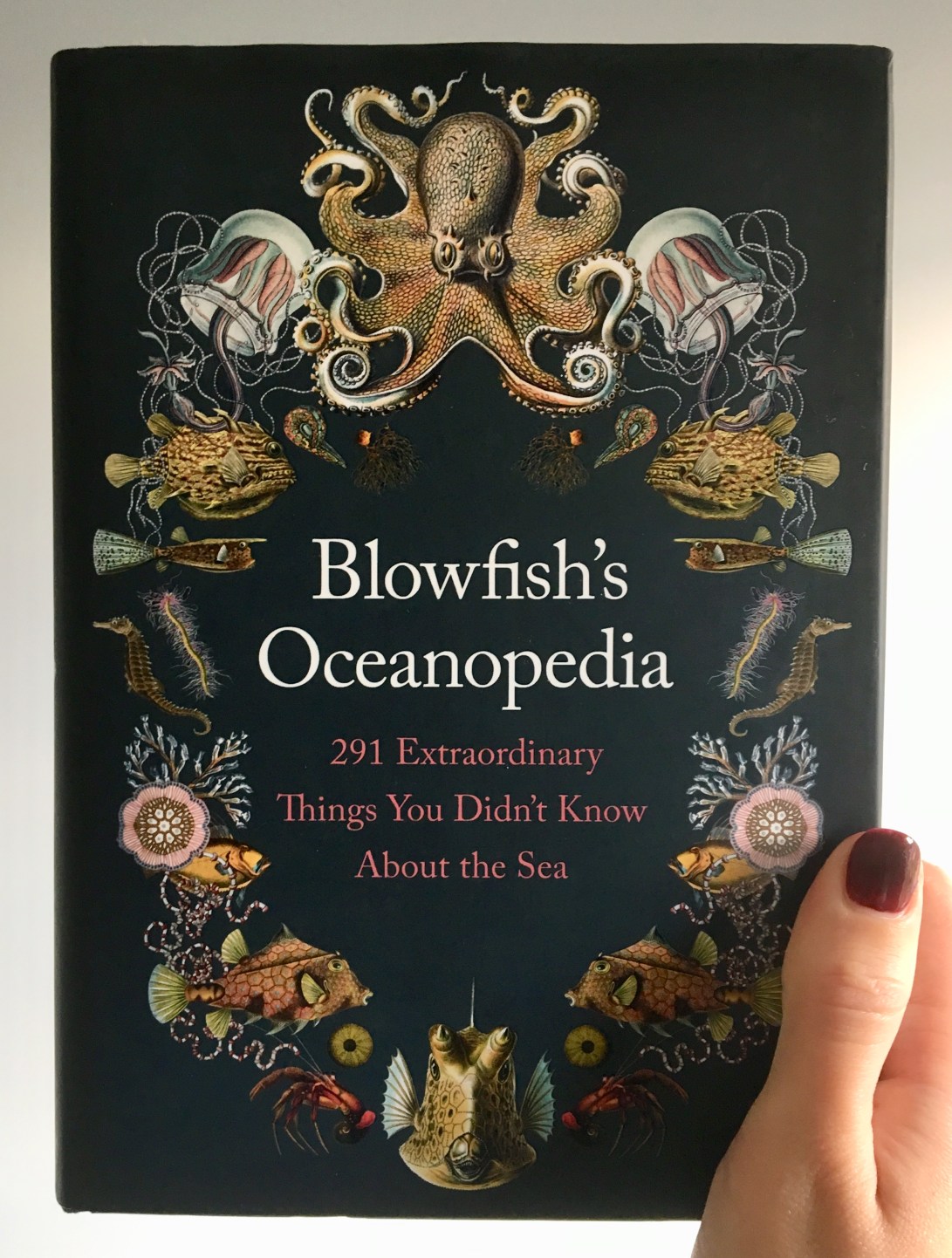
As always, there was a decent selection of dog-eared Maeve Binchy and Danielle Steel paperbacks, but amongst covers showing watercolour landscapes and female silhouettes staring wistfully into the distance was the tail of a fish. I tugged at the fish and my eyes fell on beautiful line drawings of an octopus, jellyfish, seahorses and more. It was such a satisfying cover, and the book was called “Blowfish’s Oceanopedia”. It was one of those dip-in books with titbit information: “extraordinary things you didn’t know about the sea”, it said. As a person who is fascinated by the sea but doesn’t really know anything worthwhile about it, it seemed the perfect read for me.

The price was even better. A brand new book, published last year at £17.99, and I was charged a pound for it. Books were amazing, but books for a pound were magical.

IMG_2408

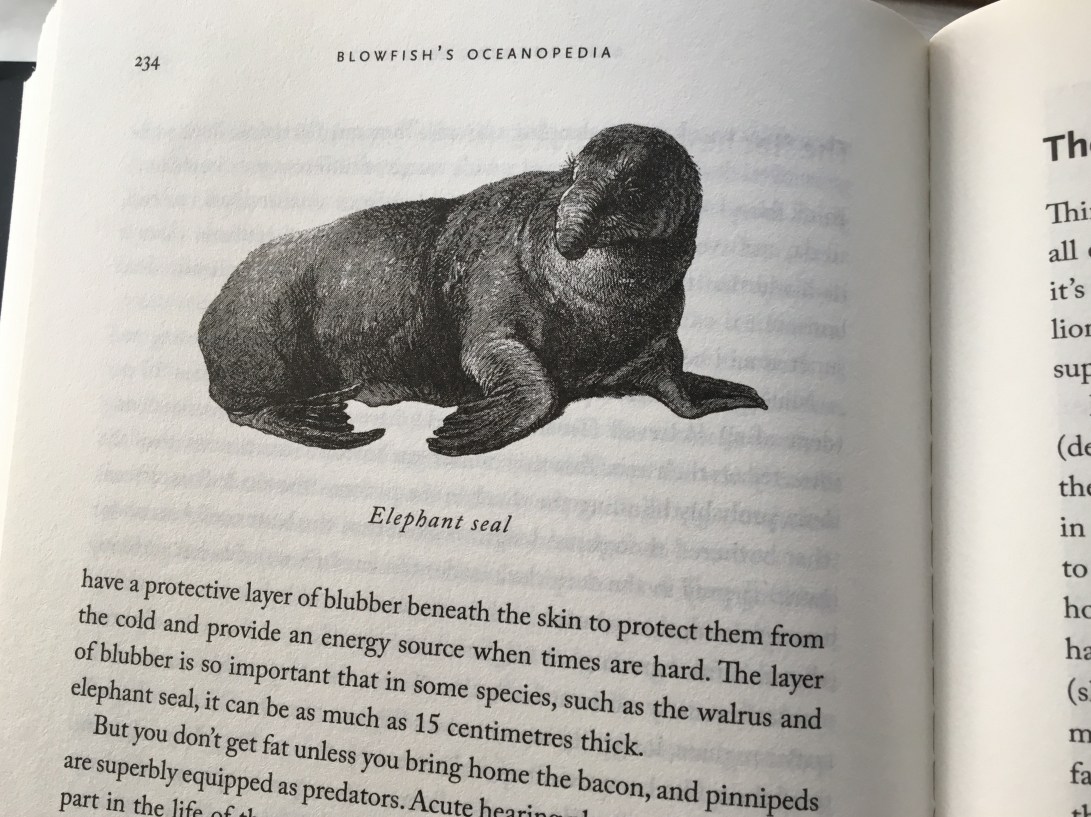
After finishing my loop of the fair – and winning a raffle Christmas present in the process – I returned to my grandmother’s house and instantly curled up in my favourite chair to begin reading. Within minutes I’d learned a decent thing or two about elephant seals. I am quite terrified of elephant seals, but as with my similar unease towards snakes and sharks, I’m also fascinated by them. The Blowfish revealed just how important the southern elephant seal’s “trunk” was to its survival. During the breeding season, males weighing up to 4 tonnes battle it out to win ownership of the harem of females. Understandably, this is a full time job, and prevents males from returning to the water to feed and drink. So, to avoid dangerous dehydration, males use the complex nasal passages and specialised blood vessels in their fleshy trunks to recover around 70% of the water vapour in their exhaled air. It’s a genius example of life-saving recycling.

IMG_2405

This is the sort of book I dream of someday replicating; an instrument to share my knowledge and passion with like-minded people. At the moment I’m not an expert in any one field, but the idea of spending decades of your life learning about something and then teaching others in the form of writing is, to me, the perfect way to preserve your work.

The Blowfish, also known as Tom Hird, is a marine biologist who has a deep love for the ocean and life within it. He’s the perfect voice for a potentially complex subject matter, using humour and everyday situations to diffuse a tricky concept. Speaking in the same language as the layman is something some scientists find extremely challenging. I’m certainly not a marine biologist, but nor am I completely naïve to the science of the natural world, so I often feel my combination of knowledge gives me an advantage. I can understand a lot (not all) of what scientists do, but I also appreciate how that needs to be adapted to inform the public without dumbing down and insulting them. I’m sure there are hundreds of published papers on the adaptations of southern elephant seals which required many hours of hard work, but to the average Joe wanting to find out something interesting about wildlife, a book like the Blowfish’s will be a much bigger success. I believe the key to nature writing, or any writing for that matter, is finding the balance between informing and entertaining. The Blowfish’s Oceanopedia has been a source of great inspiration to me – a writer hoping to one day publish books of my own. The passion and enthusiasm in the author’s prose is infectious, and makes me want to jump in the sea right now and see for myself everything he has had the opportunity to witness.

I Need Your Help for Wildlife Blogger of the Year!

If you love wildlife, then I need your help!

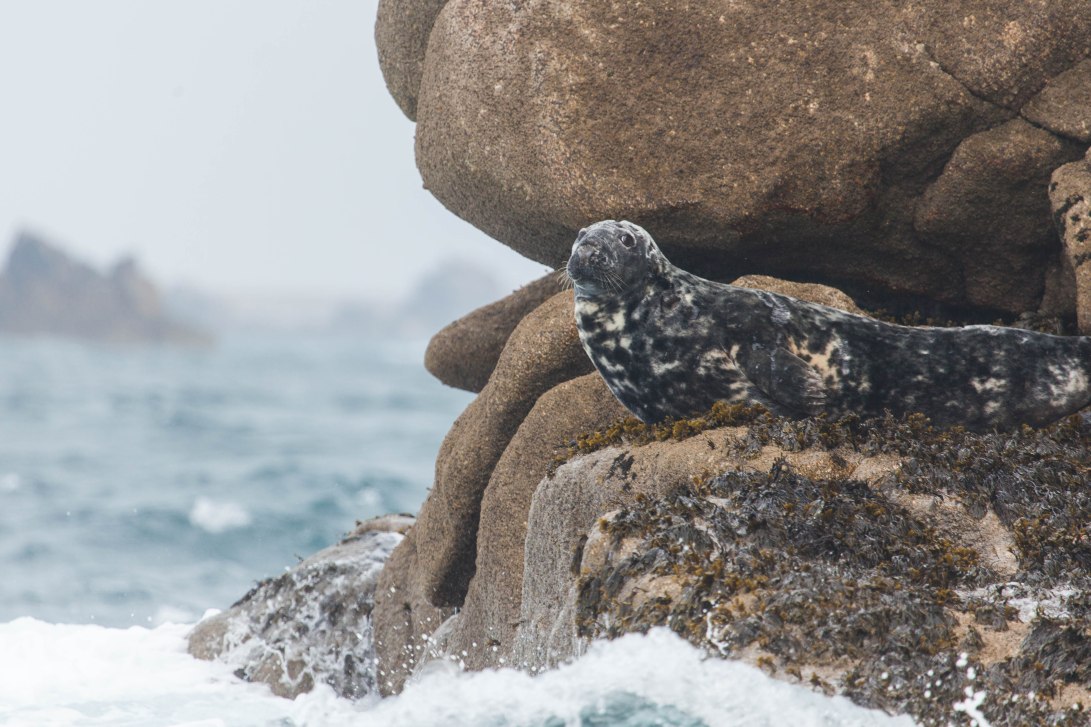
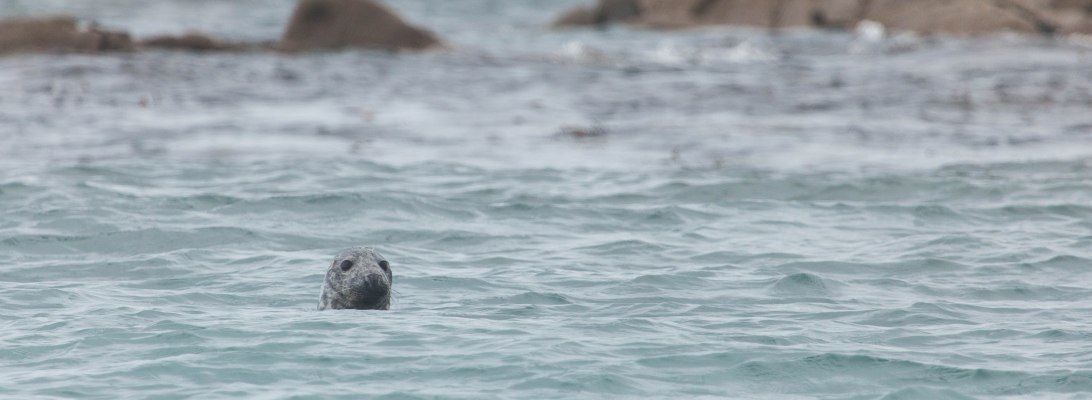
I’ve entered the Wildlife Blogger of the Year 2018 competition, organised by Terra Incognita. The theme is “a favourite wildlife moment of 2018”, and I chose my encounter with a wild grey seal in the Farne Islands, which some of you may remember reading about.

I chose this story because it was an incredibly special experience and a reminder to me that we should not be constantly connected to technology. I had a GoPro with me while I was snorkelling but was so surprised by what happened that I completely forgot to film. At first I was disappointed, but on reflection I am so glad that I stayed in the moment and didn’t miss a single second. I interacted with a wild animal with absolutely no distractions, and it has become one of my most precious memories of time spent in nature. I hope my story reinforces the need to connect with wildlife and shows just how rewarding it can be.

As well as the overall winner of Wildlife Blogger of the Year, picked by a panel of judges, there is the Reader’s Choice winner award, which anyone can vote for. If you enjoy my story, I would be thrilled if you could cast me your vote.

You can read my story and vote for me by following this link. Thank you so much!

Why are Island Tortoises so Large?

New research has shown that giant tortoises may not be large because of their island lifestyle, as previously thought. A team of researchers has gathered extensive genetic data from both living species and fossils of extinct species to discover the truth of how tortoises have evolved, in an attempt to answer the question of how they have become such giants.

Tortoises are an extremely diverse group of animals, ranging in size from 8cm long to one metre long. The largest species is the Galápagos tortoise, which can weigh nearly 500kg. So why has gigantism evolved in tortoises? Despite studies on these fascinating animals since Darwinian times, the answer is still unclear. It was thought that, like many species, tortoises followed the “island rule”: a tendency of dwarfism among large animals and gigantism of small animals living on islands. For example, in mainland Florida the white-tailed deer is abundant, but in the Florida Keys – a tropical archipelago of islands off the south coast of the state – a dwarf version of the mainland deer is found, known as the Florida key deer.

It is thought that island dwarfism is caused by limited resources, while a reduced pressure from predators triggers island gigantism. However, in the case of tortoises, it was suggested that these animals were already large in size before colonising remote island habitats. With so many giant tortoise species now extinct, it is impossible to uncover the reason behind gigantism in these animals without using the fossil record.

Galapagos_giant_tortoise Matthew Field
A dome-shelled Galápagos giant tortoise (Credit: Matthew Field) http://www.photography.mattfield.com

Now, Dr Evangelos Vlachos from the Paleontological Museum of Trelew in Argentina and Dr Márton Rabi from the Martin Luther University Halle-Wittenberg put together the most complete family tree of both extinct and surviving tortoise species so far, in an attempt to piece together the reasons for their variation in size. Interestingly, it was discovered that gigantism occurred on the mainland too, in Africa, Europe, Asia, North and South America. Interestingly, all of these mainland species became extinct.

“The fossils highlight a great number of extinct mainland giant species and suggest that the evolution of giant size was not linked to islands,” says Dr Evangelos Vlachos, “We expect that warmer climate and predator pressure plays a role in the evolution of giant size but the picture is complex and our sampling of the fossil record is still limited.”

So what led to the extinction of these giant mainland tortoises, and why have their island variants survived? It is thought that predation and climate change contributed to these extinctions, but it is intriguing to think that the island rule may not be the overriding factor for giant evolution, calling for more research into what causes such variation in size among these animals.

Tortoises have roamed the planet for over 55 million years – they survived the mass extinction that wiped out the dinosaurs, but now face an even graver threat: people. Human-induced habitat loss is the most significant threat for tortoises today, and they face an uncertain future. Thanks to research such as Vlachos’ and Rabi’s, we are able to better understand how these successful animals have evolved, and will hopefully continue to evolve for many more years to come.

To read more on this research, visit Science Daily.

A Silent Extinction

Giraffe have always been special to me. Even with long, gangly limbs, they move with unhurried poise and confidence, but still look endearing with their huge eyes and long eyelashes.

On TV this week there was a repeat of an episode in Attenborough’s Natural World series: Africa’s Gentle Giants. The story centred on Dr Julian Fennessy, Co-Founder and Co-Director of Giraffe Conservation Foundation. Fennessy has been working to conserve giraffe for more than 20 years, and is a true pioneer in research on this secretive and surprisingly little-known animal.

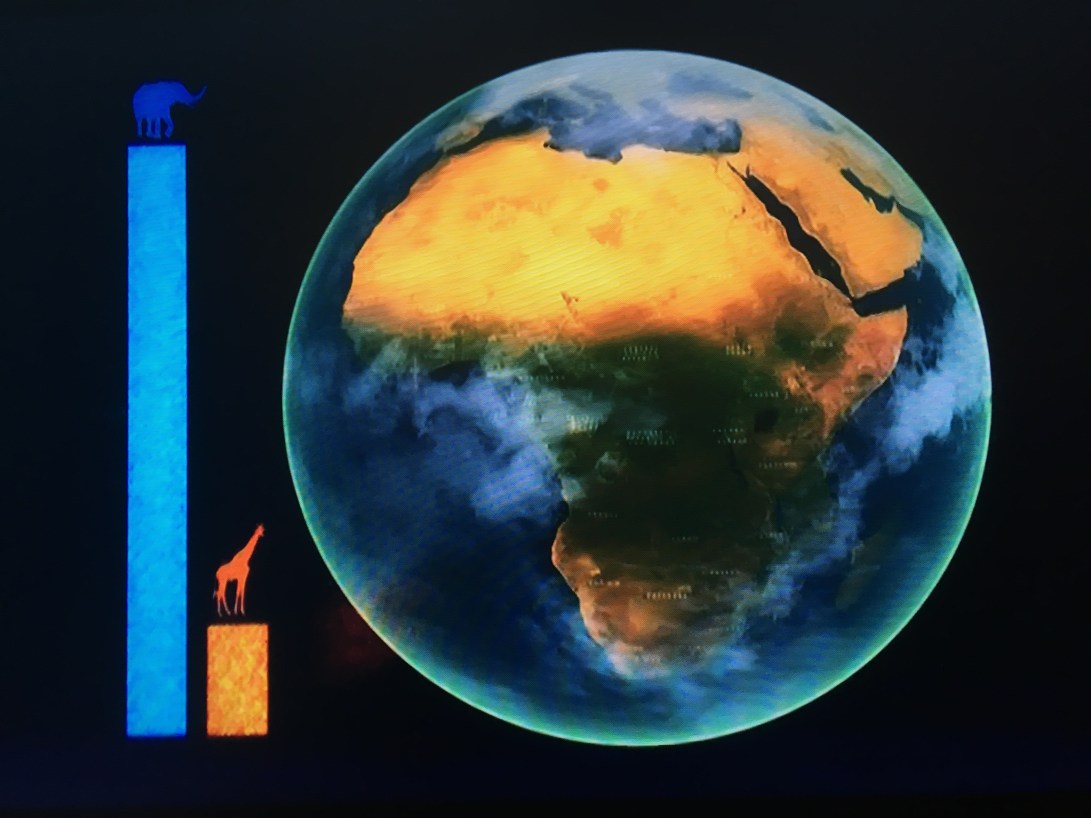
Many people, including myself until very recently, are naïve to the true situation that wild giraffe currently face. Among other African species such as elephants, gorillas and leopards, for some reason giraffe have taken a backseat in the public eye. While words like “beautiful” and “majestic” always spring to mind when we talk about giraffe, how many of us could confidently say how many there were? I was shocked to discover how wrong I was when giraffe statistics were presented alongside those of another African giant. Currently, there are around 500,000 African elephants left, but only 90,000 giraffe. For the first time ever, I doubted what David Attenborough was telling me. How could that be possible? I began to look online, but of course it was true. There are nearly five times as many African elephants than giraffe left on the planet. It’s a statistic that astounded me.

IMG_2107
Source: BBC*

Giraffe are not only unmistakable symbols of Africa and the tallest animal on Earth, but they are important to the ecosystem. Like bees, giraffe are excellent pollinators, and pass pollen from tree to tree as they graze. They also spread seeds in their dung, another vital part of maintaining a diverse and sustainable landscape. Conserving giraffe protects not only the animal but its environment, ultimately affecting so many other species that call Africa home.

In two decades, giraffe numbers have fallen by 40% and they have become extinct in seven countries. They are hunted for meat and their habitats are slowly disappearing. One of the most vulnerable populations – a group of less than a thousand Rothschild’s giraffe – lives in Murchison Falls National Park in Uganda. These animals are walking on a literal time bomb; beneath their feet lies 75% of Uganda’s discovered oil, and Fennessy knew that plans to drill would spell disaster for these endangered animals. His ambitious and dangerous mission was to relocate twenty giraffe from one side of the River Nile to the other, where it was hoped that these pioneering individuals would start a new population in a safer location.

As I watched the team of dedicated vets, rangers and scientists attempt to move one-ton animals whose kick could decapitate a man, I was filled with such admiration and respect. It is all very commendable to donate money to charity, but these people were out in conflict areas risking their lives for giraffe. As the mission progressed, I got quite emotional, not just because the threats these beautiful animals face are so unnecessary and unjust, but because I was completely unaware. What little chance these animals have if even wildlife enthusiasts like me don’t know their situation.

It wasn’t just the numbers of giraffe that I was unaware of; so much of their behaviour remains unseen to even experts like Fennessy who have studied them for a vast proportion of their lives. By the Hoanib River in northwest Namibia, he took a sensitive camera out to film giraffe at night. As he watched, a giraffe curled up on the exposed ground and fell asleep. It was something Fennessy had never witnessed before.

“In zoos they study it,” he explained, “Basically when their neck is down it’s REM sleep, so maybe these giraffe are dreaming. I’ve never seen that in the wild.”

IMG_9649

The fact that we don’t know how wild giraffe sleep says a lot about how overlooked they are. It seems there is the assumption that because we don’t hear about a particular animal as much, it must be doing fine. However, in the case of the giraffe this couldn’t be further from the truth. So why do we know so little about these animals? Perhaps it is because they are only listed as “Vulnerable” on the IUCN Red List of Endangered Species. An article published two years ago, at the time that this episode was first released, hopes that the work Fennessy is doing will help change the status of giraffe to “Endangered” or “Critically Endangered” and therefore encourage greater conservation efforts. Unfortunately, as 2018 draws to a close, the giraffe is still listed as “Vulnerable”. I can only hope that this change in status does come into effect to raise awareness of this silent and rapid extinction that is passing so many of us by, or soon it may be too late.


*Natural World “Giraffe: Africa’s Gentle Giants.” (2016) BBC. 23rd June.