Volunteer Interview

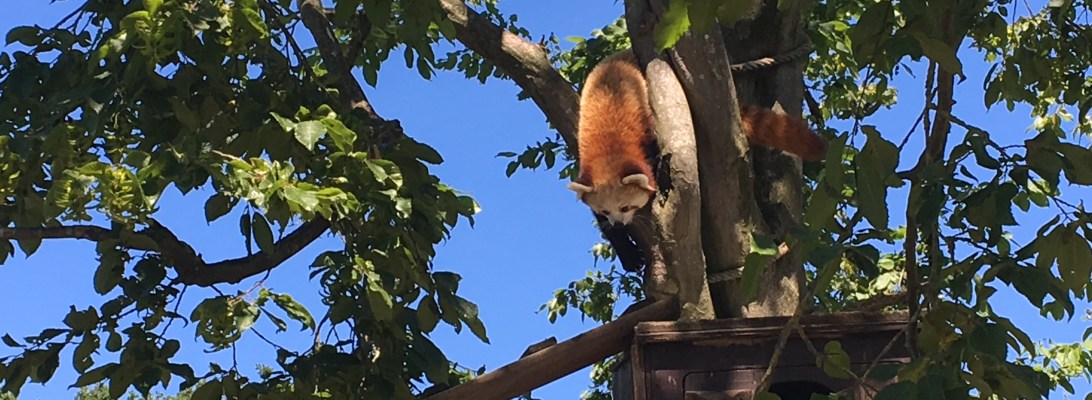
I have now completed six volunteer shifts at Paradise Wildlife Park and although at times it’s been challenging, especially in the recent 30 degree scorchers, the experience so far has been extremely rewarding. I’ve worked on three of the six sections – paddocks/farmyard, small mammals and primates – and each has offered me new experiences. In just a few days’ work I have fed tapirs by hand, helped weigh a group of meerkats and been pooed on by Nam Pang the red panda as I cleaned his enclosure. This wasn’t the sort of gratitude I was used to but it’s something not everyone can say has happened to them.

Now a member of the Paradise Park volunteer Facebook group, I saw a post asking for volunteer interviews for the website’s blog. Eager to get involved, I submitted an interview and in a few days the final post was published. I’d been told that due to the high number of responses, the post would feature quotes from several volunteers not just from the Animal Park but across all areas of Paradise. The following are my answers in full, but the final post can be found here.


Why I started volunteering at Paradise:

Having just graduated from university studying Wildlife Media, I’ve spent the past three years photographing and blogging about wildlife. Now I want hands-on, practical experience working with animals. Volunteering at Paradise gives me the opportunity to be part of a fantastic organisation that is passionate about celebrating and conserving some of the world’s most beautiful species.

I’ve been visiting Paradise since I was a child, and have fond memories of watching the talks, reading all about the zoo’s occupants and taking ride after ride on the dinosaur train. Returning as a volunteer, I can see it is still just as exciting, if not more so.

Best parts of the day:

While I enjoy many aspects of work as a volunteer, one of my favourite parts of the day is walking across the park, to and from the enclosures. During this time I get to see so many different people of all ages getting excited about and inspired by the animals. I’m frequently stopped and asked questions, and while I’m still no expert, I’m so happy when I can answer them and enhance the visitors’ experiences. My walks across the park also allow me to glimpse the large carnivores that I’m not allowed to work with just yet!

Most challenging parts of the day:

I began volunteering almost at the start of the heat wave, so have found it really challenging to lift heavy muck buckets and scrub floors clean while the sun beats down on my back! While volunteering at Paradise is physically demanding it’s also incredibly rewarding, and I savour the chance to work hard. I come home with aching arms and legs but know I’ve had a successful day!

Would you recommend other people volunteer (either at Paradise or in general)?

During my time at university I did a lot of volunteering at various places including Oxfam bookshop and the Lake District Coast Aquarium. As more and more people my age have degrees, it’s essential to also carry out plenty of work experience, and for me volunteering is invaluable. Not only can you pursue your interests, but you can gain so many different skills that can be brought into almost any working environment. Even in a few days volunteering at Paradise I have developed skills in communication, self-confidence and learnt so much about how much work and commitment it takes to run a successful zoo. I couldn’t recommend volunteering enough. I believe it brings an essential edge when applying for any job.

What are your ambitions and/or long term hopes for volunteering?

I am hoping to pursue a career in animal conservation and believe that volunteering at Paradise will help me develop my skills and learn what it takes to be successful in such a competitive field. I hope that some day I can be a permanent member of the team and have the opportunity to share my passion with the public. I welcome the responsibility of caring for wild animals and want to encourage a greater interest in conservation, particularly among young people.

Funniest volunteering story:

It was a scorching hot day and I was out in the reindeer enclosure removing old bedding and scrubbing the floors. As I was concentrating on a particularly stubborn piece of dirt I nearly jumped out my skin at the sound of an almighty roar from behind me. I spun round, expecting to come face-to-face with an escaped white lion, but instead saw a family gazing up at the Triceratops, whose audio had just been triggered by the motion sensor. I felt incredibly sheepish and hastily got back to scrubbing. Surrounded by reindeer, red deer and red foxes, I had not expected to also be spending the afternoon in the Cretaceous period!

Favourite animal at Paradise and why:

It sounds so predictable but like many visitors, I love the unique white tiger, adorable red pandas and equally sweet Asian short-clawed otters. However, for me the most charismatic animals so far have been the ferrets in the Farmyard. Each morning, once I’ve cleaned and fed the rabbits and guinea pigs, I wait for the keeper to remove the group of six male ferrets from their enclosure so I can clean it. This sounds simple, but opening the gate wide enough to grab one ferret is enough for all six to jump out, so catching them is no easy task. Ferrets are notoriously feisty, and once they’re shut safely in their boxes I can see their tiny faces watching me. They are a treat to watch, and easily as entertaining as any tiger.

Unforgettable moment at Paradise:

Although I’m still very new at Paradise and will undoubtedly have many more great memories, my most treasured moment so far happened on my very first morning. It was my trial day and I was sat in the Discovery Centre feeling very nervous about the day to come. Suddenly, I heard the sound of a white lion stirring from sleep – its deep, guttural roars echoed across the park. The sound made the hairs on my neck stand up. It was at that moment I knew why I was here, and I put my absolute all into my trial day and was thrilled when I was invited to return as a volunteer.
Fresh Inspiration

Recently I’ve become a writer who doesn’t write much. I have ideas, many a day, of what to write, but somehow I never get round to making them a reality. I’m blaming this latest case of writer’s block on my new occupation, so I’ve decided to write about that. I have been accepted as a volunteer at Paradise Wildlife Park in Broxbourne, Hertfordshire. It was the longest application process for a voluntary position I’d ever experienced, but after interview, induction and trail day I was successful.

Volunteering in a small aquarium in Cumbria could not have prepared me for work in a zoo. Although far from large with only around 400 animals (in comparison with Chester Zoo’s 20,000), Paradise Park still requires plenty of hard work and for me it’s a physically demanding and challenging role. I anticipated this beforehand and should have been ready, and yet I still came home from my first day with aches in every limb, rashes on my arms from the hay and mysterious scratches from the day’s manual labour. As is expected of all volunteers, I spent most of my time with what the animals left behind (you cannot believe how heavy camel poo is) and in the July heat I worked up a significant sweat.

And the funny thing? I loved it. Three years of university has been a mental workout but not so much a physical one. My arms are little more than jointed matchsticks, and just as strong. Volunteering at a zoo will be such a great opportunity to build up some strength. There is also something immensely satisfying about scrubbing a paddock clean, even though the moment the animals are let back in they completely rearrange the fresh bedding and christen it with droppings.

If I had a pound for every time I’ve been asked “So what’s next?” since I came back from university, I could retire without having started a career. I still don’t know what I want to do or where I want to be. While I still love writing and photography, I feel a pull in a new direction – the daily grind of contributing towards a successful and high quality zoo. There is something very appealing to me about caring for wild animals in a place that values them (that’s the important bit) and sharing my passion with other people. I watched the Small Mammals keeper giving a talk as she fed the red pandas and I had an urge to join her, but my knowledge of red pandas is really quite limited. I want to study them, I want to know everything there is to know about these animals, and share that with people. And I believe I can do that by writing but also by being there among them.

I’m fully aware that becoming a zookeeper is an incredibly gruelling and challenging process. I’m also aware that my current academic background will not help me in that mission. Every keeper I’ve spoken to so far has begun by volunteering, and worked their way up the ladder. So I have joined Paradise at the very bottom, and the only way to go is up. I’m inspired by this, and know that I have to pursue it.

A Manic Few Weeks

The past few weeks have been a whirlwind! I have now completely moved out of Carlisle and come back home in Hertfordshire to spend time with my family and Cockapoo puppy, who at five years old is finally starting to calm down.

I’ve been back for a fourth visit to the Warner Bros Studio Tour of Harry Potter, and was throughly impressed by the new Forbidden Forest, not to mention the Butterbeer ice cream. I won’t give away too many spoilers as it’s an incredible place that you need to see to truly believe. I’ve been a Harry Potter fanatic for a million years and always get teary-eyed when I go. Even my Uncle Rod who was indifferent to Harry Potter ended up taking dozens of photos.

IMG_1027

I’ve also had my final results from university and was thrilled to discover I achieved first class honours, though I have to wait until November until graduation! It seems as though I shall need the cap and gown to keep me warm after spending the summer in the much hotter south.

IMG_1048

But I barely had time to celebrate my results before I managed to secure an internship at an animal sanctuary in Florida! I will be working for SEZARC (South East Zoo Alliance for Reproduction and Conservation) and I’ll be getting involved with a lot of lab work. One of SEZARC’s main lines of work is carrying out health studies to try and resolve reproductive issues that rare and endangered animals face when breeding.

It’s such an exciting and important area of conservation and something I’ve never had the chance to get involved with. I’m so excited to begin, but I’ll need to wait a little longer yet. I fly out at the start of August and work for two months before returning at the end of September. Just yesterday I booked all my flights as well as an international driving licence. Driving in America is quite a daunting prospect but seeing as there is no public transport in that part of Florida, I don’t have much choice! I’m quite nervous about going so far alone but I know I’ll love it once I get into the swing of things.

Now I have all of July to continue preparations for my extraordinary expedition! I dread to think how long my packing list will be…

The Farne Islands – Part 2

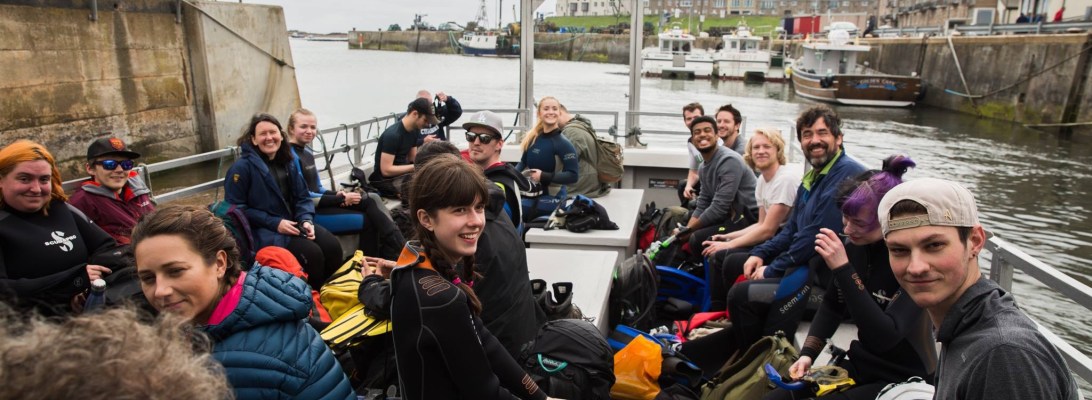
After sharing the waves with a herd of very curious seals, it was now time to get changed on a boat with thirty other people. This was a challenge, especially as getting a wet wetsuit off required the flexibility and strength of a contortionist. I teamed up with another girl to make a temporary changing cubicle, which made it somewhat easier.

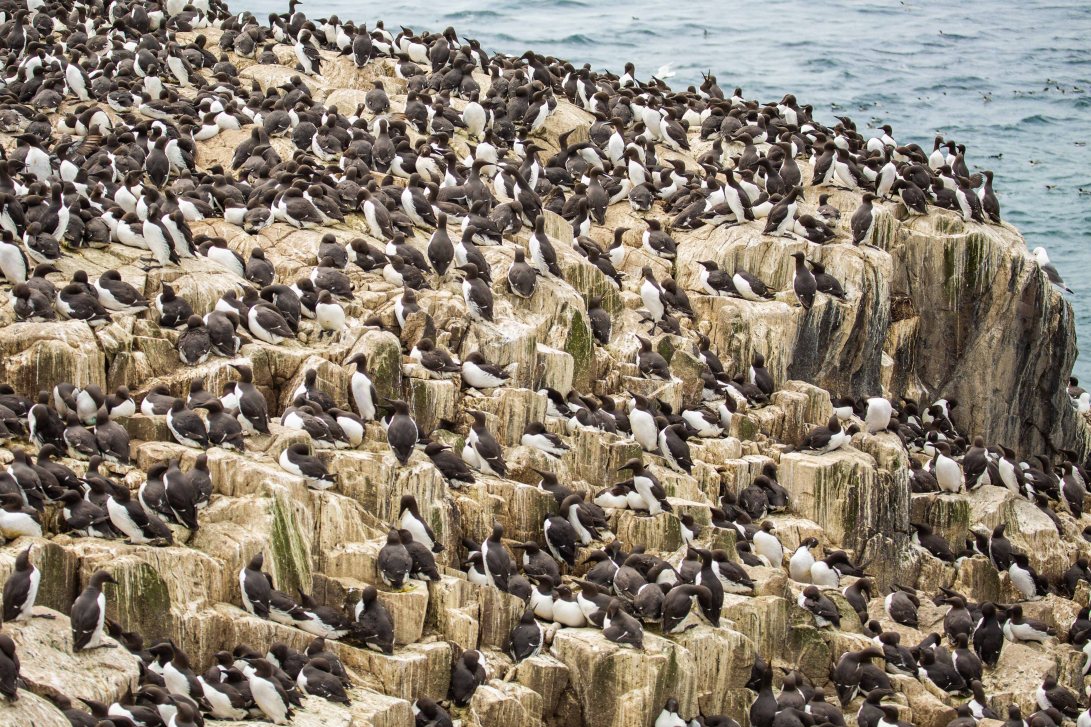
Once everyone was back in dry clothes, the boat headed to Staple Island for a spot of birdwatching. On the approach, all we could see and hear was guillemots, a blanket of birds completely covering the rock. People were dotted amongst them but vastly outnumbered. It was the kind of ratio I liked to see.

O12C4099-2

On dry land, it was impossible to decide where to start. I was used to choosing a spot to sit and wait for the wildlife to appear. Here, we had joined a metropolis of seabirds all going about their business without blinking an eye at what we were doing. Red posts were stuck into the ground at places, and as we passed I notice each one signalled the presence of a nest, some situated almost on top of the path that threaded through. Shags watched nonchalantly as we passed, eyes half closed.

O12C4243

Some of the guillemots looked different to others. While most had completely brown heads, a select few had bright white rings around their eyes. I asked Cain, who told me they were bridled guillemots. Back at home I looked them up, and discovered that these individuals are an example of dimorphism. Usually relating to variety in plumage colour, dimorphism is the existence of two distinct forms within a single species. This is different from two subspecies, as both guillemots and bridled guillemots have the same Latin binomial: Uria aalge. Were they subspecies, they would have an additional subspecies name. Furthermore, subspecies tend to be permanently geographically isolated from one another.

O12C4247

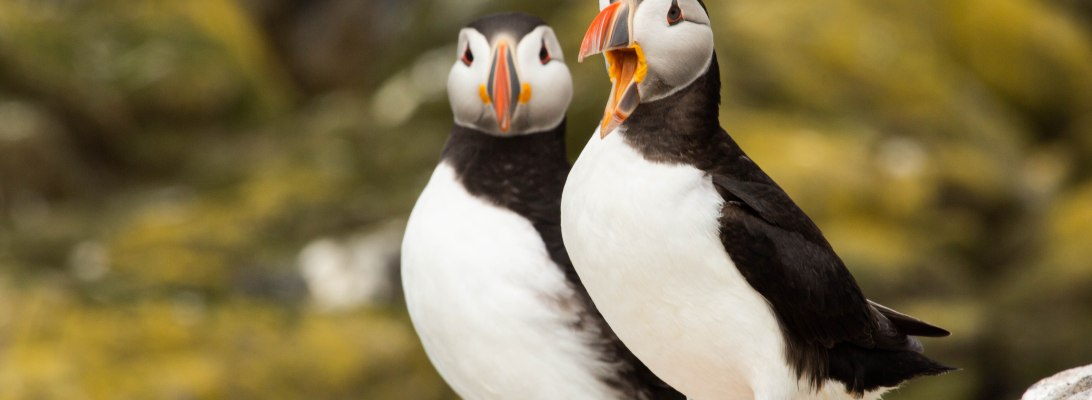
After watching the guillemots for a while, I found where the puffin clique spent their time. Away from the larger birds, there were countless burrows in the grassy banks, and after a while puffins would pop into view or land and duck inside, sometimes carrying large mouthfuls of sandeels in their vibrant bills.

O12C4119

I had been so excited to see my first puffins on the Isles of Scilly, and while I still treasured the memories, those had been distant sightings compared to now. Here on the Farnes, puffins sat twenty feet from two-tiered photographers, lying on the rock or glancing from side to side with their sad clown eyes. They were a joy to watch, and so much smaller than people think!

O12C4204-2O12C4194-2

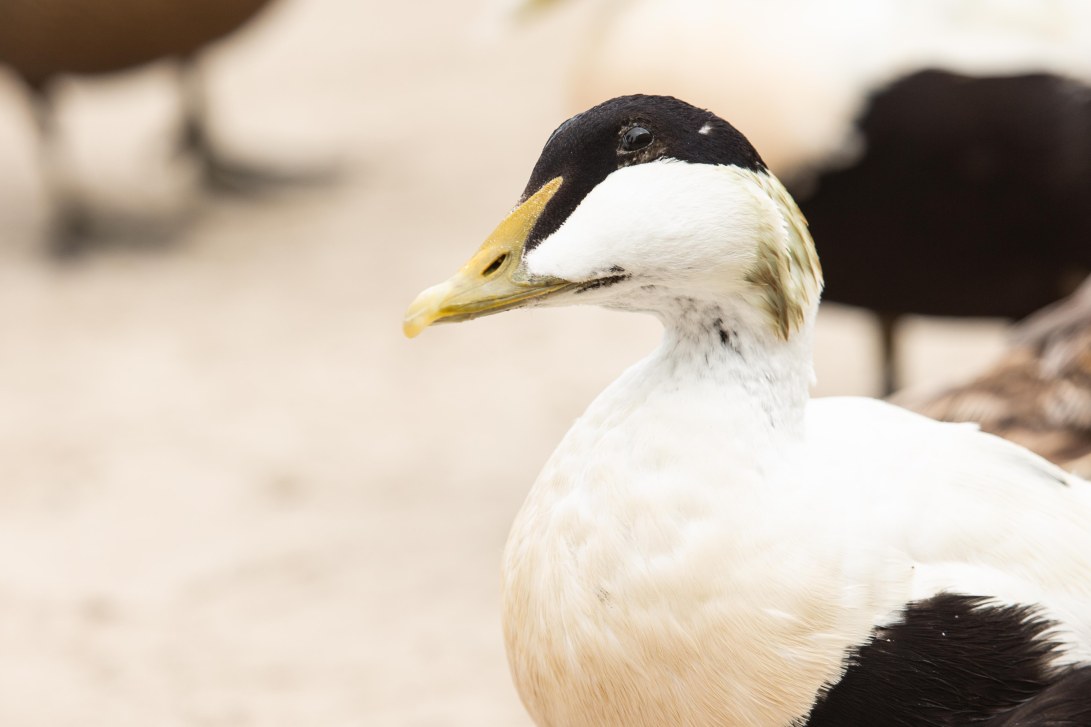
Sadly, the time flew by and before I knew it I was back on the boat and leaving Staple Island behind. When we arrived into Seahouses, I caught the irresistible smell of fresh doughnuts on the breeze. Tired after the swim, I made a beeline for the van and bought a bag to sit and eat on the bay. A group of very tame eider ducks approached, eyeing my bag with enthusiasm. Unfortunately for them, I wasn’t sharing my doughnuts with anyone, but I did make use of the opportunity to photograph the beauties so close.

O12C4286-2

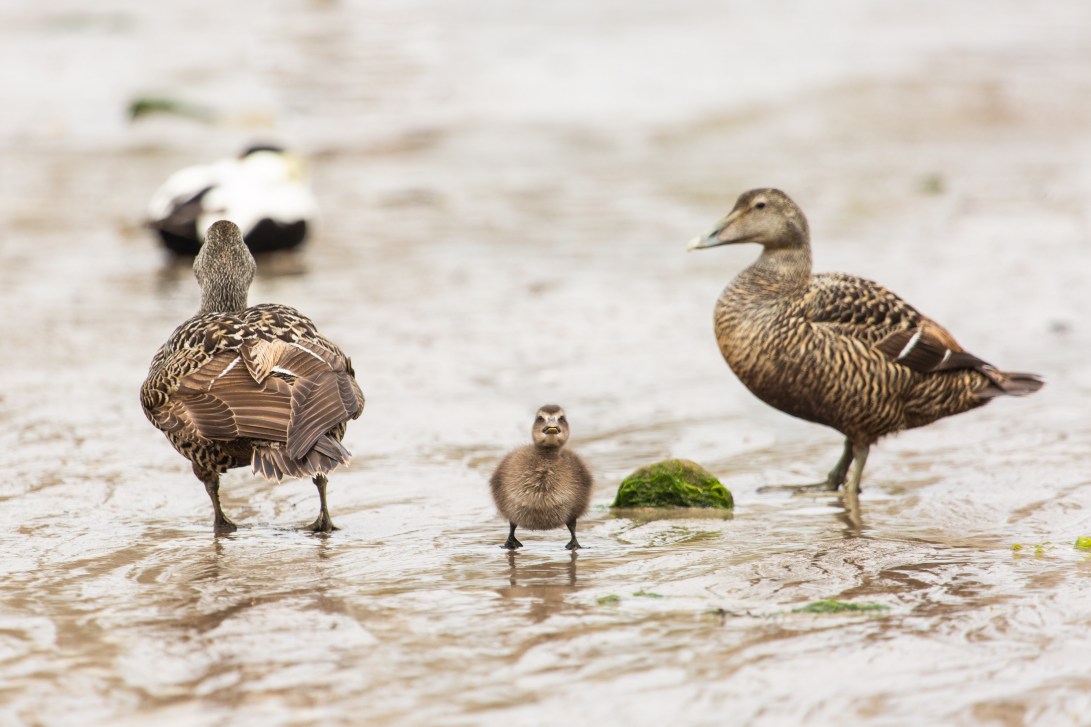
I was thrilled to see ducklings accompanying some of the females, perhaps one of the cutest baby animals there is. As the females lowered their bills into puddles of seawater, the ducklings copied, mirroring the adults’ every move. Watching such intimate family behaviour while I devoured my doughnuts was a perfect way to end such a dramatic and unforgettable day at sea.

O12C4306-2O12C4309

The Farne Islands – Part 1

Our trip to the Farne Islands was looking like it would be a day of unforgettable wildlife encounters. We boarded the boat at Seahouses kitted out in wetsuits, boots, hoods and clutching snorkels in gloved hands. The clouds were light in colour and I had faith that the sun would soon break out.

IMG_0816
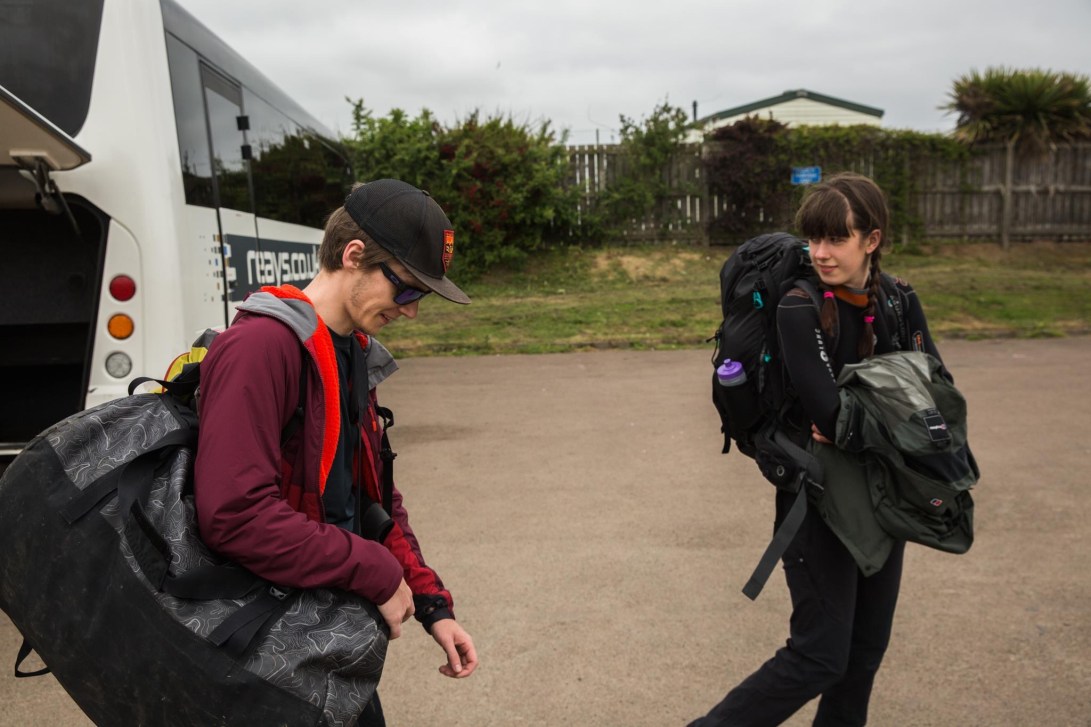
En route to the boat (Photo: Cain Scrimgeour)

There was a buzz of excited conversation as we moved out into open water, scanning the surface for wildlife. Cain, sharp-eyed as always, spotted the first puffin, as well as razorbill, guillemot, and a Manx shearwater. I twisted in my seat to spot everything he pointed out, but as usual, I was perplexed how Cain could identify such small, distant birds with immediate certainty. I could easily see the gannets though, a group of four that glided low over the water past the boat. I’ve said it many times before, but gannets are one of the best birds out there, and I never tire of watching them.

Before long we reached a widespread rocky outcrop where the boat would stop and let us jump out into the sea. One by one, we pulled on fins and adjusted facemasks. When it was my turn, I waddled ungainly to the back of the boat and took a somewhat hesitant jump off.

IMG_0814
Taking the plunge! (Photo: Cain Scrimgeour)

Cold water hit me like a fist and I suddenly couldn’t breathe. I was filled with a very unfamiliar panic that I’d never felt in water before. I was lifted back onto the boat and it was then that the skipper told me my over-sized hood had risen up over my mouth and my mask had filled with water. Feeling very sheepish, I calmed my breathing and tried again. My second attempt was more successful, but I was very unaccustomed to wearing fins when swimming. They were two dead weights on my feet that pulled my legs to the surface and completely threw off my balance. Having only ever worn a swimming costume in the ocean before, it now took real effort to get used to all this additional kit.

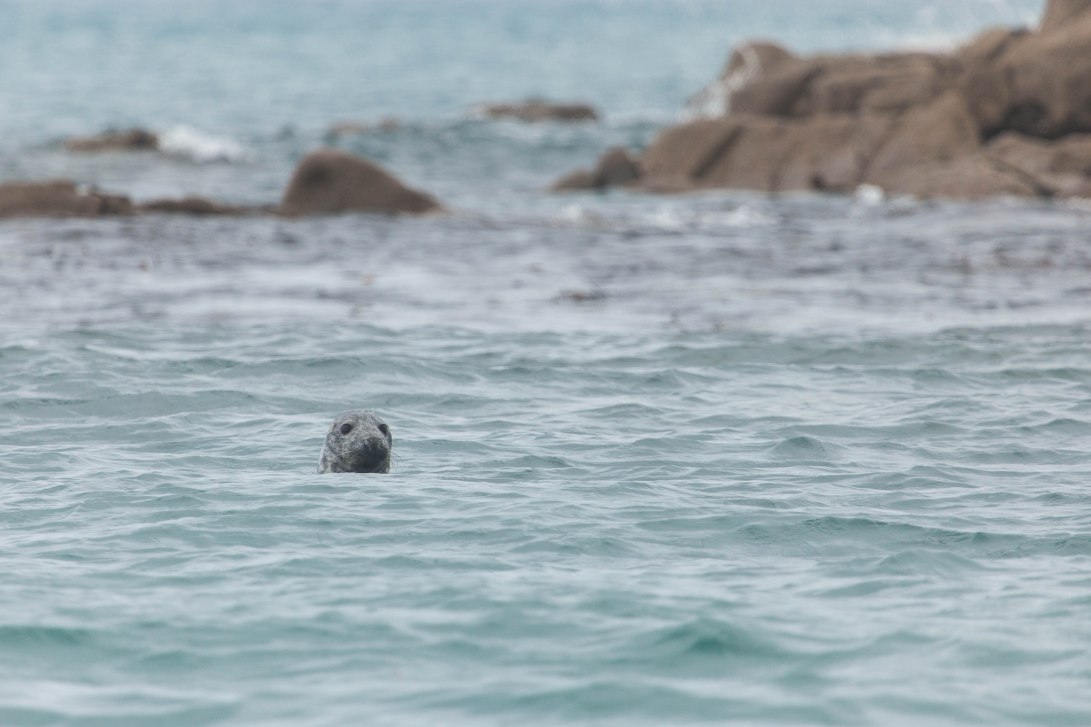
I glanced up and saw another of our group bobbing up and down in the water, but then I looked properly and saw it was in fact a grey seal. I experienced a combination of surprise and elation, and when I looked around I realised I was surrounded. Seals were everywhere, gazing with inquisitive expressions. One ducked under the water so I copied, watching it glide out of the kelp with an astonishing grace that it didn’t bring with it onto land. Water seeped into my mask again, and once I’d tightened it and put my face back under, there was a jellyfish right in front of me. I’d seen dead ones on the beach, but to see a live jellyfish propelling itself effortlessly through the water was truly beautiful.

I reached the rocks and rested for a while, watching the snorkels of other students in every direction. Suddenly another seal appeared, an arm’s length away. It flared its nostrils and snorted, staring directly at me, then ducked underwater. Once again, I followed its direction and watched with amazement as it brushed against me. Then, it held out his flippers and wrapped them around my leg. It was a surreal and incredible experience, feeling a wild grey seal squeeze my leg in what the anthropomorphist in me liked to think was a hug. It was nothing like it of course, but the seal reminded me of an excited puppy, and even nibbled my wetsuit like my dog would do. Before long it swam away and disappeared into the gloom, and I was left feeling ecstatic. Any encounter with a wild animal in its natural habitat was special, but to me it was even more exciting to share a completely new world with one, a world I never normally got the chance to be a part of.

IMG_1517
A curious face

As much as I hated to admit it, my hands were beginning to grow numb, so I waved to the skipper and got back on the boat. As I warmed up, I felt niggles of regret that I hadn’t tried to film my encounter on the GoPro I’d brought with me. But as I reflected on what had happened beneath the surface, I was glad that I hadn’t. In that moment I hadn’t been distracted by technology; I’d simply been there.

Exhibition Launch!

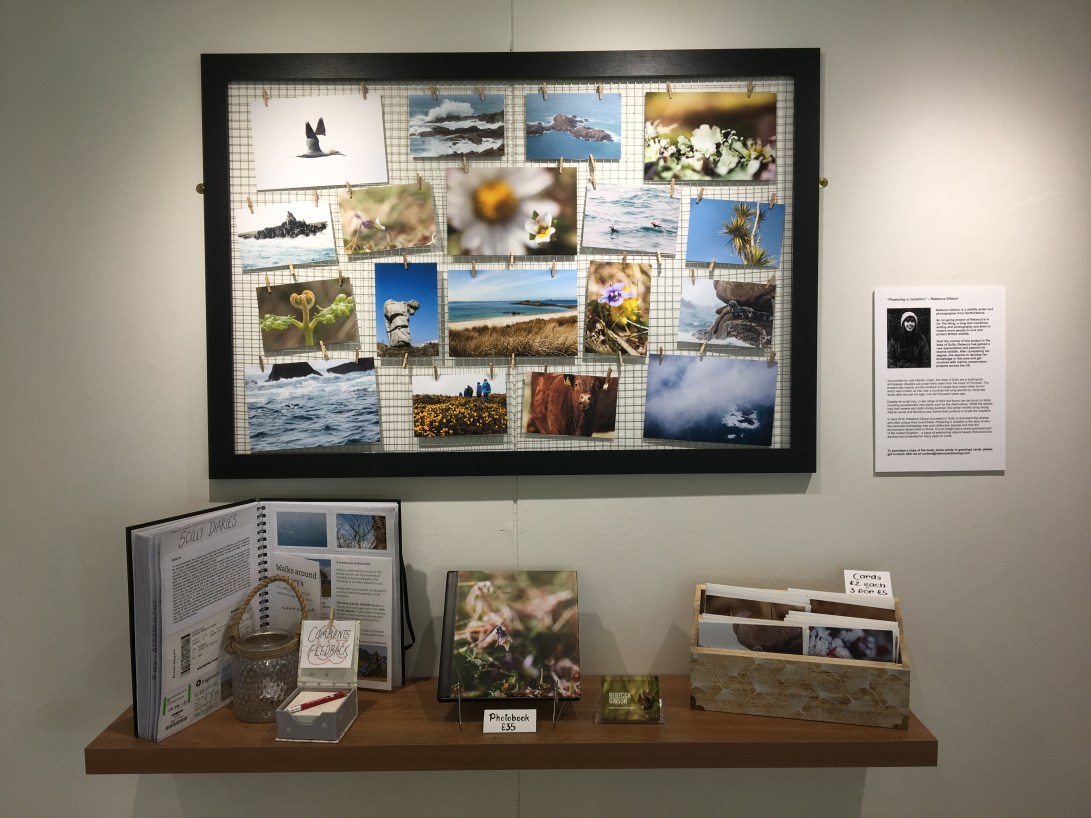
The past few weeks have been fairly frantic, with preparations for my final showcase in full swing. Campus has been a buzz of activity as we all work on exhibiting our major projects and making them look their absolute best. After creative brainstorming and purchasing countless items and decorative pieces, I have finally finished my display and couldn’t be more proud of it.

IMG_0737

The exhibition will be held at the Vallum Gallery in Carlisle, Cumbria from the 1st to 8th of June. It’s a beautiful space to display work, especially photography where good lighting is so important. As the main part of my project was a printed photo book, I have also mounted a collage frame of snapshots from my expedition to the Isles of Scilly. To find out what I got up to during my time on Scilly, have a read of the start of my journey to this stunning archipelago.

IMG_0731
A peek into the finished photo book
IMG_0733
Some greetings card for sale

If you are interested in purchasing a copy of the photo book, or perhaps a few greetings cards of my photography, please don’t hesitate to get in touch with me at contact@rebeccaonthewing.com and I would be more than happy to provide more information.


Farewell to Scilly

For my last full day on Scilly I was back on St Agnes again, joining a group led by Will Wagstaff on a full day of exploring. Although the weather was still far from bad, today was the murkiest I’d had so far. The sun was well and truly concealed behind thick cloud, and without its warmth the wind blowing off the sea cut through my jacket and made me very grateful I’d decided to bring a jumper this time.

While most of the visitors from the boat headed towards Gugh before the sand bar closed up later in the afternoon, we went the other way, hoping to find more wildlife than people. Before long we heard the sound of a chiffchaff in the bushes, followed by a song thrush and the customary wren. We stopped at Big Pool and watched a pair of shelducks. Both male and female have beautiful and striking plumage, making camouflage on the nest impossible. To counter this, shelducks are often found nesting in burrows out of sight of predators.

IMG_1861

Just as Will was explaining this, one of the visitors interrupted with an exclamation of “redstart!” I’d never seen a redstart, so I was keen to find where the bird was spotted. There, perched proudly on the fence, was a beautiful male; black face, burnt copper breast and a smoky blue back. It was a stunning bird, but as usual didn’t stay still for long.

After a loop of the pool we wandered through Lower Town, a tiny street with a post office and a sprinkling of houses. We passed another grove of elm trees, and I asked Will if the ivy – which was also covering these trees – had a detrimental effect on them. To my surprise he said no, and in fact ivy was an essential part of the ecosystem, providing shelter for birds, insects and small mammals. While ivy should be removed from buildings, its presence on trees was of little concern. I was pleased; having survived Dutch elm disease it would be a shame to then lose Scilly’s elms to the ivy.

IMG_1616

We crossed the beach looking out over Beady Pool and noticed that the sand bar to Gugh was closing fast. At this angle, you could really see how flat the beach was, and Will told us how people had underestimated the tide and had gotten trapped on Gugh in the past. The ocean was a force to be reckoned with, especially out here when the land was so low-lying and water inundation was an ever-present risk.

IMG_0604

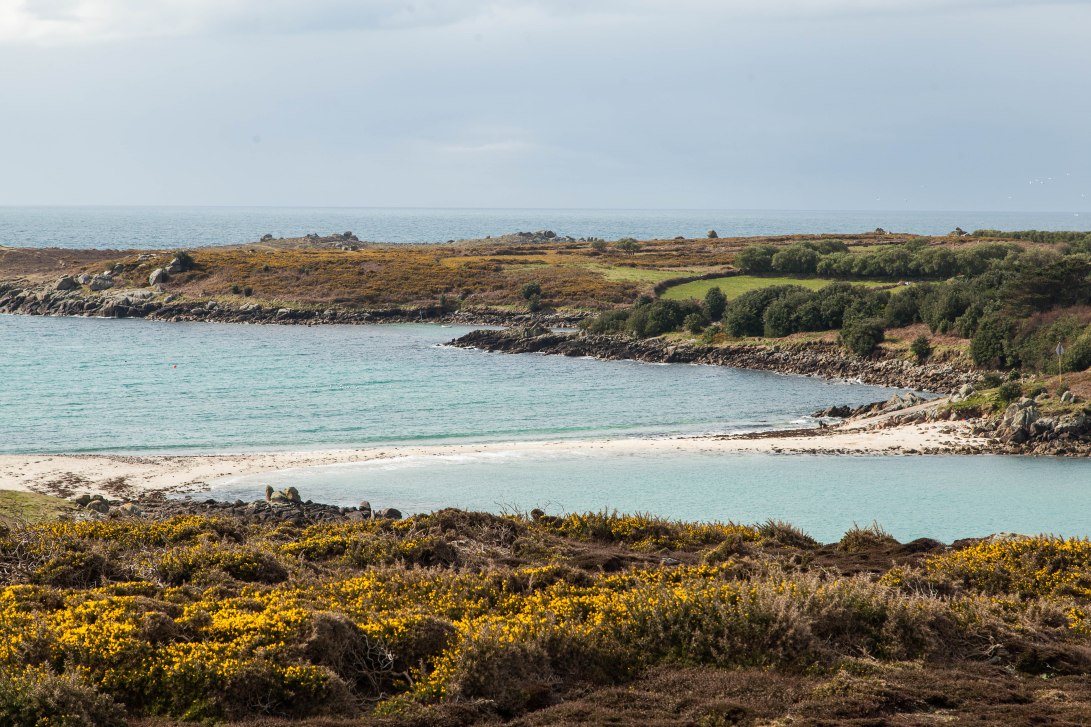
We threaded our way through vast forests of gorse, a bittersweet combination of harsh brambles and delicate yellow blooms. A herd of Ruby Red cattle grazed nearby, mooing into the otherwise silent landscape. The sharp-eyed visitor who’d spotted the redstart alerted our attention to another bird that was perhaps even more special: a woodchat shrike. Admittedly, I’d never heard of the bird before. It was an annual vagrant to Britain from southern Europe, usually seen here from April to October. A bird is considered vagrant if it strays far from its wintering, breeding or migrating grounds. The shrike was perched quite far off, but I could still make out striking black, white and russet plumage. I managed to get some shaky photos of the bird while it remained stationary; although they won’t win any awards, they were proof we saw it.

IMG_1823

The afternoon was racing on. The sun had failed to emerge so up on exposed Wingletang Down we all felt distinctly chilly. Incidentally, there was a café just up the hill, overlooking St Warna’s Cove. While we warmed up with hot chocolate we watched a few fulmars resting on the rocks. Unlike most gulls, fulmars don’t walk well on land, so if not flying the birds are always seen lying on rocks instead of perched on their feet. We all had a look down Will’s telescope, and saw there were distinct pairs set out on the rock. Fulmars, like many other birds, are monogamous and will mate with the same individual throughout their lives.

After we’d warmed up a little it was time to make our way back across St Agnes to the quay. We passed Porth Killier again, which looked vastly different now the tide had swelled. Will spotted a curlew sleeping with its characteristic bill tucked under its wing, and just as we reached the track down to the quay we saw a wheatear posing on the stonewall. We’d amassed quite an extensive bird list during the day, including several I’d never heard of let alone seen. It was always exciting ticking new species off the list, and on my last day in the Isles of Scilly I’d made lots of progress.

IMG_1802

Around St Mary’s

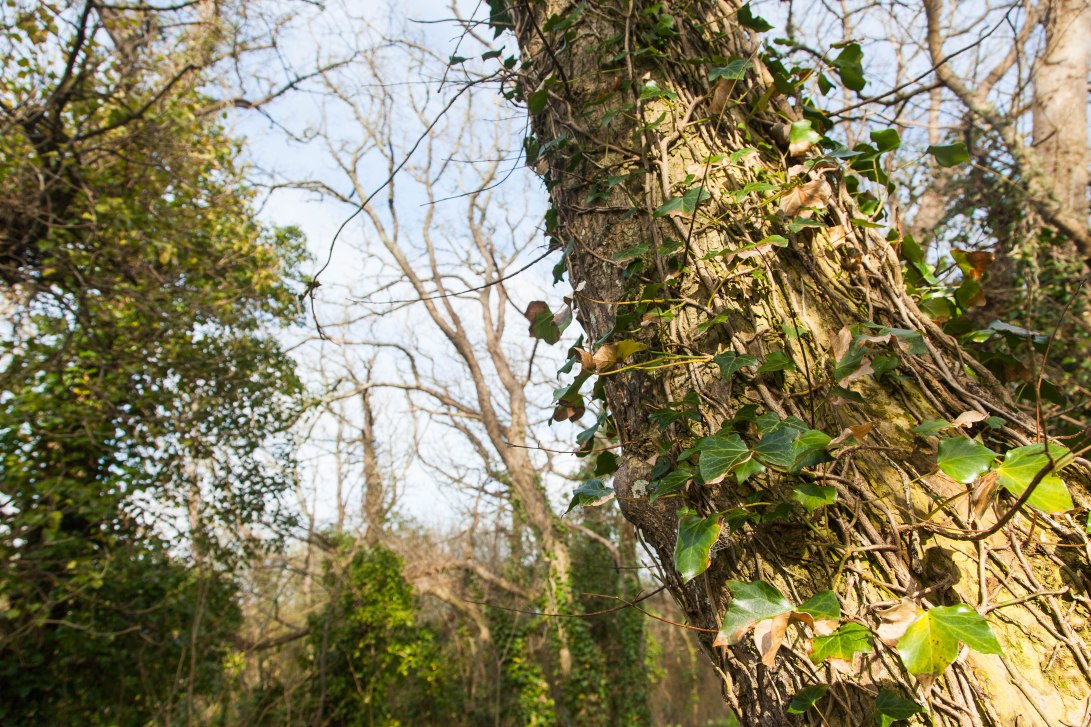
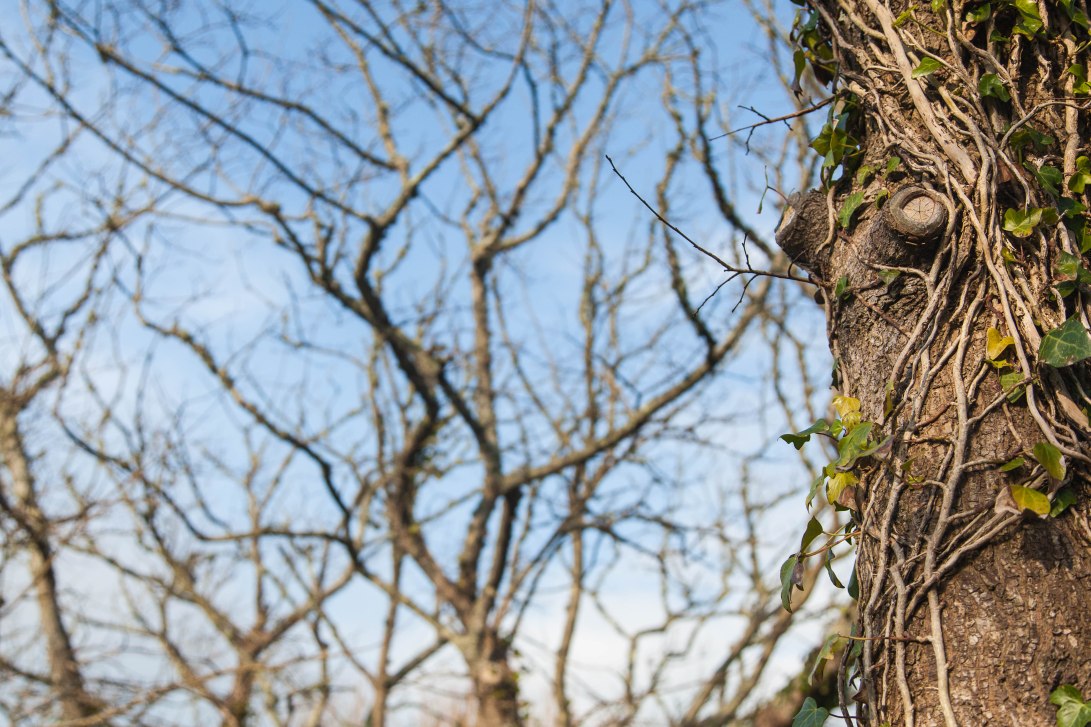
Today was slightly less eventful but still productive. I went for a walk to the Lower Moors of St Mary’s to find elm trees. Being so isolated, the elms on Scilly have successfully avoided Dutch elm disease, which has claimed all living elms on the British mainland. When I arrived at the spot on the map, I was quite shocked to see that although the elms were free of disease, they were covered from top to root in a thick coat of ivy. It was quite a disconcerting sight, but I had come to photograph live elms and here they were, so I experimented with different angles – shooting right against the trunk and looking up, focussing on a close section in the foreground and so on.

IMG_1635

I also found some beautiful patches of lichen so spent a lot of time photographing them too. Abundance of lichen was a good indicator of clean air. There is a distinct lack of dust and pollution on Scilly, and as a result there are forty different species of lichen on the islands. It can be seen growing on almost every surface, whether that’s tree, rock or garden fence. Lichen is what’s known as a composite organism, consisting of a fungal element for structure and an algal element for photosynthesis. This combination allows lichens to grow in a diverse range of habitats and environmental conditions. Sea ivory (Ramalina siliquosa) is a branched lichen – known as fruticose – that is one of the more common varieties, but there are also crustose lichens that form a tightly-clinging crust on rocks and foliose lichens which appear leaf-like, growing in lobes that are more-or-less parallel to the substrate on which they are found. Although I had no hope of identifying the lichen species I found on Lower Moors, it was fascinating to photograph them and see just how diverse they could be.

IMG_1267

Eleanor Oliphant Is What We Need

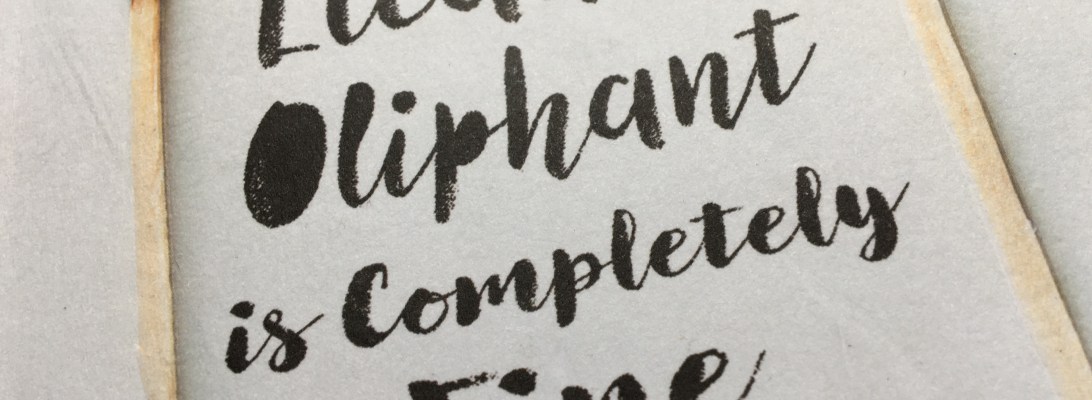
In 2017, 40-year-old author Gail Honeyman entered a story about a lonely and damaged young girl into a writing competition. Now winner of the Costa First Novel Award and scheduled to become Reese Witherspoon’s next film project, Eleanor Oliphant is Completely Fine has become a triumph for modern literature.

Our heroine, Eleanor, is evidently not at all fine. She often goes home from work on Friday and doesn’t speak to another person until she arrives at work on Monday morning. She is a source of amusement amongst her colleagues, and many modern advances are completely lost on her. “D’you like a smoky eye?” The makeup assistant at Bobbi Brown asks, to which Eleanor replies, “I don’t like anything to do with smoking.”

At the background of it all, her manipulative mother is an ominous presence looming at the end of the phone, hinting at a darkness in Eleanor’s past that may be the explanation for her isolation and uniqueness.

When Eleanor and Raymond, an IT consultant in her office, witness an elderly man falling unconscious in the street, an unlikely friendship begins to form between them. Somewhat hesitantly, Eleanor opens up to the possibility that people genuinely want to spend time with her, and with Raymond’s friendship comes a growing sense of self-assurance.

As we are introduced to Eleanor’s quirky persona, she initially appears very hostile to strangers and speaks her mind with seemingly no understanding of the consequences: “You’ll die years earlier than you would have otherwise, probably from cancer…you’ve already got the smoker’s characteristically dull, prematurely lined skin.” However, as we spend more time with Eleanor it becomes very clear that she has had nobody to help her align with societal norms – she was a confused child passed from carer to carer until university at seventeen. How can anybody blame her for reacting how many of us would were it not for our awareness of social politeness? Not only that, but being surrounded by unkindness and ridicule, it must be a natural reaction to close up and use that barrier of separation as a form of protection.

While Eleanor’s confidently naïve observations of the world can be enormously funny, the humour is threaded with heartbreak. At seeing her reflection after a new haircut she thanks the stylist for “making her shiny”. Having been surrounded by damaging and neglectful people all her life, becoming introduced to kind individuals is a foreign but welcomed concept for her.

Honeyman has created a character that is somehow completely fresh and new among literary heroines, and yet can be related to in countless ways. It has been commented that chronic loneliness is a very real problem for elderly people, but it never seems to be addressed among younger generations. Why must age be a contributing factor to a feeling of isolation? Eleanor has had a very troubled childhood and adolescence, but even those of us with caring families are capable of feeling lonely. In fact, according to a 2018 report by the Office for National Statistics, almost 10% of people aged 16-24 said they “always or often” felt lonely. This statistic was over three times higher than for those aged 65 or more.

This novel undoubtedly speaks to many young people, including myself. I have struggled with loneliness in the past – a desire for new friends coupled with fierce insecurity in social situations has made meeting new people a real challenge, and it is something I continue to struggle with. Loneliness can be incredibly upsetting, and is often hard to recognise in someone experiencing it. Honeyman has succeeded in raising awareness of the issue with her original and deeply moving novel, outlining the importance of kindness and compassion.