An Unscheduled Spring

It seems as if spring has come early, and I’m certainly not complaining. For the past few days I’ve been stuck indoors trying (and mostly failing) to write through an infuriating case of The Block. Multiple times I’ve caught myself gazing outside at the gorgeous sunshine, listening to the spring sounds of birds and bees that come drifting through the open window. I decided that it was time for a break, so I arranged to meet my friend Chloé for a walk. Chloé is an artist and writer with a deep love for wildlife like me. She recommended a local patch of woodland that I hadn’t even heard of before. I love discovering new wild places, especially ones I’ve driven or walked past without realising they’re there!
IMG_1395

Heading away from the noise of the road and nearby school, we set off into the park. Chloé pointed out the numerous trees that could be found here, and I was surprised to see such a variety of species in a relatively small area. I’ve always struggled to identify trees, especially during winter when there are no leaves to study, but Chloé said that leaves can actually be a distraction. She showed me the large clumps of hanging seeds that can be found on ash trees, the dark bobbles along the boughs of larches and the vivid red branches of dogwood. There is another delightful clue with dogwood – the buds have two tiny prongs that look a little like Viking helmets. I had no idea that looking at the buds of a tree could help so much when trying to identify it. Hopefully I’ll start to notice these clues more often when I’m out and finally begin to recognise some British trees.

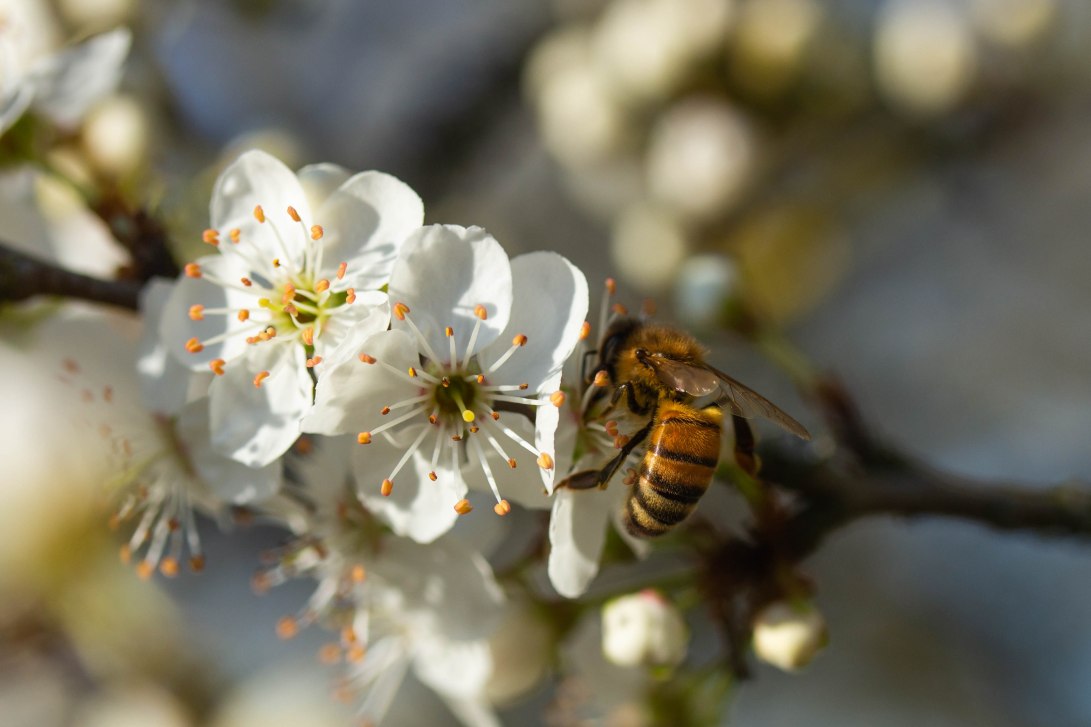
We headed into the open and followed a path that threaded up a hill, giving us a great vantage point over the countryside. A skylark swept across the sky, flying in large undulating dips before settling on the grass. I saw my first cherry blossom of the year: a stunning spray of white blooms that had attracted the attention of dozens of bees. We stood quietly and listened to the steady, buzzing drone as the bees threaded their way between the flowers in search for pollen – an indisputable sound of spring.
IMG_1376

Further down the hill we were just inspecting what we thought was a beech tree when I glanced up and saw a red kite wheeling overhead. We took it in turns watching through the binoculars. It was fascinating to observe the bird’s flight pattern – it moved across the sky in gentle loop-the-loops, following the shape of a tightly coiled telephone cord, all while barely flapping its wings. Its red feathers looked magnificent in the sun, its forked tail silhouetted against the sky.

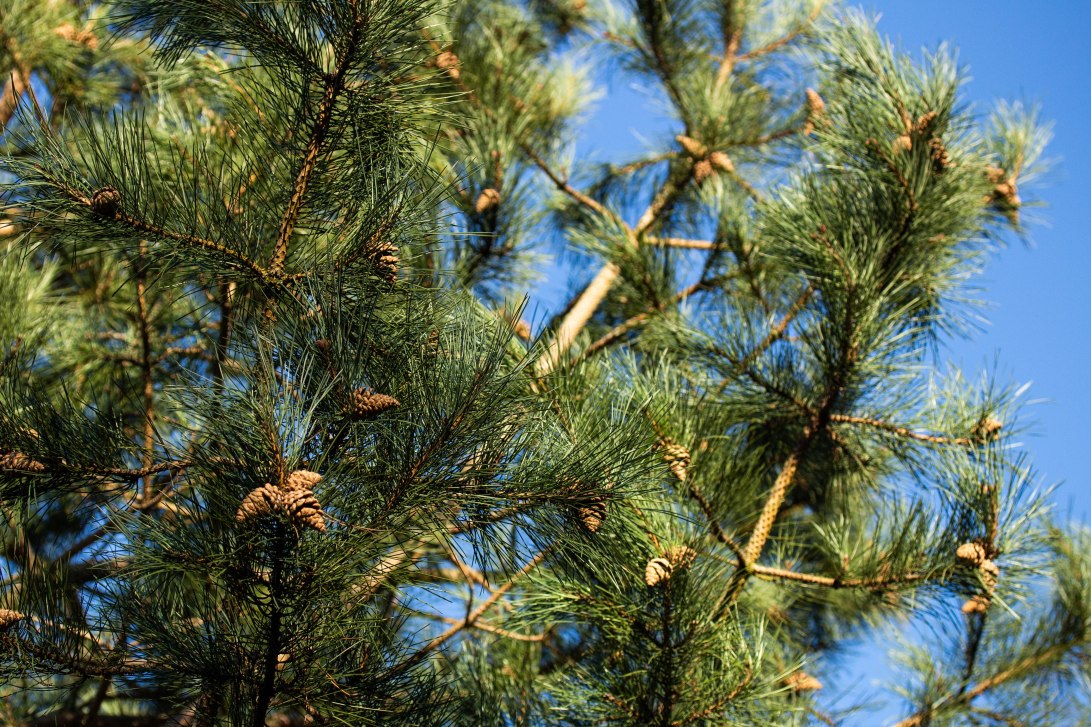
After the kite had drifted out of sight, we heard a soft clicking noise coming from a nearby evergreen. I started scanning the branches for birds, but Chloé told me that the noise was in fact the pinecones cracking open. It was a surreal sound that I couldn’t quite believe at first. Having always assumed that pinecones opened gradually like flower petals, it was incredible to actually hear them popping as they dispersed their seeds. Apparently, the scales of seed-bearing pinecones flex in response to changes in humidity. When it is warm and dry like it was yesterday, they pop open. In cool, damp conditions, they close up. I found this absolutely fascinating.
IMG_1381

Further on through the park we came across my first butterfly of the year: a stunning comma basking in the sun. With unusual, scalloped edges to its wings, the comma is a master of camouflage, using its mottled colouring to blend seamlessly into dead leaf litter. Its larvae are equally well disguised, with brown and white flecked markings that give them the appearance of bird droppings. This individual was lounging on a leaf with barely a twitch of its wings, allowing us to get lots of photos and observe its beautiful markings up close. Its furry body almost looked iridescent in the sun. After a while it turned round, positioned its rear end over the edge of its perch and released a small black blob before settling again. This was another first, not just of the year but also of my life: watching a butterfly poo!
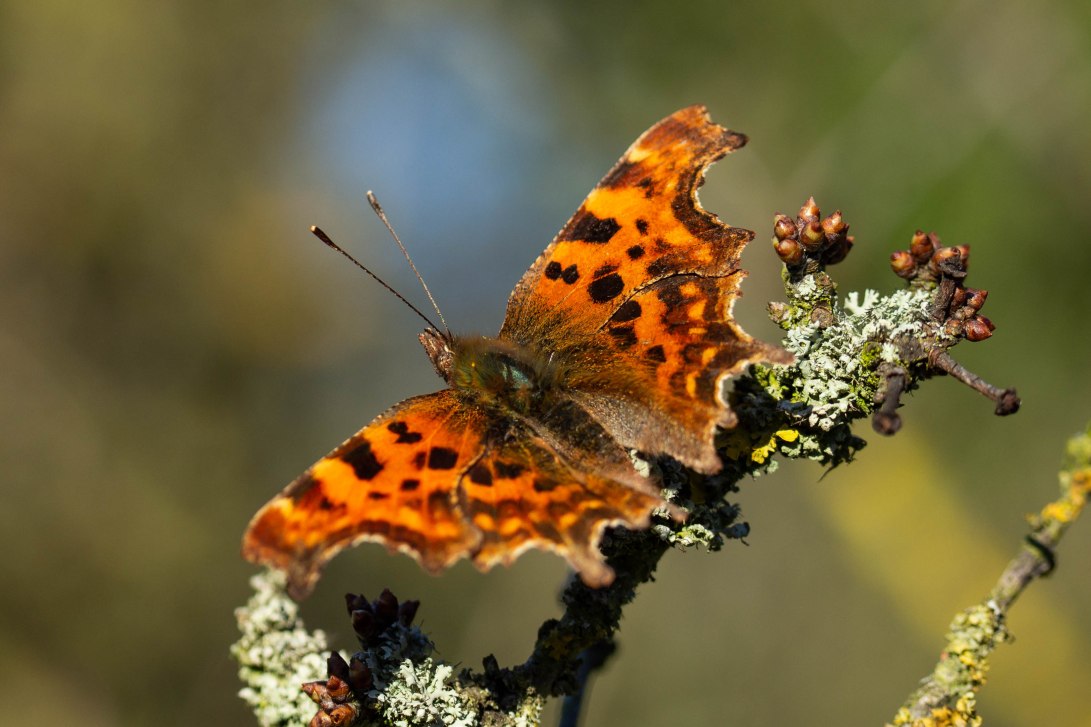
IMG_1386

Eventually the comma took to the air and fluttered up into the sky. The shadows were lengthening and the warmth was slowly ebbing from the afternoon, so we began to loop back through the park towards Chloé’s house. It was so refreshing to be able to exchange wildlife knowledge with someone. I pointed out birdsong while Chloé helped me with trees. It really is true that walking outside is a form of natural therapy. When I returned home I was inspired to write and reflect on the day. I’ve also been motivated to start up painting again, after seeing some of Chloé’s work. I dug out my watercolours and acrylics and can’t wait to get back outside while spring is here in full force.
Golden Hour

The light was still faint as I drove through fields of green. Cars tore past in a work-fuelled rush, while I cruised leisurely in the opposite direction. My focus was on the forest today – my only objective to walk through trees and listen to wild sounds.

A flash of copper caught my eye and a stunning red kite appeared in the sky, wheeling over the rolling hill as it hunted for unsuspecting mice. I pulled over in a layby – the mud sticky before the sun reached it – and spotted three more circling in large, overlapping loops. Occasionally there was a squabble, and two birds would tussle in the air, cascading downwards and surging back up. It was easy to forget that bounty hunters and egg collectors almost pushed the red kite to extinction only a few decades ago. Now, you could drive down most country roads in Hertfordshire and see at least one. I had never seen four so closely together, and savoured the opportunity to watch such an inspiring conservation success story in the flesh.

Soon the kites drifted further off, reduced to dark flecks in the sky. I left them to their hunt and drove on, arriving at the edge of the forest before anyone else that day. As lovely as dogs were, I didn’t need their boisterous presence this morning. I pulled on hat and gloves and slung camera and binoculars around my neck, then crossed the road towards the woods.

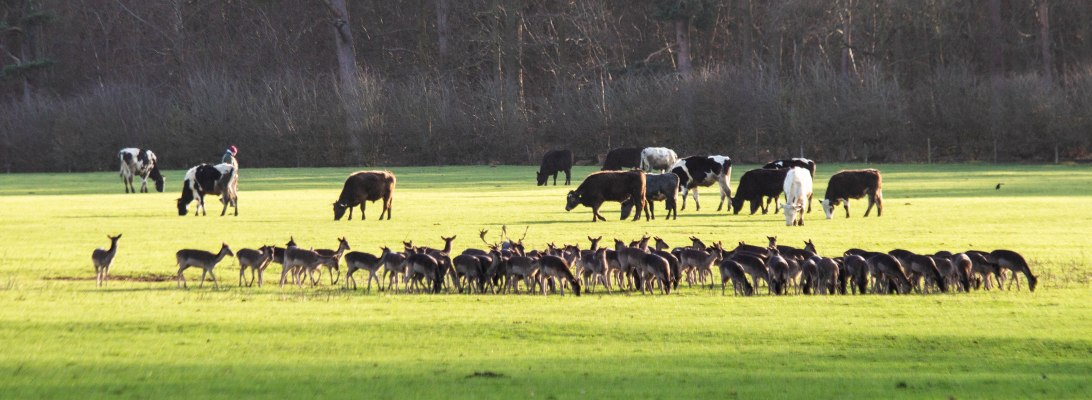
To my delight, the species I’d come to see was already here in abundance. Grazing in a field beside the cows was a herd of fallow deer around seventy-strong. I have always been fascinated by the variation in fallow deer pelts. When I first saw deer at this site, having previously seen photos of white-spotted Bambis, I had thought they were a different species altogether. These fallows were two-tone; dark brown on the top half and a lighter brown on the bottom half, as if they had waded flank-deep in mud. I hastily took to the cover of the trees, creeping as quietly as I could along the fence to get a closer look.

However, these deer were no fools. The next time I stopped and snuck a look through the binoculars, there were several faces turned my way, ears pricked upwards and eyes gazing down the lenses. My cover was blown. I decided to carry on with my approach, heading diagonally and pausing behind each tree. Ears twitched, and after a few more moments of studying me, the herd moved off, first at a trot then at a gentle canter. Among so many deer, there were only two males; as the herd bounded in loose procession across the field I watched two sets of antlers bobbing among dozens of ears.

I continued deeper into the forest, dulling the sound of passing cars with birdsong and wind-rustled leaves. The trees were gently swaying, creaking eerily like squeaky doors. The breeze played tricks on me, sending leaves skittering across my path in a perfect imitation of birds. The thrum of a woodpecker echoed through the cold air. A buzzard called faintly in the distance.

Suddenly there was an invasion of grey squirrels, bounding over the leaf litter and across fallen logs. Two of them darted in a reverse helter-skelter up a thick trunk, their claws scratching wildly in the chase. Another was saving his energy, choosing instead to perch and chew on a shrivelled leaf, twisting and turning it in his tiny hands.

I left the squirrels to their play and headed further along the fence, glancing between the trees to see if the deer might have come back. They hadn’t, but there was a sprinkling of brown birds foraging in the grass, dotted among the cows. For a few moments I couldn’t figure out what they were. Speckled like thrushes, but I’d never seen a large group of thrushes before. Just then the sun appeared, illuminating bright red patches on the birds’ sides. Redwings! My first this winter, and what a show. There were around forty of them, hopping around in the grass. They were too far away for a decent photo, but close enough to watch through the binoculars.

After a while, a startling screech made me jump. The only culprit I could think of was a barn owl, but I was sure they would have finished their night’s hunt by now. I followed the voice further down the trail. It was an ungainly, dinosaur-like squawk that sounded deafening in the tranquil forest. Suddenly, as I was scanning the canopy overhead, a crow-sized bird with white, brown and grey feathers shot out of the leafy cover. I hadn’t seen a jay once when I’d lived in Cumbria, so it had been about four years since my last sighting. I was desperate for a good photo of a jay but this one wouldn’t be cooperating. It darted from tree to tree, pausing only for a few hoarse shrieks before taking to the air again, soon disappearing completely from view. Undoubtedly the prettiest of the corvids, but not the sweetest singer.

Soon the forest was nearly silent again, with just the gusts of wind disturbing the trees. The morning was rolling on, and golden hour had arrived. Between breaks in the cloud, rich yellow light illuminated the trunks, throwing their gnarled, twisted bark into stark relief. It was a glimpse of magic that only lasted until a cloud muffled the sunlight and the forest fell back into shadow.

The cold was beginning to bite my fingertips, and I could already hear the first dog walkers. It was a good time to turn back. I made my way slowly through the woods, past the field and the squirrel tree, looking forward to warming up back home. I was just scanning the trees one last time for any small birds when my eye caught on two more pairs of ears sticking up. The deer were perfectly camouflaged, and after we stood watching each other for a few more moments, the doe stepped out from her hiding place and began picking her way through the foliage. The buck took one more look at me before following her, just as the sun emerged again and made their brown fur shine gold.

There was something undeniably magical about watching deer in a forest. They were elegant and beautiful animals, their habitat just as serene. As I stood watching them stride away out of sight, I felt a strong connection to the forest and the creatures that lived within it. Although I didn’t truly belong here, for just a few short hours I felt at home.

Looking Forward

I am very enthusiastic about 2019, mostly because I’m not quite sure what it will bring. All I know for sure is that it will feature lots of writing. For quite a few years now, writing has been predominantly a side-project for me. I’ve always loved it, but unfortunately it hasn’t been my sole focus because of school, work and other commitments.

I began writing stories at a very young age. My mum would give me a title and leave the rest to me. She was always keen for me to be creative – providing inspiration and encouragement in the form of spelling rhymes, handwriting exercises and story prompts. Writing stories always featured heavily in my childhood and adolescence, but when I became an adult it didn’t occur to me to pursue it professionally. I have no idea why I thought this – perhaps I was distracted by other things or was always keen to keep learning new skills, but the idea of writing stories stayed at the back of my mind until the end of last year when it finally clicked. After weeks of refreshing job site pages and filling out application forms, I realised what I’d probably known subconsciously for years: that I want to be an author.

Probably the thing holding me back from pursuing a career as an author was my lack of technical knowledge. I had the drive to write – a constantly growing stack of full notebooks was proof of that – but I hadn’t learnt the techniques of story structure or character development yet. At the time of picking my A Levels, I wanted to study Biology because of its connection to wildlife and the natural world, and Photography and Spanish were my definitive other choices. As a result, I didn’t have space for English, so a lot of my writing is self-taught, from books I read and prompts I found for myself.

To learn more about the mechanics of writing – in particular writing novels – I recently enrolled in Masterclass: a series of online courses taught by experts in their fields. Gordon Ramsay teaches cooking, Serena Williams teaches tennis, and groundbreaking authors such as Margaret Attwood and James Patterson teach creative writing. It seemed like the perfect solution for me – learning and making notes at my own pace. I already had the passion to be an author, and now I’m using Masterclass to learn the tools that will help me develop my abilities further.

img_1095img_1099

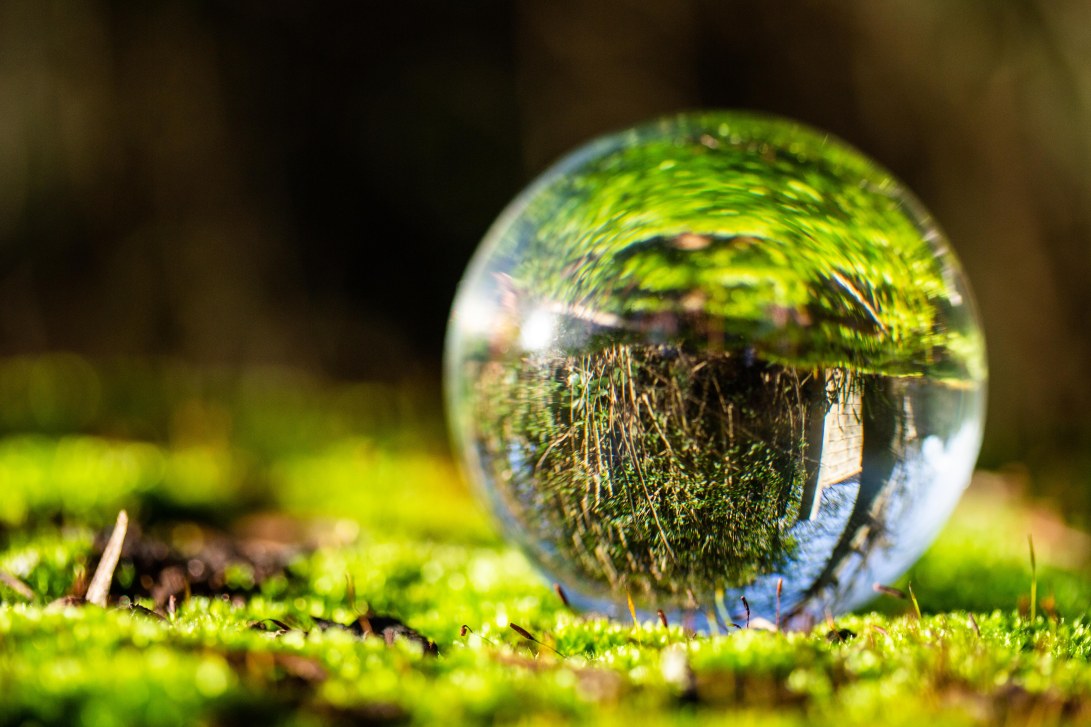
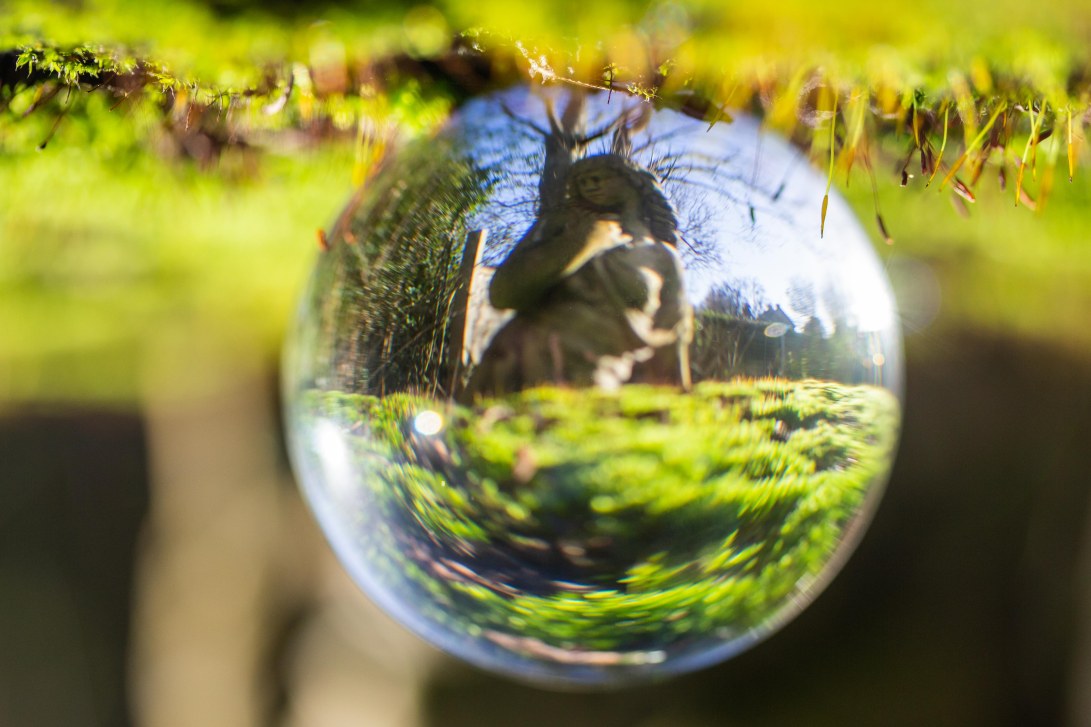
Alongside Masterclass, I’m making sure to continue my photography. For Christmas, I was given a “lensball”. For anyone who hasn’t seen these before, they are clear glass balls that can be used in photography to add a little refraction to the scene. I’m no expert yet, but if you align your camera so it’s level with the lensball, you can photograph the background within the ball, which brings some nifty new perspectives.

I tried out some shots in the garden earlier this week and discovered that it’s not as easy as it looks. You need to get the angle just right and – as always with macro photography – the focal point is key. These initial shots need a lot of improvement, but I already love what effects I can achieve with the lensball. Gardens don’t usually have the most groundbreaking scenery, so I’m looking forward to getting out in the wild to see what I can capture.

img_1103

So, the aftermath of university didn’t quite go as I may have planned, but I feel so optimistic about where this year will take me. I want to give myself the time I need to throw myself into writing and stretch my skills further. I can’t wait to see where I will be this time next year.

2018 Wrapped Up

December was quite a dry month for me in terms of inspiration, so I apologise for the distinct lack of posts over the past few weeks. It is high time for some fresh writing, but before beginning anything new in 2019, I wanted to reflect on the progress I made in 2018.

IMG_9823

Last year began with my first breakup. After having seen and spent time with a person almost every day and now suddenly being faced with the possibility of never seeing them again, I suffered quite a knock. My inspiration took a significant slump at a time when I needed it most: the launch of my final major assignment at university.

Determined not to let a relationship affect my work, I applied for a grant to help fund an expedition. I had a whacky idea about going to the Isles of Scilly, which at the time seemed a very far-off venture and logistically challenging to say the least. However, after presenting to a panel of judges I was granted enough money to completely cover travel and accommodation. It took a while to come to terms with the fact that the Scilly expedition was really happening.

IMG_0655

It was just the solution I needed for my slump. Spending six days in near-complete wilderness with a list of images to take was a perfect and rewarding distraction. I was filled with exciting ideas for my project – a study on the rare and unique flora of Scilly, including the dwarf pansy which is the size of a baby fingernail and found nowhere else in the UK. I was so fascinated by Scilly’s diverse wildlife and intriguing ecosystems, and I never wanted the trip to end. It is a place I will now treasure, as it helped me through a very difficult time, not to mention providing a huge boost to my confidence. I had funded, planned and carried out a full expedition single-handedly, and returned with a great story to tell. Following the trip was my last exhibition at university, and my project was received well. I even made some money from my photographs, which was an unexpected bonus.

IMG_1482-2

Before I knew it, it was time to finish my degree. I picked up my life in Cumbria and brought it back home to Hertfordshire, where I (foolishly) thought that I would land a job straight away. This wasn’t to be the case, but what followed instead was a truly life-changing experience: an internship in Florida.

I didn’t really know what to expect when I was invited for a two-month internship in America to work with SEZARC. I knew they worked with zoos to monitor their animals and help facilitate breeding, but I didn’t know where I would fit in with a media background. I went simply with the aim of learning as much as I could about a completely new field and enjoying the opportunity to contribute to wildlife conservation.

IMG_9548

I’d never been abroad on my own before, nor had I been outside of Europe before. Upon arrival, I was hit by extreme panic triggered by a strange new place, having to drive a car in a strange new place, and the fear that this had all been a terrible mistake. However, after a very careful car journey from the airport and arriving unscathed at my accommodation, I was filled with perhaps a disproportionately large sense of achievement. My small victory spurred me on, and after a few more shaky days, I found my rhythm.

IMG_1404

Two months later, I was torn between wanting to see my family and friends back home, and wanting to stay a little longer with my new friends in Florida. I had loved the work I did with SEZARC, which was varied and fascinating. I also fulfilled a dream of mine, even if just for a little while: I’d learned to ballroom dance, and met the most kind and welcoming people. Back home in England, I truly realised what an incredible time I’d had in America.

And it wasn’t over. Later in the autumn, I caught up with my friends at SEZARC and was asked to produce their annual report of their progress this year. It is work that I thoroughly enjoy, and I’m so pleased that SEZARC want to keep me involved.

IMG_0051

So, moving forwards. The past year has taught me so much, not just about work but also about myself. In all honesty I have no idea what 2019 will bring. I’m hoping a job, but in the meantime I want to continue writing and learning new things (next up is the guitar!) I have the tendency of being anxious without a strategic plan, but after this year I’ve discovered that you just can’t know where twelve months will take you. A year ago today, I had no idea I would soon be journeying to America by myself, nor was I remotely aware that my relationship was about to end. All through school it’s easy to know what’s next: the following year up. There is no mystery, not even after you finish school. For me, the choice was easy and I was going to university. Now that’s over too, and I’m trying not to be daunted by the unknown because as I’ve found out this last year, the unknown can be incredible.

Waiting In Anticipation

Winter is one of my favourite times of year. Not only is there the excitement of Christmas (which at 21 years old is still very important to me) and my birthday, but also the stunning beauty of nature. Frosts, snow, diluted sunshine – it’s a photographer’s dream. I cannot wait for the first real frost to arrive, when once again I’ll be rummaging around in the garden on my hands and knees clutching my trusty macro lens.

As winter approaches, there is always a rush of social media posts about visiting migrant birds. Stunning images of waxwings, redwings and fieldfare dominate the birdwatching online groups. While I love to see rare visitors in the UK, there are more common species coming to the fore during the colder seasons too.

The long-tailed tit is easily recognisable, with a tiny body and unnaturally long tail. These charismatic birds are nearly always seen in groups, and with a weight of less than 10 grams, sticking together can be a lifesaver in the winter months. As temperatures fall during the night, long-tailed tits roost together in large groups of related birds, lining up on branches and huddling for warmth. Long-tailed tits are particularly known for their altruistic behaviours. If one pair loses their eggs, they will help a relative raise theirs. This behaviour is known as cooperative breeding.

Another bird that is more prominent in winter, but far less endearing than the long-tailed tit, is the great black-backed gull. This formidable animal is bigger than a buzzard, and bad habits including stealing food from some birds and eating others has given this gull a bad reputation. Nonetheless, great black-backs are impressive to watch, and during the winter months they are drawn inland by swelling migrant populations. This means now is a good chance to see this amazing species up close.

One voice that sings long into winter is that of the robin. This plucky redbreast is often thought of as a winter bird, when it is found all year round but simply stays put when other birds migrate during the colder months. Despite their beautiful song, robins are fiercely territorial. Who can blame them, when food and shelter is so scarce during the winter? Perhaps the epitome of Christmas is seeing a plump robin perched on a berry- and snow-strewn branch. It may be a controversial opinion, but I can’t wait for the snow to come. Seeing how bitterly cold it’s been recently, hopefully the wait won’t be too long.


Learning to Dive – Part Two

On the second day of Open Water weekend (read about Day One here), I awoke to the alarm feeling a lot more confident. We were halfway through, with two dives down and two to go. The weather had deteriorated slightly and as I waited for the morning briefing it began to drizzle, but hopefully that meant the day would be slightly warmer (I was clinging to any silver lining).

My wetsuit was still damp from yesterday, so dragging it up my legs was even more impossible than usual. It was the reverse of a snake shedding its skin, and as I hopped about and contorted my limbs I couldn’t help feeling extremely silly. Finally it was on, and I doused myself in hot shower water in a vain attempt to warm up before facing the quarry.

Dive three was the most daunting, as it required a longer list of skills, including the dreaded mask removal. Perhaps I was jittery from nerves, because as I began my descent pain shot through my right ear and I hovered, trying and failing to equalise my ears. As you descend, the increased pressure compresses air spaces in your ears, sinuses and mask. Failing to add air to these spaces can cause serious injuries. I eventually had to resurface until I could equalise, then made my way back down. It was a setback that I tried not to concentrate on, especially with my least favourite skill coming up.

We gathered on the platform and took it in turns to fully flood our mask and take it off. I disliked this skill so much because the air bubbles that gather underneath the nostrils feel like water shooting up your nose. When I attempted this in the pool I had the sensation of not being able to breathe; quite a daunting prospect when you’re seven metres underwater and definitely cannot shoot up like a cork to the surface. In preparation, I’d been putting my face underwater in the bath and breathing through a snorkel, and although it triggered several involuntary swallows I could just about manage it.

Taking a deep breath, I pulled the strap over my head and held my mask away from my face, placing it back over as soon as I was allowed. Feeling very pleased with myself, I ran a finger around my hood to check the seal and cleared the water out ready for the next skill. But as we made to swim off the platform, the mask flooded again. I cleared it, and water immediately trickled back in. I signalled to the instructor who checked the seal and couldn’t find the cause of the problem, so once again we surfaced and I made absolute sure I’d sorted it out.

As I descended for the third time on the same dive, I reflected that I’d encountered an unforeseen problem and dealt with it without panicking; I had made serious progress since my first session in the pool. The rest of the dive passed with no further mishaps, and as I had my fifth hot shower of the day I finally began to relax. Our fourth and final dive wouldn’t be full of tests and I could enjoy the experience of feeling weightless in water and exploring Stoney Cove.

After a brief time on the surface and a delicious cheeseburger at Nemo’s, we took a giant stride back into the quarry. We’d planned dive four ourselves, and led the instructors down to the aircraft cockpit and along the shelf that tumbled down to 22m on the other side. Staying firmly away from the edge, we swam across to the Nautilus again and back to the platform, where we gathered for the last time. Alan, the instructor, had an underwater notebook with him, and one by one turned it to face us. I don’t think I’d ever been so happy to read the words:

“You’ve passed. Congratulations!”


I Need Your Help for Wildlife Blogger of the Year!

If you love wildlife, then I need your help!

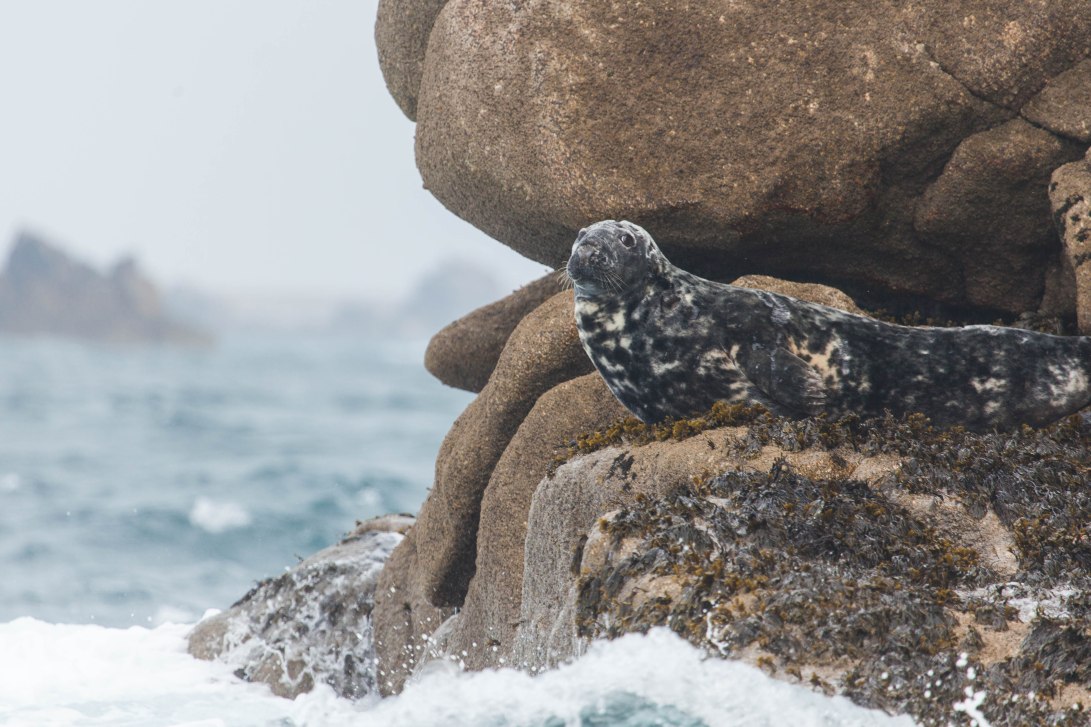
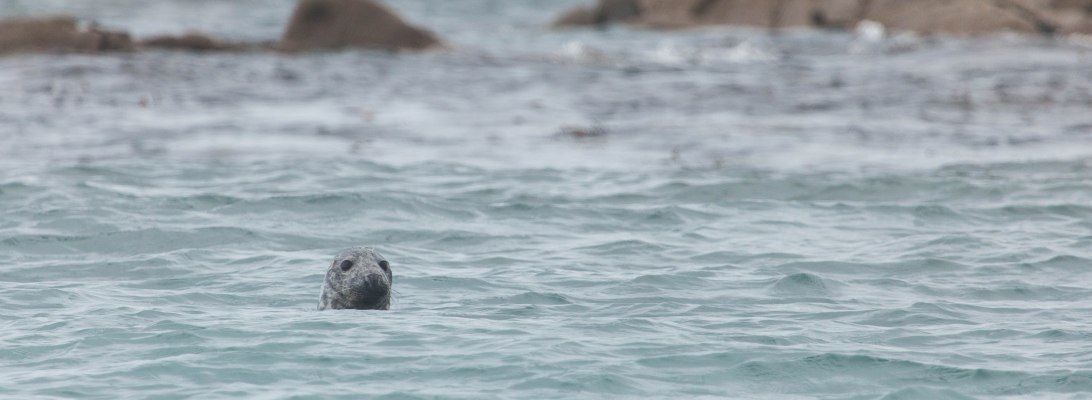
I’ve entered the Wildlife Blogger of the Year 2018 competition, organised by Terra Incognita. The theme is “a favourite wildlife moment of 2018”, and I chose my encounter with a wild grey seal in the Farne Islands, which some of you may remember reading about.

I chose this story because it was an incredibly special experience and a reminder to me that we should not be constantly connected to technology. I had a GoPro with me while I was snorkelling but was so surprised by what happened that I completely forgot to film. At first I was disappointed, but on reflection I am so glad that I stayed in the moment and didn’t miss a single second. I interacted with a wild animal with absolutely no distractions, and it has become one of my most precious memories of time spent in nature. I hope my story reinforces the need to connect with wildlife and shows just how rewarding it can be.

As well as the overall winner of Wildlife Blogger of the Year, picked by a panel of judges, there is the Reader’s Choice winner award, which anyone can vote for. If you enjoy my story, I would be thrilled if you could cast me your vote.

You can read my story and vote for me by following this link. Thank you so much!

Learning to Dive – Part One

The alarm went off at 6am and my stomach began to churn. Today was the start of Open Water weekend, and if all went well, I would earn my first diving certification. Having struggled with some of the skills in the swimming pool, not to mention the fact I was still getting used to all the kit, I couldn’t help feeling apprehensive as I pulled on my warmest clothes. I hastily gobbled a petrol station flapjack, which tasted like cardboard in my dry mouth. Knowing I shouldn’t be feeling so anxious, I tried to shake the nerves and triple-checked I had everything I needed.

Luckily, the site was only a five-minute drive from the hotel, and I arrived in plenty of time. Stoney Cove used to be a stone quarry that was used in the 1960s and 70s to train commercial divers and test underwater equipment used in oil fields. Now, Stoney Cove has conference rooms, shower facilities, a shop and – most importantly after a tiring dive – a pub called Nemo’s. The actual quarry is a multi-level city of shipwrecks and aquatic life, split up into areas of different depths for divers of all abilities. As this was our first open water dive, we stayed safely in the 7m limit, which still contained a submarine and an aircraft cockpit. Although, I was more interested in the crayfish, perch, roach and pike that called Stoney Cove home.

It was a cold but clear day, with sunlight pouring weakly onto the water. No rain at least, though I suppose rain shouldn’t really be a concern for divers. As I stood at the quarry’s edge watching seagulls floating on the surface, I couldn’t quite believe I would soon be diving several metres beneath it.

Soon it was time to start kitting up. We assembled in buddy pairs and helped each other don scuba kits just like every week at the pool. This time, however, we also had hoods, gloves, compasses and a dive computer. We made our way down to the ramp, where several divers were already in the water. For dive one all we had to do to enter the water was stand on the edge and sit gently back, floating out into the quarry.

Ungainly as always with my cylinder and weights, I felt like a tortoise on its back as I tried to strap on my fins. Eventually I was ready, and made my way hesitantly to the edge of the ramp. I turned, squatted and leaned back. The shock of freezing cold water rushing into my wetsuit wasn’t exactly comfortable, but in a strange way it was exhilarating. This was it, time to dive.

Once everyone was in the water, we began our first descent. As more of my body became submerged, I soon grew numb to the cold and instead focussed on the underwater world we were entering into. I descended to the bottom, making sure to equalise my ears to the increasing pressure, and looked around. The visibility wasn’t superb and the only features I could make out were other divers, but the murkiness only added to the suspense. It still felt strange not to have to work to stay down in the water, instead floating effortlessly.

The instructors led us on a swim, past the Nautilus submarine to a wooden platform where we would perform our skills. An underwater classroom surrounded by shipwrecks and fish; it was quite extraordinary.

After each taking turns to carry out the skills, we started our ascent. For the first time on the dive I looked up, and the sight was breathtaking. Sunlight streamed through the water in slanted shards that lit up our bubbles as they cascaded upwards. I still hadn’t got my head around being able to breathe underwater. It had been a dream of mine as a child, pretending to be a dolphin in the local pool. I wasn’t quite a dolphin yet, but I was closer to the underwater world than ever before.

Coming soon: day two of Open Water weekend!

Up in the Air

The plane roared to life and I experienced the age-old feeling of excitement whenever I fly. As we chased the runway and the plane slowly lifted, I pressed my face to the window to see the ground fall away. I will never tire of that feeling of utter weightlessness – the peculiar thought of something so bulky taking to the air.

I’d been invited onto my boss’s plane for a morning trip to Naples, a city in southwest Florida looking out onto the Gulf of Mexico. We were flying to break in a new engine, and planned to refuel in Naples before returning to Yulee. It was a whistle-stop state tour, a four hour round trip that would take twelve in a car.

Within moments of take-off we were over the beach – long piers stretched out into the sea like the teeth of a comb. At 9am on a Saturday the beach was almost deserted. It was a treat to see so much uninterrupted sand before the tourist tide came rushing in.

We curved back inland and passed over a maze of river and marshland that I had already explored by boat, but this time we were too high to look for egrets. The only movement was the white streak of a lonely boat as it navigated the watery trails. I wondered how many alligators were down there, then decided not to think about that.

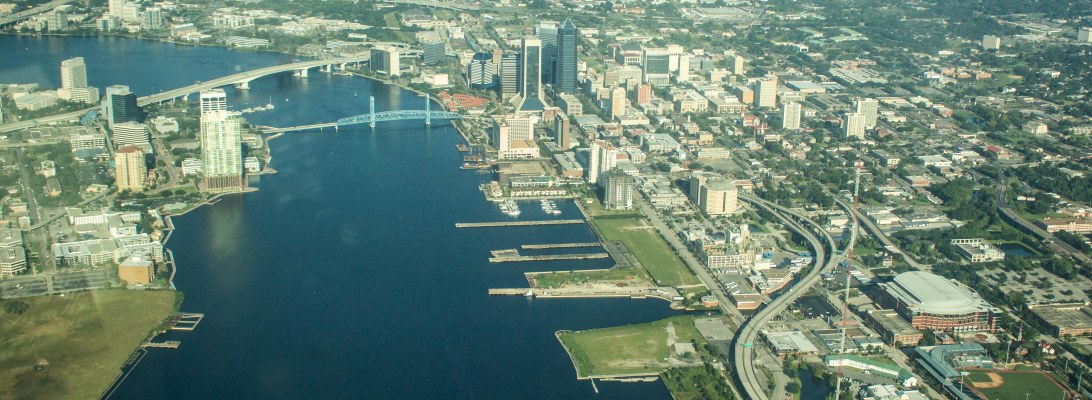
The marshy solitude of Amelia Island dissolved into towering office blocks, and I soon recognised downtown Jacksonville. There was the Landing, where I’d been just a week before the shooting. It had been enough to dissuade me from visiting downtown again, but I still had fond memories of the river walk, the MOSH museum and the topaz blue water of Friendship Fountain.

Leaving vast, sprawling Jacksonville behind, the landscape was soon dominated by trees again. Green was undoubtedly a primary colour in Florida – a patchwork quilt of field and forest stretched as far as the eye could see. In some places the trees were confined in tightly packed cubic parameters. In others, they were sprinkled sporadically. Criss-crossed over it all were the highways, dead straight lines in parallel and perpendicular.

Fluffy cumulus clouds were gathering, and a rather ominous feeling began to grow in my stomach as we bumped over them. Sunlight poured into the stuffy cabin, which did nothing to suppress my queasiness. Because of the new engine, we had no choice but to fly low. While the views were still stunning, I was somewhat distracted by the turbulent ride, and as Naples came into view I couldn’t help feeling slightly relieved that we’d be getting out of the clouds.

Once down on the ground, we stopped just long enough to stock up on drinks – fuel for the plane, a Gatorade for me – before taking off again, back through the spectrum of concrete jungles and green wildernesses.