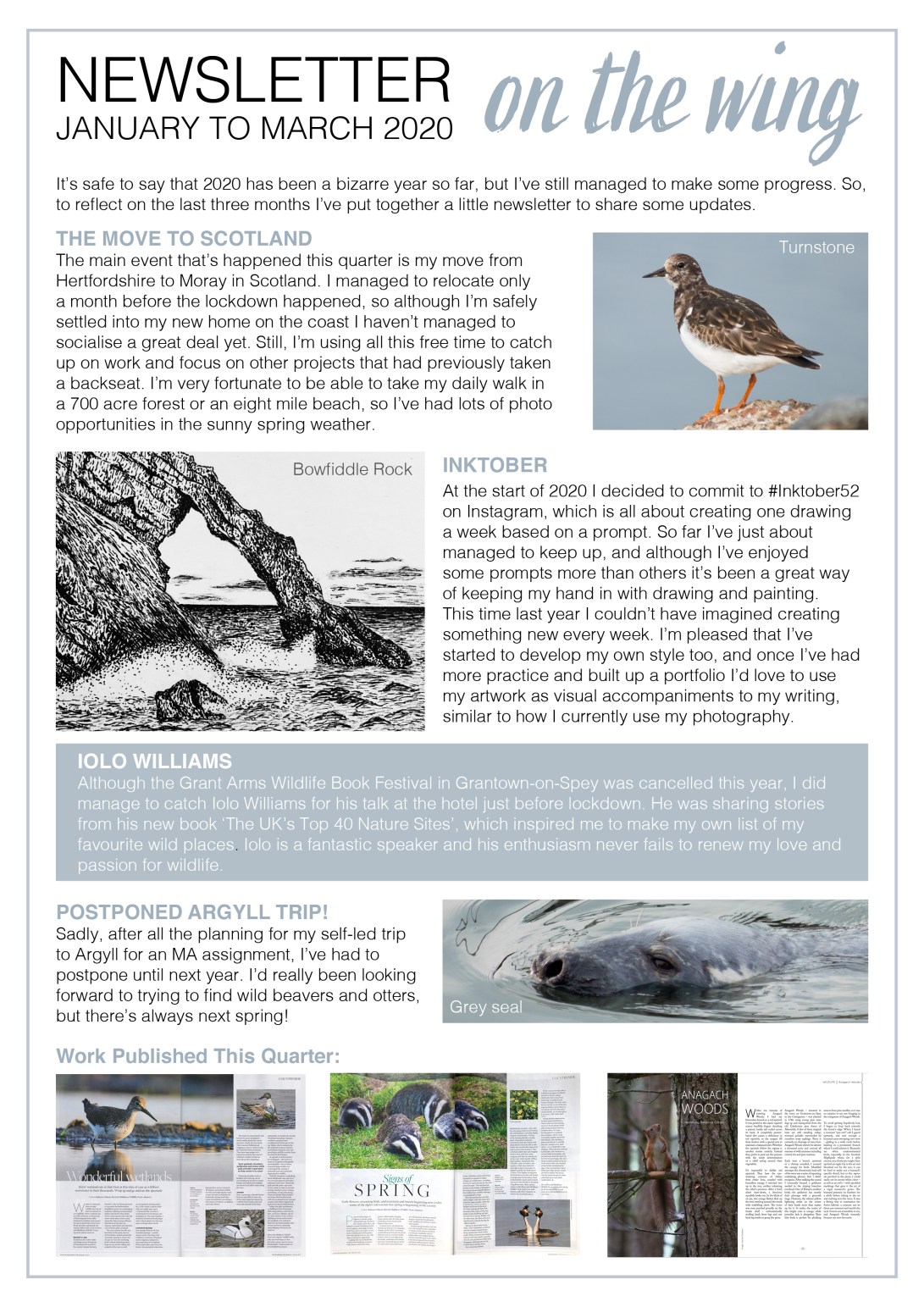
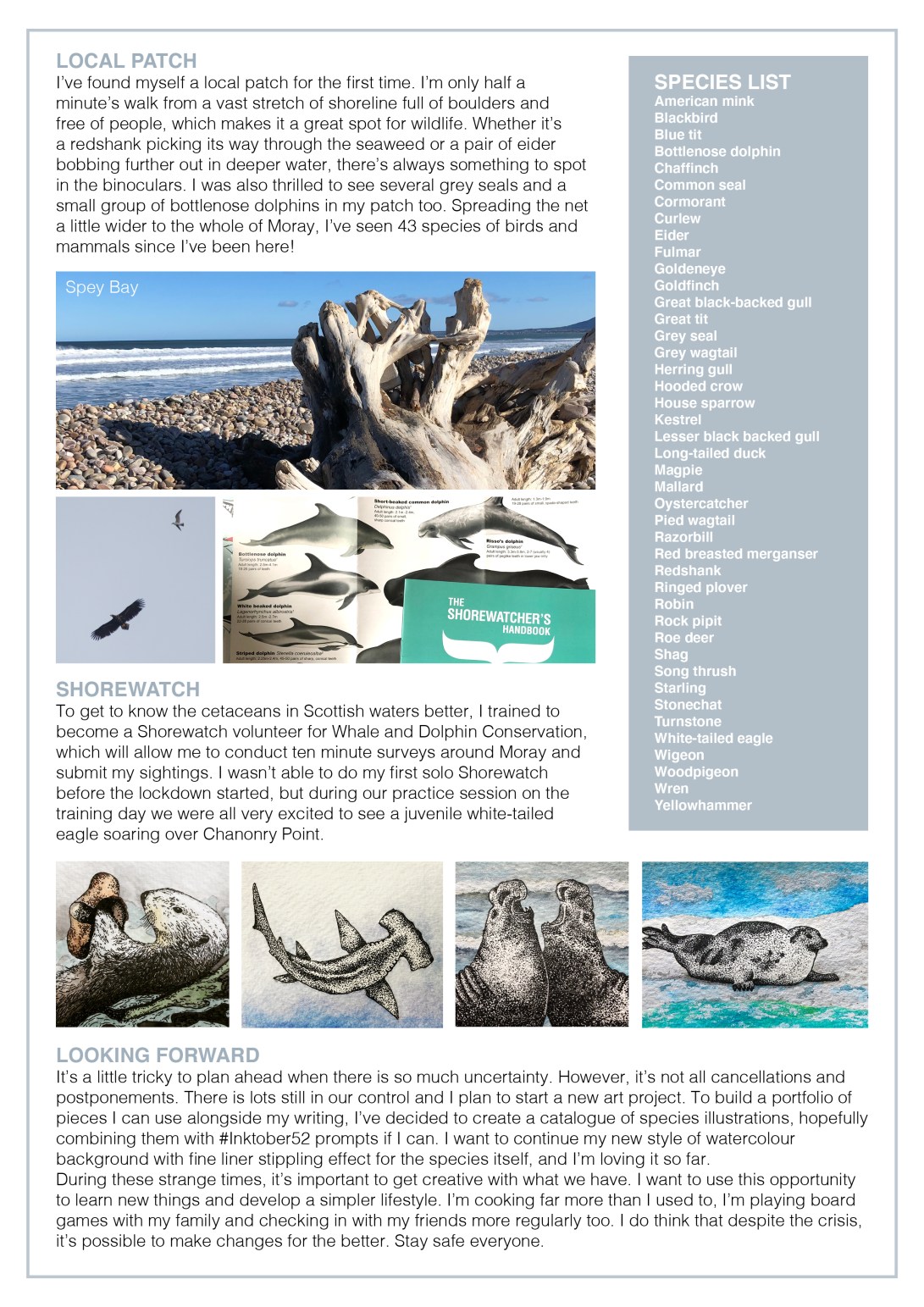
First Quarter Newsletter
I discovered ‘Sky Dance’ while looking for non-fiction titles in the Scottish Interest section of my local Waterstones. In the past I have struggled to engage with a lot of rewilding books and often been intimidated by the political conflict. But after reading the blurb I realised that ‘Sky Dance’ was actually a novel. The story follows two hill walkers who get caught up in a row between conservationists and landowners about the reintroduction of lynx into Scotland. There is a fictional island called Morven and a landowner who ticks all the stereotype boxes of a tweed outfit, upper middle-class pomposity and a disregard for any animals besides grouse.
It is a strange book in many ways – especially the surprising ending – but I enjoyed the unorthodox approach. Acknowledging a potentially heavy topic such as rewilding through the medium of fiction was intriguing. ‘Sky Dance’ conveys important messages while remaining full of action. There are a few too many side stories which muddled the plot for me, but the main narrative about the lynx was an engaging one.
It would be fantastic if the reintroduction of a long-lost predator into Scotland could one day be a reality and not a piece of fiction. Burns explains that lynx would pose no danger to humans and only have a very low impact on livestock. If famers were compensated for these small losses then lynx would undoubtedly make a valuable contribution to the restoration of an unbalanced ecosystem that is currently overflowing with deer and damaged trees. Wolves and bears raise more difficult issues, but I believe lynx should definitely be brought back to the UK. John D. Burns paints quite a haunting picture of what the Scottish Highlands could look like if we started to reverse the damage we’ve caused by hunting apex predators to extinction.
Published in 2019, ‘Sky Dance’ is John D. Burns’s third book. He has spent over forty years climbing mountains and fifteen years writing. To hear more from John, visit his website for blogs and podcasts.


Back in 2017, I spent the year as the Creative Content Developer intern for Wild Intrigue. As well as teaching me a huge amount about British wildlife, Wild Intrigue founder Heather gave me my first experience writing for a client. During my year with her and media director Cain, I wrote blog posts, took photographs and was able to attend incredible rewilding expeditions in Northumberland, Cumbria, Perthshire and the stunning Isle of Carna on Scotland’s west coast. I learnt how to use camera traps, bat detectors and Longworth traps, which are used to humanely survey small mammals.
Heather and I have stayed in touch regularly since I graduated. Now the coronavirus lockdown is interfering with small businesses and preventing companies like Wild Intrigue from running face-to-face events, I was keen to help out at a distance with a guest blog post. During these strange times, it’s so important to remember that nature is right outside the window and we don’t need to miss out. In my post I share intriguing insights into some common garden birds: blackbirds, blue tits and robins. I hope readers will learn something unexpected about these often overlooked species and be inspired to discover their local wildlife.
You can read my guest blog post here. To find out more about the amazing work Wild Intrigue does, check out their live video from last week where they share camera trap footage and reflect on their past projects and expeditions.

After sharing four of my top wildlife sites in the UK I began to think of more and more, so here are another set of places that everyone should visit. Read on for dwarf pansies, red squirrels, white-tailed eagles and a particularly spectacular murmuration.
It sounds like an exaggeration but the Isles of Scilly really are incredible. I chose Scilly as the location for my final major project during my undergraduate degree and spent six days wandering through remote and near-tropical landscapes. Despite only being 28 miles from Cornwall, Scilly is so separate from mainland life that many of its species have evolved differently. The blackbirds have blood orange bills instead of their usual tangerine, wrens sing different songs and some plants are found nowhere else in the UK but on those few scattered islands.
I was there to try and find the dwarf pansy, a flower so tiny that the petals barely cover a little fingernail. By some miracle I found it, but Scilly also surprised me with its dramatic geology, impressive bird life and scorching temperatures. I didn’t have time to visit all the islands, but Bryher was by far my favourite. As well as the dwarf pansy, I found the furious waves of Hell Bay (the name is no coincidence), swarms of dog violet blooms and beaches impossible to describe without using clichés. I’ve promised myself I’ll go back to Scilly, not only to tick off the other islands but to just spend time in a place with barely any roads, air so clean that lichens bloom on almost every tree, and plants so special that crazy students travel hundreds of miles to find them.

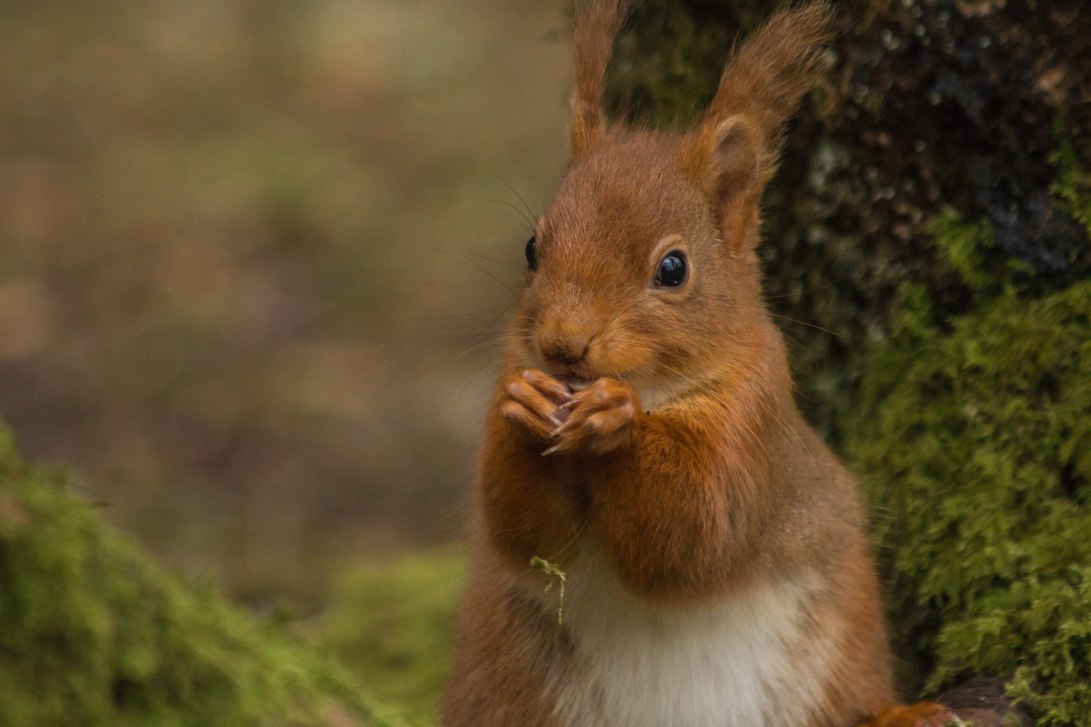
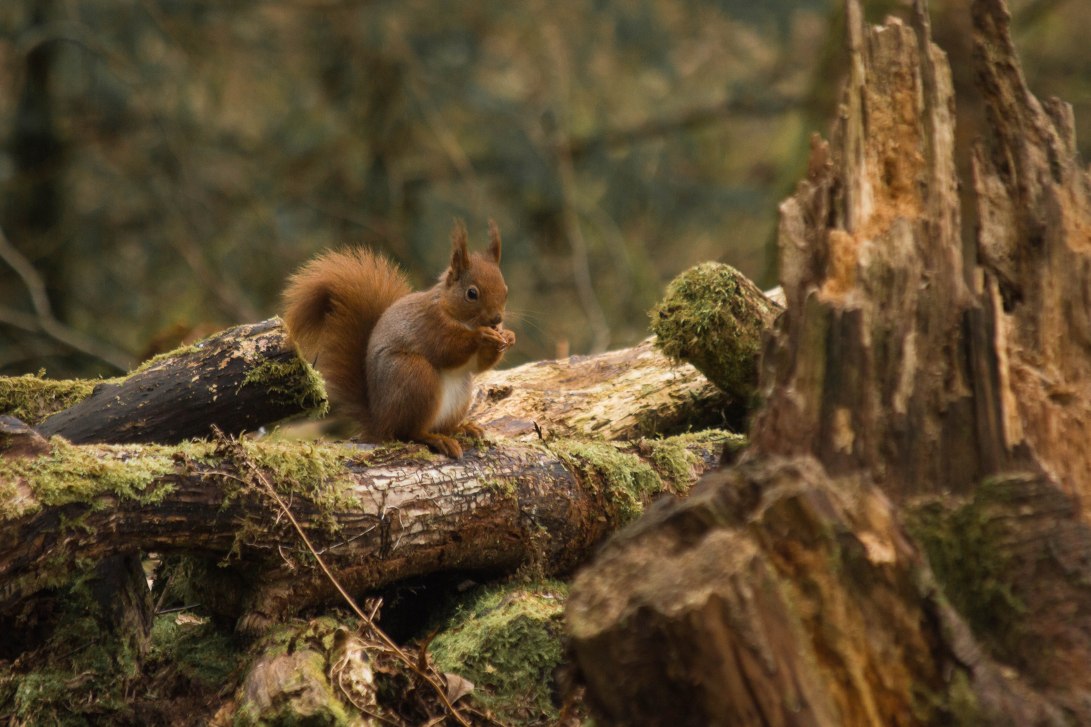
My mum had never seen a red squirrel before I took her to Eskrigg Nature Reserve. I’d been spoilt rotten there; after only two visits I’d seen about ten squirrels foraging six feet in front of me. Eskrigg is an exceptionally special place, managed by an exceptionally special person. I made a short documentary about Jim Rae for a university assignment and learnt just how much he has done not only for the reserve but also the community in Lockerbie.
As well as red squirrels, I have spent hours watching bramblings, great-spotted woodpeckers, siskins and even a female mandarin duck on a rare visit. When my parents came to see me I took them straight to Eskrigg. While Dad occupied the dog, I sat with Mum outside the hide (no need to sit inside with such laid-back wildlife) and waited less than twenty minutes before squirrels were bounding and chasing right under our boots. My mum had the same look of complete adoration on her face that I did the first time I saw them. There are certain animals that make a person’s mouth fall open and demands all their attention. Red squirrels do this effortlessly.
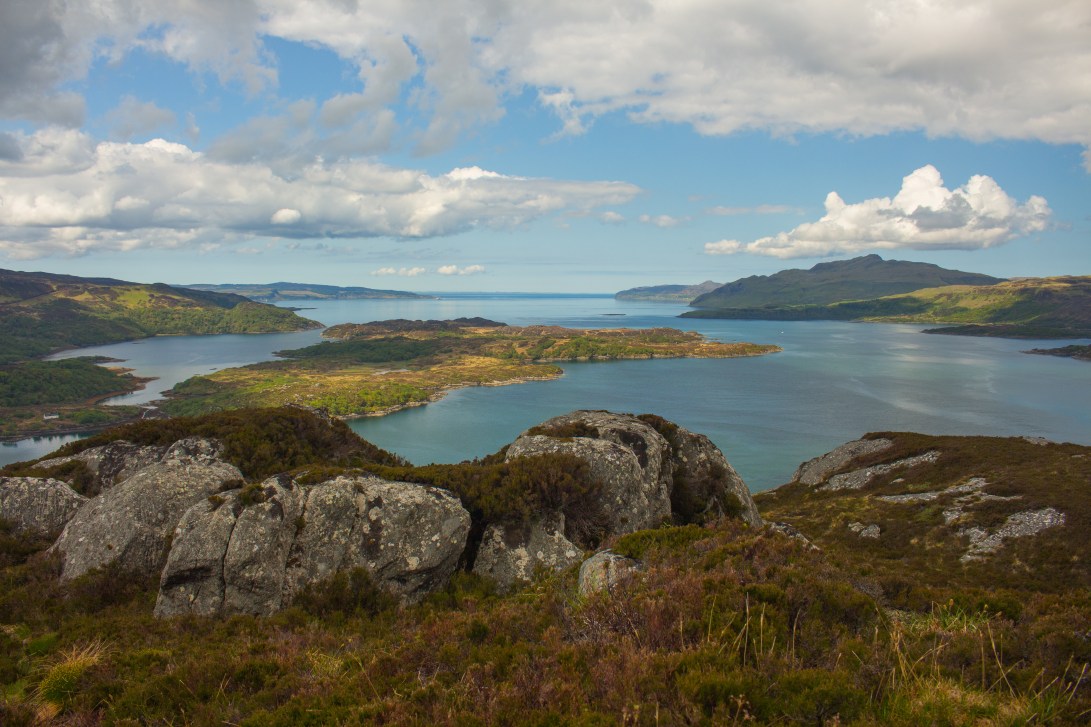
I could write pages about Carna. I went there in 2016 on an expedition with Wild Intrigue to leave technology behind and rewild myself. Carna is situated in Loch Sunart on the west coast of Scotland. We spent five days staying in one of two cottages on the entire island, which is let out to people looking for a break in complete seclusion. Even the deer have to swim to get there, which is certainly an unusual sight.
This was my first real foray into Scottish wilderness, and I couldn’t have asked for better guides. I didn’t know Heather and Cain well then, but they have since become good friends who have not only taught me most of what I know about wildlife, but have given me amazing opportunities, not least a year long internship as their Creative Content Developer.
During my stay on Carna I saw my first otter, cuckoo, golden eagle and white-tailed eagles. You know you’re in a truly wild place when white-tailed eagles become a regular occurrence after the first couple of days. We found common blennies, butterfish and dog whelks in rock pools, caught a female wood mouse in a live-capture Longworth trap and recorded foxes, roe deer and voles on trail cameras. It was a crash course in wildlife fieldcraft that showed me just how diverse Scotland is, and will always be remembered fondly as my first true wildlife trip.

Before our trip to Avalon Marshes, my time in Somerset had been windy, soggy and cold, so I wasn’t feeling particularly inspired when we arrived just as more rain was spotting my face. We headed along the river and took our position looking out over a reed bed. Forty minutes later, I was trying not to fall backwards as I watched 250,000 starlings swirling over my head. I’d never seen a starling murmuration before, and I was being thoroughly spoilt with my first experience. Not only starlings but a merlin, marsh harrier and peregrine falcon trying to snatch a meal, as well as a grey heron that chose the wrong time to take flight and found itself in a starling storm.
As majestic as murmurations look on TV, they are nothing compared to the real thing. The sound of that many starlings flying over your head is like soft rain, which is amplified by cupping a hand around your ear. I had my mouth hanging open like a cartoon character the entire time, scarcely believing the swarming shapes I was seeing. It was like a static screen come alive. Eventually, the starlings swooped down to roost, almost at the same time. The reed bed became a seething frenzy of voices and the sky was empty again.

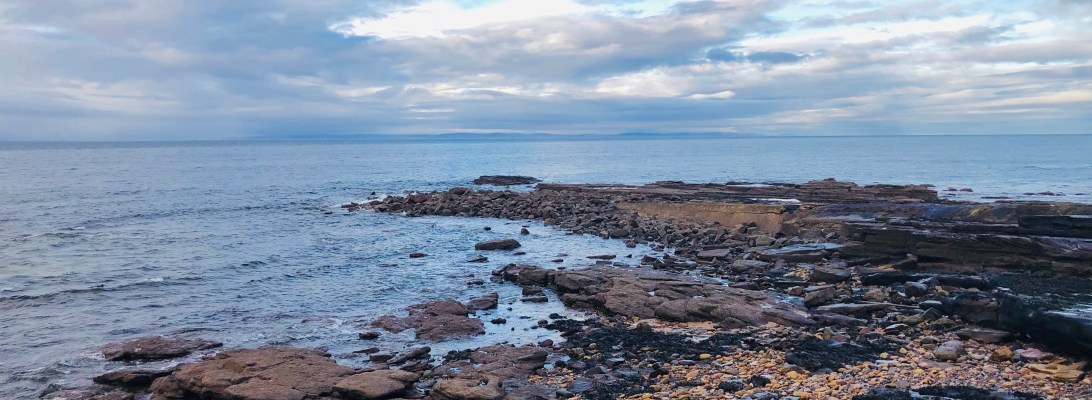
I am now officially trained as a Shorewatcher for Whale and Dolphin Conservation (WDC). I’ve been wanting to learn more about my local wildlife and contribute to marine conservation now I’m living in Scotland, so when I found out about the Shorewatch programme I was keen to get involved. Luckily I managed to complete my training in Inverness earlier this month, only a couple of weeks before the new regulations that now prevent us from going out for anything other than food shopping and exercise. Although I now won’t be able to start Shorewatching for a while, I’m going to use my time to get better at identifying British cetaceans using books in preparation for when I can get started properly.
Shorewatch is a citizen science project that’s all about scanning an area of ocean for ten minutes and recording the presence or absence of cetaceans (whales, dolphins and porpoises). The areas are especially assigned Shorewatch sites, which are found all over northern Scotland. The data collected is sent to WDC and used to monitor populations of cetaceans and flag up potential problems that may be occurring, such as deep-diving species that are straying into the shallows or a noticeable lack of sightings in an area where we might usually expect them.

Shorewatch is particularly beneficial because it is a completely non-invasive way of surveying. As the volunteers are positioned on the shore instead of in boats, the cetaceans show natural behaviour. WDC also don’t believe in tagging animals, so prominent scars and nicks in dorsal fins are used to identify individuals. For example, the team can recognise Spurtle, a female bottlenose dolphin, from the large area of sunburn on her side.
I haven’t seen any cetaceans in Moray yet, but I’m sure that will change over the coming months. The season will hopefully kick off properly in May, and going by the incredible photography I’ve seen, the bottlenoses really go to town with their acrobatics! However, when all you see is the flick of a tail or the subsequent splash, it can be tricky to figure out what species you’ve seen, so I’m learning how to identify different species in the water. The Moray Firth is famous for its bottlenoses, which are both the largest and most northerly in the world, but many other species have been spotted from Burghead shores including harbour porpoises and even orcas and humpback whales! I would definitely cry if I saw an orca in my local patch, but I shouldn’t get ahead of myself. Hopefully I’ll get to see the resident dolphins soon. We all went to Chanonry Point after our theory training to do a practice Shorewatch, and although there were no dolphins, we saw a common seal and a white-tailed eagle! I haven’t seen one since my trip to Carna in 2016, so to be able to watch the “flying barn door” on the east coast was a real treat and a fabulous introduction to Shorewatching.


Last week there was a film screening event at the Scottish Dolphin Centre in Spey Bay. I didn’t know anyone there but soon found myself chatting to an elderly couple whose fierce pride of Scotland was immediately clear. We chatted about the Moray dolphins and the house that they planned to build with a view out to sea. It was the sort of life I was looking for myself.
The film was “Vitamin Sea”: an hour long documentary that followed ocean advocate and veterinary surgeon Cal Major as she attempted to be the first person to journey from Land’s End to John O’Groats by Stand Up Paddleboard. Cal was raising money for Samaritans and Vet Life in memory of her best friend who lost her battle with depression. I didn’t realise there is a high suicide rate among vets and not enough is currently being done to support them. Cal was also raising awareness of plastic pollution – scooping up hundreds of plastic bottles along the way – and showing how beneficial nature, and the ocean in particular, can be for our emotional wellbeing. If we spend time in an environment and form a relationship with it, Cal says, then people will want to protect it.
What I love about Cal is her positivity. While topics such as plastic and climate change can often bring doom and gloom, she discusses positive solutions and encourages us all to do little things that bring great benefits. Throughout her 900 mile journey Cal meets countless people who donate to her cause, help out with litter picks and show their support in so many other ways. Even in places like Manchester, where plastic pollution was at its worst along Cal’s route, spirits were high and people clearly showed their passion for protecting their natural environment.

At times the film was very moving. Cal revisited a place where she spent a holiday with her lost friend, and at times broke down from the combination of finding so much litter and experiencing sheer exhaustion. The constant struggles and exertions only made reaching the finishing line more emotional. After two months on the water with a sole purpose, it seemed almost anti-climactic when Cal touched land at the end of her journey. Overwhelmed with emotion, she debated staying with nature at sea and letting it continue to “heal” and “wow” her.
What resonated with me was the “profound sense of joy” that comes with being on the ocean surrounded by natural beauty. Many of us feel an undeniable pull to the ocean – that beautiful, unpredictable element of nature that compels our love and respect. Seeing so much litter clogging beaches where seals and birds roamed was difficult, but knowing that people like Cal are raising awareness with a positive message is so refreshing.
As we watched a drone’s eye view over mountains and stretching ocean at the end of the film, the man beside me leant over and asked, “Do you think you’ll go back again?”
I really don’t think so.

Last night I had a lovely meal at the Grant Arms Hotel in Grantown-on-Spey before seeing a talk by Iolo Williams. Despite current news and hysteria, the lecture room was full to the rafters and extra chairs had to be squeezed into gaps.
Iolo’s new book is called “The UK’s Top 40 Nature Sites” and highlights natural gems up and down the country from the Lizard Peninsula in Cornwall all the way up to the Shetland Islands. Naturally, Iolo said that every site in England, Scotland and Ireland paled in comparison to those in Wales, “God’s own country”.
Iolo is such an inspiring speaker, sharing his stories with the confidence and laid back attitude of someone chatting in a pub. His passion is palpable and easily transfers to his audience. As well as golden eagles and puffins, Iolo was keen to highlight smaller and lesser known species. I learnt what the lion’s mane fungus looks like, and discovered just how beautiful the marsh fritillary butterfly is.
As I sat listening to Iolo’s favourite wild places, I realised that I’d actually been to quite a few of them myself. It gave me the idea of gathering my own list. Some of them are in Iolo’s book but some are my own additions. I’ve chosen places that offer almost guaranteed sightings of a particular species or the opportunity to get lost in secluded wildness. Either way, I hope people discover and fall in love with them as I have.
Anagach Woods
Iolo included Anagach in his book but I had to as well. I visited a few times when I was staying at the Grant Arms for the Wildlife Book Festival last spring and was absolutely captivated. I’ve never been in such a vast area of woodland. Although you will often see dog walkers at the edge of Anagach, as soon as you press further in and choose one of many winding trails, you quickly forget about cars, roads and people. Anagach is full of wildlife, from common coal tits and relatively easy to spot red squirrels to far rarer Scottish icons such as pine martens. Listen for crossbills flying over and look for the elusive but gorgeous crested tit, which is only found in the Caledonian pine forests of Scotland. One of my favourite sounds is a trickling stream running through a forest and I indulged my love for it in Anagach – perching on a rock watching water bubble past me between the trees. Unsurprisingly, it is easy to get lost in this sprawling forest, but that’s half the fun.


Farne Islands
The Farne Islands off the Northumberland coast are notorious for grey seals and I had the privilege of snorkelling with them in June 2018. It was during this visit that I had a seal swim up to me and wrap its front flippers around my leg, which is something I wish I’d photographed but will still never be able to forget.
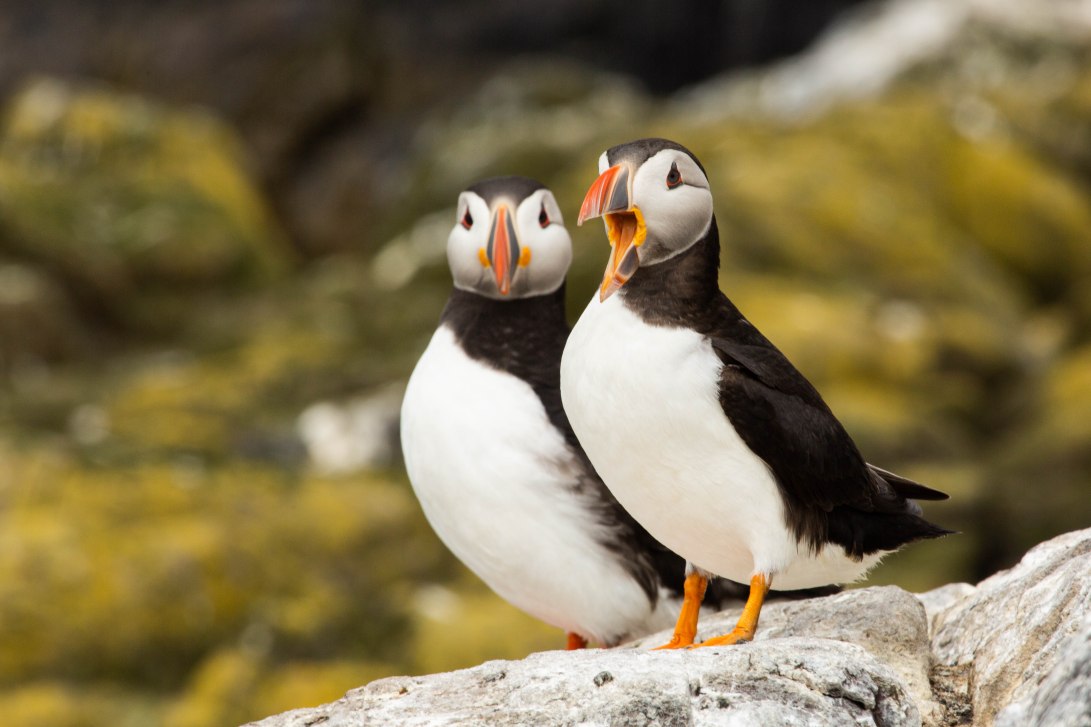
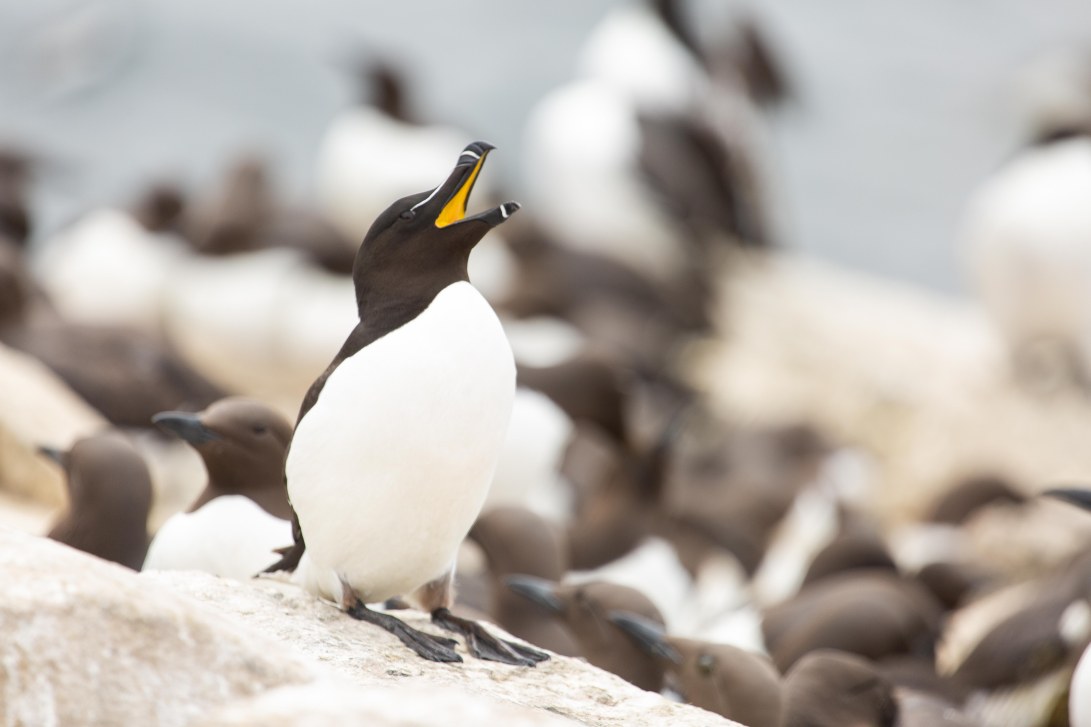
But despite the excellent views of seals, I’ve chosen the Farnes for their astonishing bird life. Moments after disembarking from the boat we were carefully weaving around nests positioned just off the path, our ears slammed with the onslaught of squawking from razorbills, guillemots, cormorants and everyone’s favourite, the puffin. I’d seen glimpses of puffins between waves before, but on the Farnes you can watch from a front row seat as they go about their business of hunting sandeels and dashing into burrows. For anyone wanting to see their first puffin, the Farnes are the place to go.
Burghead Backshore
It is only recently that I’ve discovered just how special the Burghead Backshore is for wildlife. In just two weeks of living on this small peninsula jutting into the Moray Firth, I’ve seen plenty of cars parked along the bank with binocular-clad birders clambering out to scan the shore. People come from all over, including paying customers on Highland Safaris from Aviemore.
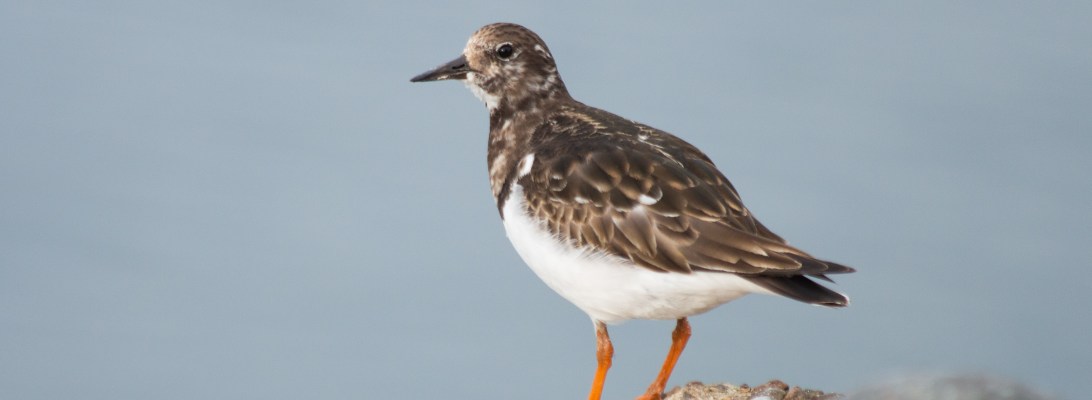
I can’t speak for every season, but so far during late winter I’ve had almost daily sightings of goldeneye, long-tailed duck, eider, red-breasted merganser, turnstone and redshank. For such a small area, the Backshore is bursting even during the lean winter months.
And of course, there are more than birds to be found around Burghead. The Moray Firth is one of the best places in the UK for bottlenose dolphins, and basking sharks and minke whales have also been seen, as well as grey seals. I can’t wait for the proper dolphin season to kick off in May, as I haven’t managed to spot any yet. This weekend I’m going to Inverness to become trained as a Shorewatch volunteer for Whale and Dolphin Conservation, so I can carry out official cetacean surveys in Burghead. I can’t wait to learn more about my local marine wildlife and contribute to conservation.


Isle of Cumbrae
In May 2018 I attended a Field Studies Council weekend course on the Isle of Cumbrae in Ayrshire. It was a jump into the unknown that I didn’t fully appreciate until I was standing spread-legged in the shallows peering down into rockpools and glancing at a sheet of paper I didn’t really understand. The course taught us how to identify biotopes – the combination of a physical habitat and the biological community that lives in it – and although I certainly enjoyed staring down microscopes and poring over textbooks that weekend, the highlight for me was spending two full days on the beach looking for creatures in rock pools. We saw beadlet anemones, a stunning dahlia anemone, acorn barnacles, hermit crabs and common prawns. Every rock revealed a different discovery. Despite spending plenty of summer days at the beach in the past, I’ve never done so much rock pooling before and the FSC course started a new fascination for marine wildlife that I’m hoping to return to now I’m living on the coast.

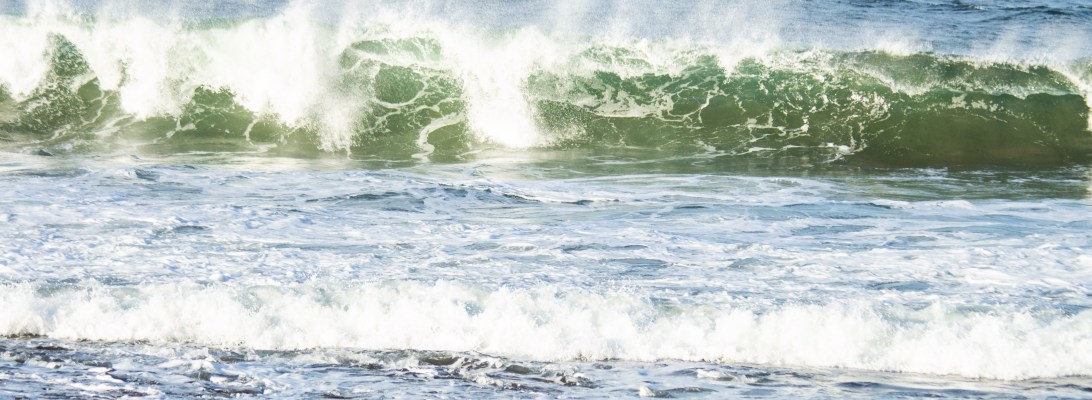
I’ve finally done it. After feeling for the past year that I’ve been in the wrong place, and experiencing a far greater satisfaction every time I visit Scotland, I’ve finally moved there. Last weekend I drove 568 miles and upon arrival collapsed exhausted, filling the house with bags and suitcases. But over the past few days it’s finally started to sink in that I live here now.
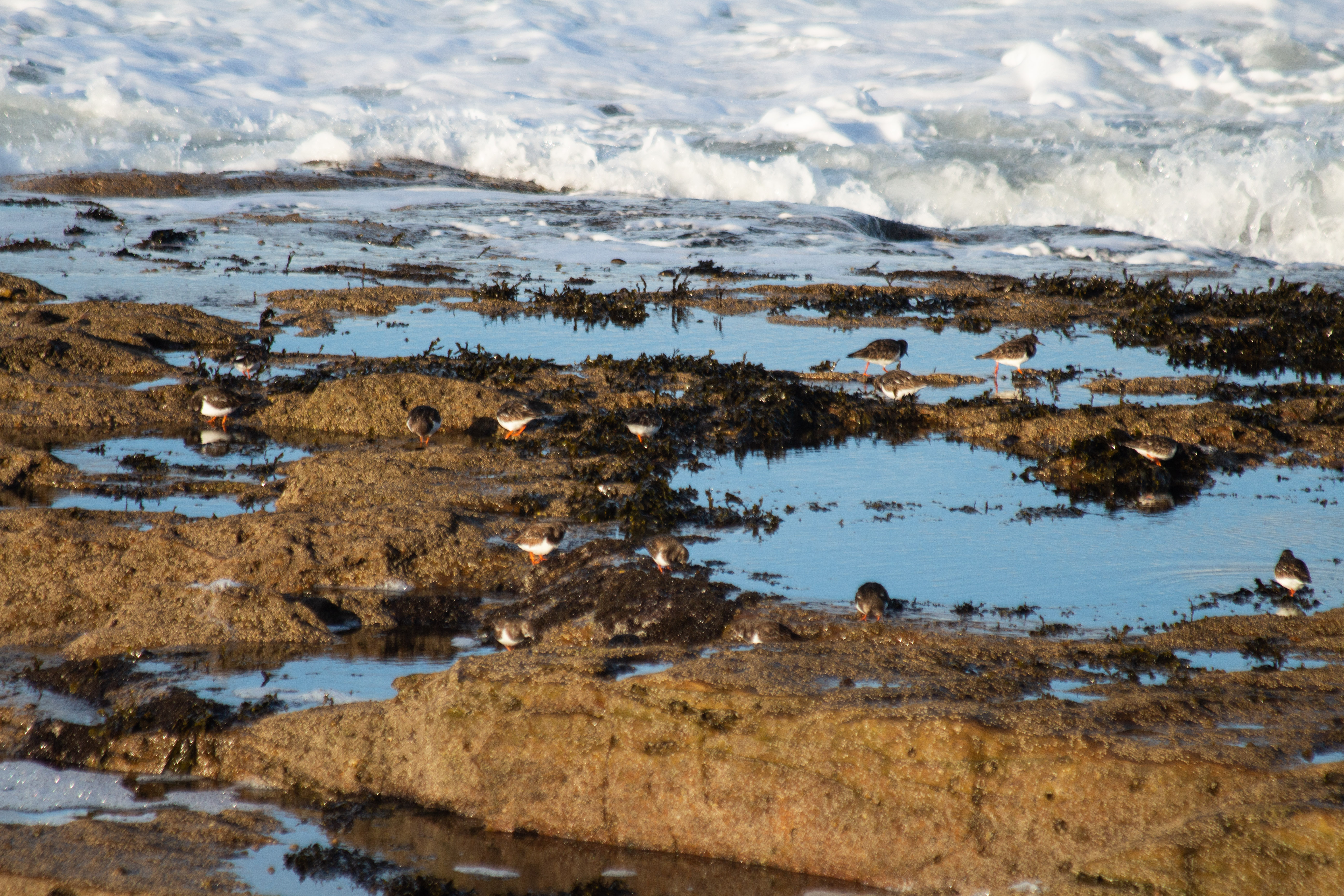
The reason I can tell I’m in a much better place is I already feel a connection to the landscape, so much so that I’ve assigned myself a local patch for the first time. Back in Hertfordshire I never felt closely attached to any wild place, and even if I had there was nothing within walking distance of where I lived. Now I can walk for less than two minutes and reach the sprawling north side of the Burghead peninsula, known by the Brochers (Burghead residents) as the backshore. This is my new patch. Not only is it teeming with birds – attracting twitchers from across the Highlands as a result – but it is home to many species I don’t know, which will make the process of monitoring my patch even more rewarding. Having never been in regular contact with marine and coastal habitats before, my knowledge of gulls, ducks and waders is almost non-existent. I’ve been visiting my patch for three consecutive days now and have already learned to recognise six new birds: turnstone, redshank, rock pipit, goldeneye, curlew and long-tailed duck. When I stand on the bank scanning the waves, I think I see around a thousand dolphins breaking the surface, but the ocean is known for playing tricks. As the old saying goes, the harder you work the luckier you get. There are around 130 resident bottlenoses in the Moray Firth, and I’m determined to see some on my patch soon.

Having a local patch is a great way to get to know an area intimately. By regularly recording not only the species but also the weather conditions, time and date of visits, you begin to detect changes and ultimately learn wild animal behaviours. On Sunday I went at 4pm and watched waders and gulls foraging amongst the rocks. Yesterday I went at 11am and the tide was completely in, so the waders were absent but there were still ducks and cormorants diving in the shallows. A marine patch is particularly intriguing because it changes drastically in a short space of time. In just a few hours the habitat is transformed, and new birds appear to take advantage of the conditions.

I’ve already met other birders at the backshore, including Steve Reddick from Highland Wildlife and Birdwatch Safaris, who had the added benefit of a scope. He was keen to see purple sandpipers, which are often here during the winter. I learnt most of my six new birds from Steve, and now wish he could help me with a mystery diver I keep spotting. It’s too far away to make out clearly through binoculars, and to my untrained eye the three species of diver seen here – red throated, black throated and great northern diver – all look very similar in winter plumage. Hopefully with a few more sightings I’ll learn the differences and be able to identify them with confidence. I’m particularly looking forward to seeing their summer plumage, which is not only easier to recognise but also stunningly beautiful!
It’s fantastic to have my passion for birdwatching renewed. I’ve been in a slump for months, so to finally be in a place that inspires and challenges me is both a relief and a privilege. I can’t wait to discover new species this year, not only on the backshore but all over the Moray coast.

I’ve never been able to meditate. I’ve tried it before, frustrated and envious of those people who can sit still and completely disengage from the distractions around them. For a start, I can’t even sit up straight without getting uncomfortable. I know you can meditate lying down, but then I just fall asleep. If I finally do find a comfortable position, I inevitably can’t stop thinking. “Focus on breathing”, all the books and videos say, and I focus on the first three inhalations wonderfully, but soon my mind wanders to my shopping list, deadlines, or reminding myself to put the bins out. I’ve discovered that meditation is just something that not everyone can do, in the conventional way at least.
The other day I went to Rye Meads Nature Reserve in Ware, Hertfordshire. I have quite a lot of things to do at the moment with my MA and the move to Scotland later this month, but I needed some time outside. I find it a real challenge to make time for walks, so I fought my better judgement and put work on hold to sit in a hide and watch birds. I don’t do this much – when I’m out and about I’m either on my way somewhere or keeping an eye on the dog to make sure she’s not getting into mischief, so it was a real indulgence to spend an entire morning ambling around a nature reserve.
I sampled each hide in turn, following muntjac prints in the mud as I walked, and eventually settled in one that overlooked a lake speckled with birds. A group of thirty lapwings were soaring over the water, swinging in a single mass from left to right. Each time they twisted the sunlight caught their backs, illuminating that iridescent green also concealed in magpies and starlings. I watched their display through the binoculars, captivated by the pendulum-like movement. Unlike a lot of wings that end in sharp points, these birds have wings that are loosely shaped like tennis rackets.
Eventually one bold individual decided that was quite enough flying, and as it swooped down to the water its companions followed until the air was empty again. They settled on the rocks alongside a pair of shelducks, shovelers, gadwall and a lone cormorant. The strips of pebbles cut the lake into wedges, separating midnight blue from slate grey. Ripples from bobbing coots sent tiny waves onto the shingle.
“Have you seen the green sandpiper?”
The voice made me jump after such a long silence. It was a member of RSPB staff, brandishing both binoculars and an impressive scope. Shimmying along the bench, I peered down the scope and watched the wader as it scoured the shingle for food on its skinny green legs. I’d have never spotted such a well-camouflaged bird without help. In fact, the green sandpiper was a species that I may have looked at but not noticed many times before.
The man with the scope carefully lowered the window cover and hitched the scope onto his back, heading back out into the sunshine. I carried on watching the lapwings, now foraging with their spiky hairdos fluttering. It occurred to me then that birdwatching was a form of meditation. You have to sit still, as quietly as possible, and often go for hours without speaking. My phone was on silent, buried at the bottom of my bag underneath gloves, sketchbooks and biros. The only connection I had was with the birds. Sure, I was hoping for bitterns, kingfishers and otters (none of which showed), but I found satisfaction in the more common residents. There is undeniable beauty in a young blue tit’s downy feathers, the tight curl of a cormorant’s dive and the vibrancy of a mallard drake’s head, which almost shines yellow in the right light. Maybe I’d denied myself the pleasure of birdwatching too long, but sitting in the hide looking out onto calm water felt like meditating. My work was back at the house and I was in the reserve sharing space with birds.
 rebeccaonthewing.com