Inspired by a Blowfish

Last weekend I stayed with my grandmother at her lovely house in Frome, Somerset. I love my mini holidays there; my bedroom window overlooks a meandering river, and on the other side is a bustling market and a glimpse of the library through the overhanging trees. I was particularly excited on Saturday morning to discover there was a Christmas fair in full swing. There’s nothing like a fair in late November to get you in the mood for Christmas. Although I still refuse to play festive music before December, a sprinkling of Christmas spirit is more than welcome, especially in such bitterly cold weather.

Once inside, we joined the throng. Shoppers shuffled along tables laden with all sorts of gifts and bric-a-brac. The Cats’ Protection were selling cat-themed stationary, while a young man at the Somerset Wildlife Trust stand was doing his best to sell membership to a middle-aged woman whose attention was slowly waning. I am a firm supporter of the Wildlife Trusts, but membership recruiters have a way of pulling you in for a short (thirty minute) chat and not letting go. Past experience taught me to avoid his gaze, and I spotted the table I’m always searching for: the one covered in books.

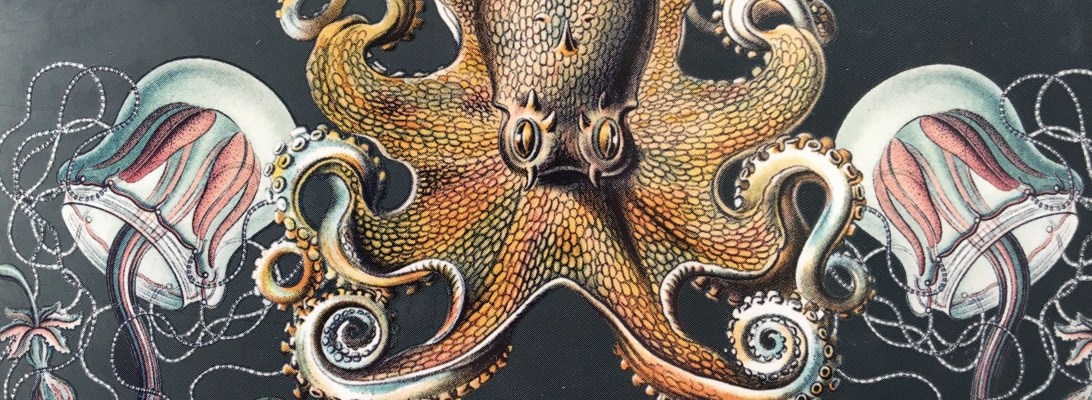
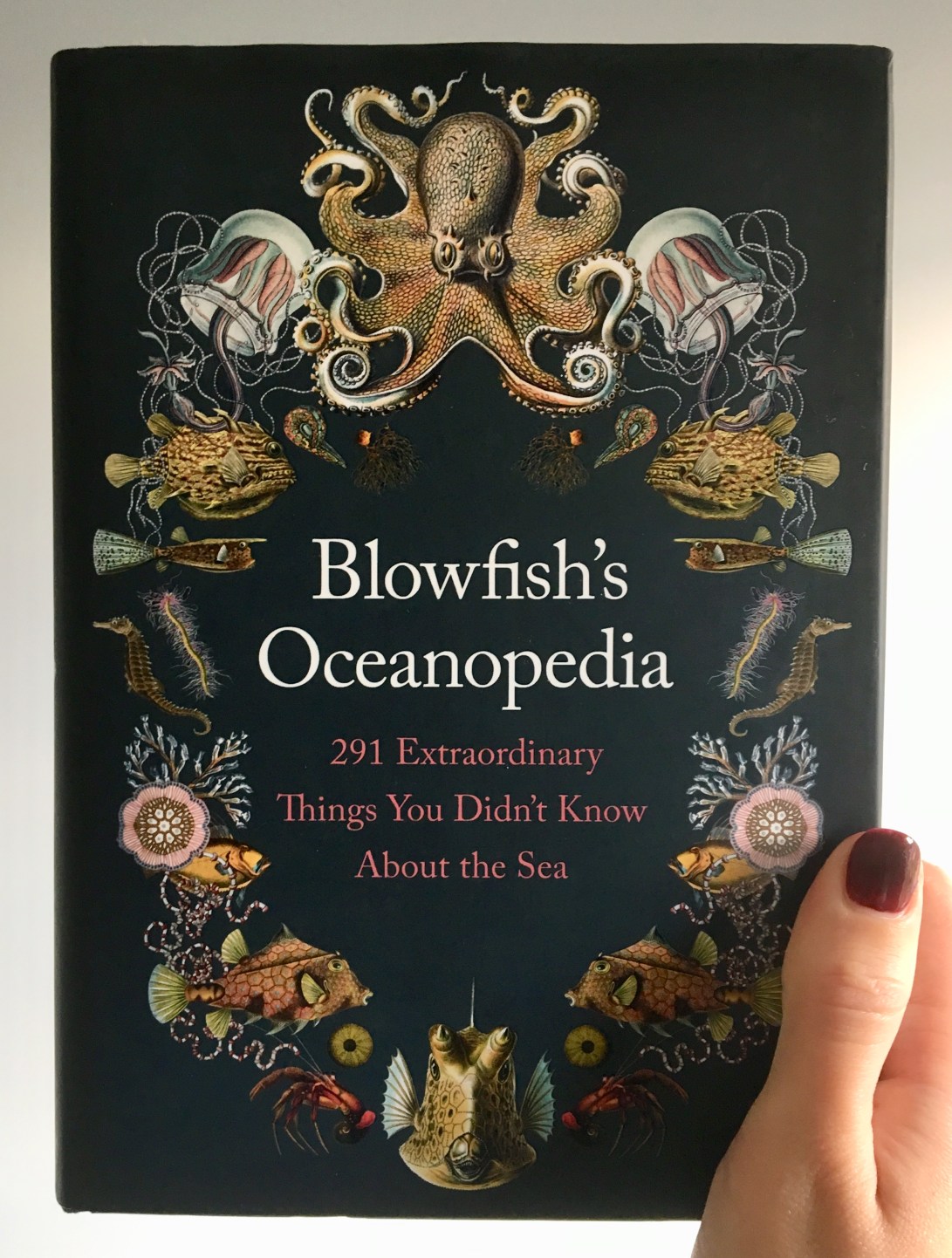
As always, there was a decent selection of dog-eared Maeve Binchy and Danielle Steel paperbacks, but amongst covers showing watercolour landscapes and female silhouettes staring wistfully into the distance was the tail of a fish. I tugged at the fish and my eyes fell on beautiful line drawings of an octopus, jellyfish, seahorses and more. It was such a satisfying cover, and the book was called “Blowfish’s Oceanopedia”. It was one of those dip-in books with titbit information: “extraordinary things you didn’t know about the sea”, it said. As a person who is fascinated by the sea but doesn’t really know anything worthwhile about it, it seemed the perfect read for me.

The price was even better. A brand new book, published last year at £17.99, and I was charged a pound for it. Books were amazing, but books for a pound were magical.
IMG_2408

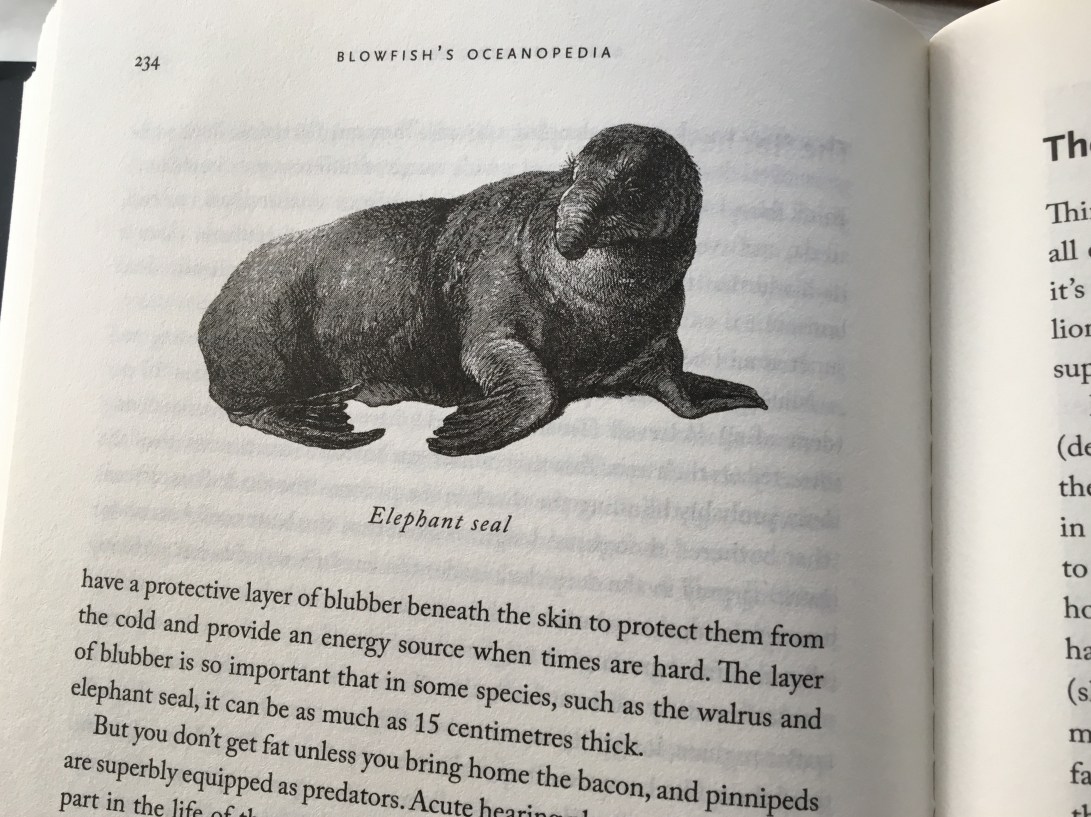
After finishing my loop of the fair – and winning a raffle Christmas present in the process – I returned to my grandmother’s house and instantly curled up in my favourite chair to begin reading. Within minutes I’d learned a decent thing or two about elephant seals. I am quite terrified of elephant seals, but as with my similar unease towards snakes and sharks, I’m also fascinated by them. The Blowfish revealed just how important the southern elephant seal’s “trunk” was to its survival. During the breeding season, males weighing up to 4 tonnes battle it out to win ownership of the harem of females. Understandably, this is a full time job, and prevents males from returning to the water to feed and drink. So, to avoid dangerous dehydration, males use the complex nasal passages and specialised blood vessels in their fleshy trunks to recover around 70% of the water vapour in their exhaled air. It’s a genius example of life-saving recycling.
IMG_2405

This is the sort of book I dream of someday replicating; an instrument to share my knowledge and passion with like-minded people. At the moment I’m not an expert in any one field, but the idea of spending decades of your life learning about something and then teaching others in the form of writing is, to me, the perfect way to preserve your work.

The Blowfish, also known as Tom Hird, is a marine biologist who has a deep love for the ocean and life within it. He’s the perfect voice for a potentially complex subject matter, using humour and everyday situations to diffuse a tricky concept. Speaking in the same language as the layman is something some scientists find extremely challenging. I’m certainly not a marine biologist, but nor am I completely naïve to the science of the natural world, so I often feel my combination of knowledge gives me an advantage. I can understand a lot (not all) of what scientists do, but I also appreciate how that needs to be adapted to inform the public without dumbing down and insulting them. I’m sure there are hundreds of published papers on the adaptations of southern elephant seals which required many hours of hard work, but to the average Joe wanting to find out something interesting about wildlife, a book like the Blowfish’s will be a much bigger success. I believe the key to nature writing, or any writing for that matter, is finding the balance between informing and entertaining. The Blowfish’s Oceanopedia has been a source of great inspiration to me – a writer hoping to one day publish books of my own. The passion and enthusiasm in the author’s prose is infectious, and makes me want to jump in the sea right now and see for myself everything he has had the opportunity to witness.

Learning to Dive – Part Two

On the second day of Open Water weekend (read about Day One here), I awoke to the alarm feeling a lot more confident. We were halfway through, with two dives down and two to go. The weather had deteriorated slightly and as I waited for the morning briefing it began to drizzle, but hopefully that meant the day would be slightly warmer (I was clinging to any silver lining).

My wetsuit was still damp from yesterday, so dragging it up my legs was even more impossible than usual. It was the reverse of a snake shedding its skin, and as I hopped about and contorted my limbs I couldn’t help feeling extremely silly. Finally it was on, and I doused myself in hot shower water in a vain attempt to warm up before facing the quarry.

Dive three was the most daunting, as it required a longer list of skills, including the dreaded mask removal. Perhaps I was jittery from nerves, because as I began my descent pain shot through my right ear and I hovered, trying and failing to equalise my ears. As you descend, the increased pressure compresses air spaces in your ears, sinuses and mask. Failing to add air to these spaces can cause serious injuries. I eventually had to resurface until I could equalise, then made my way back down. It was a setback that I tried not to concentrate on, especially with my least favourite skill coming up.

We gathered on the platform and took it in turns to fully flood our mask and take it off. I disliked this skill so much because the air bubbles that gather underneath the nostrils feel like water shooting up your nose. When I attempted this in the pool I had the sensation of not being able to breathe; quite a daunting prospect when you’re seven metres underwater and definitely cannot shoot up like a cork to the surface. In preparation, I’d been putting my face underwater in the bath and breathing through a snorkel, and although it triggered several involuntary swallows I could just about manage it.

Taking a deep breath, I pulled the strap over my head and held my mask away from my face, placing it back over as soon as I was allowed. Feeling very pleased with myself, I ran a finger around my hood to check the seal and cleared the water out ready for the next skill. But as we made to swim off the platform, the mask flooded again. I cleared it, and water immediately trickled back in. I signalled to the instructor who checked the seal and couldn’t find the cause of the problem, so once again we surfaced and I made absolute sure I’d sorted it out.

As I descended for the third time on the same dive, I reflected that I’d encountered an unforeseen problem and dealt with it without panicking; I had made serious progress since my first session in the pool. The rest of the dive passed with no further mishaps, and as I had my fifth hot shower of the day I finally began to relax. Our fourth and final dive wouldn’t be full of tests and I could enjoy the experience of feeling weightless in water and exploring Stoney Cove.

After a brief time on the surface and a delicious cheeseburger at Nemo’s, we took a giant stride back into the quarry. We’d planned dive four ourselves, and led the instructors down to the aircraft cockpit and along the shelf that tumbled down to 22m on the other side. Staying firmly away from the edge, we swam across to the Nautilus again and back to the platform, where we gathered for the last time. Alan, the instructor, had an underwater notebook with him, and one by one turned it to face us. I don’t think I’d ever been so happy to read the words:

“You’ve passed. Congratulations!”


I Need Your Help for Wildlife Blogger of the Year!

If you love wildlife, then I need your help!

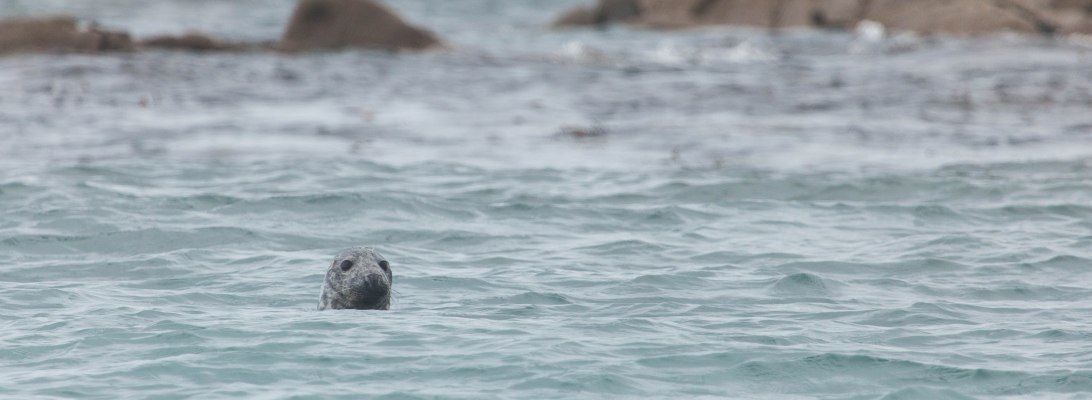
I’ve entered the Wildlife Blogger of the Year 2018 competition, organised by Terra Incognita. The theme is “a favourite wildlife moment of 2018”, and I chose my encounter with a wild grey seal in the Farne Islands, which some of you may remember reading about.

I chose this story because it was an incredibly special experience and a reminder to me that we should not be constantly connected to technology. I had a GoPro with me while I was snorkelling but was so surprised by what happened that I completely forgot to film. At first I was disappointed, but on reflection I am so glad that I stayed in the moment and didn’t miss a single second. I interacted with a wild animal with absolutely no distractions, and it has become one of my most precious memories of time spent in nature. I hope my story reinforces the need to connect with wildlife and shows just how rewarding it can be.

As well as the overall winner of Wildlife Blogger of the Year, picked by a panel of judges, there is the Reader’s Choice winner award, which anyone can vote for. If you enjoy my story, I would be thrilled if you could cast me your vote.

You can read my story and vote for me by following this link. Thank you so much!

Learning to Dive – Part One

The alarm went off at 6am and my stomach began to churn. Today was the start of Open Water weekend, and if all went well, I would earn my first diving certification. Having struggled with some of the skills in the swimming pool, not to mention the fact I was still getting used to all the kit, I couldn’t help feeling apprehensive as I pulled on my warmest clothes. I hastily gobbled a petrol station flapjack, which tasted like cardboard in my dry mouth. Knowing I shouldn’t be feeling so anxious, I tried to shake the nerves and triple-checked I had everything I needed.

Luckily, the site was only a five-minute drive from the hotel, and I arrived in plenty of time. Stoney Cove used to be a stone quarry that was used in the 1960s and 70s to train commercial divers and test underwater equipment used in oil fields. Now, Stoney Cove has conference rooms, shower facilities, a shop and – most importantly after a tiring dive – a pub called Nemo’s. The actual quarry is a multi-level city of shipwrecks and aquatic life, split up into areas of different depths for divers of all abilities. As this was our first open water dive, we stayed safely in the 7m limit, which still contained a submarine and an aircraft cockpit. Although, I was more interested in the crayfish, perch, roach and pike that called Stoney Cove home.

It was a cold but clear day, with sunlight pouring weakly onto the water. No rain at least, though I suppose rain shouldn’t really be a concern for divers. As I stood at the quarry’s edge watching seagulls floating on the surface, I couldn’t quite believe I would soon be diving several metres beneath it.

Soon it was time to start kitting up. We assembled in buddy pairs and helped each other don scuba kits just like every week at the pool. This time, however, we also had hoods, gloves, compasses and a dive computer. We made our way down to the ramp, where several divers were already in the water. For dive one all we had to do to enter the water was stand on the edge and sit gently back, floating out into the quarry.

Ungainly as always with my cylinder and weights, I felt like a tortoise on its back as I tried to strap on my fins. Eventually I was ready, and made my way hesitantly to the edge of the ramp. I turned, squatted and leaned back. The shock of freezing cold water rushing into my wetsuit wasn’t exactly comfortable, but in a strange way it was exhilarating. This was it, time to dive.

Once everyone was in the water, we began our first descent. As more of my body became submerged, I soon grew numb to the cold and instead focussed on the underwater world we were entering into. I descended to the bottom, making sure to equalise my ears to the increasing pressure, and looked around. The visibility wasn’t superb and the only features I could make out were other divers, but the murkiness only added to the suspense. It still felt strange not to have to work to stay down in the water, instead floating effortlessly.

The instructors led us on a swim, past the Nautilus submarine to a wooden platform where we would perform our skills. An underwater classroom surrounded by shipwrecks and fish; it was quite extraordinary.

After each taking turns to carry out the skills, we started our ascent. For the first time on the dive I looked up, and the sight was breathtaking. Sunlight streamed through the water in slanted shards that lit up our bubbles as they cascaded upwards. I still hadn’t got my head around being able to breathe underwater. It had been a dream of mine as a child, pretending to be a dolphin in the local pool. I wasn’t quite a dolphin yet, but I was closer to the underwater world than ever before.

Coming soon: day two of Open Water weekend!