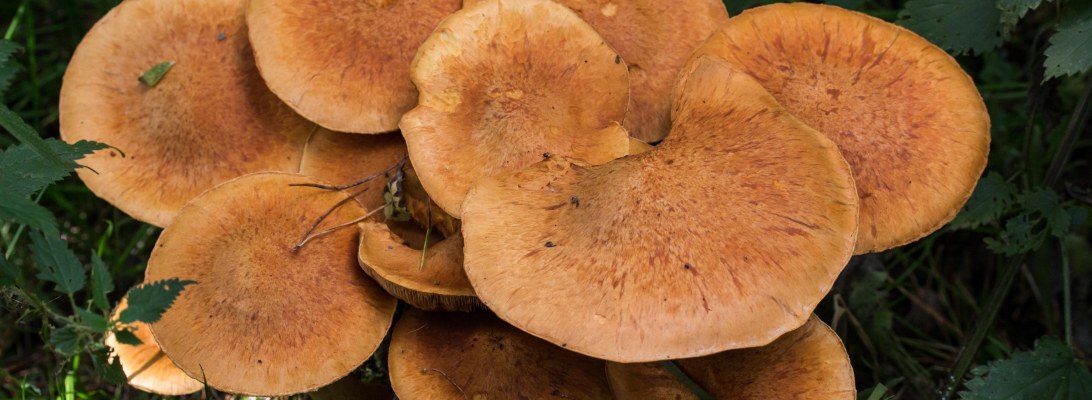
It’s soon to be prime fungi season and I can’t wait to see what will start to emerge over the next few months. I find identifying fungi a real challenge, and recently I’ve mainly been interested in tracking fungi and photographing it. As with all wildlife though, I think every photographer should know exactly what it is they’re pointing the camera at. So, after consulting the “Fungi Bible” – otherwise known as the Collins Fungi Guide – I made my best guesses at what species I’d seen. Then, I consulted with a local fungi expert in my area, and was pleased to discover I’d got most of them right!
Here is a selection of the species I’ve seen so far, some in Carlisle where I’m studying and others at home in Hertfordshire. Hopefully this list will triple in size during the autumn!
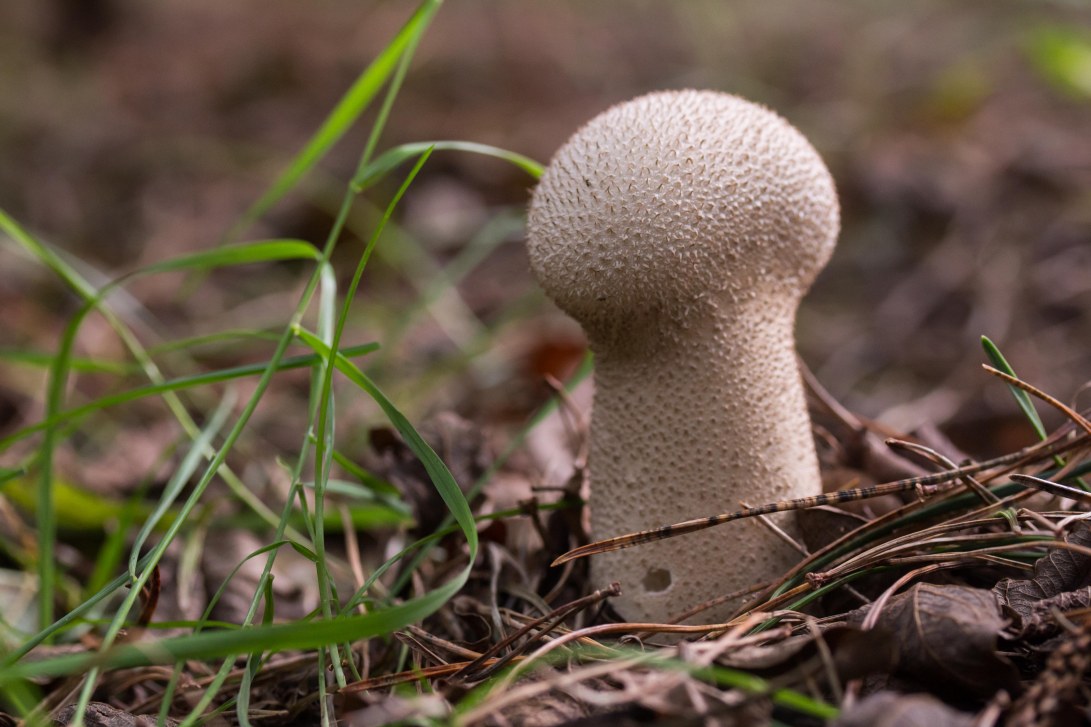
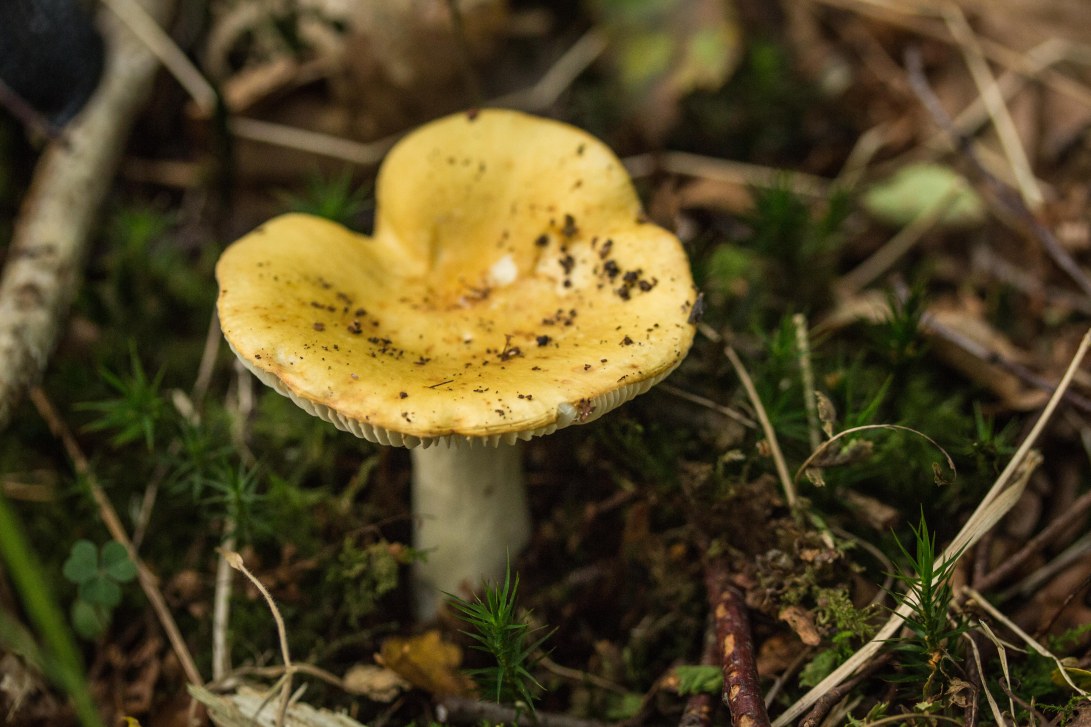
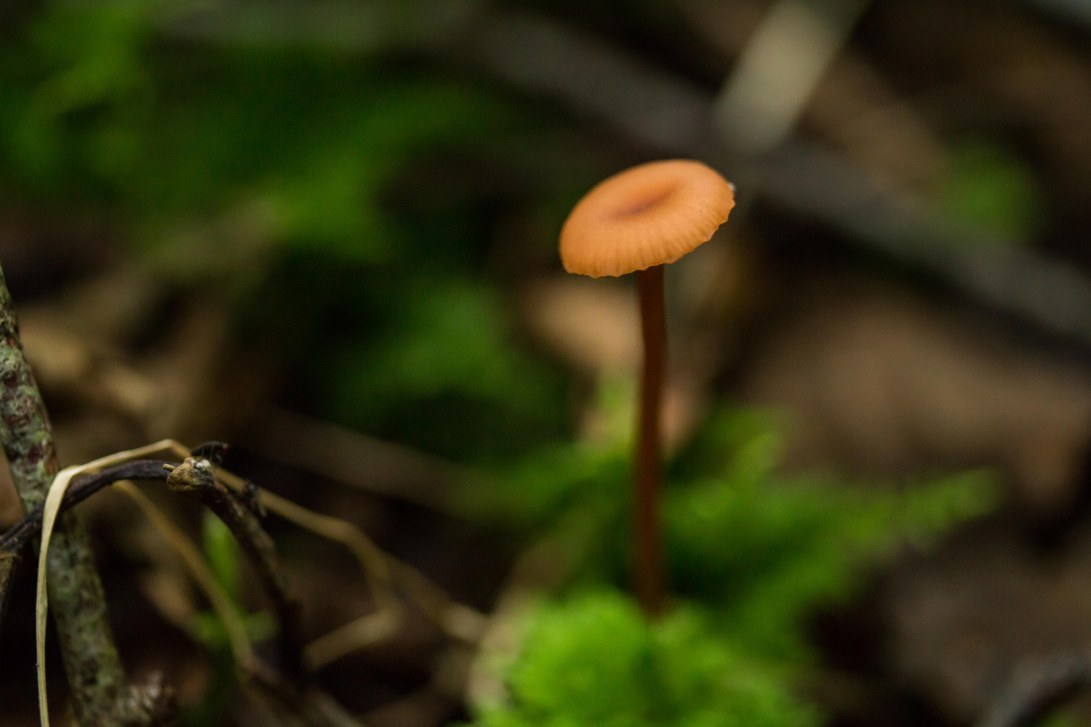
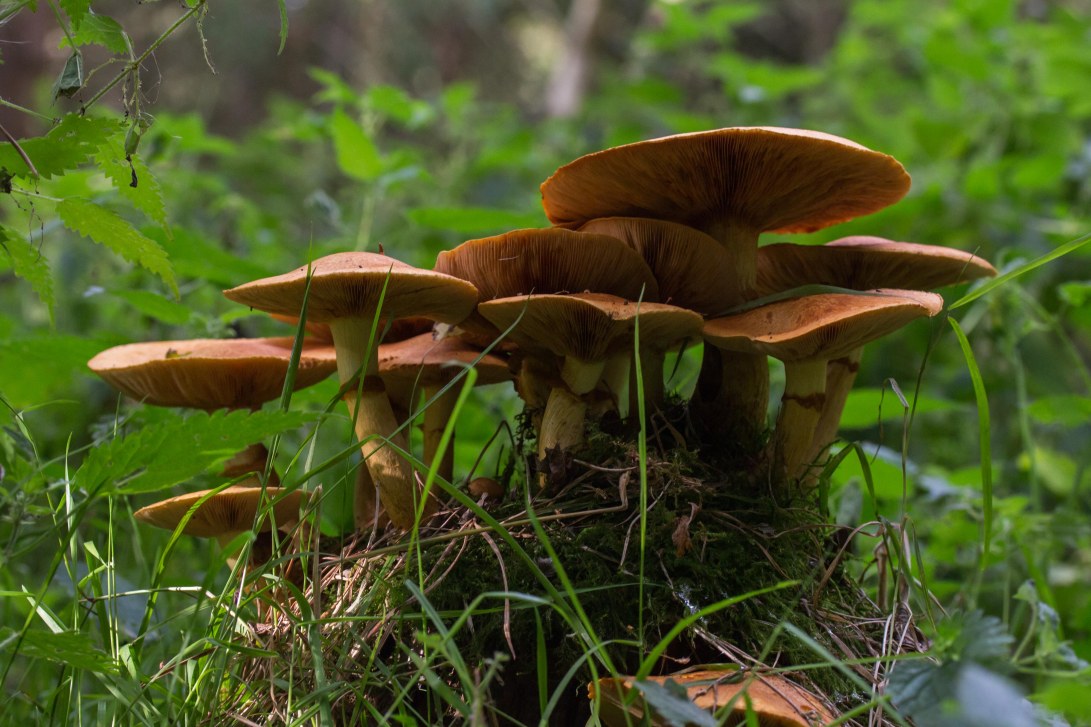
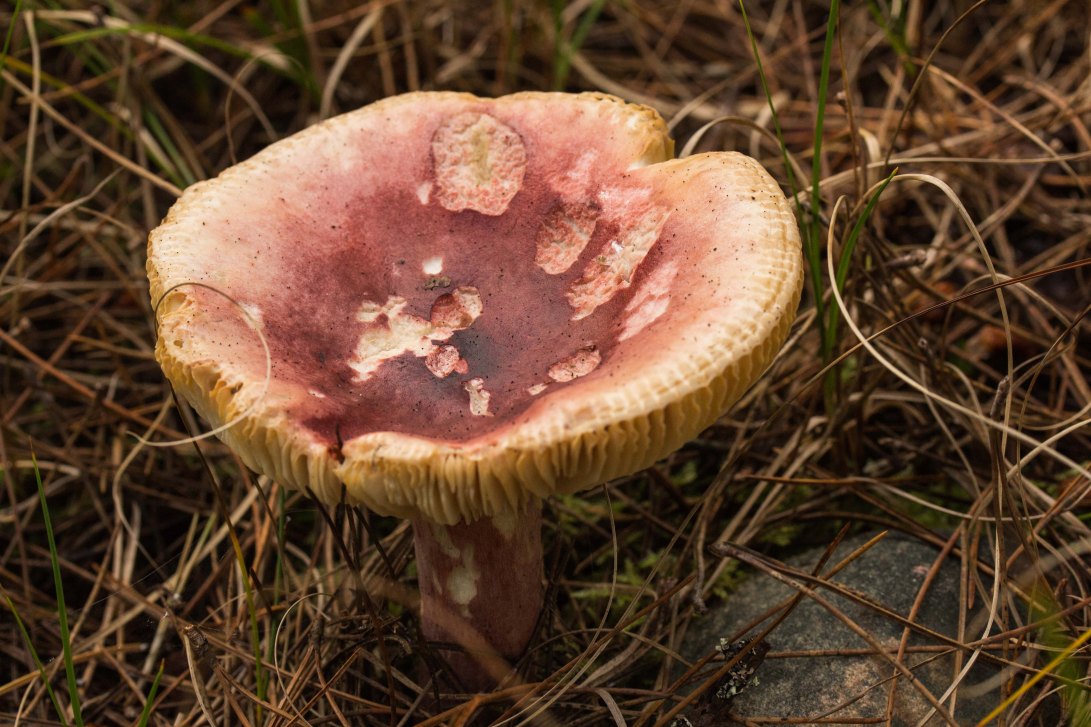
Common Puffball(Lycoperdon perlatum)Ochre Brittlegill(Russula ochroleuca)Blue Roundhead(Stropharia caerulea)The Deceiver (Laccaria laccata)Brittlegill (unsure of species – too young)Sheathed Woodtuft(Kuehneromyces mutabilis)Sheathed Woodtuft from below
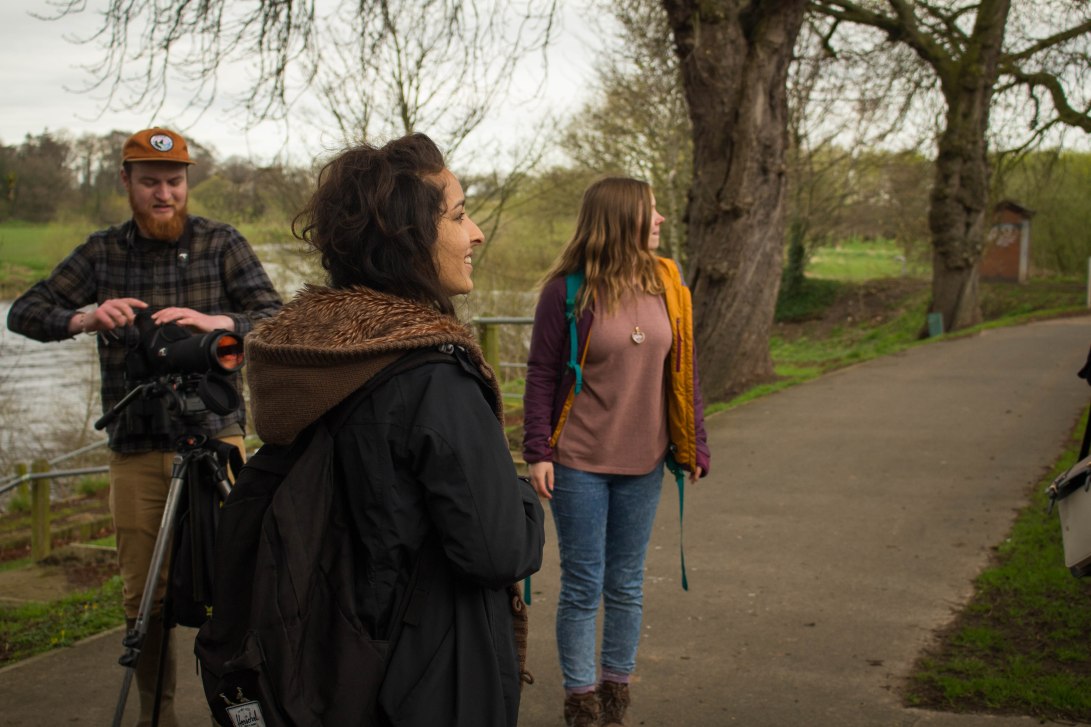
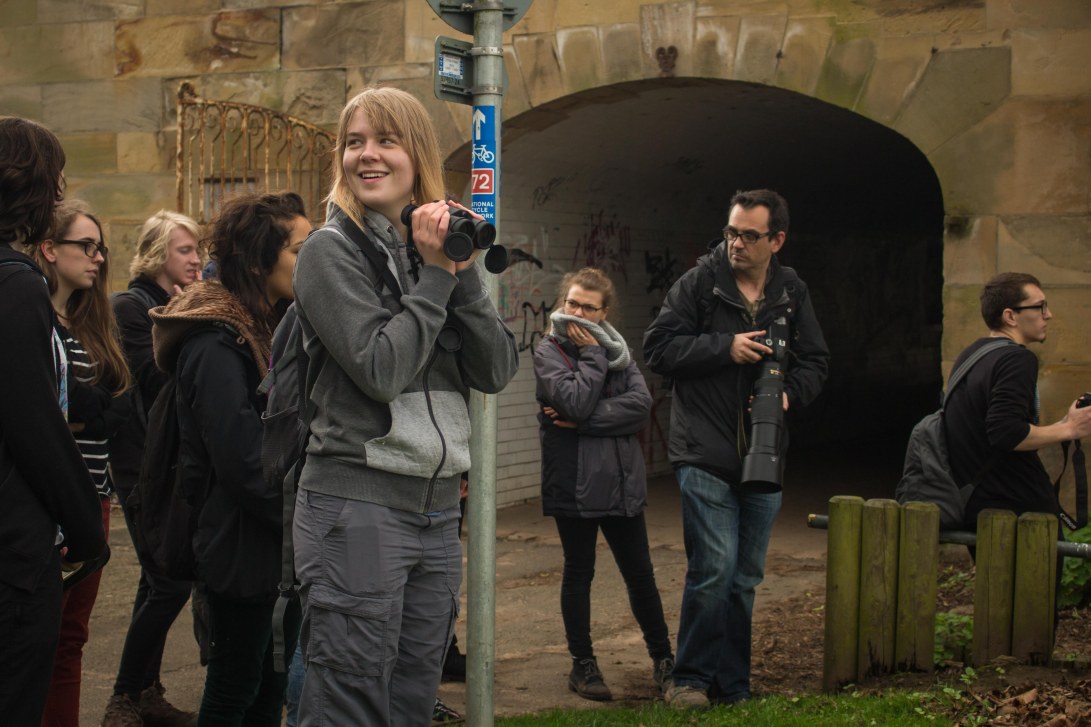
Last week Heather and Cain dropped into uni for a mini exped around the local area. I welcomed any chance to learn more fieldcraft from them and it was also good to spend time with Zoology and other Wildlife Media students – there are fewer and fewer of us wildlies out there so it’s great to meet up every once in a while!
We began following the river through the park, spotting the first sand martins of the year swooping over the water. A jay darted into the small wooded copse in front of us and cormorants zoomed up the river, wings flapping furiously.
As cities go, Carlisle is one of the few that still has many pockets of wilderness nestled amongst the urban landscape features. It’s that combination of having everything I need close by but still being able to escape to a new wild place is what attracted me to studying here. I never thought I could see roe deer with a Virgin train zooming past in the background, but I’ve been proved wrong by wildlife encounters like these all year.
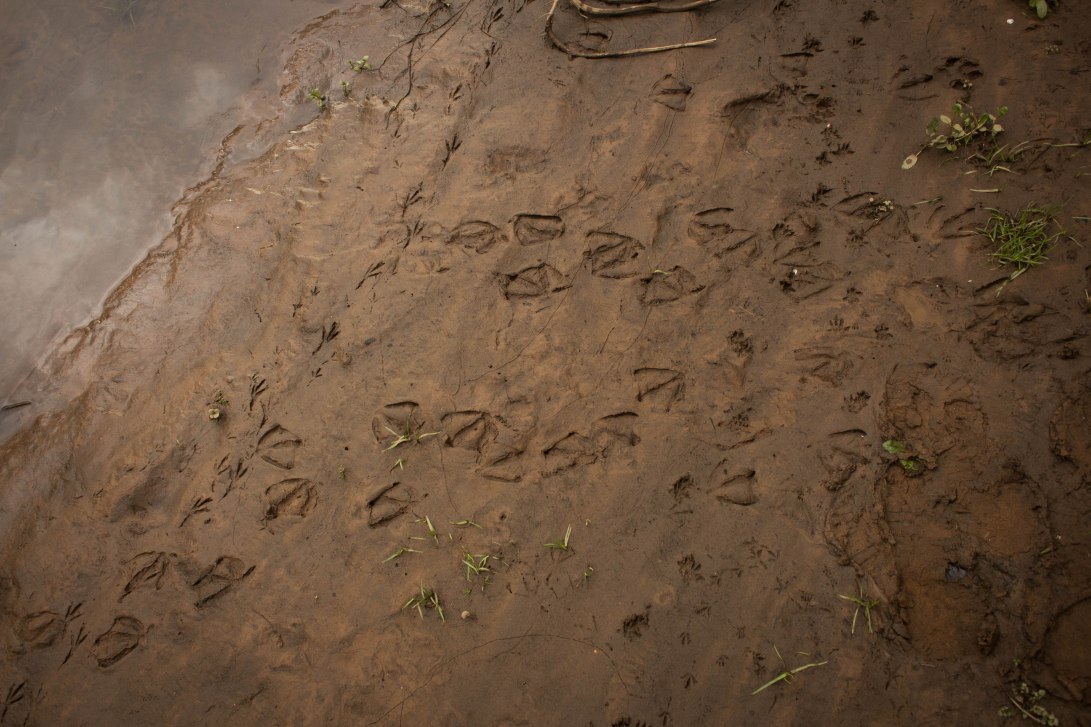
We carried on, walking along the Eden as it snaked through the golf course and reached the suspension bridge. Here we went off-road and found some truly amazing discoveries. On a sand bank tucked away from the heavy footfalls of regular dogs and their owners, we found a wildlife metropolis. There in the sand, perfectly imprinted, were dozens of tracks, bird and mammal alike. There were the broad irregular squares of mallards, tiny pin lines of grey wagtails, even tinier fingers of brown rats and the very dog-ish prints of otters! I practically jumped down into the sand to photograph them – not only were there prints but also a lonely otter spraint, deposited in full display of every visitor as an indication that this territory was claimed. It was fascinating to see just how many species had paid this relatively small sand bank a visit. I vowed to return very soon with a camera trap and see if I could get better acquainted with them!
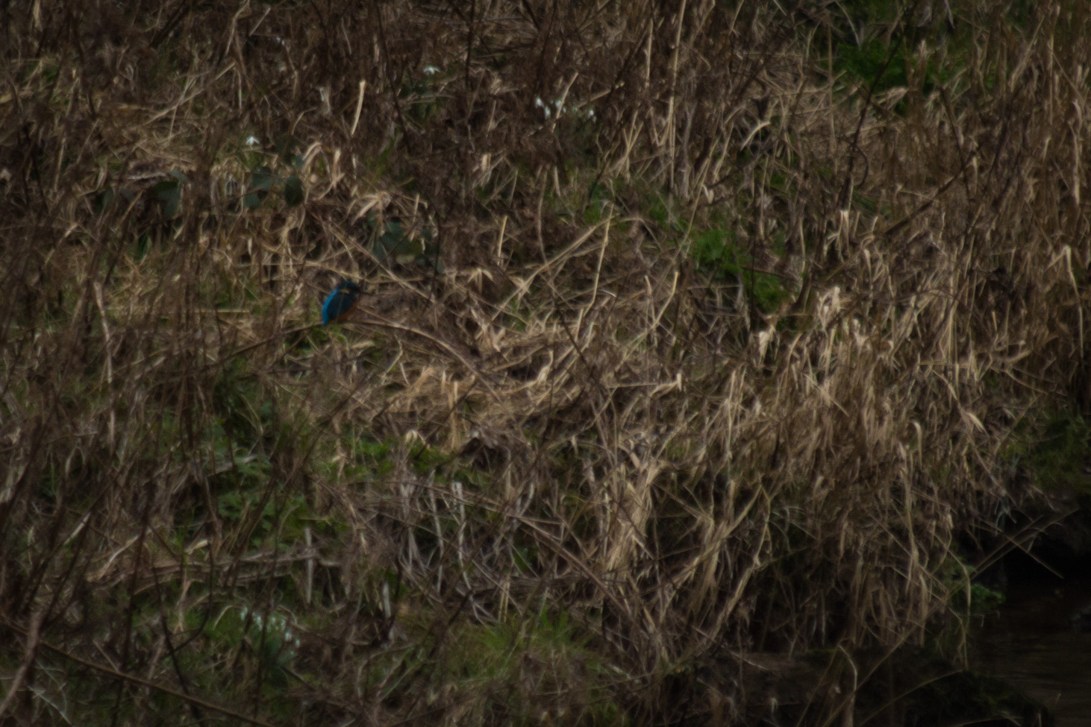
It was time once again for a wander in the wild. Kacper had told us about a kingfisher he’d seen on the River Caldew, so Zahrah and I met him in town and we set off. I’ve had two kingfisher sightings both in Cumbria, one with my camera one without. I managed to get the speedy bird in frame for one of my shots, but I wanted to slightly improve on an indistinct electric blue blur this time.
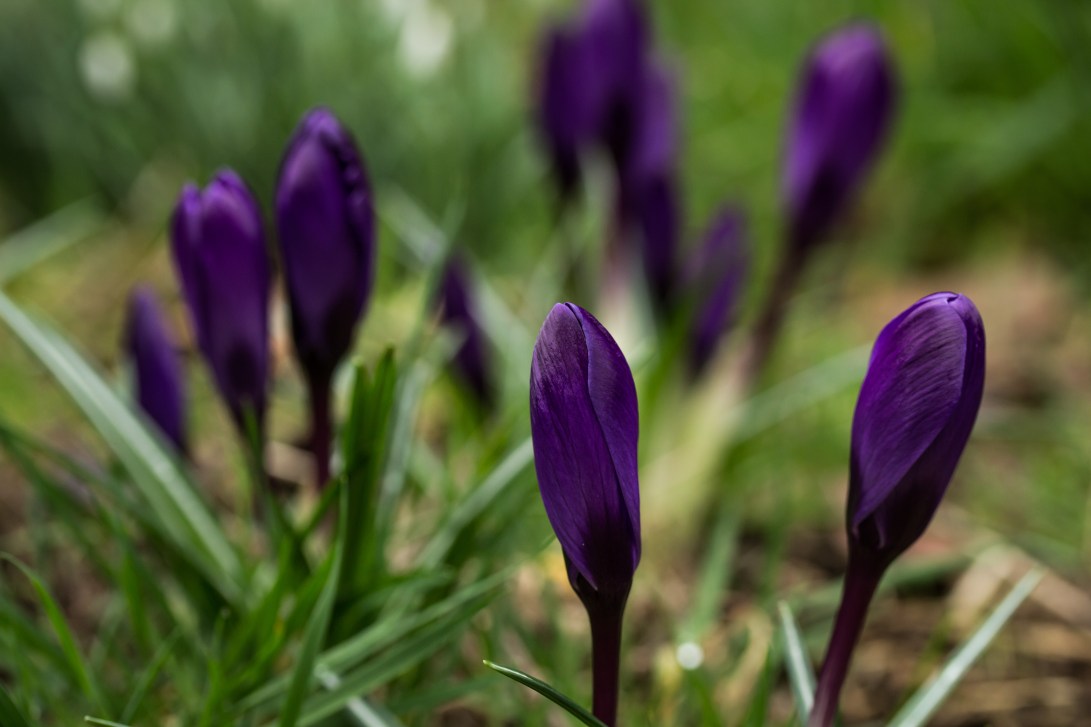
It was so refreshing seeing the first signs of spring. Little pops of colour speckled the green grass as snowdrops and crocuses stretched out of the cold, hard ground – dainty little warriors taking on the end of winter.
We were met at the river by a smoky grey guardian – a feathered old man that stood hunkered up at the top of a tree. The heron surveyed his river with grumpy indifference. Zahrah is under the impression that these birds are beautiful. While I can’t quite agree on that, they are a spectacular looking species that always draw my attention, whether they’re sat slouched on a branch or flapping through the air with spindly dangling legs.
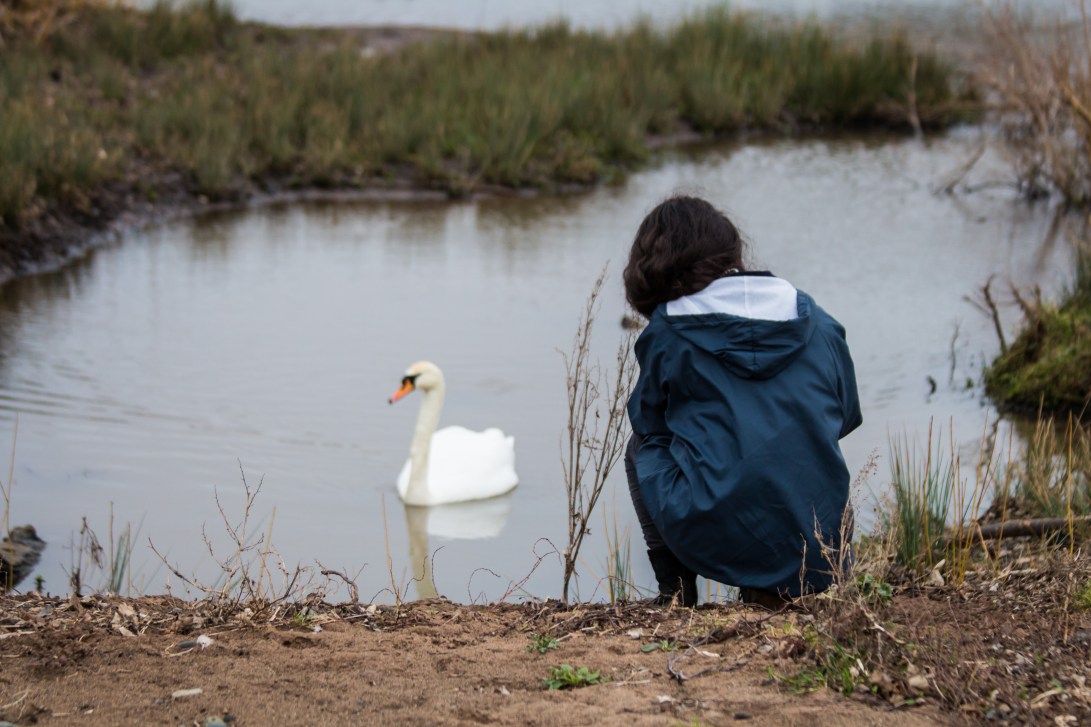
After leaving the heron behind I spotted the elusive kingfisher, so we followed it along the river bank as best we could. In the meantime, Zahrah had a play with medium format film, and attracted a couple of inquisitive mute swans.
Despite the slow emergence of spring, it still got bitterly cold and before long the light began to fade. We were just about to head for home when another flash of blue shot across the water. Hurrying across the bridge, we staked out the riverbank and managed to spot the kingfisher resting amongst the scrub. It’s still not the best kingfisher photo ever taken, but it’s a vast improvement on my last – you can even see it’s an animal this time!
It had been way too long since Zahrah and I last went on an adventure, so on a grey, cloudy Friday morning we headed out to Kingmoor South and North nature reserves for a wander. The aim was to train our senses and become expert animal trackers. We had our hopes on finding owl pellets and maybe even the fabled “Beast of Cumbria” – I share George Monbiot’s rather pessimistic opinion on a black panther stalking sheep in the Lakes but that’s a whole other blog post.
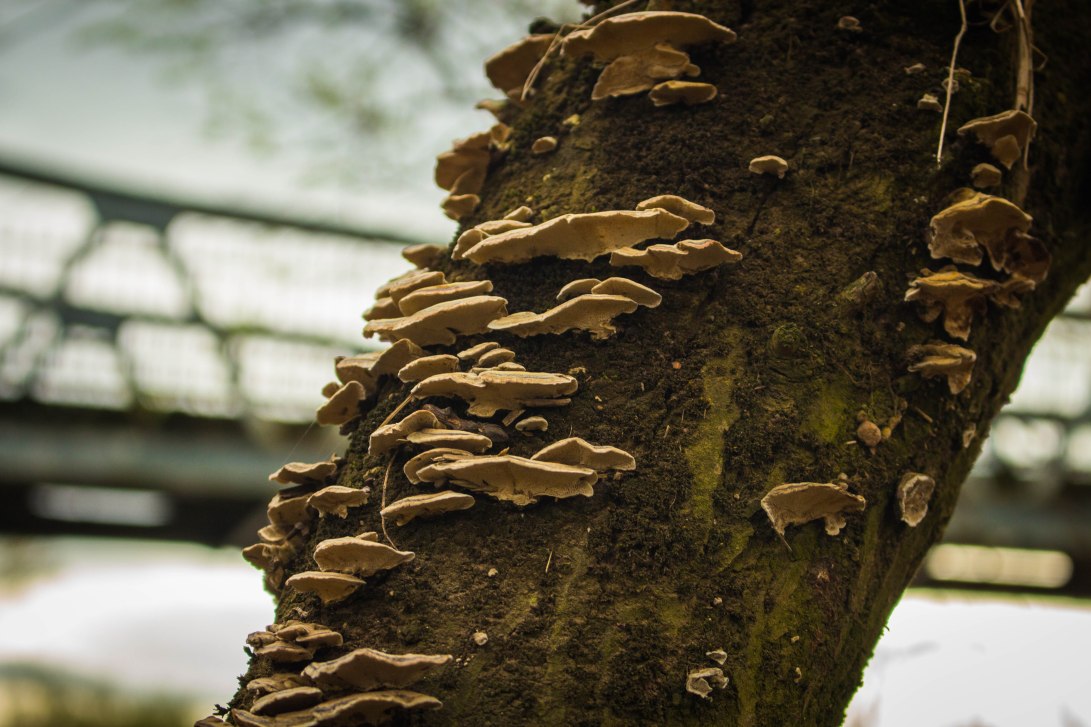
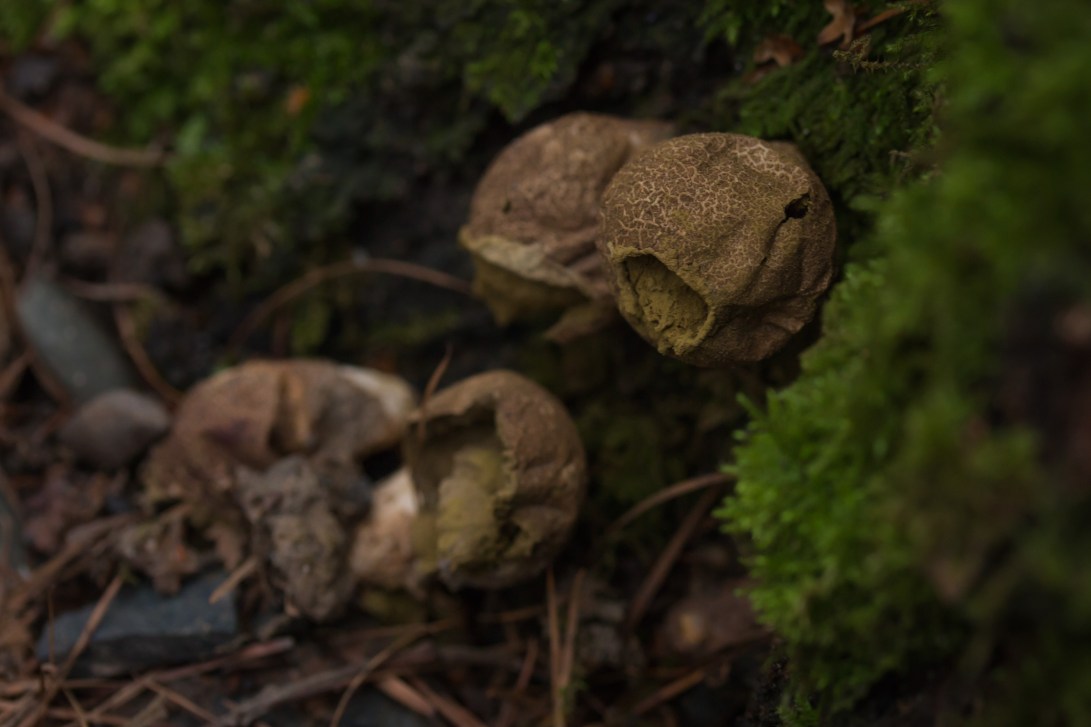
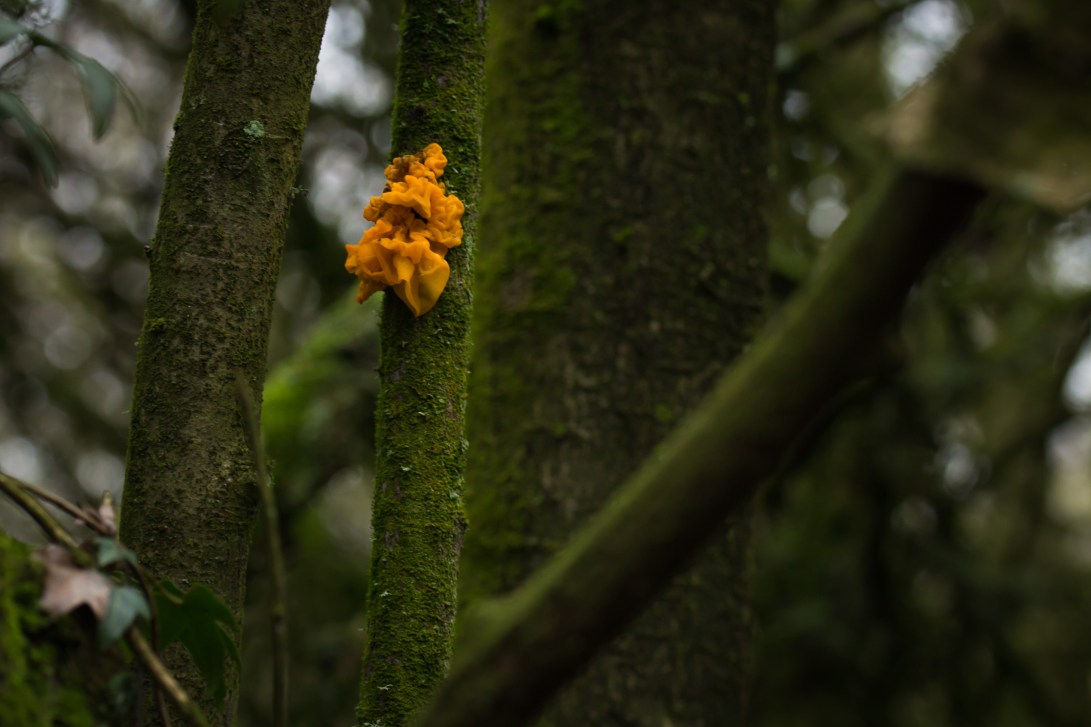
Common Puffball(Lycoperdon perlatum)Frothy Porecrust(Oxyporus latemarginatus)Yellow Brain(Tremella mesenterica)
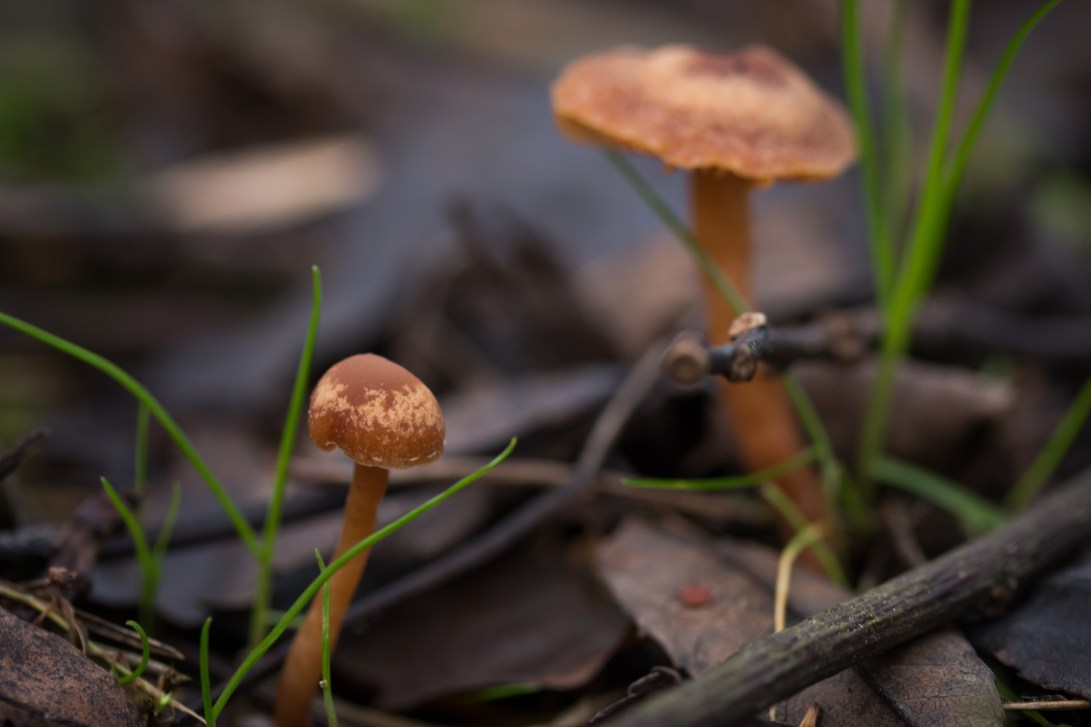
Sadly our adventure was pellet-less, but what we did find was a lot of fungi. I’ve been really interested in macro photography recently, and have subsequently been spending a lot more time crawling on the floor finding tiny things to photograph. I never realised quite how extraordinary fungi could be – so many shapes, sizes and colours. Like every naturalist I’d love to be a wild forager and have a nibble on the safe varieties, but after trying to name the ones I’d found I discovered it was dangerous territory. Take Morel (Morchella esculenta) for example, an egg-shaped cup fungus that apparently tastes wonderful. Then take its almost-twin, False Morel (Gyromitra esculenta), which can be fatal and even after careful preparation is believed to cause cancer. Nature is a cruel mistress indeed!
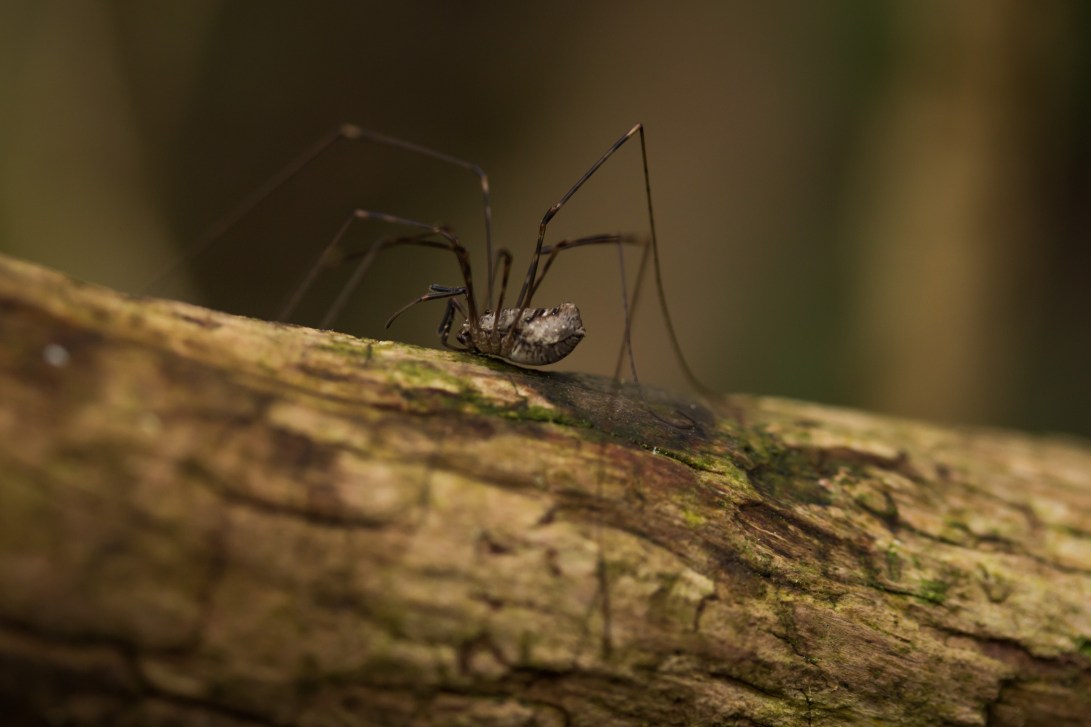
So we decided against finding a snack and stuck to taking photos of the fungi we found. Zahrah graciously held a branch up while I crawled underneath to photograph a group of Jelly Ears. I was mid shot when I heard “aw look at this little spider” over my head and regretted every decision I’d made getting to the Jelly Ears. The little critter was a harvestman (Opilione), and luckily he was only small so I was even brave enough to take a shot of him before he scuttled away.
We ate our lunch on a bench nestled amongst the vast oak trees, the forest floor covered in a crunchy bed of orange and brown. It was eerily quiet, even for a forest landscape. I can’t wait for the spring when the air will be alive with birdsong again. Winter has its own magic, but it can’t be denied that spring is when nature truly shines.
Brown Mottlegill(Panaeolina foenisecii)Candlesnuff Fungus (Xylaria hypoxylon)
Yesterday my lovely boyfriend cooked me sausages and the most incredible fried bread for breakfast because the horrid lurgy that had been lingering menacingly had finally reared its ugly head. For the majority of the day we watched Sherlock and ate the cake we were up until 2am making the previous night, while I wheezed and sniffed.
By evening I was up for a walk, so we decided to head out to Talkin Tarn Country Park in Brampton, Cumbria. It was a spot I’d heard good things about but never been to, and it was truly beautiful. As the day faded and the sun sunk into shadows, the rich blue evening sky illuminated the water, ruffled occasionally by the passing rower. A wind nipped my fingers and I pulled on my gloves with slightly exaggerated enthusiasm; I couldn’t wait for winter to make its appearance so I could dig out my finest wooly scarves and bobble hats. For now though, all I needed was my trusty Berghaus jacket to keep me warm as we made our way round the lake.
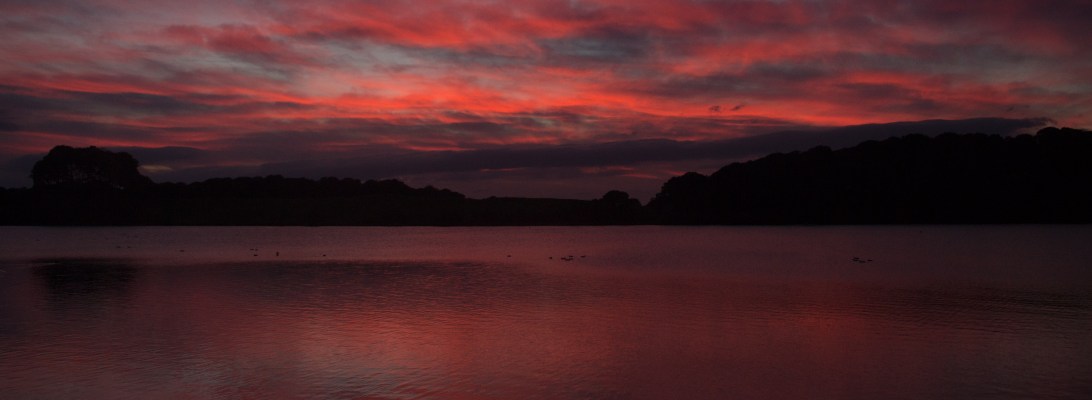
The sunset crept up on us. One moment the sky was blue, the next it was a vivid red, like a furious blush across the horizon. The water, now still and smooth as glass, took on a beautiful pink hue as the clouds rolled over it. Ducks, geese and swans alike settled to roost. One Canada goose honked into the silence, finishing his argument before succumbing to sleep.
We wandered on and perched inside a bird hide for a while, craning out the window for creative angles of the paint-splashed lake. In minutes the colours had drained and all that remained were grey water and an ever-darkening sky. We made our way back around the lake to the car, feeling very grateful to have witnessed such a visually stunning end of the day.
When the May Princess left Anstruther harbour the sun was at its highest, so as we headed out into open water we were slowly baking but not daring to complain in case the rain came back. As I watched my fellow passengers slap on the sun cream, I was geographically disorientated, not quite believing I was in Scotland and not Spain.
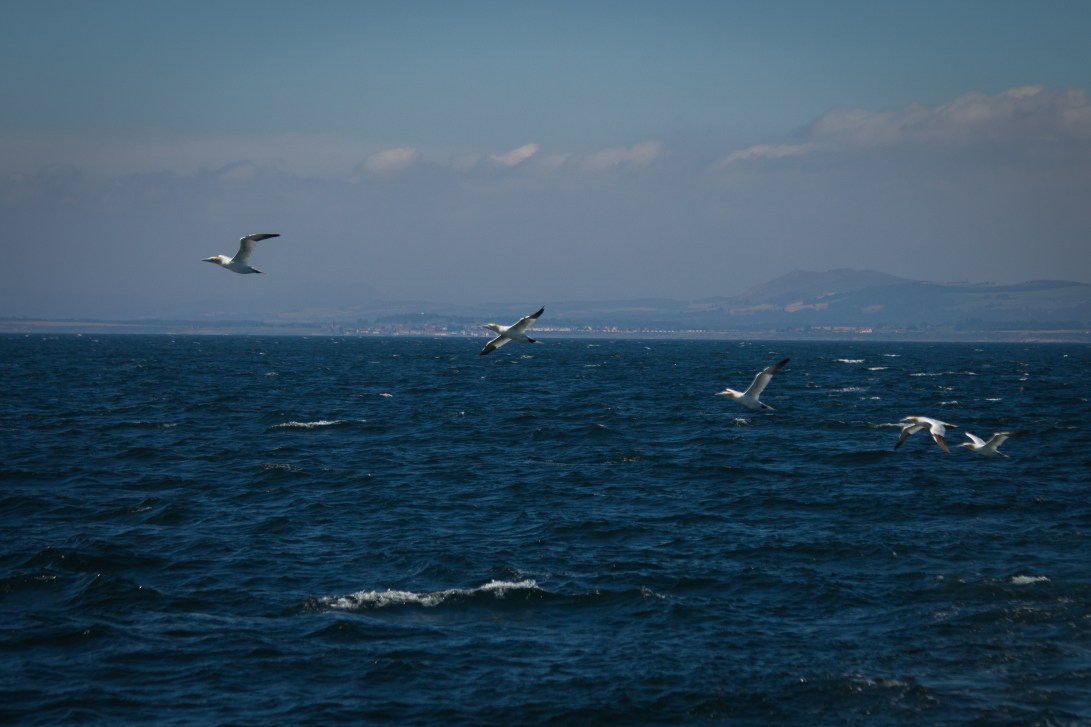
The water was choppy but that added to the fun. I was once again having to negotiate a tumbling boat and a telephoto lens to desperately try and capture the moving seabirds in focus. Many of my attempts were 96% sapphire sky and 4% wing tip in the corners of the frame. With gritty determination, I managed to photograph a few gannets (Morus bassanus) alone and in their strings of multiple individuals. Gannets happen to be my favourite seabirds. Capable of diving at speeds of 60mph, they hit the water with incredible force in their attempts to catch fish. When I saw my first gannet on the voyage to the Isle of Arran I fell in love with their striking face stripes and lightly tinted brown heads. To me they’re the coolest bird in British seas.
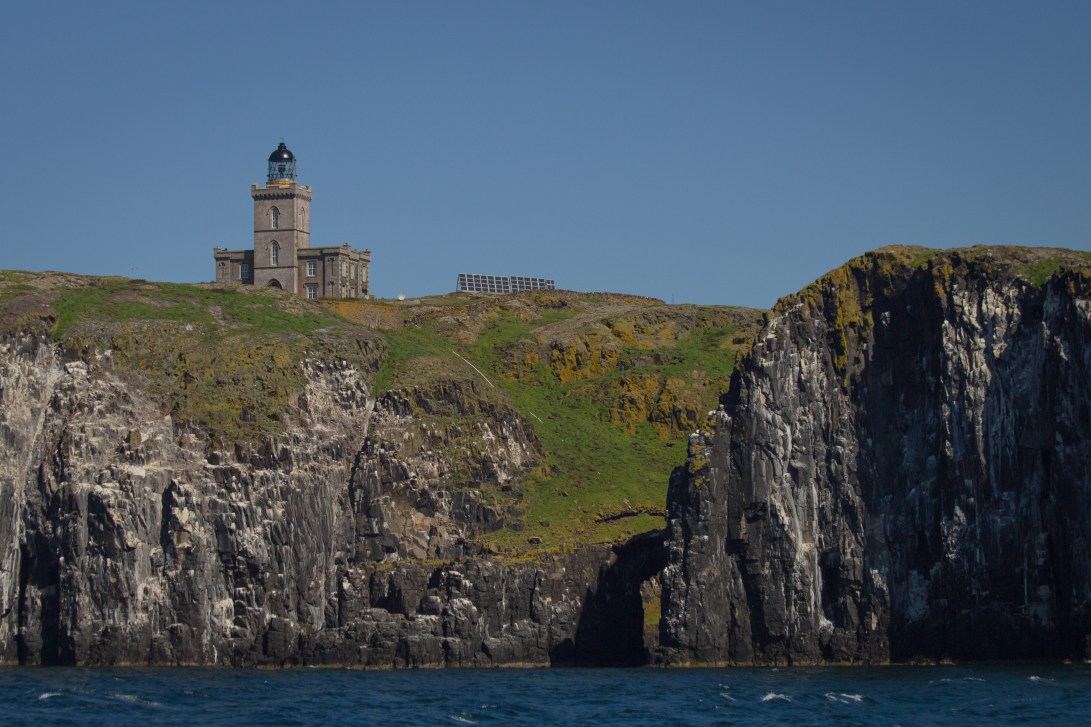
Before long the Isle of May appeared on the horizon, illuminated beautifully under the intense sun. The cliffs and crag faces oozed drama with their harsh black and white, thrown into sharp relief by the light. The few buildings were dotted around and looked very out of place amongst the grass and rocky shores, just how I liked it.
Once we’d all disembarked and received a welcoming talk by a volunteer from Scottish Natural Heritage, we were allowed to explore. Visitors branched off in different directions; we decided to head up Fluke Street, past the Bath House and Main Light to the very tip of the crag. Beyond was Rona and North Ness, areas closed to the public for research. While we admired the view, we spotted a lone grey seal (Halichoerus grypus) wallowing in the shallows, snout resting on the rocks as it dozed.
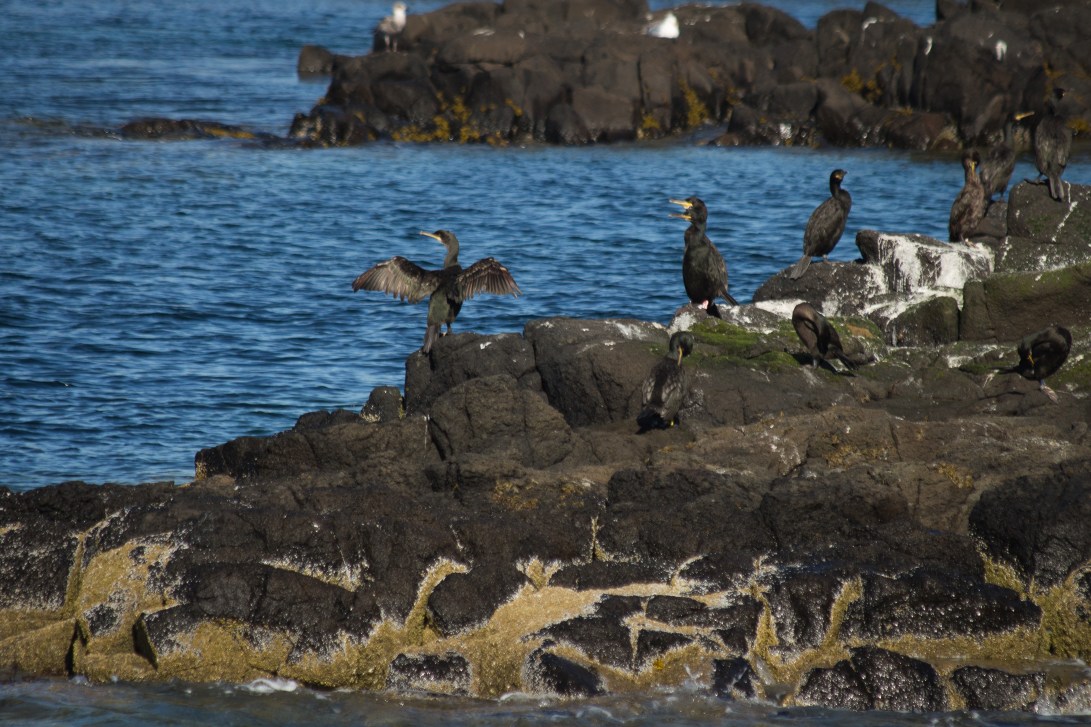
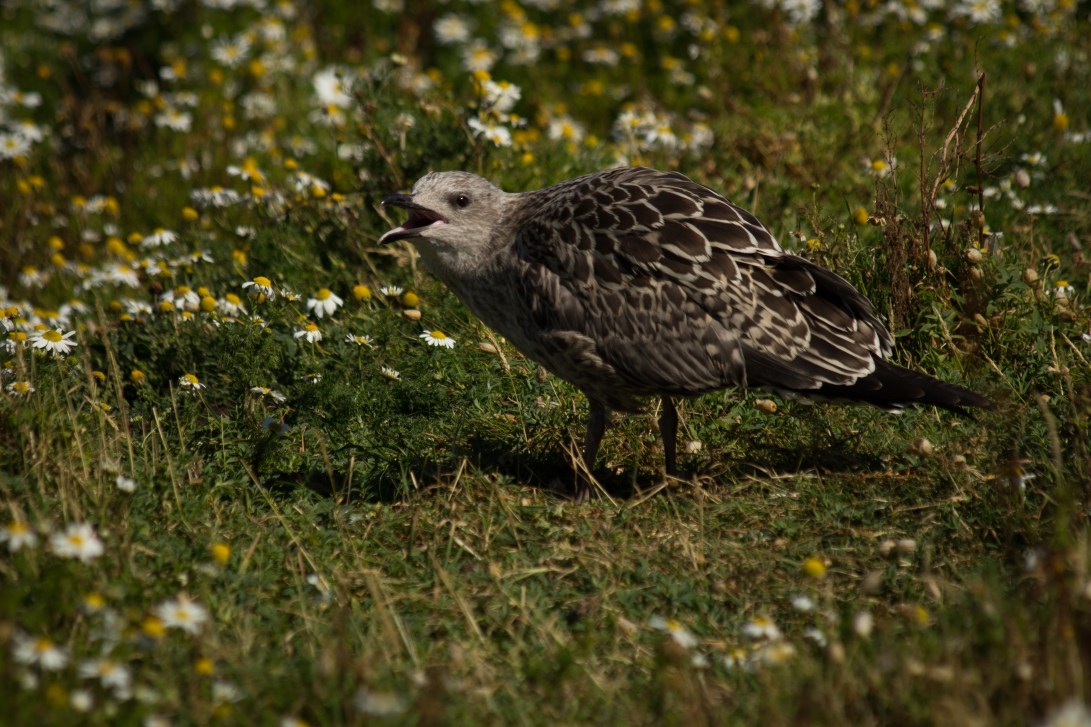
The seal was accompanied by the odd gull swooping through, but otherwise the island was mainly deserted. We hadn’t timed our trip quite right as most of the seabirds had left, including the elusive puffin (Fratercula arctica) that is high on my tick list. However, aside from the beautiful gannets we still managed to see a few kittiwakes (Rissa tridactyla), cormorants (Phalacrocorax carbo) and a lone juvenile guillemot (Uria aalge), a new bird for me.
All too soon our time on the island was at an end, and we made our way back to the boat. Just as we were leaving, a grey seal – perhaps the one we’d seen earlier – bobbed out of the water as if waving us off. We thought he’d been our only seal sighting that day, but around the corner we were treated by a large colony, splashing each other and gazing at us with huge black eyes. Cormorants basked in the sun, wings spread as if inviting a hug, and once again the gannets swept over our heads. As the Isle of May grew smaller, my nose grew redder, and when I got home I realised I’d acquired a vicious sunburn. It was worth every moment!
This morning Heather woke us all up with a real treat; last night the Longworth trap had caught a wood mouse. As quietly as we could, we took some brief photos then sexed the animal. The nipples were clearly visible, meaning our mouse was a breeding female.
Heather assured us the use of a plastic bag was standard procedure and it was held open for the very short time the mouse was inside. After releasing the animal back at the trap site, it scuttled away safely and unharmed.
After a few more hours sleep we visited what Heather described as a ‘sweet shop’. The shed beside the house was full of barn owl pellets which we had the opportunity to dissect. After some initial apprehension we got to work and I found myself enjoying pulling apart what a barn owl regurgitated many months previously. In my pellet I found both a mouse skull and a vole’s skull, as well as numerous minuscule jaws and ribs. It was yet another new experience for me and it was fantastic to analyse what an owl on Carna had been eating.
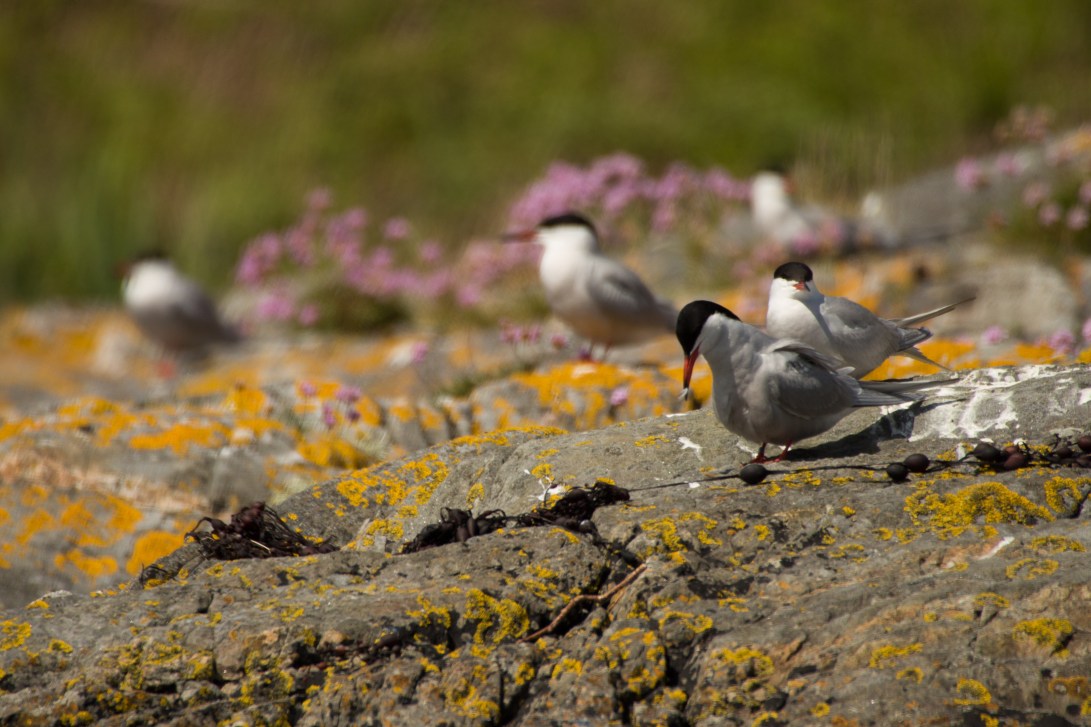
Shortly after we’d finished with the pellets Andy came to pick us up on the boat for a trip around the islands. Unbelievably we had another fantastic day of sunshine, so conditions were great for photography. For a while we watched common terns mating, and their stark white feathers contrasted with the rich colours of the moss clinging to the rock.
Once in open water we saw two more porpoises breaking through the waves. The tide was choppy and negotiating tripods and telephoto lenses while the boat tilted from side to side was a challenge we had to overcome. Once again Lequane was first to notice the white-tailed eagle far up in the sky, but almost immediately after we noticed a different bird above the hills. As it descended and came within binocular range we saw the rich hazel hue of the golden eagle’s wingspan. It dipped low and landed amongst the trees so we lost it, but this bird was near the top of my wish list and it was so satisfying ticking it off.
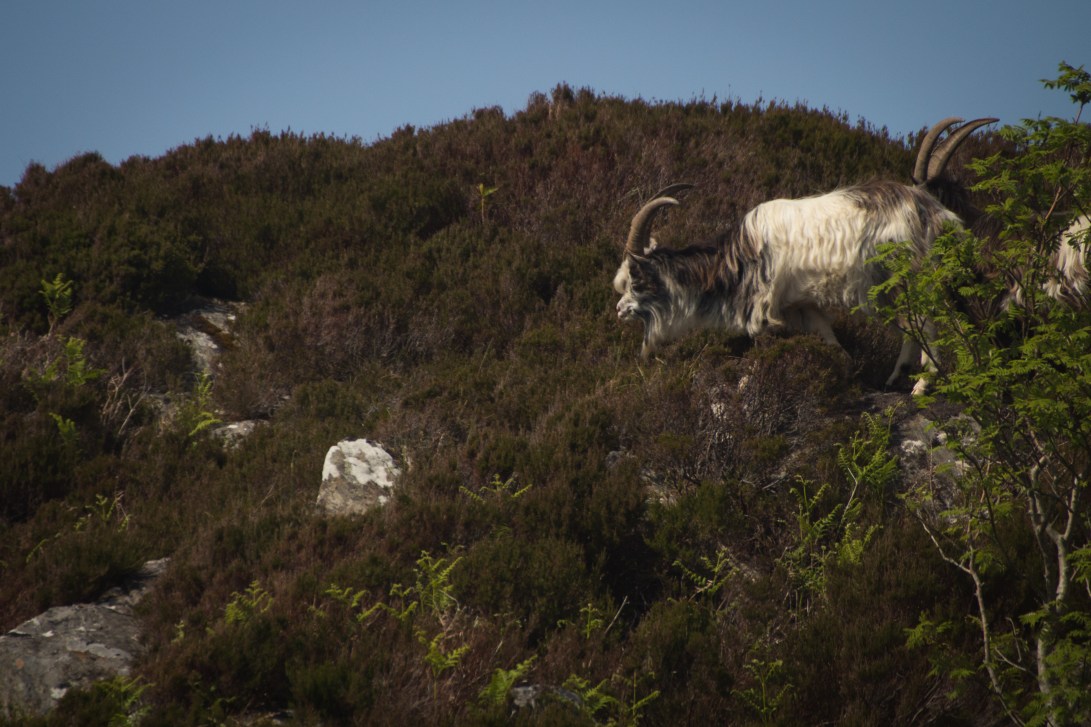
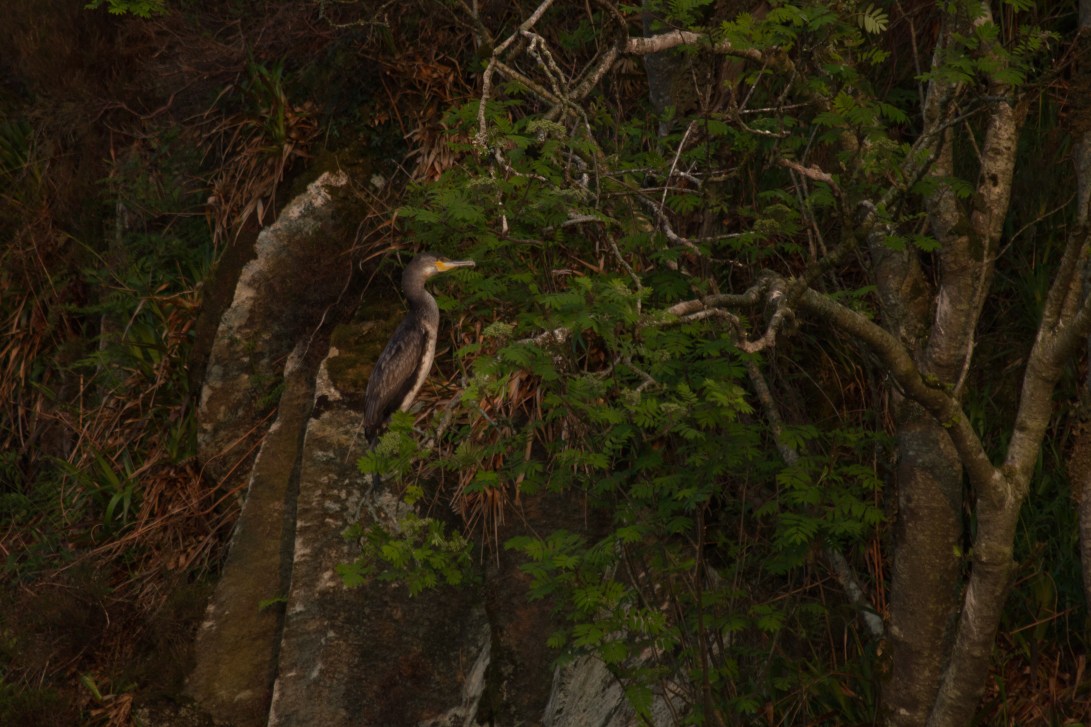
On the way back to the house we spotted some of the wild goats that had made the rocky coast of Carna their home. We also stopped off at the shag’s nesting site again. Not many people are aware of these birds but I find them extremely handsome with their sharp yellow eyes and the green sheen in their feathers.
When we got back Cain and Heather had gone to pick up the camera traps and we all gathered at the kitchen table to see what we’d captured. It was nothing short of a success. In the first trap we had several clips of an otter trotting in and out of a small cave mouth and sprainting at the entrance. In the same spot a few hours later the whole frame was filled with two pricked up ears and a pair of antlers that were unmistakably a roe deer’s. Heather and Cain informed us that this was the first official footage of a roe deer on Carna so this was fantastic news. By using the camera traps we can find out new information about just how diverse Carna is.
Footage from the next trap showed a vole that we were unable to identify. It could have been either a bank vole or field vole sub-species. Either way, it was great watching the rodent feast on the apple and seeds we’d left, although it did manage to shift the trap so we could no longer see anything but out of focus rock.
Yet more treats were to follow. The next trap had been set in the bluebell wood and a fox had visited late one night. Though it didn’t linger, we still got to see the mammal’s gorgeous fluffy tail as it trotted through the bracken.
Seeing the wildlife on the Isle of Carna on the camera traps was a great end to an unforgettable experience. In only four and a half days I have learnt so much about tracking and field craft and got an insight into the ecology of an island rich in wildlife. It was so refreshing being around people who get as excited as I do when I hear a cuckoo or glimpse an otter swimming across the loch. By being separated from technology I have had the chance to enjoy the outdoors even more. I’ve been out of breath on numerous occasions during our hikes and scrambles but it’s been worth it every time. I even did some sketching, a pastime I haven’t enjoyed in years.
Everybody should spend time in a place like Carna, especially those who don’t fully appreciate the natural world. Sharing a loch with seals, otters and porpoises is something everybody should experience. While I am the last person to criticise books, sometimes the best way to learn about wildlife is to be a part of it. Get your hands dirty lifting rocks to see the starfish underneath, wade ankle deep in mud to set a camera trap and get a crick in your neck gazing at eagles. It really does change you.
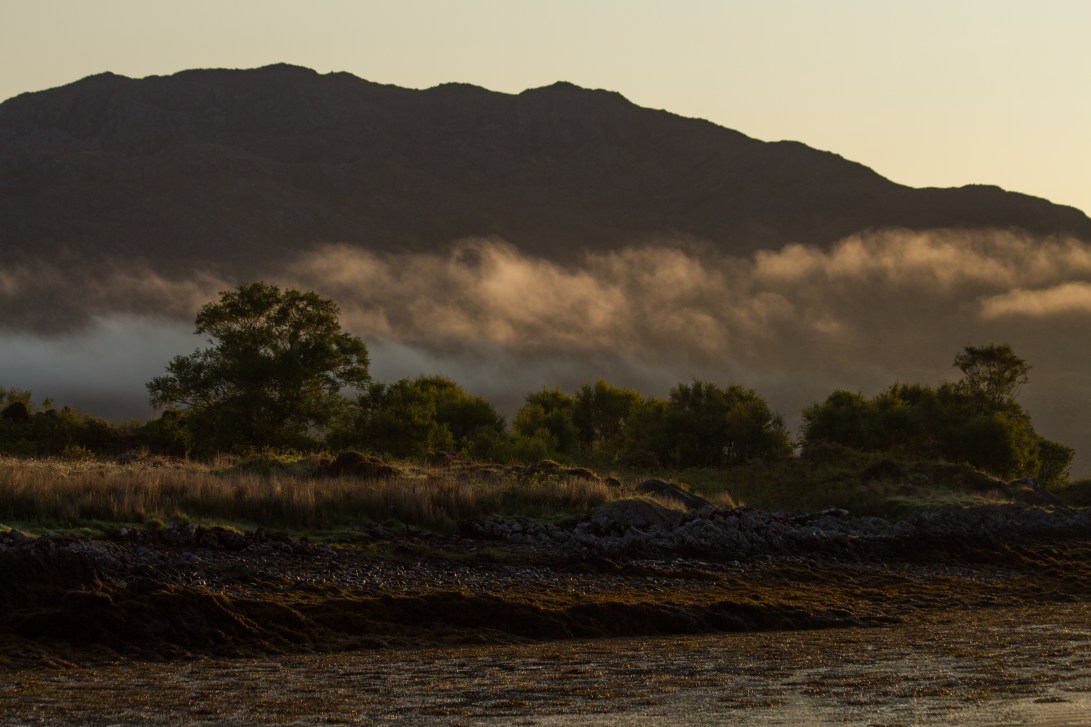
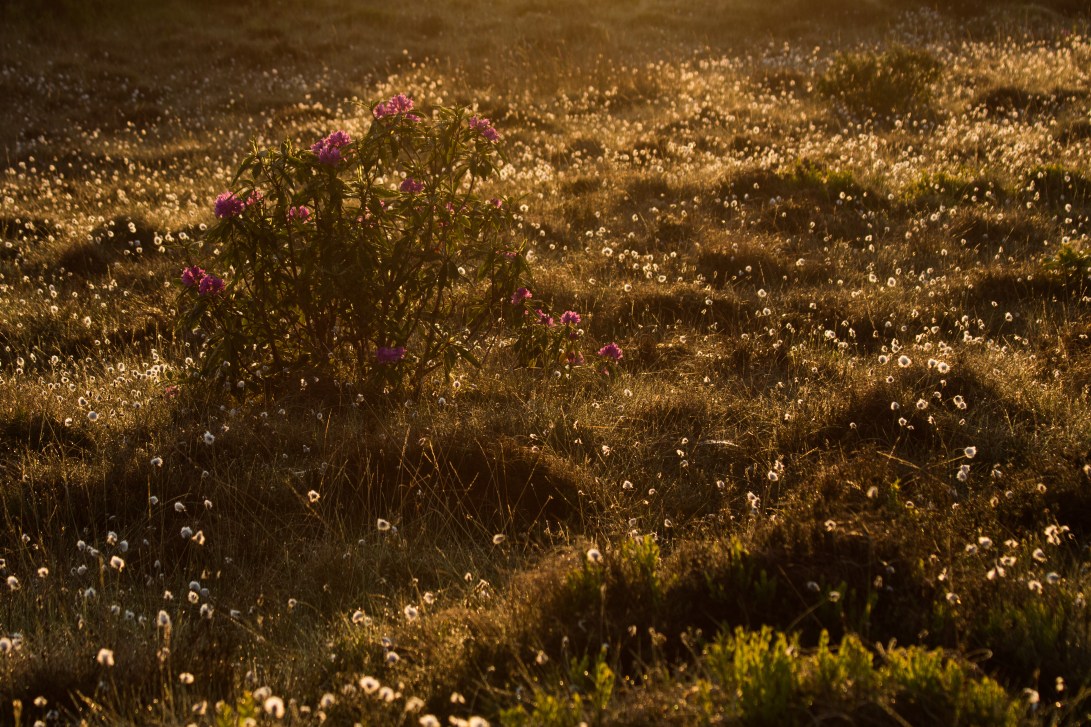
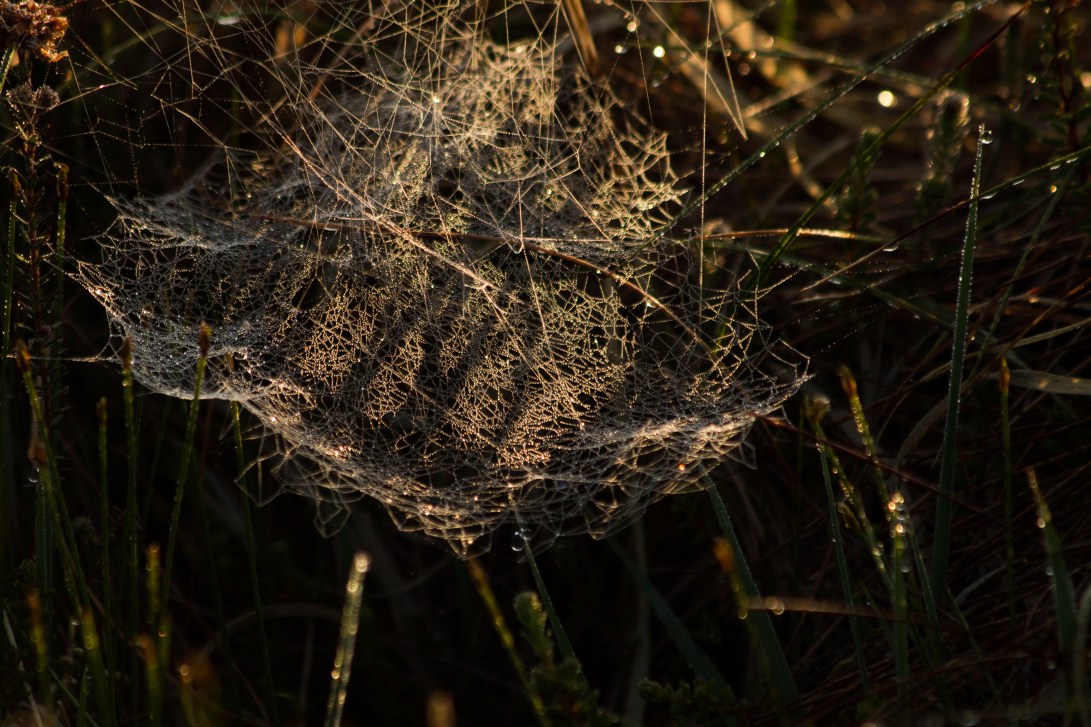
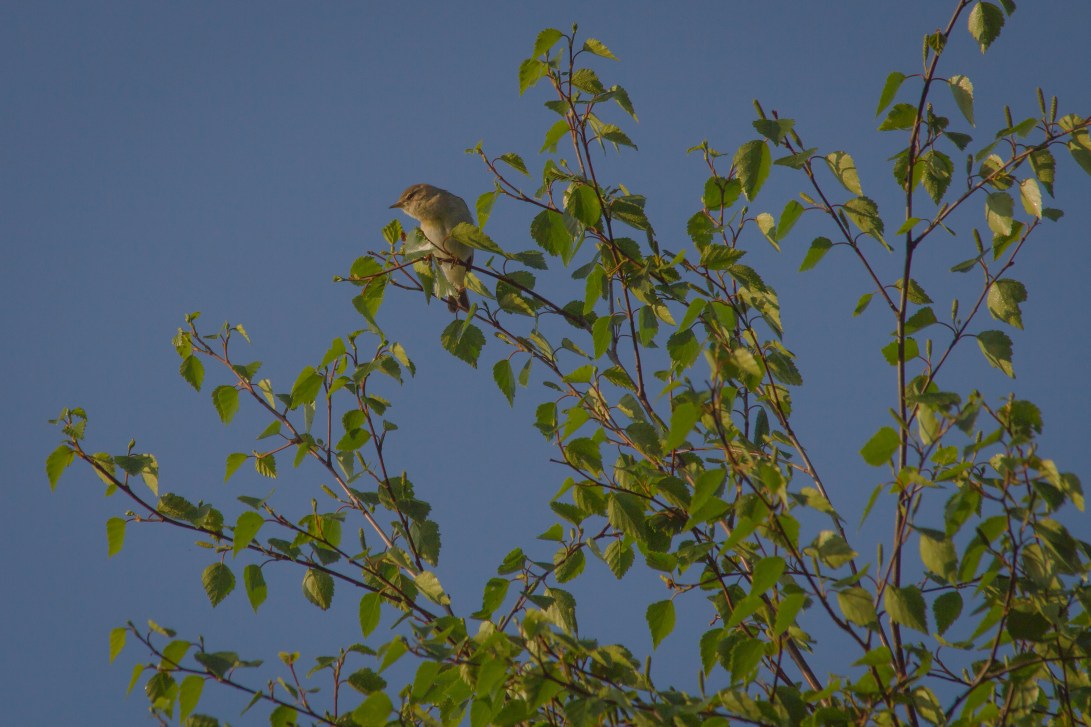
We were woken at the tender hour of 5am this morning for a wander through the dew-soaked grass. Tiny droplets clung to the hare’s tail and made them look like teasels instead of their usual fluffy tops. There was a fine mist rolling over the hills which looked beautiful with the weak sunlight shining through. We spent some time listening to birdsong and trying to untangle the many different voices. Cain described the descending tone of the willow warbler and the drilling call of the lesser redpoll. I would love to improve my knowledge of birdsong; it’s at the very centre of the morning routine for all wildlife.
A willow warbler high in the trees
After a break we began the scramble up Crachan Chárna, the tallest hill on Carna standing 170m tall. Once again the sun was shining, which we certainly shouldn’t be ungrateful for, but the heat made the climb just that little bit more challenging. Luckily the path up was well trodden, so we didn’t have to battle through knee high bracken or wade through too many sodden swamps.
Partway up we came across a muddy puddle stuffed with grey and black feathers, clearly the scene of a crime. Cain explained how he knew the culprit was a bird not a mammal. When foxes feed they chew the feathers off the carcass, splintering the feather shafts. Birds of prey pluck the feathers so leave them relatively undamaged. It was then a case of determining the exact species; this involved identifying the prey. When viewed in direct sunlight the black feathers glimmered, the dark green sheen of a shag. The size of this bird meant the predator had to be an eagle; a buzzard wouldn’t have the size over seabirds such as shags. It was so interesting deducing what happened based on the evidence; I’m noticing so much more now I’ve got some field knowledge.
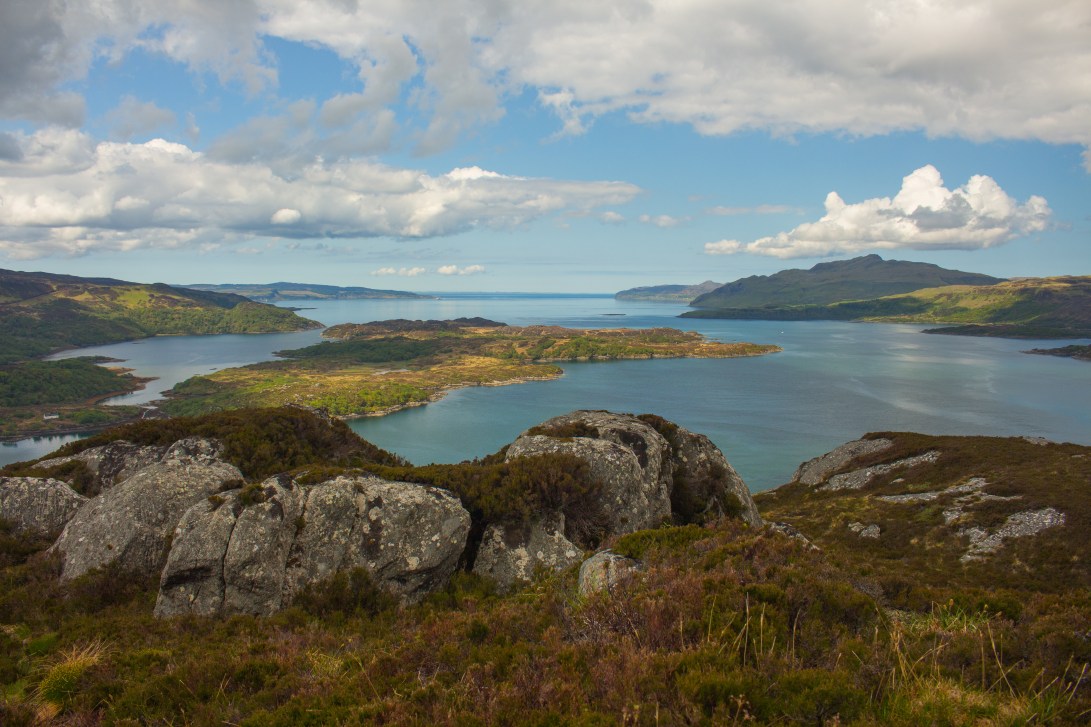
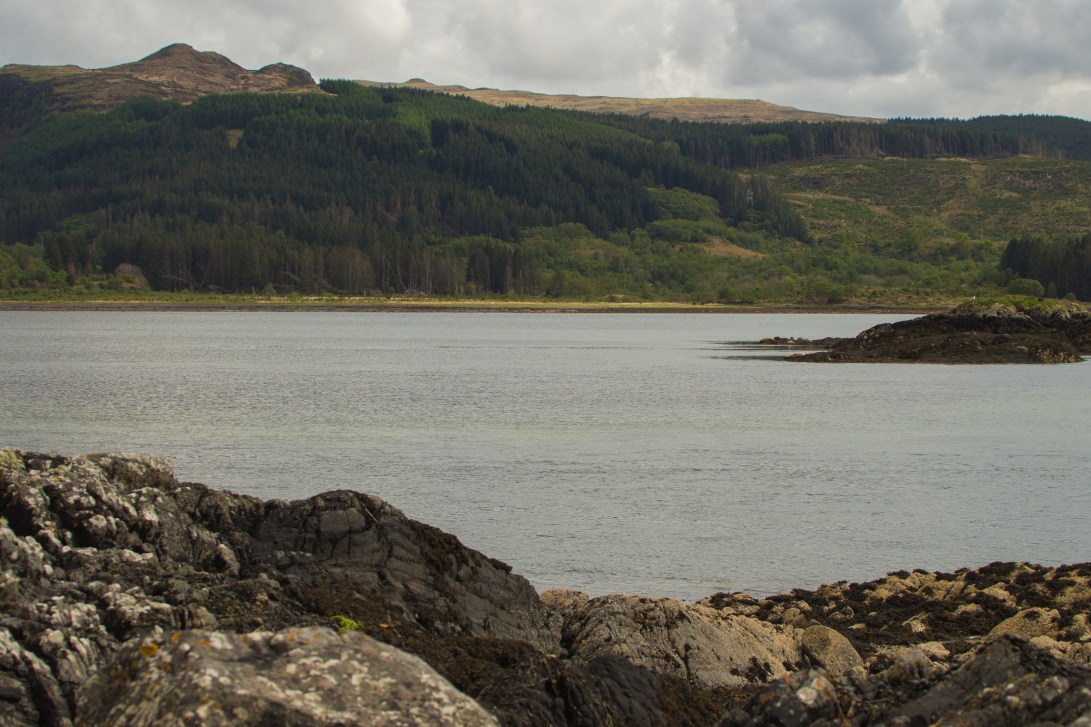
In less than half an hour we’d reached the summit, only stumbling a handful of times. After we’d caught our breath we could fully appreciate the beauty of the island. For miles in every direction sprawled the surrounding isles, smaller patches of rocky terrain jutting out of the loch and the open sea to the west. We spent a long time at the summit, eating lunch and twisting and turning to see every view. Common terns swept overhead, turning into the wind and flapping furiously. Far down below a heron stood poised, neck braced to strike. After enjoying some lunch we made our slow descent back to the ground.
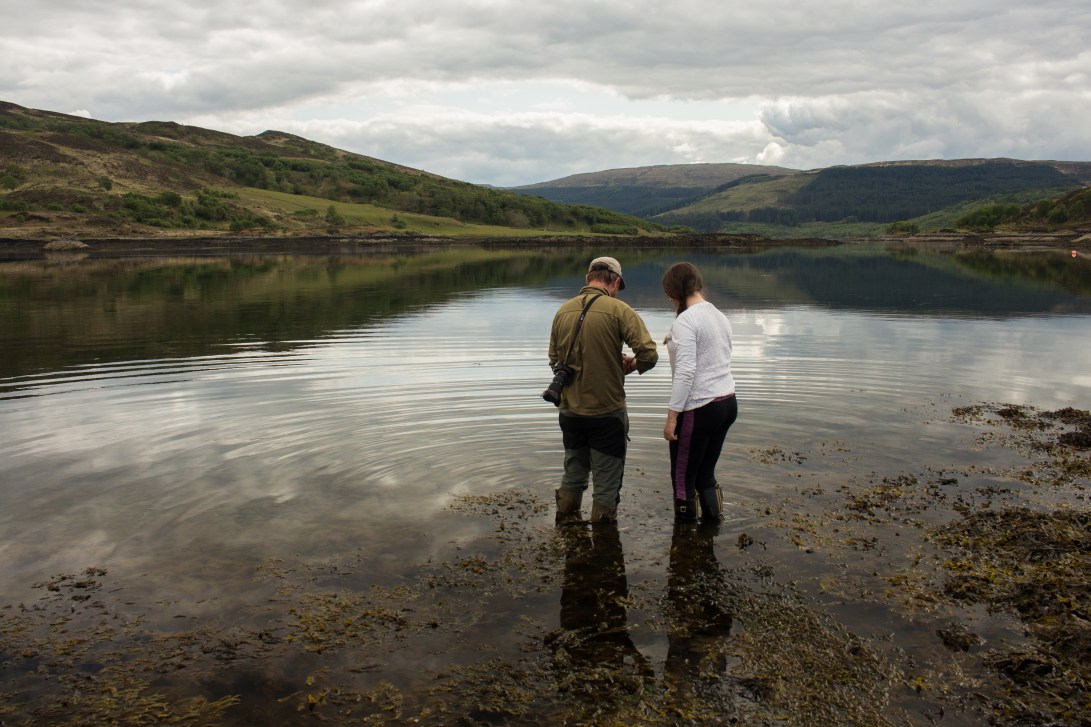
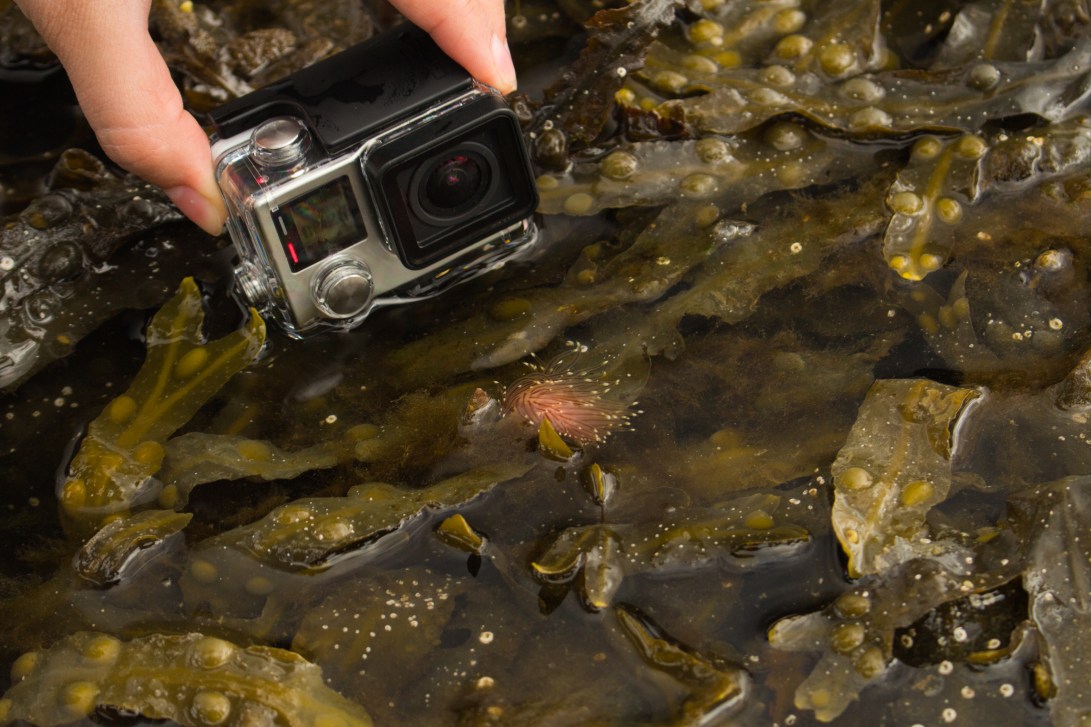
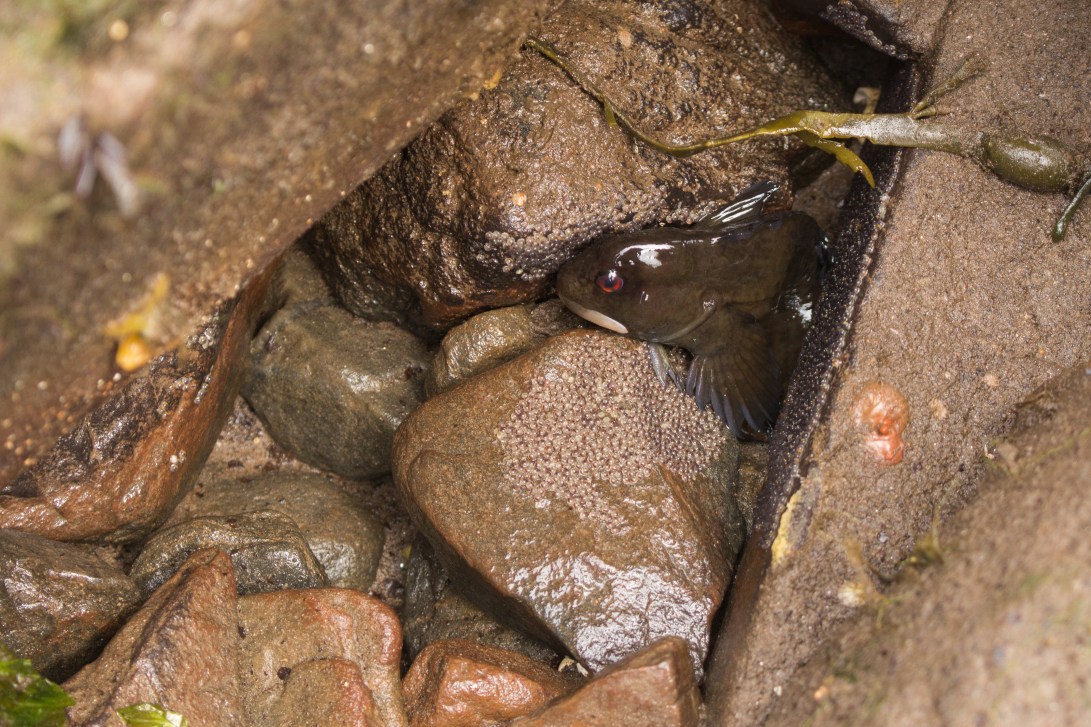
In the afternoon we spent time exploring the coast outside the house. While the tide was out we could forage the seaweed to our heart’s content. I discovered many different species including bladder wrack, sea mat and flat-wrack. In addition we saw many creatures beneath the weed-choked rocks such as edible winkles, barnacles and shore crabs. As well as this we saw butterfish, common blennies, whelks and starfish. We all lay on our fronts on the pontoon and watched a common hermit crab creep along the lakebed.
ButterfishA species in the mollusc family, specifically NudibranchiaA whelk feeding on a crab carcass
A common blenny with eggs
Later, once the sun had finally set, we headed out to see if we could pick up any bat calls on the detector. We could determine the species by what frequency their call was recorded at. After only a short walk the detector picked up a series of clicking calls at 45Hz, and sure enough a tiny black bullet shot through the night, leathery wings beating the air. Once we’d consulted the identification key we discovered that the common pipistrelle was picked up at 45Hz, so concluded that this was the bat we’d found.
We wandered on and picked up another common pipistrelle further down the path, then suddenly Verity noticed a flash of white above and we all celebrated in hushed tones as the barn owl swept over our heads. By now it was late so we headed back to the house, pleased we’d got the opportunity to use such great tracking equipment.
After another great night’s sleep we woke to learn about setting up a Longworth trap, a contraption used to live-capture small mammals. Usually the trap is initially set to pre-bait, meaning the door doesn’t close once the animal triggers the mechanism. This enables the creature to become more accustomed to the trap’s presence in the environment.
We filled the trap with ripped up grass for bedding and seeds for food, then nestled it amongst the rocks underneath a tree behind the cottage. We’re hoping to check the trap in a few days and see if we’ve managed to entice anything in.
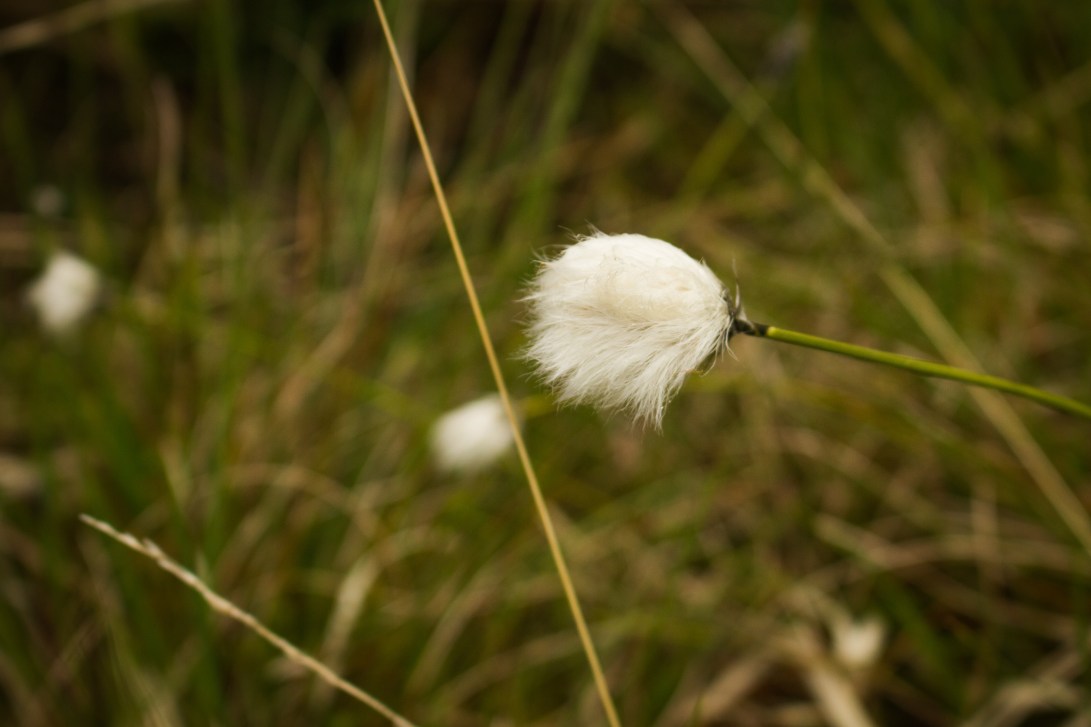
The cotton-like hare’s tail
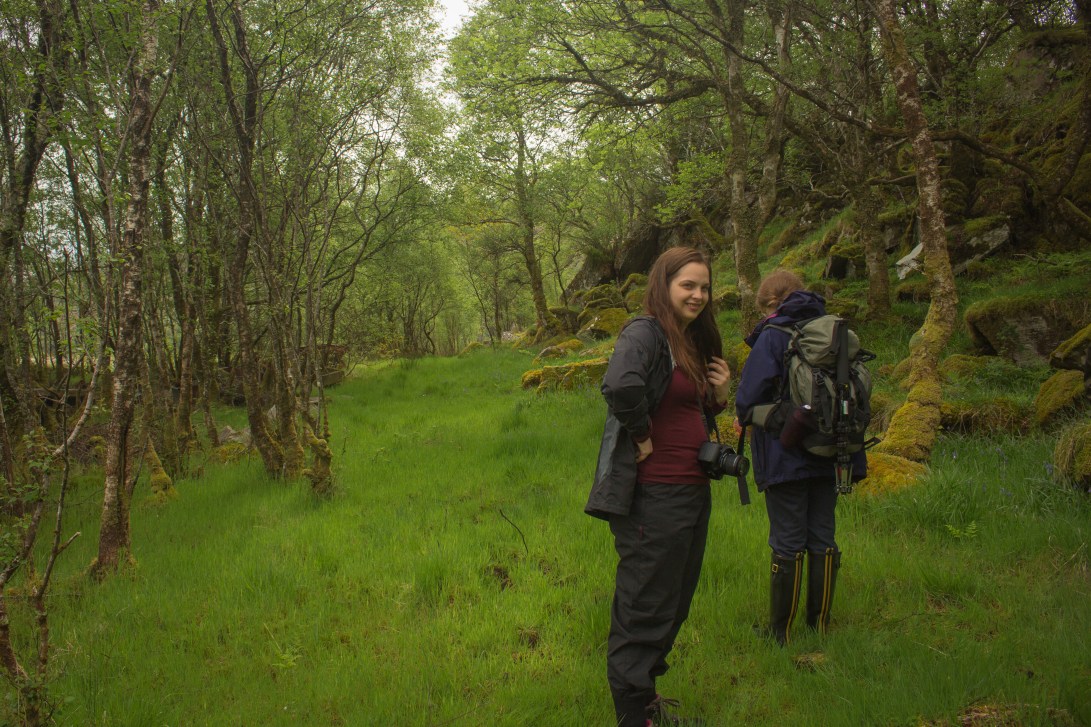
After the trap was set Cain talked us through the hides he’d brought with him; later today we’d split up and spend some time in them. For now though, Heather took us over to a different part of the island and we improved our flora knowledge. We learnt about many different species I’d never seen back home, including hare’s tail, pignut and wood-sorrel – the leaves of the latter tasted like apple!
I got round to some sketching of the landscape this afternoon before heading back to the cottage for lunch. Shortly after, we all headed off to the hides. Verity and Zahrah were occupying the site nearer to the house which promised glimpses of otters. Freya, Lequane and I chose to use a hide further on that looked out over the seal colony.
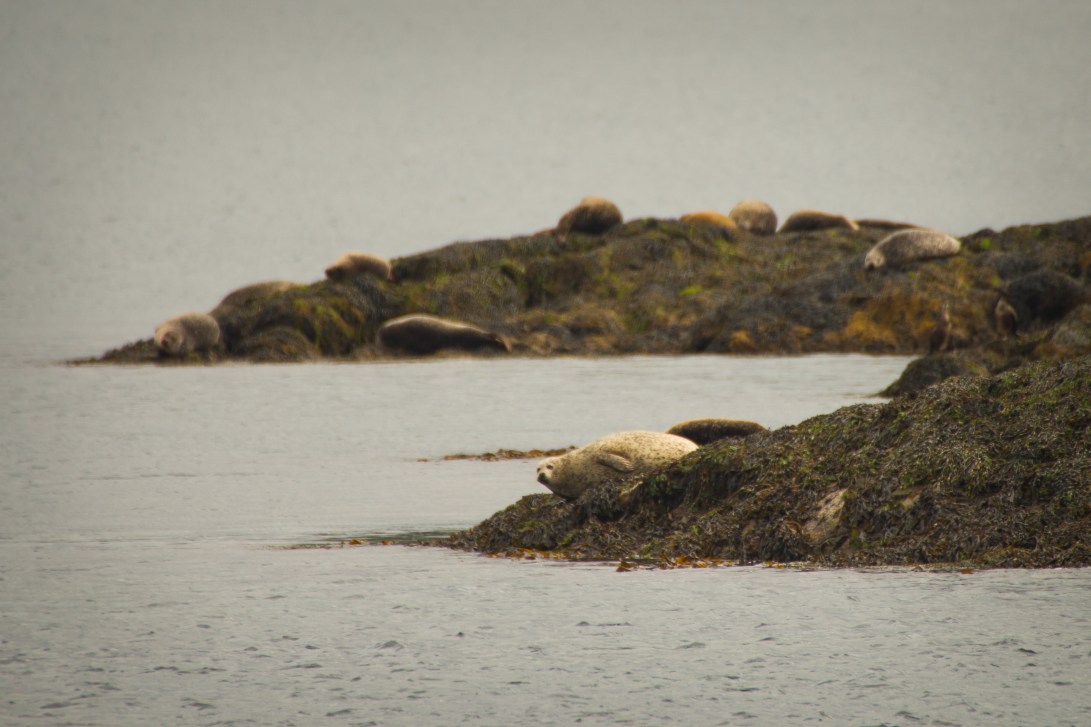
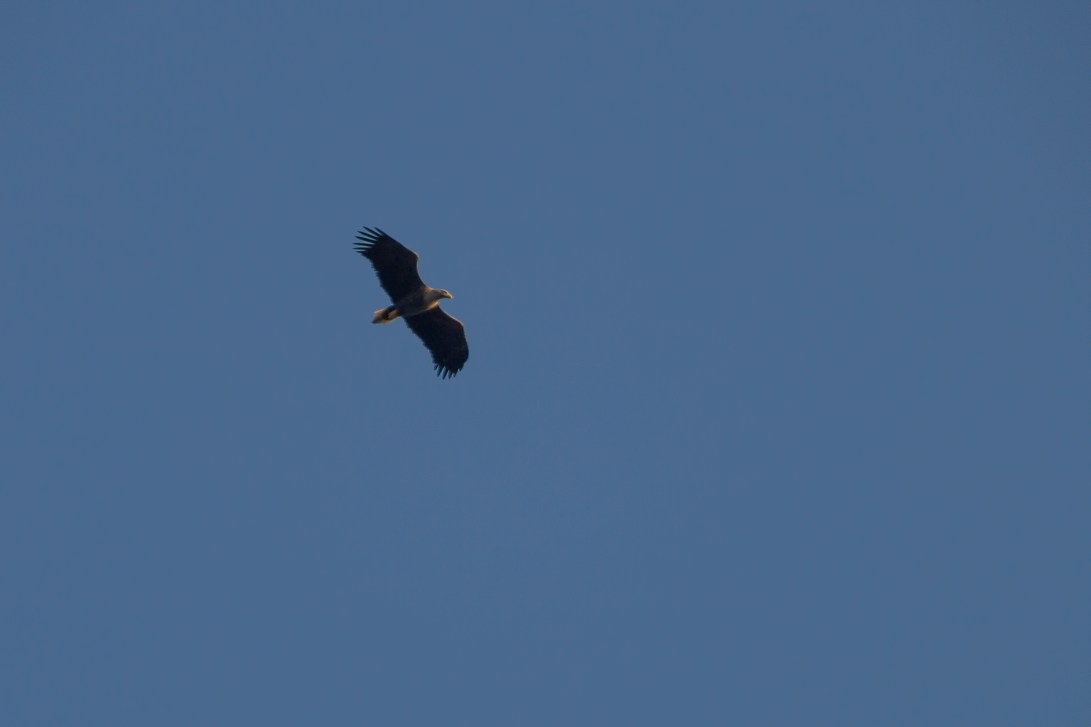
The tide was yet to fully come in so there were only a few seals dotted along the coastline, basking in the sun. Birds fluttered around them; oystercatchers, shags and herons alike. I was just admiring the hills of the mainland when I noticed a black speck in the sky. Binoculars up in an instant, I spied what I hoped and prayed to be an eagle. The three of us gazed up at the mystery visitor and deliberated over eagle or buzzard. A few moments later Cain came running out of the bluebell wood to tell us he’d just seen a white-tailed eagle swooping overhead, so our suspicions were confirmed. Giddy with excitement, we watched the ‘flying barn door’ glide through the sky, barely moving its gigantic wings. This was my first eagle sighting and I was thrilled.
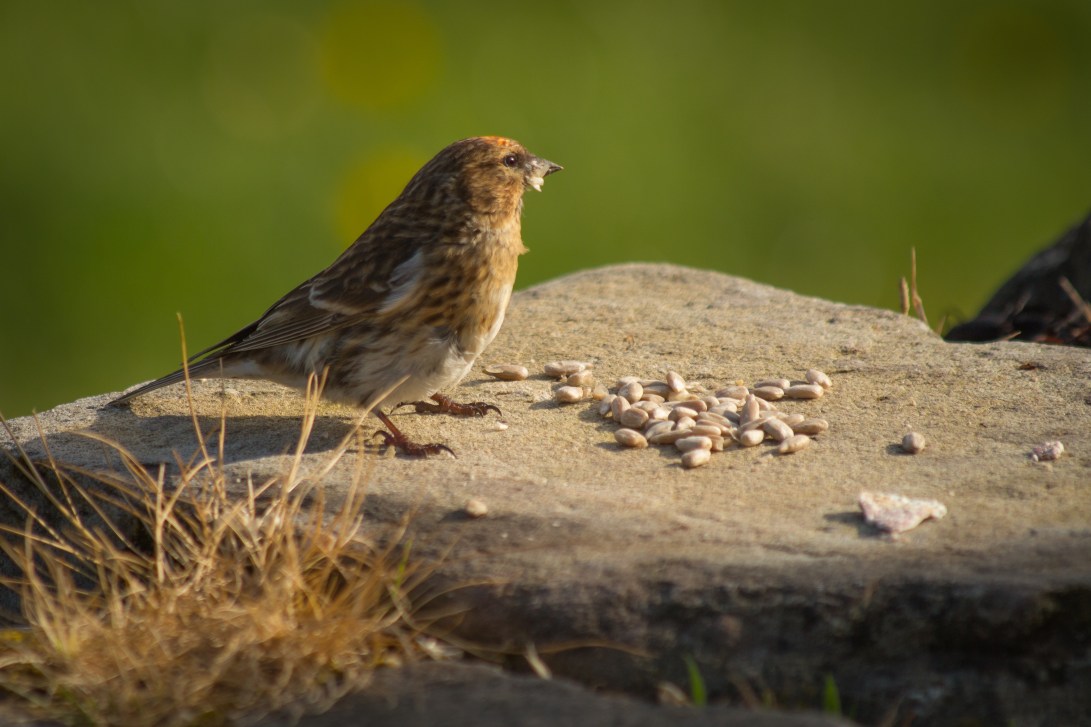
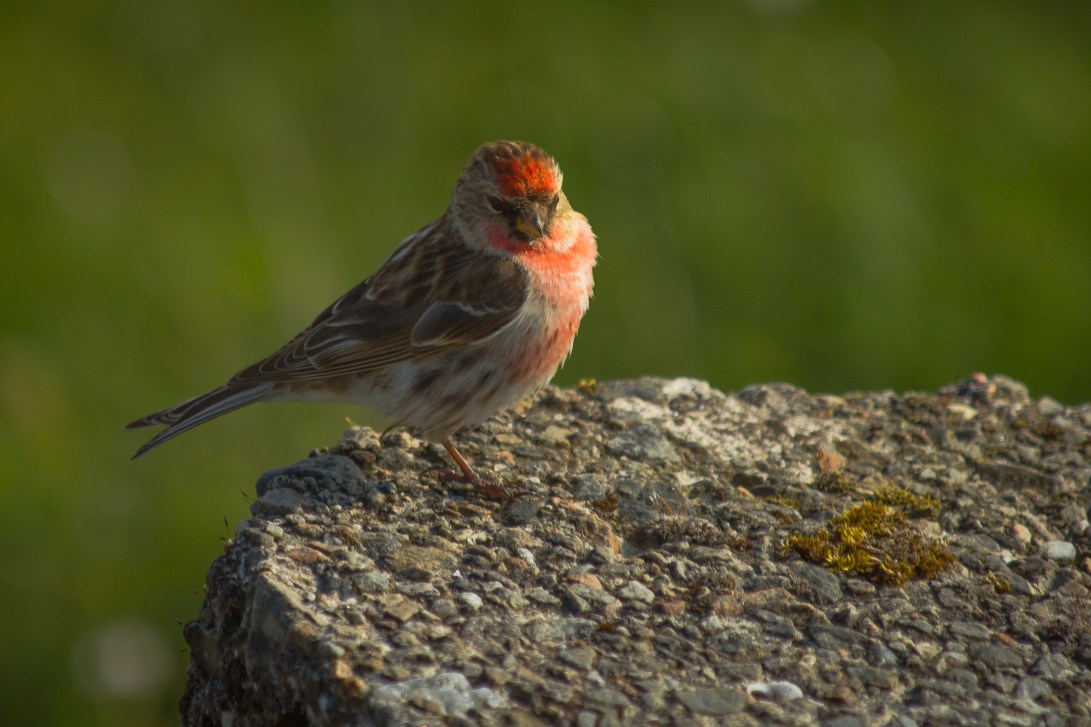
A few hours later, when the eagle was long gone and the seals were still fast asleep, we vacated the hide and wandered back. Just before dinner we were treated to both a male and female lesser redpoll just outside the cottage, the male in his beautiful breeding plumage.
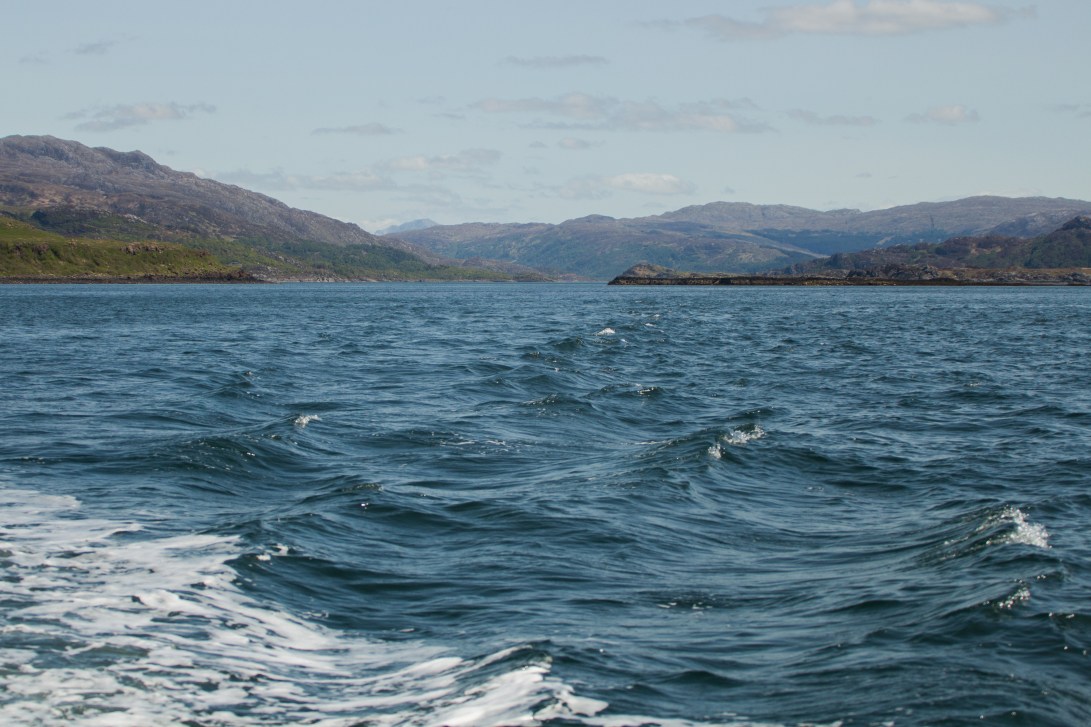
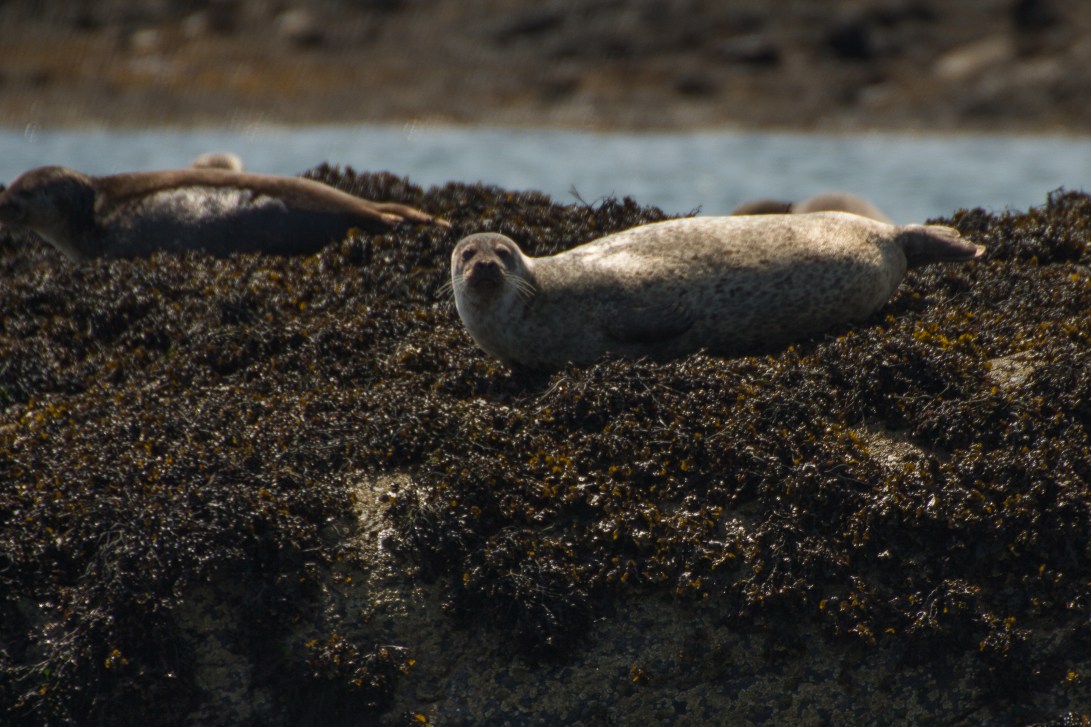
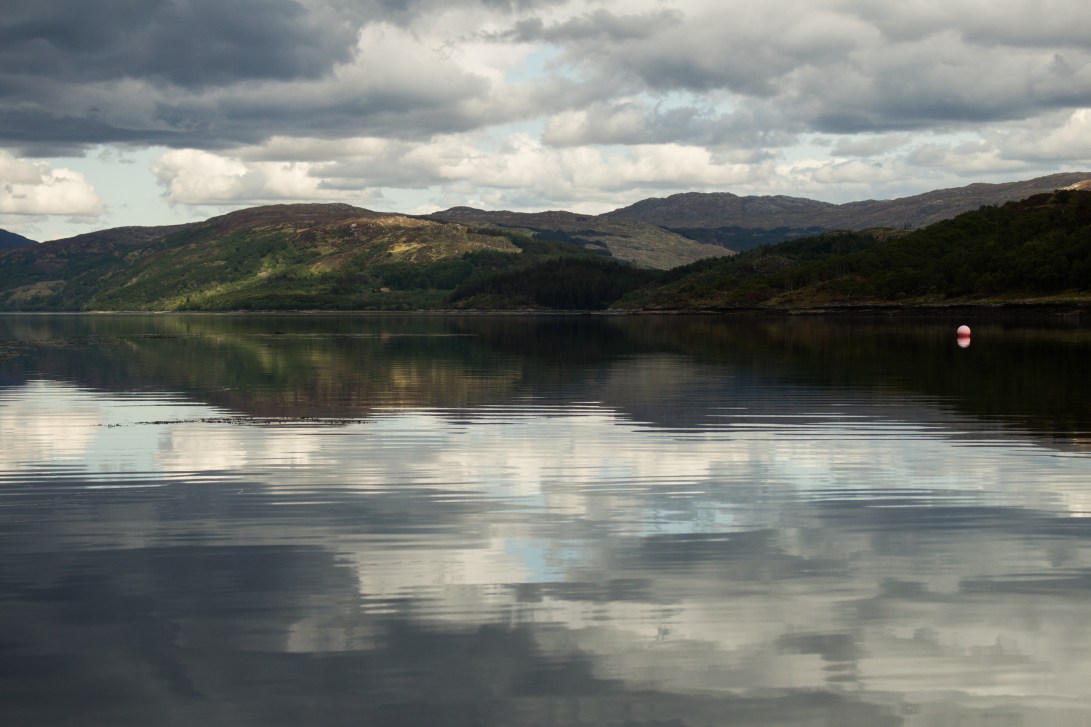
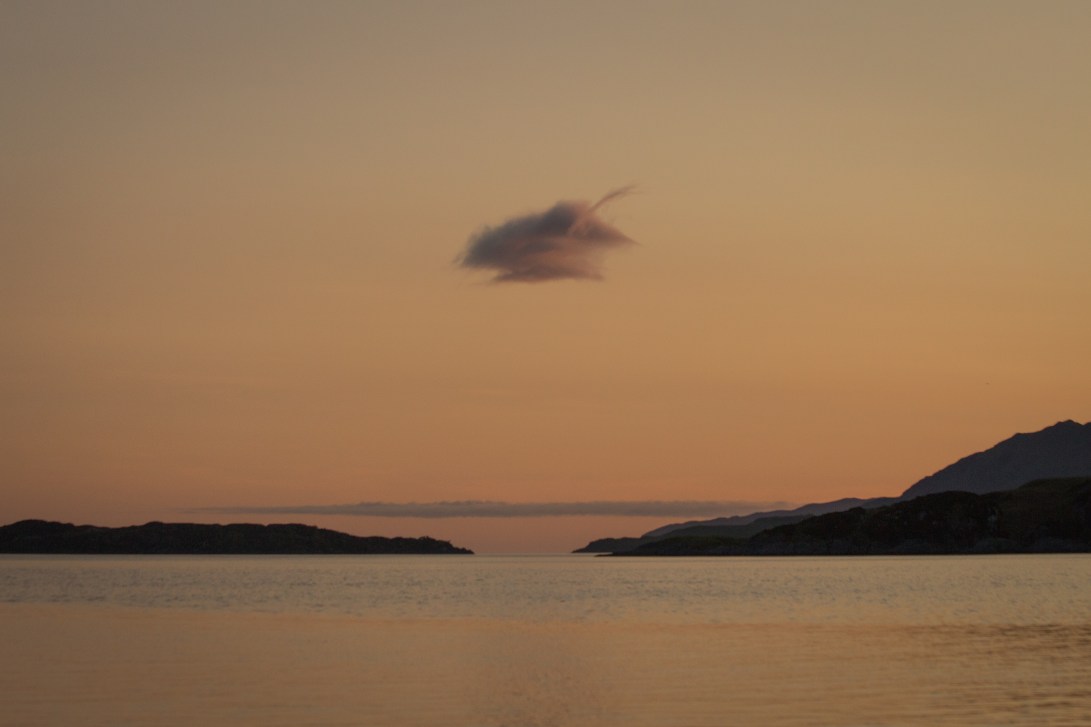
After our meal we set out on the boat with Cain. The sun was sinking low and casting a beautiful orange light across the water; even despite the boat’s engine the loch’s surface was smooth as glass. Our eyes were peeled for otters but we were rewarded with an equally special visitor: a porpoise. A brief flash of black every moment or so, dorsal fin slicing out of the water and back down. Despite the blinding sunset in our eyes we watched the elusive animal meander across the loch until it drifted off. Moments later a lone seal took its place, studying us with big black eyes.
Cain showed us where the shags were nesting amongst the rock face. A year old juvenile perched proudly in the tree, supposedly trying to find a place to roost amongst the expecting parents. Several jet-black adults guarded the nests, squawking to each other.
Common Sandpiper in flightYoung shag on the rocks
As the day faded we completed the loop back to the cottage. All was calm until the single word ‘eagle!’ got everyone’s attention. Once again the magnificent bird was above our heads. It was fantastic to see such a formidable bird in the wild; even so high up above us the eagle’s wingspan was vast. I’d never seen anything like it. Sadly the light was too low to get good photos.
Settling into bed after yet another successful day, I felt so grateful to have seen so much wildlife in two and a half days. So far we’ve covered an array of birds, mammals and insects – all I can hope for is more of the same for the rest of our time here!





























 rebeccaonthewing.com