Vitamin Sea

Last week there was a film screening event at the Scottish Dolphin Centre in Spey Bay. I didn’t know anyone there but soon found myself chatting to an elderly couple whose fierce pride of Scotland was immediately clear. We chatted about the Moray dolphins and the house that they planned to build with a view out to sea. It was the sort of life I was looking for myself.

The film was “Vitamin Sea”: an hour long documentary that followed ocean advocate and veterinary surgeon Cal Major as she attempted to be the first person to journey from Land’s End to John O’Groats by Stand Up Paddleboard. Cal was raising money for Samaritans and Vet Life in memory of her best friend who lost her battle with depression. I didn’t realise there is a high suicide rate among vets and not enough is currently being done to support them. Cal was also raising awareness of plastic pollution – scooping up hundreds of plastic bottles along the way – and showing how beneficial nature, and the ocean in particular, can be for our emotional wellbeing. If we spend time in an environment and form a relationship with it, Cal says, then people will want to protect it.

What I love about Cal is her positivity. While topics such as plastic and climate change can often bring doom and gloom, she discusses positive solutions and encourages us all to do little things that bring great benefits. Throughout her 900 mile journey Cal meets countless people who donate to her cause, help out with litter picks and show their support in so many other ways. Even in places like Manchester, where plastic pollution was at its worst along Cal’s route, spirits were high and people clearly showed their passion for protecting their natural environment.

IMG_9506

At times the film was very moving. Cal revisited a place where she spent a holiday with her lost friend, and at times broke down from the combination of finding so much litter and experiencing sheer exhaustion. The constant struggles and exertions only made reaching the finishing line more emotional. After two months on the water with a sole purpose, it seemed almost anti-climactic when Cal touched land at the end of her journey. Overwhelmed with emotion, she debated staying with nature at sea and letting it continue to “heal” and “wow” her.

What resonated with me was the “profound sense of joy” that comes with being on the ocean surrounded by natural beauty. Many of us feel an undeniable pull to the ocean – that beautiful, unpredictable element of nature that compels our love and respect. Seeing so much litter clogging beaches where seals and birds roamed was difficult, but knowing that people like Cal are raising awareness with a positive message is so refreshing.

As we watched a drone’s eye view over mountains and stretching ocean at the end of the film, the man beside me leant over and asked, “Do you think you’ll go back again?”

I really don’t think so.

Relocation

For the past few months, I’ve had a growing sense of being in the wrong place. I’ve lived in Hertfordshire all my life, but since coming back from university in Cumbria, I haven’t felt like I’ve belonged in the south. Throughout my childhood and adolescence, I’ve been lucky enough to spend a lot of holidays and days out in Scotland, and I’ve started to realise that I’m happiest there. Inspiration comes easier, as does my ability to concentrate. There is a wealth of material to write about and the landscape cries out to be drawn and painted. Although I’ve never lived in a city, there is a feeling of congestion in the south that I’ve been more and more affected by. This feeling completely disappears in Scotland. There are fewer people and more animals, which my inner introvert loves.

So, I can now finally say that I am moving to Scotland. I came to the conclusion that I should do what makes me happy and be in a place where creativity and imagination are enhanced by the land around me. I want to walk in woods where there are pine martens and hike up hills where there are golden eagles! I’ve been lucky enough to see some iconic Scottish species already, including martens and eagles, but others are still mysteries. I doubt I’ll ever catch a glimpse of a Scottish wildcat, but just knowing that they are there somewhere is so exciting.

IMG_0371

Every time I drive along the A96 during visits to my parents in Moray, often with dense forest pressing in on both sides, I peer into the shadows and imagine what creatures could be lurking between the trees. Of course, there are many beautiful places in Hertfordshire, but none within walking distance of where I live. I can’t step outside my front door and see the ocean hurtling towards the shore. I can’t walk for five minutes and reach a 1700 acre forest, or look into a sky full of stars and hope for the aurora borealis to show. I can do all of this from my parents’ house, where they live at the end of a peninsula jutting out into rumbling waves.

I’m currently staying with my parents for a few days and I can’t believe that this stunning place will soon be my home. I am studying for my MA until 2021, so the plan is to find some part time work or volunteering in conservation to fill my time alongside my studies and keep the CV fresh. I have so many goals for my new life in Scotland, including:

  • Do the North Coast 500 – an epic road trip around the entire northern tip of Scotland
  • Properly see otters – so far I’ve only seen a distant shadowy lump at night
  • See a basking shark
  • Go wild swimming – I’ll wait until summer for this one
  • Go kayaking in a loch
  • Visit all the major islands starting with Skye, Jura and Islay
  • See the Northern Lights – seemingly equal to seeing a unicorn but it is actually possible!
  • Learn some Gaelic – I’m fascinated by Gaelic – my favourite discovery so far is the name for the white-tailed sea eagle “lolaire suile na greine”, which translates as “the eagle with the sunlit eye”

Despite having visited Scotland on and off for the past 17 years, there is still so much I haven’t seen, and when I move I will have complete freedom to explore. After my next residential trip for university in February I shall be ready to leave life in the south behind me and begin a new, and far wilder, chapter in the north.

IMG_0370

Onwards and Upwards

My last post was all about reflecting on 2019. This one is about looking forward to 2020. It’s easy to write a long list of New Year’s resolutions but a little trickier to stick to them. So, this year I want to develop habits that I already have, starting with my art.

Last year saw a surge in my artistic activity. I can’t remember quite how it happened, but I know that starting a nature journal certainly helped. As well as nature I use my journal for tickets, feathers, pretty page borders and scribblings. One of my new evening past times is sketching whilst curled up on the sofa in my favourite spot. It’s a one-stop shop for all my creative energy and seeing the book get fatter only encourages me more. The journal is particularly useful for making notes on walks, although I still need to kick the bad habit of wanting every page to look Pinterest-worthy. I make title pages each month and have bought a dinky old-fashioned library stamp to date each entry. It’s by no means perfect, but so far it has proven to be a useful tool for getting me drawing and painting again.

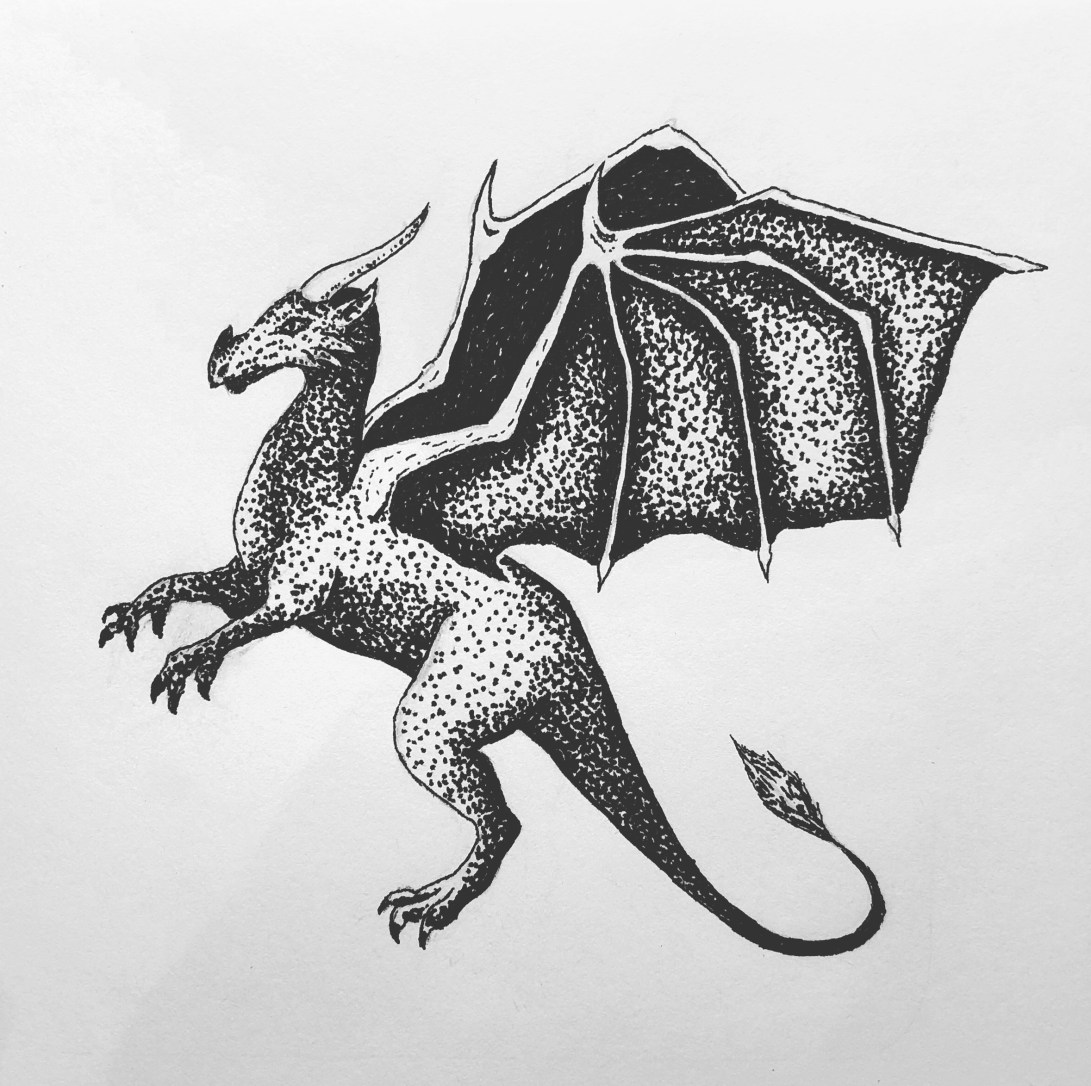
Linked to this is a new art challenge: Inktober 52. The original version was a drawing prompt for every day in October, but that sadly didn’t quite happen. Luckily for me there’s a weekly version starting in 2020 – 52 new drawings that I can add to my portfolio. The first prompt was FLIGHT so I drew a dragon with my new Faber-Castell pens I got for Christmas. I really want to stick to Inktober 52 and I can’t wait to get next week’s prompt!

C34767BE-2C12-4BF8-A468-B925793D3D36

Alas, where there’s play there has to be work. I’m feeling really optimistic about my writing moving forwards. The MA has already provided a structure for developing my work and, perhaps most importantly, trying to get paid for it. The self-led trip in April will be an important test of my ability to pitch to publications. Today I spent many hours poring over Scottish magazines and I was pleased to see that a lot of my ideas hadn’t been featured. There’s still a lot to organise, but I’m so excited to see what happens over the next few months.

Another thing I would like to do this year is establish a better work structure. I have quite a few different types of work including MA assignments, freelance pieces and personal writing, and my long to-do list was getting a little daunting. This year I’d like to try assigning a certain type of work to a specific day, so on that day I only have a few tasks to concern myself with. Blocking out time will hopefully mean I get jobs done more efficiently and make time for the things that get neglected, such as my fiction projects.

Something I certainly need to make more time for in 2020 is exercise. After a fairly consistent feast of mince pies, Yorkshire puddings and apple sauce over Christmas and the uninspiring rainy weather, my fitness has undoubtedly suffered. What’s more insulting is that my monthly gym membership still zips out of my account even when I don’t actually go… Although the idea of jogging makes me want to crawl into a ball and play possum, I want to embrace power walking and forest walking more this year.

IMG_1489
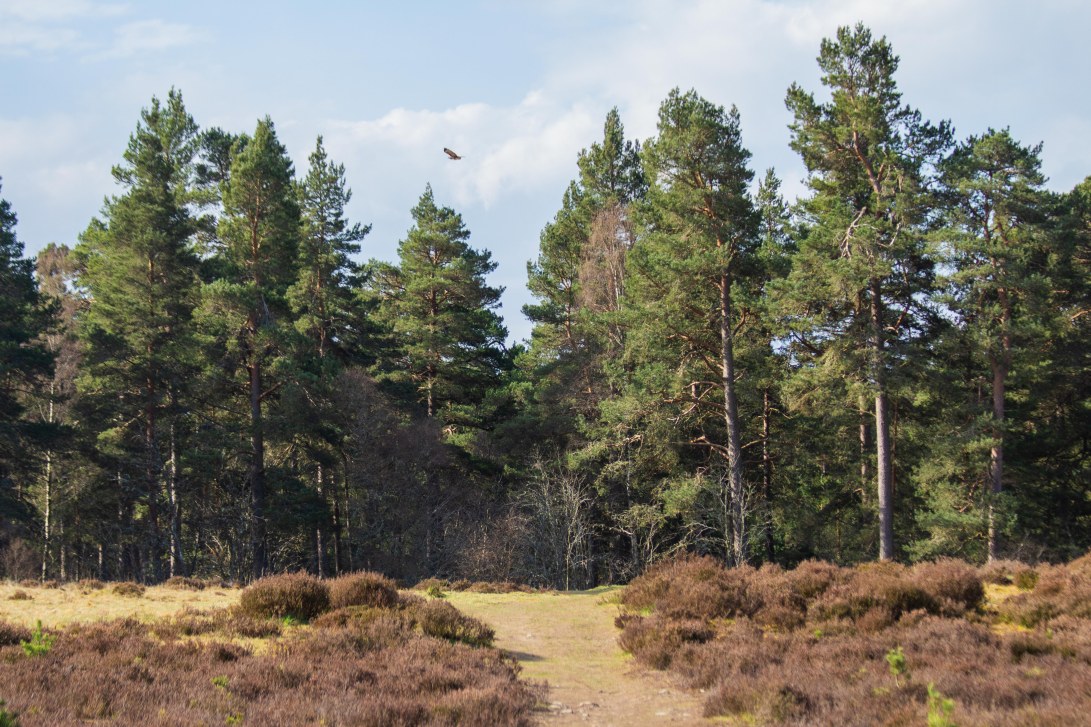
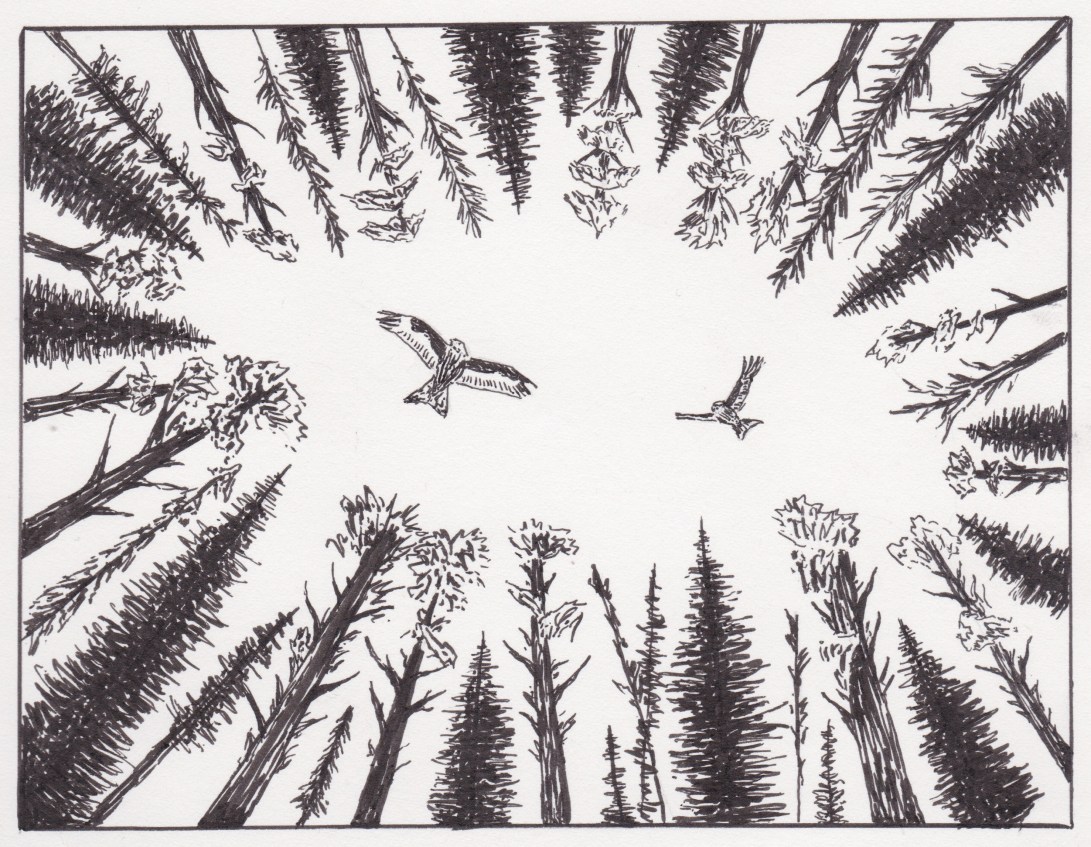
Buzzard gliding over Anagach Woods, Grantown-on-Spey

Lots to be getting on with! I’ve seen a few people choosing one word to summarise the coming year so I’ve decided that mine will be “improve”. It may sound simple but it’s what I want to do every year, whether that’s learn something new, develop a skill I’ve already been working on or change something for the better. Basically any small victory that brings me closer to my goals. I hope 2020 will bring lots of improvements!


2019 Wrapped Up

Christmas is here again, which means it’s time to reflect on what I’ve achieved in 2019. I still have a long way to go before I can really call myself a freelance writer, but I’m so proud of the progress I’ve made this year.

img_3859

A particularly significant event was the Grant Arms Wildlife Book Festival in April, where I travelled to the beautiful Cairngorms National Park to stay in what is undoubtedly the coolest hotel in the UK for wildlife lovers like me. I attended some fascinating talks, met many established writers and was thrilled to see my first pine marten. However, perhaps the most influential moment was meeting author Stephen Moss, who runs the MA in Travel and Nature Writing at Bath Spa University. We sat down for a chat and spoke about my work so far, and after our talk I began to think seriously about doing a masters. I was sad to leave the beautiful wilderness of Grantown-on-Spey behind, but I was also intrigued by the possibility of further study and what it could do for me.

img_3262_lively

In the summer I visited Madrid – my first solo trip to a non-English speaking country. I don’t think it occurred to me how daunting that prospect could be until I arrived and realised that my A Level Spanish was a lot rustier than I had anticipated. Nonetheless, despite the language barrier and the most intense heat I have ever experienced, I really enjoyed my stay and learnt a lot about my resilience when travelling alone. Madrid is a beautiful city that I would love to return to some day, just in a slightly cooler season! The highlight was undoubtedly the flamenco show on my last night – that experience will stay with me for a very long time.

P1000122

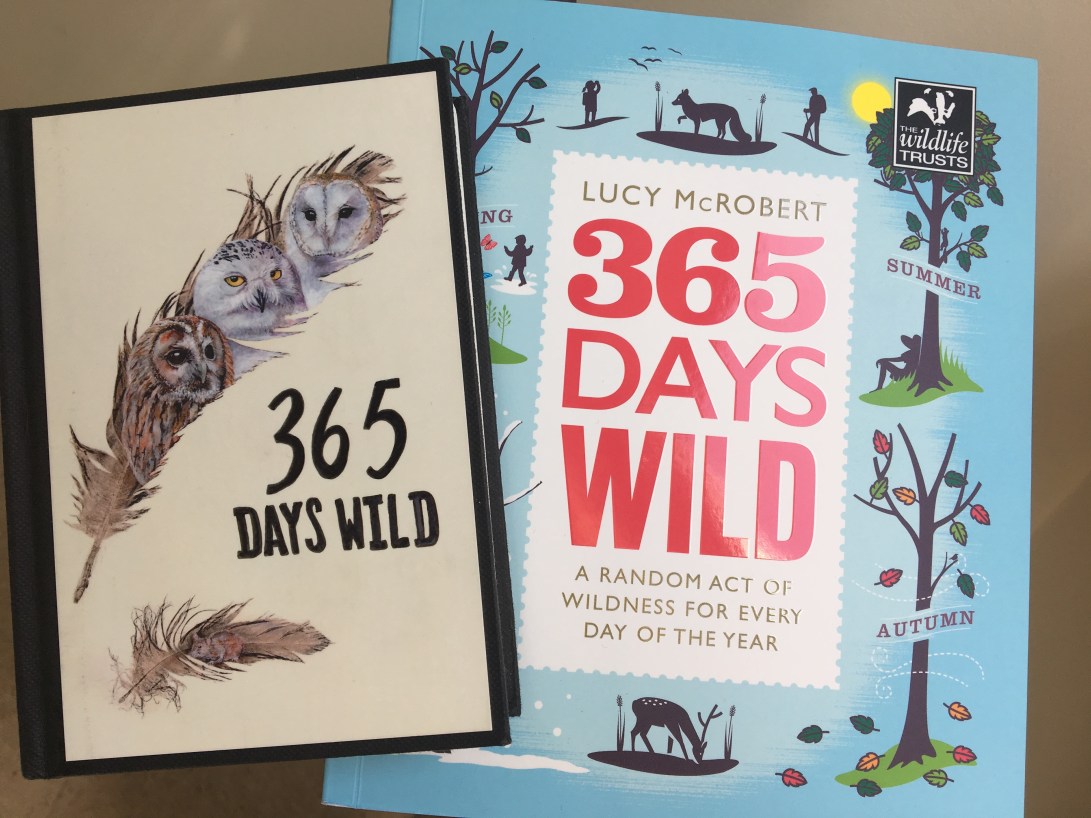
Not long after Madrid it was time to drive up to Rutland Water nature reserve for Birdfair, which has now become a yearly tradition. I caught up with good friends from uni, met the lovely Lucy McRobert and finally christened my new tent in the campsite. As always, Birdfair was a fantastic networking opportunity and I met some lovely authors and conservationists who were keen to share their advice. I also saw Stephen Moss again and bought rather too much wildlife art…

IMG_4060

September saw some more networking at the AFON conference – I’d never seen so many young naturalists in one place and I felt proud to be part of that community. During the weekend I introduced myself to author and illustrator Tiffany Francis, who is one of the loveliest people I’ve ever met. I swapped Instagrams with lots of inspiring writers and conservationists, many of whom I’ve stayed in contact with since. Events like the AFON conference are such a great way of reaching out to like-minded people and I was so happy to build my network further.

IMG_4207

In October there was a very big change: beginning the MA. The week-long residential in Corsham was a chance to meet my fellow students and be introduced to the way the degree was run. I’m sharing the year with a diverse and enthusiastic group of people and I already feel close to them after so little time. An unexpected achievement has been my rekindled love for drawing and painting, which has proven to be a great tool for inspiration. So far I have submitted two assignments for the course and have been really pleased with my results. The second term will begin in the new year and I can’t wait to tackle the next module – a trip completely organised and funded by me where I need to try and get writing commissions from professional publications. Naturally I’m apprehensive about it, but I’ve done this before with the Isles of Scilly so I know once I begin my research I’ll be away.

IMG_4272

Finally, the end of 2019 saw my first official commissions – two for Blue Sky Wildlife, two in Hertfordshire Life magazine and the completed annual report for SEZARC. The team in Florida loved what I’d done and have now asked me to make the next report for 2019, which I can’t wait to get started on. In fact, I’m excited to announce that I shall be visiting Florida again in 2020. Not only will it be a chance to see my friends and work colleagues, but also a fantastic opportunity to gather new images to use in the next report. I don’t know when it will be yet, but I’m so excited to get the details in place.

I began this year feeling a little shaky and unsure of exactly where I planned to go. I still don’t have everything figured out, but the commissions have given me a real boost of confidence. It has been great meeting other naturalists including young women like Tiffany Francis and Lucy McRobert, as well as everyone on my course who are all making amazing contributions to wildlife writing. I have a great feeling about 2020, and I can’t wait to see where I am this time next year.

Nature Journal

I can’t believe I’m already two assignments into my master’s degree. Both have been based around the theme of “Writing in the Field” – writing outside as opposed to a typical office environment. This was really useful for me, as up until now I’ve mostly written brief notes outside and then typed them up later at my desk. While this worked for jogging memories, it occurred to me that I was losing out on a lot of detail this way. Photos reminded me of things I saw, but I was glossing over other sensations such as smells, sounds and textures. By paying attention to these senses I found I could create a fuller, more immersive piece of writing that really put the reader in the field with me.

Art 10
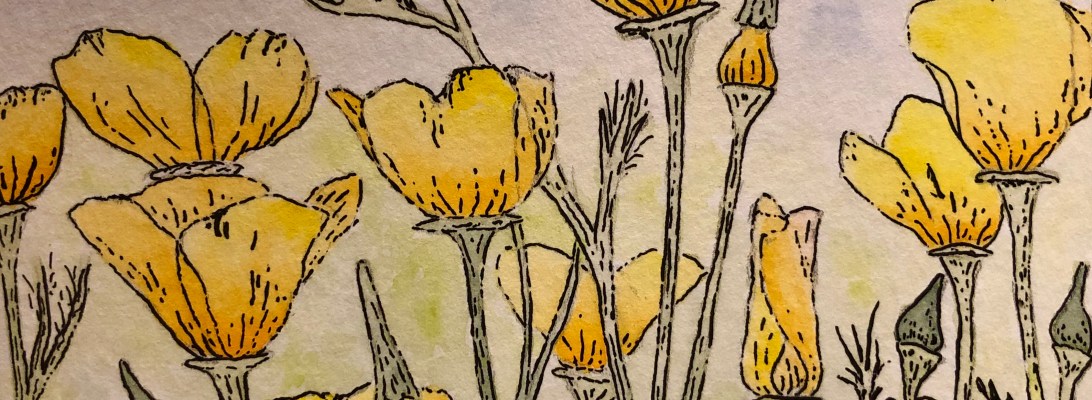
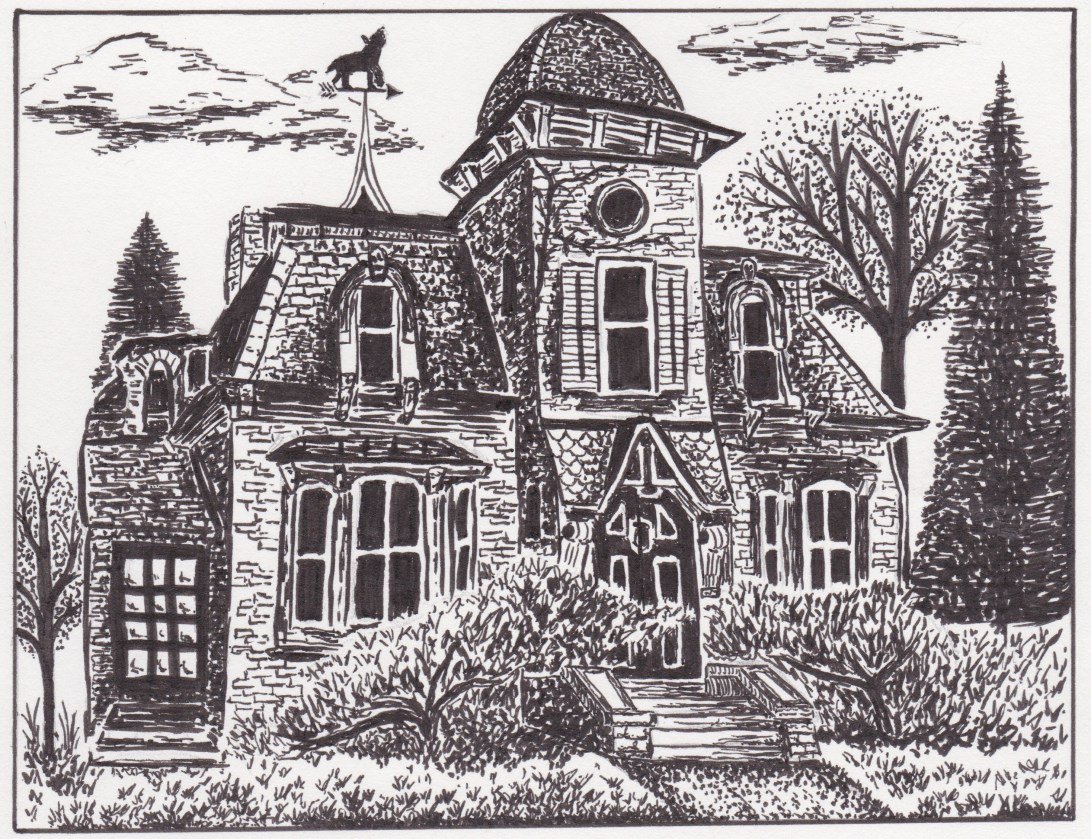
Inspiration for a fantasy fiction piece

For my first assignment I decided to start a nature journal that I planned to take with me whenever I was out in nature. This would be the basis for my essay in the first assignment. During my research I discovered that many writers use journals to enhance their writing experience. Charles Darwin kept perhaps the most well known example during his voyages on H.M.S Beagle but there are numerous others. Author and artist John Muir Laws said that “journaling will slow you down and make you stop and look.” American author and scientist Aldo Leopold’s nature journals were so significant that the resulting essays became valuable contributions to the field of phenology – the study of seasonal natural phenomena. I also found several studies indicating that being outside is beneficial to creativity, so it made sense to do more writing outdoors!

Art 8
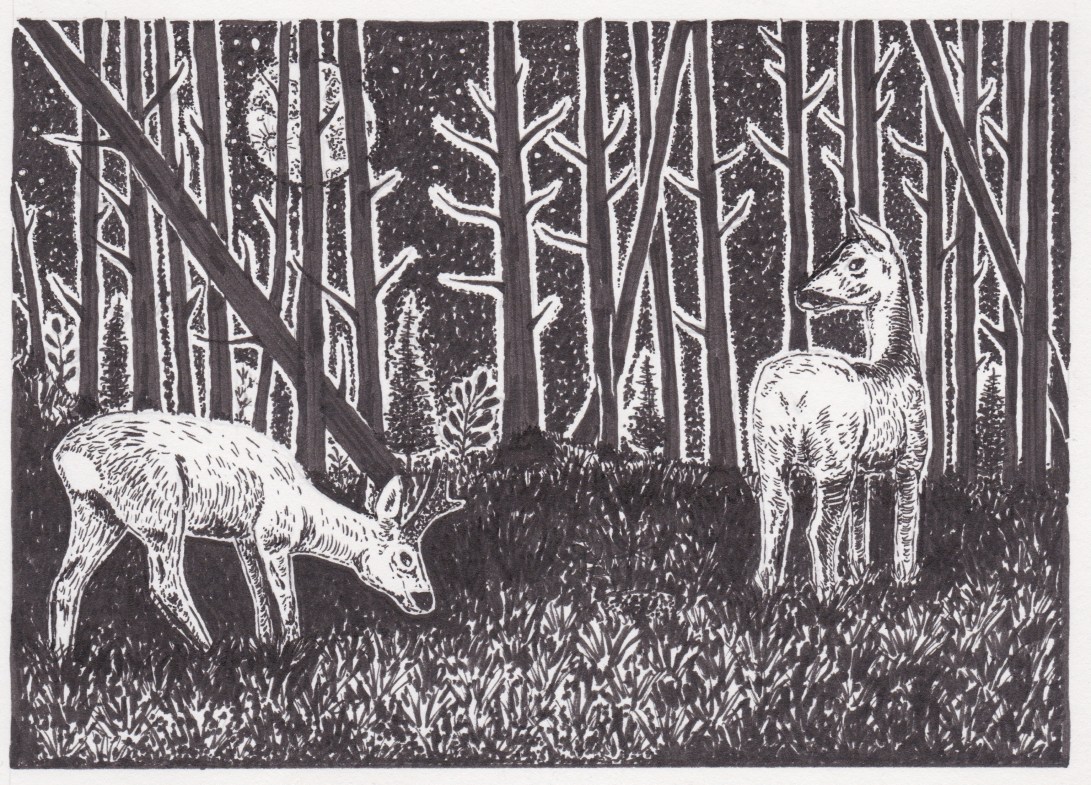
An illustration for a piece of scientific writing about roe deer

I found that my nature journal not only benefitted my writing but also enabled me to concentrate more on my art. I was keen to make the pages pretty and yearned to have a journal that would be cool enough for Pinterest. I’ve always loved drawing and painting but it’s often taken a back seat. My usual excuse is that I have no time, but over the past few weeks I’ve started to create quite a large body of work just by snatching a few minutes here and there to make a sketch. I bought a travel watercolour palette with a brush containing its own water which has been a lifesaver. Now I can pop my paints in my bag and take them anywhere, and I’ve really got on well with it so far. I deliberately bought a journal with a ring binder, so I can remove and insert the hole punched pages wherever I want them. A lot of my conventional notebooks have failed so I think having the freedom to go back and add pages in later has helped to keep the creative flow going.

Art 7
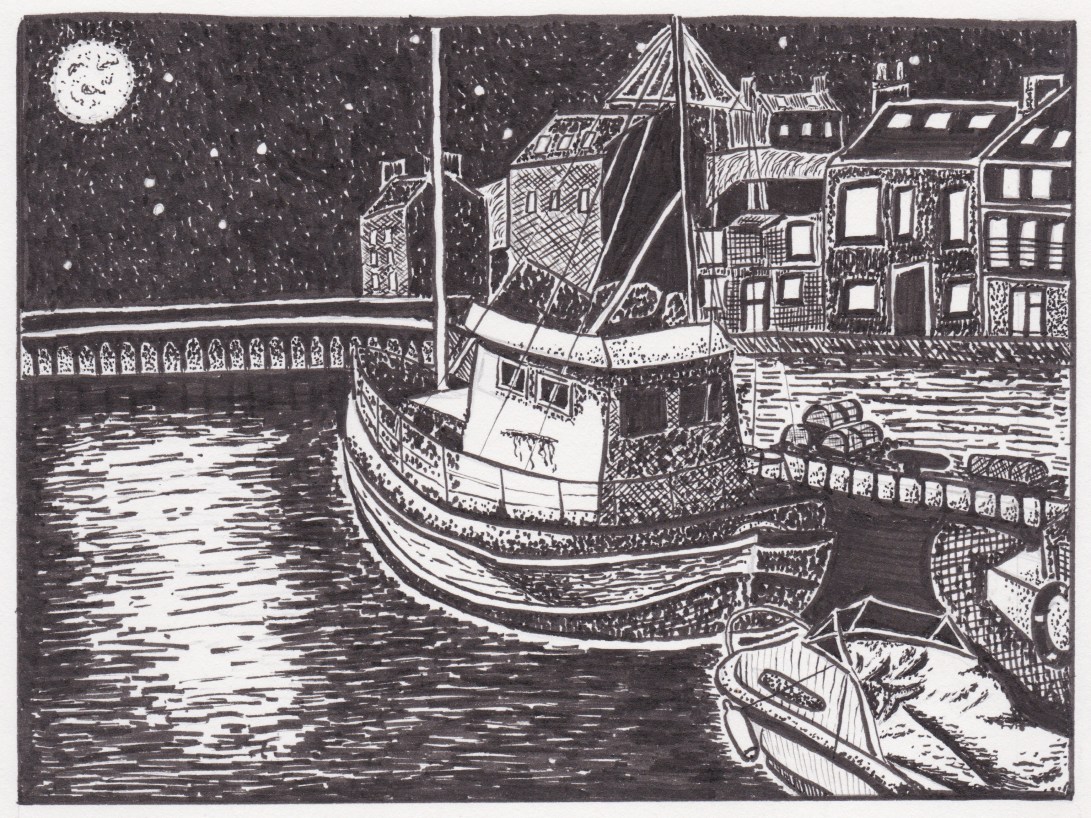
Burghead Harbour, the scene of a reflective piece about night walks

Writing and illustration go well together, so I decided to create a small drawing or painting for each piece in my second assignment – a portfolio of nature and travel writing from the field. I’ve loved setting art projects for myself again, which I haven’t done since school. Not only does it bring some variety to my writing, but it’s enhanced my observational skills by forcing me to note the fine details of my environment. I’m really looking forward to seeing how my nature journal progresses and I hope I can maintain it until the end of my course and beyond!

Art 9
A worm’s eye view to illustrate a sci-fi fiction piece

New Chapter

The past fortnight has been an absolute whirlwind. I have officially begun my MA in Travel and Nature Writing at Bath Spa University, which I’ve decided to do part time over two years. The course is low residency so I shall be staying in Hertfordshire and completing most of the masters online. However, last week was my first residential which took place in Corsham, a town three miles from Chippenham, Wiltshire. The residential was designed to meet my fellow students and spend five full-on days getting used to postgraduate teaching.

IMG_4280
Meeting the residents

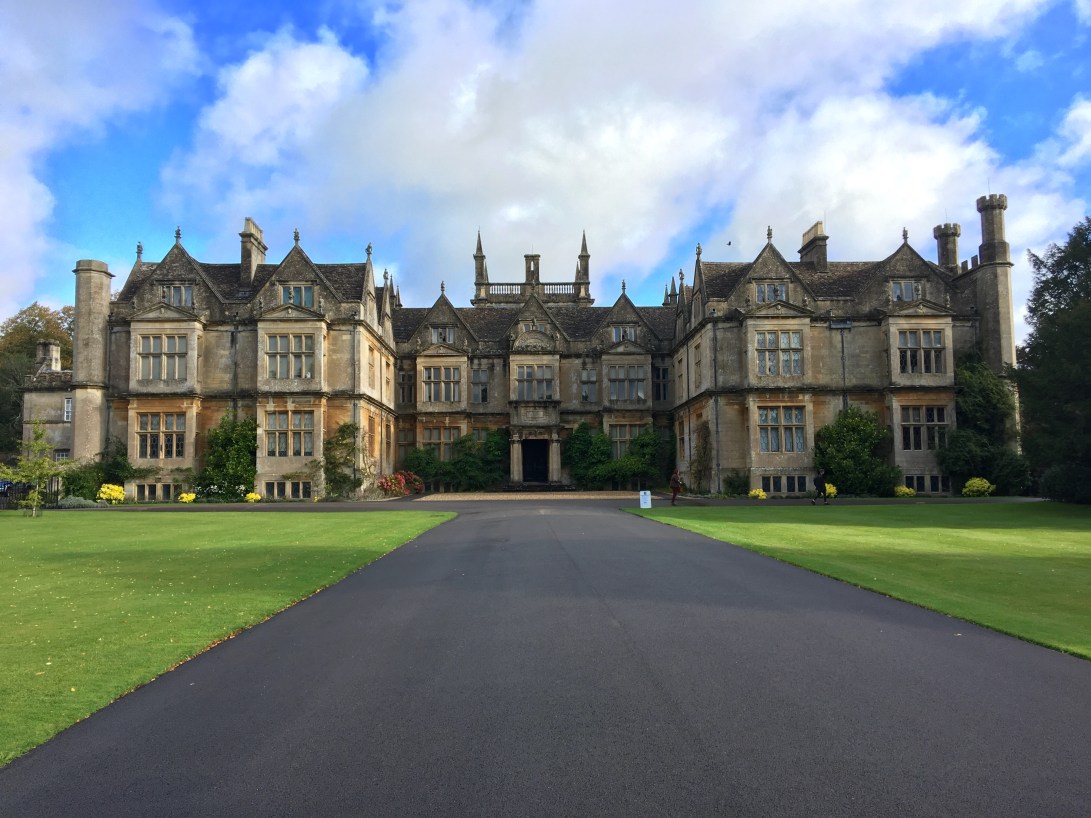
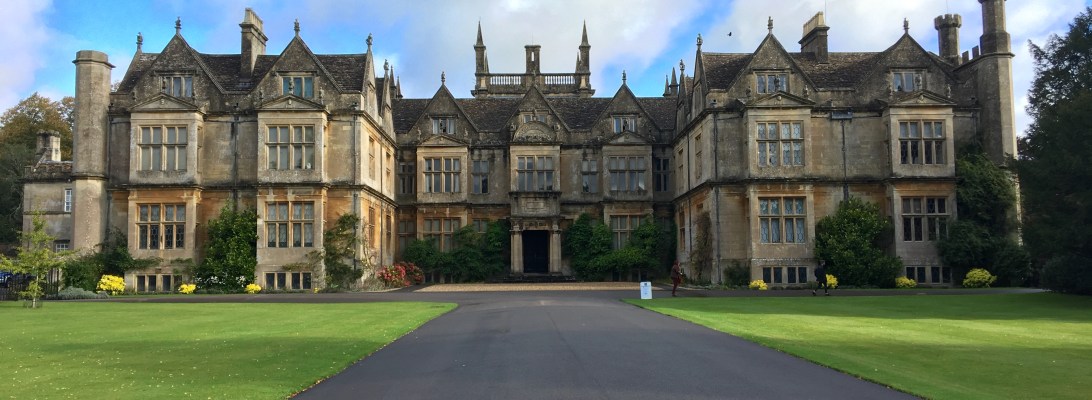
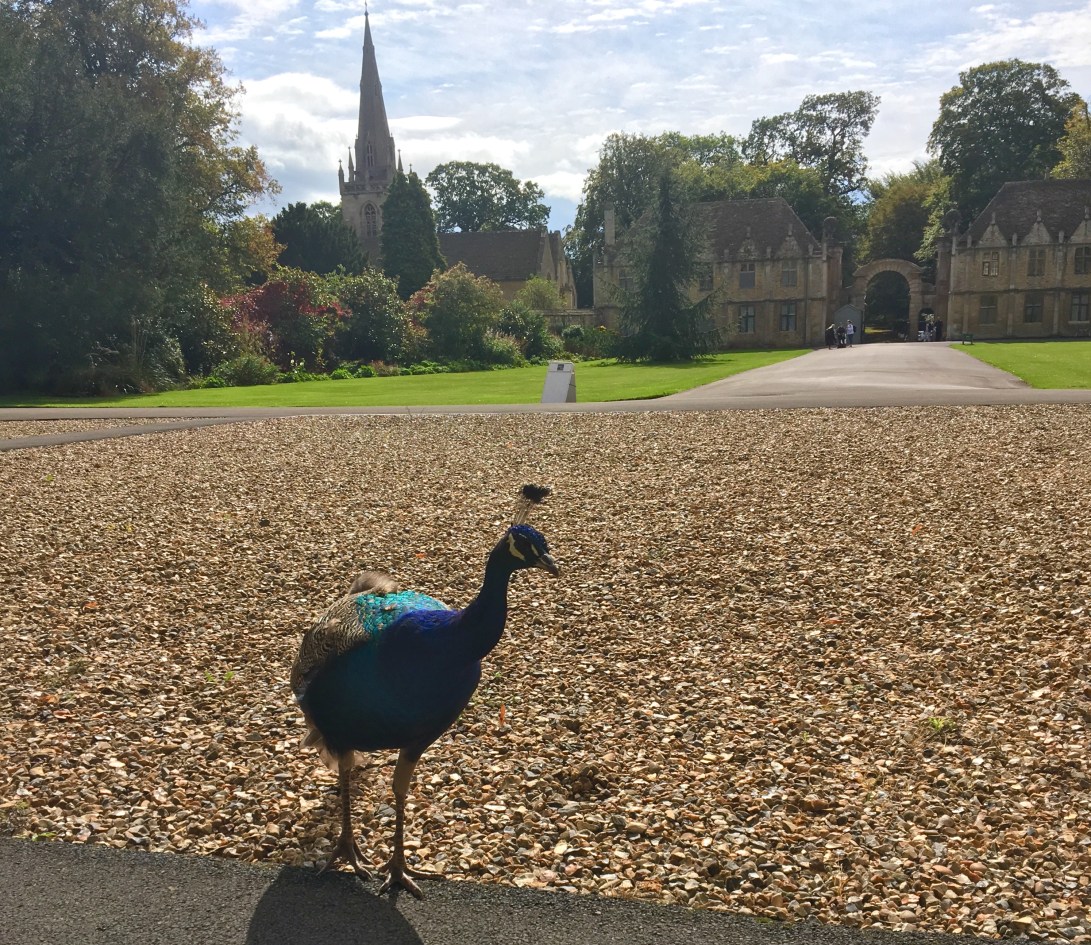
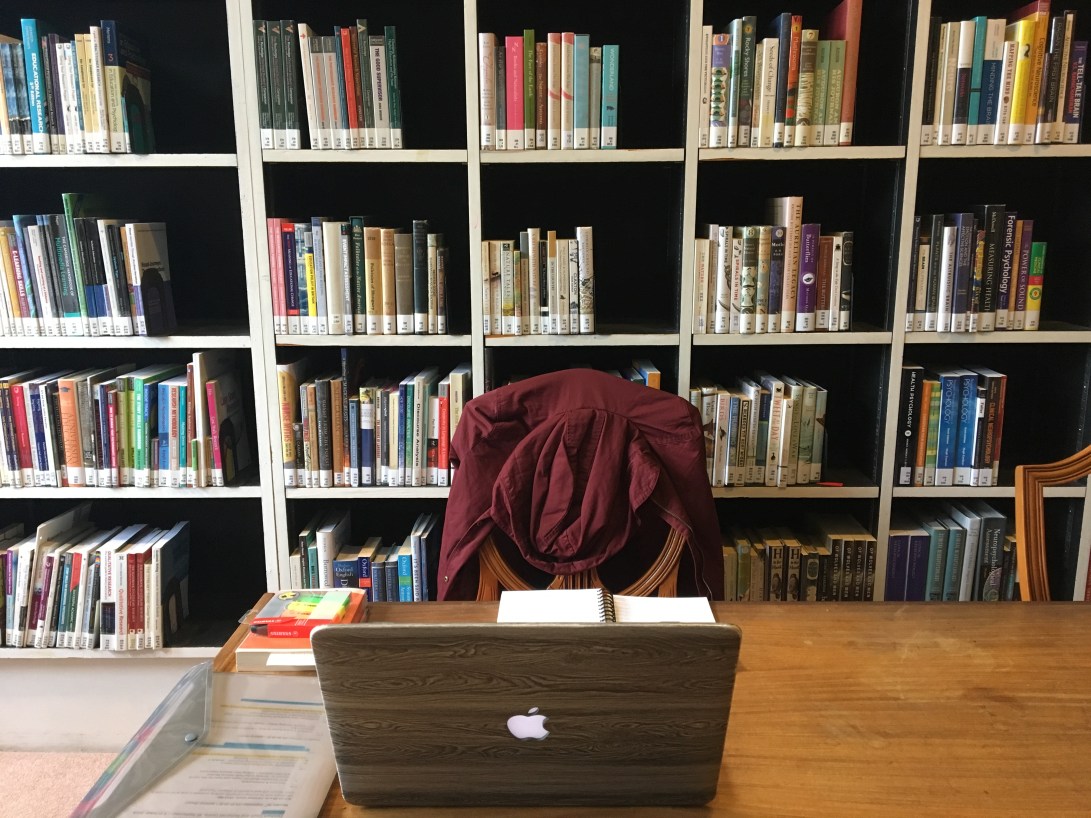
It may sound like an exaggeration but the campus was incredible. Built in 1582, the building is a stunning English country house complete with sweeping grounds and even peacocks that strut comically up and down the walls. I couldn’t help imagining moving staircases and translucent ghosts as I wandered the corridors in search of the library. Although small, its shelves are crammed with books including an enticing selection of nature writing, both old and new.

IMG_4302
Gravitating straight to the library

I am sharing this year’s course with sixteen other writers. While there is a broad range of ages and experience, all but one of us are women – an interesting contrast to the typically male-dominated world of nature writing in previous generations. Everyone is incredibly friendly and I already feel comfortable reading my work in front of them and getting great feedback in return. We were set two writing exercises this week: a piece inspired by senses other than sight and an observational piece from time spent in Corsham High Street. Description is a favourite of mine so I often explore sound, smell and touch as well as visual stimuli, but it was particularly useful to hear what everyone had written and see what details they picked up. Although writing did feature in my undergraduate degree, there was definitely more of an emphasis on visual media, so it was really useful to discover my strengths and identify what I could try next.

65fc464e-0440-4342-bb5a-c15f587296e0
A visit to Avalon Marshes in Somerset on our last day

Now I’m back in Hertfordshire and already missing the change of scenery, not to mention the time spent chatting with new, like-minded people. We will now mostly be communicating and learning via Google Hangouts until the next residential in February, but I did enjoy meeting face-to-face. I’ve never been taught online before so it will be an interesting new educational experience.

We’ve already been set our first assignment, due next month: an essay on the act of “Writing In The Field”. It will be the first time that I design my own question and I’m a little daunted by that at the moment! I’m sure that once I get reading, I’ll start generating some ideas.

My course leaders are Stephen Moss and Gail Simmons, both successful authors in their own right. I’m so happy to be learning more about the craft of writing, especially on a course tailored to nature and travel. I’ve been stuck in a slight rut this past year and was in need of a new challenge. While I still have the passion and drive, I felt like I was lacking in some of the specific skills I need to pursue a career in writing. I’m convinced that this MA will be a great step for me.

Micrarium

Recently I was accepted onto the Travel and Nature Writing MA at Bath Spa University, which I’ll be starting later this month. In preparation for this exciting new challenge, I signed up for a travel writing workshop run by Peter Carty, who regularly writes for publications such as The Guardian. Although my focus will definitely be more on the nature half of my MA, there is a lot of overlap with travel and I would love to develop my portfolio in this area.

Peter’s workshop was extremely useful, especially the postcard exercise. Over lunch, we were let loose into London with a blank postcard. The challenge was to find a new and intriguing place and write a short travel piece about it on the postcard, including quotes from people we met along the way. As a wildlife writer I’ve had very little experience with interviews, so approaching strangers and getting quotes was daunting but rewarding. I decided to visit the Grant Museum of Zoology in Fitzrovia, which turned out to be a treasure trove of taxidermy and scientific specimens.

________________

Micrarium

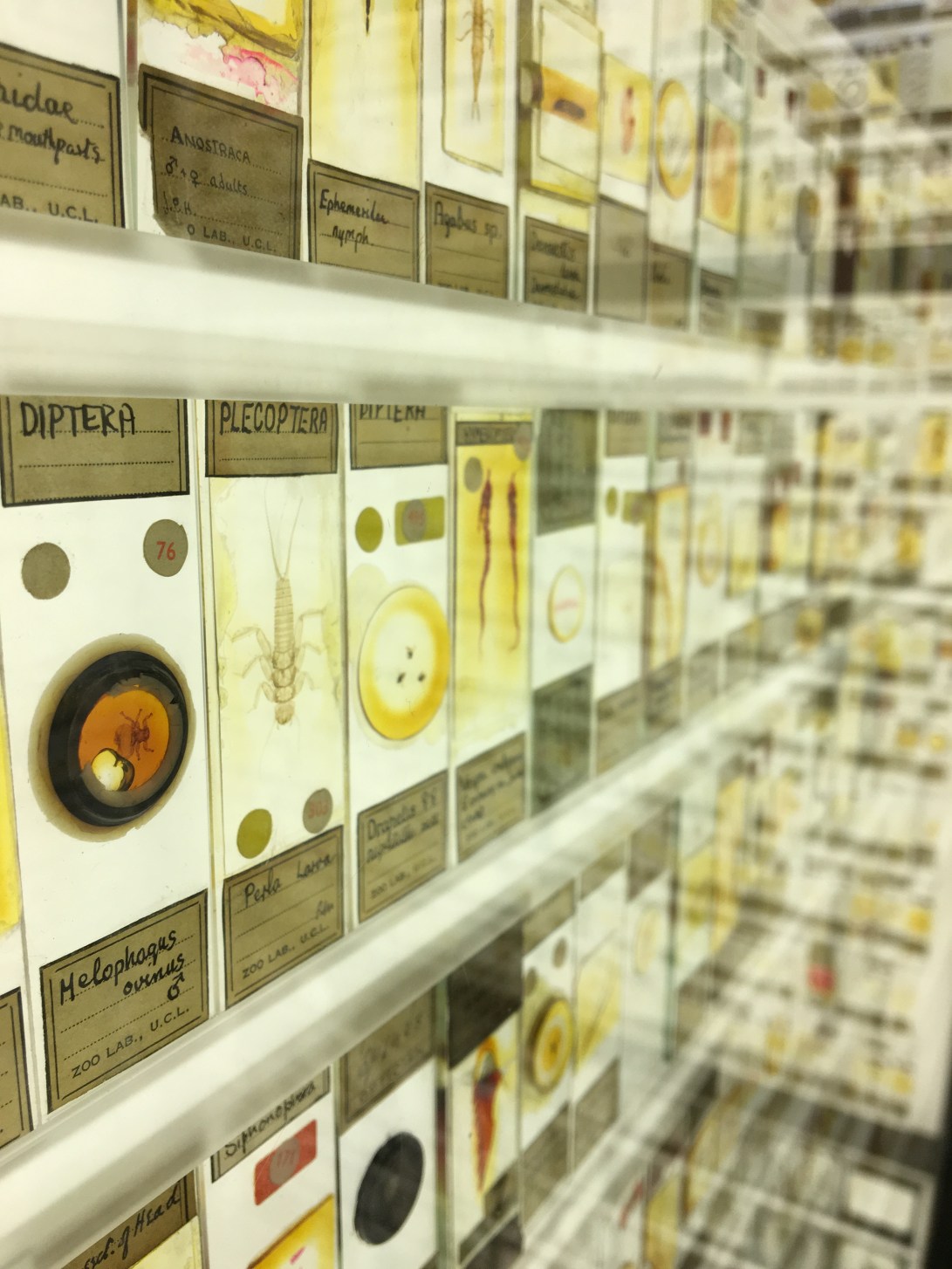
A jar of moles, a penis worm and a dissected rat. These are just some of the specimens on display at the Grant Museum of Zoology. But past the imposing elephant skulls and ominous, pickled jars is an intriguing display of alien-like creatures nobody would notice in the wild.

It’s said that 95% of known species of animals are smaller than a human thumb. The Grant Museum, named after British anatomist and zoologist Robert Edmond Grant, sheds light on the mysterious and microscopic in its Micrarium: a seemingly infinite display of backlit microscope slides that are creatively reflected in a mirror mounted on the ceiling. There are 20,000 slides in the whole museum, but the selection of 2000 in the Micrarium exhibit alone is impressive enough.

IMG_3974

“It’s probably one of our more popular exhibits,” explained volunteer Margaret, “We get lots of people taking photos for Instagram.”

I can see why. Step inside this bizarre taxidermic phone box and you can observe minute insects and cross sections of tissues in astonishing and multicolour detail, painstakingly plastered across three walls. Among the specimens are the muscly leg of a flea and a whole squid measuring less than a centimetre long.

“While public displays very much focus on larger animals,” said Jack Ashby, manager of the Grant Museum, “Most natural history collections have thousands of very small specimens kept in their storerooms which are rarely shown to the public.”

Once used for research at UCL, the neighbouring university, the Micrarium now enthuses the general public instead, uncovering secrets of the miniature monsters that crawl well out of human sight. It’s not quite the blue whale at the Natural History Museum, but it’s an insight into 95% of animals on our planet, which definitely deserves a second look.

Reptiles in the Park

I bought a ticket for the Madrid City Bus Tour from hotel reception and hopped on at Plaza Mayor. With such intense heat, I thought it would be a good idea to explore the city in the comfort of an open-top bus, where I could jump on and off wherever I pleased. First stop was Puerta del Sol with the bear and strawberry tree statue, and then we headed east into the Retiro district, which was probably best known for its trio of world-famous museums. As I’d anticipated, the queues to get inside were eye-watering even at late morning, so once again I was content just admiring the exterior. As much as I quite liked wandering through art galleries, I wasn’t willing to spend an hour waiting to get in. Besides, on a weekend day you wouldn’t have seen the art for the tourists anyway.

P1000388

I was far more interested in what lay beside the museums and I hopped off the bus. El Parque de Buen Retiro was a vast and beautiful park spanning 350 acres. I began at the north end and made my way leisurely past elaborate fountains and sprawling trees. One of the trees was the oldest in Madrid, but there was no shortage of vast leaved giants, which provided much-needed shade for tourists and locals alike. While some people were lolling on the grass with food or books, others were jogging and walking dogs. It was a hive of activity and yet seemed extremely tranquil, similar to how I felt in Plaza Mayor. Despite a population of several million, the city didn’t feel cramped or overcrowded the way London does. The pace of life in Madrid was far more relaxed and I was keen to savour it. The only signs of congestion were from the parakeets perched in every treetop, whose disgruntled calls sounded like trainers on a squeaky floor.

P1000241

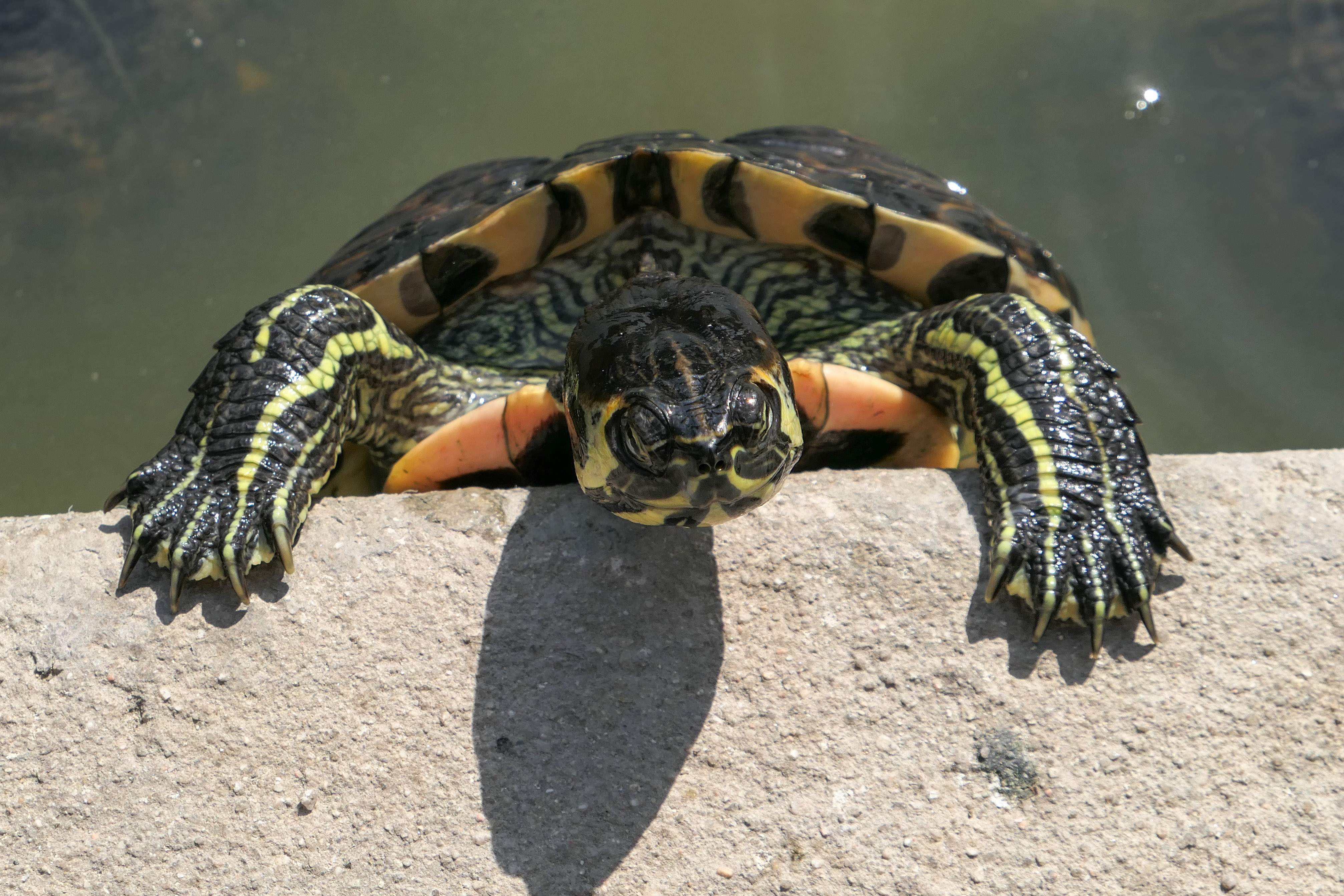
In almost the very centre of the park was El Palacio Cristal – a beautiful glass building overlooking a lake where ducks and a lone black swan were swimming in lazy circles. Surrounding the water were dramatic sprays of white blooms, rosebushes as tall as trees and a miniature waterfall cascading over a rocky outcrop into the lake below. I sat down on the stone steps of the palace to see the ducks a little closer and was surprised to find the water full of tiny terrapins. While their shells remained submerged, their black and yellow-striped heads poked out of the water, eyes blinking up at the child beside me who was throwing popcorn. On the steps, feral pigeons and sparrows tussled for the prizes, while in the water the terrapins were joined by ducks and the occasional gaping lips of a fish. The black swan came gliding over for a look too.

P1000282

One terrapin made the monumental effort of grasping the side with its broad claws and heaving itself up. For a few surreal moments we gazed at each other before it realised I wasn’t the one with food and plopped back underwater. Meanwhile, a pigeon strolled nonchalantly across my foot in pursuit of an unclaimed kernel, while others exploded into flight around my head, their wing beats sending a welcome burst of fresh air.

P1000293
P1000278
Terrapin v pigeon face-off!

Beside me on the step I could hear the child with the popcorn munching. “One for you, one for me” was obviously in play. When the bag was empty, birds and reptiles slowly dissipated until the next snack arrived.

I wanted to sit and watch the terrapins a bit longer, but the steps were in direct sunlight and I was beginning to fry. I left the diverse gaggle of creatures behind and headed out of the park, but not before passing through La Rosaleda (rose garden) for a few photos. A dozen other young female tourists were posing for shots, no doubt gathering new ammunition for Instagram.

P1000325
La Rosaleda

All along the downward slope leading back to the museums were small wooden huts overflowing with books, which I made a beeline for. It was La Cuesta de Claudio Moyano bookstalls. Nearly all were in Spanish but there were a couple of titles I recognised. I couldn’t help buying “Harry Potter y la piedra filosofal”, which would probably be challenging enough for my rusty Spanish.

For lunch I had a bocadillo de calamari (squid ring sandwich) from El Brillante – another Lonely Planet recommendation that fell short of the mark for me. The calamari itself was good, with just a thin layer of batter, but when sandwiched in a dry baguette it had me gasping for a drink. It seemed that the Spanish didn’t use sauces much in their cooking. The bacon bits and bare bread at Casa Revuelta had been the same. Perhaps the locals just washed it all down with a few cervezas, but I was left wanting after El Brillante.

P1000342
Gran Vía

Later in the evening, after a full circuit on the bus and hopping off on Gran Vía, the hub of central Madrid, I walked back towards Plaza Mayor and a sign for “Tapa Tapa” caught my eye. I ignored the guidebooks and had dinner in a place I knew nothing about, which was an excellent decision. I chose four cheese croquettes, mini portions of Iberian ham and mozzarella toasted sandwiches and langoustine skewers, which were all absolutely delicious. To drink I had a mocktail called San Francisco, which was bursting with the flavours of orange, peach, pineapple and blackcurrant juices. It was an extremely satisfying end to a long day exploring the park. Tomorrow I had a real Madrid tradition to look forward to: the infamous El Rastro flea market.

Paella and the Palace

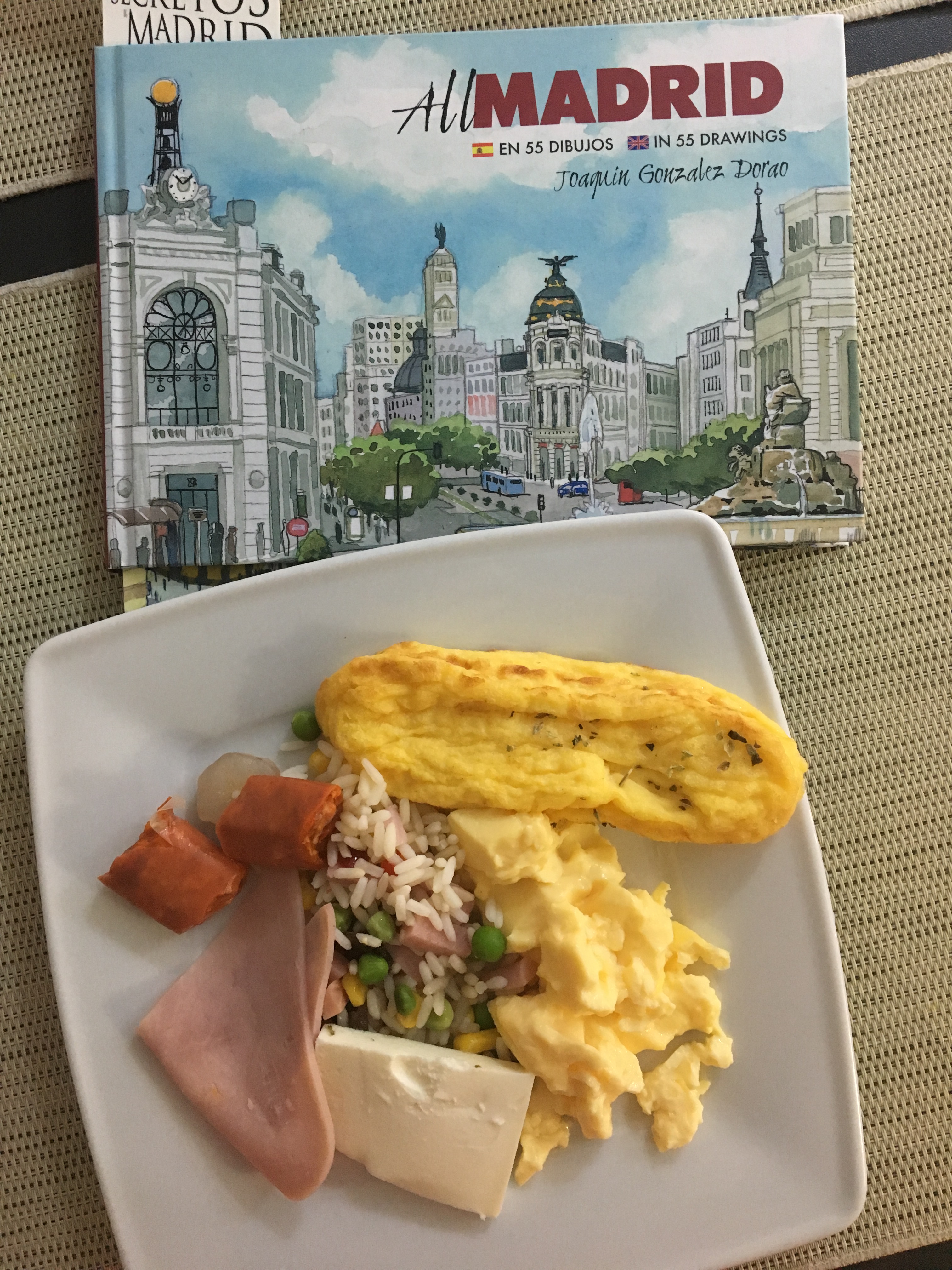
Breakfast was an undeniably Spanish affair. There were potato omelettes, sausages the size of grapes, large fans of hams and cheeses as well as a broad assortment of condiments in small glass jars: sesame seeds, cashew nuts, dates and some things I didn’t even recognise. There were fruit and vegetable smoothies in slim shot glasses as well as long plates filled with pineapple, kiwi, orange, grapefruit and pizza slices of watermelon. There was also cake, and when the opportunity arose to eat cake at breakfast I took it without hesitation. In addition to maple pastries, croissants, mini muffins and wafer-thin slices of marble cake, there was Tarta de Santiago; a delicious almond cake dusted in icing sugar and cut into narrow wedges.
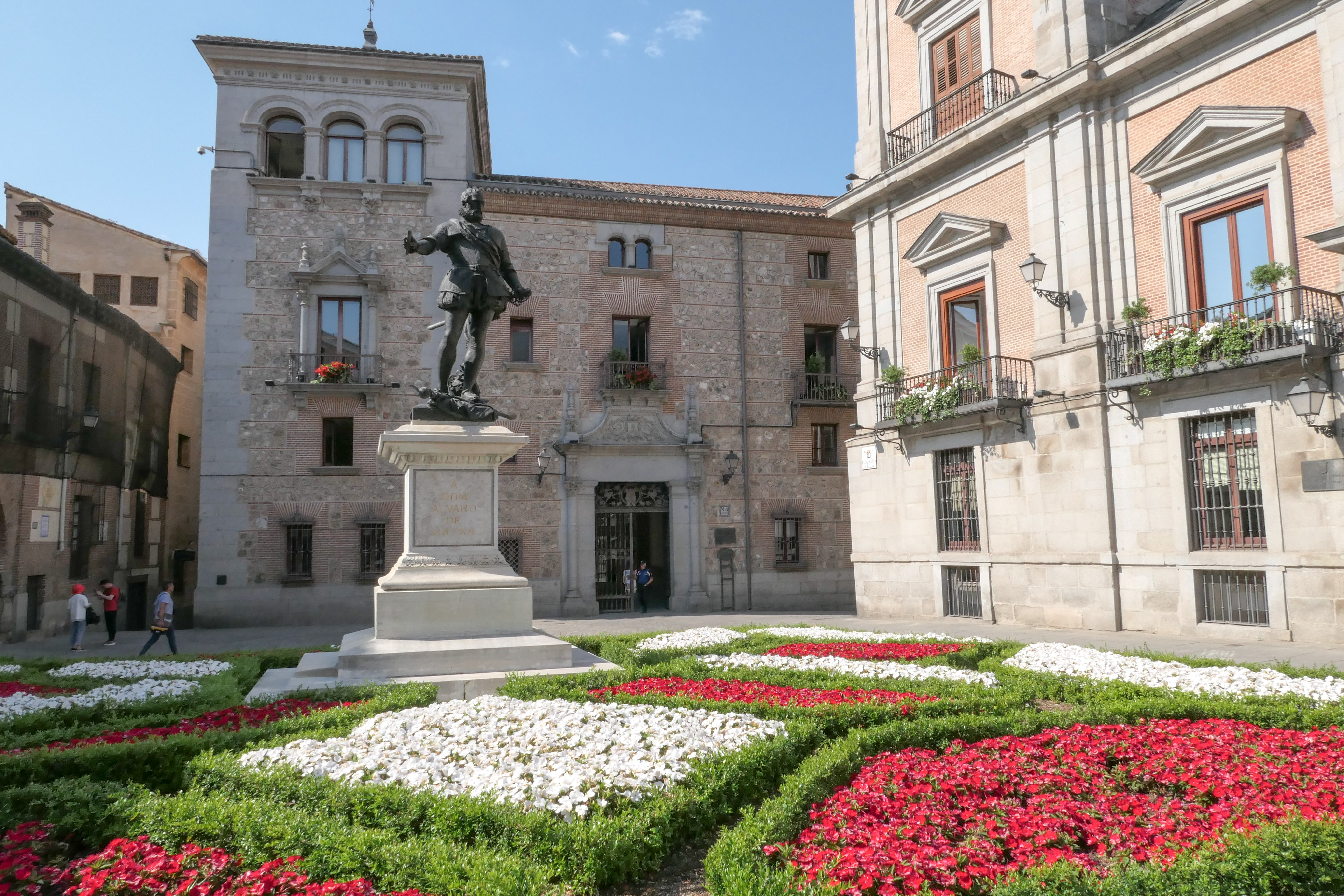
After all that, I was definitely fuelled to start the day. I began by walking west to my second plaza of the week: Plaza de la Villa. Although a fraction of the size of Plaza Mayor, this quaint little square was just as pretty. The architecture was 17th century Madrid style baroque: a picturesque combination of stone, brick and the same wrought-iron balconies I’ve seen on many other buildings in Madrid so far. The statue in the centre of the square was Don Álvaro de Bazán – a famous Spanish admiral who was never defeated in battle. The Madrid City Council chose to commemorate his memory by constructing the monument on the three hundredth anniversary of his death in 1888. The statue is surrounded by a richly coloured flower garden.
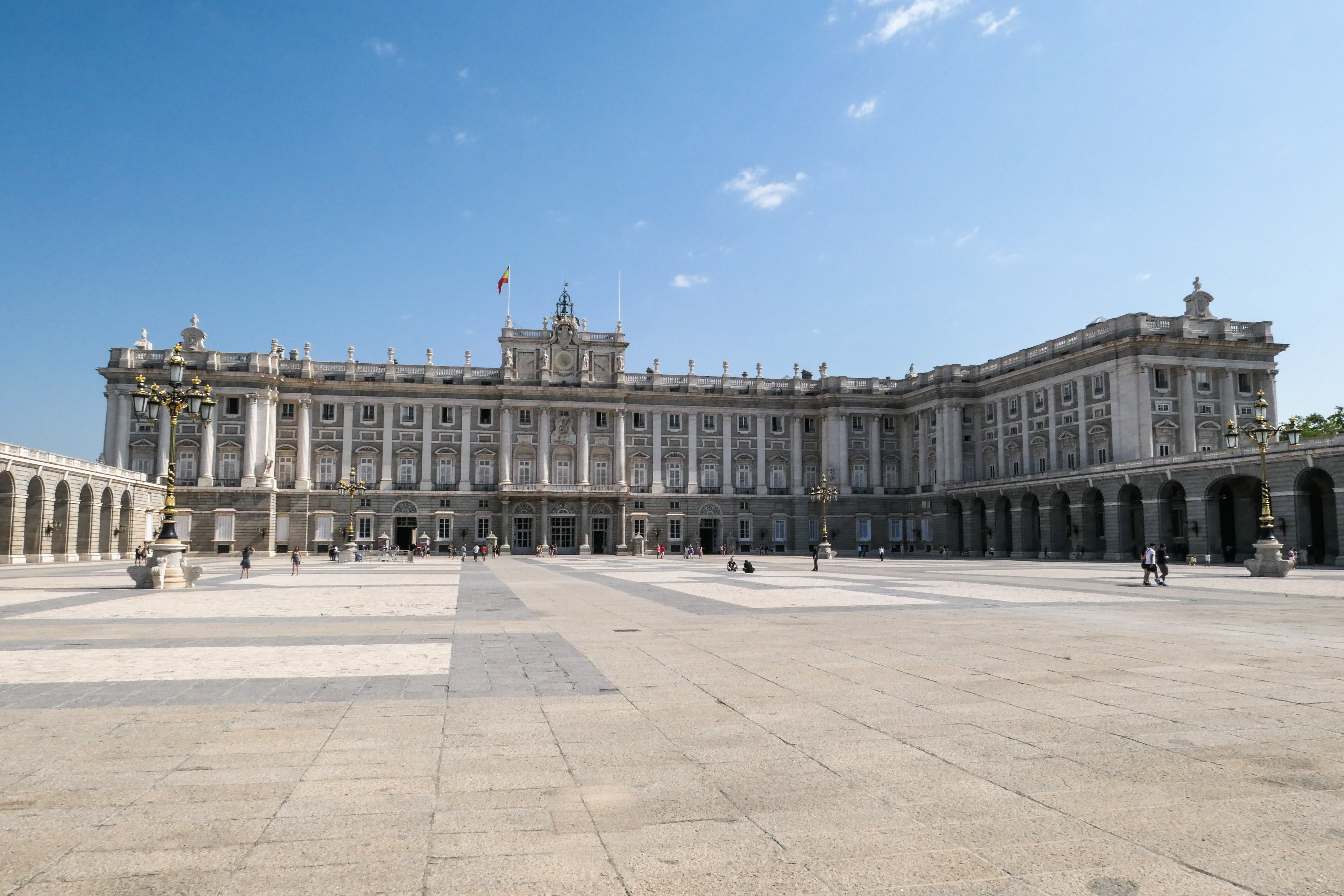
Next I paid El Palacio Real a visit. Although still used for state ceremonies, the palace is not the king’s official residence. He and his family live in the smaller Palacio de la Zarzuela just outside the city. I’d toyed with the idea of going into the palace, but when I saw the queues waiting in the baking sun I decided against it. After all, the line for those with tickets was nearly as long as the line for those without. I could still admire the palace through the gates, though.
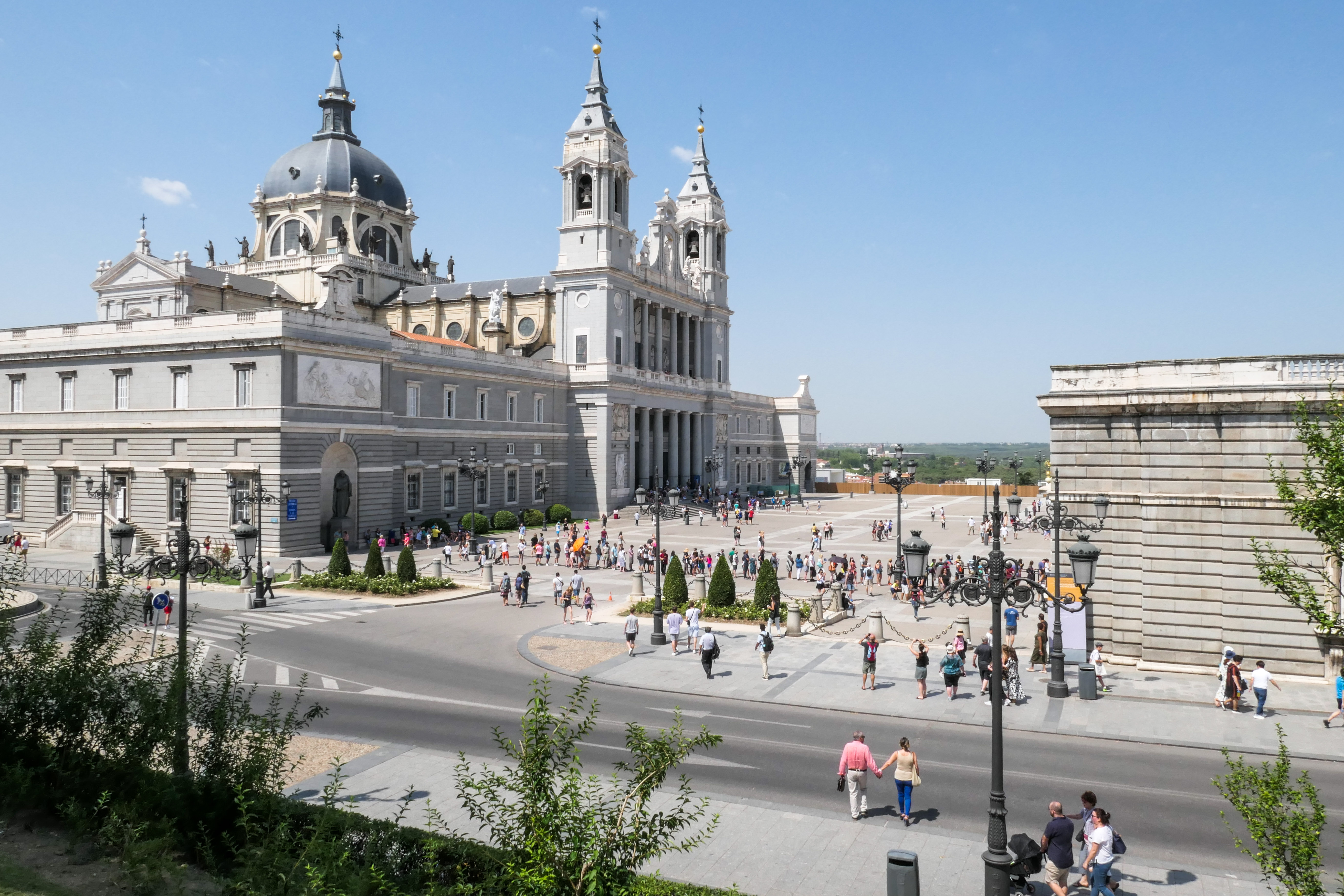
Opposite was La Catedral de Nuestra Señora de la Almudena: a Madrid landmark that could easily rival other cities’ grand cathedrals. In many churches in the city there was a strong religious presence among those who attended. There were no touristy parts to these buildings – while they were all intricately decorated the style was very subdued. The few I visited were full of praying madrileños and I often saw nuns strolling down the corridors. Although I didn’t feel unwelcome, I didn’t stay long out of respect for those using the cathedral for worship. Visitors should never go to cathedrals in Spain during mass, but even between these times it seemed that tourists were tolerated more than welcomed, and I respected that.
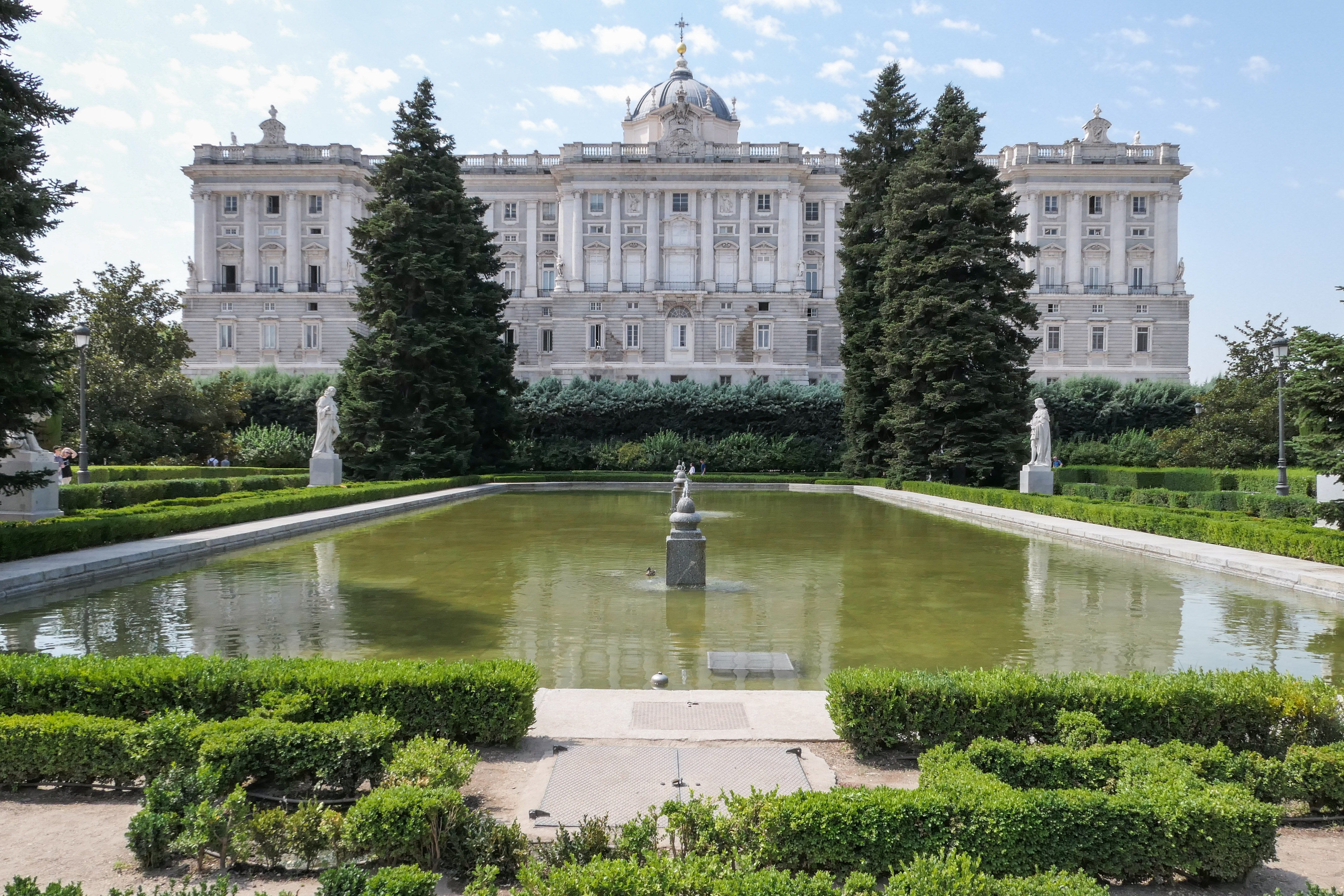
Soon I turned my attention to finding a shady spot to rest. The Jardines de Sabatini were just what I needed. Take away the denim-clad tourists and it wasn’t difficult to imagine ladies in Elizabethan dress wafting fans as they strolled past pruned hedges and thick-limbed trees with bunches of waxy leaves hanging from their boughs. The area was established as a garden in the 1930s as a replacement of the royal stables that were once found there. Now, instead of braying horses, all that could be heard was the crunch of gravel, the chirrup of birds and the lilt of an accordion.
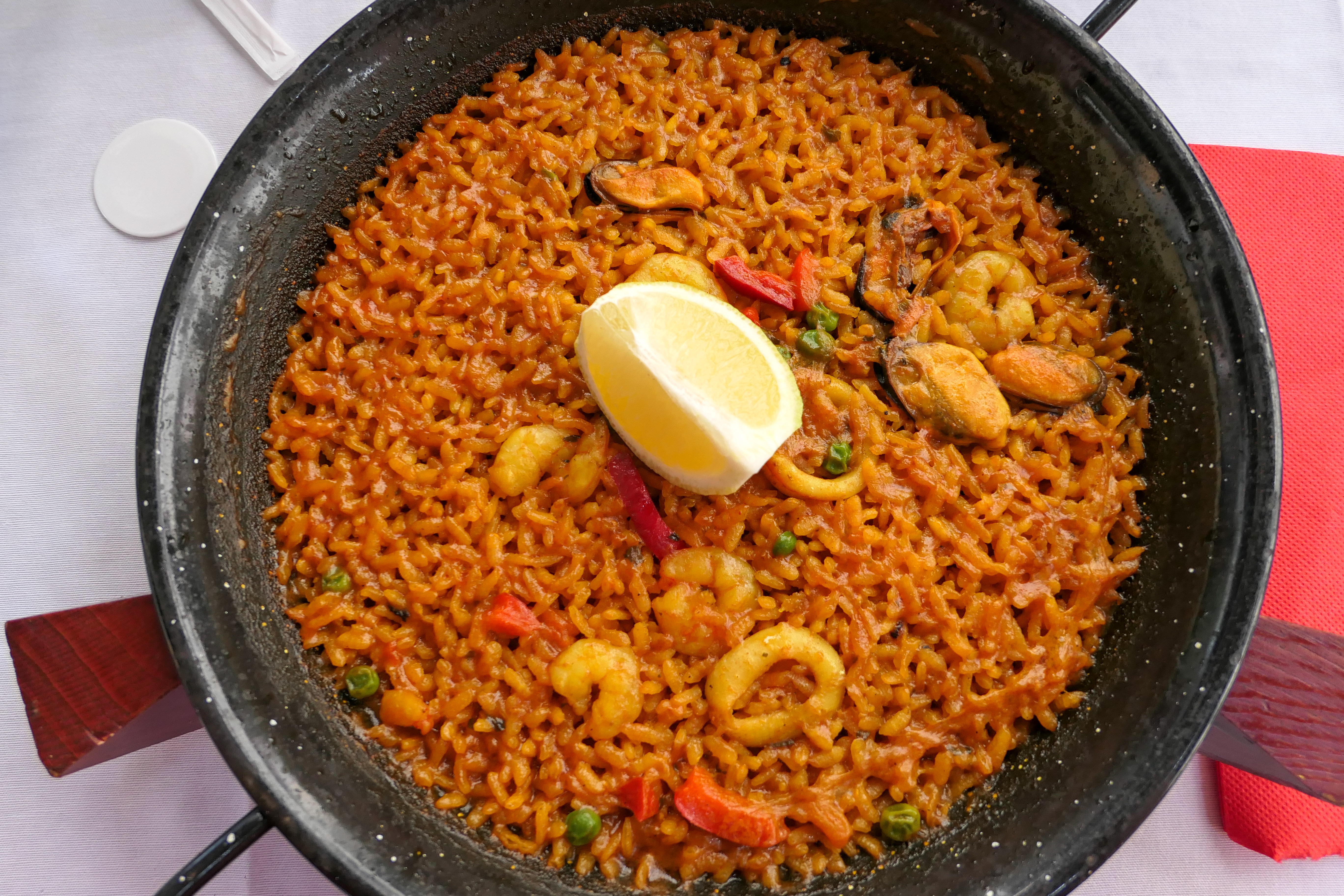
I had lunch at Toro Tapas and ordered a cuttlefish paella. The word “paella” derives from the Latin patella for pan, so the infamous dish is actually named for the black, handled pan that it is served in. When in Spain, you should always eat paella and this one was delicious, popping with juicy prawns, mussels and squid. To drink I chose granizado de limón, which is the Spanish answer to a slush puppy. It was wonderful after the heat of the afternoon and just as refreshing as it sounds.
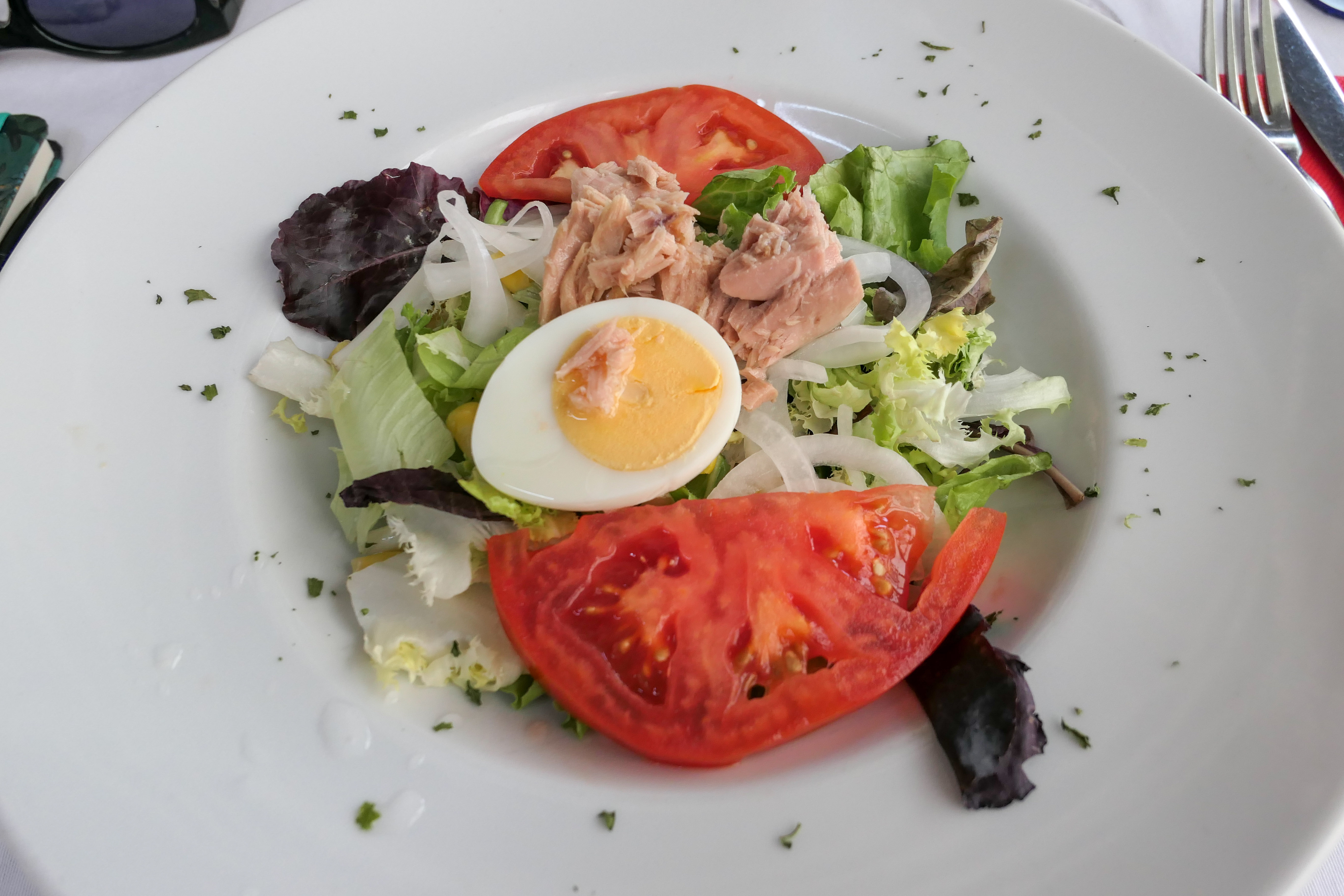
On my way back from the palace I dropped into La Chocolatería de San Gines, which I’d been told was the place to go for churros – a timeless unravelled doughnut that has planted itself firmly into British culture as well as Spanish. I couldn’t wait to sample what I hoped would be the best and most authentic churros I’d had, but sadly I came away disappointed. The churros were hard and dry, as if they’d already gone stale. I’m not sure if adding cinnamon sugar was a British twist, but I really missed that extra sweetness here. Perhaps I’d been unlucky with a bad batch, but I’d had far nicer churros back home!

I cheered myself up by visiting a few librerias (bookshops) and found some lovely items. In “Desperate Literature” in Calle de Campomanes there was a copy of “Alicia y El País de las Maravillas”, although this classic by Lewis Carroll is confusing enough in English let alone Spanish.

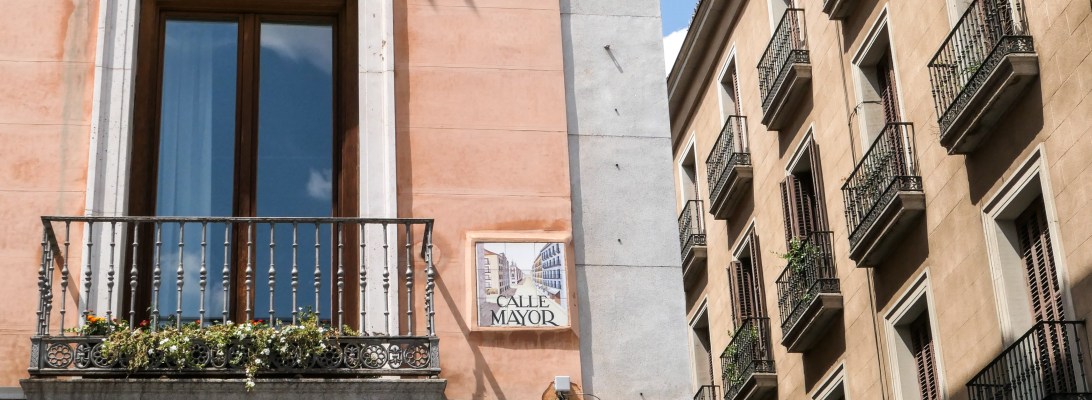
In pride of place on busy Calle Mayor was a shop named La Librería, which had every book on Madrid you could ever want. I bought “Madrid en 55 Dibujos”, which was a gorgeous little hardback full of paintings of Madrid scenes, a lot of which I’d already seen.
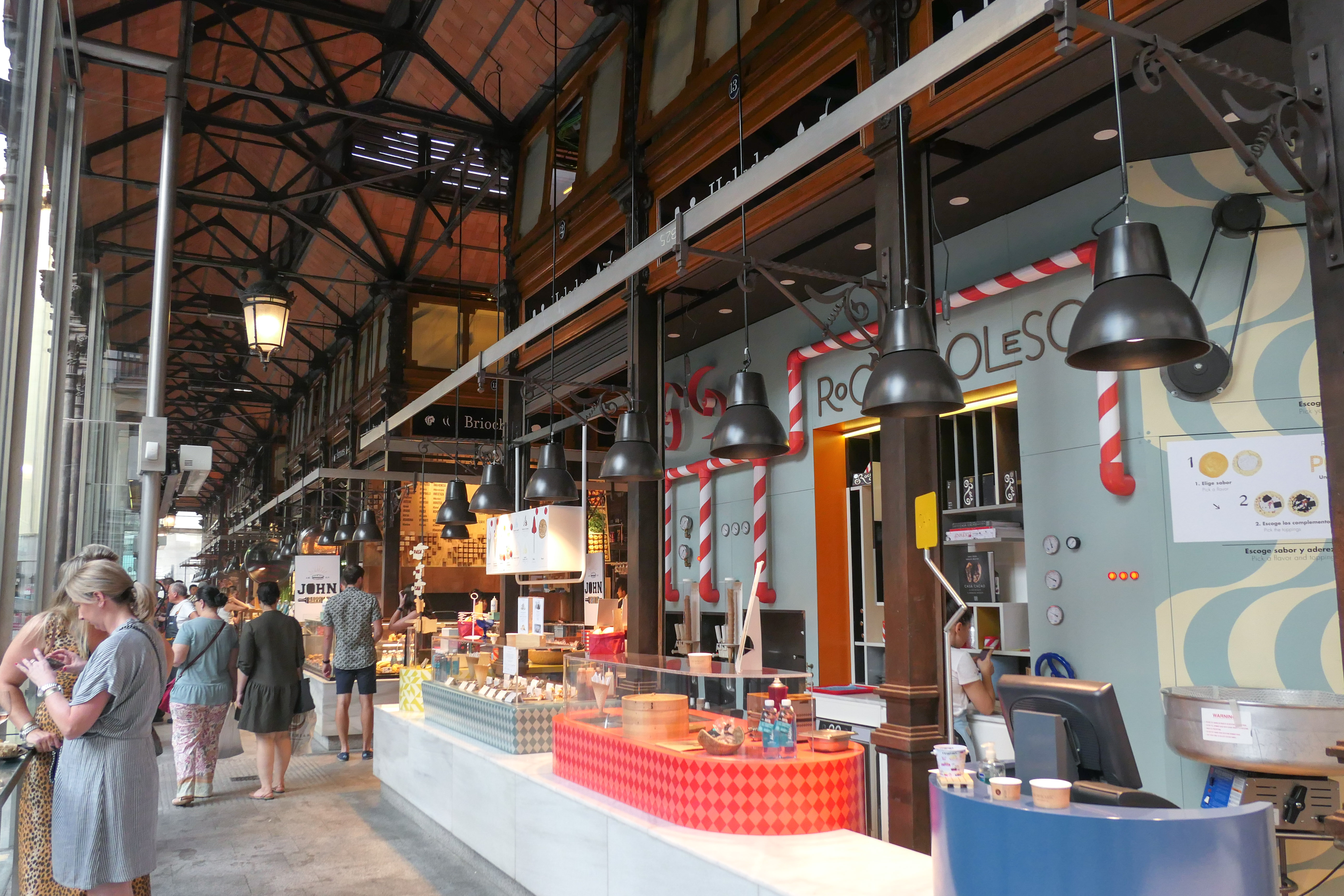
By then I was truly exhausted, so I retreated back to the far more tolerable temperature of my hotel room and wrote for a while before heading out for dinner. I sampled the broad range of tapas available at El Mercado de San Miguel, one of Madrid’s oldest and most popular food markets. I forced myself to browse before choosing anything, and I eventually plumped for two crab tapas. In one, the crabmeat was sandwiched between a neon pink burger that had a similar consistency and appearance to a macaroon but was doughier and less crumbly. The other was a miniature pot of crab, which was a slight disillusion as underneath the first inch the pot was filled the rest of the way with straw fries, but the crab itself was delicious. I was also very happy to find a stall laden with sweet treats, so I bought the largest marshmallow pastry I’ve ever seen.

After a good night’s sleep, I planned to explore a part of Madrid that I’d been excited about for weeks: a park stretching across 350 acres that I could just see myself getting wonderfully lost in.