Easter Bunny at Sunrise

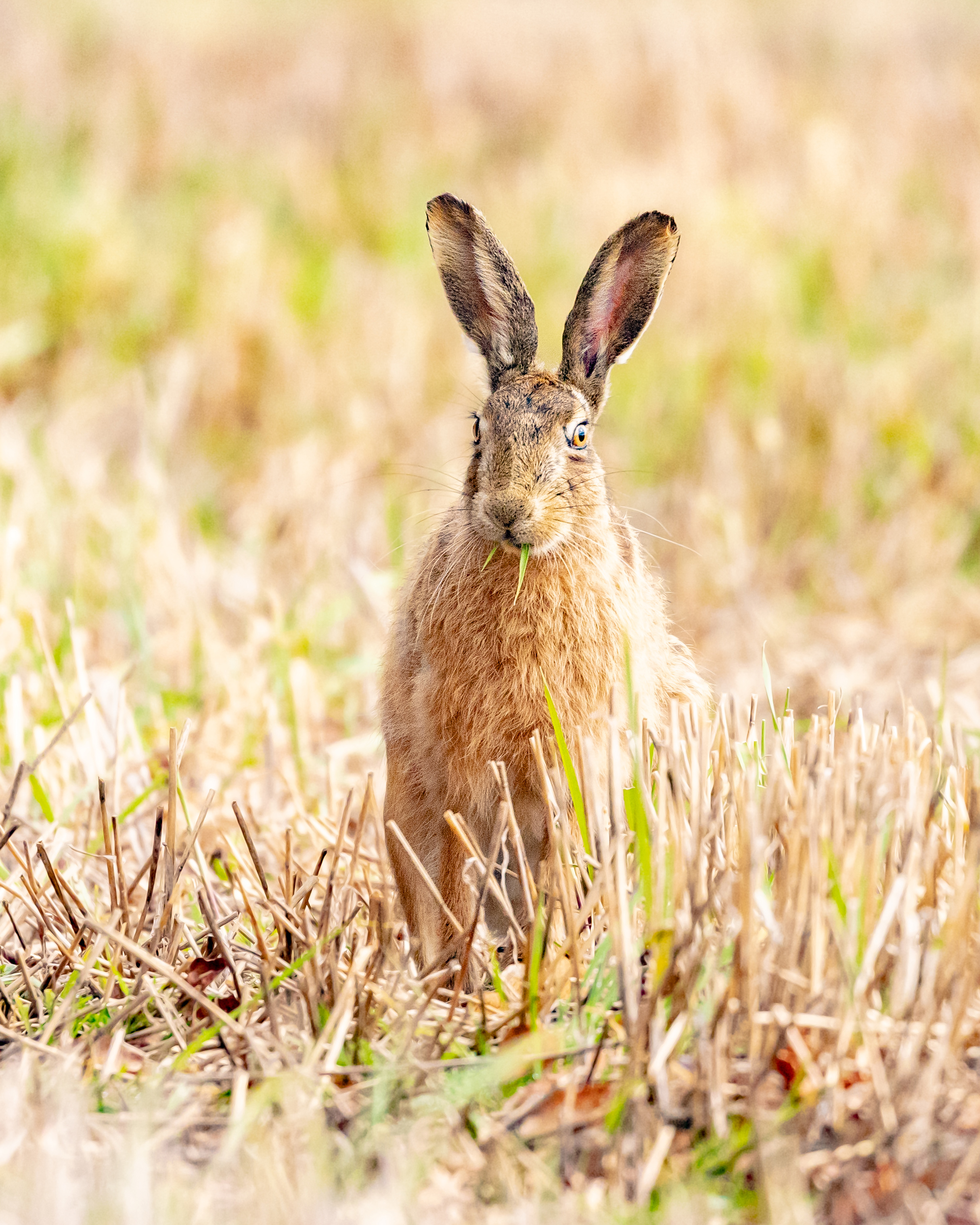
Snow scuppered my last attempt to photograph my local hares, and I didn’t have an opportunity to try again until this week. The conditions couldn’t have been more different, and I arrived in semi-darkness just as a smudge of yellow was blooming to the east.

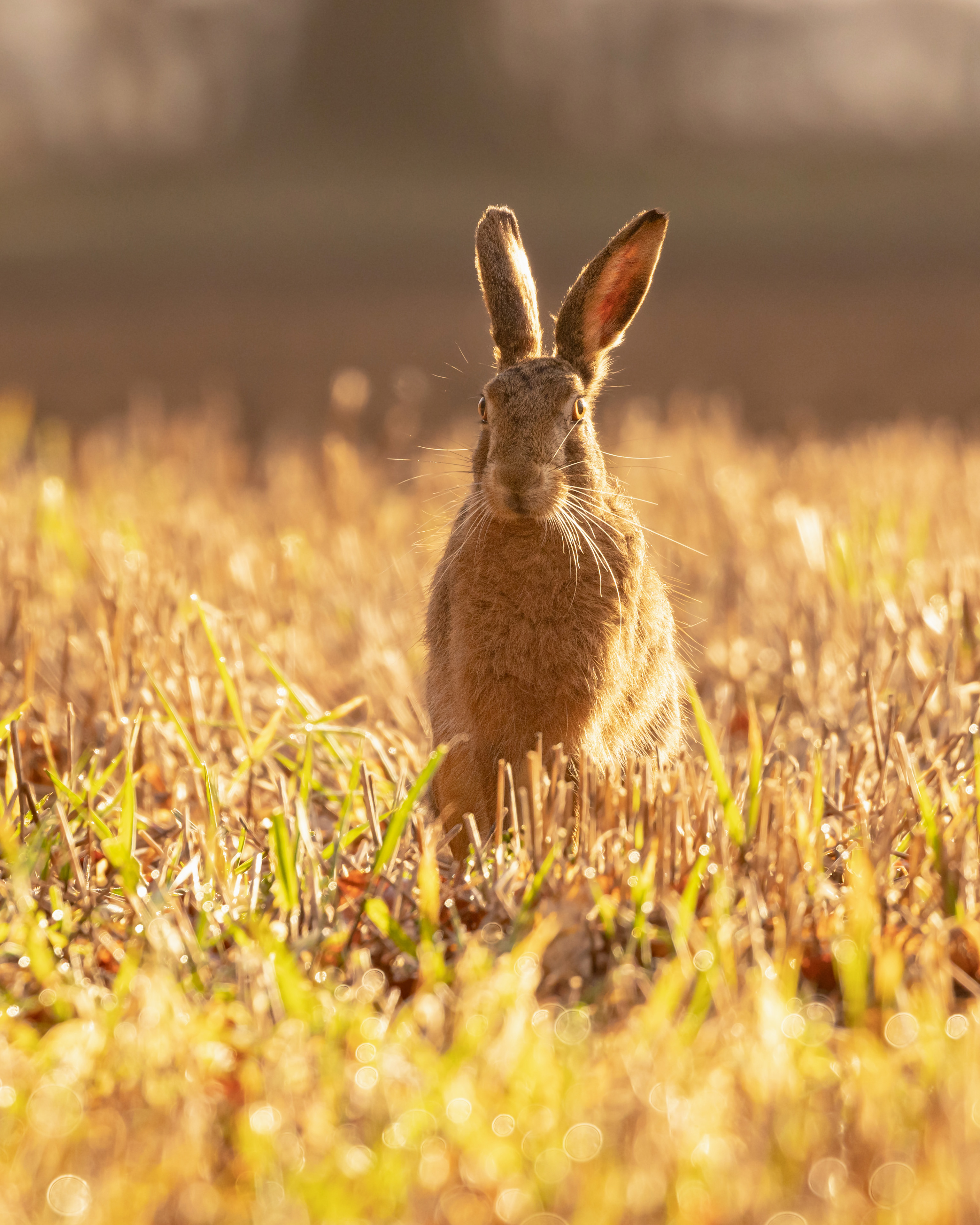
In my initial binocular scan, I spotted two hares in the far corner of a stubble field, so I made my long way around, keeping to the edge beside the dry stone wall. At a respectable distance, I settled on the ground and wriggled into the comfiest position I could manage in hard yet soggy mud. Soon after, golden hour struck with heaven-like intensity, turning the grass to flame. The hares were perky, lolloping around with the occasional burst of a chase.  

One hare disappeared and the other started foraging far off in the centre of the field. With my camera propped on my knees, I was watching it through the viewfinder when a blurry blob covered my view. The first hare had reappeared some forty feet from my lens, no doubt having watched me with a hare’s version of amusement ever since I’d been willing its companion closer.

Twisting my back in all sorts of wrong ways, I followed the hare as it ambled in a semi-circle around me, sitting for a few moments to have a nosey before disappearing into the long grass.
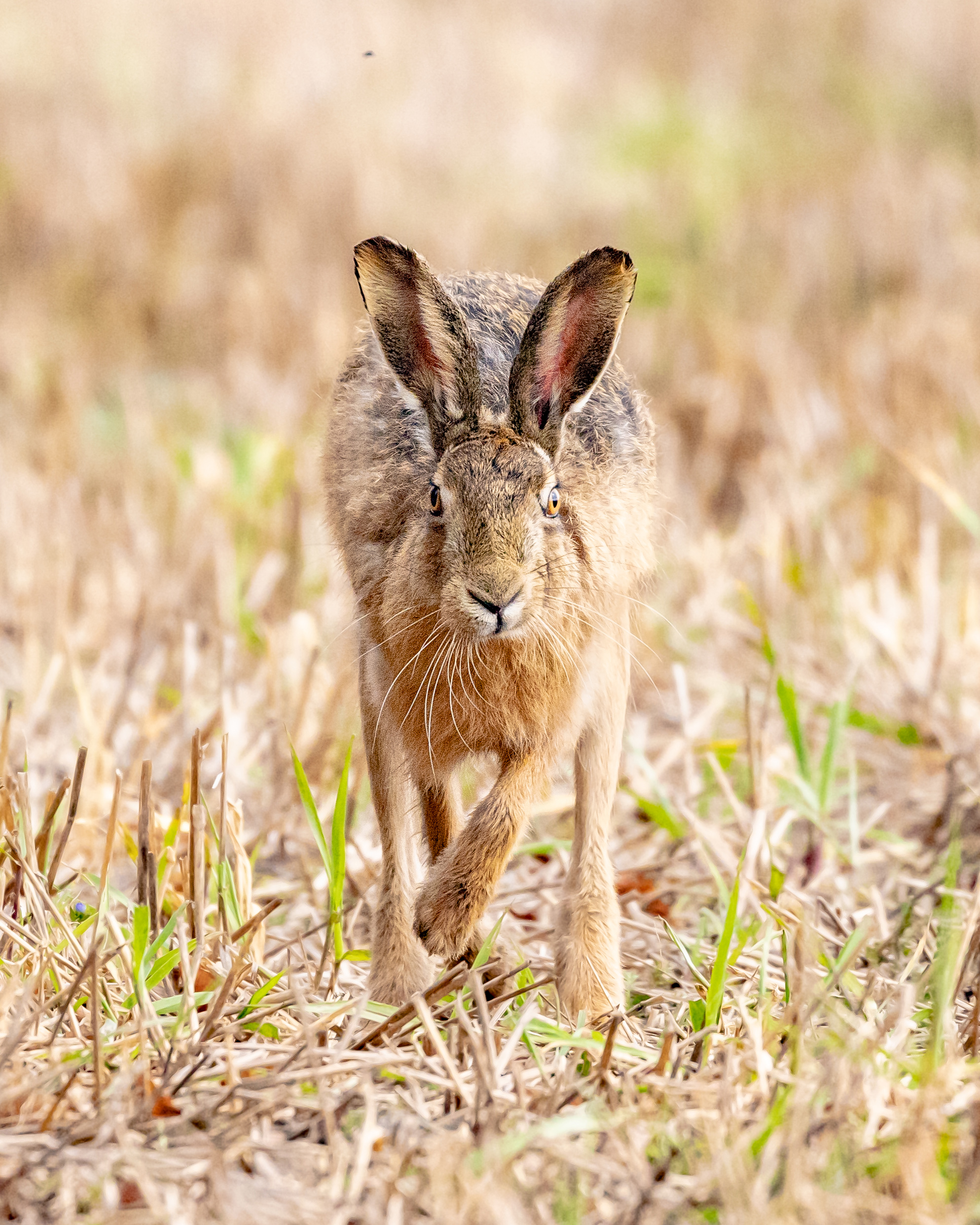
Light that molten was never going to last, but I was already covered in mud so I hung around after golden hour to see what else might happen. And before long another hare hopped over. The key with any wildlife is to let it come to you, and hares are no exception – I’ve discovered they can be curious to the point of full-out snooping. If you sit still, they often sidle over for a closer look.
My special sunrise with the hares was well-timed for Easter this weekend. Hares are said to be the companion animal of Eostre, or Ostara, the Anglo-Saxon goddess of dawn and spring. The link between eggs and the Easter Bunny doesn’t seem to make much sense at first, but one explanation comes from a bit of lapwing ecology.

Unlike rabbits, hares don’t use burrows but instead lay in scratched-out forms on flat ground. Lapwings are ground-nesting birds and often lay their eggs near a hare’s form or even inside it. Seeing lapwing chicks and baby leverets emerging at the same time could have led people to believe that hares laid eggs.

To be fair, hares are stealthy and mysterious animals, and that’s part of their irresistible charm.


You may also like

Happy Accidents

Searching for Spoons

After so much excitement, I’ve neglected my camera recently and wanted to finally spend some proper time searching for Florida’s wildlife. I’d been told about a good spot for wading birds, and knew that the inhabitants included my new favourite bird, the roseate spoonbill. I set out before sunrise and reached the water just as the sky was beginning to lighten; pinks and oranges blending with blue.

My first sighting was almost immediate. Perched on a branch overhanging the lake and peering curiously as I wound down the window was an anhinga. With both heron and cormorant-like features, anhingas spear fish under the water with their long, sharp bills. The name originates from the Brazilian Tupi language and translates as “devil bird”. I don’t quite see the devilish resemblance – I found the anhinga delightful, especially when it shook out its striped wings. Like cormorants, anhingas hold out their wings after swimming to dry them. This one looked like either a female or a juvenile, as males are jet black with silvery streaks.

IMG_9976
Anhinga

IMG_0044

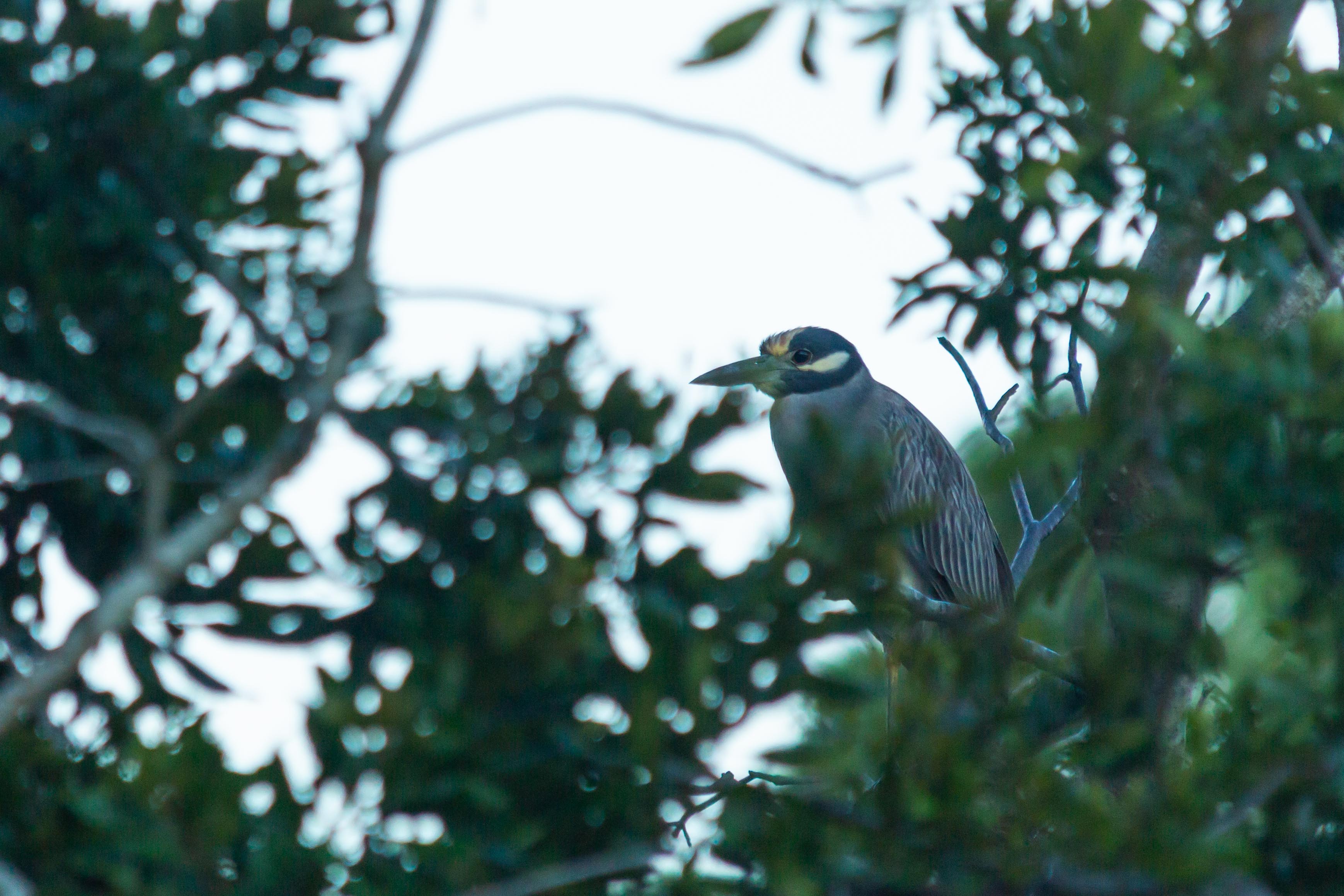
Soon the anhinga was joined by a yellow-crowned night heron, shoulders hunched down as if with cold. With a white cheek patch and a pale crown of feathers that looks more white than yellow, the yellow-crowned night heron is actually nocturnal, so I must have been really lucky to catch a late glimpse just before the sun emerged.

IMG_9936
Yellow-crowned night heron

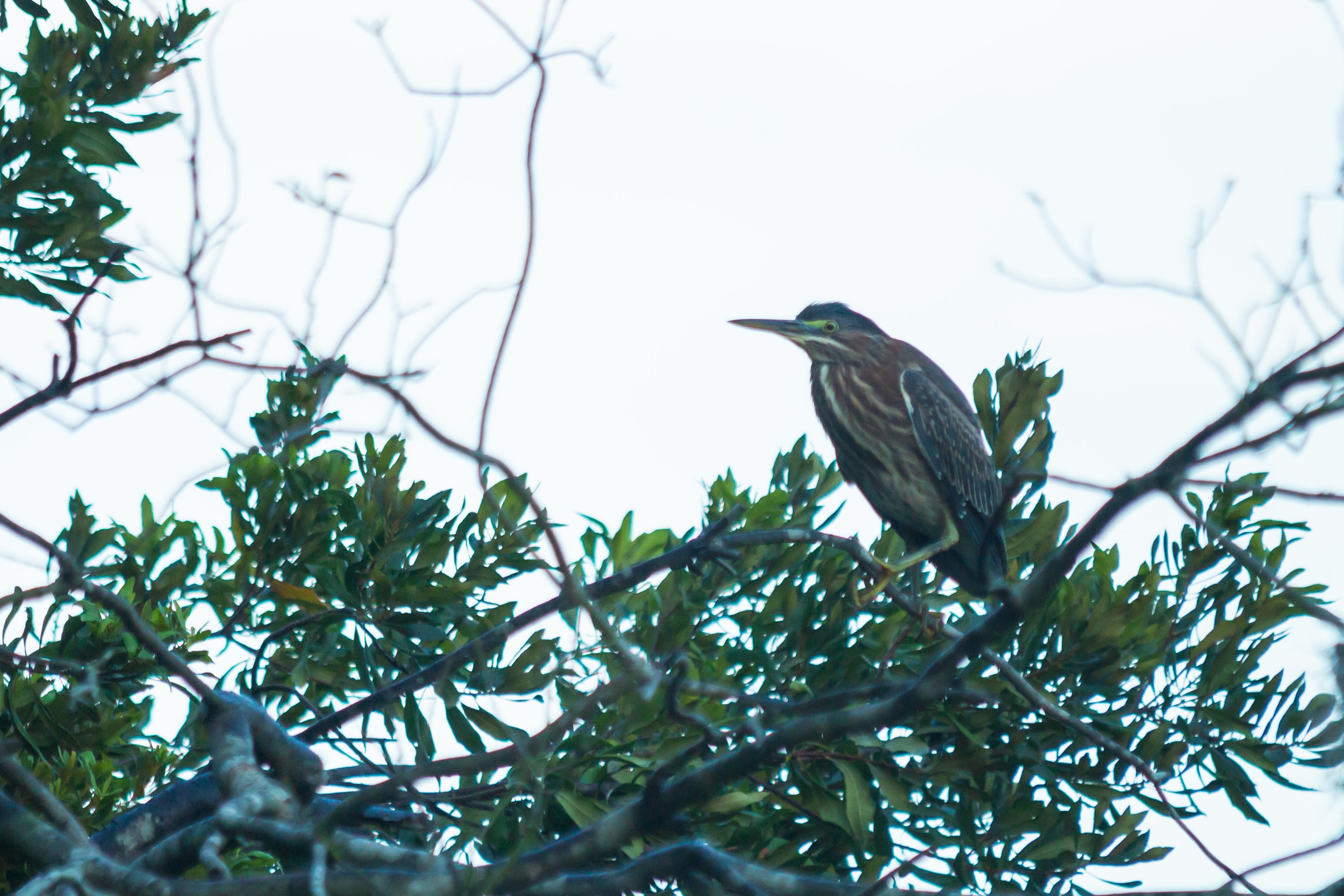
Elsewhere in the tree was a green heron, who was more brown than green so was perhaps a juvenile. Apparently, green herons are known to throw insects into the water to encourage fish to the surface, which is genius and must look amazing to see.

IMG_9938
Green heron

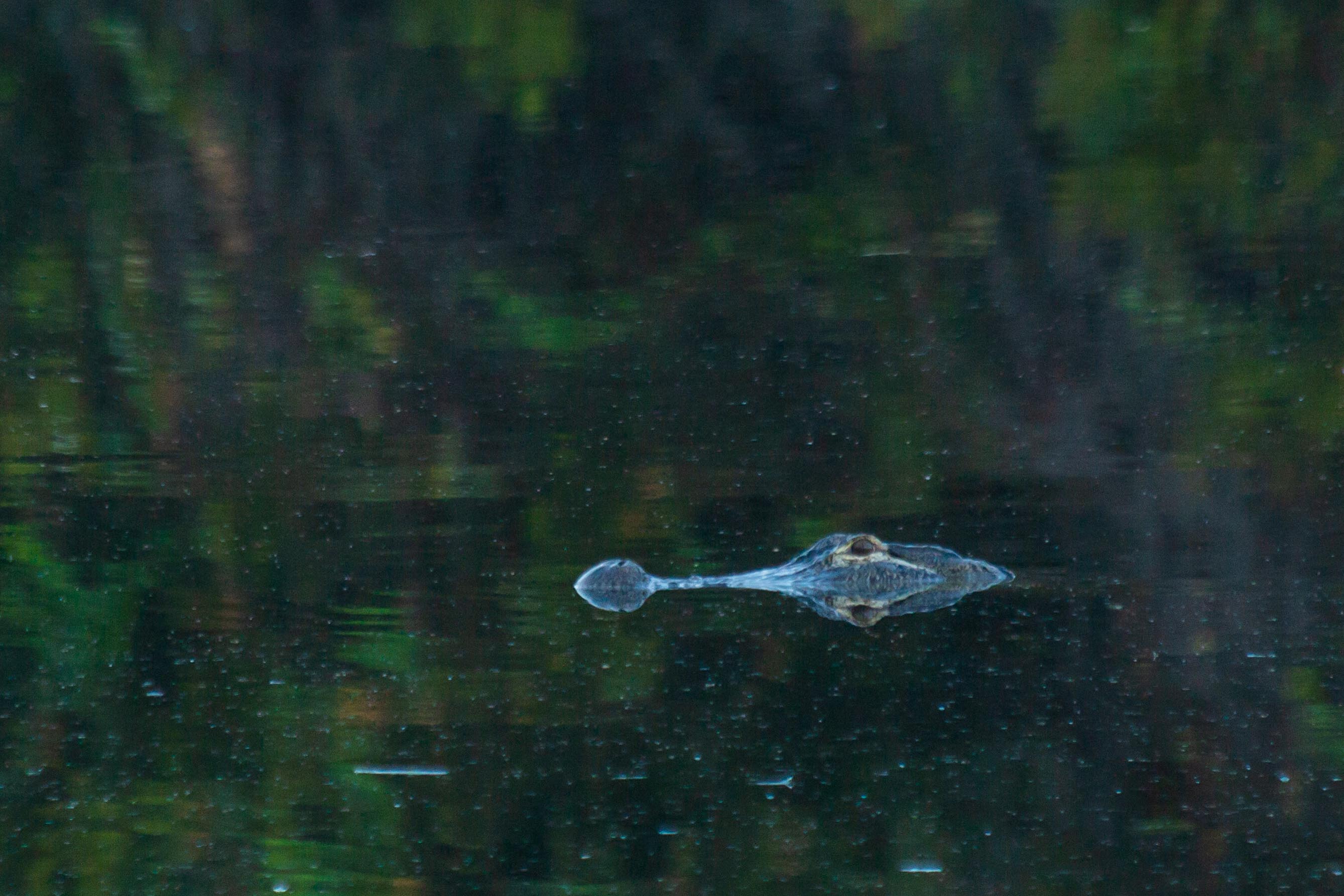
Suddenly a snowy egret burst into view, legs dangling and panicked wings flapping. There was a deep, kronking call as more birds surged upwards. Puzzled, I glanced around for signs of a raptor, when a disturbance in the water caught my eye. There, gliding without a sound, was an alligator. My first alligator! I could hardly contain myself. All I could see of it was a pair of eyes and nostrils, so I had no idea how big it was, which was perhaps more nerve-wracking than seeing the whole animal. Even from the safety of the car my paranoia imagined the alligator leaping headlong at the open window, but it just cruised out of sight and the birds soon calmed down.

IMG_9951
Alligator!

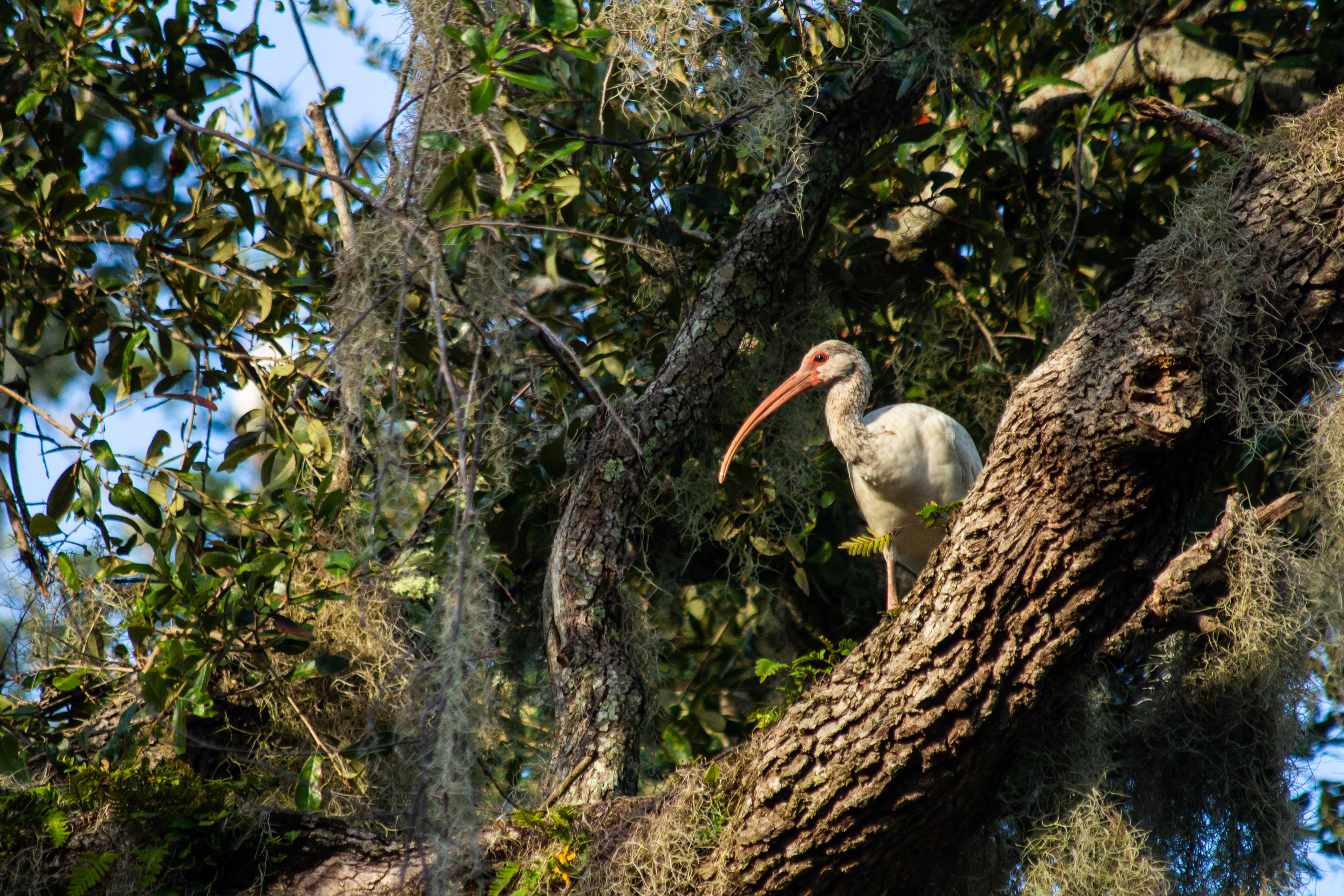
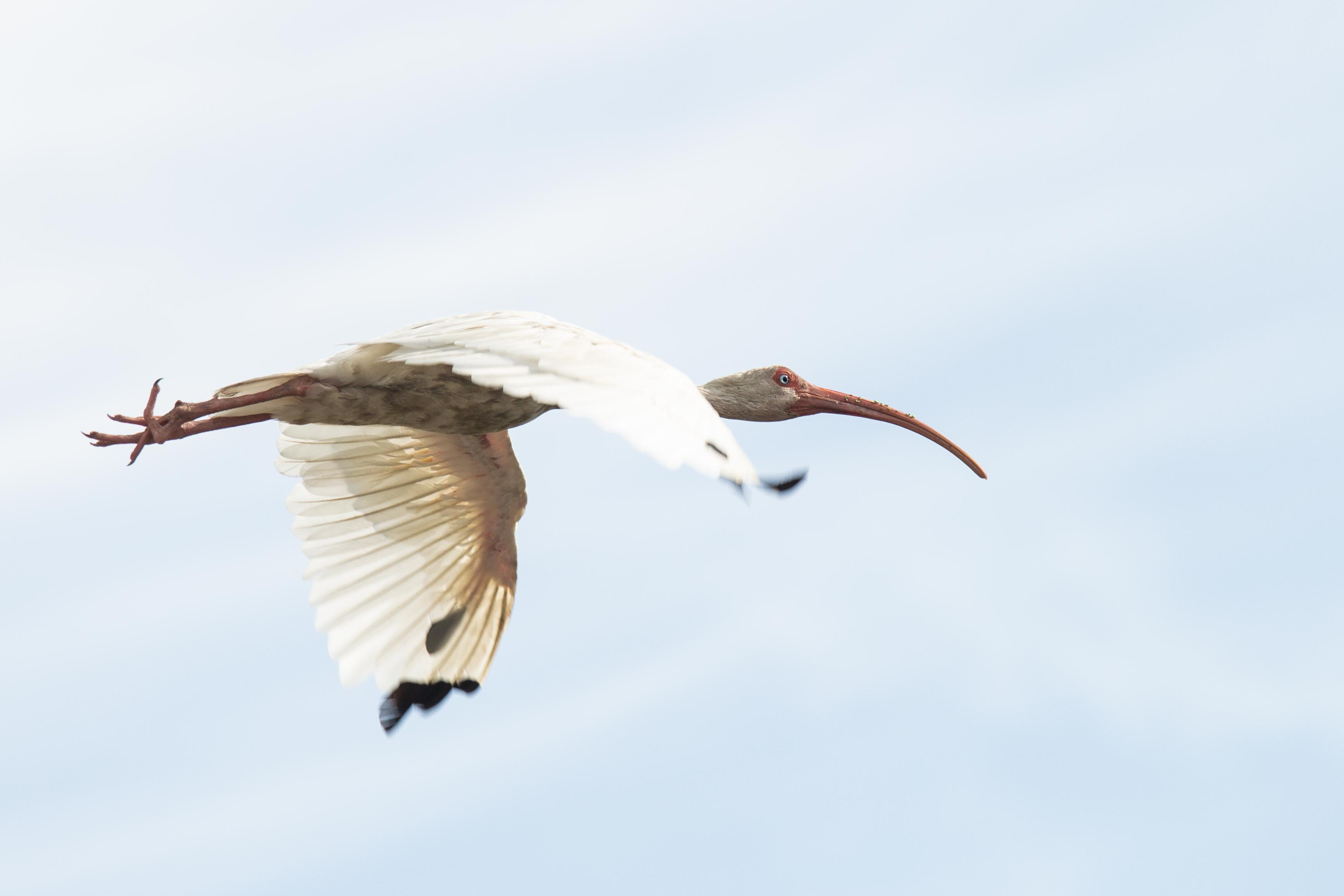
I wandered further on to try and find a spoonbill. There was a loud rustling above and I looked up to see the trees absolutely covered in white ibis; wading birds that gather in large groups all across Florida. I was spoilt for choice for photos. Although they’re not the prettiest of birds, their long, red bills still looked impressive, especially when they all took off in one simultaneous swoop. In the absence of car engines and people this early on a Sunday, the only sound to be heard was the wind in their wings which sounded so magical.

IMG_0051
White ibis

IMG_0173

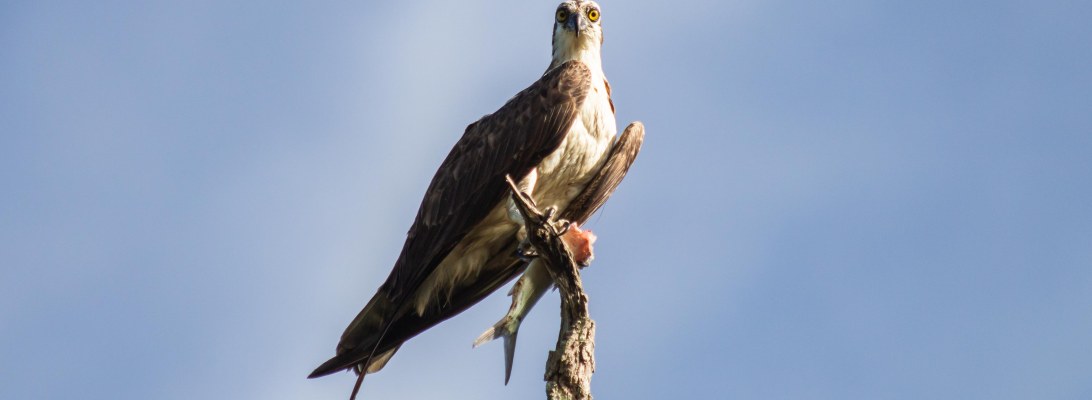
After watching them leave I wondered what had scared them off. Once again I scanned the trees for signs of a raptor and this time I found one: a stunning osprey with a fish in its claws! I’d only seen ospreys once before in Scotland, all the way across a loch that made taking photos quite the challenge. This osprey, however, was a tree’s height away and sat in a perfect patch of sunlight that made its yellow eyes dazzle. It spotted me straight away and watched as I took photo after photo. Eventually it gathered up its breakfast and took off, just as the first dog walker came into view.

IMG_0146

IMG_0138
Osprey

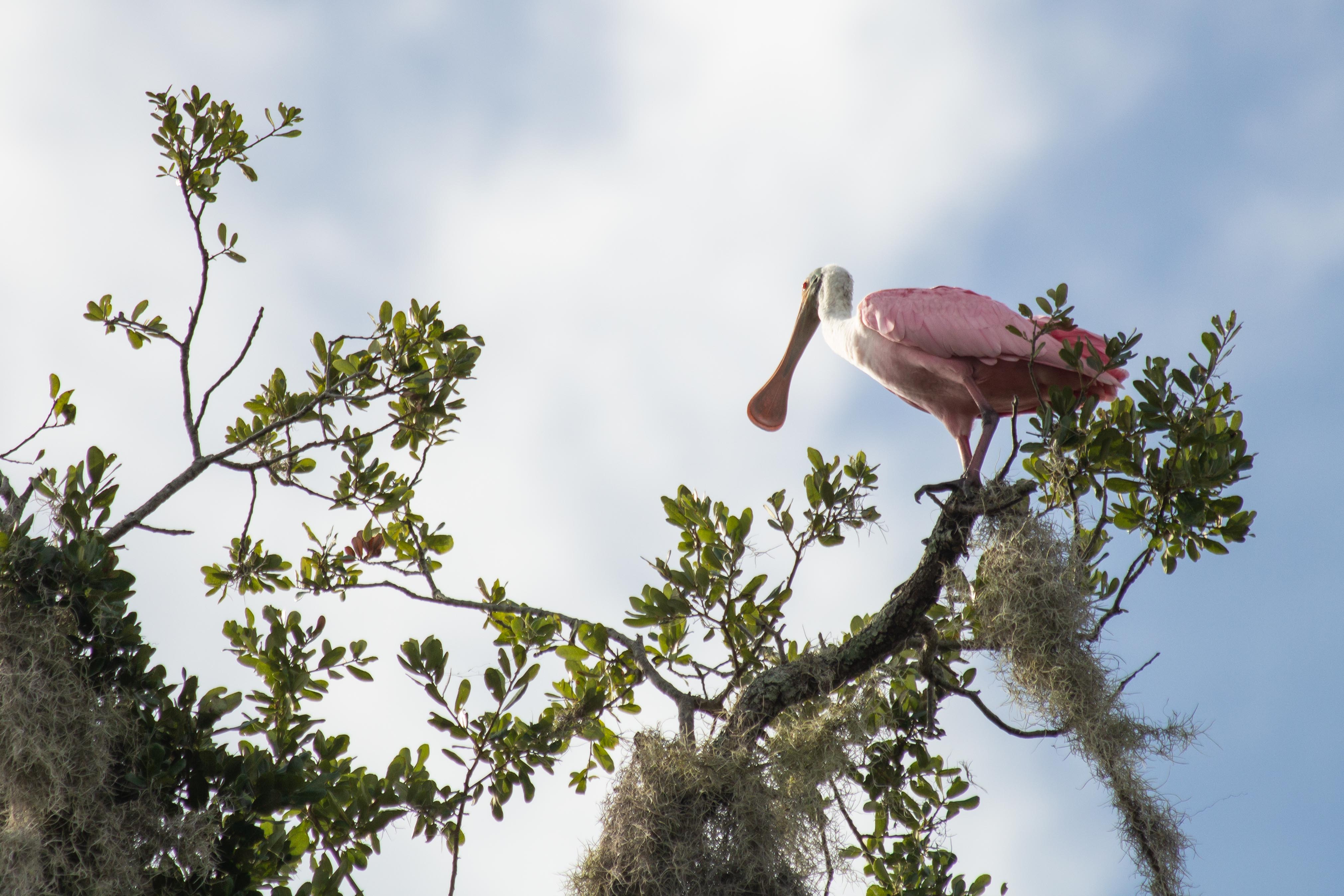
At 9:30am it was already getting too hot to be out without a hat, and my hastily eaten bowl of cereal at 6am seemed far away. I’d loved to have found my spoonbill, but having seen a bonus osprey and alligator I was far from disappointed. I’d just got back to the car and was fumbling for my keys when I glanced up, and by some miracle there was a spoonbill perched at the very top of a tree. It was the pink cherry on an incredible cake.

IMG_0187
Roseate spoonbill

IMG_0203