Troup Head


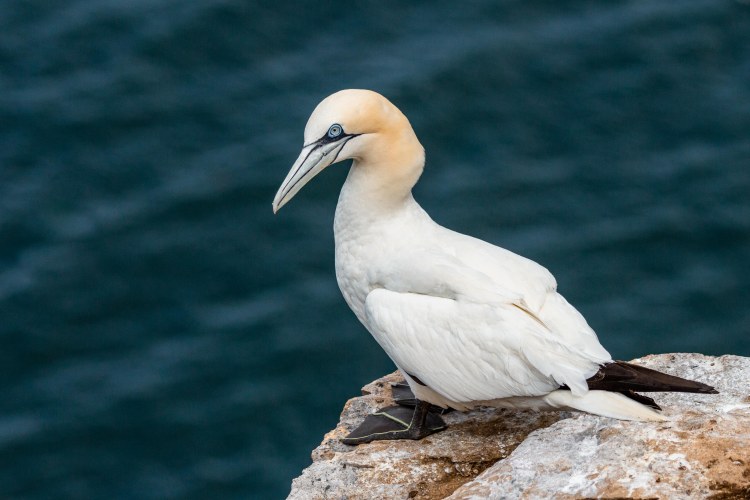
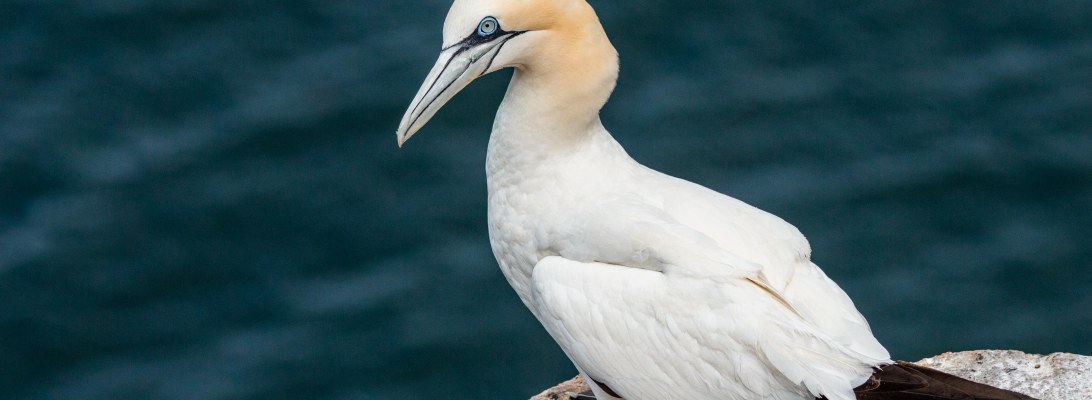
I had seen gannets a few times before; on a trip to the Isles of Scilly they had flown over the boat, and more recently I’d enjoyed watching them dive for fish near where I live in Moray. However, nothing could have prepared me for Troup Head. This RSPB site in Banff, about an hour’s drive from Aberdeen, provides nesting grounds for two thousand pairs of gannets, as well as thousands of other seabirds. During the short walk from the car park to the cliffs, both sounds and smells intensified until they reached a crescendo of squawks and guano pongs.

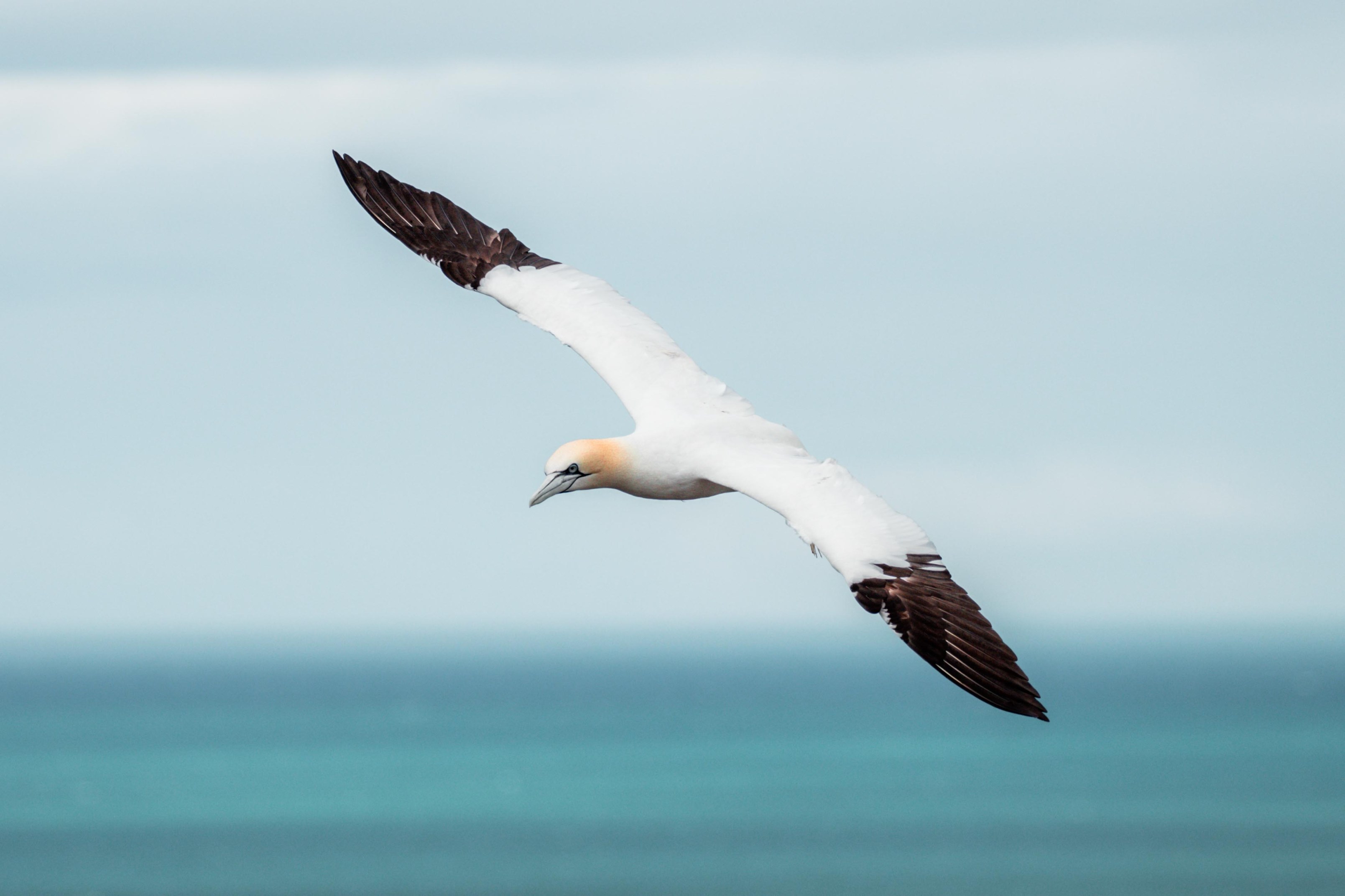
There were gannets everywhere. Without wanting to make them sound like flies, they swarmed around the cliff, gliding in deep circles as they came into land on the rocks. Many of them had chicks – currently clouds of white down with black reptilian heads. Dotted among them were the auks: guillemots, razorbills and the occasional puffin all grappling for a bit of wing room in the tight squeeze. Peering carefully down, I noticed just how high up we were. The swan-sized gannets – Britain’s largest seabird – looked like sparrows at sea level. Even the coastguard helicopter that passed by was below us. Troup Head really was a bird’s eye view.

The site became a significant birdwatching spot when gannets began to colonise it in 1988. Troup Head is now Scotland’s largest mainland gannet colony. We spent seven hours wandering along the track, shuffling across the tussocks to get the right vantage point for photos. Gannets came sweeping in to land in an endless queue, many suspended in mid-air and bobbing in the wind. There was something very duck-like about the way their webbed feet stuck out to the sides, and more than once a bird would crash-land quite unceremoniously with a ruffle of the feathers.

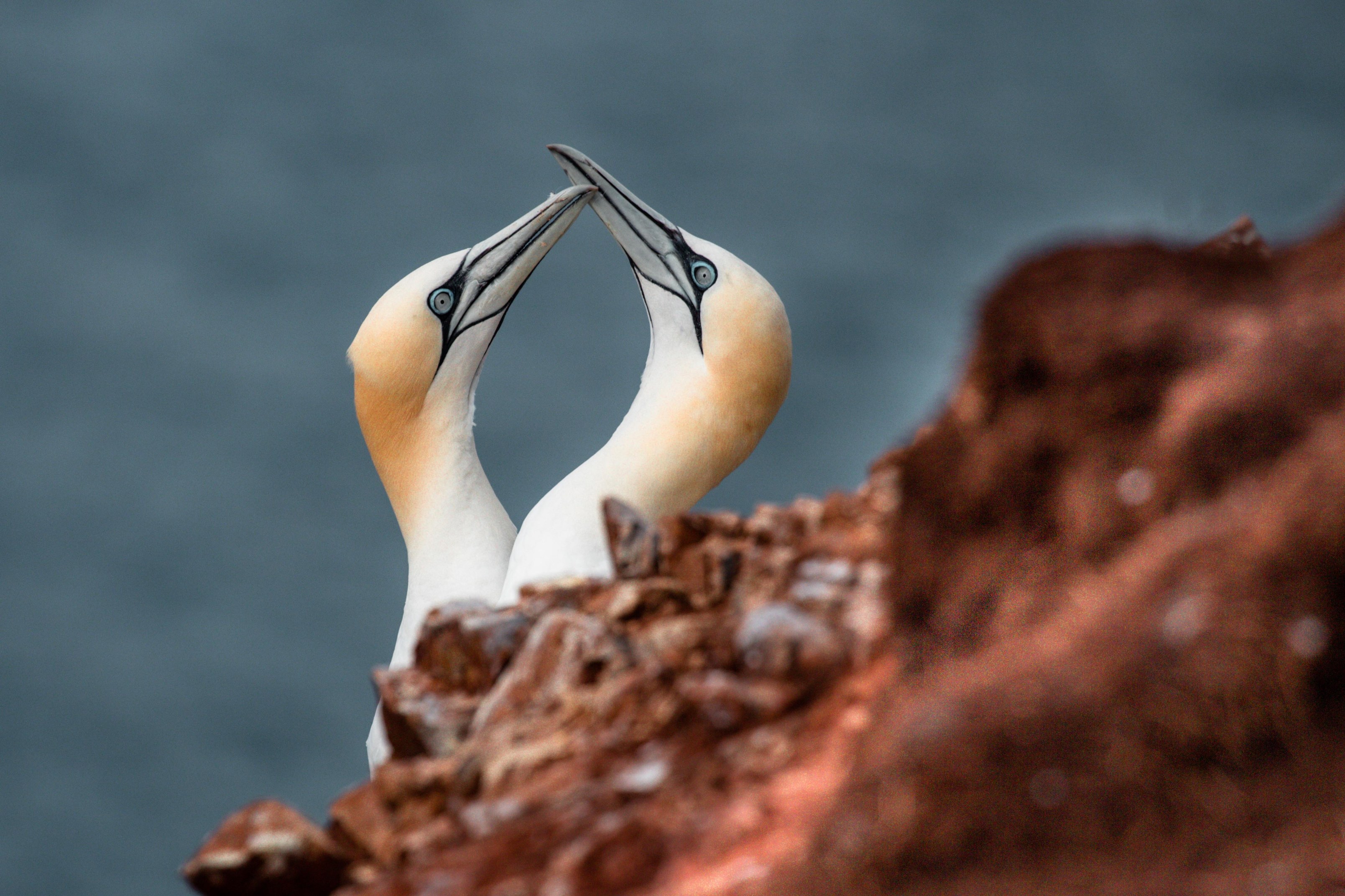
It was interesting to see lots of gannet behaviours up close. The birds pair for life and return to the same nest site each year with the same partner. To cement their pair bond, males and females will ‘fence’ together, clicking their bills from side to side and mutually grooming one another.

‘Fencing’

To ensure that one parent remains on the nest at all times, a gannet will stretch its neck and stare straight upwards in a pose called ‘sky pointing’, which signals to its mate that it is about to take off.

‘Sky Pointing’

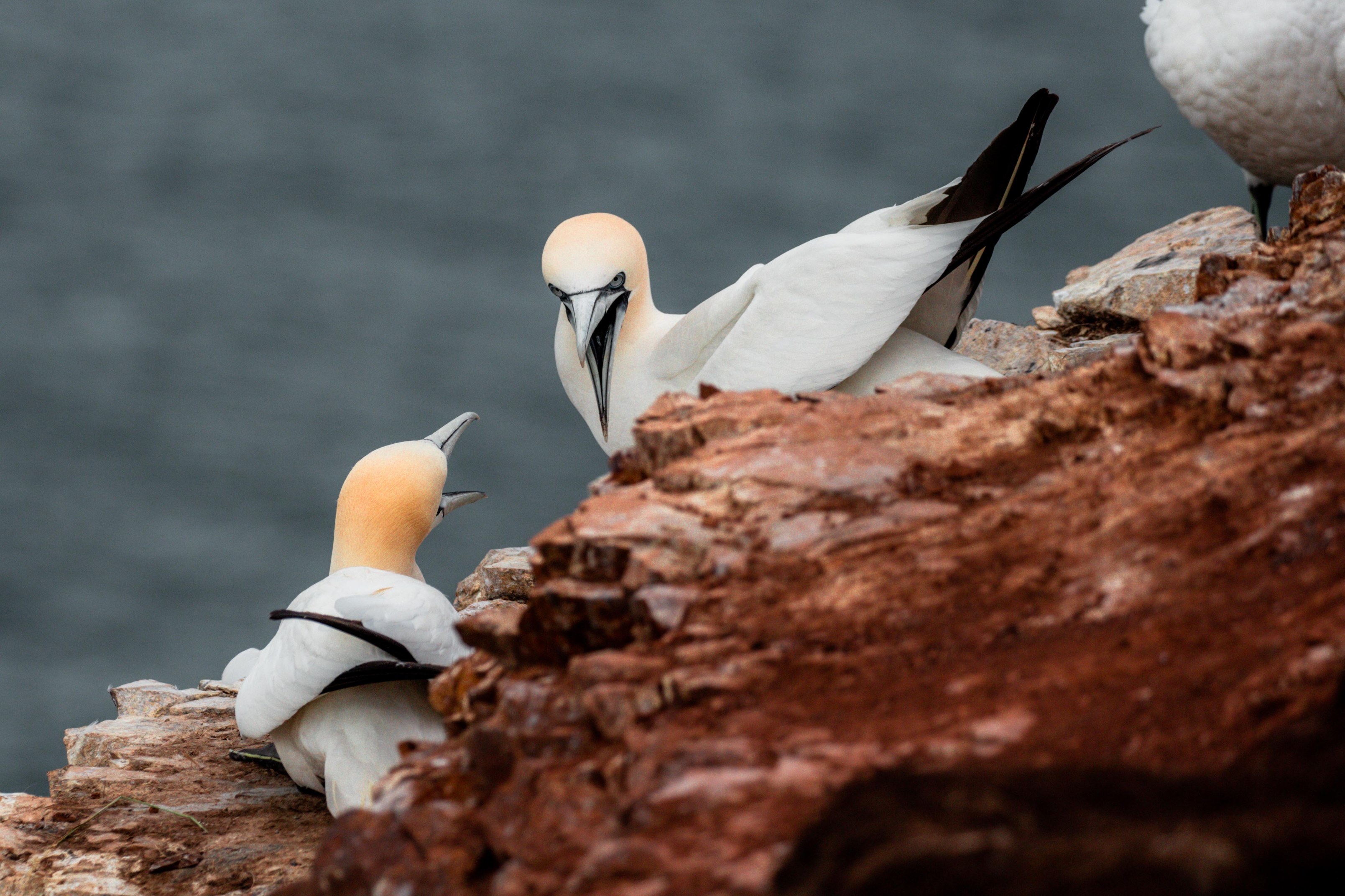
With so many birds on one cliff, it’s inevitable that there will be disputes over space. If a gannet gets too close to a neighbour’s nest, there is a display called ‘menacing’, where the birds will open their bills and lock them together in an attempt to jostle each other off the cliff.

‘Menacing’

While some quarrels are short-lived, others develop into full-blown fights, and with such formidable bills these can be aggressive.  

Gannets have been a favourite of mine for many years, so to see such a vast colony so full of activity was a real treat. I was even more impressed that I didn’t get pooed on once!

Wren Family


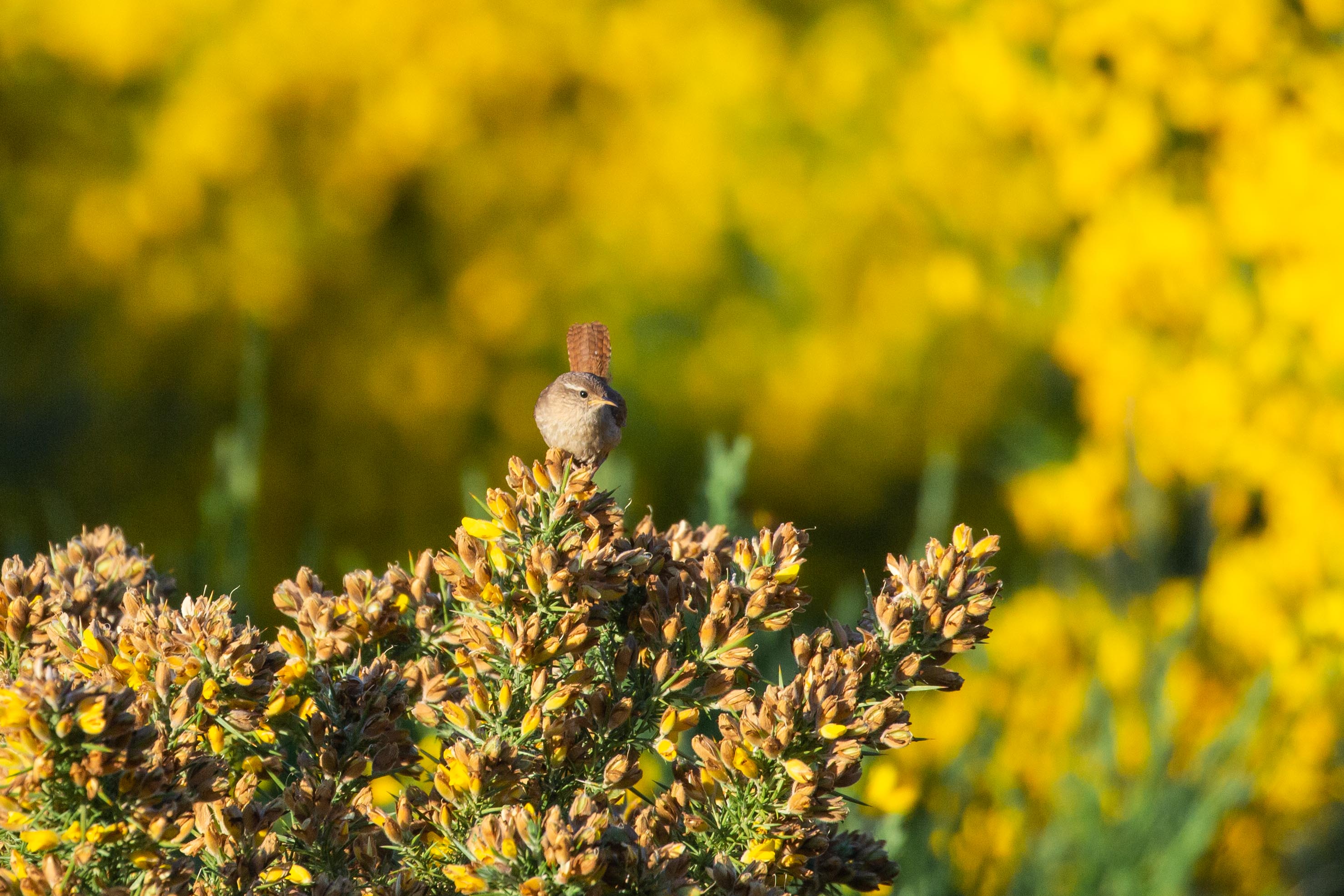
Earlier this week I went looking for badgers. Unfortunately I didn’t see any but I wasn’t discouraged. Any foray into the natural world is dependent on good timing and a healthy dose of luck. Besides, even if you don’t manage to see what you set out to find, there’s nearly always a surprise and this evening was no exception. As well as a brown hare, a very well camouflaged roe deer and pairs of siskins and greenfinches, I met a bubbly family of wrens living beneath the eaves of a tiny shed.

There were two slender adults and five golfball chicks all hopping from the shed to nearby trees and back, the latter being particularly vocal and standing with their beaks wide open demanding a snack. Wrens are notoriously bold and easily one of the noisiest British birds in relation to their size so they weren’t at all afraid of me; in fact they continued their foraging quite happily while I sat below with my camera. Of course it would have been lovely to see some badgers, but it’s just an excuse to go back and see what surprises I find next time.

IMG_5191

Day and Night in the Forest

IMG_4699-2

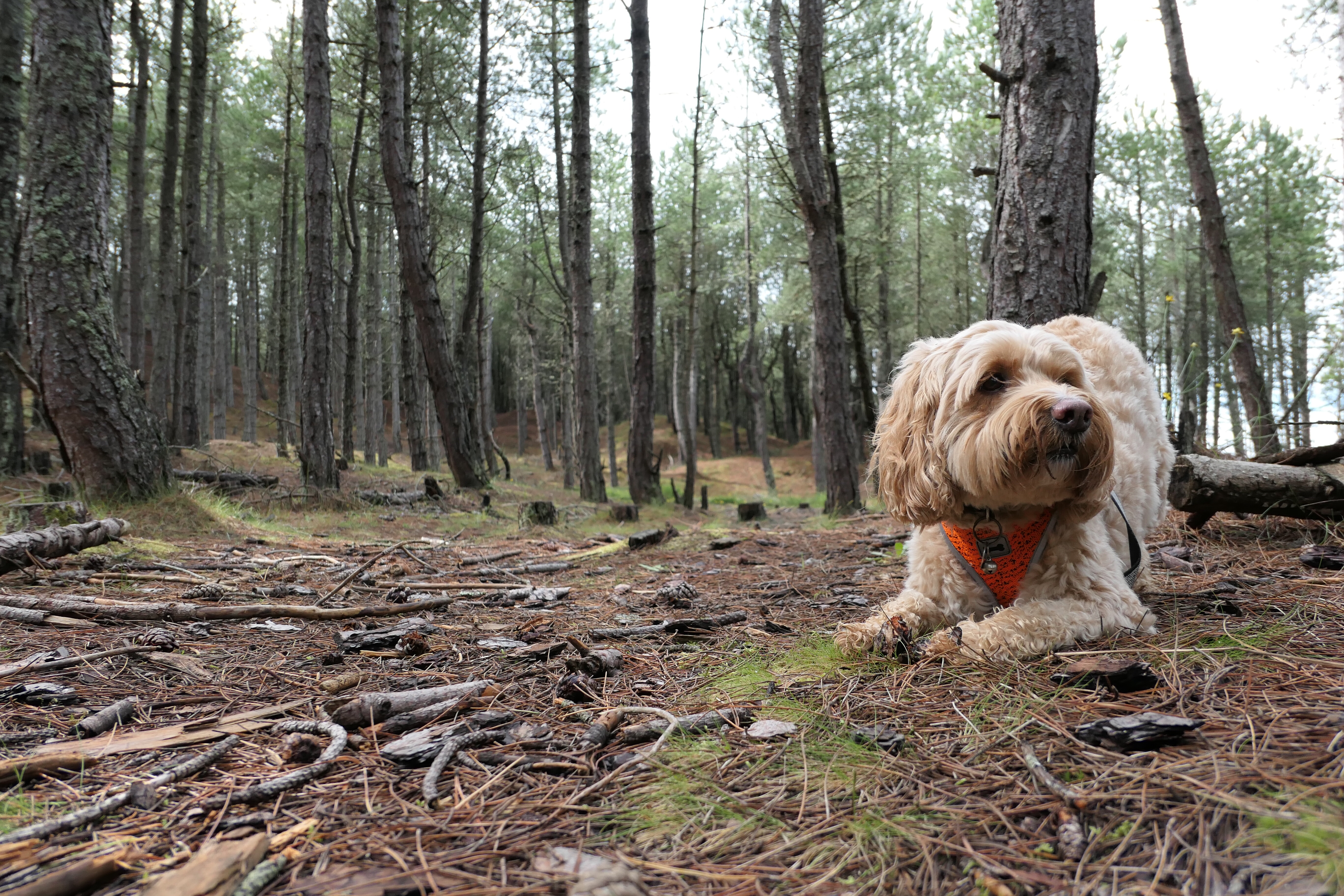
With all the dolphin excitement recently, I’ve been sticking closely to the shore on my walks and neglecting the forest. I’ve always been worried that I’ll walk for miles and then get an alert saying there are leaping whales in the complete opposite direction.

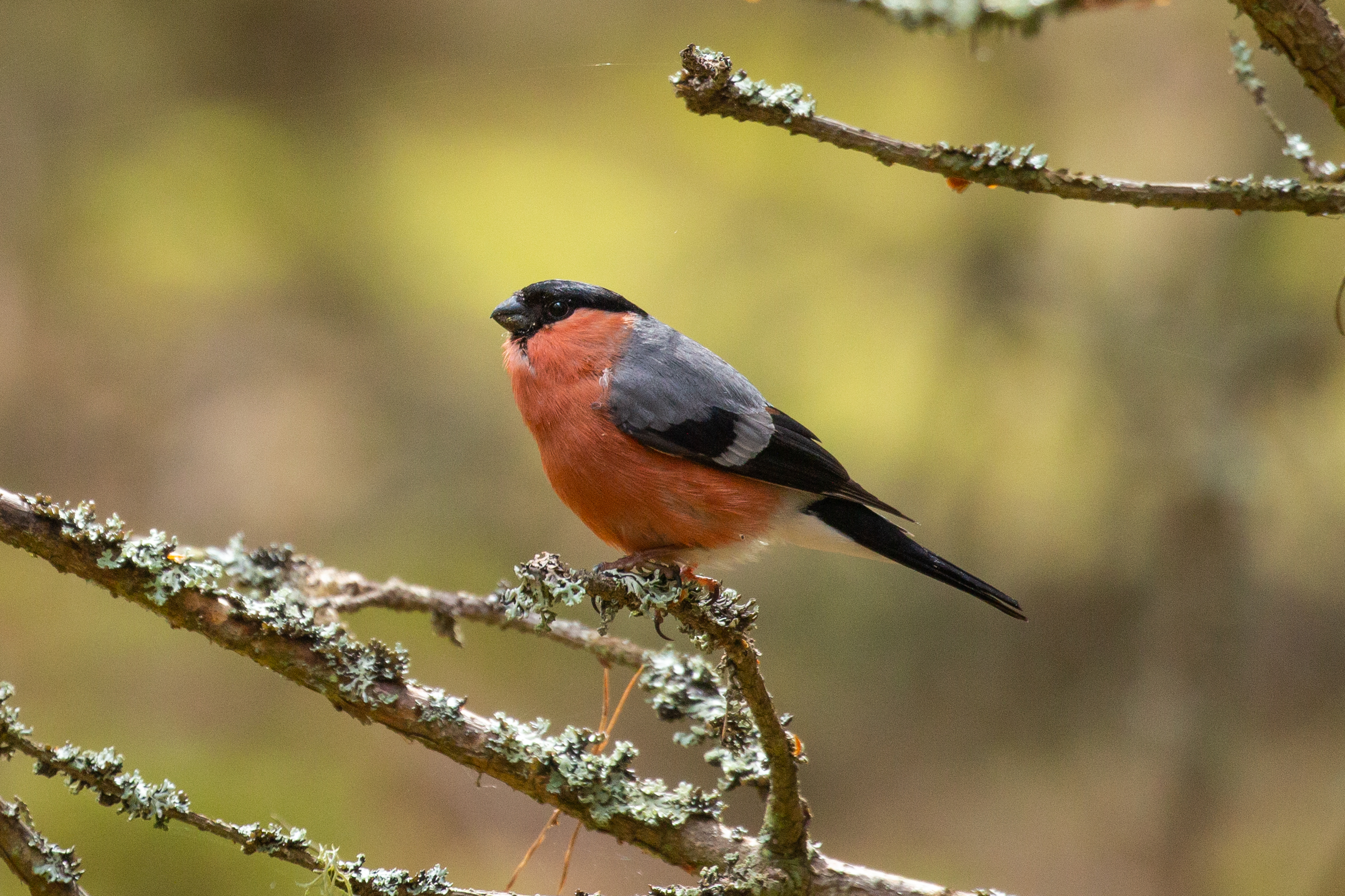
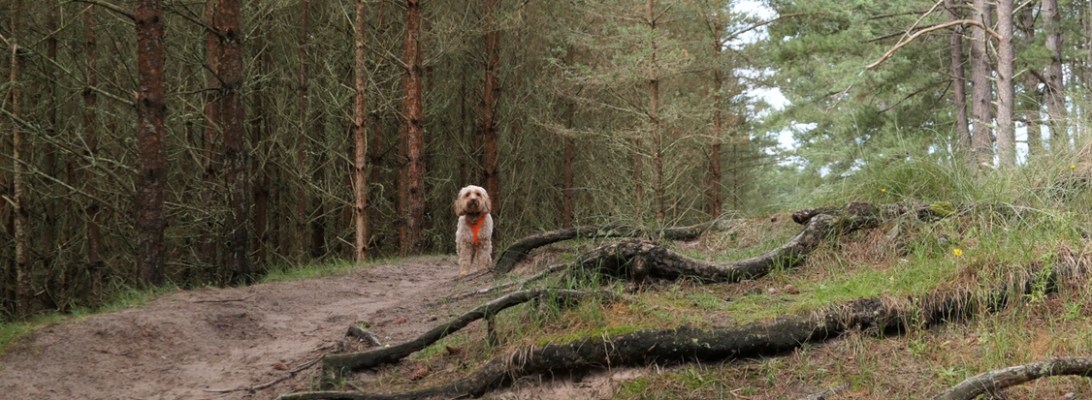
But, the other day I decided to take a chance and walk the dog in the forest for a change. Within five minutes, I saw a flash of rosy red and my heart did the familiar jolt that happens whenever I see something unexpected. And this was certainly unexpected: a pair of bullfinches not twenty feet away from me.

I’ve been trying to get a decent photo of a bullfinch for years. They’re one of my favourite birds but I’ve only seen them a handful of times. On every occasion they’ve either kept their backs to me or been concealed behind branches. I’ve taken a few blurry shots that prove they were there, but they’ve never been good enough to post. Now I was being treated with both male and female. While the male is more conventionally striking, I find the dusty brown plumage of the female just as beautiful. I just love their short, stubby bills, which are perfect for cracking hard seeds.

During the entire encounter my dog was amusing herself elsewhere, completely indifferent to my excitement. I stayed with the bullfinches as they hopped around logs and fluttered up to low branches. I could have sat and watched them for hours, but after a while I left them in peace.

IMG_4692

Still buzzing from my sighting later that day, I decided to go back to the forest for an evening walk. There would be fewer humans and hopefully more animals to see. Roe deer were another of my favourites and a few weeks ago I saw a flash of brown fur as a doe pelted past me. I was keen to get a good photo of one – they were another animal that I’d never managed to get a proper glimpse of. So, despite the warm evening I wrapped up and headed out again. The sun wouldn’t be setting until 10pm so I had plenty of daylight left. In fact, it was prime golden hour and the broom – a shrub similar to gorse but without the spines – was glittering.

IMG_4780

It seemed I hadn’t run out of good luck. After walking for less five minutes I saw movement through the trees. Four of the skinny saplings weren’t trees at all but slender brown legs. I froze where I was, conscious of every snappable twig by my feet. She was moving slowly, leisurely. I dared myself to tread up a grassy mound for a slightly higher viewpoint. There was so much dense ground foliage that I couldn’t see her very well. She headed to my left, straight towards a clearing between two columns of trees where I’d be able to see her perfectly. I lifted my camera slowly to my face and waited. When the moment came, the click of the first photo caught her attention and she turned to face me. For about ten seconds we stared at one another. Her pricked ears were huge satellite dishes on an otherwise skinny face, punctuated by large eyes and the characteristic roe moustache. The light was fading and I stretched to a slightly higher ISO than I would have liked. I knew the images were going to be a little grainy, but my deer was posing magnificently.

Eventually, human voices cut through my moment (of all the 1700 acres they could have chosen!) and the deer darted back the way she’d come. With such a slow shutter speed I had no hope of capturing her at that pace, so I just watched her springy legs disappear into the trees.

IMG_4768

Inspired by such an early sighting, I pressed deeper into the woods, keeping my ears open for any unusual sounds that I wouldn’t hear during the day. The fantastical idea of pine martens popped into my mind but I pushed it away. To see a wild pine marten on my first evening forest walk would something close to miraculous. But a fox or perhaps an owl might be more likely, so I stayed as quiet as I could and did my best to avoid noisy leaf litter, although my stealth skills left a lot to be desired.

It’s astonishing how soothing a forest can be, if you let yourself align to its peace and quiet. I regularly stopped to listen to the birds, which at 9pm were still going strong. Far off, a blackbird perched on an overhead wire. If I closed my eyes, I could easily have been sat on my garden porch in Hertfordshire. A blackbird used to sing in the holly tree every evening without fail, and the sound became a firm part of my childhood. Elsewhere in the forest tonight was a chaffinch’s downward running tune, a wren’s bolstering trill and a chiffchaff whistling its name. I took recordings on my phone of all the assembled voices.

I walked and sat in the forest for three hours, until eventually at 10:15pm I began to feel the chill. Even so, the light was close to what it had been when I arrived, just without the bright sun – everything was lit with a milky glow that carried on long into the night. Moray is situated on the same latitude line as Gothenburgh in Sweden so during the summer months, the days last much longer and nothing goes completely dark. It’s a phenomenon I haven’t gotten used to yet. Many nights recently I’ve gone to bed and it’s still been light outside.

IMG_1699
Taken at 10:17pm

I decided to call it a night. Looping back the way I’d come, I headed down the straight track that was lined on both sides by thick clouds of broom. I glanced briefly through a gap in the foliage and saw a face. Freezing, I stepped slowly back and came eye to eye with a male roe deer. My fingers itched for my camera, but there was no real chance of getting a photo. I could barely make him out with the naked eye. Most of his body was shrouded in shadows cast by the trees, but his face and antlers were dimly lit enough to spot. Again, we stood eyeing each other for a few moments before he took off, bounding down the ditch and up again. Then a sharp, gruff bark broke through the trees, which I realised was the deer! I’d never heard their barks before and couldn’t believe how canine they sounded. I wondered now if perhaps I had heard it and just dismissed it as a dog. It was haunting, especially in an ever darkening forest, but I loved it.

When I broke out of the trees and onto the open field, the spell broke. I felt a physical difference between the forest and civilisation. For hours I’d immersed myself in a place where people weren’t the most abundant presence and it was unbelievably refreshing. I decided, during the summer at least, to make my evening forays a regular thing. Daytime walks are good – I’d seen my bullfinches that morning after all – but there’s something far more mysterious and captivating about the night.

Doe, A Deer

The first wildlife I encountered when I crossed over the bridge into Tring Park was the grasshoppers. They were everywhere, their electric buzz sounding from every direction. The pale grass in which they were concealed was jungle-thick with a million places to hide, but a particularly noisy individual drew me in and I knelt on the grass and studied the ground intensely. Suddenly I found the culprit, rubbing its legs together with fierce ferocity. I just managed to take a few quick photos before the insect propelled itself into the air, leaving the leaf bouncing with the impact.

IMG_4112

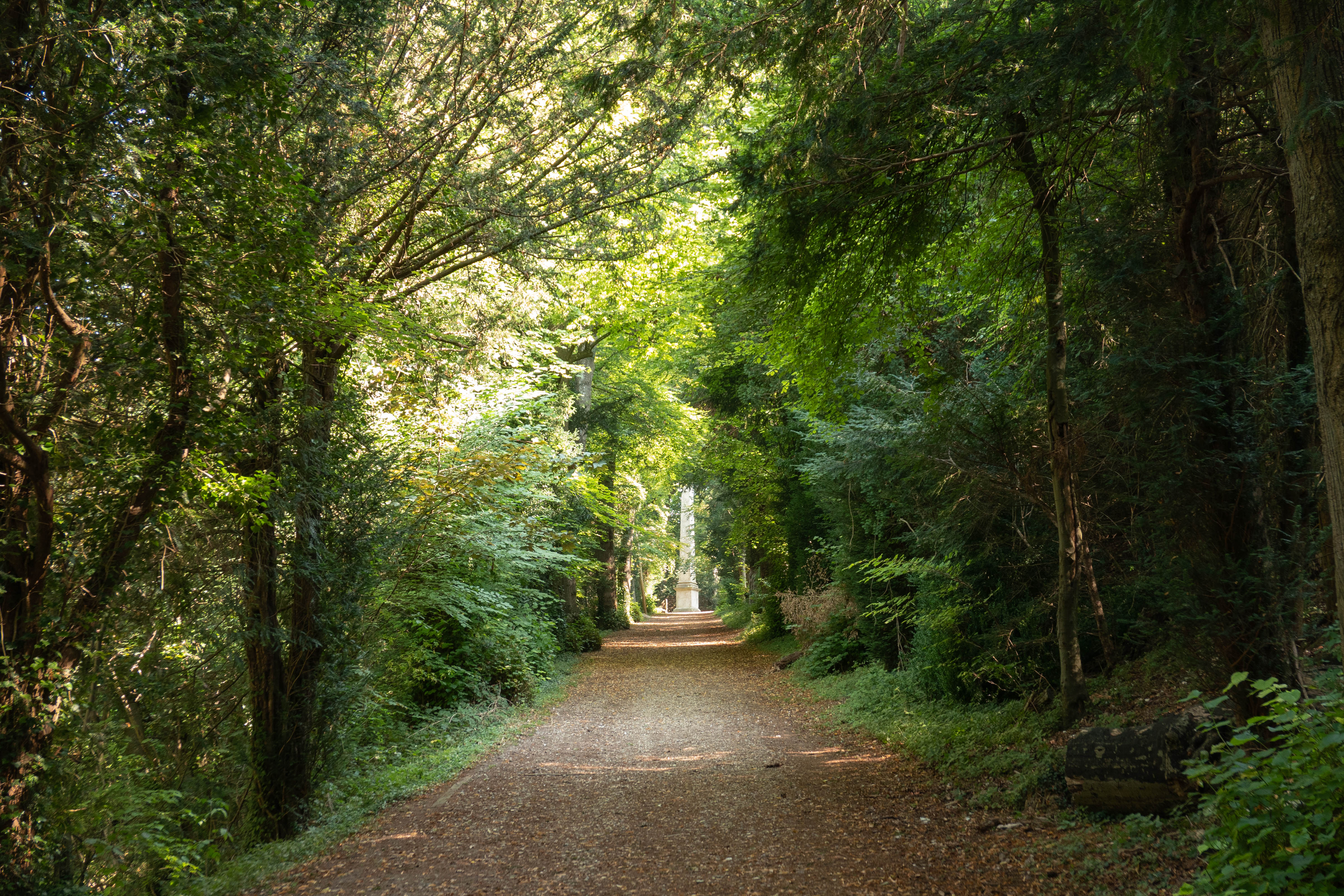
As stunning as the open parkland was – with butterflies flitting through the grass and red kites wheeling in slow circles overhead – I sought the shade of the forest, already beginning to perspire in another bout of sweltering August heat. The cooling cover of the trees was instantaneous and I made my way up the hill. Sloping overhead from left and right, the trees sighed as a breeze whistled through them. The canopy was a blend of greens, browns, oranges and, where the sun was shining, molten gold. Further up the hill I found a small clearing speckled with sun and shade and set down my blanket. Blue tits churred up in the trees and a distant jay screeched into the silence.

The first activity came from two grey squirrels who came darting at full pelt straight through the clearing. One continued right past me but the second wasn’t nearly so trusting. Hopping onto a nearby tree, the squirrel studied me intensely. After a few moments’ deliberation, it decided to take the long way round and shimmied up the tree in fragmented bursts, pausing every so often to stare again, bushy tail twitching. I’d obviously plonked myself in a squirrel playground and this one was making sure I knew it.

P1000474

After the branches had stopped shivering from the squirrels’ antics, the forest fell silent. My eyes kept catching on long lines of spider web that sparkled each time the sun touched them. They were mesmerising; delicate gossamer threads lifted by the breeze. Behind them, voices permeated through the forest and a group of dog walkers marched past, each dog’s nose on overdrive with all the enticing aromas. Another squirrel foraged close by, exploring the leaf litter in small hops and tail twitches.

Every so often a single leaf would fall, twirling slowly to the ground like confetti. It seemed that no animal had disturbed it, so it must already be the beginning of autumn. Soon, the leaves would explode into warm colours and tumble to the ground before the first frost.

P1000495

There was another rustle to my right and I glanced up, expecting to see another dog walker or jogger. An involuntary gasp escaped and I watched in disbelief as a female roe deer headed straight towards me. She briefly disappeared behind a tree and when she emerged suddenly spotted me, stopping dead in her tracks three metres from where I was sat. For several long moments we stared at each other, both equally incredulous. I willed her not to be scared of me but she was naturally rigid with unease. My camera lay right next to me within easy reach, but I knew the second I moved she would bolt. So I ignored my photographer’s instinct and stayed frozen.

We continued to gaze at each other and I took the opportunity to admire her beautiful face with its large, black nose and literal doe eyes. Eventually she skirted around me, falling back to a safer distance and emerging onto the path, her elegant legs moving in long strides. As she retreated I grabbed my camera and snapped just before she disappeared, although of course my real photo opportunity was long gone.

P1000510
Proof that it happened!

There comes a time when an encounter is worth not getting the picture and I believe that was one of those times (or so I kept telling myself afterwards). Not only would reaching for my camera have startled the deer unfairly, but it would have undoubtedly shortened my time with her. For those few precious seconds I ignored all distractions and savoured the thrill of engaging with a wild animal, especially one as naturally wary as a deer. Experiences like that don’t happen every day and sometimes it’s best to simply be in the moment, even if you pass up the possibility of a killer Instagram post.

Long after the deer had gone I buzzed with excitement. The afternoon was warm but goose bumps had risen on my arms as I sat relishing the encounter. I’d always been captivated by the elegance and composed beauty of deer. In a way I found them near mythical. Despite their supposed abundance I very rarely see them, so to experience one so unexpectedly close and without any warning was exhilarating.

Birdfair Begins!

Once I’d pushed my belongings through the campsite in a wheelbarrow, I began the head-scratching task of setting up my tent. I didn’t have much camping experience, but after a practice in the garden earlier in the week I was feeling confident. There was a brief tussle with a stiff breeze, but soon I had everything pegged down and in location. I was in business.

I straightened up to admire my handiwork and locked eyes with a cow twenty feet away, separated from me by a wire-thin fence. I wasn’t entirely thrilled with my neighbour for the weekend and eyed her suspiciously. I’d always been a little wary around cows – a few years ago I’d been crossing a field full of them, which had unfortunately been unavoidable, and when I was halfway across the herd started lumbering towards me at full speed. They say you shouldn’t run from cows, but I had vaulted over that fence with the steely determination of a long jumper. Luckily, this one didn’t seem like she had it in for me, and only stopped long enough to urinate before plodding back towards the herd.

Once everything was in order, I sat in my camping chair and admired the view. The setting sun cast a pink blush over Rutland Water. Although this campsite was slightly further away from Birdfair than the main site, this one had far superior views, not to mention it was blissfully quiet. House martins were out in force, plucking insects from the air and plunging in graceful loops. A little further away a kestrel was hunting, body suspended motionless between two rapidly beating wings. In the stillness, a gaggle of chattering geese passed overhead, but they were too far up for me to recognise the species.

I couldn’t wait for Birdfair to begin. This year would be my third, and I loved being a part of such a prestigious and important event in the wildlife calendar. It’s wonderfully indulgent for bird nerds like me – an impressive gathering of thousands of naturalists, conservationists, photographers and more, not to mention a dizzying range of things to see and do.

Once the sun had set, leaving behind an evening chill, I retreated to the warmth of my tent, snuggling up in my sleeping bag to get a good night’s shut eye in preparation for the first day of the fair.

Arriving in Madrid

I thought I was reasonably calm about staying in Madrid by myself, but on the train to Gatwick I felt sick to my stomach. After the stressful ordeal of flying to Florida I thought this would be a doddle, but then again I always panic when I travel. I lost count of how times I checked my camera, purse and passport were still in my bag. I knew I wouldn’t be truly relaxed until I checked into the hotel.

I wanted to make this trip the best it could be. Initially I had designed an elaborate agenda for each of the four full days I was in Madrid, pretty much hour by hour, but on reflection I decided just to list a few things in each district that I wanted to see and keep the rest of the time free for happy accidents. Ultimately it was supposed to be a holiday and if I dashed around cramming everything in I would come back needing to book another. There was also the heat. It was over 30°C all week, day and night, and the last thing I wanted to be doing was frogmarching around Madrid ticking off my wish list. I was embracing a little spontaneous.

The flight was delayed by nearly an hour. While we were sat in our seats, the pilot announced that another plane had been parked in their spot and Gatwick’s announcements had been “a mess”. It was nice to hear he was frustrated too. At least I didn’t have a connecting flight, but it meant I had to gaze outside at muggy drizzle for a while longer.

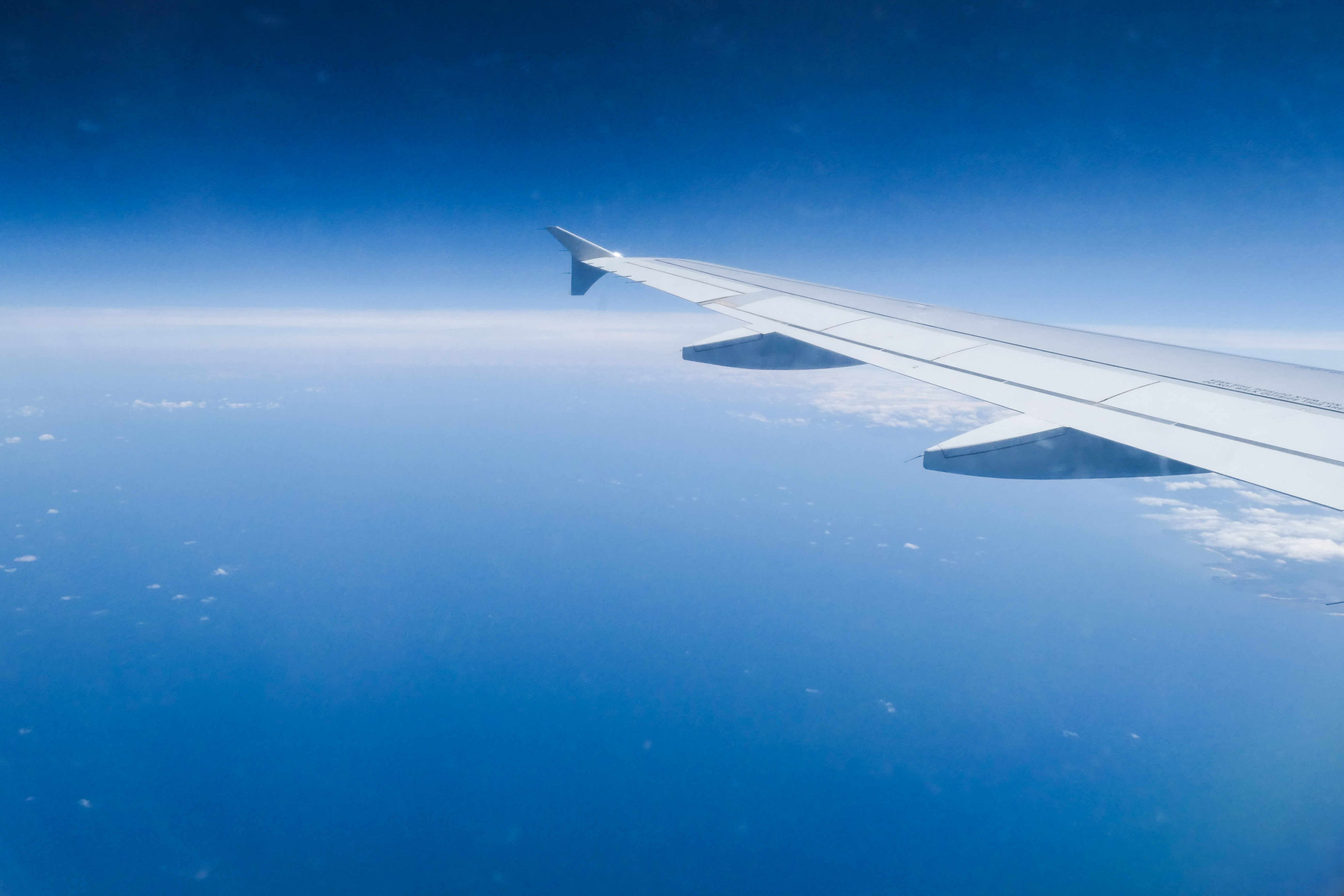
Eventually we took off and it soon became too bright to look out the window. When the clouds parted, the landscape stretched out in a never-ending blanket of blue; ocean blended seamlessly into sky with the horizon nowhere to be seen. A plane passed us, which was a bizarre sight that I’d never experienced before. It looked minuscule and quite surreal as it zoomed back the way we’d come, soon disappearing out of sight. It seemed as small as a bird flying alongside a car.
P1000116

Soon we left the ocean behind and land took its place: a spectrum of browns and pinks swirled in patterns like a gigantic marbled ink painting. Pockets of civilisation sat amongst a jumbled jigsaw of fields, their winding roads linking them in a complex web.

We sank lower and my ears popped. The sandy browns transformed into the greens of a vast expanse of forest, split into dead straight and uniform blocks by white boundary lines. All the while, bulging cumulus clouds slid slowly by. At times they covered the ground completely, puffing up like a worldwide bath full of soapy suds, their dark shadows blooming below them.

After so much open countryside, Madrid sprang up unexpectedly. Large tower blocks loomed over car parks and long bustling streets. I only managed to snatch a quick glimpse before the plane reached the runway and touched down. Once we’d disembarked, we crossed the bridge into the entirety of Madrid–Barajas Airport. Departures and Arrivals were all combined into one chaotic space. Passengers were amassing by the passport check kiosks so I followed, but when it was my turn my passport wasn’t recognised. I was sent to another queue, this one about two hundred-strong. By then I was getting anxious about my case arriving without me, not to mention my poor taxi driver who’d already suffered as a result of my flight’s delay.

The queue inched forwards. A woman in uniform asked to see my passport and told me I needed the other queue. I explained I’d already been rejected there, despite another attendant saying it was for European passports. The woman took me out of the queue and bumped me right to the front. Apparently I’d been in the right place but the machine didn’t recognise a passport if you pressed it down on the sensor, despite the natural instinct to do so.

Eventually I was through and hurried to Baggage Reclaim where I was quite alarmed to see that I shared a luggage belt with two other flights. Luckily my case appeared after only a minute’s wait so I dashed off to meet my driver Santiago, who was all smiles when I spotted him. He took my case, gave me a bottle of water and once we’d reached his car, pointed out the best shopping and tapas on a map. I was pleased to find out that I’d read about most of them during my research, so it was reassuring that a man born in the city recommended the same places.

We left the stress of the airport behind and I finally began to relax. Santiago showed me several landmarks on the way. There was the Wanda Metropolitano Stadium where Madrid-based football team Atlético Madrid play, and the Cuatro Torres Business Area – a business district with the tallest skyscrapers in Spain.

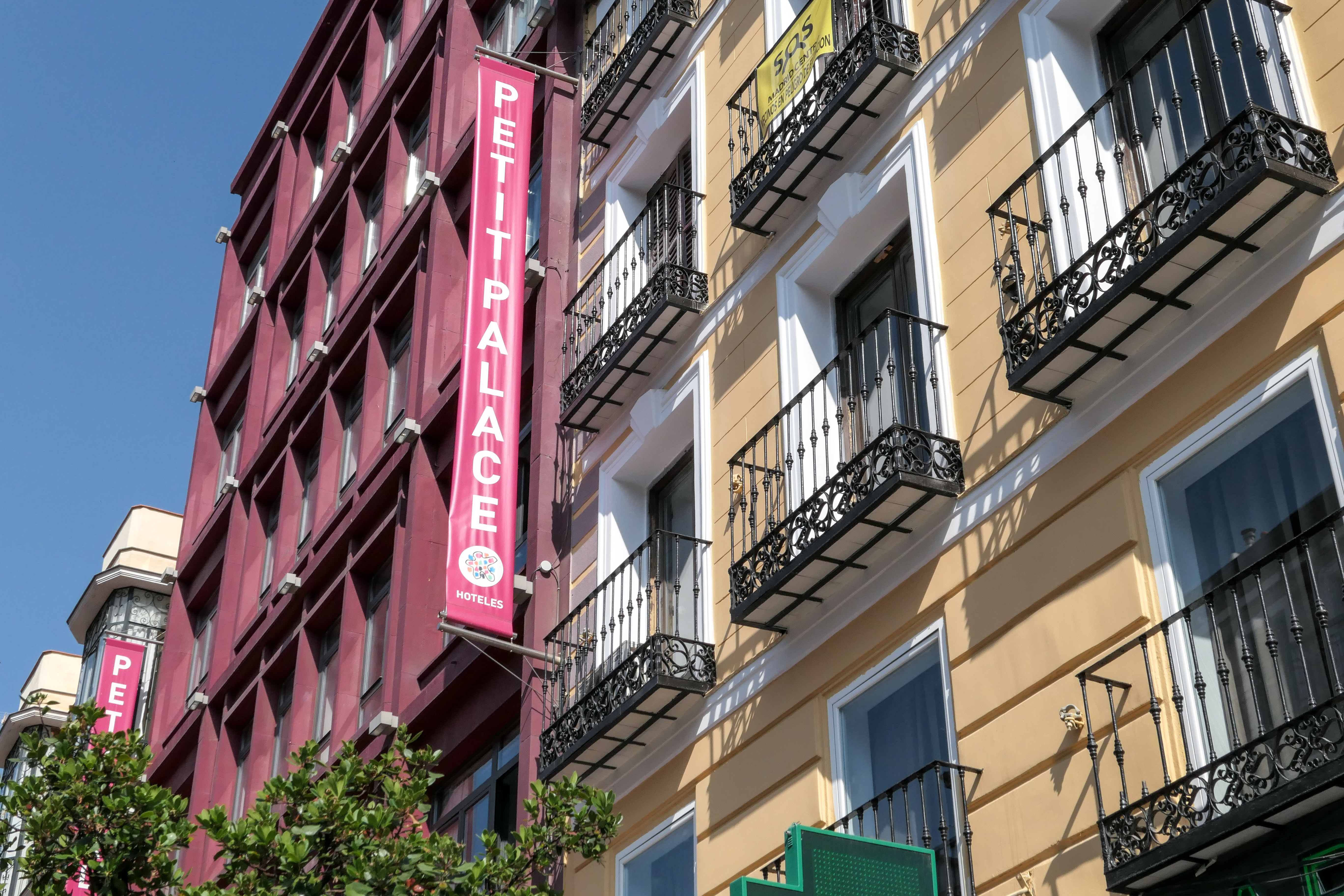
As we drove further into Madrid, the buildings closed in and soon the city had a similar feel to bustling London. I glimpsed zapaterias (shoe shops), panaderias (bakeries) and lots of tapas bars. We dipped down into an underground tunnel and Santiago told me that we were right beneath Plaza Mayor, arguably the heart of Madrid and where I would be staying. When we emerged back into daylight, the architecture changed drastically. In place of the drab, sombre buildings I’d seen on the approach were quaint apartment blocks in pastel shades with tiny wrought-iron balconies and pinstriped awnings. We had suddenly arrived at my hotel: the Petit Palace Plaza Mayor, one of a chain of Petit Palaces found in six other cities across Spain: Barcelona, Bilbao, Valencia, Mallorca, Málaga and Seville.
P1000156

In stark contrast to the bright and gracefully aged Plaza Mayor, the boutique-style hotel’s interior was subdued in colour with a significantly futuristic feel. I told the receptionist in Spanish that I had a reservation in the name of Rebecca Gibson and he proceeded to reply solely in English, which was a shame. One of the main reasons I had chosen Madrid for my destination was to brush up on my rusty Spanish. I knew a lot of tourists weren’t too keen to attempt the language, but I was very eager to talk in Spanish and I hoped that the locals would give me that chance.

P1000125

My first trip out was to Plaza Mayor itself, which was only a minute’s walk from the hotel. There were numerous people milling around but the square was spacious and tranquil in the early evening. The plaza was built in the sixteenth century when Madrid became Spain’s capital. It was used for state occasions including executions and bullfights, where the spectators would be crammed into the square and royalty would watch from the balconies. Luckily, the plaza is now filled with restaurants and cafes instead, and hosts a stamp and coin market on Sunday mornings.

On three sides the buildings were terracotta in colour with prim white balconies and shutters. On the fourth side – a building called La Casa de la Panadería (Bakery House) – the bricks were covered with intensely detailed frescoes dating back to only 1988, when the Madrid City Council launched a competition for the design covering the wall. The winner was Carlos Franco, whose artwork incorporating mythological characters was completed in 1992. Each part of the fresco was rich in colour with shocks of marigold yellow, rose pink and dusky orange.

P1000120

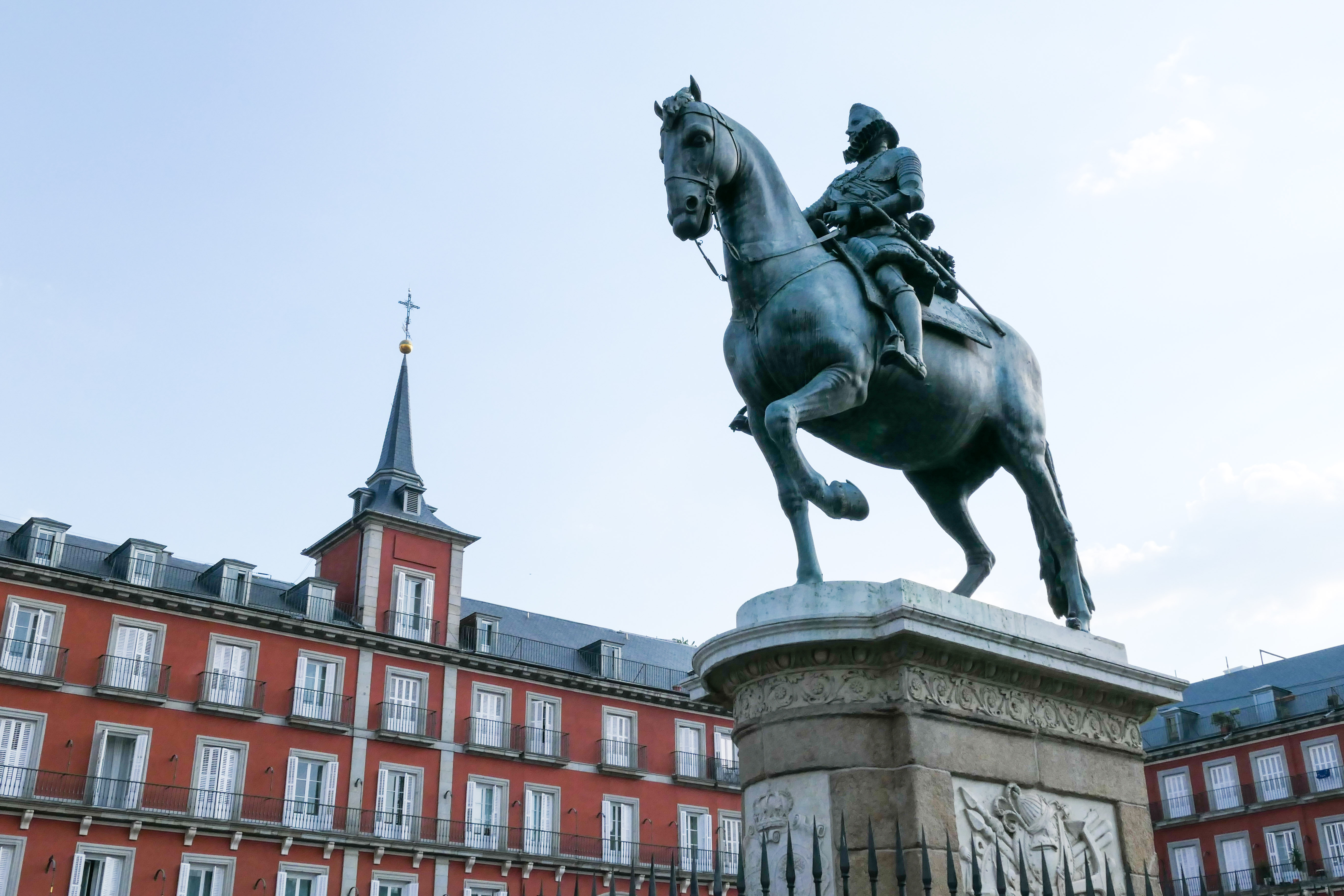
Standing pride of place in the centre of the plaza was King Felipe III on horseback – the subject of hundreds of photos found in Madrid guidebooks. I’d seen him at most angles before I even arrived, but I couldn’t resist taking my own version.
P1000122

It really was as hot in Madrid as I’d been told. At nearly 8pm, the temperature easily reached the most blistering of summer days in England. I perched on a stone seat to write and had to move to the shady side almost immediately to avoid burnt thighs. I vowed to definitely look into using the metro during my stay, as it was far too hot to walk any considerable distance.

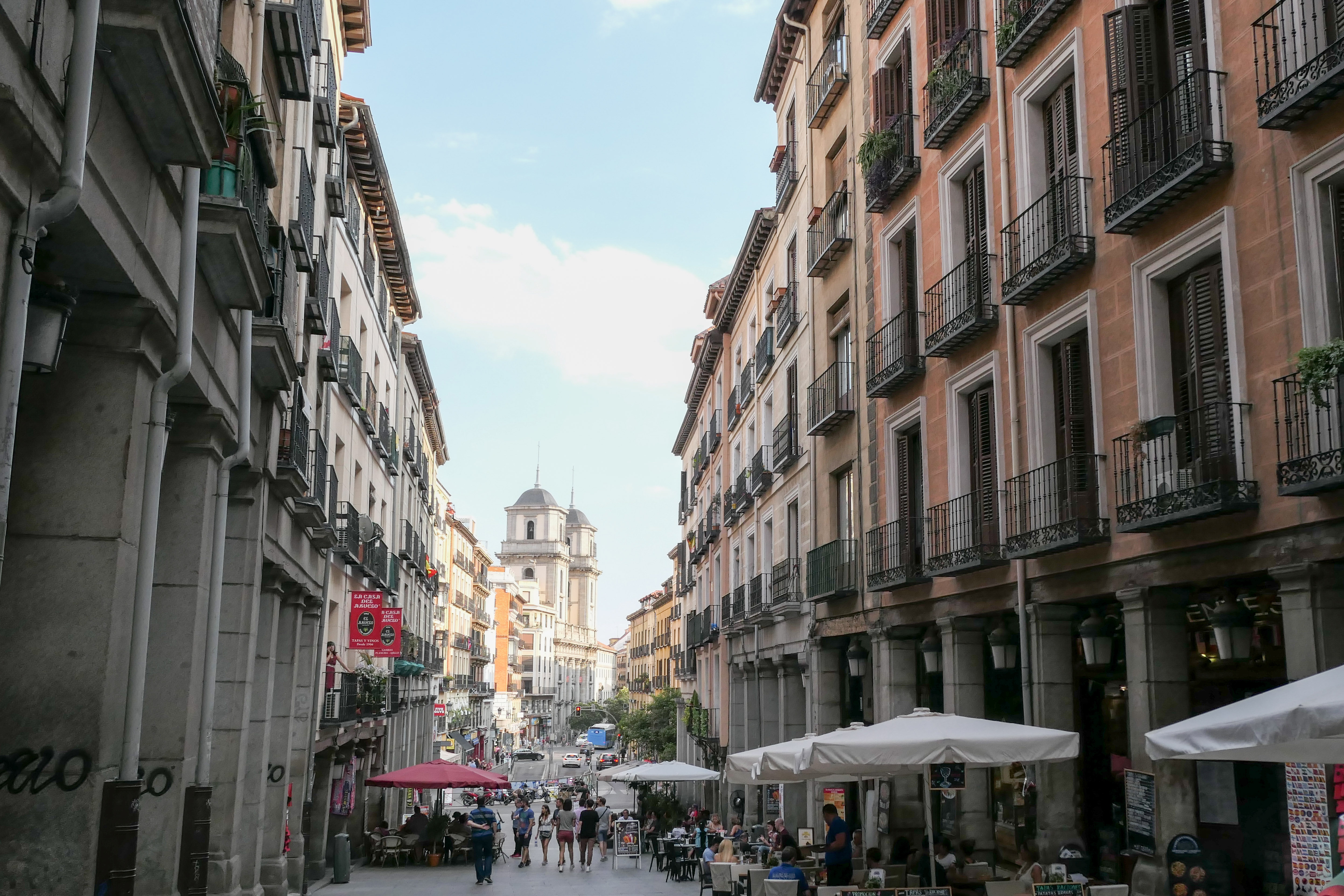
Along with the glamorous architecture were splashes of kitsch, as with any city location that tourists have access to. Headless mannequins donning flamenco dresses stood in lines while people peered from behind them in Madrid’s answer to the Brighton beach scenes you could stick your face through. Mickey Mouse and Pikachu stood idly for no obvious reason, and several traders ambled around selling light-up toys and novelty whistles. All that aside, Plaza Mayor had undeniable charm. Restaurants and cafes lined the entire square’s border, but I’d been warned against their extortionate prices. I’d read that if I ventured only a few streets further afield I would find high-quality and authentic tapas at a fraction of the price.

I unintentionally threw myself in at the deep end by going to Casa Revuelta for dinner. It had come highly recommended for its bacalao (cod) tapas, but I soon realised it wasn’t your typical restaurant. There weren’t any menus – a waiter came over and you told him what you wanted. Every bit of food vocabulary flew out of my head and all I could utter was pescado (fish). Luckily, I was brought some of the bacalao, which really was delicious. With no bones, the meat was beautifully smooth and with only a thin covering of batter. I ordered something I saw on my neighbour’s table, which turned out to be bite-sized pieces of pork crackling, which I wasn’t a fan of. It was my fault for not brushing up on my vocab beforehand, but by happy accident (the first of many I hoped!) I had tried my first Spanish delicacy in the bacalao.

After settling up at Casa Revuelta, which was already swelling with hungry customers including many native Spanish speakers – I strolled back through Plaza Mayor. Street entertainers were in full swing and Pikachu now had a throng of children around him. I passed El Restaurante Sobrino de Botín, the oldest restaurant in the world, which already had a queue out the door. The dramatic soundtrack of a flamenco show drifted out of a dimly lit doorway.
P1000129

I wandered further on and found myself in Puerta del Sol, which was buzzing with activity. One of the busiest places in Madrid, Puerta del Sol (Gate of the Sun) is home to the clock that chimes during the traditional eating of the twelve grapes and signals the start of the New Year. At the far end was a fun little statue that many people had flocked to for photographs: El Oso y el Madroño (the Bear and the Strawberry Tree). Although reasonably small in size, this intriguing bronze statue weighs twenty tonnes and replicates the similar emblem shown on the Madrid coat of arms. The determined bear stretching for the fruit symbolises the resilience and tenacity of madrileños (people from Madrid). Bears used to be found in many of Madrid’s forests, as well as trees bearing fruit that closely resembled strawberries. Madrid was thought to have once been named Ursa, Latin for bear. You wouldn’t find many foraging bears in Madrid nowadays, but Antonio Navarro Santafé’s sculpture in Puerta del Sol was lively enough.

P1000137

I decided to get an early night after a long day of travelling so as most madrileños were heading out for the night, I made my way back to the hotel. Casa Revuelta was a bit of a shaky start, but as time went on I knew I would start to find my feet.
Salty Paws

As diluted sunlight comes streaming through the window I’m awoken by the squalling of gulls – a tangled symphony of disgruntled burbles, high-pitched cheeps and open-throated cackles from chimney top perches.

The weather in the Scottish Highlands is always a lucky dip. Some days I wake up to driving rain and moody skies. Today the sky is bright, streaked only by wispy cirrus clouds. Despite the sunshine, there’s a bracing wind skirting up over the waves and whipping them up into frothy white peaks.

A gaggle has assembled on the beach while the tide is far back. Common sandpipers hurry across the sand, weaving their way between bunches of seaweed strewn around like abandoned clothes. A handsome oystercatcher kicks up a fuss, its shrill piping call spreading far along the beach. House martins swoop like missiles over puddles left behind by the tide, their inky blue plumage gleaming in the sun.

There isn’t a soul here. On a warm, sunny day like this in the south, the beach would be clogged with sun-bathers and a garish patchwork of multi-coloured towels. Here, the beach is my solitary refuge. The water may be icy, but the views are stunning.

After weaving my way through assorted rocks worn smooth by the ocean and abandoned shells lying chipped and half-buried, I clamber up the steep dune running the length of the beach. My boots sink and sharp grass brushes my legs but I finally reach the summit and slide down the other side. The coastal wind instantly dies like a door has been slammed against it. The forest is sheltered and muffled against outside noise. Seclusion is one of the habitat’s best qualities. There is a feeling of anticipation upon entering a forest. It’s full of surprises.
The dog wanders off by herself, true to form. The forest fragrance is too hard to resist. Her light fur flashes in and out of view behind the trees, their trunks as straight as the lines on a barcode.

I know there must be red squirrels in this forest, perhaps even pine martens. So far I haven’t seen either, but that is no guarantee of absence. It’s what I love about wildlife: it can never be rushed.

We pass another dog walker and for a while the only movement in the forest is the flurry of fur in a rambunctious chase. There will be no wild sightings this morning – martens are sleeping and squirrels are out of sight in the enclosed canopy. The dogs dash around blissfully, but eventually we pull them apart and I loop back towards town. Sounds of civilisation begin to permeate through the trees; car doors slamming, human voices, a distant bus. It’s like the sensation of ears popping and I’m back in the open, leaving the forest behind me. Until tomorrow morning.

The Greenway

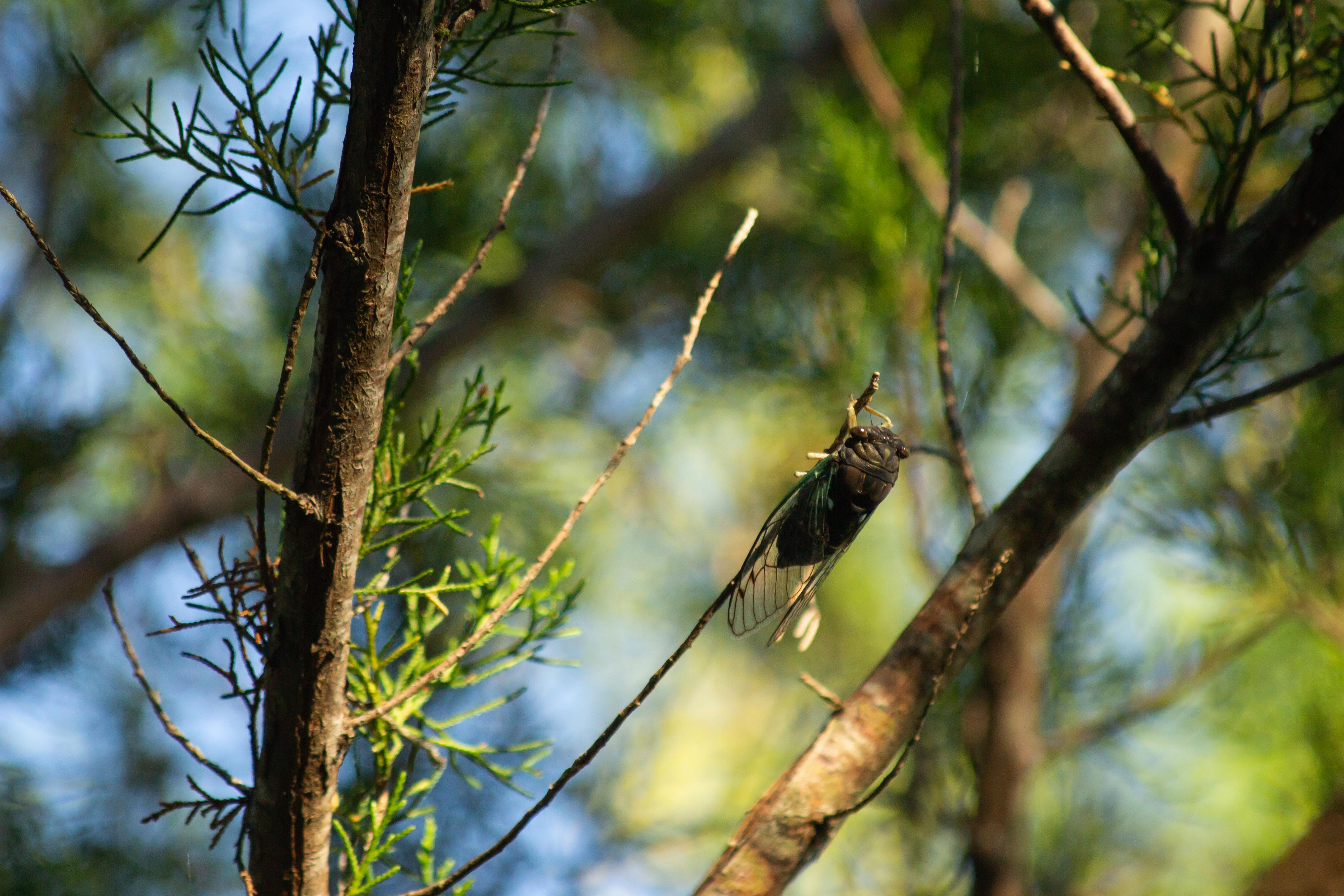
The Egan’s Greenway is an unexpected jungle in the middle of smoke-belching industry and deckchair tourism. The mundane sounds of traffic are deafened by the furious chatter of cicadas – enormous insects that seem prehistoric. Their strange call is like the sound of angry water sprinklers, growing louder and faster until it reaches an alarming tempo, then abruptly stops.

IMG_0497

At first light the Greenway is sharply divided into light and dark. The dense, impenetrable forests are still cool – the trees in muted greens – but out on the marsh the grass is alight with fiery golds and oranges. Naked trees poke the sky with sharp limbs white as bone, while beside them sway lush evergreens. It is a land of stark contrast, a spectrum of vitality and decay. Time passes here with the tick of the cicadas.

IMG_0560

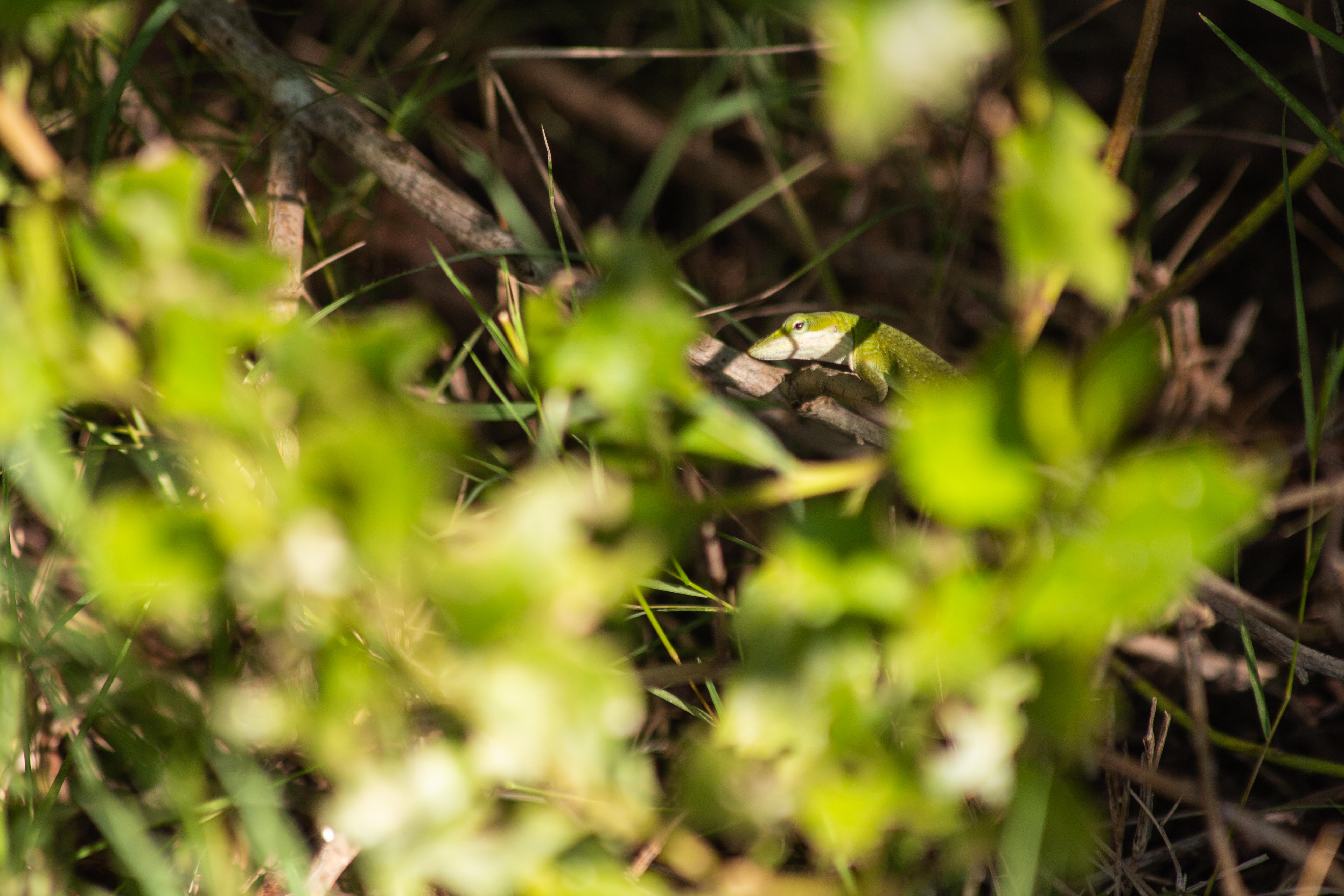
The day warms up, throwing a shimmer onto the surface of the creek. Here there be dragons, some cruising between reeds on transparent wings, others scrambling up trees with long claws. A flash of movement and then a disappearing act, they blend seamlessly into their surroundings. Just a flick of the beady eye will give them away, and then they will shoot off into the undergrowth.

IMG_0638

Other beasts can be found higher up. Perched on the skeleton fingers are ospreys, scanning the creek in every direction. One takes to the air and its mate follows. Together they wheel in deep circles, overlapping in smooth figures of eight. A wood stork, large enough to be unfazed by the raptors, joins their sky with dark wings barely flapping.

IMG_0582

Then, a real dinosaur. A creature that survived what forty-metre sauropods could not, almost unchanged for millions of years. This one is only small, an arm’s length perhaps, but even so it floats beneath the water’s surface with the stealth of an adult, startling green eyes always watching. A glance away and back again and it has disappeared, moving across the creek without a sound.

Where is mum? Perhaps it is best not to stay and find out.

IMG_0656

Searching for Spoons

After so much excitement, I’ve neglected my camera recently and wanted to finally spend some proper time searching for Florida’s wildlife. I’d been told about a good spot for wading birds, and knew that the inhabitants included my new favourite bird, the roseate spoonbill. I set out before sunrise and reached the water just as the sky was beginning to lighten; pinks and oranges blending with blue.

My first sighting was almost immediate. Perched on a branch overhanging the lake and peering curiously as I wound down the window was an anhinga. With both heron and cormorant-like features, anhingas spear fish under the water with their long, sharp bills. The name originates from the Brazilian Tupi language and translates as “devil bird”. I don’t quite see the devilish resemblance – I found the anhinga delightful, especially when it shook out its striped wings. Like cormorants, anhingas hold out their wings after swimming to dry them. This one looked like either a female or a juvenile, as males are jet black with silvery streaks.

IMG_9976
Anhinga

IMG_0044

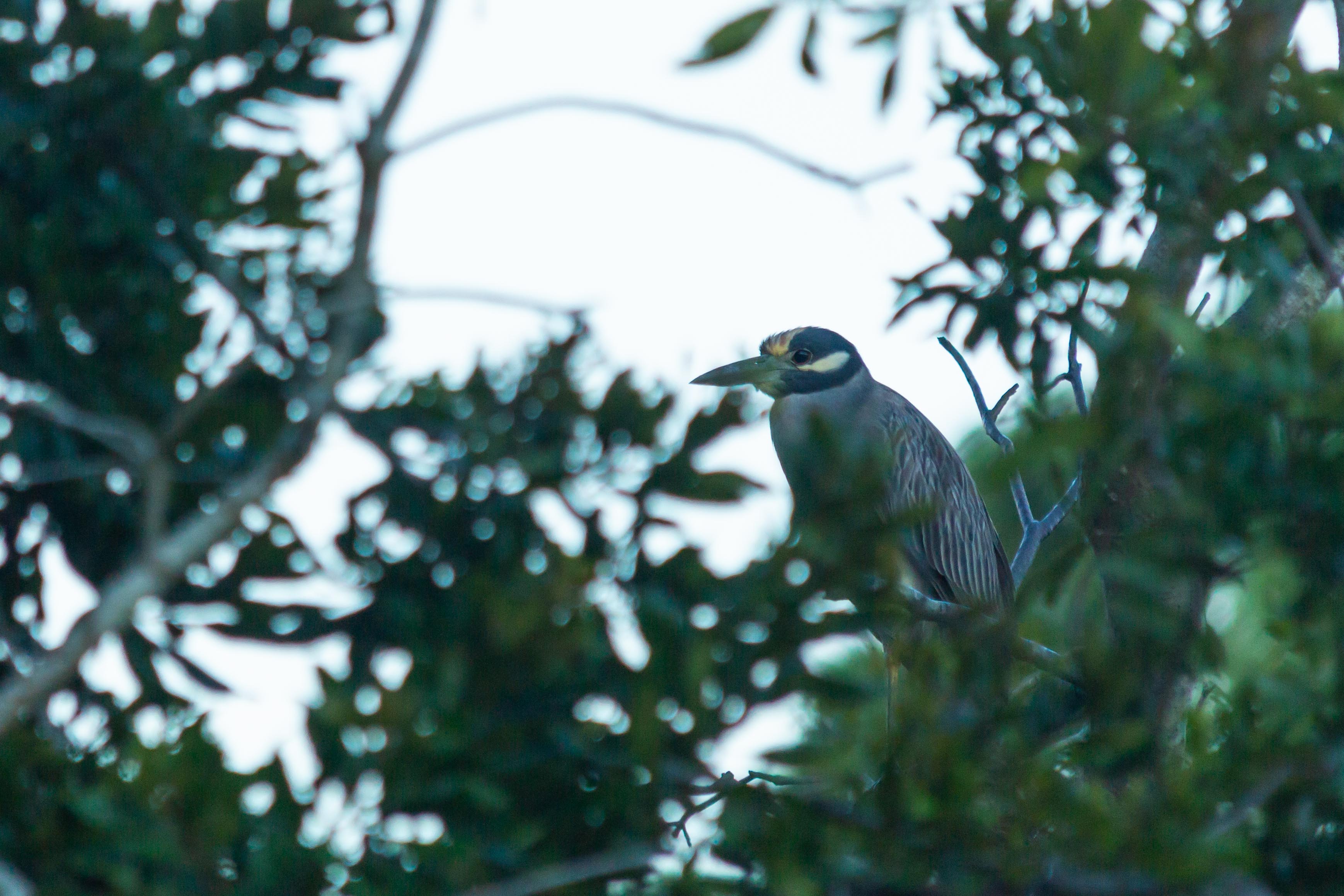
Soon the anhinga was joined by a yellow-crowned night heron, shoulders hunched down as if with cold. With a white cheek patch and a pale crown of feathers that looks more white than yellow, the yellow-crowned night heron is actually nocturnal, so I must have been really lucky to catch a late glimpse just before the sun emerged.

IMG_9936
Yellow-crowned night heron

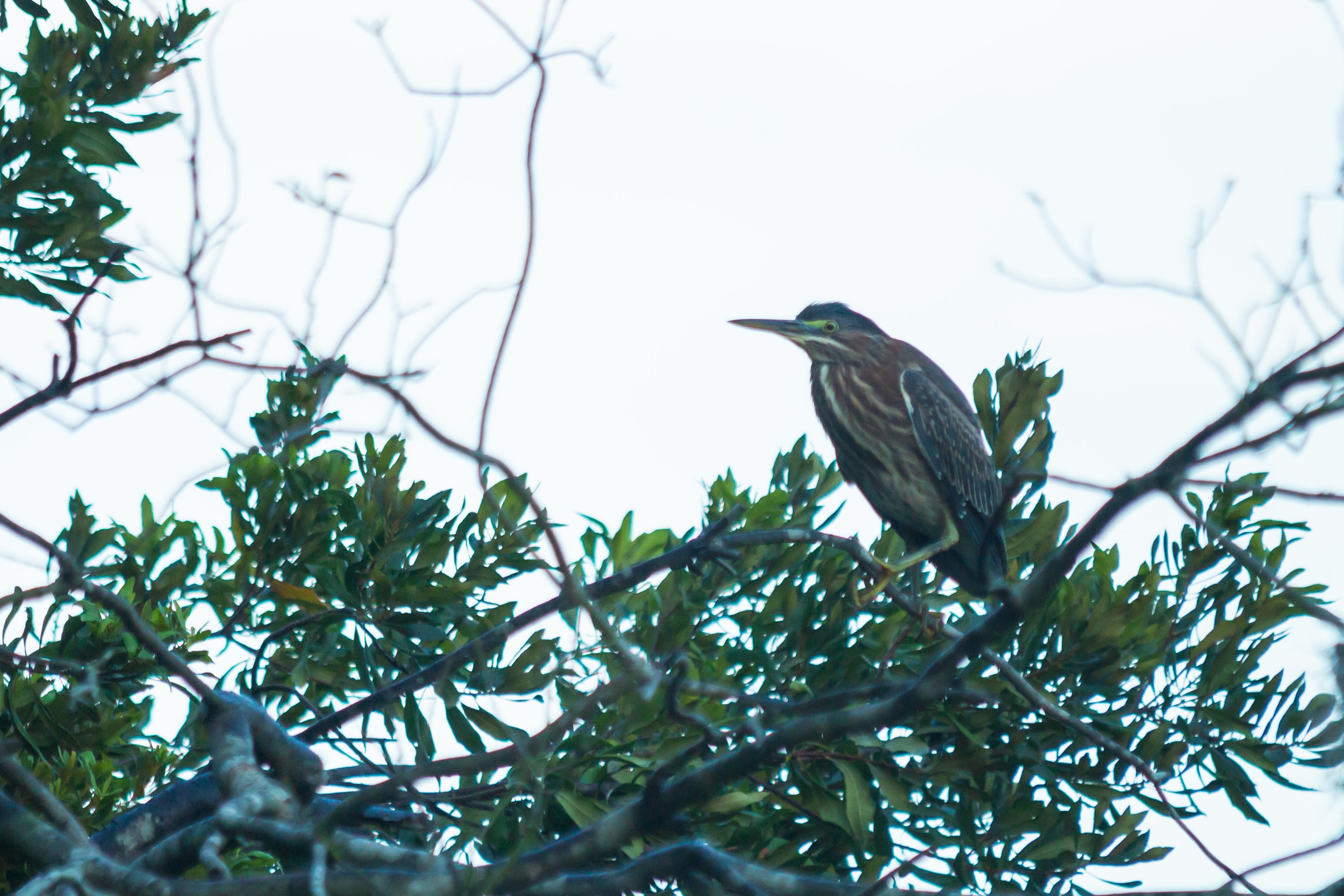
Elsewhere in the tree was a green heron, who was more brown than green so was perhaps a juvenile. Apparently, green herons are known to throw insects into the water to encourage fish to the surface, which is genius and must look amazing to see.

IMG_9938
Green heron

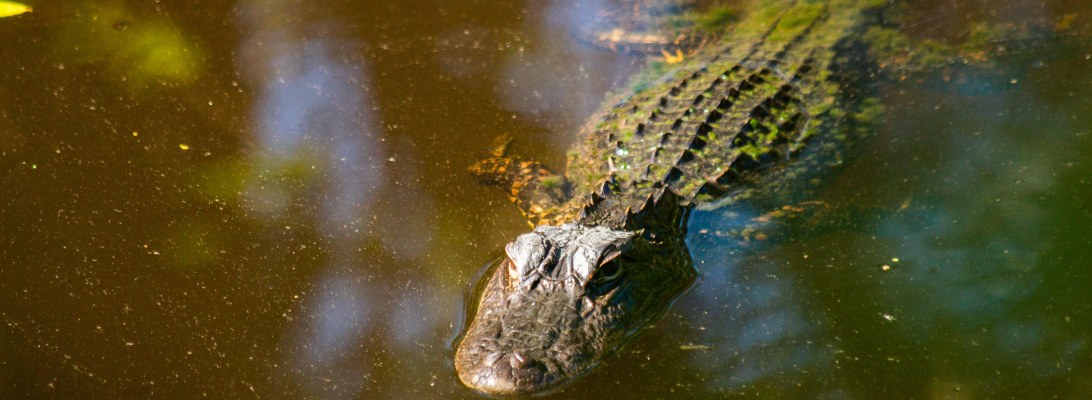
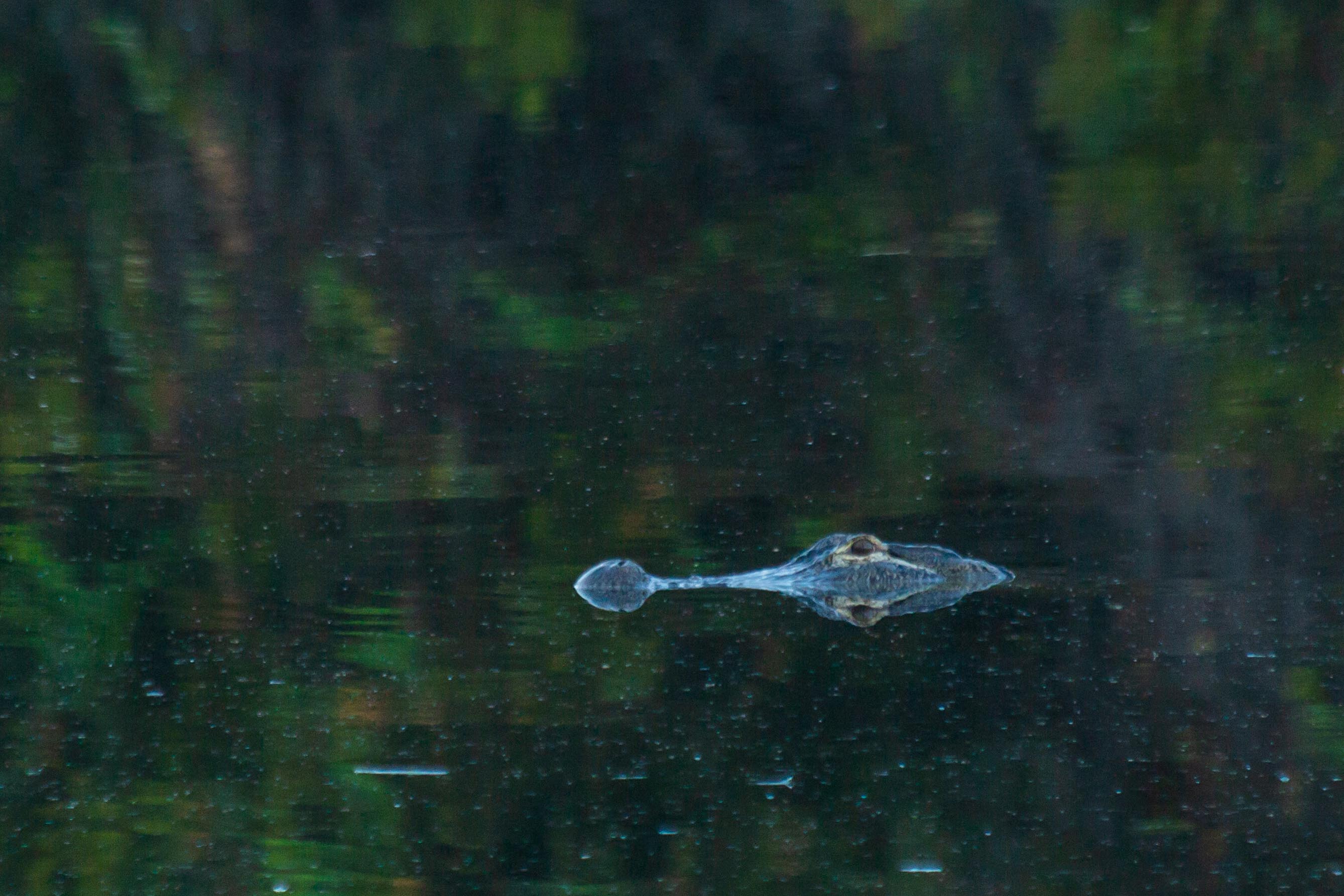
Suddenly a snowy egret burst into view, legs dangling and panicked wings flapping. There was a deep, kronking call as more birds surged upwards. Puzzled, I glanced around for signs of a raptor, when a disturbance in the water caught my eye. There, gliding without a sound, was an alligator. My first alligator! I could hardly contain myself. All I could see of it was a pair of eyes and nostrils, so I had no idea how big it was, which was perhaps more nerve-wracking than seeing the whole animal. Even from the safety of the car my paranoia imagined the alligator leaping headlong at the open window, but it just cruised out of sight and the birds soon calmed down.

IMG_9951
Alligator!

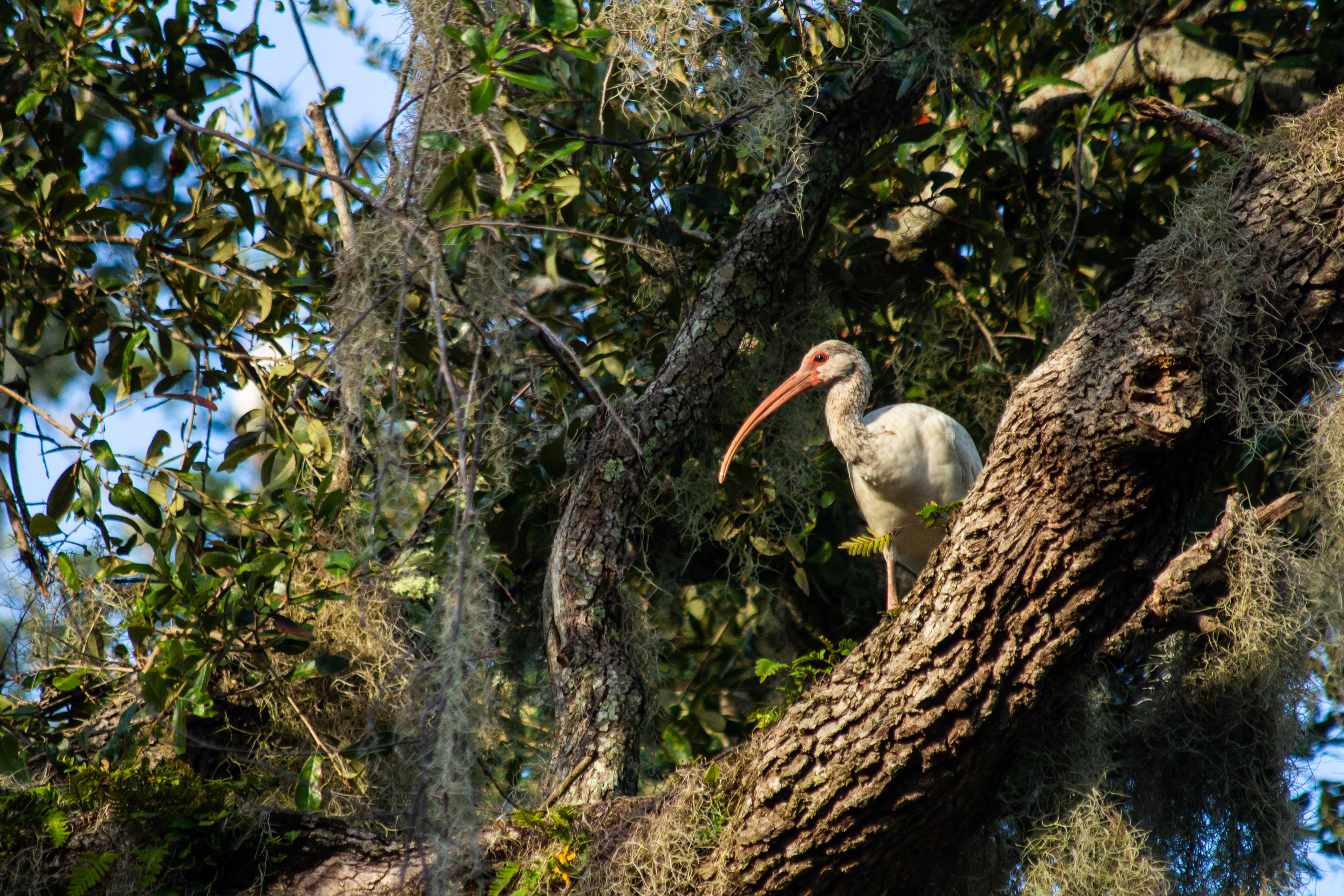
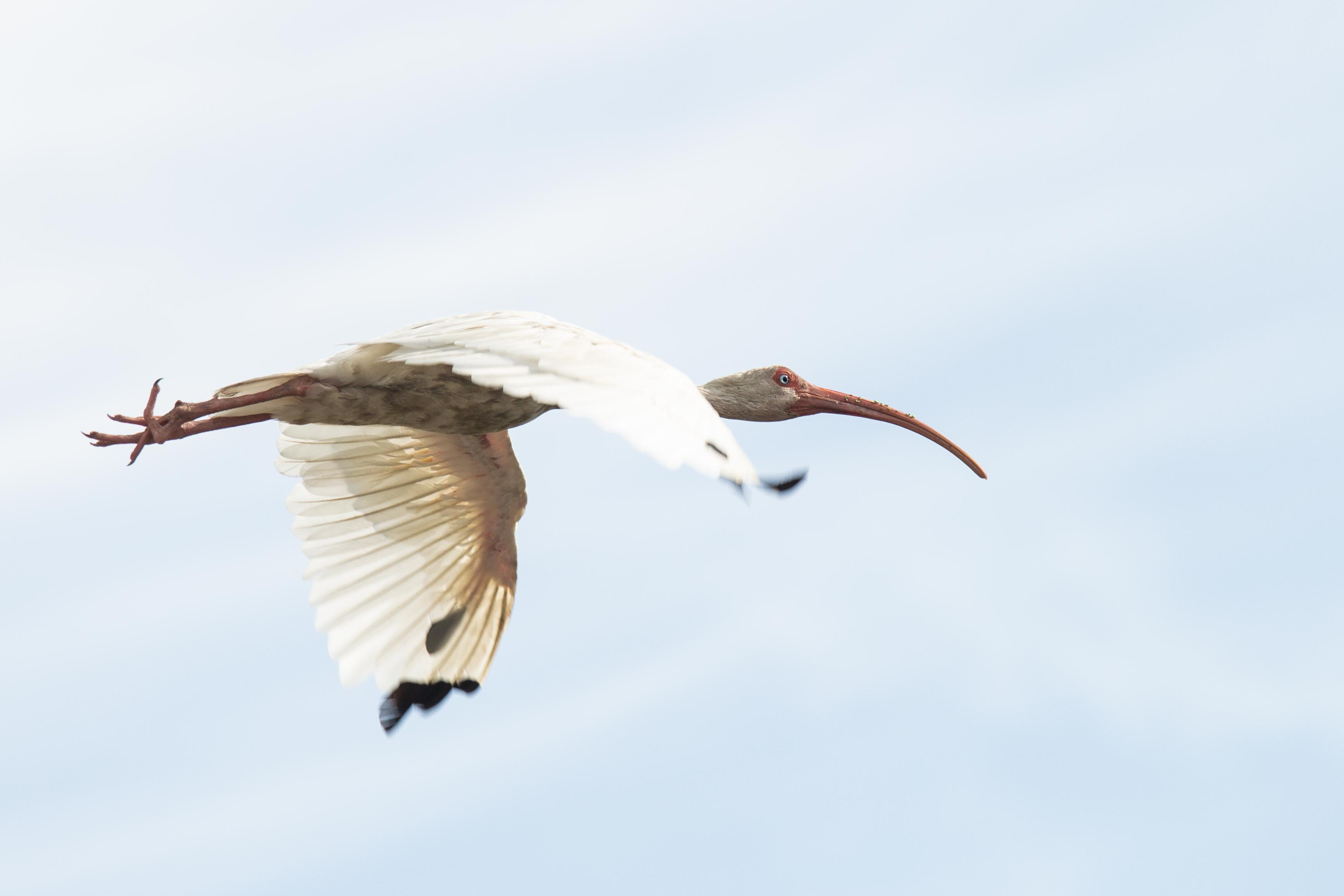
I wandered further on to try and find a spoonbill. There was a loud rustling above and I looked up to see the trees absolutely covered in white ibis; wading birds that gather in large groups all across Florida. I was spoilt for choice for photos. Although they’re not the prettiest of birds, their long, red bills still looked impressive, especially when they all took off in one simultaneous swoop. In the absence of car engines and people this early on a Sunday, the only sound to be heard was the wind in their wings which sounded so magical.

IMG_0051
White ibis

IMG_0173

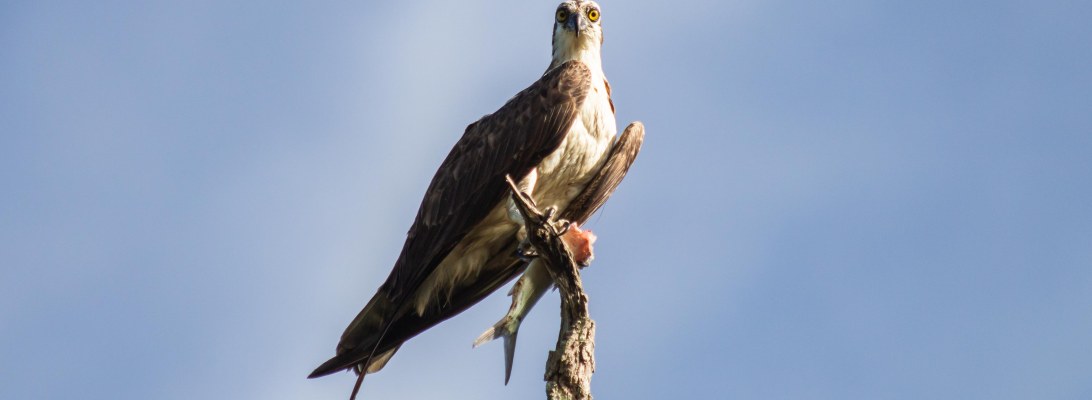
After watching them leave I wondered what had scared them off. Once again I scanned the trees for signs of a raptor and this time I found one: a stunning osprey with a fish in its claws! I’d only seen ospreys once before in Scotland, all the way across a loch that made taking photos quite the challenge. This osprey, however, was a tree’s height away and sat in a perfect patch of sunlight that made its yellow eyes dazzle. It spotted me straight away and watched as I took photo after photo. Eventually it gathered up its breakfast and took off, just as the first dog walker came into view.

IMG_0146

IMG_0138
Osprey

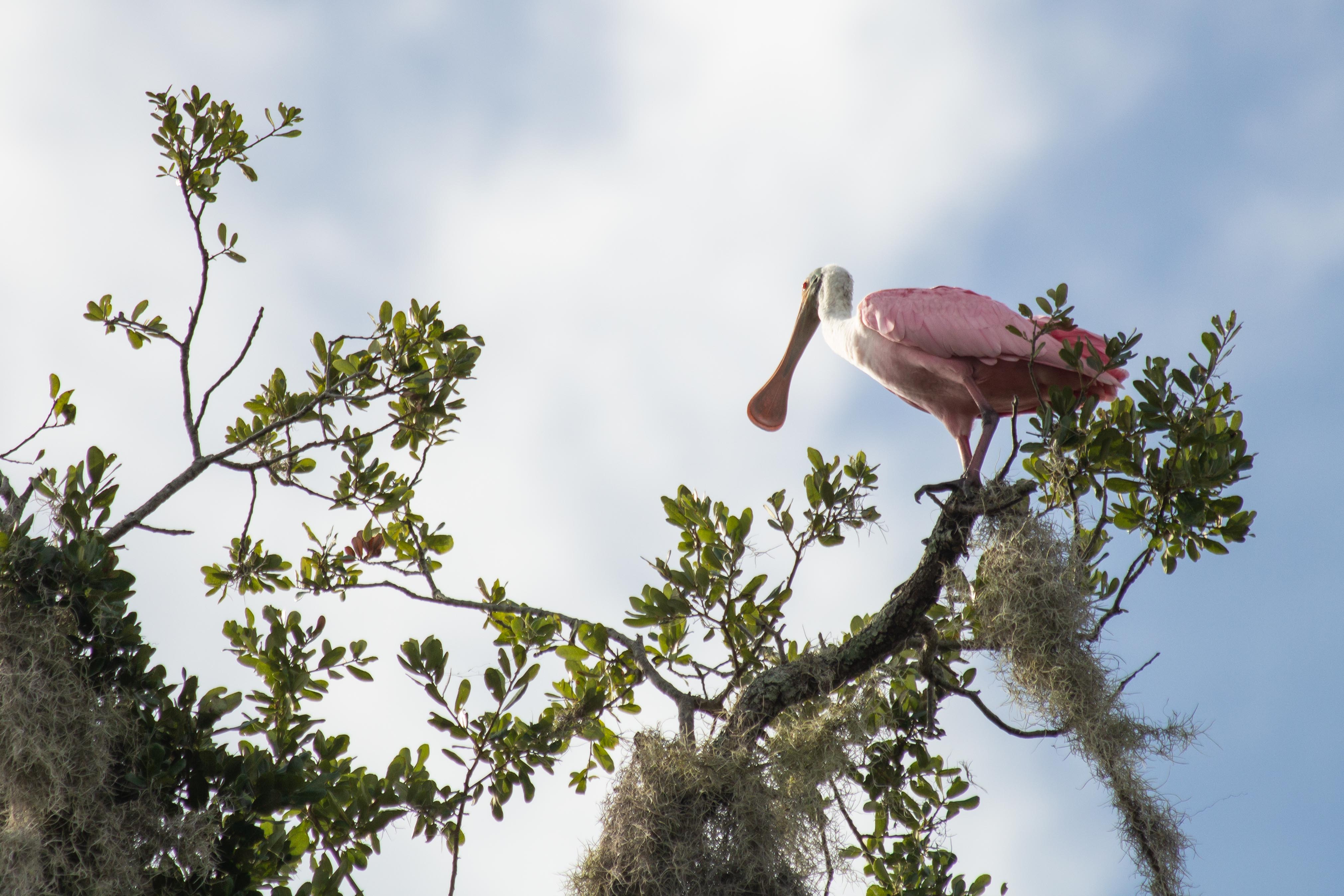
At 9:30am it was already getting too hot to be out without a hat, and my hastily eaten bowl of cereal at 6am seemed far away. I’d loved to have found my spoonbill, but having seen a bonus osprey and alligator I was far from disappointed. I’d just got back to the car and was fumbling for my keys when I glanced up, and by some miracle there was a spoonbill perched at the very top of a tree. It was the pink cherry on an incredible cake.

IMG_0187
Roseate spoonbill

IMG_0203