Checking in

I arrived in Grantown-on-Spey at night, so couldn’t see much of the Cairngorms wilderness that pressed heavily on both sides of the winding road. I glimpsed darting rabbits and the elegant form of a pair of deer, but there must have been dozens of other creatures concealed by the dense evergreens.

My accommodation, the Grant Arms Hotel, was beautiful; a formidable building of stone and wide sash windows that could easily be the set for an elaborate period drama. Also called the Wildlife Hotel, the Grant Arms provides guests with easy access to a range of reserves of all different habitats. When I checked in, a large notice board stood pride of place in the foyer, full of lists of upcoming events, guidance on watching wildlife – including the magnificent capercaillie – and sign-up sheets for the week’s guided walks and field trips. An impressive puzzle adorned with a picturesque nature scene lay finished nearby. On the walls were images of puffins, ospreys, black grouse and, in my room, a beautiful fieldfare. I’d never seen so much wildlife-related decor and I absolutely loved it.

As I unpacked, I felt a thrill of eager anticipation for the week to come. I’d never stopped in the Cairngorms before but only passed through, so I couldn’t wait to sample some of the incredible wildlife. I had my sights set in particular on the pine marten – an elusive and nocturnal member of the mustelid family. If I was going to fulfil my New Year’s Resolution and see one in 2019, the Grant Arms Wildlife Book Festival was my best chance.

An Unscheduled Spring

It seems as if spring has come early, and I’m certainly not complaining. For the past few days I’ve been stuck indoors trying (and mostly failing) to write through an infuriating case of The Block. Multiple times I’ve caught myself gazing outside at the gorgeous sunshine, listening to the spring sounds of birds and bees that come drifting through the open window. I decided that it was time for a break, so I arranged to meet my friend Chloé for a walk. Chloé is an artist and writer with a deep love for wildlife like me. She recommended a local patch of woodland that I hadn’t even heard of before. I love discovering new wild places, especially ones I’ve driven or walked past without realising they’re there!

IMG_1395

Heading away from the noise of the road and nearby school, we set off into the park. Chloé pointed out the numerous trees that could be found here, and I was surprised to see such a variety of species in a relatively small area. I’ve always struggled to identify trees, especially during winter when there are no leaves to study, but Chloé said that leaves can actually be a distraction. She showed me the large clumps of hanging seeds that can be found on ash trees, the dark bobbles along the boughs of larches and the vivid red branches of dogwood. There is another delightful clue with dogwood – the buds have two tiny prongs that look a little like Viking helmets. I had no idea that looking at the buds of a tree could help so much when trying to identify it. Hopefully I’ll start to notice these clues more often when I’m out and finally begin to recognise some British trees.

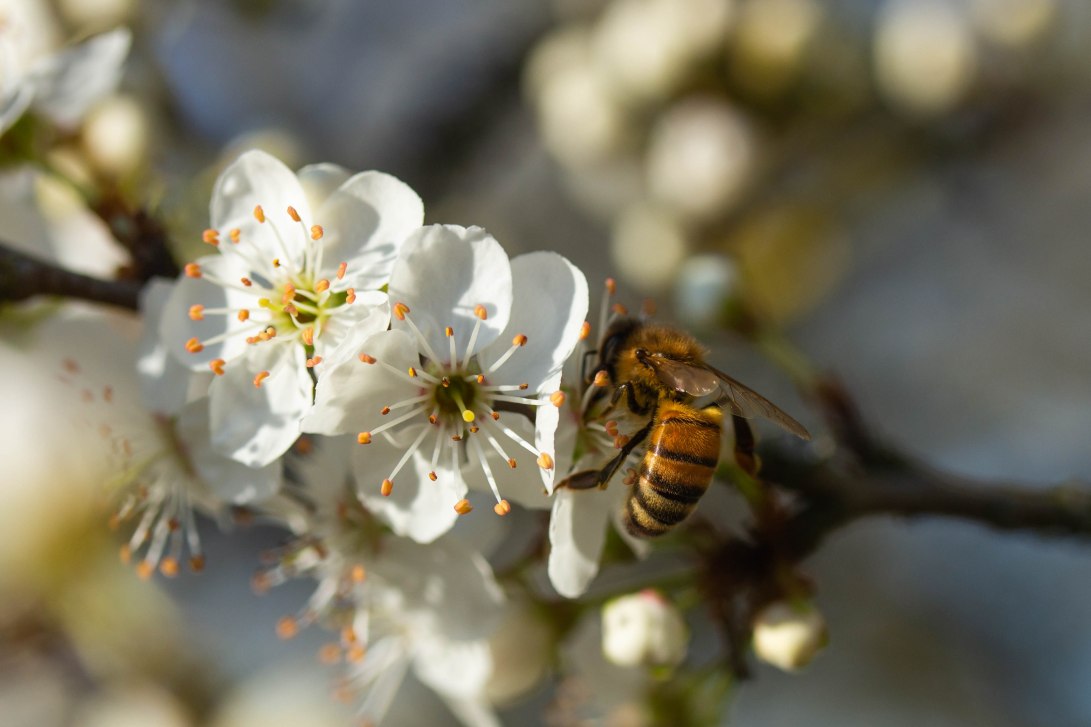
We headed into the open and followed a path that threaded up a hill, giving us a great vantage point over the countryside. A skylark swept across the sky, flying in large undulating dips before settling on the grass. I saw my first cherry blossom of the year: a stunning spray of white blooms that had attracted the attention of dozens of bees. We stood quietly and listened to the steady, buzzing drone as the bees threaded their way between the flowers in search for pollen – an indisputable sound of spring.

IMG_1376

Further down the hill we were just inspecting what we thought was a beech tree when I glanced up and saw a red kite wheeling overhead. We took it in turns watching through the binoculars. It was fascinating to observe the bird’s flight pattern – it moved across the sky in gentle loop-the-loops, following the shape of a tightly coiled telephone cord, all while barely flapping its wings. Its red feathers looked magnificent in the sun, its forked tail silhouetted against the sky.

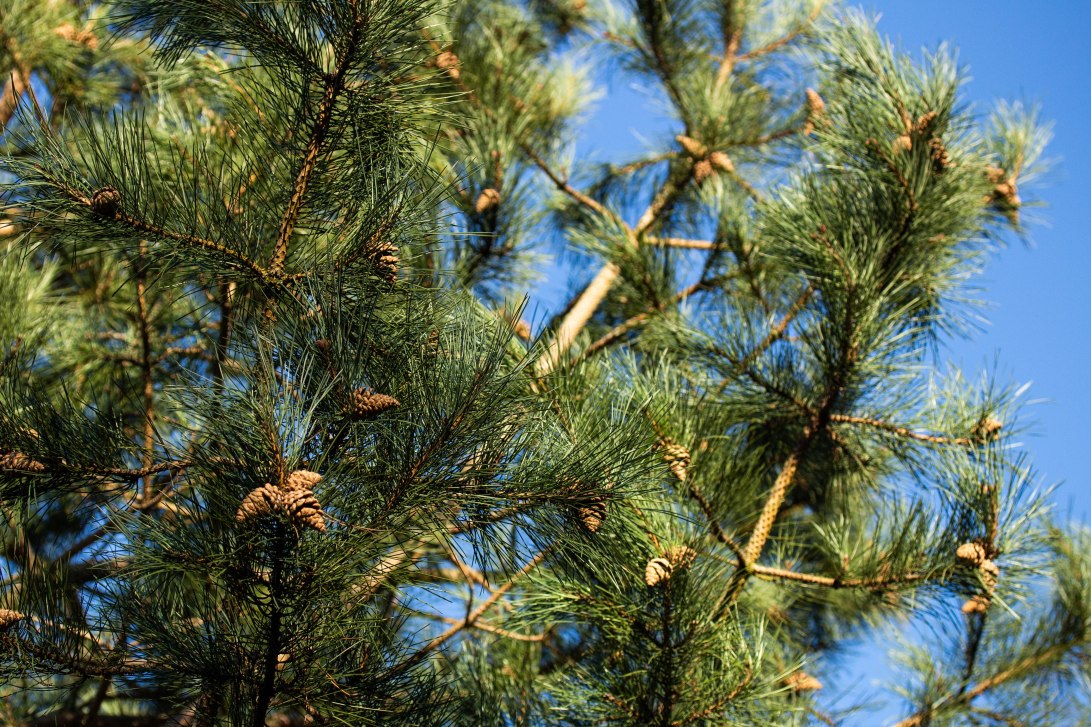
After the kite had drifted out of sight, we heard a soft clicking noise coming from a nearby evergreen. I started scanning the branches for birds, but Chloé told me that the noise was in fact the pinecones cracking open. It was a surreal sound that I couldn’t quite believe at first. Having always assumed that pinecones opened gradually like flower petals, it was incredible to actually hear them popping as they dispersed their seeds. Apparently, the scales of seed-bearing pinecones flex in response to changes in humidity. When it is warm and dry like it was yesterday, they pop open. In cool, damp conditions, they close up. I found this absolutely fascinating.

IMG_1381

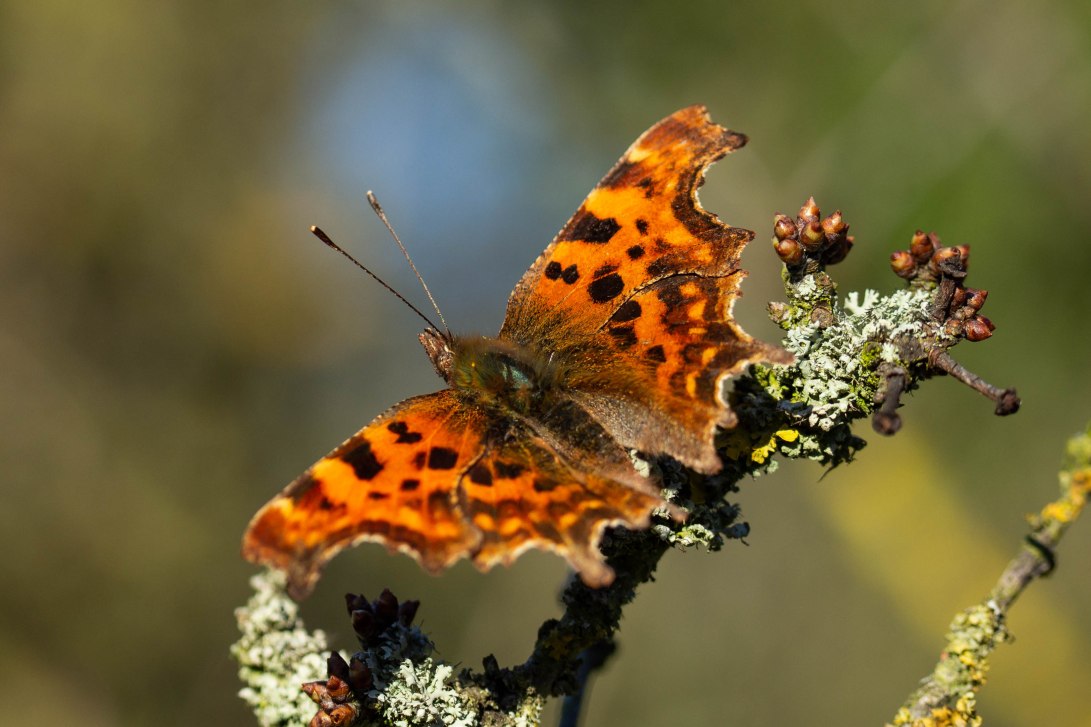
Further on through the park we came across my first butterfly of the year: a stunning comma basking in the sun. With unusual, scalloped edges to its wings, the comma is a master of camouflage, using its mottled colouring to blend seamlessly into dead leaf litter. Its larvae are equally well disguised, with brown and white flecked markings that give them the appearance of bird droppings. This individual was lounging on a leaf with barely a twitch of its wings, allowing us to get lots of photos and observe its beautiful markings up close. Its furry body almost looked iridescent in the sun. After a while it turned round, positioned its rear end over the edge of its perch and released a small black blob before settling again. This was another first, not just of the year but also of my life: watching a butterfly poo!

IMG_1386

Eventually the comma took to the air and fluttered up into the sky. The shadows were lengthening and the warmth was slowly ebbing from the afternoon, so we began to loop back through the park towards Chloé’s house. It was so refreshing to be able to exchange wildlife knowledge with someone. I pointed out birdsong while Chloé helped me with trees. It really is true that walking outside is a form of natural therapy. When I returned home I was inspired to write and reflect on the day. I’ve also been motivated to start up painting again, after seeing some of Chloé’s work. I dug out my watercolours and acrylics and can’t wait to get back outside while spring is here in full force.

Success!

I was back on Bryher today, having another go at finding the elusive dwarf pansy. As was becoming a daily ritual, I engaged in friendly conversation with my fellow passengers on the Seahorse as it made its leisurely way out of St Mary’s Quay.

“That’s a fancy bit of kit you’ve got there,” one man said, gesturing at the camera hanging from my neck, “What are you hoping to photograph?”

I told them about my mission to find the dwarf pansy, to which the man said, “Ah yes, such a shame about the flowers this year.”

I supposed he was referring to the recent snowfall, which had pushed the growth and emergence of the Scilly wildflowers back a few weeks. Still, I didn’t like his pessimism and although I smiled politely I was feeling confident. The weather had been and still was beautiful, and I was here to find the dwarf pansy. So when the boat docked and I hopped onto dry land I strode towards Rushy Bay with steely confidence. The sun was already beating down and incidentally I would later regret not covering my sore, red ears from that beating sun. Meanwhile, I was on my hands and knees peering at grass and getting some very strange looks from passers-by. I found my tiny purple flower from last visit, which I vowed to ask the tour guide about on my walk that afternoon.

By lunchtime my stomach was rumbling, so I tucked into my sandwiches and rested my sore knees. It really was a stunning day, and I had the beach almost to myself. A couple of holidaymakers were foraging for shells by the water, and every so often a dog appeared with a wide-eyed expression of sheer joy before loping back over the dunes.

IMG_0996-2

I decided to give the area one more scope before it was time to walk back to the quay and meet the tour group. Just behind the high grass was a group of binocular-glad walkers huddled together gazing at something on the ground. My heart leapt into my mouth and I hovered awkwardly where I was standing. Was it cheeky to go over and exploit their find? I hadn’t paid for their walk, after all.

But this was the dwarf pansy, so I made a beeline and gazed between shoulders to see Will Wagstaff pointing at a tiny white speck in the grass. I waited as patiently as I could, hopping from one foot to the other, for the group to take their turns photographing the pansy. Once they’d dispersed, I lay down on the grass and noticed there were two! One was fully open, the other was partially closed but still beautiful; in fact, it was a real stroke of luck to see two different stages beside each other.

The Red Ruby cattle mooed at me as I lay there, trying countless angles and focuses. A man and his son approached me and asked what I was doing. In moments we were talking about the pansy, my uni work, and he was amazed that I’d come all this way for a flower. After he’d moved off another couple appeared from Heathy Hill, and once again I showed them what I was so captivated by. Like all the others, they responded with the courteous “oh really?” and “wow!” but I could tell they weren’t nearly as excited as I was. I wanted to shake them and say they were not found anywhere else in the UK, only this tiny archipelago! I had to share my joy with someone who’d appreciate just how special the sighting was.

IMG_1064

So, as I hurried back to the quay, now nearly late for the walk, I rang my parents and wheezed my good news. They’d shared my worry and calmed my panics on the run-up to the expedition so were thrilled that I’d found what I came for. I was beaming ear to ear.

Once I got to the meeting place and Darren, the guide from the Isles of Scilly Wildlife Trust, told us our route, I realised we weren’t even going through Rushy Bay, so I would have missed the pansy completely! I was hesitant to call it fate, but if I hadn’t eaten my lunch where I did, I’d have been journeying back to St Mary’s very disappointed.

IMG_1167

Exploring Bryher

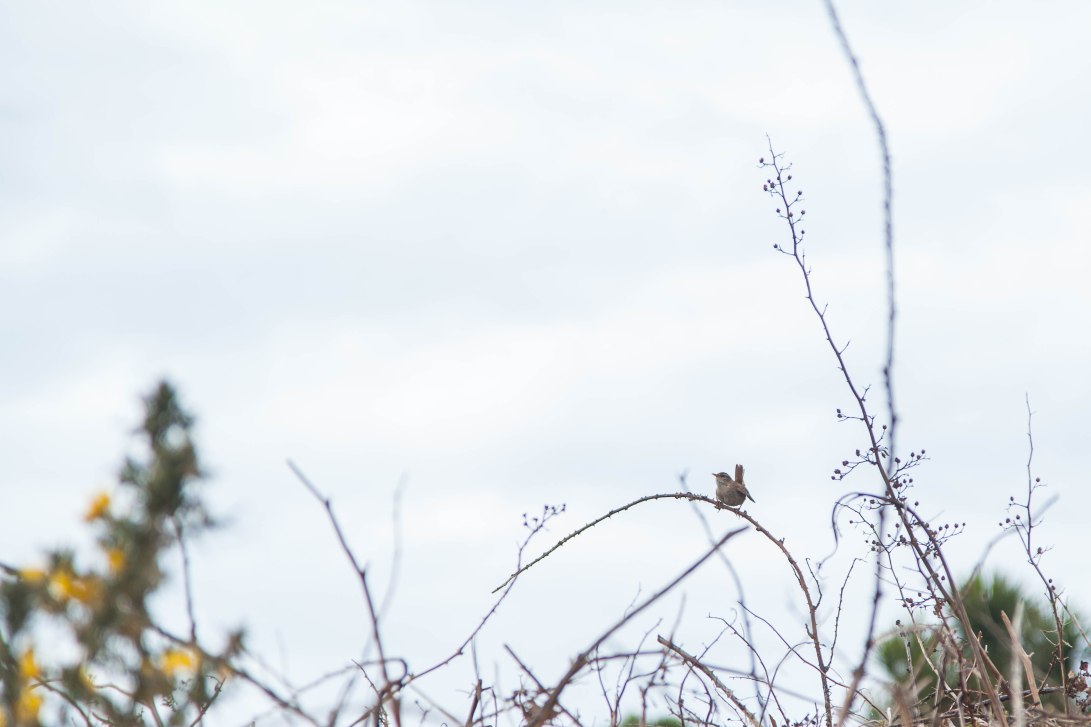
When I arrived on Bryher I was reminded of how scarcely populated the 1½-mile long island was. After an initial buzz of human activity at the quay, tourists and locals dispersed and I suddenly found myself completely alone, except for the ever-present wrens of course. One was perched high against the skyline only a few feet away, trilling with all its might. According to some Scillonians, wrens here are slightly different to those on the mainland. Their songs are different, and their mottled body markings are brighter. Perhaps this is a little Scillonian pride, but the shrews, bee and blackbirds are all unique here so I liked to entertain the possibility that Scilly wrens were just as special.
IMG_0244

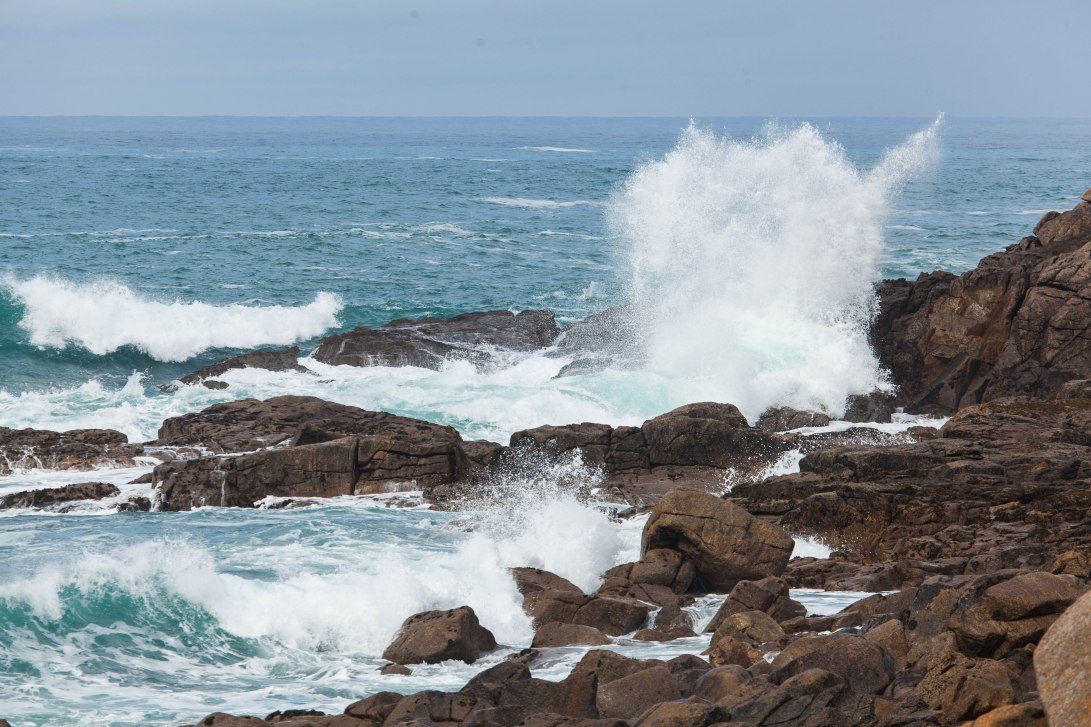
Bolstered by the wren’s enthusiasm, I made my way towards the northern side of the island, where the infamous Hell Bay laid waiting. So called because of its treacherous and unforgiving nature that had caused many a shipwreck in years past, it was hellish and beautiful in equal parts. I perched on a plump cushion of downy grass and watched the show – a dramatic display of rumbling waves, churning currents and seething white froth that surged up as each wave receded. Although each collision was intense, every so often a particularly furious wave thumped the rocks, sending vast plumes of water skywards. Backed as always by the wailing gulls and squealing oystercatchers, it was a feast for all the senses.
IMG_0293

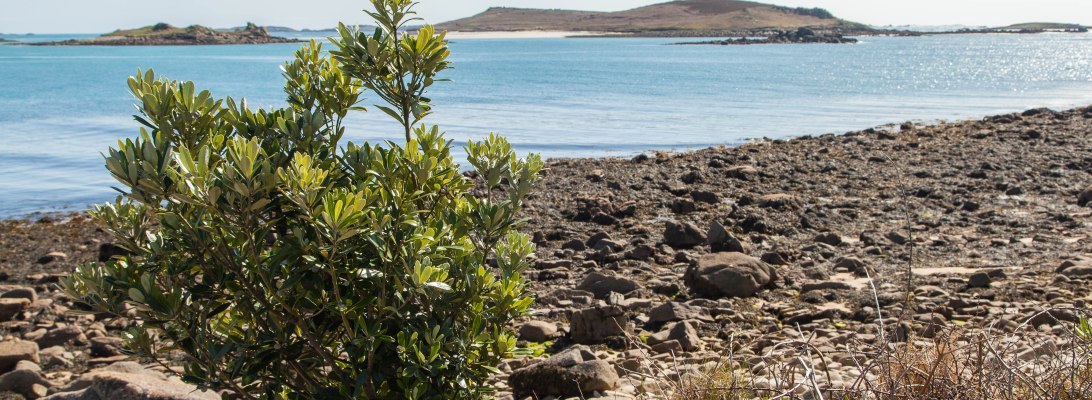
Time was pressing on. Conscious that I didn’t want to miss the only boat back to St Mary’s, I hugged the coast and followed the beaten track down the western stretch of Bryher. Red Ruby Devon cattle watched me cautiously, blinking with big bottomless eyes. Before long I reached Rushy Bay, and the sun was shining beautifully. I ate my lunch on the sand, which as always on Scilly was golden and impeccably clean.

IMG_0587

Replenished, I began the search for what I’d come here to find: the dwarf pansy. With flowers 4-8mm long, I braced myself for a challenge. During my research I’d learned that a good spot on Bryher was “the sandy turf behind Rushy Bay”, which at the time had seemed a doddle. How much sandy turf could there be? I thought, quite deluded. True, the area wasn’t vast, but when you were looking for a flower that could fit several times on your fingernail, the sandy turf seemed to expand tenfold. I’d found the true meaning of “needle in a haystack”.

IMG_0557

Wondering why I’d chosen to torture myself, I began to scour the ground, peering between thick grasses for a glimpse of violet. I found plenty of insects; sandy brown spiders that skittered in and out of sight (small enough not to trigger my panic response luckily), black beetles I couldn’t hope to identify and plenty of ladybirds sitting prettily. No such luck with pansies, though. Soon my knees and back began to ache so I tried my luck on Heathy Hill, another good spot for dwarf pansies and orange birdsfoot, a rare member of the pea family I was also hoping to find.

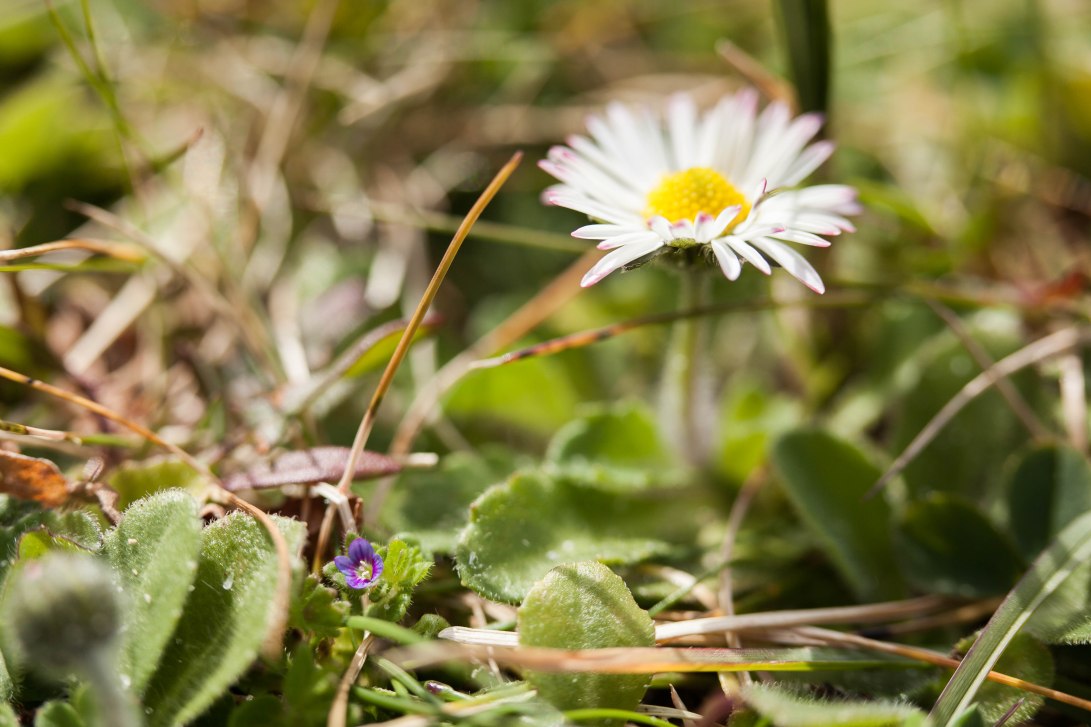
On the way, I stopped to admire the daisies. Interestingly, these common white flowers used to be known as “day’s eye” because they opened during the sunlight hours and closed at night like blinking eyes, but this soon morphed into daisies. By chance, my gaze wandered to a minuscule flower with purple petals that I could barely make out with the naked eye. In a slightly embarrassing lapse of composure I felt tears of joy prick the backs of my eyes, but I remembered that there were a lot of tiny flowers on Scilly. Due to the poor, acidic soil, often only small species could survive here. I knew I shouldn’t get my hopes up. It may not be my prized pansy, but I still lay sprawled on the floor photographing it for a good long while. Just in case.
IMG_0408

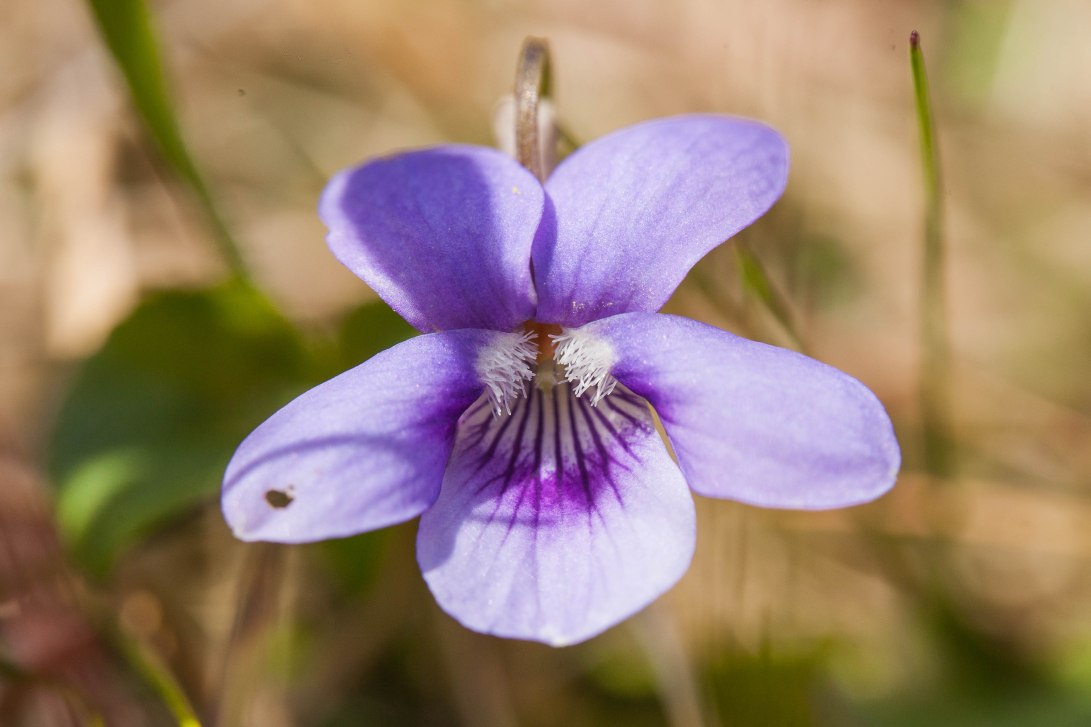
I headed further west towards Heathy Hill. Here I found a rather large cluster of blue-violet blooms and once again I was stumped. What if these were dwarf pansies and I hadn’t made full use of the opportunity? So, even though the petals looked a little large, I spent another twenty minutes rolling around in the grass getting very atmospheric photos of what could have been Scilly’s most common wildflower.

Back on St Mary’s that evening, at a wildlife talk at the village hall, I consulted Scilly naturalist Will Wagstaff about my finds. The second species I had found was dog violet, so not even a pansy sadly, but he couldn’t identify the first flower I found, which was quite intriguing.
IMG_0478

The Avian Orchestra

There is an overwhelming quiet that comes with winter; a hush descends over the landscape that only adds to the bracing chill. As the season turns, the first few tentative voices break the spell of silence and before long there is an overpowering variety of diverse voices filling the air. While in the height of spring there can be hundreds of songs reverberating through the trees, there are a select few who can be heard again and again, reliable as the seasons. I took it upon myself to begin to tune in to this soundscape, a treat for the ears. Learning to birdlisten not only unlocks the ability to distinguish birds by song, but is also very useful as advanced warning for the reveal of the bird itself.

Robin (Erithacus rubecula)

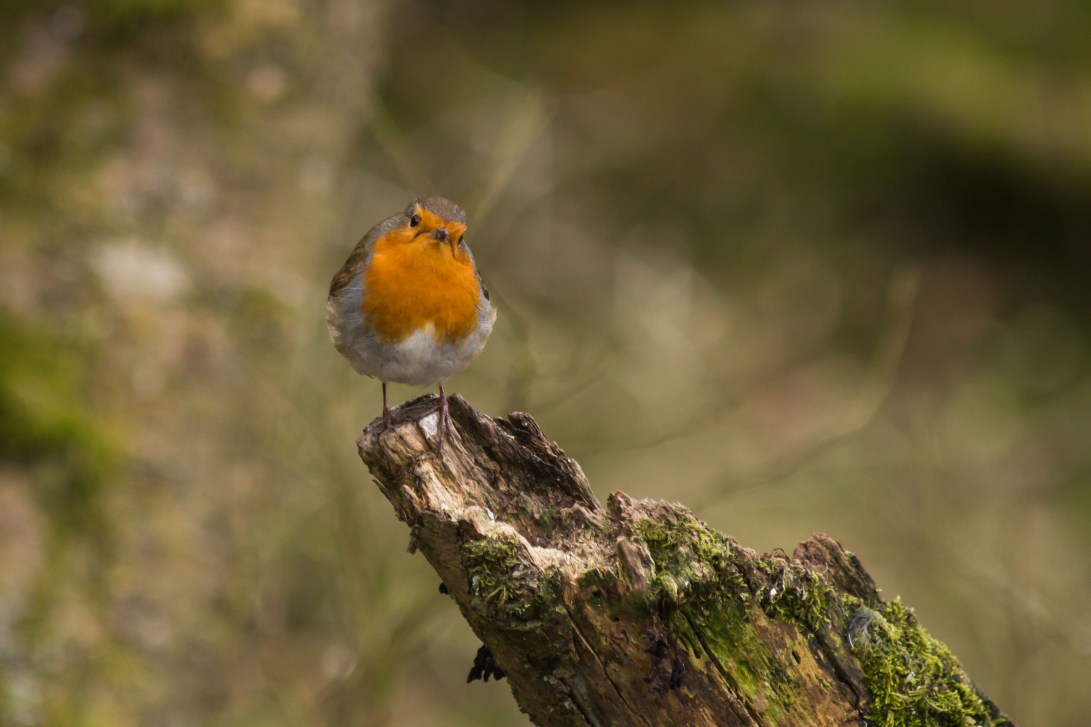
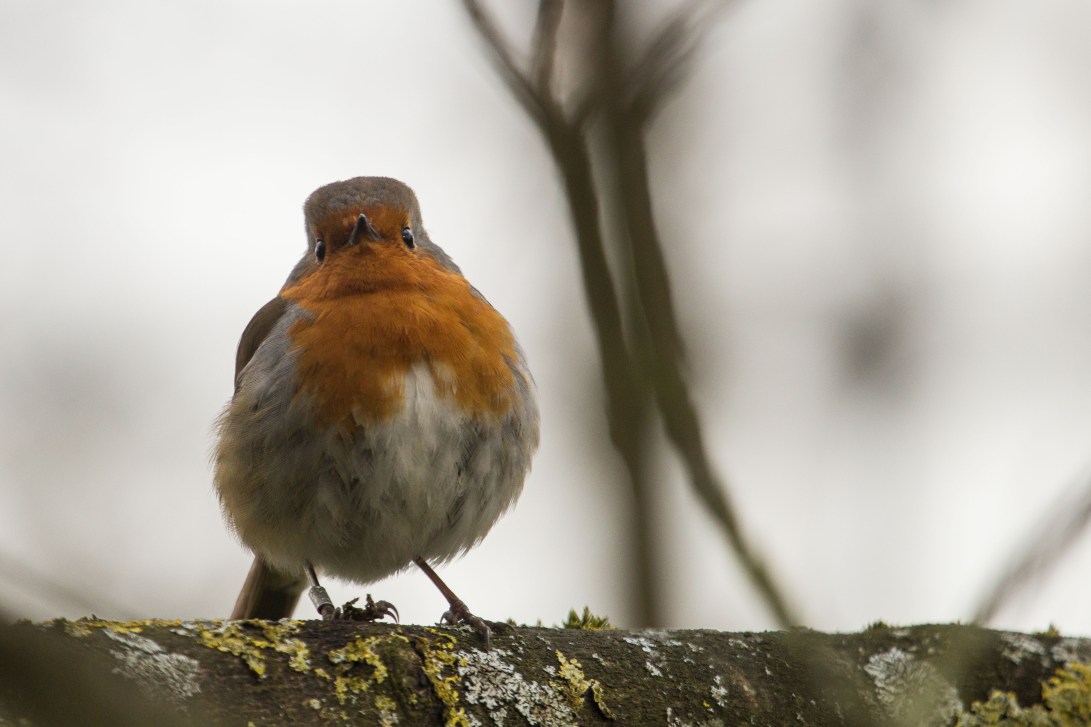
Perhaps the most significant voice is that of the robin, mainly because he never left the scene when other, less hardy birds took off for warmer climes. Even through the dark, bitter winter the robin endures, his lone song often the only consistent sound during the colder months. In spring males and females pair up and defend their breeding territory, often the first to start singing and the last to finish.

The robin’s song is a delightful melody; a high, twittering burble heard from all around. Although varied in its range and tempo, the robin’s voice is almost unmistakable – high, thin and soft but still richly diverse. Hear the robin and he won’t be far away, perching in plain sight and puffing up his red breast as he fills it with air. He is a proud bird, often chasing other robins from his patch, but with a voice as pretty as his, who can blame him?

IMG_9114

Wren (Troglodytes troglodytes)

Another commonly heard voice belongs to a rowdy bird that makes up for small size by belting out a piercing song for everyone to hear. The wren can often be seen speeding bullet-like through knee-high bushes. The wren sings like it’s scolding somebody; a furious round of high, loud chirrups with a distinctive trill at the end of some phrases that sounds like a miniscule machine gun. If you hear a very loud song wait for the trill, as it will inevitably come sooner or later and you’ll know you have your wren. Scan the lower branches and before long a stout brown bird holding its tail up like a stiff flag will appear, giving you a fierce reprimanding for something or other.

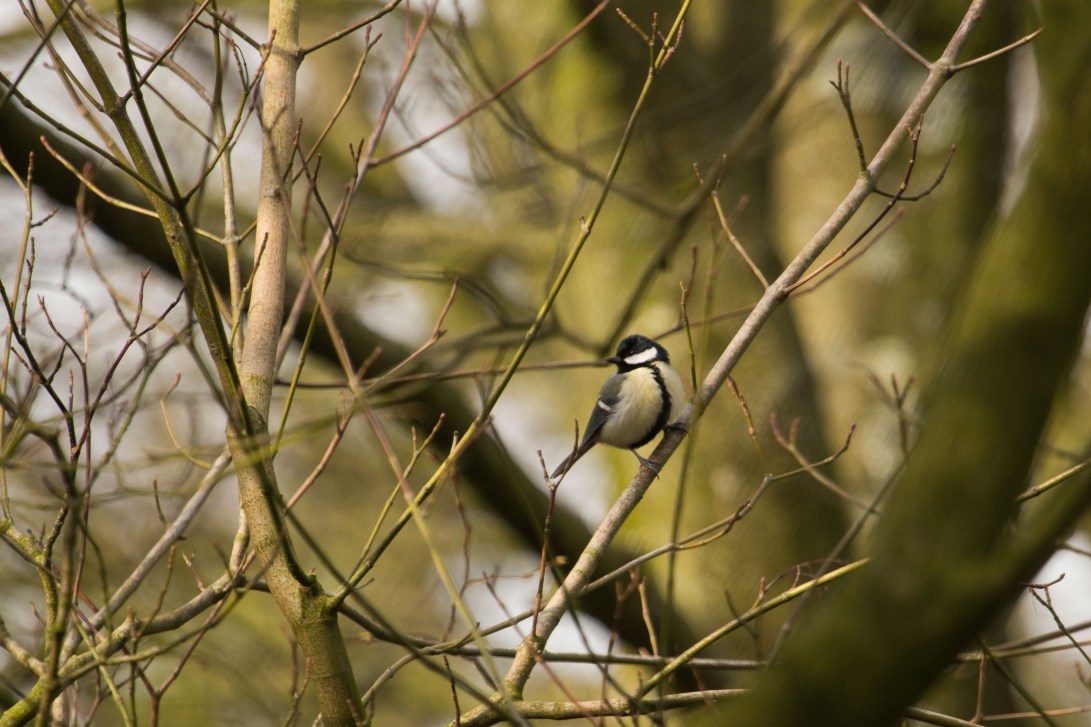
Great Tit (Parus major)

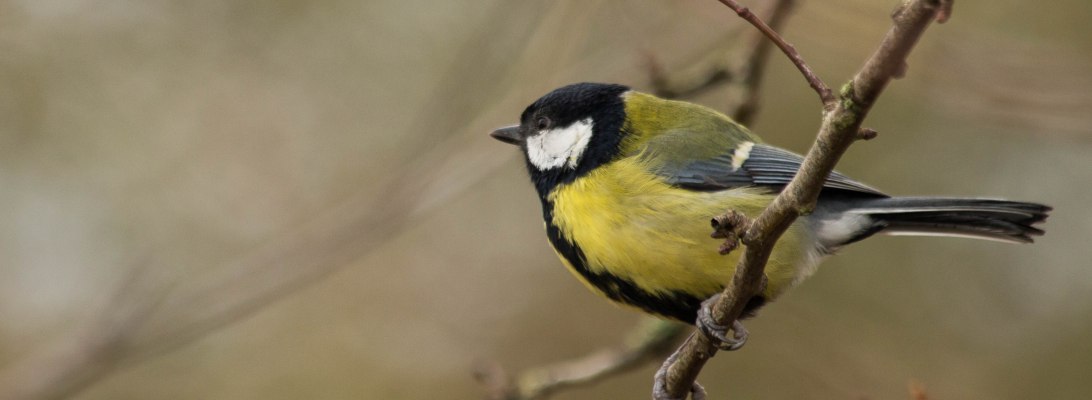
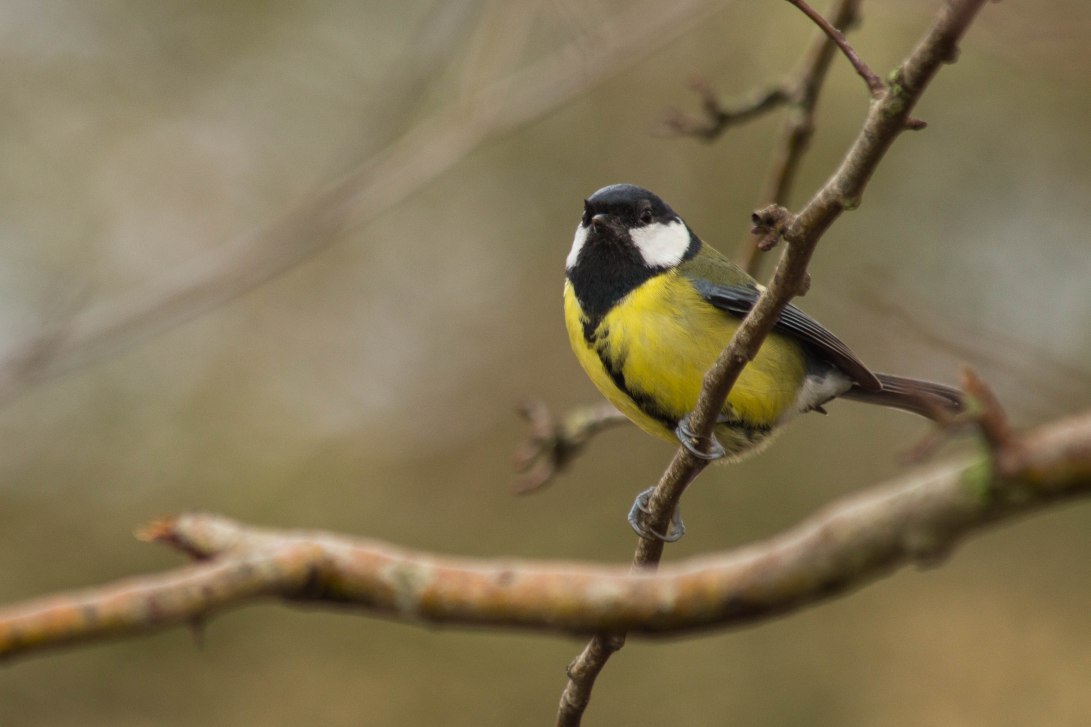
If robins and wrens are violins in the avian orchestra, the great tit is percussion; not quite as dazzling but just as important. In early spring, a two-toned call can be heard among the other singers, with emphasis on the first syllable. I like to think of it as the sound of a saw – effort on the forward stroke, then quieter on the draw back. After a few strokes of the squeaky saw there is a pause, and then the great tit sings it again, very resiliently as if rousing the troops to join in.

The great tit has other songs in its repertoire, including a “churr” call that reminds me of the chatter of a magpie, but a little faster and far gentler. This is the great tit’s alarm call, a sign of agitation that indicates something has disturbed it.

IMG_8751

Blue Tit (Cyanistes caeruleus)

With a lot of birdsong, it can help to adopt a Morse code approach when it comes to deciphering the rhythms of some particular species. Take the blue tit. A common little bird with splashes of blue, green, yellow and white with a fetching black goatee. The blue tit’s song is similar in tone to the great tit but gentler. Among its quite varied repertoire is a particularly distinctive melody, consisting of two clearly separated notes followed by two or three much faster ones. In dots and dashes it would look something like this:

– – . . .

Imagine, perhaps, that the bird is saying “I’m. A. Pretty Bird”, putting particular emphasis on the first two words.


If you like this, have a read of this post and find out where my inspiration to start birdlistening began.

Living off the Scilly Land

For my final major project at university, I am journeying to the Isles of Scilly for a photography project on this wildly diverse archipelago. My focus is currently the unique wildflowers of the islands, some of which are not found anywhere else in the UK such as the dwarf pansy. However, to broaden my understanding of Scilly (and also because it recently snowed there which has made me question my chances of seeing wildflowers next month), I have been researching how the first human residents used the land and its resources, which in some cases are vastly different ways to today.

  • During the Neolithic period, tribes were known to mark their presence on the islands using large stone monuments known as megaliths. These were for ritual or territorial purposes.
megalith
A megalith at Castle Down, Tresco (Source: The Megalithic Portal)
  • Wars and disputes subjected the inhabitants of Scilly to poverty and famine. One method of surviving such lean times was to forage seaweed. In 1684, production of soda ash from seaweed began, a material used to make soap, bleach and glass for the mainland. This practice lasted well over a century, and must have had disastrous impacts on wildlife.
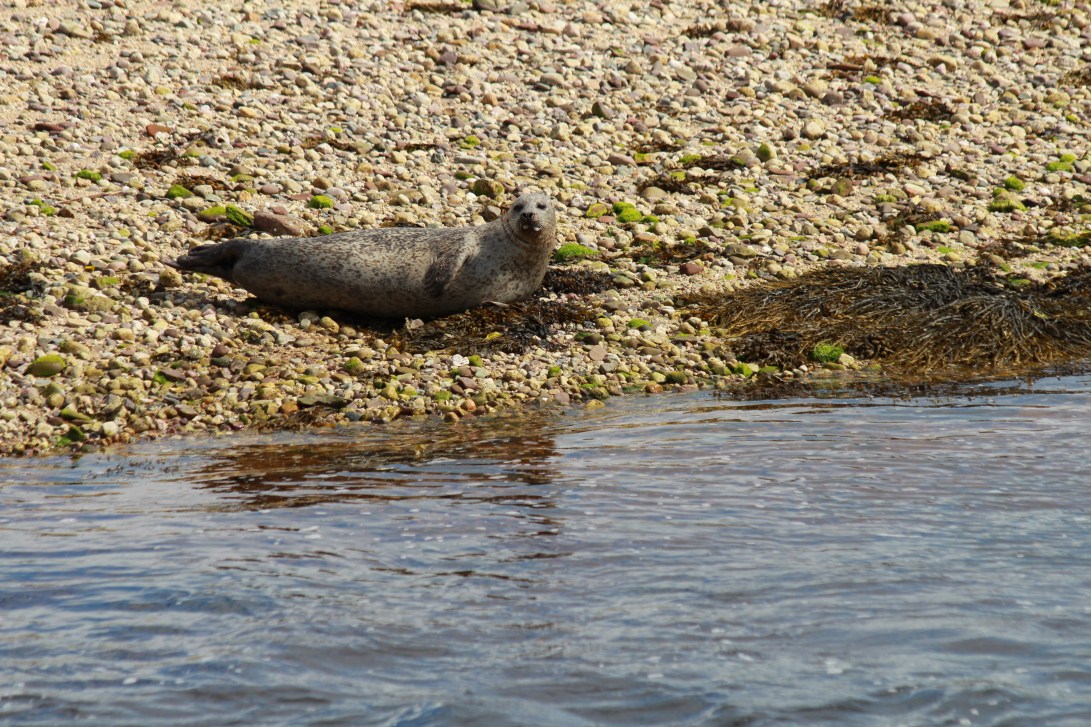
  • The Bronze Age saw the first permanent populations arrive from west Cornwall. They fished, farmed, hunted and scavenged all sorts of foods to make their living. Birds such as razorbill, guillemot and even ravens and swans were hunted for their meat. Seals and the occasional whale were hunted to supply oil used for lighting.

IMG_9258

  • Fishing was a vital source of food all year round, and once caught the animals were dried by the wind or salted for preservation. A vast amount of limpet shells suggests they may have been used as bait, and scallop shells to hold lighting lamp oil.

IMG_0979

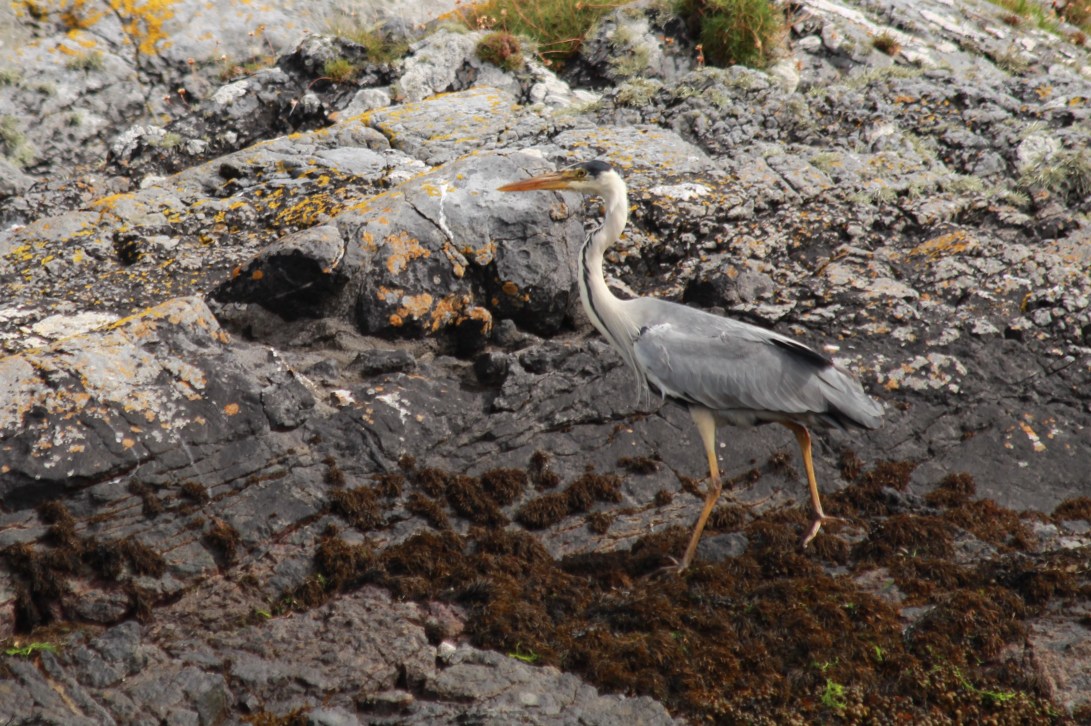
  • By the time of the Roman invasion of Britain in AD 43, red deer had disappeared and dogs and rabbits were introduced. The birdlife grew in variety, suggesting the environment was changing. New bodies of water attracted fowl such as bittern, heron, snipe and more excitingly, evidence of chough. Remains of what are believed to be these birds and dating back to the 2nd century AD were discovered on St Martin’s.

IMG_9145

  • The Duchy of Cornwall was established in 1337, when the title of Duke was granted to the Black Prince. Payment for a ledger dating from that year was 300 puffin, giving the impression that these coastal birds were a lot more abundant than in modern day. The puffin was highly valued, considered a fish instead of fowl, which allowed it to be eaten during Lent. Five hundred years later, although the monetary value of Scilly hadn’t been altered, the exchange rate for puffin had surged by 600% to fifty birds.

Incidentally, all of my photos in this post were taken in Scotland, but here’s hoping next month I’ll be capturing some Scillonian versions!

Spring Beginnings

For many wildlife enthusiasts, spring is perhaps the most eagerly anticipated season of the year, especially for birdwatchers. Migrants arrive from their wintering areas and settle back into their breeding grounds. After the cold of winter there is suddenly a buzz of activity, especially for males hoping to attract a female.

While some bird displays leave something to be desired, other individuals put in great effort. As we move into March, birdsong is elevated both in volume and intensity. Greenfinches have a particularly impressive display that involves large bursts of activity. The male, dressed in his finest vivid green plumage, circles in wide loops with emphasised slow wing beats, looking more like a butterfly or a bat than a bird. During these theatrical acrobatics, the males constantly call out to the females with twittering phrases that finish with a long, nasal “dzweee”. If the female is won over, the new pair often perch high in the trees, with the male always in the open to ward off any other potential new suitors.

The arrival of March also brings in the sand martins, one of the UK’s earliest arriving migrants. The smallest of the European hirundines (swallows and martins), sand martins have arrived from Africa, crossing the Sahara desert to reach their nesting colonies and excavate tunnels in sandy vertical banks. Over the past fifty years, populations of sand martins have crashed twice because of drought in their African wintering grounds, which makes protecting their breeding sites in Britain even more important.

Elsewhere in the arrivals gate are chiffchaffs, and from late March to April these plain-looking birds can be heard calling their name in woodland copses and shrubby undergrowth. A tiny warbler no larger than a blue tit, chiffchaffs have spent the winter in the Mediterranean and western Africa. Breeding begins in April to May, when the female builds a domed nest that lies very close to the ground. Incubating eggs and rearing the chicks are solely the female’s responsibility. Chiffchaffs usually leave the UK in September, heading south towards France and occasionally on to West Africa.

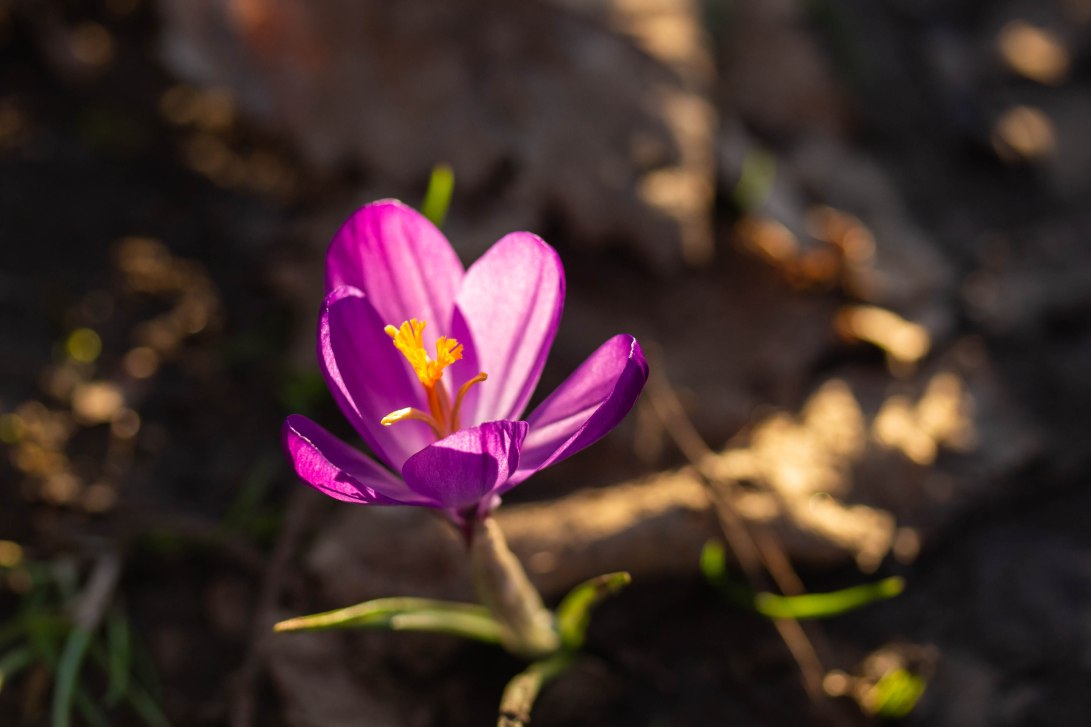
Despite the recent snowfall that has smothered the emerging snowdrops and crocuses, keep an eye and ear out for the arrival of spring migrants who will hopefully find some warmth as they prepare to settle in for the breeding season.

Learning to Birdlisten

Today marks the beginning of a new project: learning to birdlisten. It’s a much-used cliché but I have been an avid birdwatcher since I was a child. I’d sit out in the garden, hold as still as I possibly could, and after a while birds would begin to show, hopping out from under bushes and descending slowly from the treetops. This gradual emergence, the steady drip-drop of birds, was so exciting to me. The species would usually be very common – robin, dunnock, blackbird – but occasionally a blue tit or great tit would appear, and to my amateur eye these were very special indeed.

As my knowledge gradually improved, I began to notice more species and although the trusty robin and dunnock never grew boring, they lost their shine among more colourful or charismatic varieties. One by one I added birds to my repertoire, and although I didn’t notice my mental list growing, soon I could identify a wide range of species. Although waterfowl and waders had their charm, my favourites were always the passerines, or “perching birds”.

Passerines include a subgroup of species we call songbirds but are more accurately named oscines – birds that establish their territories by means of musical vocalisations. It never occurred to me why the singing birds attracted me most, until I turned my attention to listening for birds instead of looking for them, and then it became abundantly clear.

Birdsong is the soundtrack of nature. Even for me, a keen bird enthusiast, birdsong had blurred into the background of my time spent outdoors, nothing more than a pleasant backing track that accompanied my attempts to birdwatch. Why on earth did I let birdsong become such an unimportant feature of the landscape, no more significant than hold music? It was high time that I paid more attention to it, instead of letting it wash over my ears without acknowledgment. It is so true that we see but don’t observe, but it is also the case that many of us hear but don’t listen.

IMG_8860

Author of “Birdwatching With Your Eyes Closed” Simon Barnes points out that understanding birdsong allows us to see around corners. There’s a bird hidden up in the canopy somewhere, but unless you know its song you’ll never know what it is. I’ve had this frustration many times, when I see the distorted outline of a bird but no characteristic features that give it away. If I hadn’t neglected my auditory senses, I wouldn’t have been disappointed when the bird hopped further out of view.

And so begins my journey to learn the language of birdsong. It seemed a daunting prospect at first; to my untrained ear all chirrups and whistles sounded identical. However, like any problem, it is imperative to break it down, and that makes it far less intimidating.

I have already made progress. First was the robin: an unmistakable bird in appearance, and a good place to start when learning birdsong because of its presence all year round. During the usually hushed winter months, the robin still sings, an isolated soloist filling cold air with thin, gentle melodies. Spring is by far the most frustrating time to begin birdlistening, so to hear the robin on a chilly February morning with no other avian distractions allows us to begin to tune into this new world I for one took for granted.

IMG_8893

The wren also sings in winter, but has a far louder song bordering on rowdy. For such a small bird, the song bursts out of hedgerows, with a telltale trill at the end of some phrases, like a twirl of icing atop a cake. Then there is the two-note song of the great tit, like the squeak of a saw being pulled back and forth.

And so on. Already my ears are filling with birdsong and I’m really listening this time. Acquiring the skill of understanding this rich and varied language will not only help me become a better birdwatcher, but it will pave the way to a clearer understanding of nature as a whole – appreciating nature’s vibrant soundtrack.

IMG_8853


Signs of Spring

Here is a piece I wrote for ‘A Focus on Nature’, the UK’s Youth Nature Network, where I’ve already met some really interesting writers, photographers and artists. I’m also very proud to say I’ve just been shortlisted for the AFON Pictures of the Week 2017. If you’d like to vote for my photography, follow the instructions on this link. Thank you!


“It is a moment of quickening, of rebirth. The old, lovely story: life surging back, despite everything, once again. However spring finds you – birdsong, blossom or spawn – it is a signal: the earth turning its ancient face back to the sun.” Melissa Harrison

One afternoon as I arrived home from a university lecture I stood at the living room window and peered out into the garden as I always do. As usual, the birdseed I had put out the evening before had already gone, polished off by jackdaw and sparrow alike. Today, however, there was a crucial and very welcome difference – the appearance of the first snowdrops of the year. They were very young, still curled up tight in stiff buds, but I knew before long they would be hesitantly opening, their petals tiny white flags signalling the slow beginning of spring.

1 Snowdrop Rebecca Gibson

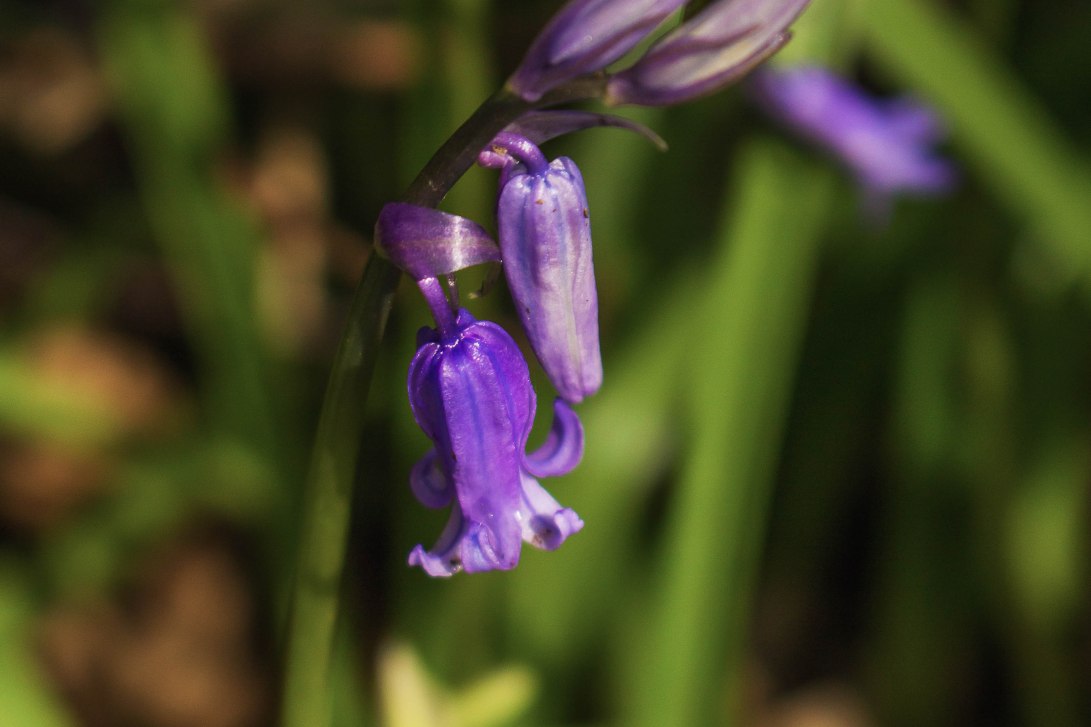
As January draws to a close, the temperature lifts and although the winter rains usually persist, our gardens are brightened by the tentative emergence of wildflowers. Bold snowdrops have led the way, but soon to follow are yellow and early (purple) crocuses, bringing a splash of colour to the repetitive greens of the lawn. Amongst all this emerging beauty is perhaps the true star of spring: the bluebell. A delicate flower more violet than blue; even one alone is a welcome sight after the biting winds and downpours of winter, but a carpet of bluebells is enough to take your breath away.

Two years ago, back home in Hertfordshire, I was stood in a patch of woodland that had long been heralded as a haven for bluebells. I surveyed the scene from a respectable distance, knowing I’d cause significant damage if I strayed from the worn path. The ocean was vast, spanning far in each direction. Together, the bluebells looked like a single blue blanket coating the tree roots, but up close each bell waved independently, and my romantic imagination gave them the quiet tinkling chime of their namesake.

2 Bluebell Rebecca Gibson

Aside from wildflowers, there are plenty more indications that spring is almost here, from birds to bees to rather odorous plants.

  • The gathering warmth of February rouses overwintering insects, such as the greenbottle fly, whose unappreciated beauty is something quite wonderful to see up close, even if they’re not always welcome buzzing around indoors.
  • Early breeding birds such as rooks will be seen gathering nesting material in preparation for the arrival of their broods. The first eggs will appear around early March, so be sure to look out for rookeries high up in the trees and listen for the constant chatter of busy parents-to-be.
  • One of my favourite spring sounds is the buzz of a busy bumblebee. As wildflowers expose their nectar, bees are quick to make use of the opportunity to gather it in the early part of the season.
  • The heady scent of wild garlic will soon be filling the air. A walk through my local park often includes a good whiff of this pungent but flavoursome plant. Note: wild garlic is similar in appearance to lily of the valley, which is poisonous, so if in doubt please do not forage to eat.

Spring is undoubtedly a time of rejuvenation – an opportunity to shake off the January blues and be inspired by the emerging life outside. As many of us live in towns and cities, it can be difficult to notice these subtle changes in such busy urban environments. This only emphasises how important it is to stop and look, just for a moment, and you’ll notice that however our world changes, nature will always persevere.

3 Wood Anemone Rebecca Gibson