Taking Off


It was definitely a wellie day. After almost a week of rain, the ground squelched and sloshed with each step. The thickest tussocks of grass were dry, but most of the ground was speckled with puddles. That wasn’t a problem though, and by the looks of the oranges and yellows appearing to the east, the sunrise was going to make some welly wading more than worth it.

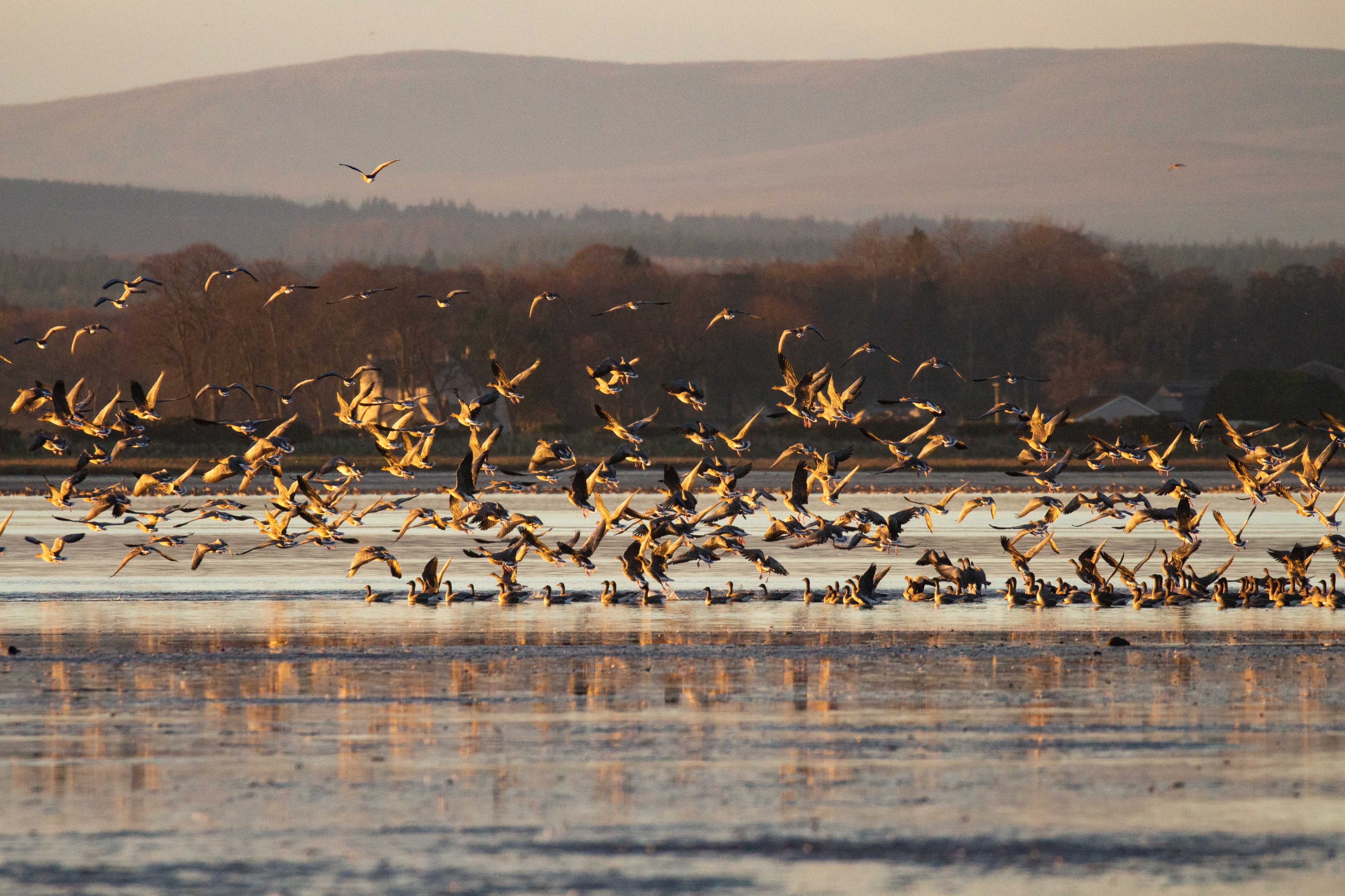
Slinging my camera across my back and clutching tripod and camping chair in each hand, I threaded my way around the deepest puddles, leaving indentations in the grass behind me. The chattering babble of thousands of geese easily crossed the still bay, and in the gloom I could just about see them packed tightly together on a skinny sandbar. The tide was coming in so they didn’t have long. Neither did I, so I hastily set up the tripod and waited.

In minutes the sunrise had transformed from a haze of yellow to a blaze of scarlet and bruised purple. That was where the geese would soon be heading – taking off in swathes and moving inland to browse in the nearby fields. As if someone had turned up the volume, the honking increased drastically and a number of them took to the air, triggering others around them to follow. Most stayed behind though, leaving the ambitious few to form a loose skein that blew across the sky like a stray ribbon. They crossed from the pale navy light into the fiery sunrise and shrank to dots. A little while later another group took off, then another, and for the next hour and a half the crowd on the sandbar slowly diminished. It was lucky for me that they left in shifts because I had plenty of opportunities for photos.
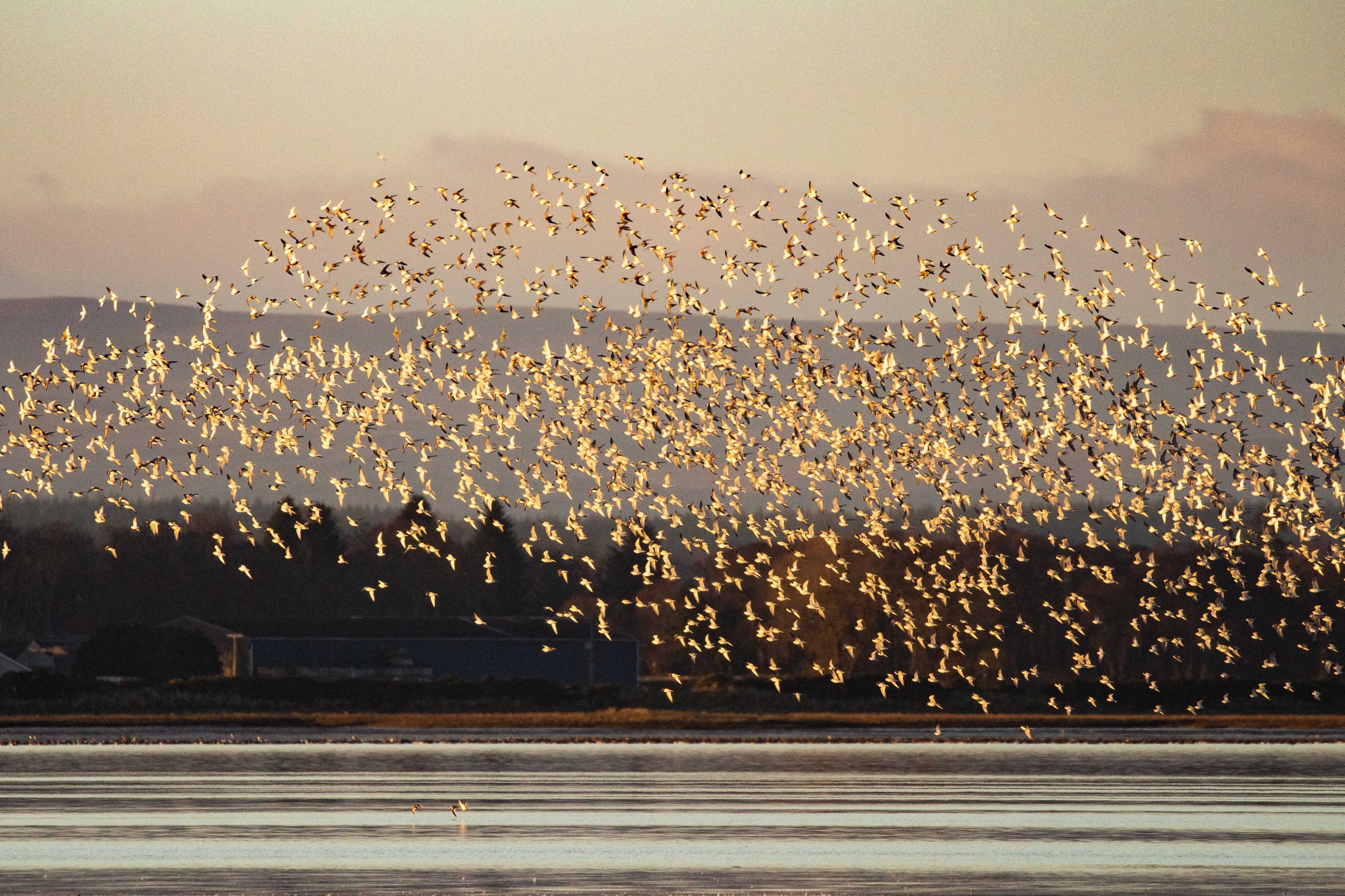
Although I’d come especially for the geese, there was an unexpected bonus display from a large group of knot that was murmuring like starlings over the water. The tiny waders climbed high into the sky, and each time they twisted back on themselves the sunlight caught their white bellies and the whole murmuration flashed like a torch. As the tide continued to sweep in, the knot were pulled further and further towards us until they settled on the receding sand and began to forage among the oystercatchers.
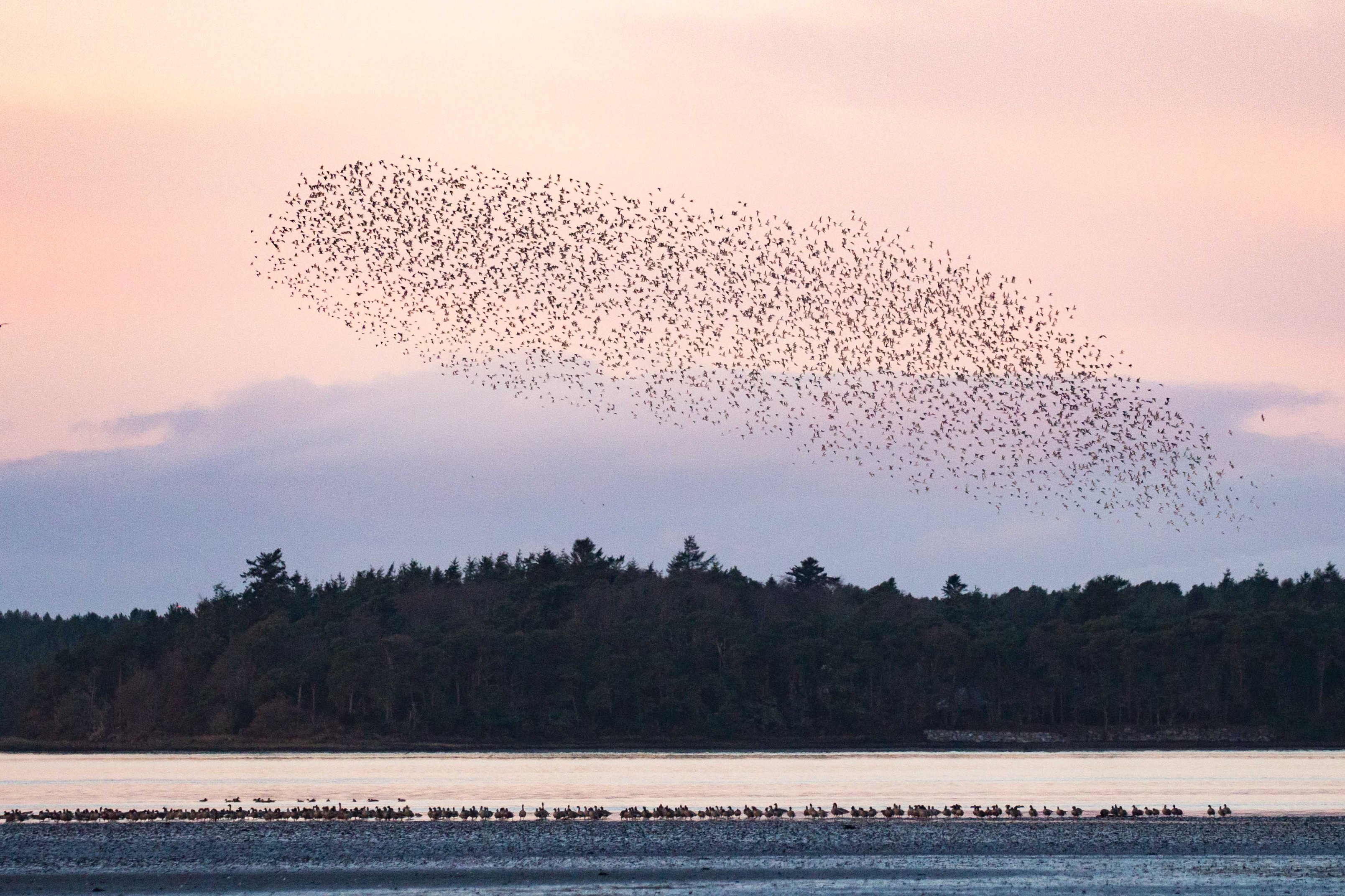
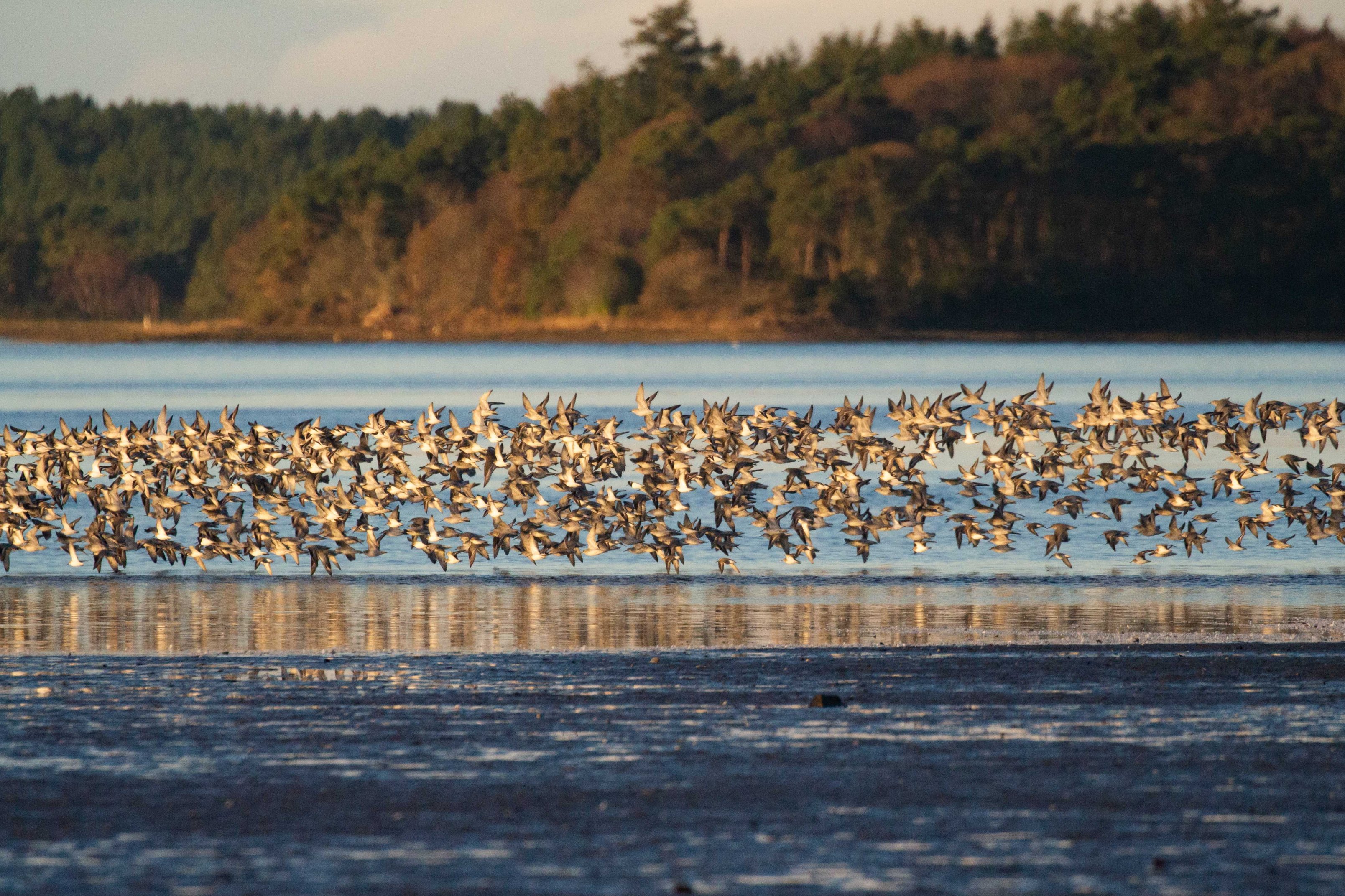
Eventually, all the geese had departed for the day, and an unseen distraction had frightened the knot back into the air, where they circled several times before settling far across the bay and out of sight. In a fairly short time, the thousands of birds and their incessant chatter had gone, leaving the bay smoothed over by silence.  
Winter Wishes


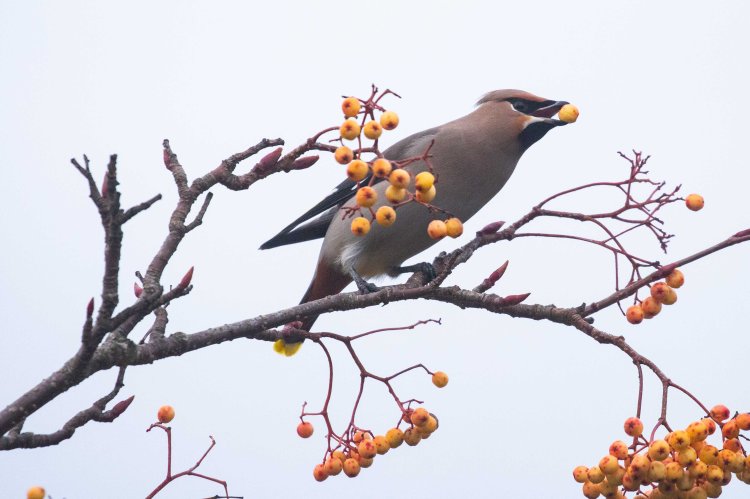
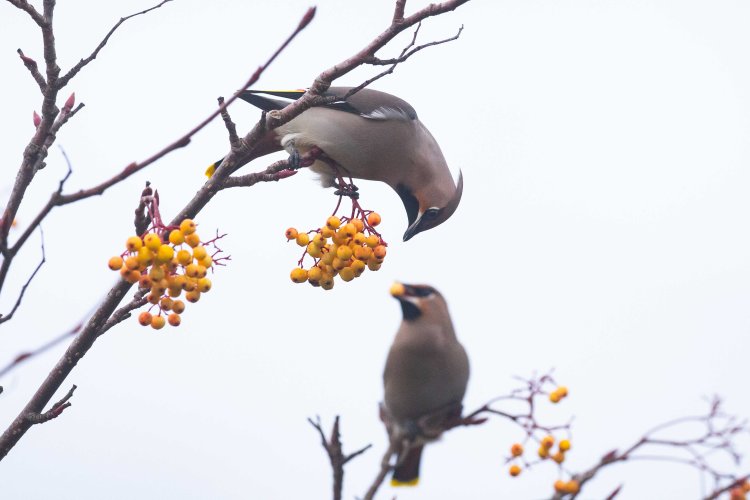
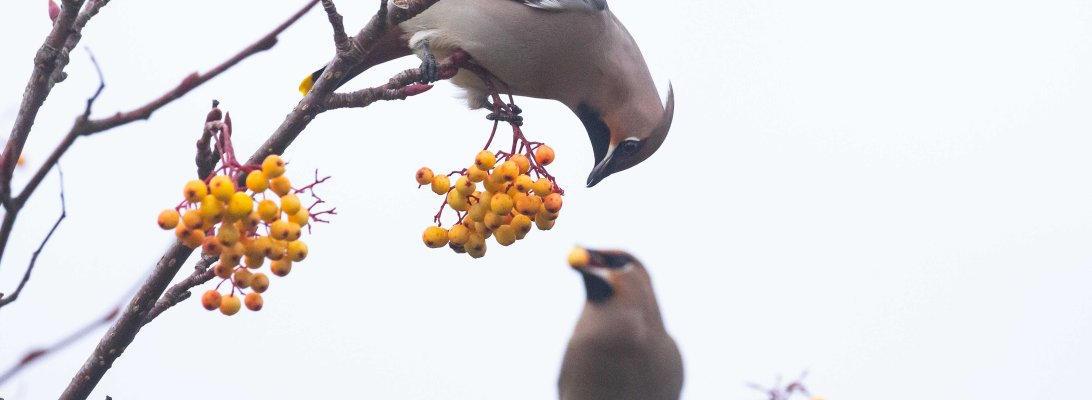
For the past few weeks I’ve been in such a wintery mood. I’m so excited for Christmas and have been itching to get outside into nature and see some new faces. A particularly exciting winter sighting this week has been the arrival of waxwings in my local town. I’ve been lucky enough to see them three times so far. I just love watching them gobble up the berries and seeing their crests blow in the wind.

Around the size of starlings, waxwings are winter visitors to Britain, arriving from as far away as Russia to spend the season feasting on berries in the UK. Although populations fluctuate each year, there are often gatherings of hundreds of waxwings, which are called irruptions. So far I’ve seen two so it’s been a slow start to the season, but even seeing a pair at close range is special. Before this week, I’d only seen waxwings once before and they were far off in the distance. This time, I could approach carefully and watch them right above my head.

This month I’ve also been looking for other winter specialists. I started a species list for the first time this year and so far I’ve recorded 114 birds, 29 mammals, two amphibians and two fish. And with seventeen days of 2020 to go there’s still plenty of time to tick off a few more! I’m particularly hoping to see mountain hares, snow buntings, fieldfares and maybe a ptarmigan if I’m really lucky. This weekend I tried to find my first mountain hares and snow buntings from the base station of Cairngorm Mountain but didn’t manage it. Still, these near misses will make eventually seeing them even more special. Who knows, maybe I’ll get to see mountain hares on my birthday on the 28th. That would be an incredible present!

The Forests of Home


It goes without saying that I had an incredible time in Norway. I love being by the sea – it’s part of the reason why I moved to the Moray coast. Although, I also have a strong love for forests, and during the first few months in my new home I found myself drawn away from the coast and towards the sprawling Scots pines. I walk the dog along tangled trails and she amuses herself with sticks while I gaze up into the trees, camera slung on my back. It’s not that I’ve lost touch with the ocean, but I lose all awareness of time in the forest and wander for hours until eventual hunger pulls me back. Trees and the creatures they shelter provide endless fascination to me – I become immersed in the forest in a way that I can’t by the sea without the hassle and expense of scuba diving.  

So although humpback whales erupting out of the water and orcas cruising alongside the boat were encounters that I will never forget – and there was a tangible feeling of sadness among the group as we made our way back to the UK – I can’t deny that I sat quietly containing my excitement. I couldn’t wait to see how the forest had changed while I’d been away and how wintery it had become.

It took us two days to drive from Gatwick airport all the way back home and I watched with growing eagerness as barren fields blended into mountains. Unfortunately I was bogged down with deadlines for the first few days, but at the weekend I made time for my first forest walk in a month. I roamed for three hours, and was reminded yet again how nature can constantly surprise you.

The first bird I saw was a goldcrest, which was flicking to and fro through the undergrowth just out of sight. I crept forwards until a particularly irksome branch had shifted and I got a clear view, but I knew getting a photo would be next to impossible. Not only do goldcrests love staying concealed, but they also never stop fidgeting. I stood still and turned on my camera, realising my settings were still adjusted for the northern lights from earlier in the week.

The goldcrest leapt up and clung to a twig with its back to me – just enough light for a photo. I pressed the shutter, hoping it would turn and show me its face and crest, but naturally it bombed back into the shadows. I left it to its foraging and pressed deeper into the trees.

Sunset was at 3:30pm and at 1pm the light was already vibrant with gold, hitting the trunks low in diagonal shards. It was blinding in some places and almost dark in others. I heard the delicate bell’s chime of another goldcrest high above me and saw the bulkier bodies of their regular companions, the coal tits. To think I’d been watching willow tits in snowy Norway a few weeks before!    

I hiked up one of the many sloping hills – mountains in miniature – and admired the view from the top. My breath tumbled upwards in a white cloud turned gold in the light. After following a narrow column for a few metres it was time to slide back down to ground level and my eye caught on a treecreeper as it crept up the trunk. What a perfectly named bird.

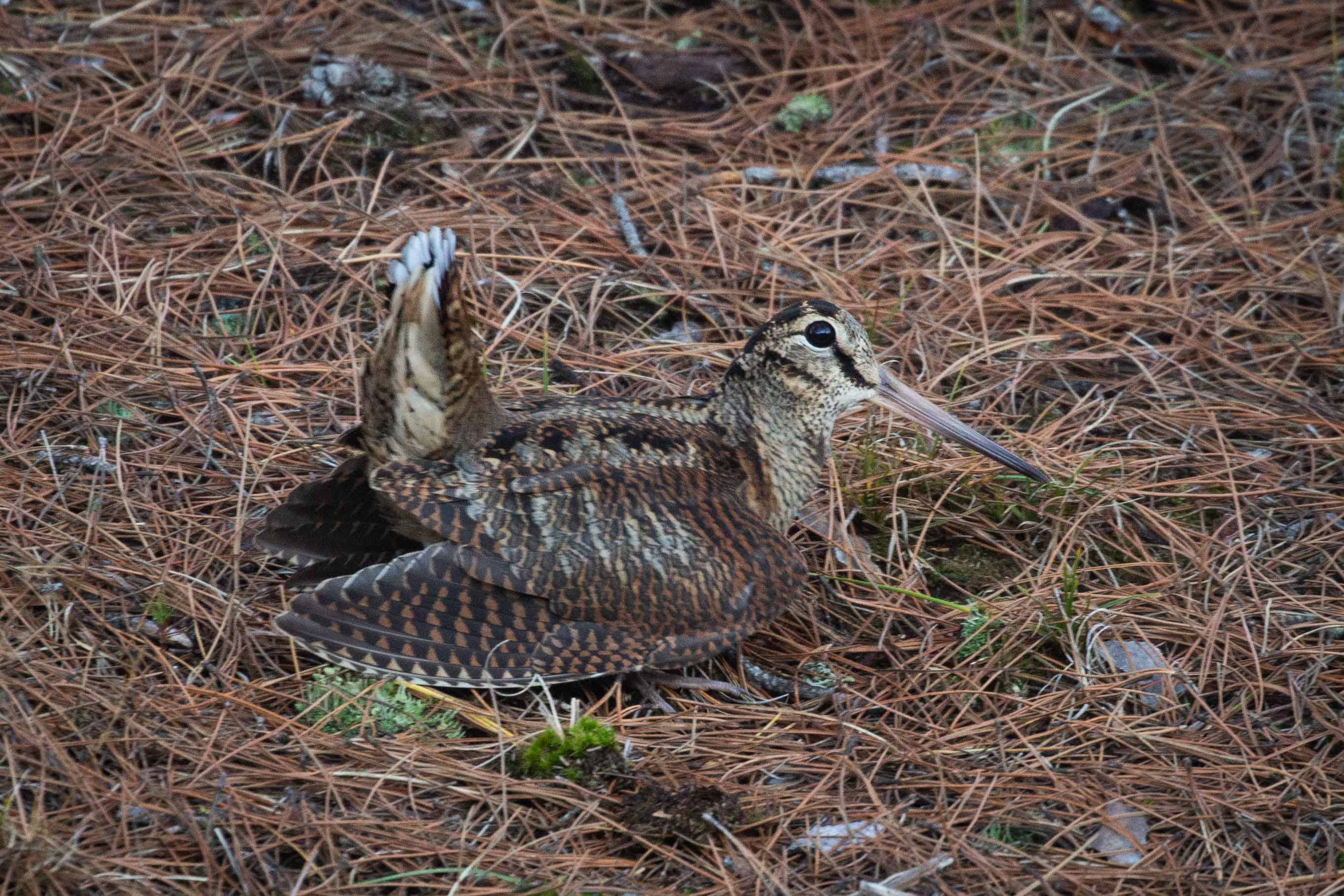
Up ahead was a clearing, which was especially lovely in the spring when full of yellow gorse but rarely revealed anything of real interest. The birds stuck to the protection of the trees. I stopped to push numb fingers into gloves when behind me I heard a sound like a plane engine at scarily close range. Startled, I spun round and saw a brown bird come rattling around my head and land with a crash on the ground.

Without a second thought I lifted my camera and just as I pressed the shutter the bird lifted its wedge tail and took to the air again, disappearing immediately. I quickly checked my photo and was relieved to see I’d caught it. A barred head, mottled brown plumage and wings that made a sound like something caught in a fan. My first woodcock!

I was stunned, barely believing what had just stormed in front of me and barrelled away again almost within the blink of an eye. The epitome of “right place right time”. Even the goldcrests and coal tits had suddenly gone quiet, as if equally surprised at the encounter. I felt the familiar flutter of excitement in my chest and was hooked all over again. It was good to be home.

The Rut


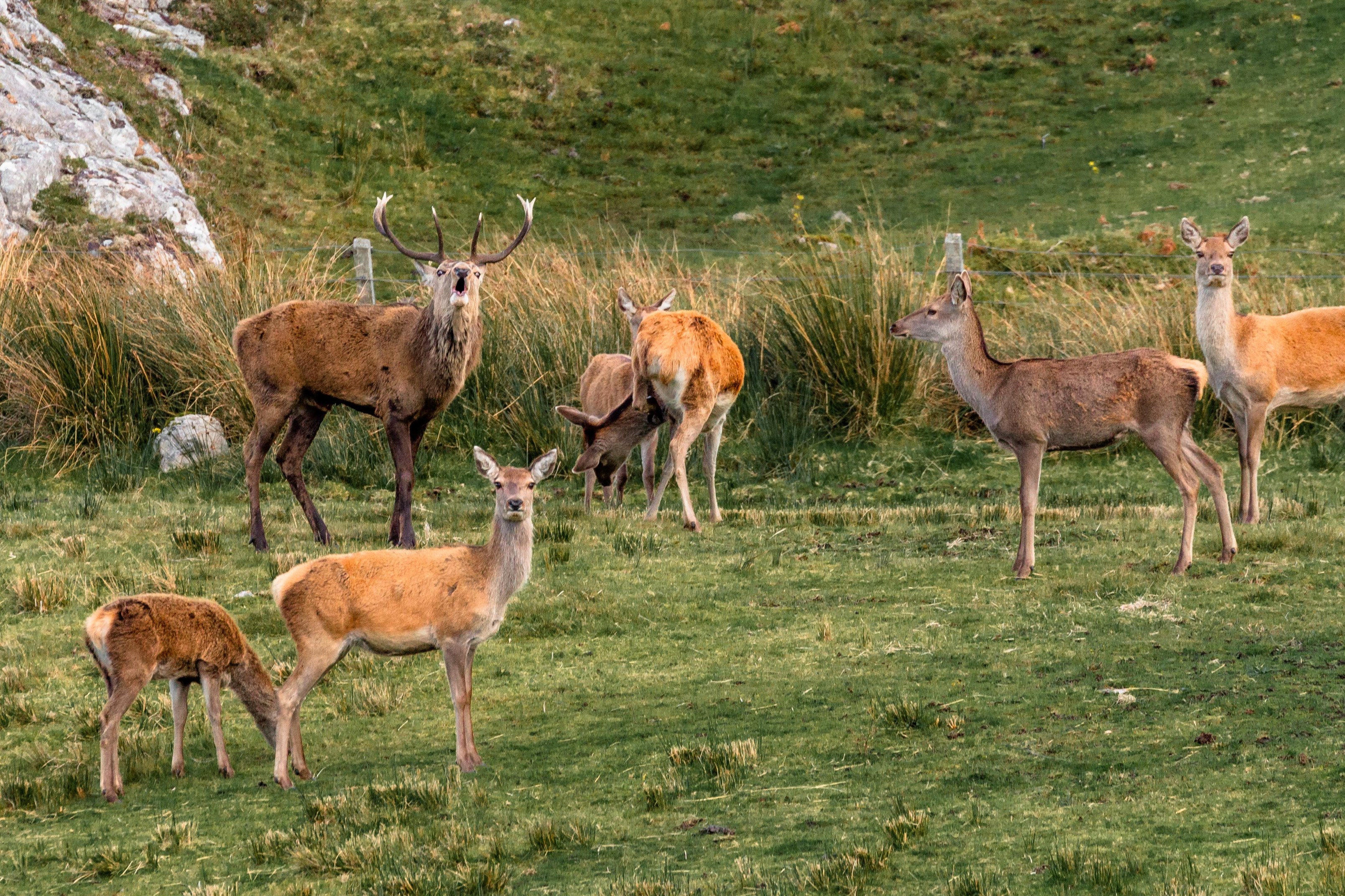
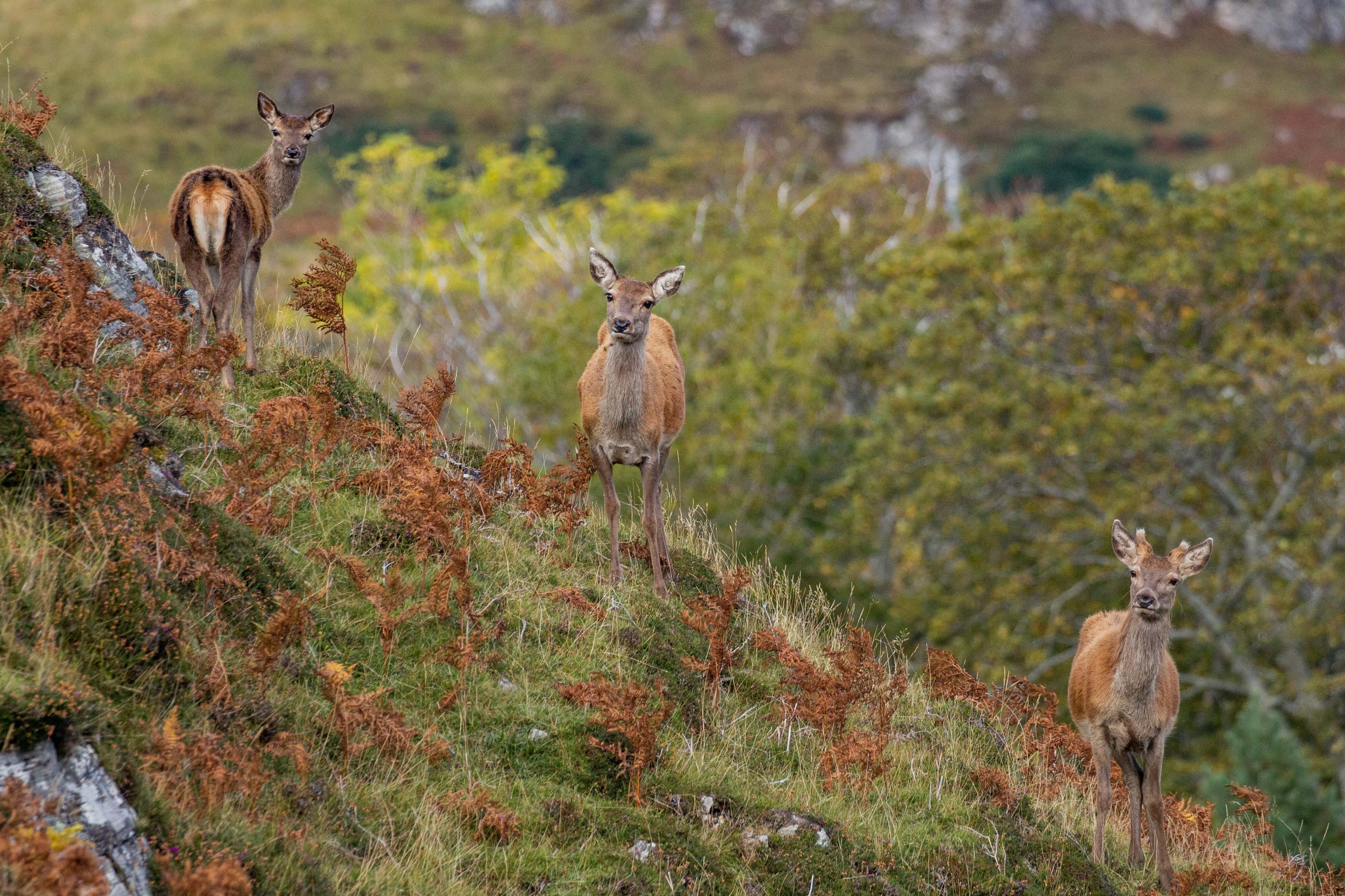
For years it’s been a dream of mine to watch Scottish red deer in the autumn so last week my boyfriend Steve and I journeyed to the west coast to find some. We saw deer every day but they were often on the peaks of the hills and too far away for photos. Even if the sights weren’t great, the sounds were fantastic. At night in the chalet I’d pause during dinner after hearing a faint mooing sound from outside. It wasn’t cows but the bellowing of breeding stags on the hill across the loch, working hard to protect their own harems of hinds or attempting to steal someone else’s. They bellowed long into the early hours and several times I woke up disorientated, wondering if I had dreamt it.

A distant hind on the crest of the hill.

On the last full day of the trip after yet more distant silhouettes on the horizon we turned around and started driving back to the house, just about ready to accept defeat. In an almost cliched “nick of time” moment Steve suddenly spotted a stag with his harem in a field not far from the road. Naturally there was nowhere to pull over so we ditched the car in a layby, walked back up the road and crawled the last few metres on our bellies to avoid scaring the deer.

A stag bellows in front of his harem of hinds

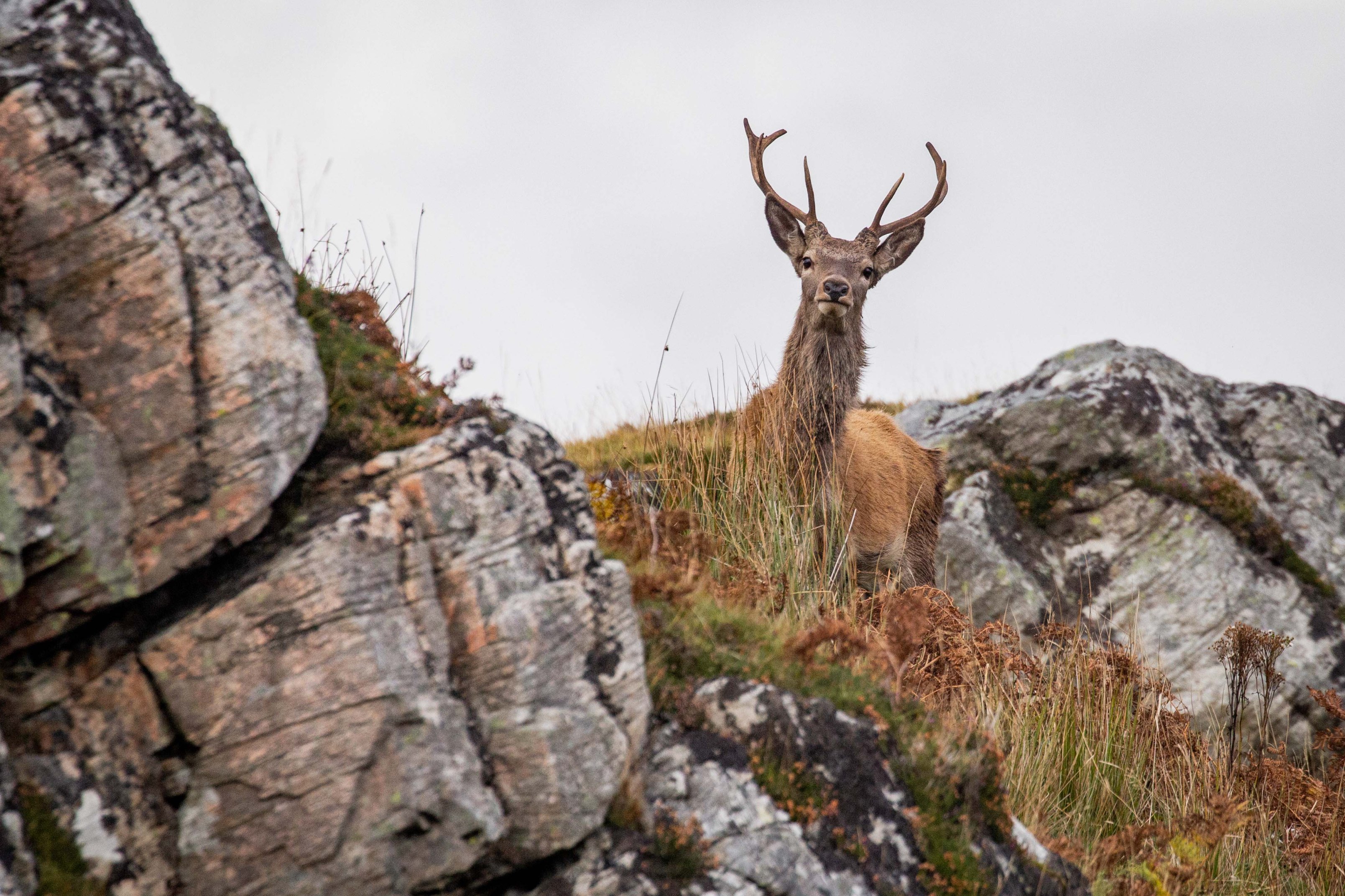
After several minutes of crawling I discovered that my hands were covered in roughly a dozen ticks, all tiny and luckily unattached. However, the ticks, mud and poo were all worth it for the views. The stag in the field below was in full rut mode, bellowing every minute or so and chasing the hinds around. None succumbed to his advances but he persevered, even jumping the hilariously named “deer proof fence” with ease. As well as the larger stag, there were also several younger stags feeding on the hill at eye level with us. They stared us down every time we shifted position but seemed content to carry on as normal and let us watch.

After several days of hearing deer without seeing many, getting to spend a couple of hours being completely surrounded by them was the perfect way to end our trip. Deer are one of those Marmite animals for some people, but I think they’re exceptionally special and I relish every encounter I have with them.

Red Squirrel Week


It’s National Red Squirrel Week!

I didn’t see my first red squirrel until I was eighteen, but since then I’ve been extremely lucky with sightings of these gorgeous mammals and they’ve been a firm favourite of mine ever since. I often see them while walking my dog through the forest and the first giveaway signs that I’ve found one are the sounds of rapid scrabbling overhead and the occasional thud of a pinecone as it hits the floor. At this time of year, red squirrels are hard at work finding food to see them through the winter. Instead of large caches, squirrels are scatter-hoarders, which means they store each item separately. Unlike grey squirrels, red squirrels can’t easily digest acorns and instead feed on hazelnuts and seeds from many different trees including pine, larch and spruce. Their diet also consists of fungi, fruits and even birds’ eggs if they get the opportunity.   
This week, I was very pleased to see two of my red squirrel images featured in BBC Wildlife magazine’s new Red Squirrel Guide, written by ‘Saving Scotland’s Red Squirrels’. Both photos were taken in Lockerbie, Dumfries and Galloway, where I’ve had some very close encounters with these animals! While I’ve seen plenty of adults, my next challenge is to spot some red squirrel babies, which are called kits.

Before the introduction of grey squirrels into Britain, there were millions of red squirrels. Nowadays there are thought to be around 120,000 left in Scotland, which is 75% of the UK population. As part of National Red Squirrel Week, ‘Saving Scotland’s Red Squirrels’ are encouraging people all over Scotland to take part in the Great Scottish Squirrel Survey from the 21st to 27th September. All you have to do is go for a walk in the woods and if you see either a red or grey squirrel then submit your sighting on the website. Even after the Squirrel Survey has finished, you can still submit sightings throughout the year.

It won’t be long before the red squirrels near me start growing their ear tufts, which I can’t wait to see!

Red Squirrels and Cresties


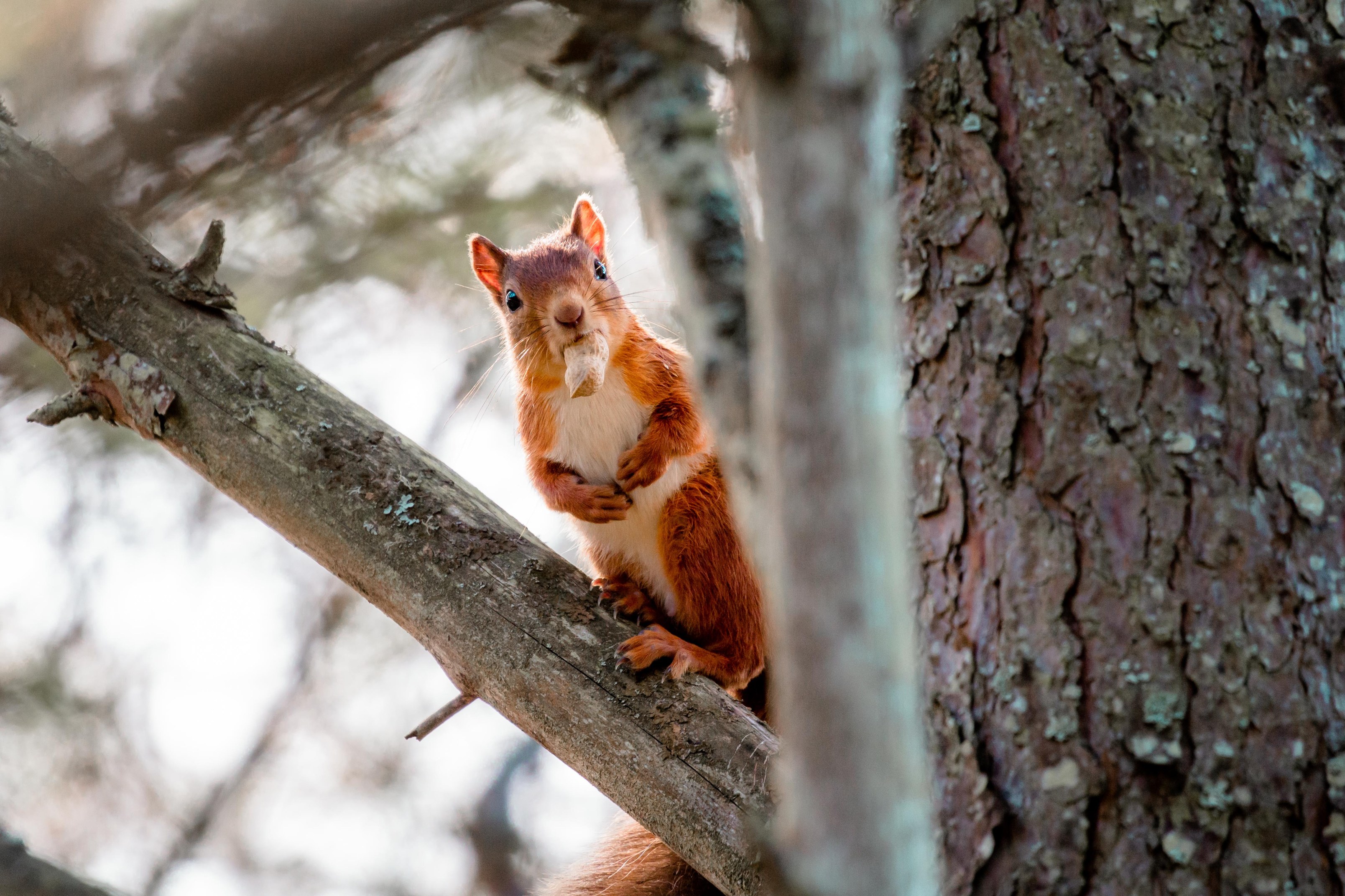
It has become a running joke that I’m pretty unlucky when it comes to seeing certain species. Examples include otters, badgers and deer, despite the fact that I now live in Scotland, which is essentially the deer capital of the UK! But, if there’s one animal that I have an affinity for, it’s the red squirrel. There’s something irresistible about their fluffy tails, tiny hands and beady eyes. And of course they all have completely different personalities. I will never not be excited by red squirrels, no matter how many times I see one. I must have thousands of photos of them by now but I always take more, and this weekend was no exception.

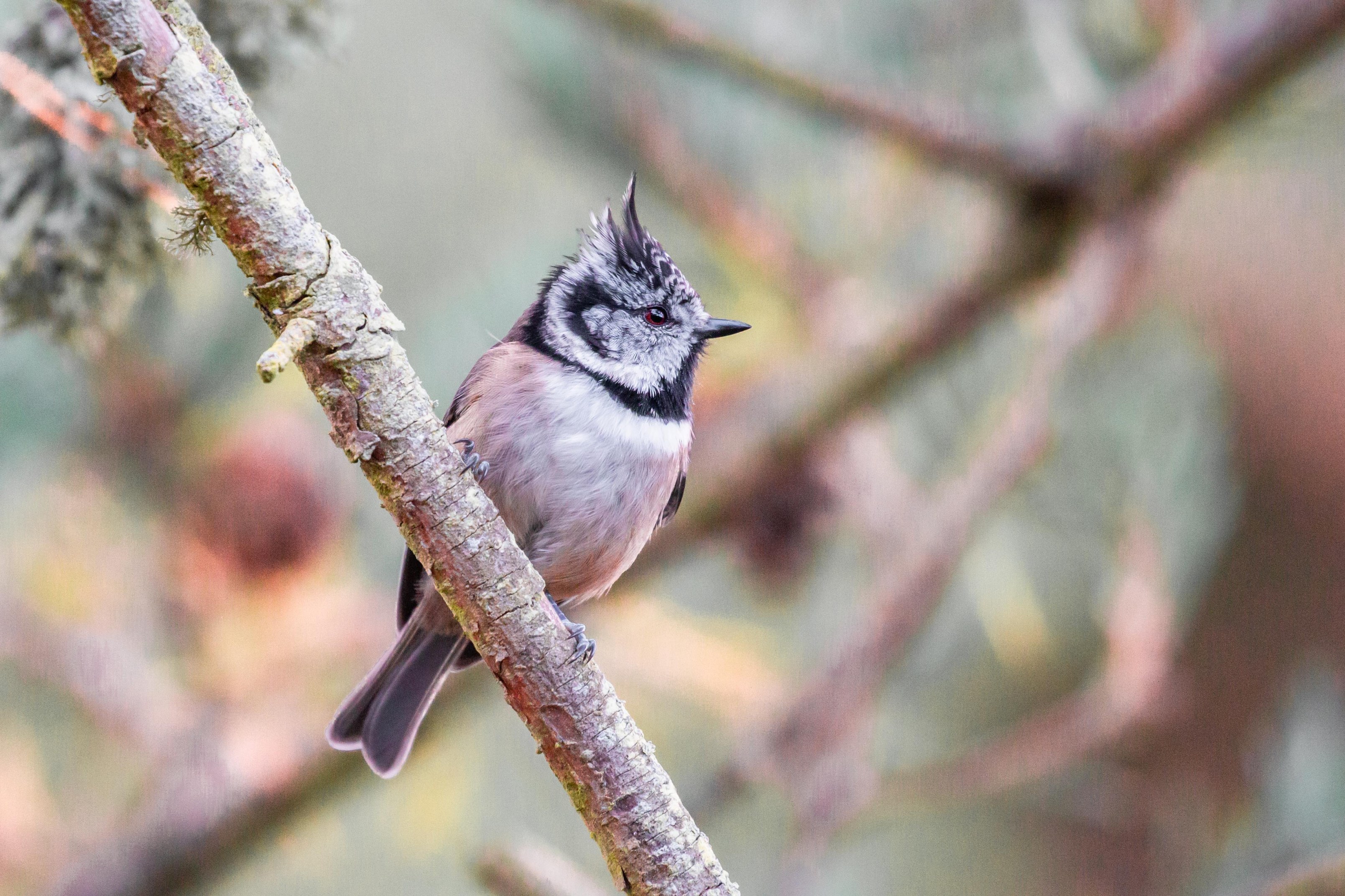
My friend Steve and I visited Lossiemouth for some wildlife watching in a beautiful patch of coniferous woodland by the estuary. Within ten minutes of arriving I was gazing down my telephoto lens at a red squirrel as it clutched a monkey nut in its paws. Despite the flurry of coal, great and blue tits, I would happily have just watched the squirrels until a particularly special bird caught my eye: the crested tit. In Britain, these birds are mostly confined to the Caledonian forests and Scots pine plantations of Scotland. The punky hairdo is perhaps the most striking feature of the crested tit but their bright red eyes are pretty amazing too! I couldn’t believe I was so close to such an uncommon and beautiful British bird.

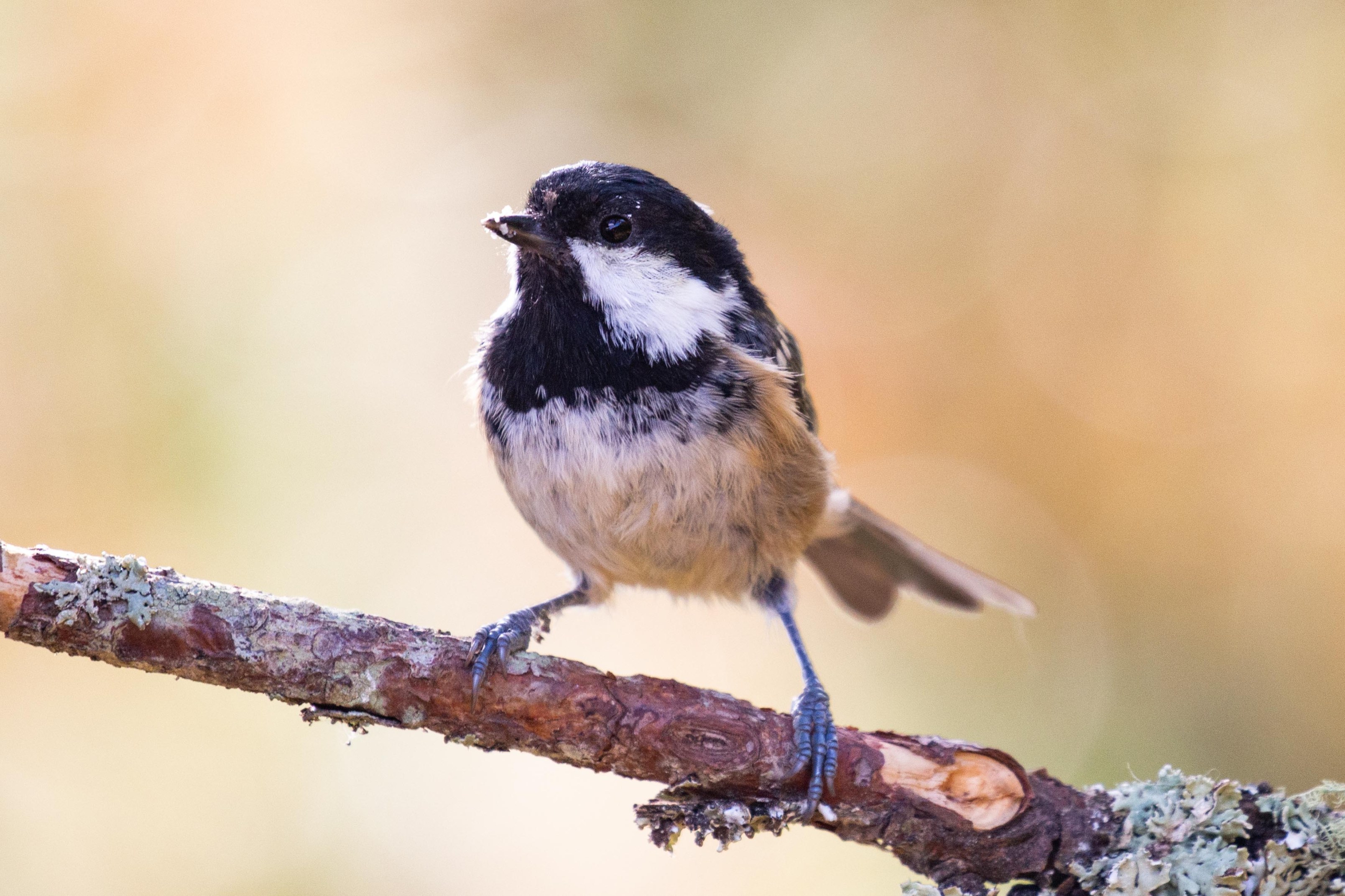
Coal tit

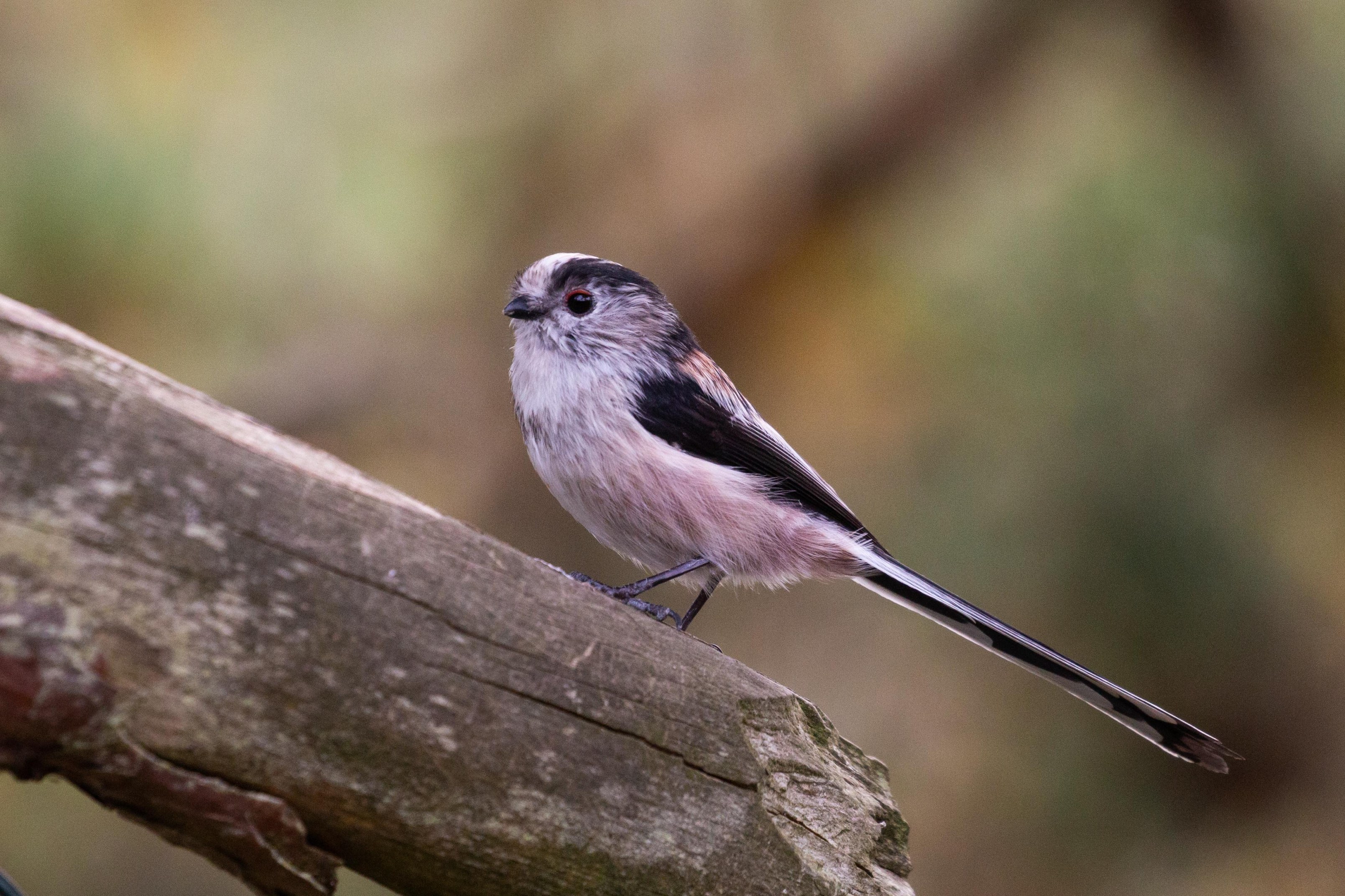
As well as squirrels and cresties, we were surrounded by dozens of other birds including another favourite of mine: the long tailed tit. The proportions of this bird are what I love most about them. They have a body like a golf ball with a spoon handle sticking out one end and the sharp nib of a bill out the other. What a bird! And where there’s one, there are nearly always more and I often hear them before I see them. Their alarm call sounds frog-like and the trees erupt with soft ribbits whenever I pass by.  

I am in my element in the forest. It’s my favourite wild place to visit and I absolutely loved getting such close-up views of some fantastic species. After a couple of hours the afternoon sun began to fade and a chilly breeze had us packing up and heading home, though I’d definitely be back soon.

Amongst the Heather


Recently I’ve begun helping my new friends Joan and her husband John with their exciting woodland restoration project. Once dominated by non-native Sitka spruce, the site now has a diverse range of trees including rowans, larches, oaks and wild cherries. As a result, it’s attracted plenty of wildlife from bumblebees to pine martens! So far I’ve been getting stuck in with rescuing trees, which involves cutting the plastic tubes off of saplings that have outgrown them. I was rewarded with a feast of wild raspberries and plenty of opportunities to photograph invertebrates and an outrageous fungus!

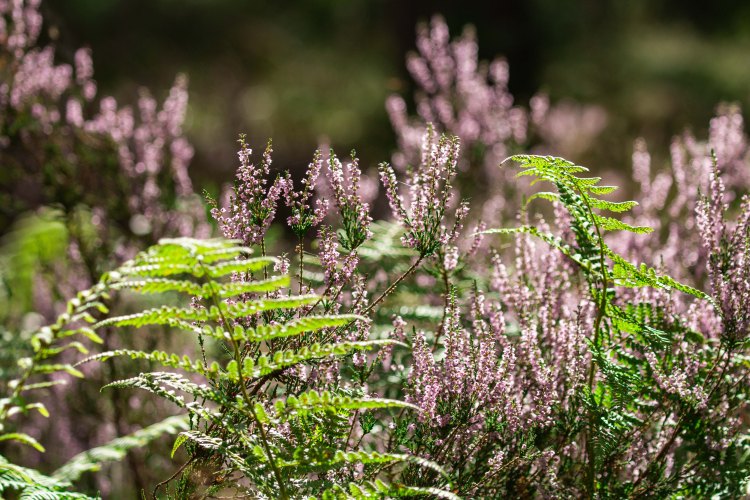
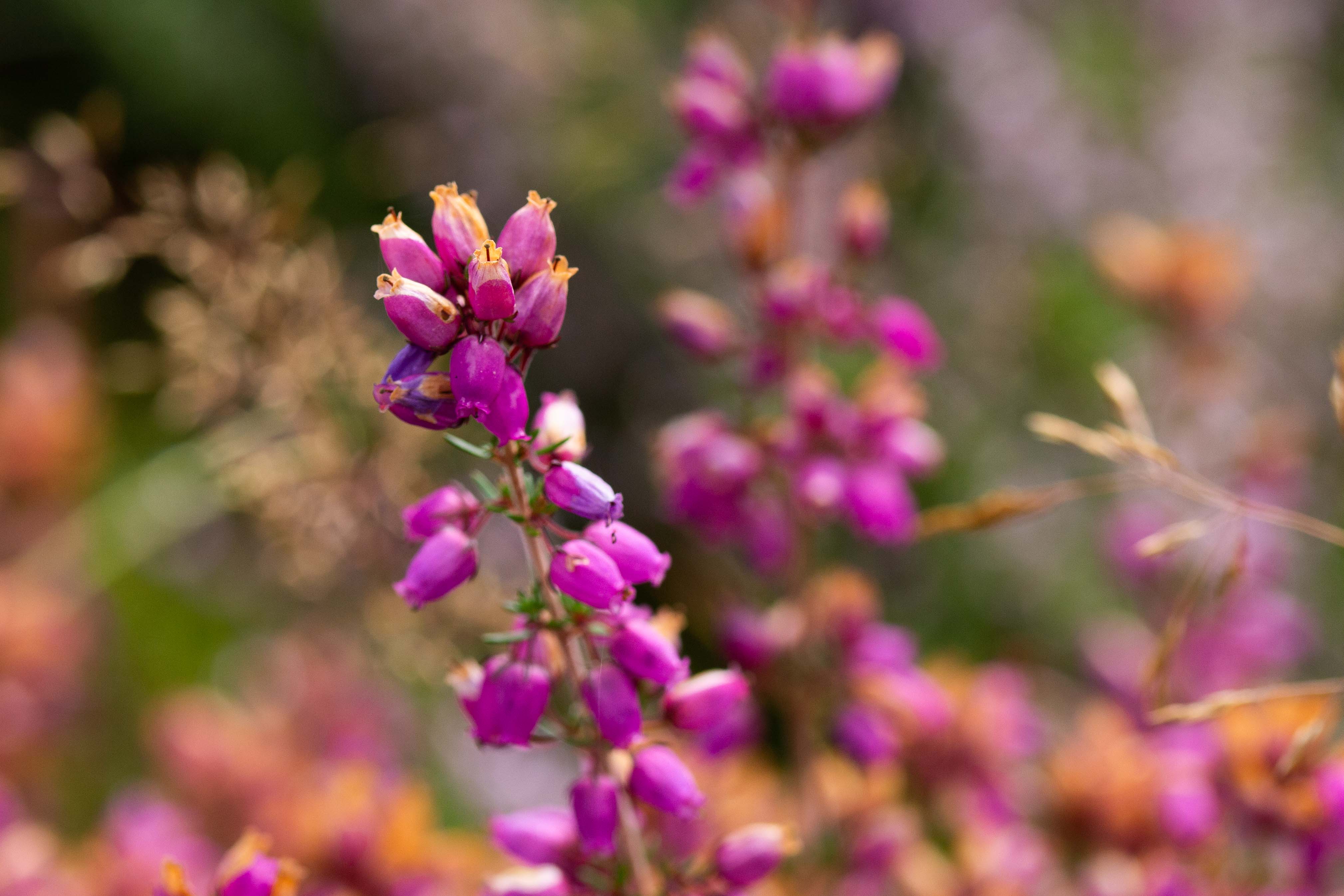
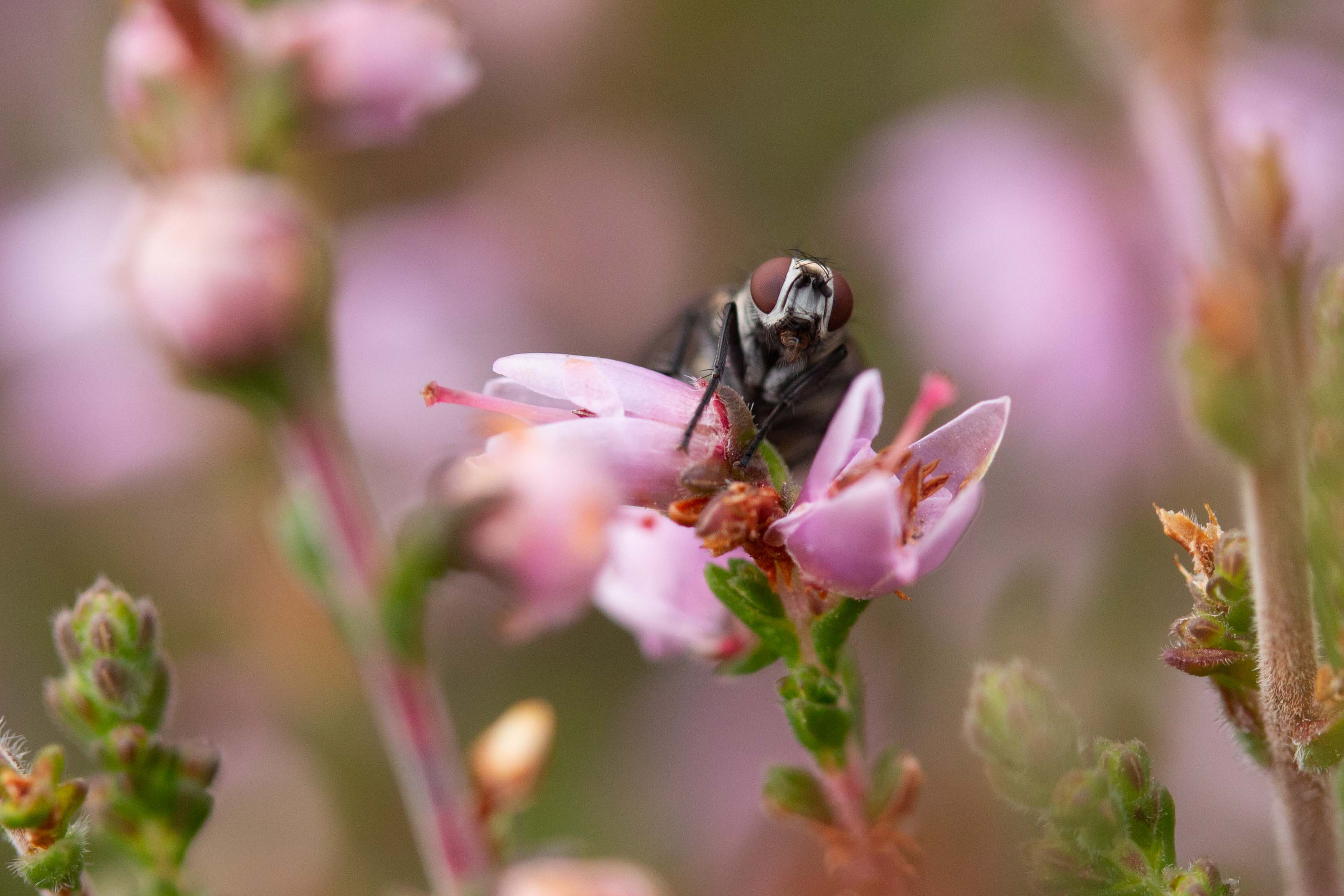
Joan pointed out the two types of heather, which on closer inspection couldn’t be more different. Bell heather (above left) is a rich pink colour and each flower is a fat, tubular bell. Ling heather is a much paler violet and its flowers have wider, skirt-like heads. The heather attracted plenty of insects – I spotted ladybirds, flies, bees and butterflies wafting around the purple sprays.

As I searched for any trees that may look a little large for their tubes, I happened to glance down at a sodden tree stump and noticed a huge stack of caterpillars! There were perhaps a dozen of them all wrapped around each other, sat out in the open for anyone to find. I quickly texted my friend Lucy, whose insect knowledge was far superior to mine, and she told me they were buff tip moth caterpillars. I’d never seen so many caterpillars together before and it was such a treat getting to photograph them.

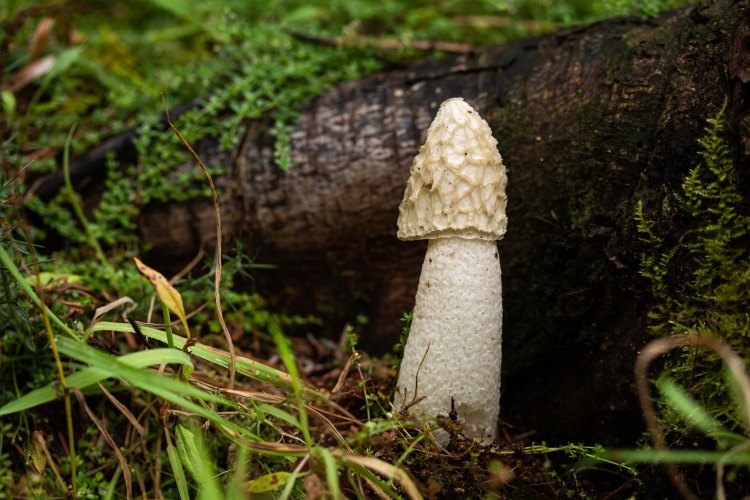
Unfortunately after a couple of hours tree rescuing the midges made their presence a little too intense, so I headed back to the clearing where we’d left our bags. I could see a winding tendril of smoke from the fire John had started to make tea, but the sprawling mass of heather, bracken and saplings made it tricky to find a route there. Several times I was blocked off and it took me a comical amount of time to find the pressed footpath that I took on the way out. Just before I sat down to tea and posh biscuits, Joan pointed out an excellent nerd find: a stinkhorn fungus. I’d only seen one of these before and it hadn’t looked its best, but this one was looking fabulous. An excellent end to an afternoon’s rescuing!

Back to the Sea


I go through phases when it comes to wildlife watching. For the past couple of months, I’ve been deep in a forest phase and all I’ve wanted to do is wander through trees and look for birds and red squirrels. My Instagram was full of greens and the first hints of autumn oranges.

But then the ocean started pulling me back. After a few weeks with no sightings, bottlenose dolphins started to make appearances along the Moray Firth again. It was looking unlikely that I’d see my first orcas this summer, but I was still looking forward to getting dolphin photos that showed slightly more than the departing splash. I was back in an ocean phase.

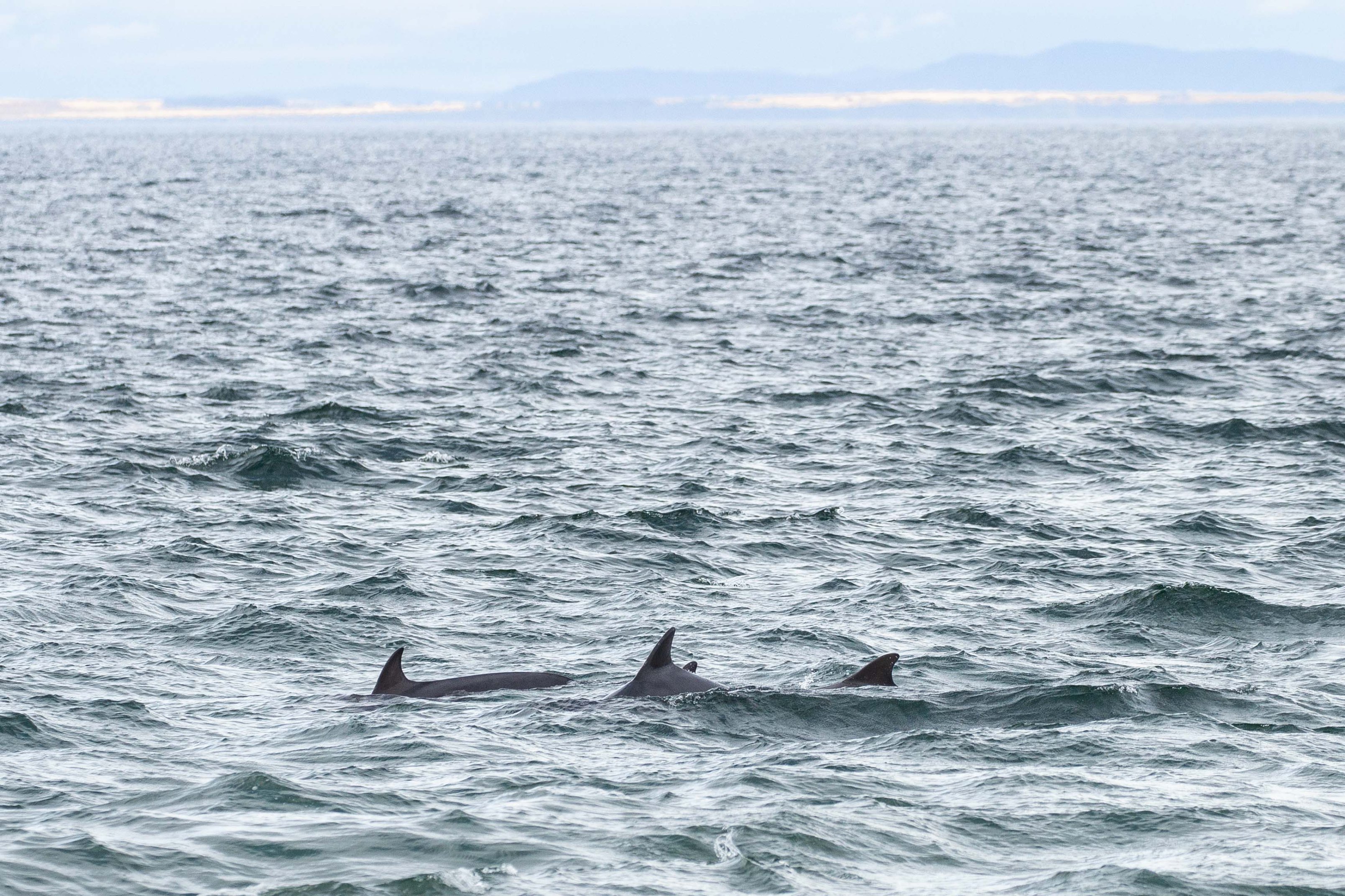
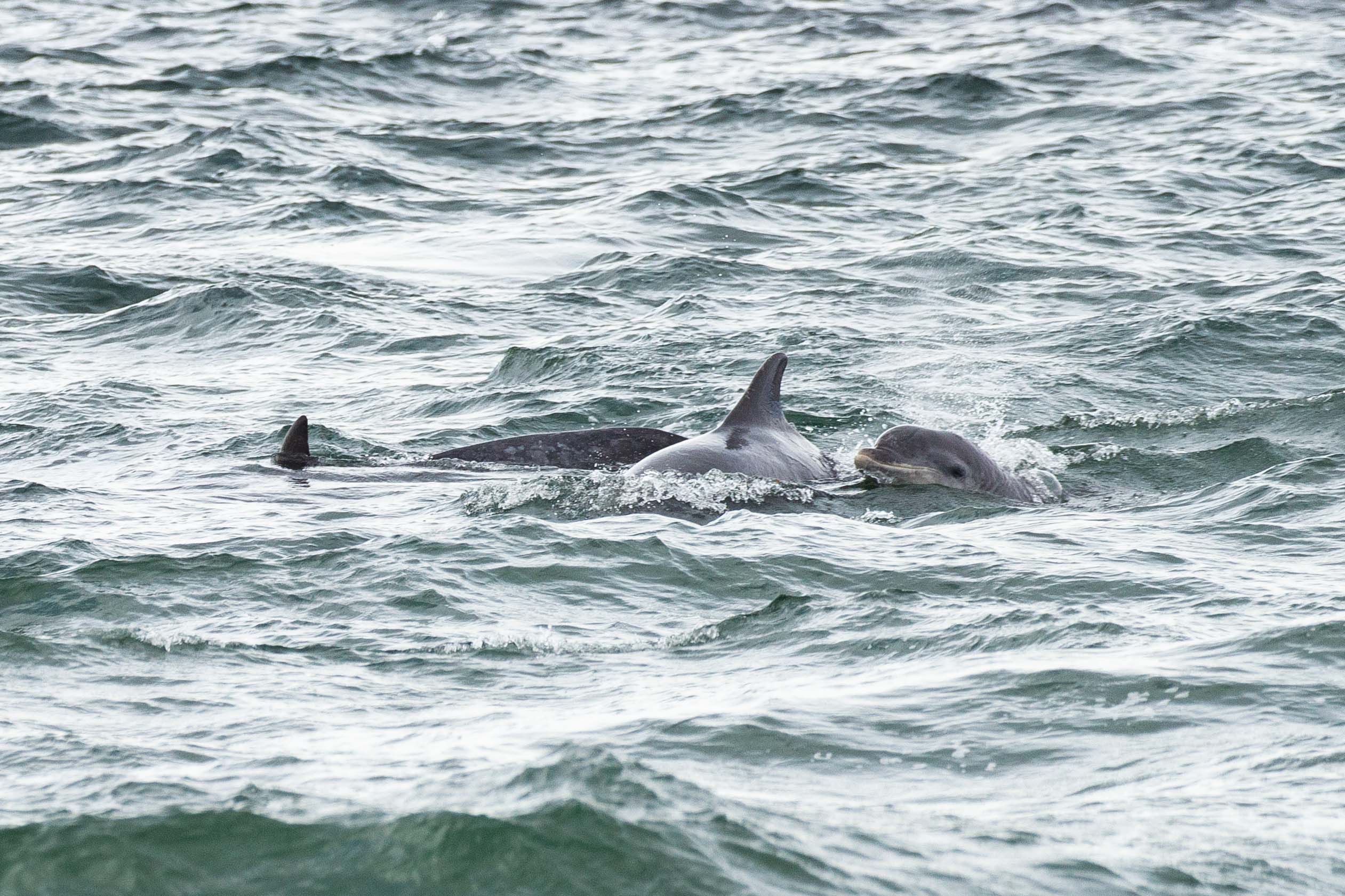
Earlier this month, on a particularly choppy morning, I found myself running full pelt along Burghead harbour to reach the end of the sea wall that juts out conveniently into the sea. From there, I could watch three different pods of bottlenoses as they caught fish. With so many breaking waves and white peaks, I didn’t know what I’d managed to capture until I returned home and uploaded the photos. I was thrilled to discover I’d caught a little face just as it breached the surface.

A few weeks later, I received a text alert from the local shore watchers saying there were bottlenoses heading west around the headland. Snatching up my camera, I made a beeline for my favourite vantage point at the end of the harbour. Unlike last time, the water was completely flat and every flash of fin caught my eye. Unfortunately all the feeding action happened far out, way past the range of my lens, but I did have an unexpected visitor pass close by.

The action continued the next week. Another text alert had me hiking up to the Burghead Visitor Centre at sunset and before long I had my lens pointed at a small pod who were following a jet ski and giving the driver some sensational views! As well as belly flops and tail waves, there were plenty of breaches. It was amazing to see the dolphins so active.

In the last of a flurry of excellent dolphin sightings, I paid Chanonry Point on the Black Isle another visit: one of the prime dolphin watching spots. Within moments of arriving – being sure to time my visit with the rising tide – a pod cruised straight past. Although there were no breaches this time, one particular dolphin dived three times directly in front of the crowd, revealing a distinctive notch in its tail fluke. I was also delighted to see a newborn calf among the adults, sticking closely to Mum as they passed by.    

As summer blends into autumn, the dramatic display of emerging fungi will undoubtedly draw me into another forest phase, but I’ve loved having so many marine wildlife encounters this month. I’ve now got plenty more dolphin photos to add to my portfolio too!

Troup Head


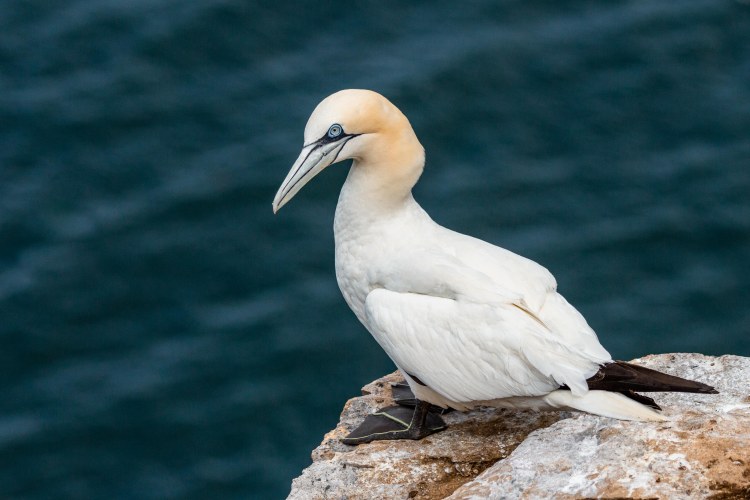
I had seen gannets a few times before; on a trip to the Isles of Scilly they had flown over the boat, and more recently I’d enjoyed watching them dive for fish near where I live in Moray. However, nothing could have prepared me for Troup Head. This RSPB site in Banff, about an hour’s drive from Aberdeen, provides nesting grounds for two thousand pairs of gannets, as well as thousands of other seabirds. During the short walk from the car park to the cliffs, both sounds and smells intensified until they reached a crescendo of squawks and guano pongs.

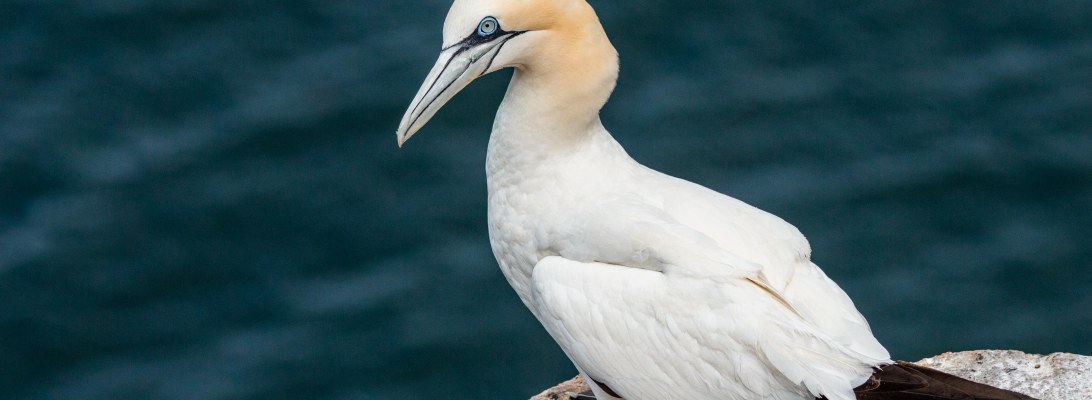
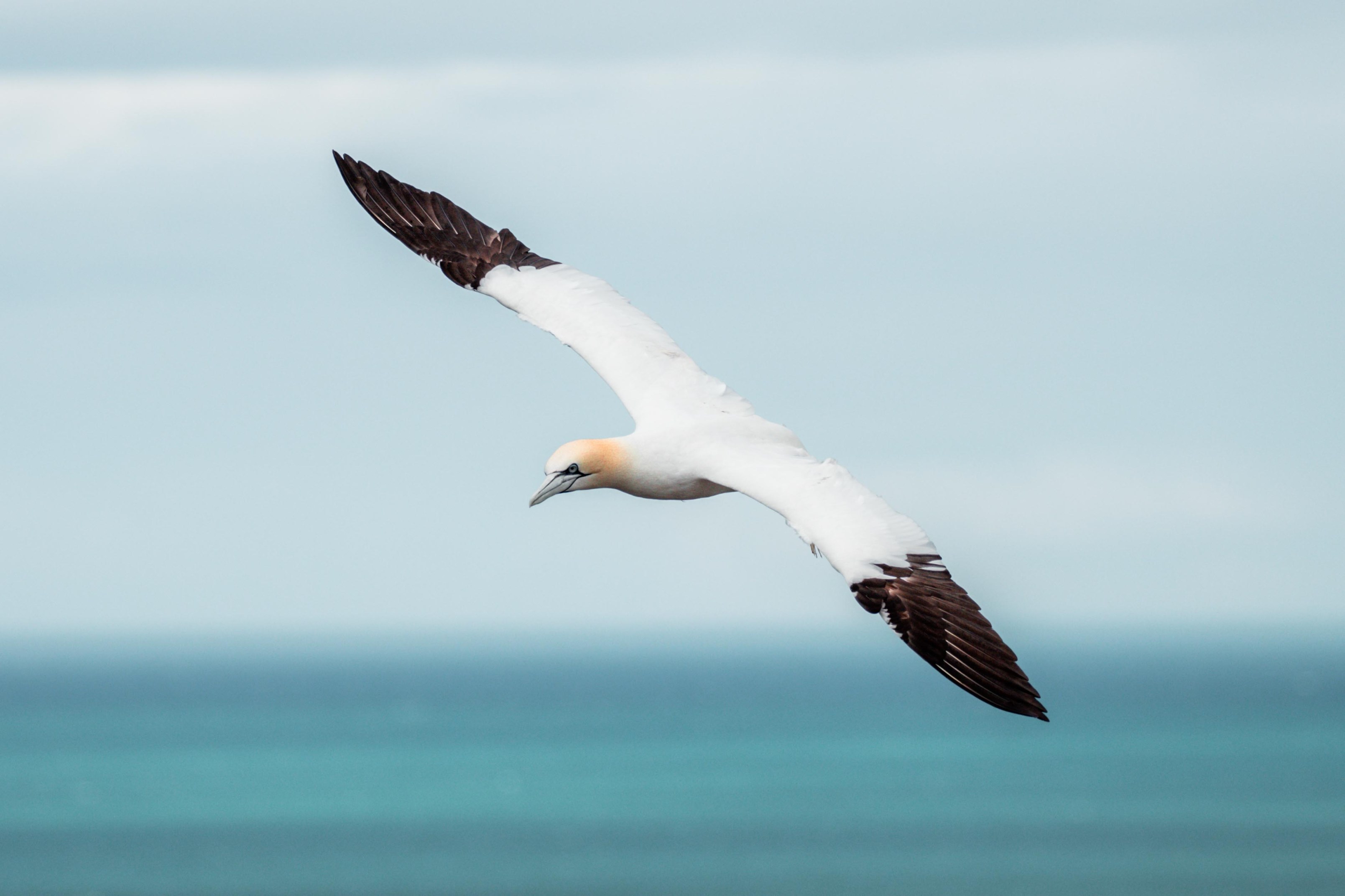
There were gannets everywhere. Without wanting to make them sound like flies, they swarmed around the cliff, gliding in deep circles as they came into land on the rocks. Many of them had chicks – currently clouds of white down with black reptilian heads. Dotted among them were the auks: guillemots, razorbills and the occasional puffin all grappling for a bit of wing room in the tight squeeze. Peering carefully down, I noticed just how high up we were. The swan-sized gannets – Britain’s largest seabird – looked like sparrows at sea level. Even the coastguard helicopter that passed by was below us. Troup Head really was a bird’s eye view.

The site became a significant birdwatching spot when gannets began to colonise it in 1988. Troup Head is now Scotland’s largest mainland gannet colony. We spent seven hours wandering along the track, shuffling across the tussocks to get the right vantage point for photos. Gannets came sweeping in to land in an endless queue, many suspended in mid-air and bobbing in the wind. There was something very duck-like about the way their webbed feet stuck out to the sides, and more than once a bird would crash-land quite unceremoniously with a ruffle of the feathers.

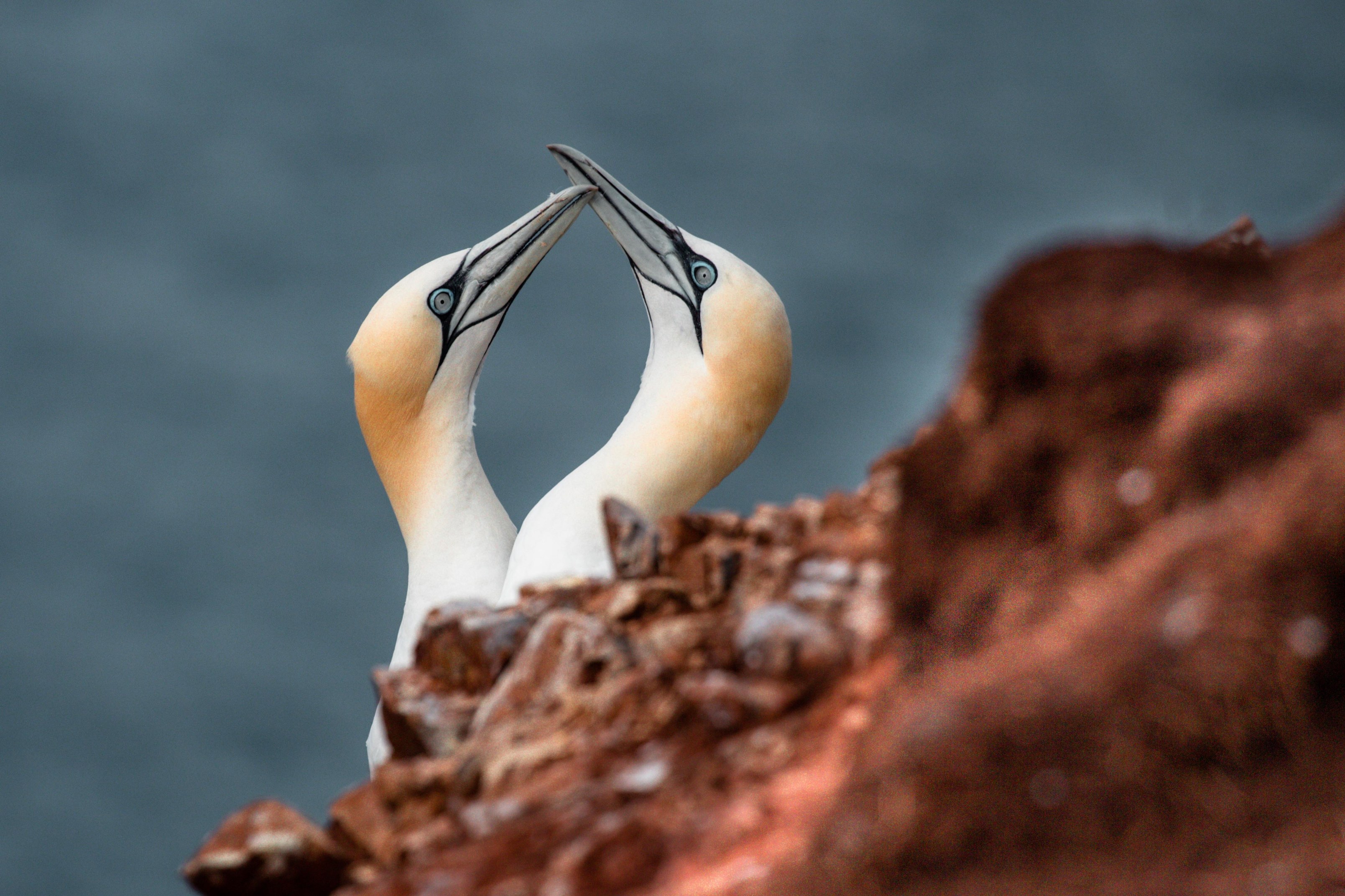
It was interesting to see lots of gannet behaviours up close. The birds pair for life and return to the same nest site each year with the same partner. To cement their pair bond, males and females will ‘fence’ together, clicking their bills from side to side and mutually grooming one another.

‘Fencing’

To ensure that one parent remains on the nest at all times, a gannet will stretch its neck and stare straight upwards in a pose called ‘sky pointing’, which signals to its mate that it is about to take off.

‘Sky Pointing’

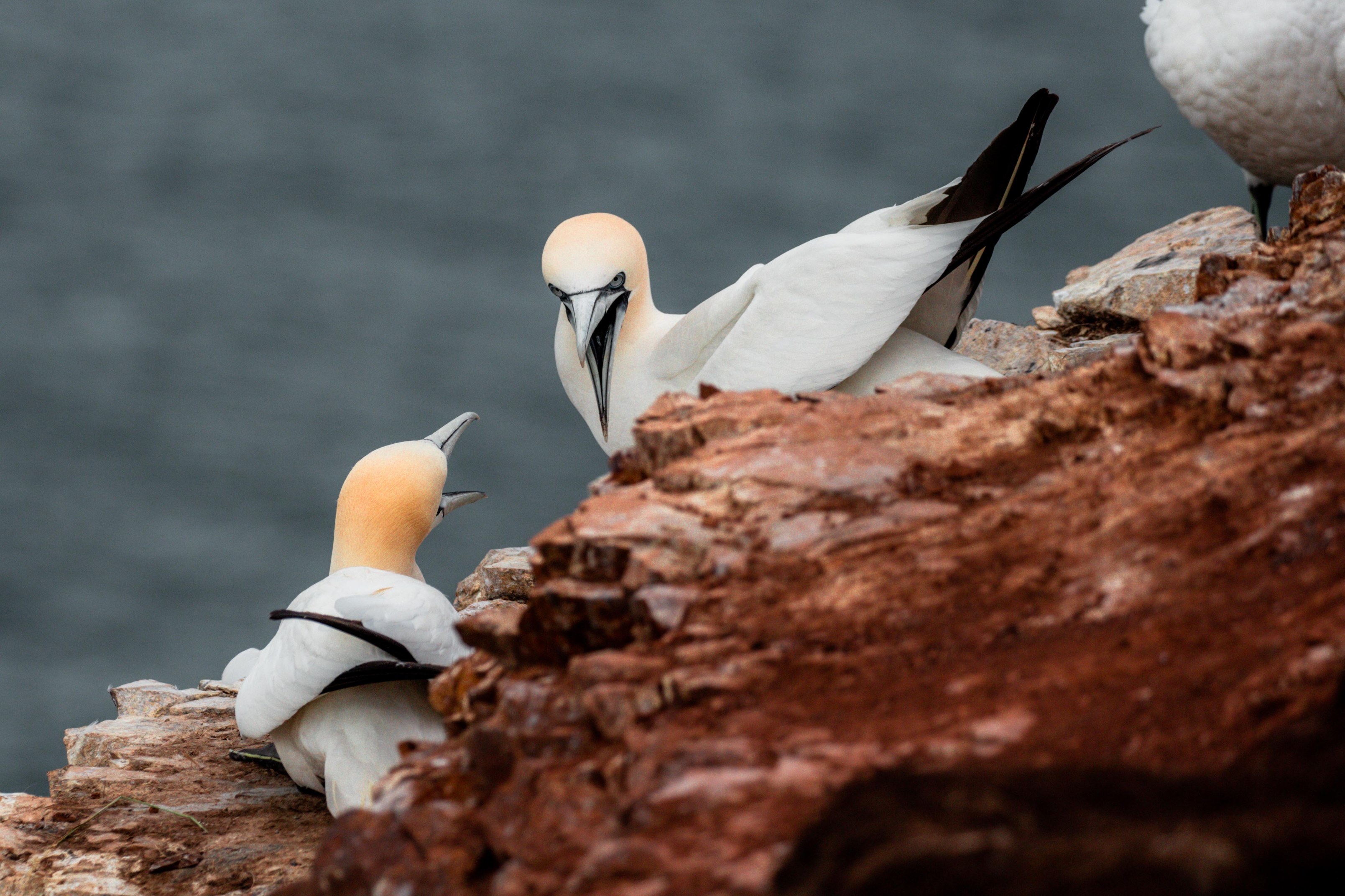
With so many birds on one cliff, it’s inevitable that there will be disputes over space. If a gannet gets too close to a neighbour’s nest, there is a display called ‘menacing’, where the birds will open their bills and lock them together in an attempt to jostle each other off the cliff.

‘Menacing’

While some quarrels are short-lived, others develop into full-blown fights, and with such formidable bills these can be aggressive.  

Gannets have been a favourite of mine for many years, so to see such a vast colony so full of activity was a real treat. I was even more impressed that I didn’t get pooed on once!