We’re one month into the year already! As usual I’ve been beavering away and forgetting to update my blog, so here’s a summary of what I’ve been up to in January.
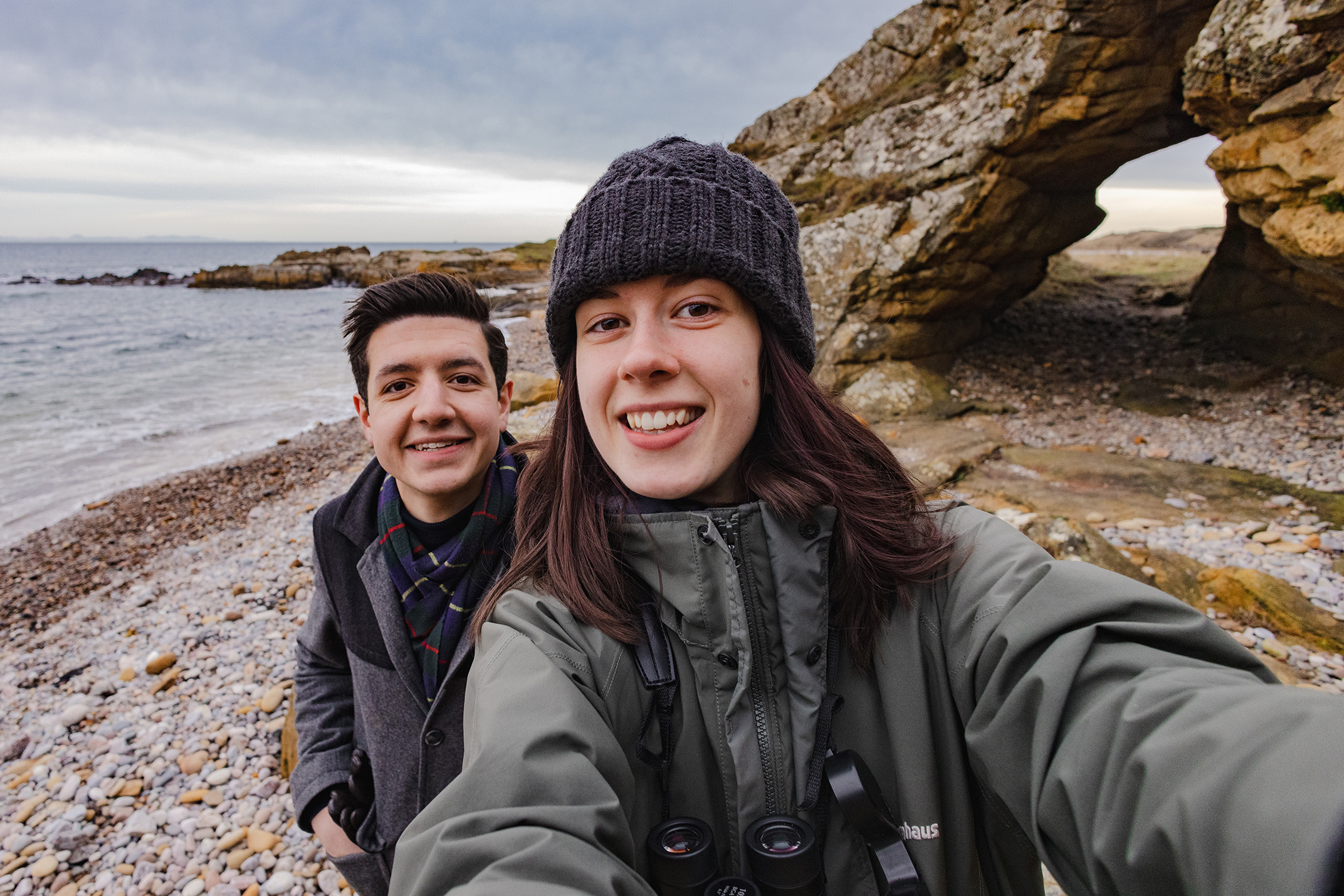
My 2022 started with my best mate Luke coming to visit for the first time since I’ve moved to Scotland. This year we celebrate our 20th anniversary of being friends – we’ve known each so long I can’t remember a time without him!
I took Luke to many of my favourite wildlife haunts. It’s funny how seeing familiar places with someone who’s never visited them before makes them fresh all over again. Although he’s definitely not a birder, I pestered Luke into looking through binoculars at eider ducks in the harbour and a dipper hunting on the river. I actually think some of my enthusiasm rubbed off on him.
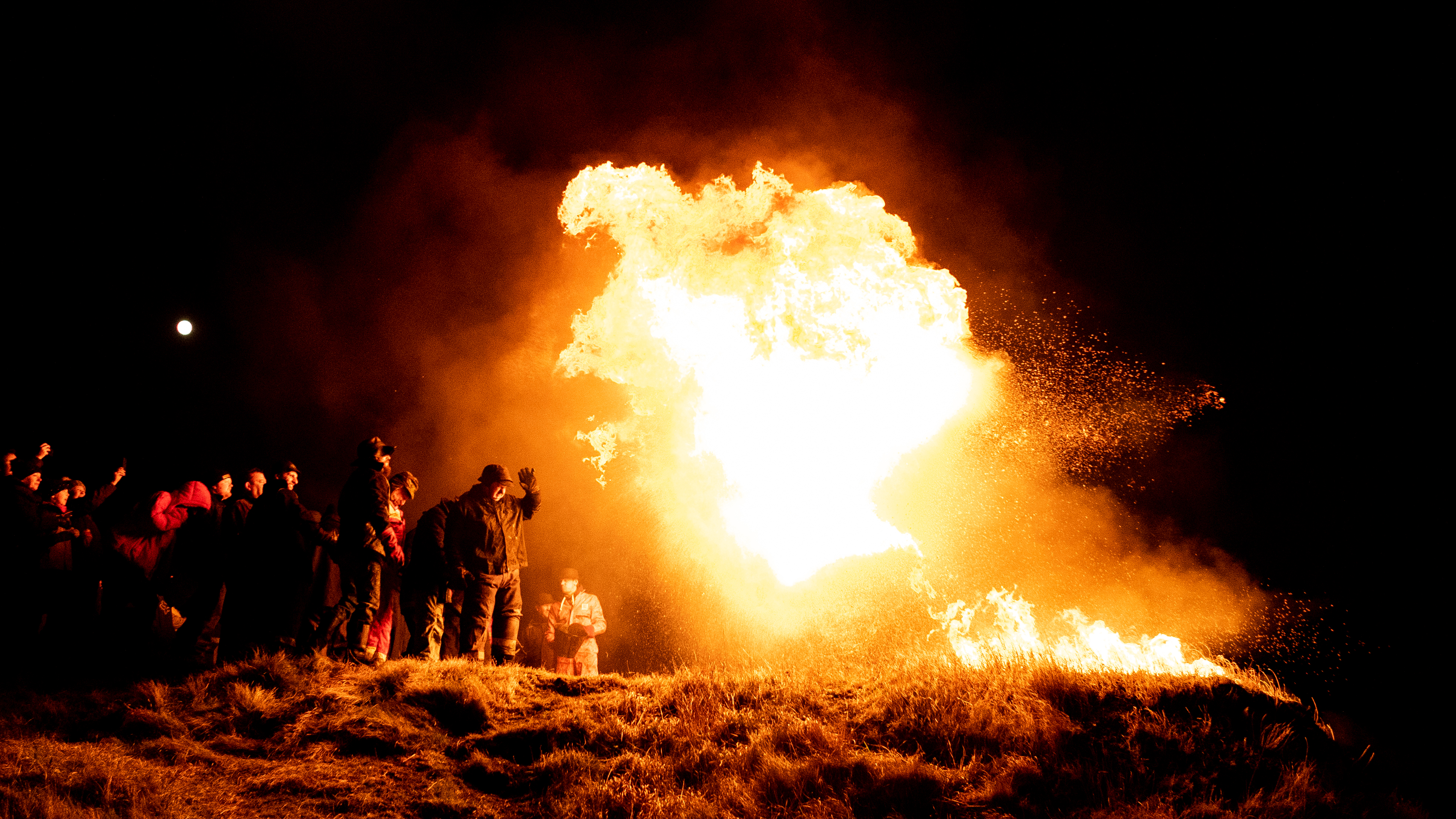
Burning of the Clavie
By happy coincidence, my friend was here when the annual Burning of the Clavie festival took place in Burghead. Although usually held on the 11th January, this year the festival was delayed a week because of changing Covid crowd rules. The festival was cancelled in 2020 and I missed it by a week the year before, so I was relieved to finally be able to experience it for myself. And it was totally worth the wait – the sights, sounds and intense feel of the mighty Clavie fire were extraordinary. It really has to be seen to be believed!
Carrbridge
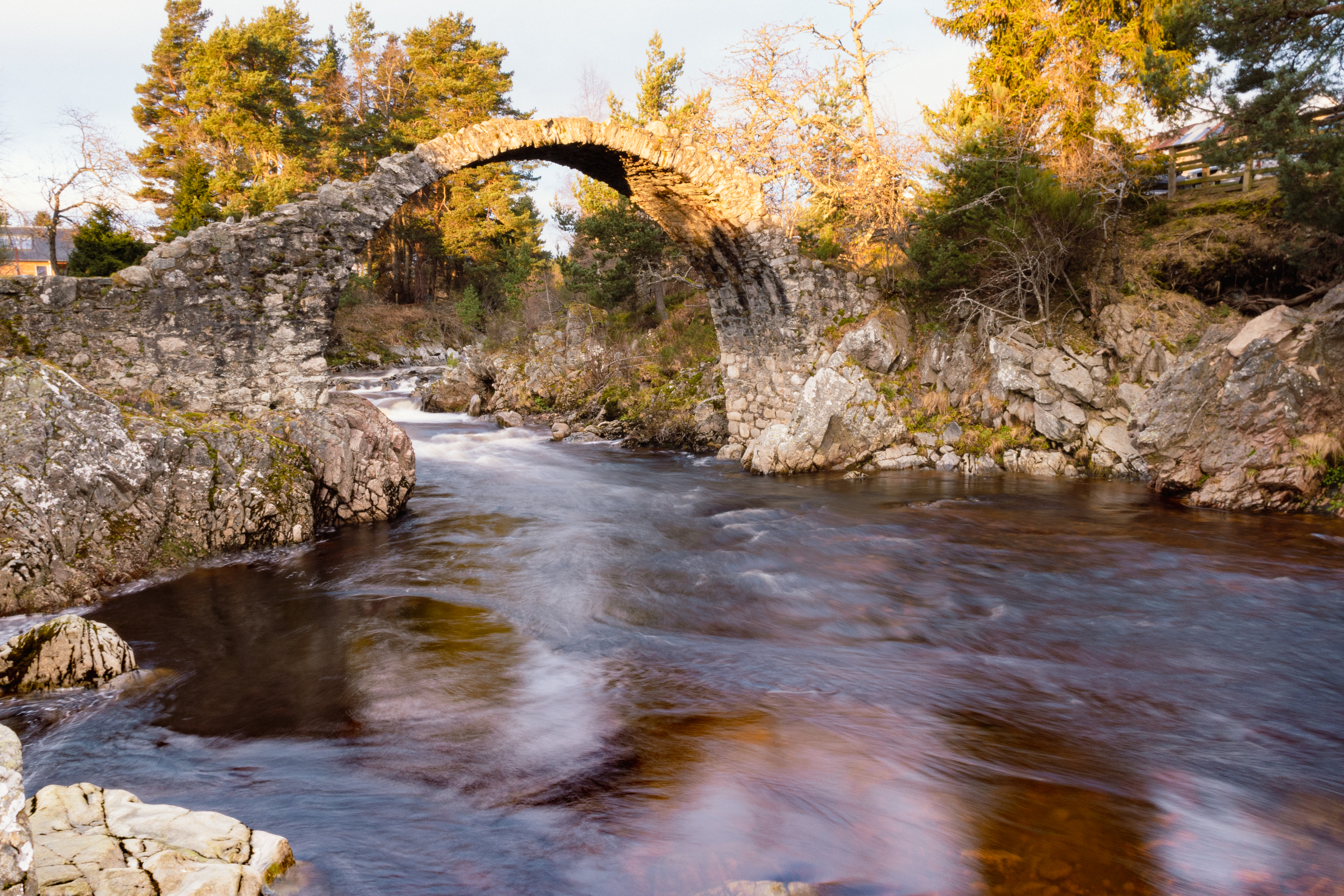
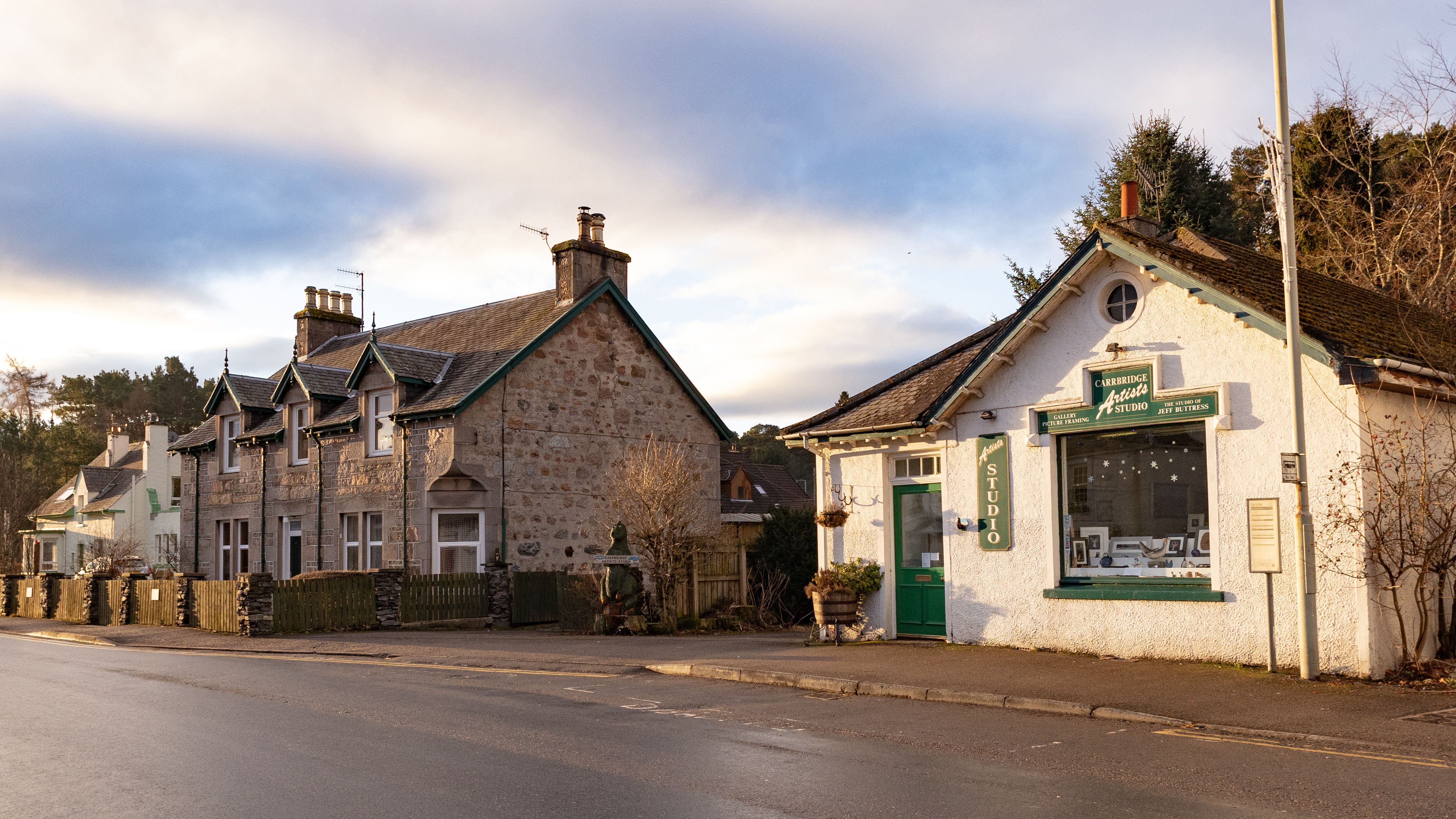
I’m currently hard at work writing my Slow Travel Guide to Northeast Scotland, which will be published by Bradt in 2023. Although some places on my list are closed until spring, there’s lots to enjoy in winter too. This month I spent a long morning in the village of Carrbridge, seven miles north of Aviemore in the Cairngorms National Park.
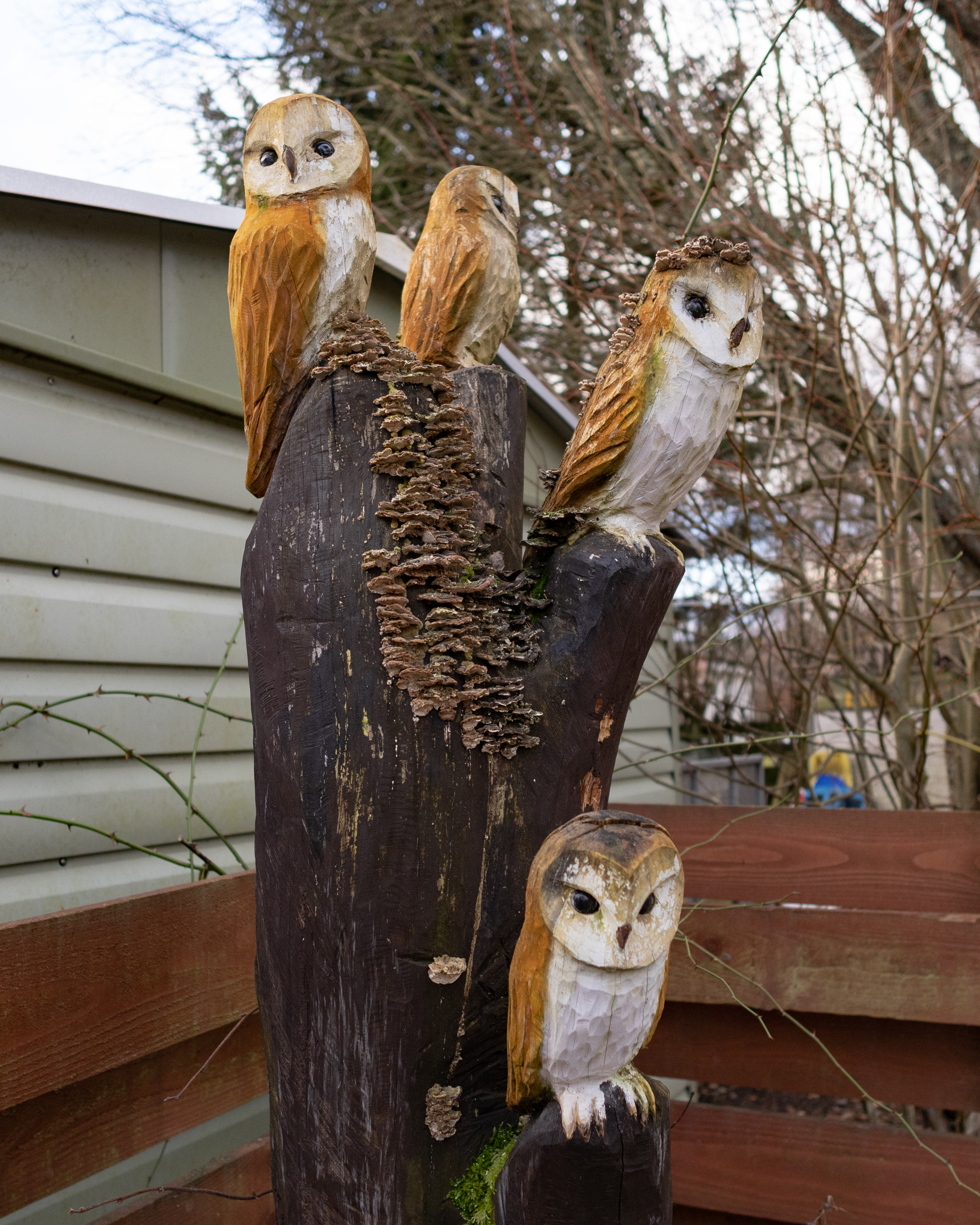
I didn’t know much about Carrbridge except the Old Pack Horse Bridge – the oldest stone bridge in the Highlands – and the annual Porridge Making Championships. After some Slow exploration the other day I discovered that Carrbridge also has a yearly wood carving competition every September. I’ll definitely be returning this autumn to see it for myself, but in the meantime I enjoyed spotting sculptures from previous competitions dotted all over Carrbridge.
Loch Garten
Another day trip for my book this month was to Loch Garten, also in the Cairngorms. I much prefer visiting this loch in winter. Historically it’s known for ospreys that have nested here, but in winter you can actually hand feed the birds. Coal tits are the bravest, but the other day I also fed a dozen great tits and a blue tit.
There’s nothing quite like the feel of a tiny wild bird gripping your palm, trusting you enough to take a seed right in front of you. I could have stood there with my hand in the air all day, but I tore myself away to walk down the west side of Loch Garten to the tip of the smaller Loch Mallachie, then back through the ancient pinewood of Abernethy Forest.
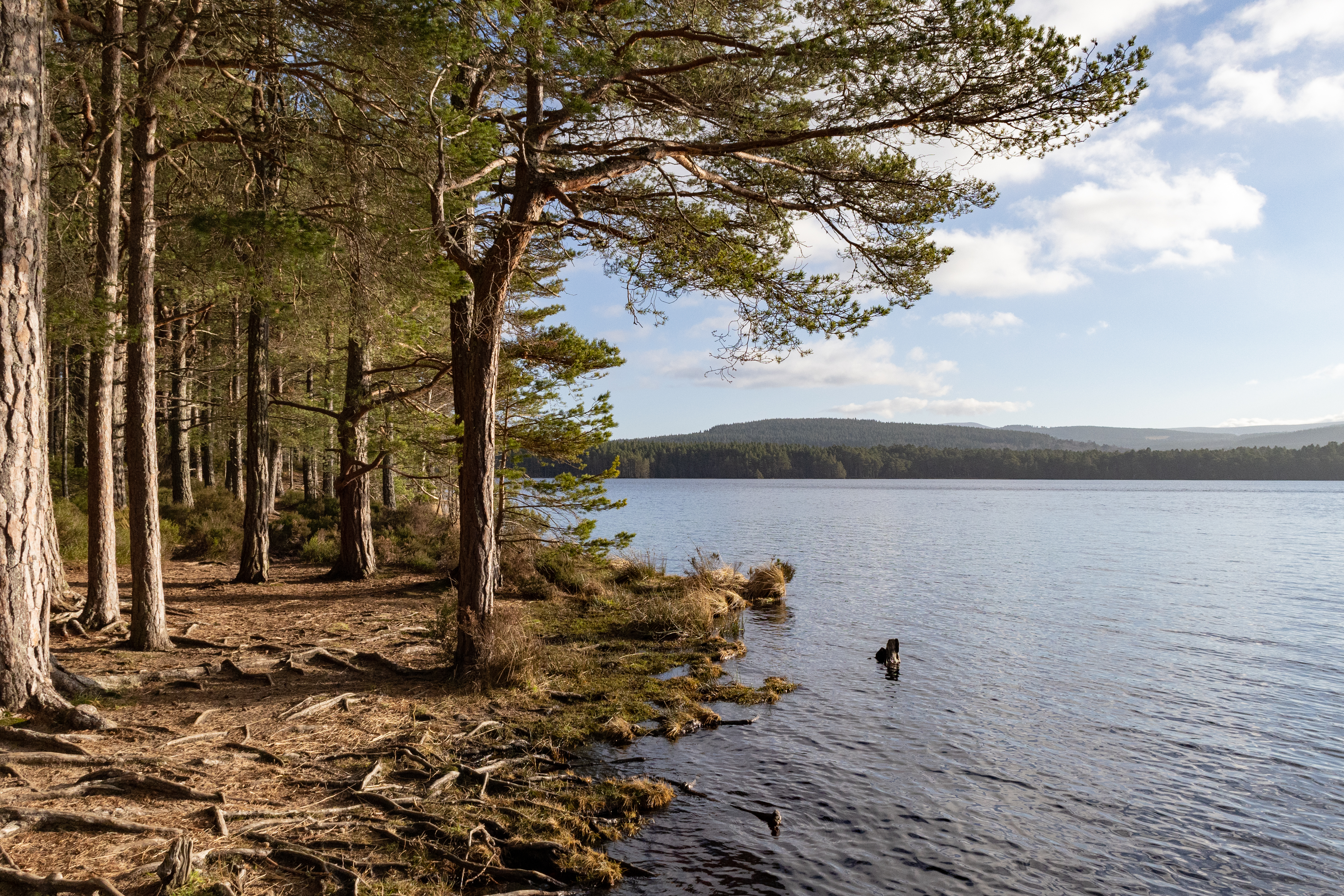
Woodland locations are lovely and quiet in the Cairngorms at the moment and I relished the subtle sounds of water lapping the bank and pine trunks creaking in the wind. And all those birds’ wings of course.
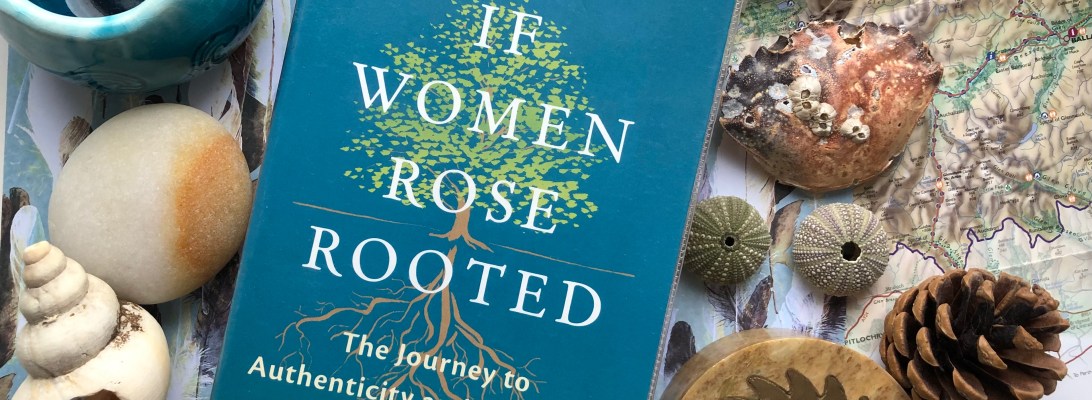
I couldn’t help a slight eye roll when I read the shower of adjectives on the cover reviews of this book: “powerful… inspiring… mind-blowing…” But it actually ended up being all of those things for me, even the last one.
If Women Rose Rooted is a combination of three topics I care strongly about: nature, women and Celtic mythology. I’ve been directly involved in the first of those since childhood – the natural world is the basis for everything I do, both professionally and personally. But the other two have slowly gained momentum in my mind since moving to Scotland.
In 2019 I was earning minimum wage in the town I grew up in. It was where I’d gone to school, met my best friends and spent every weekend, but I didn’t belong there anymore. I didn’t realise just how much I didn’t belong there until I stayed with my parents for a week in their new house in Moray, northeast Scotland.
After days spent walking along beaches and through forests, spotting red squirrels, stonechats and grey seals, I returned to England with a crash. Scotland had shone a harsh and revealing light on the current state of my life. My writing had dried up, the camera was gathering dust, and most importantly I wasn’t happy.
One morning before work I sat in my car in a multi-storey car park and cried. Proper ugly sobs. I splashed my face with cold water to stop my eyes puffing up in front of the customers.
I felt a toxic mix of emotions: disappointment about leaving university and returning to the same place I was in before; physical and mental discomfort from spending eight hours a day staring at the same four walls, not making any progress in my career whatsoever; longing for a place currently out of reach; and shame that my situation was a lot better than some and I should be grateful I had work at all.
But I couldn’t shake the feeling of displacement, like I wasn’t where I was supposed to be. Scotland was beckoning and each day the pull grew stronger. I made a playlist of inspiring songs and that worked for a while, but I knew in my gut I had to move.
And the universe, being its freaky-deaky self, confirmed that for me when the shop I was working in closed and we were all let go. Everything in me lifted – I swept up my belongings and bolted north.
The effect was immediate. Words flowed out of me, I took hundreds of photos and I walked for hours through my new home. Now, 21 months later, I feel rooted to land for the first time in my life. I’ve developed a fierce love for the place I’m in and the inspiration I soak up from it. I’ve found my home.
Last month I saw If Women Rose Rooted in the library, its back to the wall so its front cover faced me as I browsed. It had been on my list for a while so I gave it a go. Several pages in I felt the strange sensation of someone I didn’t know seemingly talking about my own life.
“I am sitting in a car,” the author Sharon Blackie writes, “outside an ugly office building in a small town… for which I have absolutely no affection. I have no affinity for this part of the world; my internal compass points north and west, and my feet literally feel as if they are in the wrong place.”
It’s in this moment that Sharon hears the Call. Unfortunately for her it comes in the form of a panic attack, but it was this experience that beckoned her to change her life. A year after that incident, she spent two weeks in Ireland and writes: “For the first time in my life I felt as if my feet were in the right place.” The parallels with my own situation were undeniable.
Memories of my own Call came flooding back. I count myself extremely fortunate that my own experience of what Sharon calls the Wasteland was mild and brief compared to hers. I’m grateful that I recognised what I needed to do and was able to do it a lot sooner.
So my new roots continued to grow in Scotland. I was in a place I felt I belonged to – one that resonated with me. After walking the same trails over and over, I picked up on seasonal changes happening around me. I followed the rhythm of the tides and learned where yellowhammers might be and what time of year to expect long-tailed ducks. I tuned into this amazing new place, and that is the essence of Sharon’s book.
“Once up a time,” she writes, “the people of our Celtic nations knew that our fate is inseparable from the fate of the land we live on… There is a Gaelic word for it. In Irish, the word is dúchas; in Scottish Gaelic, dùthchas. It expresses a sense of belonging to a place, to a certain area of land; it expresses a sense of rootedness, by ancient lineage and ancestry, in the community which has responsibility for that place.”
I was born and raised in England but I have both Irish and Scottish lineage and feel drawn to wild Celtic places. I was pulled north to the windswept coast of Moray and I already feel fiercely protective of it. I spend every day working on something to do with nature, whether it’s writing, photography or filmmaking, but I still feel a sense of helplessness that I’m not doing enough. Our planet is sick and I want to do more, but I don’t know what.
Once again, Sharon Blackie leaned out of her book and seemed to speak directly to me. One of the many incredible women she interviews is Scilla Elworthy, who founded an NGO to initiate effective dialogue between nuclear weapons policy-makers, and co-founded Rising Women, Rising World – an international community intent on building a world that works for everyone. She’s been nominated three times for the Nobel Peace Prize.
When speaking to Sharon about her work with Rising Women, Rising World, Scilla says this: “Investigate what breaks your heart. Then ask yourself whether that is where your passion lies, think about what your key skills are, marry the two – then you have your initiative.”
When hearing the Call, leaving the Wasteland and restoring balance to your work, health and daily life, it’s important to find the unique part of yourself that you can bring back to the world.
“It is easy to get disheartened,” Sharon says. “So many of us go through stages of feeling helpless, or believing there’s nothing that can be done. But there’s always something that can be done, no matter how small… The Journey is about accepting that we each have a responsibility for the way we live our lives, for our footprint on the planet.”
Reading that was another comfort, especially as COP26 is still present in my mind. No single person can save the world, but we can all make small changes and inspire others to do the same.
Author and needleworker Alice Starmore, another of the women Sharon talks to, says: “It’s hard to care for what you don’t know.” I aspire to educate and inspire people through words and images, and I will continue to use them to celebrate and encourage the protection of nature.
And even though I’ve been watching and studying wildlife in some form for most of my life, there are obviously still things I don’t know as well. The world of plants and trees is still largely a mystery to me, as are moon cycles, stars and geology. To set my new roots even firmer in the ground, I need to continue learning about the land I belong to and share it with others.
In all the Celtic myths and legends Sharon shares in If Women Rose Rooted, the women knew the land and were deeply connected to it. In our pursuit of progress, we’ve forgotten the importance of being rooted and we’ve lost touch with our heritage.
There are many cyclical elements to Celtic tradition and these circles still surround us today – day and night, the lunar cycle, seasons and tides. Instead of a circle, we’re currently living on a straight line which cannot be maintained. Rediscovering our history and stories will help curve that line back into a circle.
I didn’t expect so much to come pouring out of me when I started writing this. It’s rare for a book to affect me so deeply, but with so many parallels between Sharon Blackie’s Calling and my own, I found myself stunned at many moments while reading this book. I would recommend it to any woman who has lost her way or recently found where she needs to be. We all have work to do, but with each small step we can make change.
I was in Assynt on the west coast again last week to get footage of the red deer rut for my latest Opticron video. If I wasn’t already in the mood for autumn, there’s nothing like roaring stags, soggy fungi and fiery bracken to get me even more excited for the dark half of the year.
I had to battle the weather at times, but I still managed to see some stunning scenery and wildlife in October sunshine. I brought my mum along and it was the furthest north she’d ever been. I couldn’t wait to introduce her to another part of Scotland that I’m growing more and more attached to.
Before we reached Assynt we stopped off at the Falls of Shin in Lairg to watch the salmon leap. I’d seen it once before almost exactly a year ago, but everything was new to Mum and it was so rewarding seeing her amazement at these massive fish launching themselves into the air.
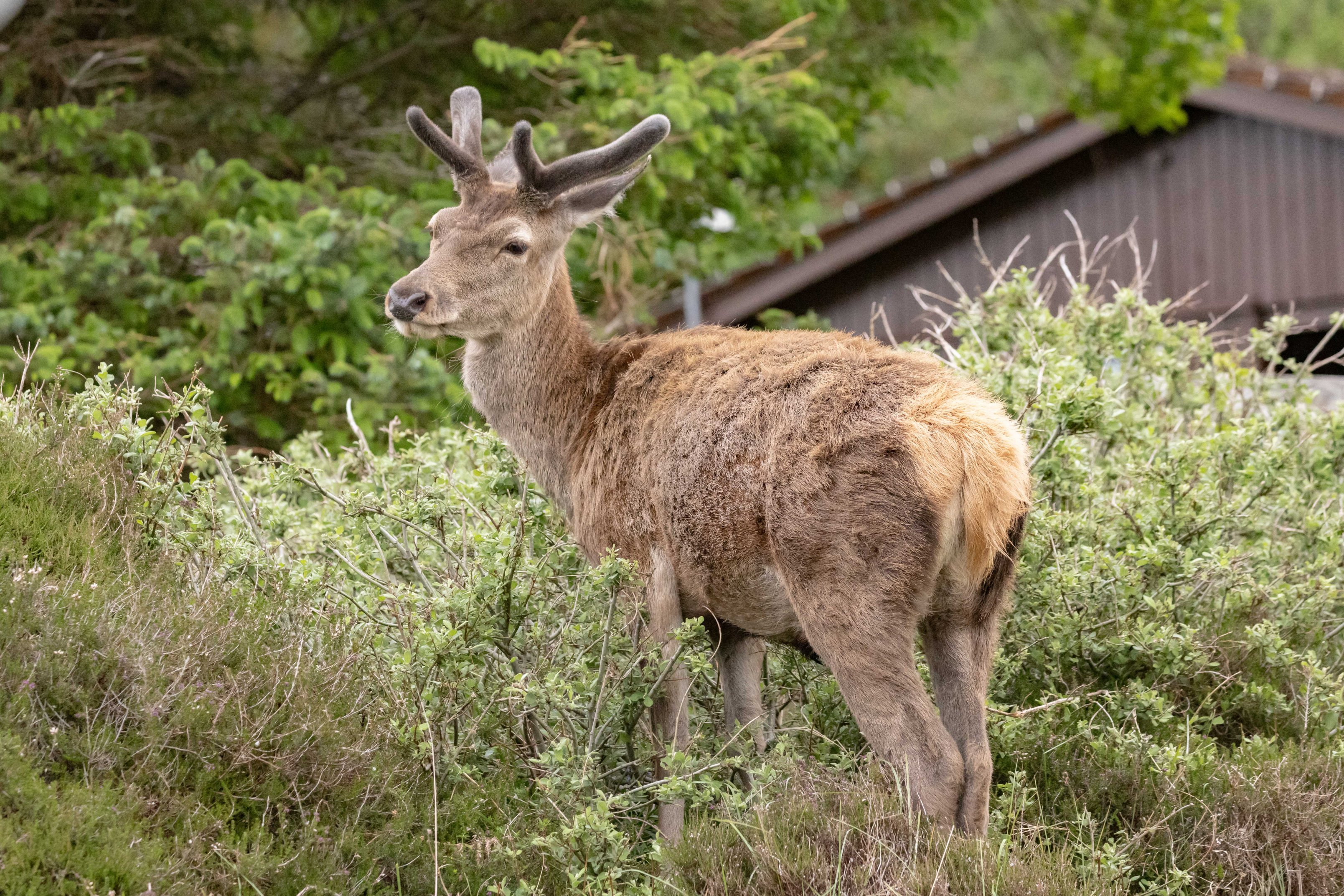
A couple of miles away from our accommodation we saw a couple taking photos of something in a field beside the road. Lucky they were there, as they were pointing their cameras at a stag resting in the grass! I pulled over and recorded my first footage of the week, which included a bonus bellow from the gorgeous stag. I wondered if this was the same male that had visited the chalet garden back in June when his antlers were still in velvet.
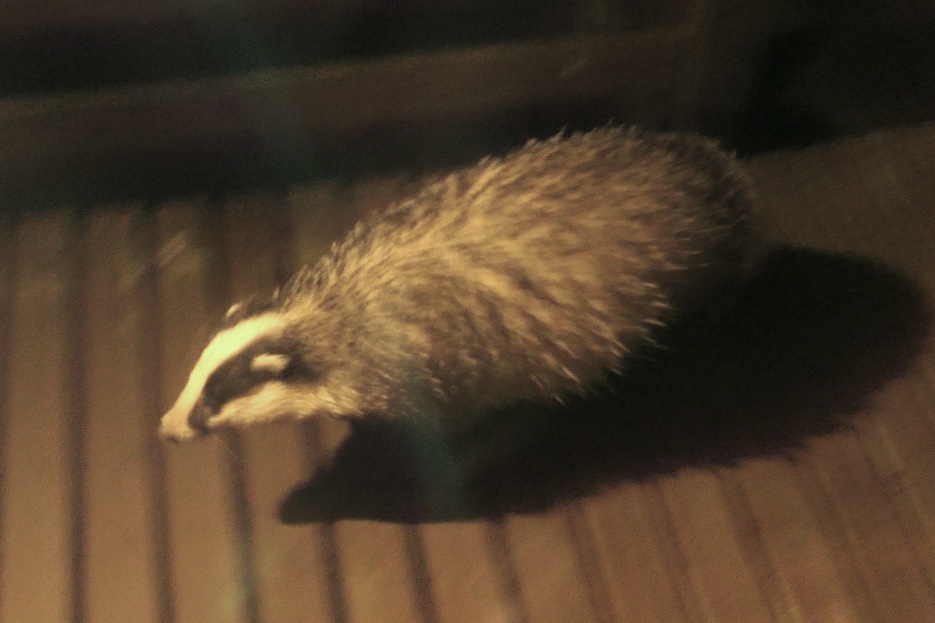
The rest of the week was spent dodging the spells of rain and searching the hills for red deer. Once I’d got all the footage I needed we explored elsewhere, climbing up to the Falls of Kirkaig and walking through Celtic rainforest lush from autumn rains. We beach combed along the bay beside the chalet and found handfuls of frosty sea glass and a mermaid’s purse. I popped into the loch for a chilly and very brief swim. We were also visited almost every night by a hungry badger, who ambled right past the door on his way out!
Towards the end of the week we visited Ardvreck Castle, a crumbly ruin on the edge of Loch Assynt. While strolling along the beach Mum spotted a dipper foraging in the seaweed. I was surprised to see a dipper on the beach and it was the closest encounter I’d had with one – usually my only views are brown blurs as they shoot along the river.
I love visiting a place in different seasons. On my summer visit to Assynt there were black-throated divers on the loch and huge golden-ringed dragonflies clinging to the heather. This time we saw badgers at dinner time and heard stags roaring throughout the night. I’m so pleased I could share this special place with Mum – she was a little sad to leave at the end of the week. I’ve stayed in Assynt during summer and autumn so far – the next visit for me would be in winter, when I would search for shed antlers and hopefully photograph deer in the snow. Until then, it was lovely seeing and hearing those huge animals at the peak of their yearly drama.
I say this every month… but honestly what a month! We’re moving towards my favourite time of year – there were still some randomly hot days in September but autumn is definitely in the air now. This morning I crunched through my first frost since February and it was finally cold enough for my mittens.
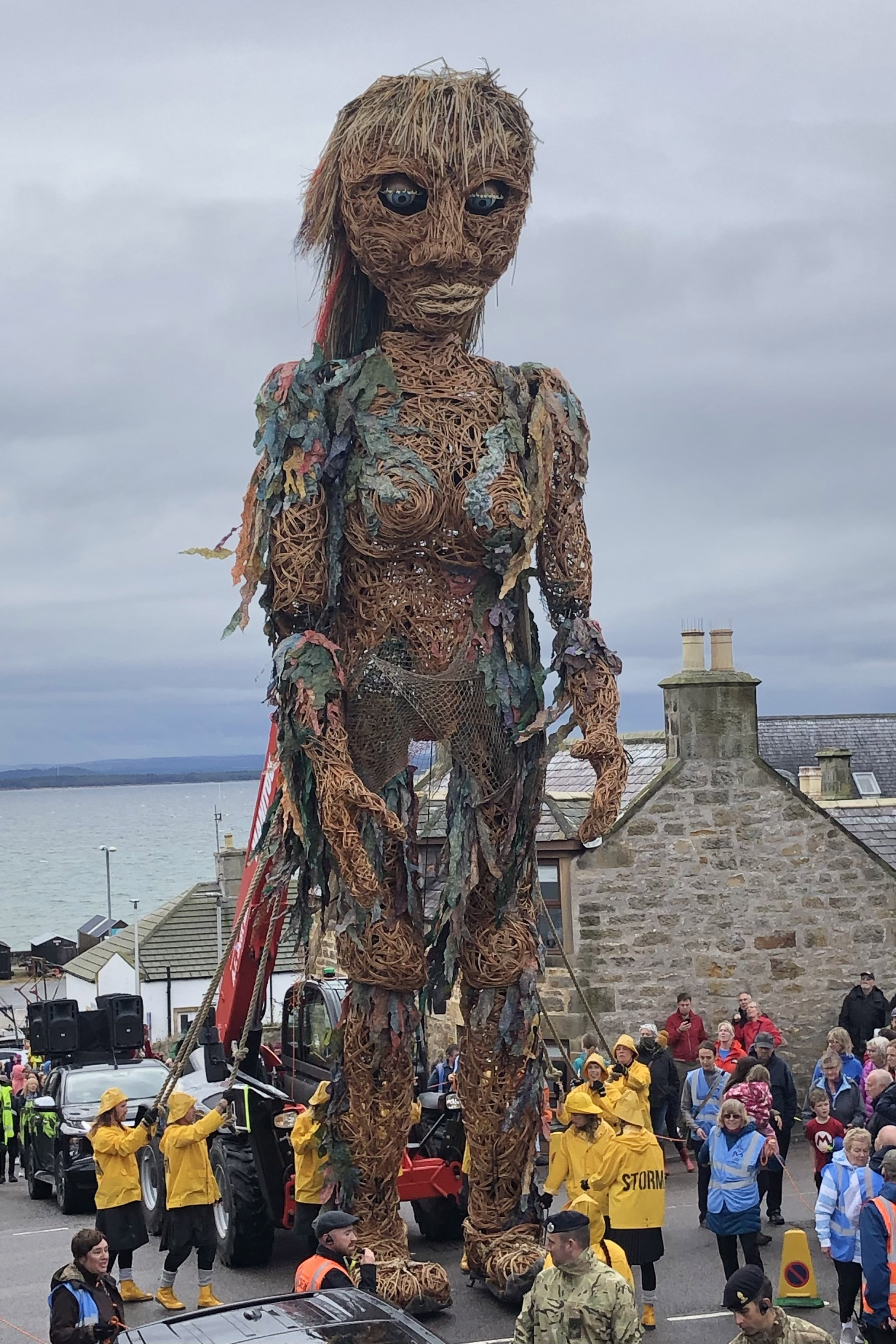
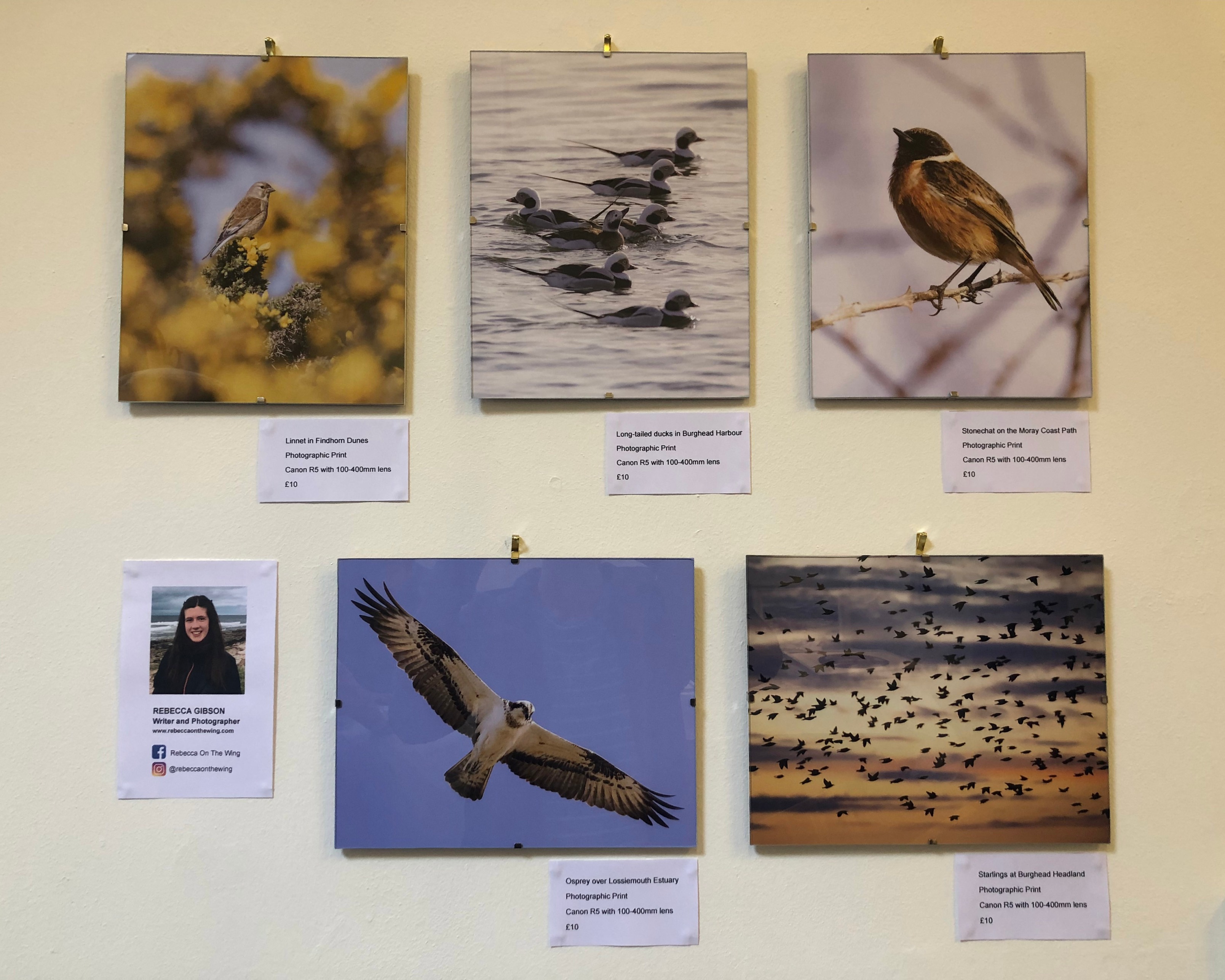
At the start of the month I took part in an art exhibition in my village. The theme was the sea, linking to the arrival of a 10 metre-high puppet called Storm which made its own waves across Moray. I submitted some of my coastal bird photography to the exhibition and brought along my calendars to sell. There were over a hundred works up on the walls and we had visitors coming down for a look all weekend. I haven’t exhibited since university finished three years ago, so it was great to see my work printed again.
Storm comes to Burghead!
My exhibition pieces
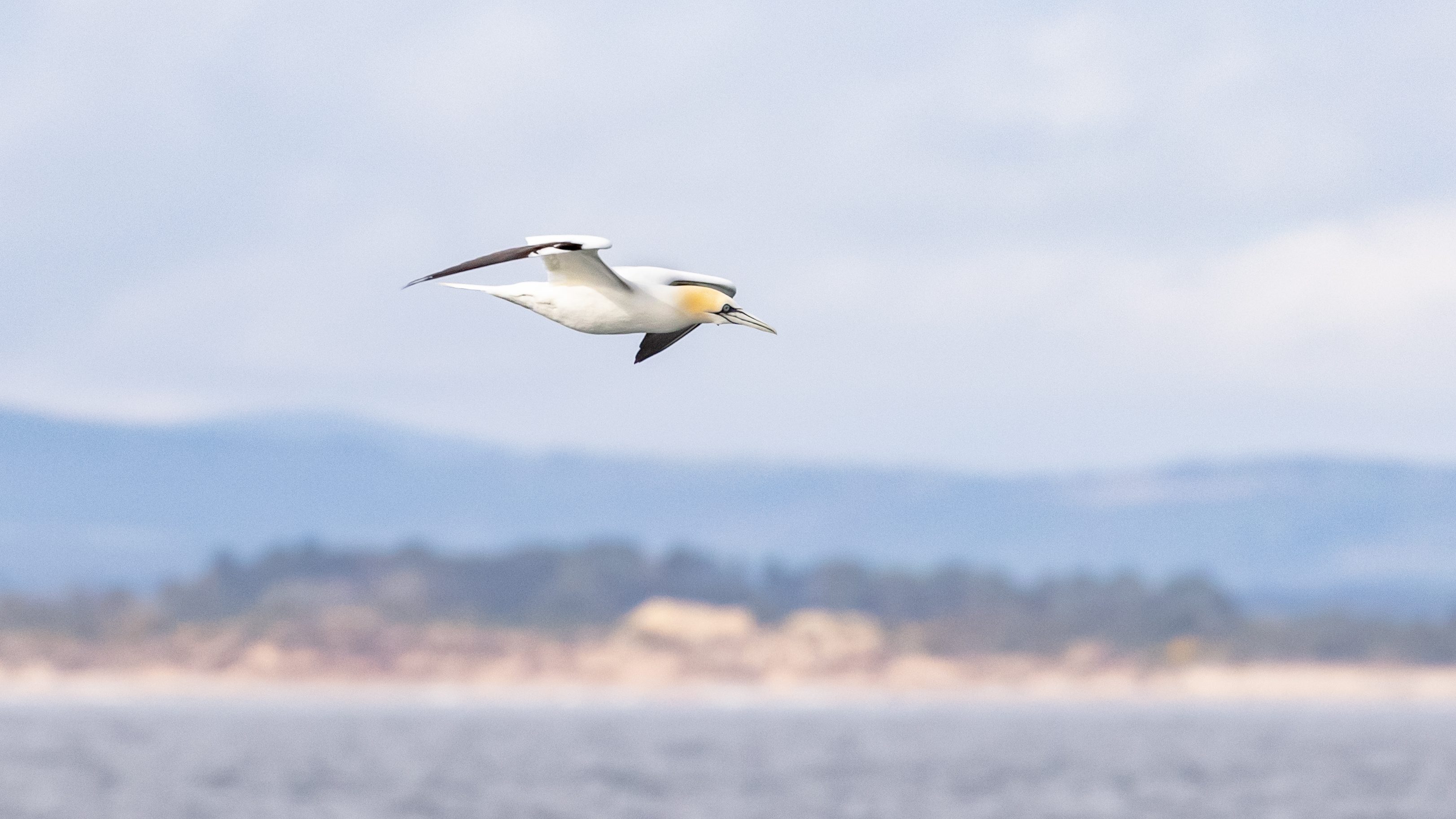
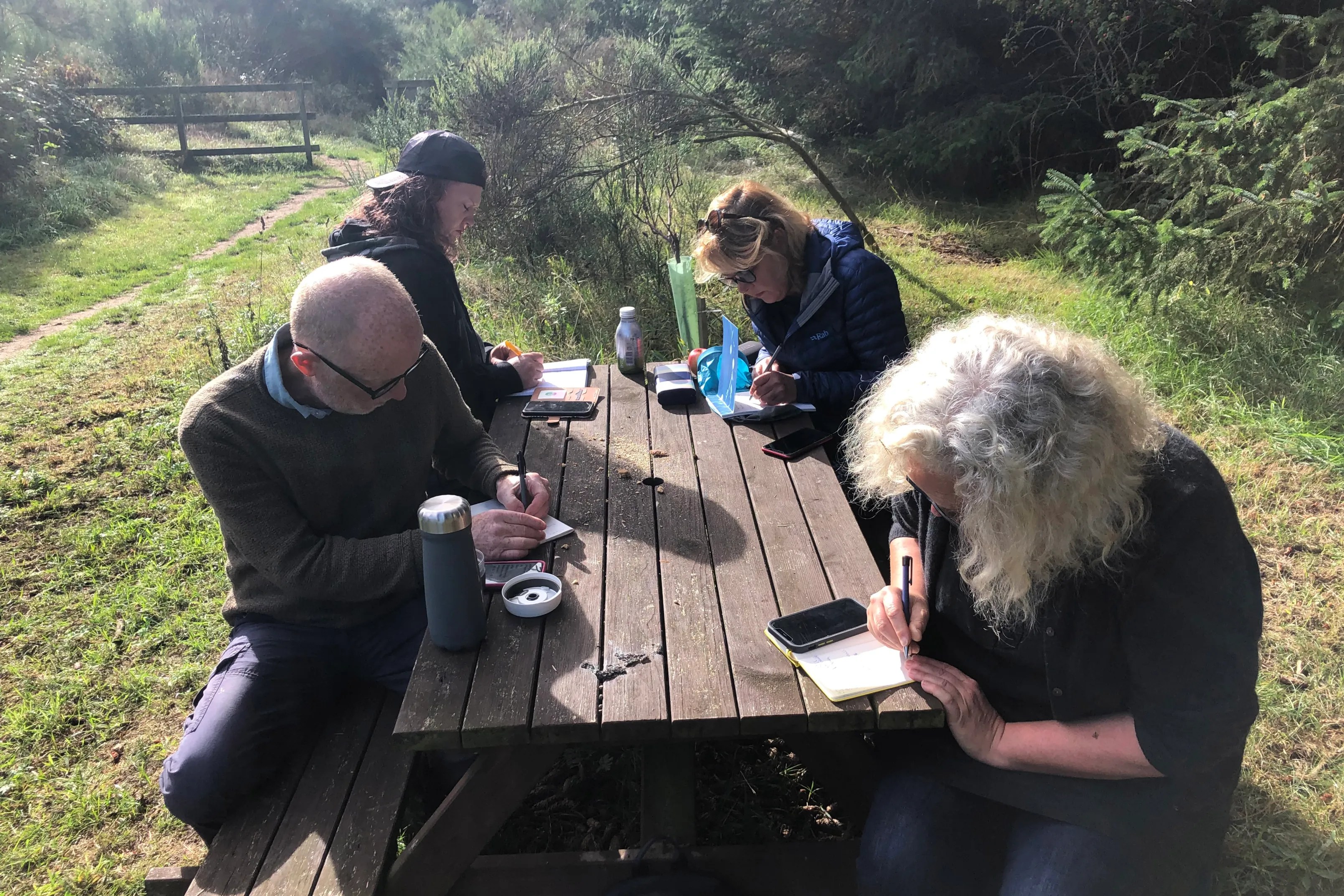
A week later I hosted two more nature writing workshops – one in Roseisle Forest and the other along the Moray Coast Path. I enjoyed doing this again later in the year – while the June workshop in Roseisle included more birds, this time it was all about the fungi. When the event started early in the morning, the sun was glistening on dozens of spiderwebs, and amongst the gorse bushes were several wood ant nests. Along the coast, we watched gannets diving out at sea and dunnocks singing in the blackberry bushes. My workshop participants wrote some beautiful things – although we all walked the same paths, the pieces were so diverse and it was really rewarding to hear them.
Last week I had family up to visit that I hadn’t seen in years. Although we had some blustery winds that whipped the bay up into a bubble bath, there were still plenty of opportunities to watch wildlife. My uncle had been hoping to see his first crested tit, and we were lucky enough to see two at once! Other bird highlights included a sandwich tern diving in the estuary and a whole cloud of rooks swirling in the air above us.
Photo: Rod Cameron
This month I’ve also been working furiously on my master’s degree, which I’ve just finished. My final portfolio was 20,000 words and although I started writing it last summer, I was still scrabbling to finish it the day before the deadline. My portfolio is called ‘Finding Home’ and it’s about my connection with Scotland, beginning with my first visit when I was six years old. Gathering all these pieces together has made me realise how many different ways my new home has inspired me, from memoir to folklore to fiction. Although it was rewarding to write, I’m glad it’s done now…
And now for the most exciting news: I’m going to be an author! This has been in the pipeline for more than a year and now I can finally tell everyone that I’m writing a Slow Travel Guide to Northeast Scotland. The book will be published by Bradt Travel Guides in spring 2023.
Back in February 2020 I attended a National Geographic travel writing masterclass and got chatting with the MD of Bradt about the possibility of a Slow guide for Moray. We swapped emails and a few months later I was asked if I was interested in writing a guide not just for Moray but for Aberdeenshire and the Cairngorms National Park too.
Slow guides are all about getting away from the ‘top sights’ and looking for the hidden gems of a place, enjoying each forest, café and stone circle at a leisurely pace. They cover nature, history, geology, food and culture, encouraging walking and cycling to experience the destination more thoroughly. Northeast Scotland is packed with potential Slow content and it’s an honour to be able to share its beauty and charisma with other Slow travellers in this book. I’m going to research, walk and write my socks off to make this guide the best it can be.
An excellent month’s progress. Bring on the dark half of the year!
For the last day of the mindful creative retreat, we began in Burgie Arboretum. The grass was soaked with dew and I soon regretted not bringing my wellies!
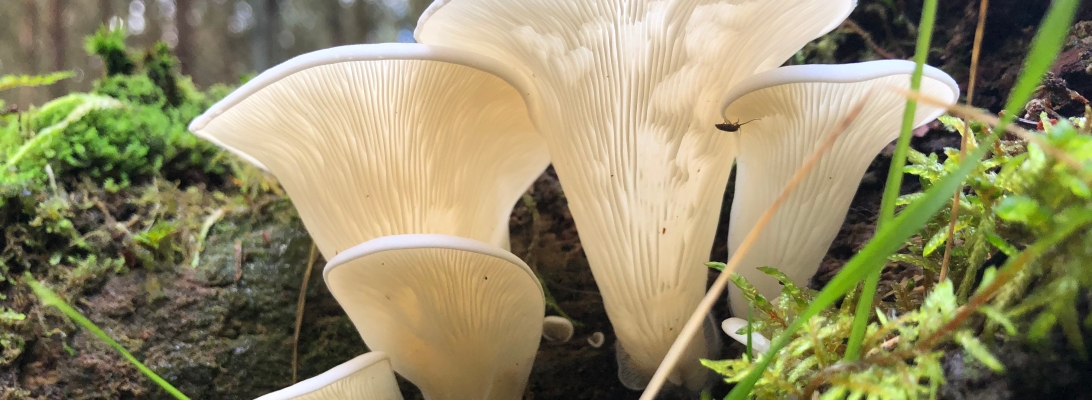
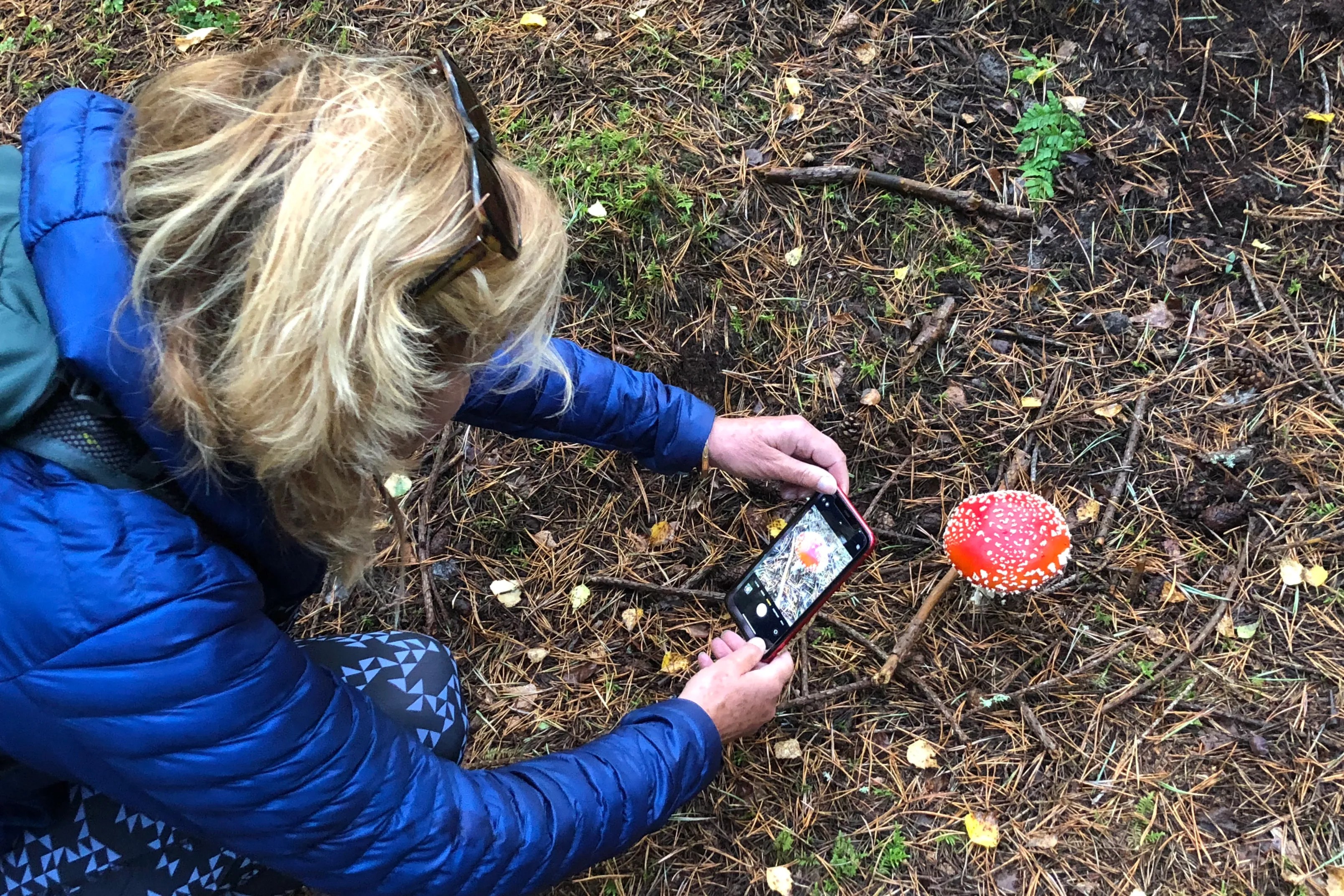
Still, fungi loves damp ground and we soon spotted one of my favourites: amethyst deceivers. These lovely mushrooms are bright purple, and in contrast to the usual rule of colourful mushrooms being inedible or even poisonous, amethyst deceivers are often foraged. Apparently they have a mildly nutty flavour and keep their bright colour when cooked.
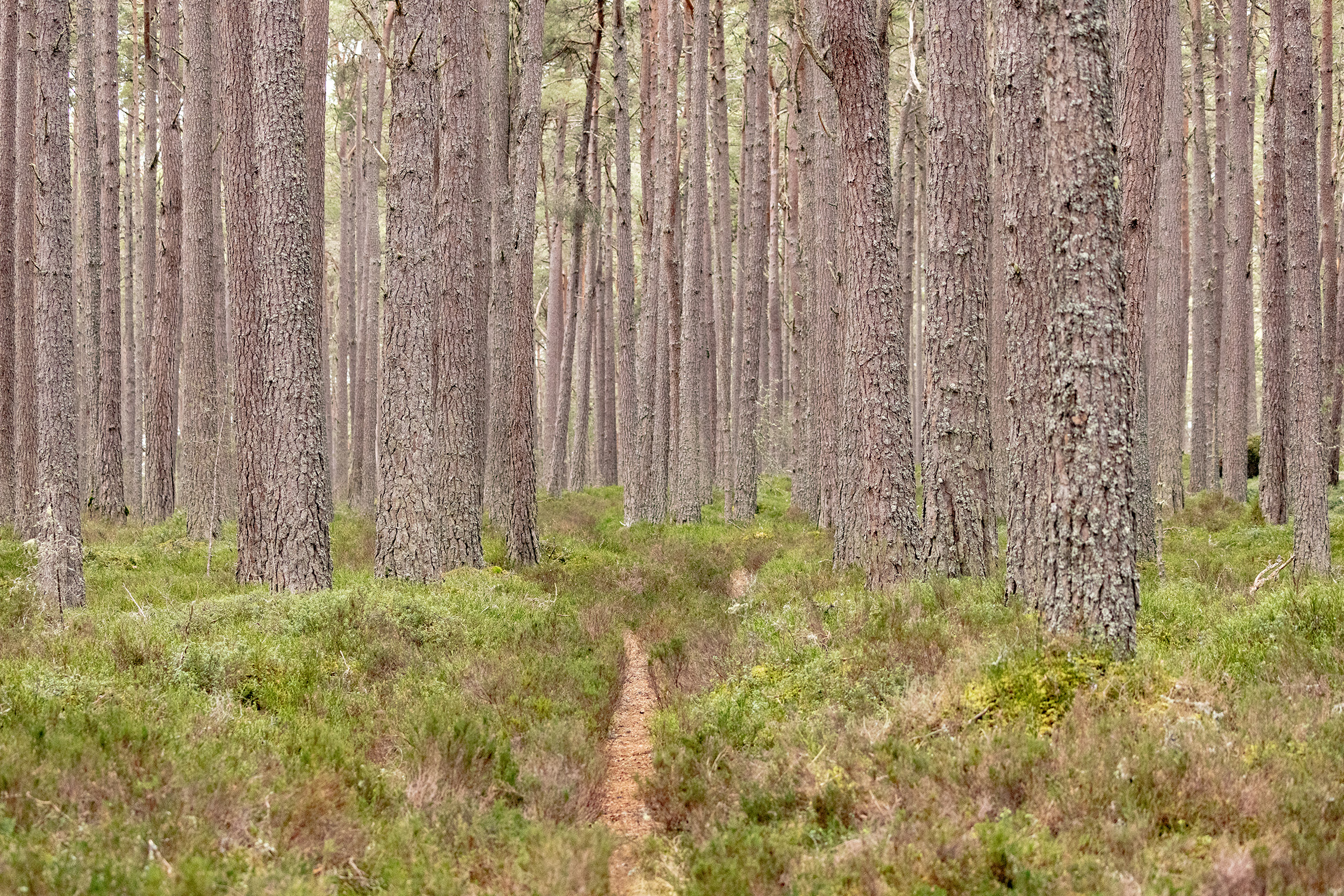
Later in the day we explored a small loch just outside Forres. This session was my favourite of the whole retreat. I sat for hours among the Scots pines, admiring the carpet of heather and bracken.
I was treated to several wildlife encounters. A brave wren appeared only a few feet away, flashing its stubby tail. It did what wrens do best: scream and shout and stick its bum in the air! This one was great fun to photograph.
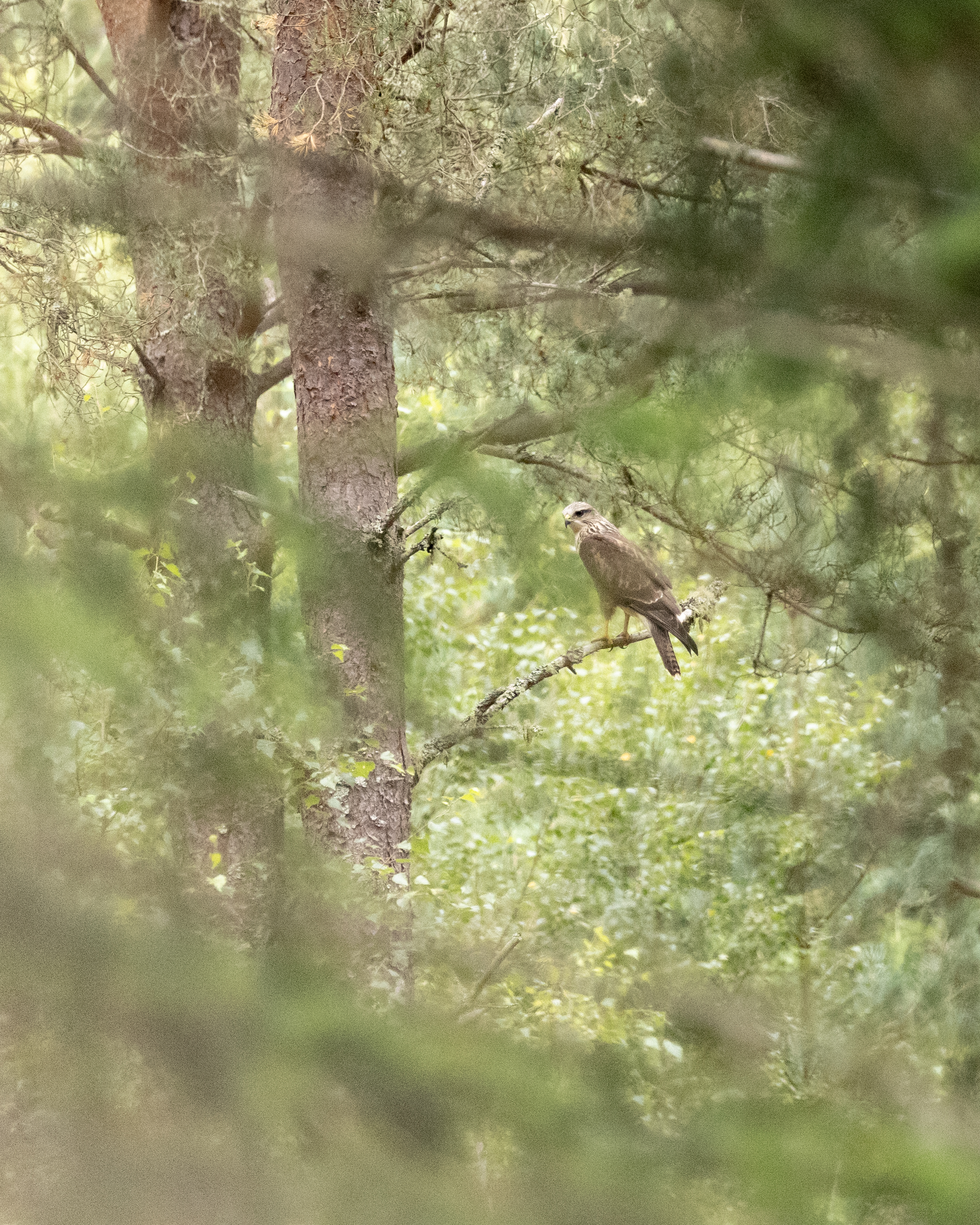
Shortly after, a brown shape caught my eye and I glanced up to see a buzzard sweeping through the trees. It perched in a very convenient gap for photos. Knowing how skittish these birds can be around people, I felt privileged to see it resting.
Finally a flash of movement on the ground caught my eye and when I eventually found it I realised it was a teeny tiny frog. The afternoon was full of surprises – while walking is a great way to encounter wildlife over distance, certain wonders just won’t happen unless you slow down to a complete stop.
Just before dinner, we gathered by the loch and did some more breath work, led by Jen. I wasn’t sure if I’d notice any changes from Monday but I could actually breathe a lot deeper than I did in the first session. I liked to think it was the calming effects of the retreat, which had turned out to be a huge success.
Have a read of what happened on day one and day two here.
I can’t believe we’re almost halfway through the year already! June has flown by…
I spent the whole of last week on the west coast of Scotland for an MA assignment. I had to organise a self-led trip and two of my previous plans had already been cancelled, so it was a relief to finally go!
And what a week it was. I stayed in a chalet belonging to friends of mine, which stands on stilts at the edge of a loch. I woke up to ravens outside the front door and on two occasions an otter swam past! It was so refreshing to have a change of scenery and spend time with different wildlife.
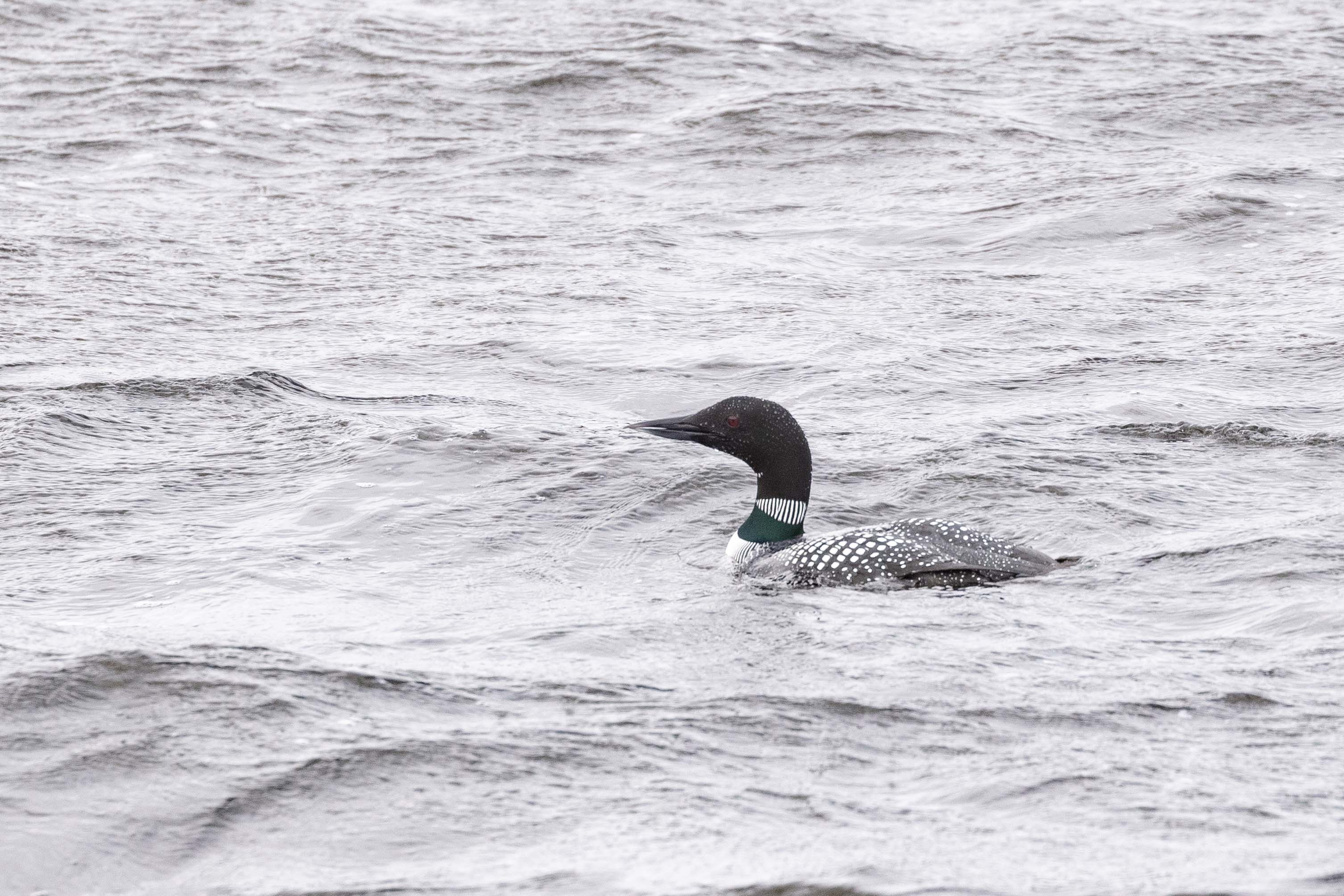
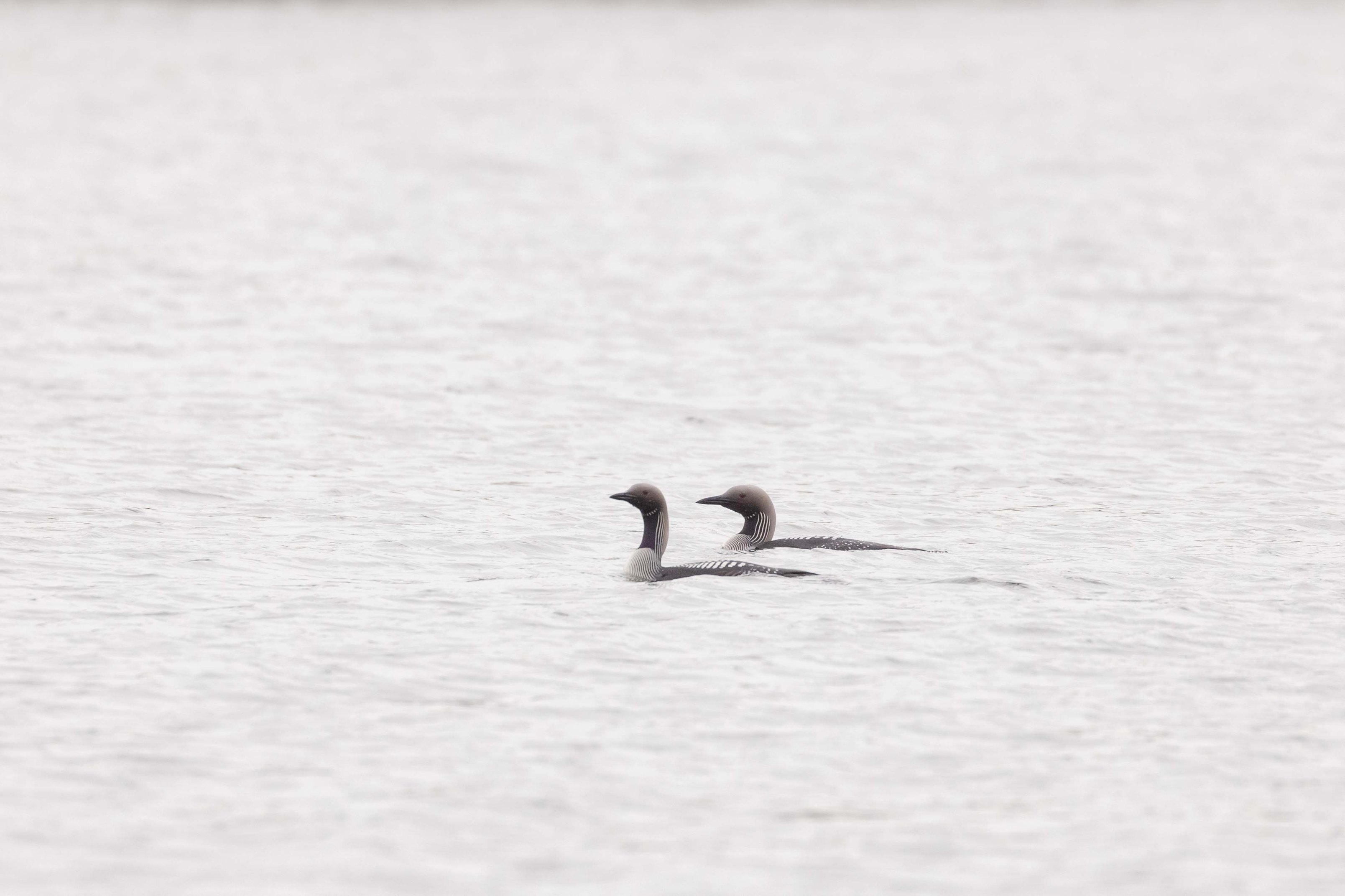
One of my highlights has to be the divers. On the first day I spotted a distant red throated diver, but the great northern and black throated divers were particularly photogenic and wandered close to shore. Before my trip I hadn’t seen any divers in breeding plumage so struggled to tell them apart, but after watching them daily at the chalet I soon learnt which was which. And what stunners they were in their monochrome harlequin costumes! On several occasions I saw five black throated divers at once, and even across the loch I could make out their gorgeous barcode plumage.
Great northern diverBlack throated divers
The bird excitement continued even closer to the chalet. Visitors to the feeder included goldfinches, greenfinches, siskins and lesser redpolls. I’d never seen such a glittering display of birds while sat on a sofa before! I’d also never seen a feeder being emptied quite so quickly…
Lesser redpollLesser redpoll with siskin in front
I really was surrounded by wildlife. One evening as I was getting ready for bed, I peered out the window and saw a stag munching on bracken right next to the washing line! Worried he’d bolt if he saw me, I crept outside and peered round the corner. He glanced up briefly mid-chew but continued browsing almost straight away. I’d forgotten he wasn’t a camera-shy roe deer that scarpers as soon as it senses me. This was a bolshy red deer, and he let me watch him munching his way through the garden for half an hour.
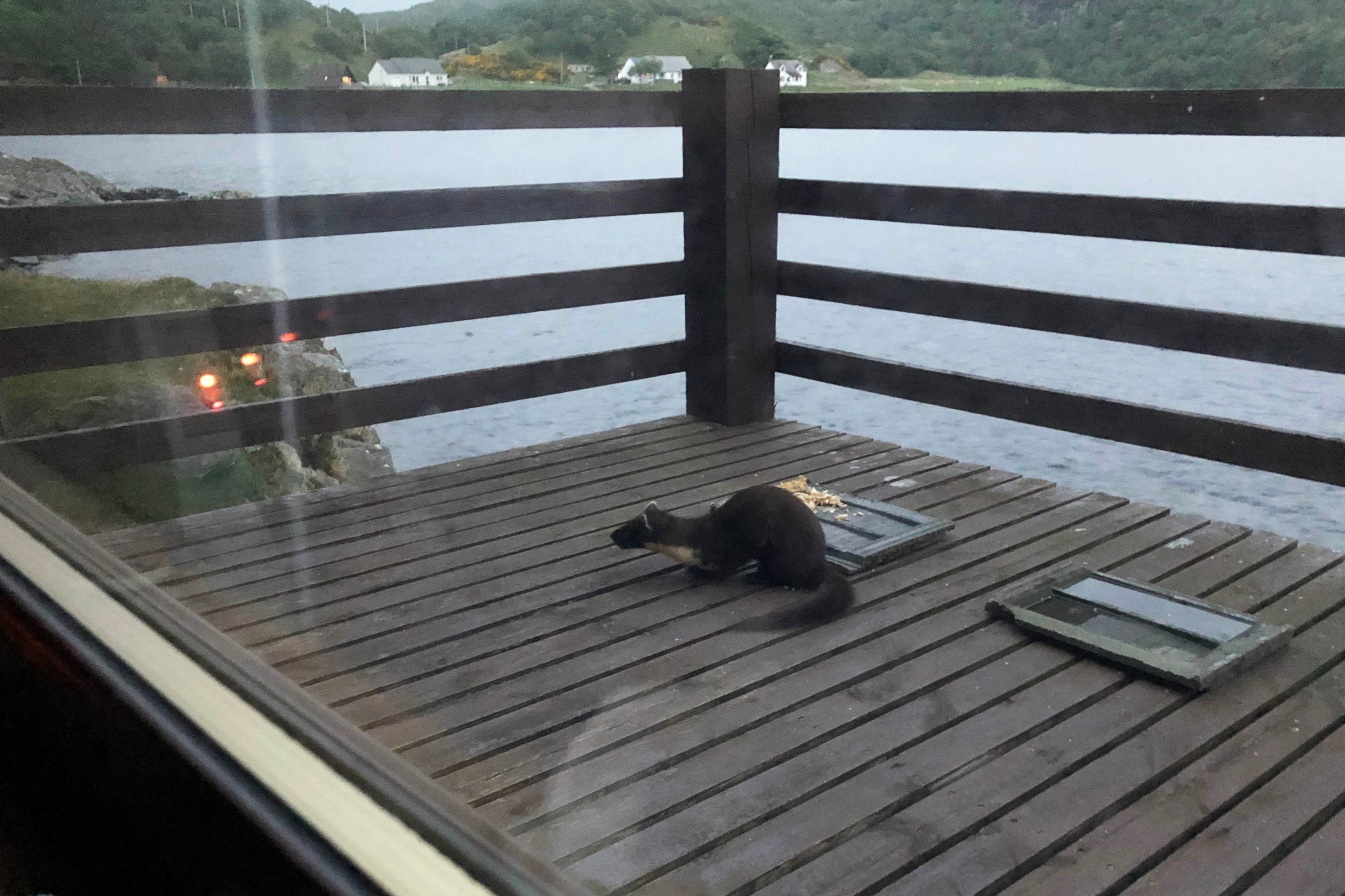
And speaking of munching, I was thrilled to also be visited by a pine marten! The little scamp came almost every night and I had no trouble recording its visits on my trail camera, but seeing it in the flesh was a lot trickier. Despite staying up until 2am on some occasions I didn’t manage to see it, but on the fifth night at 11pm I was watching a field mouse on the decking when the marten appeared, still in moderate daylight! The mouse was just as shocked as I was and sat frozen for several hairy moments before racing for cover. The marten didn’t even look up – obviously peanut butter was more enticing!
iPhone photo taken from the sofa!
Although the wildlife was incredible, the weather left a little to be desired. Streaming rain blurred the loch some days, and there was a determined wind that kept the midges away but prevented me from ticking a particularly exciting task off my bucket list: wild swimming. I’d brought my wetsuit and was really looking forward to going for a dip, but the wind was chilling and I wasn’t feeling up to it. Before long it was my penultimate day in Assynt and I was disappointed that I might not be able to get in the water.
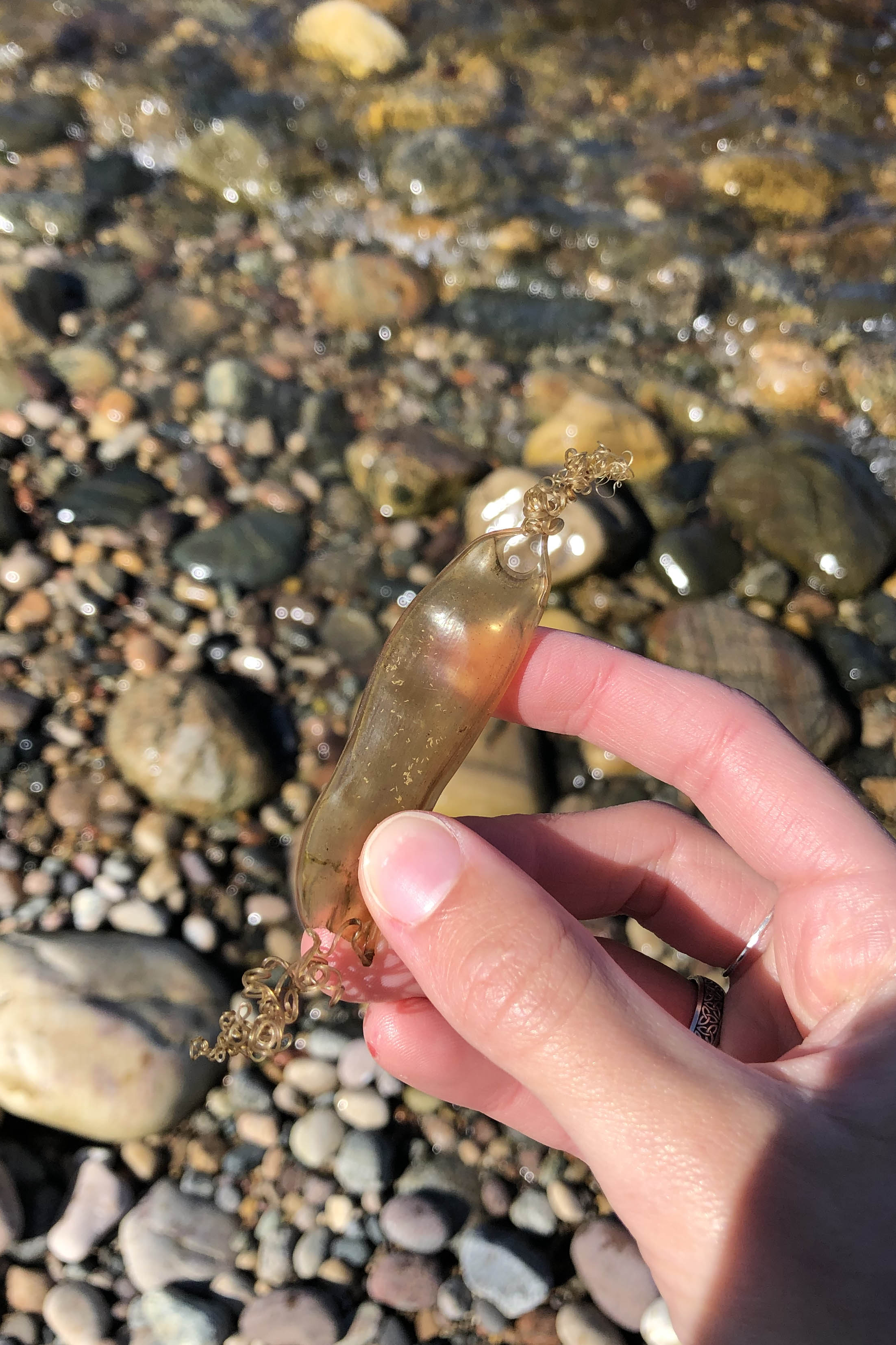
I went for a walk along the beach, scavenging for sea glass and other treasures. Almost next to the road was a tiny tube with a clear orange tint, looking to the untrained eye like a bit of plastic. But I lunged to pick it up because it was a mermaid’s purse! These extraordinary objects are the egg cases of sharks and after asking around on Instagram I was told that this one belonged to a dogfish.
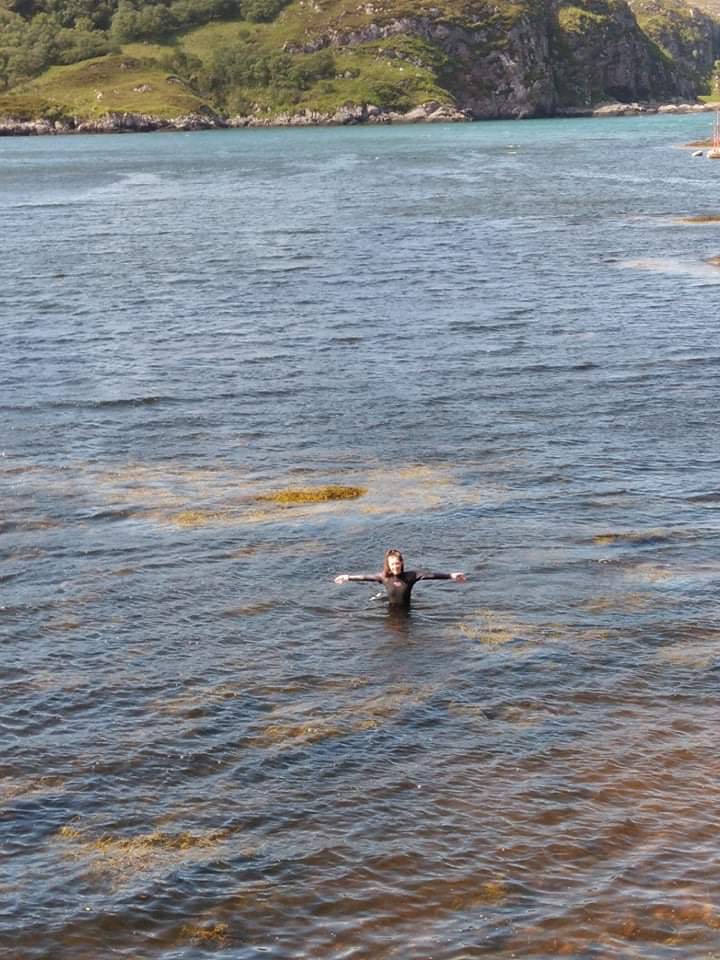
I’ll admit, I saw this as a sign. Especially when the sun broke out and I felt a smidge warmer. I’d found a mermaid’s purse and I was going to swim. The water temperature was 14° and with my wetsuit on I was just fine. It was my first time swimming in Scottish waters and I fell completely in love. Watching the waves from wave-level is quite a surreal experience, and I loved that I was right where the otter had been just the night before.
It was the perfect way to end a trip full of wildness and nature. I was really quite sorry to leave, but I had over 1000 photos to edit and dozens of note pages to go through…
What a month! It’s usually birds that take up most of my camera’s memory card, but over the past few weeks I’ve been lucky enough to get some fantastic mammal sightings, including the second rarest carnivore in Britain…
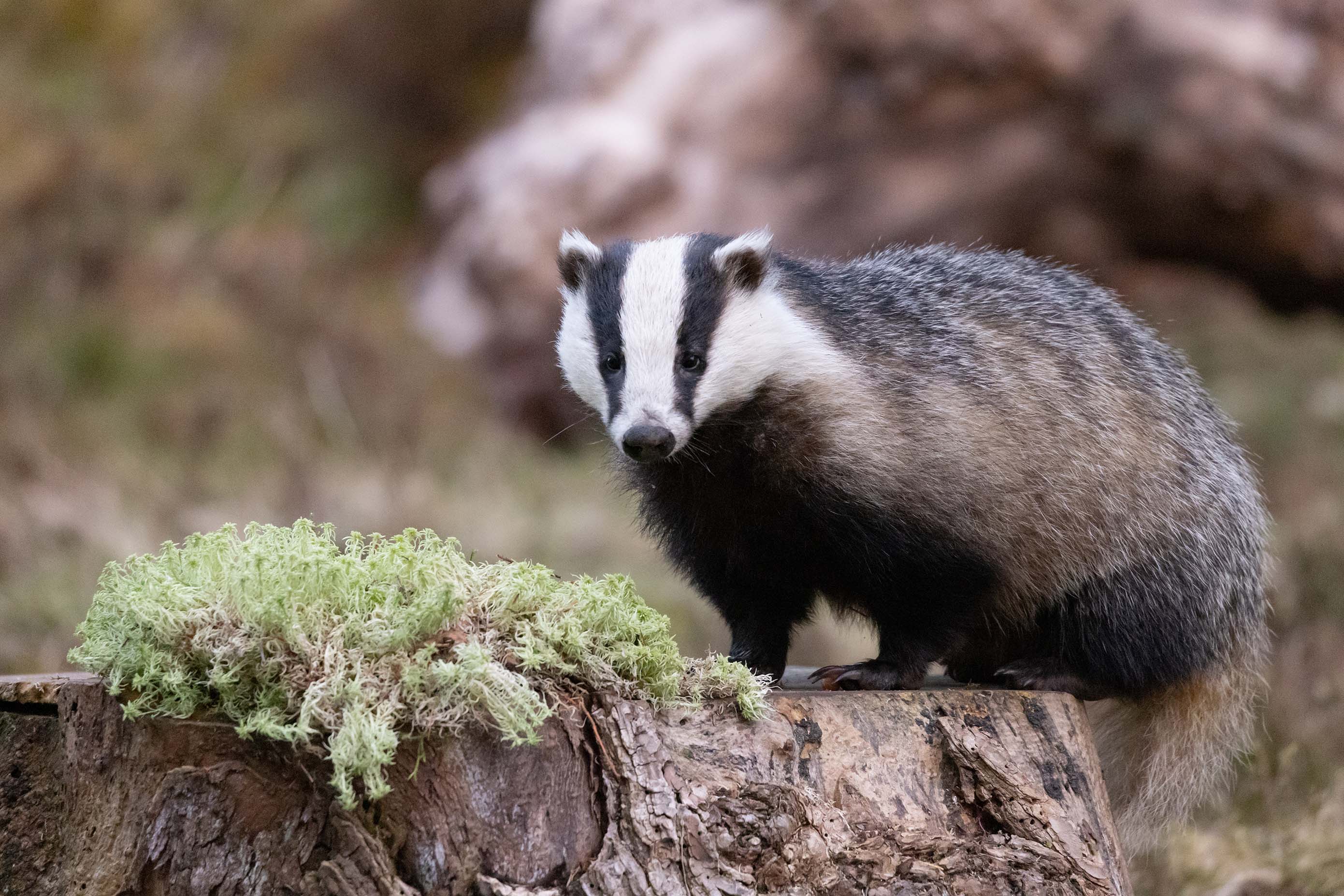
Badger
Recently I visited a friend’s private hide. I arrived at 2:30pm and enjoyed squirrels, siskins and jays. Seven hours later, I glanced up and saw this badger approaching the clearing. You know that jolt in your chest when you see something absolutely incredible and rush to get your camera ready but your hands seem to move at half speed? That was me. Luckily this little one was in a meandering mood and took its time snuffling along the grass towards me. Obviously I kept as quiet and still as I could (despite the manic joy) but it still glanced over at me. There’s no fooling wildlife!
Roe deer
Roe deer prefer the seclusion and shelter of trees. Although they meander into open fields, they rarely stray far from the woodland edge. They are associated with Cernunnos, a Celtic horned god of wild animals and fertility. Deer were thought to have the power to pass to and from the Otherworld! Their antlers, shed each year, represent rebirth and rejuvenation. I saw this gorgeous buck from the same hide as the badger, which allowed me to get such intimate views. For me they’re one of Britain’s most magical creatures.
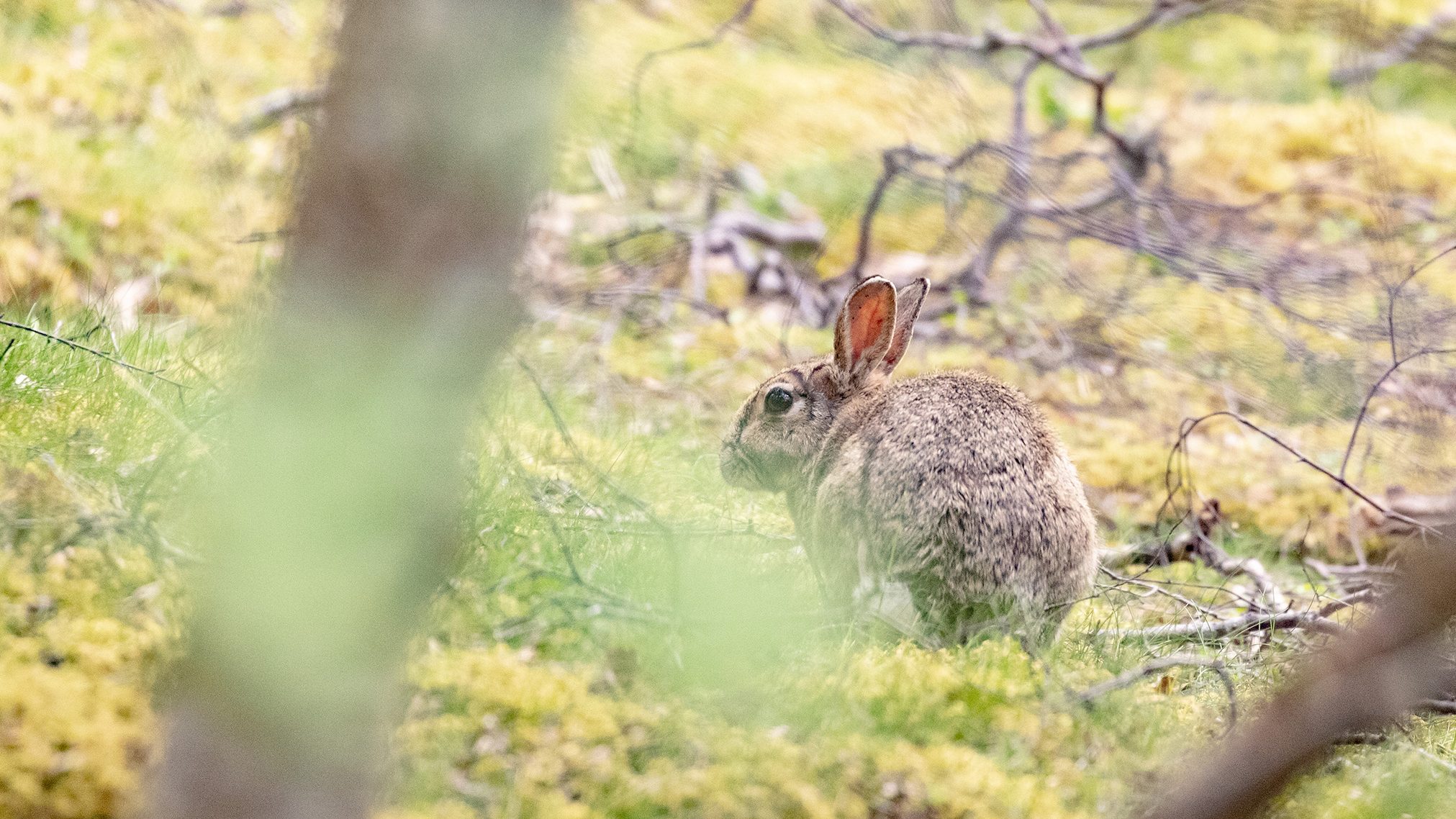
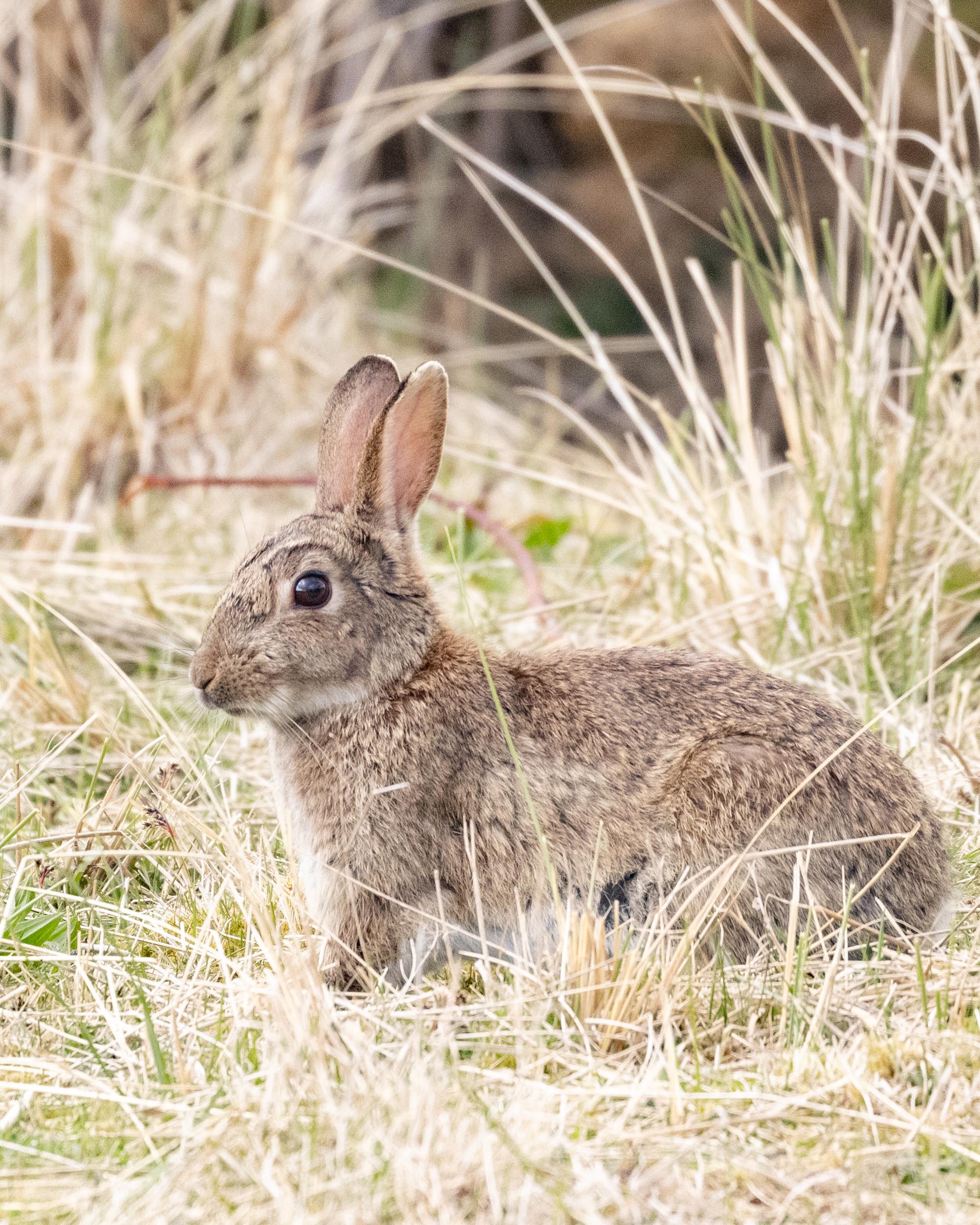
Rabbit
I’d been filming seals hauled out on the beach but there were some very grumbly clouds heading my way so I quickly packed up and hurried back to the car. Just beyond the sand was a dense area of gorse so as I walked I kept an eye out for stonechats and linnets. But instead I spotted a rabbit feeding out in the open. I was just marvelling over how darn cute he or she was when something caught my eye and this bundle of perfection appeared at the mouth of the warren. I’ve never seen a baby rabbit before and it was just as eye wateringly cute as I imagined. As a result of me stopping to take these photos I got caught in an absolute downpour before I made it back to the car, but getting soggy was totally worth it.
Red squirrel
I haven’t posted a squirrel photo since January so this is way overdue! I’d just enjoyed a swelteringly hot day in the Cairngorms. Aviemore was swarming with tourists so I made a hasty retreat back home. On the way I popped into my all-time favourite forest. It’s the sort of place you can get hopelessly and wonderfully lost in. I was tired and hungry after a long day but I thought I’d have a quick wander in case I spotted a squirrel. I walked for less than five minutes before I heard a crunching to my left and turned to see this little cutie at eye level, positively glowing in the sun. It was one of those right place right time moments.
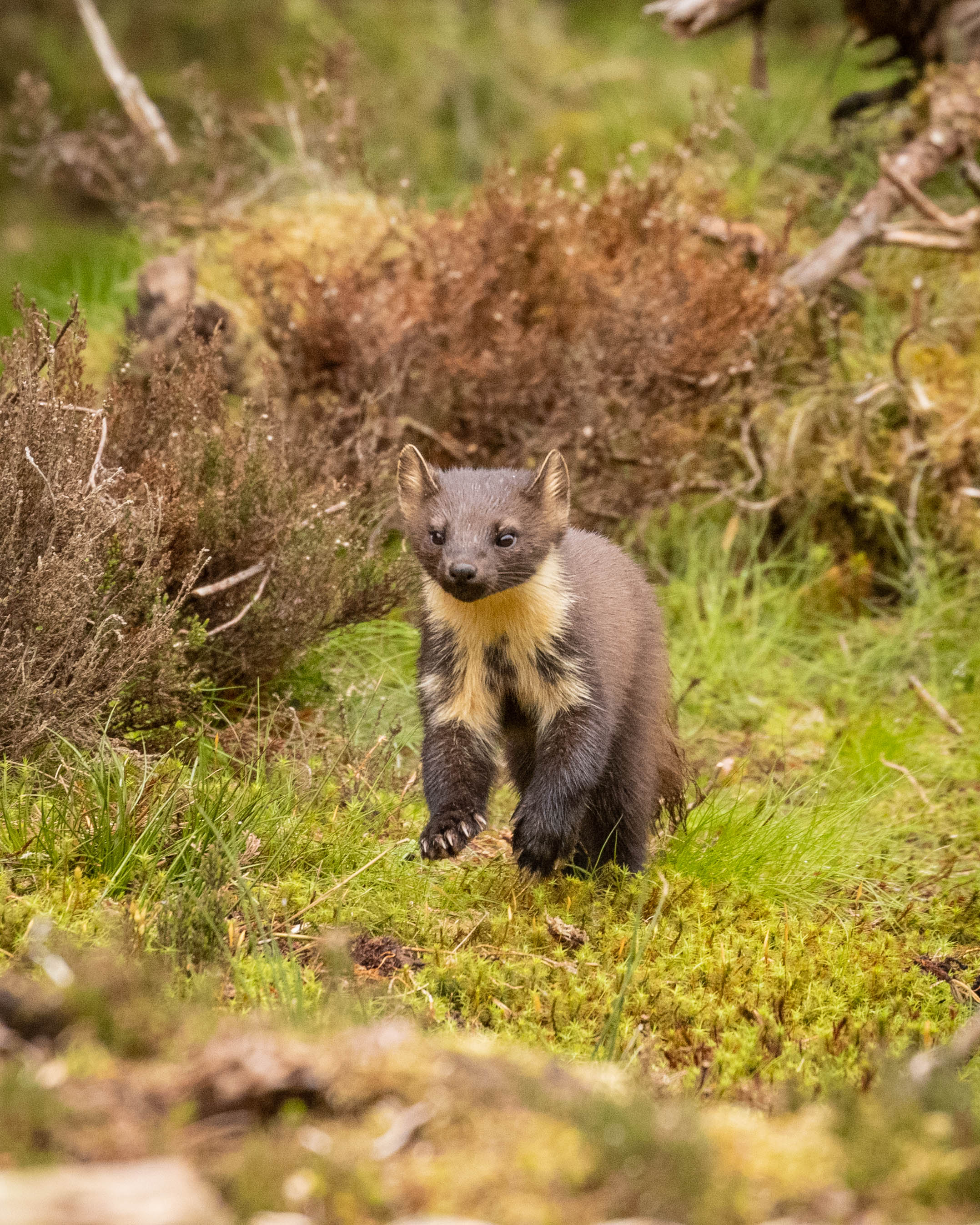
Pine marten
Although I wish I could open my window and draw in all the animals with my angelic singing (while a pie cools on the windowsill), I’m not actually Snow White and the real world isn’t like that. For certain creatures, a little more effort has to be put in and a hide is the only way to go! The pine marten belongs to the mustelid family with stoats, weasels and otters. They’re Britain’s second rarest carnivore after the Scottish wildcat, making them (in my view) as special as unicorns. I’ve been lucky enough to see them twice in the past, but both times were in the dark so photos were impossible. Recently I achieved a huge goal of mine and got my first images of a pine marten! Despite their leisurely-looking lollop, these cat-sized animals shift at a fair pace. Luckily I managed to catch this lovely female running straight towards the hide.
Since posting this photo on Instagram, I was approached by Countryfile who then shared it on their account! I was incredibly chuffed.
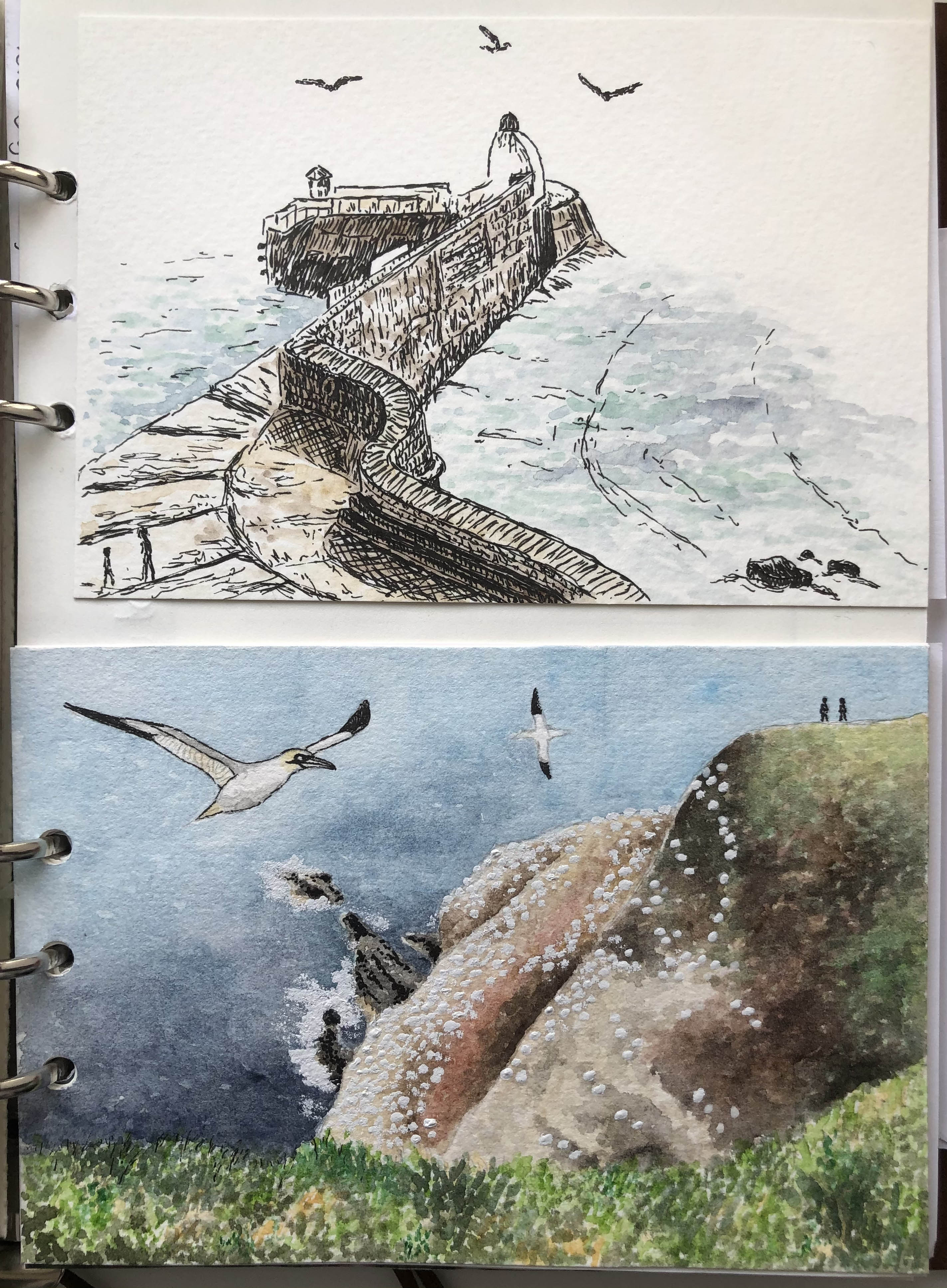
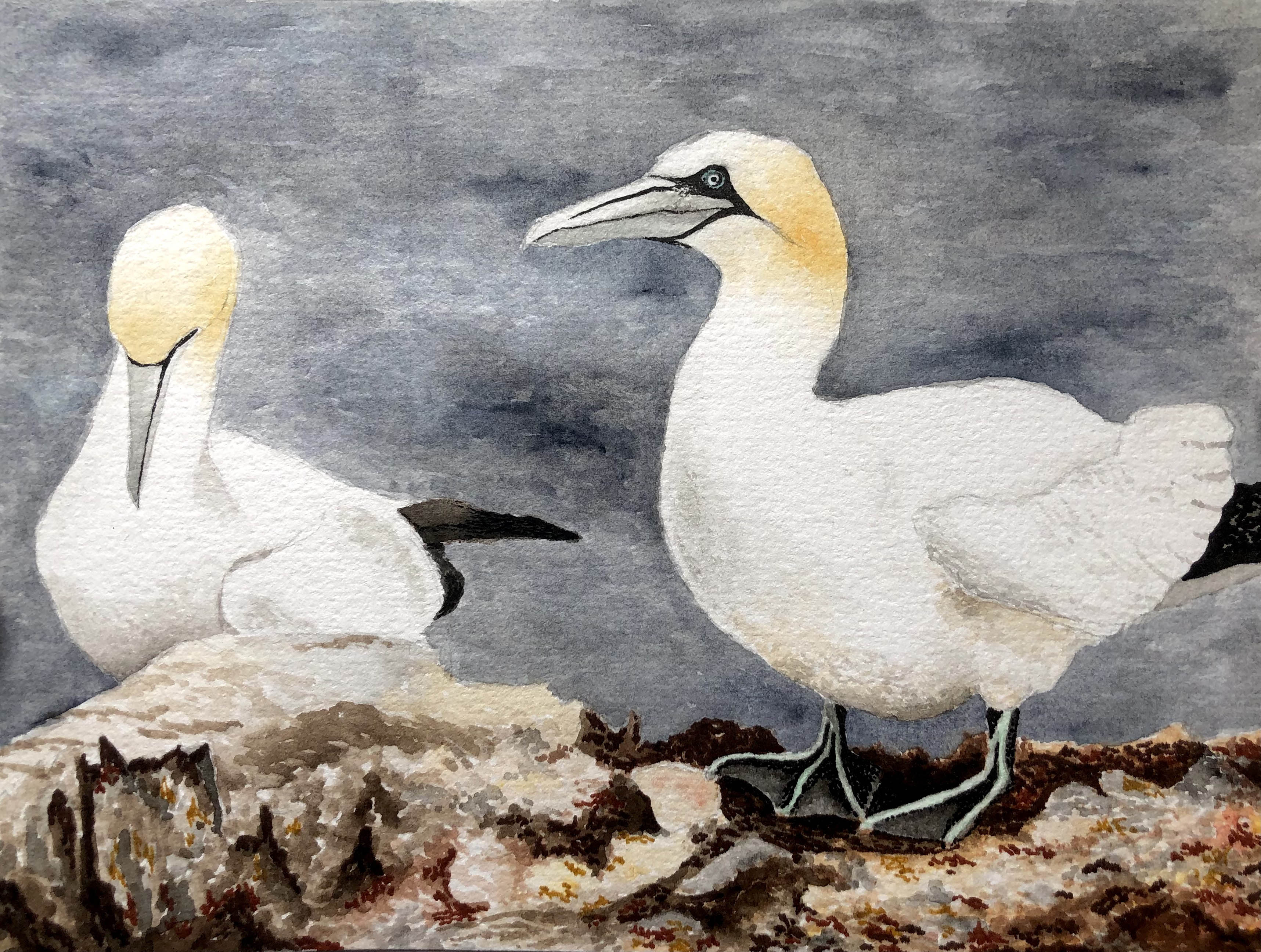
Painting always takes a backseat for me. Writing and photography take up all of my creative time and energy, and as a result I barely ever get round to painting even though I love it. The second I actually set out my equipment and get started, I spend hours doing it!
The other obstacle is the fact I’m a raging perfectionist. I aspire for photorealism on every piece and it just doesn’t happen. What I should be more concerned with is that my worrying is stopping me from doing what I love.
So, determined not to get bogged down by perfection, I painted a few sketches with my usual combination of watercolour and fineliner pens recently. Sure they’re a little rough round the edges but isn’t creative expression what art is all about? If we could all paint a bird to look like a photo, every piece of artwork would look identical. Naturally this is just me making an excuse for my lack of technical skill, but joking aside I think art should be about having fun no matter what the end result looks like. And everyone knows practice makes perfect.
Once restrictions were eased in Scotland and I was given a precious piece of freedom to venture outside of my county of Moray, I planned a day trip to the Cairngorms. One of my favourite sounds is the whisper of a stream in a forest – it’s the epitome of fairytale magic for me. So when I arrived at Inshriach Forest on the western flank of the Cairngorm plateau and heard that incredible sound, I made a beeline for it. I passed other people heading up a rocky hill trail that would take them into the mountains. But I’m more forest sprite than mountain goat – my place is at ground level.
A very Scottish landscape!
Inshriach is part of one of the Cairngorms National Park’s eight National Nature Reserves. As well as ancient Caledonian pinewood it contains mountainous and heather moor habitats too. Scottish rarities such as crossbills, red squirrels and crested tits are found there. There’s also the possibility of seeing golden eagles over the mountains, but I had my eyes on the ground rather than the sky.
A trodden grass trail broke away from the main track and I followed it, only briefly distracted by chaffinches and a characteristically vocal wren. The sound grew louder until eventually I was close enough to see the water sparkling in the bright sun. It was gorgeous. Allt Ruadh it was called – a tributary of the River Feshie.
Dumping my rucksack, I knelt at the edge and dipped a hand. Just as icy as I suspected. I always feel an urge to swim in wild water or at least wade knee-deep, but even with the sun it was far too cold for me on this occasion. Still, just to see and hear all that stirring water was a treat. I settled on the bank and crossed my fingers for dippers.
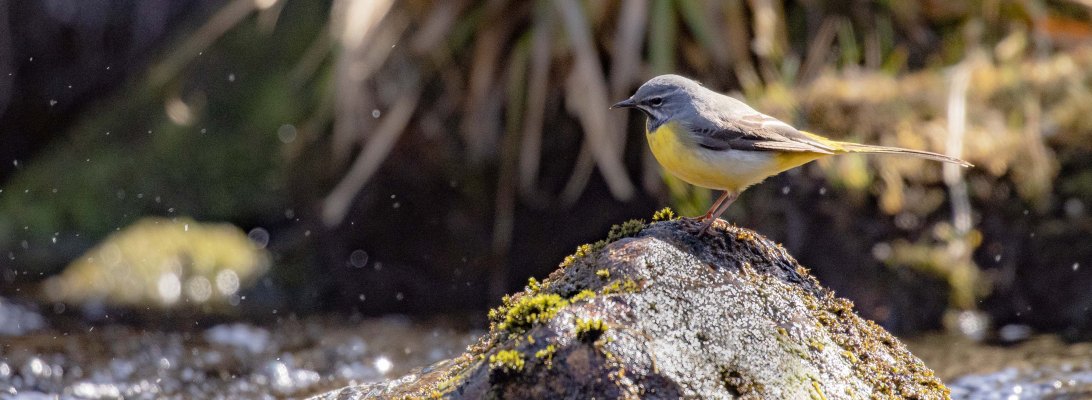
I spent several hours there, reminded of the time only by my rumbling stomach. As I leant back against the rocks with my soup flask and watched the rapids churn up white froth, my gaze caught on a flash of yellow. A grey wagtail! It was standing in the centre of the river, bobbing its tail and fluttering from rock to rock. After examining each one around me, it flew to the top of a Scots pine and began to sing. I’ve seen many different birds using treetops as a singing perch but never a wagtail, so it was both a surprise and a privilege. Its song was so loud I could hear it above the stream.
I suppose this is how I meditate. I can’t sit in a lotus pose, close my eyes and listen to drum music – my mind just wanders to deadlines and errands. But if I disappear into the wild and fill every one of my senses with nature, I forget all the admin and sink into the closest meditative state I can manage. It helps if there’s no service because it means my phone is useless. Having no connection to the material world could be scary I suppose, but if I stay safe and pack accordingly I can enjoy complete solitude and peace, if only for a morning.

































 rebeccaonthewing.com