
I bought a ticket for the Madrid City Bus Tour from hotel reception and hopped on at Plaza Mayor. With such intense heat, I thought it would be a good idea to explore the city in the comfort of an open-top bus, where I could jump on and off wherever I pleased. First stop was Puerta del Sol with the bear and strawberry tree statue, and then we headed east into the Retiro district, which was probably best known for its trio of world-famous museums. As I’d anticipated, the queues to get inside were eye-watering even at late morning, so once again I was content just admiring the exterior. As much as I quite liked wandering through art galleries, I wasn’t willing to spend an hour waiting to get in. Besides, on a weekend day you wouldn’t have seen the art for the tourists anyway.

I was far more interested in what lay beside the museums and I hopped off the bus. El Parque de Buen Retiro was a vast and beautiful park spanning 350 acres. I began at the north end and made my way leisurely past elaborate fountains and sprawling trees. One of the trees was the oldest in Madrid, but there was no shortage of vast leaved giants, which provided much-needed shade for tourists and locals alike. While some people were lolling on the grass with food or books, others were jogging and walking dogs. It was a hive of activity and yet seemed extremely tranquil, similar to how I felt in Plaza Mayor. Despite a population of several million, the city didn’t feel cramped or overcrowded the way London does. The pace of life in Madrid was far more relaxed and I was keen to savour it. The only signs of congestion were from the parakeets perched in every treetop, whose disgruntled calls sounded like trainers on a squeaky floor.

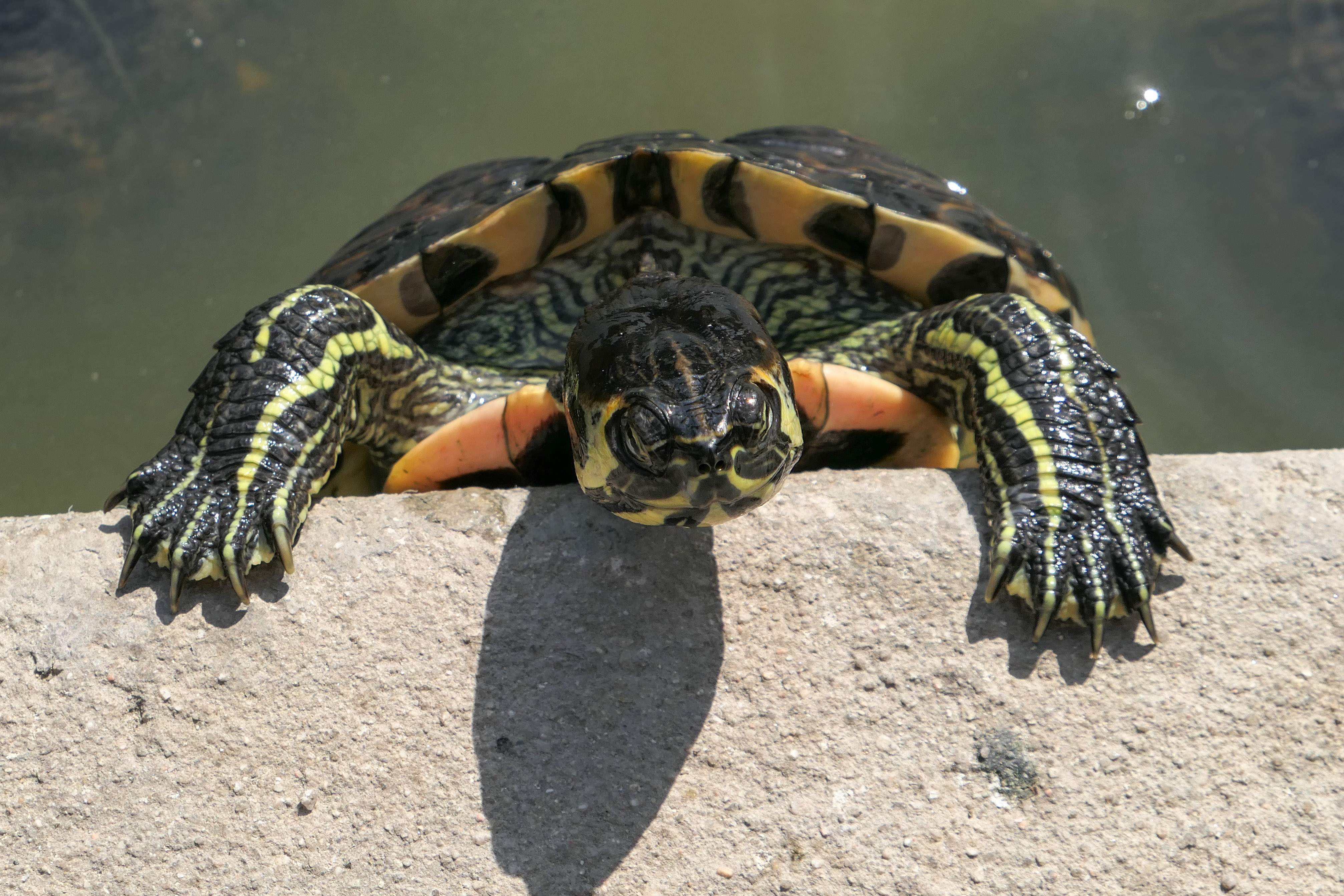
In almost the very centre of the park was El Palacio Cristal – a beautiful glass building overlooking a lake where ducks and a lone black swan were swimming in lazy circles. Surrounding the water were dramatic sprays of white blooms, rosebushes as tall as trees and a miniature waterfall cascading over a rocky outcrop into the lake below. I sat down on the stone steps of the palace to see the ducks a little closer and was surprised to find the water full of tiny terrapins. While their shells remained submerged, their black and yellow-striped heads poked out of the water, eyes blinking up at the child beside me who was throwing popcorn. On the steps, feral pigeons and sparrows tussled for the prizes, while in the water the terrapins were joined by ducks and the occasional gaping lips of a fish. The black swan came gliding over for a look too.

One terrapin made the monumental effort of grasping the side with its broad claws and heaving itself up. For a few surreal moments we gazed at each other before it realised I wasn’t the one with food and plopped back underwater. Meanwhile, a pigeon strolled nonchalantly across my foot in pursuit of an unclaimed kernel, while others exploded into flight around my head, their wing beats sending a welcome burst of fresh air.

Beside me on the step I could hear the child with the popcorn munching. “One for you, one for me” was obviously in play. When the bag was empty, birds and reptiles slowly dissipated until the next snack arrived.
I wanted to sit and watch the terrapins a bit longer, but the steps were in direct sunlight and I was beginning to fry. I left the diverse gaggle of creatures behind and headed out of the park, but not before passing through La Rosaleda (rose garden) for a few photos. A dozen other young female tourists were posing for shots, no doubt gathering new ammunition for Instagram.

All along the downward slope leading back to the museums were small wooden huts overflowing with books, which I made a beeline for. It was La Cuesta de Claudio Moyano bookstalls. Nearly all were in Spanish but there were a couple of titles I recognised. I couldn’t help buying “Harry Potter y la piedra filosofal”, which would probably be challenging enough for my rusty Spanish.
For lunch I had a bocadillo de calamari (squid ring sandwich) from El Brillante – another Lonely Planet recommendation that fell short of the mark for me. The calamari itself was good, with just a thin layer of batter, but when sandwiched in a dry baguette it had me gasping for a drink. It seemed that the Spanish didn’t use sauces much in their cooking. The bacon bits and bare bread at Casa Revuelta had been the same. Perhaps the locals just washed it all down with a few cervezas, but I was left wanting after El Brillante.

Later in the evening, after a full circuit on the bus and hopping off on Gran Vía, the hub of central Madrid, I walked back towards Plaza Mayor and a sign for “Tapa Tapa” caught my eye. I ignored the guidebooks and had dinner in a place I knew nothing about, which was an excellent decision. I chose four cheese croquettes, mini portions of Iberian ham and mozzarella toasted sandwiches and langoustine skewers, which were all absolutely delicious. To drink I had a mocktail called San Francisco, which was bursting with the flavours of orange, peach, pineapple and blackcurrant juices. It was an extremely satisfying end to a long day exploring the park. Tomorrow I had a real Madrid tradition to look forward to: the infamous El Rastro flea market.


 rebeccaonthewing.com