2019 Wrapped Up

Christmas is here again, which means it’s time to reflect on what I’ve achieved in 2019. I still have a long way to go before I can really call myself a freelance writer, but I’m so proud of the progress I’ve made this year.
img_3859

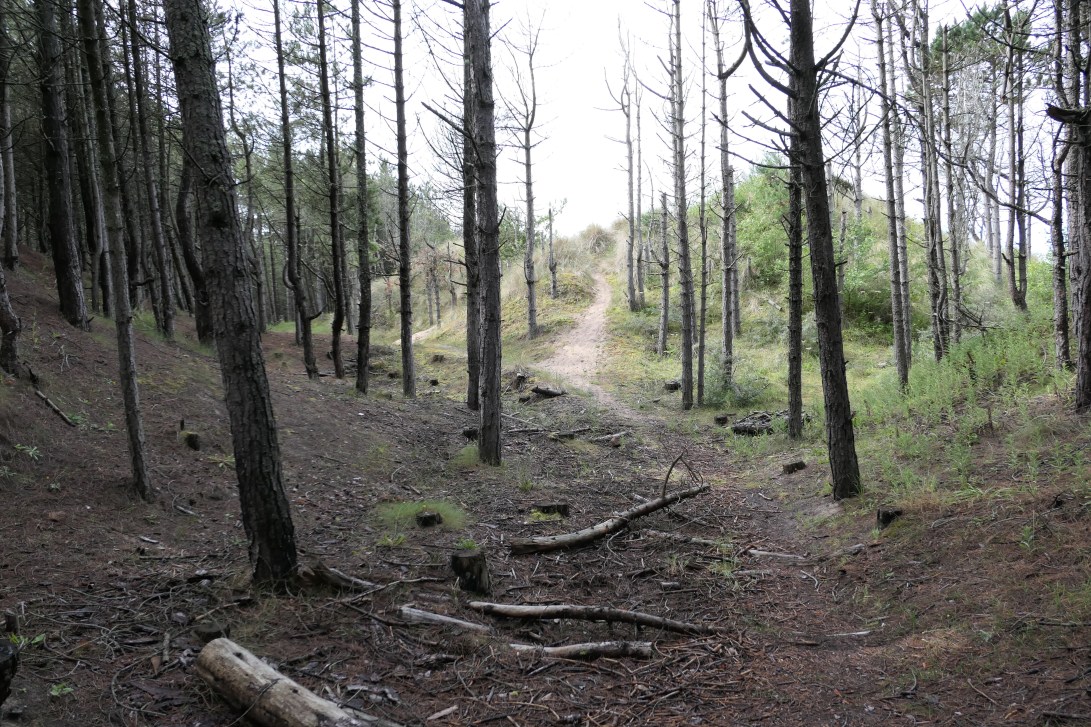
A particularly significant event was the Grant Arms Wildlife Book Festival in April, where I travelled to the beautiful Cairngorms National Park to stay in what is undoubtedly the coolest hotel in the UK for wildlife lovers like me. I attended some fascinating talks, met many established writers and was thrilled to see my first pine marten. However, perhaps the most influential moment was meeting author Stephen Moss, who runs the MA in Travel and Nature Writing at Bath Spa University. We sat down for a chat and spoke about my work so far, and after our talk I began to think seriously about doing a masters. I was sad to leave the beautiful wilderness of Grantown-on-Spey behind, but I was also intrigued by the possibility of further study and what it could do for me.

img_3262_lively

In the summer I visited Madrid – my first solo trip to a non-English speaking country. I don’t think it occurred to me how daunting that prospect could be until I arrived and realised that my A Level Spanish was a lot rustier than I had anticipated. Nonetheless, despite the language barrier and the most intense heat I have ever experienced, I really enjoyed my stay and learnt a lot about my resilience when travelling alone. Madrid is a beautiful city that I would love to return to some day, just in a slightly cooler season! The highlight was undoubtedly the flamenco show on my last night – that experience will stay with me for a very long time.

P1000122

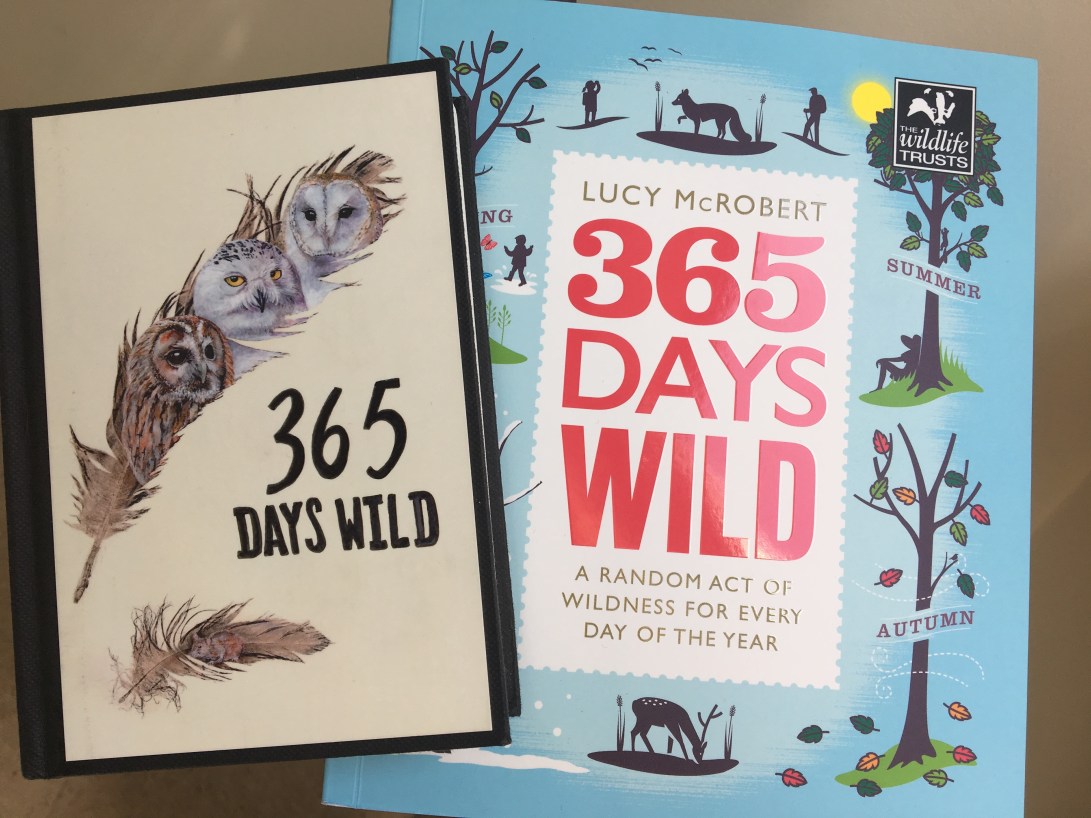
Not long after Madrid it was time to drive up to Rutland Water nature reserve for Birdfair, which has now become a yearly tradition. I caught up with good friends from uni, met the lovely Lucy McRobert and finally christened my new tent in the campsite. As always, Birdfair was a fantastic networking opportunity and I met some lovely authors and conservationists who were keen to share their advice. I also saw Stephen Moss again and bought rather too much wildlife art…
IMG_4060

September saw some more networking at the AFON conference – I’d never seen so many young naturalists in one place and I felt proud to be part of that community. During the weekend I introduced myself to author and illustrator Tiffany Francis, who is one of the loveliest people I’ve ever met. I swapped Instagrams with lots of inspiring writers and conservationists, many of whom I’ve stayed in contact with since. Events like the AFON conference are such a great way of reaching out to like-minded people and I was so happy to build my network further.

IMG_4207

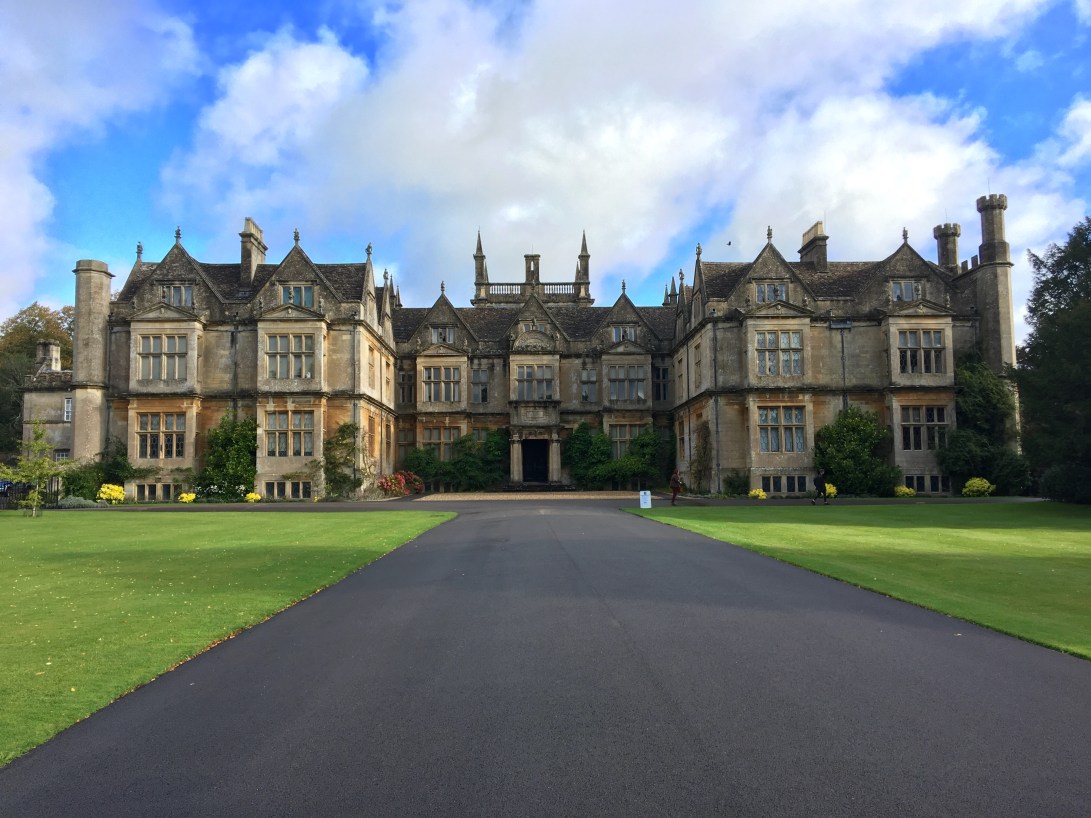
In October there was a very big change: beginning the MA. The week-long residential in Corsham was a chance to meet my fellow students and be introduced to the way the degree was run. I’m sharing the year with a diverse and enthusiastic group of people and I already feel close to them after so little time. An unexpected achievement has been my rekindled love for drawing and painting, which has proven to be a great tool for inspiration. So far I have submitted two assignments for the course and have been really pleased with my results. The second term will begin in the new year and I can’t wait to tackle the next module – a trip completely organised and funded by me where I need to try and get writing commissions from professional publications. Naturally I’m apprehensive about it, but I’ve done this before with the Isles of Scilly so I know once I begin my research I’ll be away.
IMG_4272

Finally, the end of 2019 saw my first official commissions – two for Blue Sky Wildlife, two in Hertfordshire Life magazine and the completed annual report for SEZARC. The team in Florida loved what I’d done and have now asked me to make the next report for 2019, which I can’t wait to get started on. In fact, I’m excited to announce that I shall be visiting Florida again in 2020. Not only will it be a chance to see my friends and work colleagues, but also a fantastic opportunity to gather new images to use in the next report. I don’t know when it will be yet, but I’m so excited to get the details in place.

I began this year feeling a little shaky and unsure of exactly where I planned to go. I still don’t have everything figured out, but the commissions have given me a real boost of confidence. It has been great meeting other naturalists including young women like Tiffany Francis and Lucy McRobert, as well as everyone on my course who are all making amazing contributions to wildlife writing. I have a great feeling about 2020, and I can’t wait to see where I am this time next year.
Nature Journal

I can’t believe I’m already two assignments into my master’s degree. Both have been based around the theme of “Writing in the Field” – writing outside as opposed to a typical office environment. This was really useful for me, as up until now I’ve mostly written brief notes outside and then typed them up later at my desk. While this worked for jogging memories, it occurred to me that I was losing out on a lot of detail this way. Photos reminded me of things I saw, but I was glossing over other sensations such as smells, sounds and textures. By paying attention to these senses I found I could create a fuller, more immersive piece of writing that really put the reader in the field with me.

Art 10
Inspiration for a fantasy fiction piece

For my first assignment I decided to start a nature journal that I planned to take with me whenever I was out in nature. This would be the basis for my essay in the first assignment. During my research I discovered that many writers use journals to enhance their writing experience. Charles Darwin kept perhaps the most well known example during his voyages on H.M.S Beagle but there are numerous others. Author and artist John Muir Laws said that “journaling will slow you down and make you stop and look.” American author and scientist Aldo Leopold’s nature journals were so significant that the resulting essays became valuable contributions to the field of phenology – the study of seasonal natural phenomena. I also found several studies indicating that being outside is beneficial to creativity, so it made sense to do more writing outdoors!

Art 8
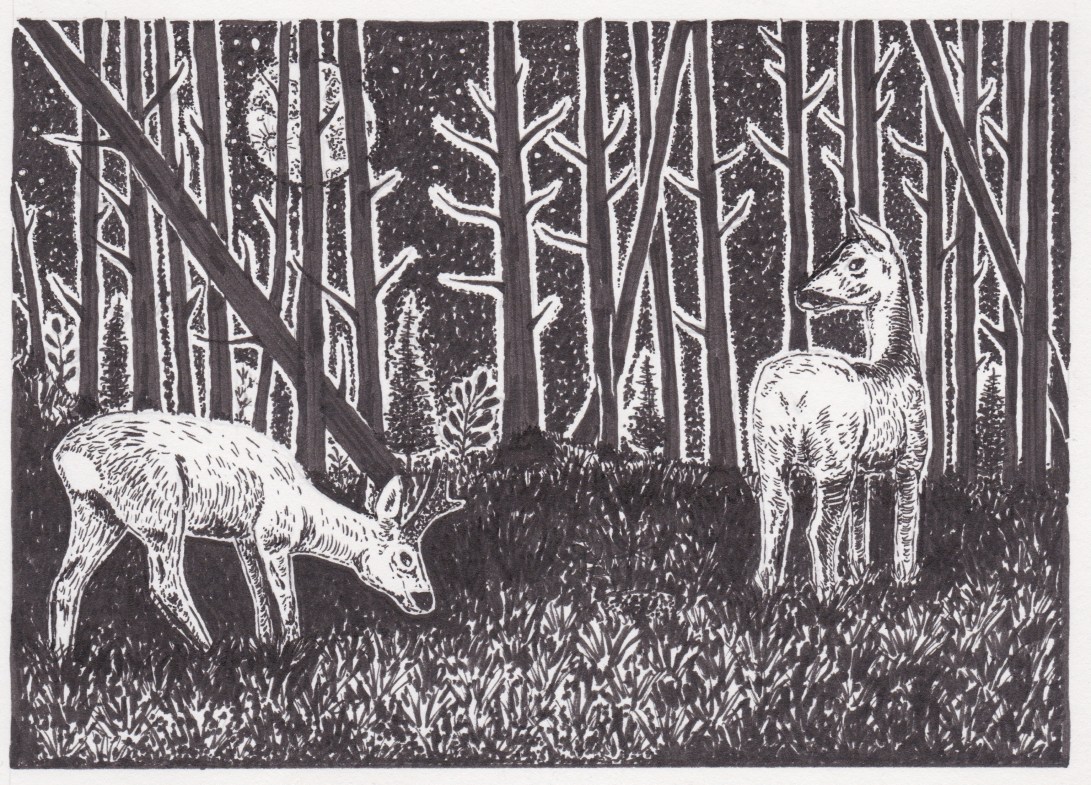
An illustration for a piece of scientific writing about roe deer

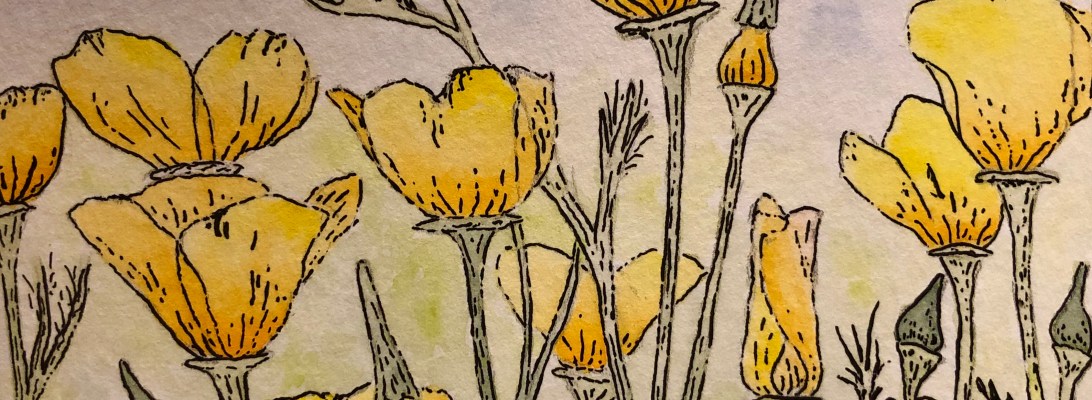
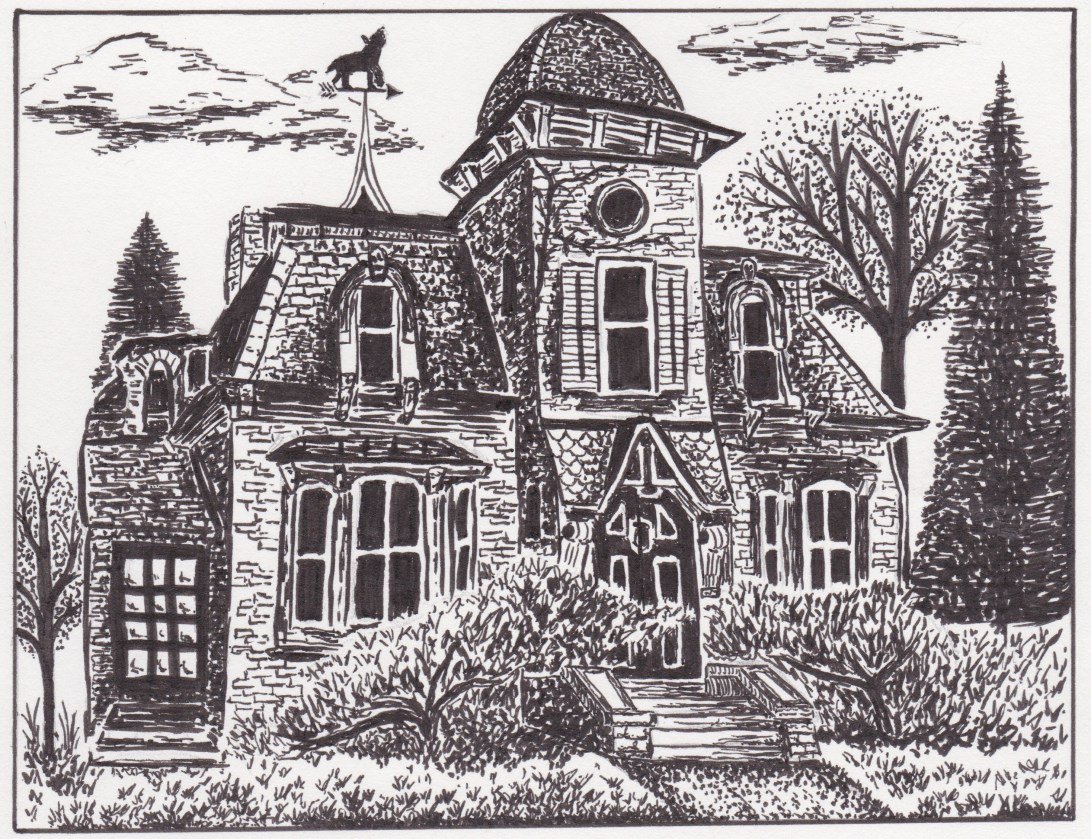
I found that my nature journal not only benefitted my writing but also enabled me to concentrate more on my art. I was keen to make the pages pretty and yearned to have a journal that would be cool enough for Pinterest. I’ve always loved drawing and painting but it’s often taken a back seat. My usual excuse is that I have no time, but over the past few weeks I’ve started to create quite a large body of work just by snatching a few minutes here and there to make a sketch. I bought a travel watercolour palette with a brush containing its own water which has been a lifesaver. Now I can pop my paints in my bag and take them anywhere, and I’ve really got on well with it so far. I deliberately bought a journal with a ring binder, so I can remove and insert the hole punched pages wherever I want them. A lot of my conventional notebooks have failed so I think having the freedom to go back and add pages in later has helped to keep the creative flow going.

Art 7
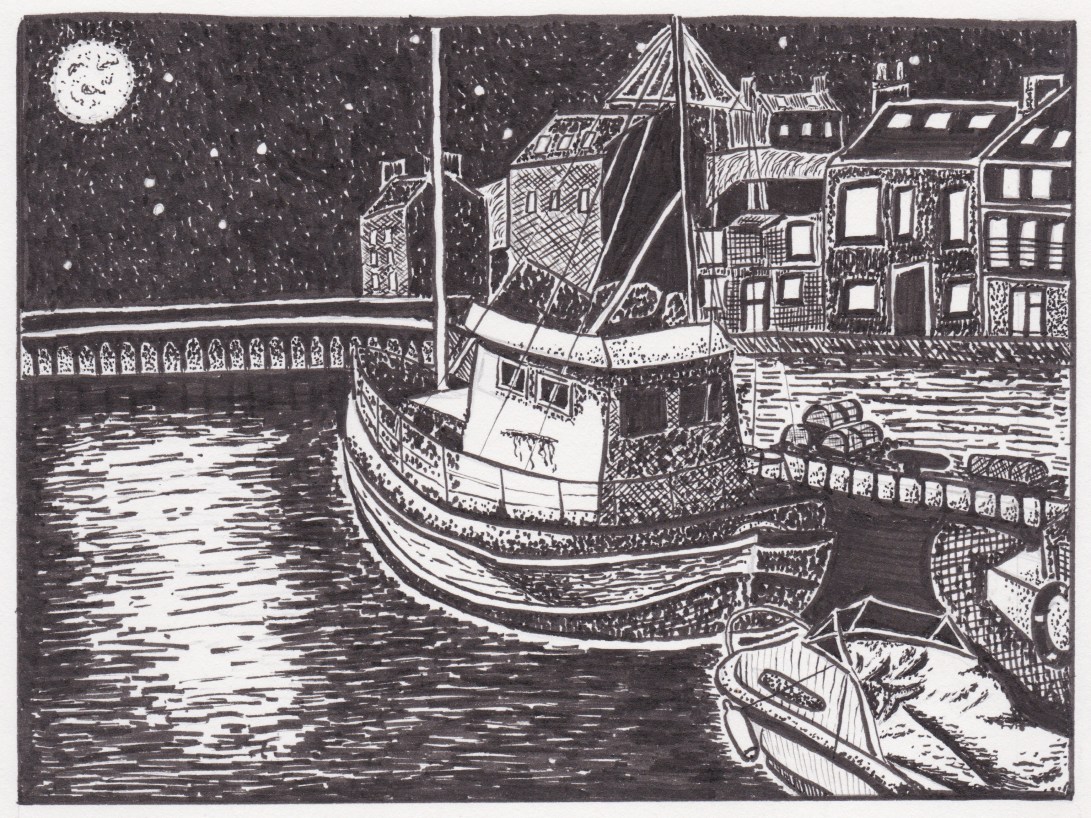
Burghead Harbour, the scene of a reflective piece about night walks

Writing and illustration go well together, so I decided to create a small drawing or painting for each piece in my second assignment – a portfolio of nature and travel writing from the field. I’ve loved setting art projects for myself again, which I haven’t done since school. Not only does it bring some variety to my writing, but it’s enhanced my observational skills by forcing me to note the fine details of my environment. I’m really looking forward to seeing how my nature journal progresses and I hope I can maintain it until the end of my course and beyond!

Art 9
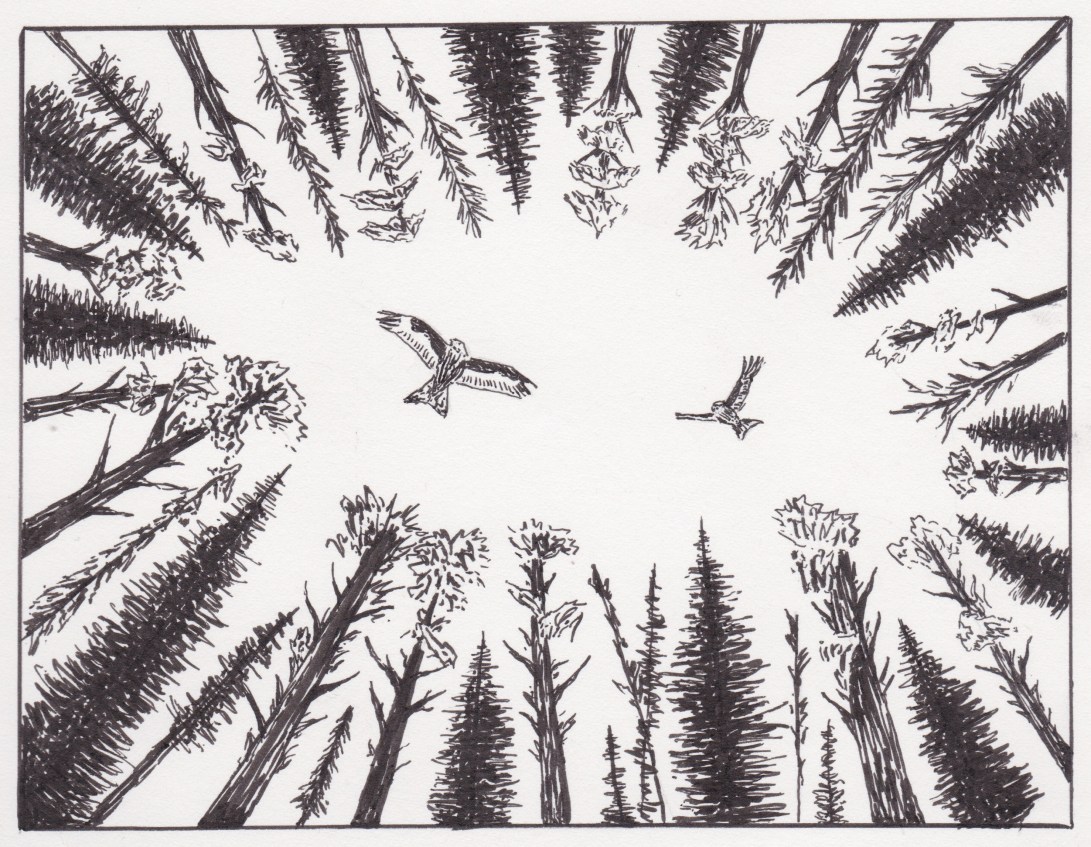
A worm’s eye view to illustrate a sci-fi fiction piece

The Dreaded Block

Although it may not look like it on this blog, a lot has happened over the past few weeks. It’s high time I put out an update, as I was very conscious of the gap between posts getting longer and longer. I’ve been suffering from a crippling case of writer’s block pretty much since my last post from the Grant Arms Wildlife Book Festival in April and it’s been driving me crazy, as The Block has a habit of doing.

Recently my optician told me I have both blepharitis (dry eyes) and Posterior Vitreous Detachment (PVD), which is the reason behind my numerous floaters and flashing episodes. Luckily, neither condition is sinister in my case, but I’ve now become very conscious of straining my eyes from too much screen time. However, as a writer who prefers to type (it’s the only way my hands can keep up with my brain), it’s meant that I’m now reluctant to gaze at my mac screen for hours on end. So, I’ve been considering going full-on retro and getting a typewriter, which honestly is something I’ve dreamed of owning for years. As well as being loads of fun, it would be a screen-free alternative to typing that would give my eyes a rest.

Elsewhere during my long absence, in an attempt to meet new people and also learn new skills, I’ve joined my local writers group and started singing lessons. Verulam Writers has already pushed me out of my comfort zone. I’ve read out several of my pieces during manuscript evenings and got new perspectives on description in a recent workshop. It’s so refreshing to hear how others write because although it’s not always a genre I write in myself, it’s still so useful to hear how different writers approach tackling synopses or developing characters. Although I’m still trying to fight my way out of writer’s block, being around fellow writers has been very reassuring and it’s the right environment for me to get back into it again.

As for singing, I’m having an amazing time. I got back in contact with my piano teacher after a three-year break – it’s hard to believe that the last time I saw her was before the whole whirlwind of university – and asked her about taking up singing lessons, which was one of the best decisions I’ve made. She is an absolute tonic and helps me forget my uneasiness about The Block (and honestly my whole future) for a short time. I love singing; I find it incredibly relaxing and often quite uplifting. To now be able to improve my technique and feel my voice getting stronger is so incredible. After only three lessons I’m already hearing a difference in high notes, which is something I’ve always struggled with.

In addition to singing lessons, I’ve got something else exciting to look forward to: next month I’m going to Madrid! I was determined to make the most of a block of holiday off work and I’ve wanted to go back to Spain and practise the language for ages, so I seized the day and booked myself five nights in Plaza Mayor – bang in the centre of the city. I’ve been shredding through Lonely Planet guides and have assembled a list of landmarks, events and, perhaps most importantly, restaurants that I need to visit. Now I have to schedule a plan of action to see as much as possible without burning myself out. Either way, I’ve indulged in a beautiful new Panasonic compact camera to tuck into my bum bag and capture some of Madrid’s charm.

So, although writing has been agonisingly slow this month, I’m hoping that my new extra-curricular timetable will really help me get inspired. Writer’s block is an inevitable evil that you can try and push through, but I think sometimes it’s best to step back and approach new things that take your mind off it, which can actually help more in the long run. All I can say is bring on Madrid!

Golden Hour

The light was still faint as I drove through fields of green. Cars tore past in a work-fuelled rush, while I cruised leisurely in the opposite direction. My focus was on the forest today – my only objective to walk through trees and listen to wild sounds.

A flash of copper caught my eye and a stunning red kite appeared in the sky, wheeling over the rolling hill as it hunted for unsuspecting mice. I pulled over in a layby – the mud sticky before the sun reached it – and spotted three more circling in large, overlapping loops. Occasionally there was a squabble, and two birds would tussle in the air, cascading downwards and surging back up. It was easy to forget that bounty hunters and egg collectors almost pushed the red kite to extinction only a few decades ago. Now, you could drive down most country roads in Hertfordshire and see at least one. I had never seen four so closely together, and savoured the opportunity to watch such an inspiring conservation success story in the flesh.

Soon the kites drifted further off, reduced to dark flecks in the sky. I left them to their hunt and drove on, arriving at the edge of the forest before anyone else that day. As lovely as dogs were, I didn’t need their boisterous presence this morning. I pulled on hat and gloves and slung camera and binoculars around my neck, then crossed the road towards the woods.

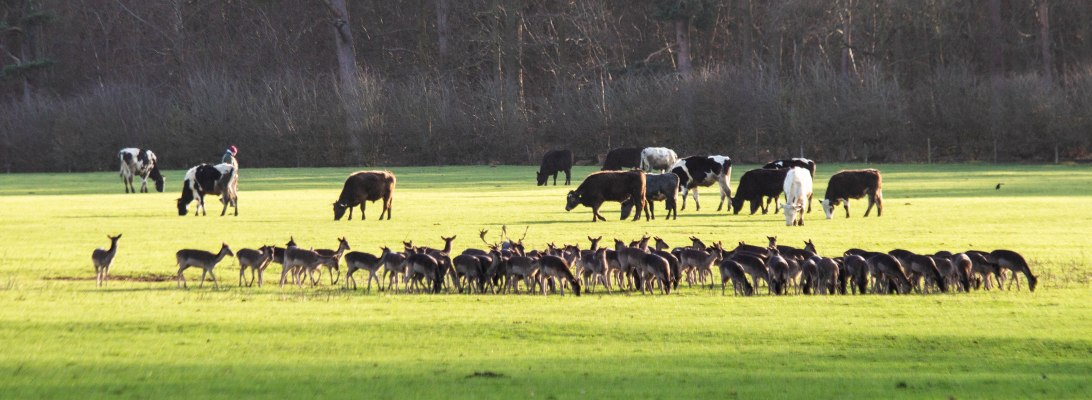
To my delight, the species I’d come to see was already here in abundance. Grazing in a field beside the cows was a herd of fallow deer around seventy-strong. I have always been fascinated by the variation in fallow deer pelts. When I first saw deer at this site, having previously seen photos of white-spotted Bambis, I had thought they were a different species altogether. These fallows were two-tone; dark brown on the top half and a lighter brown on the bottom half, as if they had waded flank-deep in mud. I hastily took to the cover of the trees, creeping as quietly as I could along the fence to get a closer look.

However, these deer were no fools. The next time I stopped and snuck a look through the binoculars, there were several faces turned my way, ears pricked upwards and eyes gazing down the lenses. My cover was blown. I decided to carry on with my approach, heading diagonally and pausing behind each tree. Ears twitched, and after a few more moments of studying me, the herd moved off, first at a trot then at a gentle canter. Among so many deer, there were only two males; as the herd bounded in loose procession across the field I watched two sets of antlers bobbing among dozens of ears.

I continued deeper into the forest, dulling the sound of passing cars with birdsong and wind-rustled leaves. The trees were gently swaying, creaking eerily like squeaky doors. The breeze played tricks on me, sending leaves skittering across my path in a perfect imitation of birds. The thrum of a woodpecker echoed through the cold air. A buzzard called faintly in the distance.

Suddenly there was an invasion of grey squirrels, bounding over the leaf litter and across fallen logs. Two of them darted in a reverse helter-skelter up a thick trunk, their claws scratching wildly in the chase. Another was saving his energy, choosing instead to perch and chew on a shrivelled leaf, twisting and turning it in his tiny hands.

I left the squirrels to their play and headed further along the fence, glancing between the trees to see if the deer might have come back. They hadn’t, but there was a sprinkling of brown birds foraging in the grass, dotted among the cows. For a few moments I couldn’t figure out what they were. Speckled like thrushes, but I’d never seen a large group of thrushes before. Just then the sun appeared, illuminating bright red patches on the birds’ sides. Redwings! My first this winter, and what a show. There were around forty of them, hopping around in the grass. They were too far away for a decent photo, but close enough to watch through the binoculars.

After a while, a startling screech made me jump. The only culprit I could think of was a barn owl, but I was sure they would have finished their night’s hunt by now. I followed the voice further down the trail. It was an ungainly, dinosaur-like squawk that sounded deafening in the tranquil forest. Suddenly, as I was scanning the canopy overhead, a crow-sized bird with white, brown and grey feathers shot out of the leafy cover. I hadn’t seen a jay once when I’d lived in Cumbria, so it had been about four years since my last sighting. I was desperate for a good photo of a jay but this one wouldn’t be cooperating. It darted from tree to tree, pausing only for a few hoarse shrieks before taking to the air again, soon disappearing completely from view. Undoubtedly the prettiest of the corvids, but not the sweetest singer.

Soon the forest was nearly silent again, with just the gusts of wind disturbing the trees. The morning was rolling on, and golden hour had arrived. Between breaks in the cloud, rich yellow light illuminated the trunks, throwing their gnarled, twisted bark into stark relief. It was a glimpse of magic that only lasted until a cloud muffled the sunlight and the forest fell back into shadow.

The cold was beginning to bite my fingertips, and I could already hear the first dog walkers. It was a good time to turn back. I made my way slowly through the woods, past the field and the squirrel tree, looking forward to warming up back home. I was just scanning the trees one last time for any small birds when my eye caught on two more pairs of ears sticking up. The deer were perfectly camouflaged, and after we stood watching each other for a few more moments, the doe stepped out from her hiding place and began picking her way through the foliage. The buck took one more look at me before following her, just as the sun emerged again and made their brown fur shine gold.

There was something undeniably magical about watching deer in a forest. They were elegant and beautiful animals, their habitat just as serene. As I stood watching them stride away out of sight, I felt a strong connection to the forest and the creatures that lived within it. Although I didn’t truly belong here, for just a few short hours I felt at home.

2018 Wrapped Up

December was quite a dry month for me in terms of inspiration, so I apologise for the distinct lack of posts over the past few weeks. It is high time for some fresh writing, but before beginning anything new in 2019, I wanted to reflect on the progress I made in 2018.

IMG_9823

Last year began with my first breakup. After having seen and spent time with a person almost every day and now suddenly being faced with the possibility of never seeing them again, I suffered quite a knock. My inspiration took a significant slump at a time when I needed it most: the launch of my final major assignment at university.

Determined not to let a relationship affect my work, I applied for a grant to help fund an expedition. I had a whacky idea about going to the Isles of Scilly, which at the time seemed a very far-off venture and logistically challenging to say the least. However, after presenting to a panel of judges I was granted enough money to completely cover travel and accommodation. It took a while to come to terms with the fact that the Scilly expedition was really happening.

IMG_0655

It was just the solution I needed for my slump. Spending six days in near-complete wilderness with a list of images to take was a perfect and rewarding distraction. I was filled with exciting ideas for my project – a study on the rare and unique flora of Scilly, including the dwarf pansy which is the size of a baby fingernail and found nowhere else in the UK. I was so fascinated by Scilly’s diverse wildlife and intriguing ecosystems, and I never wanted the trip to end. It is a place I will now treasure, as it helped me through a very difficult time, not to mention providing a huge boost to my confidence. I had funded, planned and carried out a full expedition single-handedly, and returned with a great story to tell. Following the trip was my last exhibition at university, and my project was received well. I even made some money from my photographs, which was an unexpected bonus.

IMG_1482-2

Before I knew it, it was time to finish my degree. I picked up my life in Cumbria and brought it back home to Hertfordshire, where I (foolishly) thought that I would land a job straight away. This wasn’t to be the case, but what followed instead was a truly life-changing experience: an internship in Florida.

I didn’t really know what to expect when I was invited for a two-month internship in America to work with SEZARC. I knew they worked with zoos to monitor their animals and help facilitate breeding, but I didn’t know where I would fit in with a media background. I went simply with the aim of learning as much as I could about a completely new field and enjoying the opportunity to contribute to wildlife conservation.

IMG_9548

I’d never been abroad on my own before, nor had I been outside of Europe before. Upon arrival, I was hit by extreme panic triggered by a strange new place, having to drive a car in a strange new place, and the fear that this had all been a terrible mistake. However, after a very careful car journey from the airport and arriving unscathed at my accommodation, I was filled with perhaps a disproportionately large sense of achievement. My small victory spurred me on, and after a few more shaky days, I found my rhythm.

IMG_1404

Two months later, I was torn between wanting to see my family and friends back home, and wanting to stay a little longer with my new friends in Florida. I had loved the work I did with SEZARC, which was varied and fascinating. I also fulfilled a dream of mine, even if just for a little while: I’d learned to ballroom dance, and met the most kind and welcoming people. Back home in England, I truly realised what an incredible time I’d had in America.

And it wasn’t over. Later in the autumn, I caught up with my friends at SEZARC and was asked to produce their annual report of their progress this year. It is work that I thoroughly enjoy, and I’m so pleased that SEZARC want to keep me involved.

IMG_0051

So, moving forwards. The past year has taught me so much, not just about work but also about myself. In all honesty I have no idea what 2019 will bring. I’m hoping a job, but in the meantime I want to continue writing and learning new things (next up is the guitar!) I have the tendency of being anxious without a strategic plan, but after this year I’ve discovered that you just can’t know where twelve months will take you. A year ago today, I had no idea I would soon be journeying to America by myself, nor was I remotely aware that my relationship was about to end. All through school it’s easy to know what’s next: the following year up. There is no mystery, not even after you finish school. For me, the choice was easy and I was going to university. Now that’s over too, and I’m trying not to be daunted by the unknown because as I’ve found out this last year, the unknown can be incredible.

Fresh Inspiration

Recently I’ve become a writer who doesn’t write much. I have ideas, many a day, of what to write, but somehow I never get round to making them a reality. I’m blaming this latest case of writer’s block on my new occupation, so I’ve decided to write about that. I have been accepted as a volunteer at Paradise Wildlife Park in Broxbourne, Hertfordshire. It was the longest application process for a voluntary position I’d ever experienced, but after interview, induction and trail day I was successful.

Volunteering in a small aquarium in Cumbria could not have prepared me for work in a zoo. Although far from large with only around 400 animals (in comparison with Chester Zoo’s 20,000), Paradise Park still requires plenty of hard work and for me it’s a physically demanding and challenging role. I anticipated this beforehand and should have been ready, and yet I still came home from my first day with aches in every limb, rashes on my arms from the hay and mysterious scratches from the day’s manual labour. As is expected of all volunteers, I spent most of my time with what the animals left behind (you cannot believe how heavy camel poo is) and in the July heat I worked up a significant sweat.

And the funny thing? I loved it. Three years of university has been a mental workout but not so much a physical one. My arms are little more than jointed matchsticks, and just as strong. Volunteering at a zoo will be such a great opportunity to build up some strength. There is also something immensely satisfying about scrubbing a paddock clean, even though the moment the animals are let back in they completely rearrange the fresh bedding and christen it with droppings.

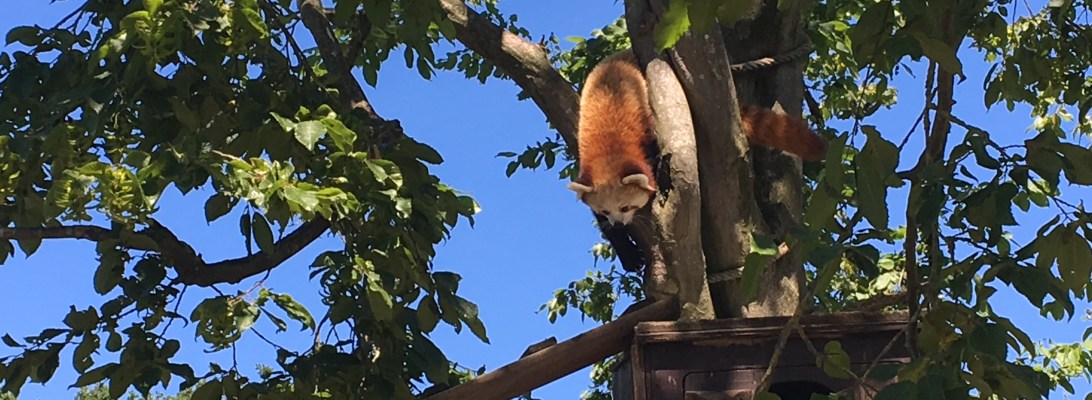
If I had a pound for every time I’ve been asked “So what’s next?” since I came back from university, I could retire without having started a career. I still don’t know what I want to do or where I want to be. While I still love writing and photography, I feel a pull in a new direction – the daily grind of contributing towards a successful and high quality zoo. There is something very appealing to me about caring for wild animals in a place that values them (that’s the important bit) and sharing my passion with other people. I watched the Small Mammals keeper giving a talk as she fed the red pandas and I had an urge to join her, but my knowledge of red pandas is really quite limited. I want to study them, I want to know everything there is to know about these animals, and share that with people. And I believe I can do that by writing but also by being there among them.

I’m fully aware that becoming a zookeeper is an incredibly gruelling and challenging process. I’m also aware that my current academic background will not help me in that mission. Every keeper I’ve spoken to so far has begun by volunteering, and worked their way up the ladder. So I have joined Paradise at the very bottom, and the only way to go is up. I’m inspired by this, and know that I have to pursue it.

Eleanor Oliphant Is What We Need

In 2017, 40-year-old author Gail Honeyman entered a story about a lonely and damaged young girl into a writing competition. Now winner of the Costa First Novel Award and scheduled to become Reese Witherspoon’s next film project, Eleanor Oliphant is Completely Fine has become a triumph for modern literature.

Our heroine, Eleanor, is evidently not at all fine. She often goes home from work on Friday and doesn’t speak to another person until she arrives at work on Monday morning. She is a source of amusement amongst her colleagues, and many modern advances are completely lost on her. “D’you like a smoky eye?” The makeup assistant at Bobbi Brown asks, to which Eleanor replies, “I don’t like anything to do with smoking.”

At the background of it all, her manipulative mother is an ominous presence looming at the end of the phone, hinting at a darkness in Eleanor’s past that may be the explanation for her isolation and uniqueness.

When Eleanor and Raymond, an IT consultant in her office, witness an elderly man falling unconscious in the street, an unlikely friendship begins to form between them. Somewhat hesitantly, Eleanor opens up to the possibility that people genuinely want to spend time with her, and with Raymond’s friendship comes a growing sense of self-assurance.

As we are introduced to Eleanor’s quirky persona, she initially appears very hostile to strangers and speaks her mind with seemingly no understanding of the consequences: “You’ll die years earlier than you would have otherwise, probably from cancer…you’ve already got the smoker’s characteristically dull, prematurely lined skin.” However, as we spend more time with Eleanor it becomes very clear that she has had nobody to help her align with societal norms – she was a confused child passed from carer to carer until university at seventeen. How can anybody blame her for reacting how many of us would were it not for our awareness of social politeness? Not only that, but being surrounded by unkindness and ridicule, it must be a natural reaction to close up and use that barrier of separation as a form of protection.

While Eleanor’s confidently naïve observations of the world can be enormously funny, the humour is threaded with heartbreak. At seeing her reflection after a new haircut she thanks the stylist for “making her shiny”. Having been surrounded by damaging and neglectful people all her life, becoming introduced to kind individuals is a foreign but welcomed concept for her.

Honeyman has created a character that is somehow completely fresh and new among literary heroines, and yet can be related to in countless ways. It has been commented that chronic loneliness is a very real problem for elderly people, but it never seems to be addressed among younger generations. Why must age be a contributing factor to a feeling of isolation? Eleanor has had a very troubled childhood and adolescence, but even those of us with caring families are capable of feeling lonely. In fact, according to a 2018 report by the Office for National Statistics, almost 10% of people aged 16-24 said they “always or often” felt lonely. This statistic was over three times higher than for those aged 65 or more.

This novel undoubtedly speaks to many young people, including myself. I have struggled with loneliness in the past – a desire for new friends coupled with fierce insecurity in social situations has made meeting new people a real challenge, and it is something I continue to struggle with. Loneliness can be incredibly upsetting, and is often hard to recognise in someone experiencing it. Honeyman has succeeded in raising awareness of the issue with her original and deeply moving novel, outlining the importance of kindness and compassion.

Is Giving Up On A Book Ever OK?

Here’s a question. When is it acceptable to give up on a book? Some may say it never is, but surely there are times when we are allowed to ditch a book halfway through.

I’ve been struggling with this for some time now. I’ve meandered through the last four or five books with mild interest without ever having that undeniable connection. I see people with their heads in books on trains and in cafes and I’m filled with jealousy at how much fun they’re having. I can’t help but feel that I’m becoming fussy, because I never struggled with book boredom as a child.

I tried researching how to resolve this. I typed “can’t find your book” and Google regurgitated a whole range of possible solutions: Wikihow’s “3 ways to find lost objects”, how to find a book on a library system, and “7 steps to find lost objects after panic sets in” (that was just as patronising as it sounds).

None of this was what I meant. I wanted to know how to find MY book, the book that would keep me up all night and have me clinging to every page. It’s a cliché but, annoyingly, clichés are often true. I wanted that experience of falling in love with a book, feeling like you knew the protagonist intimately and was a part of their story as it unfolded. I’ve only felt like this a select number of times, two occasions being Harry Potter and Game of Thrones. Both series are seven books strong and although the latter took me a while, I was just as engaged during the last book as I was at the beginning (good job George).

My latest attempt – and I predict soon-to-be failure – is The Lion’s Eye by Joanna Greenfield. The story is one student’s account of her time studying chimpanzees in East Africa on a once-in-a-lifetime research opportunity. When I found this book in the library I was intrigued. I always love a female protagonist with gumption and I thought I would empathise, seeing as the author was only just in her twenties when offered the research assignment.

I’m now eighty pages in, which is shamefully only a quarter of the book. She’s in the Impenetrable Forest and struggling to adapt to the unforgiving environment, but I find myself still very disconnected. I don’t feel any anticipation or excitement – to care one jot about a real-life story I need to know the author’s history, understand their passions and what drives them. Aside from a genetic condition in one of her eyes, I barely know anything about this woman. As I write about it now I’m not surprised I don’t care what happens to her.

This has turned into a rant, and I didn’t really want to start slating books, but I’ve convinced myself that I shouldn’t need to hang on to an underwhelming book just because it seemed like I would enjoy it or because other people have. While I would advise against giving up most things, there really are too many fish in the sea and too many books in the library. Although there are millions to try, one day I will find MY book.

A Day in the Fells

As we turned into the car park at Honister Pass, the clouds were grumbling. Geoff Cox appeared and shook my hand in greeting, with the same kindliness he might offer to his closest friend. Having roamed the fells since childhood, the bracing chill and spattering rain are all too familiar to him. A gust of wind blew me sideways as I struggled to catch the flyaway sleeve of my coat and hastily zip it up. Pulling a hat firmly down on my head, I gazed up at the fells. The day was bleak, and an ominous mist obscured the tops of the hills, which would provide a dramatic background for filming.

Today marked the penultimate day of shooting for the second documentary about Geoff’s experiences as a fell runner. During his sixtieth year he attempted to run three notorious Lake District endurance-running rounds: in the Joss Naylor Lakeland Challenge and Gerry Charnley he was successful, but the Bob Graham round defeated him. The film we’d be shooting today was a reflection of this unsuccessful round, and how Geoff found redemption to complete the Charnley. Geoff wrote poems about each round to process these challenging ordeals, and approached filmmaker Richard Berry to transform his words into films. Today, I was joining them to see what happened behind the scenes.

We set off, following Geoff and the other endurance runners up the first incline. Before long it became evident just how comfortable they were on this terrain; while I took my time negotiating uneven and slippy rocks, the rest of the group hiked with confidence and admirable swiftness. As we climbed higher, I was told that the views up here were usually breathtaking, but the fog hung over the entire horizon like an impenetrable curtain. We were completely enclosed, walking along a single clear track with white walls on all sides. “Drifting in the Skiddaw mist”, Geoff wrote in his poem; how apt this line was today.

Now 62, Geoff has been fell running for decades, and can’t remember a specific time when this habit became a continuous routine in his life. “Work and family pressures meant I needed a sport I could focus on which didn’t need other people,” Geoff explained, “With running I could drop everything and go anytime, day or night.”

Fell running in the wilderness of the Lake District is a lonely and secluded past time, something Geoff often welcomes. “I needed a place where I could have a bit of ‘me time’. Society seems to look upon somebody who needs these extended periods of time in isolation as strange and even a bit weird. Long days running in the hills gave me what I needed; something about the independence and self-sufficiency was very appealing.”

In a few hours we reached the right place to begin the day’s filming. Director Richard and camera operator Kerr McNicoll set up and before long shooting was in full swing. Agile as mountain goats, the runners cascaded down the rocky slopes with impressive assertiveness. Surrounded by the silent fells, the only sounds were the cracking of the colliding rocks and soft squelch of mud as feet drove through. Puffs of breath spilled into the sky, and as the runners headed further off, the mist soon swallowed them.

“And again!” Richard shouted, the echo of his words bouncing for miles. After a few moments, the group appeared again. From this distance they looked like small dashes of coloured paint on a white page – the only distinguishable features of the landscape. They looped around a small lake, reflections bouncing on the water. After several takes of this shot it was time for cake – a delicious fruitcake made by Jim, one of the runners. This burst of energy was welcomed with open arms, and once Richard had filmed Geoff scaling a large rocky outcrop on his gimbal, we began to snake back through the fells, gathering footage on the way and constantly referring to Geoff’s poems to capture the essence of his experiences and narrative.

Writing poetry has helped Geoff to process the challenges and obstacles associated with endurance running. “I started writing poetry as a way of processing the mental and emotional garbage floating around in my head, or ‘mental detritus’ as I call it. Prose didn’t work because it has the wrong rhythm. Poetry allowed me to talk about what I’m thinking and meant that I could introduce the pace and metre that matched my memories.”

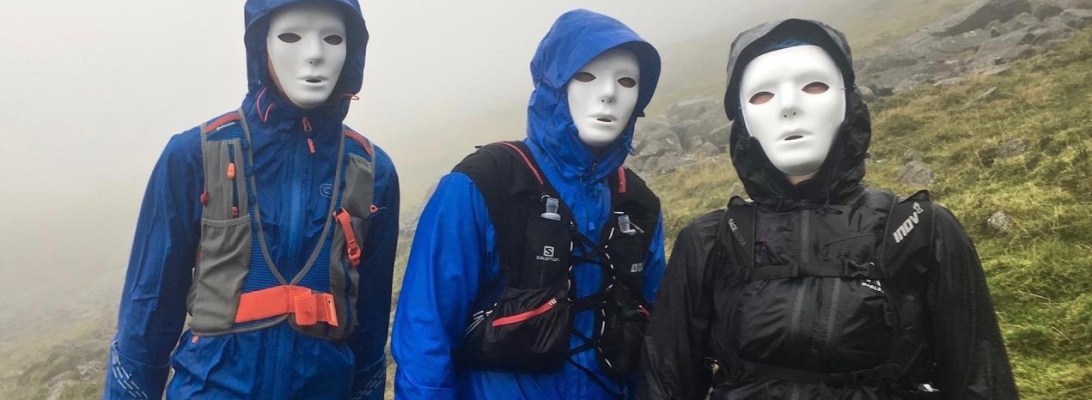
One of these memories took the form of white theatrical masks, worn by three of the runners looking over their shoulders at Geoff while he hung back, exhausted and near defeat. It was an intriguing idea and as we walked back through the fells I asked Geoff why he decided to include masks in the film. “They’re a symbol of how small doubts kick in and grow more insistent as the run goes on” he explained, “So we made them progressively more obvious throughout. ” This feeling of doubt was linked to people coming out to support Geoff while he competes and the pressure of not letting them down, a burden that can hang heavy on a runner under such physical and emotional strain.

I was astonished to hear that the masks were also a representation of hallucinations that Geoff said will be very familiar to long distance fell runners out on the hills for 24 hours or more. This “sleep monster” phenomenon is a result of exhaustion and sleep deprivation. “My particular version seems to be that I find myself running across strips of beautifully patterned Axminster carpet” Geoff told me, “All the time I’m thinking ‘It’s amazing that somebody has been up here and laid this carpet across these mountains!’”

Fell running in the Lake District is not for the faint-hearted. Unpredictable weather, unforgiving terrain, and a vast secluded landscape, and all with a burning in your legs. Even today, after walking seven miles, I returned to the warm café with aching knees. Geoff has proven that age is no match for will and determination, and is continuously training for new rounds to run. For him, fell running is more than exercise but a way of managing stress and even inspiring poetry. Spending time with him and the other runners opened my eyes to a life spent high above the ground, where so few people think to look.