Living off the Scilly Land

For my final major project at university, I am journeying to the Isles of Scilly for a photography project on this wildly diverse archipelago. My focus is currently the unique wildflowers of the islands, some of which are not found anywhere else in the UK such as the dwarf pansy. However, to broaden my understanding of Scilly (and also because it recently snowed there which has made me question my chances of seeing wildflowers next month), I have been researching how the first human residents used the land and its resources, which in some cases are vastly different ways to today.

  • During the Neolithic period, tribes were known to mark their presence on the islands using large stone monuments known as megaliths. These were for ritual or territorial purposes.
megalith
A megalith at Castle Down, Tresco (Source: The Megalithic Portal)
  • Wars and disputes subjected the inhabitants of Scilly to poverty and famine. One method of surviving such lean times was to forage seaweed. In 1684, production of soda ash from seaweed began, a material used to make soap, bleach and glass for the mainland. This practice lasted well over a century, and must have had disastrous impacts on wildlife.
  • The Bronze Age saw the first permanent populations arrive from west Cornwall. They fished, farmed, hunted and scavenged all sorts of foods to make their living. Birds such as razorbill, guillemot and even ravens and swans were hunted for their meat. Seals and the occasional whale were hunted to supply oil used for lighting.

IMG_9258

  • Fishing was a vital source of food all year round, and once caught the animals were dried by the wind or salted for preservation. A vast amount of limpet shells suggests they may have been used as bait, and scallop shells to hold lighting lamp oil.

IMG_0979

  • By the time of the Roman invasion of Britain in AD 43, red deer had disappeared and dogs and rabbits were introduced. The birdlife grew in variety, suggesting the environment was changing. New bodies of water attracted fowl such as bittern, heron, snipe and more excitingly, evidence of chough. Remains of what are believed to be these birds and dating back to the 2nd century AD were discovered on St Martin’s.

IMG_9145

  • The Duchy of Cornwall was established in 1337, when the title of Duke was granted to the Black Prince. Payment for a ledger dating from that year was 300 puffin, giving the impression that these coastal birds were a lot more abundant than in modern day. The puffin was highly valued, considered a fish instead of fowl, which allowed it to be eaten during Lent. Five hundred years later, although the monetary value of Scilly hadn’t been altered, the exchange rate for puffin had surged by 600% to fifty birds.

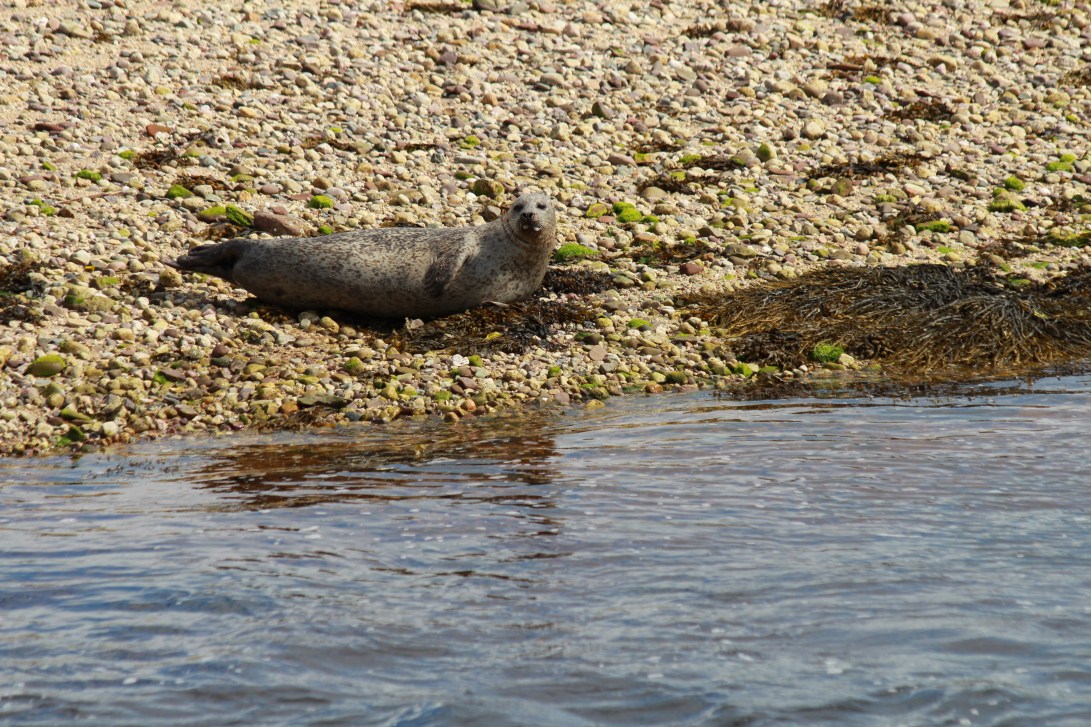
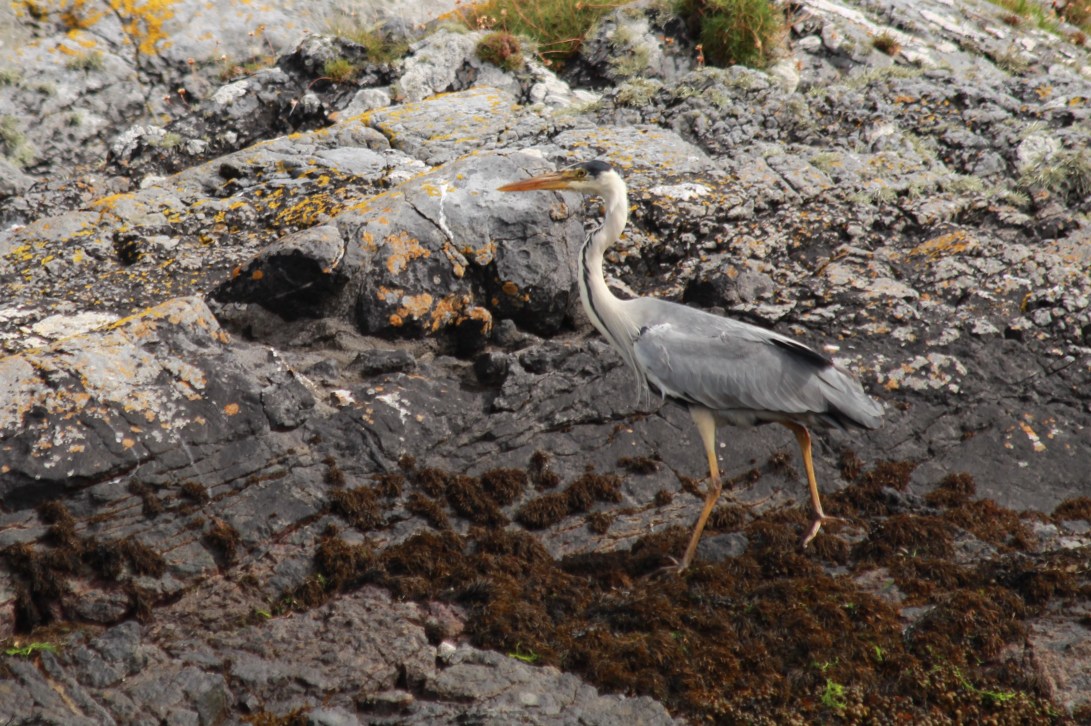
Incidentally, all of my photos in this post were taken in Scotland, but here’s hoping next month I’ll be capturing some Scillonian versions!

A Day in the Fells

As we turned into the car park at Honister Pass, the clouds were grumbling. Geoff Cox appeared and shook my hand in greeting, with the same kindliness he might offer to his closest friend. Having roamed the fells since childhood, the bracing chill and spattering rain are all too familiar to him. A gust of wind blew me sideways as I struggled to catch the flyaway sleeve of my coat and hastily zip it up. Pulling a hat firmly down on my head, I gazed up at the fells. The day was bleak, and an ominous mist obscured the tops of the hills, which would provide a dramatic background for filming.

Today marked the penultimate day of shooting for the second documentary about Geoff’s experiences as a fell runner. During his sixtieth year he attempted to run three notorious Lake District endurance-running rounds: in the Joss Naylor Lakeland Challenge and Gerry Charnley he was successful, but the Bob Graham round defeated him. The film we’d be shooting today was a reflection of this unsuccessful round, and how Geoff found redemption to complete the Charnley. Geoff wrote poems about each round to process these challenging ordeals, and approached filmmaker Richard Berry to transform his words into films. Today, I was joining them to see what happened behind the scenes.

We set off, following Geoff and the other endurance runners up the first incline. Before long it became evident just how comfortable they were on this terrain; while I took my time negotiating uneven and slippy rocks, the rest of the group hiked with confidence and admirable swiftness. As we climbed higher, I was told that the views up here were usually breathtaking, but the fog hung over the entire horizon like an impenetrable curtain. We were completely enclosed, walking along a single clear track with white walls on all sides. “Drifting in the Skiddaw mist”, Geoff wrote in his poem; how apt this line was today.

Now 62, Geoff has been fell running for decades, and can’t remember a specific time when this habit became a continuous routine in his life. “Work and family pressures meant I needed a sport I could focus on which didn’t need other people,” Geoff explained, “With running I could drop everything and go anytime, day or night.”

Fell running in the wilderness of the Lake District is a lonely and secluded past time, something Geoff often welcomes. “I needed a place where I could have a bit of ‘me time’. Society seems to look upon somebody who needs these extended periods of time in isolation as strange and even a bit weird. Long days running in the hills gave me what I needed; something about the independence and self-sufficiency was very appealing.”

In a few hours we reached the right place to begin the day’s filming. Director Richard and camera operator Kerr McNicoll set up and before long shooting was in full swing. Agile as mountain goats, the runners cascaded down the rocky slopes with impressive assertiveness. Surrounded by the silent fells, the only sounds were the cracking of the colliding rocks and soft squelch of mud as feet drove through. Puffs of breath spilled into the sky, and as the runners headed further off, the mist soon swallowed them.

“And again!” Richard shouted, the echo of his words bouncing for miles. After a few moments, the group appeared again. From this distance they looked like small dashes of coloured paint on a white page – the only distinguishable features of the landscape. They looped around a small lake, reflections bouncing on the water. After several takes of this shot it was time for cake – a delicious fruitcake made by Jim, one of the runners. This burst of energy was welcomed with open arms, and once Richard had filmed Geoff scaling a large rocky outcrop on his gimbal, we began to snake back through the fells, gathering footage on the way and constantly referring to Geoff’s poems to capture the essence of his experiences and narrative.

Writing poetry has helped Geoff to process the challenges and obstacles associated with endurance running. “I started writing poetry as a way of processing the mental and emotional garbage floating around in my head, or ‘mental detritus’ as I call it. Prose didn’t work because it has the wrong rhythm. Poetry allowed me to talk about what I’m thinking and meant that I could introduce the pace and metre that matched my memories.”

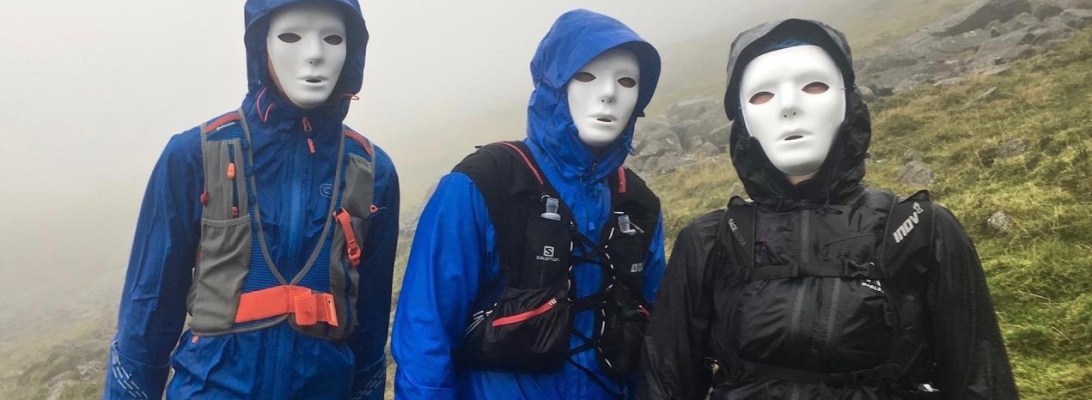
One of these memories took the form of white theatrical masks, worn by three of the runners looking over their shoulders at Geoff while he hung back, exhausted and near defeat. It was an intriguing idea and as we walked back through the fells I asked Geoff why he decided to include masks in the film. “They’re a symbol of how small doubts kick in and grow more insistent as the run goes on” he explained, “So we made them progressively more obvious throughout. ” This feeling of doubt was linked to people coming out to support Geoff while he competes and the pressure of not letting them down, a burden that can hang heavy on a runner under such physical and emotional strain.

I was astonished to hear that the masks were also a representation of hallucinations that Geoff said will be very familiar to long distance fell runners out on the hills for 24 hours or more. This “sleep monster” phenomenon is a result of exhaustion and sleep deprivation. “My particular version seems to be that I find myself running across strips of beautifully patterned Axminster carpet” Geoff told me, “All the time I’m thinking ‘It’s amazing that somebody has been up here and laid this carpet across these mountains!’”

Fell running in the Lake District is not for the faint-hearted. Unpredictable weather, unforgiving terrain, and a vast secluded landscape, and all with a burning in your legs. Even today, after walking seven miles, I returned to the warm café with aching knees. Geoff has proven that age is no match for will and determination, and is continuously training for new rounds to run. For him, fell running is more than exercise but a way of managing stress and even inspiring poetry. Spending time with him and the other runners opened my eyes to a life spent high above the ground, where so few people think to look.
The Whale and the Freezer

Here’s another article I wrote during my time interning at Student and Graduate Publishing. My colleagues were so interested in the whale project at Tullie House that they asked me to write a piece on my volunteering experience. 

I’ve just finished my second year studying Wildlife Media. It’s really quite a niche course and when I tell people about it I get a mix of surprise, curiosity and almost every time I’m asked if I’ll be the next Attenborough.

A career in wildlife media is seriously competitive, making work experience essential. If you’re interested in nature and conservation take a look at Conservation Careers for inspiration. A lot of wildlife-related opportunities aren’t paid, due to the charitable organisations offering them, so my first two years have been full of volunteering. The thing with volunteering is you never know what to expect, and my experiences have proven that anything can happen.

I’d probably say one of my volunteering highlights this year was cleaning whale bones, something I never thought I’d say. Back in 2014, a massive whale skeleton was found on a beach in Cumbria and taken in by the local museum. I joined forces with two of my course mates to take on the behemoth. There was flesh hanging off the bones and they smelt nothing short of pungent. Donning our glamorous all-in-one suits, wellies and goggles, we got to work scrubbing the bones clean.

Nearly half a year later, after three hours a week of funky odours and a ridiculous amount of disposable gloves, we said our farewells to the whale, who we’d both grown very attached to. The bones have been sent off for industrial cleaning, and will then be hung up in all their glory in the museum atrium. Have a read of the full story.

That wasn’t the end of my antics at the museum, however. A week after the whale left us, we began a new project: the freezer. Deep in the basement of the museum – think restricted section of the Hogwarts library – are all kinds of treasures, some beautiful and others less so. There’s a freezer containing several hundred frozen specimens, from bats that could hide in your palm to far larger animals like otters and barn owls. It was our job to work through the freezer and document the name, date, locality and donor of every specimen to put them all on a database.

A lot of people would feel quite queasy at the thought of handling frozen dead animals, the majority of which were roadkill and had seen far better days. Luckily, or perhaps tragically, my friend and I couldn’t get enough of it. I have a particular obsession with British birds, so getting to see hawfinches, bullfinches and waxwings up close was a real privilege. And not just birds: one week we found a large bin bag containing the very rare and elusive blue mink, a member of the mustelid family with otters, stoats and weasels.

In fact, my friend and I were both quite sad when we reached the bottom of the freezer. Although it was a real shame that the animals had arrived at the museum in freezer bags, it was incredible to see all those birds, mammals and a few reptiles far closer than we ever could in the wild. It gave me an even greater appreciation of wildlife and provided an unforgettable experience that’s a great story to tell.

Filming Red Squirrels

It’s been a mad couple of weeks, with my second year at uni finishing this week: three deadlines in four days. The last – and for me the most challenging – is a five minute documentary on anything we can think of. The vagueness could seem like a blessing, but when you have the whole world as your subject matter, it seems impossible to think of anything to fill five short minutes.

After the racking of brains and chewing of fingernails, I decided to combine my project with my first visit to Eskrigg Reserve in Lockerbie. It was infamously known among Wildlife Media students for its resident red squirrels; I’d been meaning to go for the whole two years I’ve been living in Cumbria, and only now with a deadline looming did I decide to visit. I headed up the road mid morning and by late afternoon I was perched in front of the hide, sharing a small open clearing with four foraging red squirrels!

IMG_3621

Jim Rae, the Reserve Manager, is one of the nicest people I’ve met, and incredibly passionate about wildlife. Upon arrival he welcomed me like an old friend, giving me the tour of the reserve before settling down in the hide for the interview. He had prepared four typed pages of notes, and when I sat outside later to film the squirrels he brought me a nutcracker and a box of hazelnuts for me to feed them. I couldn’t believe, after only just seeing a wild red squirrel for the first time in Chesters two months ago, I was now spoilt for choice of animals to film.

IMG_3593

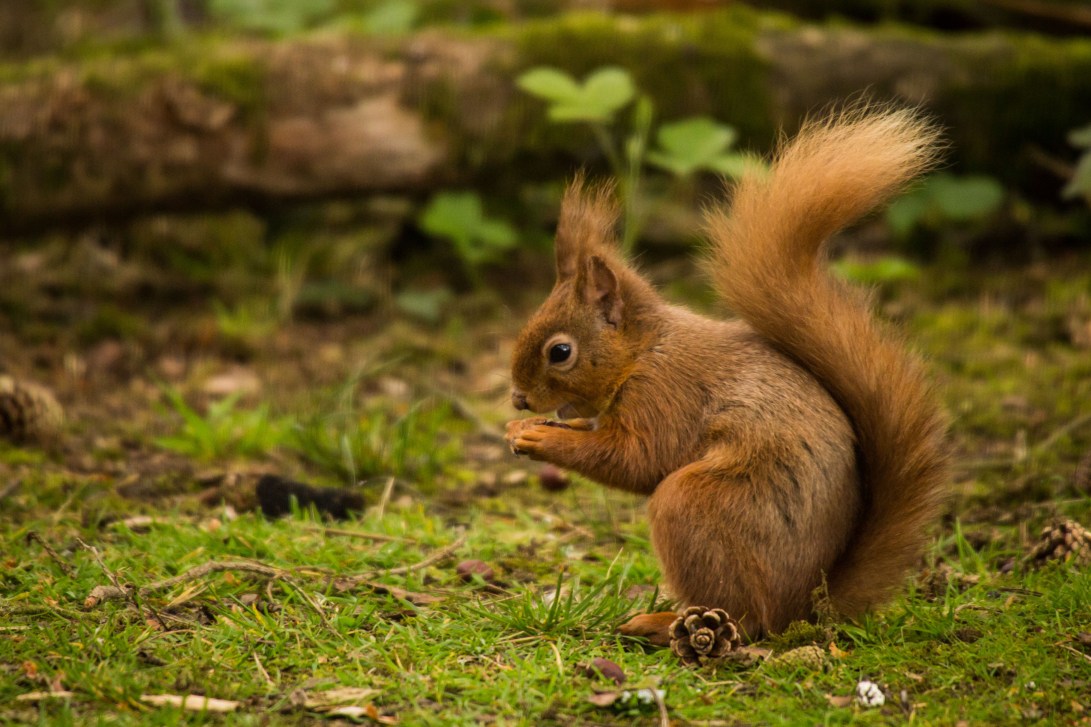
It is not difficult to see why people get so attached to these creatures. A lot smaller than the greys and with delightful little ear tufts, they bound across the grass like furry chestnut bullets – trying to keep them in frame was a nightmare. I’d get one in perfect focus as it paused to claim a nut, then it was off and I was filming empty grass again. I’d never been so challenged as a photographer, but their nippiness provided an excellent opportunity to test my reflexes.

IMG_3559

I could have stayed for hours, but I had a film to edit and countless clips to go through, 90% of which were squirrels. As of today I’m just making the finishing touches ready for the deadline on Friday. Eskrigg is a gem of a reserve, and somewhere I will definitely be revisiting over summer!

IMG_3611

Have a watch of the finished documentary here:


‘Journeys’ Article in Watermark Magazine

One of my upcoming uni assignments is a portfolio of non-fiction writing. For one of my pieces, I was inspired by the theme of journeys, and how influential they can be. While many people instantly think of physical journeys, I wanted to reflect on the emotional journey I faced when coming to university. This piece was published in a university magazine in association with the literary festival “Words by the Water” in Keswick, Cumbria.

KM_C224e-20170530110948