For someone whose natural attire is thick jumpers and lace-up boots, the arrival of September is a breath of fresh air. I always grapple for inspiration during summer, but the one thing that keeps my camera from gathering dust is the emergence of butterflies.
Small Pearl-bordered Fritillary
Common Blue
Small Skipper
Small Heath
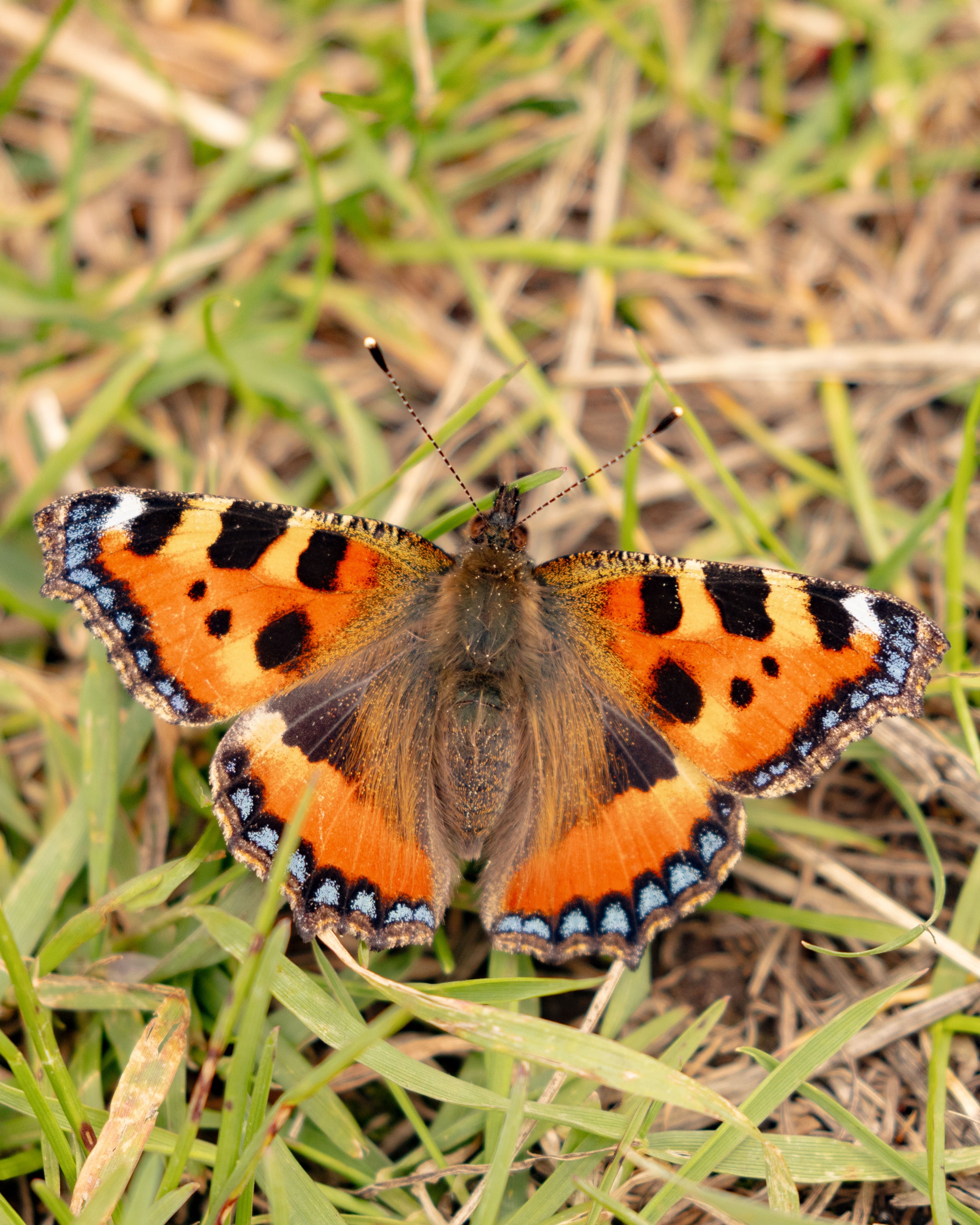
Small Tortoiseshell
Speckled Wood
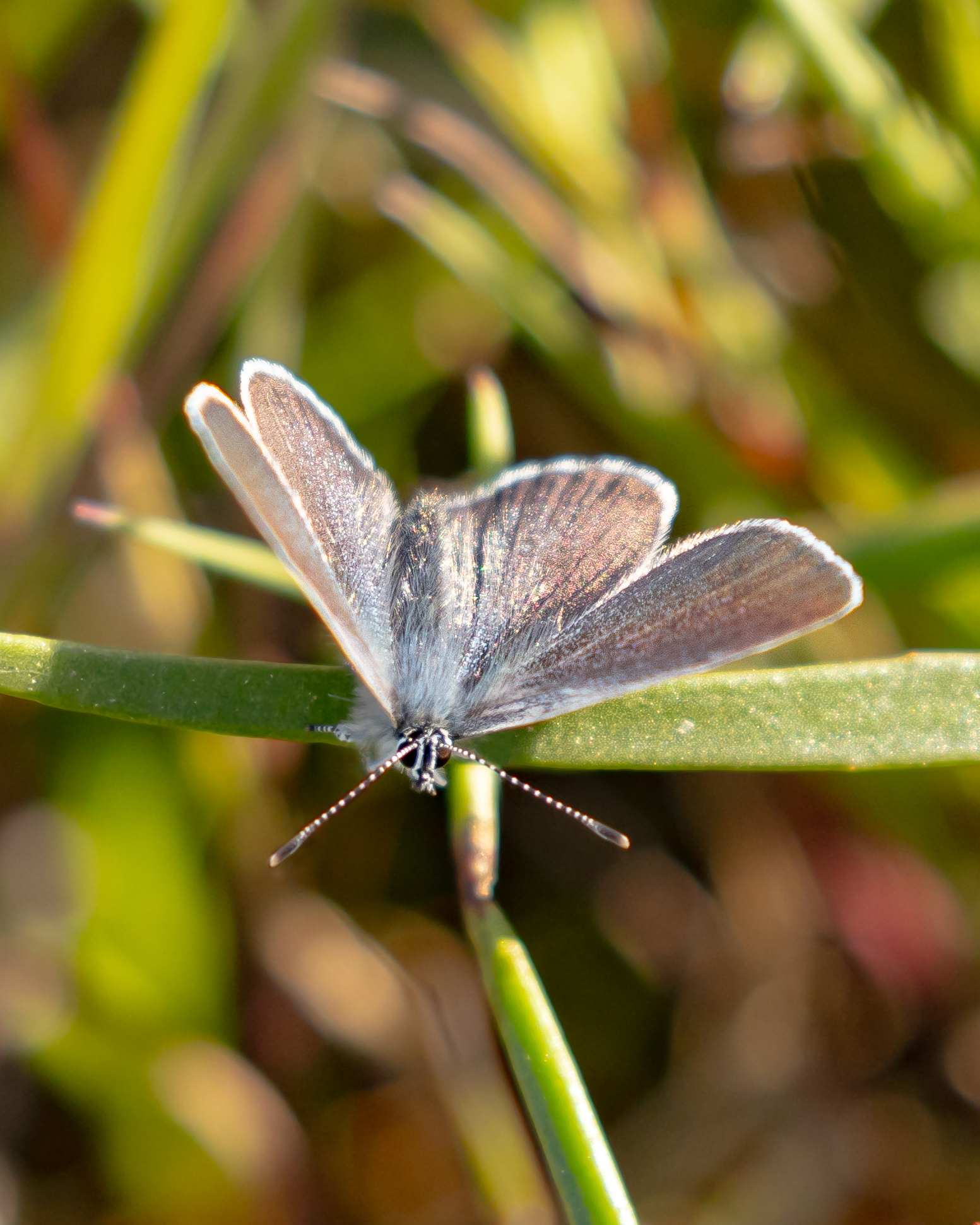
This season I saw my first Grayling during a trip to Tentsmuir in Fife, and my first Small Blue just down the road from where I live. One is an expert camouflager and the other is absolutely tiny, so I was thrilled to find both!
Grayling
Small Blue
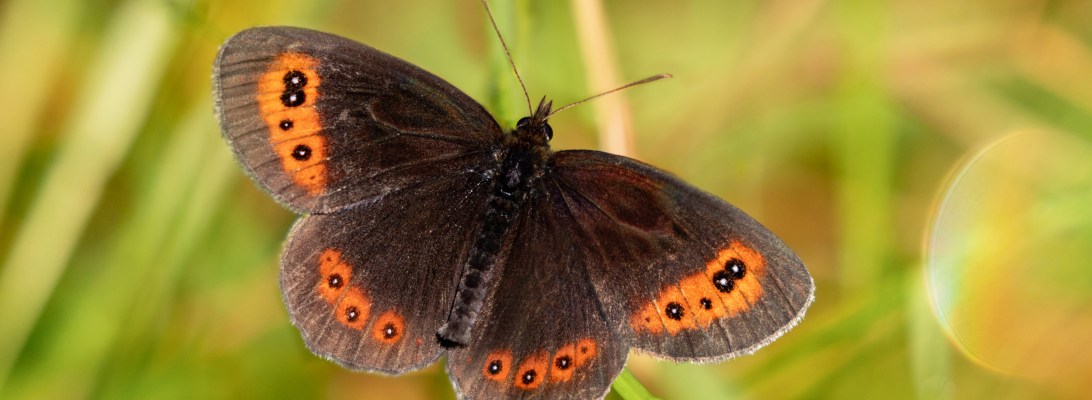
It was also a pleasure to see a decent number of Scotch Argus in my local patch again. Although not the most colourful of butterflies, there’s something so striking about the Scotch Argus and I always love seeing that flash of black among the bracken.
Scotch Argus
It’s been fun focussing on these tiny beauties, but now I’m keen to put the summer slump behind me. Here’s to fiery leaves, crunchy grass and soggy fungi.
It seems as if spring has come early, and I’m certainly not complaining. For the past few days I’ve been stuck indoors trying (and mostly failing) to write through an infuriating case of The Block. Multiple times I’ve caught myself gazing outside at the gorgeous sunshine, listening to the spring sounds of birds and bees that come drifting through the open window. I decided that it was time for a break, so I arranged to meet my friend Chloé for a walk. Chloé is an artist and writer with a deep love for wildlife like me. She recommended a local patch of woodland that I hadn’t even heard of before. I love discovering new wild places, especially ones I’ve driven or walked past without realising they’re there!
Heading away from the noise of the road and nearby school, we set off into the park. Chloé pointed out the numerous trees that could be found here, and I was surprised to see such a variety of species in a relatively small area. I’ve always struggled to identify trees, especially during winter when there are no leaves to study, but Chloé said that leaves can actually be a distraction. She showed me the large clumps of hanging seeds that can be found on ash trees, the dark bobbles along the boughs of larches and the vivid red branches of dogwood. There is another delightful clue with dogwood – the buds have two tiny prongs that look a little like Viking helmets. I had no idea that looking at the buds of a tree could help so much when trying to identify it. Hopefully I’ll start to notice these clues more often when I’m out and finally begin to recognise some British trees.
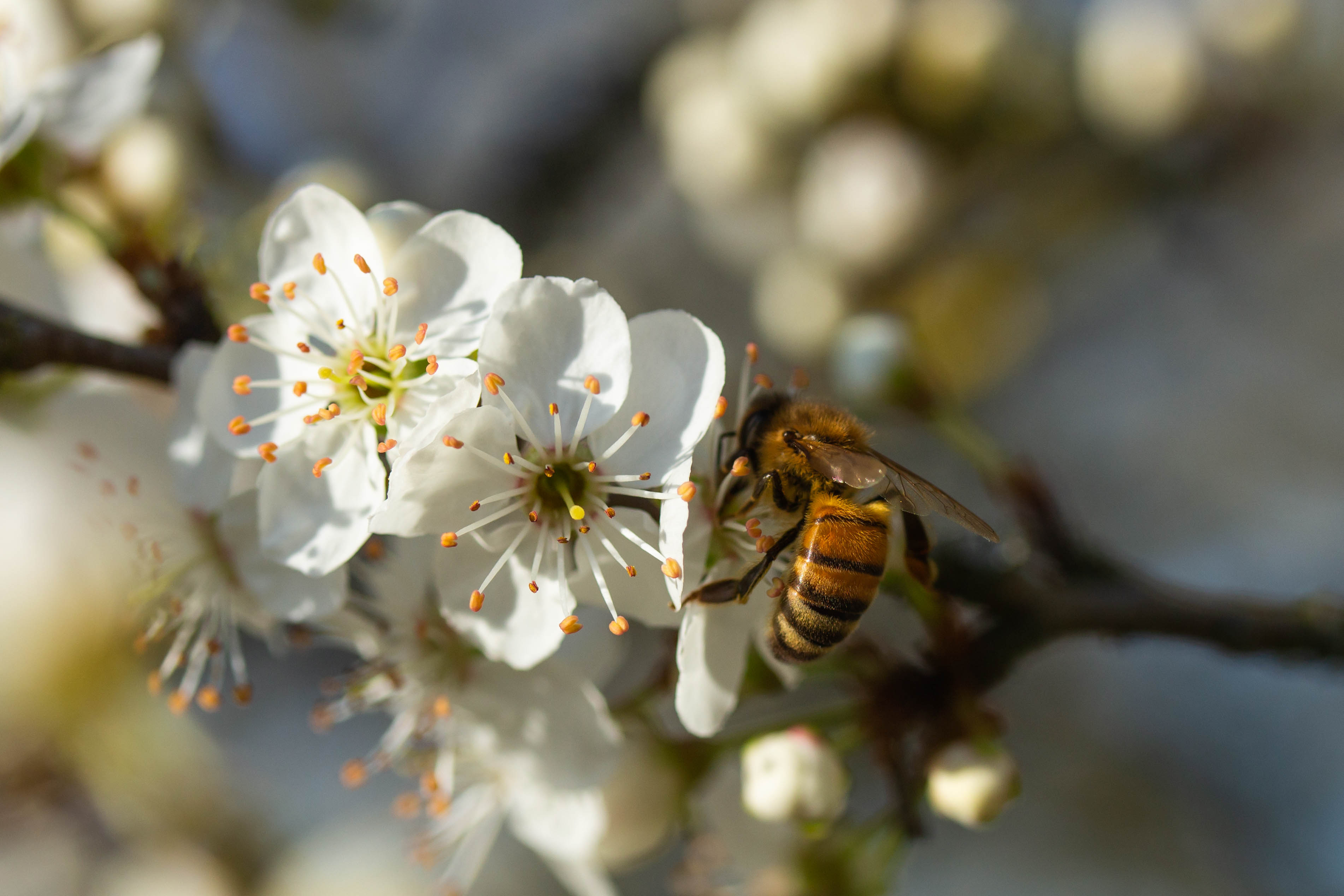
We headed into the open and followed a path that threaded up a hill, giving us a great vantage point over the countryside. A skylark swept across the sky, flying in large undulating dips before settling on the grass. I saw my first cherry blossom of the year: a stunning spray of white blooms that had attracted the attention of dozens of bees. We stood quietly and listened to the steady, buzzing drone as the bees threaded their way between the flowers in search for pollen – an indisputable sound of spring.
Further down the hill we were just inspecting what we thought was a beech tree when I glanced up and saw a red kite wheeling overhead. We took it in turns watching through the binoculars. It was fascinating to observe the bird’s flight pattern – it moved across the sky in gentle loop-the-loops, following the shape of a tightly coiled telephone cord, all while barely flapping its wings. Its red feathers looked magnificent in the sun, its forked tail silhouetted against the sky.
After the kite had drifted out of sight, we heard a soft clicking noise coming from a nearby evergreen. I started scanning the branches for birds, but Chloé told me that the noise was in fact the pinecones cracking open. It was a surreal sound that I couldn’t quite believe at first. Having always assumed that pinecones opened gradually like flower petals, it was incredible to actually hear them popping as they dispersed their seeds. Apparently, the scales of seed-bearing pinecones flex in response to changes in humidity. When it is warm and dry like it was yesterday, they pop open. In cool, damp conditions, they close up. I found this absolutely fascinating.
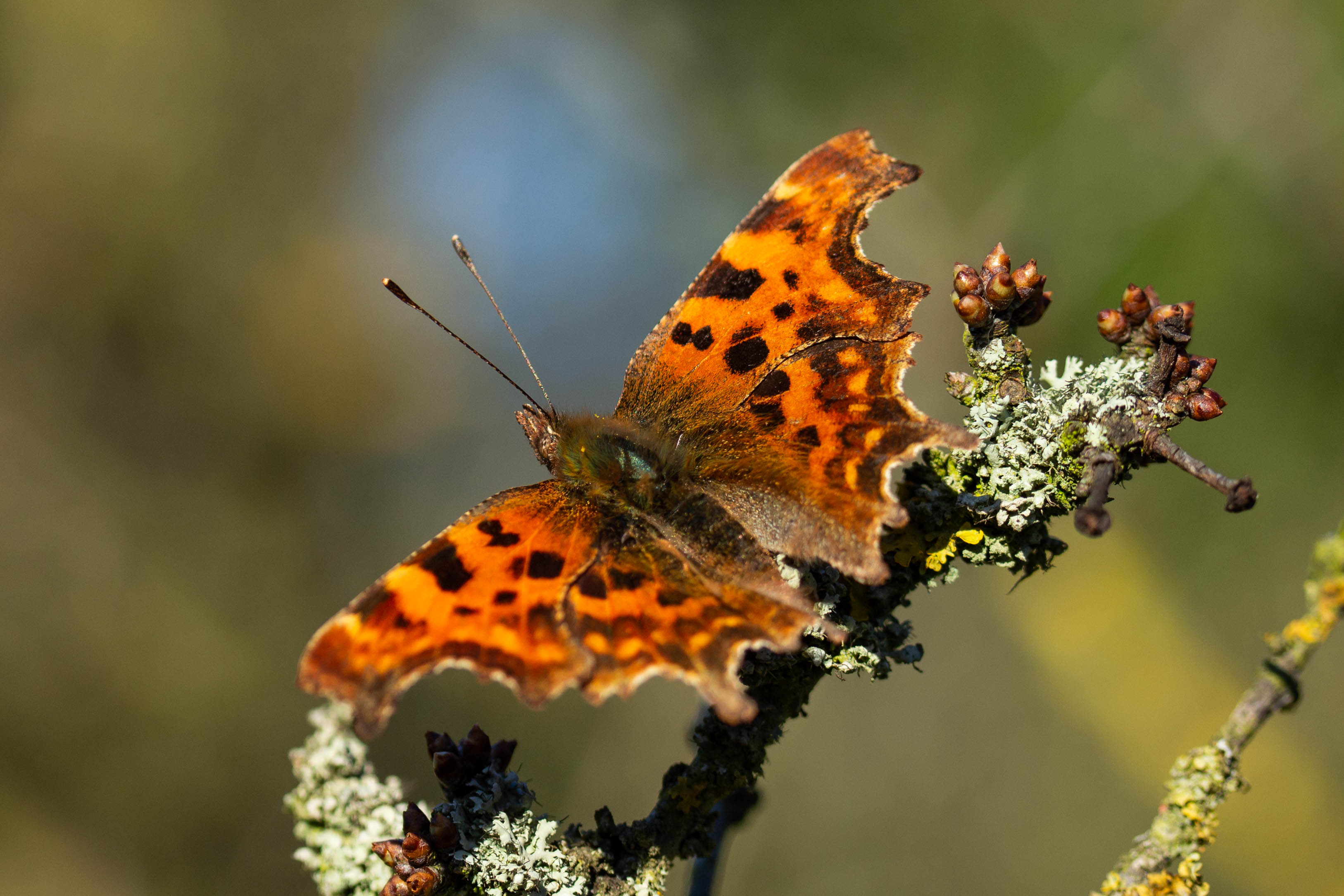
Further on through the park we came across my first butterfly of the year: a stunning comma basking in the sun. With unusual, scalloped edges to its wings, the comma is a master of camouflage, using its mottled colouring to blend seamlessly into dead leaf litter. Its larvae are equally well disguised, with brown and white flecked markings that give them the appearance of bird droppings. This individual was lounging on a leaf with barely a twitch of its wings, allowing us to get lots of photos and observe its beautiful markings up close. Its furry body almost looked iridescent in the sun. After a while it turned round, positioned its rear end over the edge of its perch and released a small black blob before settling again. This was another first, not just of the year but also of my life: watching a butterfly poo!
Eventually the comma took to the air and fluttered up into the sky. The shadows were lengthening and the warmth was slowly ebbing from the afternoon, so we began to loop back through the park towards Chloé’s house. It was so refreshing to be able to exchange wildlife knowledge with someone. I pointed out birdsong while Chloé helped me with trees. It really is true that walking outside is a form of natural therapy. When I returned home I was inspired to write and reflect on the day. I’ve also been motivated to start up painting again, after seeing some of Chloé’s work. I dug out my watercolours and acrylics and can’t wait to get back outside while spring is here in full force.
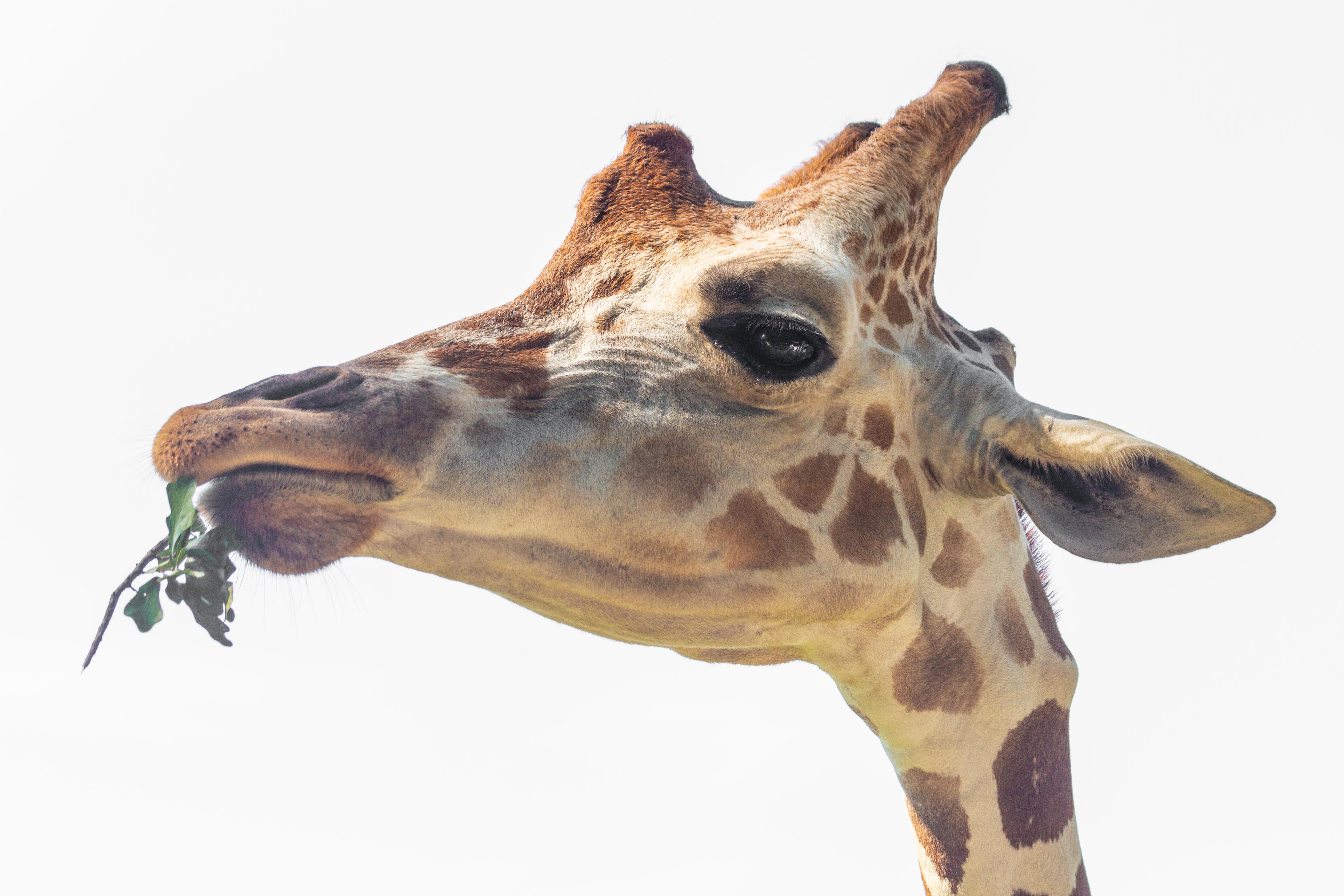
Giraffe have always been special to me. Even with long, gangly limbs, they move with unhurried poise and confidence, but still look endearing with their huge eyes and long eyelashes.
On TV this week there was a repeat of an episode in Attenborough’s Natural World series: Africa’s Gentle Giants. The story centred on Dr Julian Fennessy, Co-Founder and Co-Director of Giraffe Conservation Foundation. Fennessy has been working to conserve giraffe for more than 20 years, and is a true pioneer in research on this secretive and surprisingly little-known animal.
Many people, including myself until very recently, are naïve to the true situation that wild giraffe currently face. Among other African species such as elephants, gorillas and leopards, for some reason giraffe have taken a backseat in the public eye. While words like “beautiful” and “majestic” always spring to mind when we talk about giraffe, how many of us could confidently say how many there were? I was shocked to discover how wrong I was when giraffe statistics were presented alongside those of another African giant. Currently, there are around 500,000 African elephants left, but only 90,000 giraffe. For the first time ever, I doubted what David Attenborough was telling me. How could that be possible? I began to look online, but of course it was true. There are nearly five times as many African elephants than giraffe left on the planet. It’s a statistic that astounded me.
Source: BBC*
Giraffe are not only unmistakable symbols of Africa and the tallest animal on Earth, but they are important to the ecosystem. Like bees, giraffe are excellent pollinators, and pass pollen from tree to tree as they graze. They also spread seeds in their dung, another vital part of maintaining a diverse and sustainable landscape. Conserving giraffe protects not only the animal but its environment, ultimately affecting so many other species that call Africa home.
In two decades, giraffe numbers have fallen by 40% and they have become extinct in seven countries. They are hunted for meat and their habitats are slowly disappearing. One of the most vulnerable populations – a group of less than a thousand Rothschild’s giraffe – lives in Murchison Falls National Park in Uganda. These animals are walking on a literal time bomb; beneath their feet lies 75% of Uganda’s discovered oil, and Fennessy knew that plans to drill would spell disaster for these endangered animals. His ambitious and dangerous mission was to relocate twenty giraffe from one side of the River Nile to the other, where it was hoped that these pioneering individuals would start a new population in a safer location.
As I watched the team of dedicated vets, rangers and scientists attempt to move one-ton animals whose kick could decapitate a man, I was filled with such admiration and respect. It is all very commendable to donate money to charity, but these people were out in conflict areas risking their lives for giraffe. As the mission progressed, I got quite emotional, not just because the threats these beautiful animals face are so unnecessary and unjust, but because I was completely unaware. What little chance these animals have if even wildlife enthusiasts like me don’t know their situation.
It wasn’t just the numbers of giraffe that I was unaware of; so much of their behaviour remains unseen to even experts like Fennessy who have studied them for a vast proportion of their lives. By the Hoanib River in northwest Namibia, he took a sensitive camera out to film giraffe at night. As he watched, a giraffe curled up on the exposed ground and fell asleep. It was something Fennessy had never witnessed before.
“In zoos they study it,” he explained, “Basically when their neck is down it’s REM sleep, so maybe these giraffe are dreaming. I’ve never seen that in the wild.”
The fact that we don’t know how wild giraffe sleep says a lot about how overlooked they are. It seems there is the assumption that because we don’t hear about a particular animal as much, it must be doing fine. However, in the case of the giraffe this couldn’t be further from the truth. So why do we know so little about these animals? Perhaps it is because they are only listed as “Vulnerable” on the IUCN Red List of Endangered Species. An article published two years ago, at the time that this episode was first released, hopes that the work Fennessy is doing will help change the status of giraffe to “Endangered” or “Critically Endangered” and therefore encourage greater conservation efforts. Unfortunately, as 2018 draws to a close, the giraffe is still listed as “Vulnerable”. I can only hope that this change in status does come into effect to raise awareness of this silent and rapid extinction that is passing so many of us by, or soon it may be too late.
*Natural World “Giraffe: Africa’s Gentle Giants.” (2016) BBC. 23rd June.









 rebeccaonthewing.com