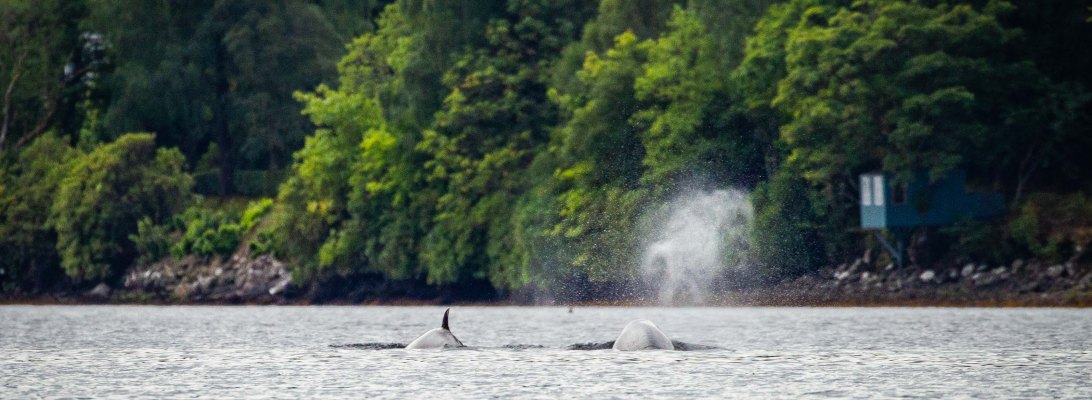
As this strange year continues, I’ve been busy taking photos, writing articles and getting stuck into new projects. I’ve ticked off 36 new species this quarter including my first otter, basking shark and northern bottlenose whales. Now the temperature has started to drop and I’m really looking forward to autumn and all its exciting wildlife spectacles!
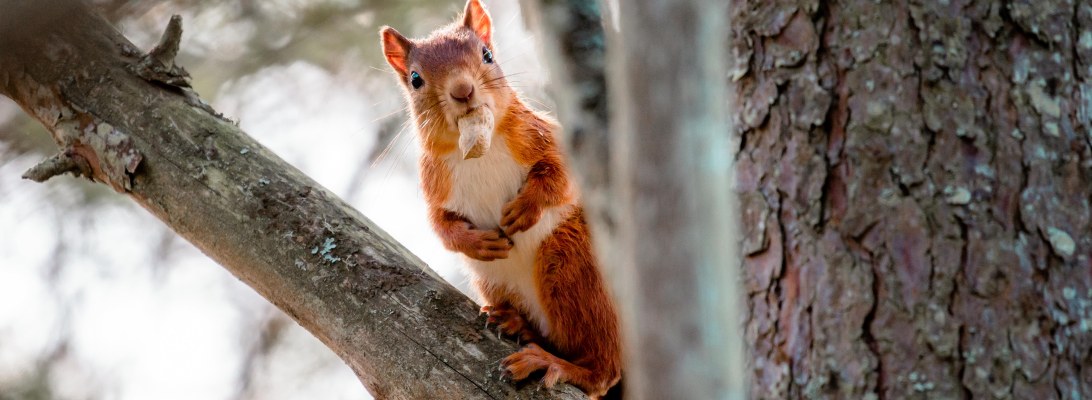
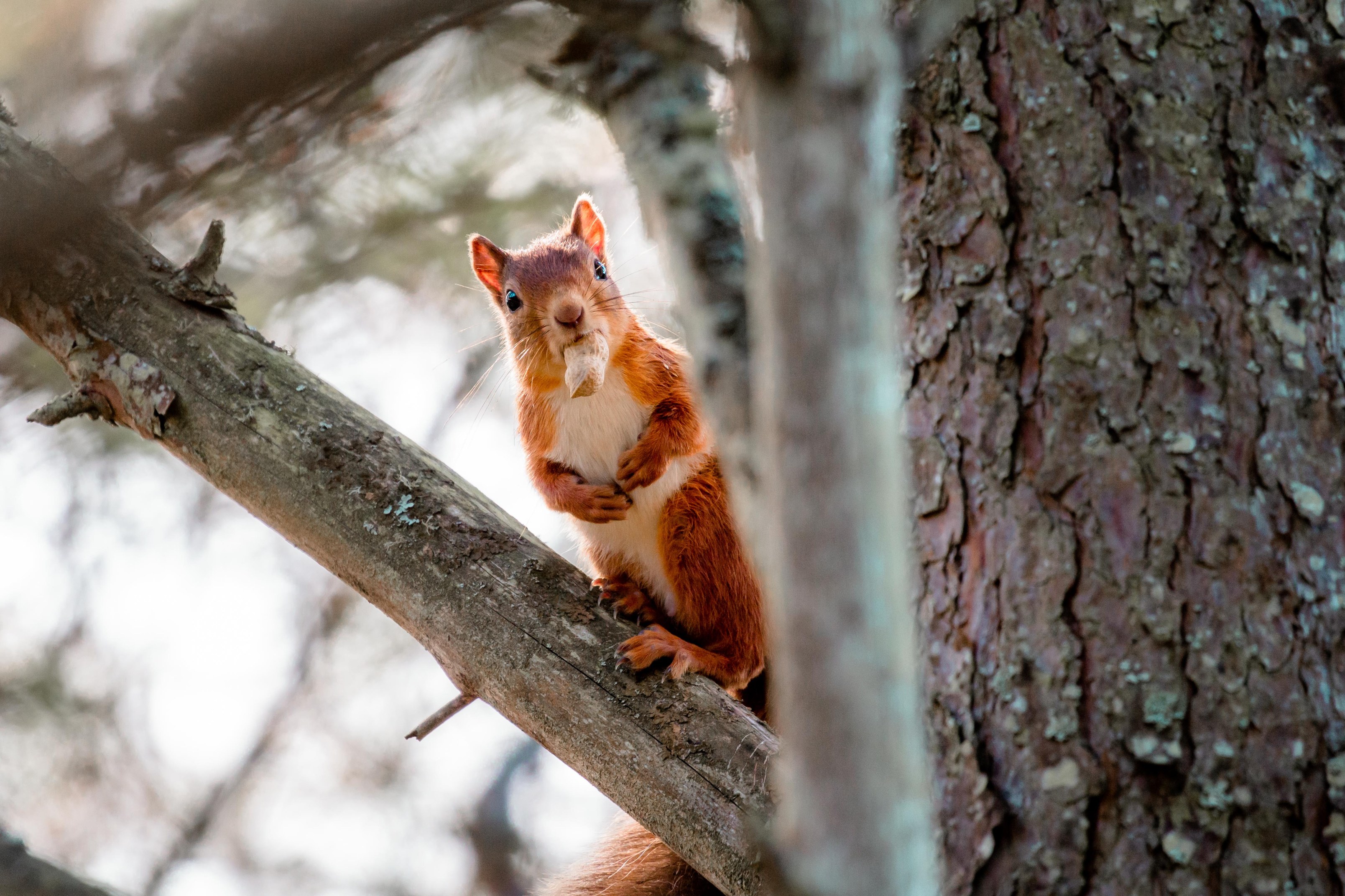
I didn’t see my first red squirrel until I was eighteen, but since then I’ve been extremely lucky with sightings of these gorgeous mammals and they’ve been a firm favourite of mine ever since. I often see them while walking my dog through the forest and the first giveaway signs that I’ve found one are the sounds of rapid scrabbling overhead and the occasional thud of a pinecone as it hits the floor. At this time of year, red squirrels are hard at work finding food to see them through the winter. Instead of large caches, squirrels are scatter-hoarders, which means they store each item separately. Unlike grey squirrels, red squirrels can’t easily digest acorns and instead feed on hazelnuts and seeds from many different trees including pine, larch and spruce. Their diet also consists of fungi, fruits and even birds’ eggs if they get the opportunity.
This week, I was very pleased to see two of my red squirrel images featured in BBC Wildlife magazine’s new Red Squirrel Guide, written by ‘Saving Scotland’s Red Squirrels’. Both photos were taken in Lockerbie, Dumfries and Galloway, where I’ve had some very close encounters with these animals! While I’ve seen plenty of adults, my next challenge is to spot some red squirrel babies, which are called kits.
Before the introduction of grey squirrels into Britain, there were millions of red squirrels. Nowadays there are thought to be around 120,000 left in Scotland, which is 75% of the UK population. As part of National Red Squirrel Week, ‘Saving Scotland’s Red Squirrels’ are encouraging people all over Scotland to take part in the Great Scottish Squirrel Survey from the 21st to 27th September. All you have to do is go for a walk in the woods and if you see either a red or grey squirrel then submit your sighting on the website. Even after the Squirrel Survey has finished, you can still submit sightings throughout the year.
It won’t be long before the red squirrels near me start growing their ear tufts, which I can’t wait to see!
It has become a running joke that I’m pretty unlucky when it comes to seeing certain species. Examples include otters, badgers and deer, despite the fact that I now live in Scotland, which is essentially the deer capital of the UK! But, if there’s one animal that I have an affinity for, it’s the red squirrel. There’s something irresistible about their fluffy tails, tiny hands and beady eyes. And of course they all have completely different personalities. I will never not be excited by red squirrels, no matter how many times I see one. I must have thousands of photos of them by now but I always take more, and this weekend was no exception.
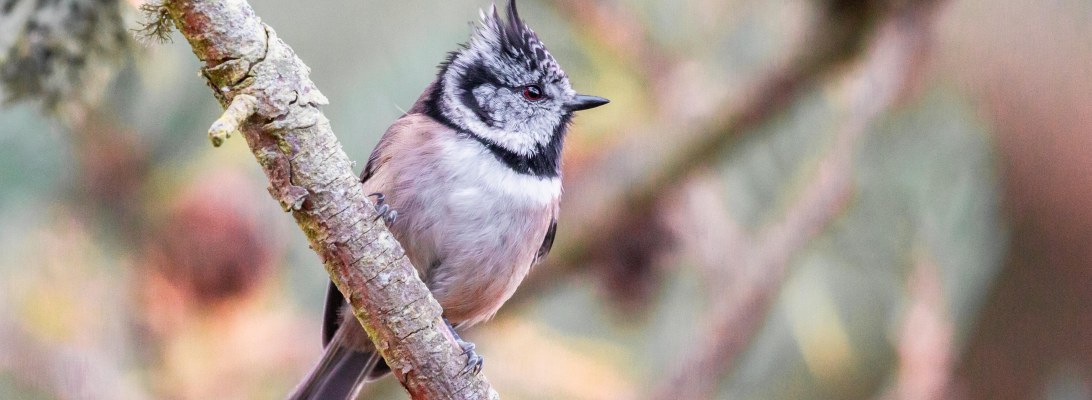
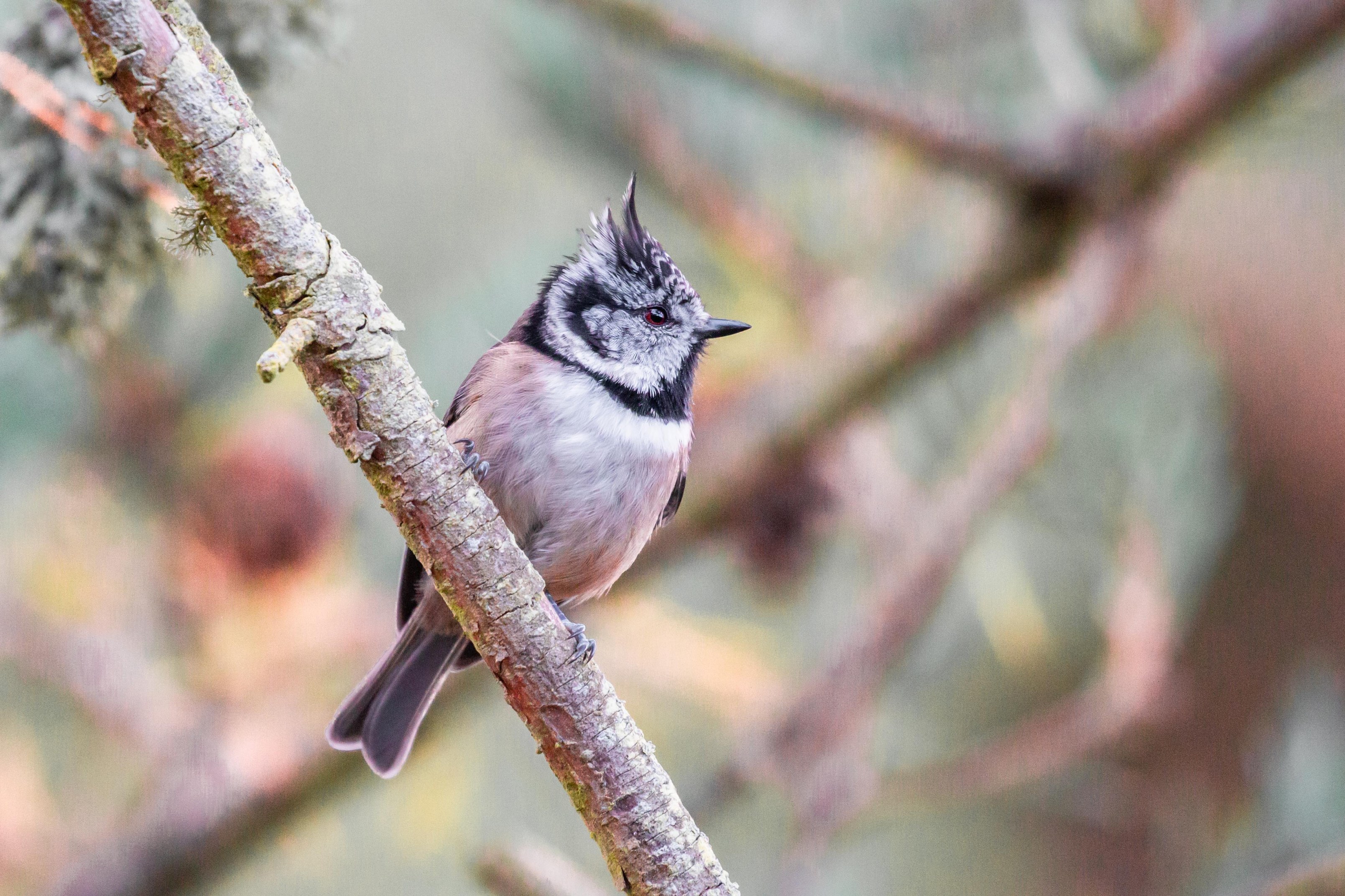
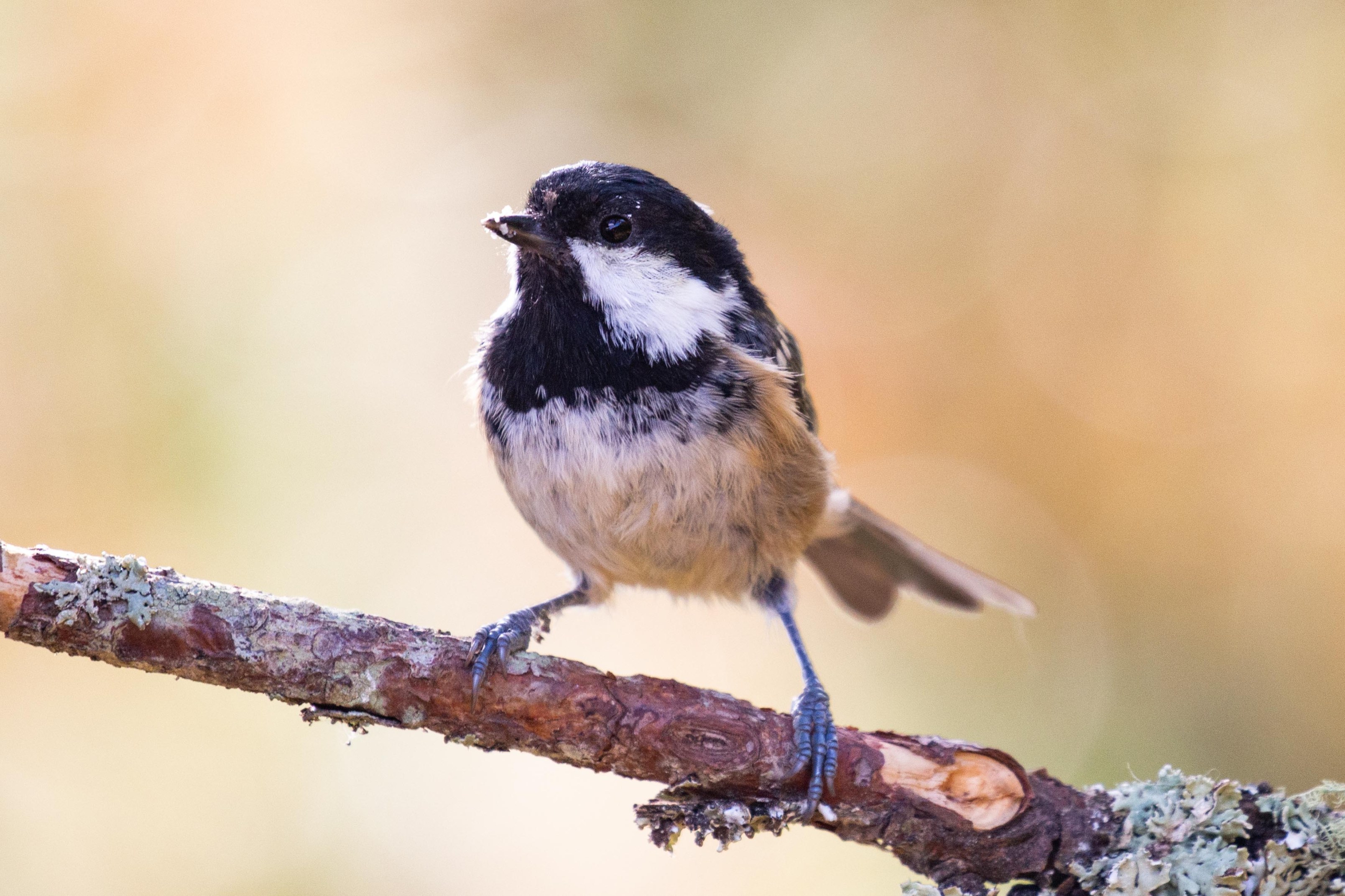
My friend Steve and I visited Lossiemouth for some wildlife watching in a beautiful patch of coniferous woodland by the estuary. Within ten minutes of arriving I was gazing down my telephoto lens at a red squirrel as it clutched a monkey nut in its paws. Despite the flurry of coal, great and blue tits, I would happily have just watched the squirrels until a particularly special bird caught my eye: the crested tit. In Britain, these birds are mostly confined to the Caledonian forests and Scots pine plantations of Scotland. The punky hairdo is perhaps the most striking feature of the crested tit but their bright red eyes are pretty amazing too! I couldn’t believe I was so close to such an uncommon and beautiful British bird.
Coal tit
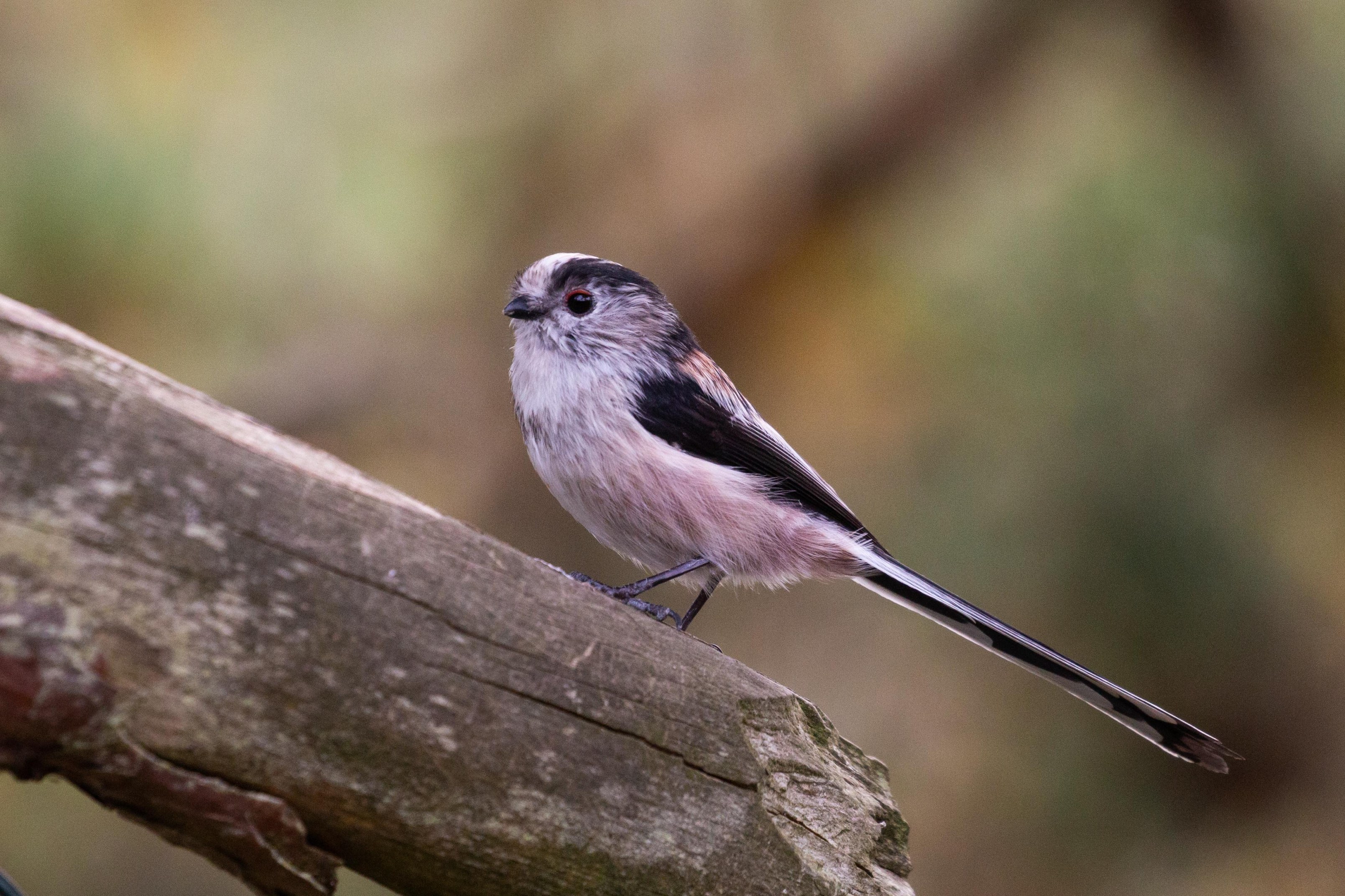
As well as squirrels and cresties, we were surrounded by dozens of other birds including another favourite of mine: the long tailed tit. The proportions of this bird are what I love most about them. They have a body like a golf ball with a spoon handle sticking out one end and the sharp nib of a bill out the other. What a bird! And where there’s one, there are nearly always more and I often hear them before I see them. Their alarm call sounds frog-like and the trees erupt with soft ribbits whenever I pass by.
I am in my element in the forest. It’s my favourite wild place to visit and I absolutely loved getting such close-up views of some fantastic species. After a couple of hours the afternoon sun began to fade and a chilly breeze had us packing up and heading home, though I’d definitely be back soon.
I was back in the wood this week, helping Joan and John with their restoration project. The forecast blatantly lied about there being no rain all day, but luckily we timed our visit with a brief spell of sunshine! The breeze brought the added benefit of whisking the midges away. After topping up the feeders we had a slice of Joan’s delicious homemade ginger and sultana cake and watched the chaffinches and great tits up in the trees.
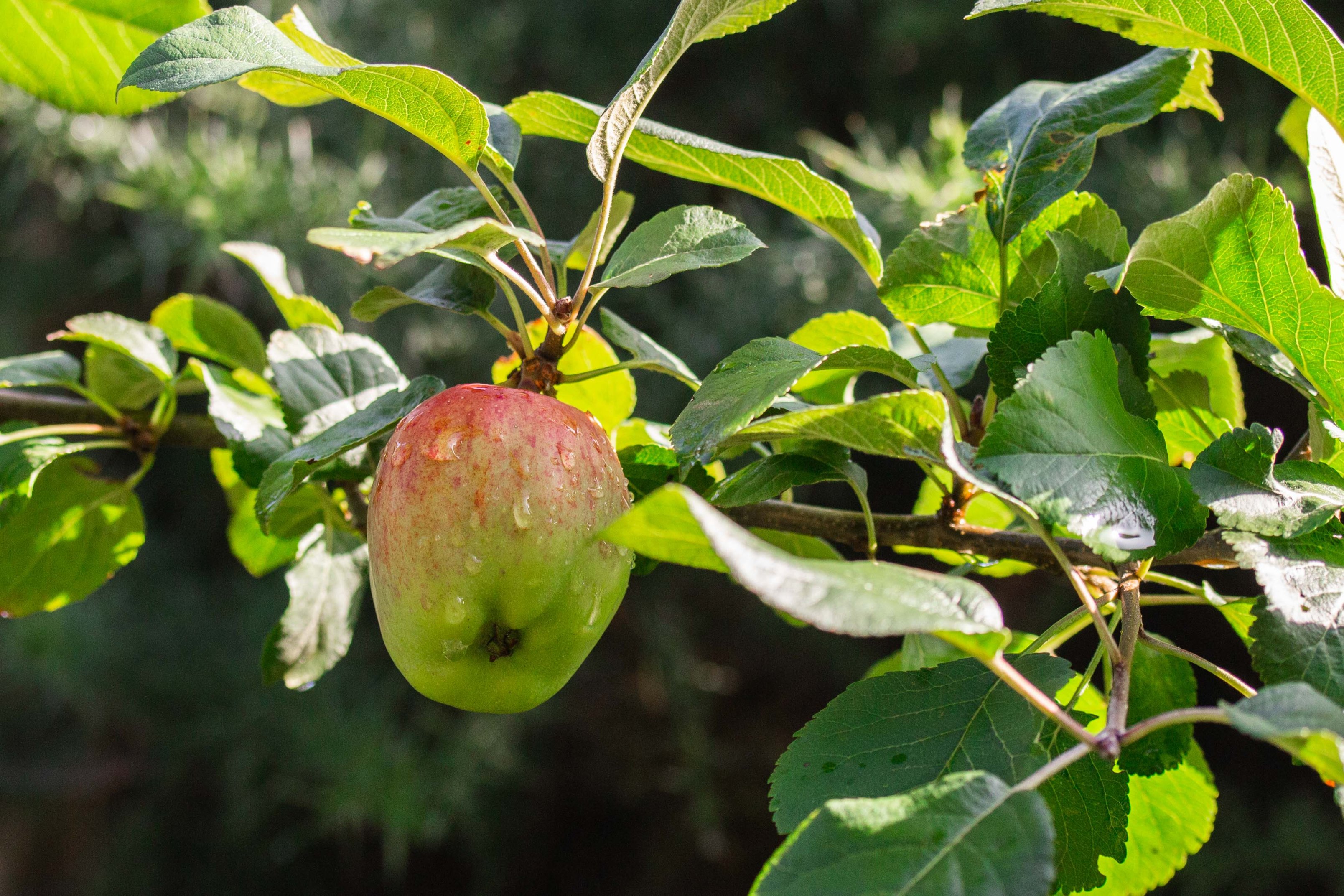
A dewy apple ready to be picked
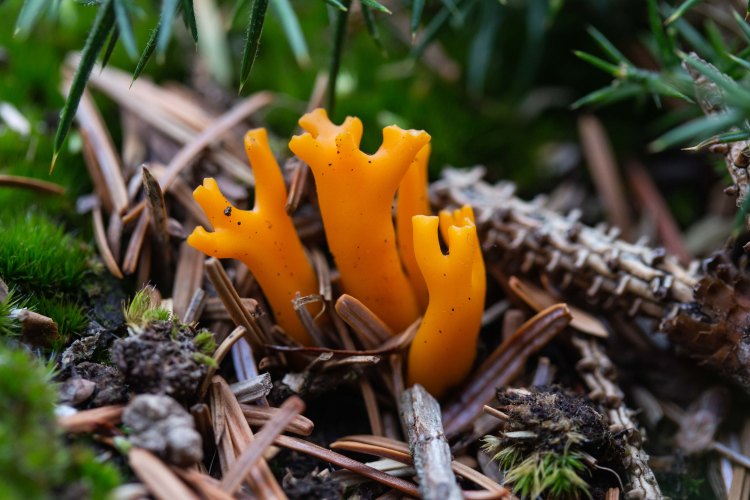
One good thing about the rain is it brings up all sorts of fungi – with so much soggy soil and plenty of log stumps I knew there would be loads to see in a few days’ time. For now though, I amused myself with tiny sprigs of yellow stagshorn fungus that were just starting to emerge. I’ve been lucky enough to see several fly agarics already this year but I’ve got my fingers crossed that more will be popping up in the wood soon.
Yellow stagshorn fungus
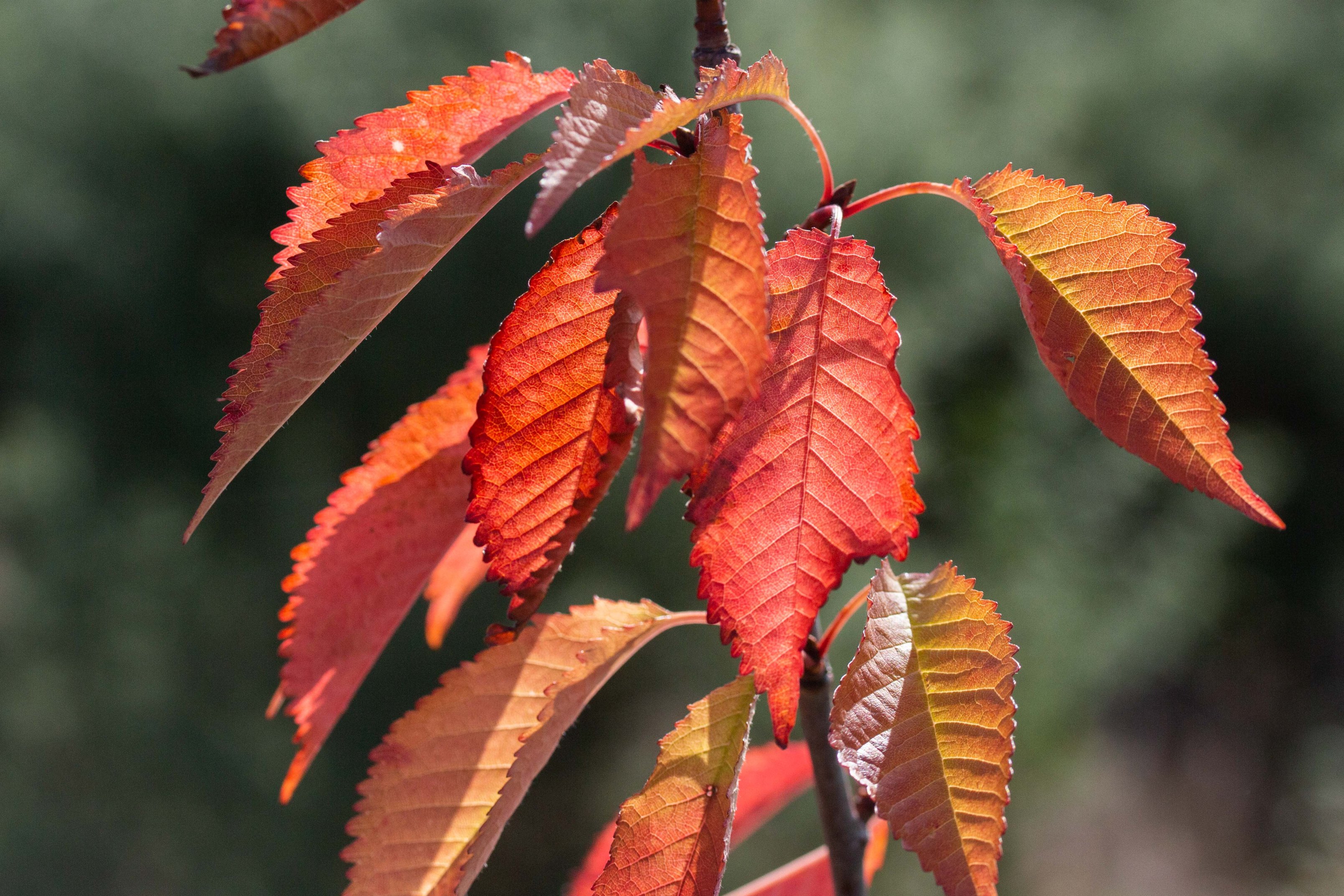
The autumn colours are really beginning to pop. Ling heather is still dominating the woodland floor but a lot of the saplings are shining in the sun too. The rowans are beginning to brown, the oak leaves are turning acid green and the wild cherry leaves are burning a vivid pink. It’s an excellent place to learn tree ID and with Joan’s help I’m already picking up on some of the common species.
Wild cherry leaves
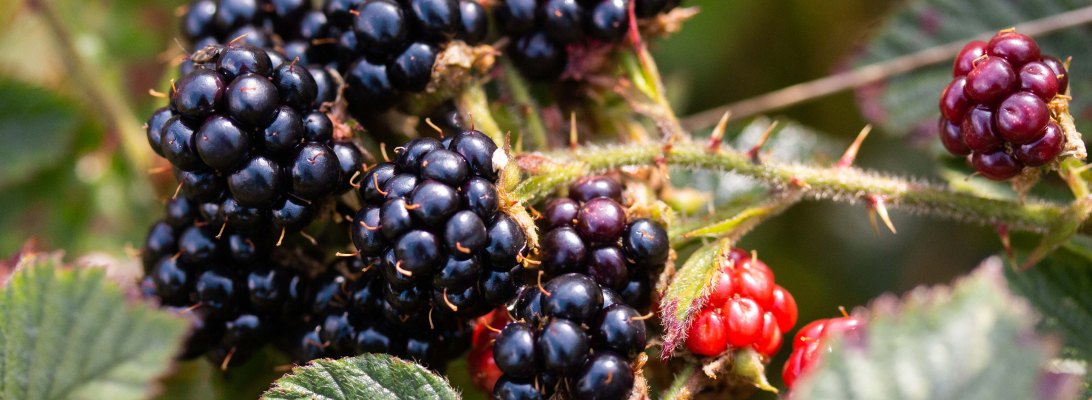
As I watched a buzzard gliding overhead, Joan ventured off to pick the first blackberries and the last raspberries. There were a few apples which were ready to be plucked too. I’m in love with all the rich colours and can’t wait to see what the true autumn will bring!
For many birds, September is the time to move. Species such as swallows and house martins, which have spent the summer feasting on insects, are now returning south to Africa for winter. Seabirds including puffins and gannets leave their clifftop nests and head out to sea, where they will remain until it’s time to breed again next year.
As some birds leave, other start to arrive. This month, look out for geese passing through during their long flight from the Arctic Circle. Canada, greylag and barnacle geese can all be seen arriving at roost sites across the UK in their classic V-shaped flight formations.
From now until late November, one of nature’s most dramatic displays is taking place. Most of us have seen starling murmurations on TV, but these pale in comparison to the real thing. As well as the sight of hundreds of thousands of birds swarming through the sky, the sound of all those wings is just like rain. Just be careful of the white rain that comes with them!
Mammals
With dusk getting earlier, it’s a good time to look for badgers as they forage on fruit, nuts and insects. Settle down before sunset and wait – if you’re still and quiet you may be rewarded with a badger or two!
Although sometimes elusive, water voles can be seen a little easier now that river vegetation is starting to die back. Now is also when young water voles are venturing out of the burrows for the first time and looking for food.
Fungi and Flora
No matter where you live in the UK, you can admire the turning leaves. City parks and dense forests alike will start to show beautiful displays of reds, oranges and yellows. To get the most dramatic photographs, head out during golden hour (shortly after sunrise or before sunset) and catch a vivid gold light on the leaves.
There is also plenty to see below the changing leaves. Emerging from the forest floor is a diverse range of fungi. Many people forage wild mushrooms – always be careful and know what you’re picking! – but for many people, the sight of these strange and sometimes vividly coloured growths are just as exciting. Fungi come in all shapes and sizes and often grow rapidly so take a look at what’s growing near you. To identify some of Britain’s common fungi species, check out this guide from the Woodland Trust.
The seeds of the horse chestnut tree are also a sure sign that autumn has arrived, although many people know them better by another name: conkers. Whether you play the official game of conkers or just collect them, these smooth, chocolate brown seeds are great fun to find. Be careful of the spiky shells though!
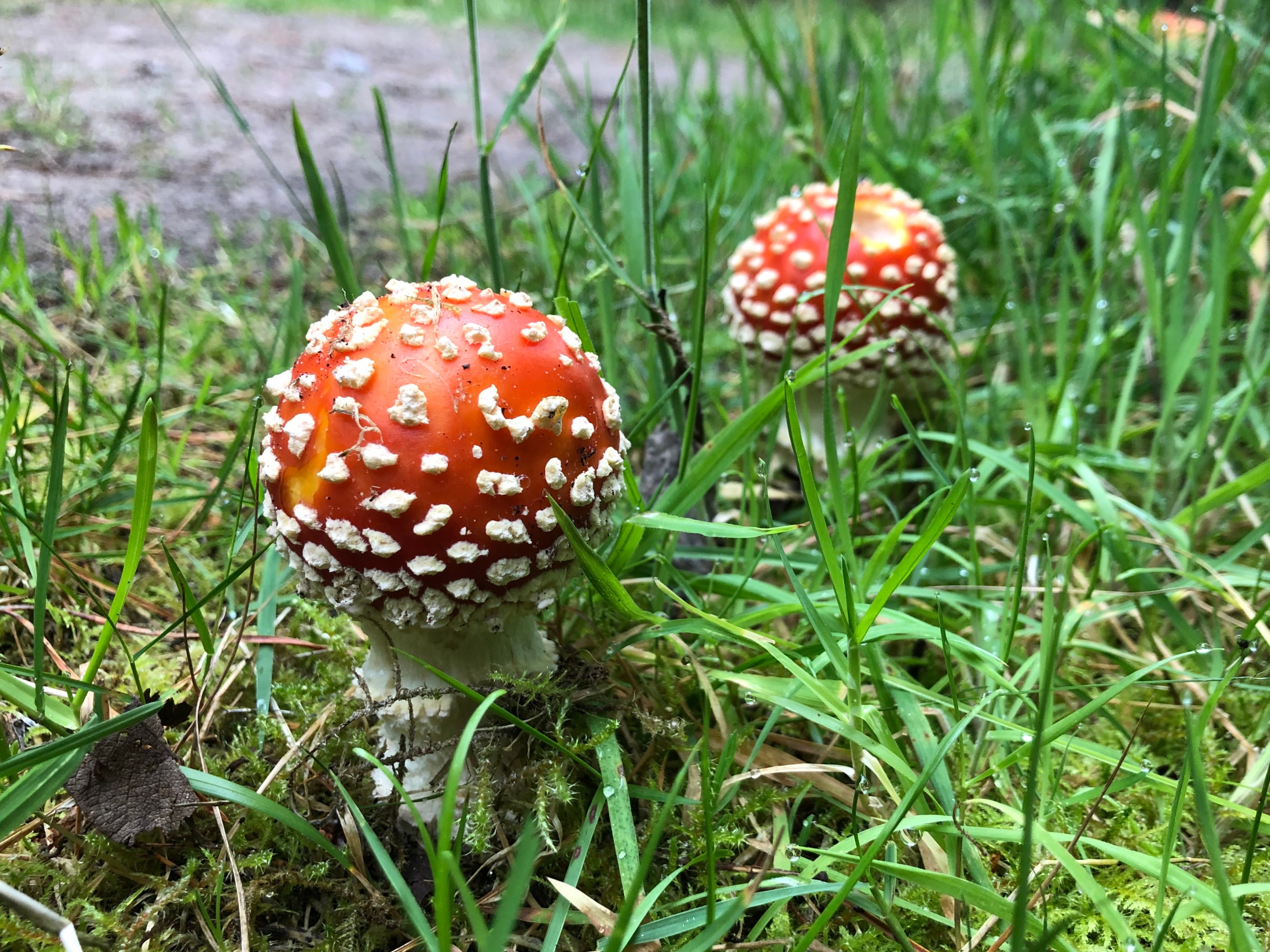
Fly agaric – one of the most well-known British species
This article was originally published on Bloom in Doom as part of my role as Nature Editor.
I go through phases when it comes to wildlife watching. For the past couple of months, I’ve been deep in a forest phase and all I’ve wanted to do is wander through trees and look for birds and red squirrels. My Instagram was full of greens and the first hints of autumn oranges.
But then the ocean started pulling me back. After a few weeks with no sightings, bottlenose dolphins started to make appearances along the Moray Firth again. It was looking unlikely that I’d see my first orcas this summer, but I was still looking forward to getting dolphin photos that showed slightly more than the departing splash. I was back in an ocean phase.
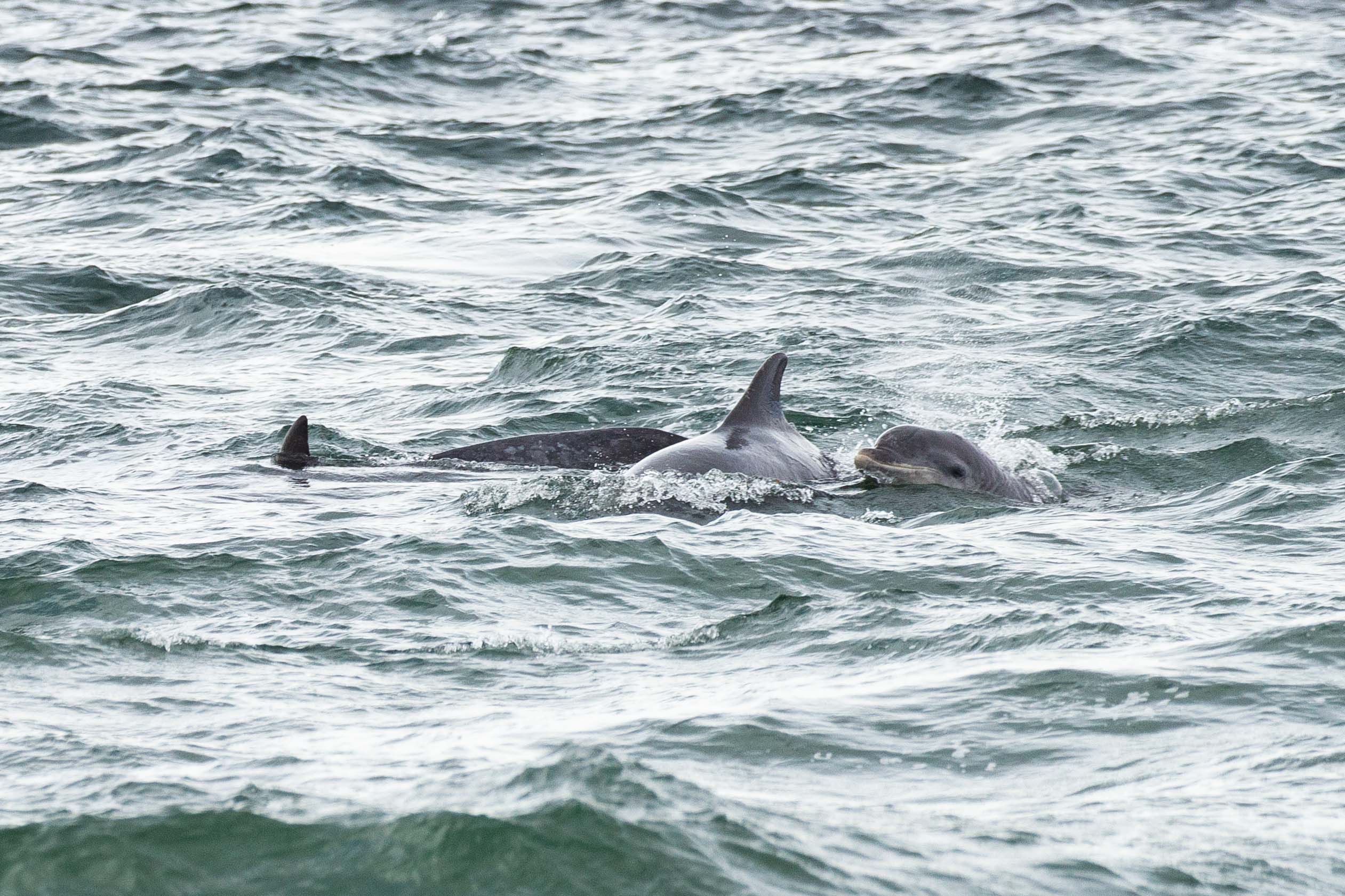
Earlier this month, on a particularly choppy morning, I found myself running full pelt along Burghead harbour to reach the end of the sea wall that juts out conveniently into the sea. From there, I could watch three different pods of bottlenoses as they caught fish. With so many breaking waves and white peaks, I didn’t know what I’d managed to capture until I returned home and uploaded the photos. I was thrilled to discover I’d caught a little face just as it breached the surface.
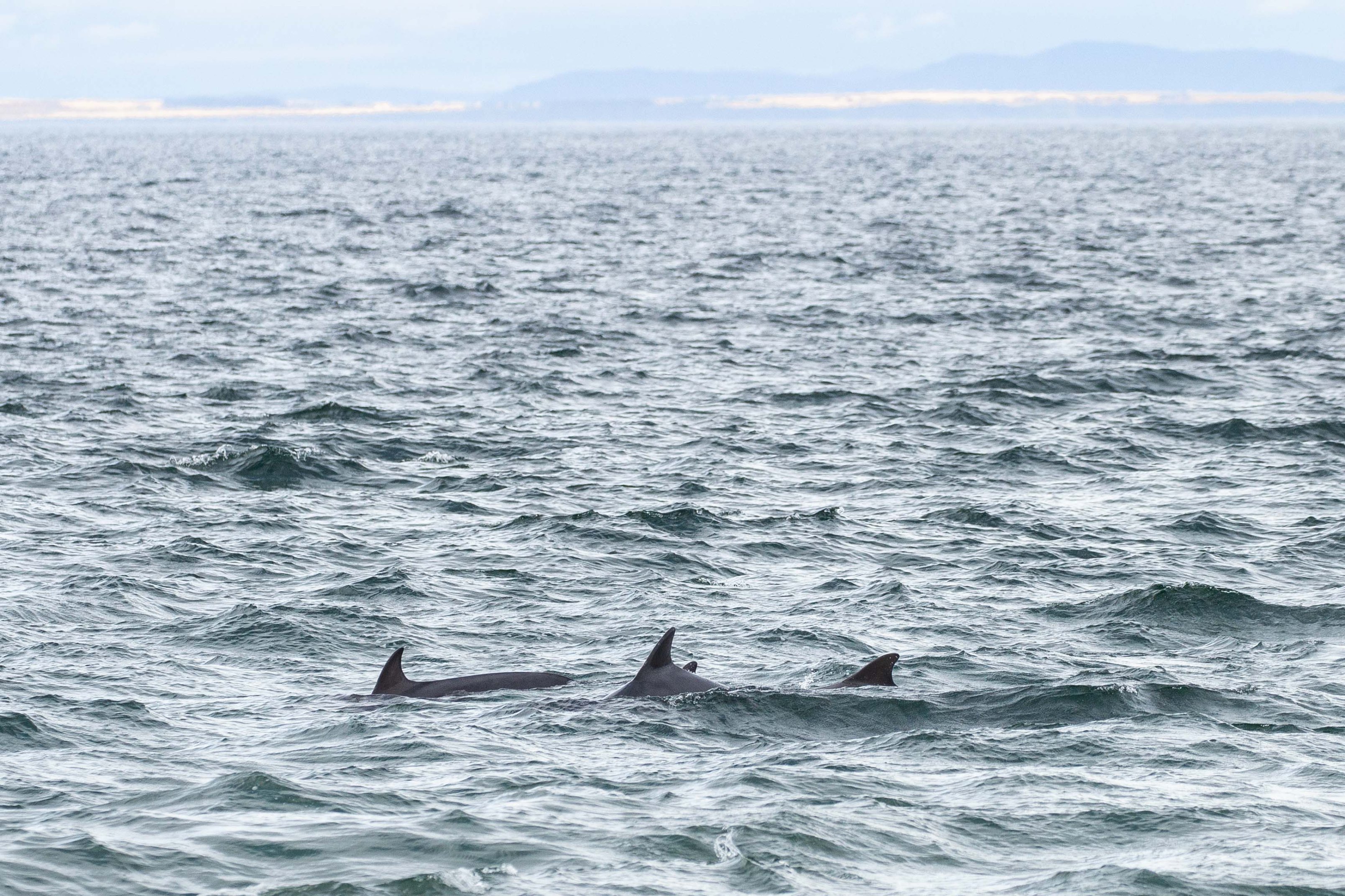
A few weeks later, I received a text alert from the local shore watchers saying there were bottlenoses heading west around the headland. Snatching up my camera, I made a beeline for my favourite vantage point at the end of the harbour. Unlike last time, the water was completely flat and every flash of fin caught my eye. Unfortunately all the feeding action happened far out, way past the range of my lens, but I did have an unexpected visitor pass close by.
The action continued the next week. Another text alert had me hiking up to the Burghead Visitor Centre at sunset and before long I had my lens pointed at a small pod who were following a jet ski and giving the driver some sensational views! As well as belly flops and tail waves, there were plenty of breaches. It was amazing to see the dolphins so active.
In the last of a flurry of excellent dolphin sightings, I paid Chanonry Point on the Black Isle another visit: one of the prime dolphin watching spots. Within moments of arriving – being sure to time my visit with the rising tide – a pod cruised straight past. Although there were no breaches this time, one particular dolphin dived three times directly in front of the crowd, revealing a distinctive notch in its tail fluke. I was also delighted to see a newborn calf among the adults, sticking closely to Mum as they passed by.
As summer blends into autumn, the dramatic display of emerging fungi will undoubtedly draw me into another forest phase, but I’ve loved having so many marine wildlife encounters this month. I’ve now got plenty more dolphin photos to add to my portfolio too!
With all the dolphin excitement recently, I’ve been sticking closely to the shore on my walks and neglecting the forest. I’ve always been worried that I’ll walk for miles and then get an alert saying there are leaping whales in the complete opposite direction.
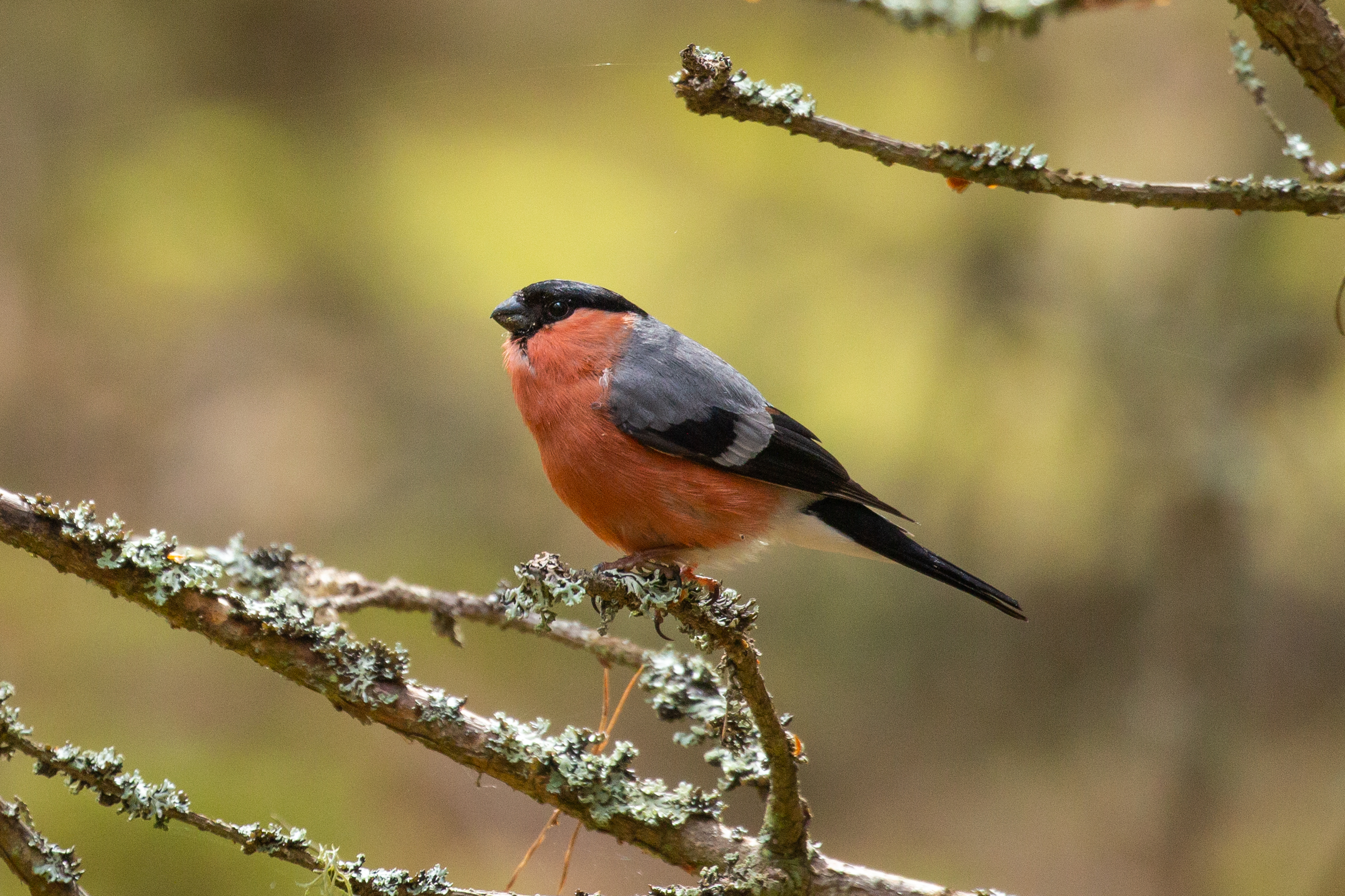
But, the other day I decided to take a chance and walk the dog in the forest for a change. Within five minutes, I saw a flash of rosy red and my heart did the familiar jolt that happens whenever I see something unexpected. And this was certainly unexpected: a pair of bullfinches not twenty feet away from me.
I’ve been trying to get a decent photo of a bullfinch for years. They’re one of my favourite birds but I’ve only seen them a handful of times. On every occasion they’ve either kept their backs to me or been concealed behind branches. I’ve taken a few blurry shots that prove they were there, but they’ve never been good enough to post. Now I was being treated with both male and female. While the male is more conventionally striking, I find the dusty brown plumage of the female just as beautiful. I just love their short, stubby bills, which are perfect for cracking hard seeds.
During the entire encounter my dog was amusing herself elsewhere, completely indifferent to my excitement. I stayed with the bullfinches as they hopped around logs and fluttered up to low branches. I could have sat and watched them for hours, but after a while I left them in peace.
Still buzzing from my sighting later that day, I decided to go back to the forest for an evening walk. There would be fewer humans and hopefully more animals to see. Roe deer were another of my favourites and a few weeks ago I saw a flash of brown fur as a doe pelted past me. I was keen to get a good photo of one – they were another animal that I’d never managed to get a proper glimpse of. So, despite the warm evening I wrapped up and headed out again. The sun wouldn’t be setting until 10pm so I had plenty of daylight left. In fact, it was prime golden hour and the broom – a shrub similar to gorse but without the spines – was glittering.
It seemed I hadn’t run out of good luck. After walking for less five minutes I saw movement through the trees. Four of the skinny saplings weren’t trees at all but slender brown legs. I froze where I was, conscious of every snappable twig by my feet. She was moving slowly, leisurely. I dared myself to tread up a grassy mound for a slightly higher viewpoint. There was so much dense ground foliage that I couldn’t see her very well. She headed to my left, straight towards a clearing between two columns of trees where I’d be able to see her perfectly. I lifted my camera slowly to my face and waited. When the moment came, the click of the first photo caught her attention and she turned to face me. For about ten seconds we stared at one another. Her pricked ears were huge satellite dishes on an otherwise skinny face, punctuated by large eyes and the characteristic roe moustache. The light was fading and I stretched to a slightly higher ISO than I would have liked. I knew the images were going to be a little grainy, but my deer was posing magnificently.
Eventually, human voices cut through my moment (of all the 1700 acres they could have chosen!) and the deer darted back the way she’d come. With such a slow shutter speed I had no hope of capturing her at that pace, so I just watched her springy legs disappear into the trees.
Inspired by such an early sighting, I pressed deeper into the woods, keeping my ears open for any unusual sounds that I wouldn’t hear during the day. The fantastical idea of pine martens popped into my mind but I pushed it away. To see a wild pine marten on my first evening forest walk would something close to miraculous. But a fox or perhaps an owl might be more likely, so I stayed as quiet as I could and did my best to avoid noisy leaf litter, although my stealth skills left a lot to be desired.
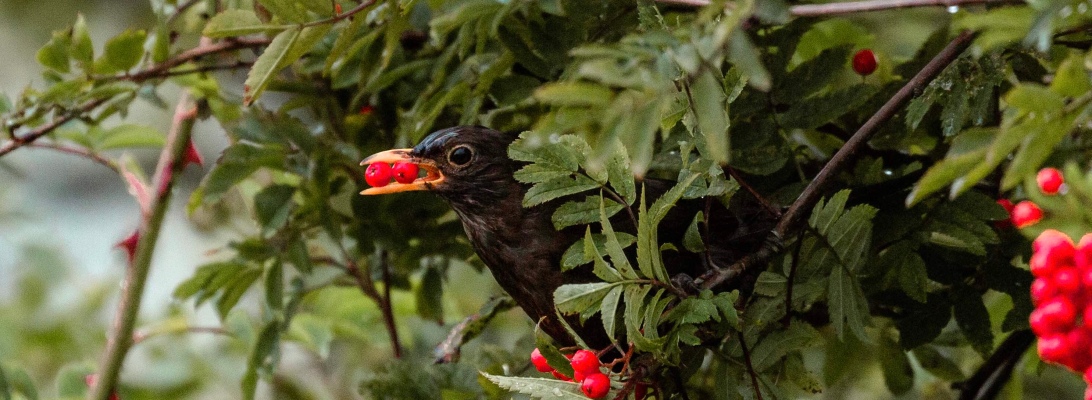
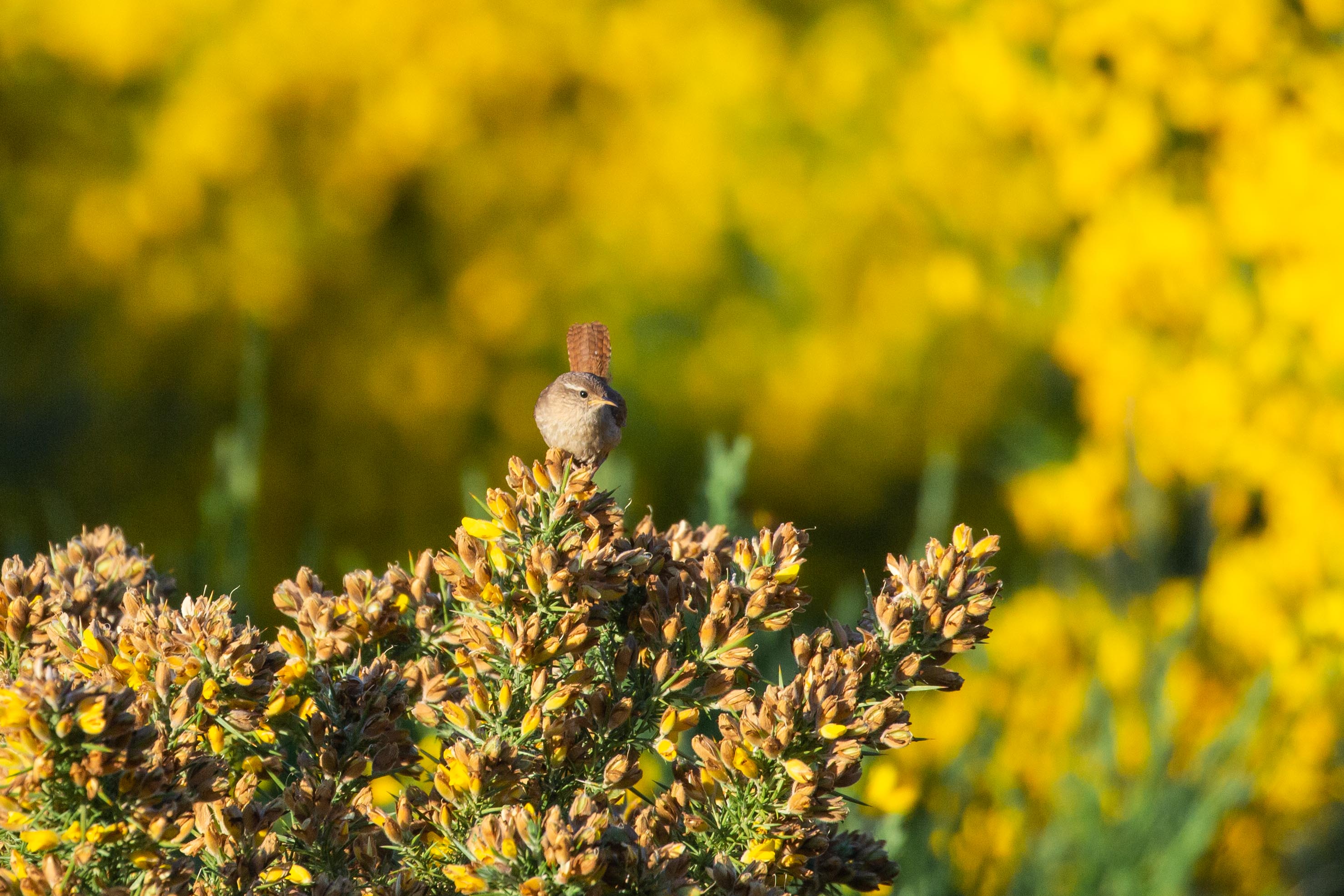
It’s astonishing how soothing a forest can be, if you let yourself align to its peace and quiet. I regularly stopped to listen to the birds, which at 9pm were still going strong. Far off, a blackbird perched on an overhead wire. If I closed my eyes, I could easily have been sat on my garden porch in Hertfordshire. A blackbird used to sing in the holly tree every evening without fail, and the sound became a firm part of my childhood. Elsewhere in the forest tonight was a chaffinch’s downward running tune, a wren’s bolstering trill and a chiffchaff whistling its name. I took recordings on my phone of all the assembled voices.
I walked and sat in the forest for three hours, until eventually at 10:15pm I began to feel the chill. Even so, the light was close to what it had been when I arrived, just without the bright sun – everything was lit with a milky glow that carried on long into the night. Moray is situated on the same latitude line as Gothenburgh in Sweden so during the summer months, the days last much longer and nothing goes completely dark. It’s a phenomenon I haven’t gotten used to yet. Many nights recently I’ve gone to bed and it’s still been light outside.
Taken at 10:17pm
I decided to call it a night. Looping back the way I’d come, I headed down the straight track that was lined on both sides by thick clouds of broom. I glanced briefly through a gap in the foliage and saw a face. Freezing, I stepped slowly back and came eye to eye with a male roe deer. My fingers itched for my camera, but there was no real chance of getting a photo. I could barely make him out with the naked eye. Most of his body was shrouded in shadows cast by the trees, but his face and antlers were dimly lit enough to spot. Again, we stood eyeing each other for a few moments before he took off, bounding down the ditch and up again. Then a sharp, gruff bark broke through the trees, which I realised was the deer! I’d never heard their barks before and couldn’t believe how canine they sounded. I wondered now if perhaps I had heard it and just dismissed it as a dog. It was haunting, especially in an ever darkening forest, but I loved it.
When I broke out of the trees and onto the open field, the spell broke. I felt a physical difference between the forest and civilisation. For hours I’d immersed myself in a place where people weren’t the most abundant presence and it was unbelievably refreshing. I decided, during the summer at least, to make my evening forays a regular thing. Daytime walks are good – I’d seen my bullfinches that morning after all – but there’s something far more mysterious and captivating about the night.
As someone who likes to potter around outside for hours while I write and watch the world go by, I’ve had to adjust drastically to my new lockdown routine. I describe my writing style as “immersive storytelling” – I go out and write about what I see to inspire other people to connect with their local wildlife. Over the past few weeks, it’s safe to say that I’ve struggled to stay creative. Although the restrictions are starting to ease in various locations, it is still difficult to get the access to nature that we all want and need.
It has been proven that being in green space benefits all aspects of our wellbeing. In 2018, a team from the University of East Anglia studied how the health of people living in urban areas compared to those who had more access to green spaces. They found that spending more time in nature “reduces the risk of type II diabetes, cardiovascular disease, stress and high blood pressure”.
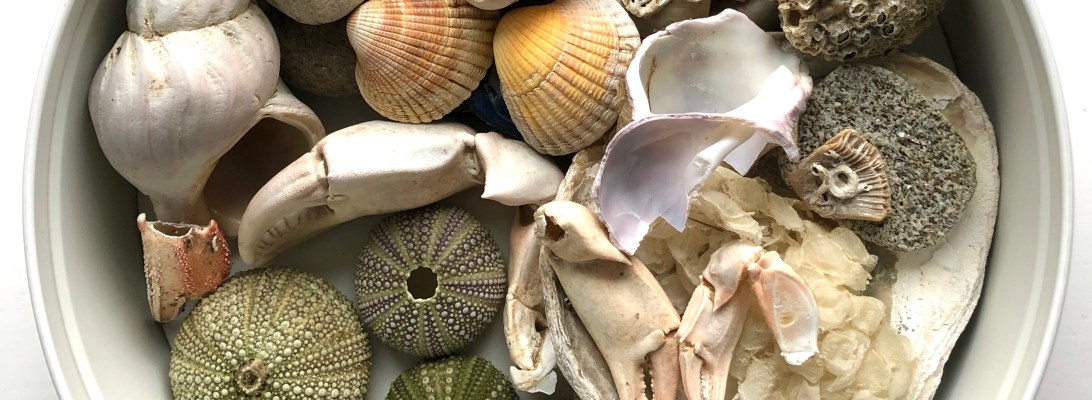
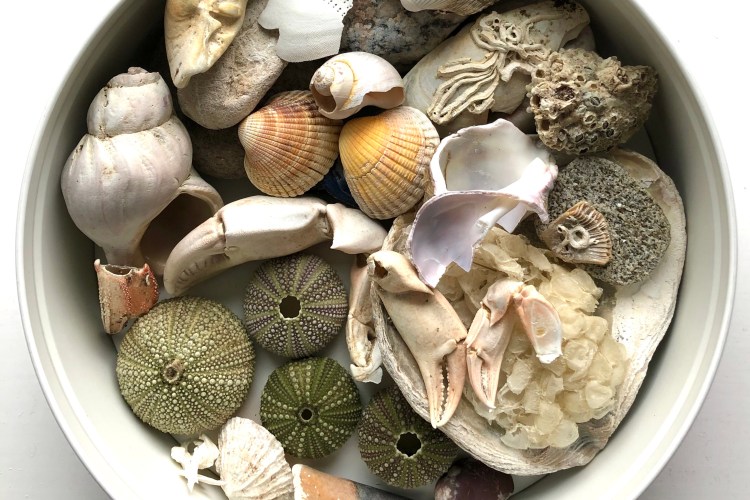
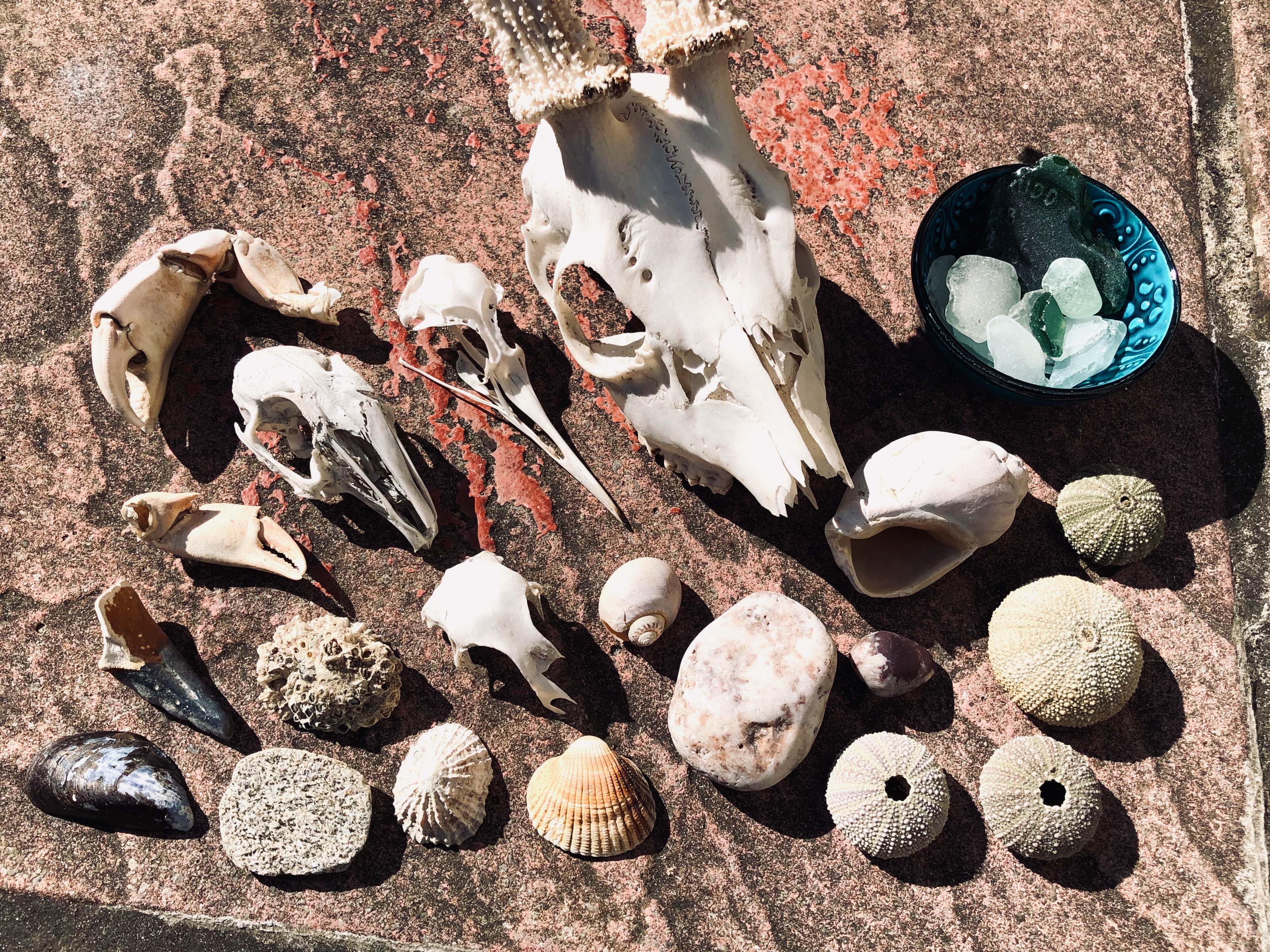
While cooped up indoors, I began to think of ways to stay connected to nature despite having to spend the majority of my time away from it. I’ve found that one of the best ways to do this is by bringing it indoors. I don’t mean catching birds or dragging in trees, but gathering small mementos. I’m lucky enough to live by the coast and I make a habit of collecting natural objects that I find on my daily walks. Together with other bits and pieces that I’ve collected from different habitats over time, I’ve made a nature table in my home that brightens up a room and provides a bit of wildness while I’m indoors.
Whatever habitats you have access to, there will be something that would make a good addition to a nature table. The great thing about wildlife is that everyone has a different relationship with it. My favourite things to collect are animal skulls – a male roe deer skull is pride of place on my nature table. Every item jogs a different memory in my mind. As well as being pretty to look at, a nature table is great for other senses too. I enjoy the tactile textures of frosted sea glass and rough sea urchin shells. Simply picking up these objects lifts my mood.
Author and illustrator of “The Wild Remedy” Emma Mitchell has struggled with anxiety and depression for most of her life, but insists that nature plays a huge part in helping her feel better. In a recent Instagram TV upload she shared the surprising healing power of plants for improving mental health. Plants produce oils called phytoncides which help the plant fight pathogens, but these same oils can benefit us too. When we inhale or touch these oils, our blood pressure, pulse rate and levels of cortisol (a stress hormone) go down. These small reductions can help us feel more relaxed and lift our mood. As well as house plants and garden flora, this also works with pots of supermarket herbs on the windowsill!
While plants appeal to our senses of smell and touch, one of the best senses for exploring nature is sound. A study at King’s College London found that listening to natural sounds such as birdsong improves mental wellbeing for over four hours. Recording snippets of audio on a phone during a daily walk is a great way to bring nature inside. Whether it’s woodland birdsong or crashing waves, natural sounds provide a relaxing background soundscape and, in my case, inspire creative thinking. For writers, it’s also useful to record any thoughts and observations you have while outside, so the details are fresh when you come to write them down later.
For those who can’t leave the house but have access to a garden, setting up some feeders will encourage more birds to visit and fill the air with their songs and calls. Another option is the brilliant Birdsong Radio app from the RSPB. This was launched after the huge success of the single “Let Nature Sing”, which for those who haven’t heard is a musical arrangement of some of Britain’s most loved but also threatened birds. As well as providing peaceful background noise, it’s a great tool for learning different bird calls. To listen to what specific species sound like, the RSPB website has small recordings on each bird’s profile.
The lockdown has forced us to change our usual routines and this has certainly brought its challenges. However, there is great enjoyment to be found in aligning ourselves to nature’s slower pace and exploring our local surroundings more closely. Despite the uncertainty, nature provides an opportunity to look after ourselves.
This article was originally published on Bloom in Doom magazine as part of my role as Nature Editor.
I had just finished dinner after a fairly uneventful day when I received a tip off from Steve – wildlife photographer, skipper and all-round marine mammal wizard – who told me there were bottlenoses on the way. I jumped into a down jacket and grabbed my camera. Luckily my daily walk can include a long stretch of rocky shoreline, which is infamous for its wildlife including the Moray Firth dolphins. Half a minute later I was slammed by an unexpected wind and I regretted not grabbing a hat on my way out. Although, I wasn’t sure how fast the dolphins were going and another half minute could be the make or break.
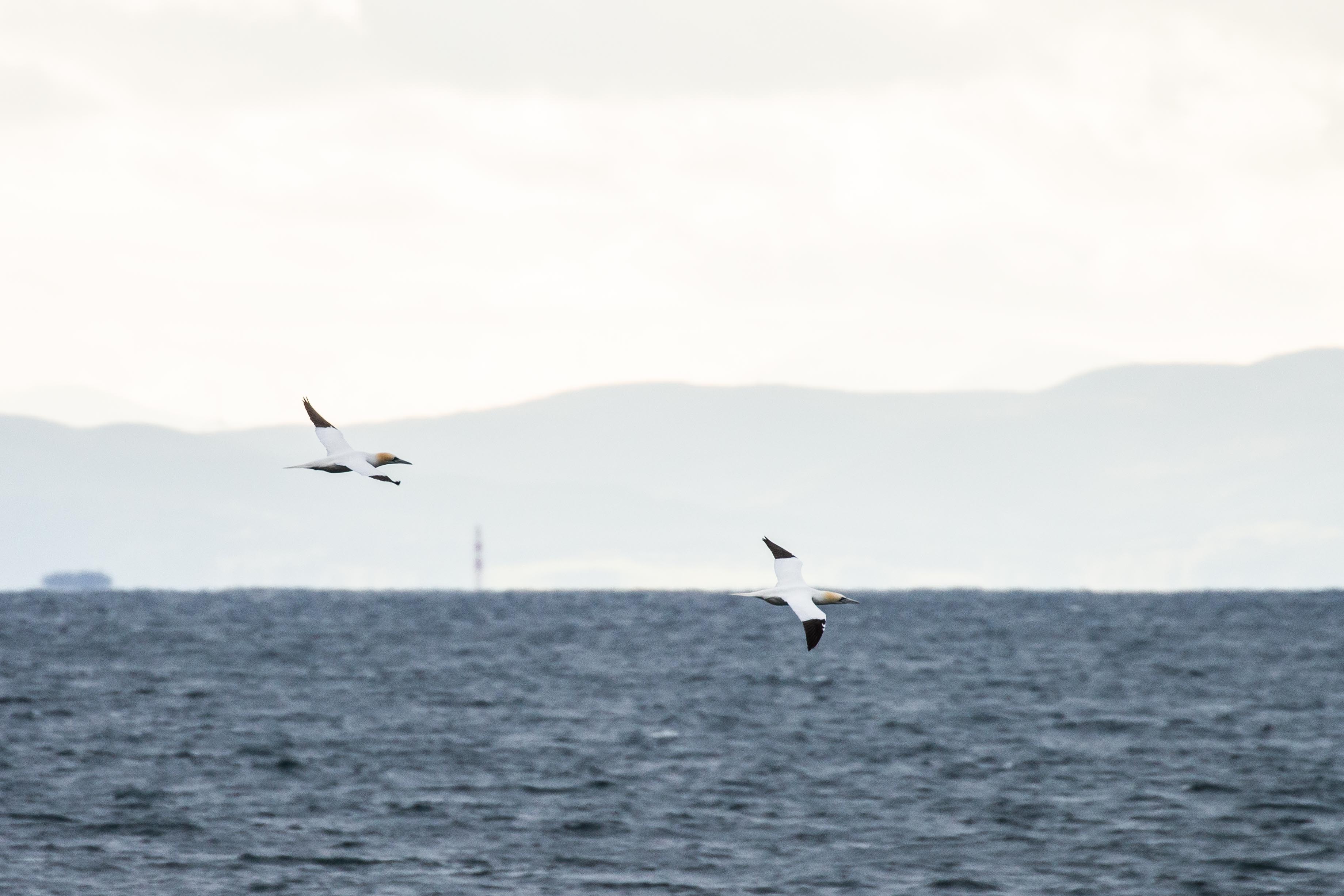
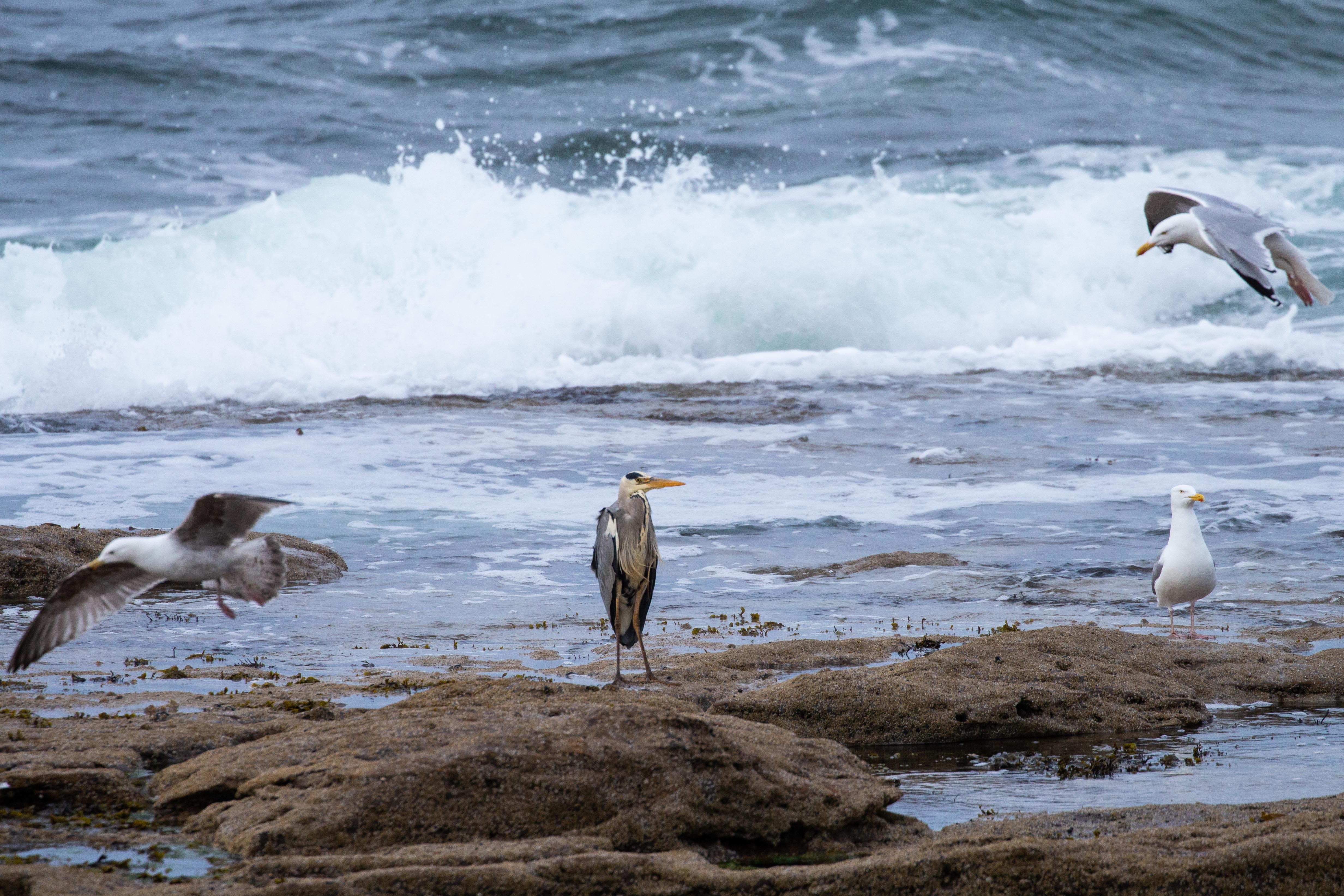
Keeping my two metre distance from Steve, we started scanning the water. He spied them far out, almost level with the next town, but we stayed put. If they didn’t turn north and swim further away, they would follow the coast and come straight past us. There was still lots to photograph while we waited. Groups of gannets – easily one of my favourite birds – were diving just offshore and a grey heron was settled hunch-shouldered on the rocks, surrounded by the usual mob of herring gulls and oystercatchers.
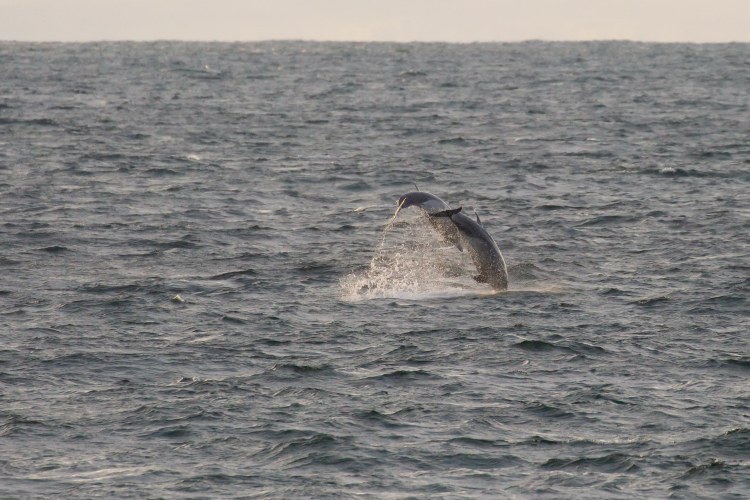
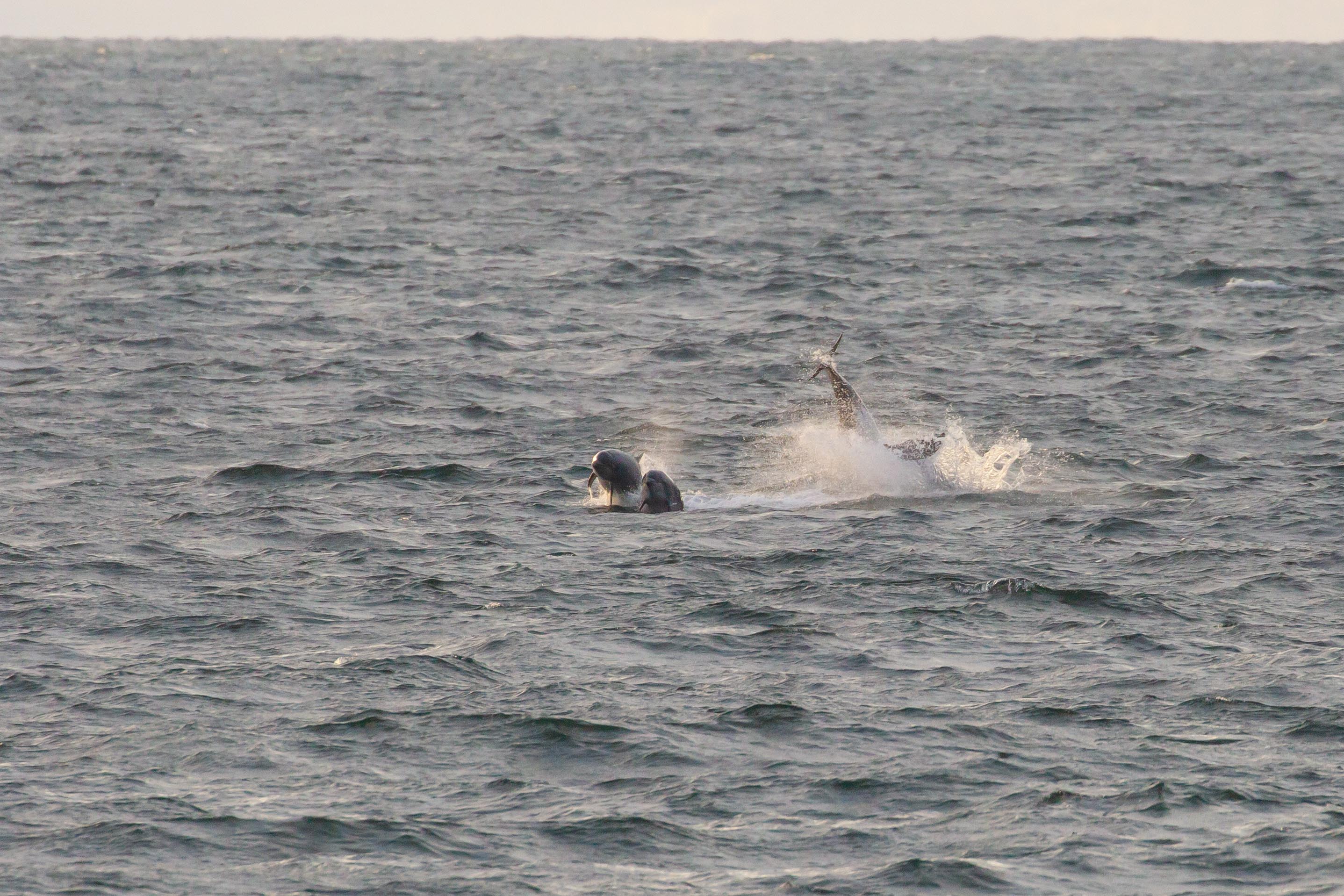
Suddenly the dolphins appeared again, much closer this time. They began to breach, leaping one, two or even three at a time. Photographing them felt a bit like playing Whack-a-mole – just when I thought I’d caught one, it had already landed with a splash and another had sprung up somewhere else. Once, two jumped together in perfect synchronicity, and no sooner had they landed than another pair took their place in the air. As so often happens, I was trying so hard to get the shot that I occasionally missed some of the action. But, when animals bigger than most grown humans are flinging themselves out of the water and performing acrobatic stunts, it’s almost impossible not to lift the camera and watch through the viewfinder. I find there’s nothing more enjoyable about wildlife photography than the unpredictability.
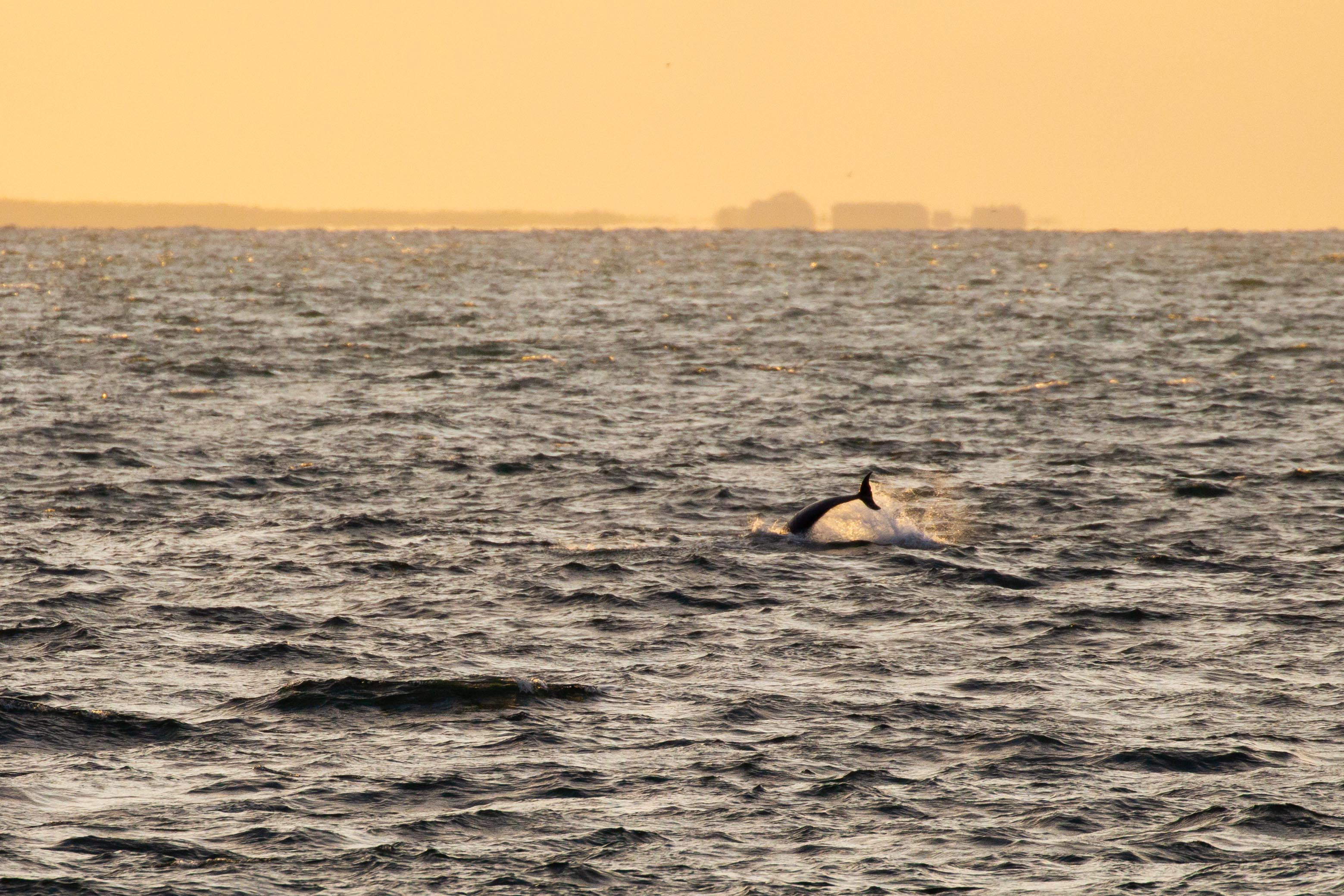
The cold was nibbling my face but there was no way I’d go home for my hat now. Dolphins were jumping in multiple directions, and all of them heading towards the sunset. We hiked up to the headland for a higher vantage point. As the dolphins got closer to the sun, the water streaming from their bellies mid-leap turned golden. Even with the naked eye you could spot them between waves from the clouds of shimmery spray erupting from their blow holes. Every so often there’d be a breach, but they were gradually heading further out. Still, Steve had never known them to linger for so long in one place. I was pleased not just to watch them but to know there was plenty of food to keep them there.
The sun finally set, casting a bright orange glow over the water. It was moments like that when I knew I’d made the right decision to move to Scotland. Sitting on the grass, shivering in the cold and watching dolphins breaching out at sea.



















 rebeccaonthewing.com