Chesters – Day Three

Today was the toughest day for my feet, but also the most rewarding. We set off east away from Chesters on a ten-mile hike to the gravel pits of Branton Nature Reserve, though the journey was just as fulfilling as the destination.

IMG_0266-2

After the trials of crossing the Chesters Burn without getting wet, we ascended towards Ewe Hill, where lapwings zoomed with seemingly erratic coordination, and skylarks serenaded us from overhead, in a hovering flight they can maintain for the approximate equivalent of running five marathons back to back.

On the way down Turf Knowe, we spotted two hares dashing across a field, accompanied by the frustrated squawking of a distant rookery. We also stumbled across a common frog in a puddle, keeping its numerous frogspawn company.

IMG_0358-2

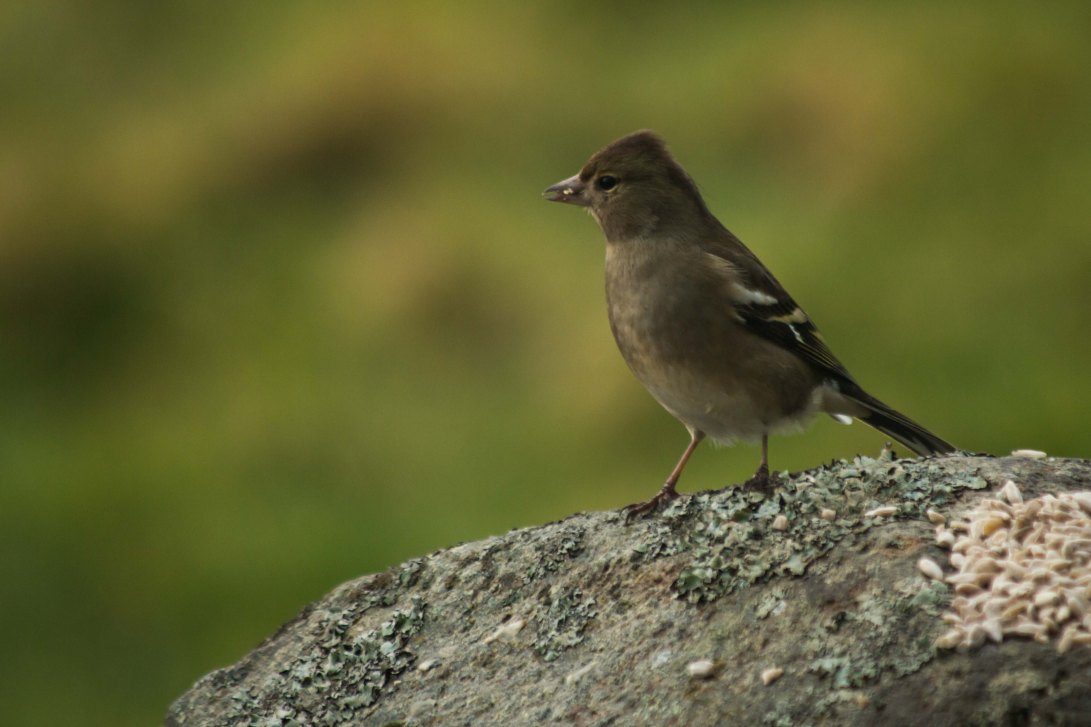
Soon, we reached the village of Ingram, situated on the edge of Northumberland National Park. Here the birdlife transformed to an orchestra of finches, tits and some special guests, including two male yellowhammers, a bustling group of siskins and some striking chaffinches in their immaculate breeding plumage. As we left Ingram behind, we followed the River Breamish to the gravel pits to do a spot of bird watching in the hide overlooking the lake.

Since the 1920s, the Breamish Valley was used for sand and gravel extraction, including gravel from the riverbed, which was used to surface roads. After the area was restored to agricultural land, concrete company CEMEX asked for permission to extract and was denied, as it was thought the extraction would be taking place too near to the National Park. However, in 1993, CEMEX was granted permission to extract, on the one condition that the company also converted the area to a nature reserve that would “complement and enhance the rural landscape”, ultimately creating a landscape that would improve the area’s biodiversity and provide a stable aquatic environment for many species.

As we sat and watched the lake from the bird hide, we spotted a broad variety of waders, geese and passerines, or songbirds. Greylag geese, goldeneye, wigeon, tufted duck and many more were bobbing about on the still water. Interestingly, instead of the usual drab colouring used for camouflage when on the nest, female shelducks have the same striking green head and bright red bill as the male. The reason for this is the bird’s choice of nest, which is often in rabbit warrens instead of out in the open. This makes female camouflage unnecessary.

Another highlight of our time in the hide was hearing the first chiffchaffs of the year, which arrive from their wintering ground in sub-Saharan Africa in mid March, staying until around October.

Once the drizzling rain had subsided, we did a spot more tracking around the lake. There was an otter spraint by the stream, a sign of territory marking, the square pad of a badger print and several roe deer tracks. While sheep prints – which were abundant virtually everywhere – are rounded, deer prints meet at a point.

By then the best of the daylight had passed, so we made our way back to Chesters, pockets laden with treasures collected during the day. Along the way we tried our luck spotting some adders. As it was still drizzling and the sun had gone in, chances of a sight of basking adders was slim. However, we managed to find two that were catching the last rays before returning to cover. After such a long walk to find them, I’m glad a few stayed out just a little longer.

IMG_0582-2IMG_0238-2

Species seen/heard:

Adder Vipera berus Bank vole Myodes glareolus Black-headed gull Chroicocephalus ridibundus Blue tit Cyanistes caeruleus Canada goose Branta canadensis Carrion crow Corvus corone Chaffinch Fringilla coelebs Common chiffchaff Phylloscopus collybita Common frog Rana temporaria Common toad Bufo bufo Curlew Numenius arquata Eurasian siskin Spinus spinus European mole Talpa europaea European hare Lepus europaeus Fieldfare Turdus pilaris Goldcrest Regulus regulus Goldeneye Bucephala clangula Goldfinch Carduelis carduelis Grey heron Ardea cinerea Greylag goose Anser anser Lapwing Vanellus vanellus Lesser black-backed gull Larus fuscus Long-tailed tit Aegithalos caudatus Mallard Anas platyrhynchos Meadow pipit Anthus pratensis Moorhen Gallinula chloropus Oystercatcher Haematopus ostralegus Pheasant Phasianus colchicus Pied wagtail Motacilla alba Red-legged partridge Alectoris rufa Reed bunting Emberiza schoeniclus Robin Erithacus rubecula Rook Corvus frugilegus Shelduck Tadorna tadorna Skylark Alauda arvensis Snipe Gallinago gallinago Song thrush Turdus philomelos Treecreeper Certhia familiaris Wigeon Anas penelope Woodpigeon Columba palumbus Wren Troglodytes troglodytes Yellowhammer Emberiza citrinella
Chesters – Day Two

As it happened, I slept extremely well last night, so I missed out on the tawny owl calling from the Chesters bothy roof. The morning was bright, and as I peered out of the cocoon of my sleeping bag I felt the familiar pull of the wild. The combination of hushed soundscape and pine woodland packed with secrets was enough to lure me out of bed.

IMG_0465-2

As I ate breakfast I had the pleasure of watching a bank vole feeding on the sunflower hearts Heather had left out. He was a challenge to photograph as he only stayed in view for a second, but it was impossible not to love his curious expression as he peered through the window.

IMG_0476-2

After preparing the bothy for the expeditioneers’ arrival, Cain and I headed back through the Breamish Valley to meet them. Although no red squirrels this time, we came across two dead pheasants. They looked incredibly fresh with no obvious wounds. The only indication of possible death was the presence of downy feathers in the birds’ claws, suggesting the frisky males had fought to the death. It was a great opportunity to photograph a pheasant’s feathers up close – there are so many beautiful colours.

IMG_0185

When we returned, Heather explained the itinerary for the next three days and introduced the expeditioneers to camera traps and Longworth traps, recording equipment used to live trap small mammals. Finally, we all found Chesters bothy on a map of the Cheviots.

Just before the sun began to set, we all headed out into a patch of woodland just beside Chesters, where we used the rest of the daylight foraging for signs of the forest’s inhabitants. There were abundant droppings, and although most belonged to sheep and pheasants, a prominent sprinkling on a mound of grass beside an extensive burrow indicated rabbits. Later, we saw different droppings that were more elongated, suggesting hares were also present. Among other treasures, we found rabbit bones, a red squirrel drey – a nest built of twigs, dry leaves or grass – the chest plate of a woodpigeon and feathers belonging to a buzzard and a long-eared owl.

After a thorough forage we suddenly realised the sun had gone, so we hurriedly set up two camera traps, one in the woods to hopefully capture roe deer and the other beside a clump of frogspawn to see if the parent showed up.

Once the traps were set we returned to the bothy. Heather went to fetch wood for the fire and returned with a sleeping moth. After searching through the moth ID book we discovered it was a herald moth. I’d never seen this species before, and took the opportunity to use my macro lens and accentuate its rich copper-coloured wings. After returning the moth to the woodshed to avoid disturbing it, we had an early night in preparation for our long walk tomorrow in search of elusive adders.

IMG_0450-2

Species seen/heard:

Bank vole Myodes glareolus Blackbird Turdus merula Chaffinch Fringilla coelebs Coal tit Periparus ater Goosander Mergus merganser Grey wagtail Motacilla cinerea Great-spotted woodpecker Dendrocopos major Herald moth Scoliopteryx libatrix Mistle thrush Turdus viscivorus Oystercatcher Haematopus ostralegus Pheasant Phasianus colchicus Red-legged partridge Alectoris rufa Robin Erithacus rubecula Snipe Gallinago gallinago Song thrush Turdus philomelos Tawny owl Strix aluco Woodcock Scolopax rusticola Wren Troglodytes troglodytes

Puffballs, Prints and Pellets

Due to a lecture cancellation, Zahrah and I seized the day and paid Watchtree Nature Reserve a second visit. As the sun was actually shining, we made haste before the English climate returned to its usual cheeriness.

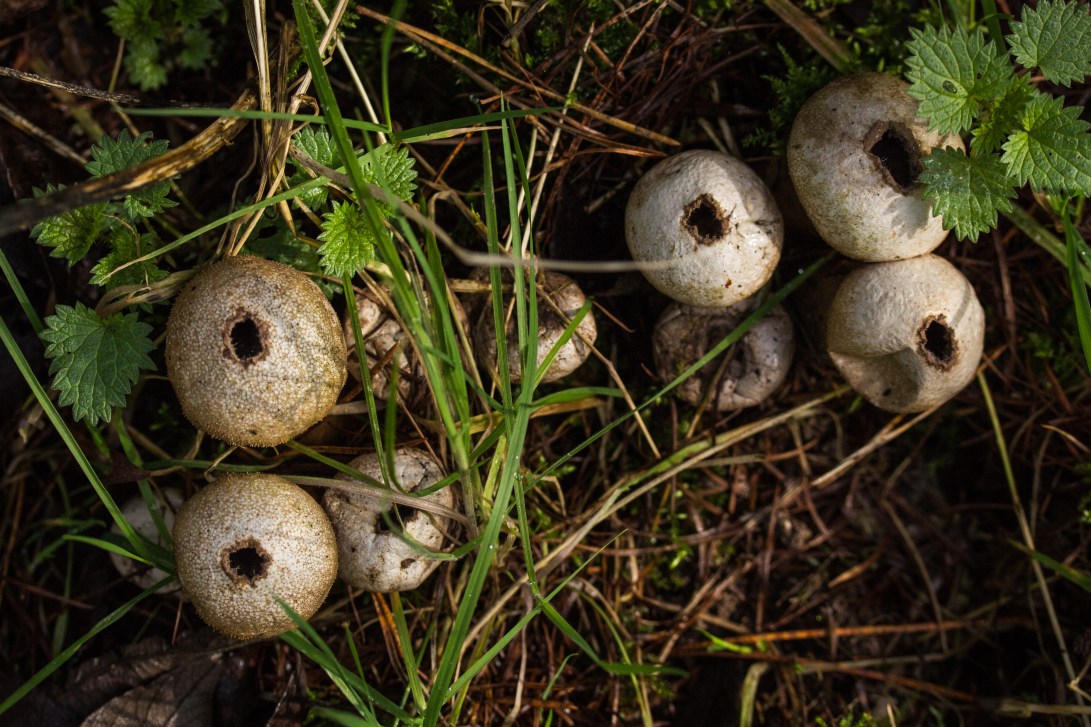
As we’d found several roe deer skulls at the reserve last time, we headed straight to Pow Wood and began to forage. My first find was a cluster of puffballs (Lycoperdon sp.). I find these little guys are extremely difficult to identify, but they’re always fun to see and remind me of terrestrial sea urchin shells.

img_9893

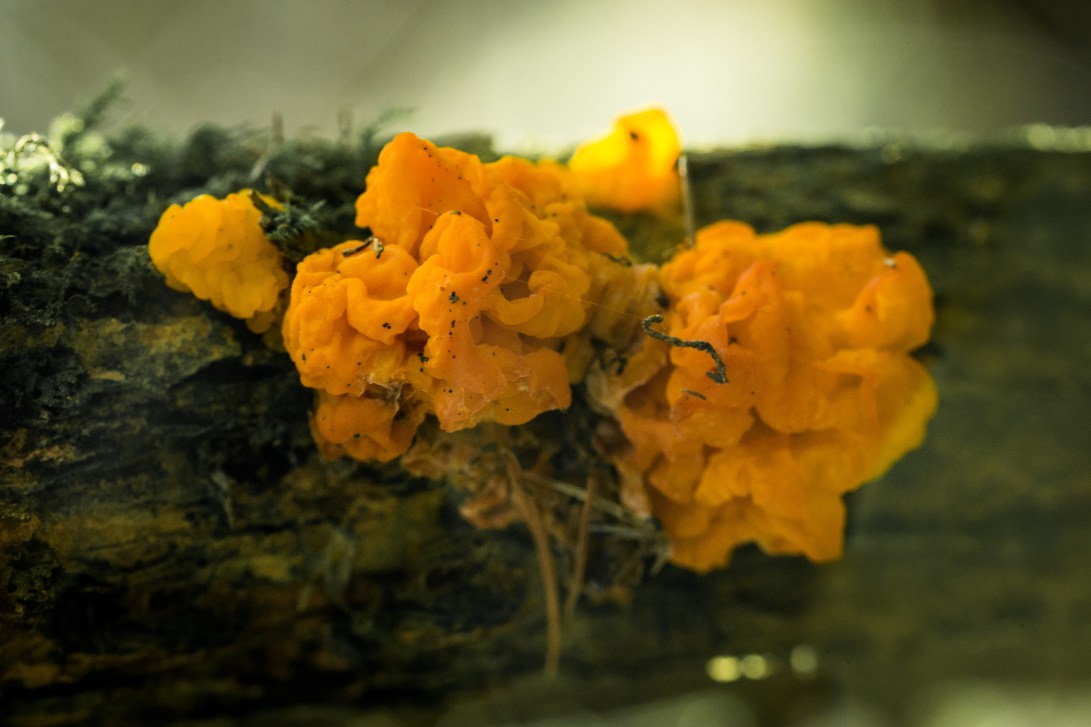
Further into the wood I was extraordinarily excited to identify more fungi. This ID lark is slowly getting easier! I found a patch of jelly ear (Auricularia auricula-judae) on some dead wood, and wrestled for some time with said dead wood to get close enough for my macro lens to work its magic.

img_9935

Shortly afterwards, I found several violent red blooms amongst the green foliage. The only scarlet elf cup (Sarcoscypha austriaca) I’d seen before was the size of my little fingernail, so to see some two inches wide was fabulous.

img_9955

Finally, my eye caught on a bright patch of yellow as we untangled our clothes and hair from the low-hanging branches of the pine trees and, completely forgetting my wildlife voice, I shrieked “witches’ butter!”. In my defence, Tremella mesenterica is a really intriguing fungus and it’s the first I’ve seen up close.

img_9971

In addition to our success with fungi, we also did some pretty good tracking. Putting the tricks we’d learned from Alex to the test, we found some deer tracks in the mud. As we found roe deer (Capreolus capreolus) skulls in Pow Wood on our last visit, we deduced that the same species had left these prints. Our suspicions were confirmed when we saw a flash of white and watched as three female roe deer darted into the forest, white bob tails stark against the brown and green of the trees.

img_9979-2


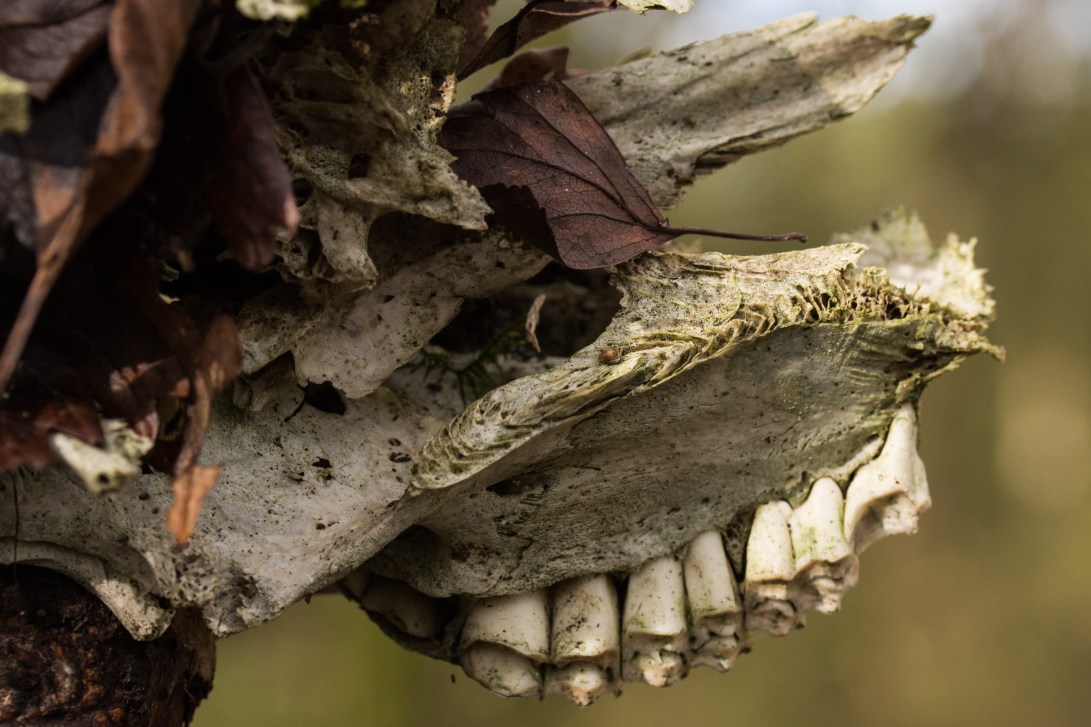
Incidentally, I didn’t realise that I was on a walk with Hawkeye. In just a few hours, Zahrah found two roe deer skulls, what we suspect was a sheep skull, and a headless skeleton with beautifully pristine white vertebrae. I guess I’d been too distracted by the fungi. We scooped up the bones into a plastic bag, ready to douse them in hydrogen peroxide when we got back home.

img_9947

Despite my ineptitude at finding skulls, I did find a collection of pellets at the foot of a tree along with a discarded white egg shell. The combination of these two signs suggested that the tree was home to a nest. After some research, I discovered that barn owls (Tyto alba) are known for their stark white eggs and dark, charcoal grey pellets, so perhaps this was our bird.

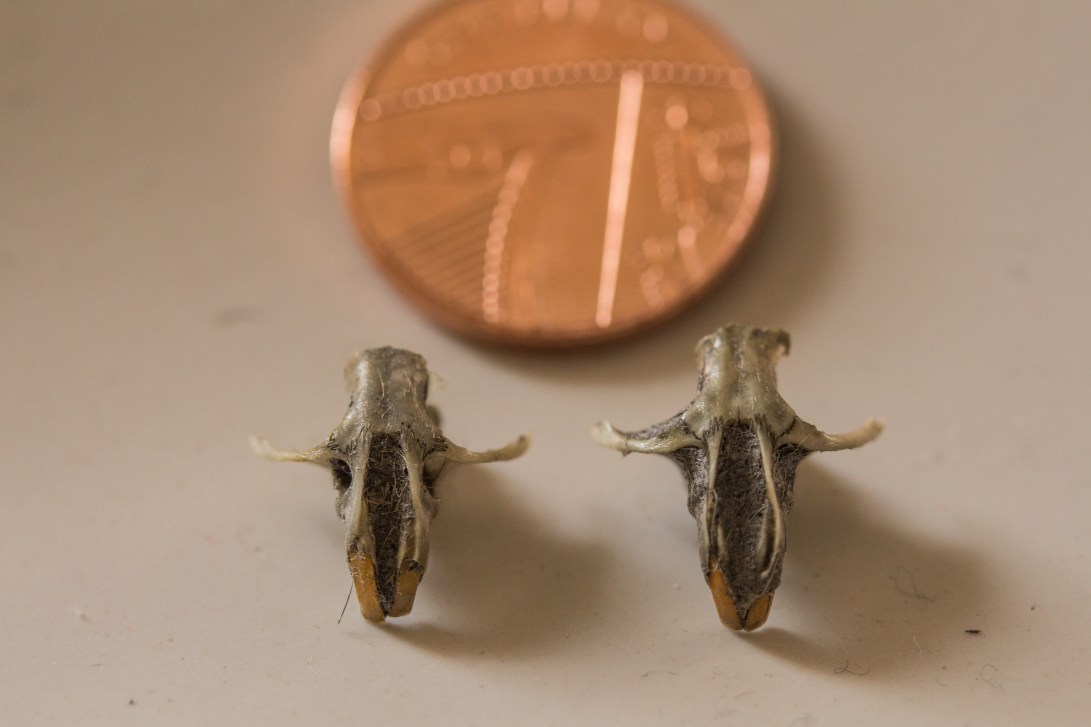
Back at the house, I dissected the pellets and in just three I recovered the remains of six rodent skulls, seven mandibles (lower jaws), several loose rodent incisors and a variety of leg bones. I attempted to identify who the skulls belonged to, but sadly they all looked the same. Still, it was fascinating to see how many kills the owl had made; there were at least two skulls in each pellet. This indicates that the bird was hunting regularly, as a barn owl usually regurgitates 1-2 pellets each night (Barn Owl Trust).

In addition, the egg shell I found had no yolk, suggesting the chick hatched naturally and wasn’t predated. If this were the case, the edges of the shell would have been pushed in and parts of the membrane would still be visible.

img_0005img_0007img_0002

In short, it was a very successful day’s foraging! It’s amazing how much you can see when you know what to look for.

Here For Your Entertainment

On Friday we went on a field trip to The Lake District Wildlife Park. In Alex’s lectures we’ve been studying the behaviour of animals in captivity, so visited the park to see if we could see any of the same signs in the animals they kept there.

img_9729

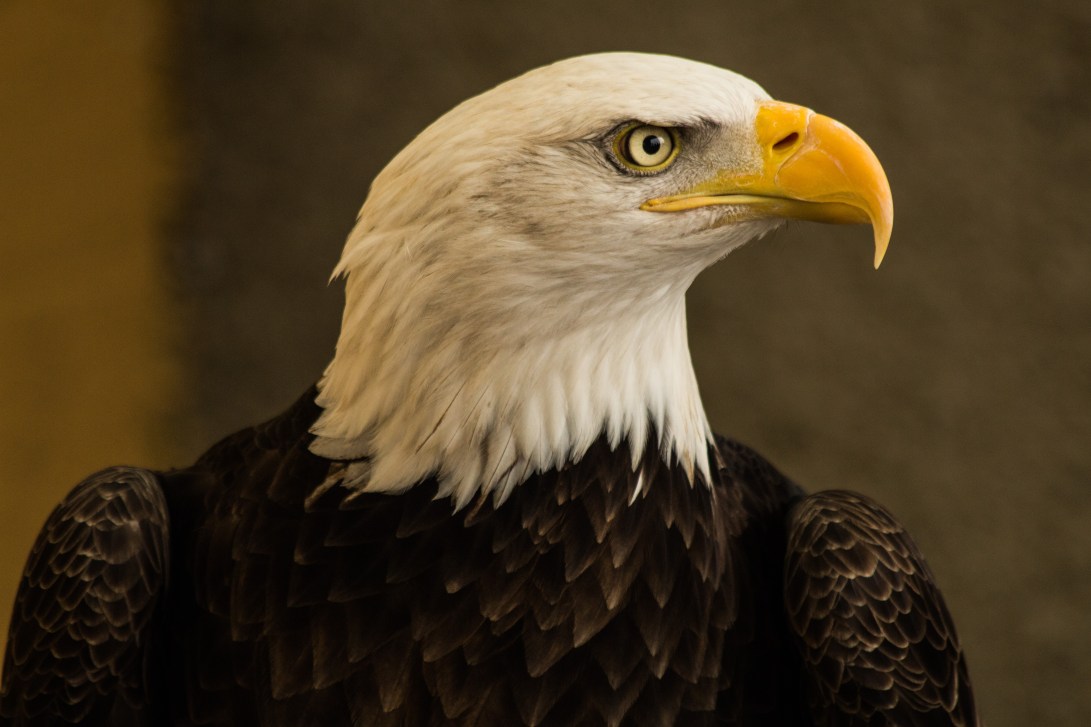
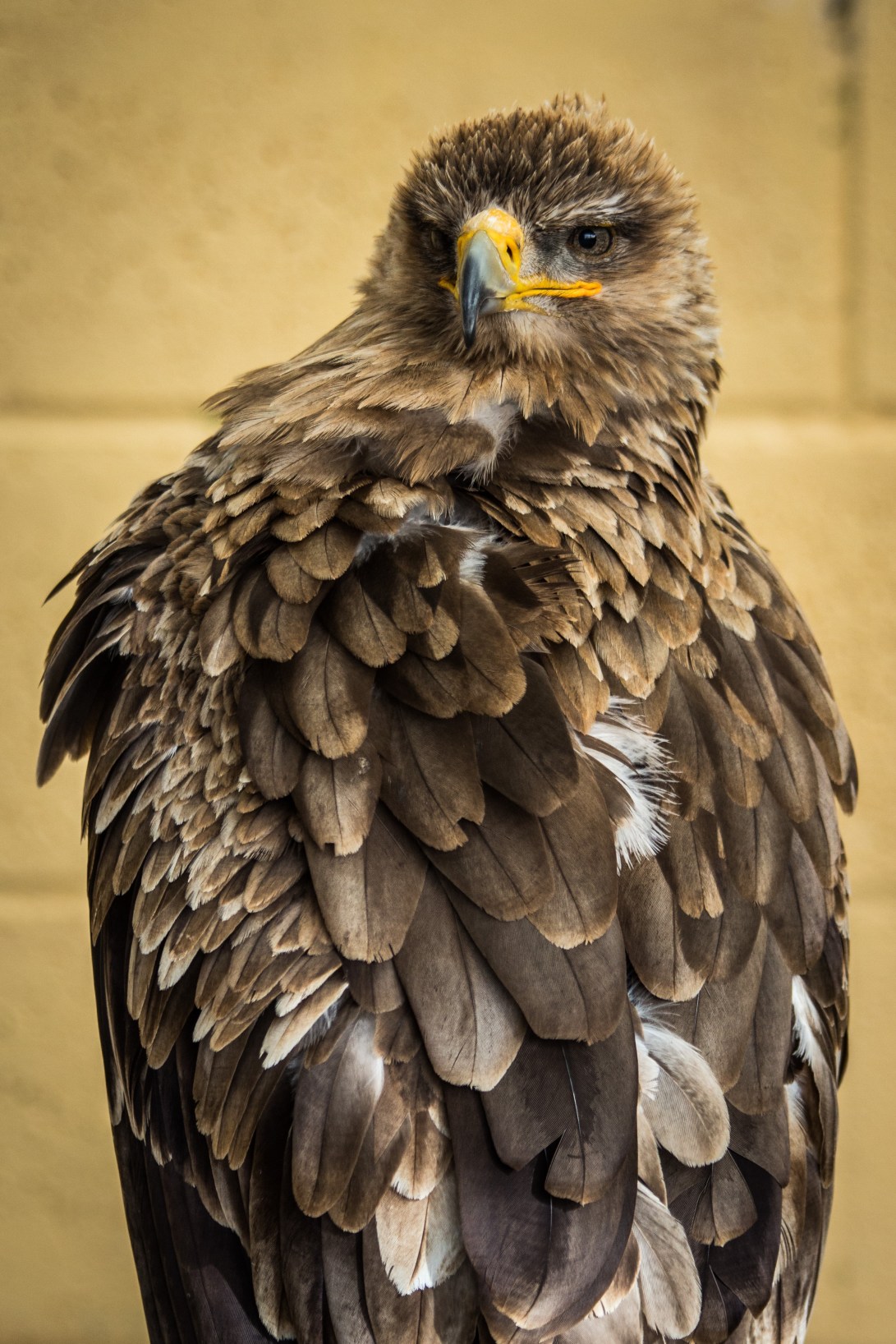
It hadn’t been too long since my last visit to a zoo, but maybe it was the presence of four other wildlife students that instilled different feelings in me this time. The small size of the enclosures seemed more obvious and I couldn’t help feeling uneasy as I watched the lynx pace up and down and the raptors attempt to fly off the metal perches they were tied down to. I could photograph the bald, golden and tawny eagles in vivid detail, but I knew deep down it was cheating and the photos I was taking were no different to those of hundreds of other visitors.

img_9778

The reason I love photography is it captures a moment in time that cannot be exactly replicated ever again. It freezes a memory and provides a very intimate insight into the photographer’s mind. So as I stood in front of a tethered bird that couldn’t escape my camera or my gaze, I soon realised this was not how children should experience wildlife.

Ticking off birds from my wish list was part of the charm that got me interested in wildlife. It was going out, tracking a bird and watching it live its life that gave me a sense of pride. Not only had I had an adventure in the great outdoors, but I’d discovered a species I’d never seen and sometimes got photos to show for it. During my time on the Isle of Carna we attempted to track down golden eagles on a boat trip on Loch Sunart. We were extremely lucky to get a glimpse of the magnificent bird as it perched high up in the tree canopy.

Anyone with £8.95 in their pocket can go to the Lakes Wildlife Park and see a golden eagle, but where’s the fun in that? If the same children who see a captive golden eagle were to see one in the wild, I’m certain that experience would last a lot longer in their memory.

img_9780

Of course, I’m just talking about British wildlife. None of us in the UK are going to see a wild red panda or lar gibbon no matter how impressive our tracking skills, so in that respect zoos offer children the chance to see what wonderful animals roam our planet. While this is all well and good – and with the rate of extinction as rapid as it is, this may soon be the only way that the next generation can see certain species in the flesh – it’s just not “wild” life. And isn’t that the point? What next, we round up indigenous tribes and keep them in pens for people to stare at? Although some zoos have done wonderful work for conservation and provide a safe place for endangered animals to live unharmed, should it be up to us to decide whether a long, captive life is better than a short, free one?

img_9876

Dear Old Ed

I was lucky to find myself in beautiful, beautiful Edinburgh again this weekend, a city I would happily spend every weekend in. As I emerged from Edinburgh Waverley onto Princes Street I was filled with the usual excitement that comes with arriving into Scotland’s capital. Immediately we headed to the City Cafe just off the Royal Mile, our new favourite food haunt. I gorged on scrumptious ribs and sweet potato fries, which refuelled me nicely after the train journey.

img_9409

Deep down I felt embarrassed looking like the most obvious tourist in the world as I clutched my camera and shivered in what I thought was cold weather. I’ve been to Edinburgh many times, but it still feels new on every visit. There’s always a shop I hadn’t been in or a beautiful building I haven’t gazed up at. I’ll never take this city for granted, so will never tire of photographing it.

img_9431img_9432

As usual the streets were buzzing with noise; bustling shoppers and laughter spilling from the nearby pubs, all accompanied by the steady hum of bagpipes. I’ve asked multiple Scots if they ever get bored of hearing the bagpipes and they’ve all said no. If I were a native I don’t think I would either – the sound reminds me of old holidays and unforgettable days out.

img_9425

img_9420

All too soon it was morning again and time to get the train home. My weekend visit was only fleeting, though I’m sure a month-long stay would have felt just as brief. Here’s to the next excuse I get to pay a visit!

Reykjavik – Day 3

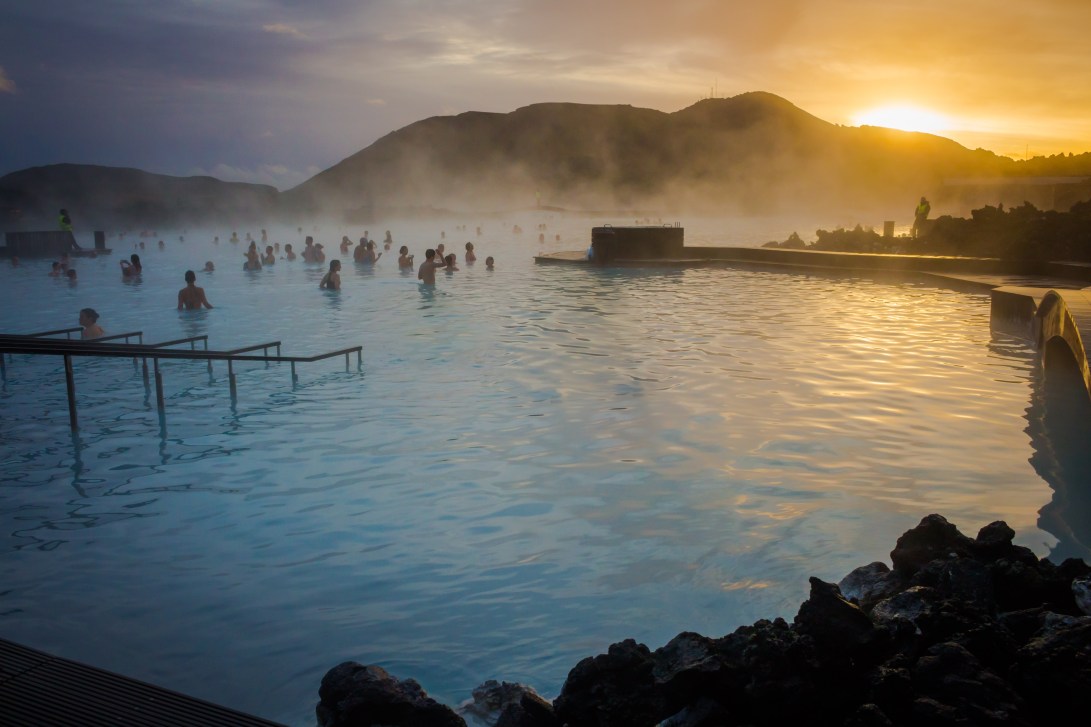
Today was probably the highlight of the trip for me – the blue lagoon. As we were waiting for the bus to pick us up it was spitting with rain, the first bad weather we’d had. However, if it was going to rain, I’d rather it did it while we were soaking wet and swimming anyway.

As it turned out, it stopped raining when we reached the lagoon. We were ushered inside and wandered off to our separate changing rooms. We were given strict instructions to put liberal amounts of conditioner in our hair because the salts in the lagoon water would dry it straight out.

img_8963

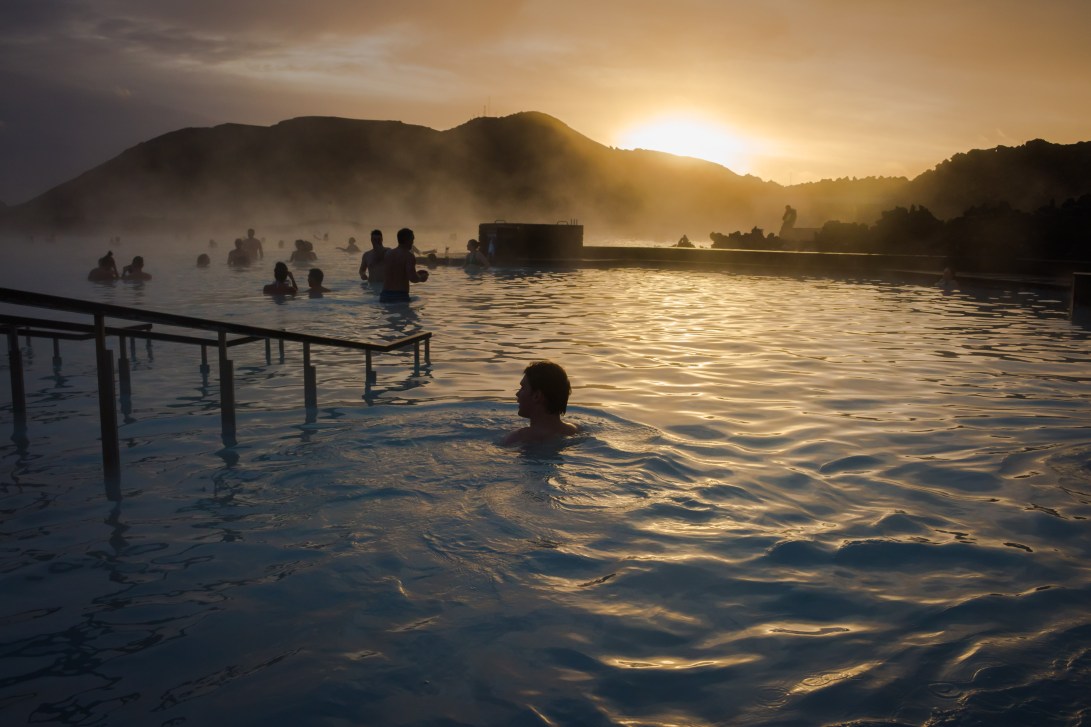
After only getting marginally lost we got out of the maze-like changing rooms and made it to the lagoon. I immediately fell in love. It was the most beautiful colour I’d ever seen, what I can only describe as candyfloss blue, spoiled only by the dark bobbing heads of other tourists. As I waded in, my body disappeared below the translucent surface and I found myself in nearly 40° water. If I closed my eyes I could have been in the tropics, but with my eyes open the hot steam meeting the cold air reminded me where I was.

img_8933img_8955img_8944

It was one of the most romantic things I’ve done, swimming in one of the world’s wonders with the most special person in my life. I was initially reluctant to believe the lagoon had spiritual healing powers as I’d read, but as we bobbed about I felt the most relaxed I’d been in a long time.

There was a bar half-submerged in water, so you could lean on the counter and sip your drink while still floating chest-deep. We got cherry slushies, which were the tastiest I think I’d ever had. Mind you, in my state of ultimate chill anything would have tasted amazing.

Once excessively prune-like and ravenous, we showered and headed to the restaurant. Looking inside gave me a flashback to the Ritz – I’d got very lost one time – so we decided to get paninis from the much cheaper cafe instead, which were also very good.

img_8970

Once back in Reykjavik city centre, we headed to dinner at the Lebowski Bar, which boasted a broad range of burgers and White Russians as well as the Big Lebowski playing on loop. I tried a white chocolate White Russian, but wasn’t a huge fan. The burger however, honey-glazed bacon and cheese, was pretty special.

img_8987

The slight downer of the day was the email we received from Reykjavik Excursions saying that the Northern Lights tour had been cancelled tonight due to bad weather. Still, it’s a common fact that the aurora borealis are notoriously difficult to see, and much more experienced visitors than us hadn’t yet had the privilege of a sighting, so it was a long shot seeing in our first short visit. All the more reason to go back to beautiful Reykjavik!


Reykjavik – Day 2

When I looked out the balcony window this morning everything was blue. It turns out that Iceland is actually magical. With recharged camera batteries we headed out to explore.

img_8606

The plan was to go straight to the shops, but down a side street I glimpsed a mountain and the sea. It was decided instantly that we’d put shopping on hold and go explore.

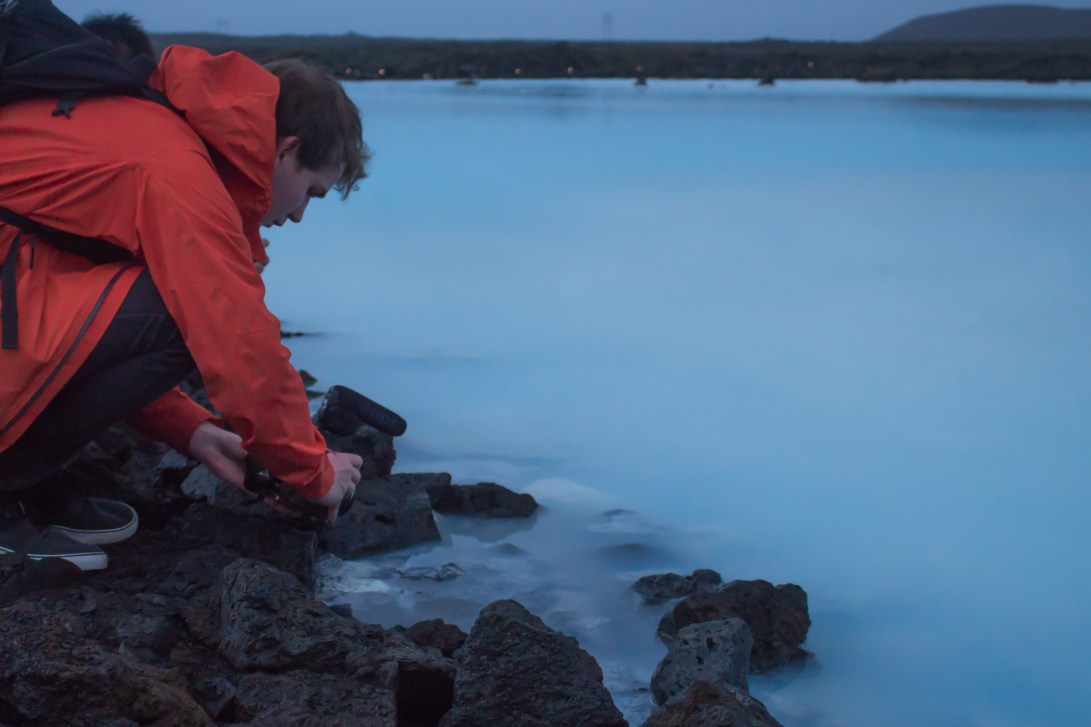
The natural light of Reykjavik is beautiful. Even at 11am there were still the diluted pinks and blues of early morning. We walked over the rocks and photographed the mirror-still water. Curse Iceland for making a cliche the only appropriate way to describe it, but the dirty old ocean looked like milk as it rippled against the shore. It was stunning, especially with Sólfarið (The Sun Voyager, below) standing proud against the city backdrop.

img_8665

By this point we were getting peckish so we found a cute little creperie along the main street. Doused in Nutella, bananas and peanut butter, it filled the gap nicely.

Rejuvinated, we hit the shops. I bought gifts for family and friends then realised just how much money I’d spent. Iceland is expensive, as I’d been told many times over, but somehow being in such a beautiful part of the world made it all okay.

img_8722

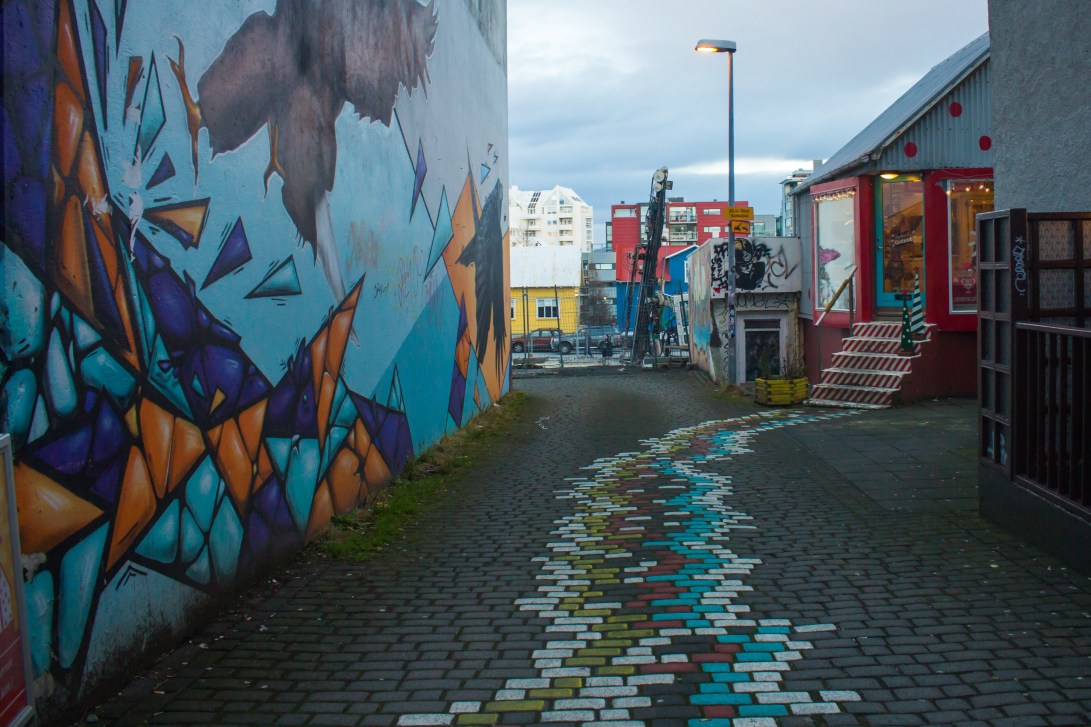
One thing I loved about Reykjavik was the street art. Nothing like the (mostly) ugly, scribbled graffiti that adorn the walls of London, Reykjavik buildings were covered in every colour imaginable. Giant painted eagles swooped overhead, while elsewhere a huge image of Frankenstein’s monster stood tall. It was a street photographer’s dream, and I couldn’t refuse the opportunity to capture my favourites.

img_8729img_8708img_8745

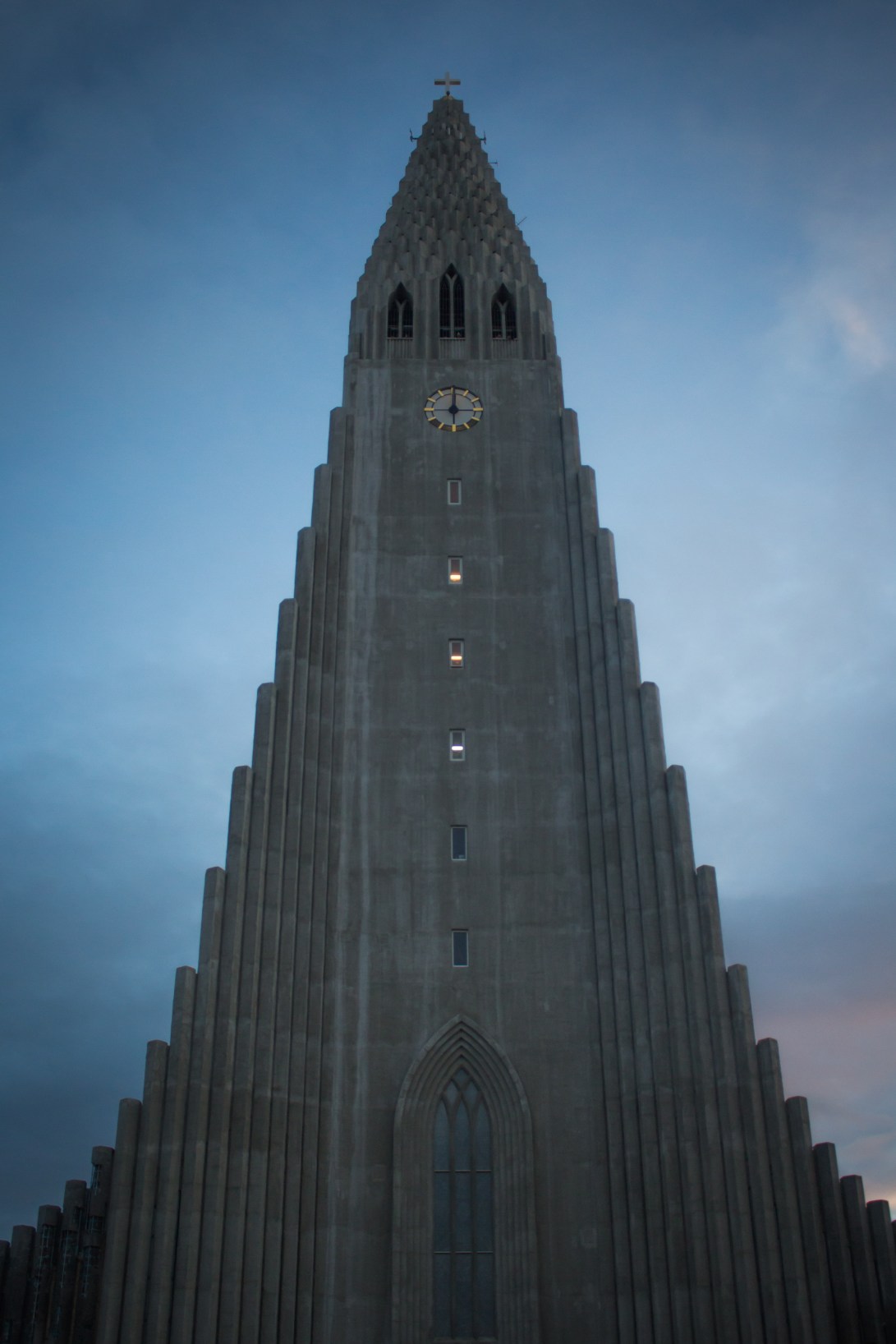
We’d glimpsed Hallgrímskirkja, the tallest church in Reykjavik that dominates its skyline, so decided to get a closer look. The colossal structure looked more like a spaceship than a place of worship, standing 73m tall. The sun was beginning to set so we stayed for some photos. Once the light had faded it began to get chilly so we headed back into town and, after stopping off at the Noodle Station for dinner, chilled out in the hotel room.

img_8795

Later on we went on one of our booked trips, to hopefully go and see the Northern Lights. We got all wrapped up and set off on the bus. For a while it was a struggle to find any breaks in the cloud, but we eventually got off in the middle of nowhere and set up tripods.

While we were waiting we got chatting to this lovely nurse from New York. She was interested in photography too, and we ended up talking about the migrating waxwings.

We waited eagerly for several hours but were eventually forced to abandon ship and get back on the bus. Naturally we were both pretty disappointed, but the Northern Lights are infamously sneaky and we can go again tomorrow night, so hopefully we still have a chance.

Reykjavik – Day 1

Taxi to the station, train to Glasgow, shuttlebus to Glasgow airport, plane to Keflavik and shuttlebus to Laugavegur, Reyjavik.

The journey to Keflavik airport was far quicker than I imagined – less than three hours from Glasgow. As soon as we stepped off the plane we were hit by a gust of Icelandic wind, but despite the cloud cover I was far from cold. Ironically, I was warmer here than in Carlisle.

I noticed immediately that I could take advantage of the beautiful light here. Although the sun rarely shone directly and there were few hours of daylight, the sky always seemed to have a pastel filter over it – sometimes pink, sometimes blue. It was beautifully wintery and I couldn’t wait to go and explore.

After a walk downtown and a traditional dinner of Plokkfiskur, otherwise known as “fish mash” (something I would definitely have again), we headed back to the hotel ready for our first busy day.

img_8531

Sunset Sunday (on Tuesday)

Yesterday my lovely boyfriend cooked me sausages and the most incredible fried bread for breakfast because the horrid lurgy that had been lingering menacingly had finally reared its ugly head. For the majority of the day we watched Sherlock and ate the cake we were up until 2am making the previous night, while I wheezed and sniffed.

By evening I was up for a walk, so we decided to head out to Talkin Tarn Country Park in Brampton, Cumbria. It was a spot I’d heard good things about but never been to, and it was truly beautiful. As the day faded and the sun sunk into shadows, the rich blue evening sky illuminated the water, ruffled occasionally by the passing rower. A wind nipped my fingers and I pulled on my gloves with slightly exaggerated enthusiasm; I couldn’t wait for winter to make its appearance so I could dig out my finest wooly scarves and bobble hats. For now though, all I needed was my trusty Berghaus jacket to keep me warm as we made our way round the lake.

img_7187

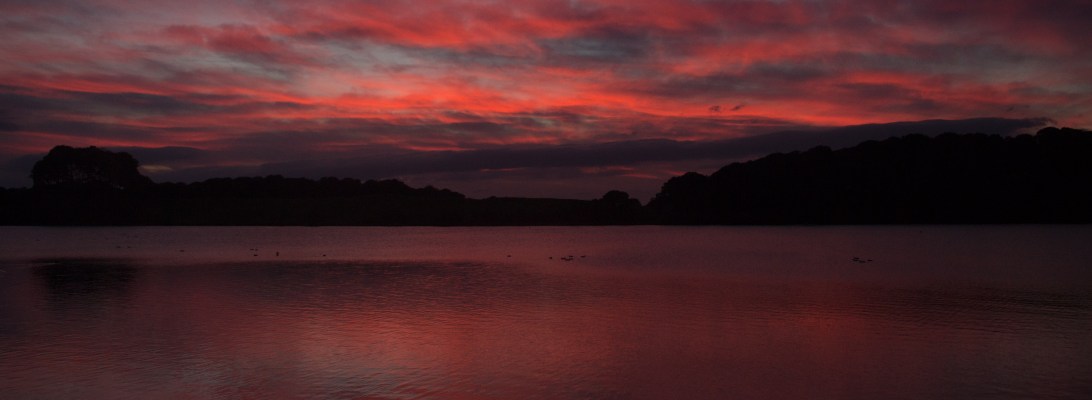
The sunset crept up on us. One moment the sky was blue, the next it was a vivid red, like a furious blush across the horizon. The water, now still and smooth as glass, took on a beautiful pink hue as the clouds rolled over it. Ducks, geese and swans alike settled to roost. One Canada goose honked into the silence, finishing his argument before succumbing to sleep.

We wandered on and perched inside a bird hide for a while, craning out the window for creative angles of the paint-splashed lake. In minutes the colours had drained and all that remained were grey water and an ever-darkening sky. We made our way back around the lake to the car, feeling very grateful to have witnessed such a visually stunning end of the day.

img_7209