Fancy Ceilings

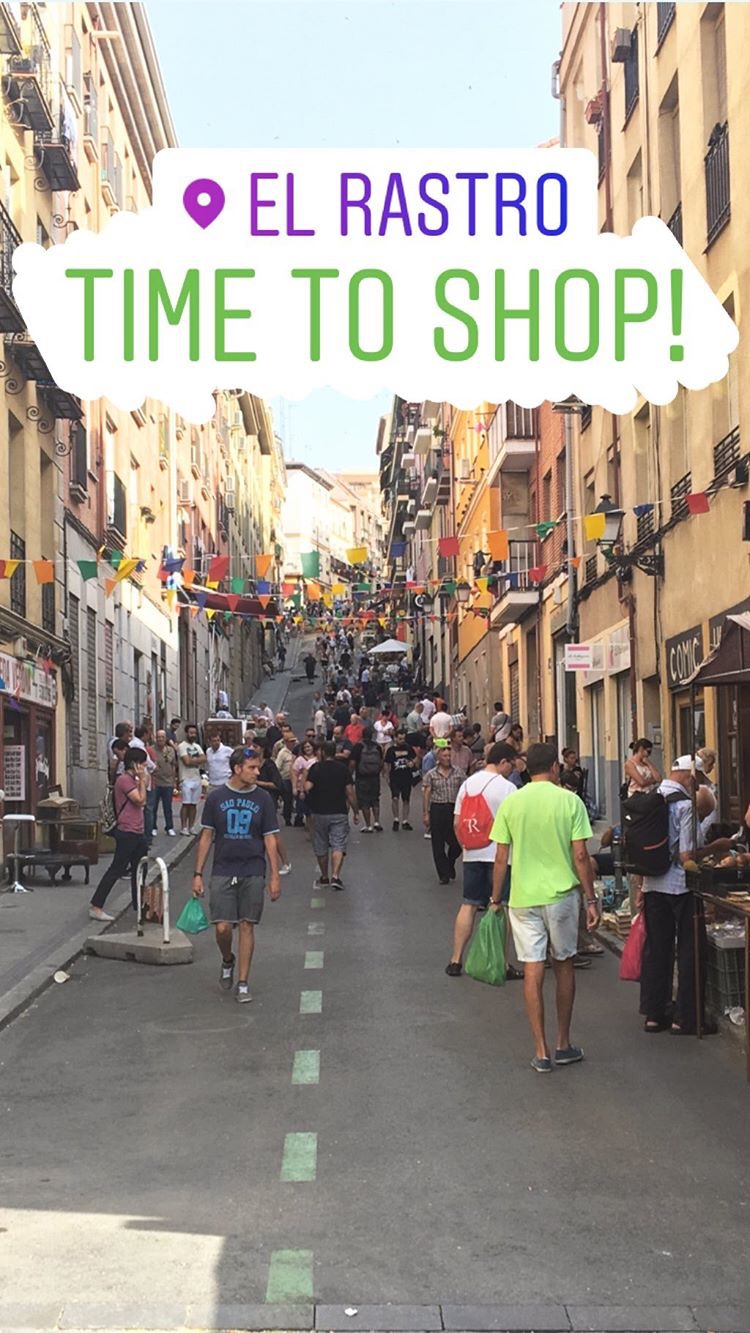
I arrived at El Rastro flea market while the traders were just finishing setting up. It was the place to be in Madrid on a Sunday morning: before long the streets would be crawling with people, including pickpockets. I avoided the upcoming crush nicely and browsed at ease without having to clutch my bag too tightly.

It was very similar to Camden market; in fact some of the floral dresses and pendant necklaces were identical. There were also plenty of trademark Spanish items such as flamenco dresses and more fans than you could shake a stick at. Luckily there were some lovely items amongst the kitsch. I bought a silver-plated necklace with two inset pieces of labradorite, my favourite crystal. I indulged in a few beaded bracelets (a holiday tradition of mine) and found some other small gifts to take back home.
646F7F32-00FB-48F0-8D6D-F7B4B48EDF79

Once I’d done most of the circuit, the sun had cleared the surrounding buildings and the crowds had visibly swelled, so I decided to make my escape. I dropped into 100 Montaditos for lunch where tapas only cost 1€ each. I had adorable little mini brioche buns stuffed with potato omelette and hard-boiled eggs. The place had quite a rotary feel about it; orders were placed and paid for at the bar and food was called out over a microphone for diners to come and collect. Situated so close to El Rastro, I guessed that they were accustomed to being full to the rafters after the morning’s shop and thrived on efficiency. It wasn’t the place to relax but the food was good.

P1000133
Street art on the walk down to El Rastro

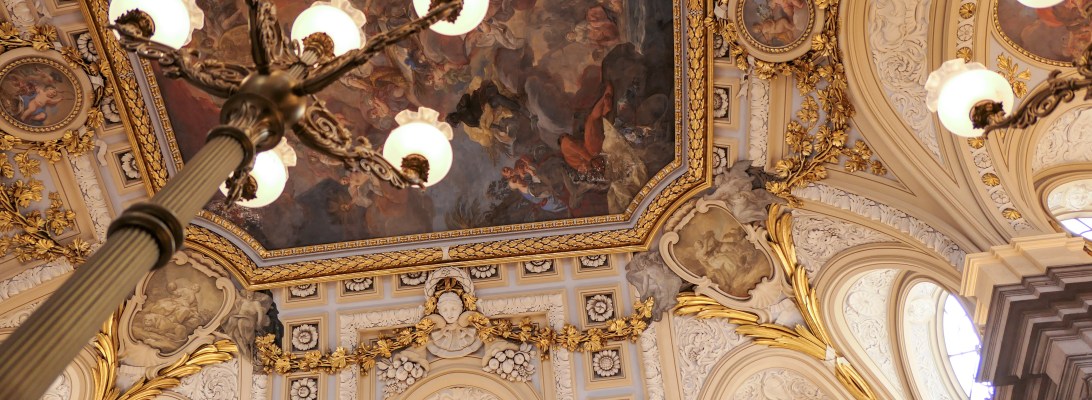
Later I ventured back past the Palacio Real and found there was no queue so I made use of the opportunity and paid for entry. I’ve never been overly fascinated by royals so for me it was more the case of ticking a box, but the interior was as stunning and regal as one would expect. I particularly enjoyed the Carlos III Chamber of Gasparini room, which was where the king performed the ceremony of getting dressed. It was designed by Matteo Gasparini in the Rococo style of ornamental and extravagant three-dimensional decoration. I wasn’t allowed to take photos in that particular room but there was a dramatic contrast between black, swirling filigree detailing and paler sections. It was far more gothic than a lot of the palace’s other rooms, where gold ceilings and weighty chandeliers took precedence.

P1000360 2
The ceiling over the staircase

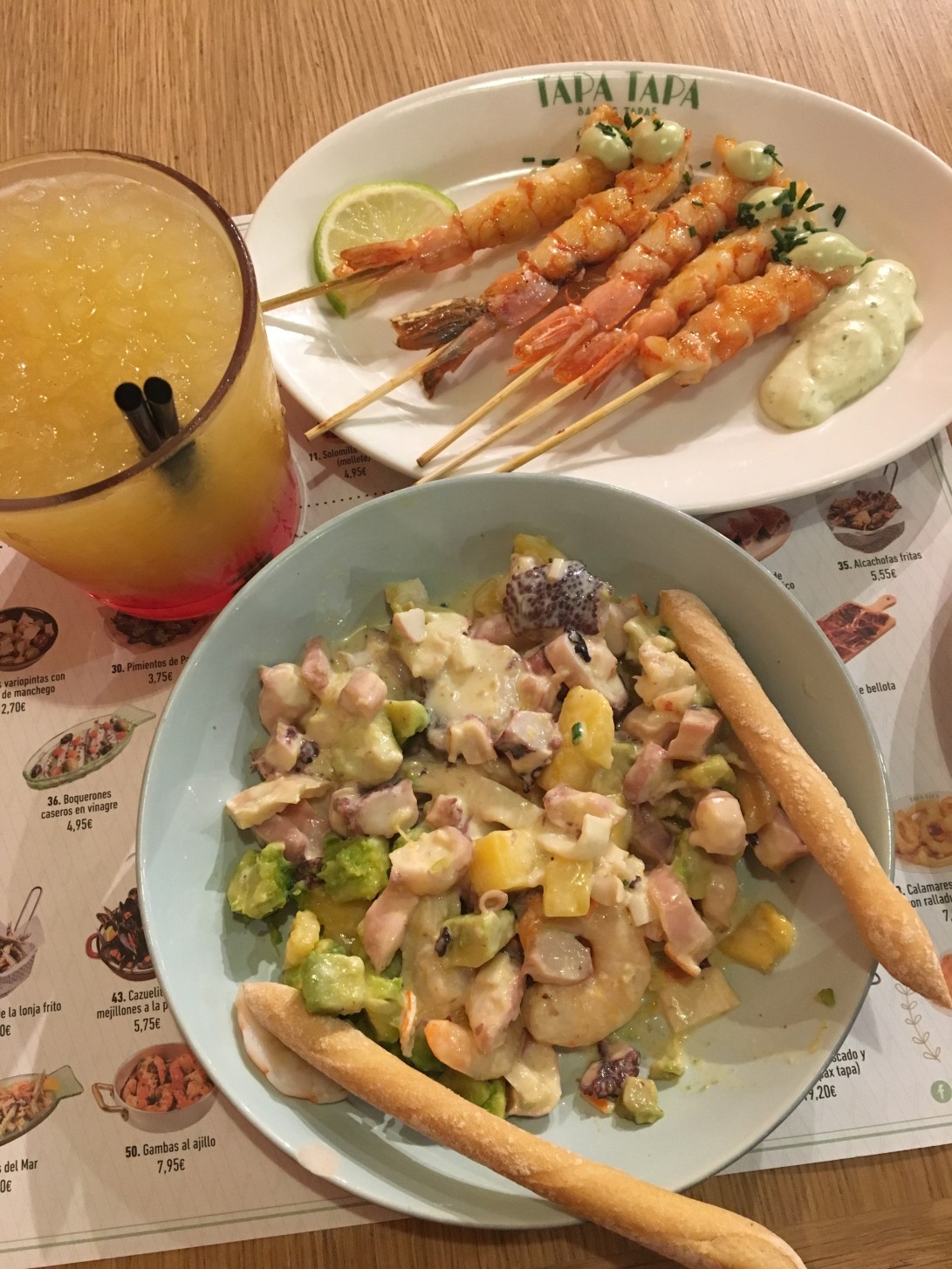
After getting my fill of royal luxury I continued along Calle de Bailén to La Basilica Grande de San Francisco to see a particularly lavish dome ceiling, but unfortunately the gates were locked and the doors shut. I’d checked the opening times beforehand but perhaps as it was Sunday, an unexpected religious ceremony had come up. I was pretty worn out anyway, so after a stop off at a bar for another granizado de limón I headed back to the hotel to freshen up before returning to Tapa Tapa for dinner, which had become my favourite eatery in Madrid. This time, as well as the langoustines, I had a portion of fried squid with its ink and salad made up of seafood, avocado and chopped mango. Once again, it was all delicious. I particularly liked Tapa Tapa because despite offering a wide range of choices, they seemed to excel at them all whether you chose seafood, bocadillos or vegetarian options.
IMG_3944
Seafood salad and langoustine skewers
IMG_3945
Fried squid with its ink

I thought about going for a spot of shopping while the air was cooler, but once I’d paid the bill and left the restaurant I was met by a raging thunderstorm. Obviously even Madrid had a temperature limit and as I huddled with other diners watching the rain thrum wildly on the pavement, a stream already gathering strength in the gutter, I hoped the storm would crack the enduring heat.

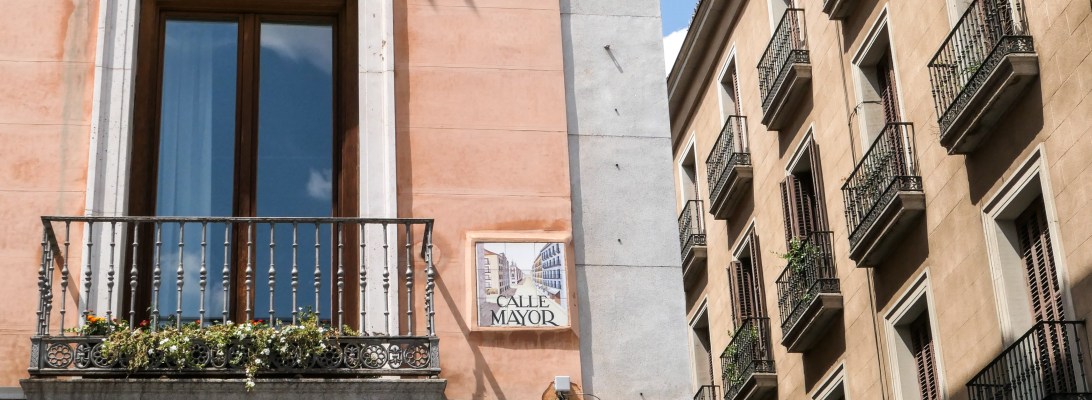
I decided against shopping, and when there was a slight lull in the onslaught, I made a dash back to Calle Mayor and watched the rest of the storm indoors.
Paella and the Palace

Breakfast was an undeniably Spanish affair. There were potato omelettes, sausages the size of grapes, large fans of hams and cheeses as well as a broad assortment of condiments in small glass jars: sesame seeds, cashew nuts, dates and some things I didn’t even recognise. There were fruit and vegetable smoothies in slim shot glasses as well as long plates filled with pineapple, kiwi, orange, grapefruit and pizza slices of watermelon. There was also cake, and when the opportunity arose to eat cake at breakfast I took it without hesitation. In addition to maple pastries, croissants, mini muffins and wafer-thin slices of marble cake, there was Tarta de Santiago; a delicious almond cake dusted in icing sugar and cut into narrow wedges.

After all that, I was definitely fuelled to start the day. I began by walking west to my second plaza of the week: Plaza de la Villa. Although a fraction of the size of Plaza Mayor, this quaint little square was just as pretty. The architecture was 17th century Madrid style baroque: a picturesque combination of stone, brick and the same wrought-iron balconies I’ve seen on many other buildings in Madrid so far. The statue in the centre of the square was Don Álvaro de Bazán – a famous Spanish admiral who was never defeated in battle. The Madrid City Council chose to commemorate his memory by constructing the monument on the three hundredth anniversary of his death in 1888. The statue is surrounded by a richly coloured flower garden.

Next I paid El Palacio Real a visit. Although still used for state ceremonies, the palace is not the king’s official residence. He and his family live in the smaller Palacio de la Zarzuela just outside the city. I’d toyed with the idea of going into the palace, but when I saw the queues waiting in the baking sun I decided against it. After all, the line for those with tickets was nearly as long as the line for those without. I could still admire the palace through the gates, though.

Opposite was La Catedral de Nuestra Señora de la Almudena: a Madrid landmark that could easily rival other cities’ grand cathedrals. In many churches in the city there was a strong religious presence among those who attended. There were no touristy parts to these buildings – while they were all intricately decorated the style was very subdued. The few I visited were full of praying madrileños and I often saw nuns strolling down the corridors. Although I didn’t feel unwelcome, I didn’t stay long out of respect for those using the cathedral for worship. Visitors should never go to cathedrals in Spain during mass, but even between these times it seemed that tourists were tolerated more than welcomed, and I respected that.

Soon I turned my attention to finding a shady spot to rest. The Jardines de Sabatini were just what I needed. Take away the denim-clad tourists and it wasn’t difficult to imagine ladies in Elizabethan dress wafting fans as they strolled past pruned hedges and thick-limbed trees with bunches of waxy leaves hanging from their boughs. The area was established as a garden in the 1930s as a replacement of the royal stables that were once found there. Now, instead of braying horses, all that could be heard was the crunch of gravel, the chirrup of birds and the lilt of an accordion.

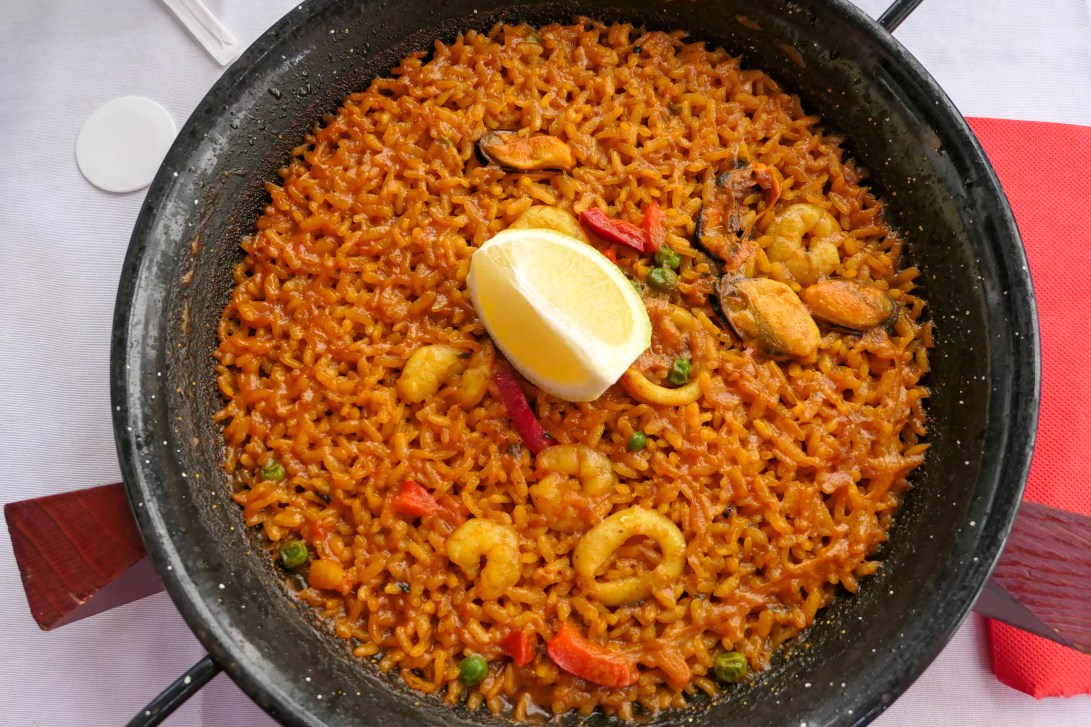
I had lunch at Toro Tapas and ordered a cuttlefish paella. The word “paella” derives from the Latin patella for pan, so the infamous dish is actually named for the black, handled pan that it is served in. When in Spain, you should always eat paella and this one was delicious, popping with juicy prawns, mussels and squid. To drink I chose granizado de limón, which is the Spanish answer to a slush puppy. It was wonderful after the heat of the afternoon and just as refreshing as it sounds.

On my way back from the palace I dropped into La Chocolatería de San Gines, which I’d been told was the place to go for churros – a timeless unravelled doughnut that has planted itself firmly into British culture as well as Spanish. I couldn’t wait to sample what I hoped would be the best and most authentic churros I’d had, but sadly I came away disappointed. The churros were hard and dry, as if they’d already gone stale. I’m not sure if adding cinnamon sugar was a British twist, but I really missed that extra sweetness here. Perhaps I’d been unlucky with a bad batch, but I’d had far nicer churros back home!

I cheered myself up by visiting a few librerias (bookshops) and found some lovely items. In “Desperate Literature” in Calle de Campomanes there was a copy of “Alicia y El País de las Maravillas”, although this classic by Lewis Carroll is confusing enough in English let alone Spanish.

In pride of place on busy Calle Mayor was a shop named La Librería, which had every book on Madrid you could ever want. I bought “Madrid en 55 Dibujos”, which was a gorgeous little hardback full of paintings of Madrid scenes, a lot of which I’d already seen.

By then I was truly exhausted, so I retreated back to the far more tolerable temperature of my hotel room and wrote for a while before heading out for dinner. I sampled the broad range of tapas available at El Mercado de San Miguel, one of Madrid’s oldest and most popular food markets. I forced myself to browse before choosing anything, and I eventually plumped for two crab tapas. In one, the crabmeat was sandwiched between a neon pink burger that had a similar consistency and appearance to a macaroon but was doughier and less crumbly. The other was a miniature pot of crab, which was a slight disillusion as underneath the first inch the pot was filled the rest of the way with straw fries, but the crab itself was delicious. I was also very happy to find a stall laden with sweet treats, so I bought the largest marshmallow pastry I’ve ever seen.

After a good night’s sleep, I planned to explore a part of Madrid that I’d been excited about for weeks: a park stretching across 350 acres that I could just see myself getting wonderfully lost in.