A Charm of Bramblings


With the bitter cold of winter often come unexpected and welcome surprises. Two years ago, flocks of waxwings graced us with their presence as they passed through from Scandinavia. The following year, hawfinches could be seen crunching hard seeds with their formidable bills. In 2019, it seems to be bramblings that are turning heads as they gather en masse across the UK. While they have been known to breed in Scotland in previous years, this is very rare. However, bramblings often visit the UK during the winter months, with this year being no exception.

At a quick glance, bramblings could easily be mistaken for a male chaffinch; these birds are of the same size and have very similar colouration, if a little more diluted than our more common garden inhabitants. Both male and female bramblings have an attractive orange blush on their sides and a white belly. In summer, males have black markings on their head. Bramblings can be found in beech woodland and close to other wooded areas, often joining flocks of chaffinches to look for food. Like many finches, bramblings prefer seed, so providing a good seed mix could attract them into gardens. There are several collective nouns for finches, including a “charm”, “company” and “trembling”. I couldn’t find a specific term for a gathering of bramblings, but as the birds themselves are so charming to look at, a “charm” seems appropriate.

It is thought that the reason behind this year’s explosion of bramblings is beech mast, or fruit, that falls from the trees, dispersing seeds for the birds to eat. If the beech mast fails in European countries such as Scandinavia, species including bramblings will move south and west in vast flocks to find more food. While impressive gatherings of five hundred bramblings can currently be seen in areas of the UK, earlier in January there was a flock of around five million in Slovenia. This number of birds could seem difficult to comprehend, but even that pales in comparison to the flock seen in Switzerland in the winter of 1951, which was up to 70 million strong.

As with all winter visitors, the bramblings’ time here could be short. Despite the plummeting temperatures, wrap up warm and head outside to find some of these beautiful finches. For more information on wildlife winter sightings, check out the BBC Winterwatch page. I for one would love to see a charm of bramblings before the winter wanes.
The Avian Orchestra

There is an overwhelming quiet that comes with winter; a hush descends over the landscape that only adds to the bracing chill. As the season turns, the first few tentative voices break the spell of silence and before long there is an overpowering variety of diverse voices filling the air. While in the height of spring there can be hundreds of songs reverberating through the trees, there are a select few who can be heard again and again, reliable as the seasons. I took it upon myself to begin to tune in to this soundscape, a treat for the ears. Learning to birdlisten not only unlocks the ability to distinguish birds by song, but is also very useful as advanced warning for the reveal of the bird itself.

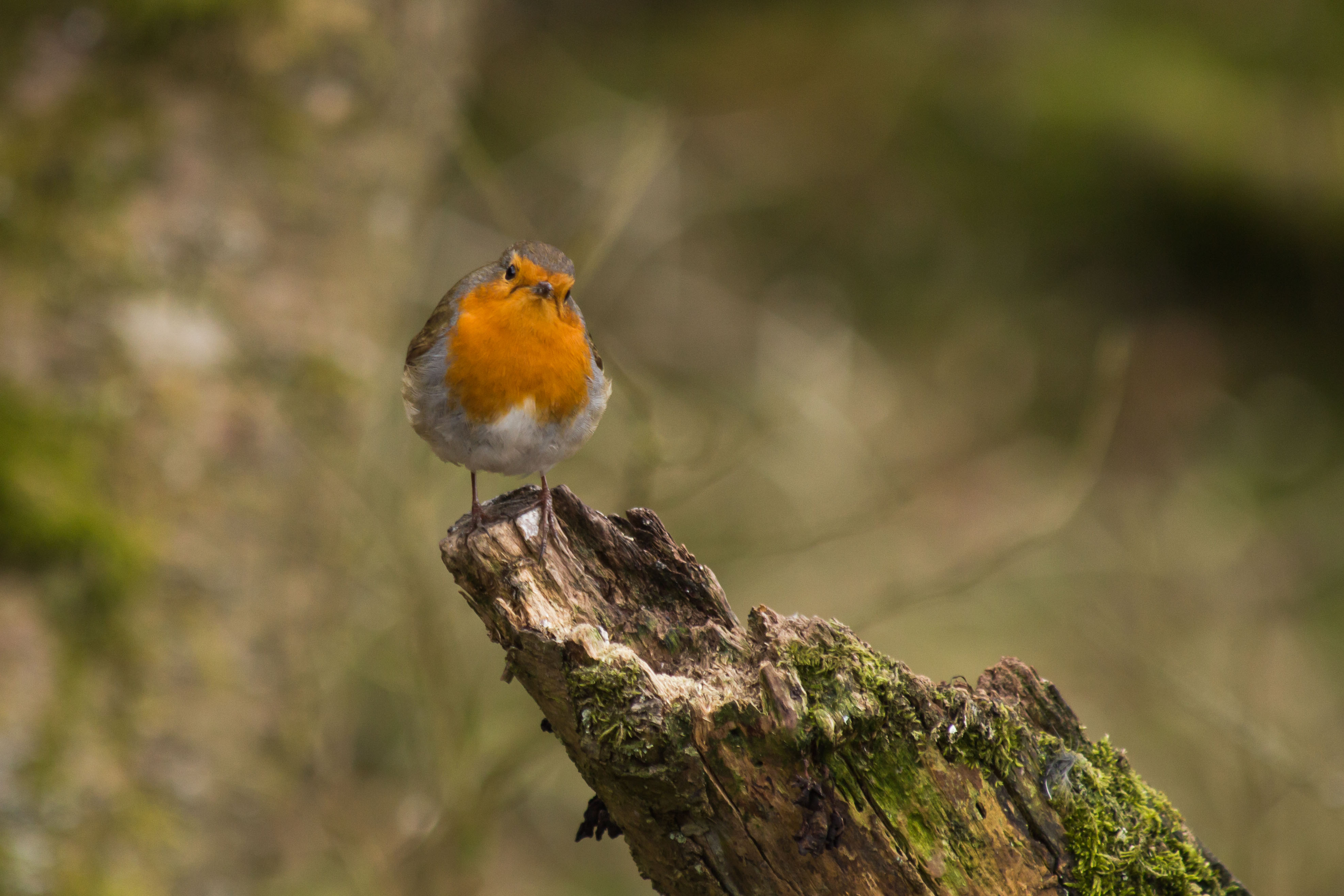
Robin (Erithacus rubecula)

Perhaps the most significant voice is that of the robin, mainly because he never left the scene when other, less hardy birds took off for warmer climes. Even through the dark, bitter winter the robin endures, his lone song often the only consistent sound during the colder months. In spring males and females pair up and defend their breeding territory, often the first to start singing and the last to finish.

The robin’s song is a delightful melody; a high, twittering burble heard from all around. Although varied in its range and tempo, the robin’s voice is almost unmistakable – high, thin and soft but still richly diverse. Hear the robin and he won’t be far away, perching in plain sight and puffing up his red breast as he fills it with air. He is a proud bird, often chasing other robins from his patch, but with a voice as pretty as his, who can blame him?

IMG_9114

Wren (Troglodytes troglodytes)

Another commonly heard voice belongs to a rowdy bird that makes up for small size by belting out a piercing song for everyone to hear. The wren can often be seen speeding bullet-like through knee-high bushes. The wren sings like it’s scolding somebody; a furious round of high, loud chirrups with a distinctive trill at the end of some phrases that sounds like a miniscule machine gun. If you hear a very loud song wait for the trill, as it will inevitably come sooner or later and you’ll know you have your wren. Scan the lower branches and before long a stout brown bird holding its tail up like a stiff flag will appear, giving you a fierce reprimanding for something or other.

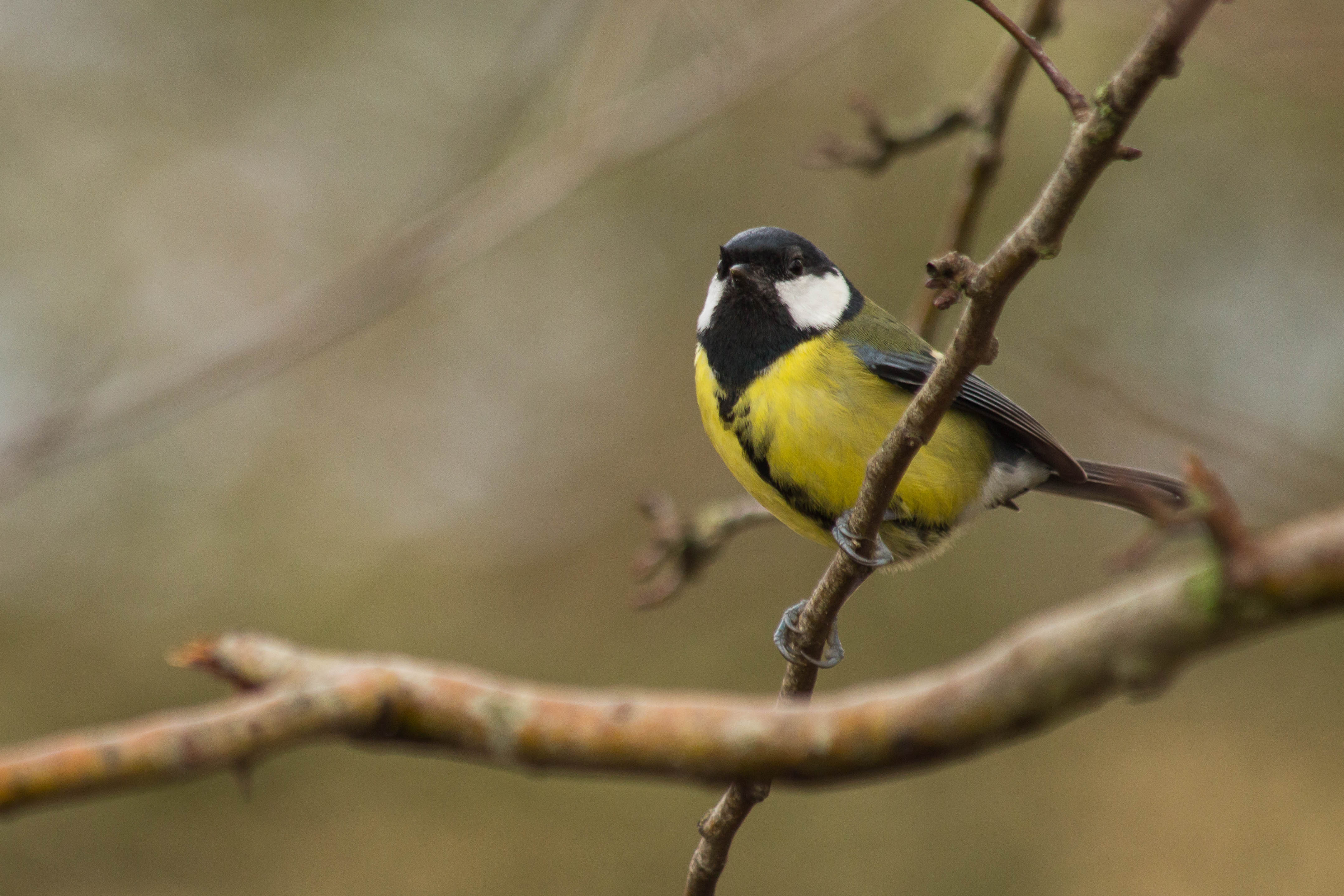
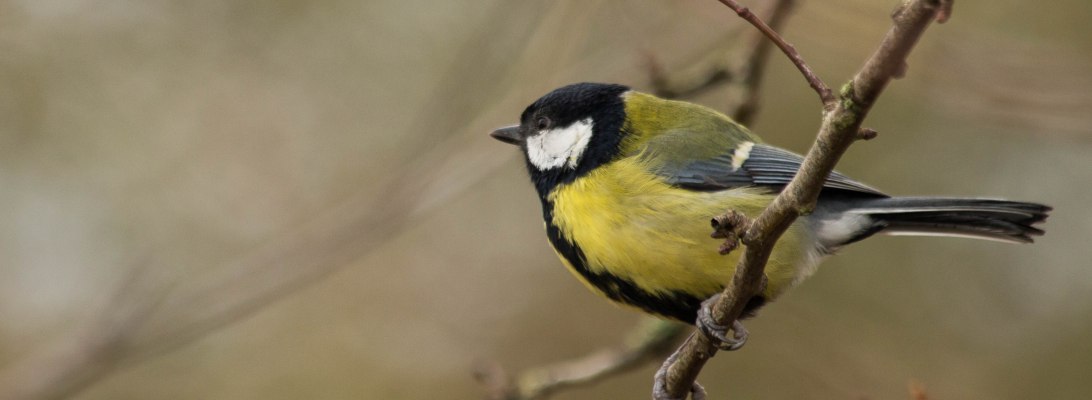
Great Tit (Parus major)

If robins and wrens are violins in the avian orchestra, the great tit is percussion; not quite as dazzling but just as important. In early spring, a two-toned call can be heard among the other singers, with emphasis on the first syllable. I like to think of it as the sound of a saw – effort on the forward stroke, then quieter on the draw back. After a few strokes of the squeaky saw there is a pause, and then the great tit sings it again, very resiliently as if rousing the troops to join in.

The great tit has other songs in its repertoire, including a “churr” call that reminds me of the chatter of a magpie, but a little faster and far gentler. This is the great tit’s alarm call, a sign of agitation that indicates something has disturbed it.

IMG_8751

Blue Tit (Cyanistes caeruleus)

With a lot of birdsong, it can help to adopt a Morse code approach when it comes to deciphering the rhythms of some particular species. Take the blue tit. A common little bird with splashes of blue, green, yellow and white with a fetching black goatee. The blue tit’s song is similar in tone to the great tit but gentler. Among its quite varied repertoire is a particularly distinctive melody, consisting of two clearly separated notes followed by two or three much faster ones. In dots and dashes it would look something like this:

– – . . .

Imagine, perhaps, that the bird is saying “I’m. A. Pretty Bird”, putting particular emphasis on the first two words.


If you like this, have a read of this post and find out where my inspiration to start birdlistening began.