Apparently it’s World Ocean Day! I can never keep up with all these international days, but I was keen to get involved with this one. Since moving to Scotland, the ocean has become a huge part of my local landscape and it never fails to both relax and inspire me.
My local patch is a mile-long strip of rocky shore that’s bursting with wildlife – depending on the tide I can see gannets diving for fish, turnstones foraging among the kelp or bottlenose dolphins flinging themselves into the air.
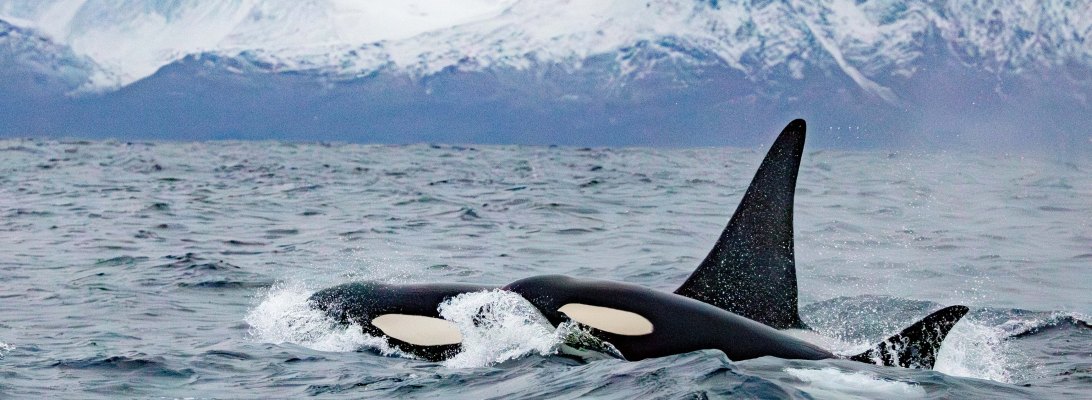
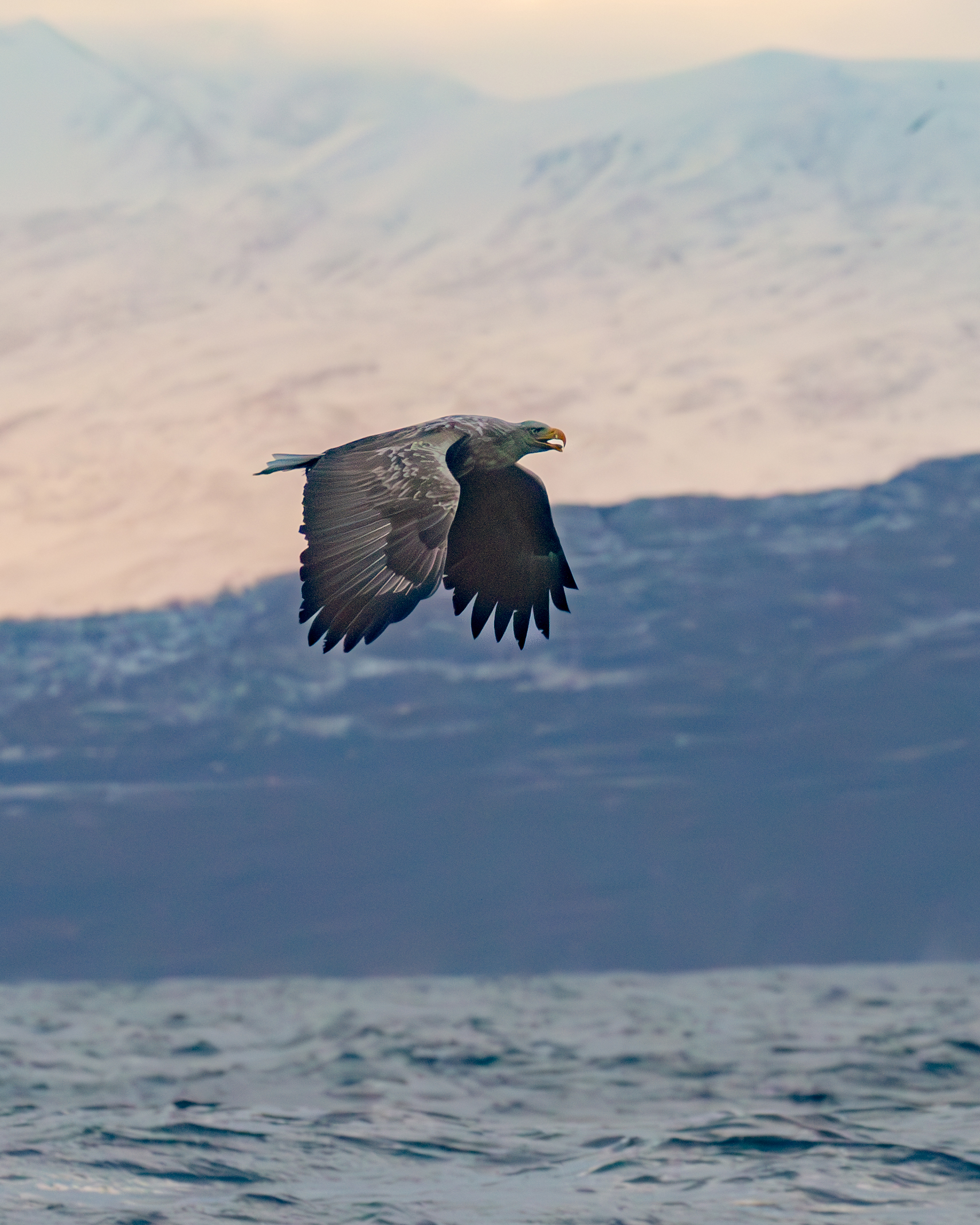
I’ve also been lucky enough to watch marine wildlife in Norway. During an unforgettable trip in 2020, I saw orcas, humpback whales and white tailed eagles – often all at the same time. Despite a dash of seasickness and some very numb toes, it was one of the best experiences of my life. I couldn’t believe I was surrounded by such huge animals, and it was a real privilege to share the icy fjords with them.
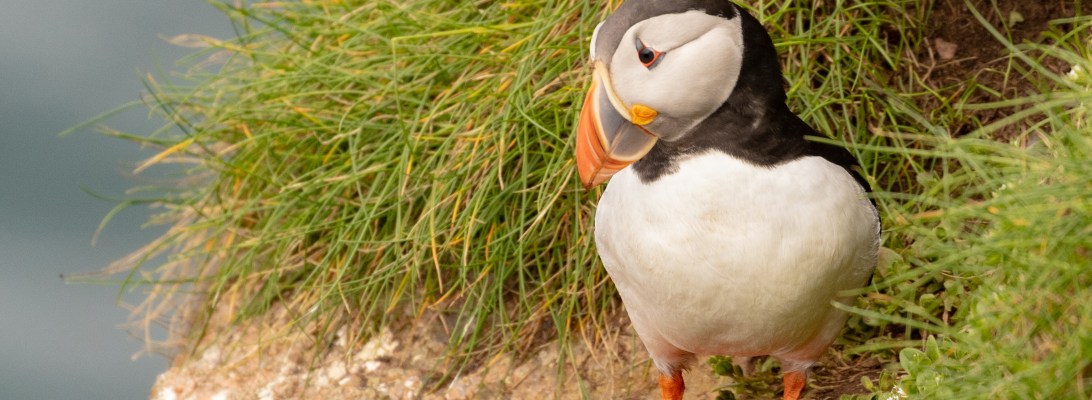
There are certain birds that I look forward to seeing every year. As the seasons shift, there’s a constant shuffle of some leaving the UK and others arriving. One particular spring/summer visitor who’s pretty much everyone’s favourite is the puffin.
Recently I set off on one of my annual pilgrimages to see these tiny seabirds at one of the clifftop nesting sites they share with guillemots, razorbills, fulmars and kittiwakes. They blend in well despite those luminous bills, often tucked away in their burrows and out of sight altogether. The key is to look for orange legs, which the other cliff inhabitants don’t have.
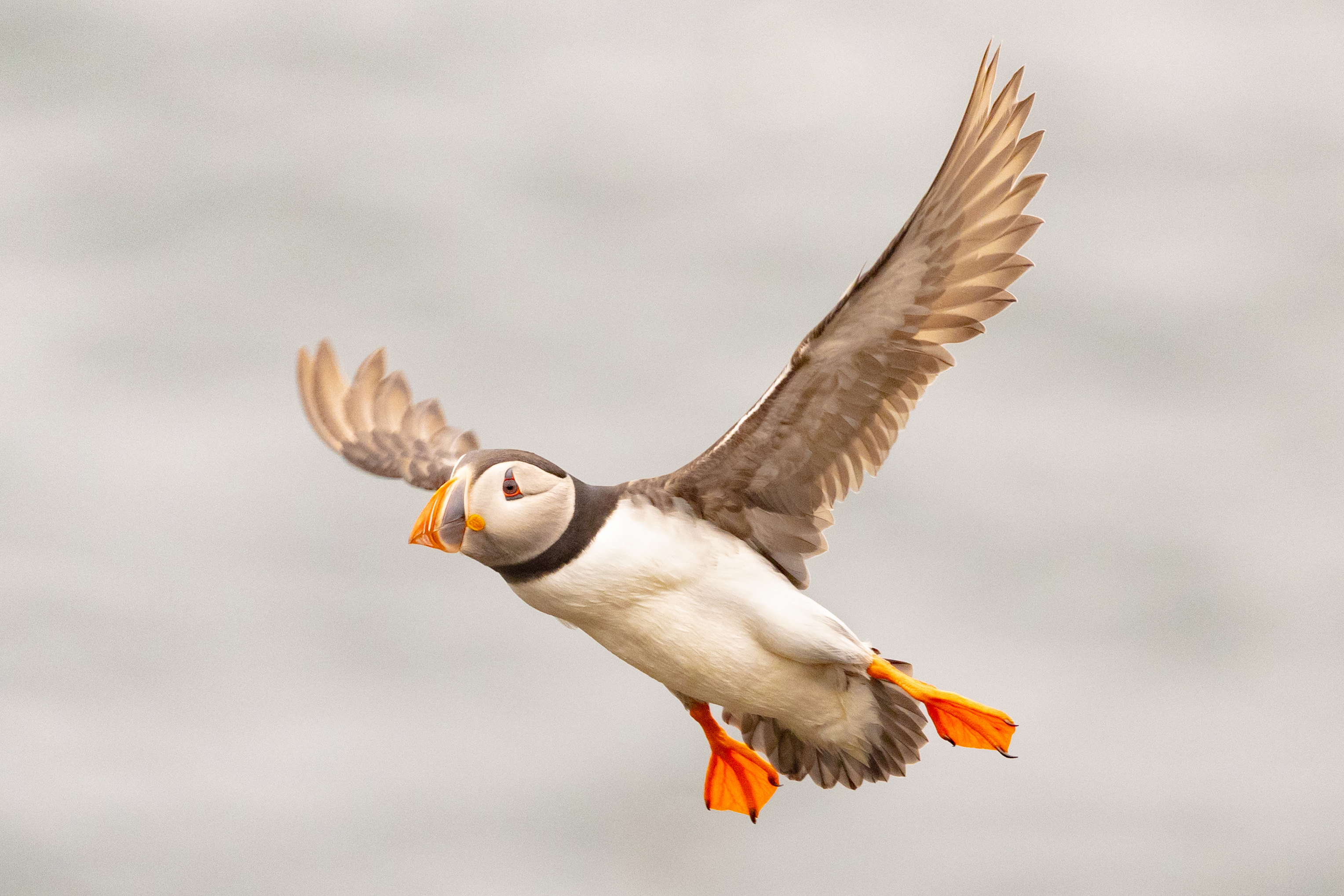
After a bit of fruitless searching I was just rummaging for some elevenses when a flash of orange made me abandon my search for chocolate. In a scrap of a second I’d seen a puffin fly past, curving around the cliff edge and back out towards the open sea. I hurried into position in case it returned and luckily for me it did, performing four rapid fly-bys with spectacular feet dangling.
Later in the day I tried my luck at a different spot, settling in a cup of earth in view of several grassy burrows that looked promising. I got distracted by a puffin on the water, some 100ft down. Even from that distance I could spot orange legs beneath the clear surface, so I enjoyed watching it through my binoculars as it bobbed around with its larger neighbours.
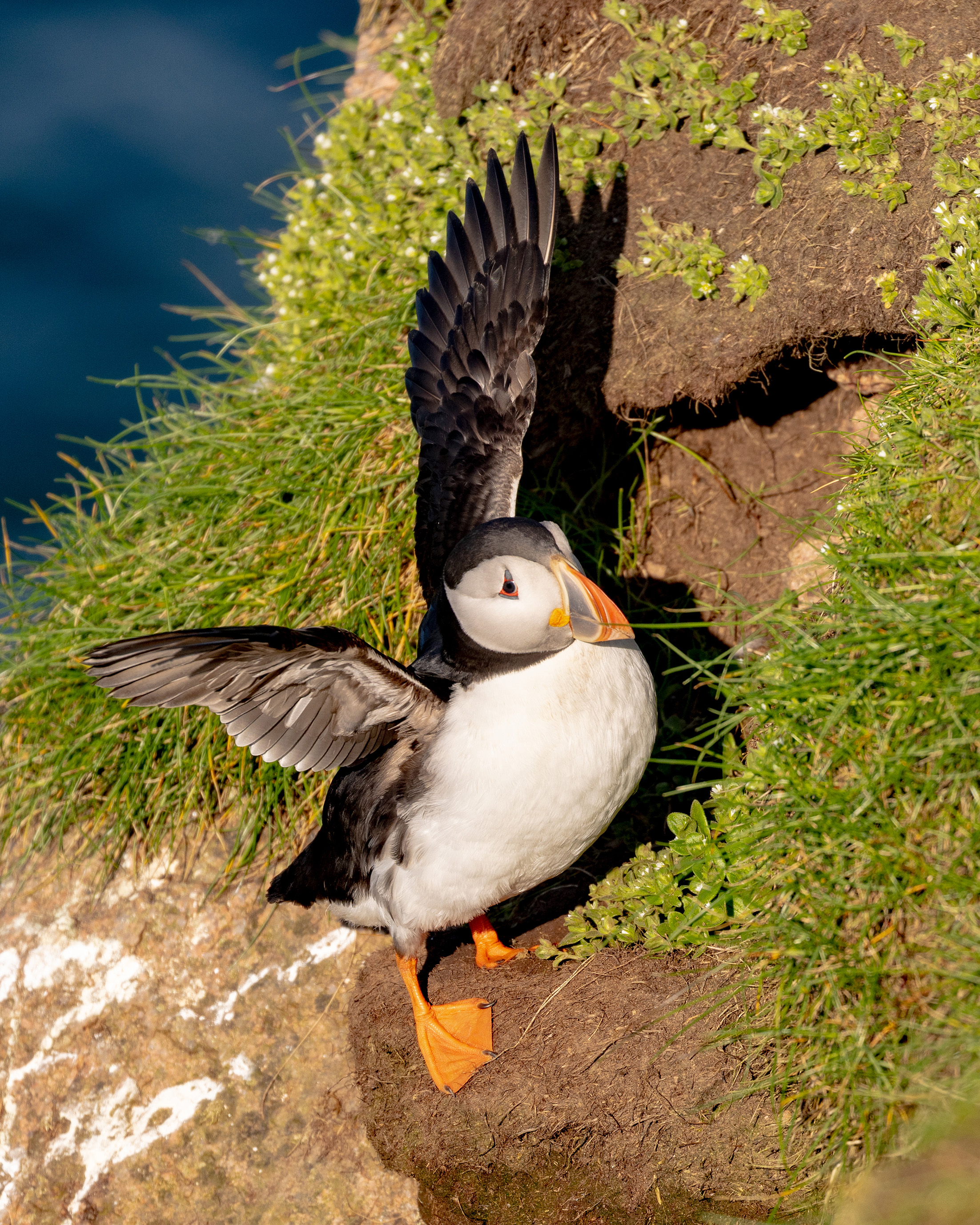
Birds are like buses in that they’re notoriously unreliable and just when you’ve waited long enough for one, two show up. Once I put down my binos, I found myself staring at another puffin perched 20ft from my lens. The little scamp! Luckily it had decided to take in the views before disappearing into its burrow, giving me a chance to make up for lost time and get some portrait shots.
Forty minutes later, a magic trick occurred and two puffins popped out. Either I’d missed the first one while I was ogling the water, or it had been hanging out inside the burrow the whole time. They lunged off the cliff together and I tracked them heading way out to sea, shrinking to black dots. Not ideal, as I had no idea how long a puffin took to fish.
Two hours, as it turns out. The sun had been screened by cloud all day but of course once I had no puffins to photograph it broke through and illuminated the burrow entrance like a theatre spotlight. By that point I’d spent seven hours on the cliff and evening was drawing on – I had a runny nose, numb bum and grumbling stomach and was ready to call it a day. But any superstitious photographer fears that as soon as you leave, the action happens. A combination of bird FOMO and my usual stubbornness made me stick it out a little longer.
Less than five minutes after I decided not to leave, the puffins returned, now looking radiant in the sun. A snaky pair indeed. Every minute spent staring at an empty burrow was suddenly worthwhile, and I finally left feeling ravenous yet thrilled with the day’s success.
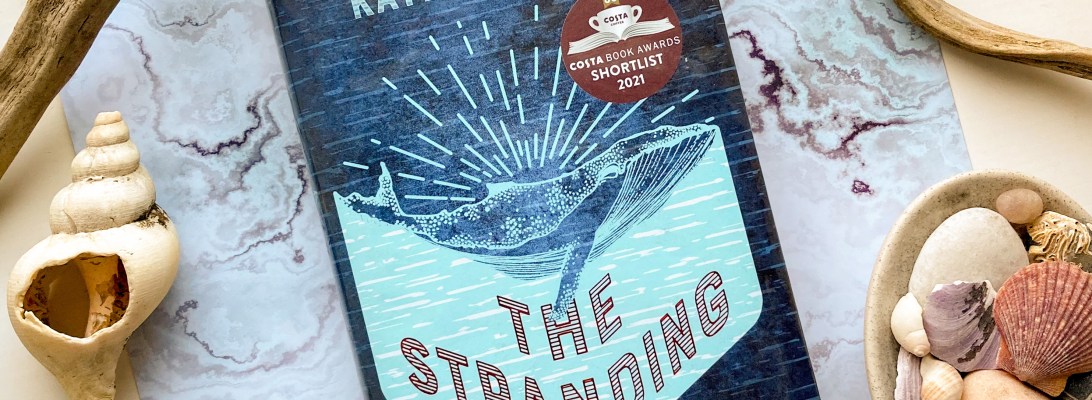
We’re told not to judge a book by its cover but we all do it, at least in the literal sense. Why else is Waterstones full of vibrant, juicy covers begging to be picked up and admired? So, when I saw a whale on the front of this book, it enticed me enough to read the blurb. And what a hook: “Far from home and with no real hope of survival, Ruth finds herself climbing into the mouth of a beached whale alongside a stranger.” Without wanting to sound like a T-Bird, tell me more.
Ruth’s life has become a hamster wheel of alcohol, bed hopping and a sense of something missing. When her latest relationship becomes claustrophobic, she decides to break the monotonous cycle she’s found herself in and travel to New Zealand. Here she hopes to fulfil a childhood dream of working with whales, but apocalypse strikes as soon as she arrives – don’t you hate it when well-laid plans get disrupted? Together with a stranger she meets on the beach, Ruth climbs into the mouth of a beached whale just before the blast hits. This saves her life, but now she has to figure out how to continue living.
This is only half the book, though. Alternating between chapters set in post-apocalyptic New Zealand are fragments of Ruth’s old life and the events that led to her trip. Somehow, there were close parallels between a dystopian world and the everyday routine of a young woman living in London, made sharper by the interwoven timelines. Like all good protagonists, Ruth has many flaws, and this makes her feel real. She makes human mistakes, and despite also building a shelter from whale ribs and making clothes from dried deer hides, her story resonates.
For me, part of this connection came from the book’s setting. I’ve never been to New Zealand, but “the breeze from across the water” and pulling “the salt-stiffened collar of the fleece towards her ears” were familiar sensations. Rather than obvious seaside description, Kate Sawyer uses thoughtful observations of a coastal landscape that essentially apply to any sandy beach in the world. Although my life in England wasn’t nearly so troubled as Ruth’s, I know exactly how being pulled somewhere feels; in her case it was to the whales she’d studied as a child in London’s Natural History Museum. The wonder of that place is something I can definitely relate to.
Dystopian stories have never interested me much, but I loved The Stranding because it was so much more than that. In fact, the apocalypse element was a back-seat theme for me. I felt that the backbone of the story was a woman’s pursuit of happiness and finding the courage to break a cycle and start a better life. And in Ruth’s case, it’s a life she could never have predicted.
I’m currently writing my first book. It’s a Slow Travel Guide to northeast Scotland, which will be published in spring 2023. The book covers Aberdeenshire, Moray and the Cairngorms National Park, so basically a huge chunk of the country! My daily routine has become a contrasting blend of emailing accommodation providers, walking, writing copious notes and staring at maps until my head swims.
This is the biggest project I’ve undertaken so far and it’s very easy to get lost in the Big Picture. I’m learning the key is to break it down into chunks. Each field research trip is a week long and during those weeks I have a list of castles, stone circles, museums and reserves to visit.
I need to be as thorough and detailed as possible, so when the book is written it will read as though I’m giving a guided tour to someone wearing a blindfold. I’ve never written in this much meticulous depth before and it’s a rewarding challenge. During my master’s degree I was told to ‘show don’t tell’. With a Slow guide, it’s a case of including heaps of both.
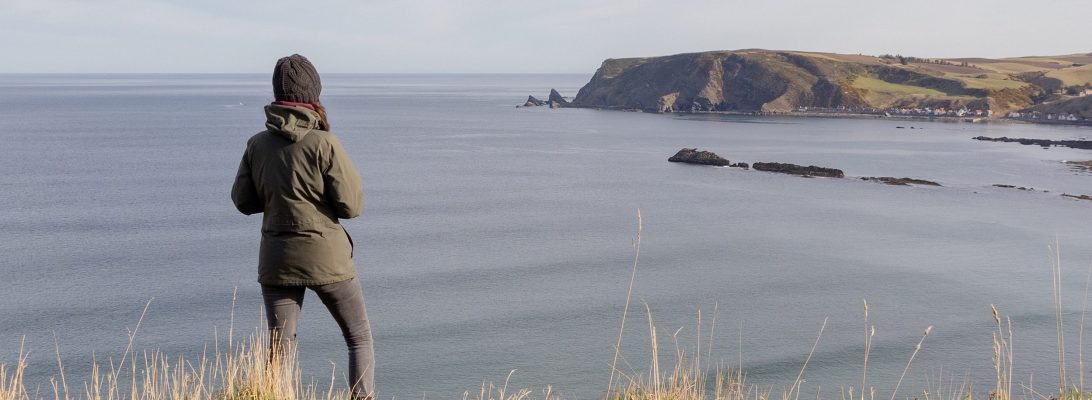
Looking towards Crovie, Aberdeenshire
Because the project is all-encompassing, other things have slipped into the background, including this blog. When I was studying for my undergraduate degree I had a delicious amount of time on my hands. My blog was abuzz with updates because it’s all I had going on outside of my assignments. What simpler days they were! Now everything I write has a destination – nothing is free just to keep the blog ticking over.
I’ve struggled with work/life balance for years. For me work has a nasty habit of becoming life. If I go for a walk I’m thinking about new places I could include in the book or looking for new photos to share to Instagram. Last year this took me close to burnout. Wildlife was everywhere I looked and for a while it lost its charm. Something I had grown so attached to had become almost a chore and I hated that I’d let that happen.
I think this is something all freelancers have to deal with. Working from home has lots of benefits but it also means your office is your home, and switching off takes real effort.
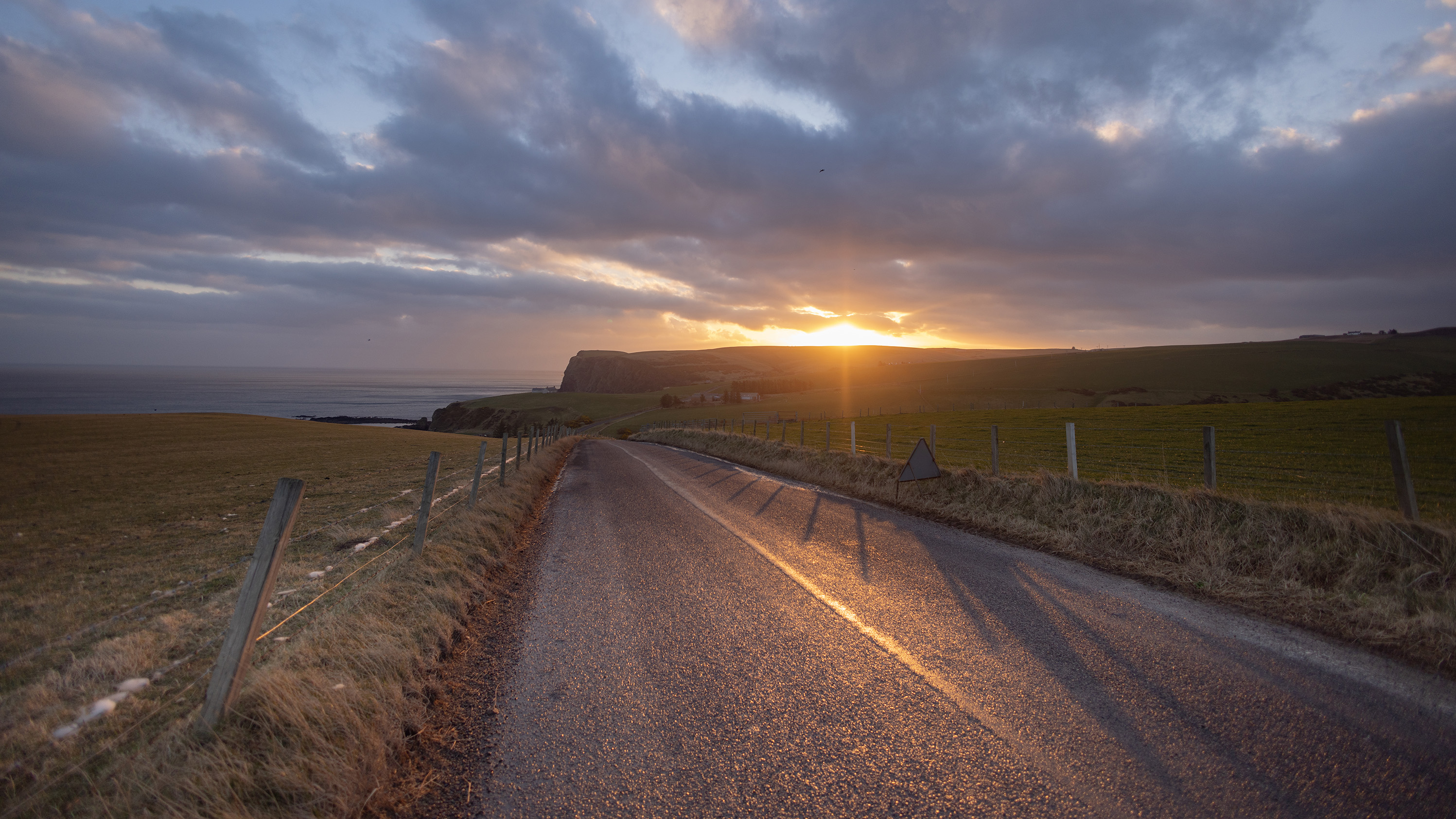
Sunrise on the road to Pennan, Aberdeenshire
Recently I’ve taken up ice skating again. I used to love skating when I was younger but because I didn’t know anyone else who could do it, I eventually stopped going. Luckily I had yeti feet as a child and they haven’t changed in the last ten years so my old ice skates still fit me.
There’s a rink in my local town that I didn’t even know about so I had a go. Obviously I was rusty at first, and the fear of falling on my tailbone (here I speak from painful experience) held me back. But with each visit I got comfortable quicker and now it’s become a passion again.
I’m by no means an expert – I skate for the sensation, which is the closest to flying I’ll get with my feet still on the ground. I find it so therapeutic, almost meditative, and better yet it doesn’t require any screens. My dry eyes get a break and I get lost in my thoughts, gliding weightlessly in repetitive circles.
I realised it’s the first true hobby I’ve had in years – something completely unrelated to work that lets me switch off and be in the current moment for a change.
When the weather warms up I’ll return to sea swimming too. I started this last year and experienced similar benefits to skating – no screens, no social media, just my own thoughts and a sensation of floating. Maybe it’s significant that my two forms of escape are different states of water.
I’m hugely proud of this book commission and I know that the moment I hold the finished product in my hands, every minute of stress and fatigue will be worth it. However, to reach that point I need to care for myself. I haven’t been very good at that in the past, but I’m learning.
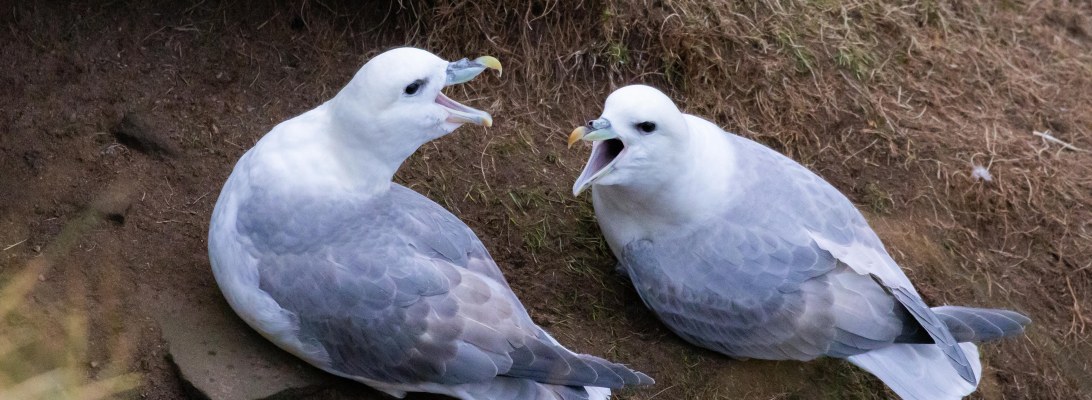
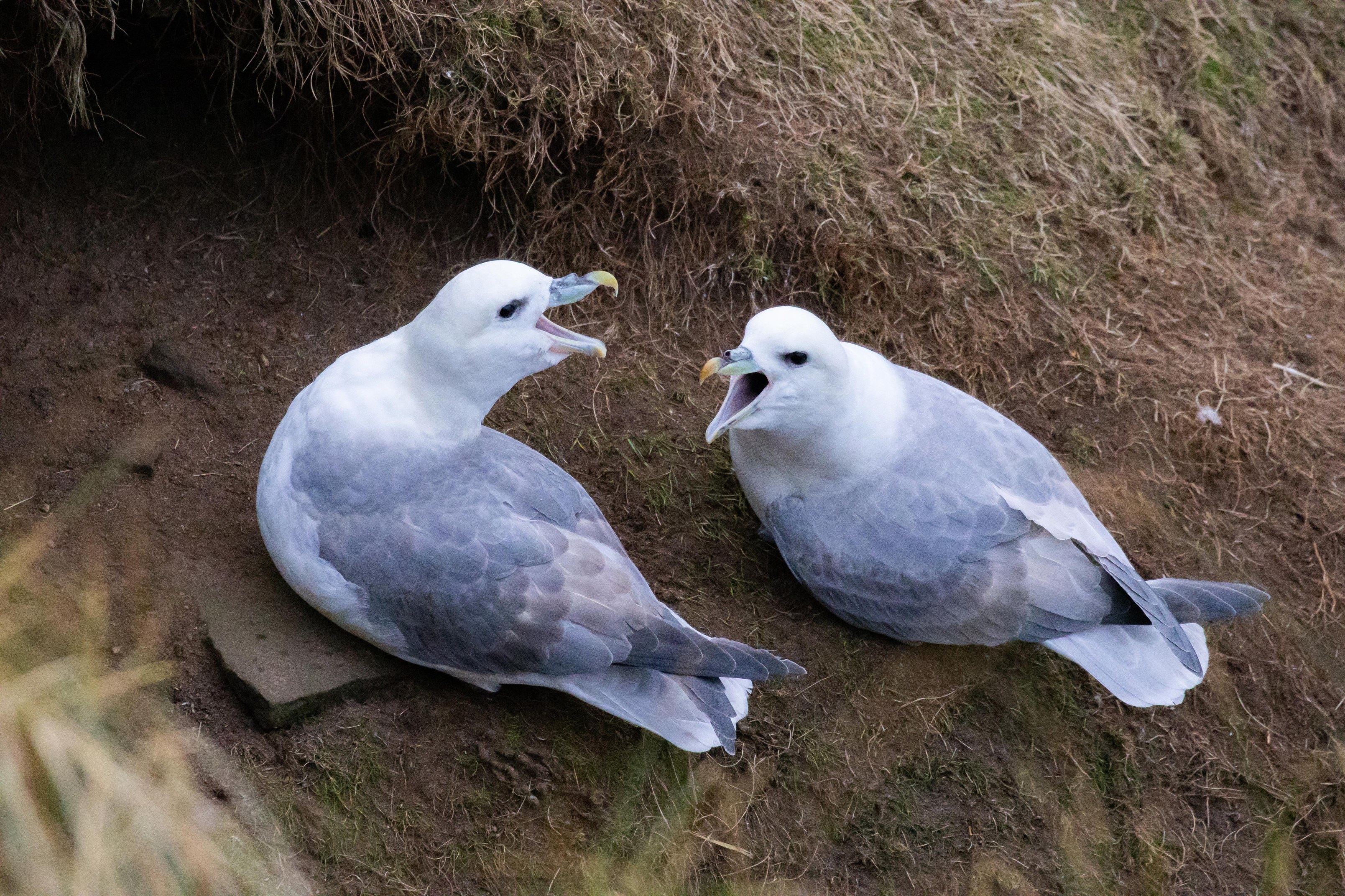
Last week on one of my many coastal walks I glanced down to see a pair of fulmars perched on an earthy shelf on the headland. Fulmars are one of my favourite seabirds so I was delighted that there was a possible mating pair setting up shop on my daily walking route. They were cackling to each other and looking like adorable mini albatrosses. I got a couple of shots but the light was fading so I decided to return when I had a little more sun.
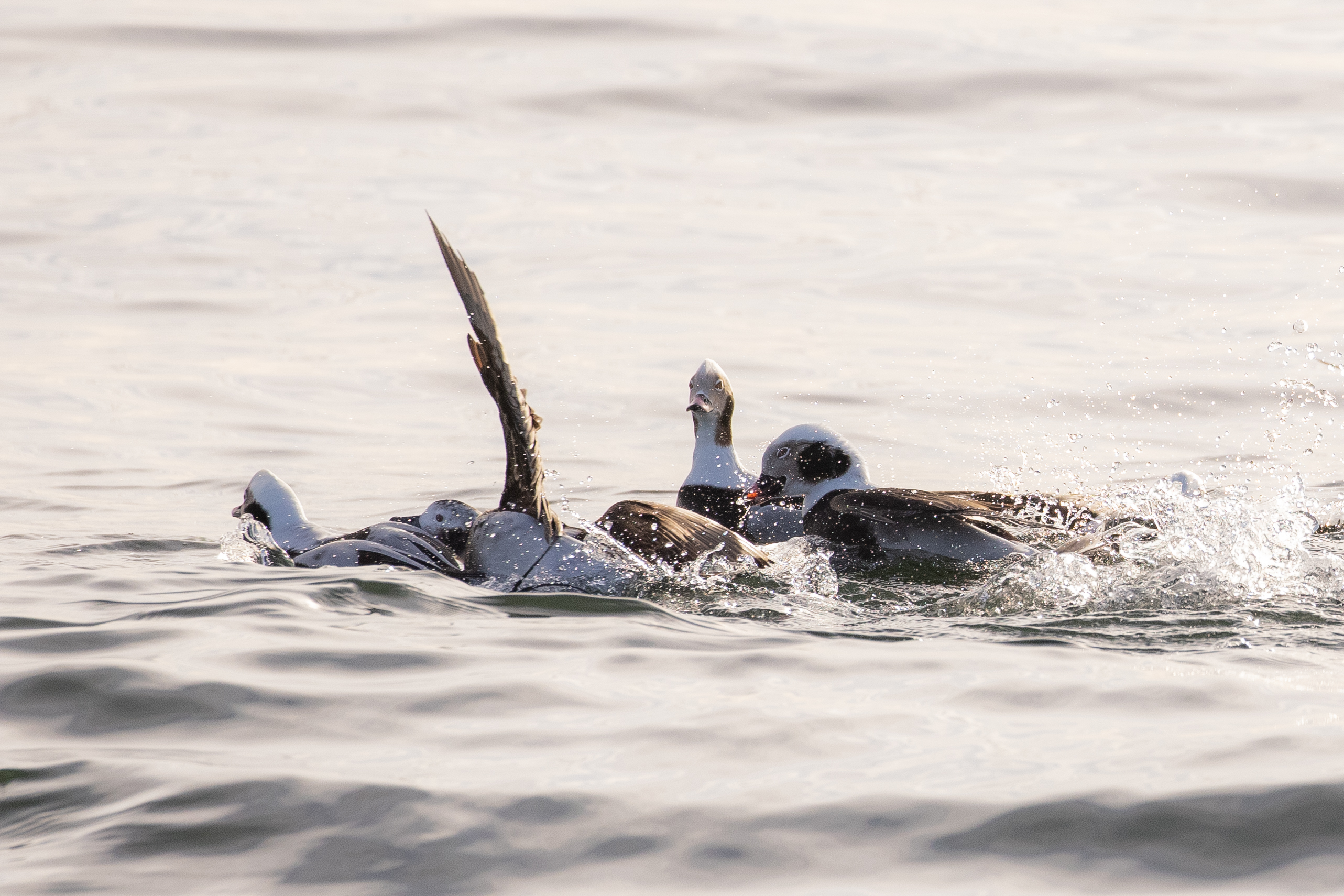
The next day I wandered back to the spot but they were gone, perhaps on a fishing trip or maybe they’d decided on another nesting spot. Not wanting to waste the trip out, I scanned the water for dolphins and birds. Just at the mouth of the harbour was a group of dots too small for herring gulls. On closer inspection through the binos I discovered they were long tailed ducks – another favourite of mine!
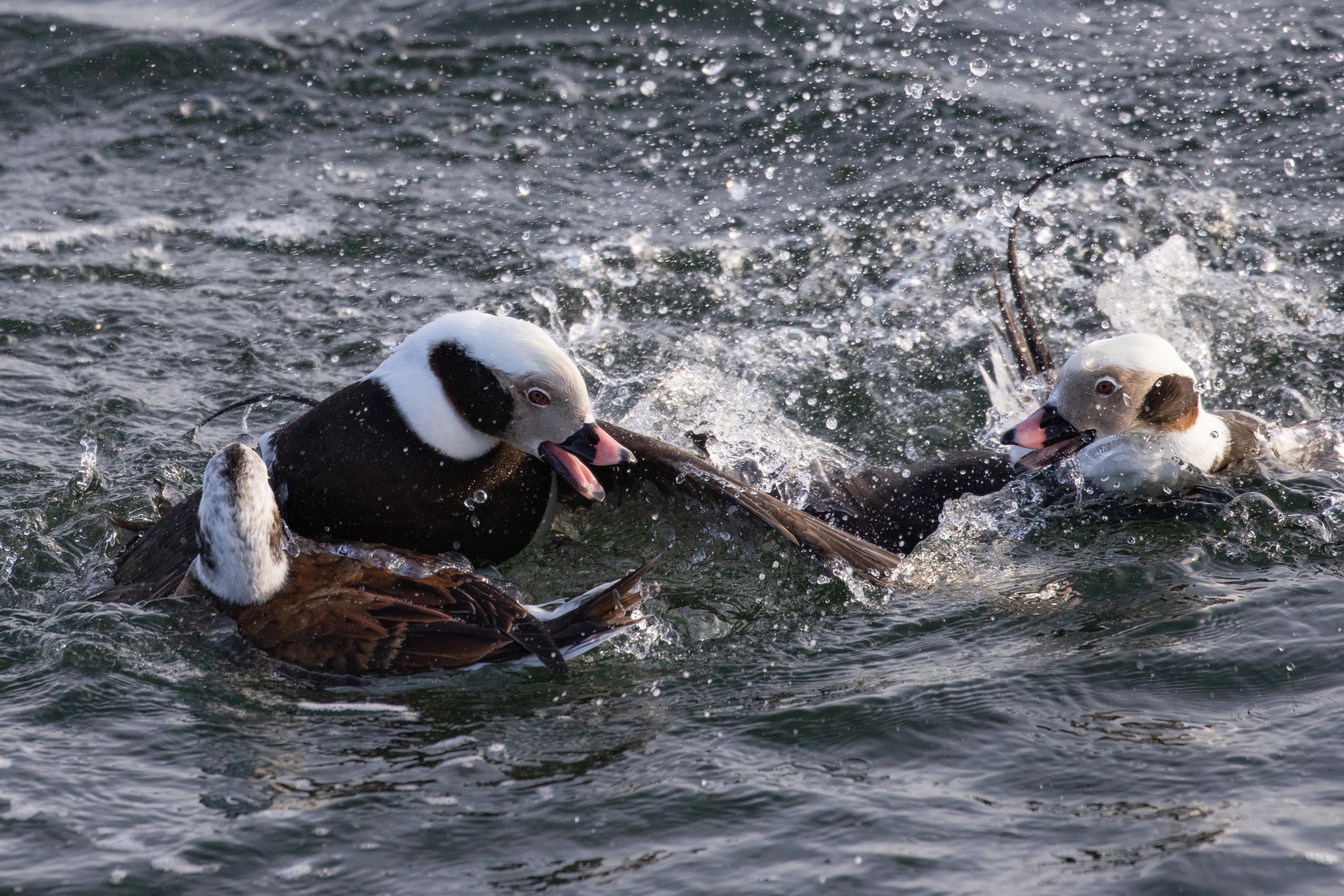
I hurried down from the headland and made a hasty loop around the harbour, peeping over the wall to see where they’d got to. I’d never seen more than a pair together before, and now I was out of the wind I realised they were making an absolute racket! There was a single female among all the males and she was flapping her wings and whipping the males into a frenzy. All the while a constant stream of three-note quack calls overlapped each other as the males jostled and squabbled around this one female.
The long tailed ducks near me are usually shy little cuties, but today there really was something in the water. By the looks of the female’s upturned bill and the twinkle in her eye it seemed as though she was egging the boys on! Well, we all need to let our hair down every now and then, and at least the long tails are allowed to have a party right now…
Elsewhere in the harbour there was more activity. Up until very recently the only redshanks I’d seen were far out and nearly impossible to photograph without the risk of breaking my leg on the slippy rocks – something I actually saw happen last year! I noticed a gathering of both redshanks and turnstones hanging out on top of the sea wall. Knowing they could be skittish, I stayed still and watched.
After a while another redshank popped up from behind the wall, surprising both me and the gang already stood on the edge. There was a great flurry of wings and I had the camera pointed at just the right spot to capture the near collision!
My intention had been to look for fulmars and I’d nearly headed in the other direction to walk further along the coast path, but after such a dramatic (and noisy) display I was relieved I’d stayed where I was! I love those surprises in nature.
I go through phases when it comes to wildlife watching. For the past couple of months, I’ve been deep in a forest phase and all I’ve wanted to do is wander through trees and look for birds and red squirrels. My Instagram was full of greens and the first hints of autumn oranges.
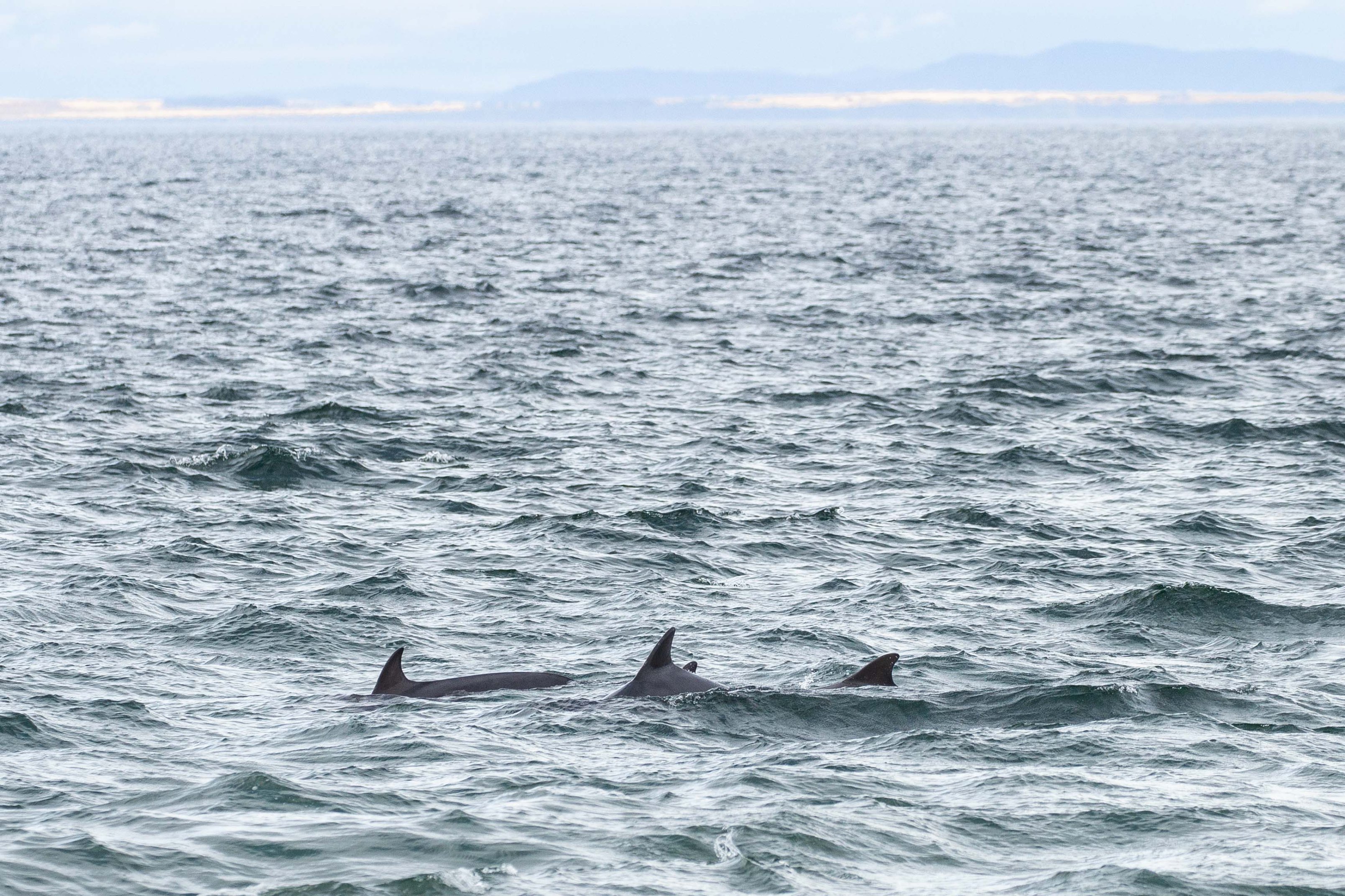
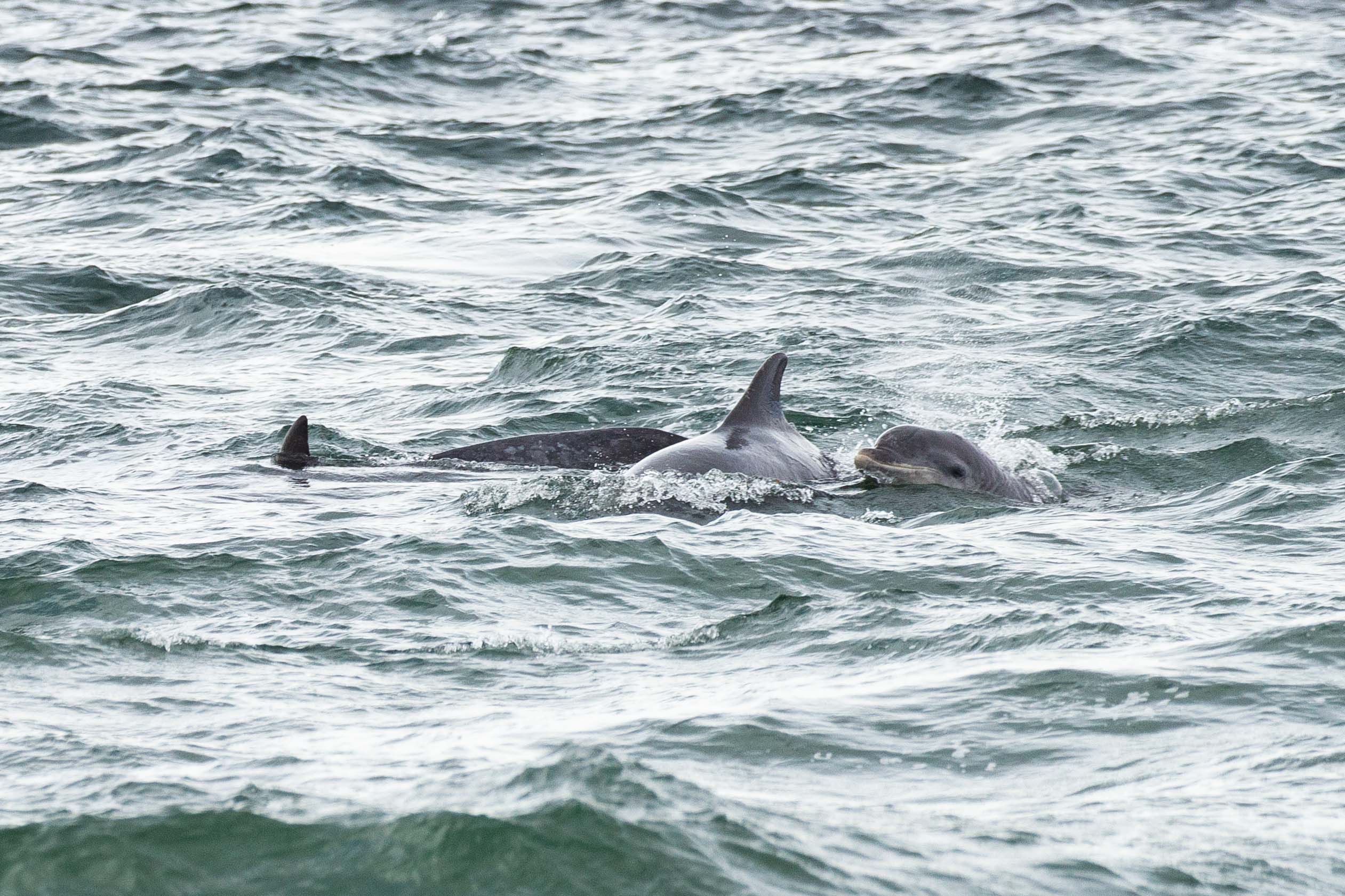
But then the ocean started pulling me back. After a few weeks with no sightings, bottlenose dolphins started to make appearances along the Moray Firth again. It was looking unlikely that I’d see my first orcas this summer, but I was still looking forward to getting dolphin photos that showed slightly more than the departing splash. I was back in an ocean phase.
Earlier this month, on a particularly choppy morning, I found myself running full pelt along Burghead harbour to reach the end of the sea wall that juts out conveniently into the sea. From there, I could watch three different pods of bottlenoses as they caught fish. With so many breaking waves and white peaks, I didn’t know what I’d managed to capture until I returned home and uploaded the photos. I was thrilled to discover I’d caught a little face just as it breached the surface.
A few weeks later, I received a text alert from the local shore watchers saying there were bottlenoses heading west around the headland. Snatching up my camera, I made a beeline for my favourite vantage point at the end of the harbour. Unlike last time, the water was completely flat and every flash of fin caught my eye. Unfortunately all the feeding action happened far out, way past the range of my lens, but I did have an unexpected visitor pass close by.
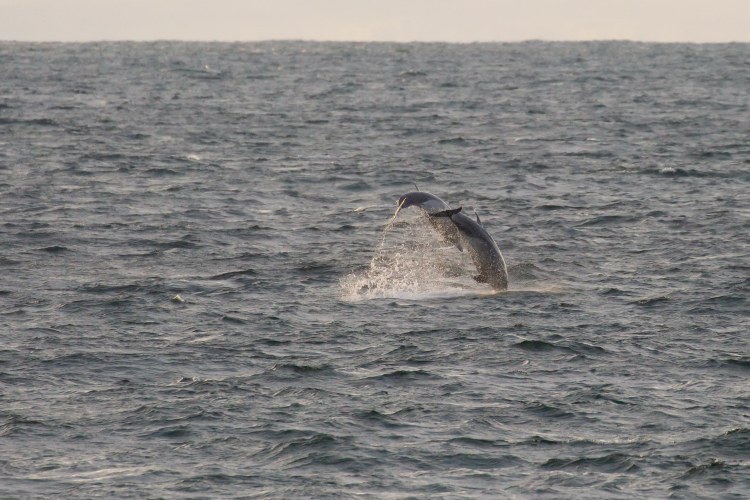
The action continued the next week. Another text alert had me hiking up to the Burghead Visitor Centre at sunset and before long I had my lens pointed at a small pod who were following a jet ski and giving the driver some sensational views! As well as belly flops and tail waves, there were plenty of breaches. It was amazing to see the dolphins so active.
In the last of a flurry of excellent dolphin sightings, I paid Chanonry Point on the Black Isle another visit: one of the prime dolphin watching spots. Within moments of arriving – being sure to time my visit with the rising tide – a pod cruised straight past. Although there were no breaches this time, one particular dolphin dived three times directly in front of the crowd, revealing a distinctive notch in its tail fluke. I was also delighted to see a newborn calf among the adults, sticking closely to Mum as they passed by.
As summer blends into autumn, the dramatic display of emerging fungi will undoubtedly draw me into another forest phase, but I’ve loved having so many marine wildlife encounters this month. I’ve now got plenty more dolphin photos to add to my portfolio too!
I had seen gannets a few times before; on a trip to the Isles of Scilly they had flown over the boat, and more recently I’d enjoyed watching them dive for fish near where I live in Moray. However, nothing could have prepared me for Troup Head. This RSPB site in Banff, about an hour’s drive from Aberdeen, provides nesting grounds for two thousand pairs of gannets, as well as thousands of other seabirds. During the short walk from the car park to the cliffs, both sounds and smells intensified until they reached a crescendo of squawks and guano pongs.
There were gannets everywhere. Without wanting to make them sound like flies, they swarmed around the cliff, gliding in deep circles as they came into land on the rocks. Many of them had chicks – currently clouds of white down with black reptilian heads. Dotted among them were the auks: guillemots, razorbills and the occasional puffin all grappling for a bit of wing room in the tight squeeze. Peering carefully down, I noticed just how high up we were. The swan-sized gannets – Britain’s largest seabird – looked like sparrows at sea level. Even the coastguard helicopter that passed by was below us. Troup Head really was a bird’s eye view.
The site became a significant birdwatching spot when gannets began to colonise it in 1988. Troup Head is now Scotland’s largest mainland gannet colony. We spent seven hours wandering along the track, shuffling across the tussocks to get the right vantage point for photos. Gannets came sweeping in to land in an endless queue, many suspended in mid-air and bobbing in the wind. There was something very duck-like about the way their webbed feet stuck out to the sides, and more than once a bird would crash-land quite unceremoniously with a ruffle of the feathers.
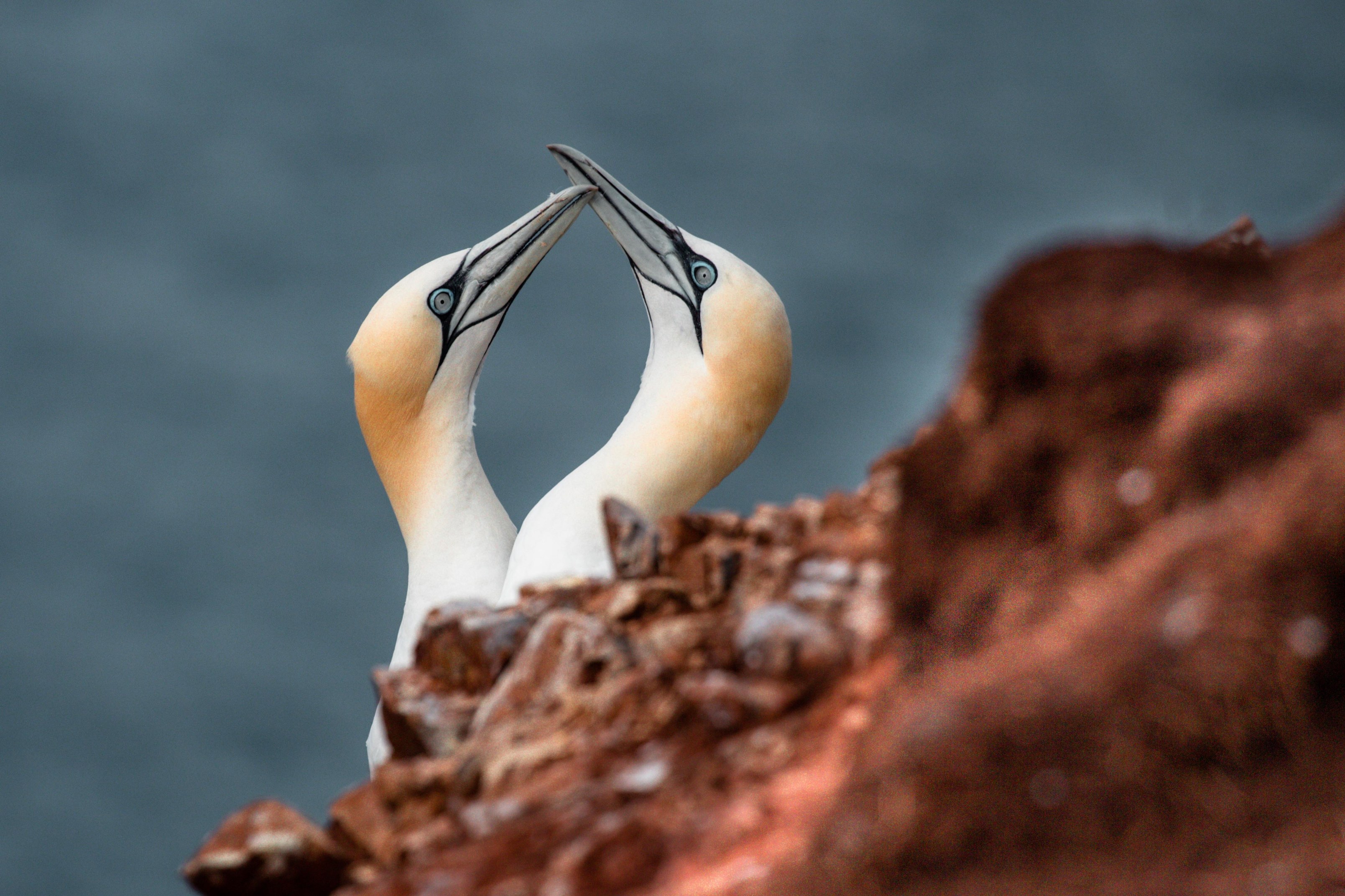
It was interesting to see lots of gannet behaviours up close. The birds pair for life and return to the same nest site each year with the same partner. To cement their pair bond, males and females will ‘fence’ together, clicking their bills from side to side and mutually grooming one another.
‘Fencing’
To ensure that one parent remains on the nest at all times, a gannet will stretch its neck and stare straight upwards in a pose called ‘sky pointing’, which signals to its mate that it is about to take off.
‘Sky Pointing’
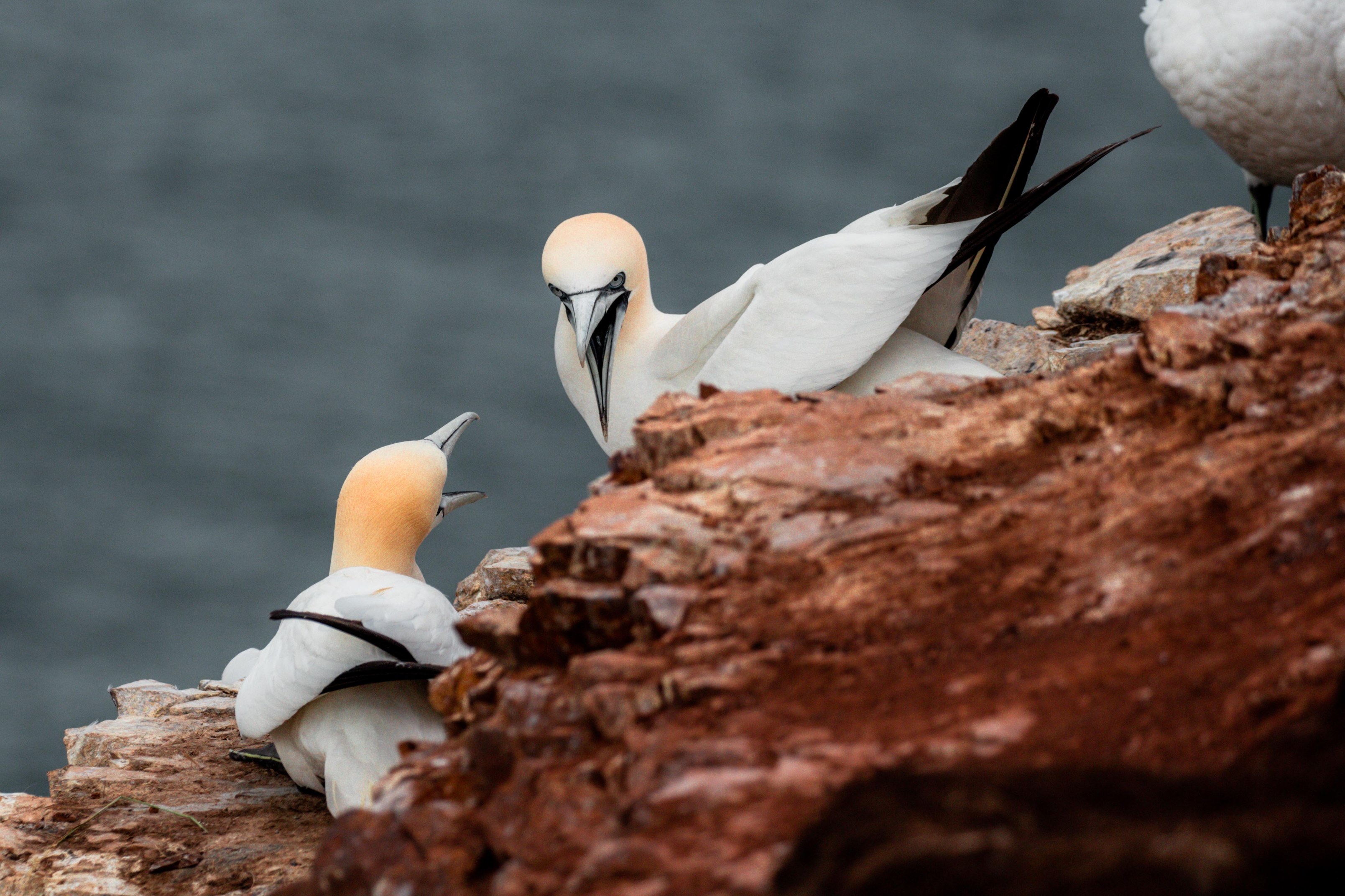
With so many birds on one cliff, it’s inevitable that there will be disputes over space. If a gannet gets too close to a neighbour’s nest, there is a display called ‘menacing’, where the birds will open their bills and lock them together in an attempt to jostle each other off the cliff.
‘Menacing’
While some quarrels are short-lived, others develop into full-blown fights, and with such formidable bills these can be aggressive.
Gannets have been a favourite of mine for many years, so to see such a vast colony so full of activity was a real treat. I was even more impressed that I didn’t get pooed on once!
I had just finished dinner after a fairly uneventful day when I received a tip off from Steve – wildlife photographer, skipper and all-round marine mammal wizard – who told me there were bottlenoses on the way. I jumped into a down jacket and grabbed my camera. Luckily my daily walk can include a long stretch of rocky shoreline, which is infamous for its wildlife including the Moray Firth dolphins. Half a minute later I was slammed by an unexpected wind and I regretted not grabbing a hat on my way out. Although, I wasn’t sure how fast the dolphins were going and another half minute could be the make or break.
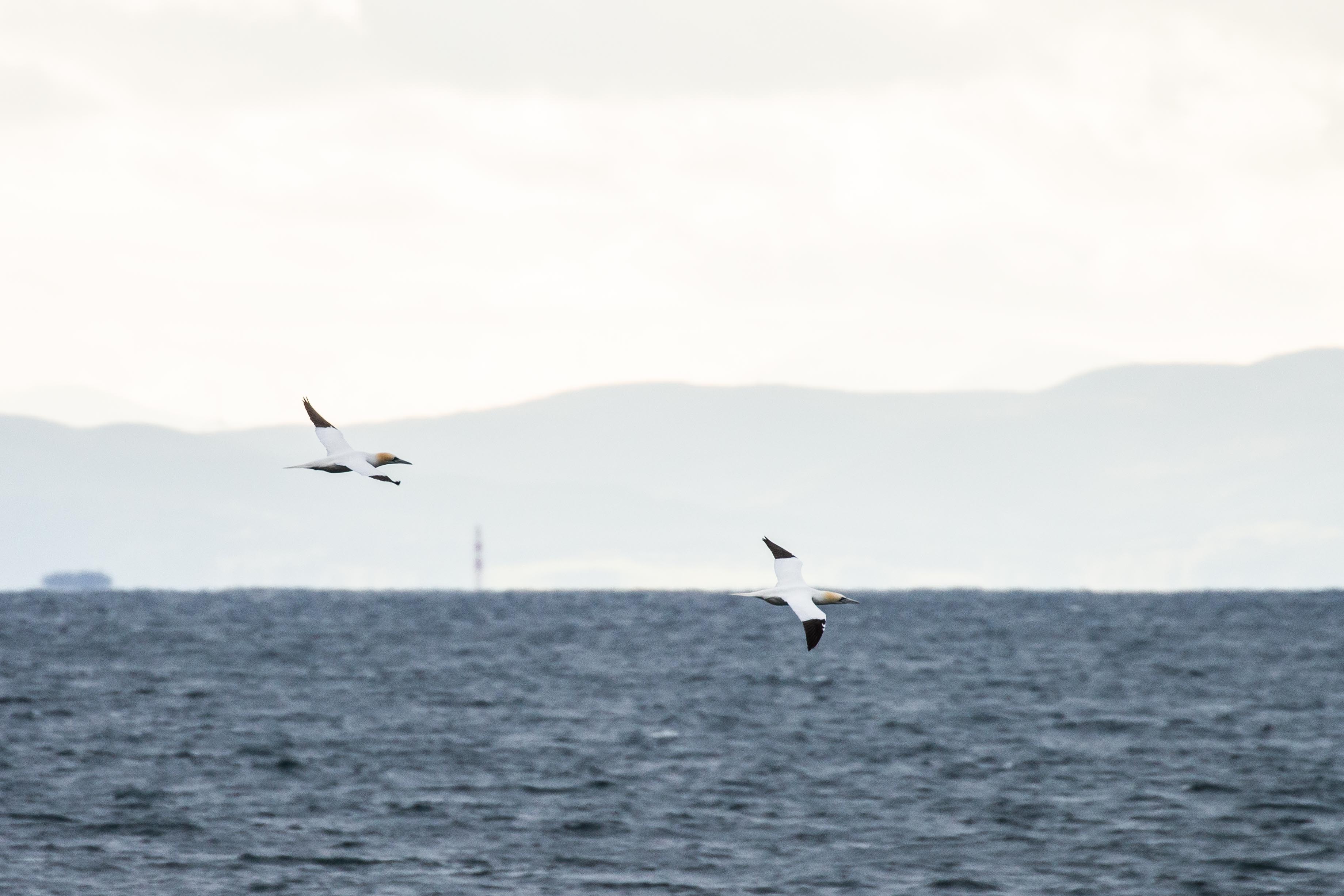
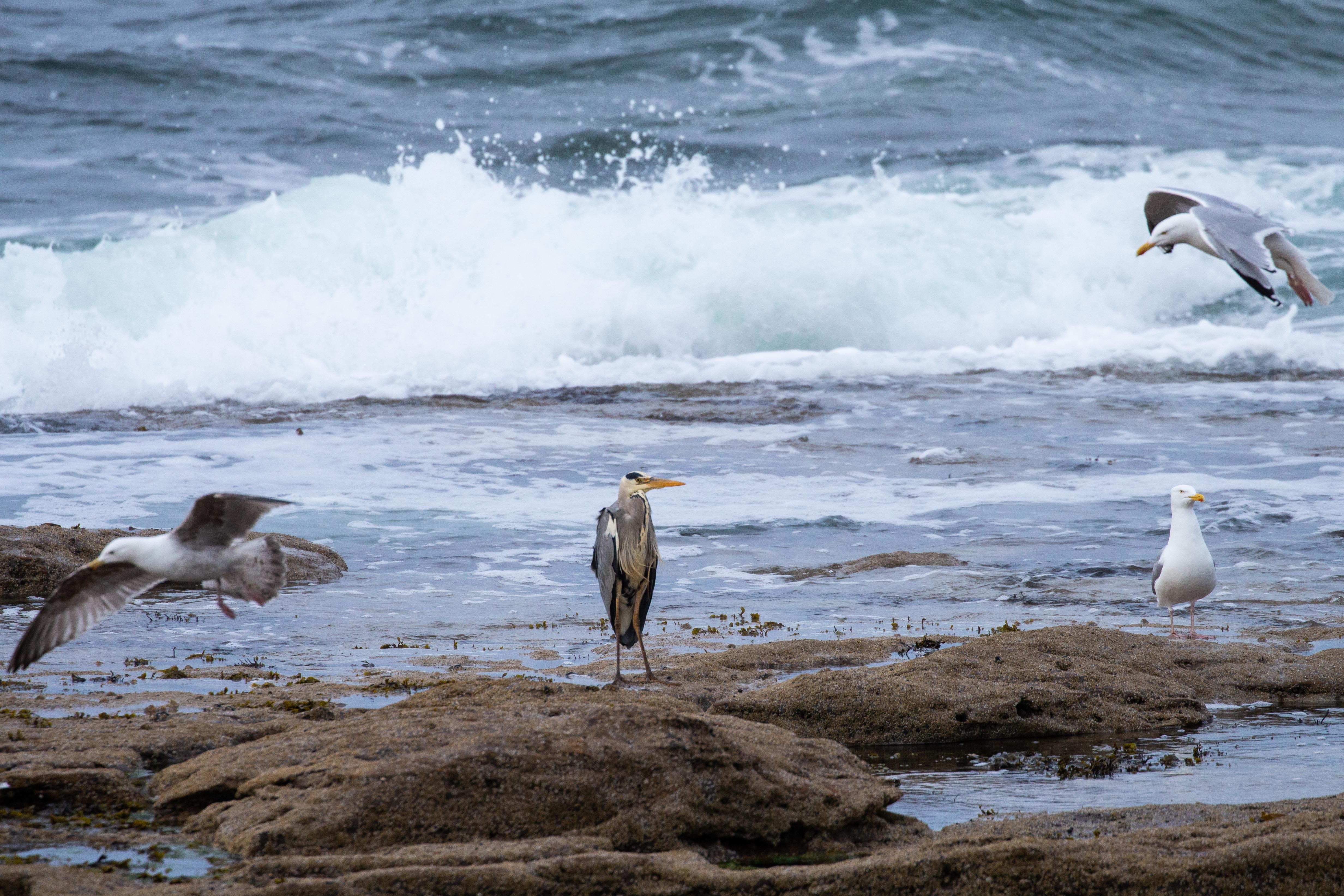
Keeping my two metre distance from Steve, we started scanning the water. He spied them far out, almost level with the next town, but we stayed put. If they didn’t turn north and swim further away, they would follow the coast and come straight past us. There was still lots to photograph while we waited. Groups of gannets – easily one of my favourite birds – were diving just offshore and a grey heron was settled hunch-shouldered on the rocks, surrounded by the usual mob of herring gulls and oystercatchers.
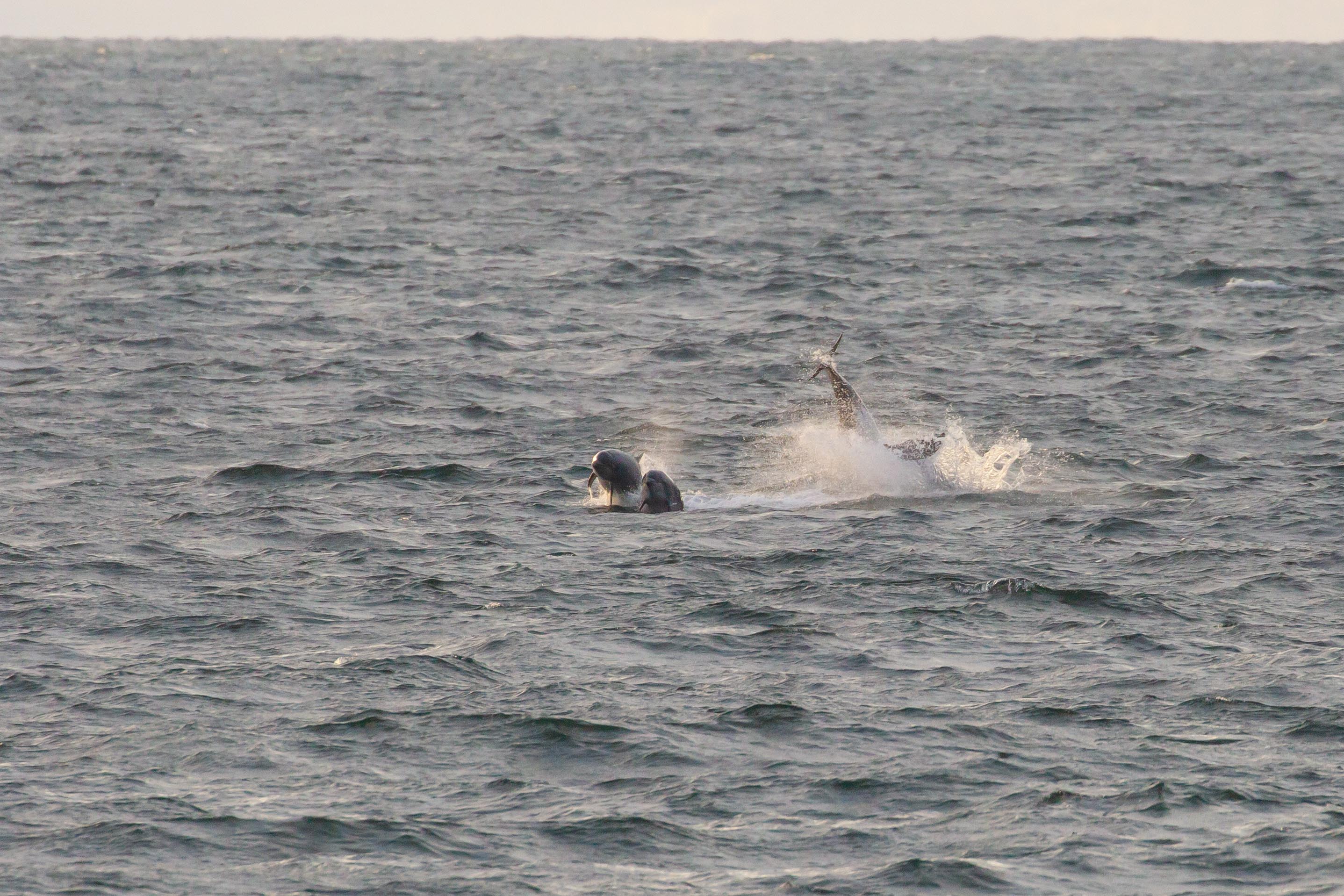
Suddenly the dolphins appeared again, much closer this time. They began to breach, leaping one, two or even three at a time. Photographing them felt a bit like playing Whack-a-mole – just when I thought I’d caught one, it had already landed with a splash and another had sprung up somewhere else. Once, two jumped together in perfect synchronicity, and no sooner had they landed than another pair took their place in the air. As so often happens, I was trying so hard to get the shot that I occasionally missed some of the action. But, when animals bigger than most grown humans are flinging themselves out of the water and performing acrobatic stunts, it’s almost impossible not to lift the camera and watch through the viewfinder. I find there’s nothing more enjoyable about wildlife photography than the unpredictability.
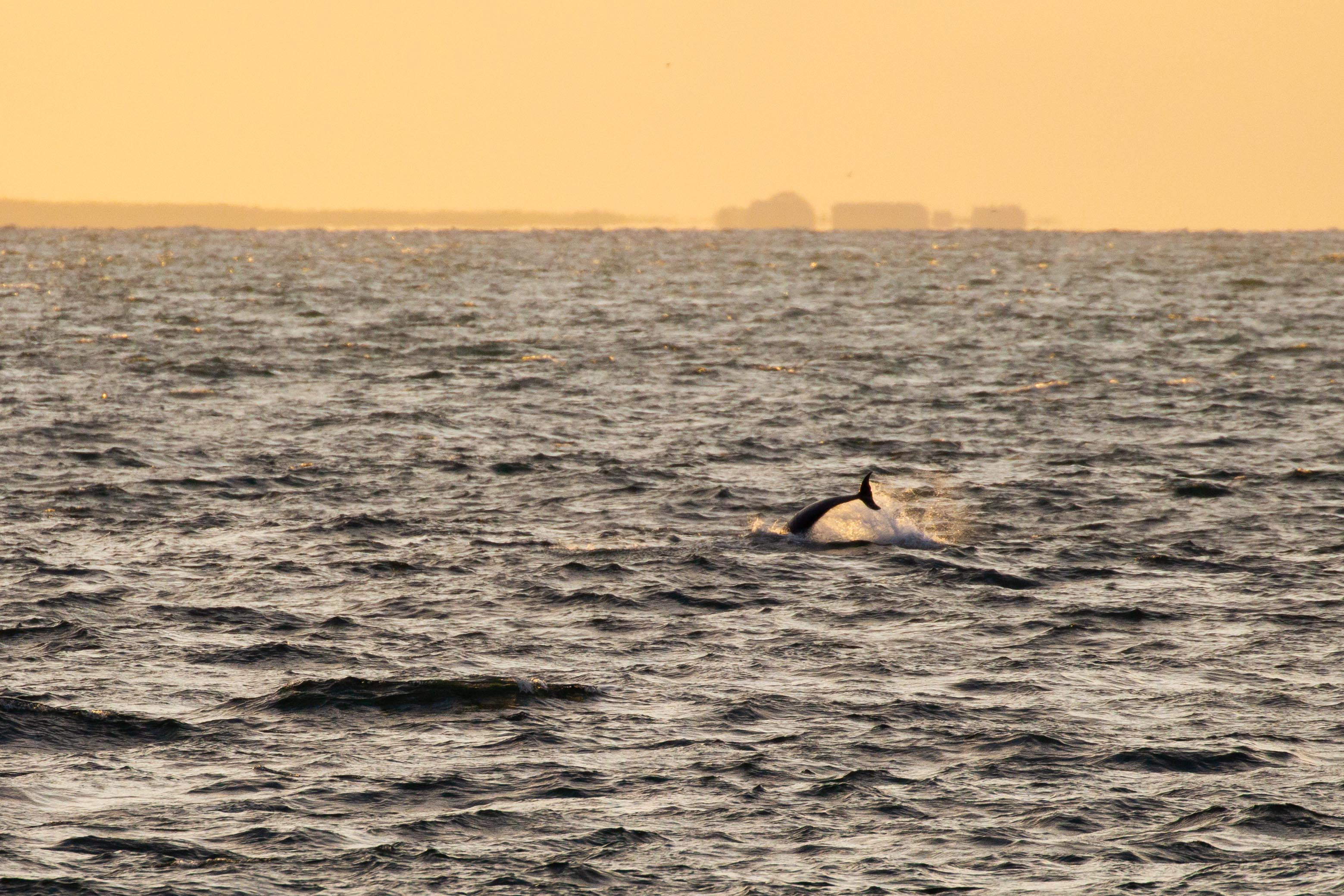
The cold was nibbling my face but there was no way I’d go home for my hat now. Dolphins were jumping in multiple directions, and all of them heading towards the sunset. We hiked up to the headland for a higher vantage point. As the dolphins got closer to the sun, the water streaming from their bellies mid-leap turned golden. Even with the naked eye you could spot them between waves from the clouds of shimmery spray erupting from their blow holes. Every so often there’d be a breach, but they were gradually heading further out. Still, Steve had never known them to linger for so long in one place. I was pleased not just to watch them but to know there was plenty of food to keep them there.
The sun finally set, casting a bright orange glow over the water. It was moments like that when I knew I’d made the right decision to move to Scotland. Sitting on the grass, shivering in the cold and watching dolphins breaching out at sea.
Although I’m naturally quite an introverted person and love having time to myself, I’ve still struggled to adapt to the lockdown routine. I like to potter around outside for hours while I write or just watch the world go by, so it goes without saying that I’ve missed wildlife far more than the pub. Alerts have hit my local Facebook groups about ospreys just a few miles away from me and orcas (orcas!) further along the coast, but lockdown measures have kept me stuck in one spot.
Still, it’s a beautiful spot to be stuck in, and there have been some new visitors to my local patch over the past few weeks. Before the clocks went forward, the daily sightings always included goldeneyes, long-tailed ducks and red-breasted mergansers. Now, as the spring wildflowers emerge and the days grow longer, I’m seeing some new faces on the backshore.
Willow Warbler
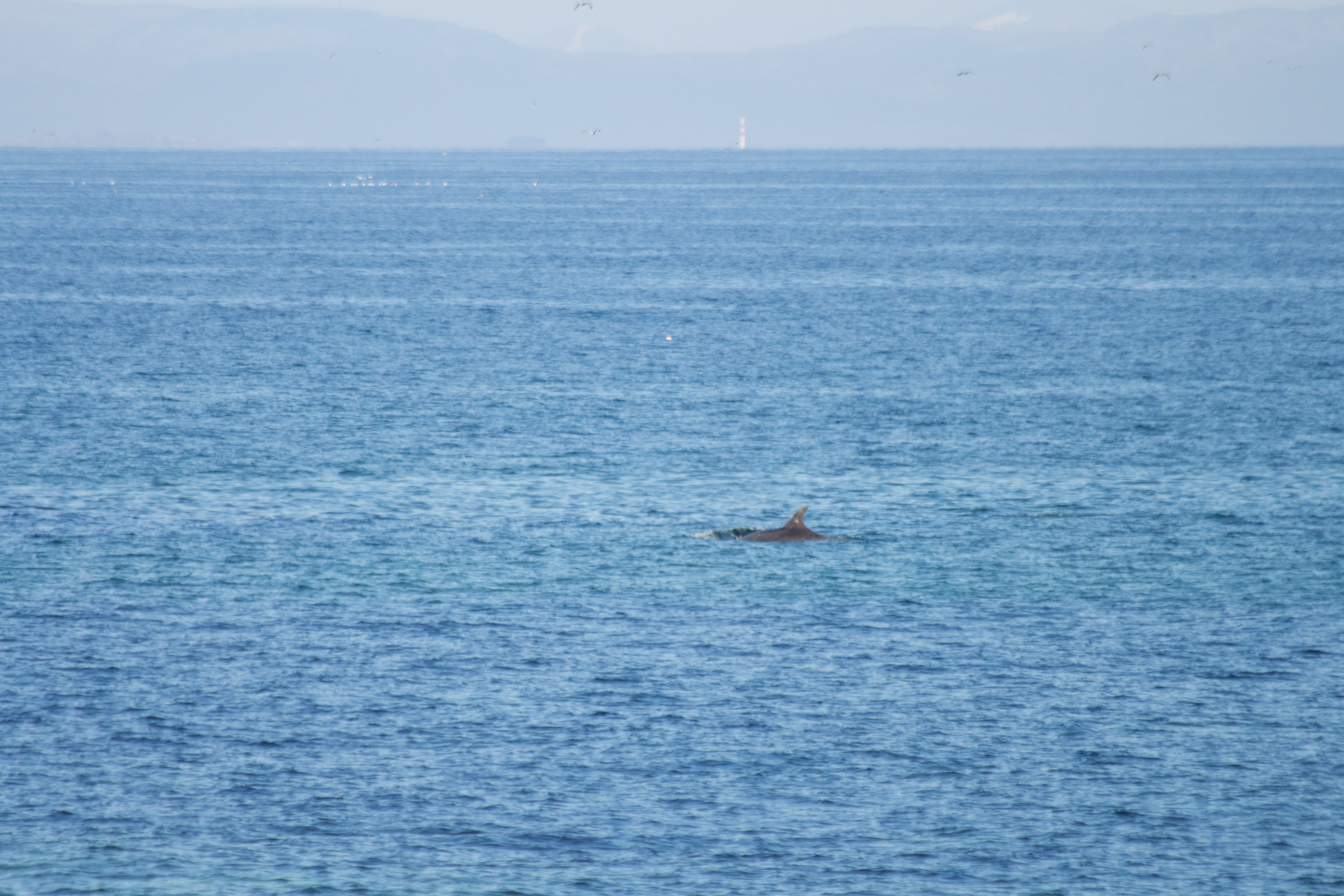
When I arrived in Scotland I was told that May was the true start of the bottlenose dolphin season, but I’ve already been spotting dorsal fins on the water. I’ve had three different sightings so far, and on the second I managed to photograph some for the first time. Even from a distance and with most of their bodies submerged, it’s easy to see just how large these marine mammals are. In fact, the bottlenose dolphins in the Moray Firth are the largest and most northerly in the world.
Bottlenose Dolphin
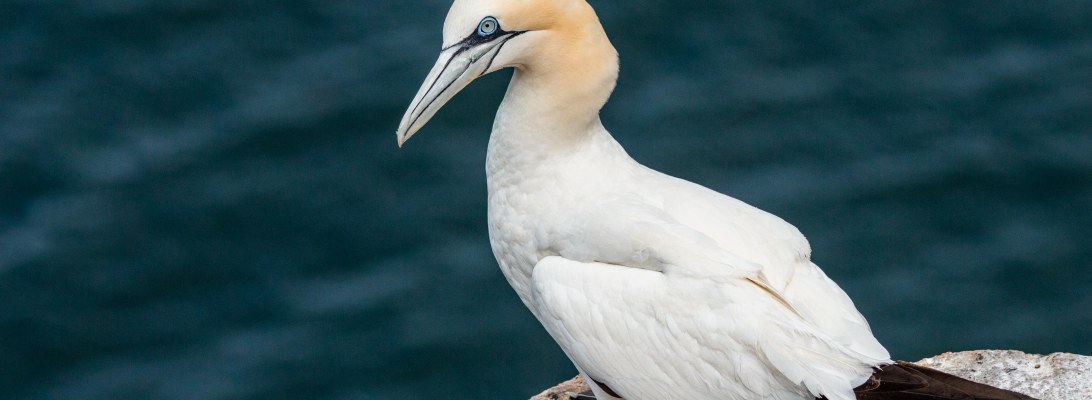
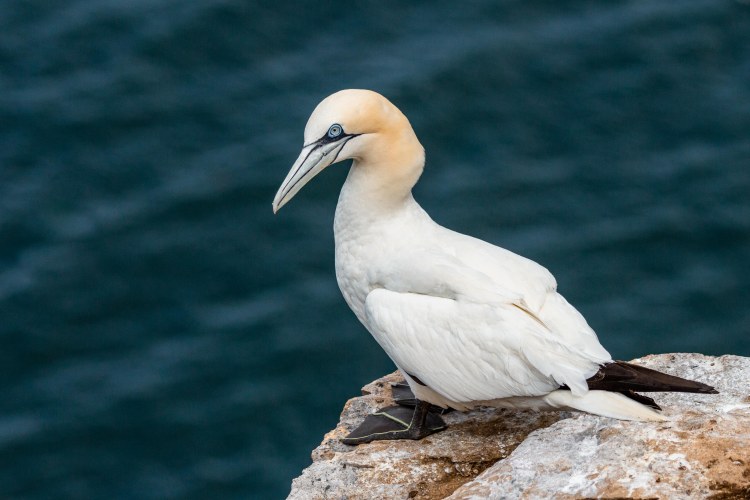
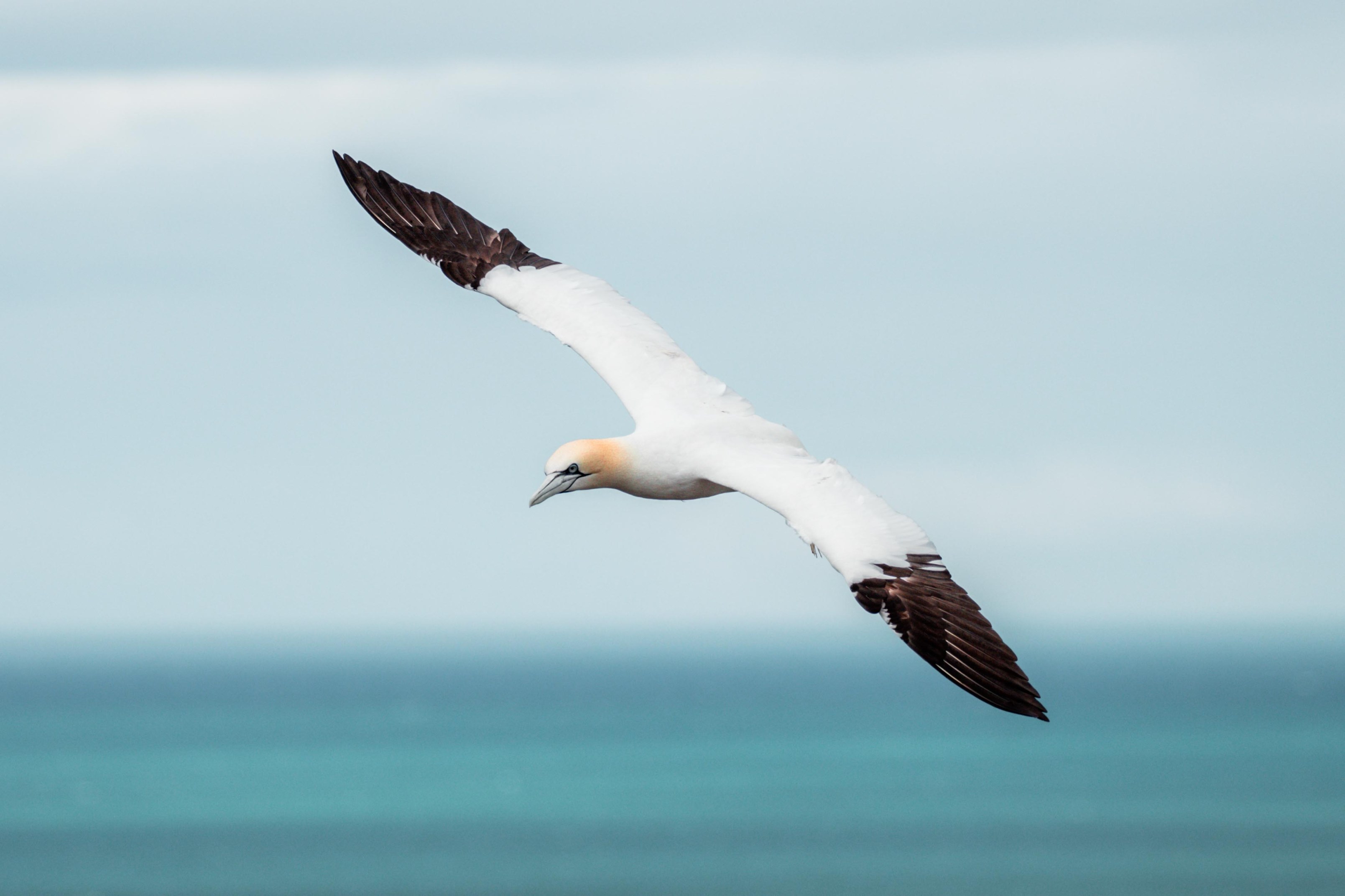
As well as cetaceans, there’s been some avian excitement too. My absolute favourite birds have arrived in my patch: gannets! I glimpsed a white wingspan last week but wasn’t sure if it was just another herring gull, but since then I’ve had indisputable views of these vast and beautiful seabirds. As well as flyovers, I had the privilege of watching a dozen gannets diving for fish just offshore – twisting their bodies and tucking in their wings at the last moment before hitting the water like feathered torpedoes. I’ve always been drawn to gannets’ subtle plumage and dramatic facial markings and it’s been such a treat to watch them in my patch.
Gannet
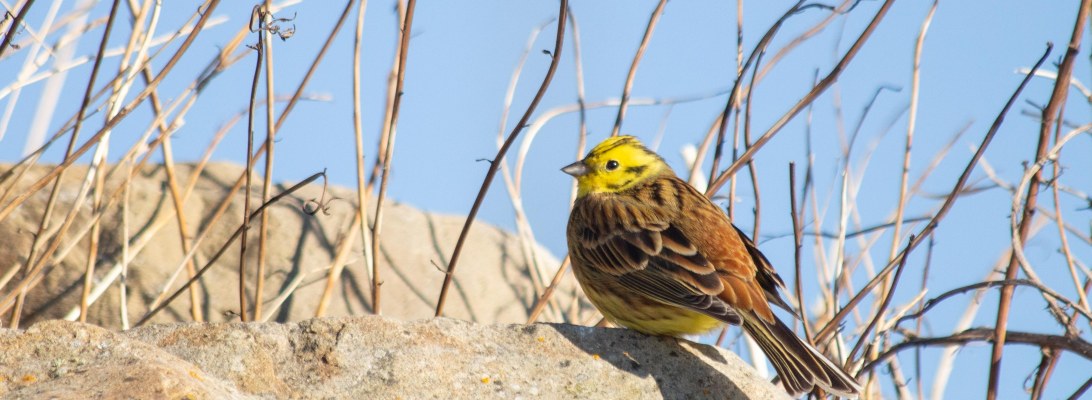
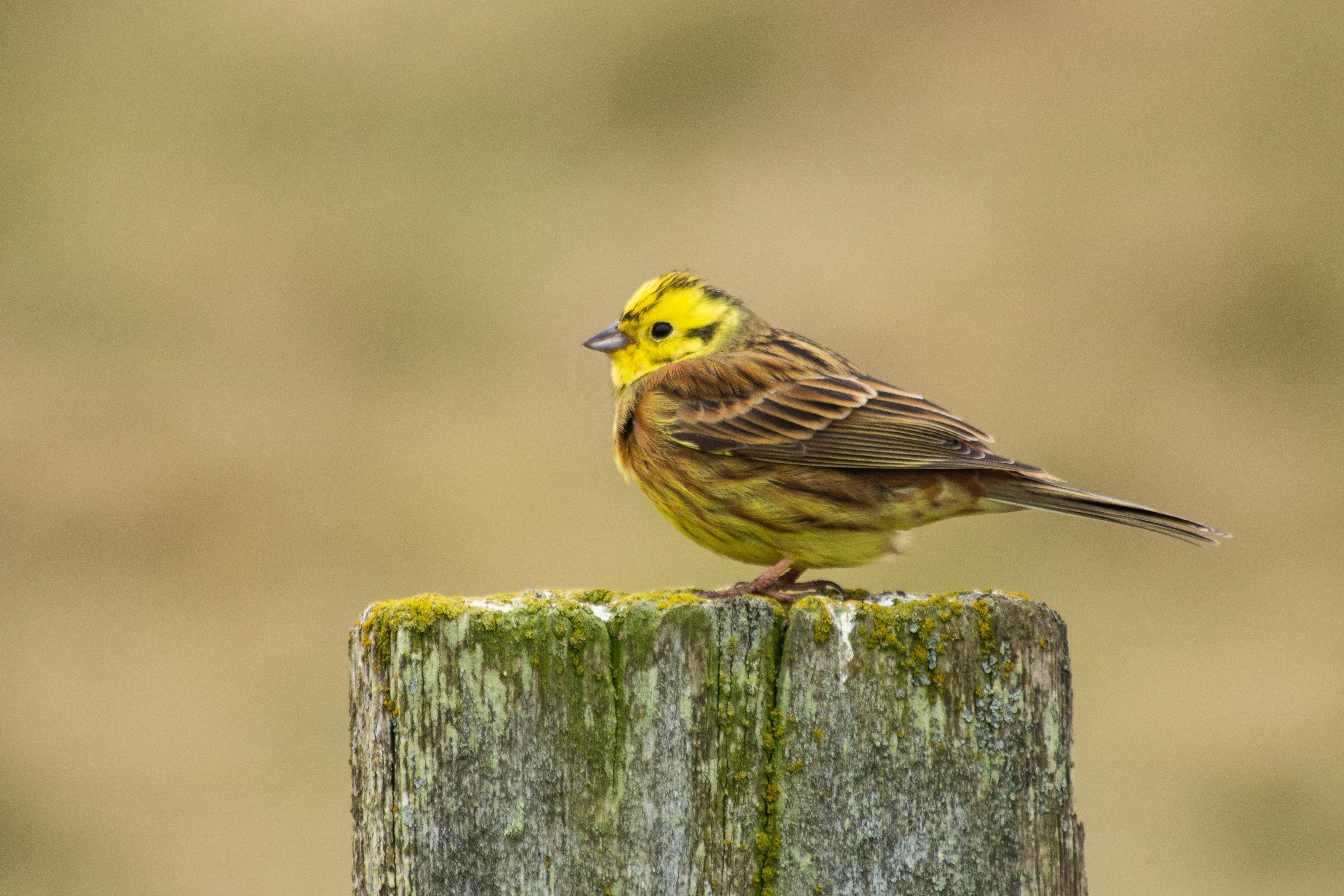
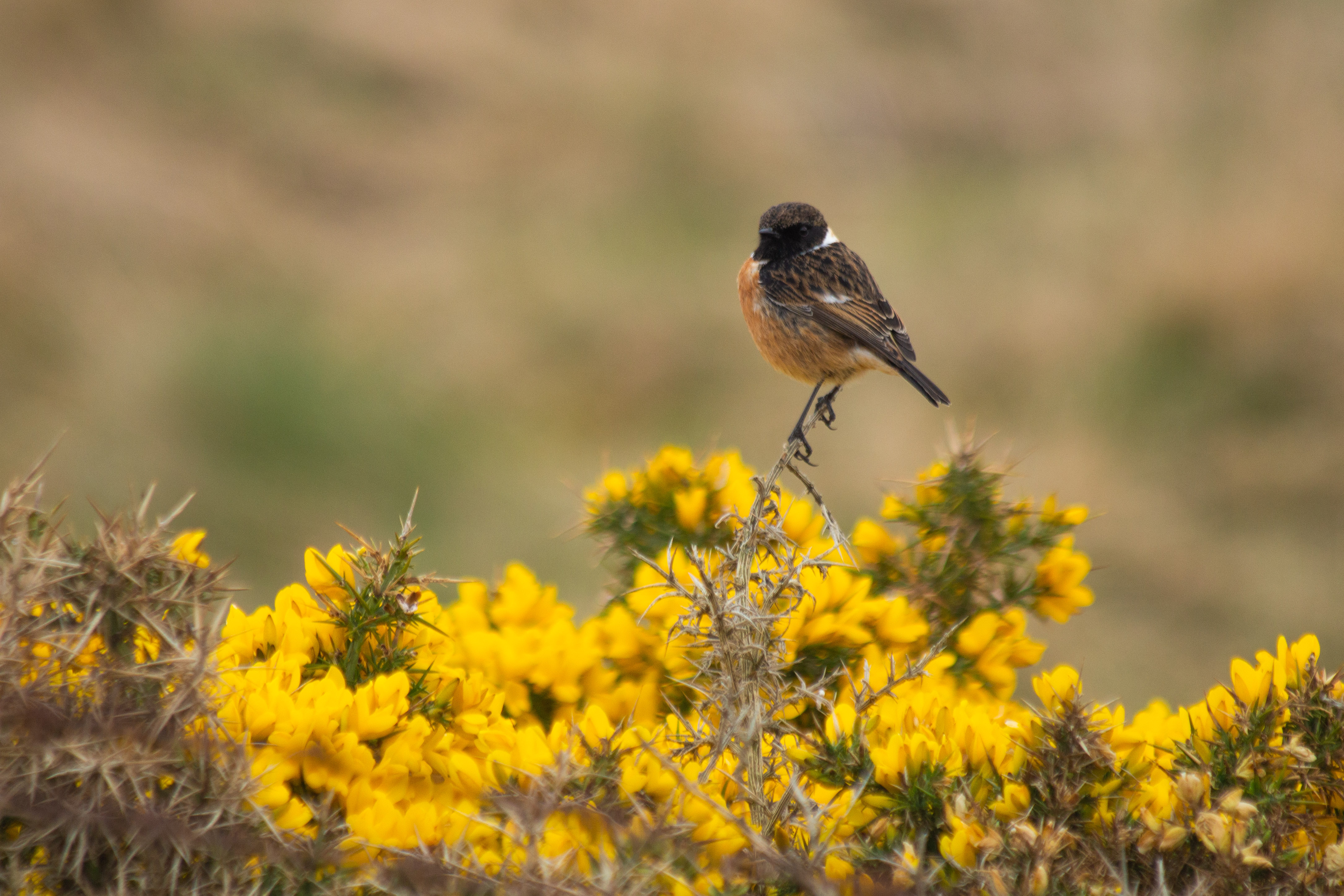
As I walk along the shore, I have the option of looking left to the ocean or right to dense clouds of gorse. As well as infusing the air with a beautiful coconut smell, the gorse provides excellent shelter for lots of different birds. Over the last week I’ve seen willow warblers, stonechats, linnets, skylarks, hooded crows, swallows, swifts and yellowhammers in just a small area. The charm of the gorse forest is that you never know what you’re going to spot and I’m almost always surprised by something.
Yellowhammer (male)Stonechat (male)
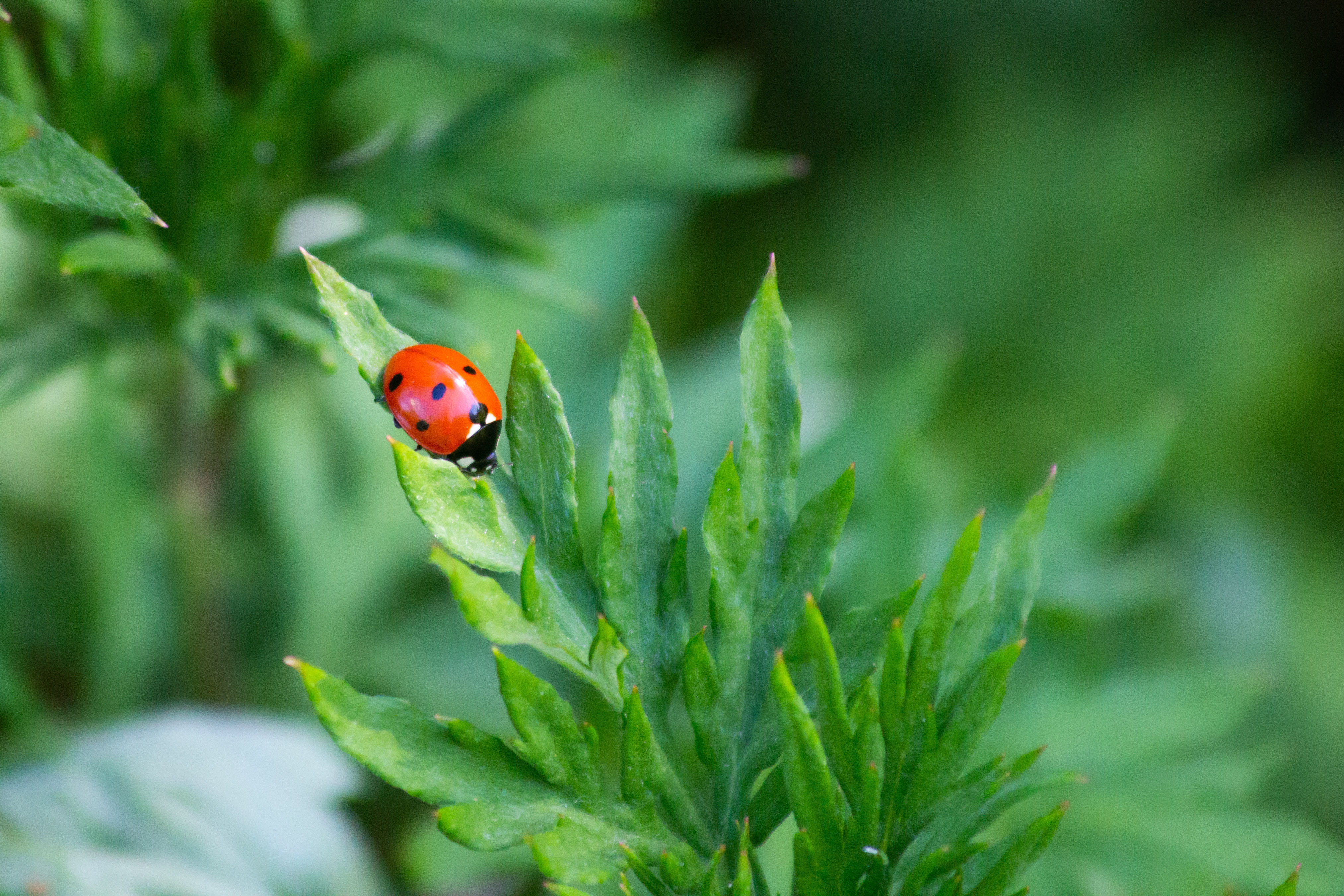
Although I’m usually drawn towards birds and mammals, I can’t help but notice emerging insects as the temperature climbs. Just along from the town allotments I’ve seen bees, peacock and red admiral butterflies and green foliage that’s speckled with ladybirds.
It’s been difficult for us all to stay connected to the natural world during the lockdown, but seeing snippets of spring visitors on my daily walks has really lifted my mood. Nature never fails to make me feel better, and it’s during these challenging times that our time spent outdoors is the most important. Stay safe and stay wild everyone.






















 rebeccaonthewing.com