Chesters – Day Two

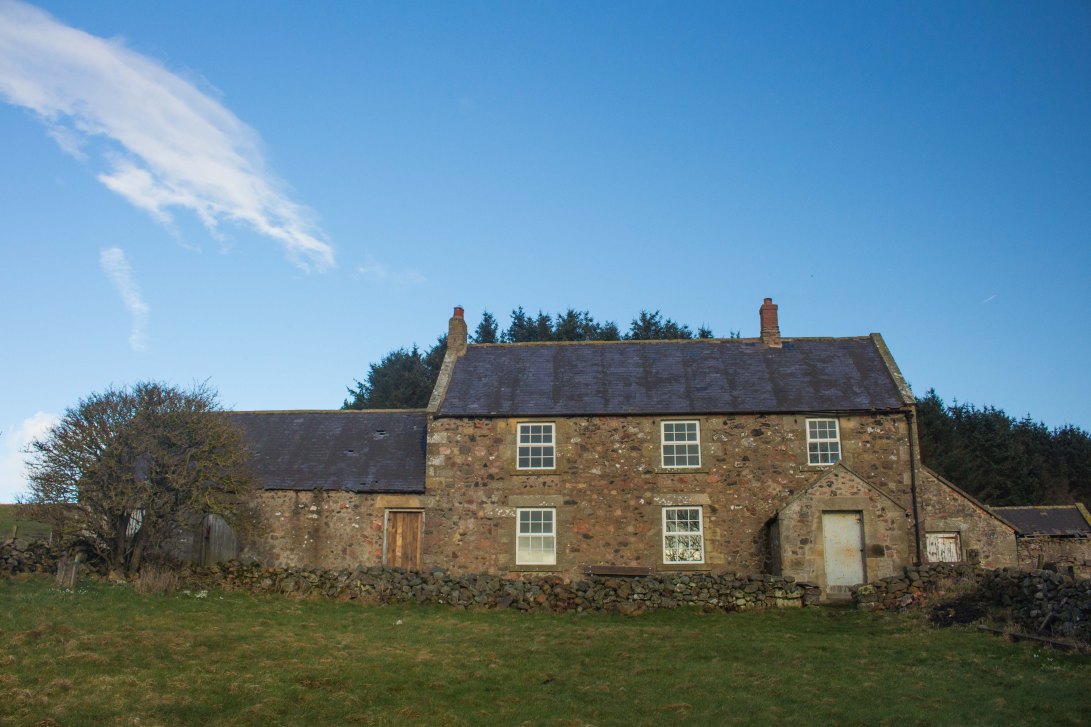
As it happened, I slept extremely well last night, so I missed out on the tawny owl calling from the Chesters bothy roof. The morning was bright, and as I peered out of the cocoon of my sleeping bag I felt the familiar pull of the wild. The combination of hushed soundscape and pine woodland packed with secrets was enough to lure me out of bed.
IMG_0465-2

As I ate breakfast I had the pleasure of watching a bank vole feeding on the sunflower hearts Heather had left out. He was a challenge to photograph as he only stayed in view for a second, but it was impossible not to love his curious expression as he peered through the window.

IMG_0476-2

After preparing the bothy for the expeditioneers’ arrival, Cain and I headed back through the Breamish Valley to meet them. Although no red squirrels this time, we came across two dead pheasants. They looked incredibly fresh with no obvious wounds. The only indication of possible death was the presence of downy feathers in the birds’ claws, suggesting the frisky males had fought to the death. It was a great opportunity to photograph a pheasant’s feathers up close – there are so many beautiful colours.

IMG_0185

When we returned, Heather explained the itinerary for the next three days and introduced the expeditioneers to camera traps and Longworth traps, recording equipment used to live trap small mammals. Finally, we all found Chesters bothy on a map of the Cheviots.

Just before the sun began to set, we all headed out into a patch of woodland just beside Chesters, where we used the rest of the daylight foraging for signs of the forest’s inhabitants. There were abundant droppings, and although most belonged to sheep and pheasants, a prominent sprinkling on a mound of grass beside an extensive burrow indicated rabbits. Later, we saw different droppings that were more elongated, suggesting hares were also present. Among other treasures, we found rabbit bones, a red squirrel drey – a nest built of twigs, dry leaves or grass – the chest plate of a woodpigeon and feathers belonging to a buzzard and a long-eared owl.

After a thorough forage we suddenly realised the sun had gone, so we hurriedly set up two camera traps, one in the woods to hopefully capture roe deer and the other beside a clump of frogspawn to see if the parent showed up.

Once the traps were set we returned to the bothy. Heather went to fetch wood for the fire and returned with a sleeping moth. After searching through the moth ID book we discovered it was a herald moth. I’d never seen this species before, and took the opportunity to use my macro lens and accentuate its rich copper-coloured wings. After returning the moth to the woodshed to avoid disturbing it, we had an early night in preparation for our long walk tomorrow in search of elusive adders.

IMG_0450-2

Species seen/heard:

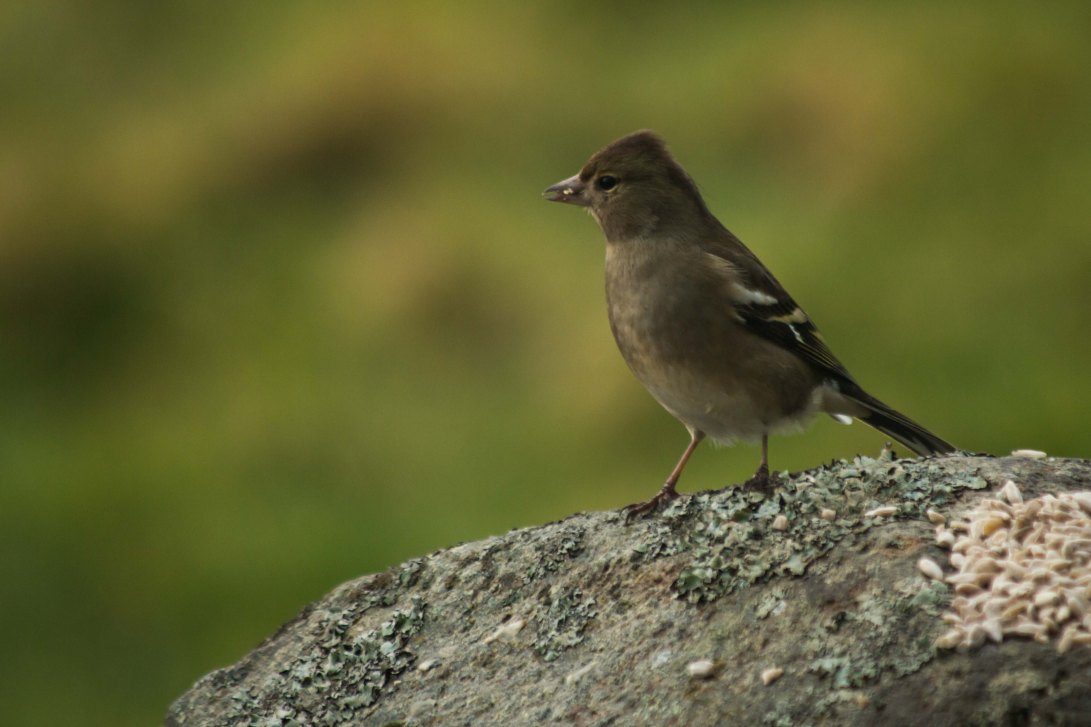
Bank vole Myodes glareolus Blackbird Turdus merula Chaffinch Fringilla coelebs Coal tit Periparus ater Goosander Mergus merganser Grey wagtail Motacilla cinerea Great-spotted woodpecker Dendrocopos major Herald moth Scoliopteryx libatrix Mistle thrush Turdus viscivorus Oystercatcher Haematopus ostralegus Pheasant Phasianus colchicus Red-legged partridge Alectoris rufa Robin Erithacus rubecula Snipe Gallinago gallinago Song thrush Turdus philomelos Tawny owl Strix aluco Woodcock Scolopax rusticola Wren Troglodytes troglodytes
Chesters – Day One


The drive to the Village Tearoom and Emporium was stunning. As the sun was beating down on my right arm I was a little nervous I hadn’t brought the sun cream, but luckily the light was just right to make Northumberland’s hills shine gold, without turning my skin pink.

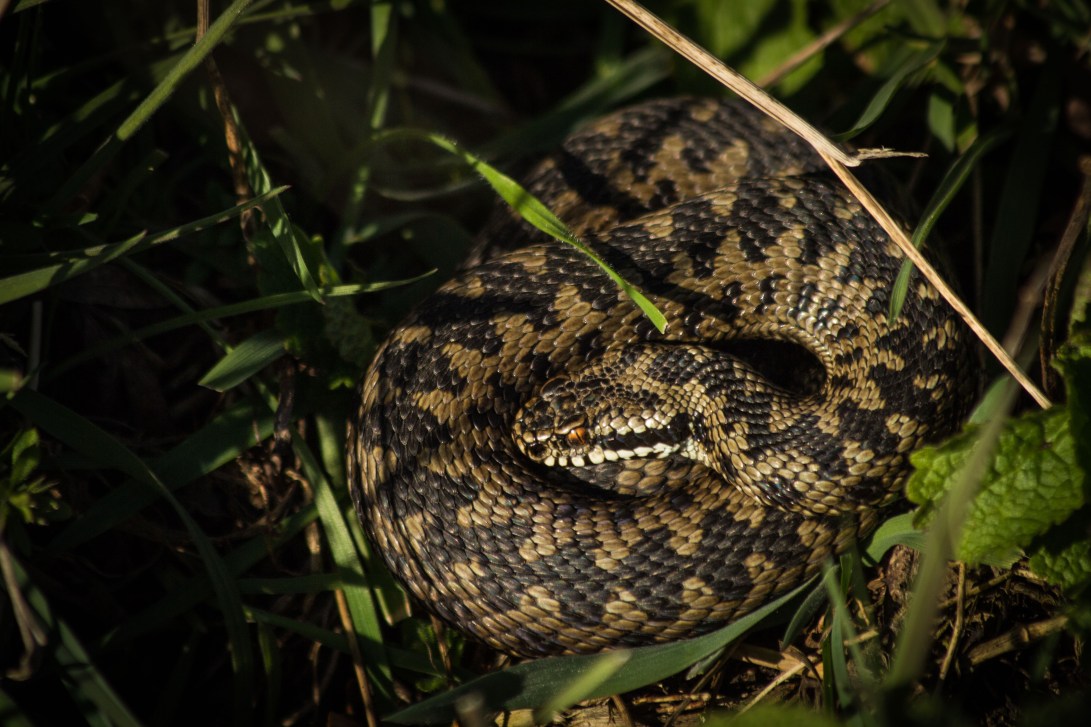
After meeting Heather, we drove to a top-secret spot where adders were frequently sighted. Due to the adder’s rarity in the UK, it is important not to broadcast locations of their possible breeding sites, to avoid a rush of human activity and potentially disturbing the snakes. As the afternoon was still very hot, we found eight adders basking, both males and larger females. In fact, in one spot there were four males writhing together, perhaps in an attempt to attract a watching female. It was my second adder sighting, but getting the chance to see them so clearly was a real treat. While maintaining our distance, we watched them bask for nearly an hour. Though I could have stayed far longer, it was time to head to Chesters bothy before it grew dark.

IMG_0124-2

Leaving the adders behind, we drove to the end of the road, where urbanisation ended and true wilderness began. Shouldering our bags for the weekend, we began the two-mile walk through the beautiful Breamish Valley, accompanied only by the bleating of sheep and the infamous scraping call of pheasants.

IMG_0194-2IMG_0196-2

As the day drew to a close, the hills faded from shimmering orange to dusky pink with a patchwork of dark green conifers and purple heather. Then suddenly a flash of brown as a hare darted up the hill, white tail flashing. He was too far for my camera to get a clean shot, but it was a great sighting on my first day in the Cheviot Hills. Fascinatingly, hares can be pregnant with two young that are not twins simultaneously. The unborn leverets may have been conceived at different times, meaning they have different growth rates.

Before long we reached a patch of conifer forest that looked like something from a fairytale. As we threaded up the pinecone-dotted track I couldn’t help but think how well a pack of wolves could fit in here, miles from interfering humans.

IMG_0552-2

Just as we emerged on the other side of the forest and paused for a breather to gaze upon some truly stunning views of the River Breamish, Heather explained how there were tales of red squirrels in the Cheviot Hills, but due to habitat fragmentation resulting in isolated patches of woodland, she didn’t think the area could support a breeding population. As if we’d been overheard, a high-pitched chattering sounded from above and two red squirrels appeared, hopping from bough to bough and scrabbling up the trunks. Not only were these the first red squirrels I’d seen in the wild, they were the first individuals that Heather had seen at Chesters, so it was a special moment indeed.

After such good luck, we almost had a skip in our step as we made the rest of the way up the hill to Chesters bothy. Almost immediately we were met by a flock of fieldfare as they swooped overhead, another new species for me.

IMG_0543-2

After dumping our bags, we sat outside on the dry stone wall and listened to the evening’s birds before the generator drowned them out. Amongst the shrieking pheasants, there was the distant hoot of a tawny owl, and later when the sun finally sunk behind the hills, the bizarre wing beats of snipe reverberated across the landscape. If you’ve never heard a snipe drumming, any description I could give would never give it justice. It’s a sound I’ll never grow tired of hearing. It reminded me that I was in the middle of nowhere. I was cut off from technology and we needed a fire to get hot water – it’s the sort of living many people have never truly experienced. Sitting outside in complete silence could seem eerie, but to me there’s a haunting beauty to the only traffic being speeding fieldfare and the occasional skylark hovering overhead. It’s like stepping back in time to when technology was an unheard of impossibility.

Later, when Cain arrived, the three of us headed over the hills in search of long-eared owls, a bird Cain was eager to tick off during our stay at Chesters. The night was as beautiful as the day had been – the sky was clear and a huge ethereal glow encircled the moon. Sadly, the owls didn’t appear, but the night walk was the perfect end to my first day in the Cheviots. When we returned to the bothy I spent some time writing about the day to jog my memory when I returned home. I knew that without a doubt, my notebook would be essential this weekend.

Species seen/heard:

Adder Vipera berus Coal tit Periparus ater European hare Lepus europaeus Fieldfare Turdus pilaris Great tit Parus major Oystercatcher Haematopus ostralegus Pheasant Phasianus colchicus Red squirrel Sciurus vulgaris Robin Erithacus rubecula Snipe Gallinago gallinago Song thrush Turdus philomelos Tawny owl Strix aluco

Coming soon!

Last week, I went on an expedition to the Northumberland National Park, where I spent four days living in a bothy and discovering the ecology of the Cheviot Hills. During that time I had several wildlife firsts, including some real rarities!

Stay tuned for the full posts, which I’m hoping to publish very soon. In the meantime, enjoy this little bank vole who paid us a visit each morning.

IMG_0478