My book has been out in the world for just over a month and I’m thrilled with the feedback I’ve received so far. Knowing that people I don’t even know are reading what I spent three years putting together is such an amazing feeling.
Reviews are starting to trickle in and I wanted to share some here just because they make me unbelievably happy. In particular, I’m proud that even those who are familiar with North East Scotland are discovering places they didn’t know – that’s the true essence of a Slow guide so I’m really pleased I’ve succeeded in capturing it.
If you’d like a copy of Slow Travel North East Scotland, you can order through Amazon, Waterstones or directly from the publisher by clicking the button below.
Winter is the time to reflect. I love looking back on what I’ve done over the year, and once again I’ve put a summary of my work projects into my own mini magazine. I did this for the first time during lockdown when I was painfully idle and needed a project to distract me. It turned into something I was proud to share and this is now my third issue.
Between research trips for my book, I’ve been busy working on other projects including another mindful creative retreat at home on the Moray Coast, a design commission inspired by Thumbnail Nature, and my second wildlife calendar.
This month I was thrilled to have an article and two photographs published in the Christmas issue of Hertfordshire Life magazine. I have started volunteering as a Communications Assistant for the Herts and Middlesex Wildlife Trust, and as part of my work I was able to write a festive article about twelve wild things to see and do at Christmas.
In the past I’ve had a few articles published on websites and a column in a local Cumbrian newspaper, but this was my first full-length article in print and I was overwhelmingly proud. Hertfordshire Life is a beautiful and professional publication, and I was so grateful to be given the chance to contribute to one of its issues.
Even more excitingly, I have submitted another article which shall be published in the next issue in a few weeks. This one will be about winter walks to banish the January Blues and I can’t wait to see it!
As diluted sunlight comes streaming through the window I’m awoken by the squalling of gulls – a tangled symphony of disgruntled burbles, high-pitched cheeps and open-throated cackles from chimney top perches.
The weather in the Scottish Highlands is always a lucky dip. Some days I wake up to driving rain and moody skies. Today the sky is bright, streaked only by wispy cirrus clouds. Despite the sunshine, there’s a bracing wind skirting up over the waves and whipping them up into frothy white peaks.
A gaggle has assembled on the beach while the tide is far back. Common sandpipers hurry across the sand, weaving their way between bunches of seaweed strewn around like abandoned clothes. A handsome oystercatcher kicks up a fuss, its shrill piping call spreading far along the beach. House martins swoop like missiles over puddles left behind by the tide, their inky blue plumage gleaming in the sun.
There isn’t a soul here. On a warm, sunny day like this in the south, the beach would be clogged with sun-bathers and a garish patchwork of multi-coloured towels. Here, the beach is my solitary refuge. The water may be icy, but the views are stunning.
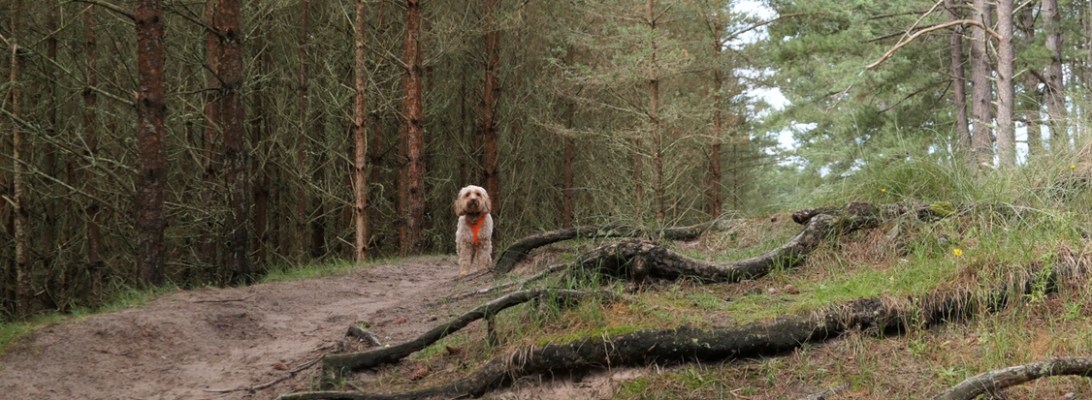
After weaving my way through assorted rocks worn smooth by the ocean and abandoned shells lying chipped and half-buried, I clamber up the steep dune running the length of the beach. My boots sink and sharp grass brushes my legs but I finally reach the summit and slide down the other side. The coastal wind instantly dies like a door has been slammed against it. The forest is sheltered and muffled against outside noise. Seclusion is one of the habitat’s best qualities. There is a feeling of anticipation upon entering a forest. It’s full of surprises.
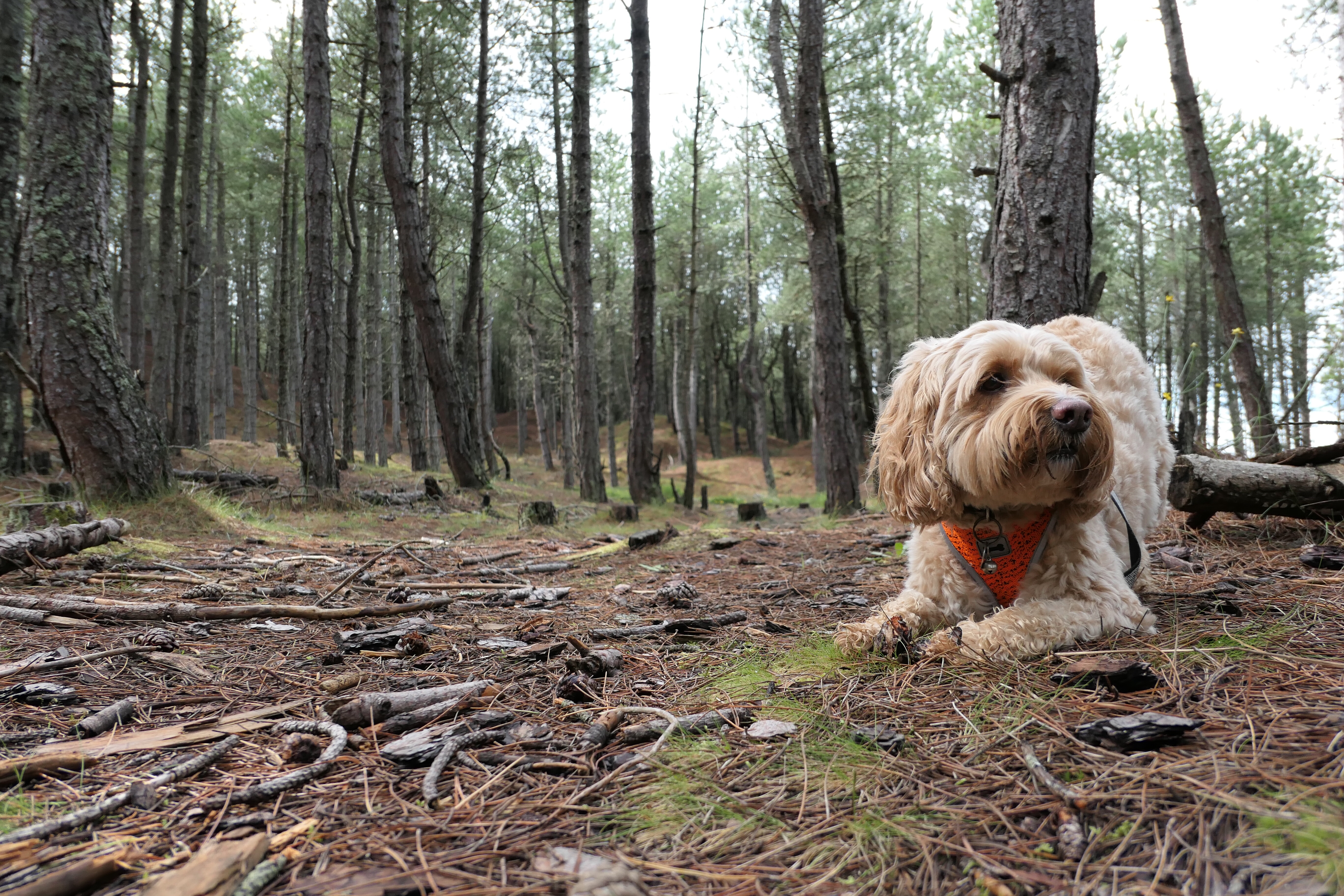
The dog wanders off by herself, true to form. The forest fragrance is too hard to resist. Her light fur flashes in and out of view behind the trees, their trunks as straight as the lines on a barcode.
I know there must be red squirrels in this forest, perhaps even pine martens. So far I haven’t seen either, but that is no guarantee of absence. It’s what I love about wildlife: it can never be rushed.
We pass another dog walker and for a while the only movement in the forest is the flurry of fur in a rambunctious chase. There will be no wild sightings this morning – martens are sleeping and squirrels are out of sight in the enclosed canopy. The dogs dash around blissfully, but eventually we pull them apart and I loop back towards town. Sounds of civilisation begin to permeate through the trees; car doors slamming, human voices, a distant bus. It’s like the sensation of ears popping and I’m back in the open, leaving the forest behind me. Until tomorrow morning.
I am very enthusiastic about 2019, mostly because I’m not quite sure what it will bring. All I know for sure is that it will feature lots of writing. For quite a few years now, writing has been predominantly a side-project for me. I’ve always loved it, but unfortunately it hasn’t been my sole focus because of school, work and other commitments.
I began writing stories at a very young age. My mum would give me a title and leave the rest to me. She was always keen for me to be creative – providing inspiration and encouragement in the form of spelling rhymes, handwriting exercises and story prompts. Writing stories always featured heavily in my childhood and adolescence, but when I became an adult it didn’t occur to me to pursue it professionally. I have no idea why I thought this – perhaps I was distracted by other things or was always keen to keep learning new skills, but the idea of writing stories stayed at the back of my mind until the end of last year when it finally clicked. After weeks of refreshing job site pages and filling out application forms, I realised what I’d probably known subconsciously for years: that I want to be an author.
Probably the thing holding me back from pursuing a career as an author was my lack of technical knowledge. I had the drive to write – a constantly growing stack of full notebooks was proof of that – but I hadn’t learnt the techniques of story structure or character development yet. At the time of picking my A Levels, I wanted to study Biology because of its connection to wildlife and the natural world, and Photography and Spanish were my definitive other choices. As a result, I didn’t have space for English, so a lot of my writing is self-taught, from books I read and prompts I found for myself.
To learn more about the mechanics of writing – in particular writing novels – I recently enrolled in Masterclass: a series of online courses taught by experts in their fields. Gordon Ramsay teaches cooking, Serena Williams teaches tennis, and groundbreaking authors such as Margaret Attwood and James Patterson teach creative writing. It seemed like the perfect solution for me – learning and making notes at my own pace. I already had the passion to be an author, and now I’m using Masterclass to learn the tools that will help me develop my abilities further.
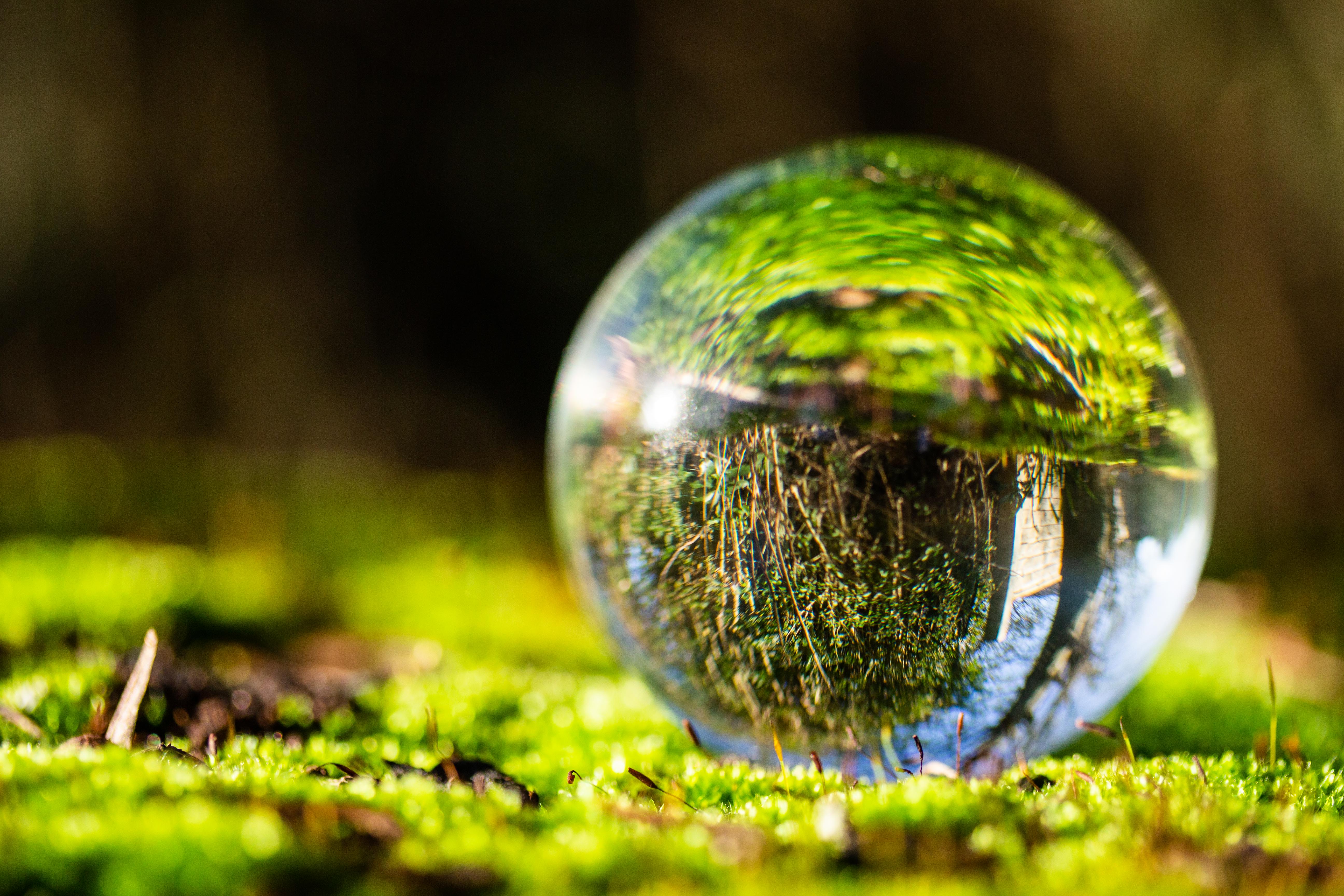
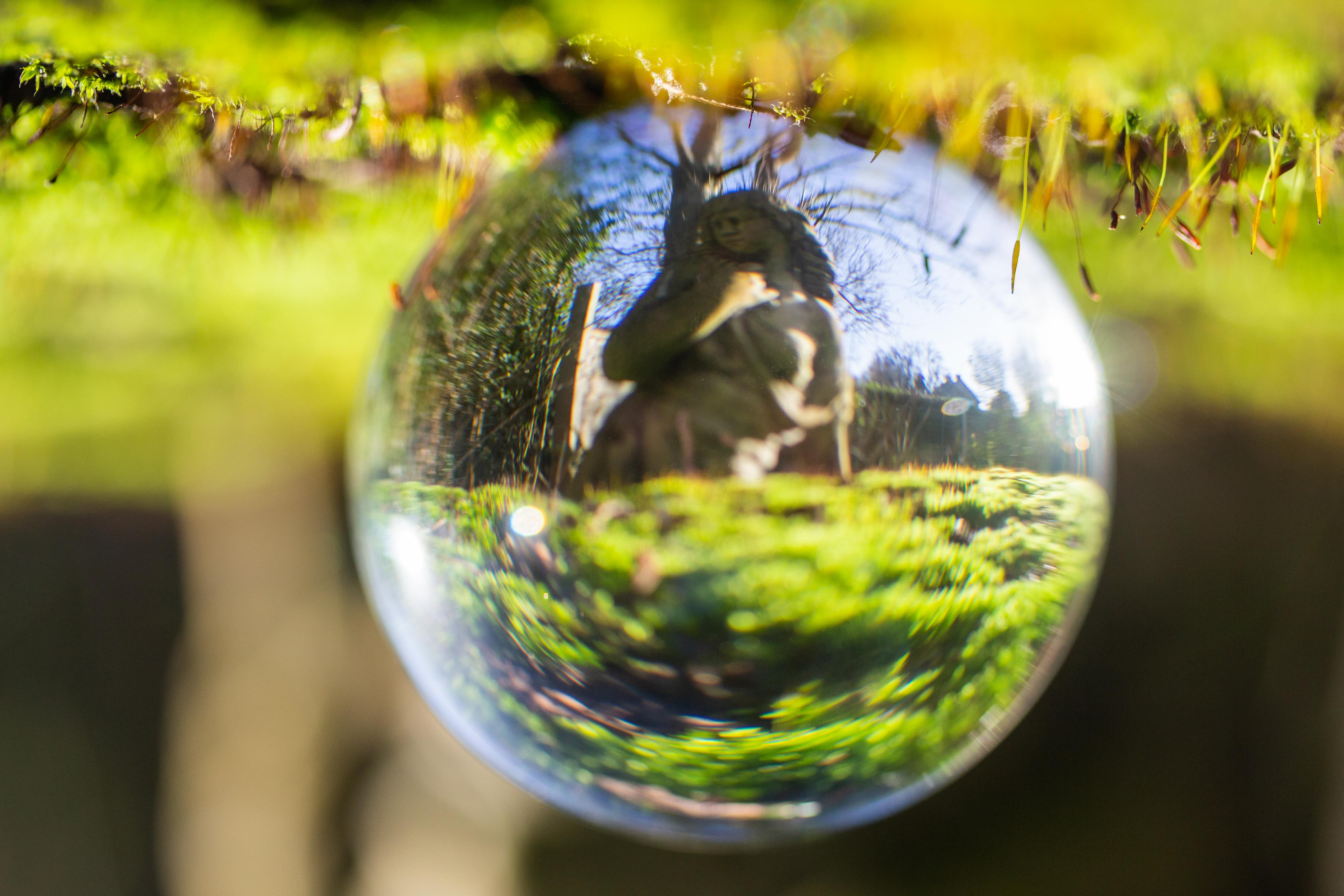
Alongside Masterclass, I’m making sure to continue my photography. For Christmas, I was given a “lensball”. For anyone who hasn’t seen these before, they are clear glass balls that can be used in photography to add a little refraction to the scene. I’m no expert yet, but if you align your camera so it’s level with the lensball, you can photograph the background within the ball, which brings some nifty new perspectives.
I tried out some shots in the garden earlier this week and discovered that it’s not as easy as it looks. You need to get the angle just right and – as always with macro photography – the focal point is key. These initial shots need a lot of improvement, but I already love what effects I can achieve with the lensball. Gardens don’t usually have the most groundbreaking scenery, so I’m looking forward to getting out in the wild to see what I can capture.
So, the aftermath of university didn’t quite go as I may have planned, but I feel so optimistic about where this year will take me. I want to give myself the time I need to throw myself into writing and stretch my skills further. I can’t wait to see where I will be this time next year.
On the second day of Open Water weekend (read about Day One here), I awoke to the alarm feeling a lot more confident. We were halfway through, with two dives down and two to go. The weather had deteriorated slightly and as I waited for the morning briefing it began to drizzle, but hopefully that meant the day would be slightly warmer (I was clinging to any silver lining).
My wetsuit was still damp from yesterday, so dragging it up my legs was even more impossible than usual. It was the reverse of a snake shedding its skin, and as I hopped about and contorted my limbs I couldn’t help feeling extremely silly. Finally it was on, and I doused myself in hot shower water in a vain attempt to warm up before facing the quarry.
Dive three was the most daunting, as it required a longer list of skills, including the dreaded mask removal. Perhaps I was jittery from nerves, because as I began my descent pain shot through my right ear and I hovered, trying and failing to equalise my ears. As you descend, the increased pressure compresses air spaces in your ears, sinuses and mask. Failing to add air to these spaces can cause serious injuries. I eventually had to resurface until I could equalise, then made my way back down. It was a setback that I tried not to concentrate on, especially with my least favourite skill coming up.
We gathered on the platform and took it in turns to fully flood our mask and take it off. I disliked this skill so much because the air bubbles that gather underneath the nostrils feel like water shooting up your nose. When I attempted this in the pool I had the sensation of not being able to breathe; quite a daunting prospect when you’re seven metres underwater and definitely cannot shoot up like a cork to the surface. In preparation, I’d been putting my face underwater in the bath and breathing through a snorkel, and although it triggered several involuntary swallows I could just about manage it.
Taking a deep breath, I pulled the strap over my head and held my mask away from my face, placing it back over as soon as I was allowed. Feeling very pleased with myself, I ran a finger around my hood to check the seal and cleared the water out ready for the next skill. But as we made to swim off the platform, the mask flooded again. I cleared it, and water immediately trickled back in. I signalled to the instructor who checked the seal and couldn’t find the cause of the problem, so once again we surfaced and I made absolute sure I’d sorted it out.
As I descended for the third time on the same dive, I reflected that I’d encountered an unforeseen problem and dealt with it without panicking; I had made serious progress since my first session in the pool. The rest of the dive passed with no further mishaps, and as I had my fifth hot shower of the day I finally began to relax. Our fourth and final dive wouldn’t be full of tests and I could enjoy the experience of feeling weightless in water and exploring Stoney Cove.
After a brief time on the surface and a delicious cheeseburger at Nemo’s, we took a giant stride back into the quarry. We’d planned dive four ourselves, and led the instructors down to the aircraft cockpit and along the shelf that tumbled down to 22m on the other side. Staying firmly away from the edge, we swam across to the Nautilus again and back to the platform, where we gathered for the last time. Alan, the instructor, had an underwater notebook with him, and one by one turned it to face us. I don’t think I’d ever been so happy to read the words:
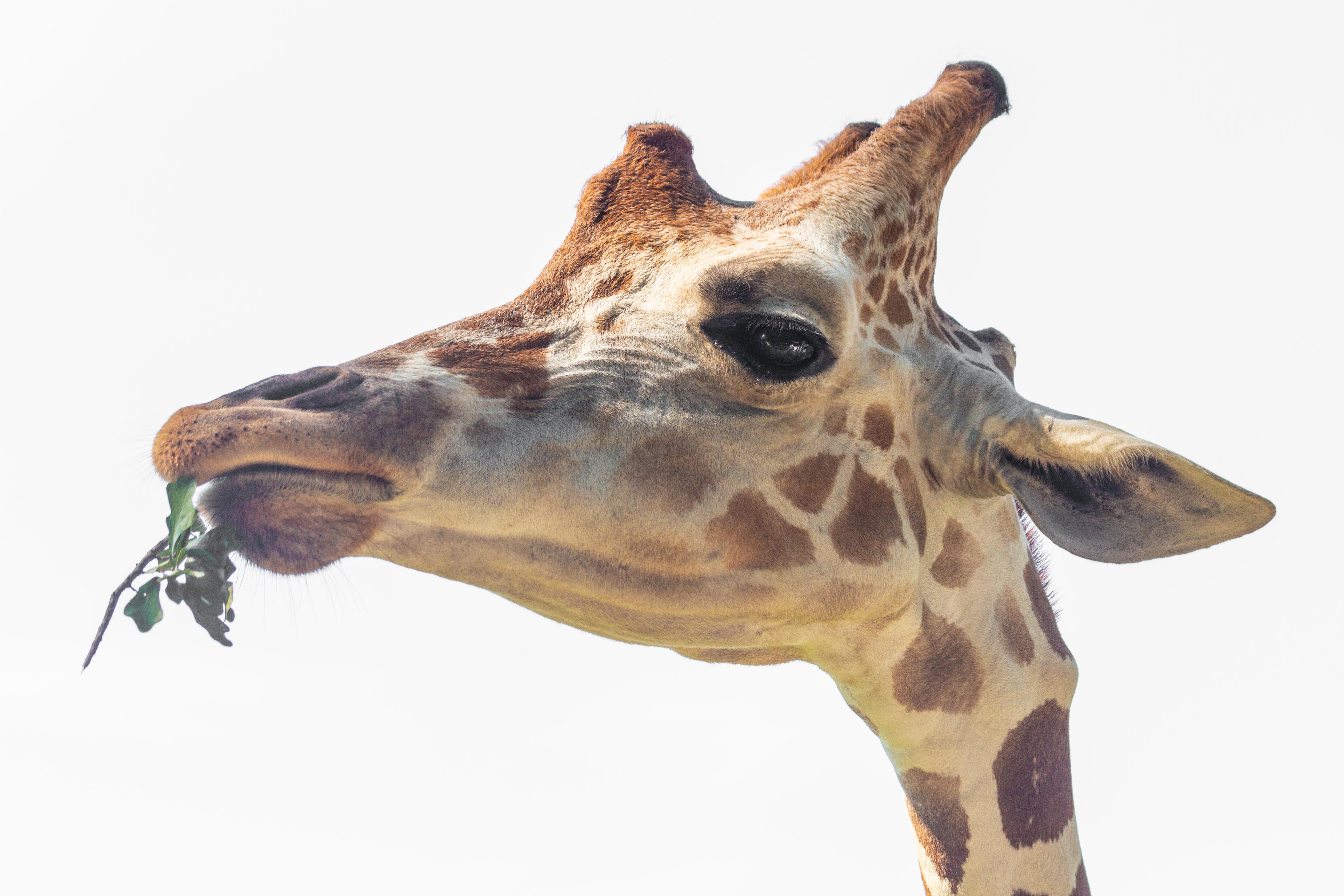
Giraffe have always been special to me. Even with long, gangly limbs, they move with unhurried poise and confidence, but still look endearing with their huge eyes and long eyelashes.
On TV this week there was a repeat of an episode in Attenborough’s Natural World series: Africa’s Gentle Giants. The story centred on Dr Julian Fennessy, Co-Founder and Co-Director of Giraffe Conservation Foundation. Fennessy has been working to conserve giraffe for more than 20 years, and is a true pioneer in research on this secretive and surprisingly little-known animal.
Many people, including myself until very recently, are naïve to the true situation that wild giraffe currently face. Among other African species such as elephants, gorillas and leopards, for some reason giraffe have taken a backseat in the public eye. While words like “beautiful” and “majestic” always spring to mind when we talk about giraffe, how many of us could confidently say how many there were? I was shocked to discover how wrong I was when giraffe statistics were presented alongside those of another African giant. Currently, there are around 500,000 African elephants left, but only 90,000 giraffe. For the first time ever, I doubted what David Attenborough was telling me. How could that be possible? I began to look online, but of course it was true. There are nearly five times as many African elephants than giraffe left on the planet. It’s a statistic that astounded me.
Source: BBC*
Giraffe are not only unmistakable symbols of Africa and the tallest animal on Earth, but they are important to the ecosystem. Like bees, giraffe are excellent pollinators, and pass pollen from tree to tree as they graze. They also spread seeds in their dung, another vital part of maintaining a diverse and sustainable landscape. Conserving giraffe protects not only the animal but its environment, ultimately affecting so many other species that call Africa home.
In two decades, giraffe numbers have fallen by 40% and they have become extinct in seven countries. They are hunted for meat and their habitats are slowly disappearing. One of the most vulnerable populations – a group of less than a thousand Rothschild’s giraffe – lives in Murchison Falls National Park in Uganda. These animals are walking on a literal time bomb; beneath their feet lies 75% of Uganda’s discovered oil, and Fennessy knew that plans to drill would spell disaster for these endangered animals. His ambitious and dangerous mission was to relocate twenty giraffe from one side of the River Nile to the other, where it was hoped that these pioneering individuals would start a new population in a safer location.
As I watched the team of dedicated vets, rangers and scientists attempt to move one-ton animals whose kick could decapitate a man, I was filled with such admiration and respect. It is all very commendable to donate money to charity, but these people were out in conflict areas risking their lives for giraffe. As the mission progressed, I got quite emotional, not just because the threats these beautiful animals face are so unnecessary and unjust, but because I was completely unaware. What little chance these animals have if even wildlife enthusiasts like me don’t know their situation.
It wasn’t just the numbers of giraffe that I was unaware of; so much of their behaviour remains unseen to even experts like Fennessy who have studied them for a vast proportion of their lives. By the Hoanib River in northwest Namibia, he took a sensitive camera out to film giraffe at night. As he watched, a giraffe curled up on the exposed ground and fell asleep. It was something Fennessy had never witnessed before.
“In zoos they study it,” he explained, “Basically when their neck is down it’s REM sleep, so maybe these giraffe are dreaming. I’ve never seen that in the wild.”
The fact that we don’t know how wild giraffe sleep says a lot about how overlooked they are. It seems there is the assumption that because we don’t hear about a particular animal as much, it must be doing fine. However, in the case of the giraffe this couldn’t be further from the truth. So why do we know so little about these animals? Perhaps it is because they are only listed as “Vulnerable” on the IUCN Red List of Endangered Species. An article published two years ago, at the time that this episode was first released, hopes that the work Fennessy is doing will help change the status of giraffe to “Endangered” or “Critically Endangered” and therefore encourage greater conservation efforts. Unfortunately, as 2018 draws to a close, the giraffe is still listed as “Vulnerable”. I can only hope that this change in status does come into effect to raise awareness of this silent and rapid extinction that is passing so many of us by, or soon it may be too late.
*Natural World “Giraffe: Africa’s Gentle Giants.” (2016) BBC. 23rd June.
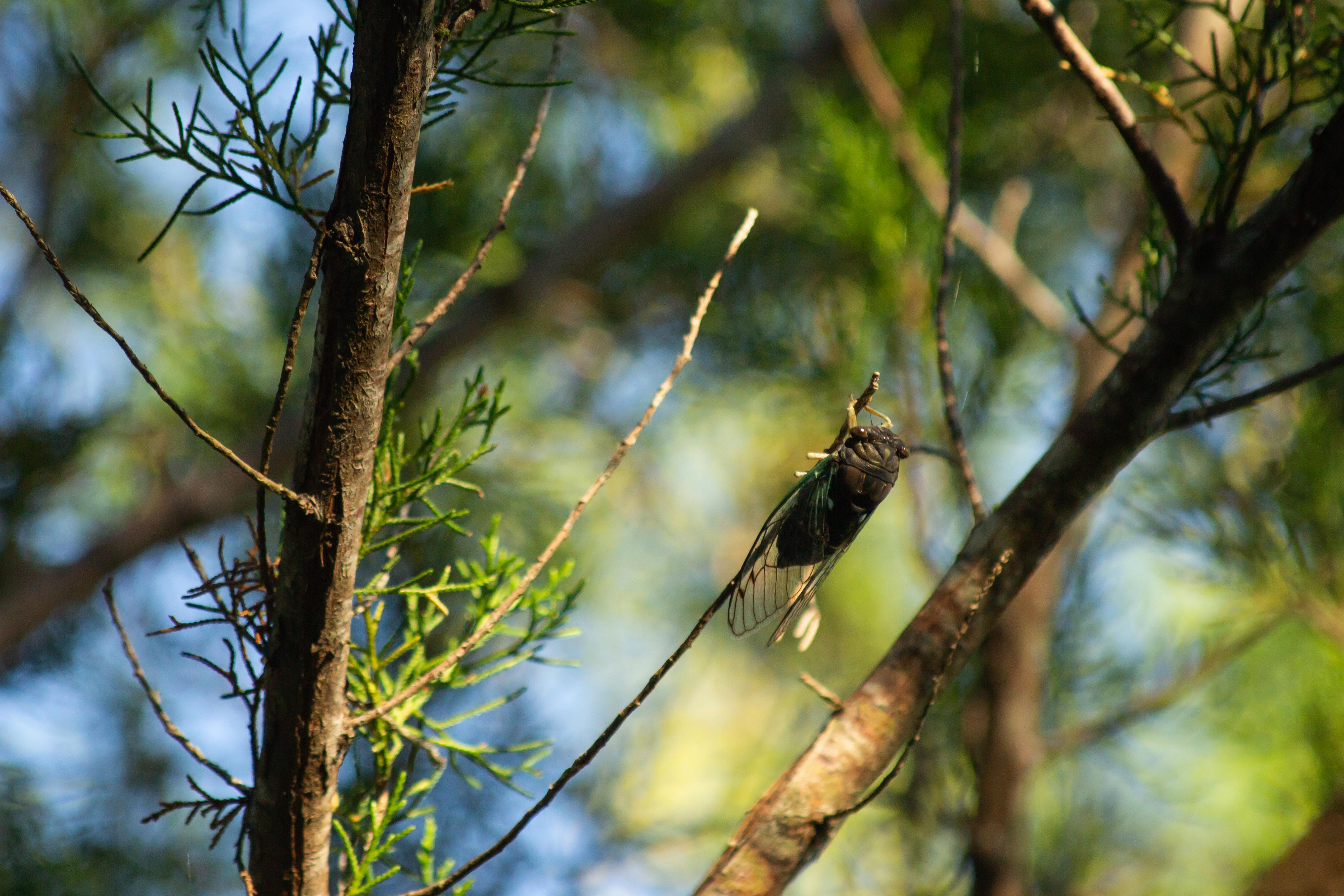
The Egan’s Greenway is an unexpected jungle in the middle of smoke-belching industry and deckchair tourism. The mundane sounds of traffic are deafened by the furious chatter of cicadas – enormous insects that seem prehistoric. Their strange call is like the sound of angry water sprinklers, growing louder and faster until it reaches an alarming tempo, then abruptly stops.
At first light the Greenway is sharply divided into light and dark. The dense, impenetrable forests are still cool – the trees in muted greens – but out on the marsh the grass is alight with fiery golds and oranges. Naked trees poke the sky with sharp limbs white as bone, while beside them sway lush evergreens. It is a land of stark contrast, a spectrum of vitality and decay. Time passes here with the tick of the cicadas.
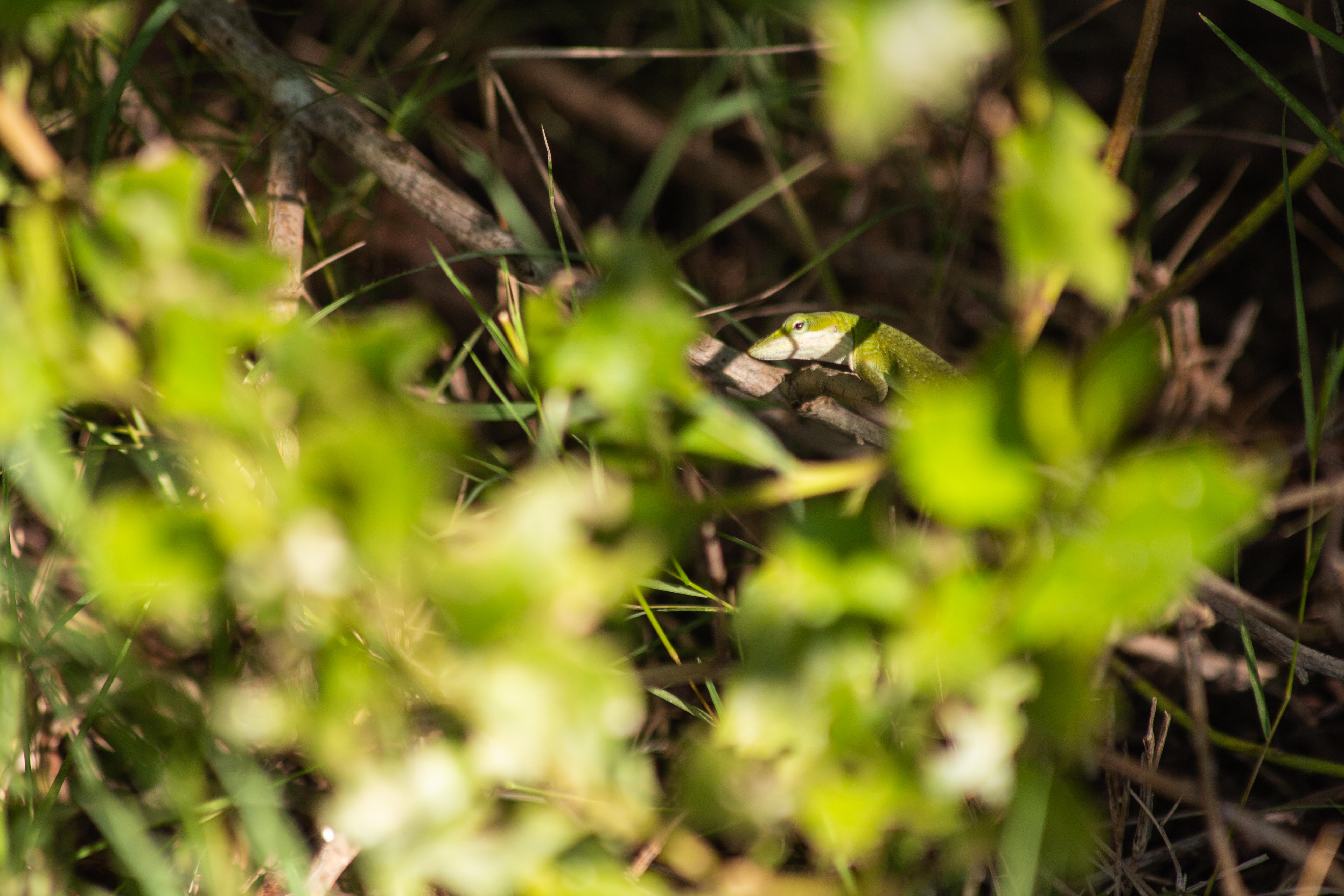
The day warms up, throwing a shimmer onto the surface of the creek. Here there be dragons, some cruising between reeds on transparent wings, others scrambling up trees with long claws. A flash of movement and then a disappearing act, they blend seamlessly into their surroundings. Just a flick of the beady eye will give them away, and then they will shoot off into the undergrowth.
Other beasts can be found higher up. Perched on the skeleton fingers are ospreys, scanning the creek in every direction. One takes to the air and its mate follows. Together they wheel in deep circles, overlapping in smooth figures of eight. A wood stork, large enough to be unfazed by the raptors, joins their sky with dark wings barely flapping.
Then, a real dinosaur. A creature that survived what forty-metre sauropods could not, almost unchanged for millions of years. This one is only small, an arm’s length perhaps, but even so it floats beneath the water’s surface with the stealth of an adult, startling green eyes always watching. A glance away and back again and it has disappeared, moving across the creek without a sound.
Where is mum? Perhaps it is best not to stay and find out.
After so much excitement, I’ve neglected my camera recently and wanted to finally spend some proper time searching for Florida’s wildlife. I’d been told about a good spot for wading birds, and knew that the inhabitants included my new favourite bird, the roseate spoonbill. I set out before sunrise and reached the water just as the sky was beginning to lighten; pinks and oranges blending with blue.
My first sighting was almost immediate. Perched on a branch overhanging the lake and peering curiously as I wound down the window was an anhinga. With both heron and cormorant-like features, anhingas spear fish under the water with their long, sharp bills. The name originates from the Brazilian Tupi language and translates as “devil bird”. I don’t quite see the devilish resemblance – I found the anhinga delightful, especially when it shook out its striped wings. Like cormorants, anhingas hold out their wings after swimming to dry them. This one looked like either a female or a juvenile, as males are jet black with silvery streaks.
Anhinga
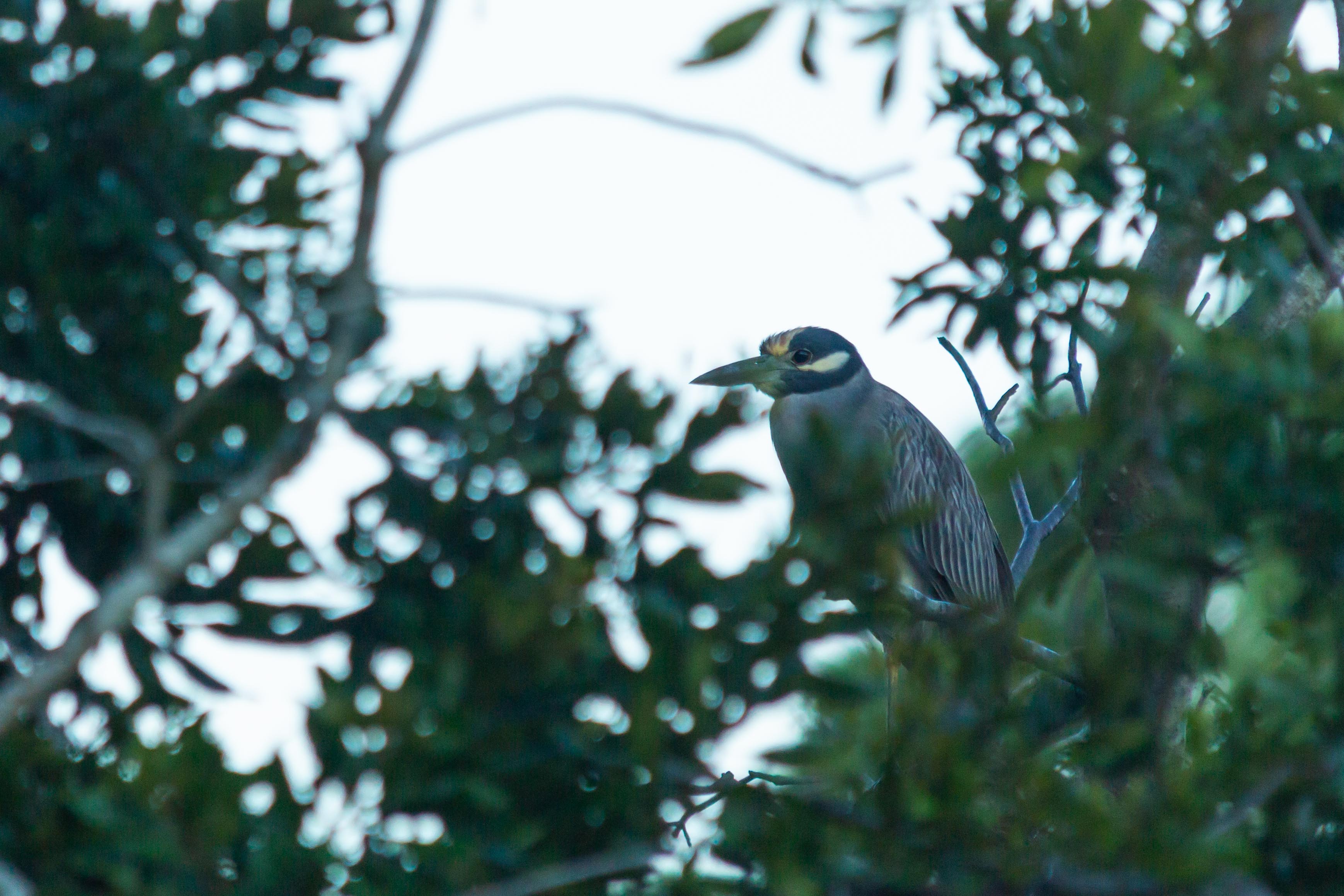
Soon the anhinga was joined by a yellow-crowned night heron, shoulders hunched down as if with cold. With a white cheek patch and a pale crown of feathers that looks more white than yellow, the yellow-crowned night heron is actually nocturnal, so I must have been really lucky to catch a late glimpse just before the sun emerged.
Yellow-crowned night heron
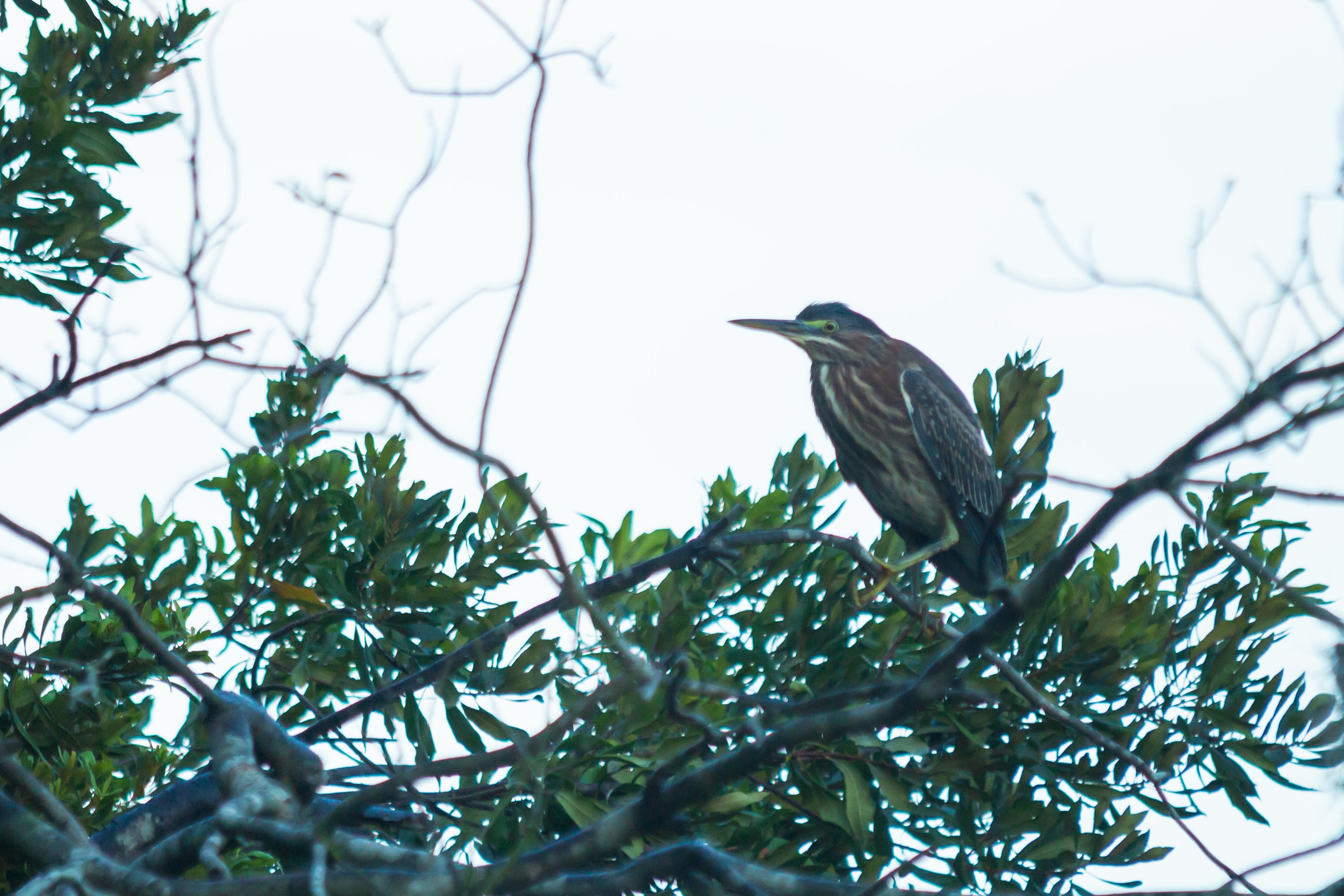
Elsewhere in the tree was a green heron, who was more brown than green so was perhaps a juvenile. Apparently, green herons are known to throw insects into the water to encourage fish to the surface, which is genius and must look amazing to see.
Green heron
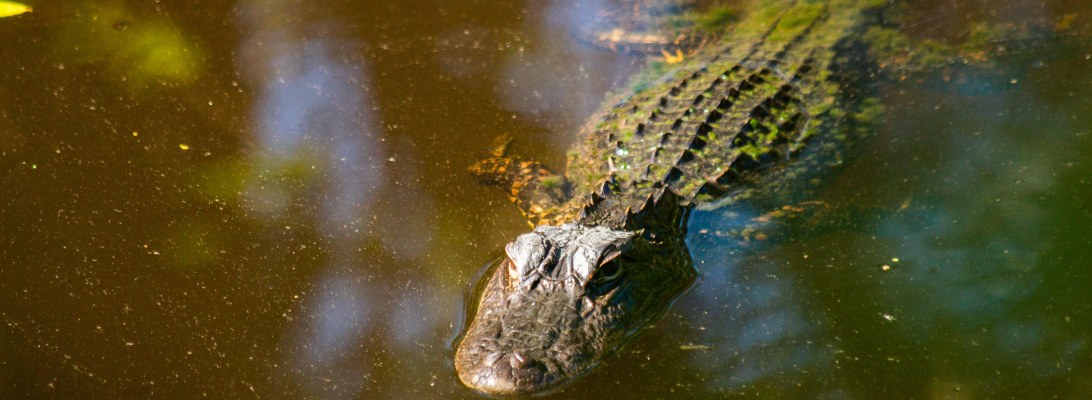
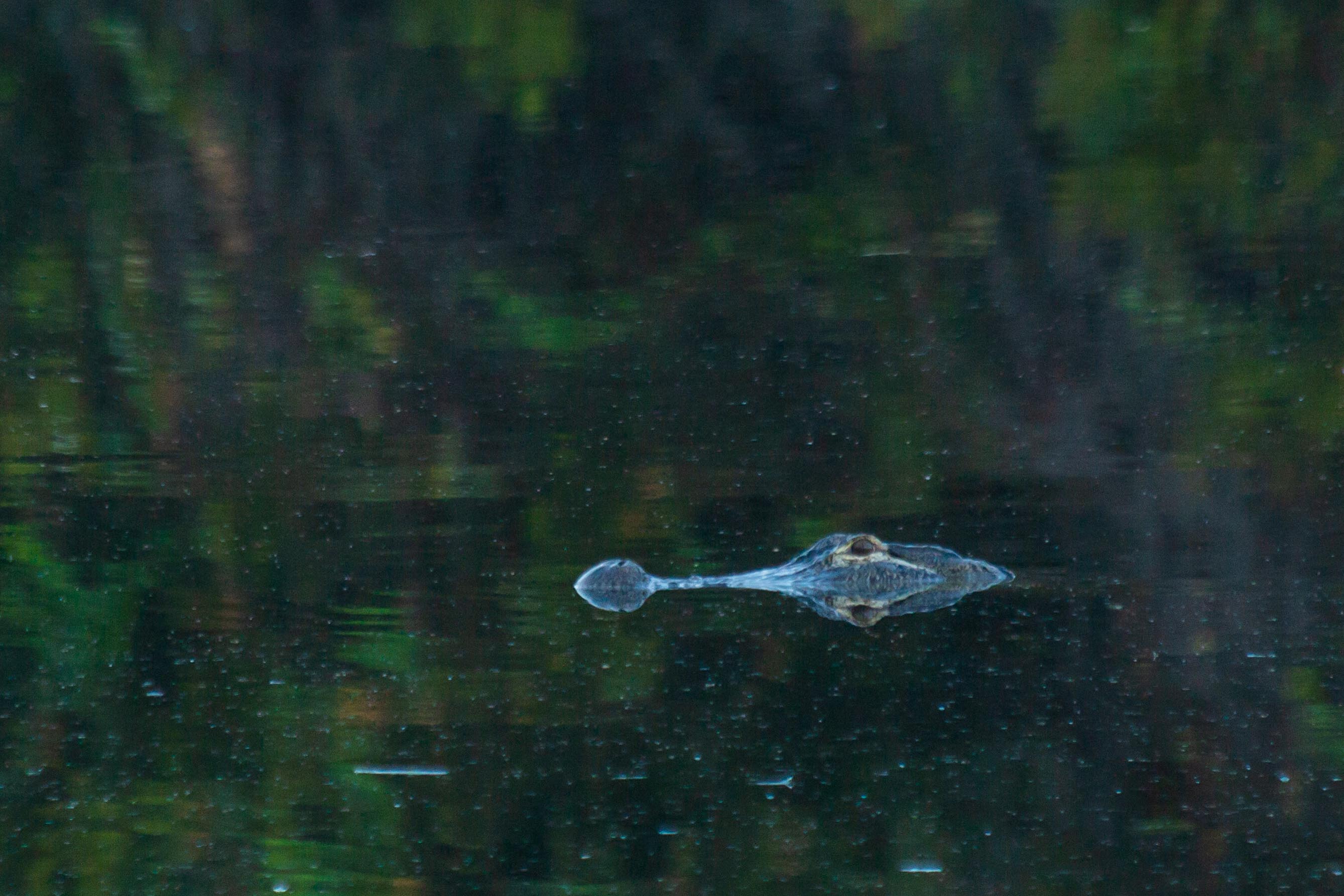
Suddenly a snowy egret burst into view, legs dangling and panicked wings flapping. There was a deep, kronking call as more birds surged upwards. Puzzled, I glanced around for signs of a raptor, when a disturbance in the water caught my eye. There, gliding without a sound, was an alligator. My first alligator! I could hardly contain myself. All I could see of it was a pair of eyes and nostrils, so I had no idea how big it was, which was perhaps more nerve-wracking than seeing the whole animal. Even from the safety of the car my paranoia imagined the alligator leaping headlong at the open window, but it just cruised out of sight and the birds soon calmed down.
Alligator!
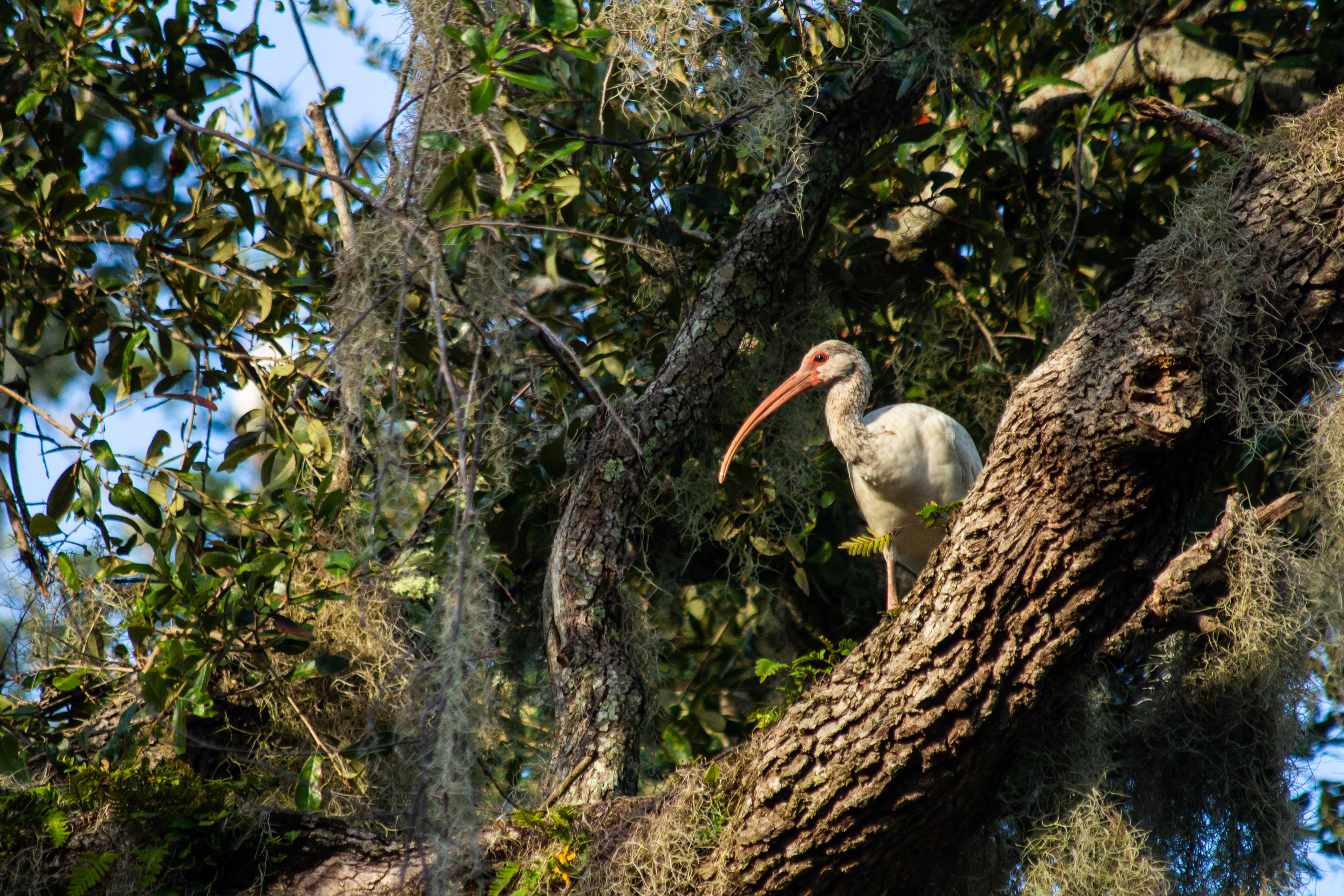
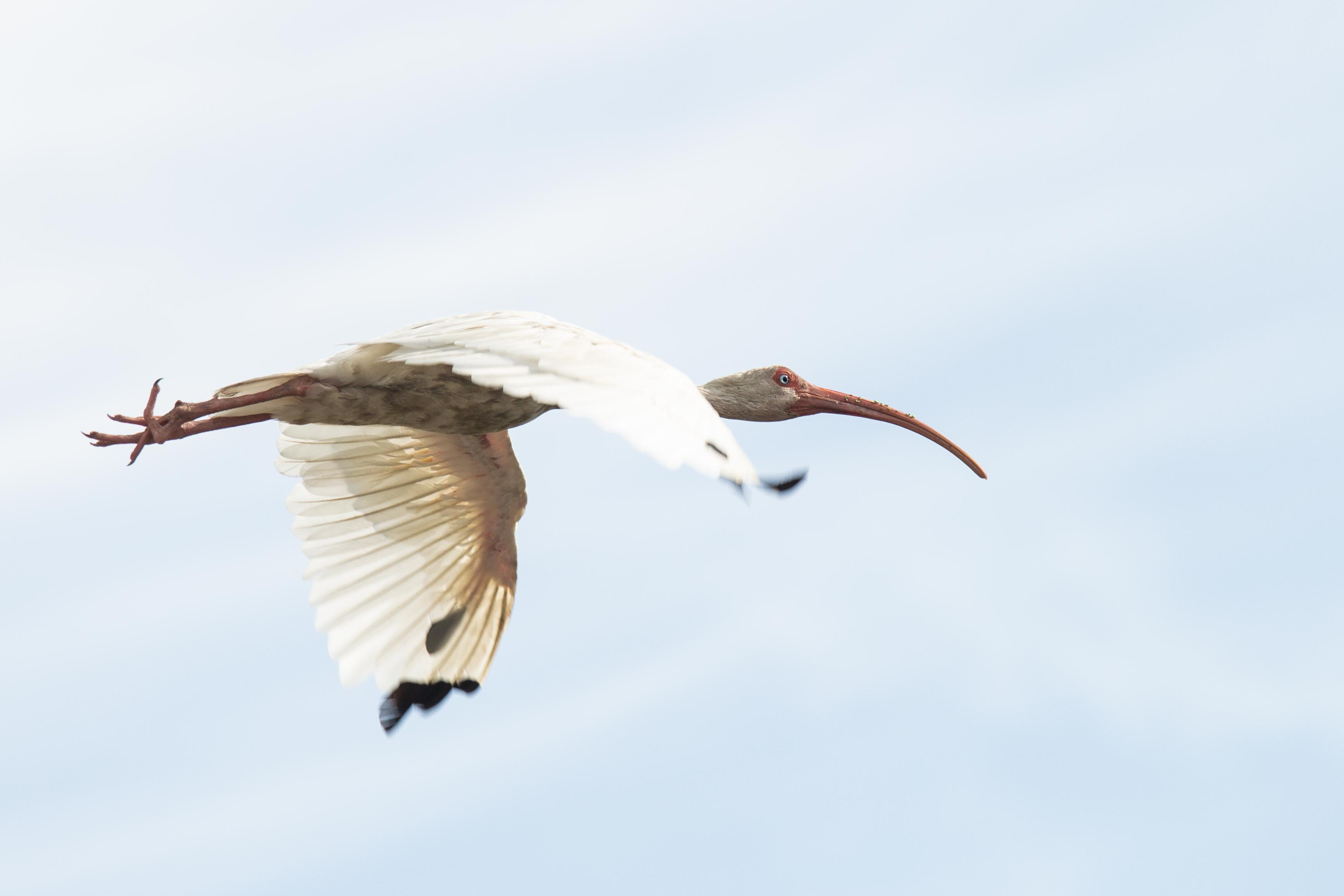
I wandered further on to try and find a spoonbill. There was a loud rustling above and I looked up to see the trees absolutely covered in white ibis; wading birds that gather in large groups all across Florida. I was spoilt for choice for photos. Although they’re not the prettiest of birds, their long, red bills still looked impressive, especially when they all took off in one simultaneous swoop. In the absence of car engines and people this early on a Sunday, the only sound to be heard was the wind in their wings which sounded so magical.
White ibis
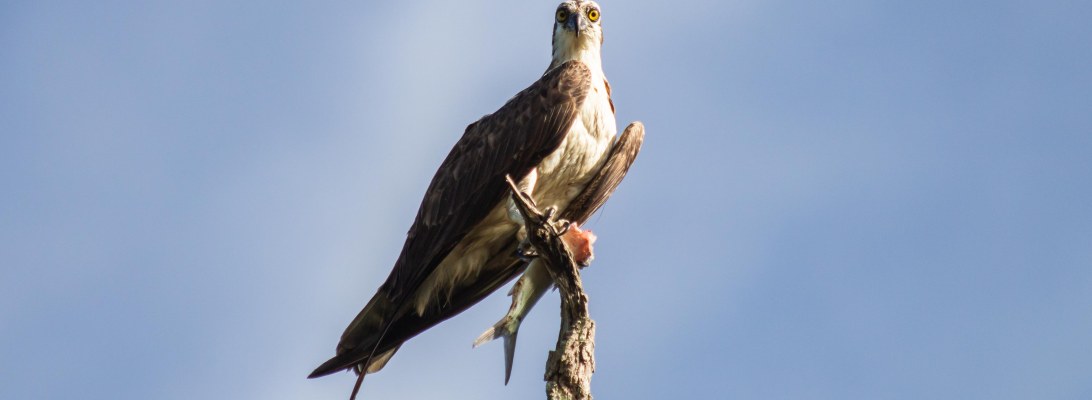
After watching them leave I wondered what had scared them off. Once again I scanned the trees for signs of a raptor and this time I found one: a stunning osprey with a fish in its claws! I’d only seen ospreys once before in Scotland, all the way across a loch that made taking photos quite the challenge. This osprey, however, was a tree’s height away and sat in a perfect patch of sunlight that made its yellow eyes dazzle. It spotted me straight away and watched as I took photo after photo. Eventually it gathered up its breakfast and took off, just as the first dog walker came into view.
Osprey
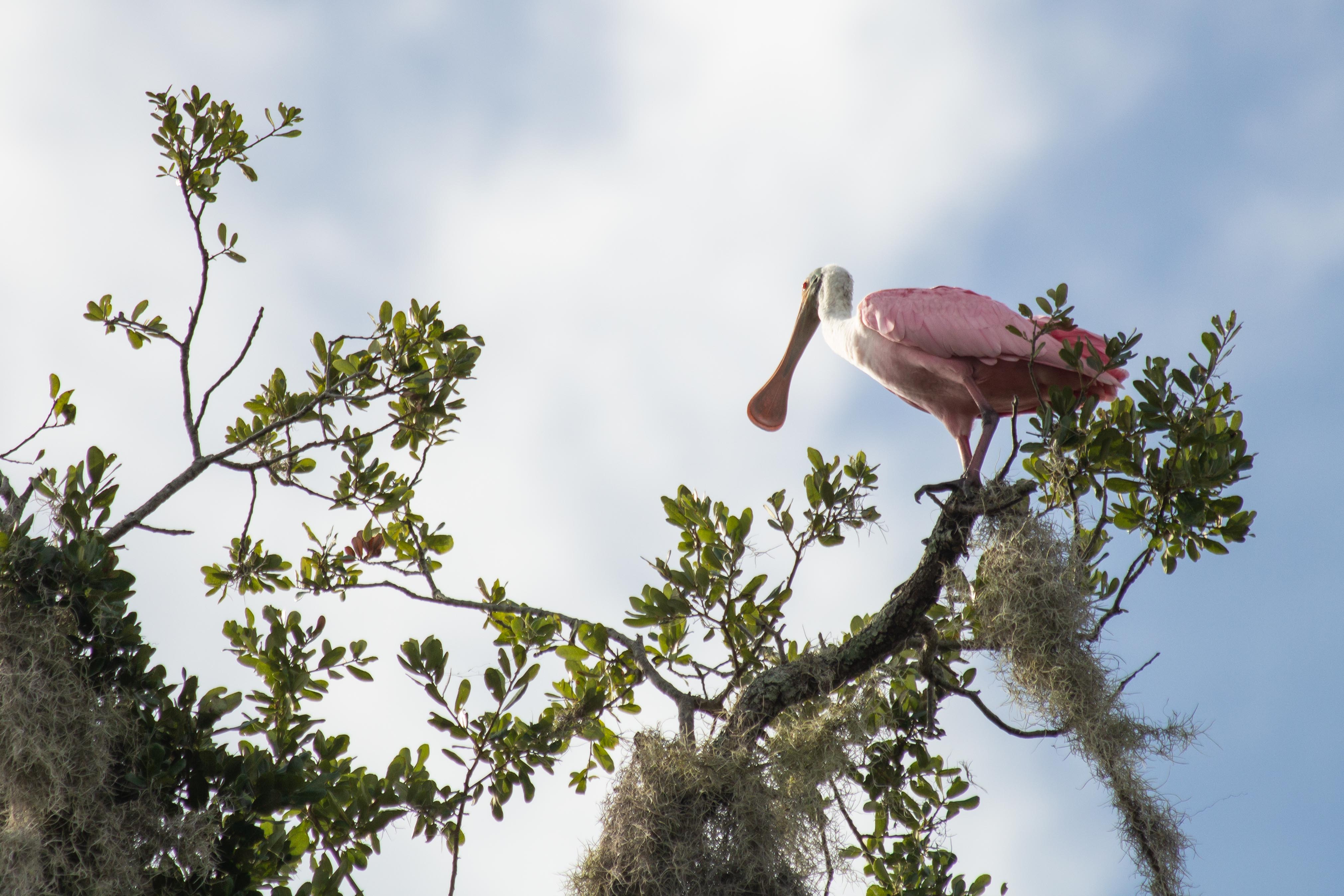
At 9:30am it was already getting too hot to be out without a hat, and my hastily eaten bowl of cereal at 6am seemed far away. I’d loved to have found my spoonbill, but having seen a bonus osprey and alligator I was far from disappointed. I’d just got back to the car and was fumbling for my keys when I glanced up, and by some miracle there was a spoonbill perched at the very top of a tree. It was the pink cherry on an incredible cake.

















 rebeccaonthewing.com