Calm After the Storm

The past few months have been fairly hectic. University assignments have ranged from writing an article and designing its magazine layout, a 3500 word report discussing a client project and an exhibition designed from scratch.

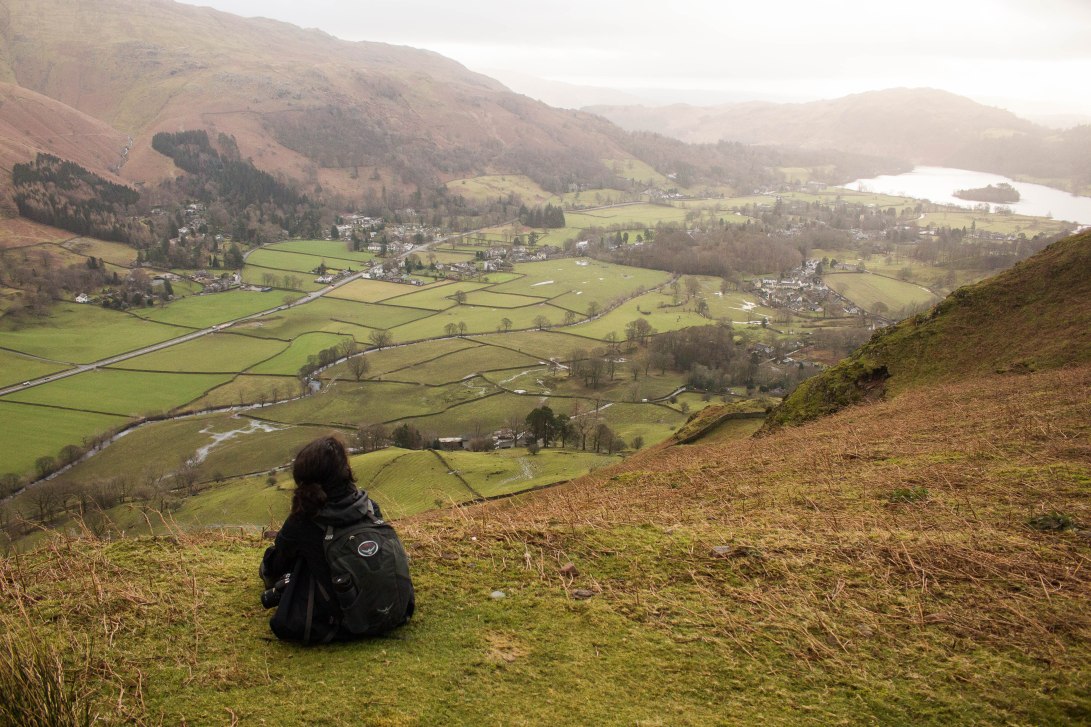
There was a week or so once these were all submitted, then lectures started again. The blessing (or curse, as far as I’m concerned) of third year is we only have lectures on one day, leaving the rest of the week disconcertingly empty. This has made my need to stay busy ever greater, so this week we chose the driest day to go for a hill walk in the Lakes. I’m ashamed to say I haven’t taken my camera out for a long time, so it was time to dust it off.

The wildlife highlight came before we’d even left Grasmere. Zahrah’s keen eyes spotted a red squirrel hopping around not far from the road – obviously this one was accustomed to the comings and goings of Grasmere’s inhabitants. While Kerr and Conor fussed over the map, Zahrah and I watched the squirrel forage at the foot of a tree. Inevitably, I didn’t have my telephoto lens so I just enjoyed the view. Once the boys had figured out our route, we set off into the hills, blowing off the cobwebs that had gathered from being cooped up working.

IMG_8702

A Day in the Fells

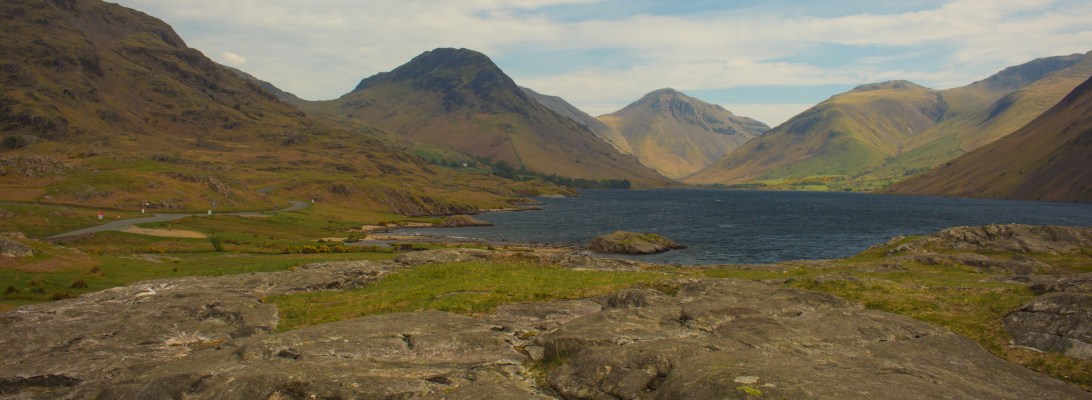
As we turned into the car park at Honister Pass, the clouds were grumbling. Geoff Cox appeared and shook my hand in greeting, with the same kindliness he might offer to his closest friend. Having roamed the fells since childhood, the bracing chill and spattering rain are all too familiar to him. A gust of wind blew me sideways as I struggled to catch the flyaway sleeve of my coat and hastily zip it up. Pulling a hat firmly down on my head, I gazed up at the fells. The day was bleak, and an ominous mist obscured the tops of the hills, which would provide a dramatic background for filming.

Today marked the penultimate day of shooting for the second documentary about Geoff’s experiences as a fell runner. During his sixtieth year he attempted to run three notorious Lake District endurance-running rounds: in the Joss Naylor Lakeland Challenge and Gerry Charnley he was successful, but the Bob Graham round defeated him. The film we’d be shooting today was a reflection of this unsuccessful round, and how Geoff found redemption to complete the Charnley. Geoff wrote poems about each round to process these challenging ordeals, and approached filmmaker Richard Berry to transform his words into films. Today, I was joining them to see what happened behind the scenes.

We set off, following Geoff and the other endurance runners up the first incline. Before long it became evident just how comfortable they were on this terrain; while I took my time negotiating uneven and slippy rocks, the rest of the group hiked with confidence and admirable swiftness. As we climbed higher, I was told that the views up here were usually breathtaking, but the fog hung over the entire horizon like an impenetrable curtain. We were completely enclosed, walking along a single clear track with white walls on all sides. “Drifting in the Skiddaw mist”, Geoff wrote in his poem; how apt this line was today.

Now 62, Geoff has been fell running for decades, and can’t remember a specific time when this habit became a continuous routine in his life. “Work and family pressures meant I needed a sport I could focus on which didn’t need other people,” Geoff explained, “With running I could drop everything and go anytime, day or night.”

Fell running in the wilderness of the Lake District is a lonely and secluded past time, something Geoff often welcomes. “I needed a place where I could have a bit of ‘me time’. Society seems to look upon somebody who needs these extended periods of time in isolation as strange and even a bit weird. Long days running in the hills gave me what I needed; something about the independence and self-sufficiency was very appealing.”

In a few hours we reached the right place to begin the day’s filming. Director Richard and camera operator Kerr McNicoll set up and before long shooting was in full swing. Agile as mountain goats, the runners cascaded down the rocky slopes with impressive assertiveness. Surrounded by the silent fells, the only sounds were the cracking of the colliding rocks and soft squelch of mud as feet drove through. Puffs of breath spilled into the sky, and as the runners headed further off, the mist soon swallowed them.

“And again!” Richard shouted, the echo of his words bouncing for miles. After a few moments, the group appeared again. From this distance they looked like small dashes of coloured paint on a white page – the only distinguishable features of the landscape. They looped around a small lake, reflections bouncing on the water. After several takes of this shot it was time for cake – a delicious fruitcake made by Jim, one of the runners. This burst of energy was welcomed with open arms, and once Richard had filmed Geoff scaling a large rocky outcrop on his gimbal, we began to snake back through the fells, gathering footage on the way and constantly referring to Geoff’s poems to capture the essence of his experiences and narrative.

Writing poetry has helped Geoff to process the challenges and obstacles associated with endurance running. “I started writing poetry as a way of processing the mental and emotional garbage floating around in my head, or ‘mental detritus’ as I call it. Prose didn’t work because it has the wrong rhythm. Poetry allowed me to talk about what I’m thinking and meant that I could introduce the pace and metre that matched my memories.”

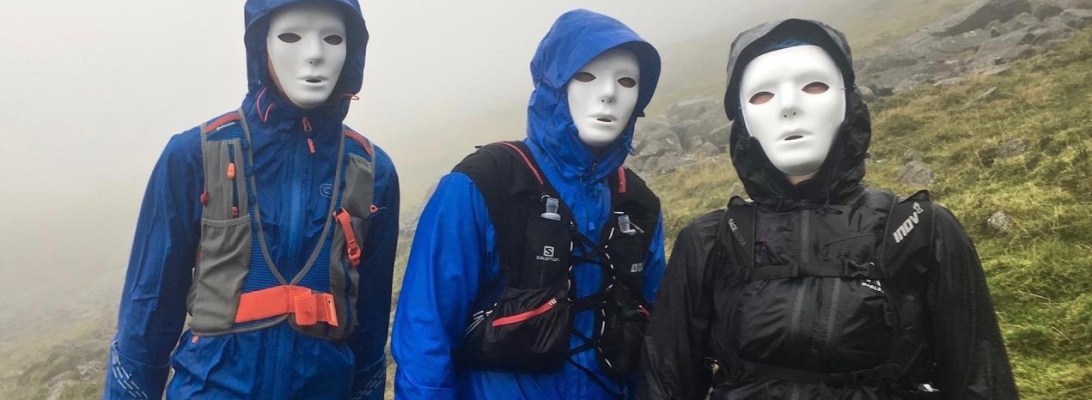
One of these memories took the form of white theatrical masks, worn by three of the runners looking over their shoulders at Geoff while he hung back, exhausted and near defeat. It was an intriguing idea and as we walked back through the fells I asked Geoff why he decided to include masks in the film. “They’re a symbol of how small doubts kick in and grow more insistent as the run goes on” he explained, “So we made them progressively more obvious throughout. ” This feeling of doubt was linked to people coming out to support Geoff while he competes and the pressure of not letting them down, a burden that can hang heavy on a runner under such physical and emotional strain.

I was astonished to hear that the masks were also a representation of hallucinations that Geoff said will be very familiar to long distance fell runners out on the hills for 24 hours or more. This “sleep monster” phenomenon is a result of exhaustion and sleep deprivation. “My particular version seems to be that I find myself running across strips of beautifully patterned Axminster carpet” Geoff told me, “All the time I’m thinking ‘It’s amazing that somebody has been up here and laid this carpet across these mountains!’”

Fell running in the Lake District is not for the faint-hearted. Unpredictable weather, unforgiving terrain, and a vast secluded landscape, and all with a burning in your legs. Even today, after walking seven miles, I returned to the warm café with aching knees. Geoff has proven that age is no match for will and determination, and is continuously training for new rounds to run. For him, fell running is more than exercise but a way of managing stress and even inspiring poetry. Spending time with him and the other runners opened my eyes to a life spent high above the ground, where so few people think to look.
Things to Do in the Lakes

For the past two weeks I’ve been on an internship at Student and Graduate Publishing. I’ve been writing non-stop for their three online magazines. This article on the Lake District was written for Study International. 

In July 2017, the Lake District officially became a UNESCO World Heritage Site, making it part of a group of iconic locations across the world alongside the Taj Mahal, Machu Picchu and the Grand Canyon. There are sixteen official lakes in the Lake District, each surrounded by stunning scenery and with plenty of things to see and do. Whatever your interest, the Lake District has so much to offer. So if you’re studying in the North West of England, take a look at what you could be planning for your next weekend trip.

Coniston Boating

For the adventurous, there is lots of sporting fun to be had on Coniston Water. Stretching five miles long and watched over by a mountain called the Old Man of Coniston, the lake boasts a wide range of possibilities for boating. Enjoy the sights on a motor boat, or perhaps try a more hands-on approach with rowing boats, paddle boards or canoes. Take a look at the Coniston Boating Service to book online and find out more. There are also bikes available for hire, for those who’d rather stay on dry land.

All that time on the water is bound to build up an appetite. Situated right on the shore is the Bluebird Cafe, where you can enjoy freshly-made cakes, ice cream or hot drinks, depending on the weather.

Derwentwater and the Theatre by the Lake

Another of the beautiful Lakes is Derwentwater, a site that has been named a SSSI (Site of Special Scientific Interest) due to the wide range of flora and fauna that inhabit the water and surrounding shores. One species that resides in the lake is the Vendace fish, Britain’s rarest freshwater fish.

In addition to being able to walk the entire circumference of Derwentwater, there is also the Theatre by the Lake, situated right on the shore. A wide range of events are shown here, whether your interest is theatre, film or music. The annual Words by the Water literary festival takes place here too, where famous authors gather to discuss and sell their works. A brochure of upcoming events can be found on the Theatre by the Lake website.

Visit Beatrix Potter

Relive a classic from your childhood and visit the quaint 17th century farmhouse of Beatrix Potter, nestled in idyllic Ambleside. Beatrix Potter bought Hill Top after the success of her first few books, and her visits to the Lake District were spent sketching the house and garden for new stories. Infamous characters such as Jemima Puddleduck and Tom Kitten were created in this picturesque cottage, along with many landscapes that featured in her books.

Anyone who enjoys a bit of British history will love exploring the cottage, with its quaint interior and surrounding garden exploding with flowers, as well as fruit and vegetable patches where Peter Rabbit could be hiding.

Upon her death in 1943, Beatrix Potter left Hill Top to the National Trust, insisting that the site remained completely untouched. So as you wander through the entrance hall with a pot of tea waiting on the table, it almost seems as if Miss Potter is still living there. Read more information from the National Trust about this beautiful cottage and what there is to discover there.

Here For Your Entertainment

On Friday we went on a field trip to The Lake District Wildlife Park. In Alex’s lectures we’ve been studying the behaviour of animals in captivity, so visited the park to see if we could see any of the same signs in the animals they kept there.

img_9729

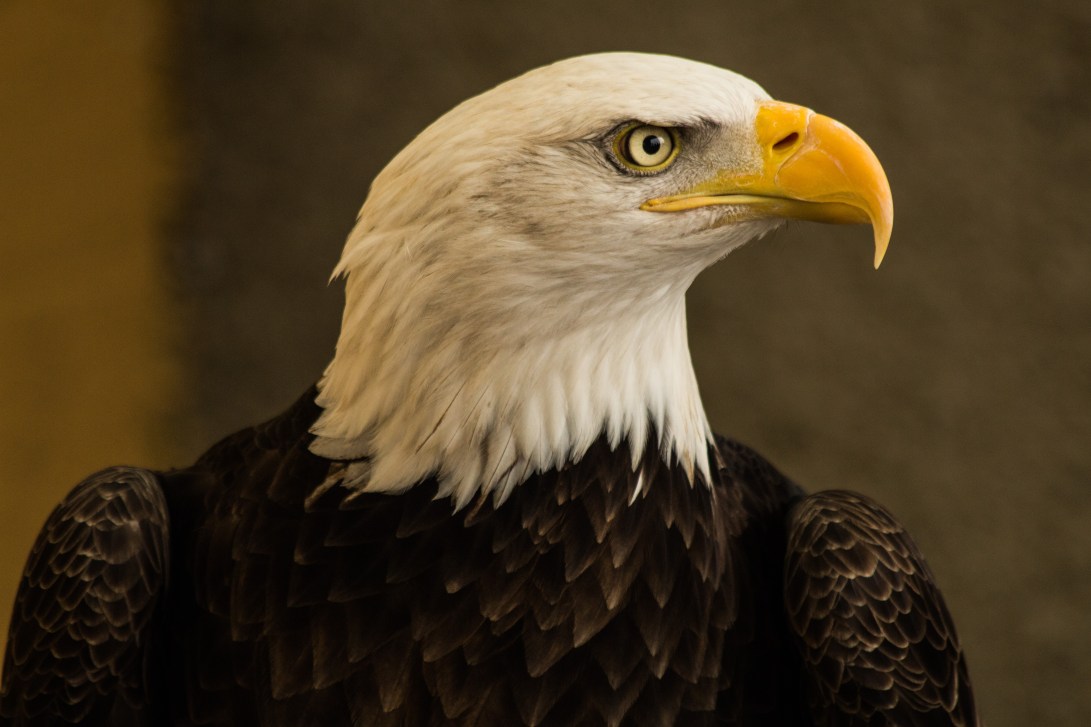
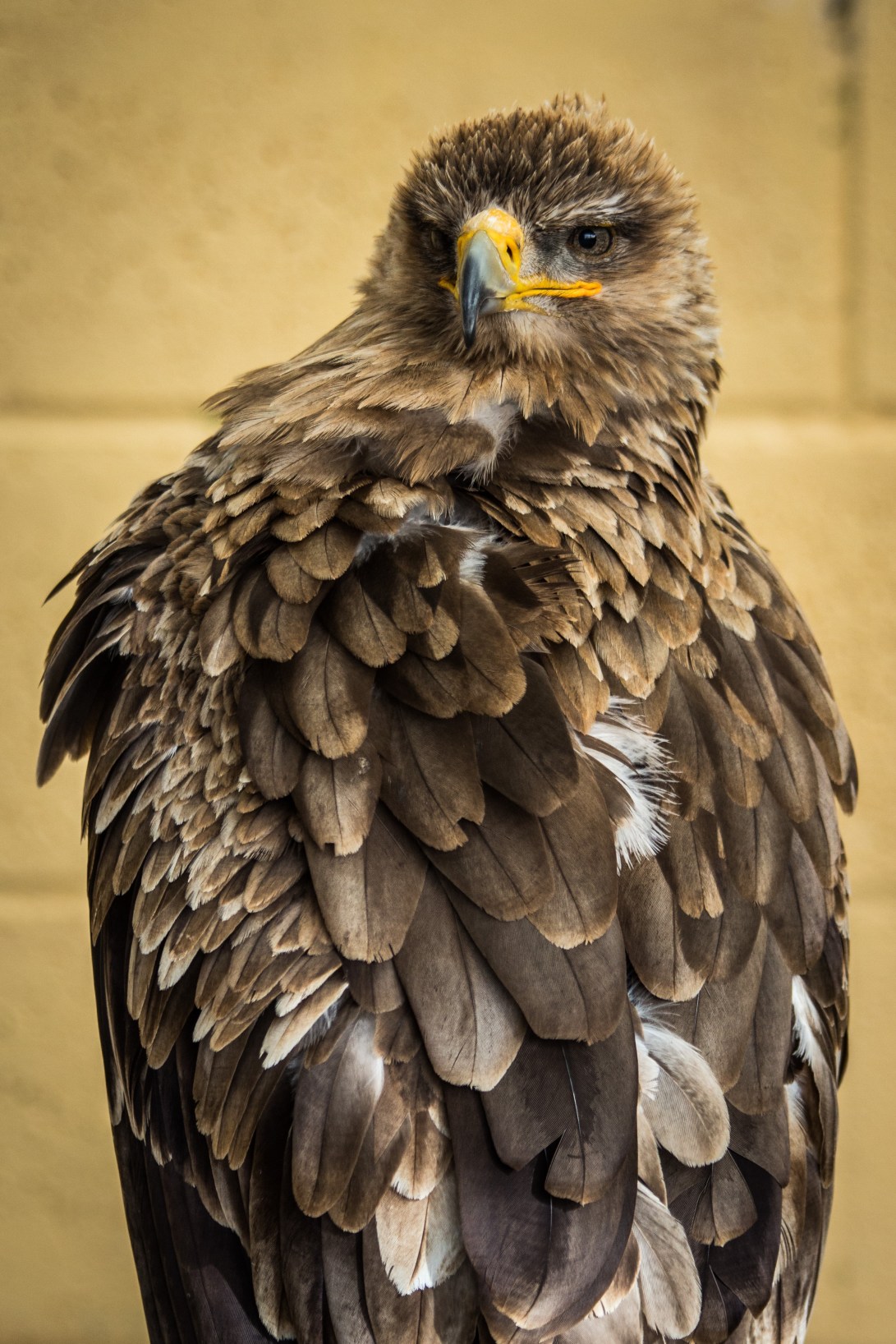
It hadn’t been too long since my last visit to a zoo, but maybe it was the presence of four other wildlife students that instilled different feelings in me this time. The small size of the enclosures seemed more obvious and I couldn’t help feeling uneasy as I watched the lynx pace up and down and the raptors attempt to fly off the metal perches they were tied down to. I could photograph the bald, golden and tawny eagles in vivid detail, but I knew deep down it was cheating and the photos I was taking were no different to those of hundreds of other visitors.

img_9778

The reason I love photography is it captures a moment in time that cannot be exactly replicated ever again. It freezes a memory and provides a very intimate insight into the photographer’s mind. So as I stood in front of a tethered bird that couldn’t escape my camera or my gaze, I soon realised this was not how children should experience wildlife.

Ticking off birds from my wish list was part of the charm that got me interested in wildlife. It was going out, tracking a bird and watching it live its life that gave me a sense of pride. Not only had I had an adventure in the great outdoors, but I’d discovered a species I’d never seen and sometimes got photos to show for it. During my time on the Isle of Carna we attempted to track down golden eagles on a boat trip on Loch Sunart. We were extremely lucky to get a glimpse of the magnificent bird as it perched high up in the tree canopy.

Anyone with £8.95 in their pocket can go to the Lakes Wildlife Park and see a golden eagle, but where’s the fun in that? If the same children who see a captive golden eagle were to see one in the wild, I’m certain that experience would last a lot longer in their memory.

img_9780

Of course, I’m just talking about British wildlife. None of us in the UK are going to see a wild red panda or lar gibbon no matter how impressive our tracking skills, so in that respect zoos offer children the chance to see what wonderful animals roam our planet. While this is all well and good – and with the rate of extinction as rapid as it is, this may soon be the only way that the next generation can see certain species in the flesh – it’s just not “wild” life. And isn’t that the point? What next, we round up indigenous tribes and keep them in pens for people to stare at? Although some zoos have done wonderful work for conservation and provide a safe place for endangered animals to live unharmed, should it be up to us to decide whether a long, captive life is better than a short, free one?

img_9876